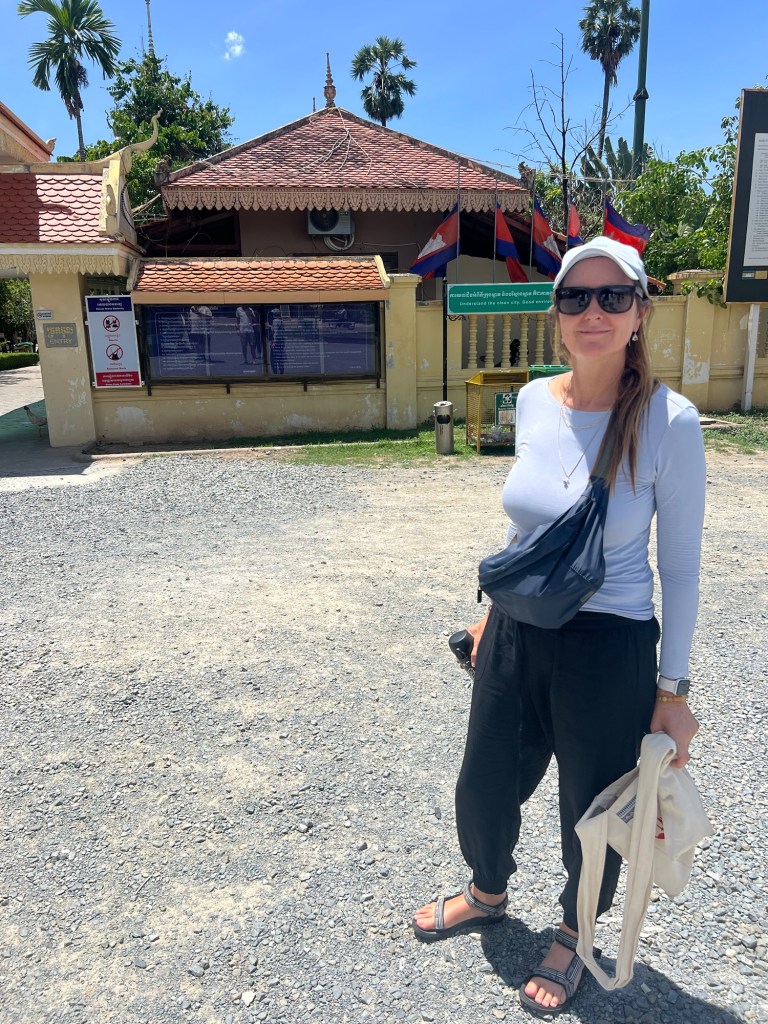
Today we confronted Cambodia’s tragic past with a guided tour of the Tuol Sleng Genocide Museum (S21), a former school converted by the Khmer Rouge to a torture centre.
It’s estimated that over 20,000 people were held and tortured here.
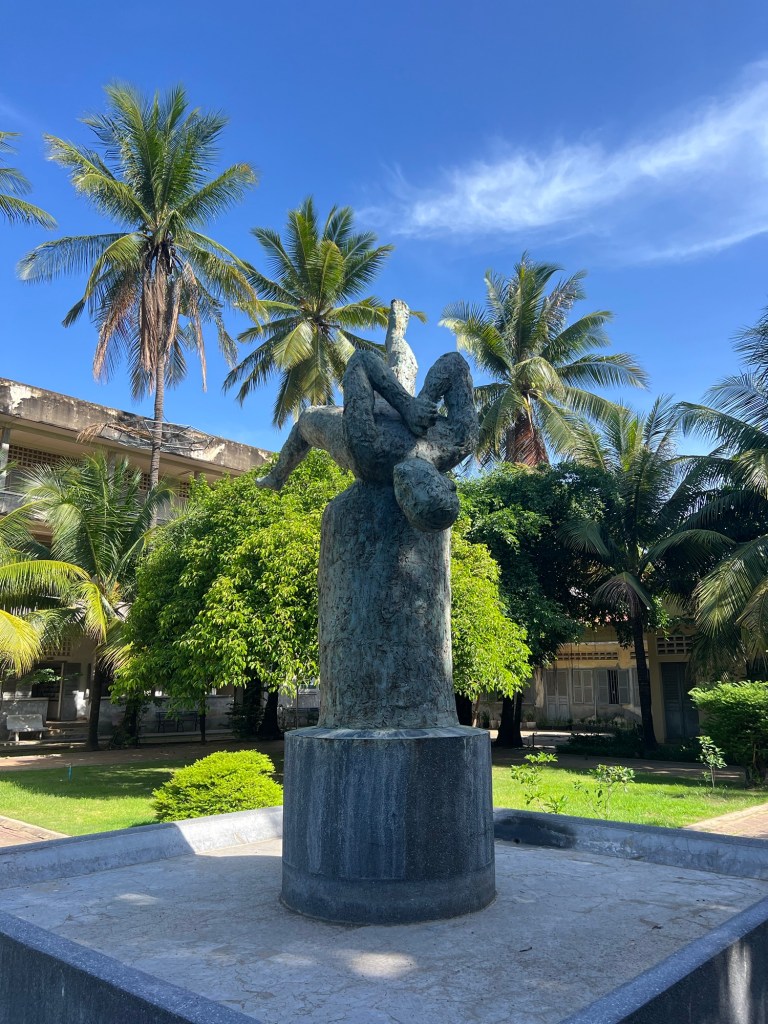
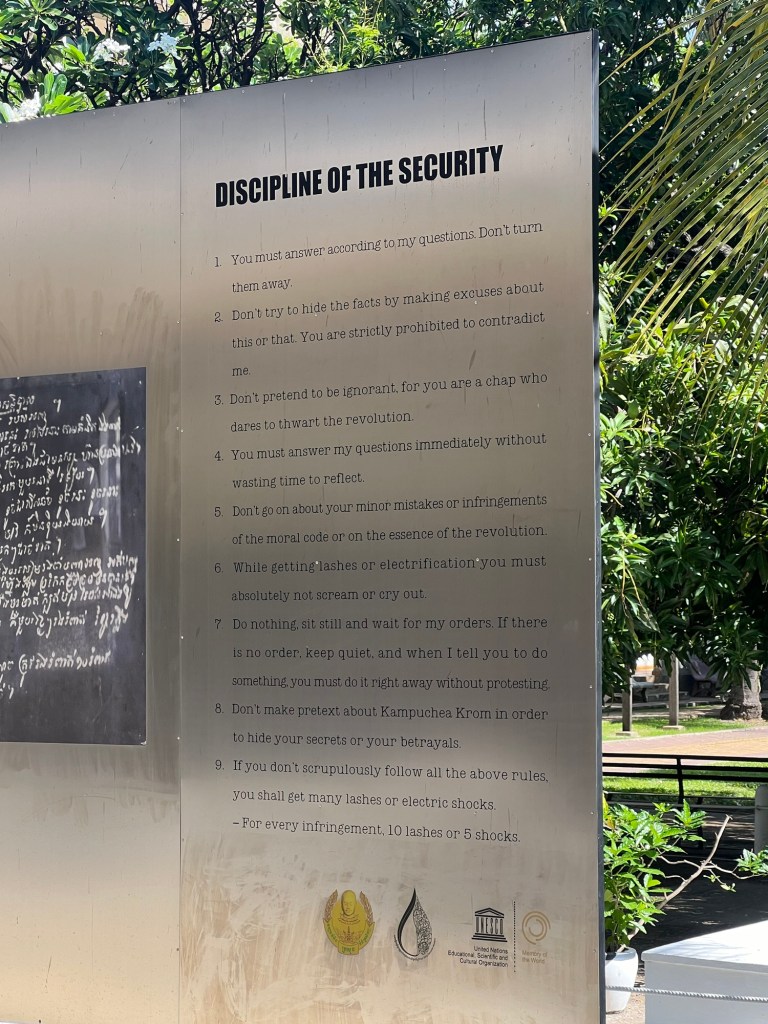
The discipline of the security – ‘don’t try to hide the facts by making excuses…don’t pretend to be ignorant…answer the questions immediately….when getting lashes or electrification do not scream or cry out….do nothing sit still and await the orders….if you didn’t follow these rules then the punishment was 10 lashes or 5 electric shocks!! Barbaric beyond belief.
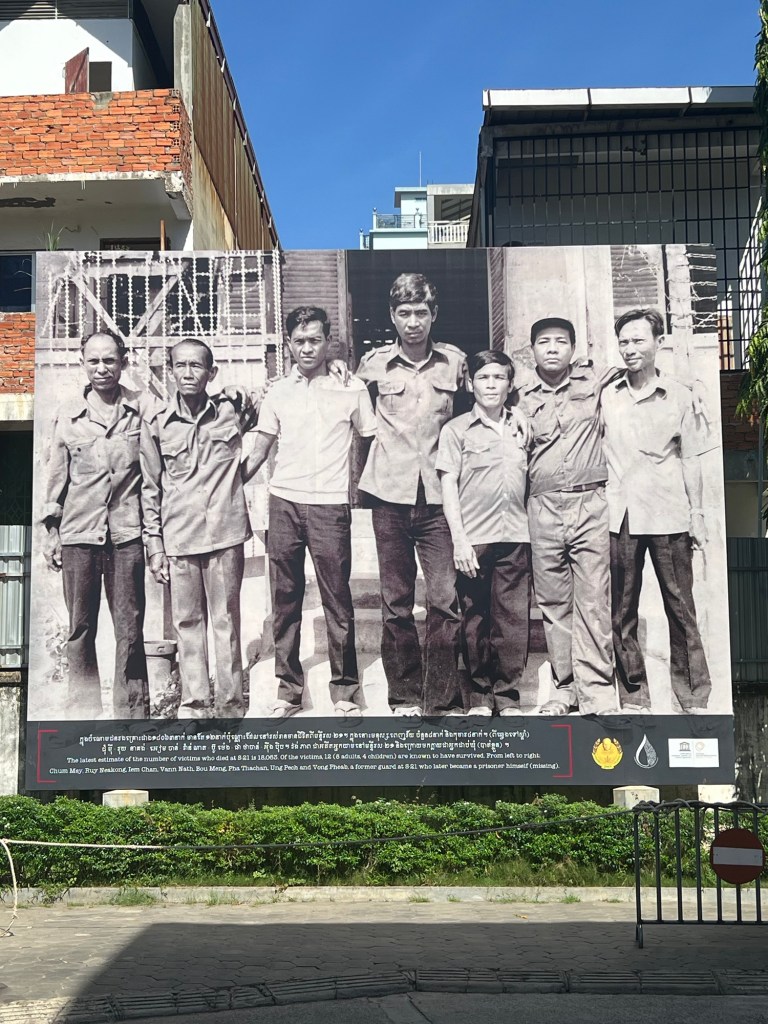
Out of the 20,000 who passed through the torture camp, only 7 survived and they are shown in the picture above. The rest were killed or tortured, then sent on to the killing fields. Across Cambodia there were over 375 killing fields where the bodies of over 1.5m murdered people, equating to 1 in 4 of the total of the then population. People were arrested for being skilled, intellectual or even for just wearing glasses! Pol Pot the leader of the Khmer Rouge believed that everyone should be equal and live off the land. His extreme views and latter on his paranoia led to him having family, friends and comrades killed as he believed they were spies for the CIA or KGB.

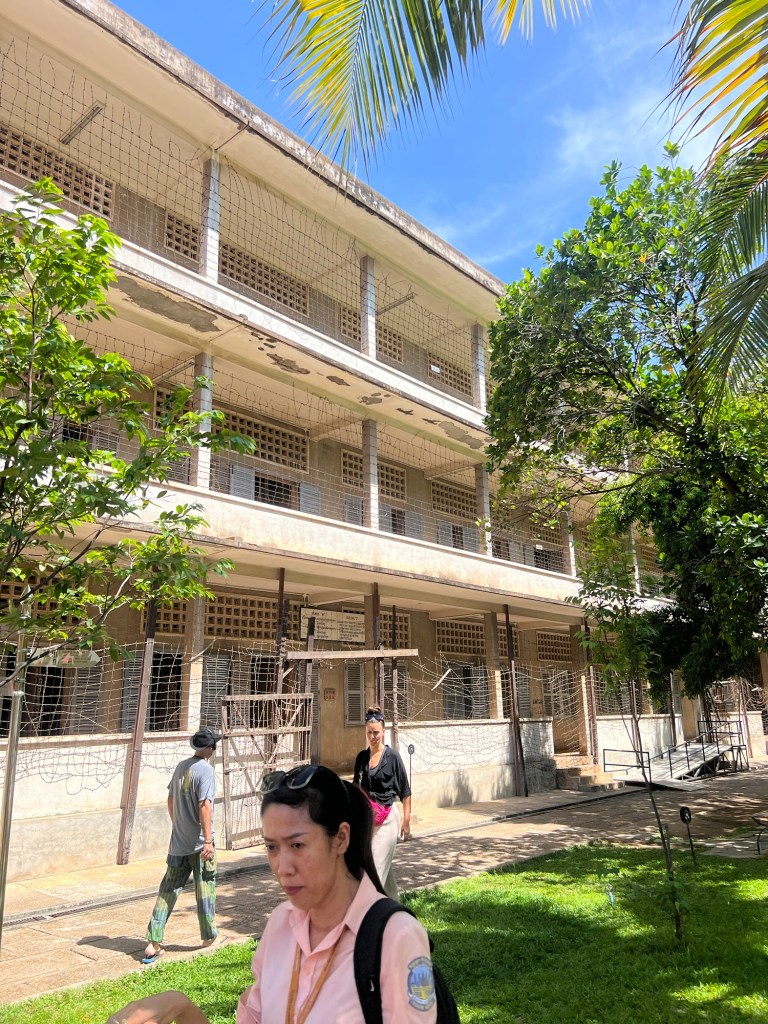
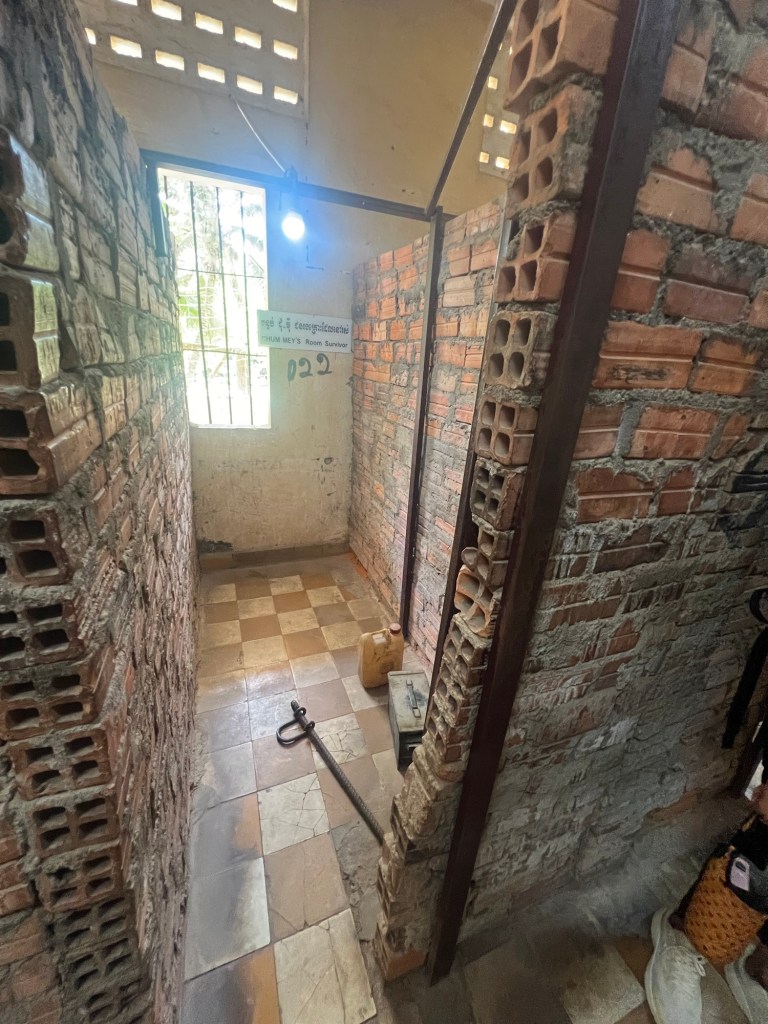
The rest of the rooms housed images of those people who passed through S21 and either died from their torture or left to be sent to the killing fields to be murdered. The images were terribly upsetting, but we are glad to have seen and gained a better understanding of the pain and suffering the victims of Pol Pot experienced. It’s a sobering lesson that all should see and thus avoid future atrocities such as those going on in the Ukraine and Palestine at present. The suffering is not worth it.
We were incredibly fortunate to meet in person one of the few people to survive their stay at S21. Chum Mey is now 94yrs old and only survived as a result of being able to work and fix a typewriter that meant he was kept alive. He escaped the Killing Field’s only down to the fact the invading Thai army came face to face with Khmer Rouge as he was on his way to be executed.
It was wonderful to hear his story and we bought his book that charts his life, notably the loss of his wife and 4 children as well as his brothers and sisters to the genocide of that time.
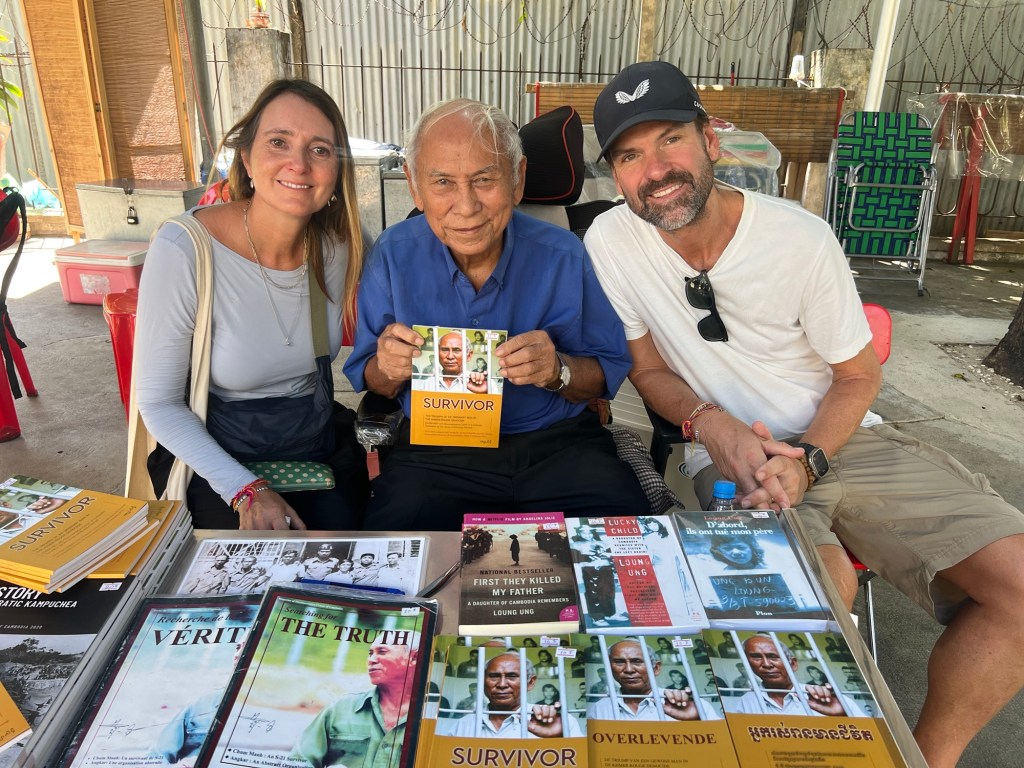

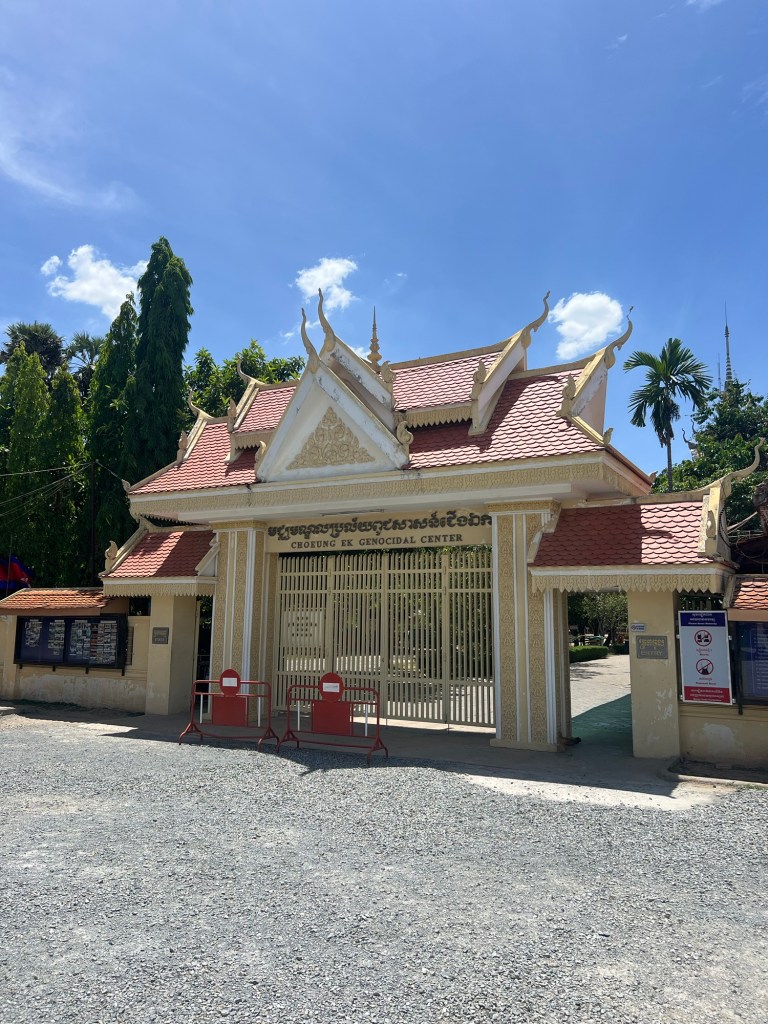
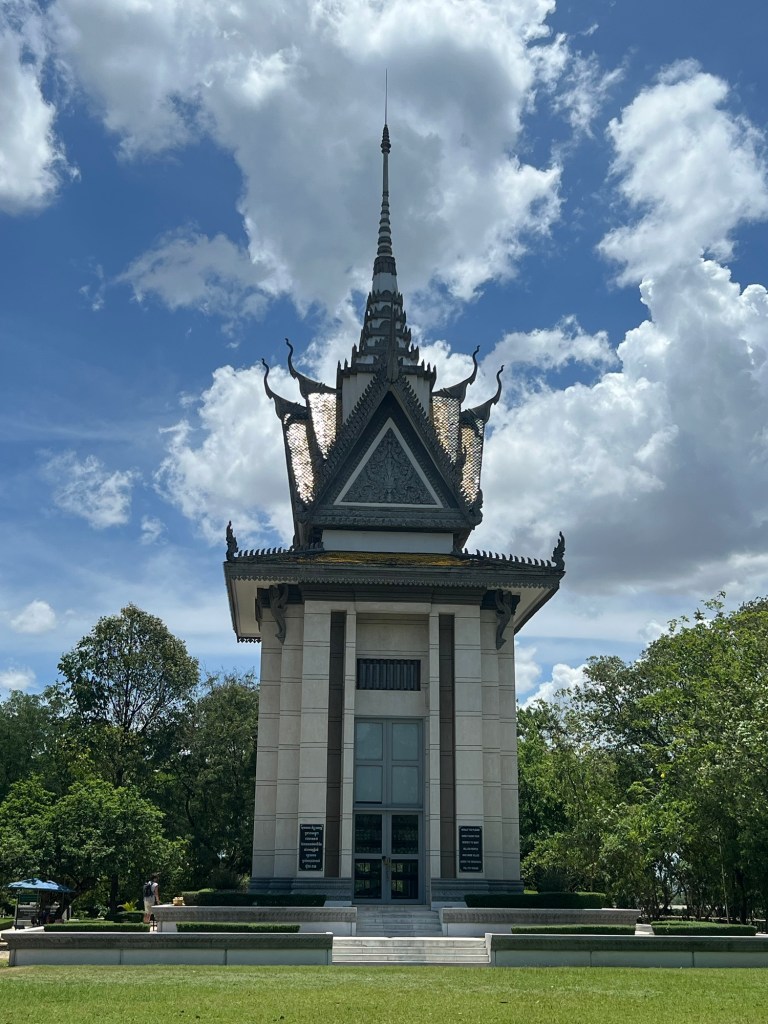
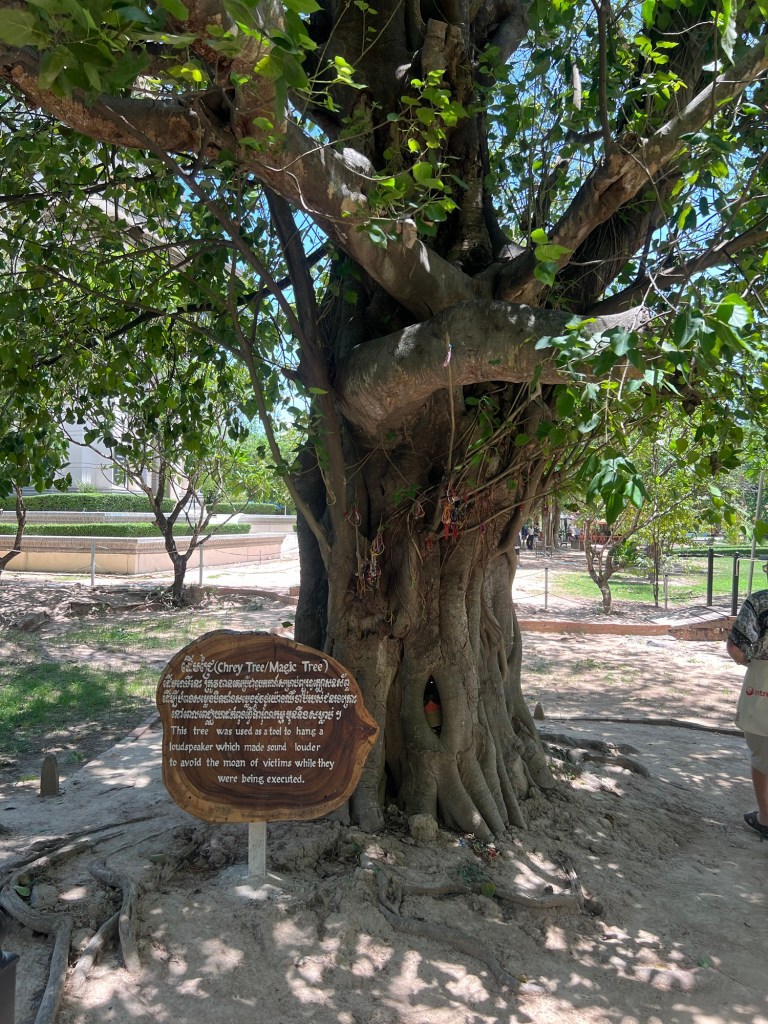
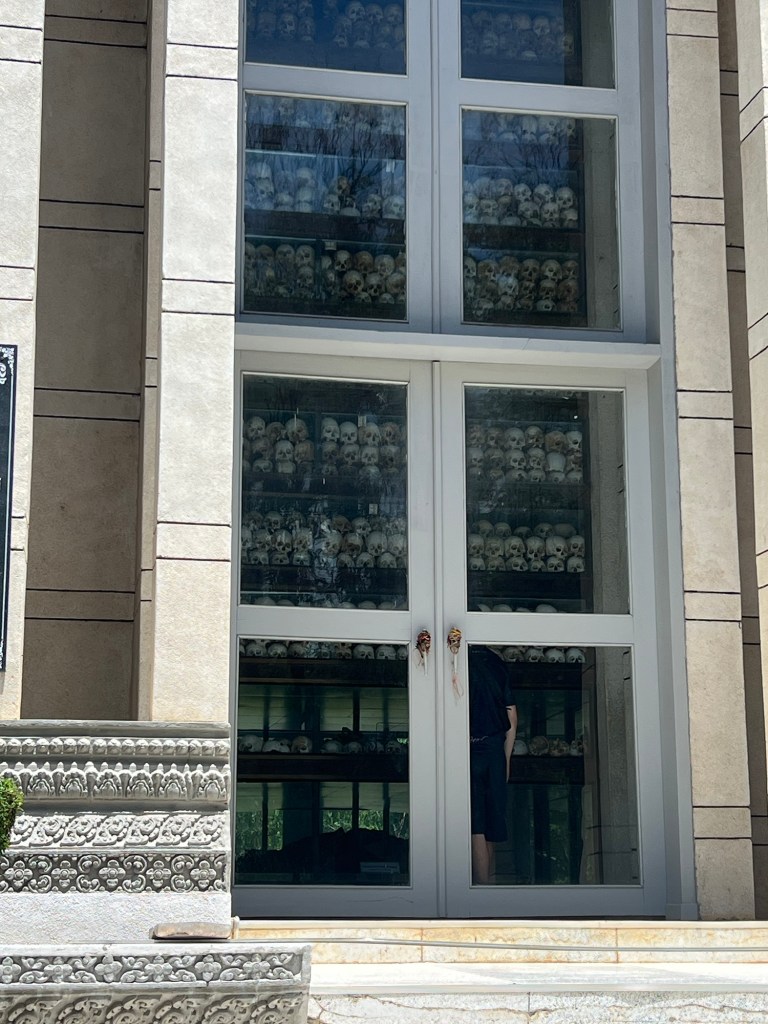
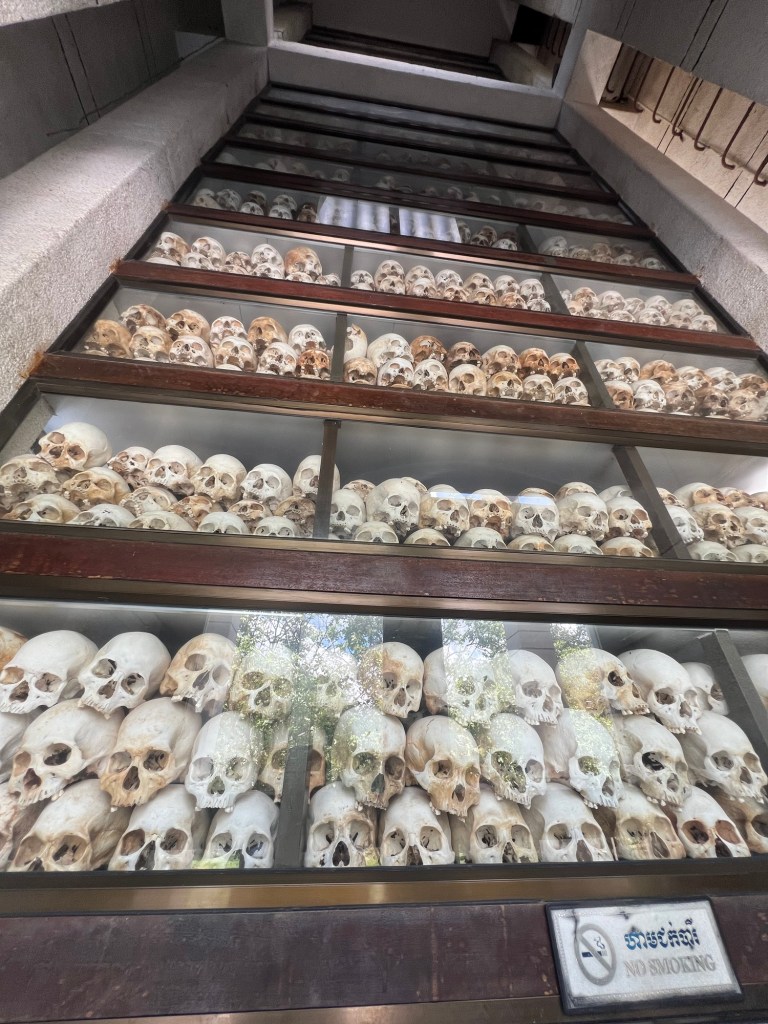
We both felt quite emotional after leaving the museum and this continued when we arrived at the ‘killing field’ of Choeung Ek where Pol Pot’s young soldiers, often no older than 16yr carried out his orders to kill the prisoners. As this was being done without the knowledge of the locals, they weren’t able to use guns to kill their victims and instead they were stabbed, suffocated or mutilated before their bodies were covered in a poisonous liquid that brought on death and helped to reduce the smell of rotting bodies.
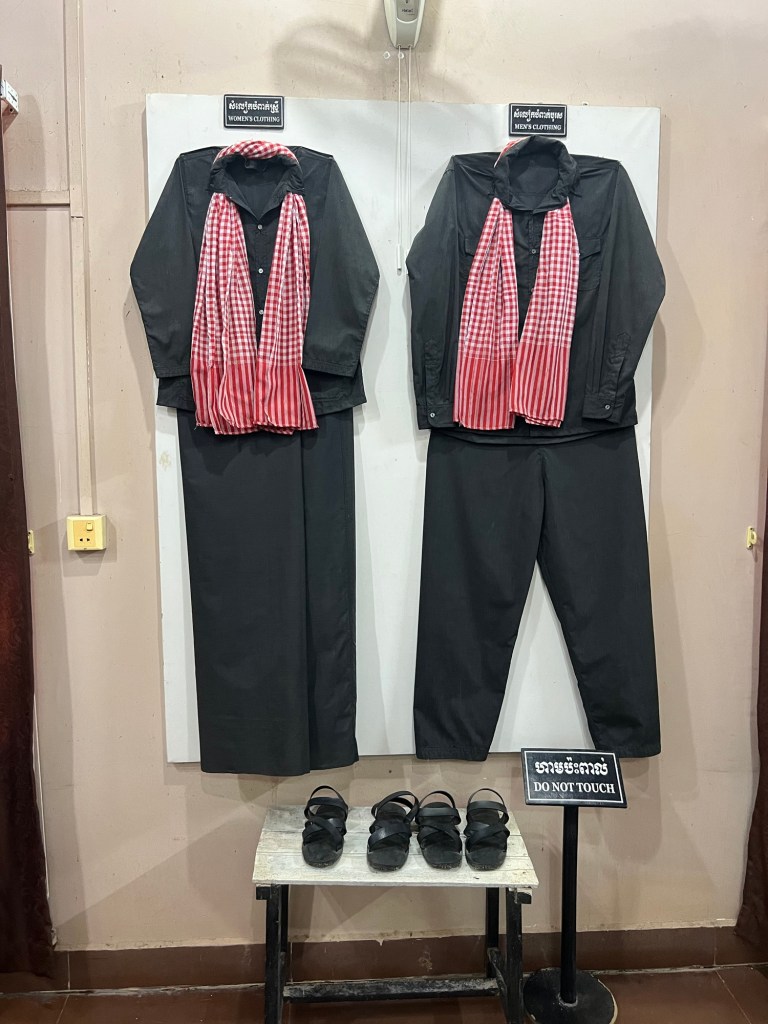
The mass graves covered a 2 hectare area and included up to 450 bodies at a time. These were often shallow and over the years the remains will come to the surface during the rainy season. As we walked around you could see small human bones poking out of the ground along with their old clothes.

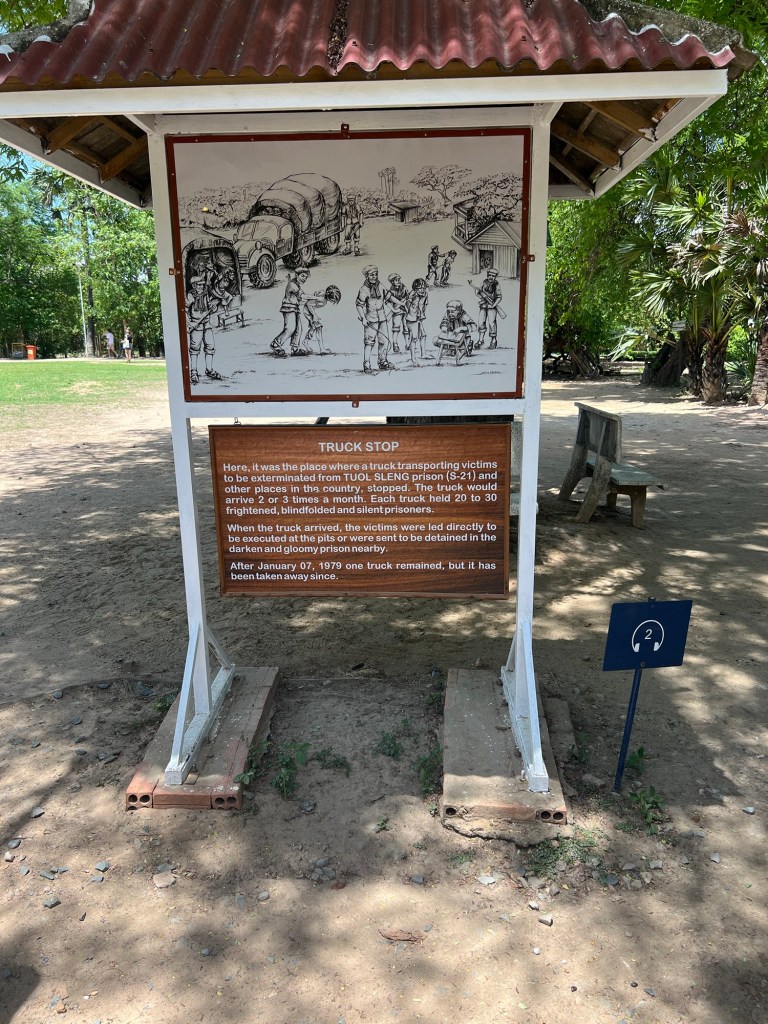
Walking around understanding the atrocities that were committed, there were echoes of what the Nazis did to the Jews during WWII. The scale of the killings and the brutality they inflicted is staggering and almost beyond comprehension.
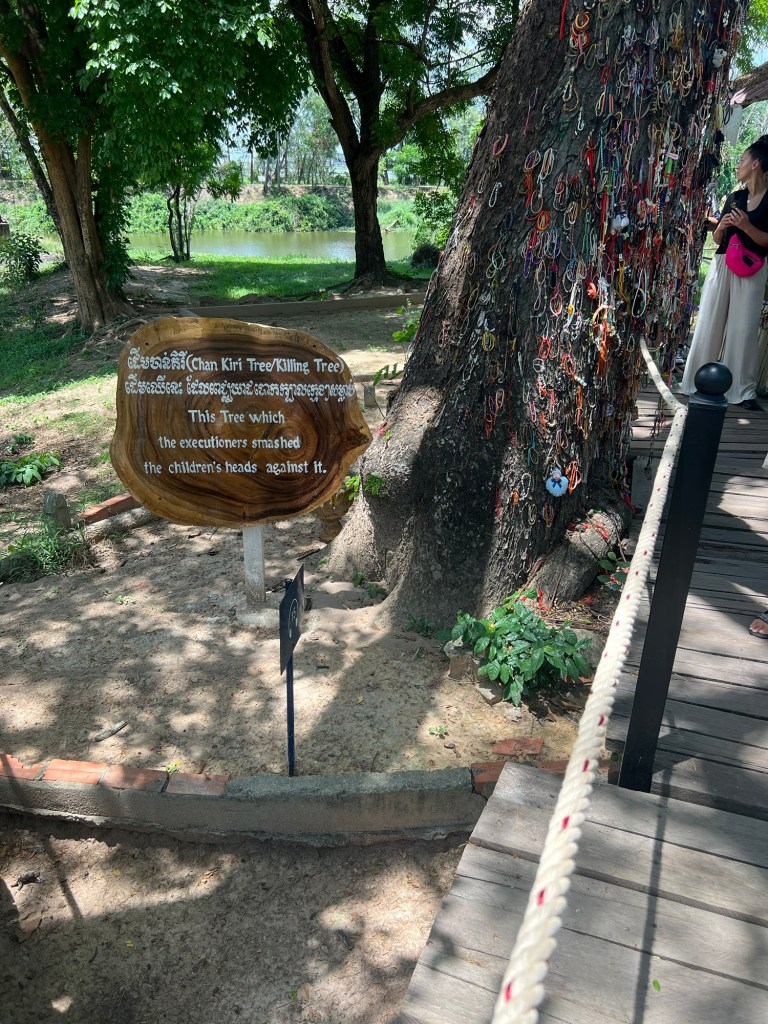
This tree is testament to the twisted and unfathomable way the Khmer Rouge dealt with the killing of young babies and their mothers. The mothers were forced to watch as the babies were held by their feet and the heads banged against the tree until death. After that the mothers were raped then had their necks slit and they were pushed into a shallow grave. It’s difficult to put into words how this happened and why.

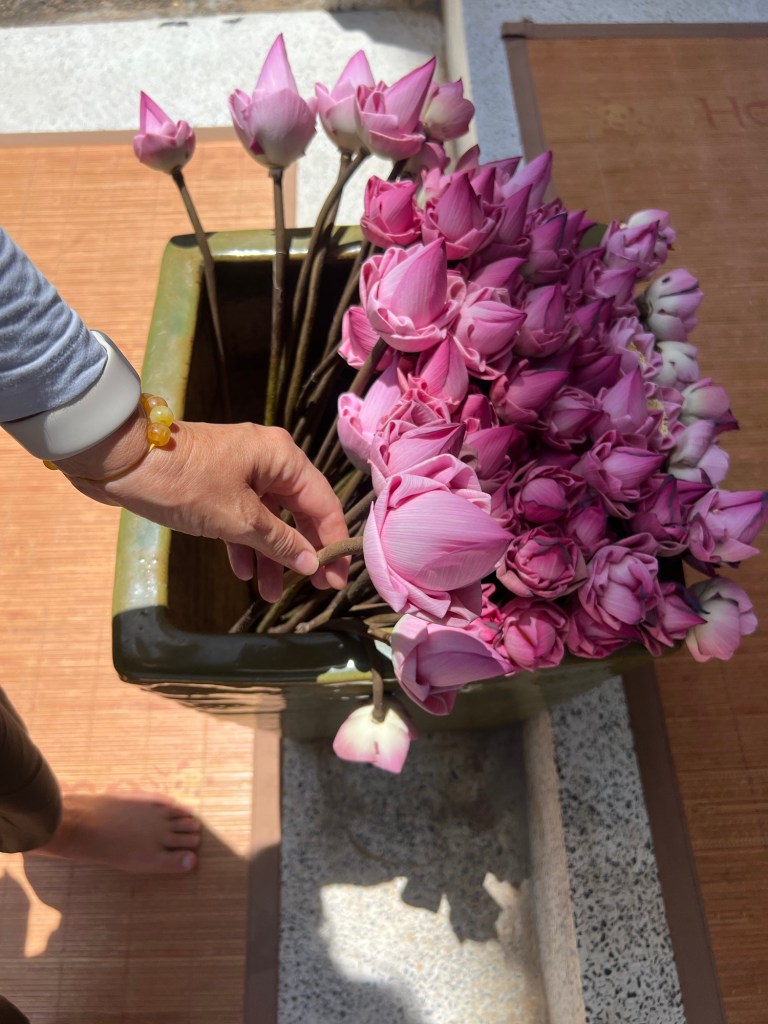
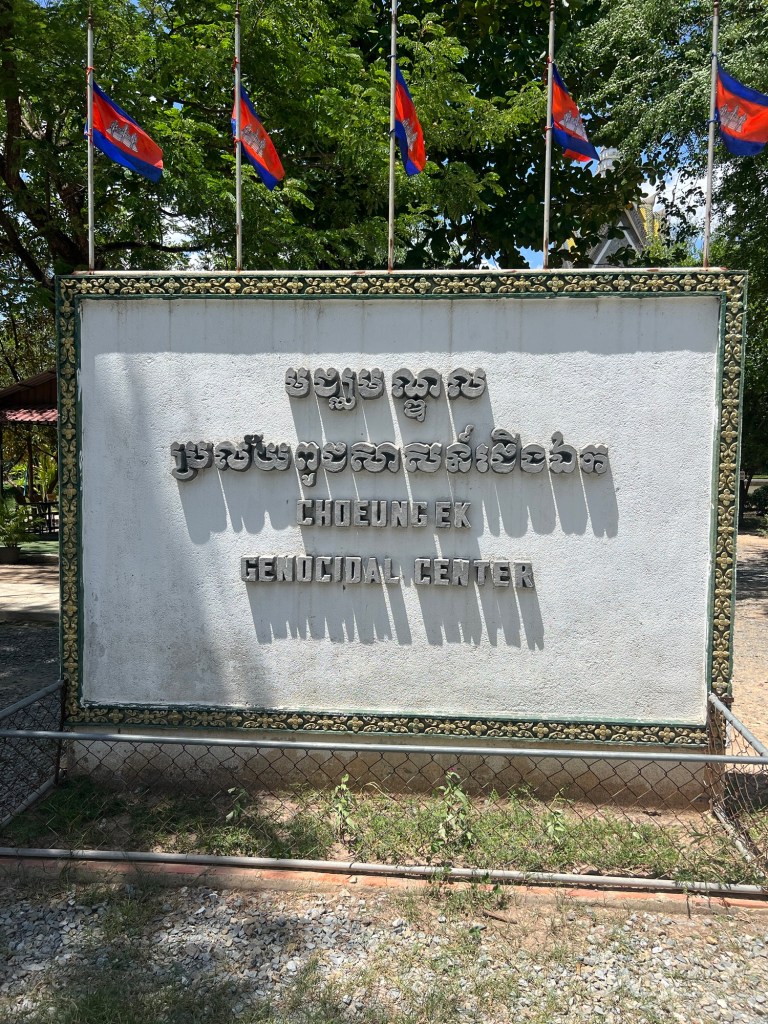
This has been one of the most hard hitting days of our travels to date, experiencing what the people of Cambodian went through over a 4yr period from 1975. It’s shocking, but the people have accepted their past and are keen to look to the future, but without forgetting their recent history.
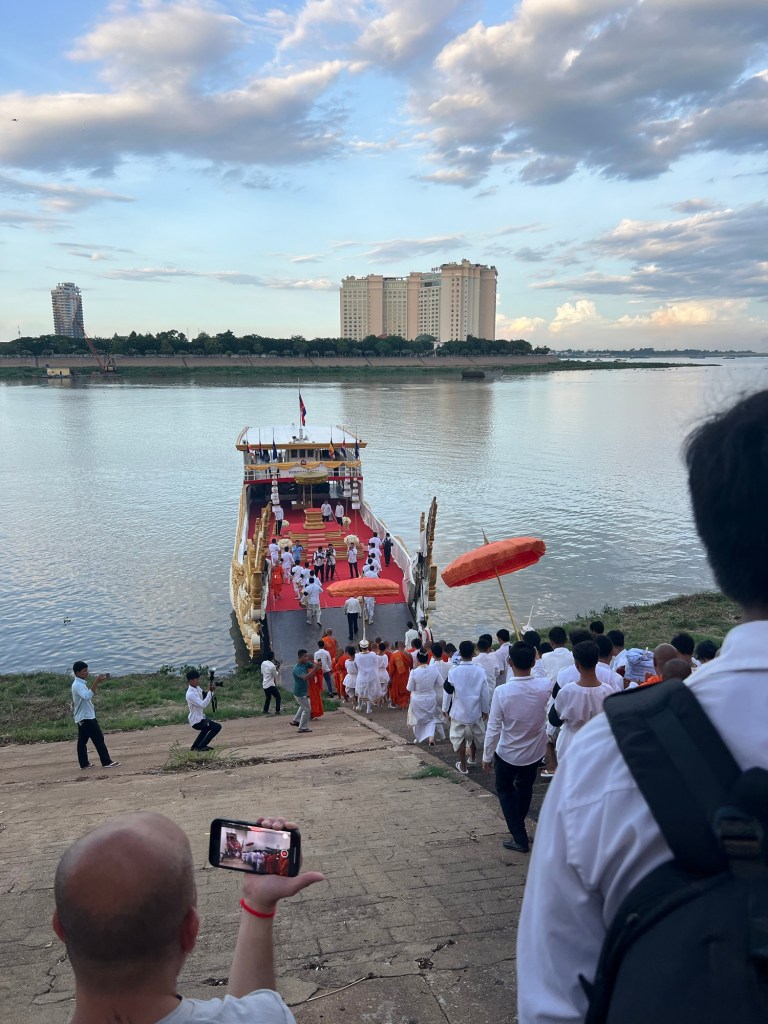
After the seriousness of what we’ve seen and heard about today, we decided to have a more relaxed and fun night just the two of us. We took a tuk-tuk down to the riverfront and by chance came across the funeral procession for a high ranking monk whose body has been lying in state for the last 100 days.
The road was closed and there were hundreds of monks and dignitaries in attendance.


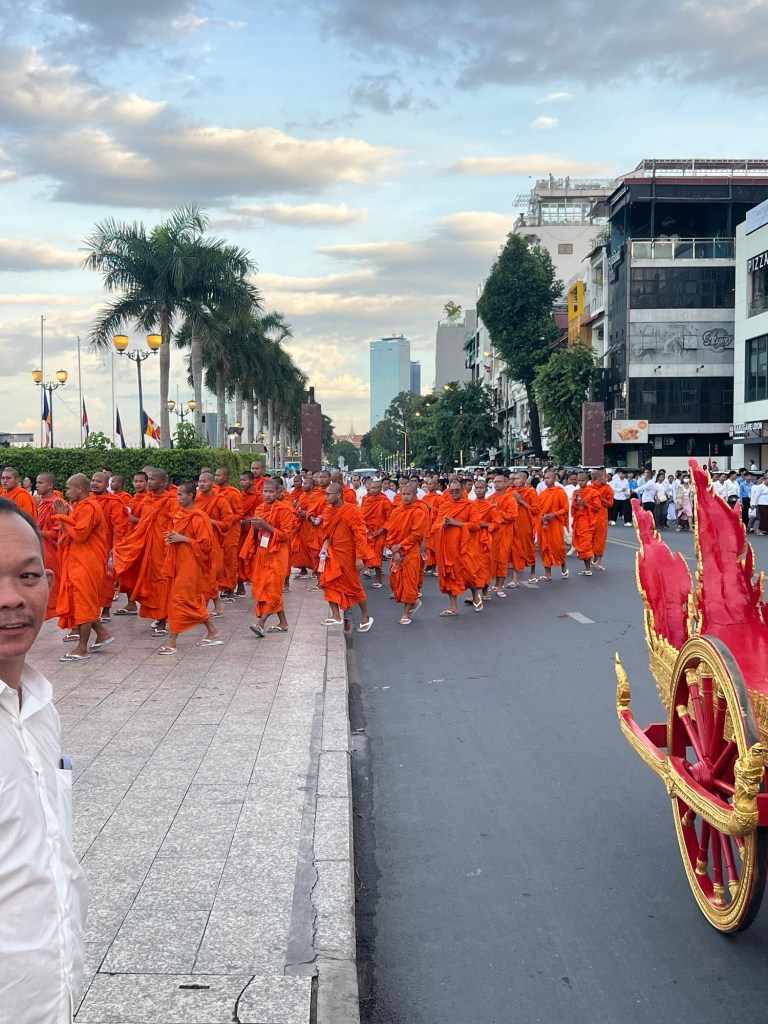

Part of the celebrations took the monks down to a boat on the Mekong River and they headed out surrounded with flowers and gifts to be dispatched into the water.
Tonight we decided to have a break from Cambodian food and treated ourselves to a pizza in a roof top bar.
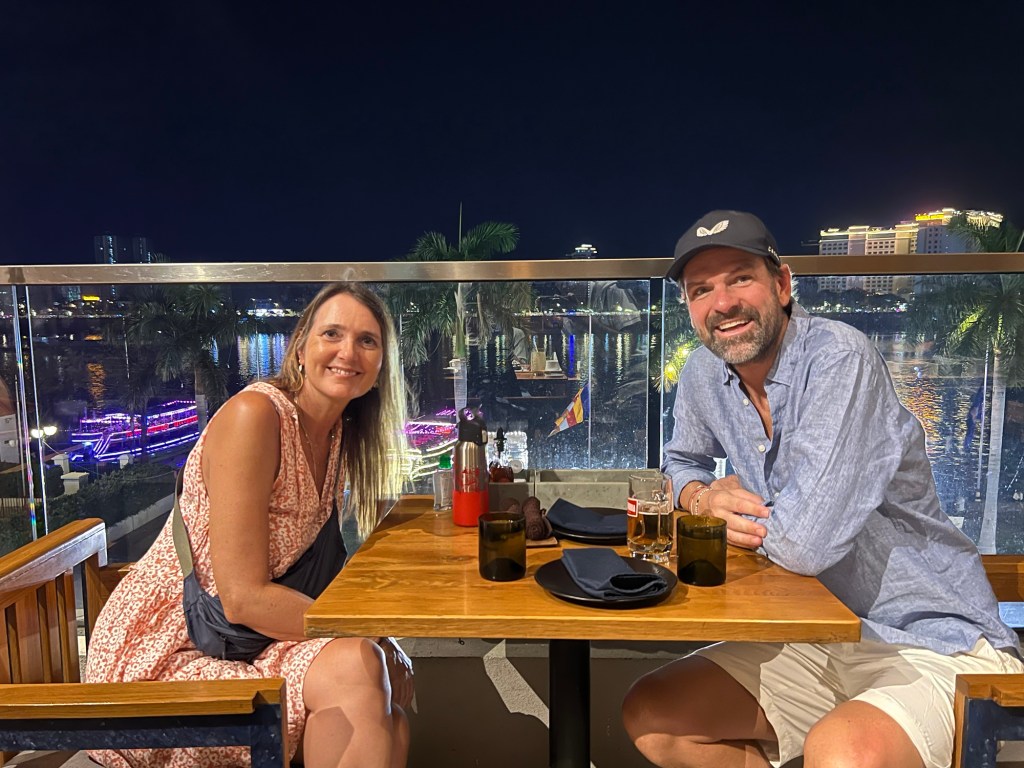

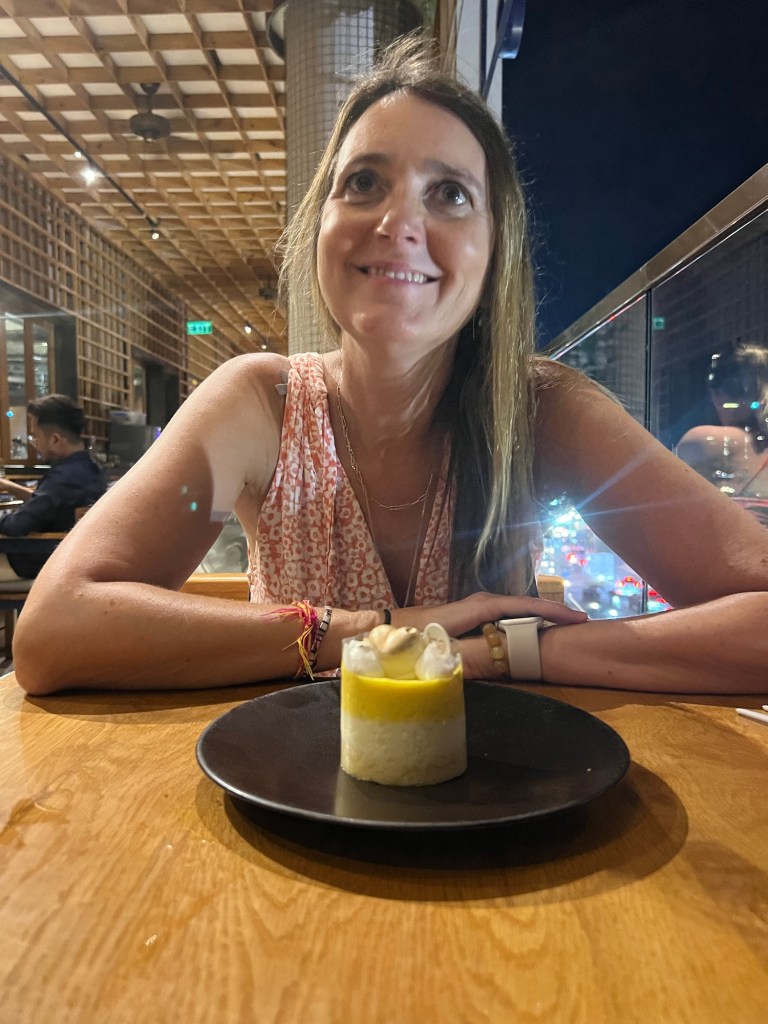
The adjoining table to us were celebrating a birthday and kindly donated one of their cakes, so we finished with a sponge cake dessert.
Tomorrow we move on again, with a 7hr coach journey to Cambodian’s second largest city, Battambang, where further adventures await!
 @travellingwiththeateam