A quiet morning all in all. Late breakfast, followed by a couple of hours by the pool, before we changed and readied ourselves for a walking tour around the old part of Hoi An.
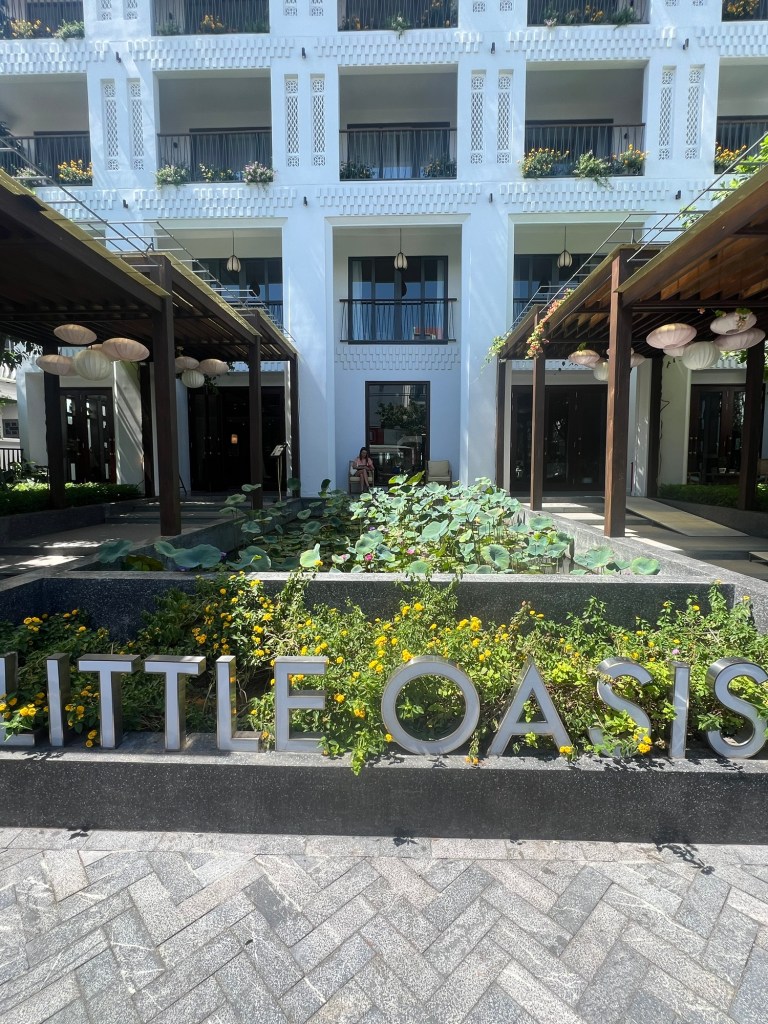
Little Oasis hotel
The GuruWalk tour started mid-afternoon with a modest group of four, plus our young guide Ly, a student studying business and tourism. The other two guests were a friendly young Spanish couple, who we soon got chatting to and helped to make the next couple of hours memorable & fun.
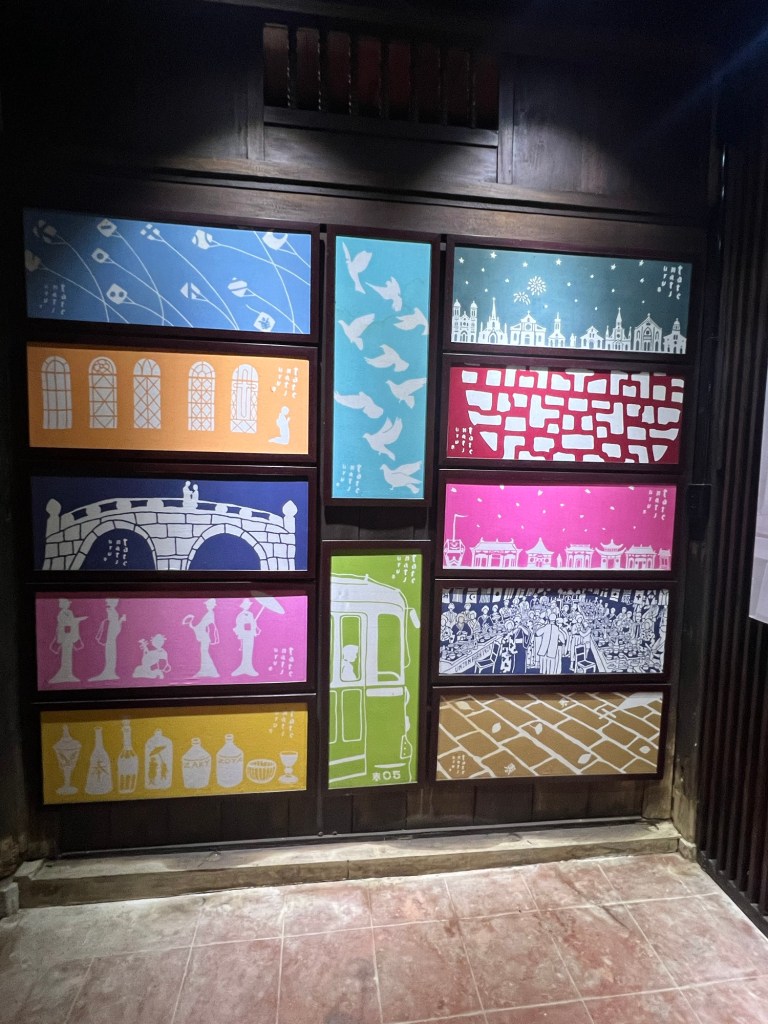
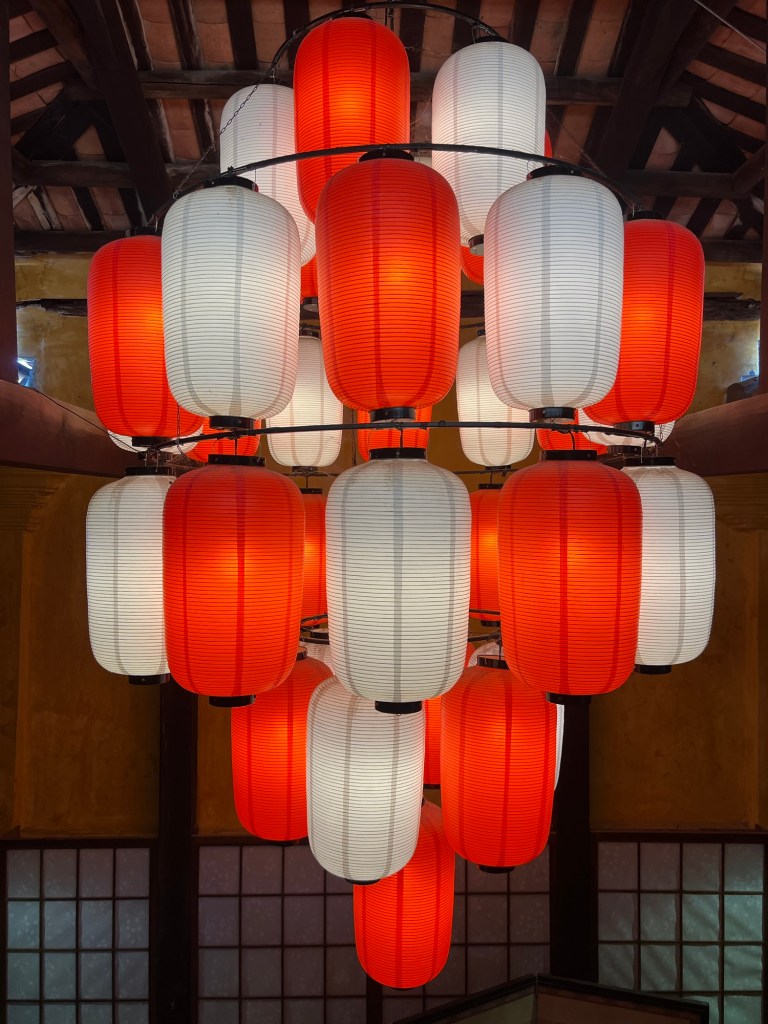
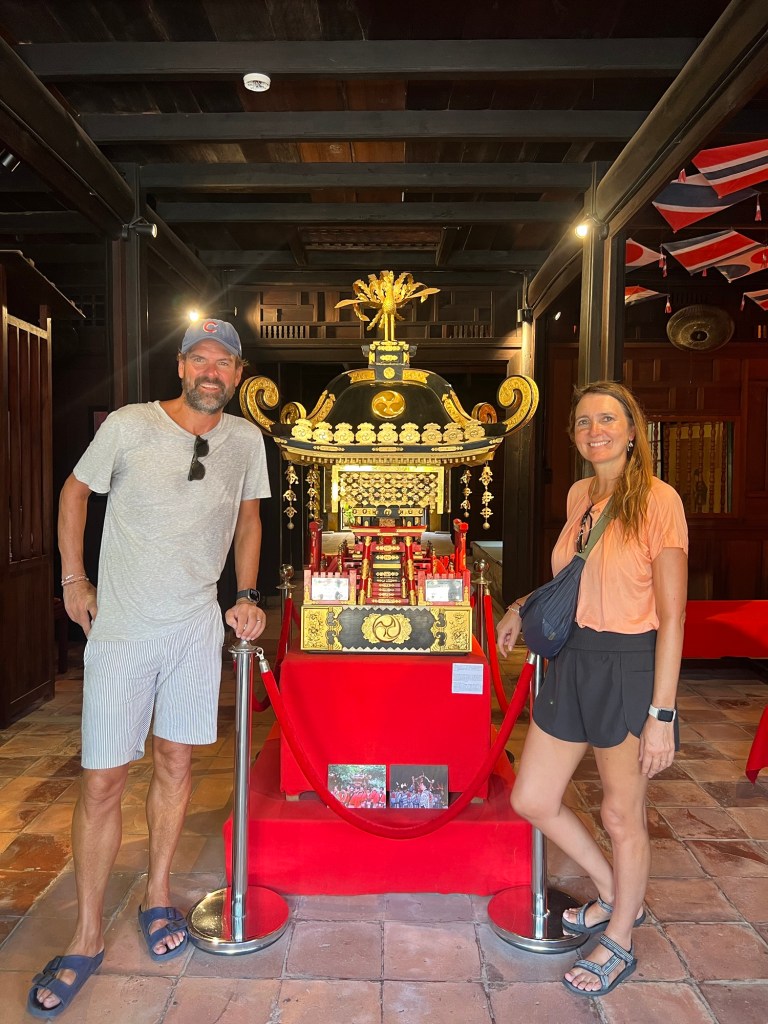
Our first stop on the tour was an old Japanese traders house, now a promotional space for Japanese culture. We loved the order and atmosphere of the place and it’s got us ever more excited about our forthcoming trip to the country in October.
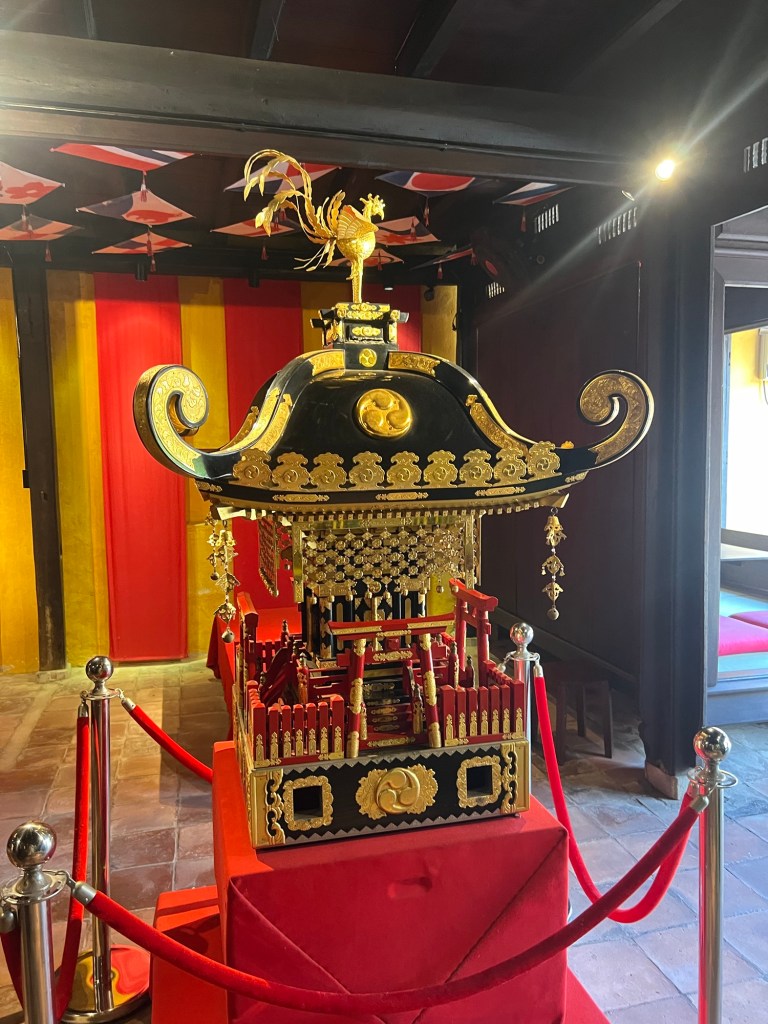

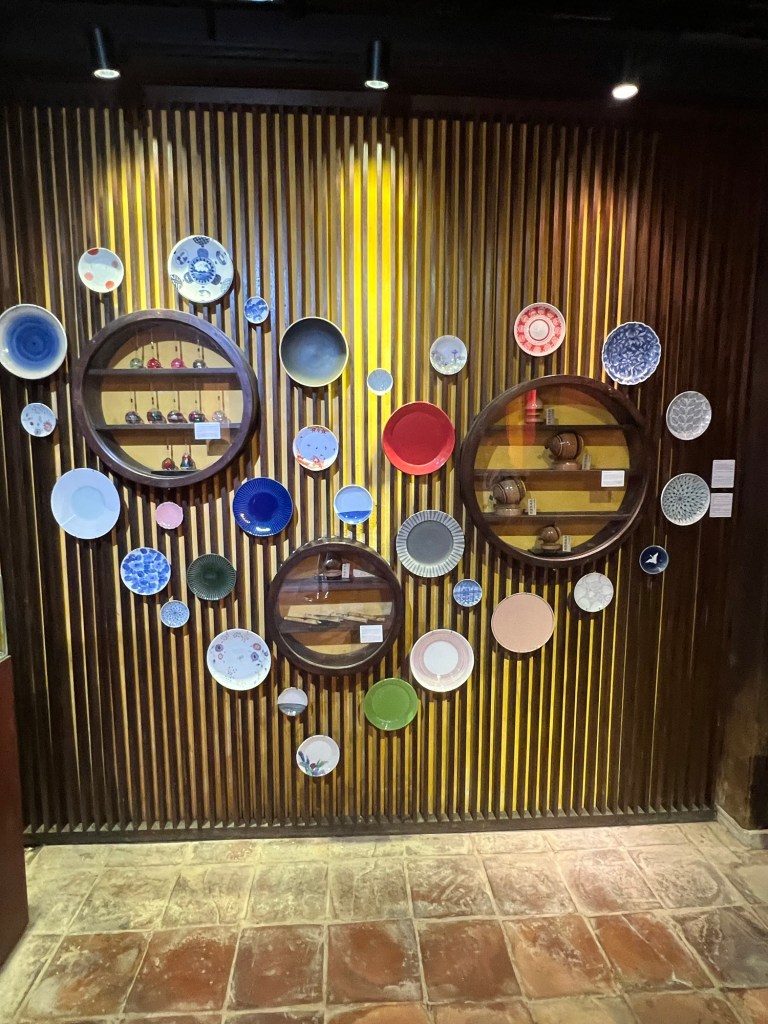
As a centre piece to the front of the house was a shrine to the Phoenix, which in Japanese tradition brings peace and prosperity and is a message of hope and rebirth.
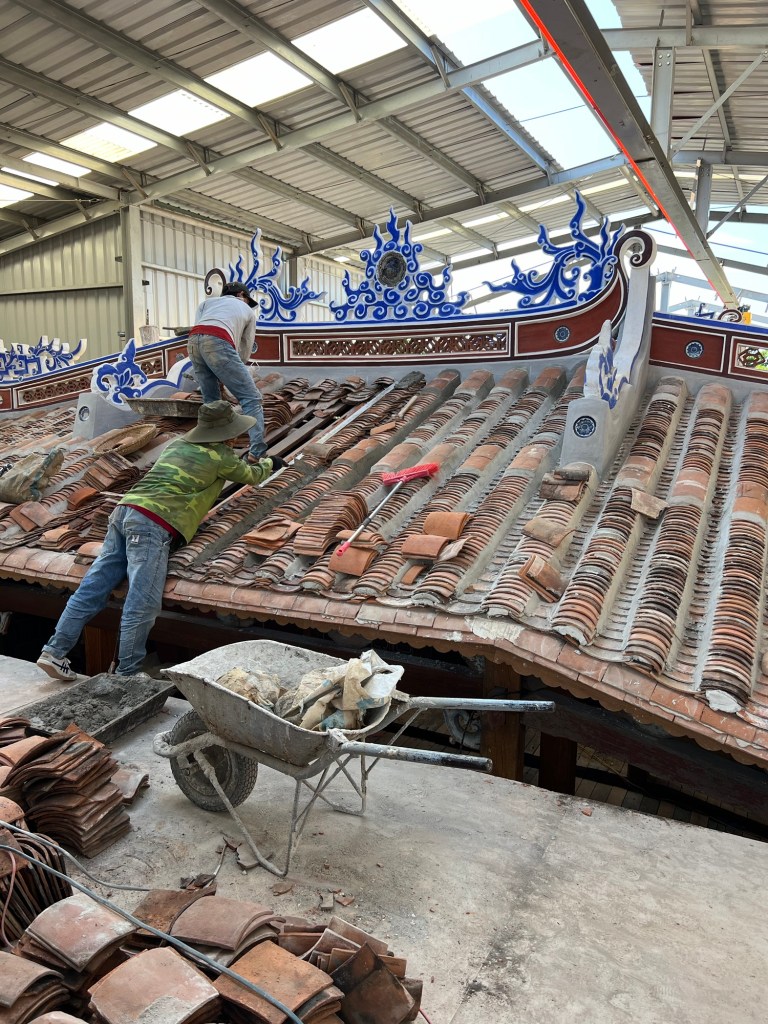
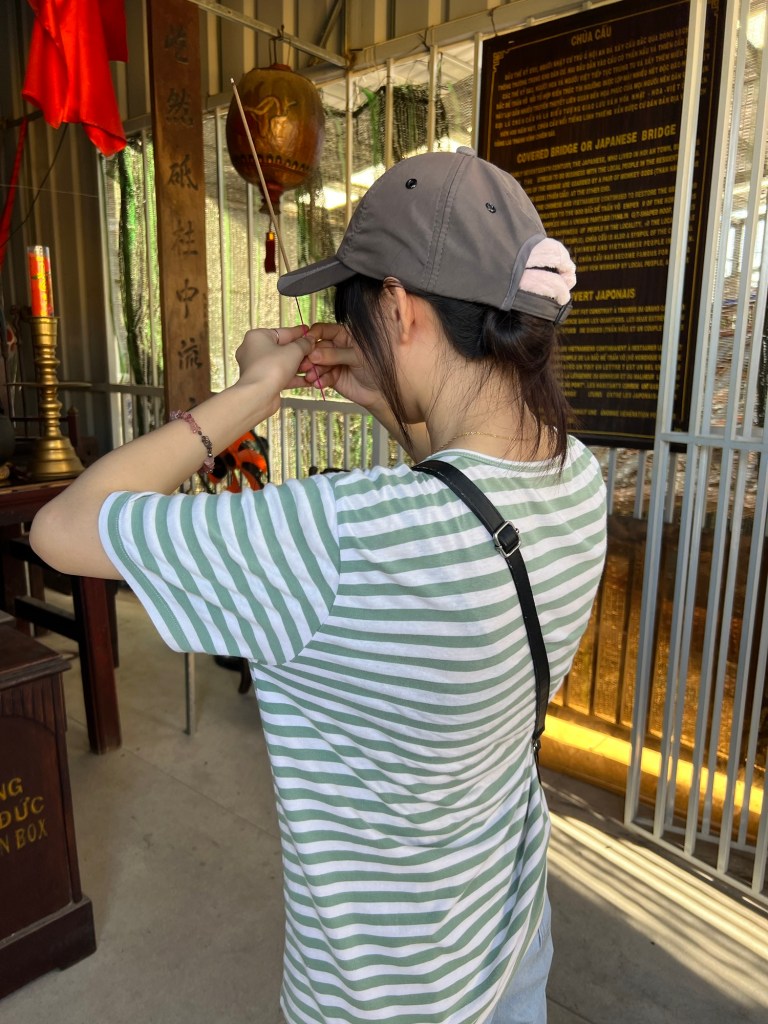
We then visited the old bridge, known as Cau Pagoda, linking the old Japanese and Chinese quarter which is currently being renovated after being badly damaged by flooding in 2020.
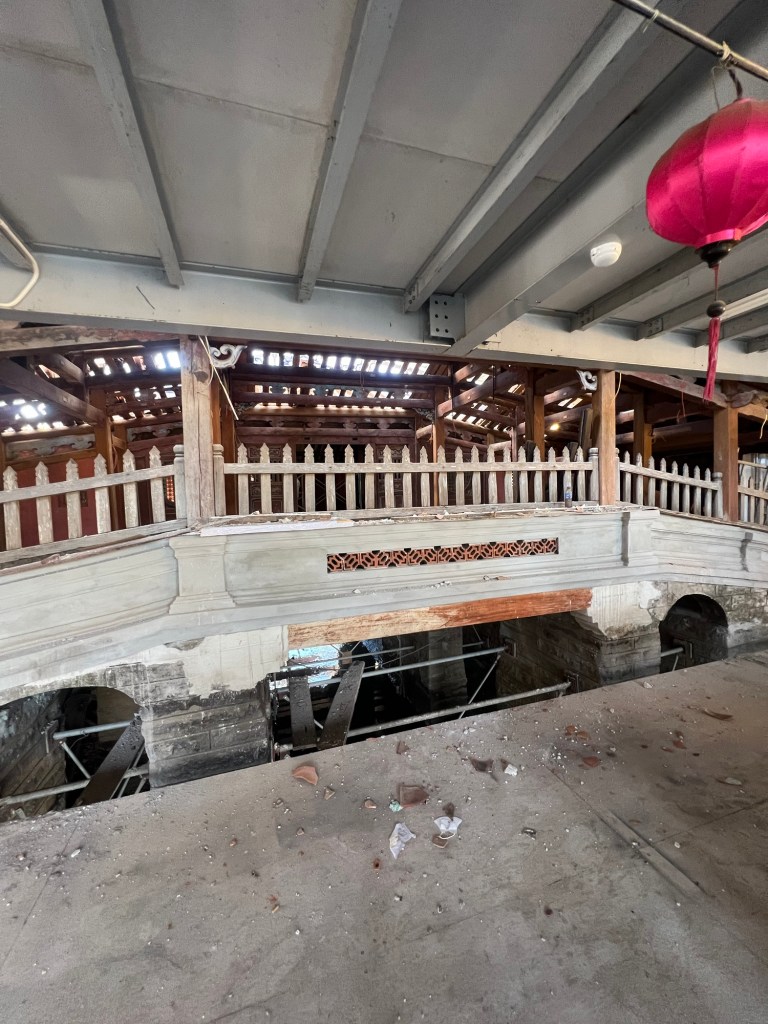
The bridge has been downgraded since the last renovation due to various floods in Hoi An City. Many poles and beams that support the bridge have deteriorated, requiring urgent maintenance to avoid it collapsing.
At the entrance to the bridge are a dog and a monkey respectively. They represent the guardians of the bridge, symbolising protection and safety in Japanese culture. It is also said that these two statues marked the beginning of the construction in the year of Monkey and the completion in the year of Dog.
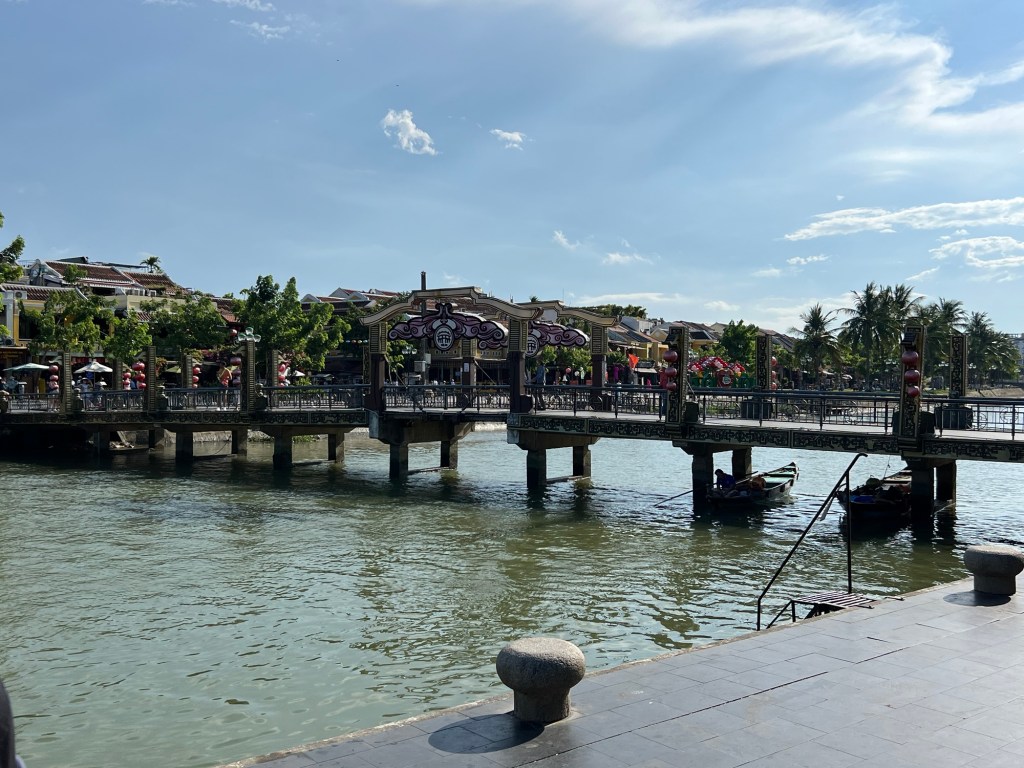
Bon river provides a perfect spot to see sunrise or sunsets or simply to chill with a cool breeze. The bridges connect the town with the other islands that sit in the delta.
Whether accidentally or intentionally, all the bougainvillea trees in Hoi An have only one velvet purple color, and some trees are planted with red flowers.
There are large bougainvillea trees and tree trunks as big as old trees.
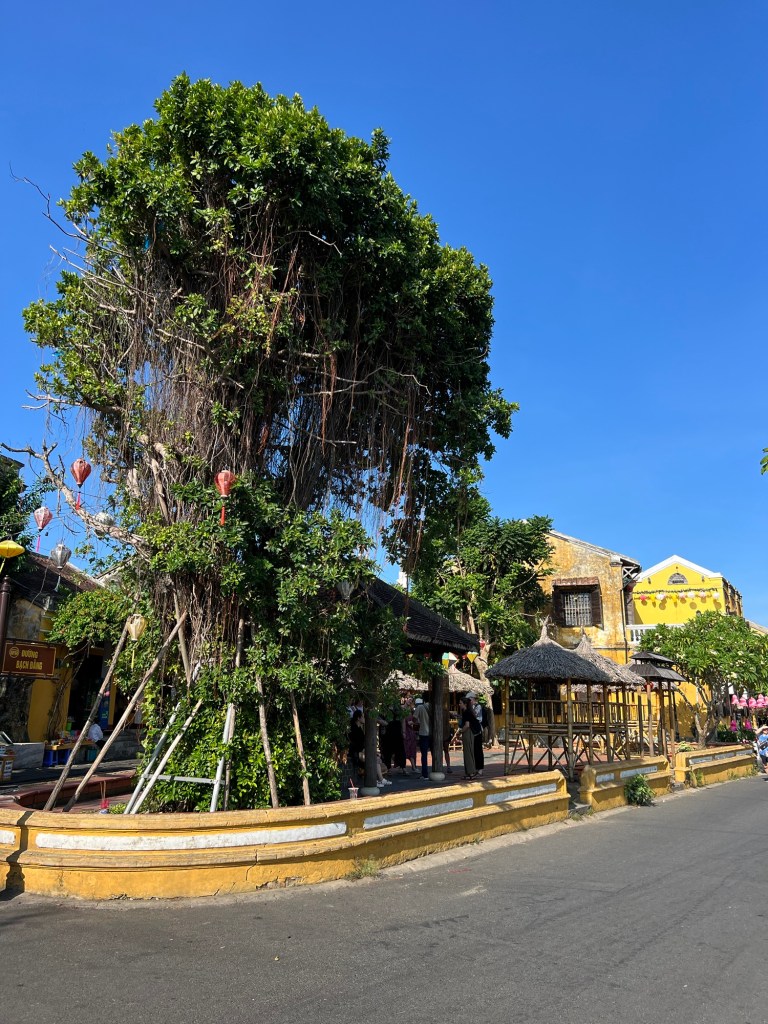
One of the beautiful things about Hoi An is the bold yellow colour of most of the buildings. It’s been nicknamed “The Yellow City” as a result.
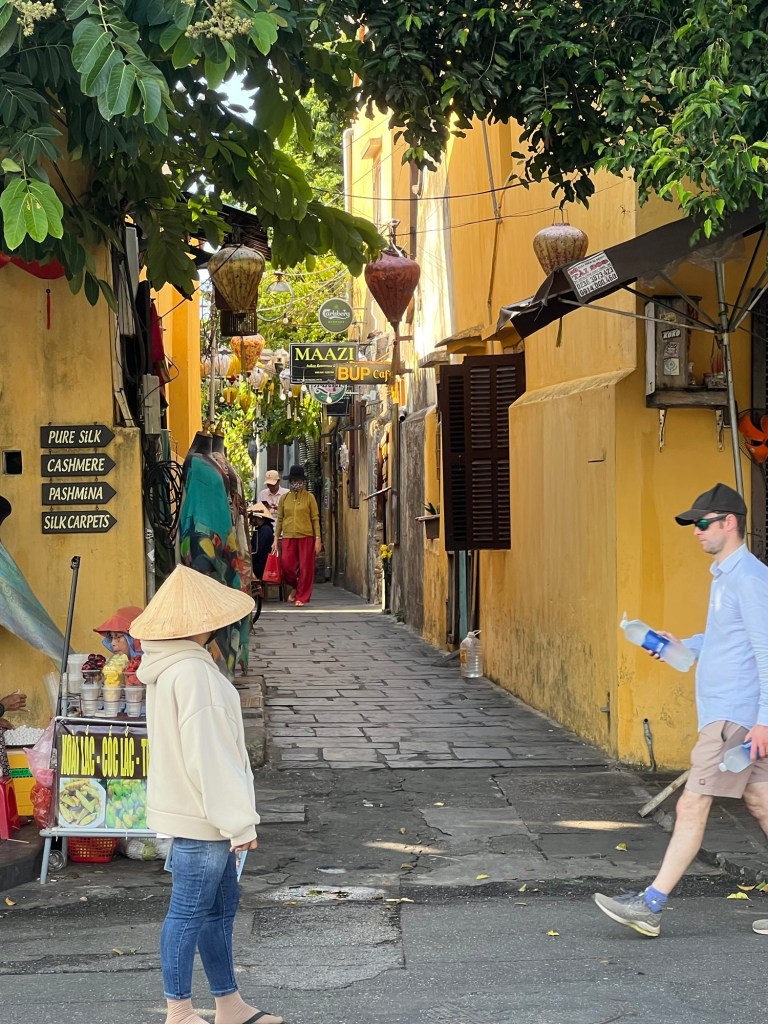
As we strolled the side streets on our tour, we came across restaurants selling the famous Com Ga Hoi An, a signature dish that features shredded chicken tossed with Vietnamese coriander, onions, and lime juice dressing. Michelle is a big fan and has eaten this twice over the last two nights!
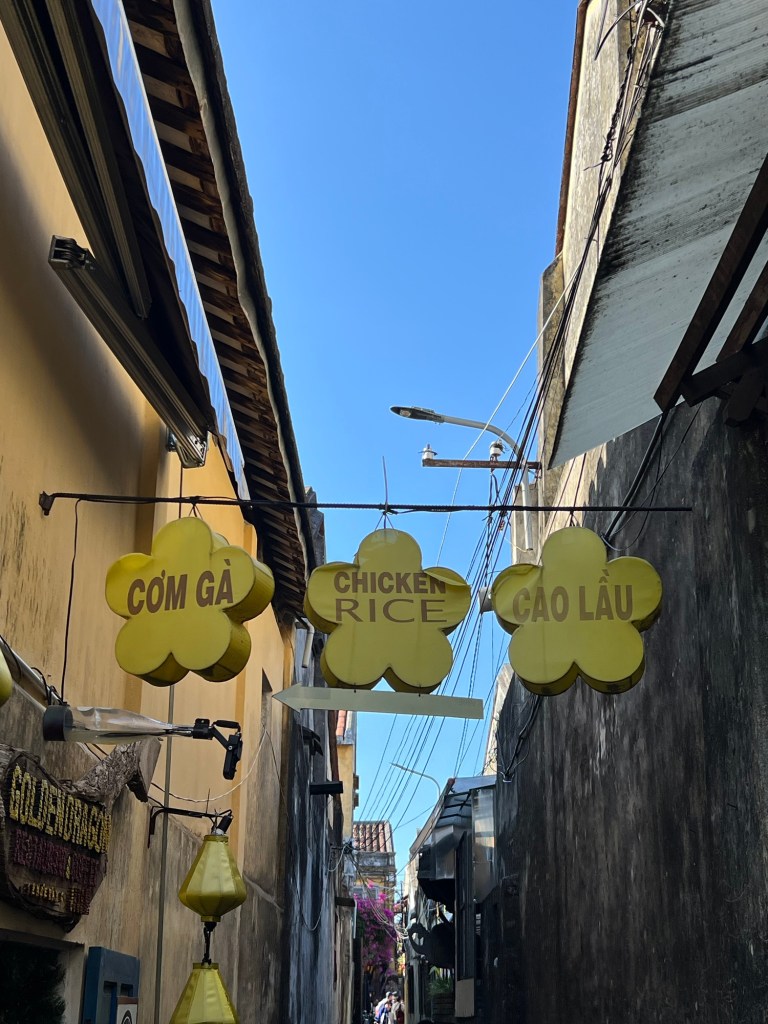
Hoi An old town is an exceptionally well-preserved example of a South-East Asian trading port dating from the 15th century. Its buildings and street plan reflect the influences, both indigenous and foreign, that have combined to produce this unique heritage site.
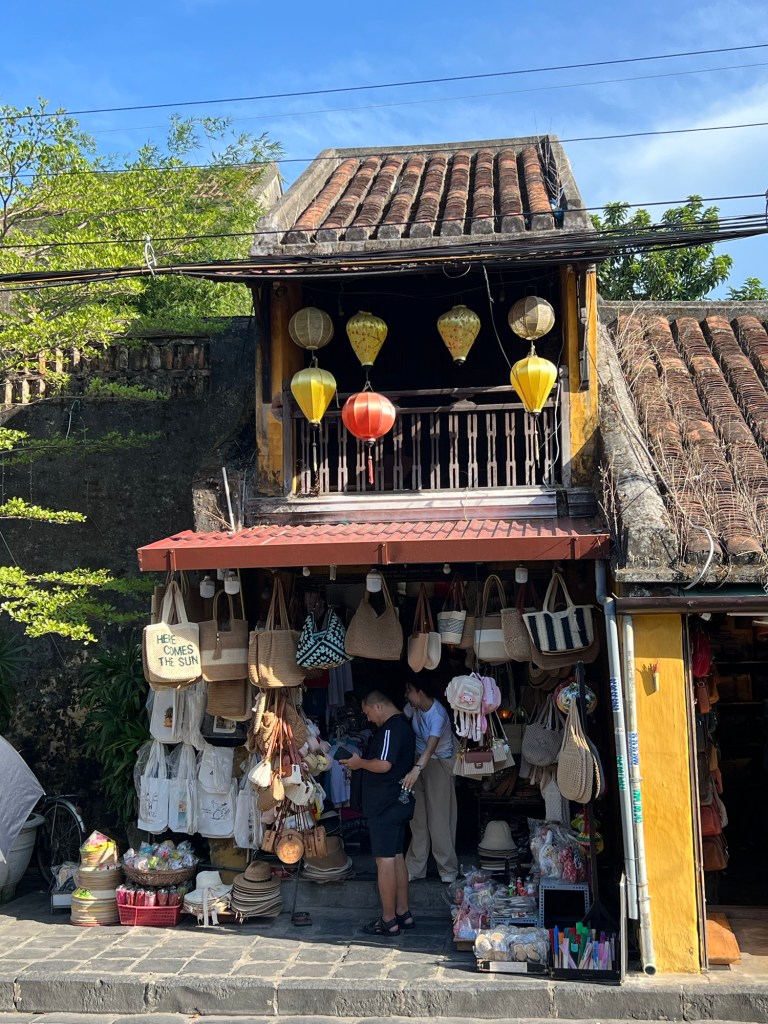
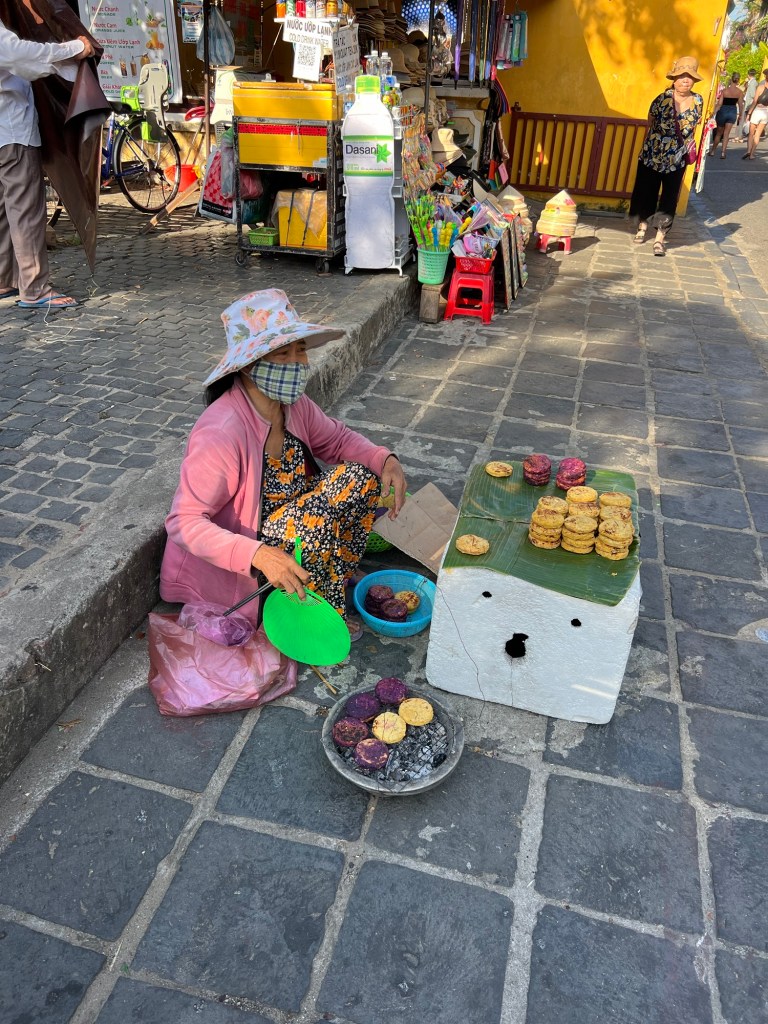
We came across a lady selling potato and rice dumplings and they proved to be a great find and very filling served on a banana leaf.

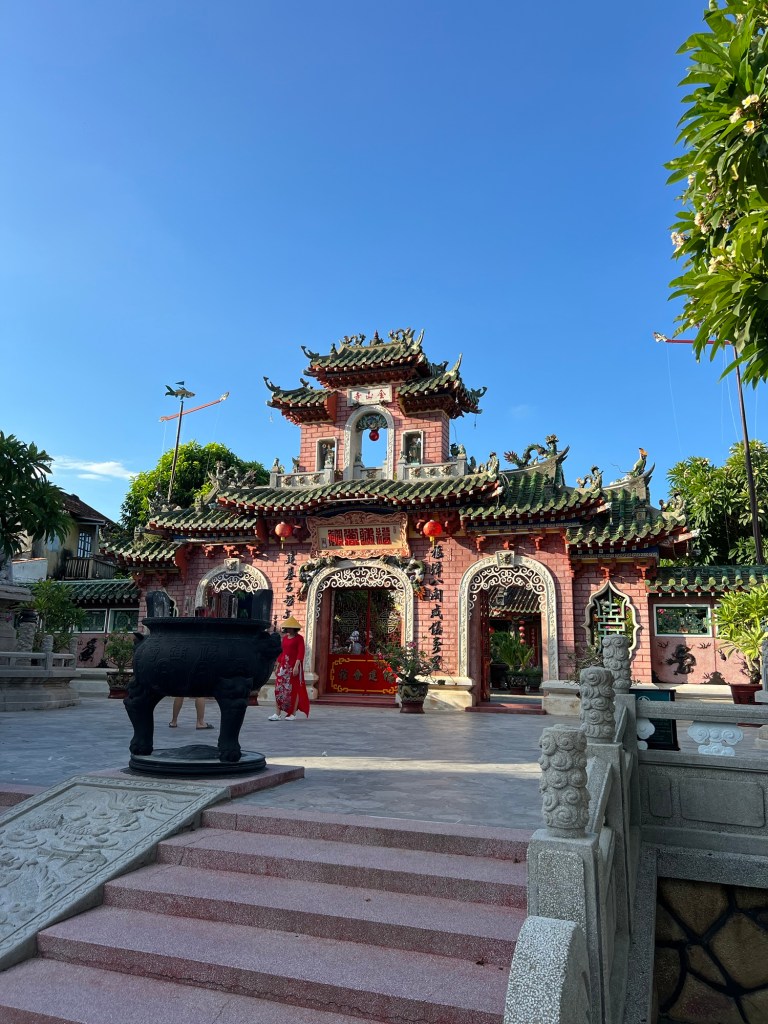
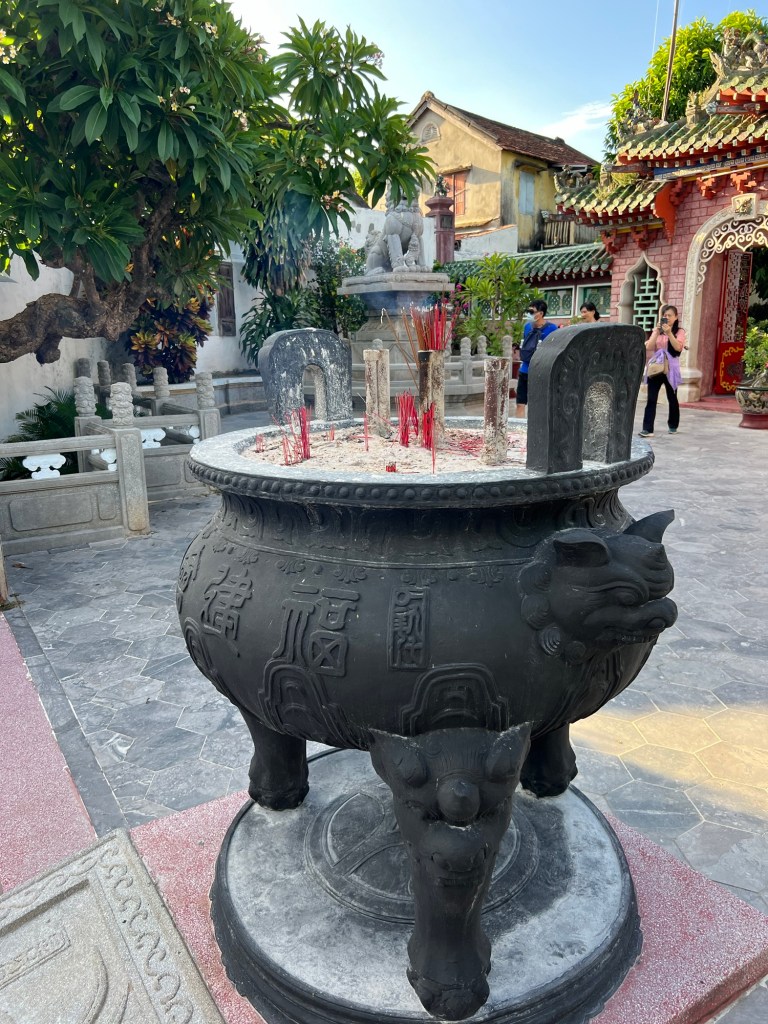
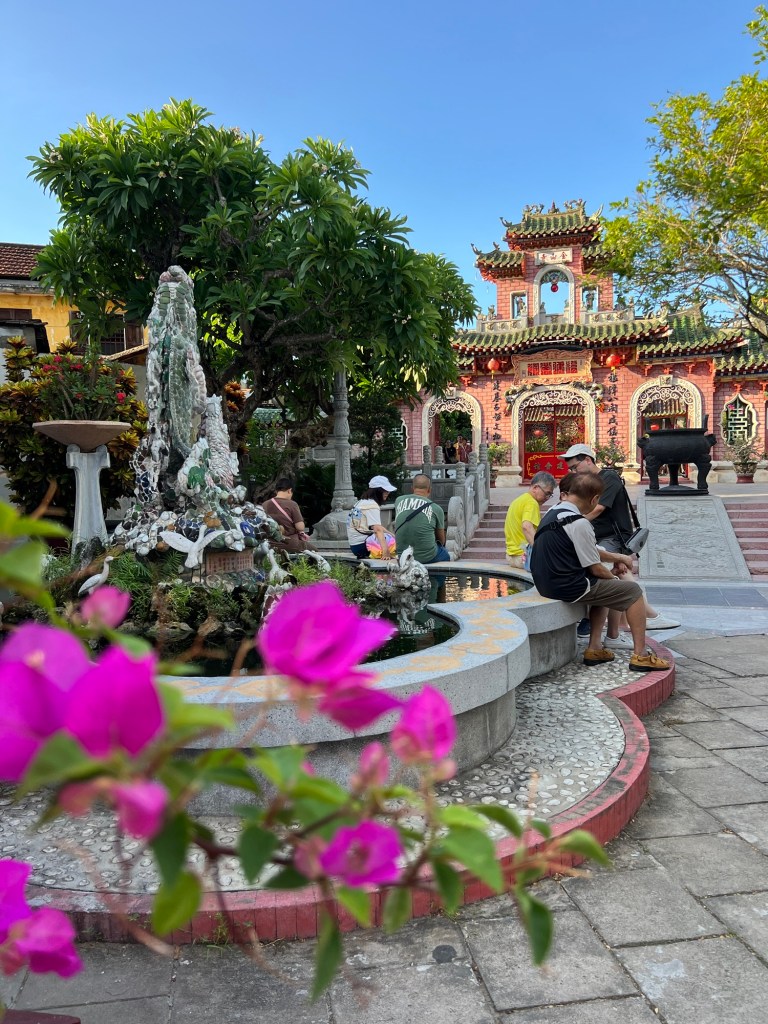
We finished our tour visiting Quan Cong Temple, also known as Ong Pagoda (Quan Công Miếu or Chùa Ông in Vietnamese), established in 1653 by Chinese immigrants in Hoi An. The temple is a place of worship devoted to an esteemed Chinese military general – Quan Cong.
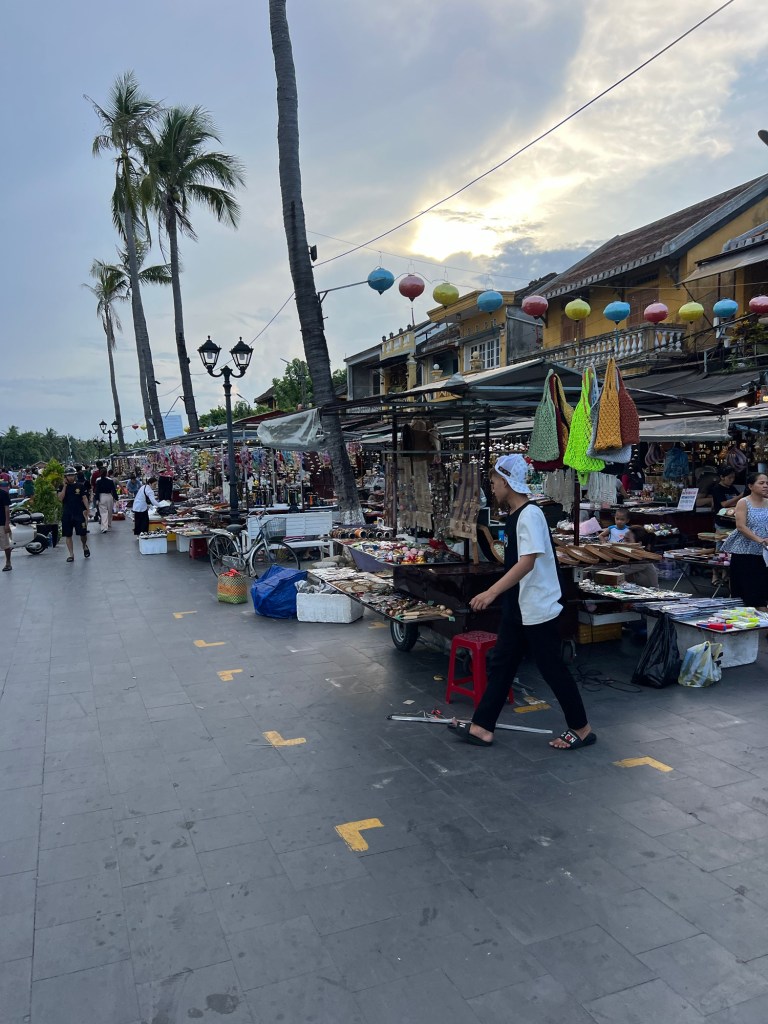
After finishing the tour, we headed down to the river for a wander through the street market.
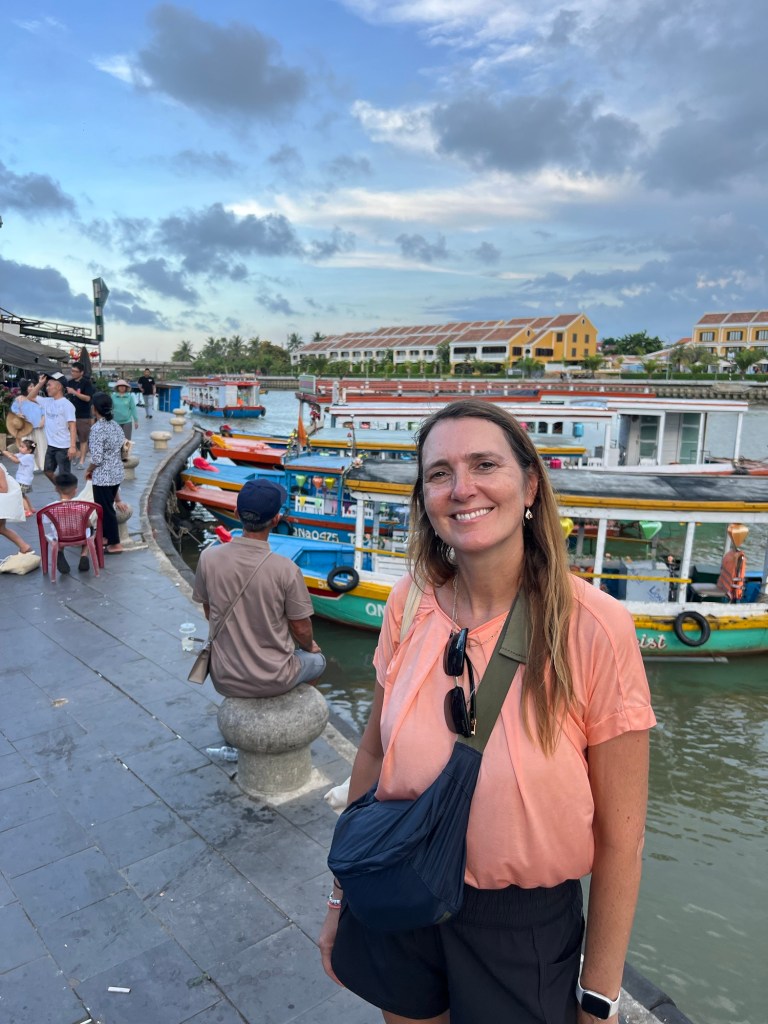
As it was early, the taxi rank was full with drivers taking life easy and they joined us in watching the world go by!
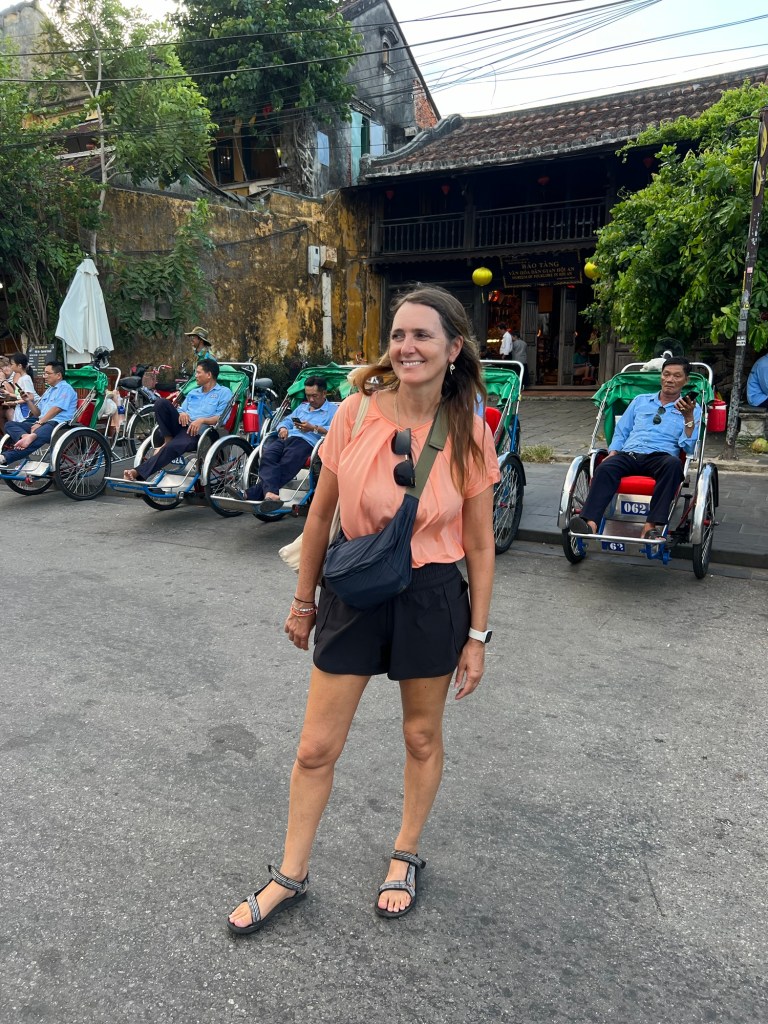
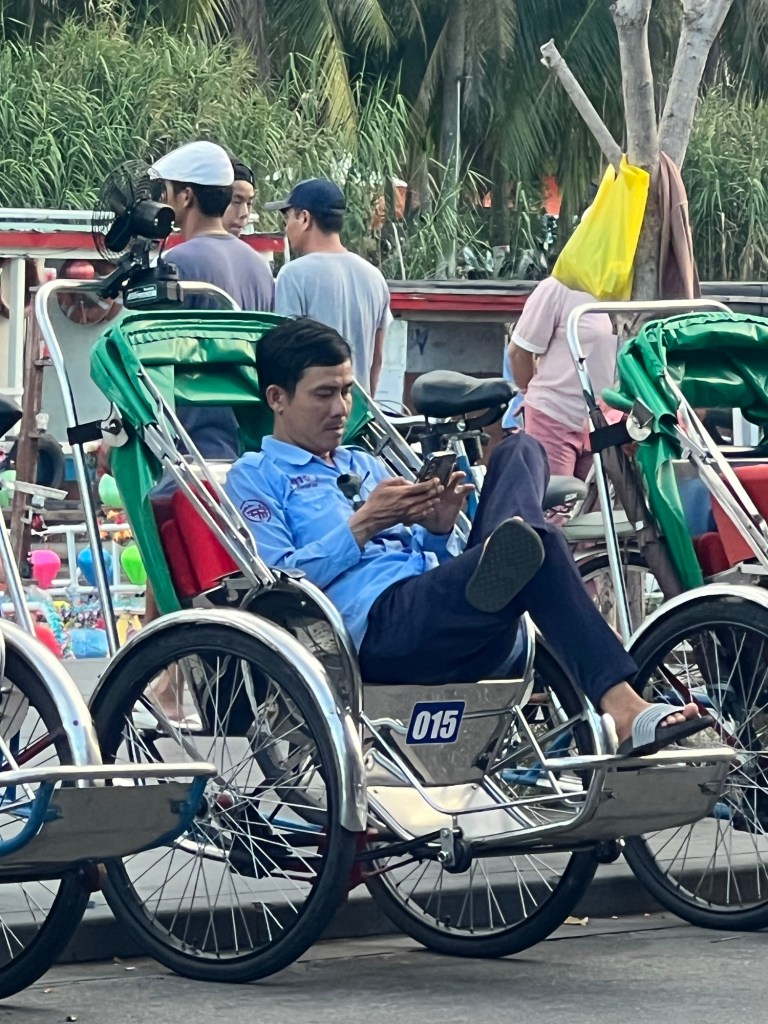
We ended up having drinks and then dinner at a restaurant along the riverside enjoying the spectacle of the coloured buildings, lanterns and the buzz of the evening.
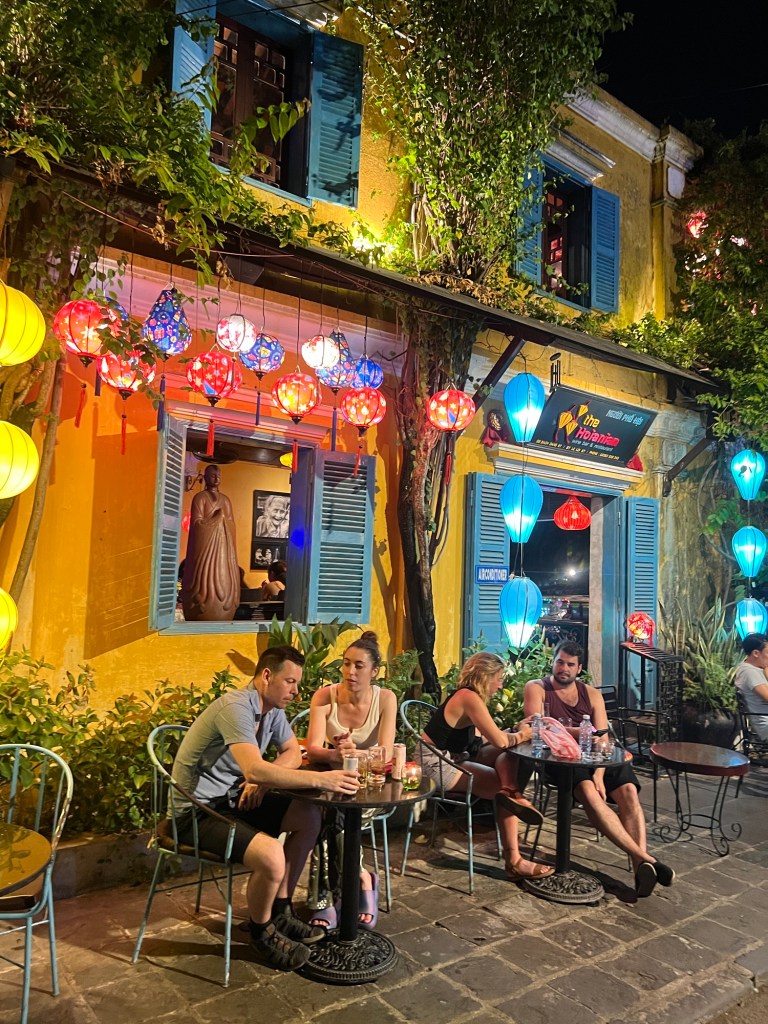
After making a couple of purchases, mainly for our daughter we returned early to our hotel in readiness for a 10pm sleep.
Tomorrow we depart at 5.30am on a tour to My Son a cluster of abandoned and partially ruined temples, constructed between the 4th and the 14th century by the Kings of Champa an Indianized kingdom of the Cham people.
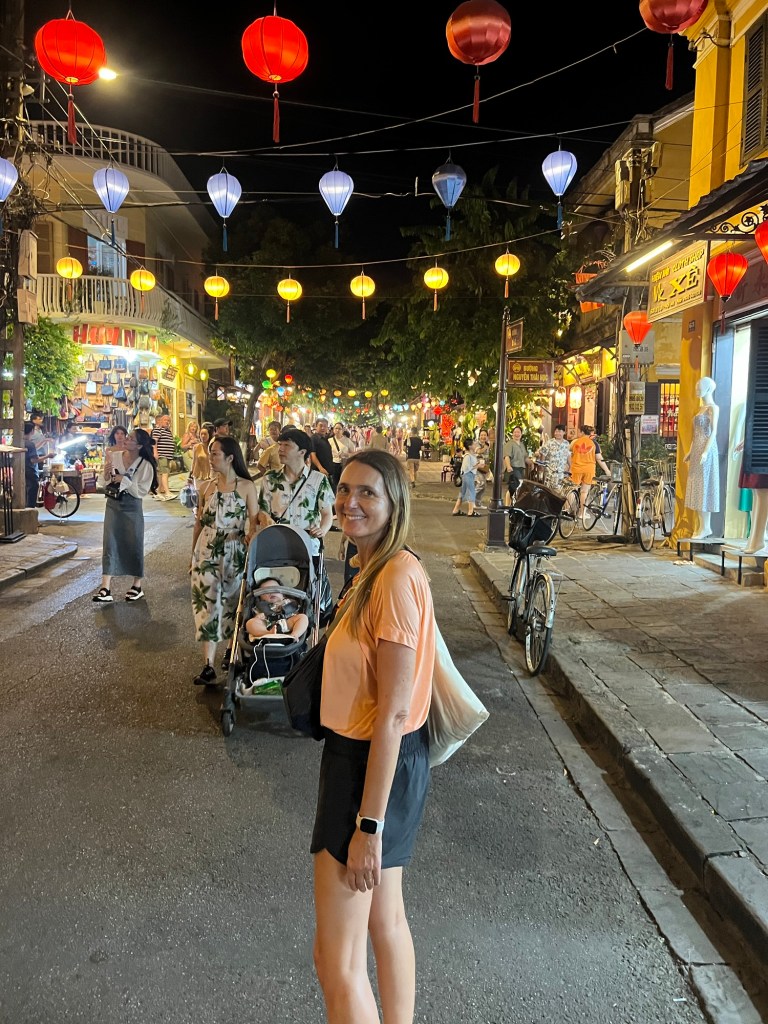
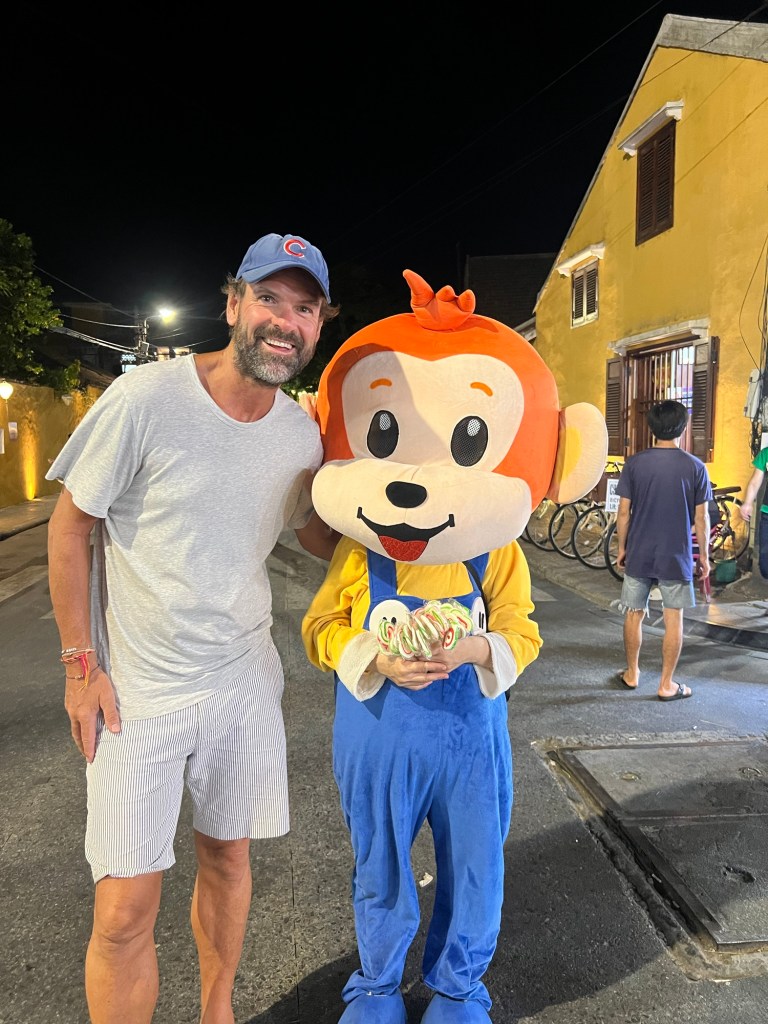
Finishing with a smile, Andy again met up with another of the Disney cast on our way back to the hotel!
 @travellingwiththeateam