Today was a continuation of our exploration of Hue and the historical sights that sit around this beautiful city.
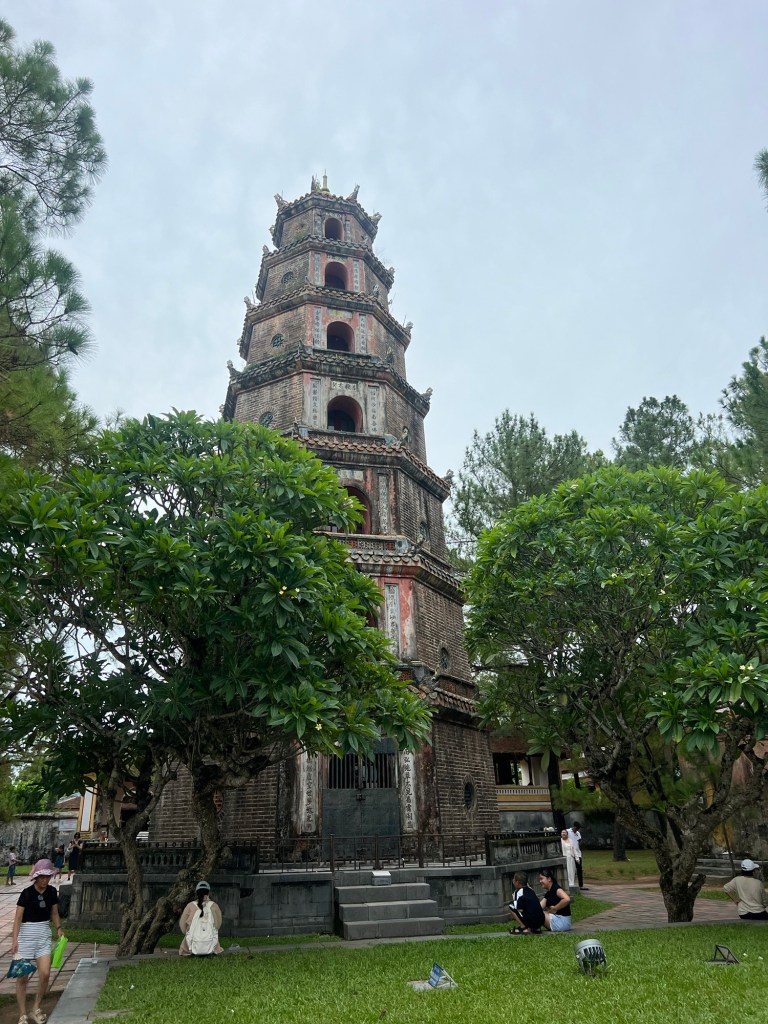
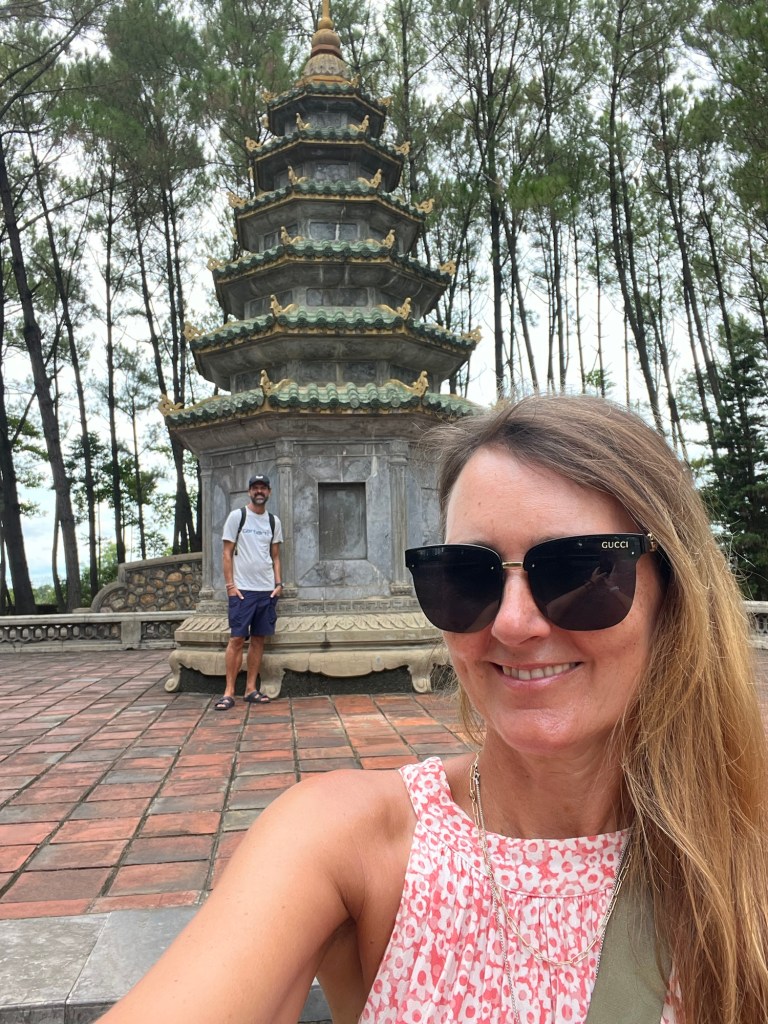
Our first stop this morning was Thien Mu Pagoda, which translates as the Temple of the Celestial Lady. This iconic seven-story Phước Duyên pagoda is regarded as the unofficial symbol of the city.
The brick pagoda stands 70ft and is octagonal in shape and has seven stories, each of which is dedicated to a different Buddha.
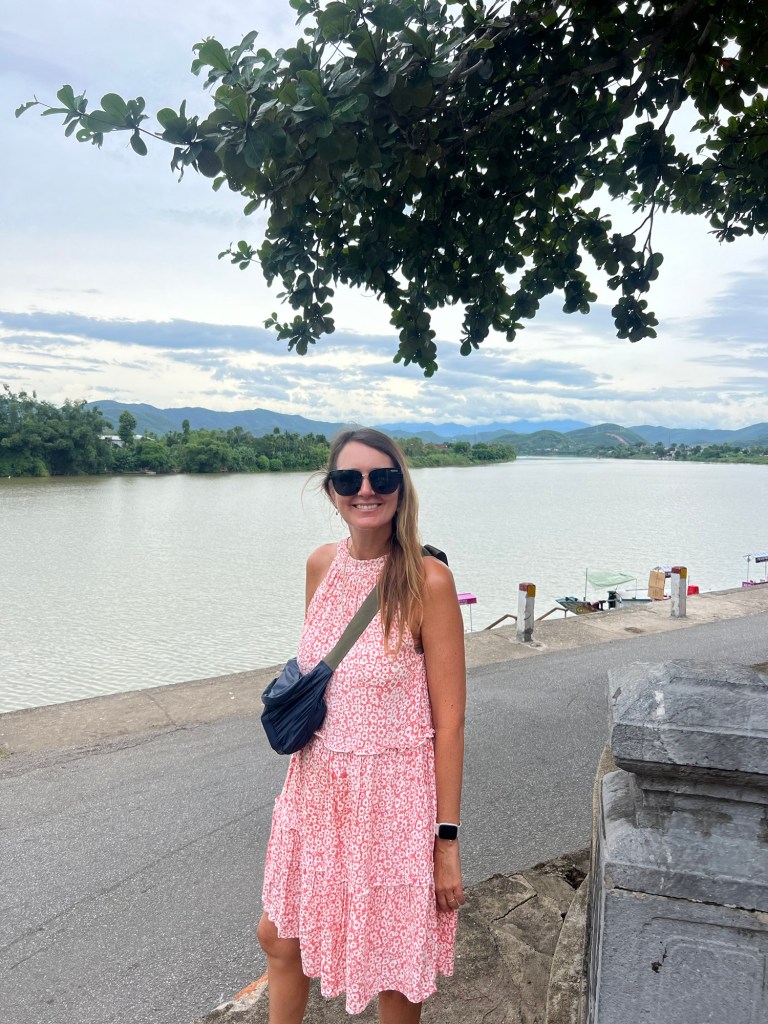
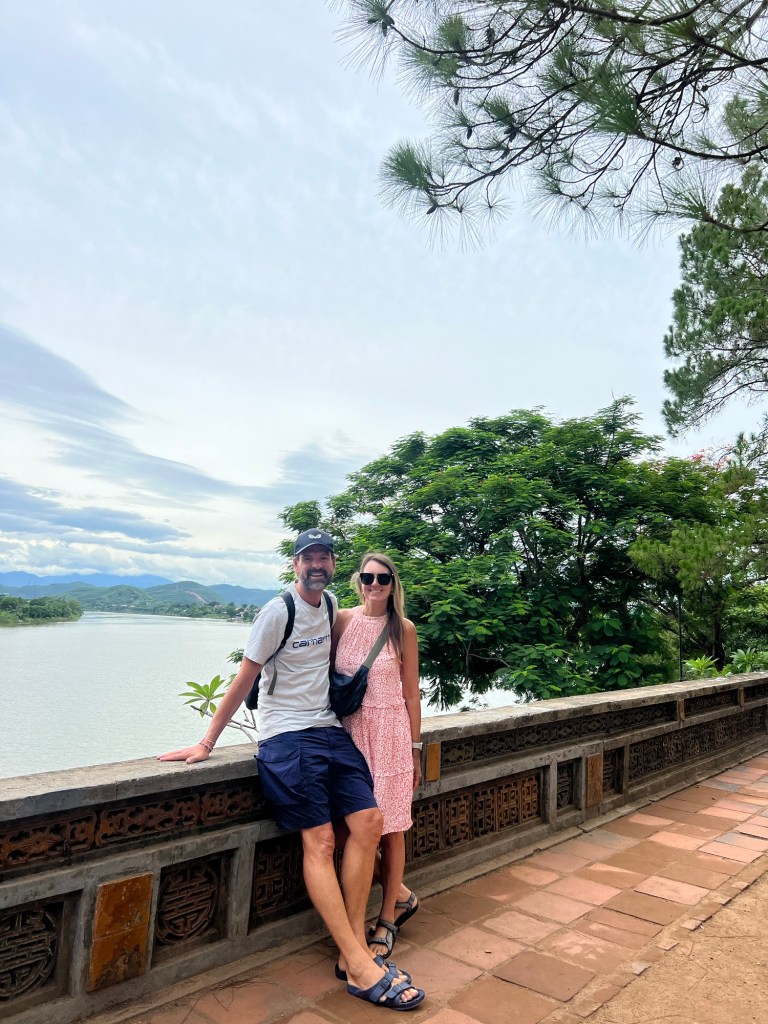
The pagoda overlooks the Perfume River, and has become synonymous with the landscape of Huế.
The temple contains a statue of a large marble turtle, a symbol of longevity. Besides the tower on either side are structures that record the architectural history of the tower.
The temple and its buildings were severely damaged in a cyclone in 1904 and the site is now less substantial and grand than it was in its halcyon days.
Across the site were a series of towers for storing sutras, bell towers, drum towers, meditation halls and halls to venerate the Medicine Buddha, as well as living quarters for the local sangha (monks, nuns and laymen).
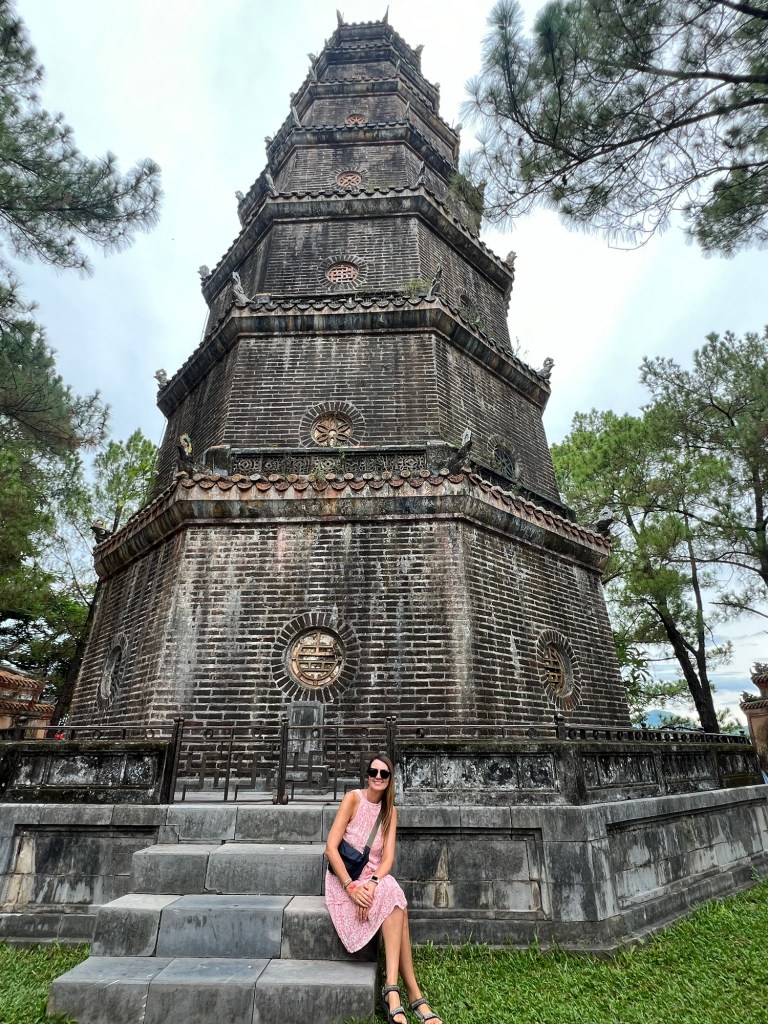
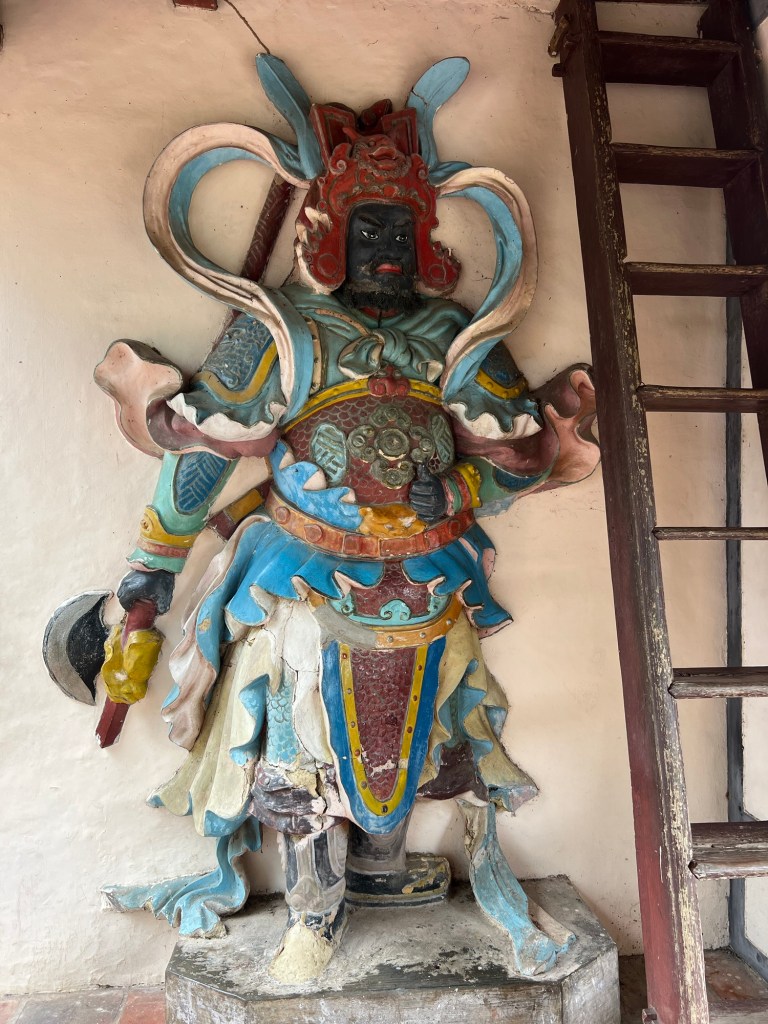
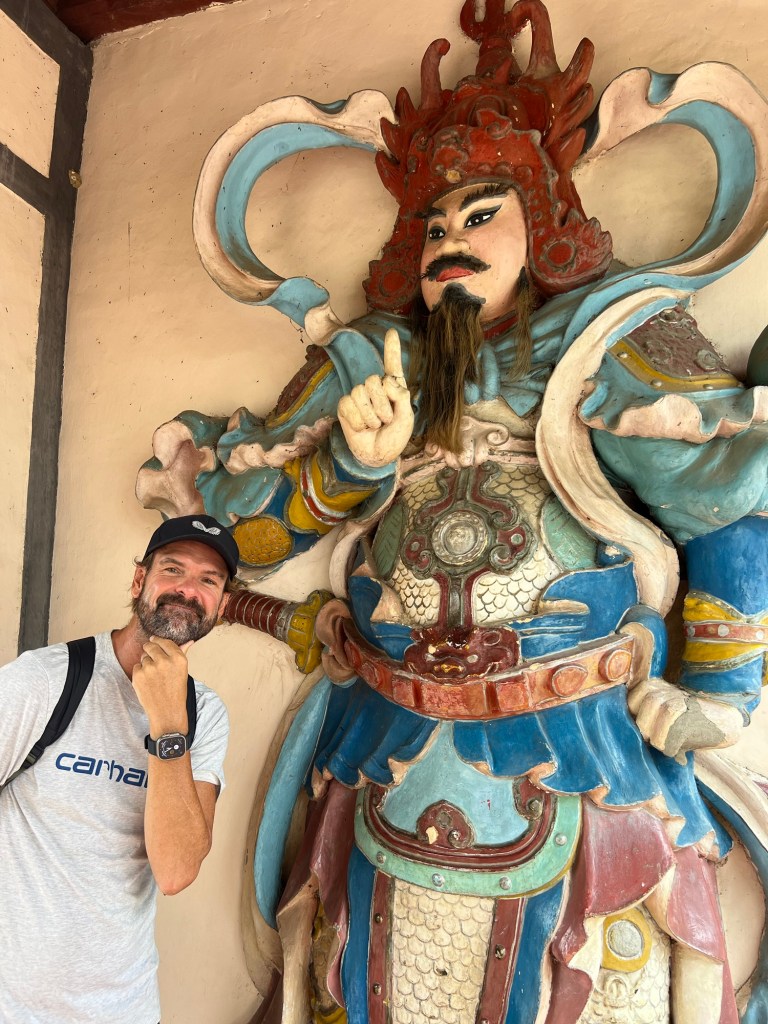
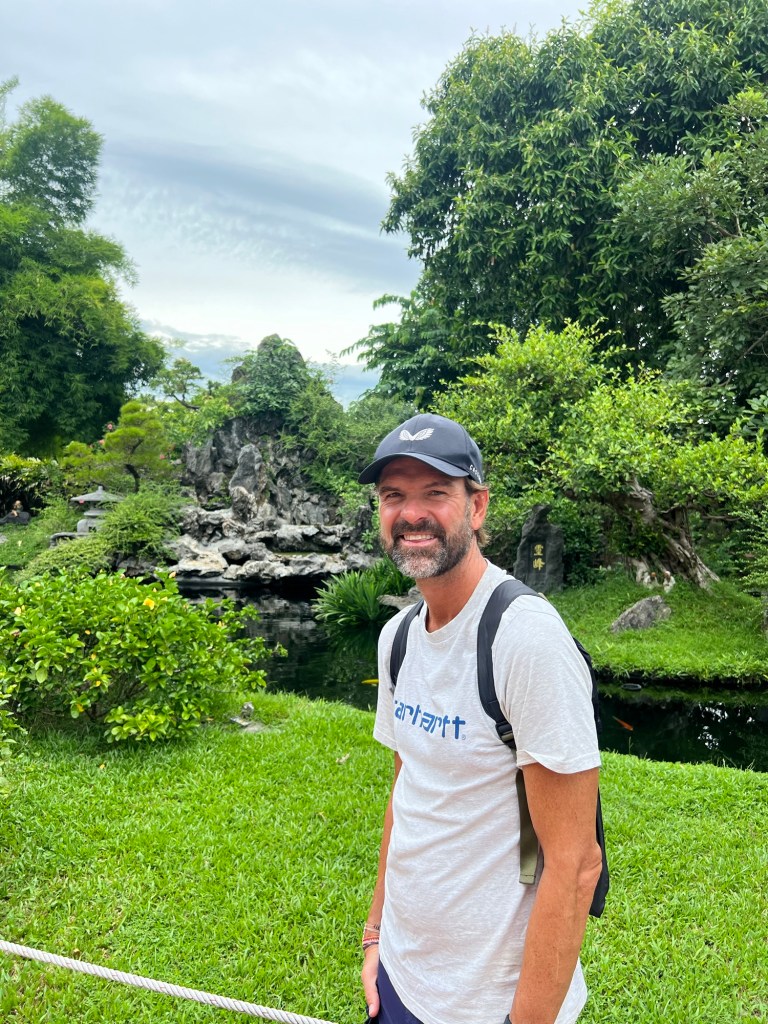
We had briefly visited the pagonda on our last visit to Hue, but this time we were able to see a lot more and enjoy the many sculptures as well as the gardens.
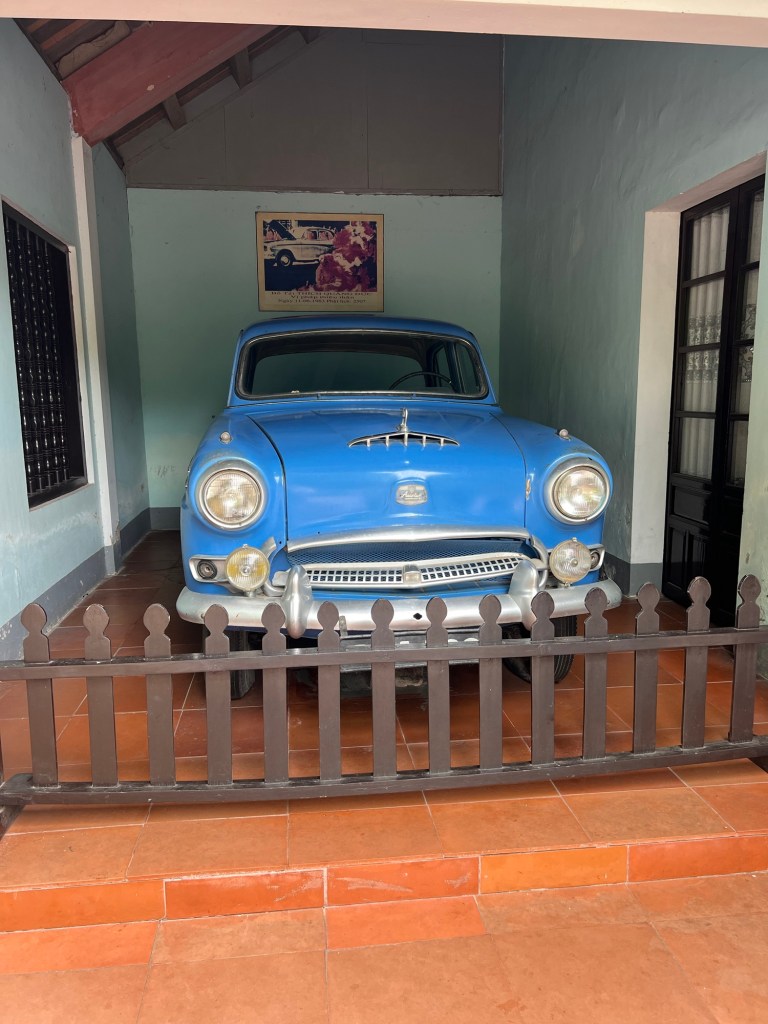
The temple also houses the Austin motor vehicle in which Thich Quang Duc was driven to his self-immolation in Saigon in 1963 against the Diem regime. It was the first of a series of self-immolations by members of the Buddhist clergy, which brought the plight of Buddhists to the attention of the international community.
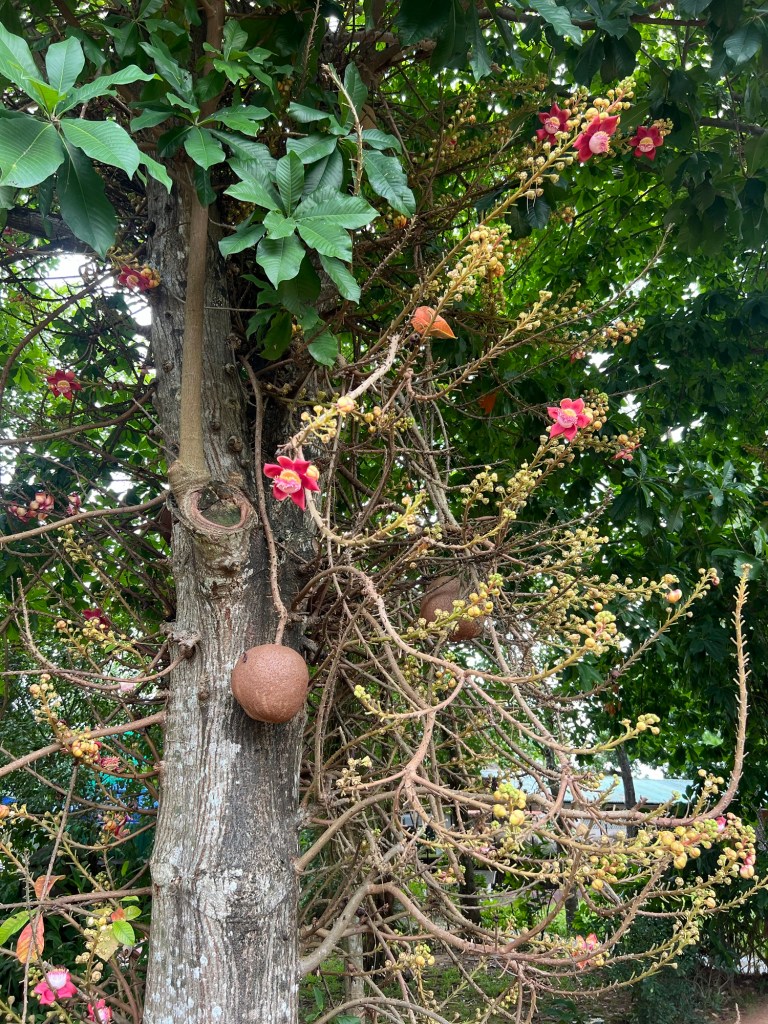
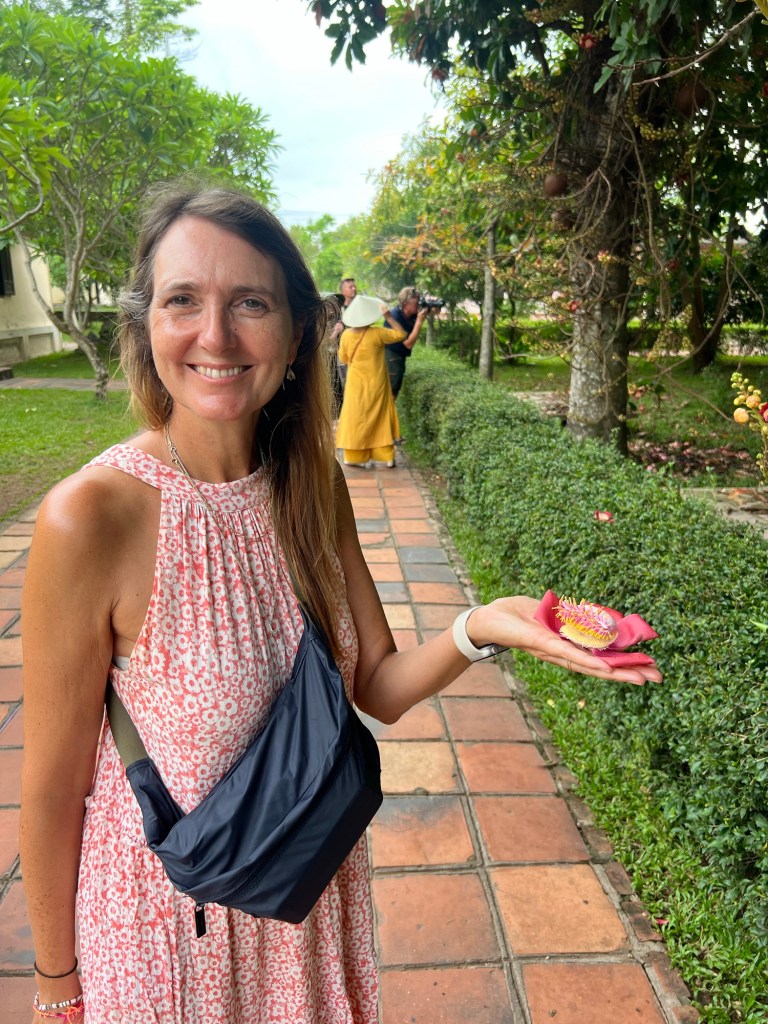
We came across an incredible fruit tree with the most beautiful flowers and large bulbous fruit.
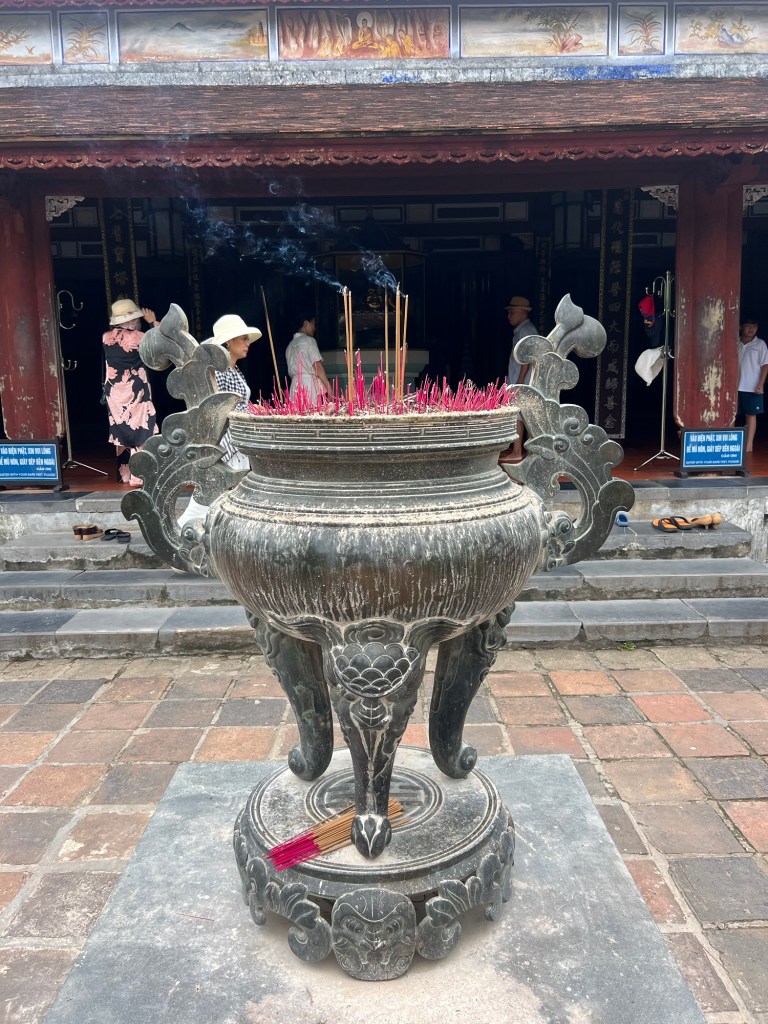
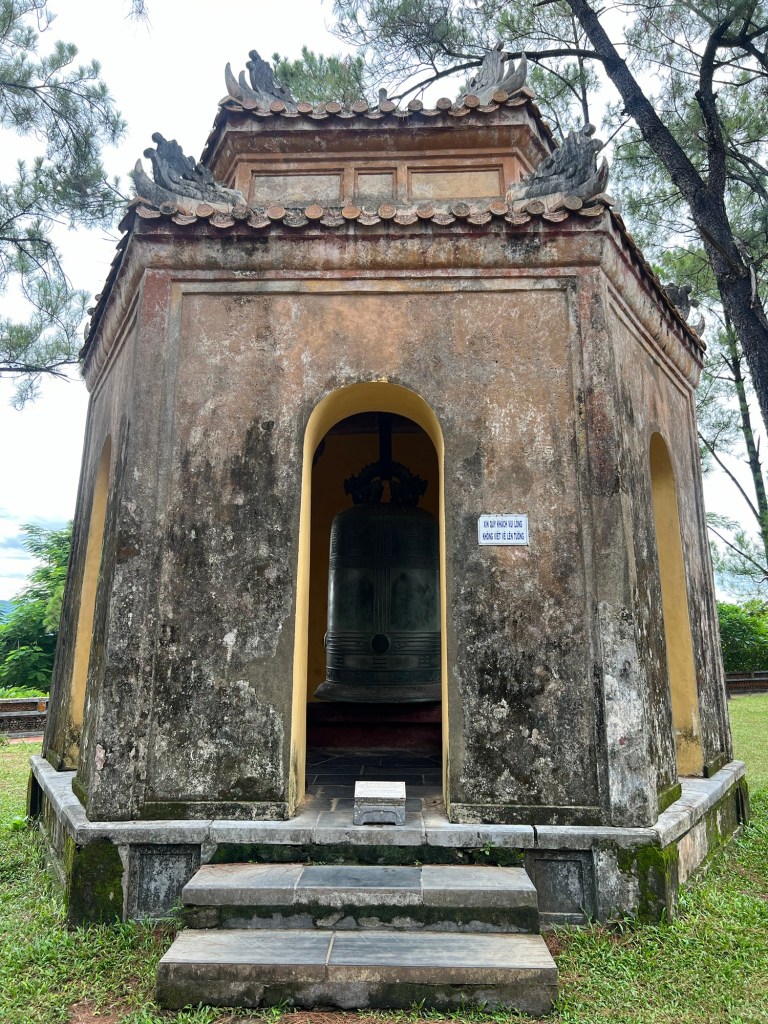
In 1710, the then Emperor funded the casting of a giant bell, which weighs 3,285 kg, and is regarded as one of the most prized cultural relics of its time in Vietnam. The bell is said to be audible over 6 miles away and has been the subject of many poems and songs.
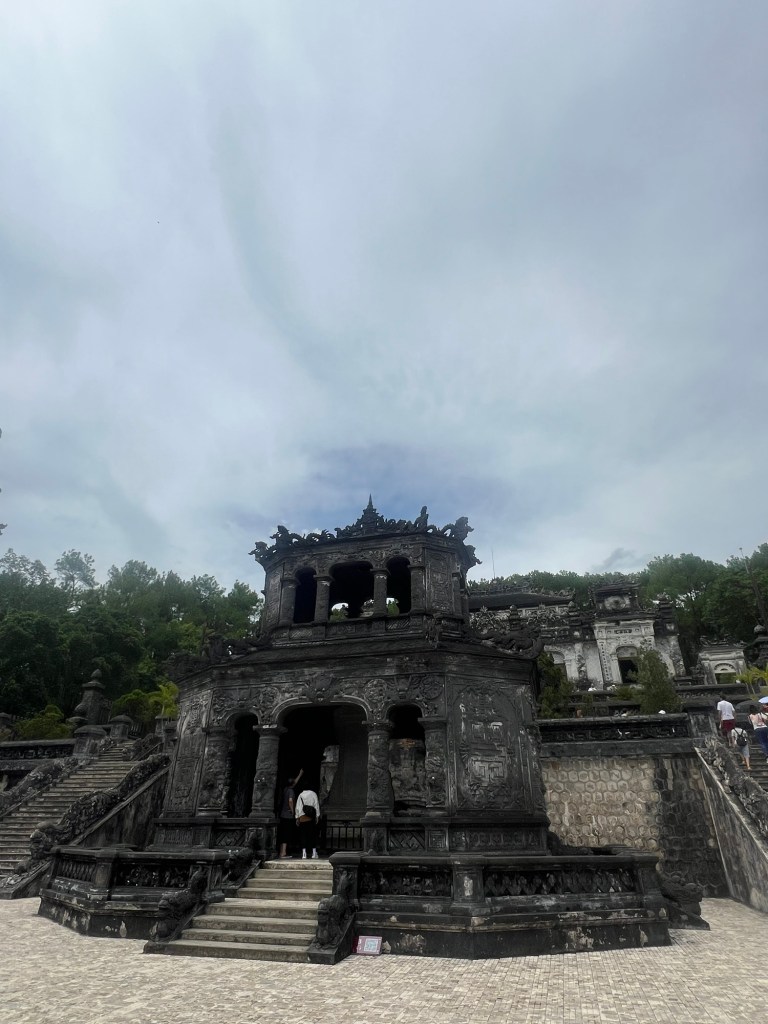
After our visit to the pagoda we then got a Grab to Thien Dinh Palace. Essentially it’s the tomb of Khai Dinh, the twelfth emperor of Vietnam who reigned for just 9 years from 1916 to 1925.
It is located on Châu Chữ mountain near the former capital city.
The emperor had close collaborations with the French colonial rulers, making him unpopular amongst the people of Vietnam.
Like a number of Vietnamese emperors, Khải Định desired the preparation of a tomb in anticipation of his death. The construction started almost immediately upon his succession and beyond his death. The scale and detail of the tomb/palace is immense and very symbolic, with soldiers and learned mandarin sculptures watching on.
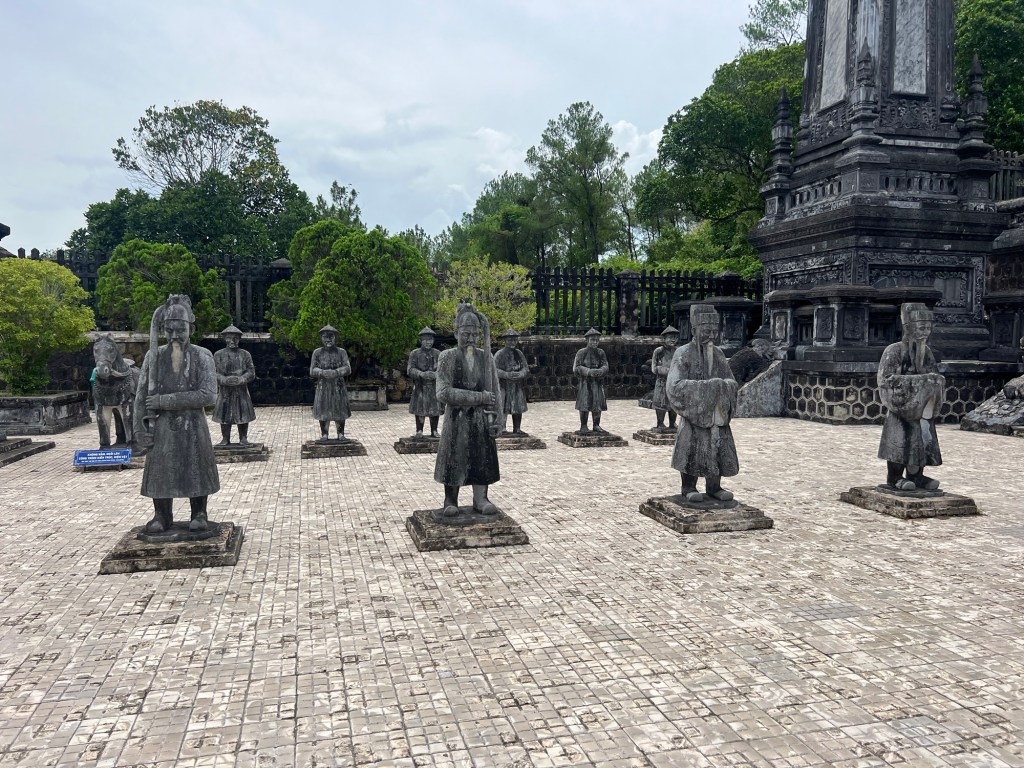
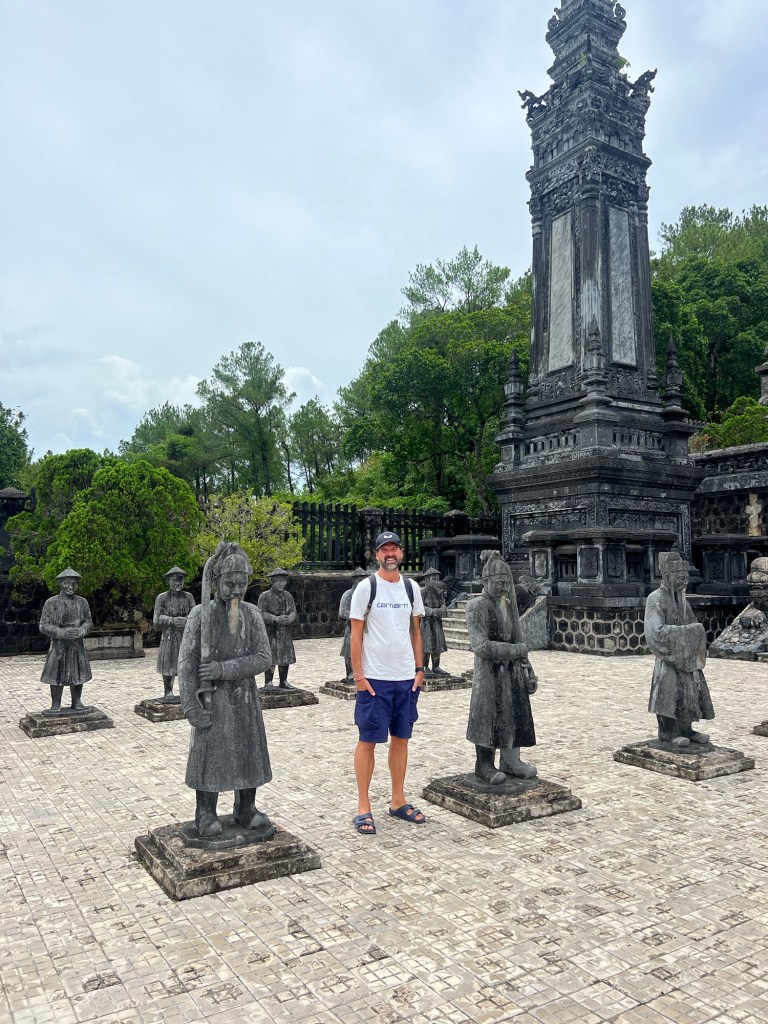
The detail of the sculptures are so life-like and despite being over 100yrs old, well preserved.
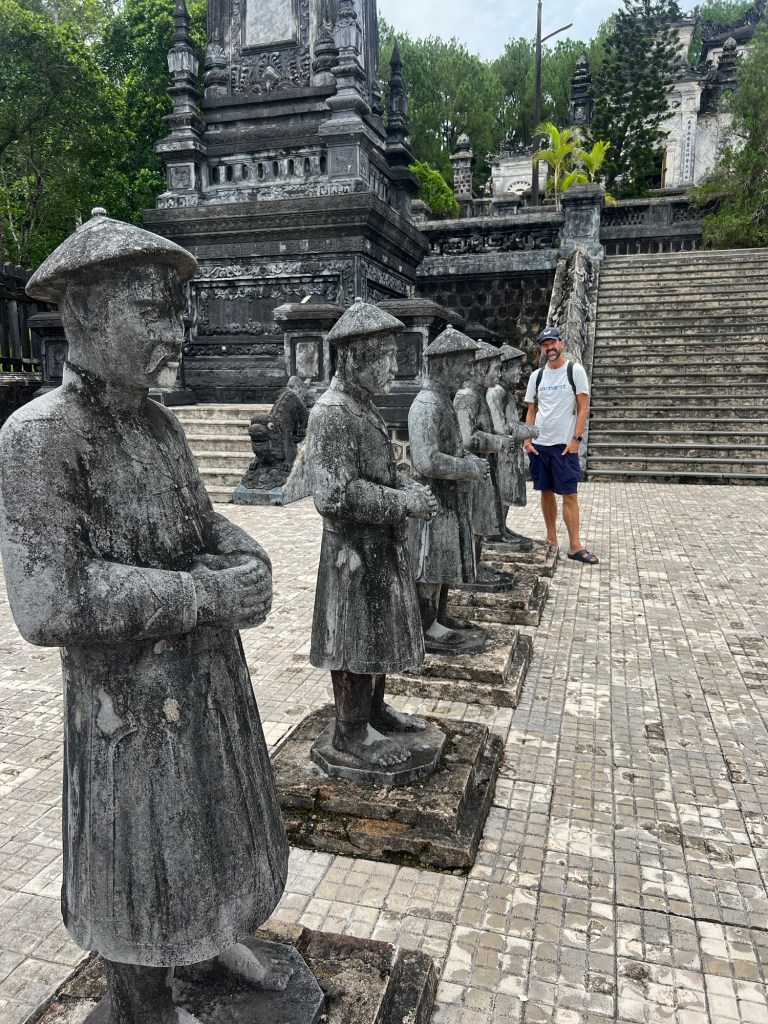
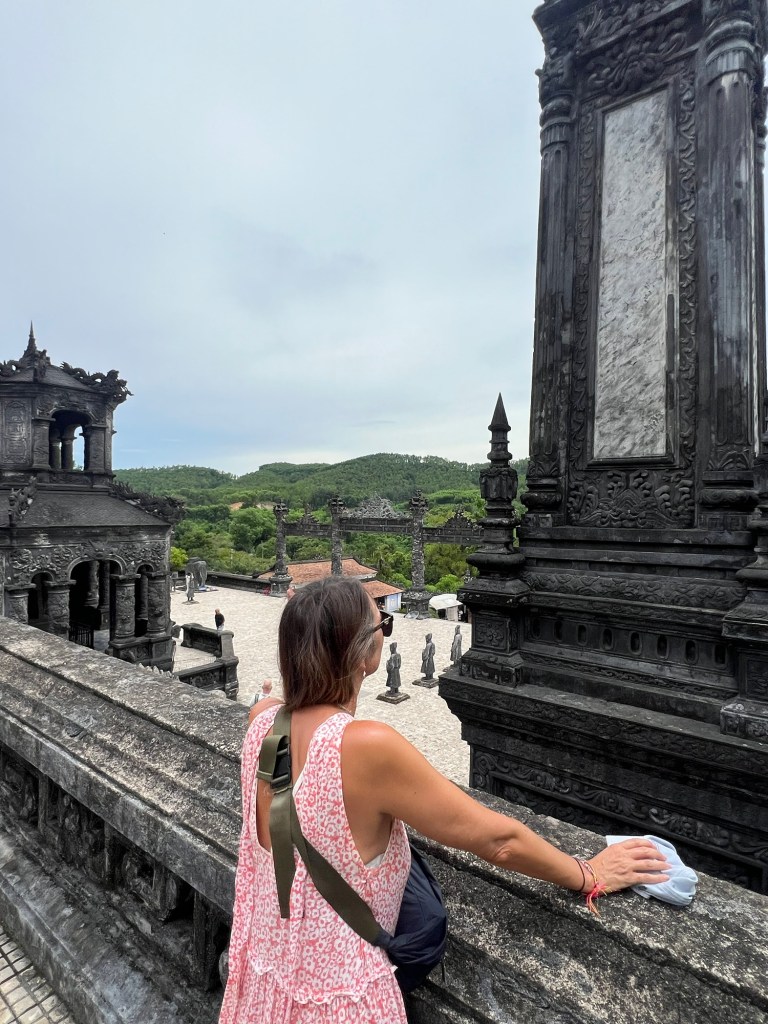

The tomb is one of three major sites for former emperors on the outskirts of Hue, and having visited the other two on our last visit, it was good to view the last remaining one to compare it against.
This is the smallest in size, but it’s more elaborate in design, fusing Vietnamese and European styles including Gothic and Neoclassical elements.
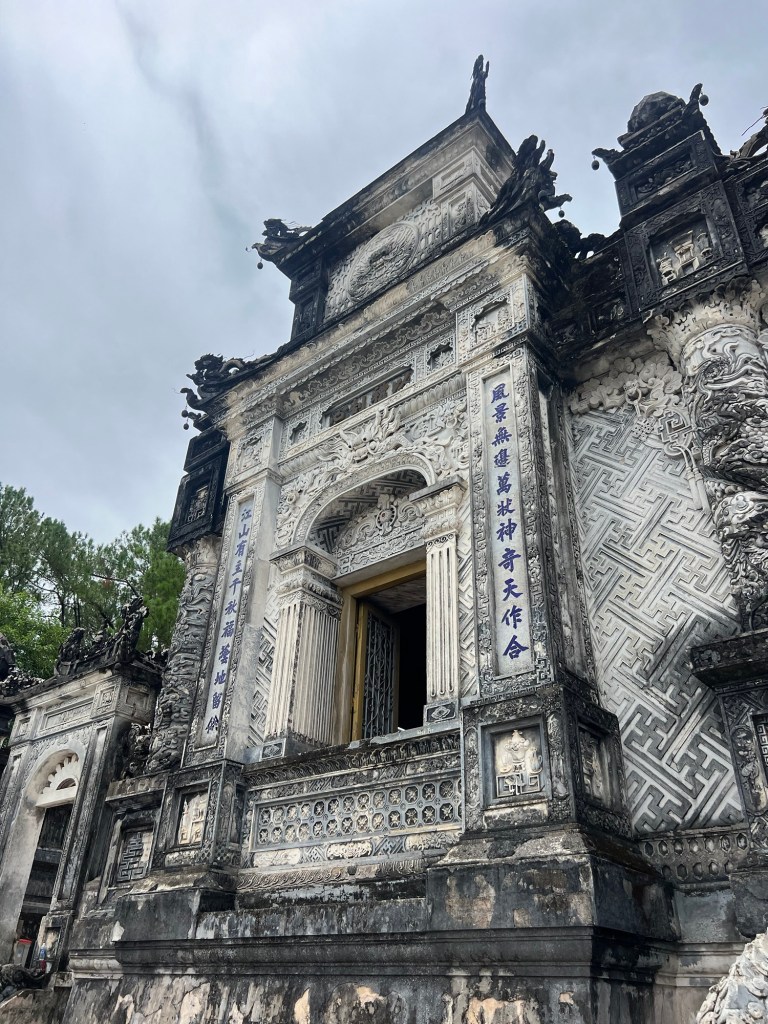
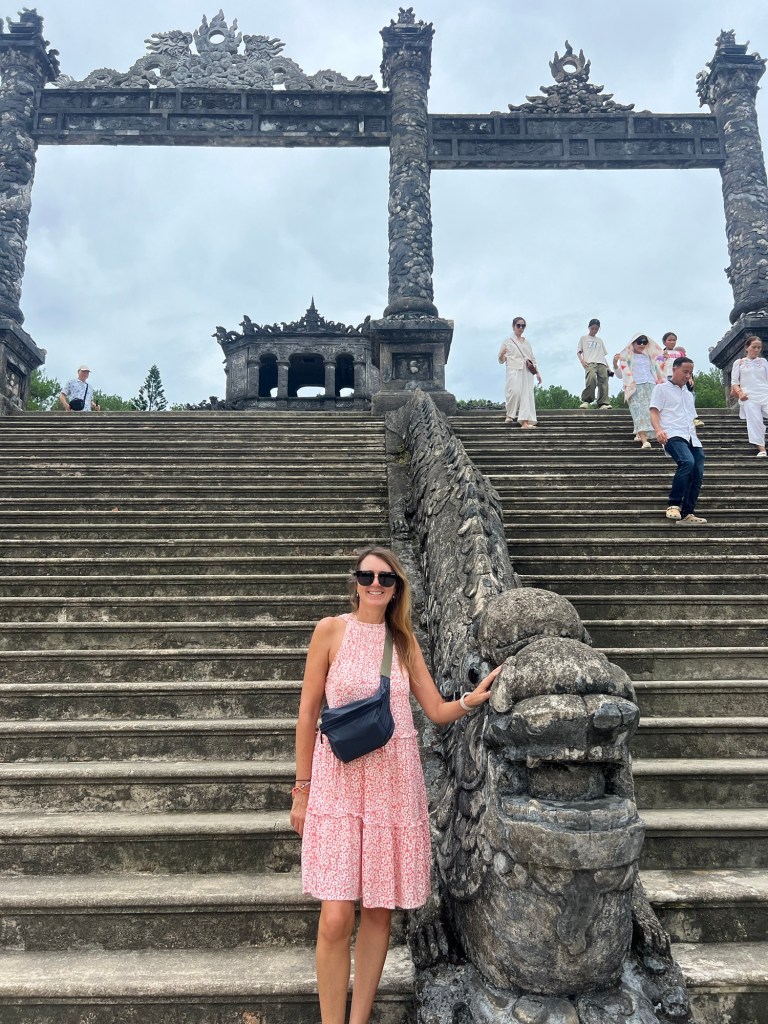
The entrance of the tomb complex features a grand staircase, which ends at the first terrace with a triple-arched memorial gateway, including images of two five-clawed dragons contending over a flaming pearl.
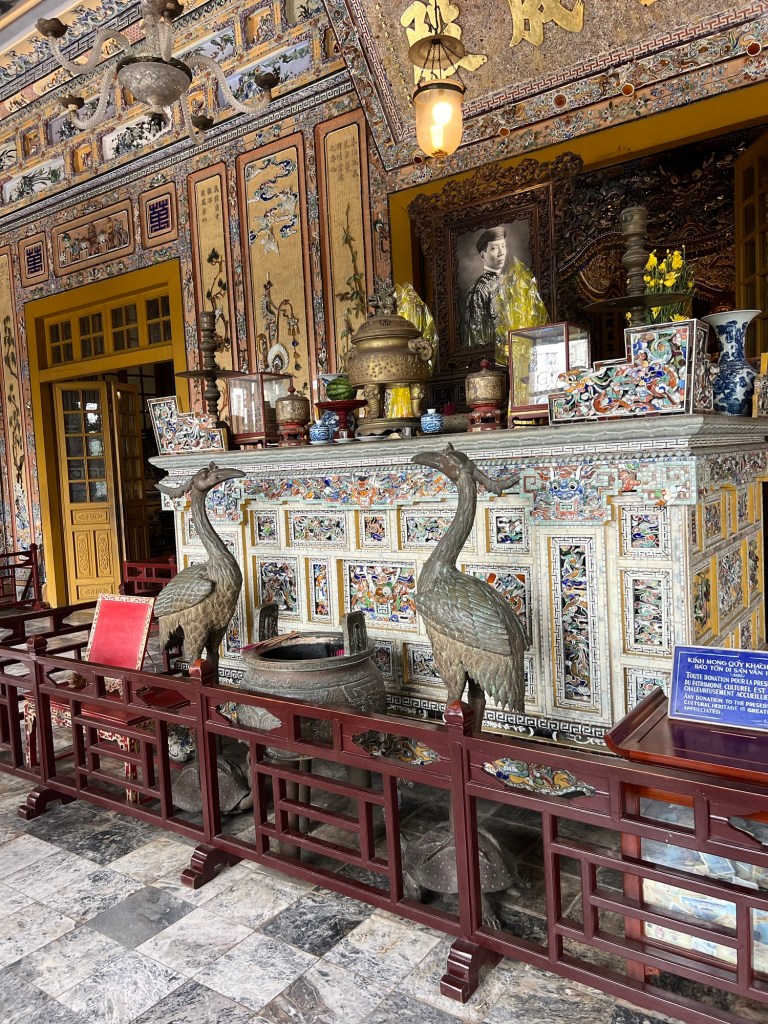
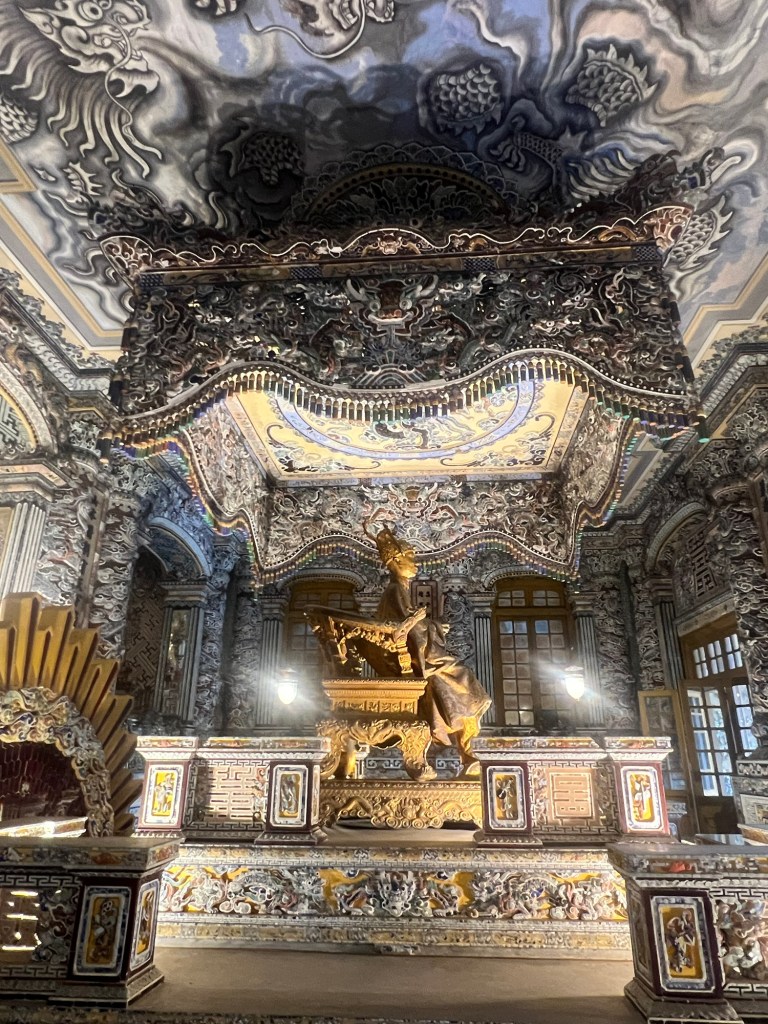
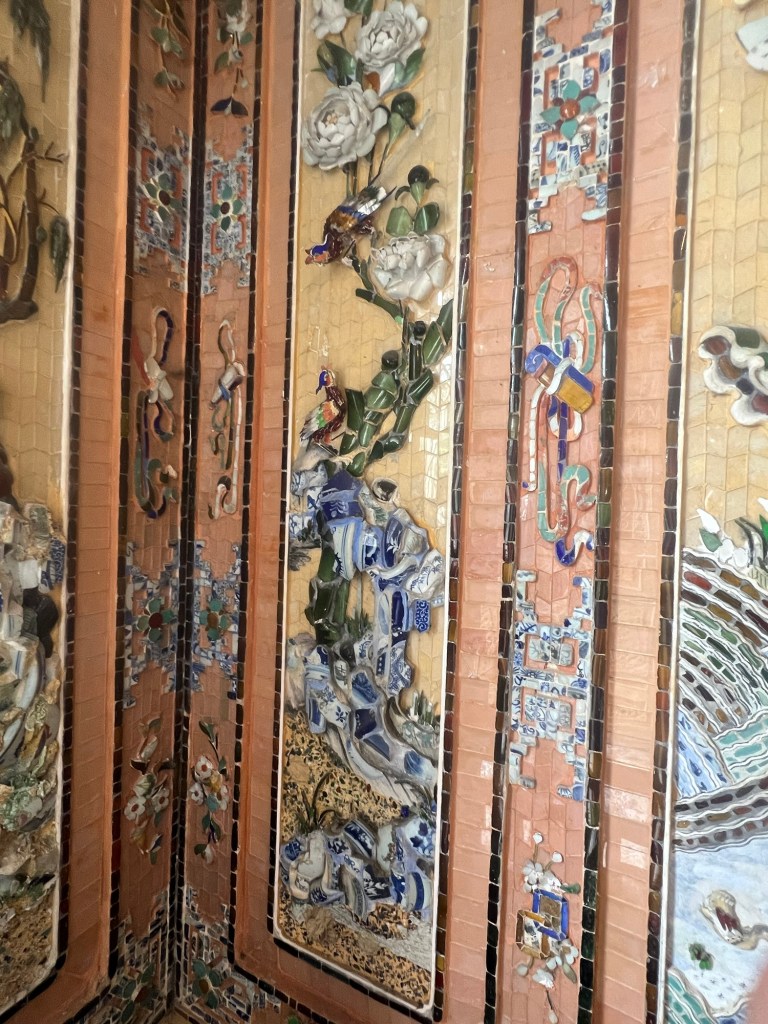
The interior of the palace is an explosion of colour with lavish finishes. The ceiling is decorated with nine intricate dragons and its walls feature intricately designed glass and porcelain decorations.
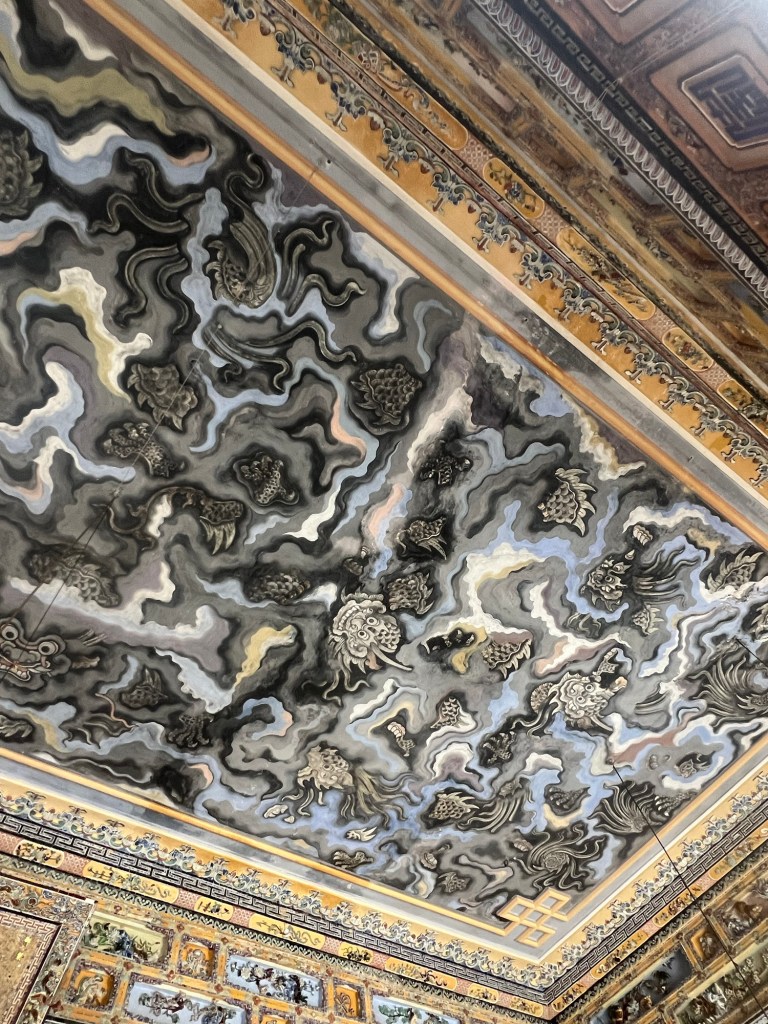
In the centre of the palace is the altar room with three sets of doors leading to a crypt and worship room.
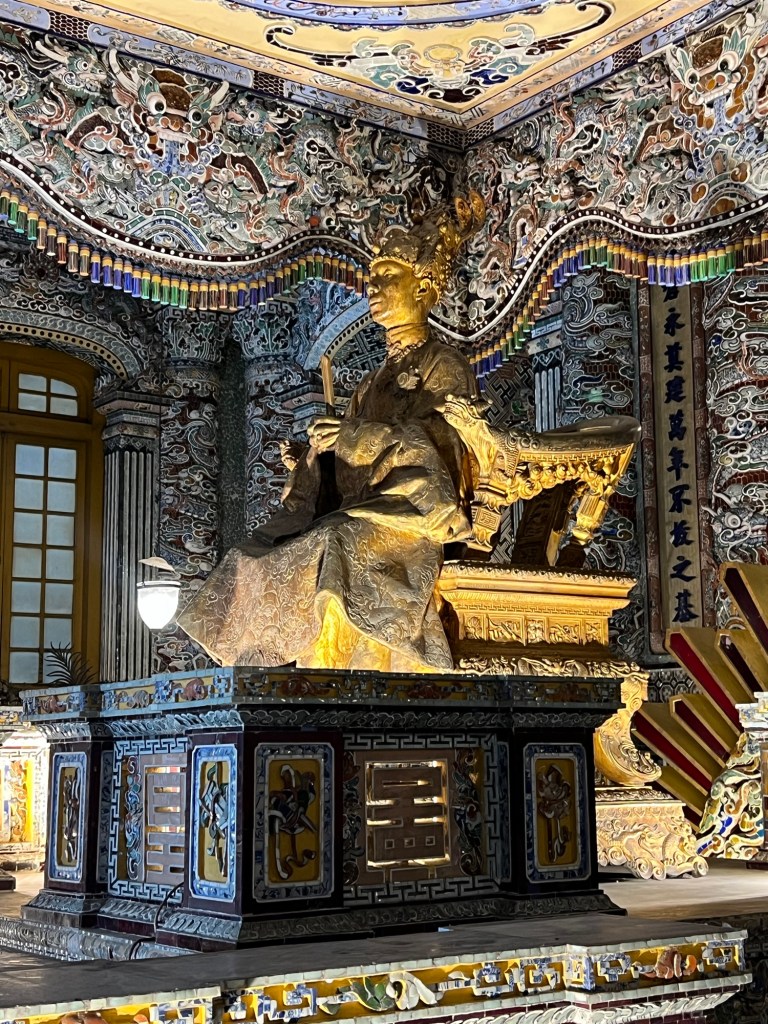
The rear room of the palace is home to a temple containing Khải Định’s grave, as well as an altar and another bronze statue of his likeness seated in traditional imperial clothing. It feels very overwhelming and indulgent.
Khải Đinh’s tomb features detailed officers, attendants, and animals, and is a more compact area than that of the other temples that we’ve visited.
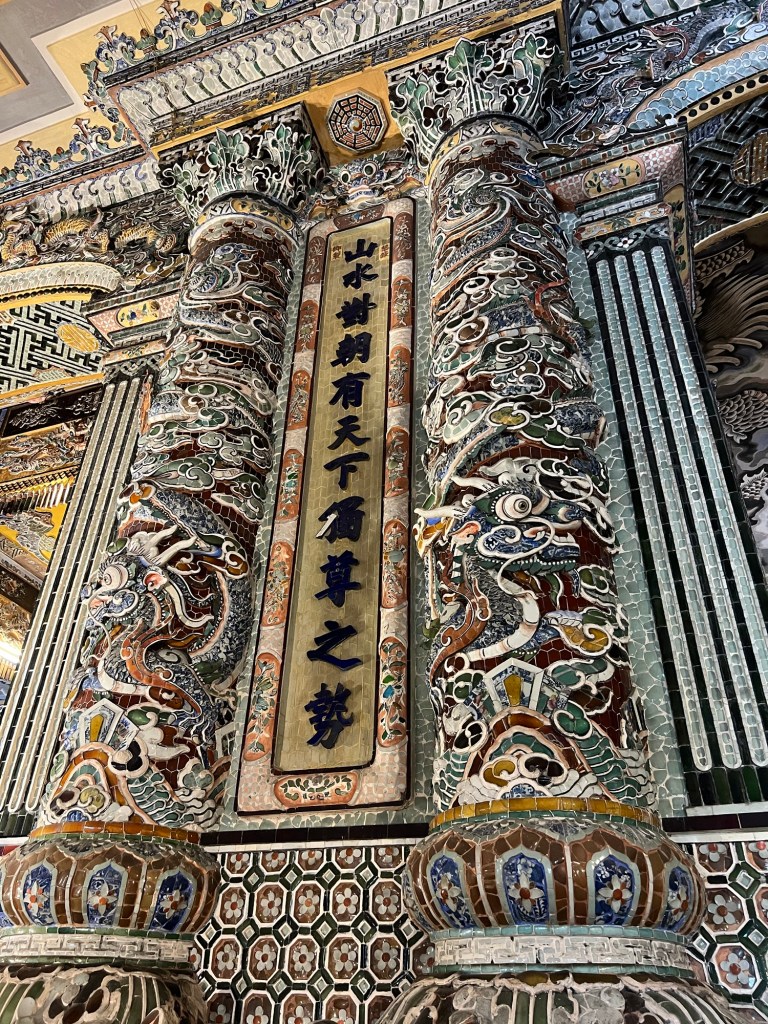
The design and detail on the walls, ceiling and floors is an assault on the eyes and makes you understand why the costs of the temple overran three fold, and led to increased taxes throughout the country!
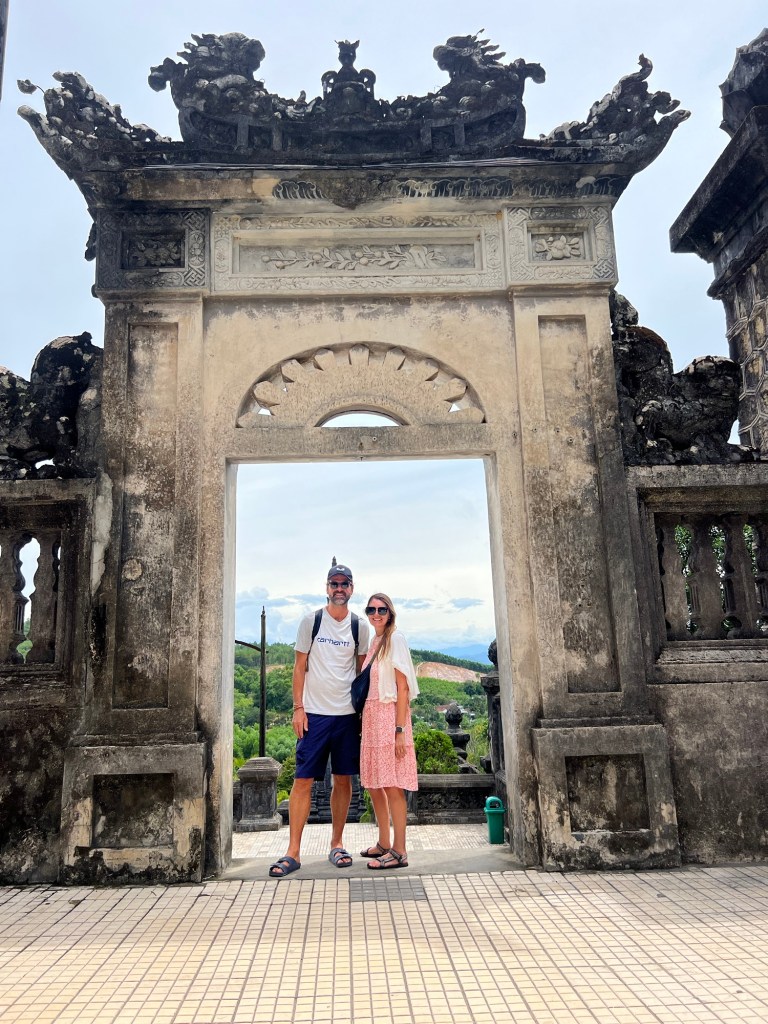
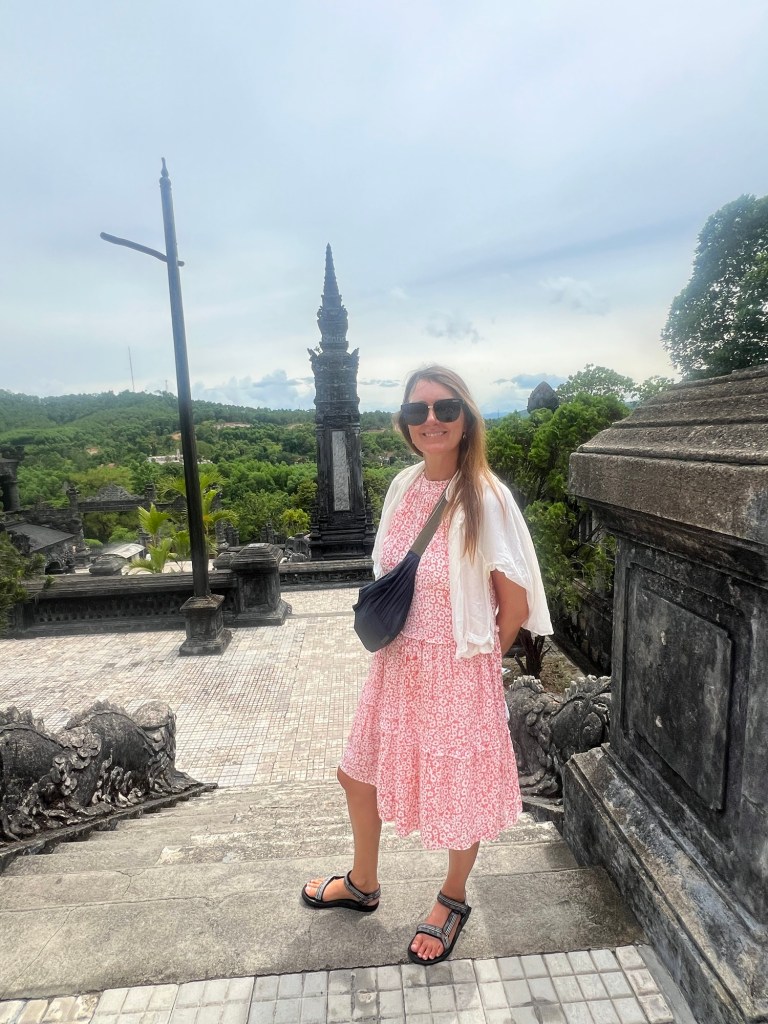
After walking around the exterior of the site and taking one last look at the views out across the hills, we headed back into the centre of Hue for a late lunch.
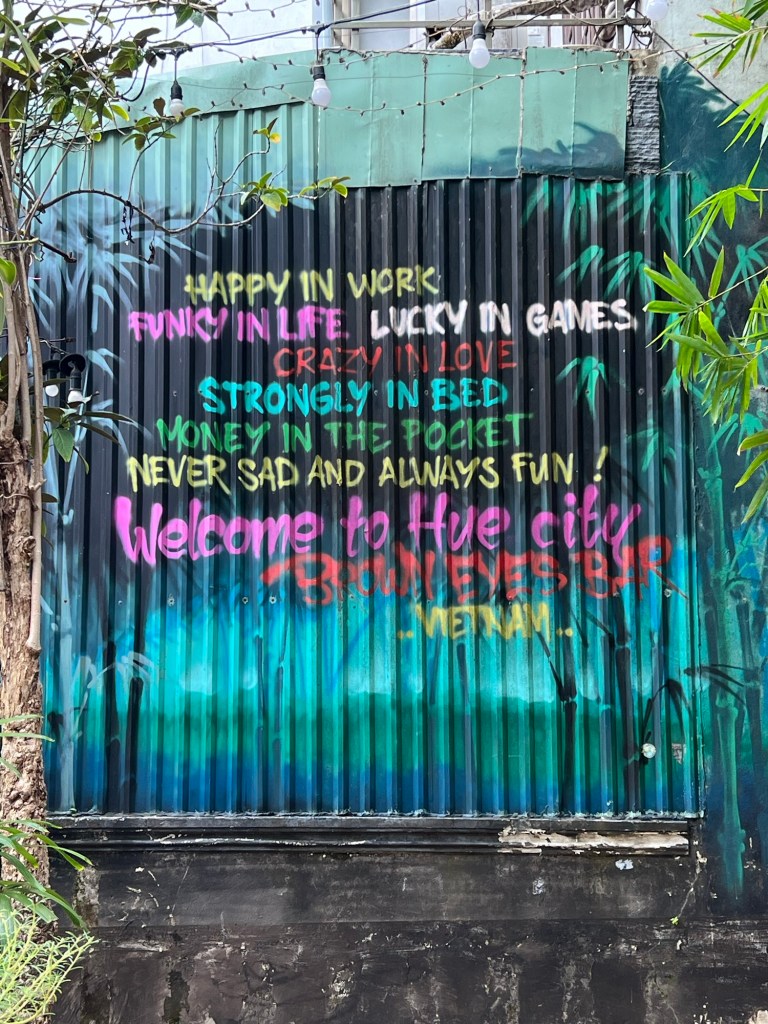
We found ourselves walking down a street past a bar we had visited when last in Hue where we had celebrated a birthday of Carolina, who was on our Vietnam tour group back in May.
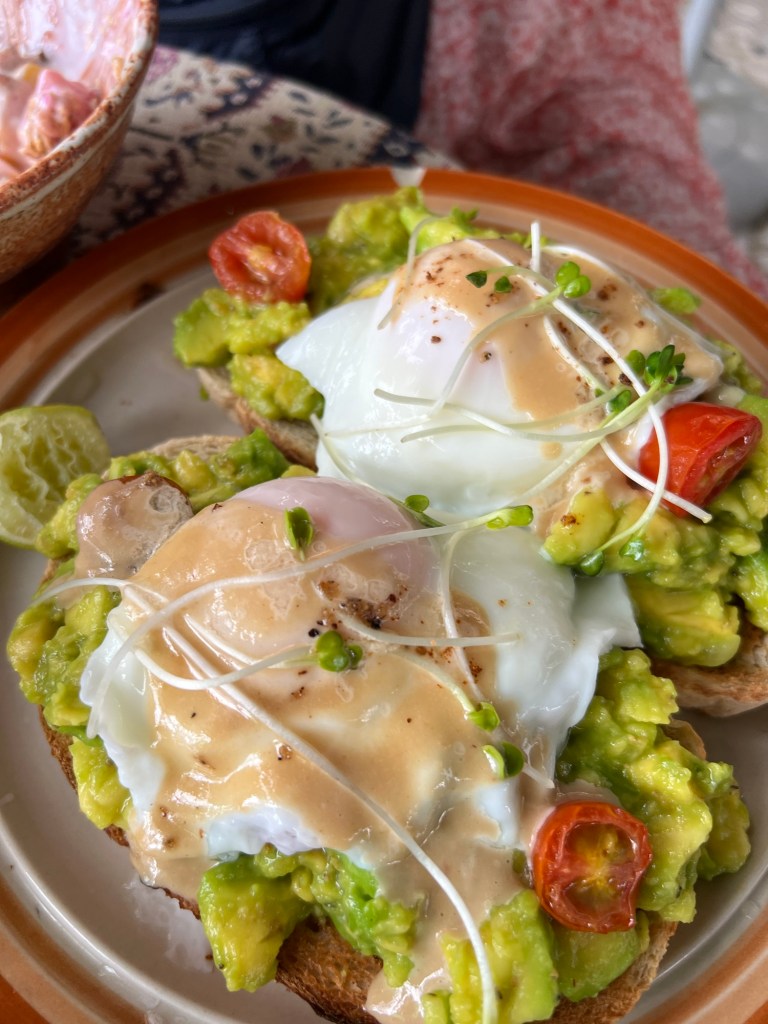
Lunch was back at Nook, where we had visited the night before and did the most amazing avocado and egg on toast. After a relaxing meal we decided to take a walk around the city before heading back to the hotel by foot.
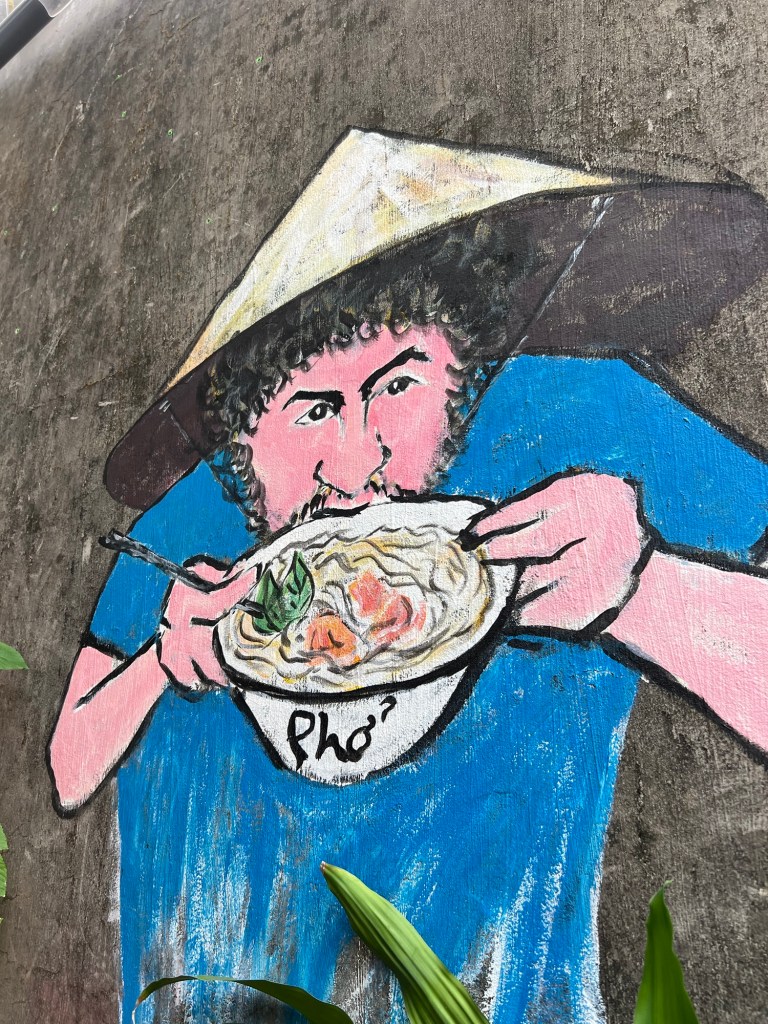
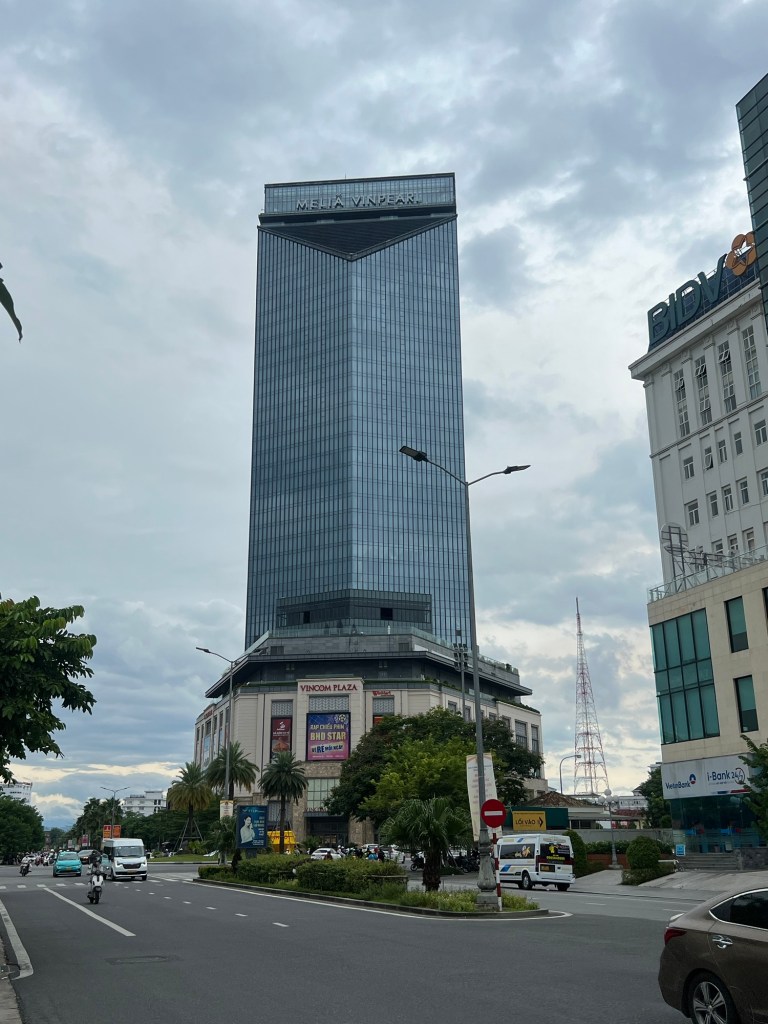
Our journey took us past the local Hue football ground, which looked like it was in need of some TLC, before stopping off at the shopping centre for supplies.

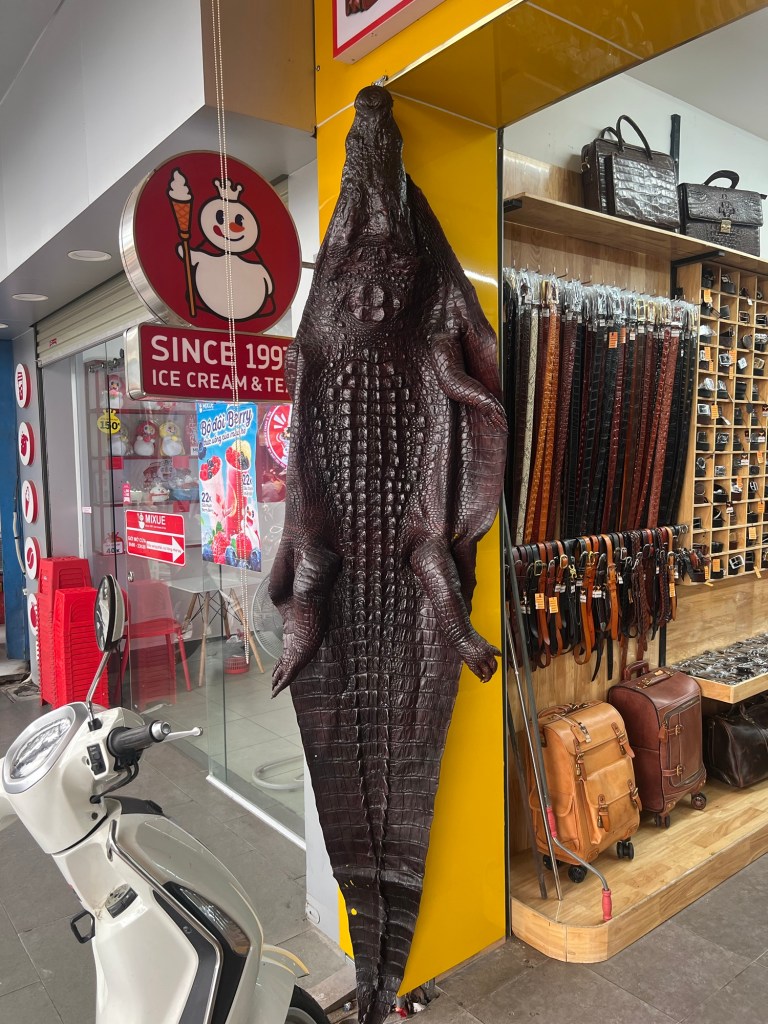
Our walk took us past an interesting leather shop where we witnessed a full crocodile skin hanging up on the door.
After a 3 mile ‘hike’ along the river front, we returned to our hotel where we chose to have a relaxing evening.
We spent the time catching up with our daughter via WhatsApp and made plans for the next stage of our trip up the coast to Dong Hoi and the exploration of the caves at Phong Nha.
 @travellingwiththeateam