This morning we returned to the Forbidden City with our China tour group.
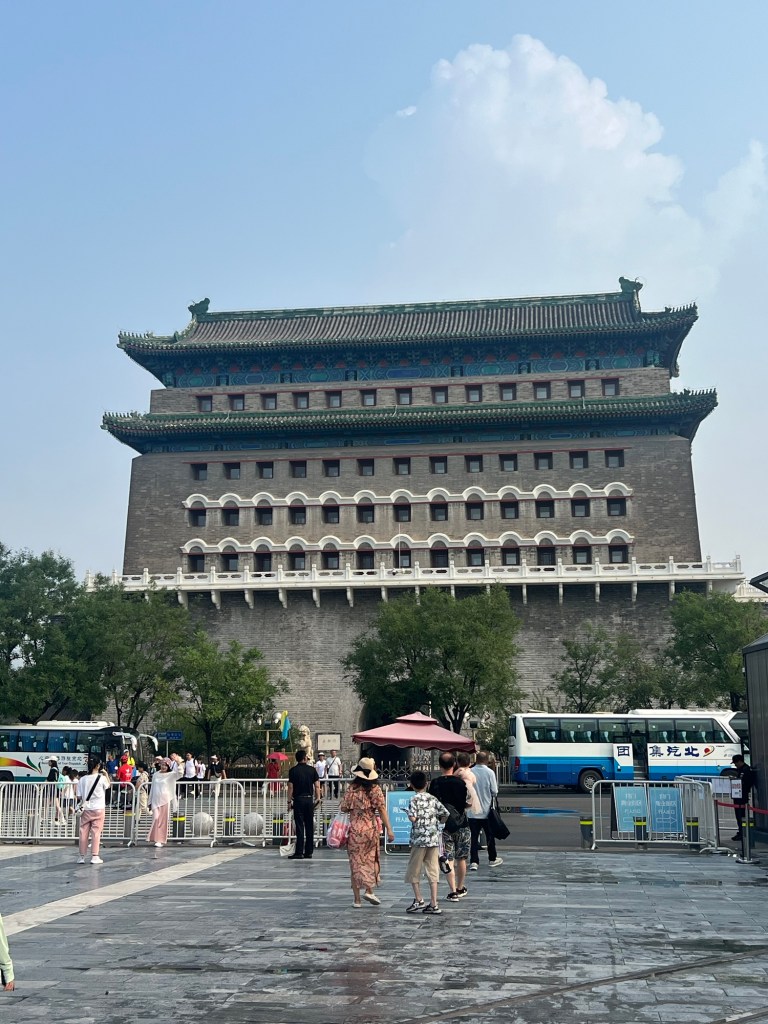
We went for a walk along Qianmen Street, a famous pedestrian street for shopping and sightseeing, running from the Archery Tower of Qianmen in the north to Tiantan Park in the south.
It is composed with buildings whose styles resemble the late Qing dynasty from the 17th century.
During the Qing Dynasty, there were many specialised outlets on either side of it, such as a meat market, cloth market and jewellery market. And there were also many craftsman workshops, warehouses and theatres in the Hutong’s nearby. Now Qianmen Street is an important night life spot for locals.

We walked up to the National Museum of China focusing on art & history and is located on the eastern side of Tiananmen Square. At 200,000sq m, with a collection of more than 1.4 million items and 48 exhibition halls, it is the largest single building area in the world.
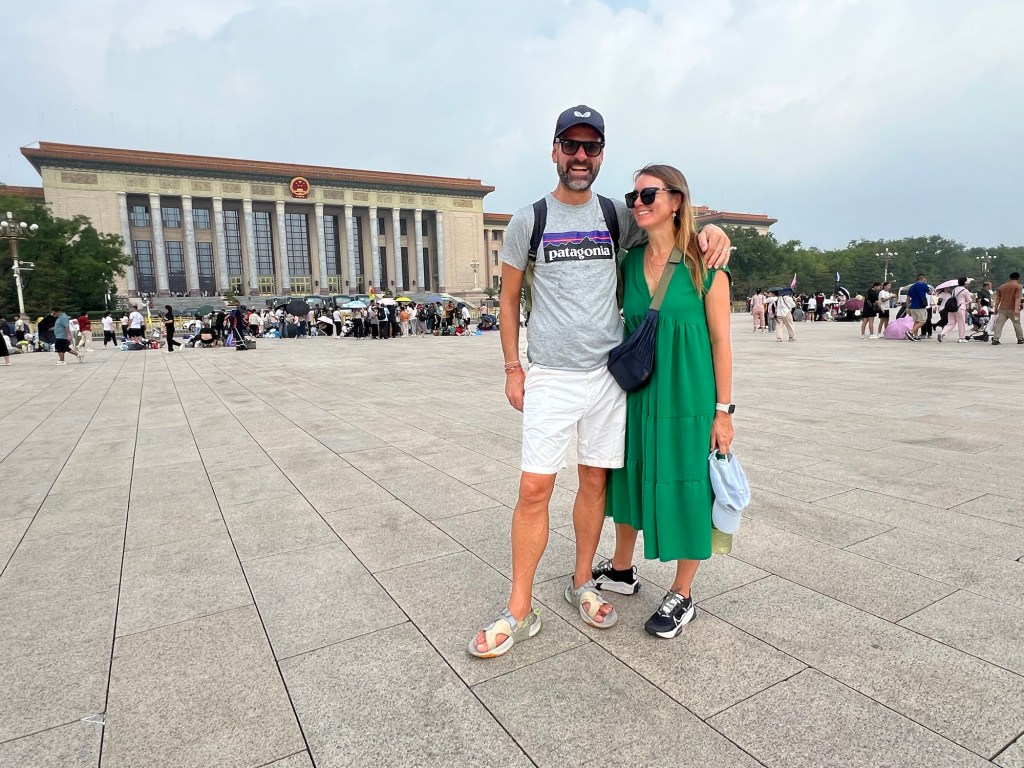
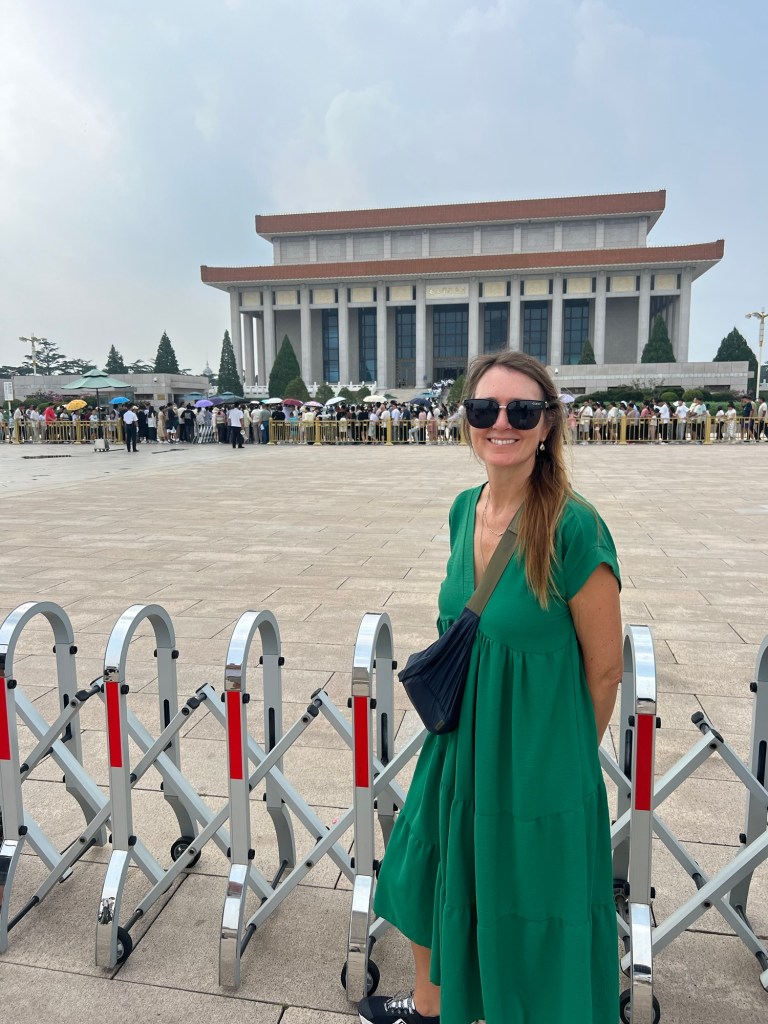
The next stop was the Mausoleum of Mao Zedong, the final resting place of Chairman Mao Zedong.
The other focal point is the Gate of Heaven-Sent Peace and is the entrance gate to the Forbidden City and is a national symbol.
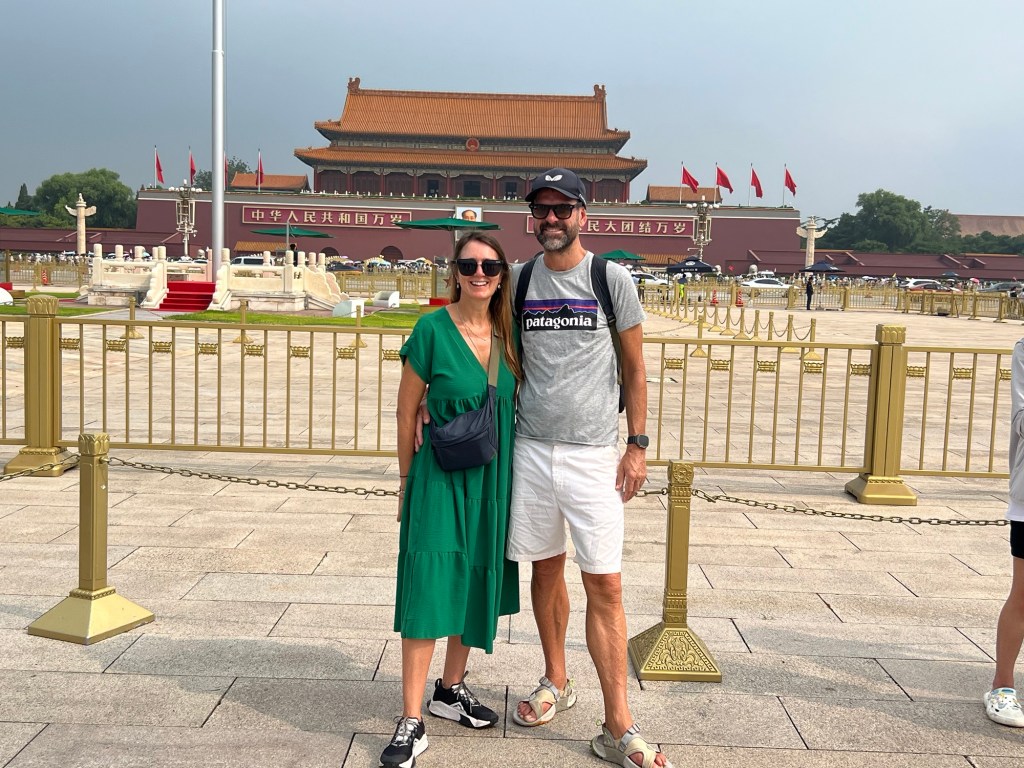
Tiananmen was formerly the entrance to the emperor’s residence. In 1949, Mao proclaimed the People’s Republic of China from the balcony, which now features a large potrait of him.
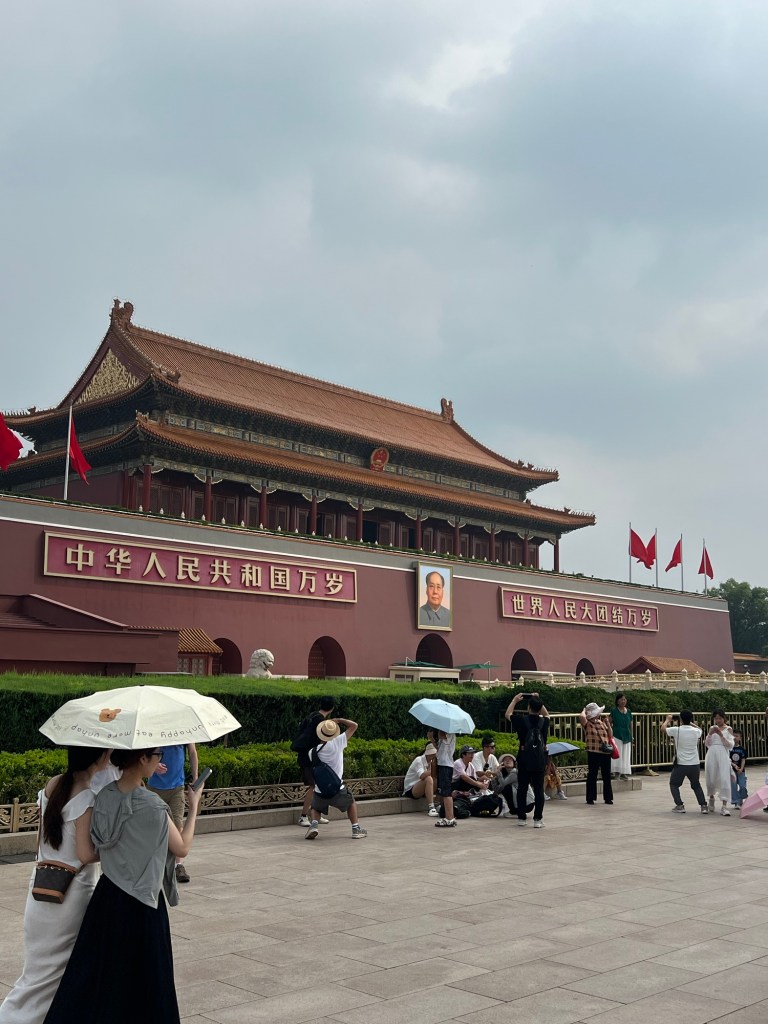
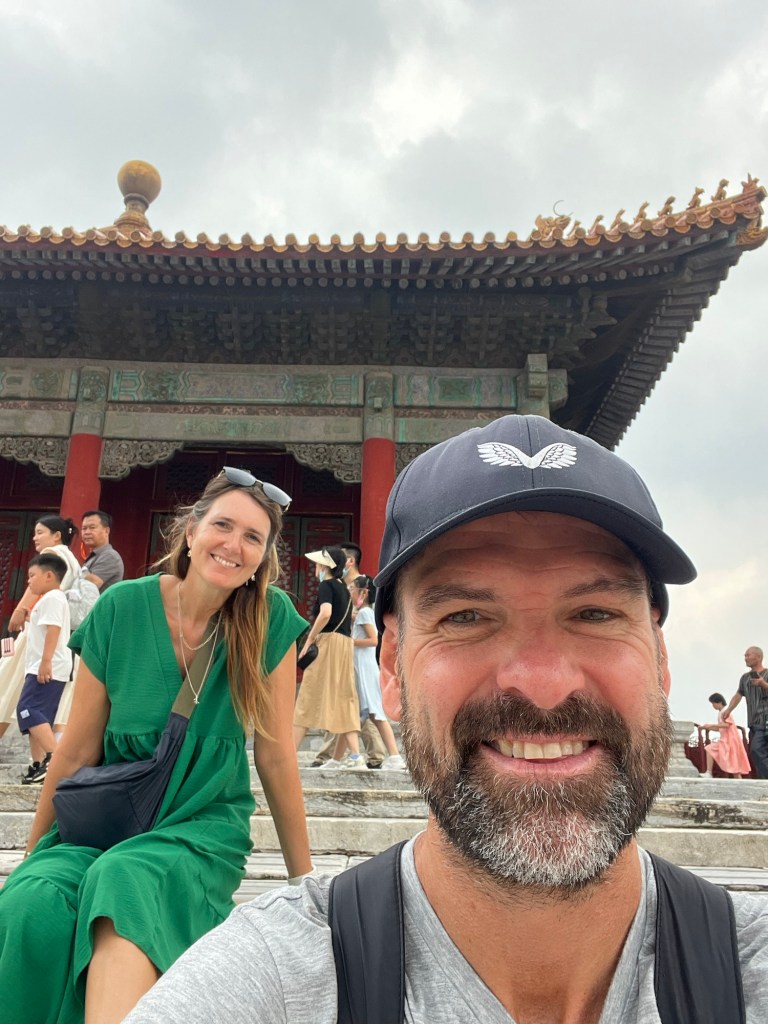
After a hour in Tian’anmen Square we made our way back to Forbidden City, the inner sanctum and palace where for centuries Chinese emperors ruled their world. It has 9,999 room maze of courtyards, places, and ceremonial halls, where 24 emperors lived. The Forbidden City was historically a forbidden place, where commoners were kept out for nearly 500 years.
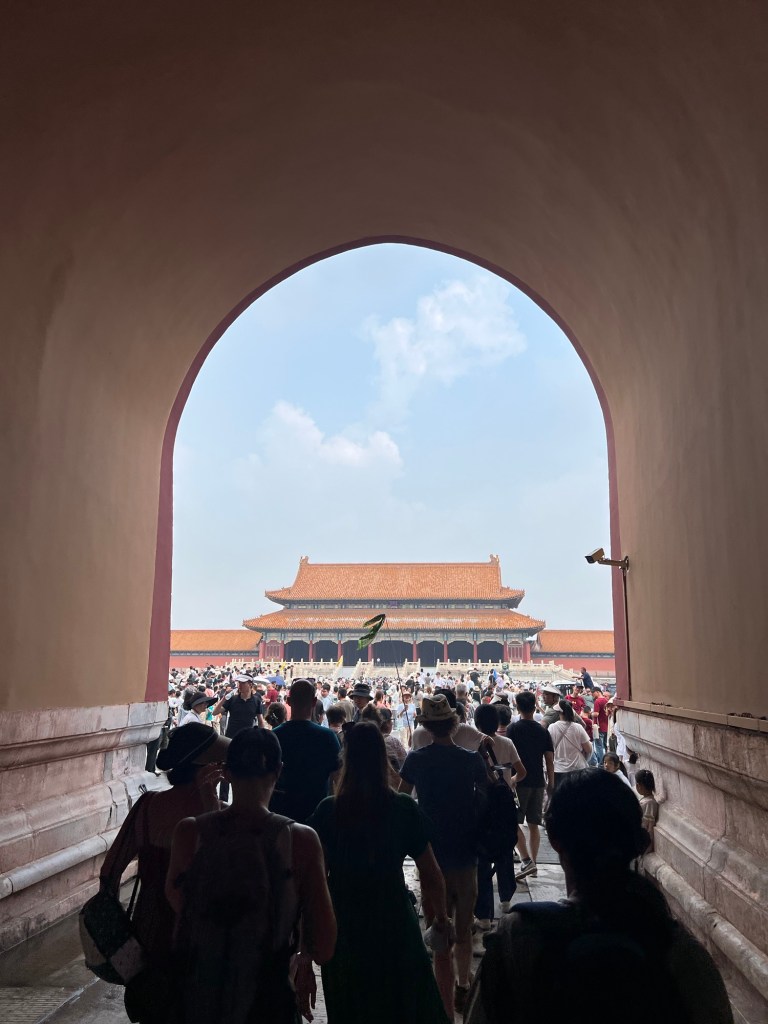
It is home to over 1.8 million pieces of art, mostly from the imperial collection of the Ming and Qing dynasties.
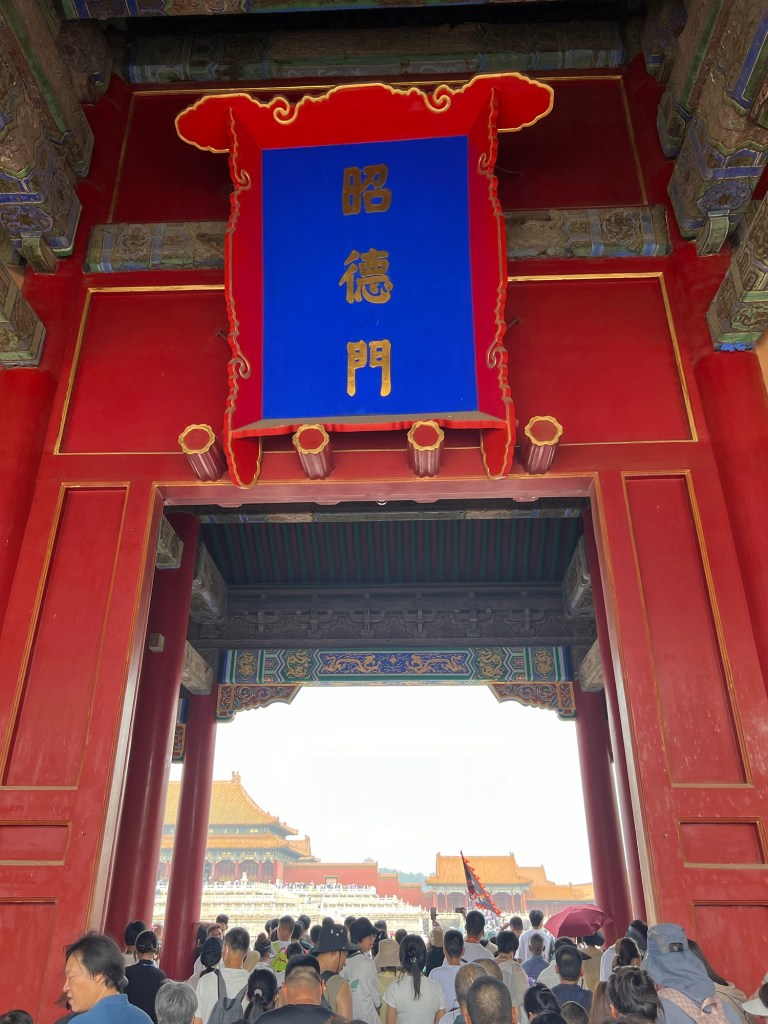
The museum regularly sees more than 15 million visitors per year making it the world’s most visited museum.
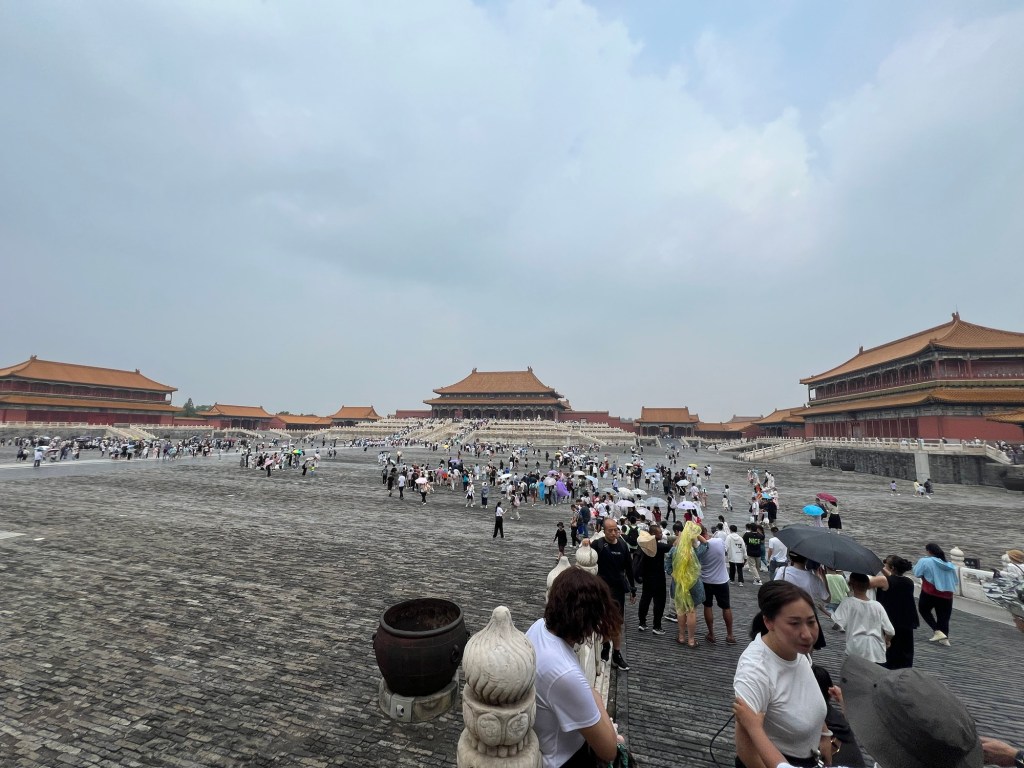
In 1912, Puyi, the last emperor of China, abdicated and under an agreement with the new Republic of China government, Puyi remained in the Inner Court, while the Outer Court was given over to public use.
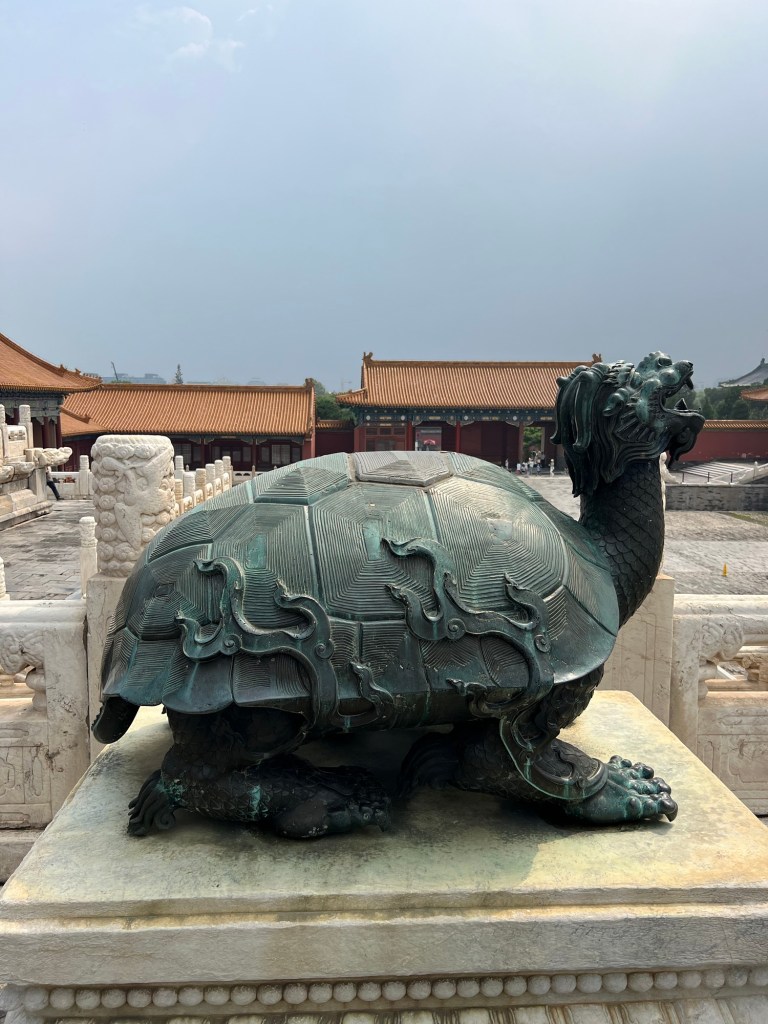
In 1924, Puyi was evicted from the Inner Court after a coup. The Palace Museum was then established in the Forbidden City.
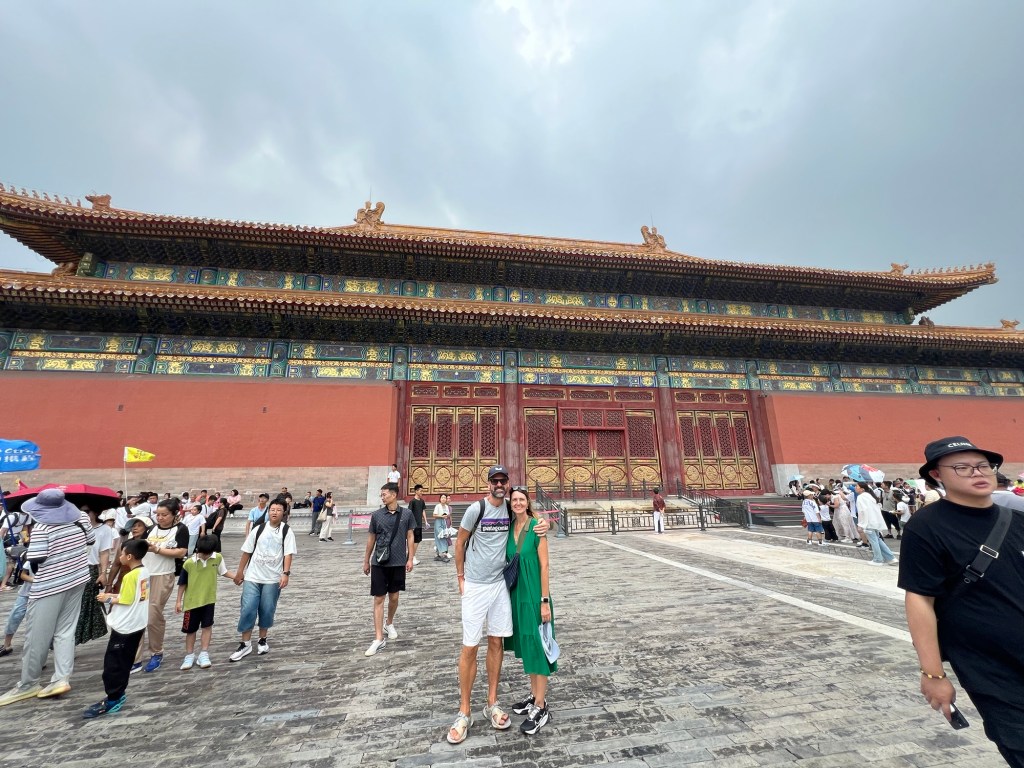
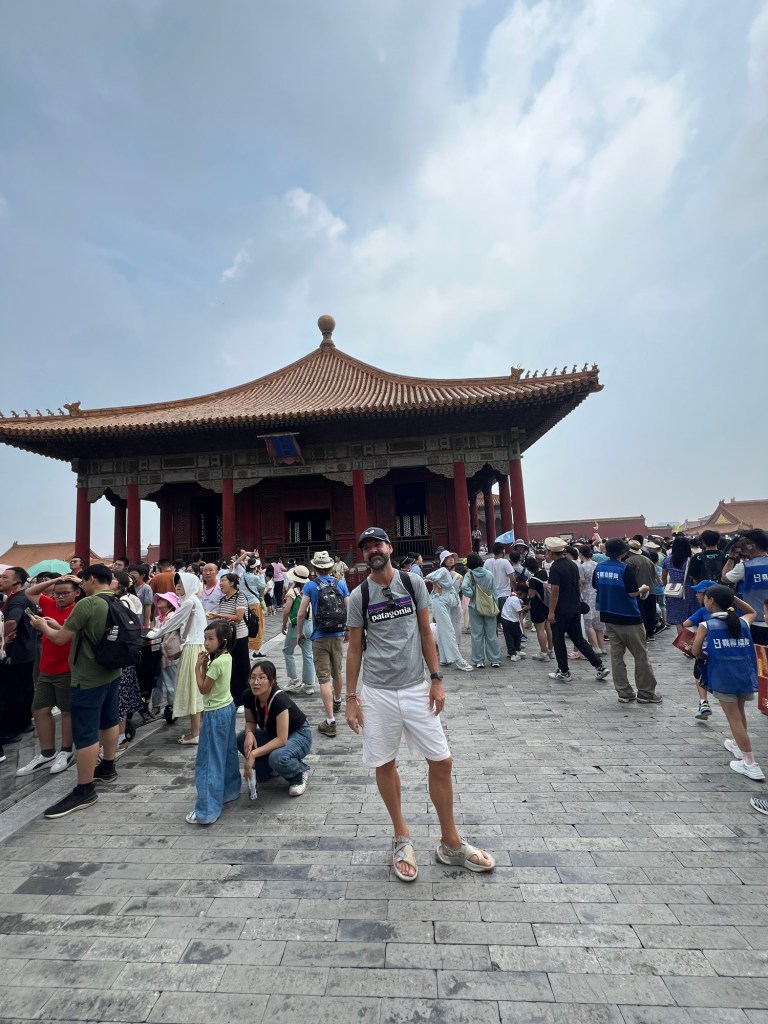
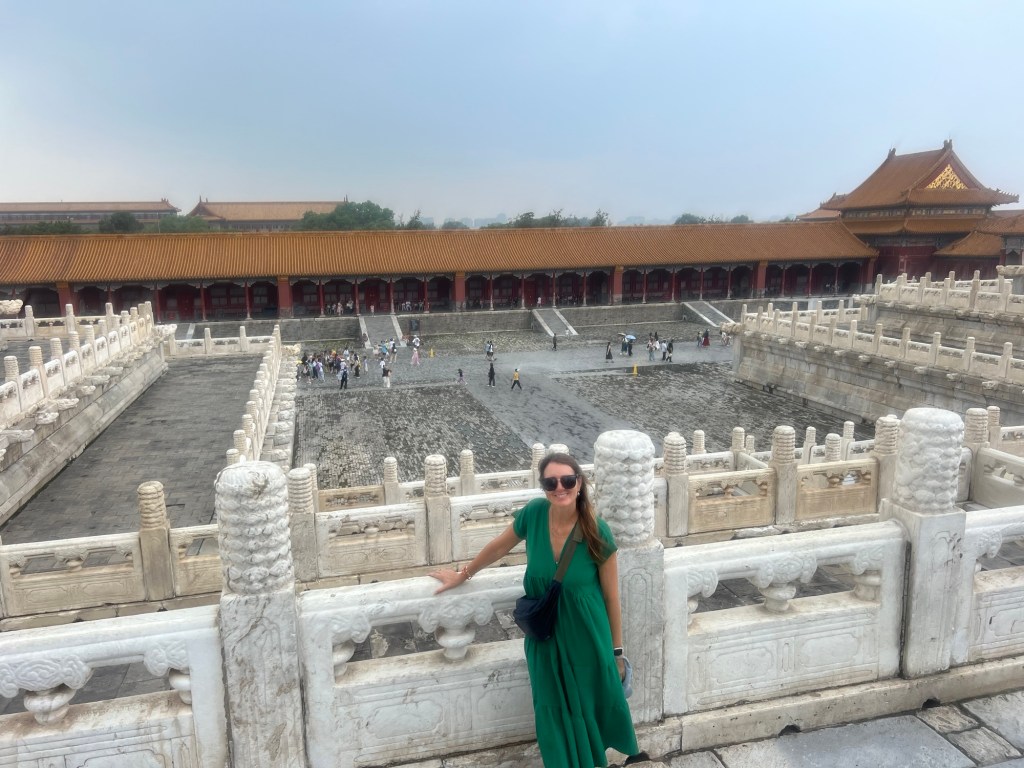
Today, there are over a million rare and valuable works of art in the permanent collection of the Palace Museum, including paintings, ceramics, seals, steles, sculptures, inscribed wares, bronze wares and enamel objects.
The Palace Museum holds close to 50,000 paintings. Of these, more than 400 date from before the Yuan dynasty from the 13th century. This is the largest collection in China and includes some of the rarest and most valuable paintings.
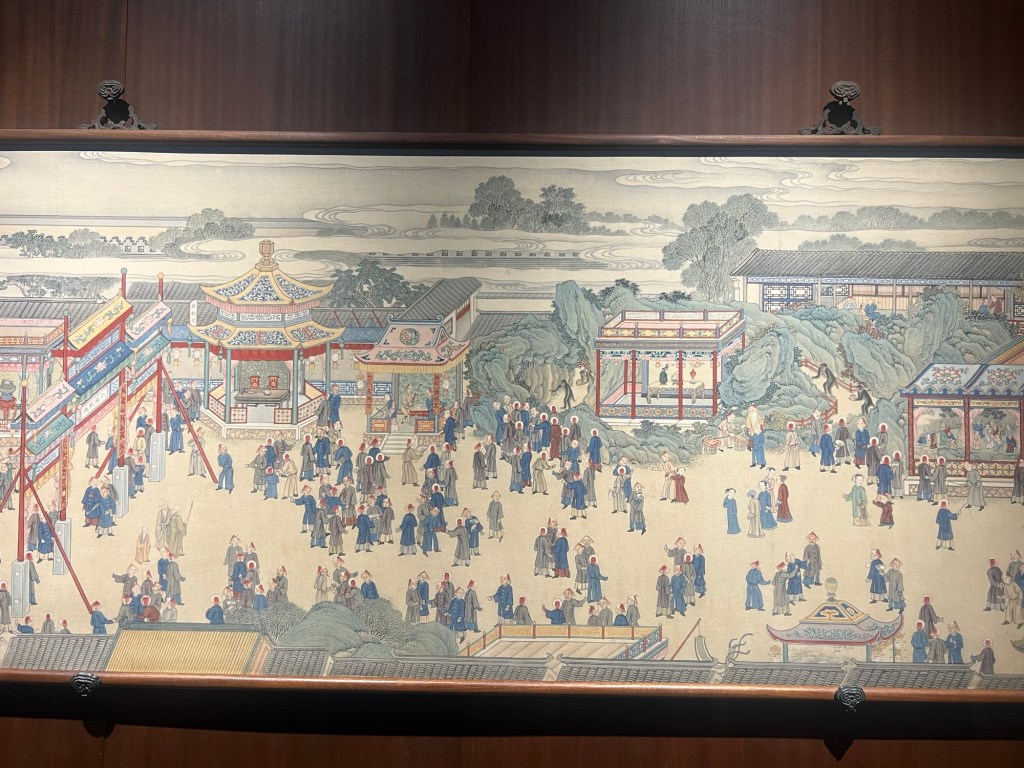
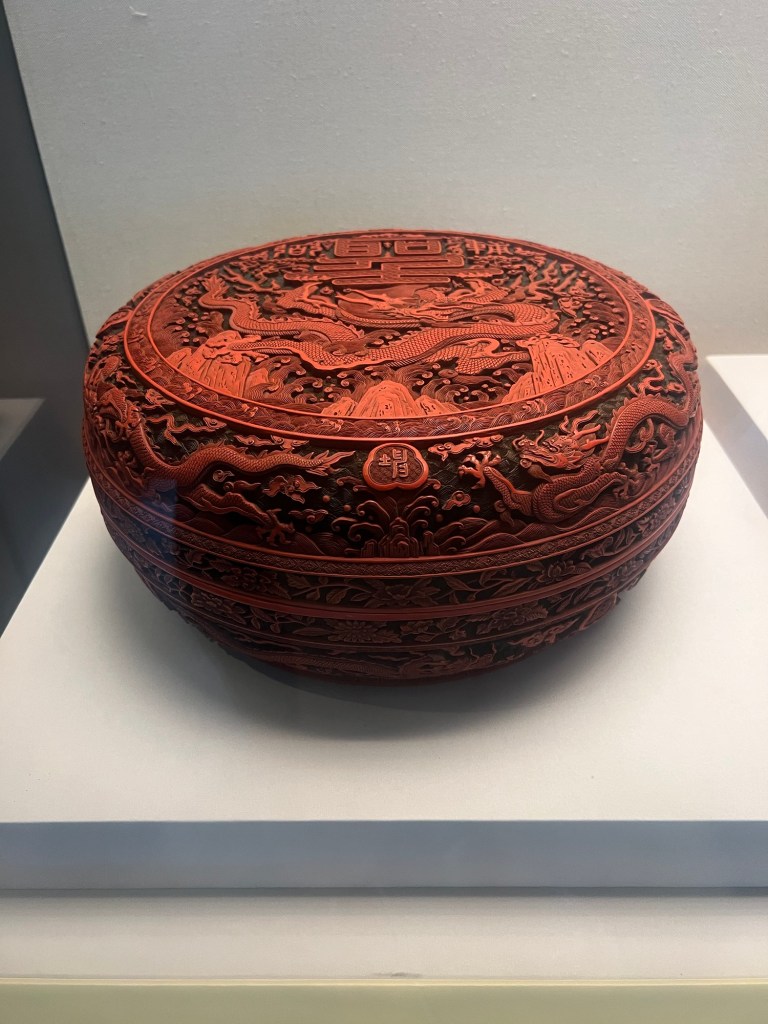
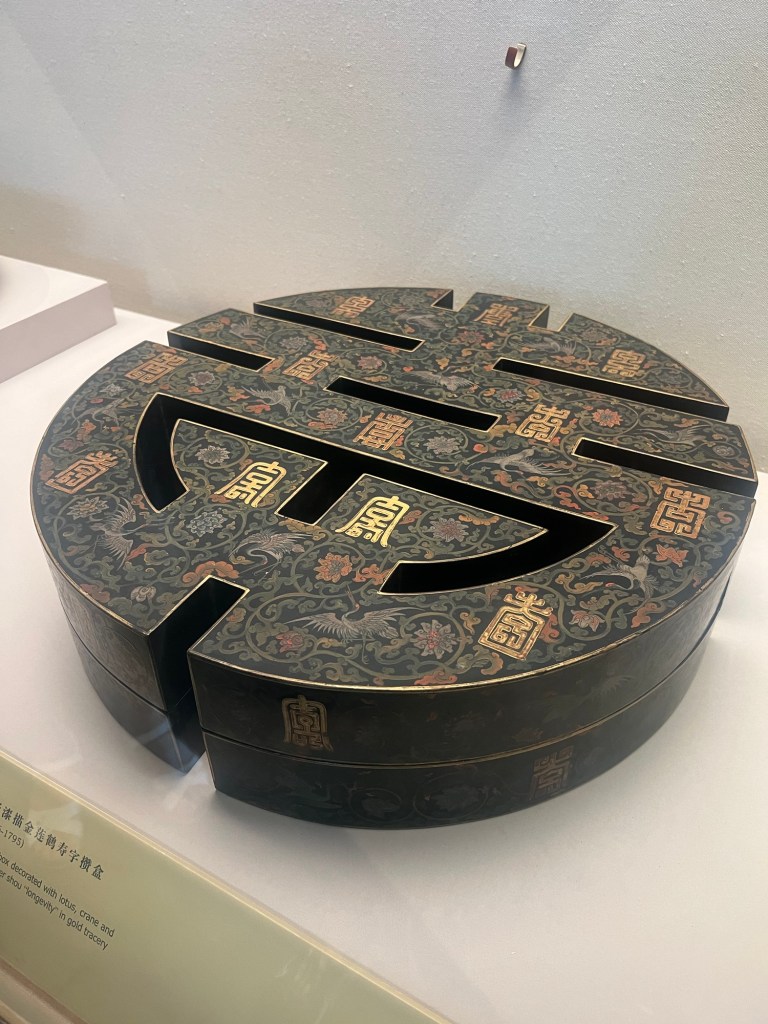
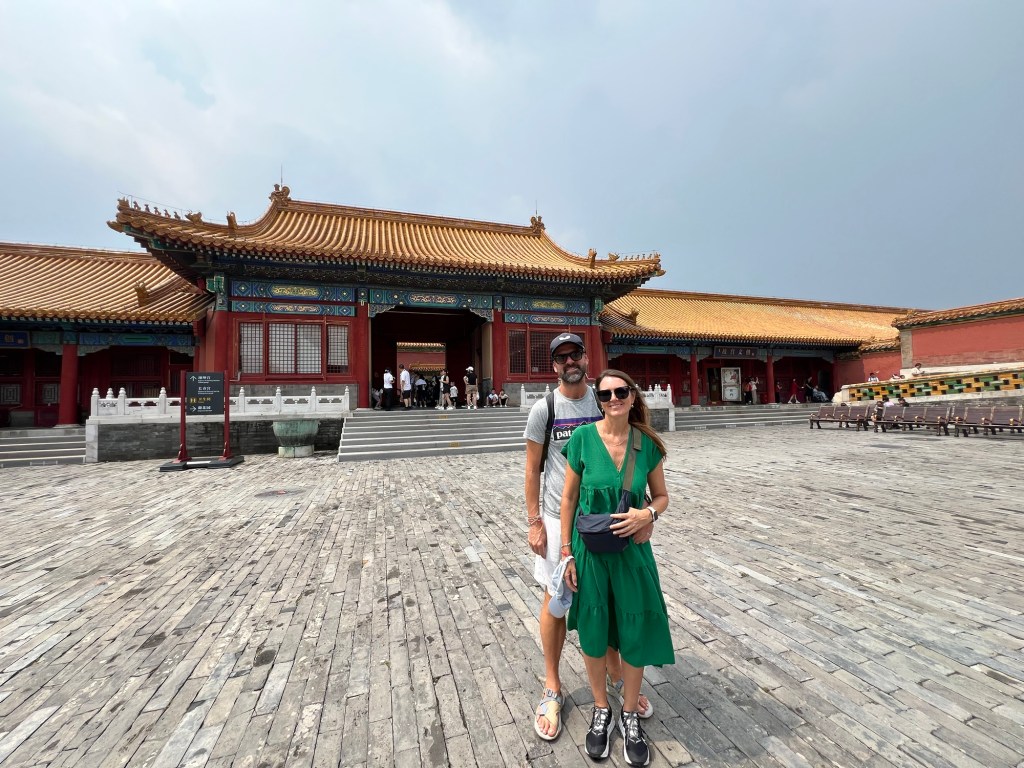
As we ebbed around the Forbidden City, the weather turned and we said a brief goodbye to the hot sunshine and within minutes heavy rain descended and we took shelter inside one of the museum buildings to view the artefacts.
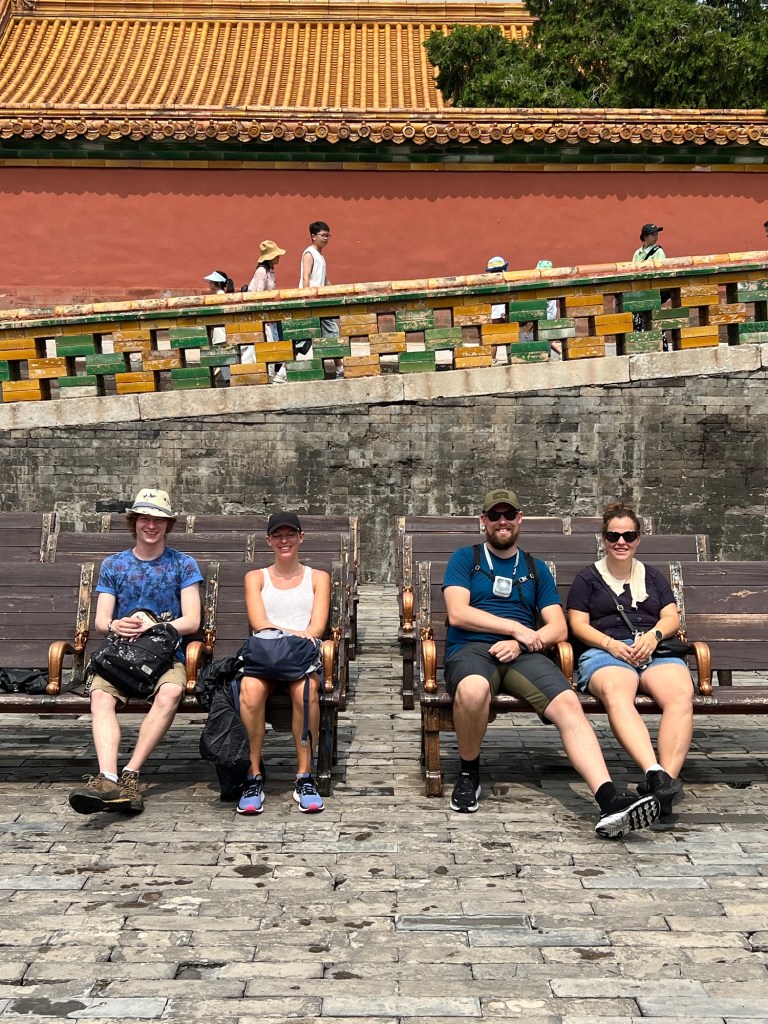
Once the sun returned the group were keen to take a breather and Jamie, Laura, Simen and Julie found some seats in the shade.
In addition to works of art, a large proportion of the museum’s collection consists of the artifacts of the imperial court. This includes items used by the imperial family and the palace in daily life, as well as various ceremonial and bureaucratic items important to government administration.
This comprehensive collection preserves the daily life and ceremonial protocols of the imperial era.
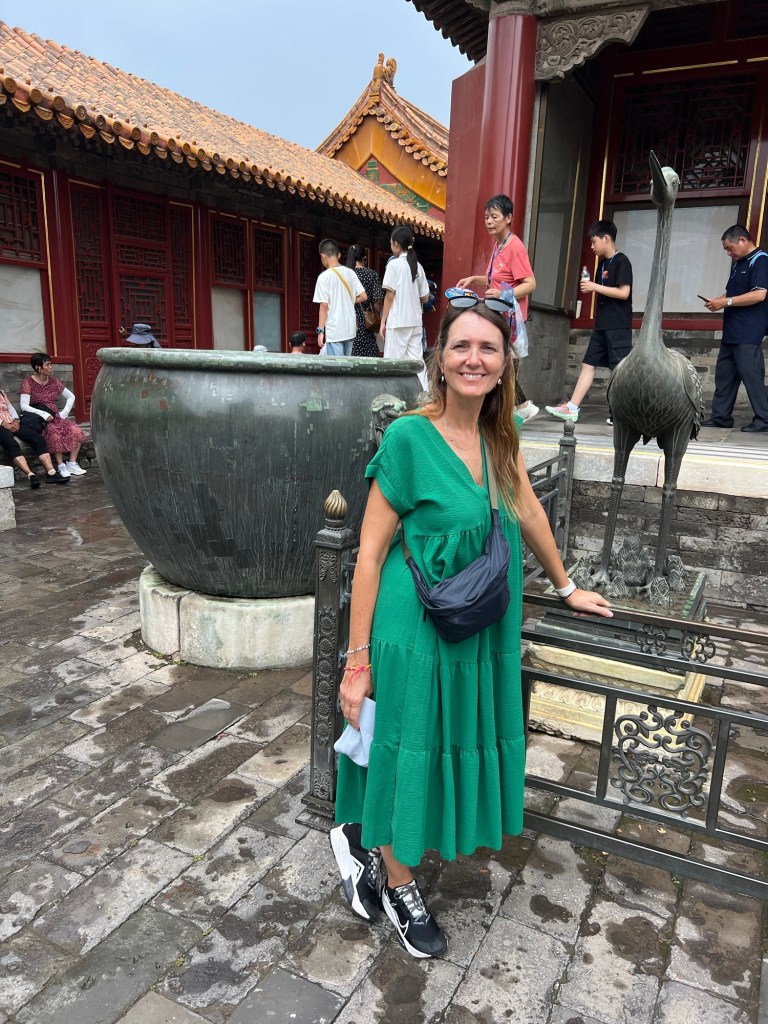
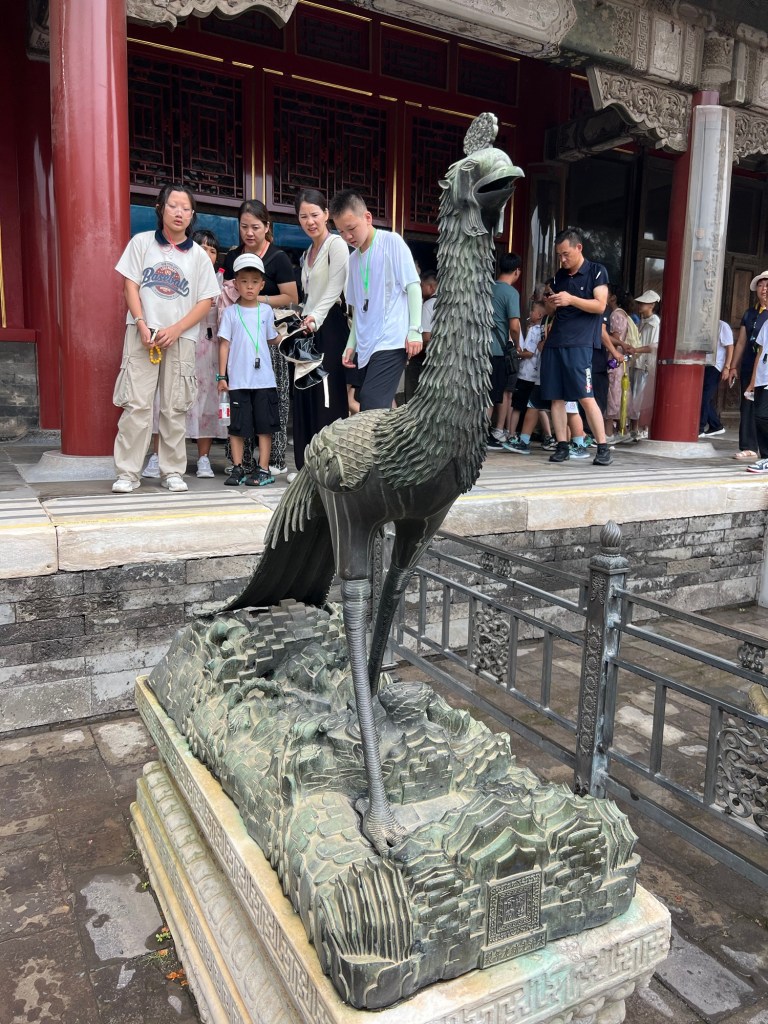
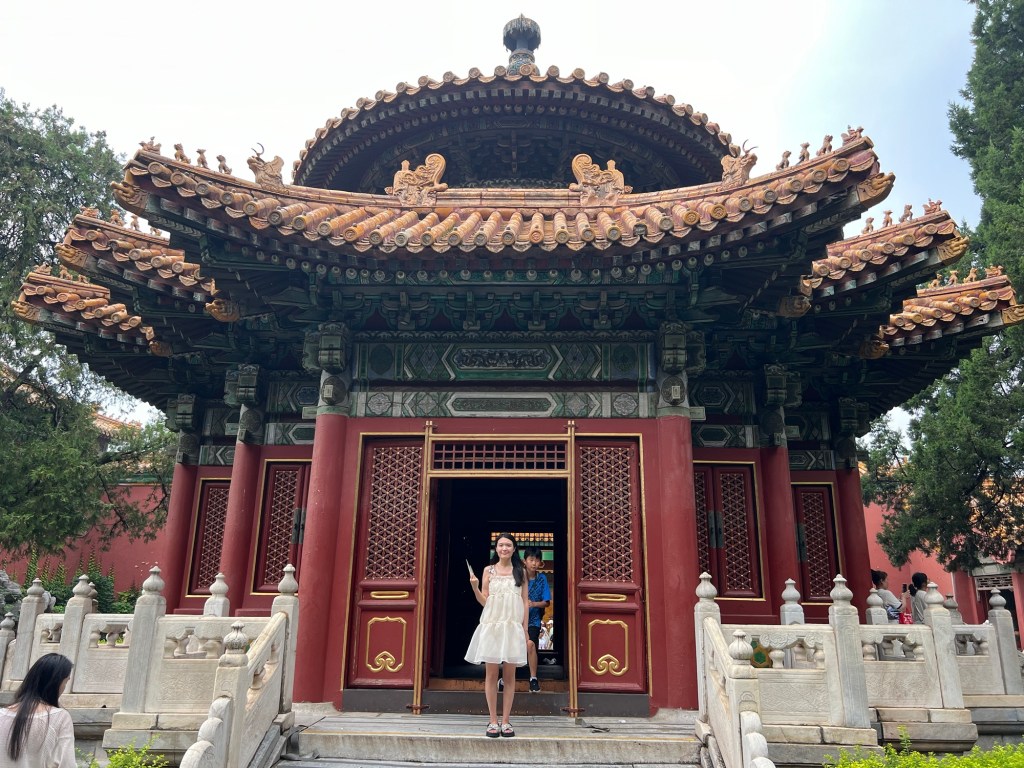
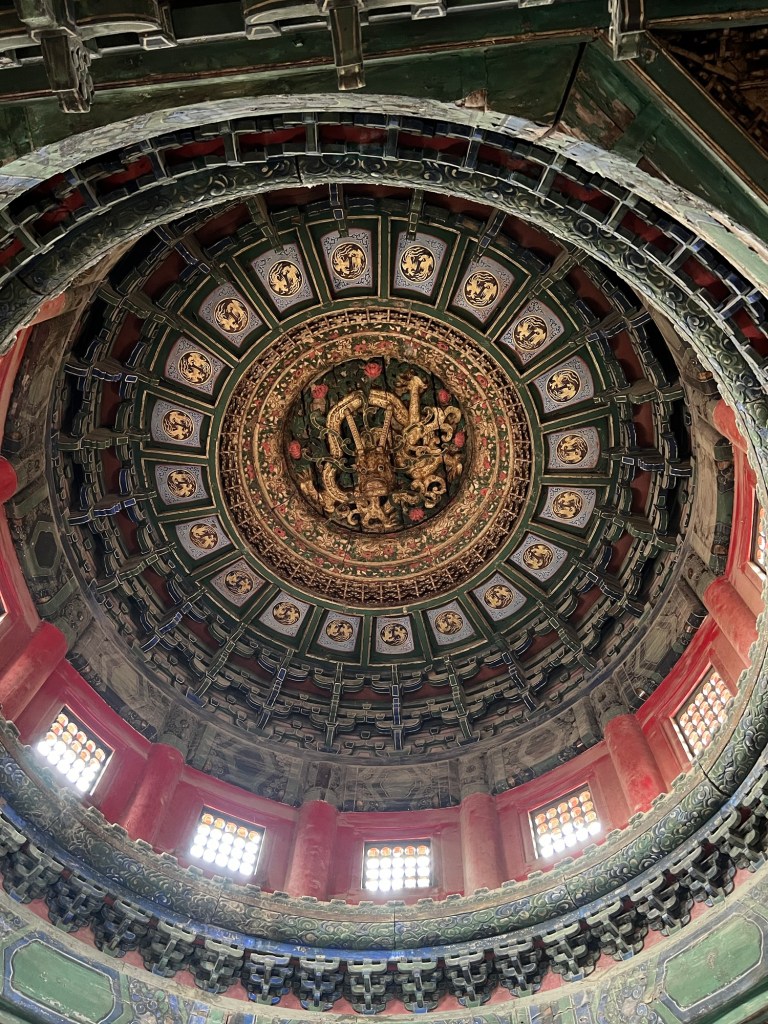
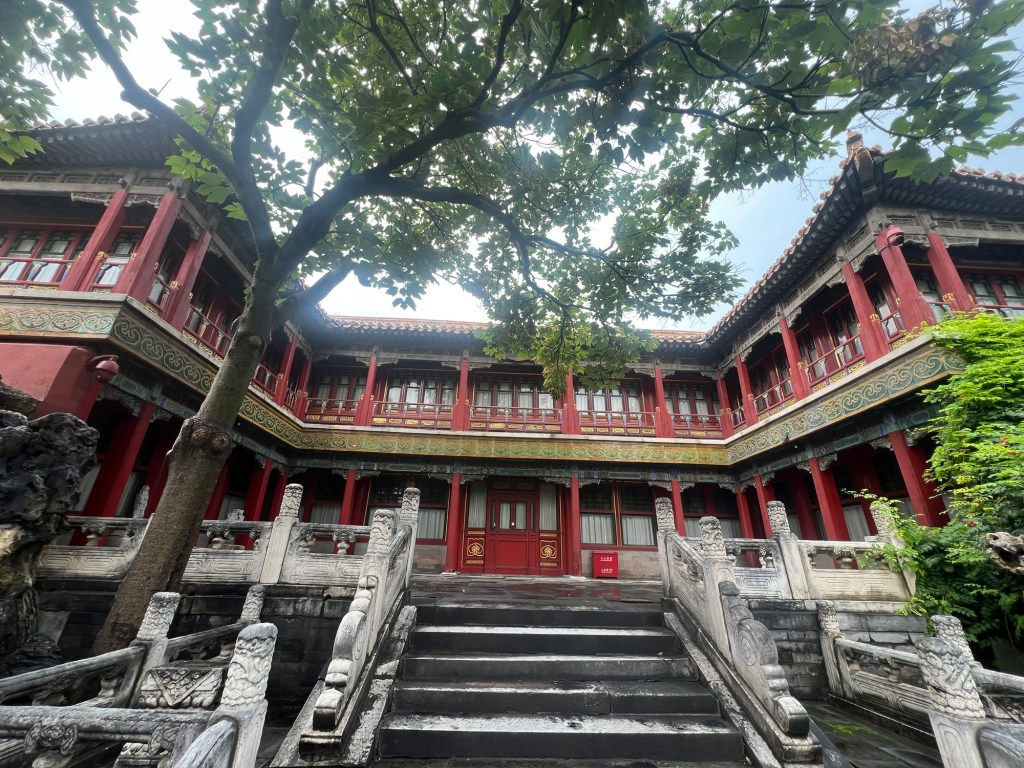
After spending a further 3hrs today walking around the Forbidden City and the many associated buildings and gardens, we eventually said goodbye to the museum and as a group headed to a nearby bistro for a late lunch.
After reconvening at 4pm we picked up a local bus (costing just 20p each) and went to visit the Drum Tower situated at the northern end of the city. Originally built for musical reasons, it was later used to announce the time and is now a tourist attraction.
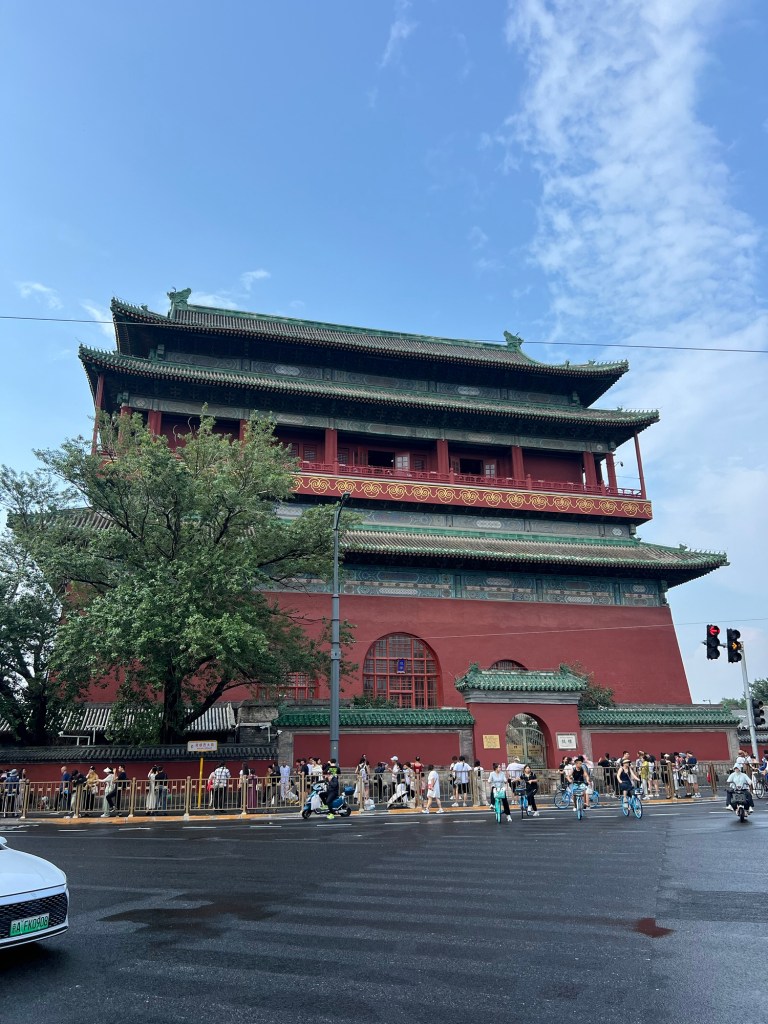
From there we went down Yandaixie Street, also called Yandai Byway, which is a Hutong located in Beijing downtown. It is the oldest business street in Beijing with a history of over 800 yrs.

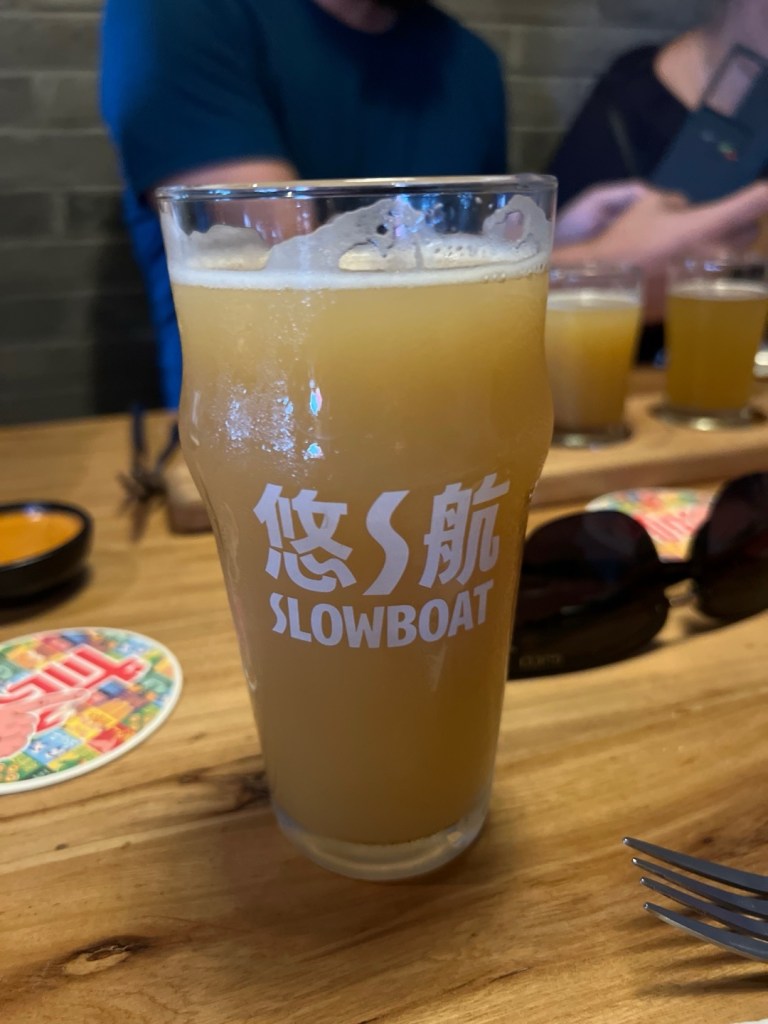
In the past, there were mainly stores selling tobacco pipes, antiques, jades, and Chinese paintings. Now it is teeming with boutiques, restaurants, cafes and bars. Our tour group headed to a bar called Slowboat tap room where we ordered various beers and burgers.
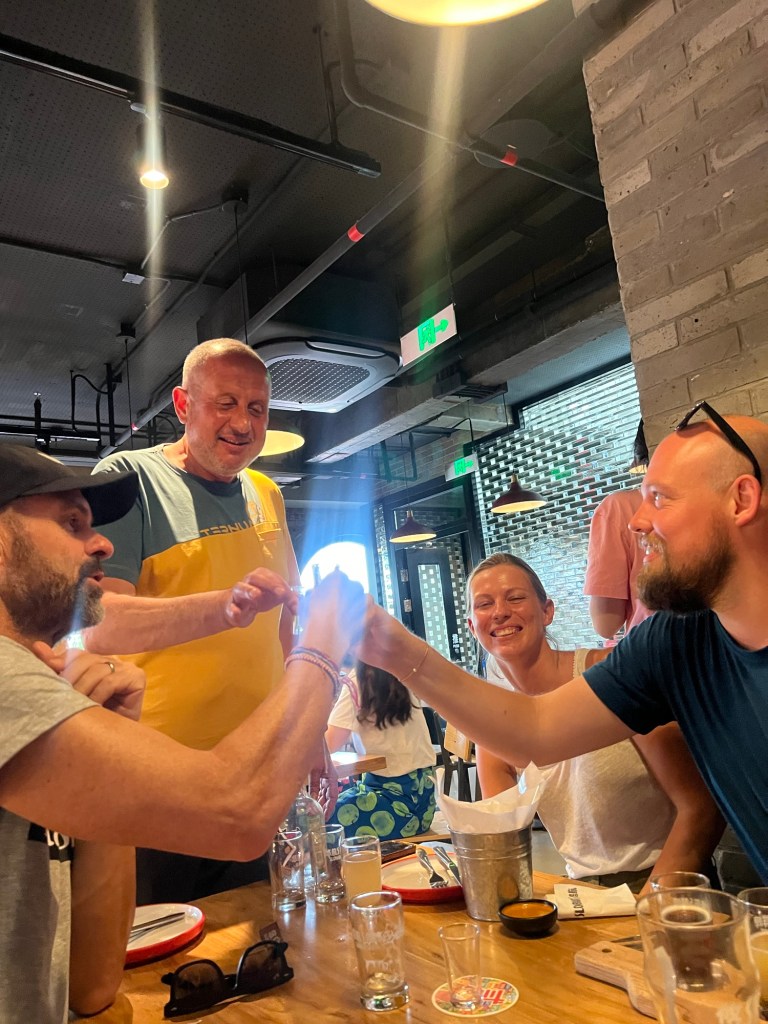
It also turned out to be Oleg’s birthday and we celebrated with some Russian spirit to toast the occasion.
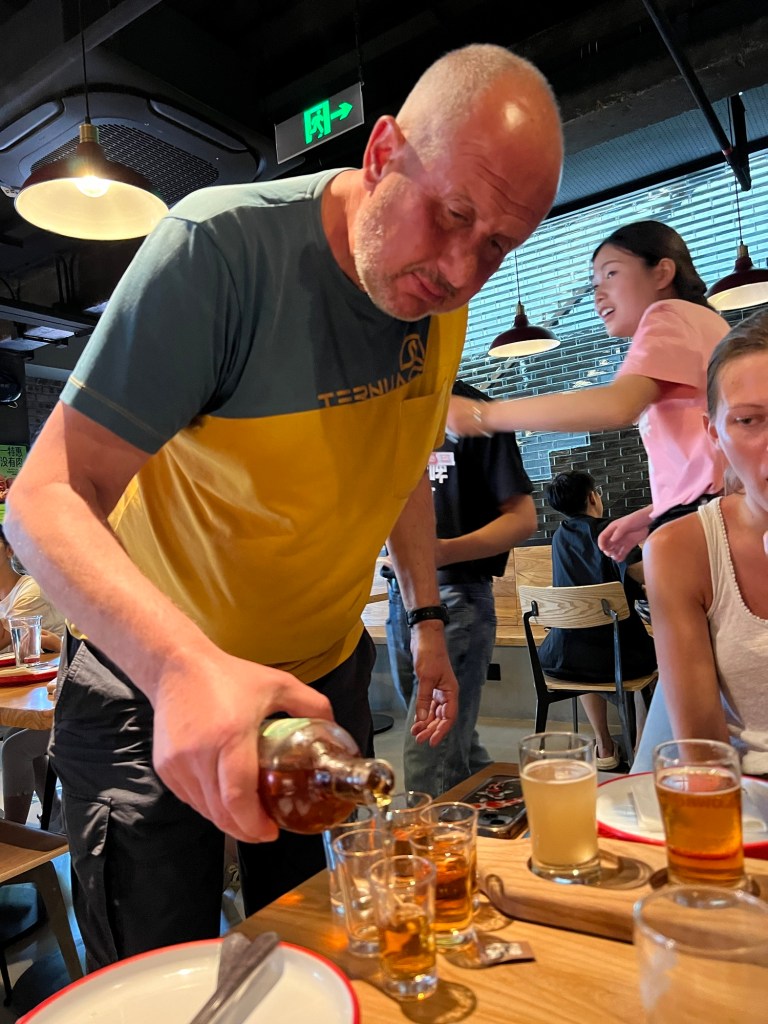
Like any good Russian spirit it came with a health warning and was almost 40% proof. Thankfully it went down smoothly and we indulged in a couple of shots!

After trying a flight of IPAs, wheat and pale ale tasting beers it was time to get back on the tourist trail and take in the views along Qian Hai lake before crossing at Yinding Bridge.
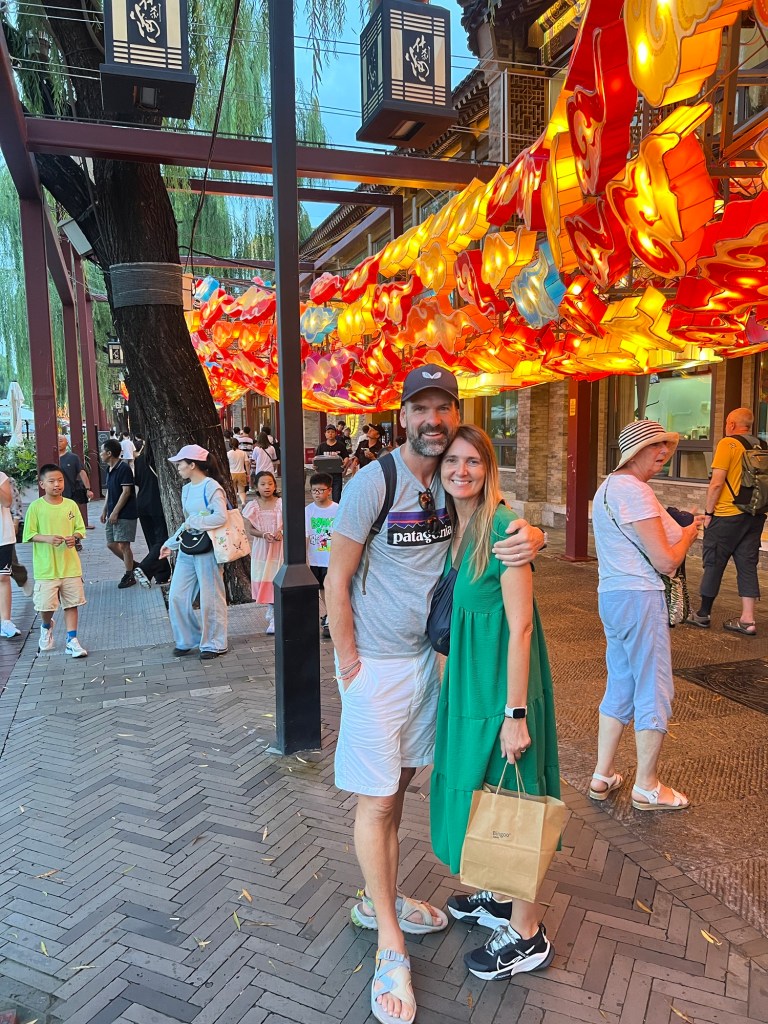
Standing on the Yinding Bridge, we enjoyed a panoramic view across Xishan Forest Park.
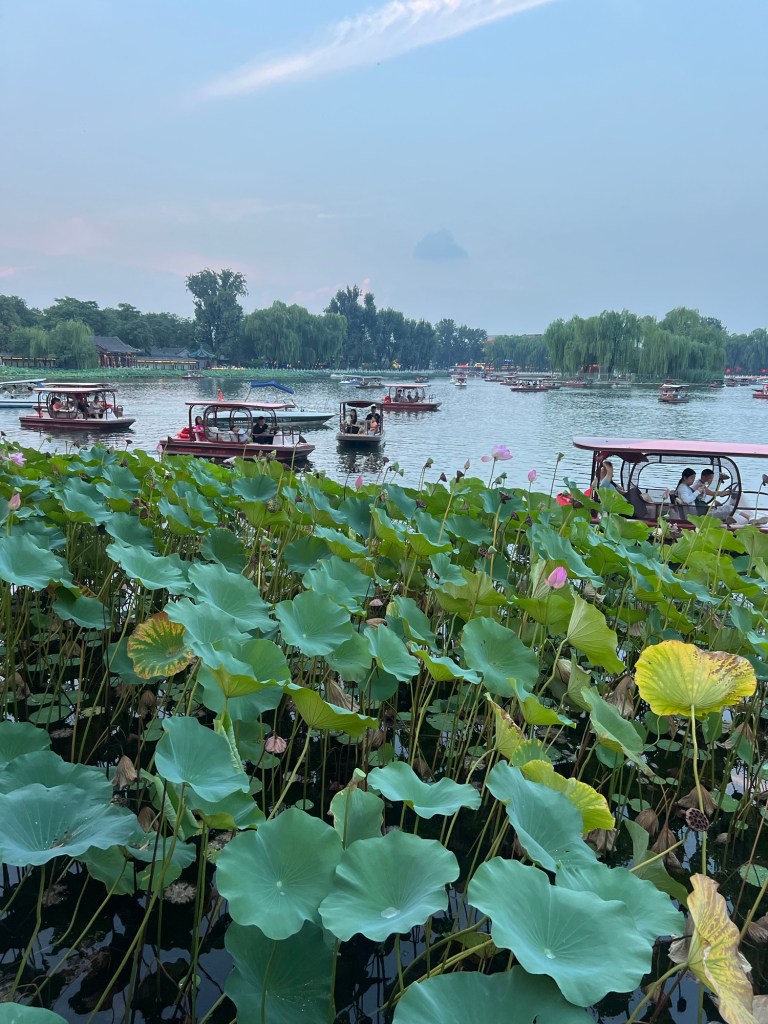
Again the lake was awash with lotus flowers and alongside the lakefront an illuminated dragon snakes its way above the various restaurants and bars creating a beautiful scene as darkness descended.
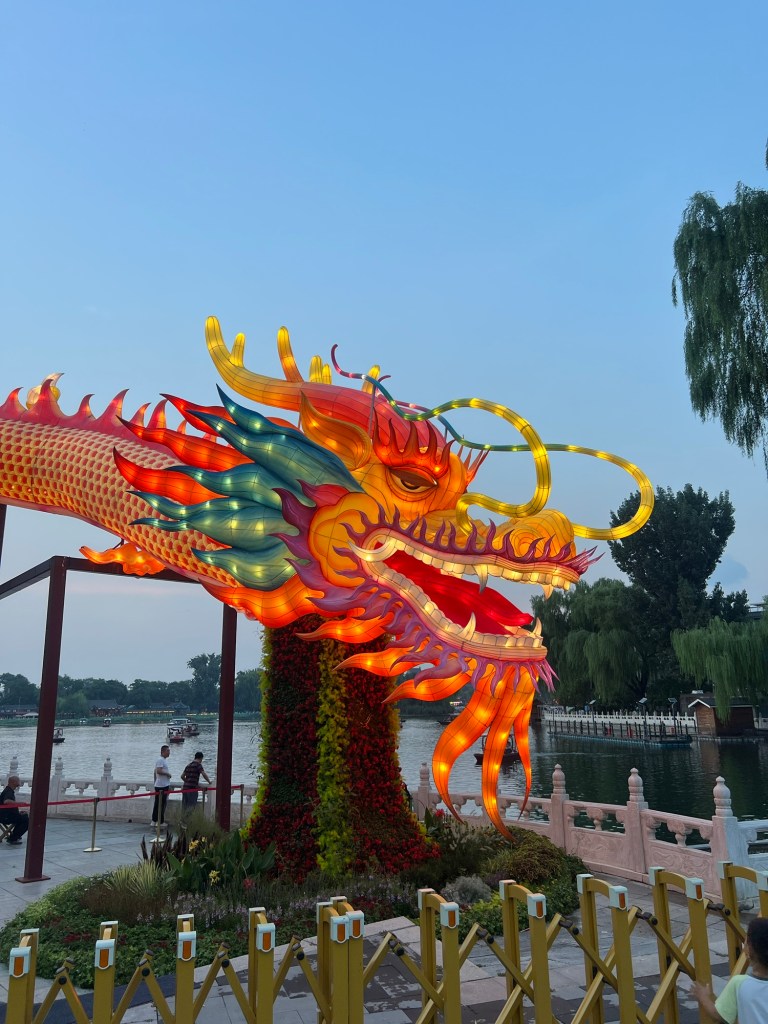
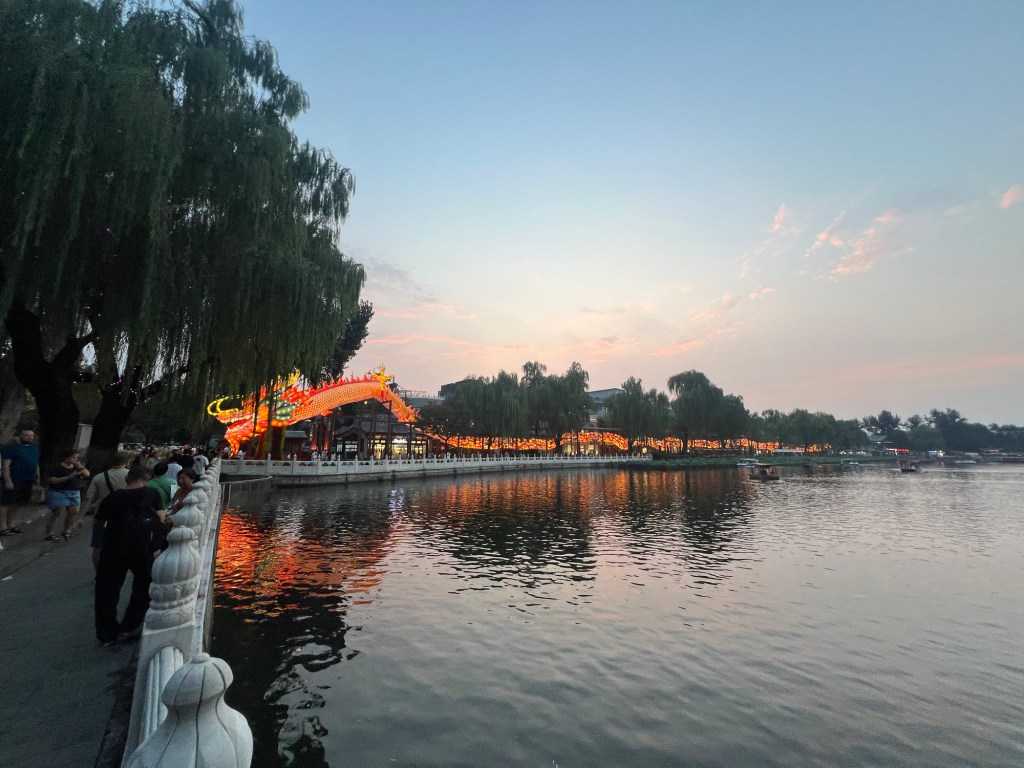
With the day coming to a close and in the knowledge that we are moving on to the city of X’ian tomorrow, we decided to walk back to our hotel along with 5 or 6 others from the tour group.
Fortunately we have a diverse and interesting group of people from various backgrounds, who we are looking forward to getting to know and sharing this amazing experience together.
 @travellingwiththeateam