Another incredible day with a visit to see the infamous Terracotta Warriors.
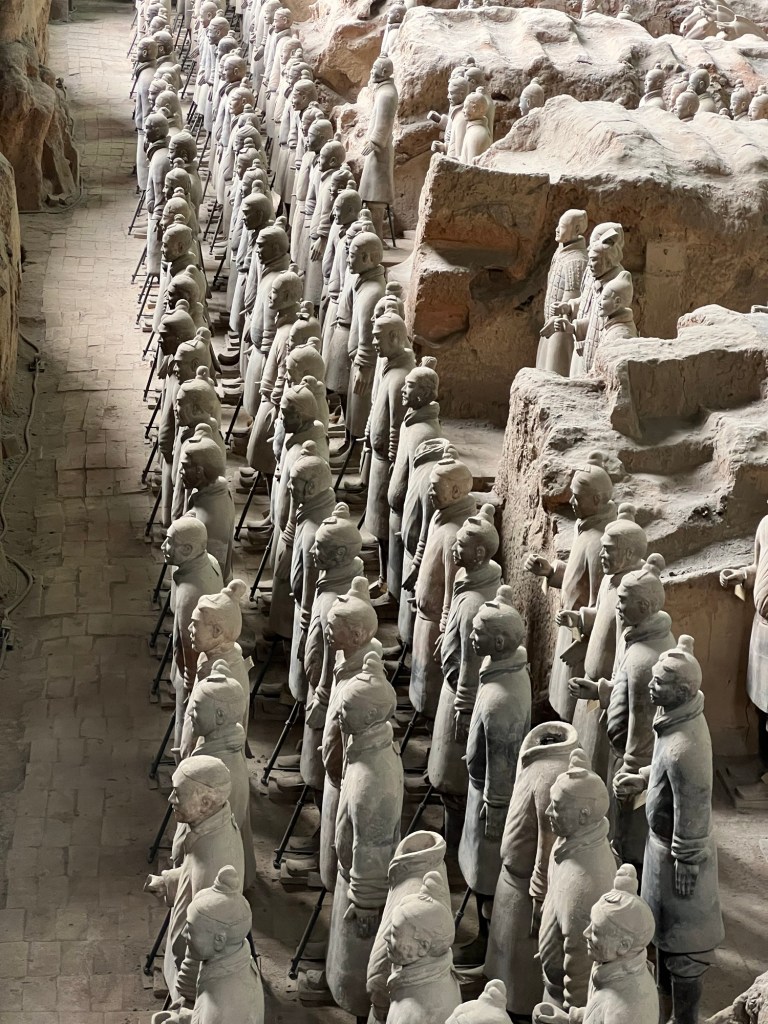
The figures, date from 200BC and were discovered in 1974 by local farmers in Lintong County, outside Xi’an.
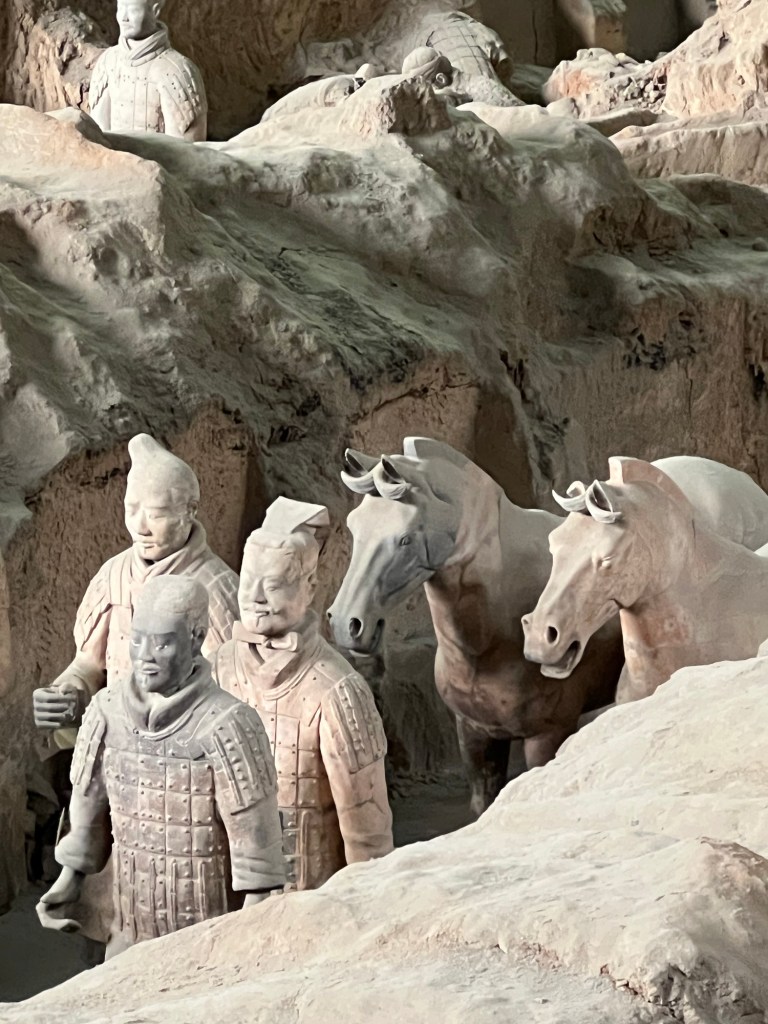
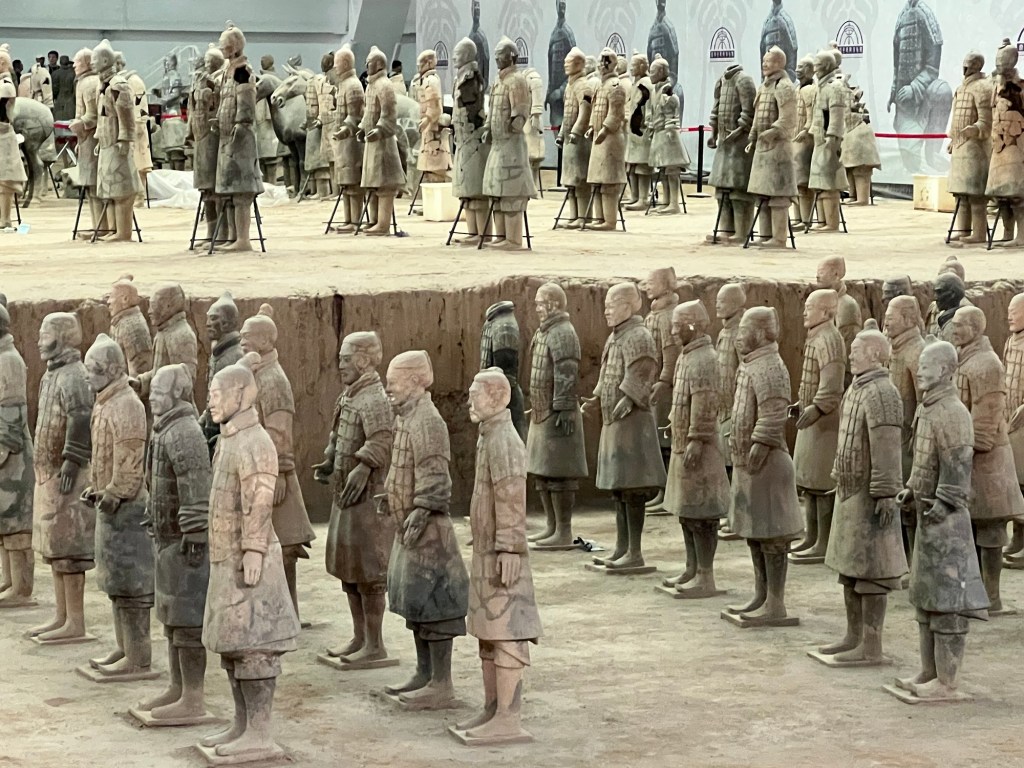
The three pits containing the Terracotta Army hold more than 8,000 soldiers, 130 chariots with 520 horses, and 150 cavalry horses, the majority of which remain in situ.
Work on the mausoleum began in 246BC, soon after Emperor Qin (then aged 13) succeeded his father as King of Qin, and the project eventually involved 700,000 workers.
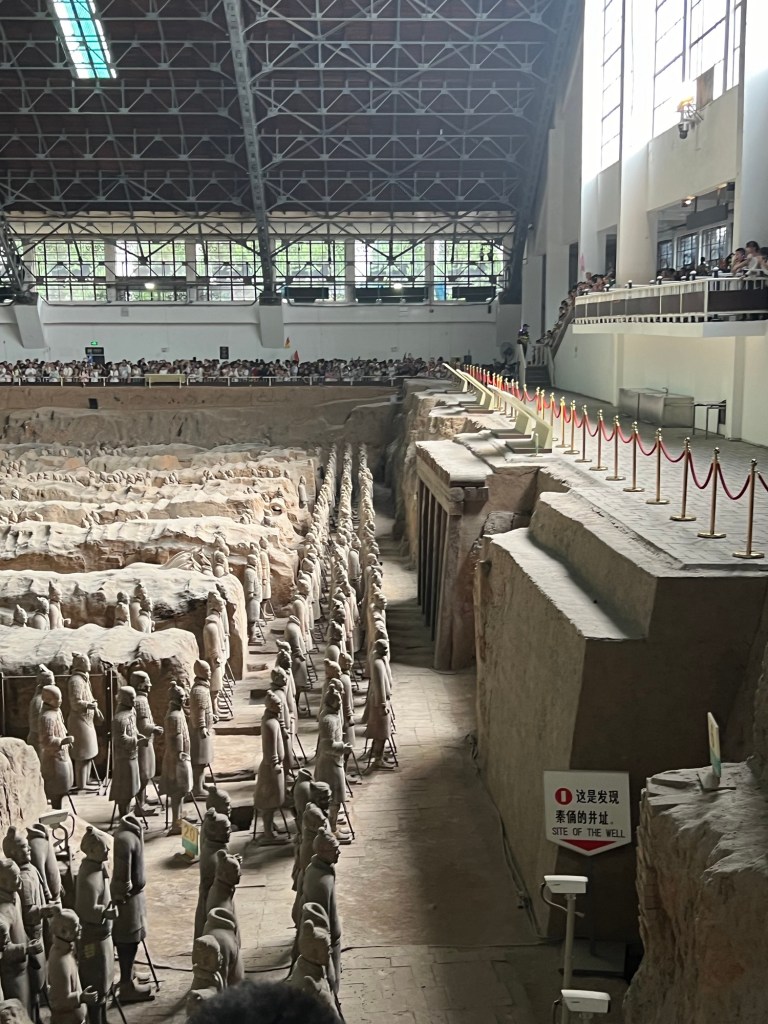
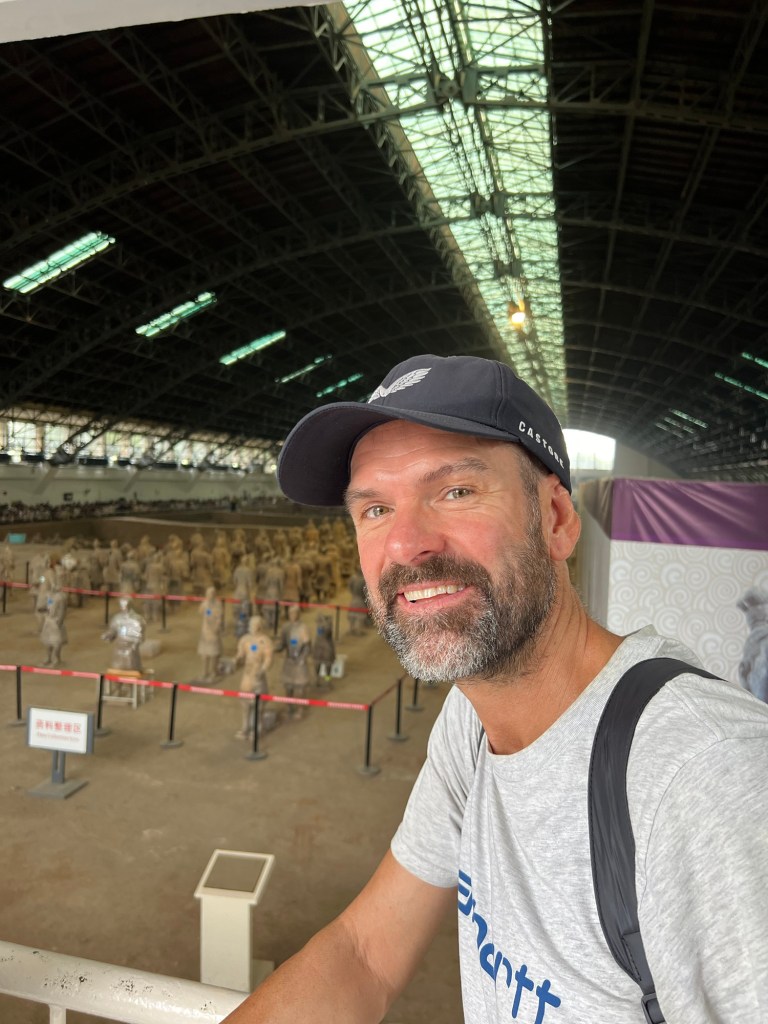
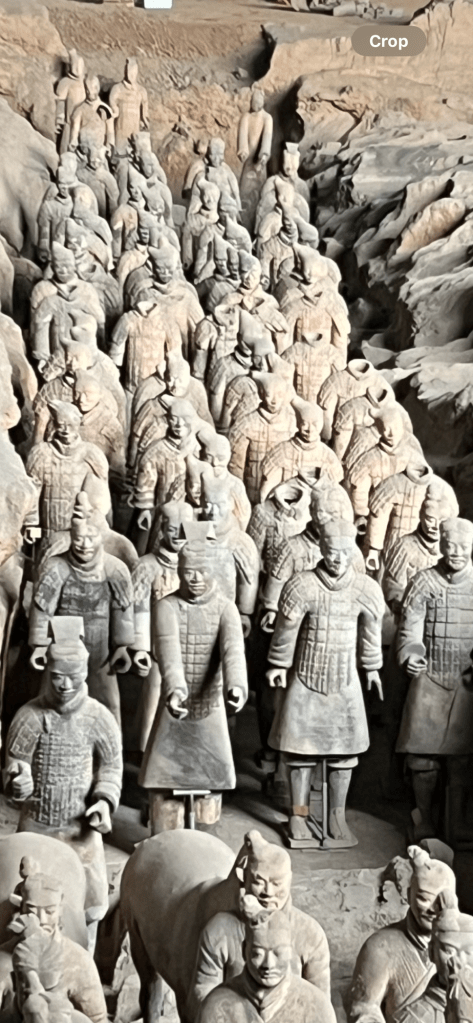
We first visited Pit 1, which is 230 m long and 62 m wide and contains the main army of more than 3,000 figures. It is the largest of the four pits and has eleven parallel corridors, most more than 3 m wide and paved with small bricks with a wooden ceiling supported by large beams and posts.
This design was also used for the tombs of nobles and would have resembled palace hallways when built.
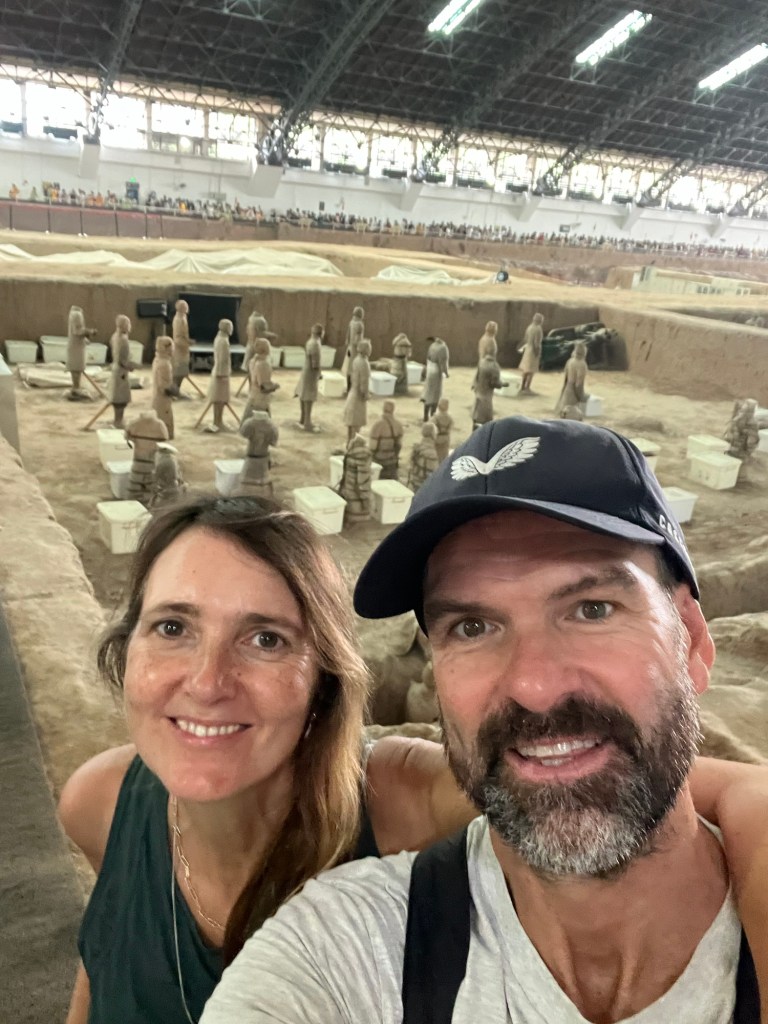
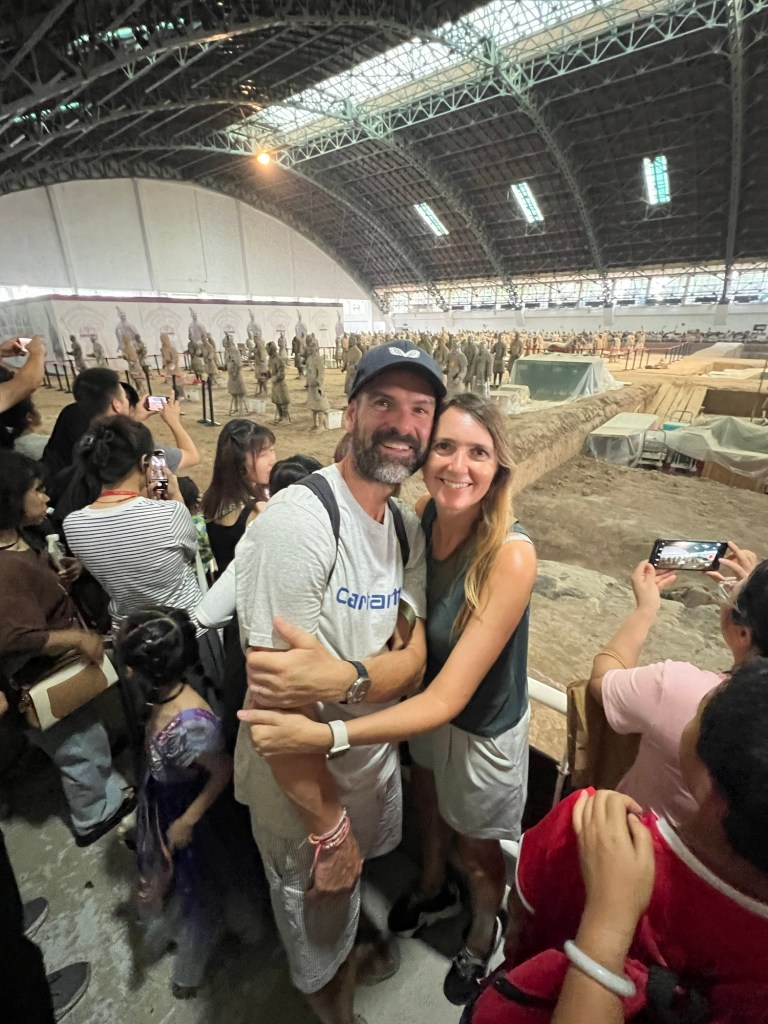
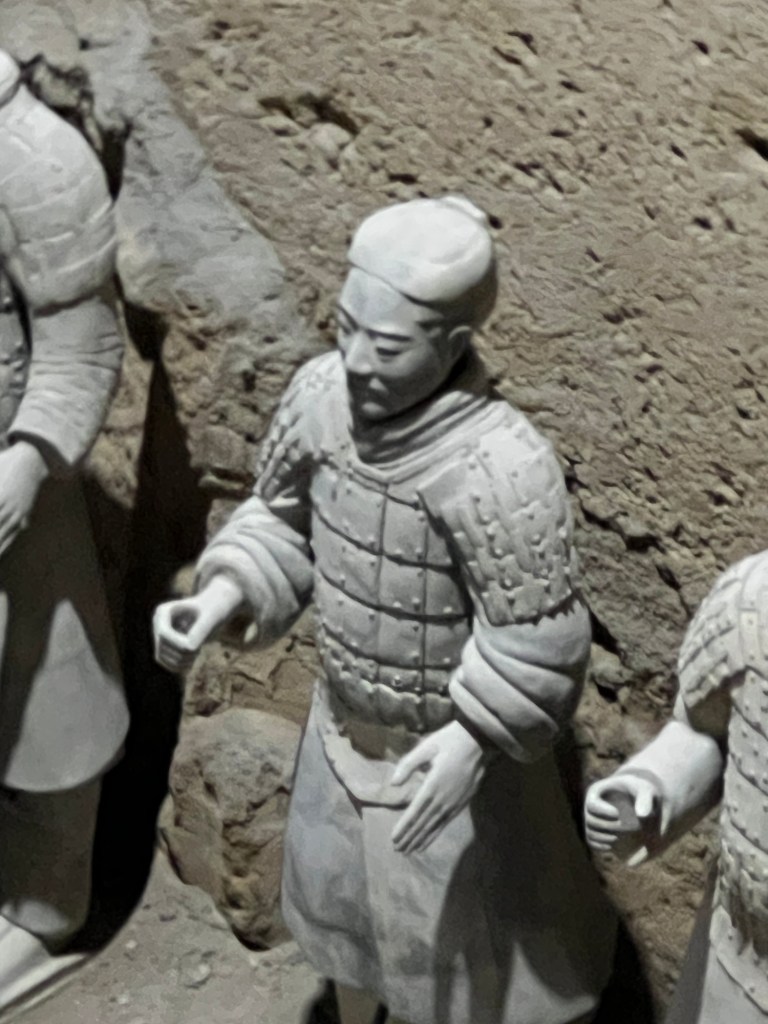
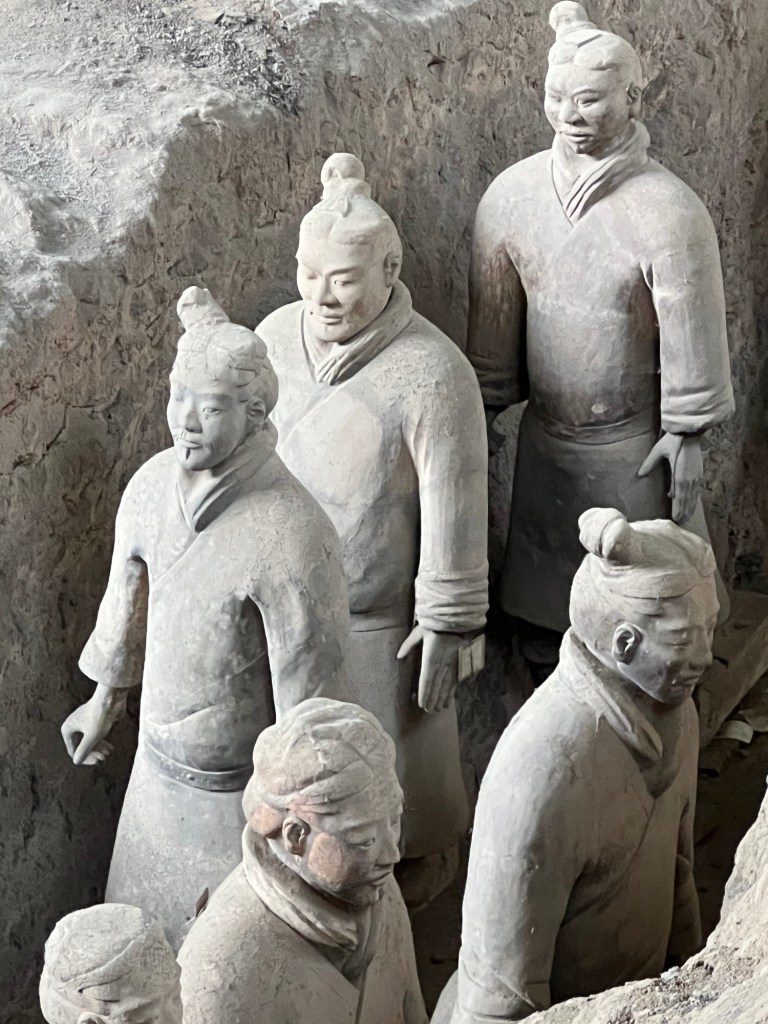
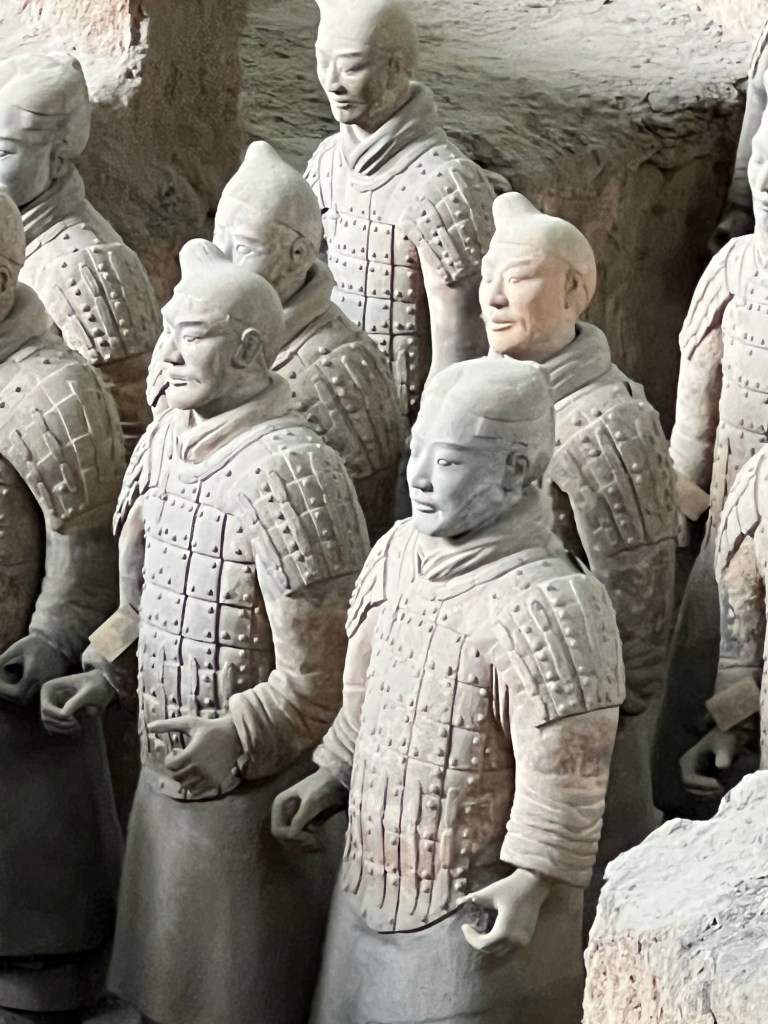
The terracotta figures are life-sized, typically ranging from 175 cm to about 200 cm, the officers being typically taller. They vary in height, uniform, and hairstyle in accordance with their portrayed rank. Their faces appear to be different for each individual figure.
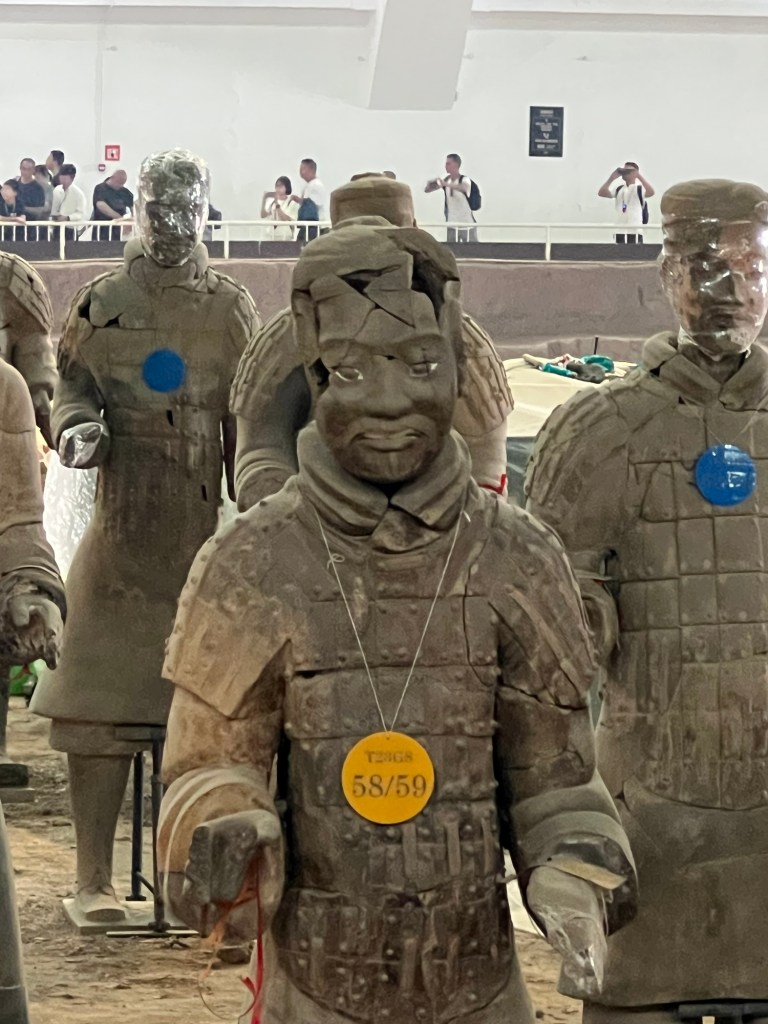

We moved on to Pit 2 which has cavalry and infantry units as well as war chariots and is thought to represent a military guard. Lastly on to Pit 3 the command post, with high-ranking officers and a war chariot.
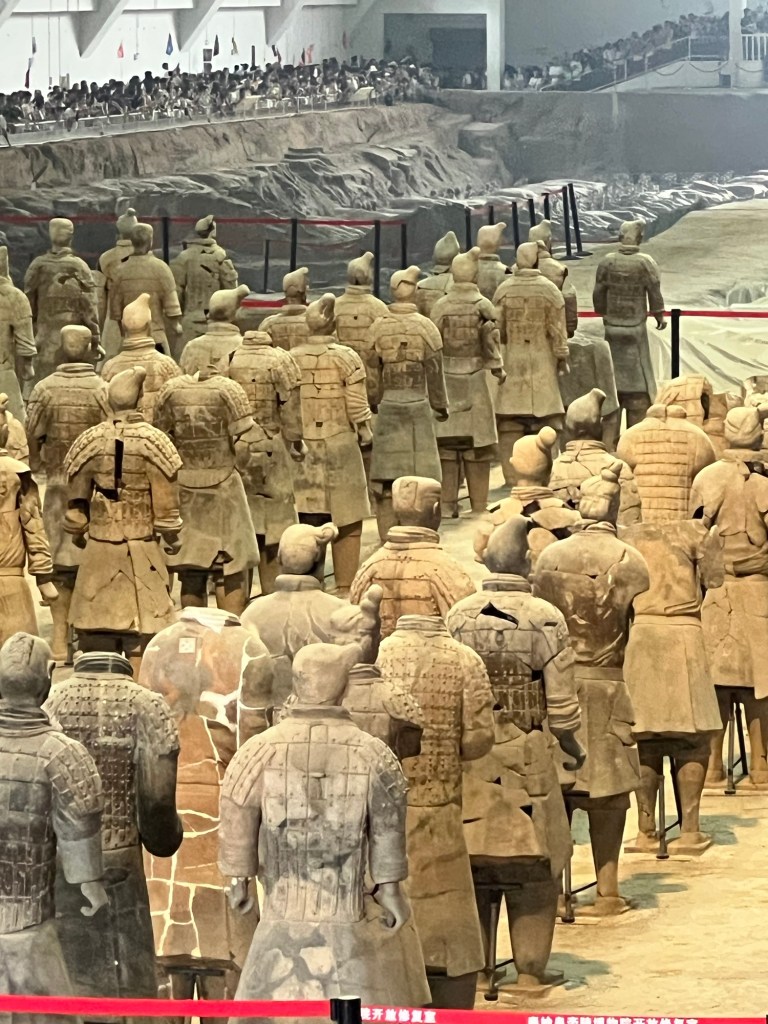
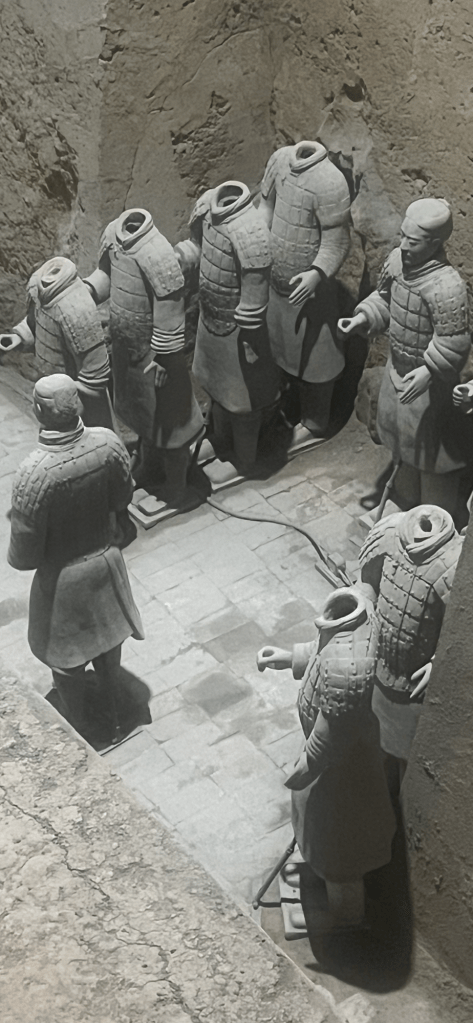
The terracotta army figures were manufactured in workshops by government laborers and local craftsmen using local materials. Heads, arms, legs, and torsos were created separately and then assembled by luting the pieces together. When completed, the terracotta figures were placed in the pits in precise military formation according to rank and duty.
Studies have shown that there is a strong resemblance between the statues and that of the local region’s modern inhabitants, which has led some to theorize that the high level of stylistic realism stems from the figures being modelled on actual soldiers.
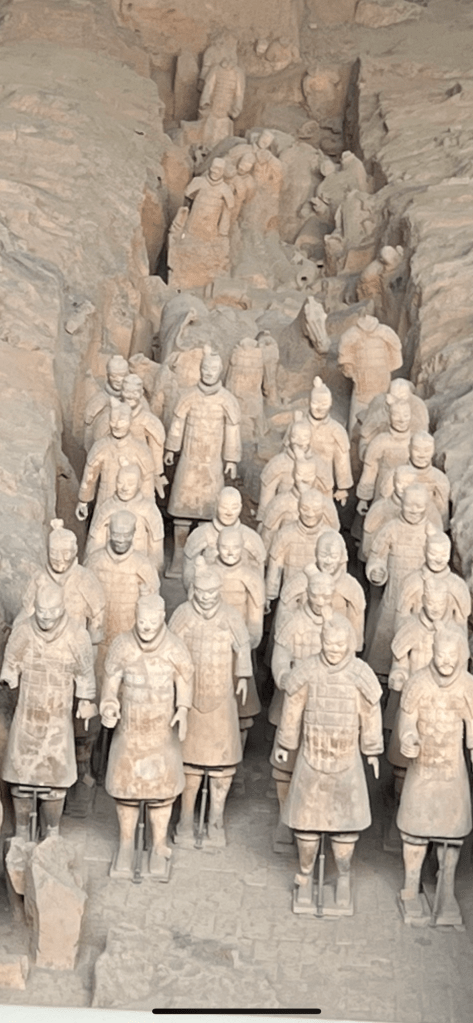
Originally, the figures were painted with ground precious stones however, in Xi’an’s dry climate, much of the colour coating would flake off in less than a few minutes after removing the mud surrounding the army.

Seven of the figurines found were in a degree of preservation that enabled them to be reconstructed from their original fragment shards.


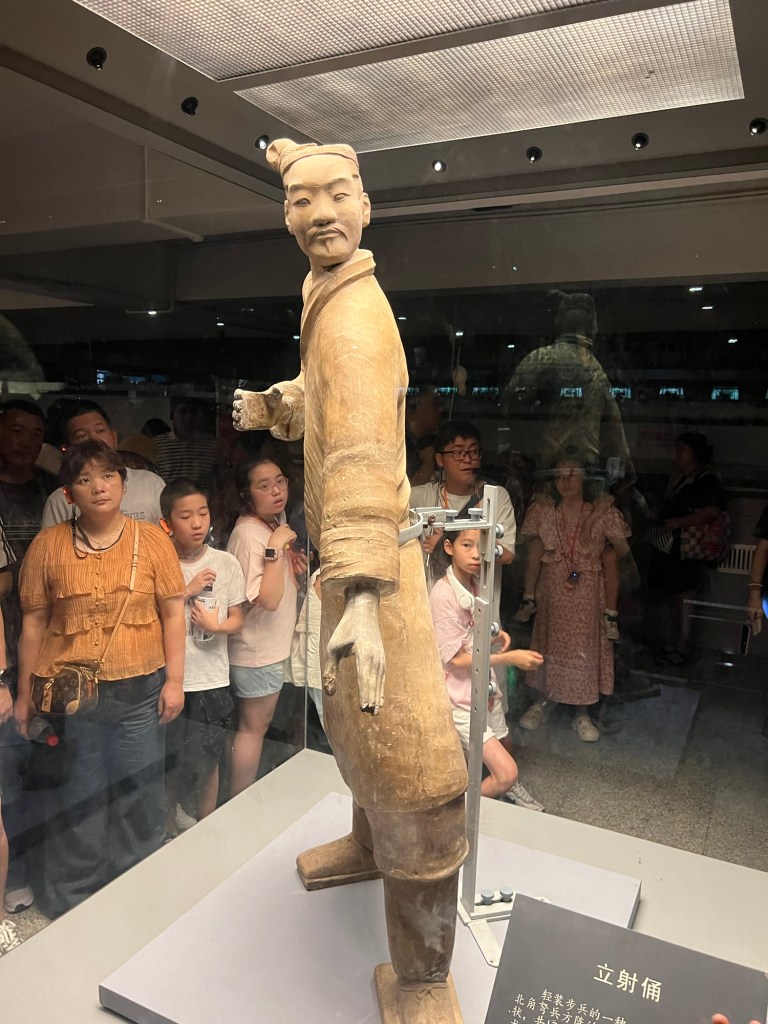
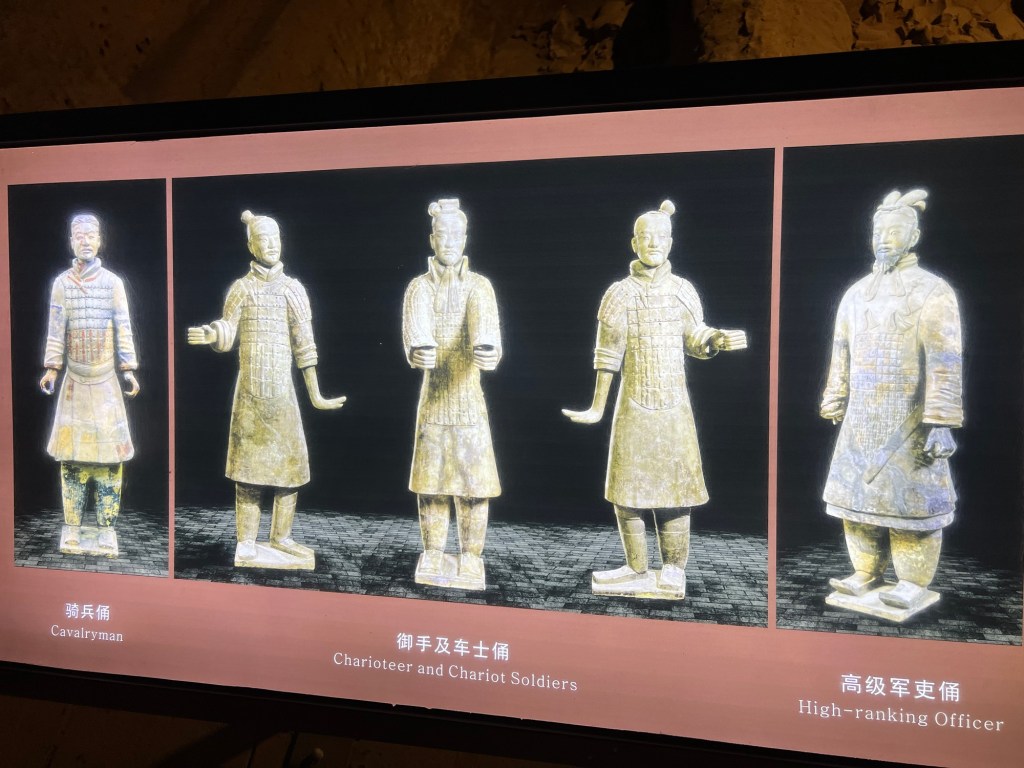
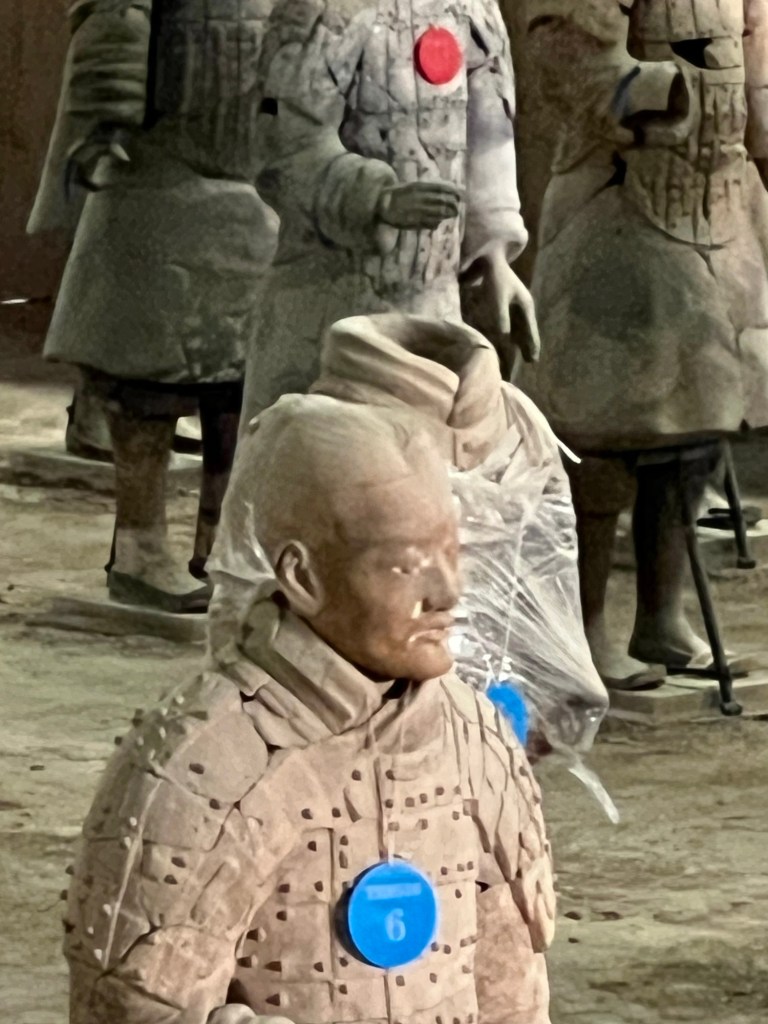
Towards the end of our tour we returned to Pit 1 around lunch time when it was quieter and we were able to get some close up photos of the soldiers. It proved to be an incredible experience seeing them at close quarters and witnessing the detail on each soldier and animal.
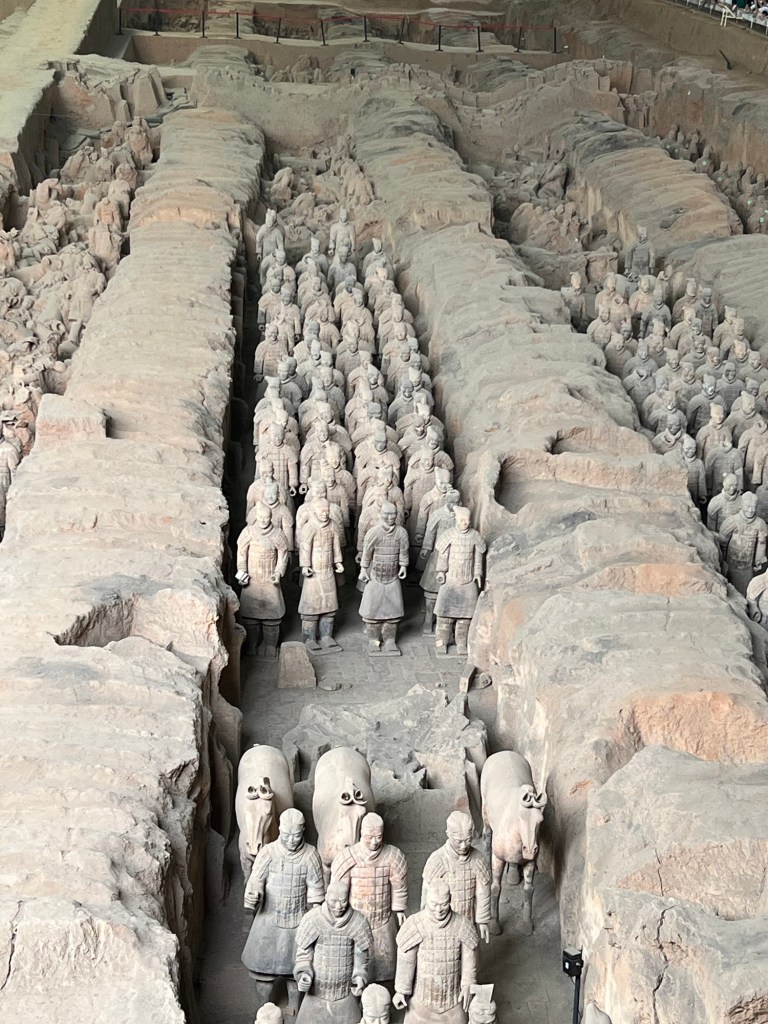
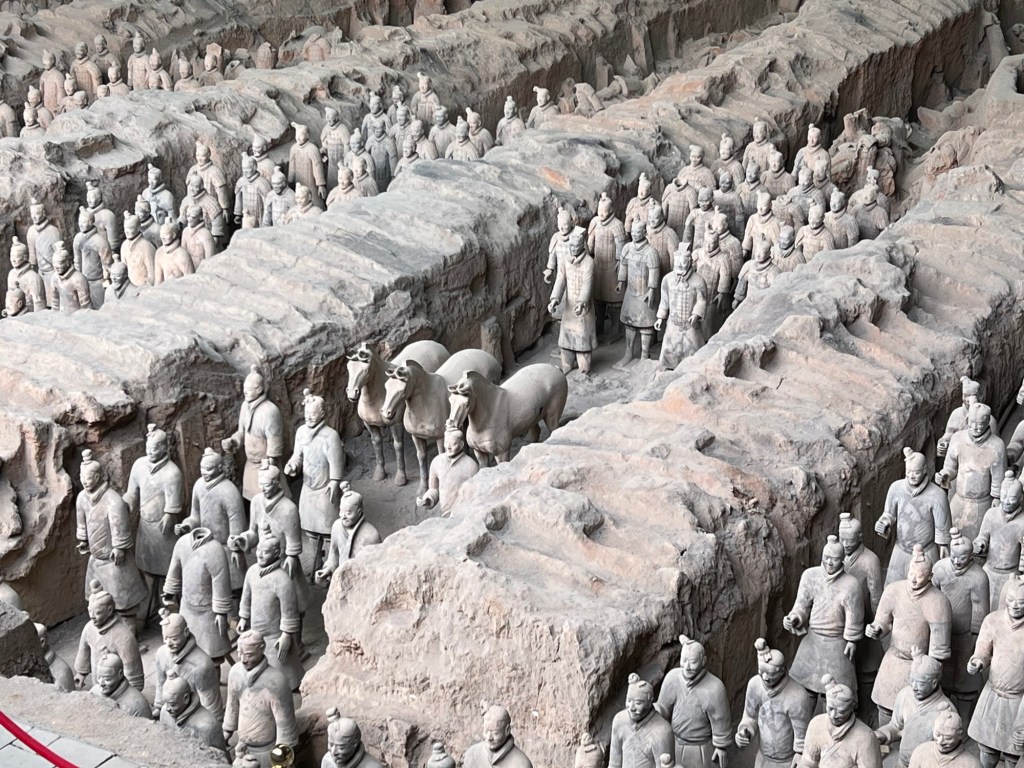
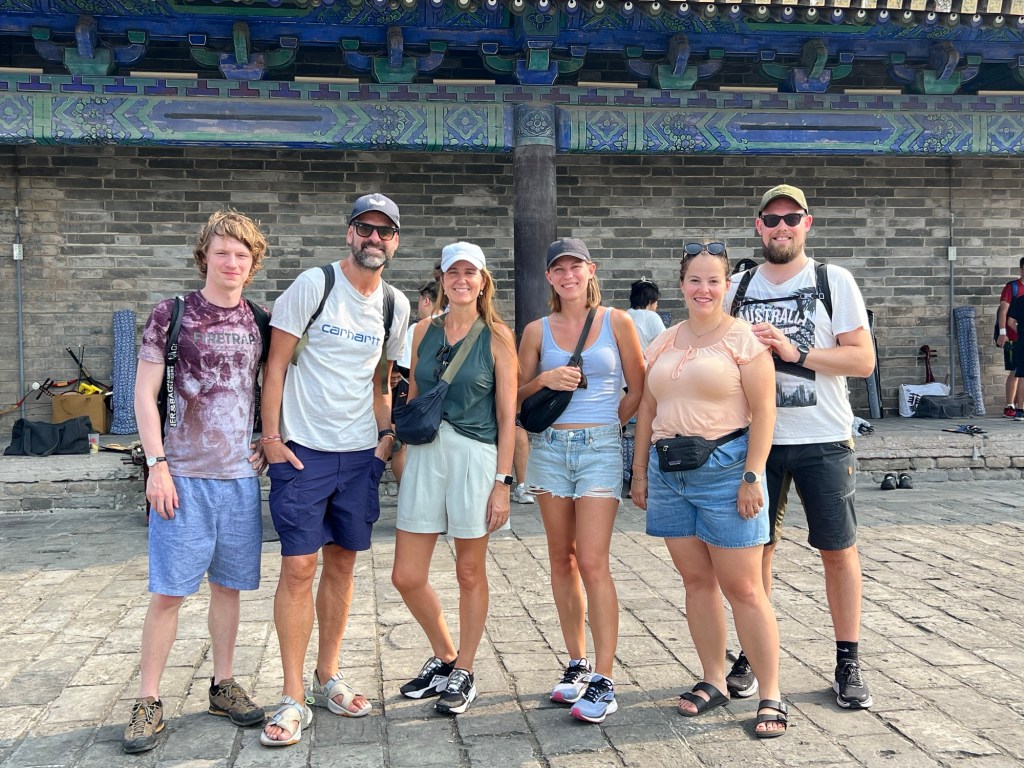
After an amazing few hours, we returned to Xi’an and went straight out to do a bike tour along the top of the Old City Walls. We managed to convince the younger members of the tour group to join us, see we went out as a posse of six on hired mountain bikes.
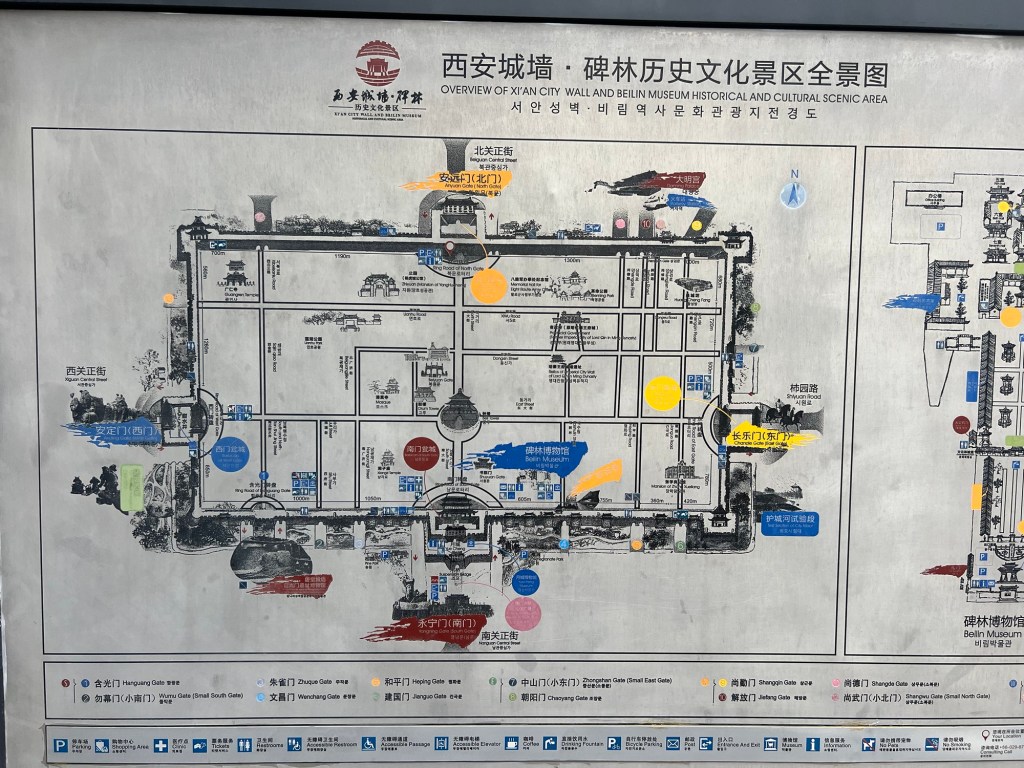
Xi’an City Wall is one of the oldest, largest and best preserved Chinese city walls. They were built in the 14th century and enclose an area of c.14 sq km.

As a defense fortification, it was constructed with a moat, drawbridges, watch towers, corner towers, parapet walls and gate towers. The wall is 12 metres in height with a width of 14 metres and base width of 18 metres. It’s fair to say they are substantial!
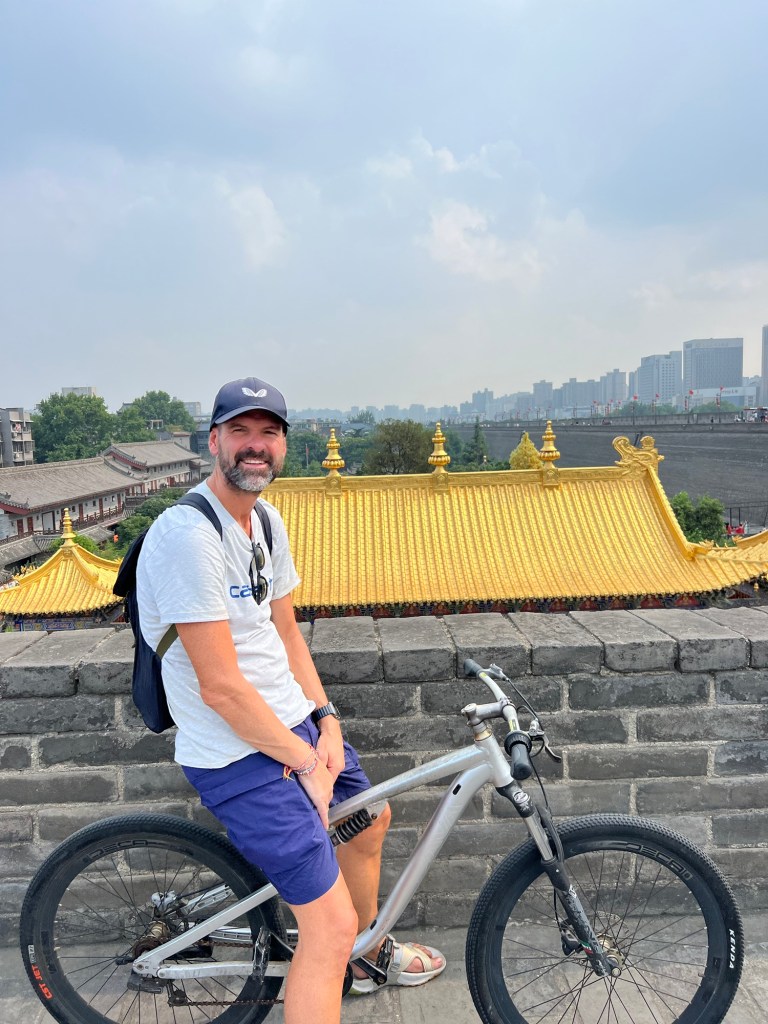
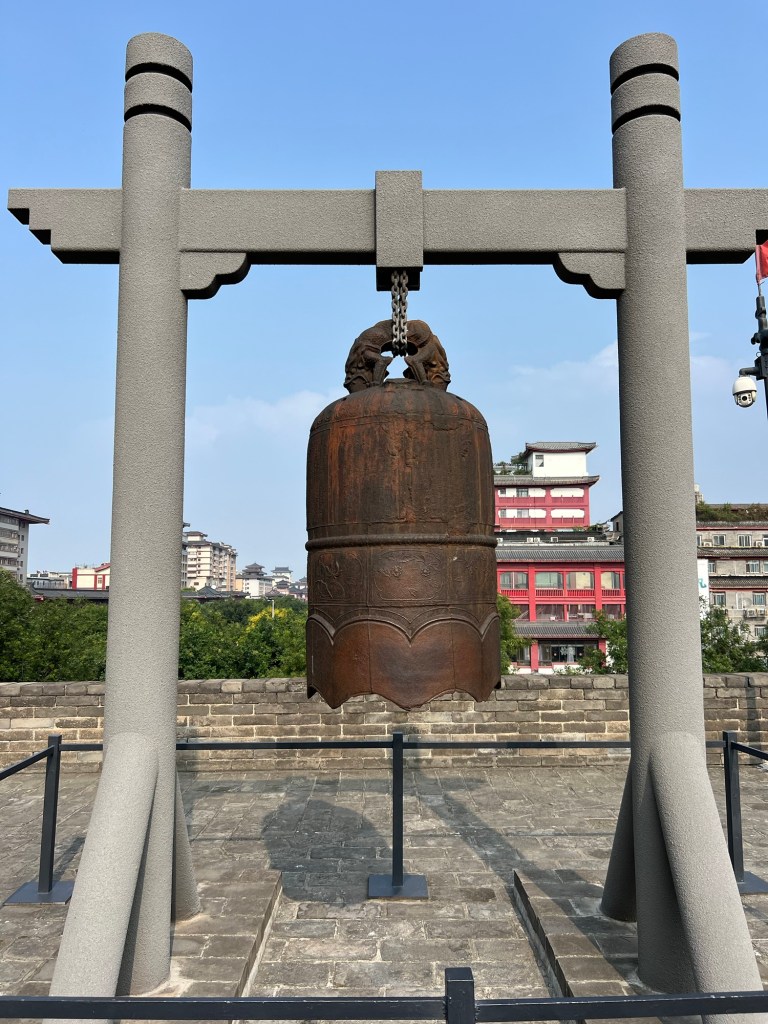
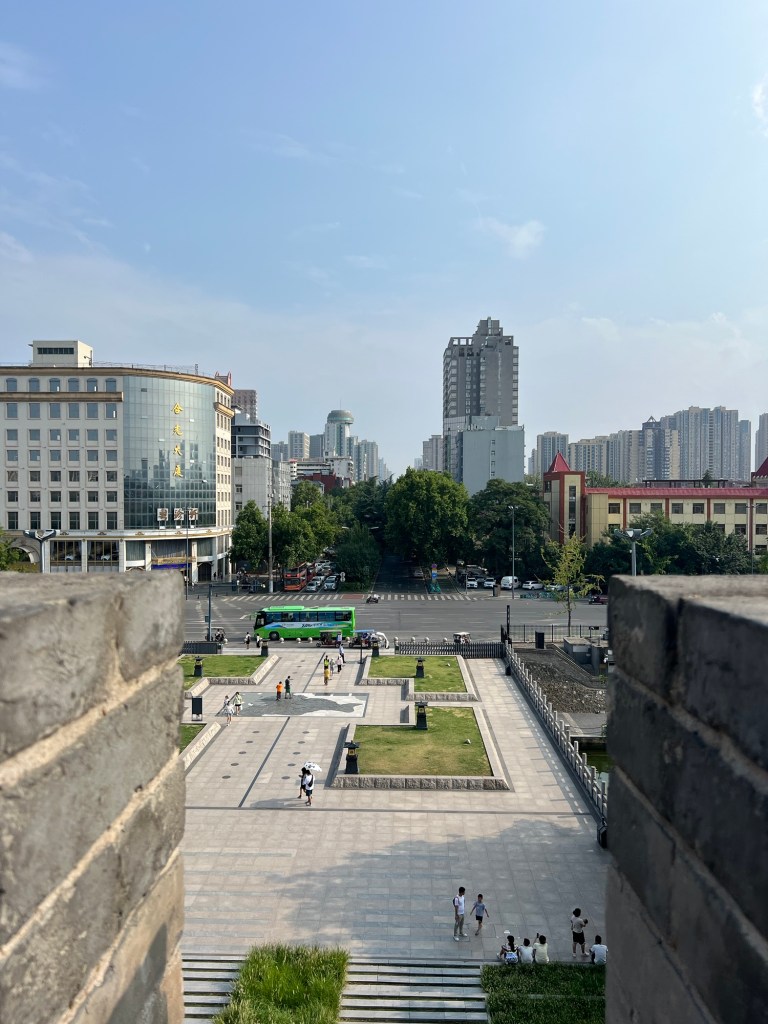
Cycling along the top of the wall was a great way to see the city from on high and also take in the beauty of the various gates.
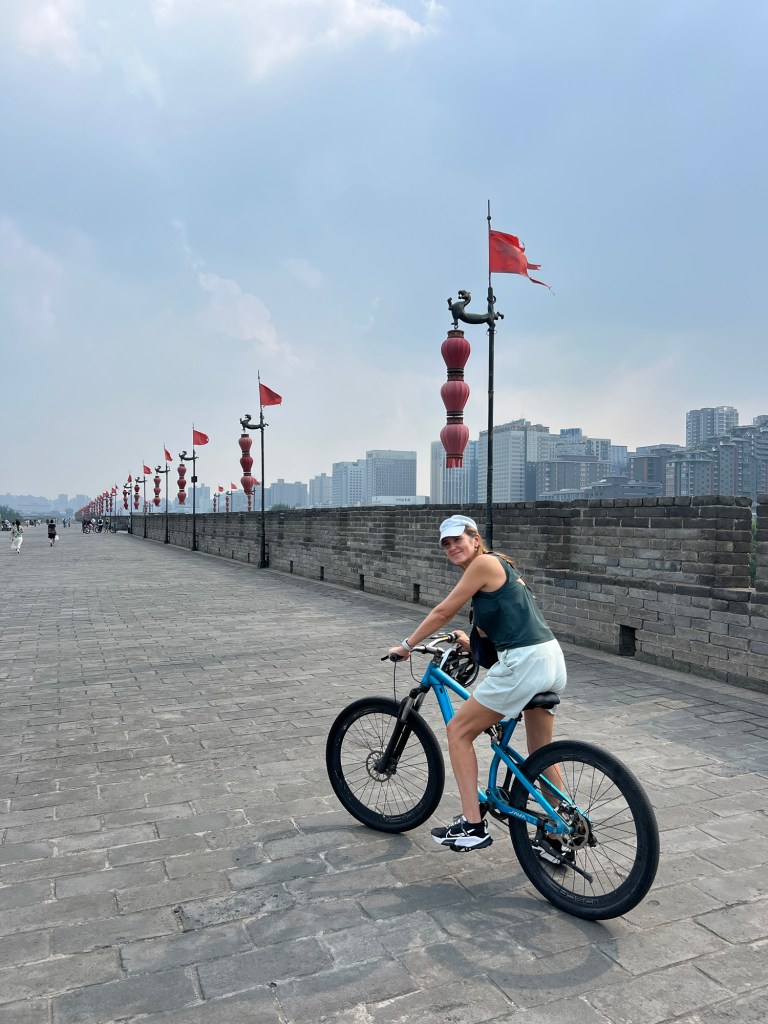
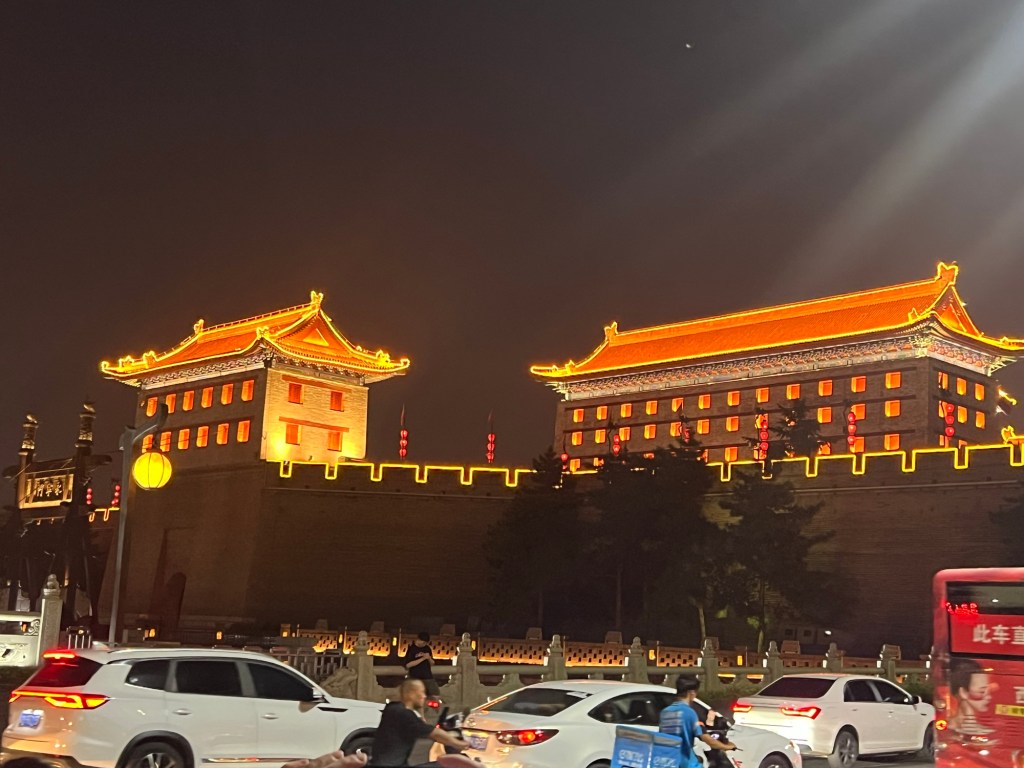
The south gate, Yongning, is the probably the most beautifully decorated one and is near to the Bell Tower.
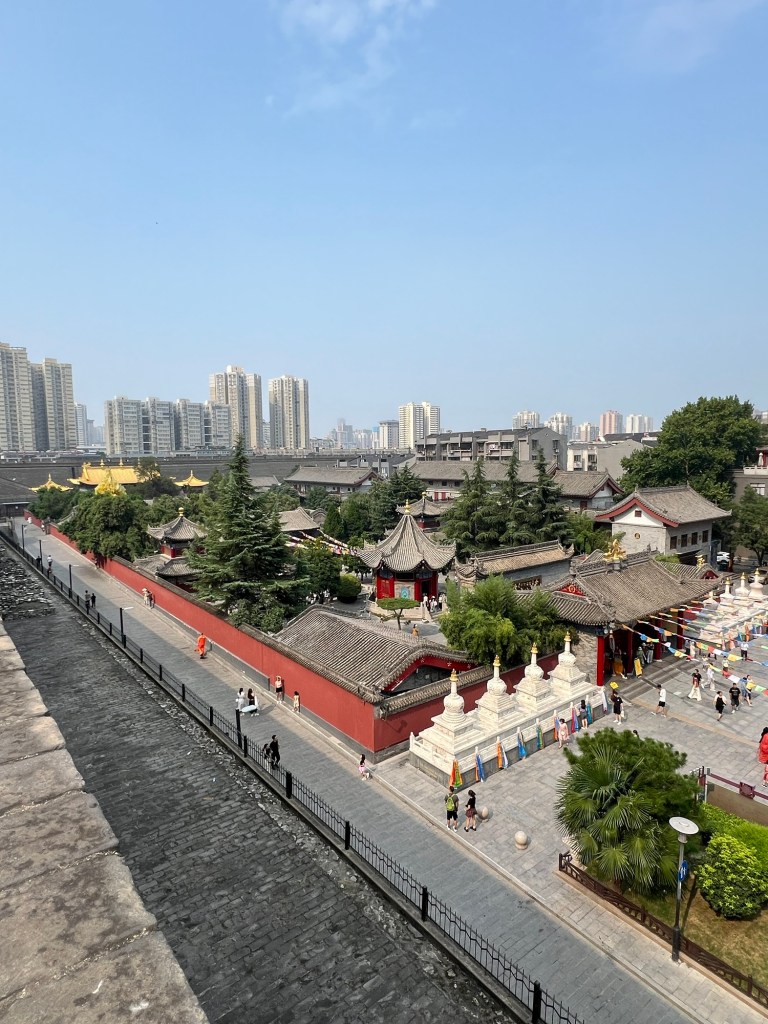
We managed to cycle around the whole city circuit within 2hrs with a couple of stops off to admire the views and take in the weekend atmosphere.

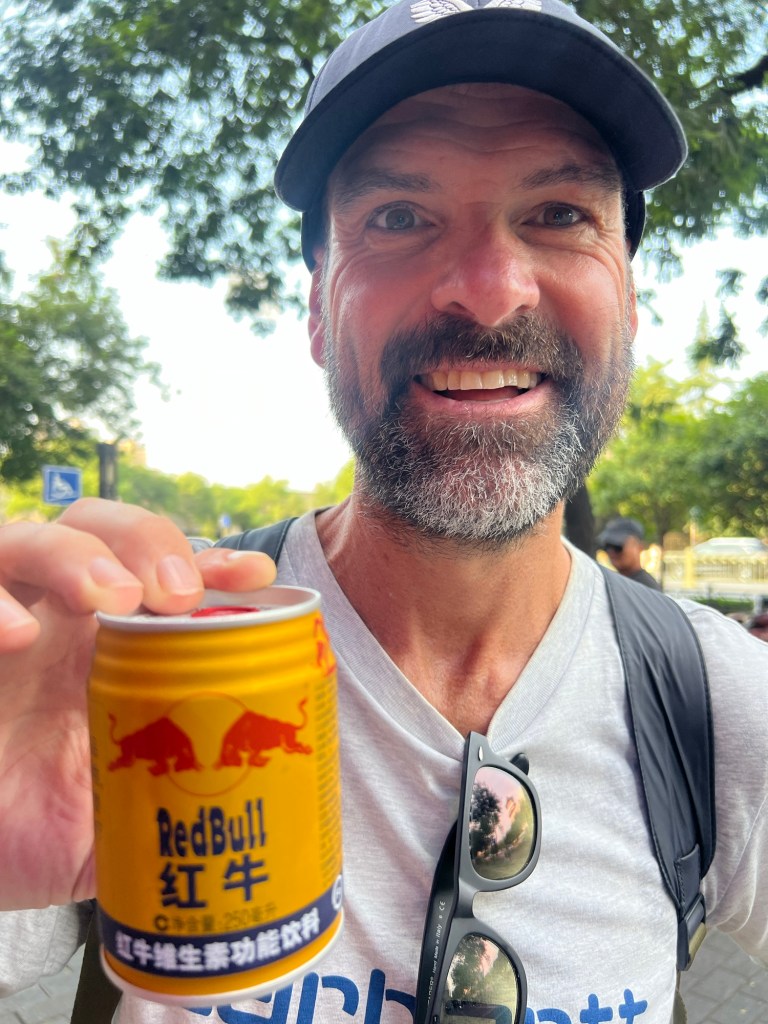
After all that exercise we popped into a local store and bought a can of the original Chinese Red Bull which tastes and looks like the Austrian version.
No sooner had we finished our bike tour, we then departed on another walking tour of the city and a visit to a family restaurant that our guide Kris knew.
After dinner we went down to the Old City Walls again which we all lit up and in the nights sky looked stunning.
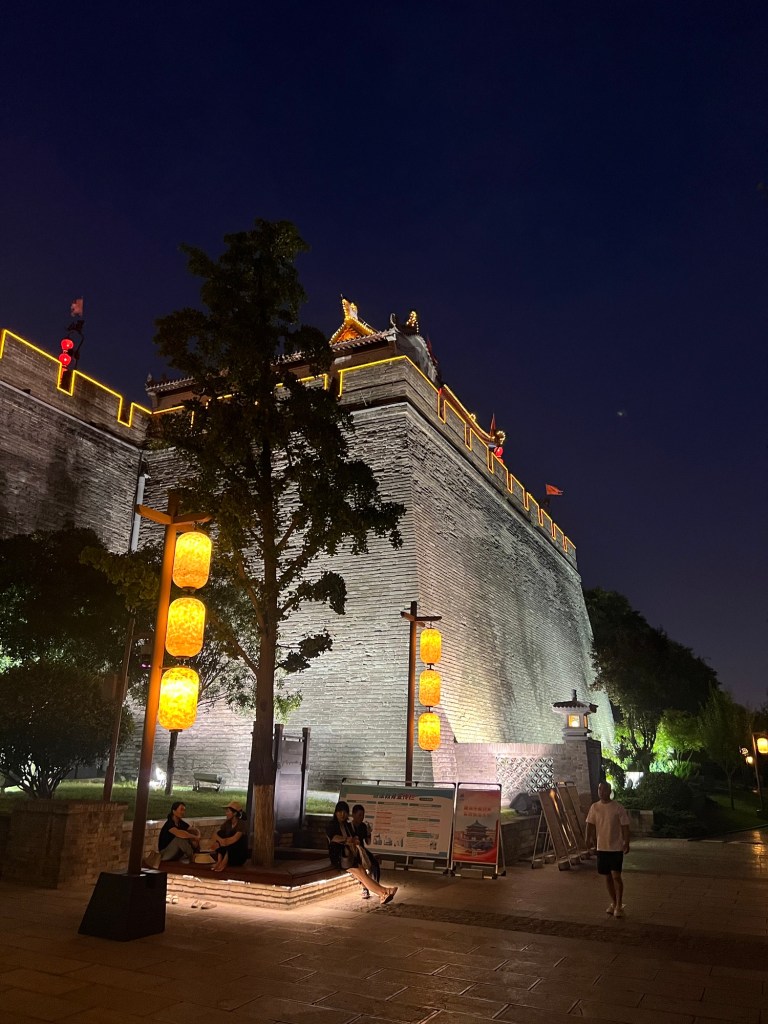
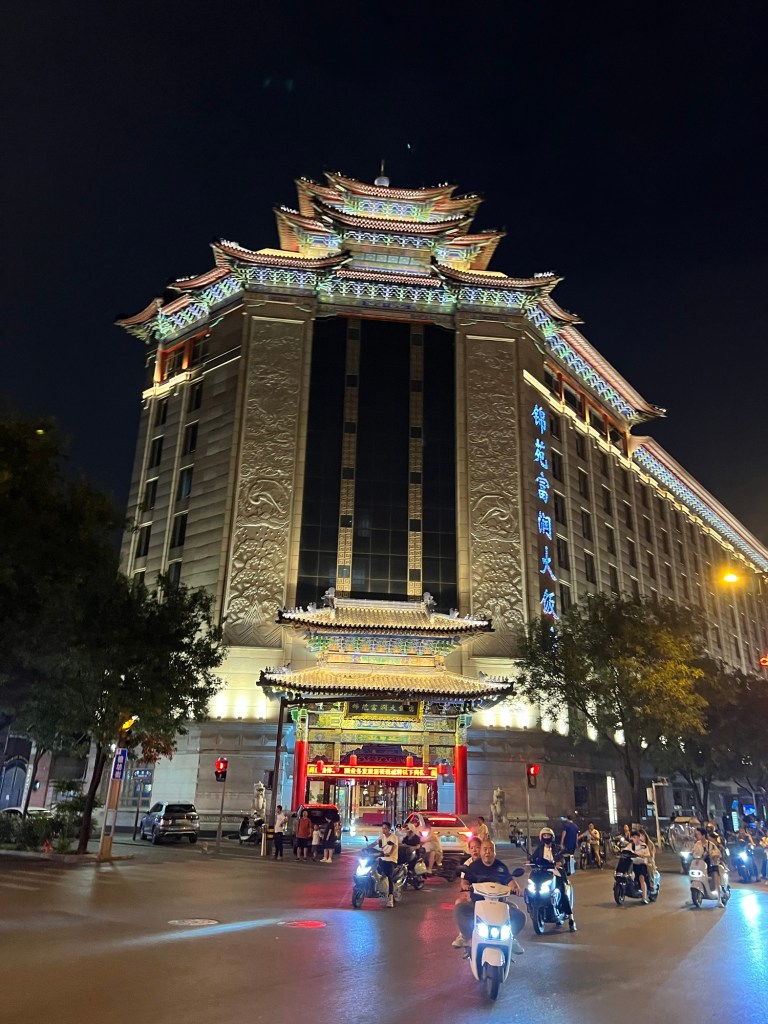
Being a Saturday night, the streets of the city will filled with local families enjoying the night air and taking trips to local restaurants along with food stalls laid out along the streets.
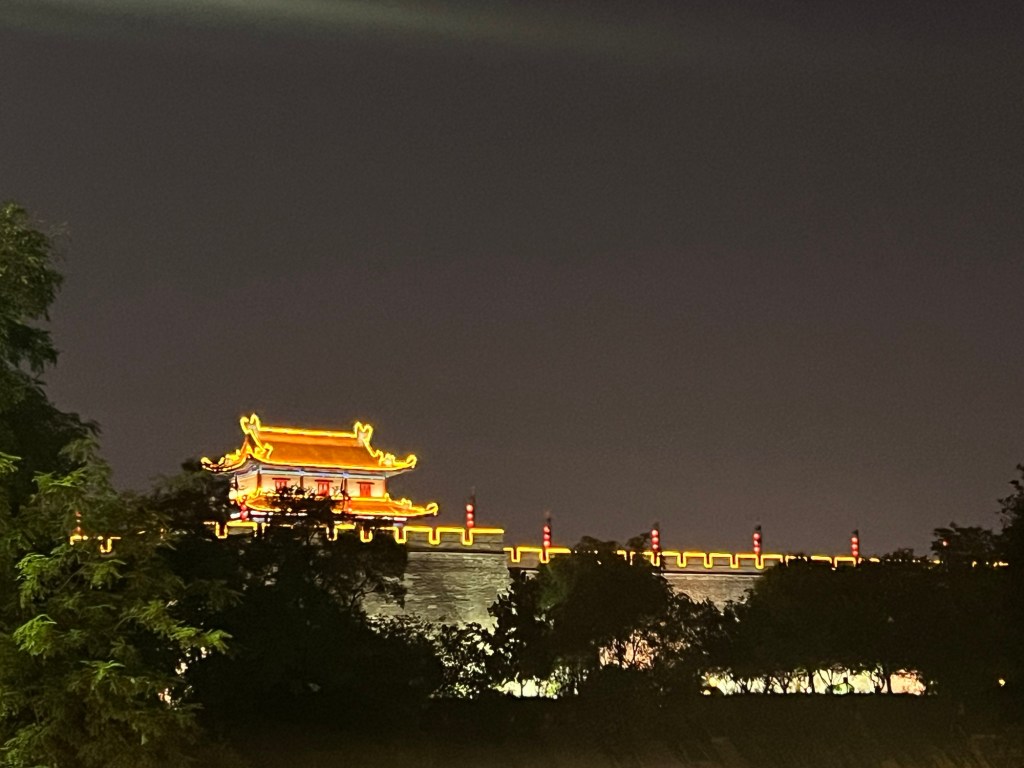
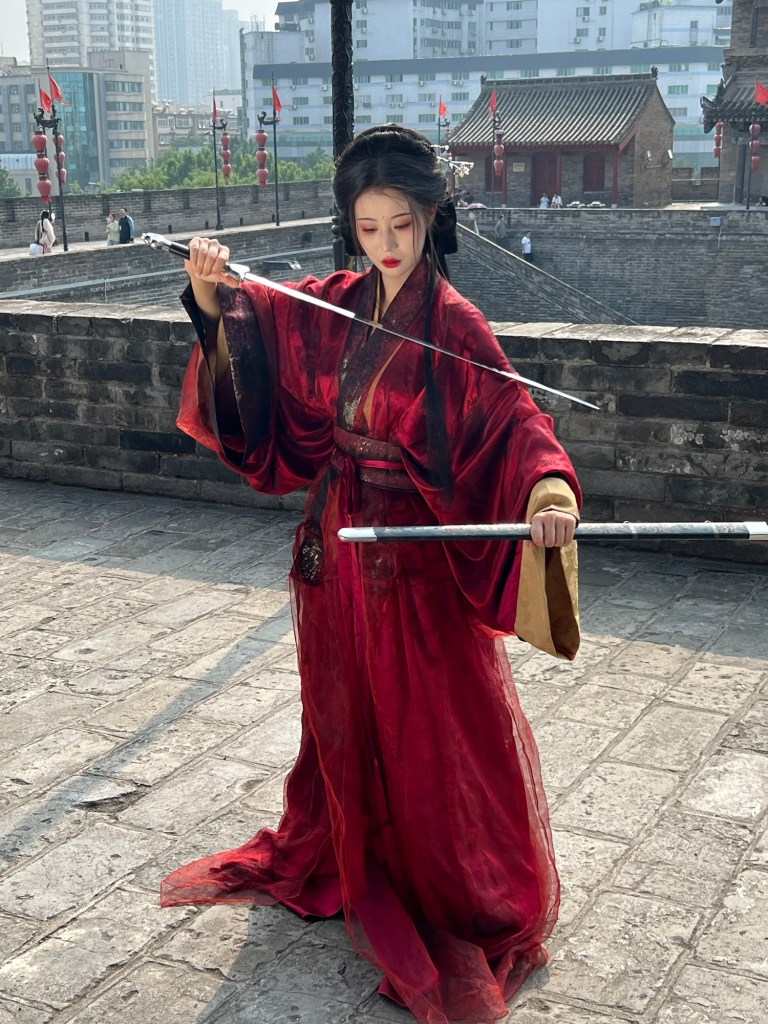
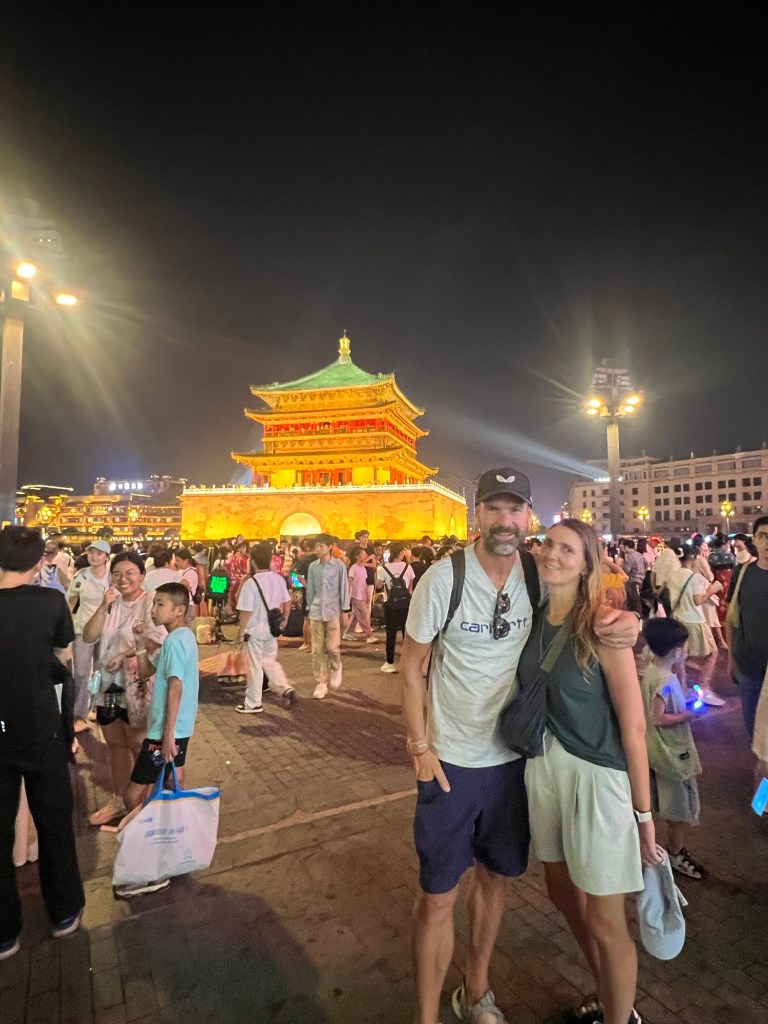
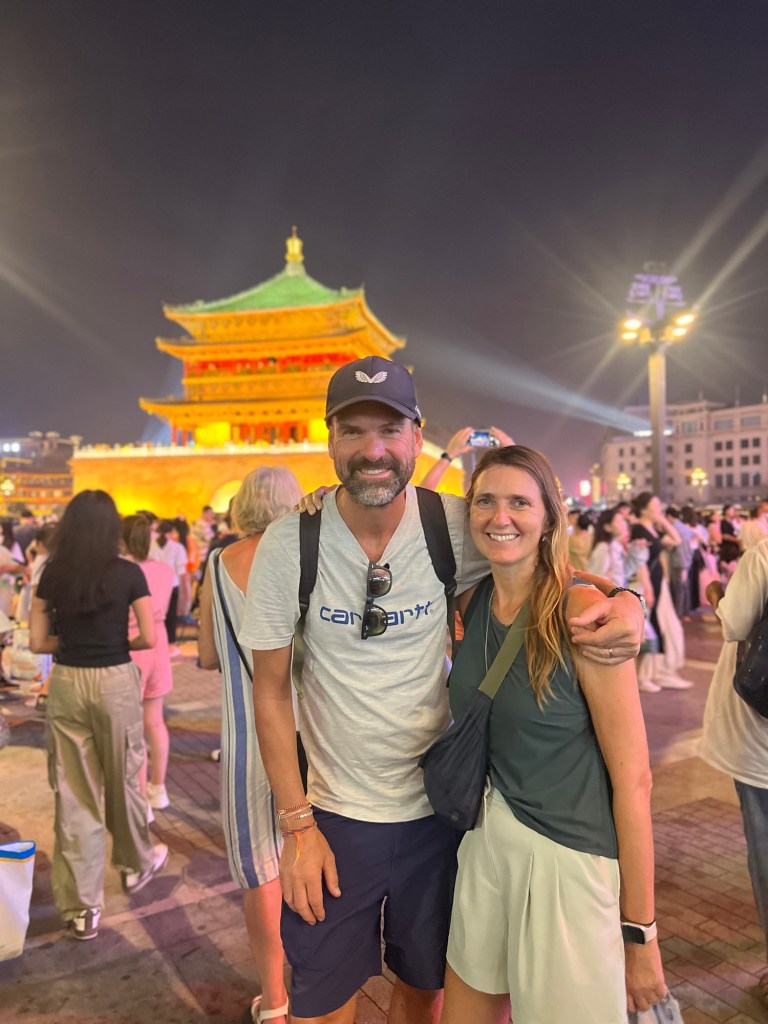
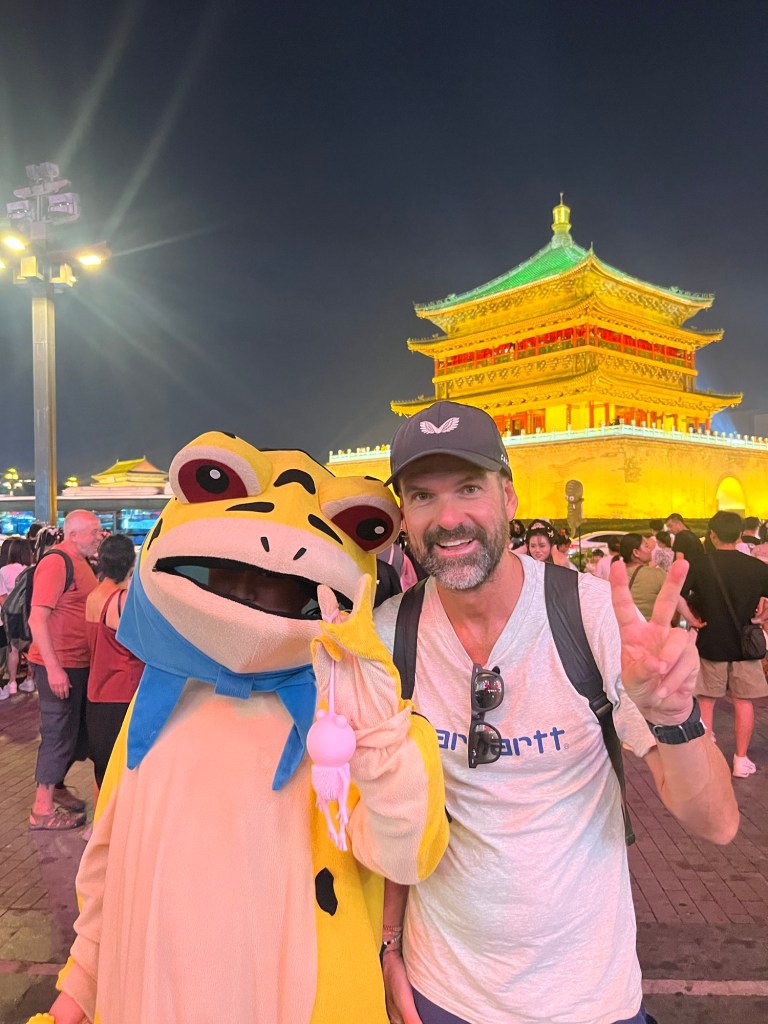
Within the central square where the Bell Tower was located we came across a throng of people again in local dress taking photos for their WeChat profiles.
Tomorrow we move on and take another bullet train for 3hrs to the city of Chengdu. The city is most famous for two things, the pandas living in the mountains and their food. We can’t wait.
 @travellingwiththeateam