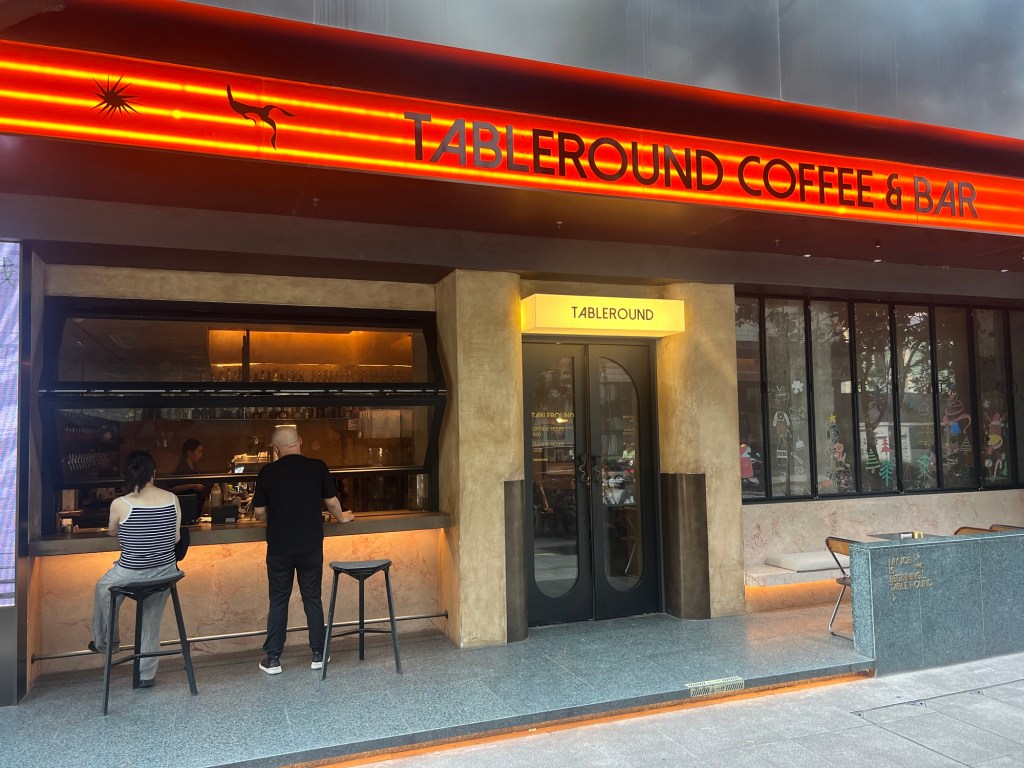
This morning we waved goodbye to the city of Chengdu, but not before grabbing a final coffee at our favourite bar opposite the hotel. Quite possibly the best flat whites we’ve had since arriving in China.
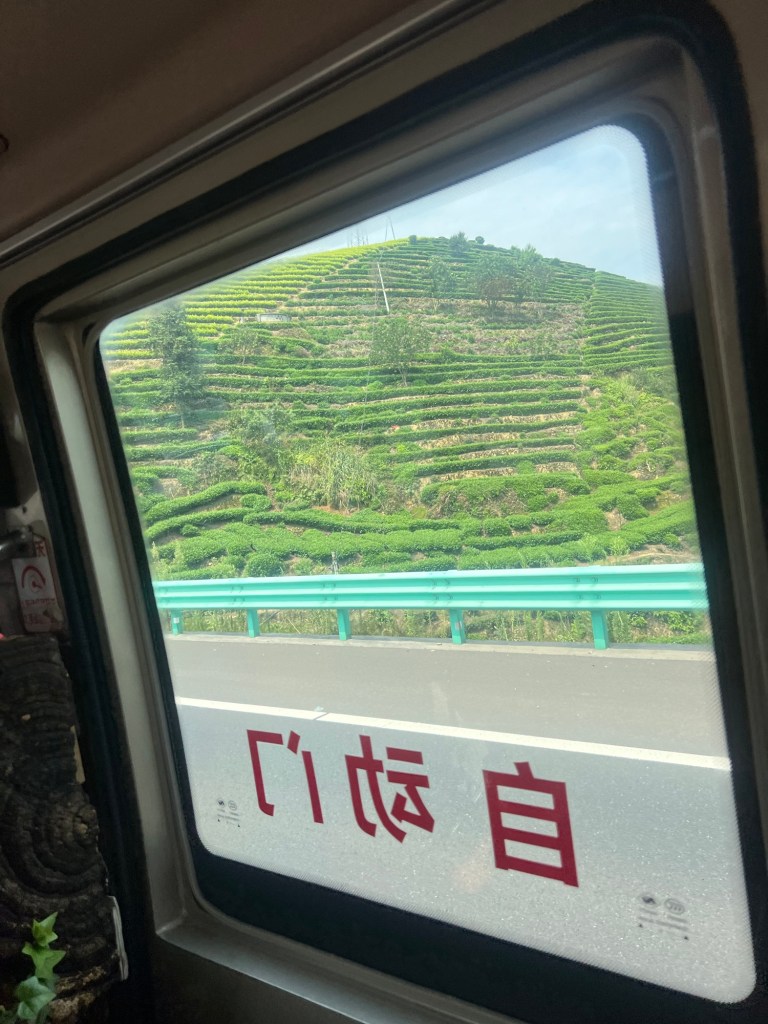
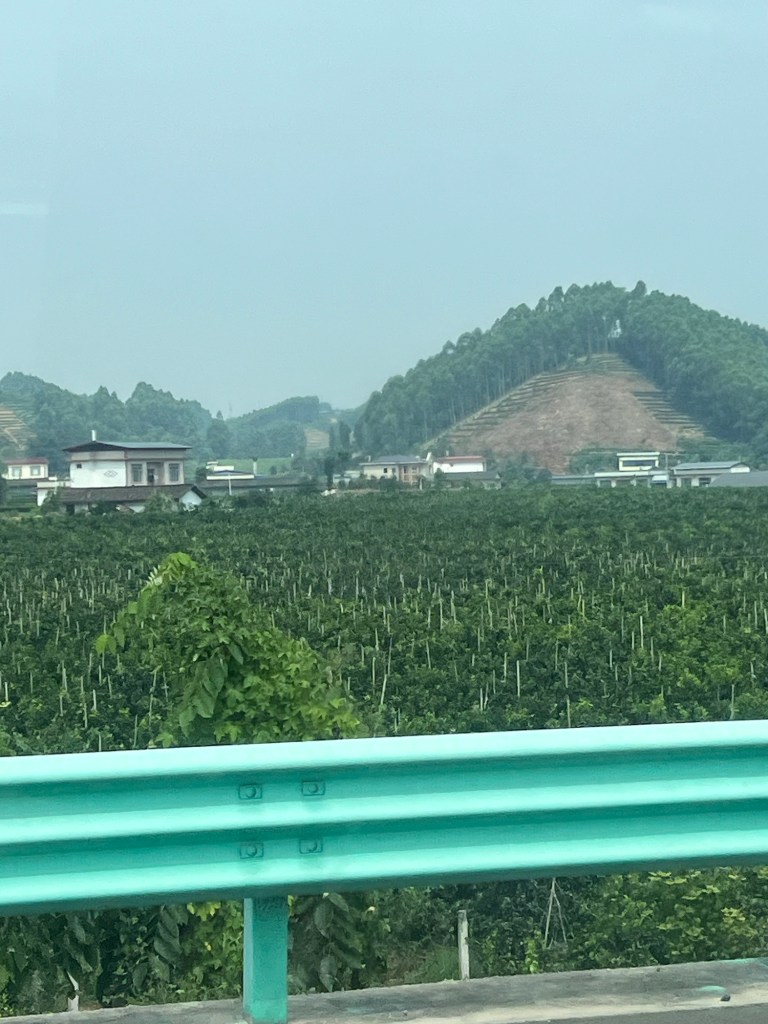
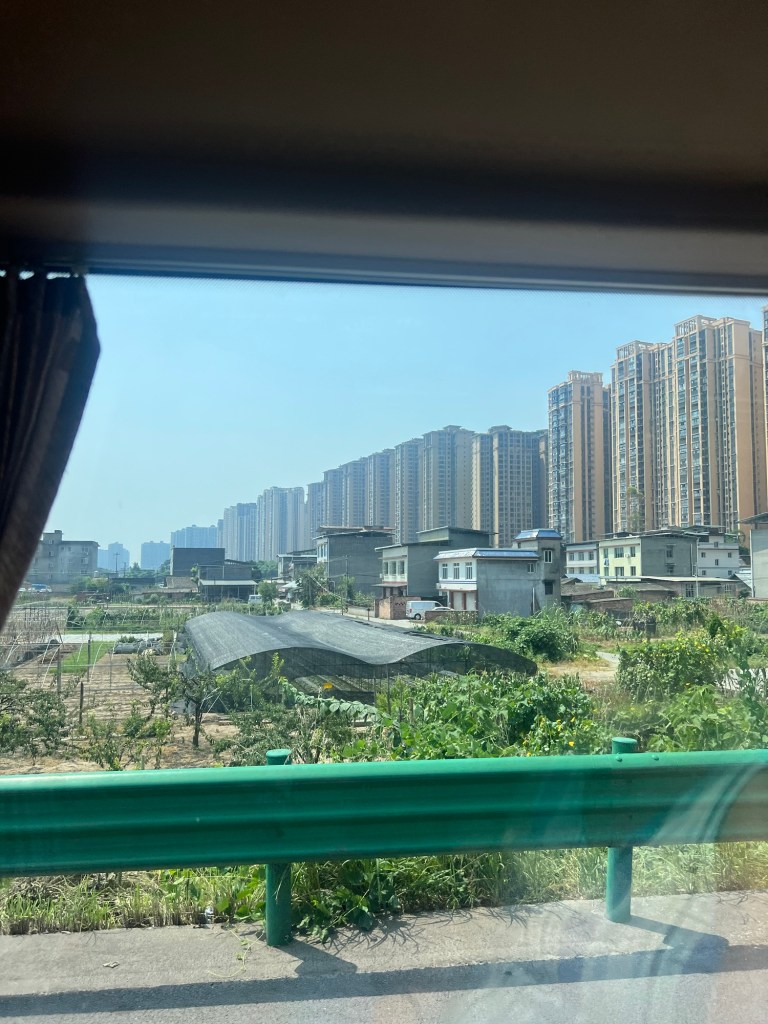
Once on the road we travelled by coach to the sacred mountains of Emai Shan.
Along the way we stopped in the town of Leshan to visit the World Heritage listed Giant Buddha.

The Leshan Giant Buddha is over 70 metres in height and was built in the 8th century during the Tang dynasty.
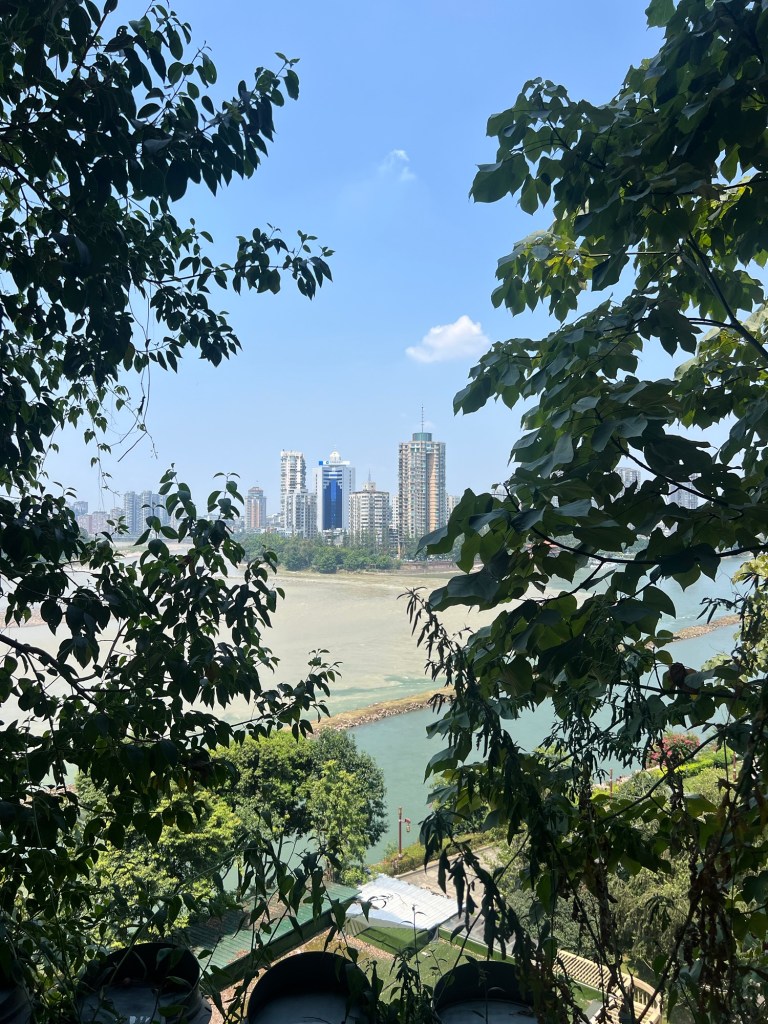
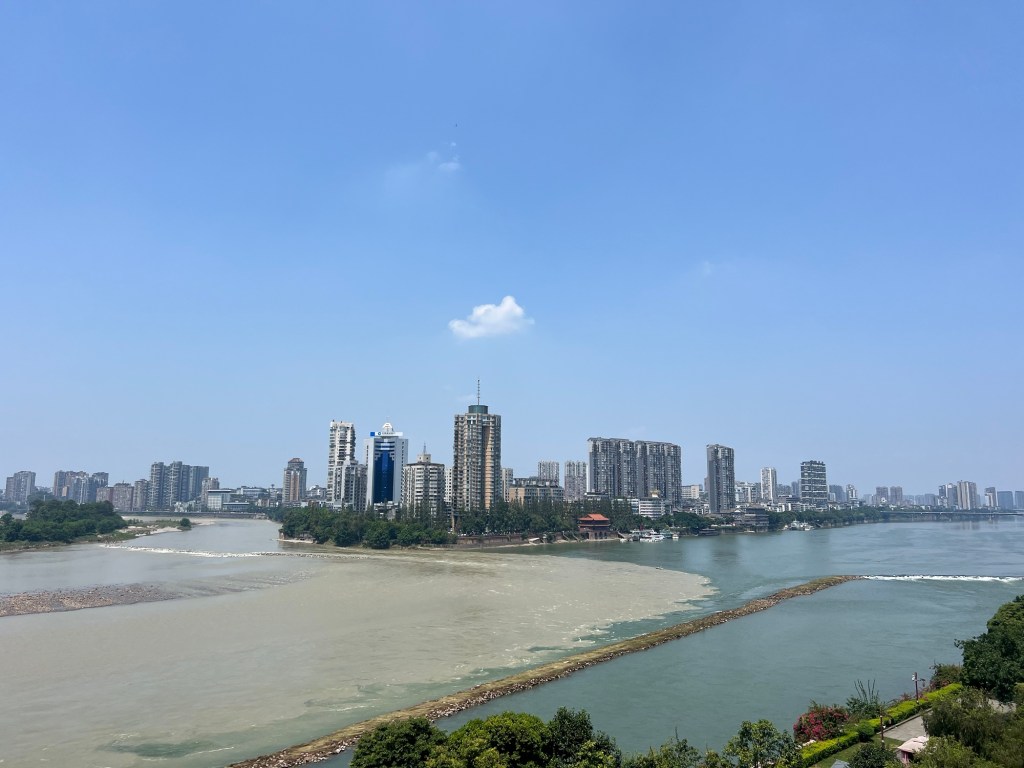
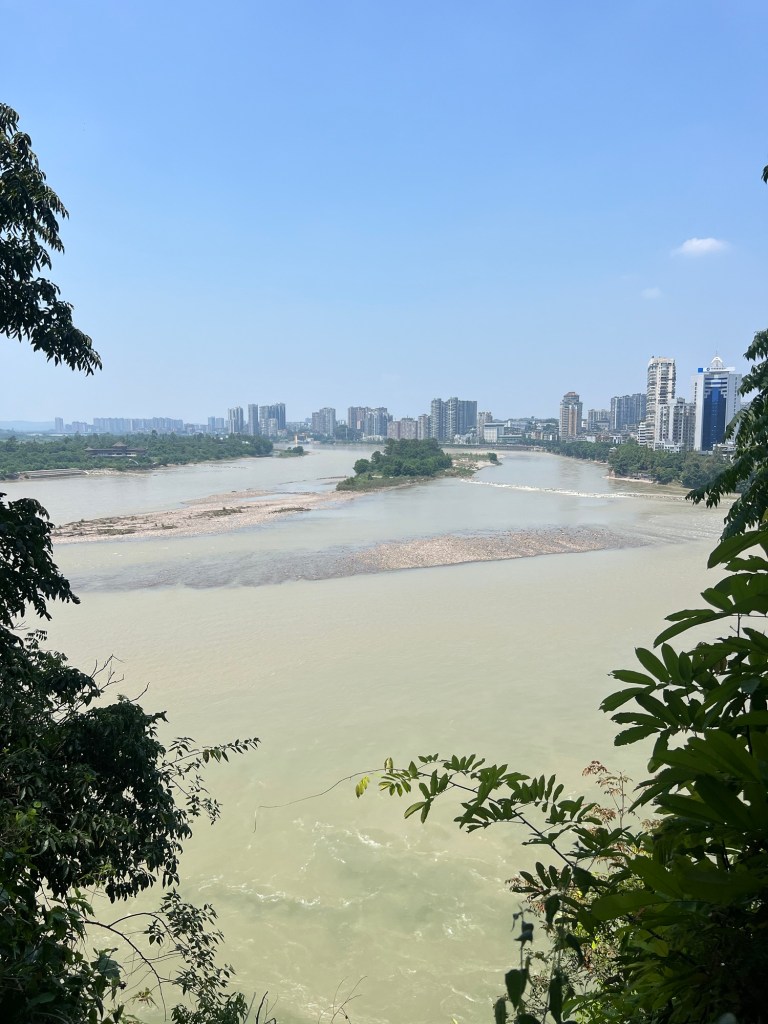
It is carved out of a cliff face of Cretaceous red bed sandstones that lies at the intersection of the Min River and Dadu River.
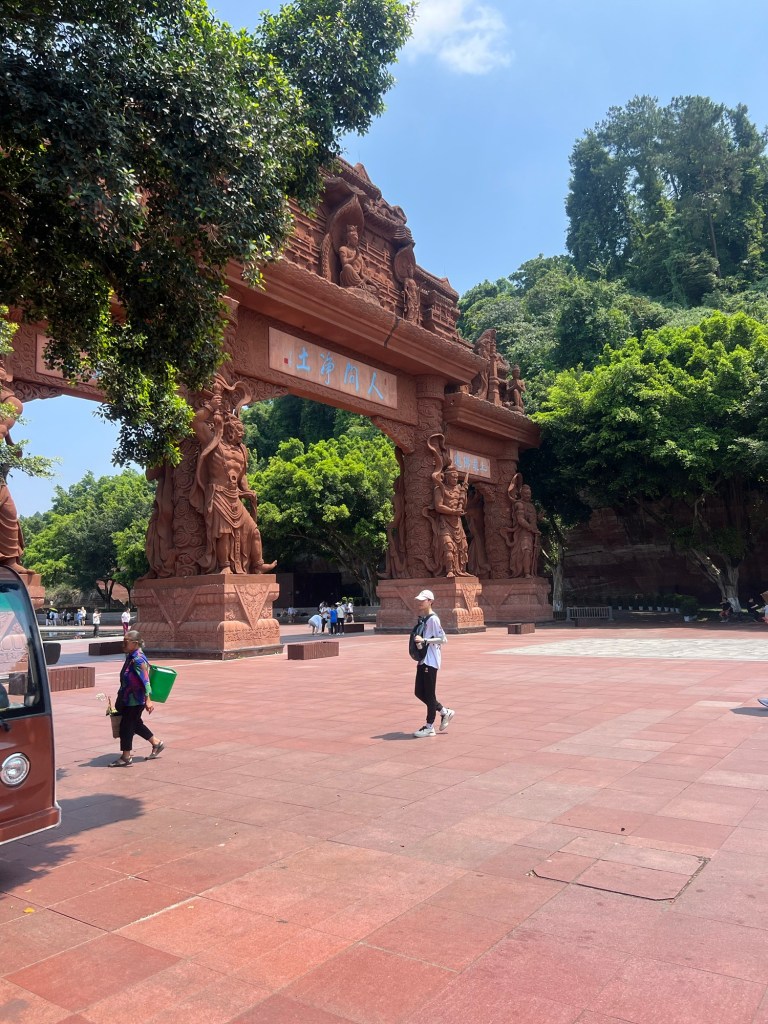
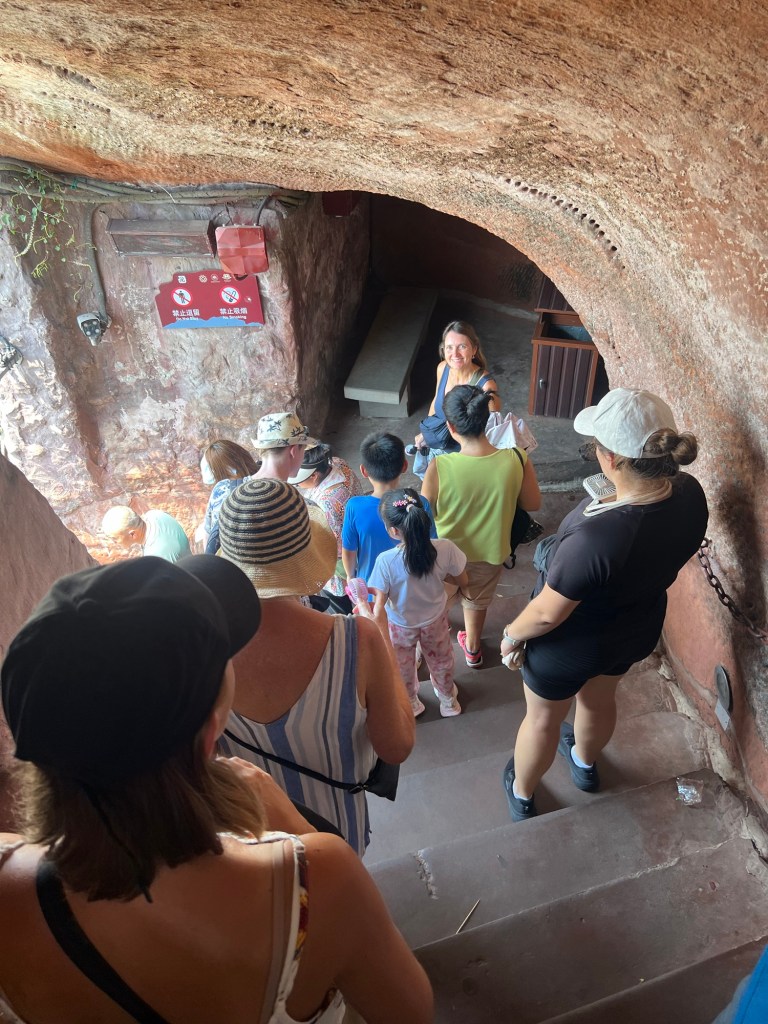
Whilst you can view the Buddha from the river, sadly today the boat cruises were fully booked and we instead hiked up the mountain to get up close to this giant sculpture.
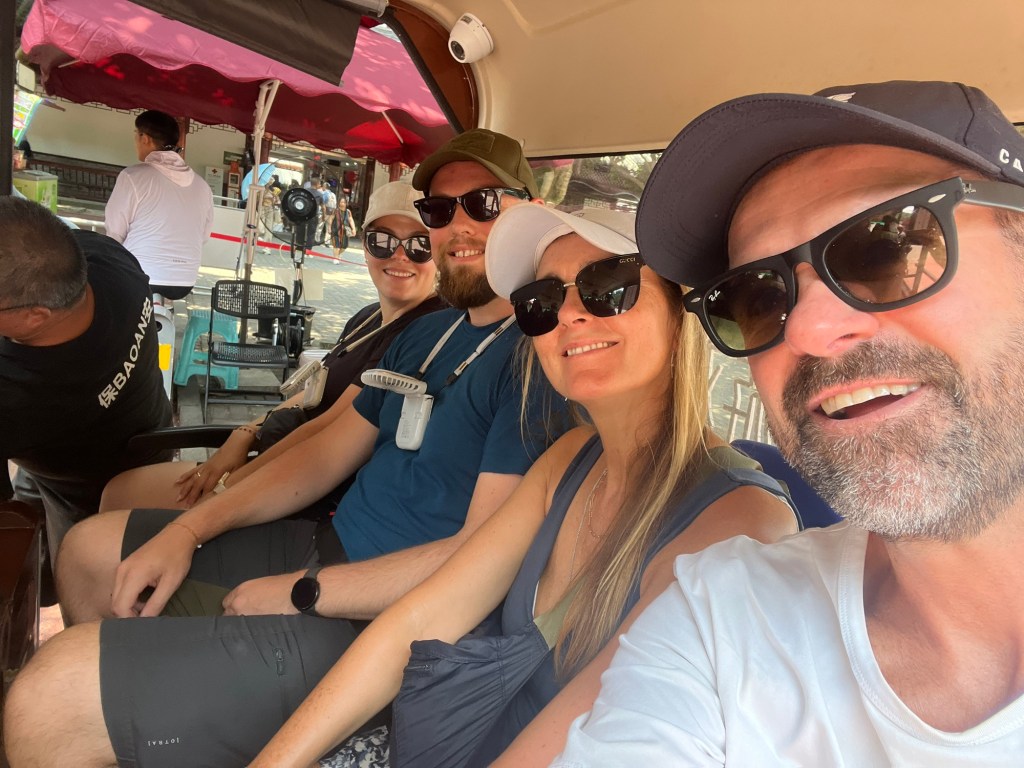
Before the proper walking started, we were treated to another buggy ride to the entrance to the temple grounds.
The Buddha carving took almost a 100yrs to be completed, such was the scale and the difficulty of the work.
It is the largest and tallest stone Buddha statue in the world and is the tallest pre-modern statue in the world.
Being one of the six world cultural heritage sites in the province of Sichuan, it receives a lot of tourist visits with over 2 million last year alone. The Leshan Giant Buddha is most popular during Chinese New Year when tourists from all over the world come to pray for good luck.
The statue depicts a seated Buddha with his hands resting on his knees. His shoulders are 28 metres wide and his smallest toenail is large enough to easily accommodate a seated person.
There is a local saying: “The mountain is a Buddha and the Buddha is a mountain”. This is partially because the mountain range in which the Leshan Giant Buddha is located is thought to be shaped like a slumbering Buddha when seen from the river, with the Leshan Giant Buddha as its heart.

Apart from the main attraction, there are dozens of pathways throughout the mountain that can be explored by foot.
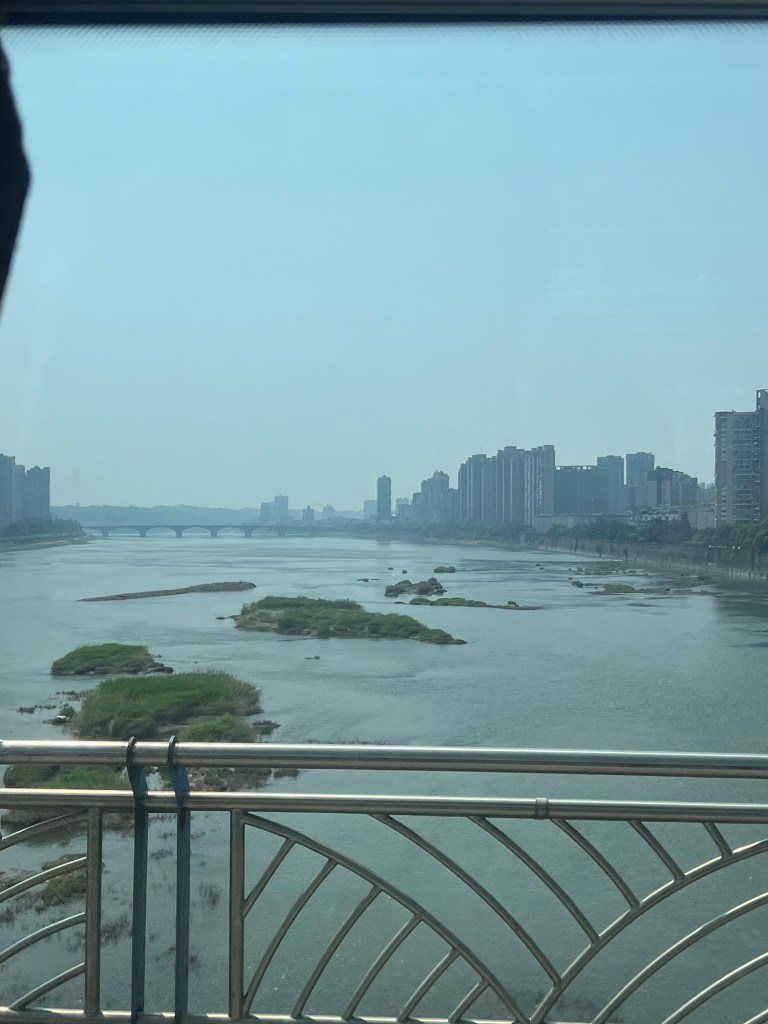
The walk along the mountain path offered up great views over the city and the fast flowing river that sat below us.
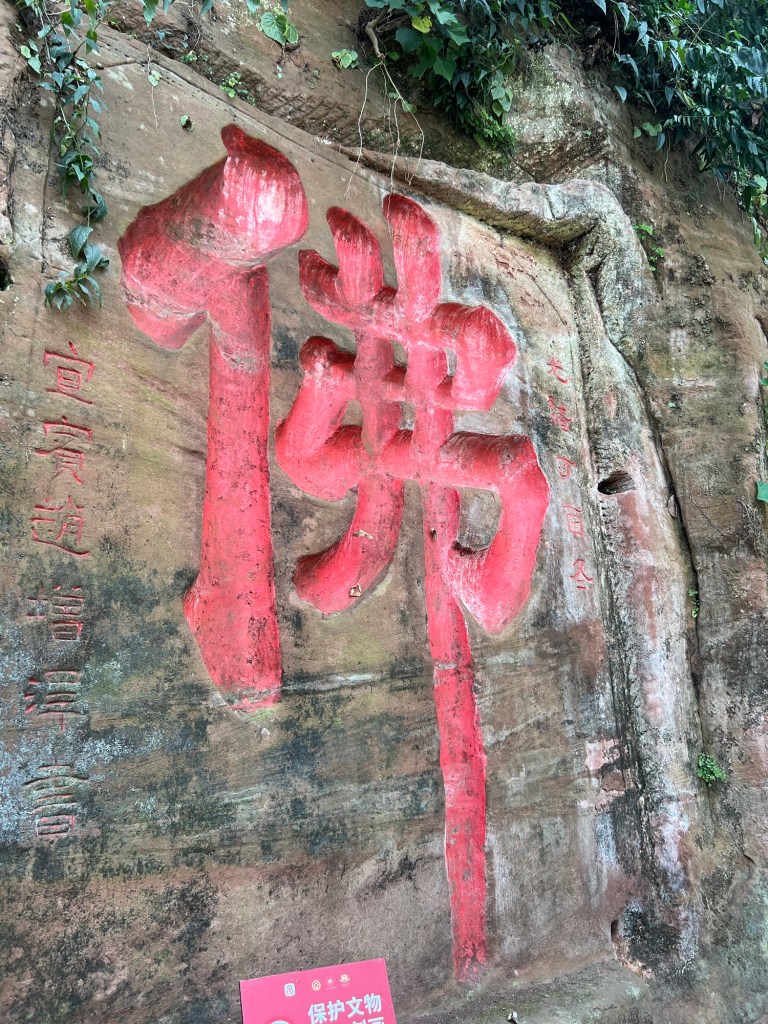
As well as the Leshan Giant Buddha, we came across numerous inscriptions imparting good fortune on those who pass through.
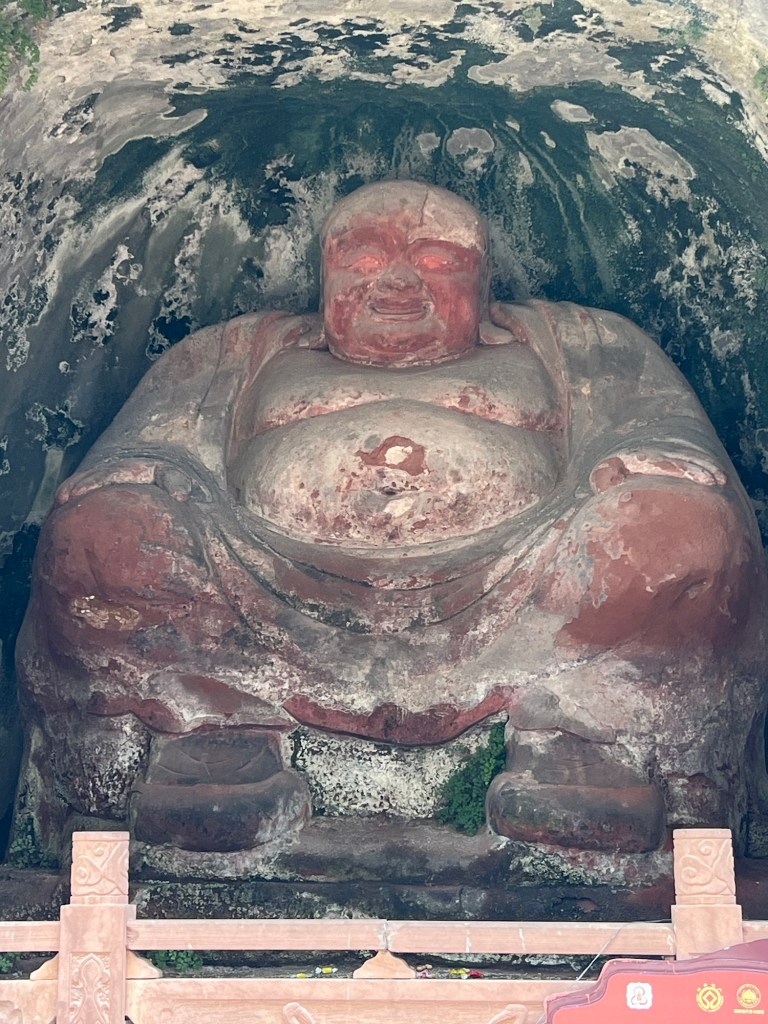
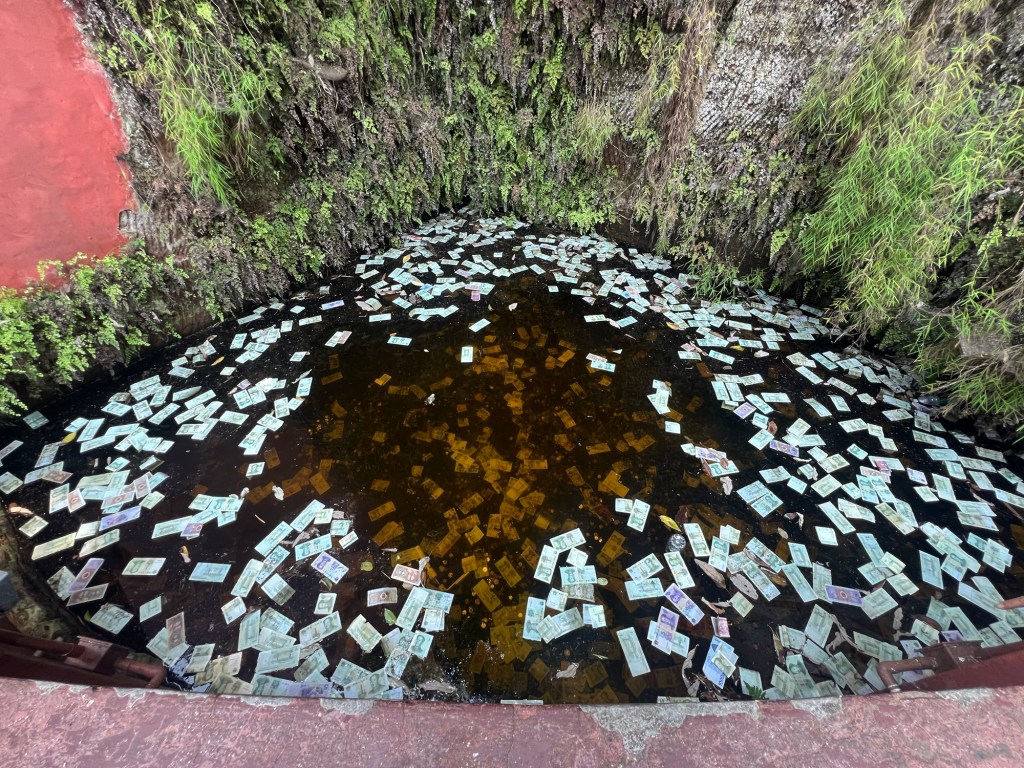
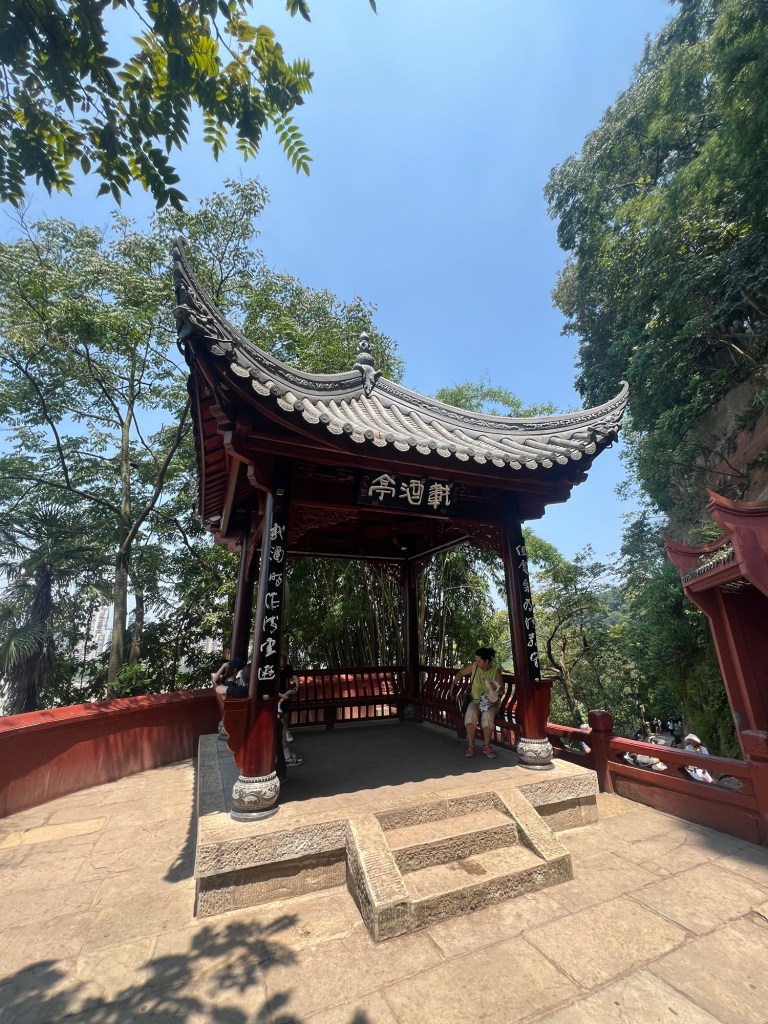
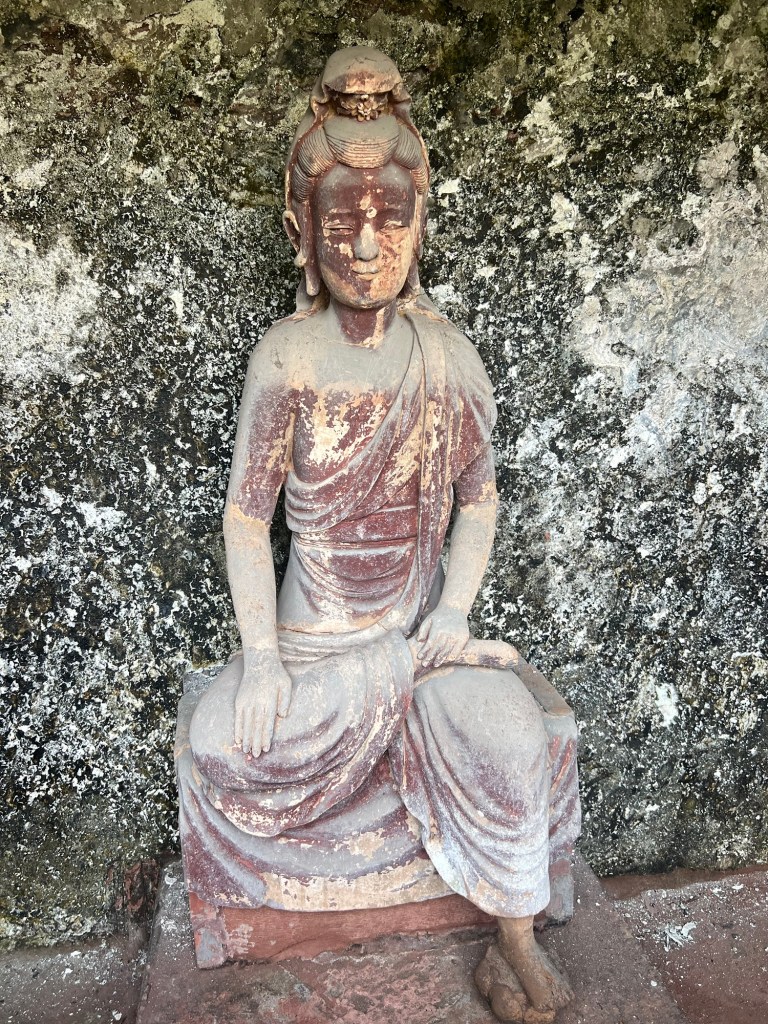
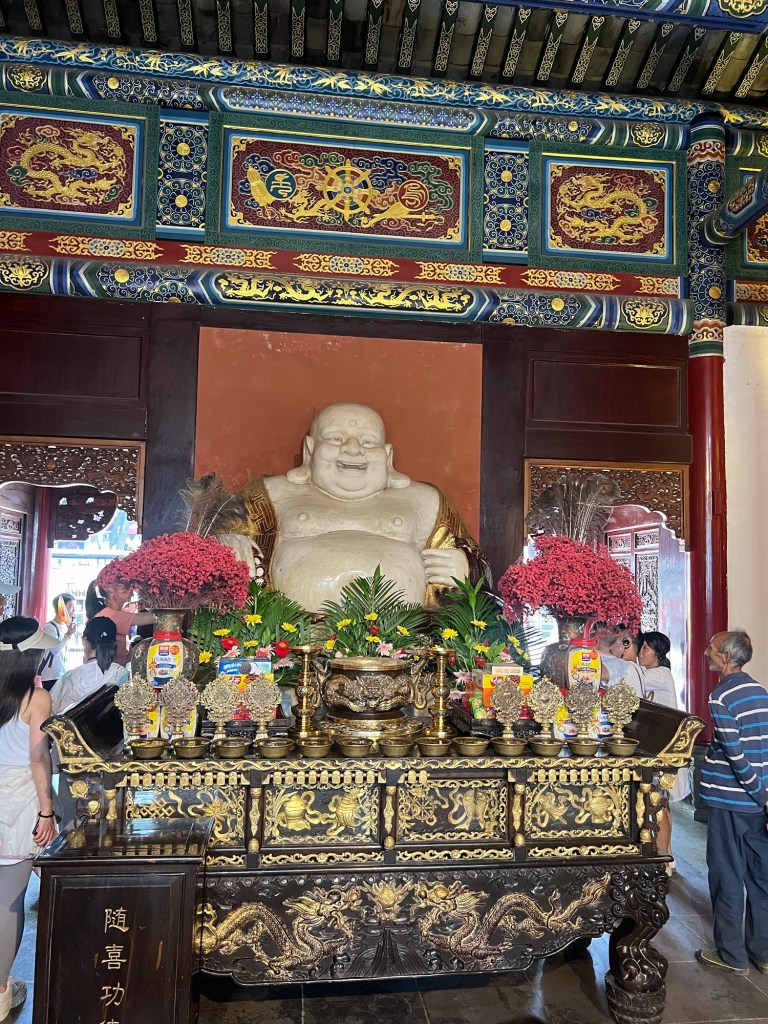
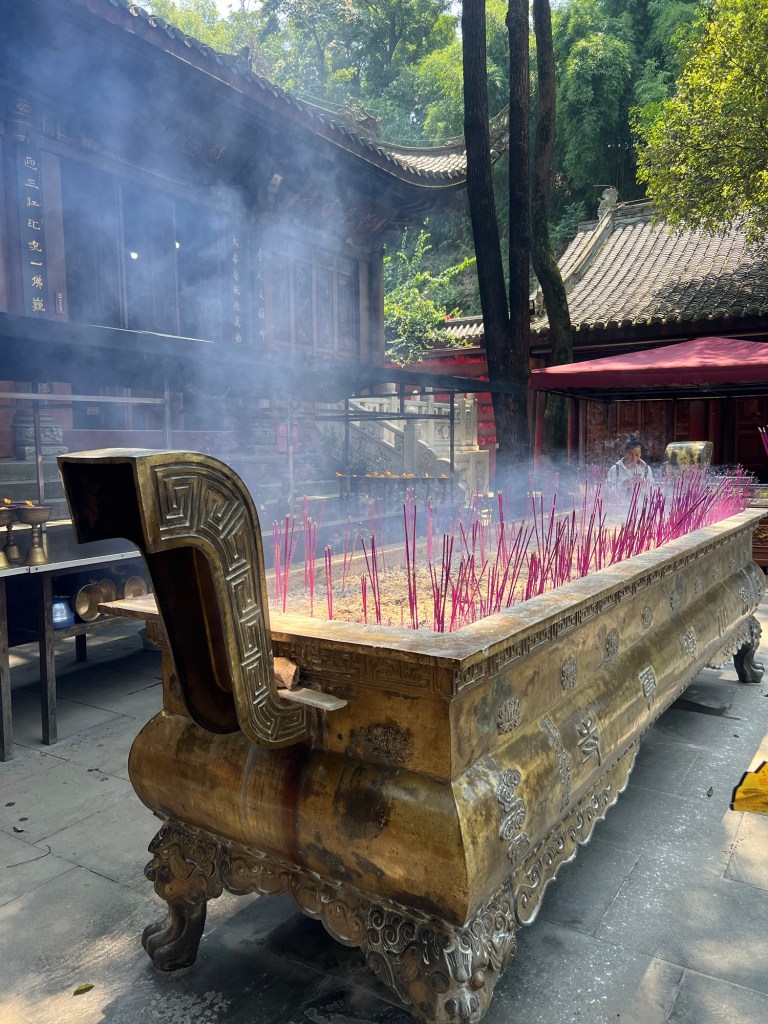
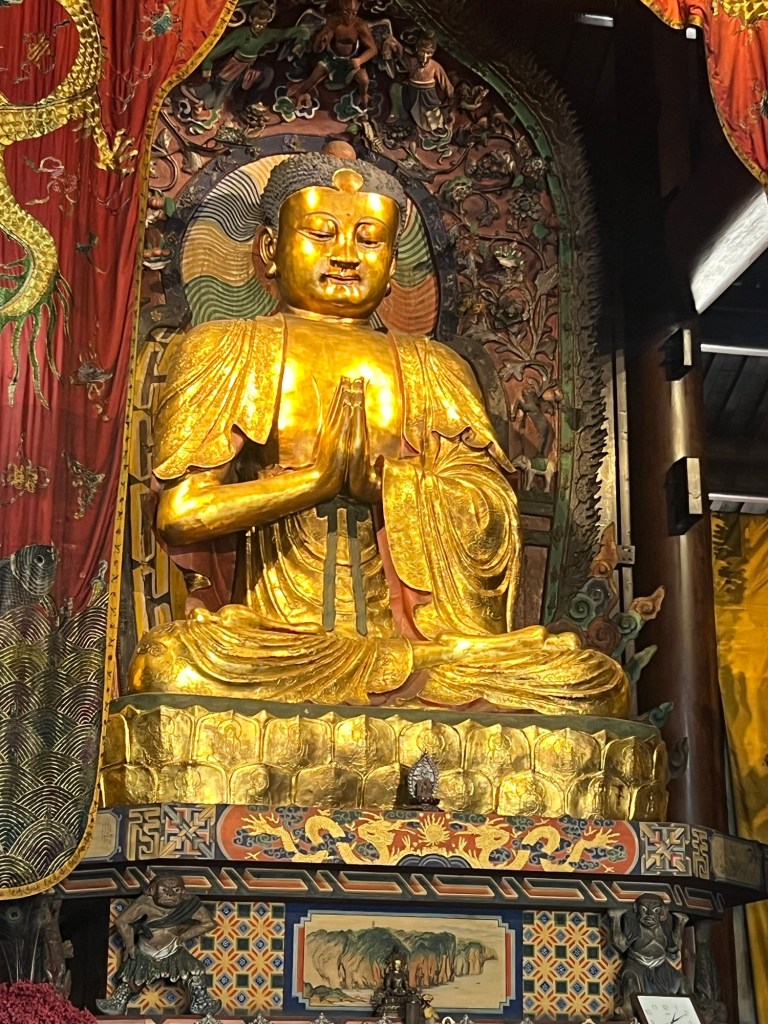
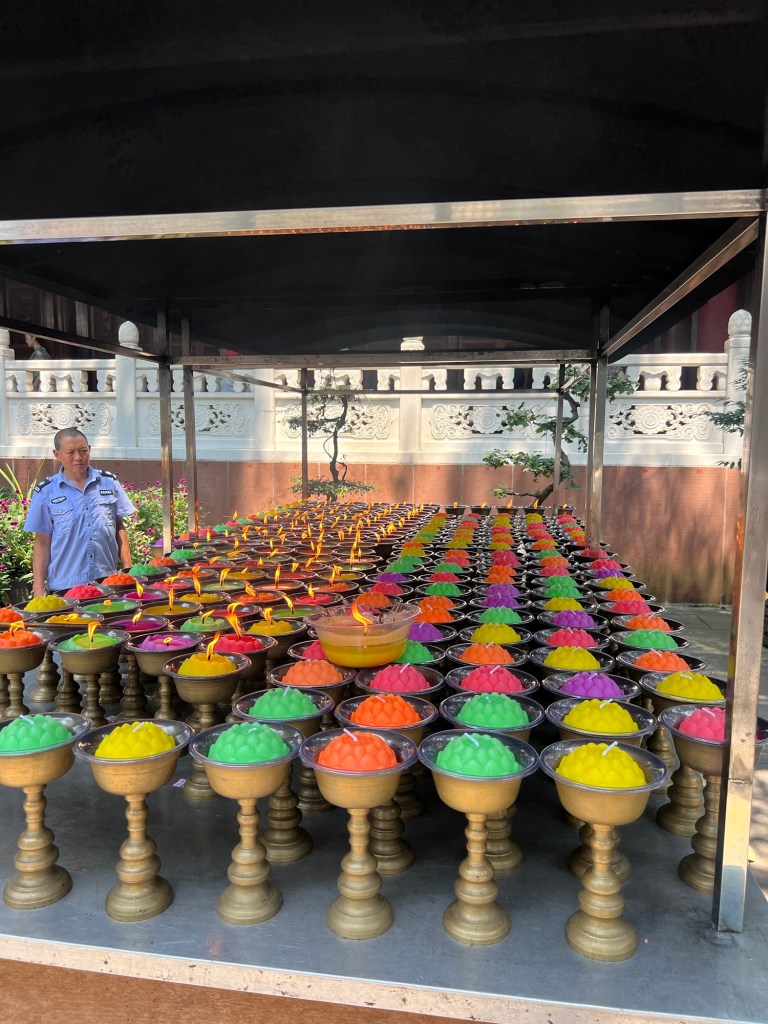
Before the climb down to the Buddha, we visited one of the temples close by and came across a selection of Happy Buddha’s along with a smaller Golden Buddha shrine.
After the founding of the People’s of China, the Leshan Giant Buddha was designated as a cultural relic and is protected by the local Sichuan Province.
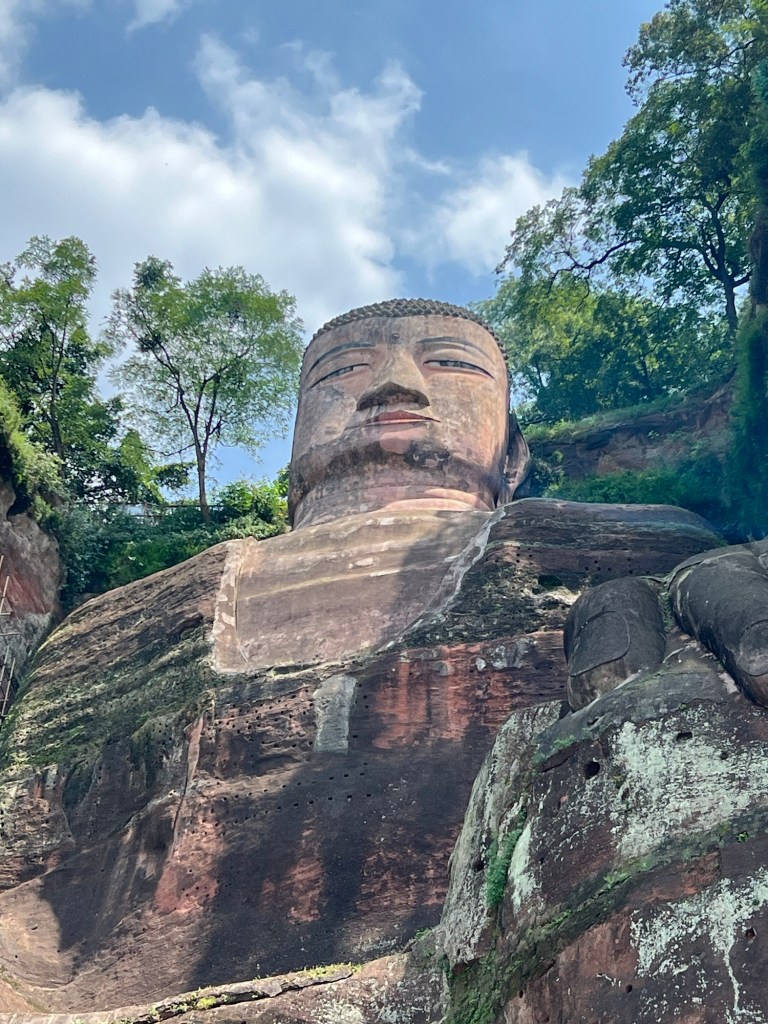
Sadly the Leshan Buddha has been affected by the pollution emanating from the unbridled development in the region.
The body of The Giant Buddha of Leshan is covered today by different organisms lichen, ferns and other bryophytes, and various shrubs and gramineous plants. Current research hopes that greater understanding of plant and microbe-induced weathering effects may aid in the preservation of The Giant Buddha of Leshan.
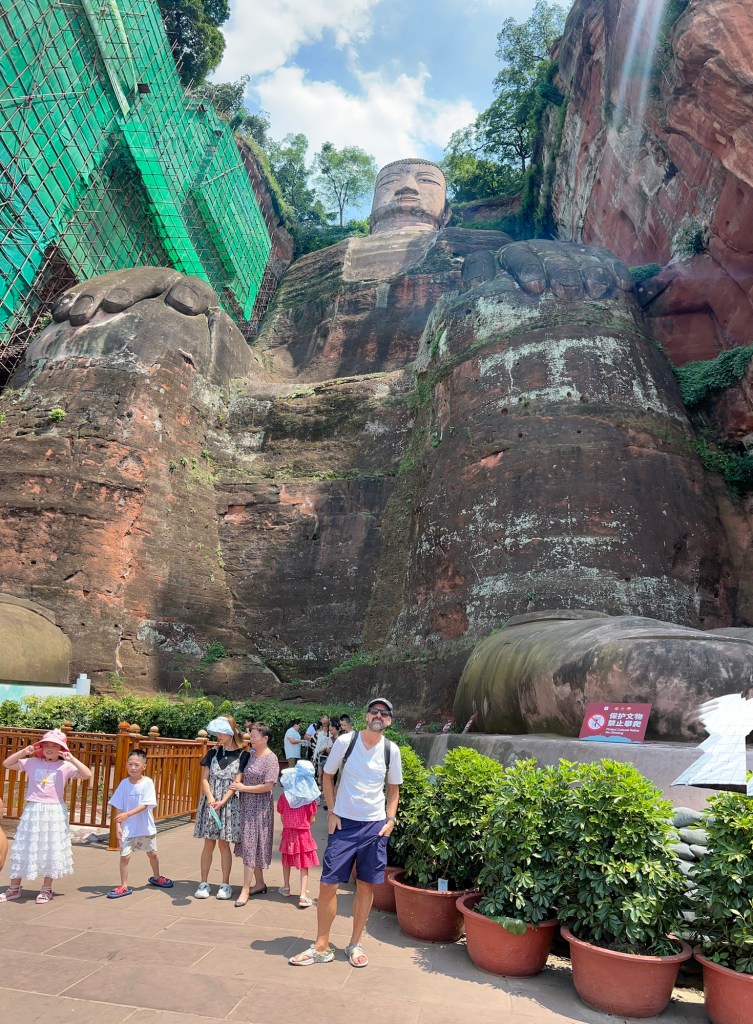
The entire statue is built in stone, except for the ears that were designed in wood, covered with mud on the surface to make clay, and attached to the head.
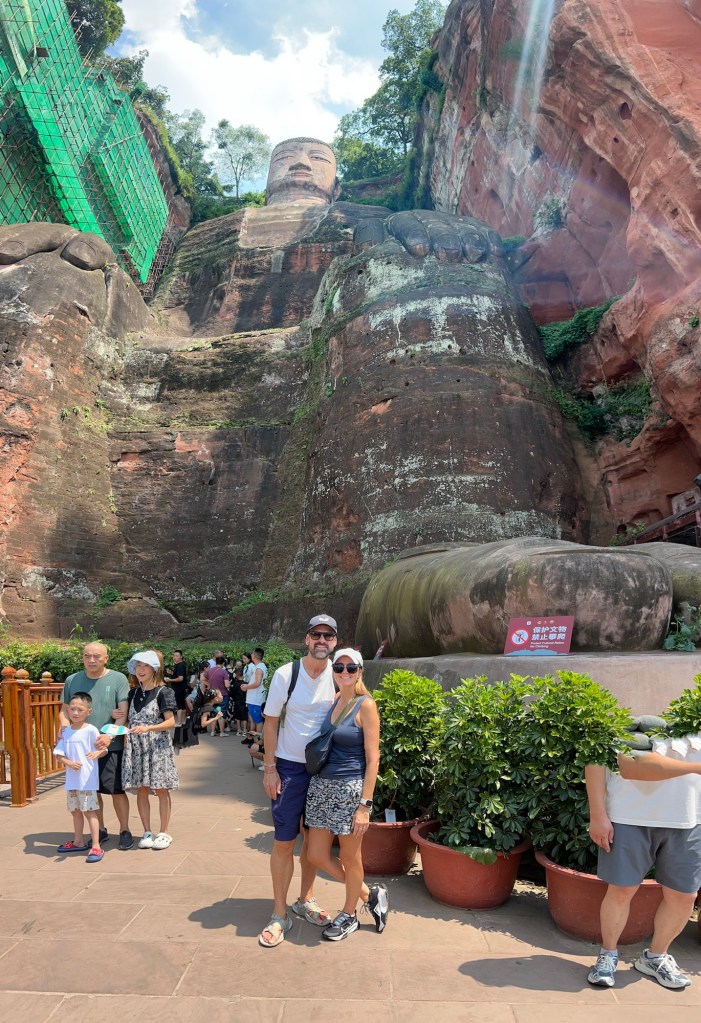
Apparently, the massive construction resulted in so much stone being removed from the cliff face and deposited into the river below that the currents were indeed altered by the statue, making the water safe for passing ships.
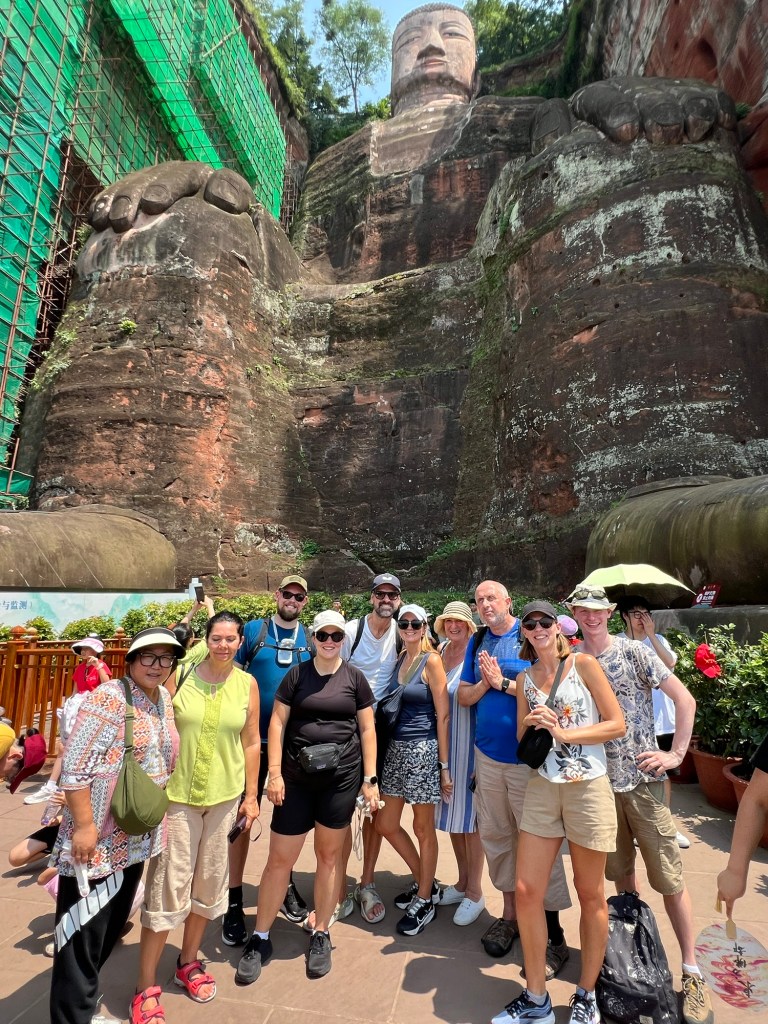

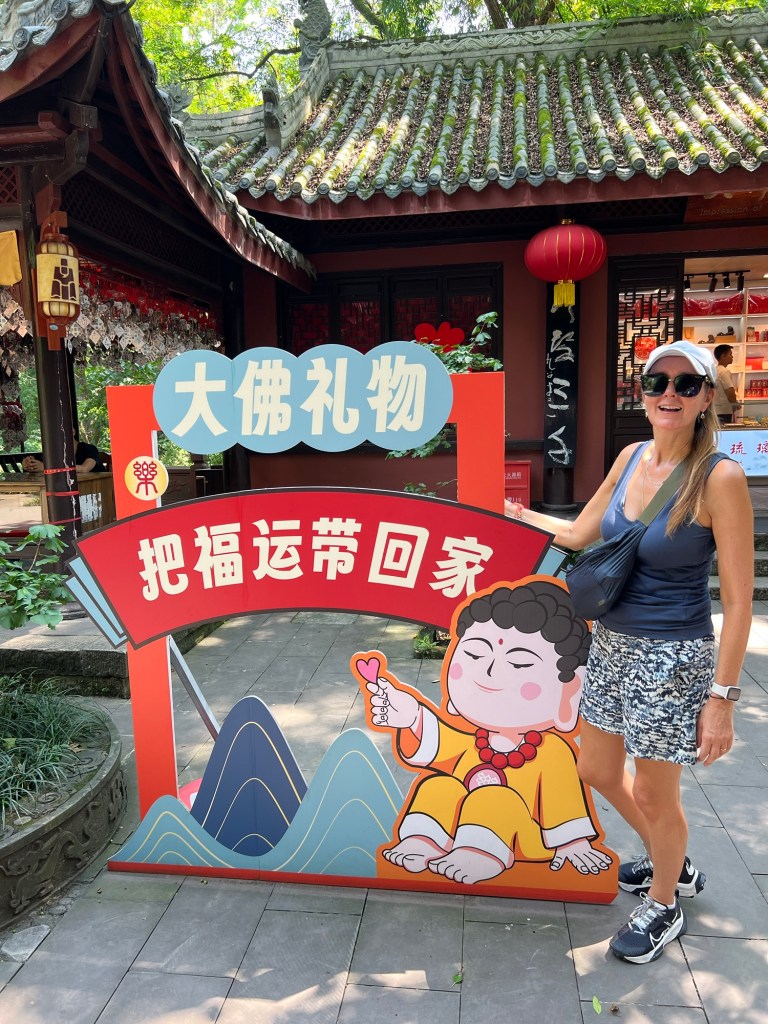

This marks the start and end of our walk to the Great Buddha on the rock.
After a short break we boarded our coach again and headed for Emei Shan, the gateway to the Buddhist mountains and where we will be staying for the next 3 nights.
Tomorrow we head up via cable car to visit the Golden Summit and then hike to a remote monastery. We can’t wait!
 @travellingwiththeateam