We woke today and sadly Michelle has come down with a heavy cold and decided the best option would be to rest up in bed and try and sleep it off.
Andy therefore took up the solo traveller mantle and headed out to visit Gyeongbokgung Palace, Bukchon Hanok Village, Insadong, Jogyesa Temple, Namsan Seoul Tower and Dongdaemum Design Plaza.
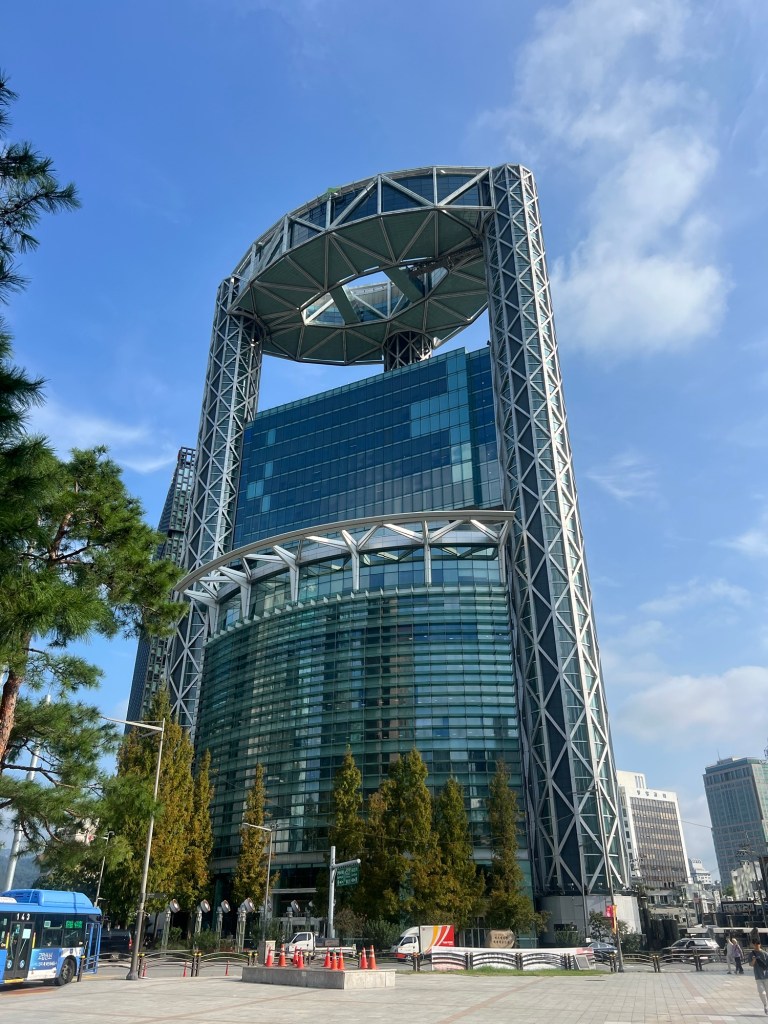
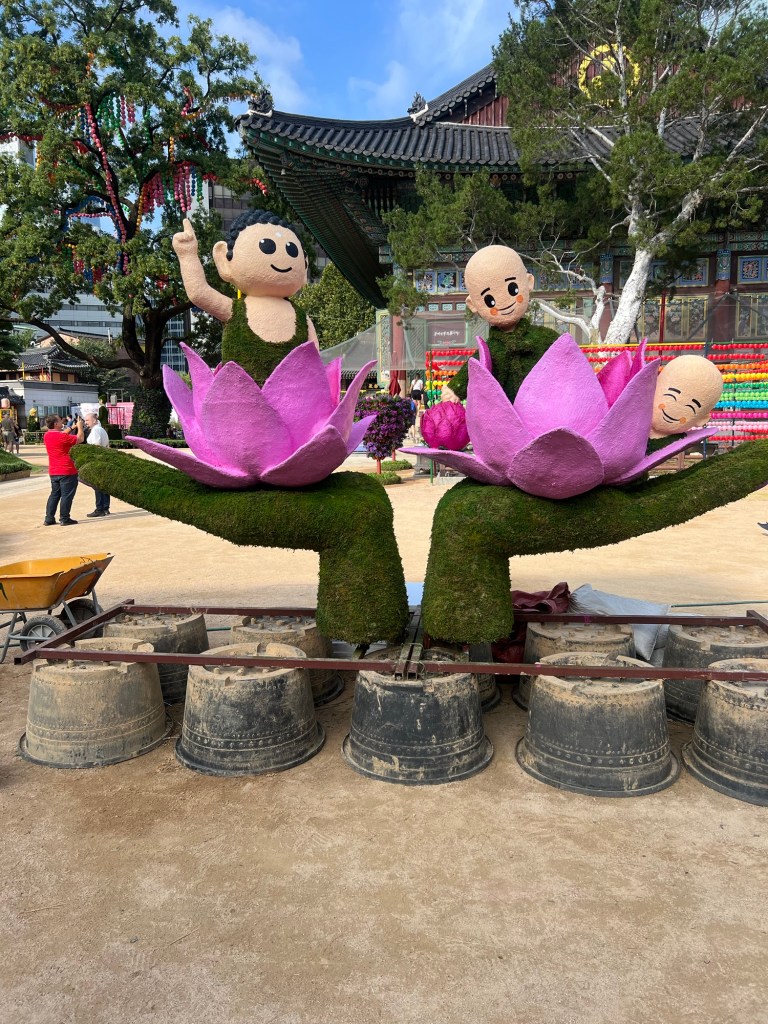
The first stop was Jogyesa, the chief temple of the Jogye Order of Korean Buddhism. The building dates back to the late 14th century. The temple was first established in 1395, at the dawn of the Joseon Dynasty.
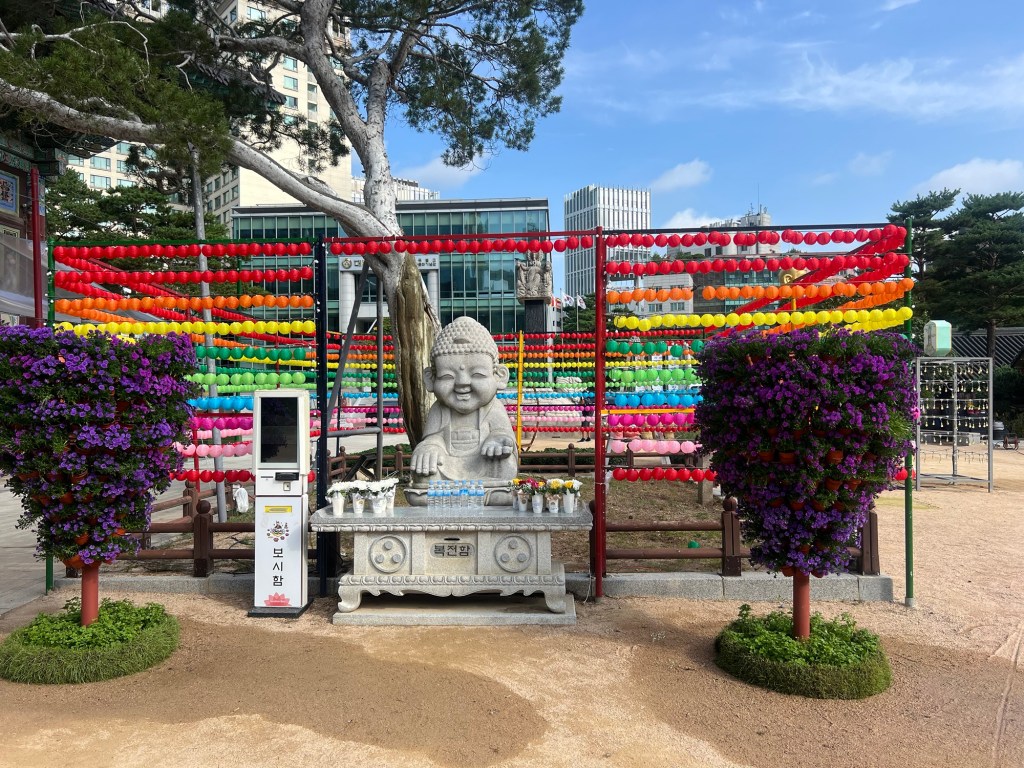
Jogyesa Temple is located in one of the most popular cultural streets in Seoul, Insa-dong, near the Gyeongbokgung Palace.
This temple participates in the Templestay program, where visitors can sign up to experience the life of Buddhist monks at the temple, eat Buddhist food, and learn the history of the temple and of Korean Buddhism as a whole.
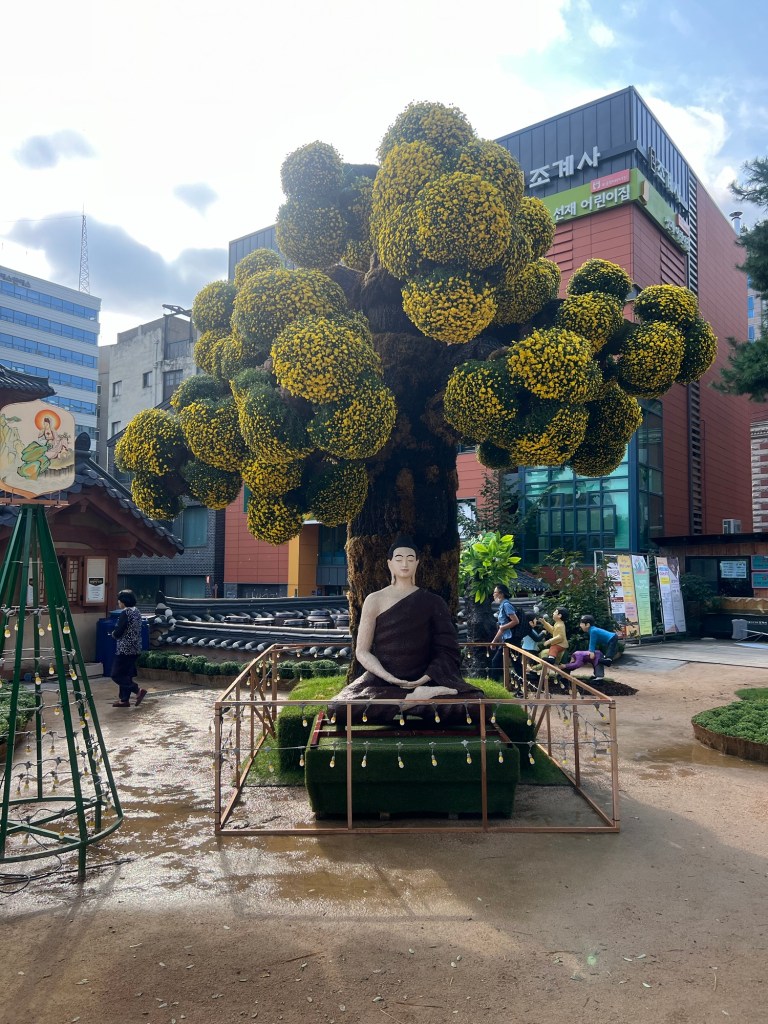
Jogyesa Temple’s features a mix of traditional temple and palace architecture. The lattice designs found on the doors and windows of the Daeungjeon are unique in their own right.
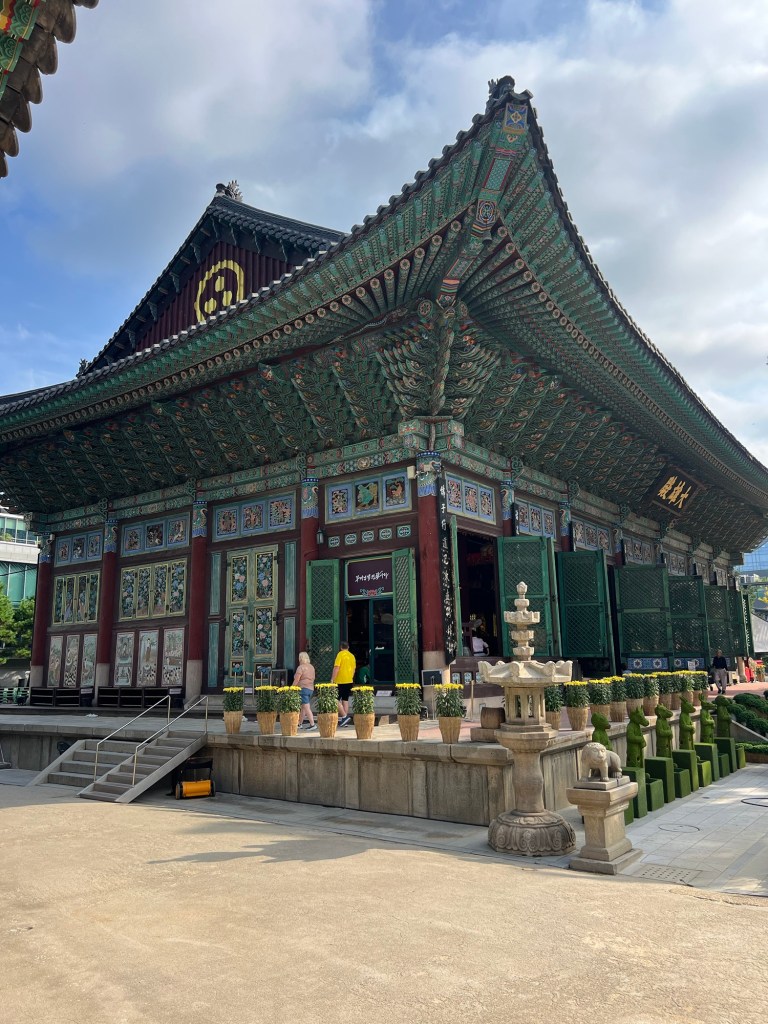
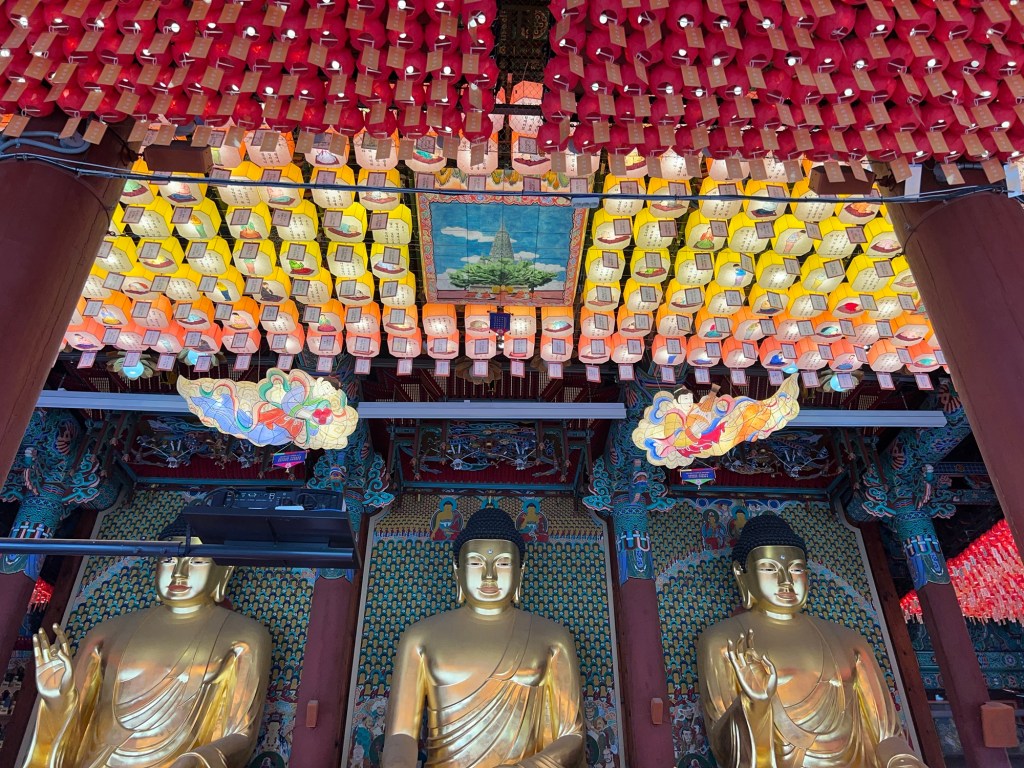
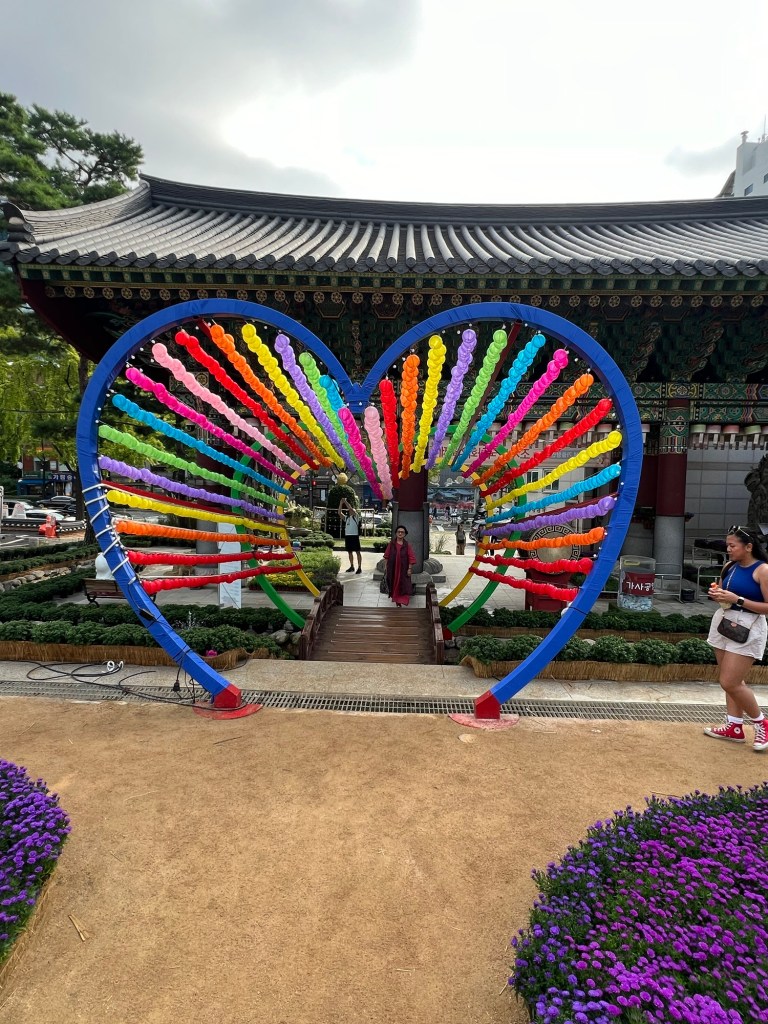
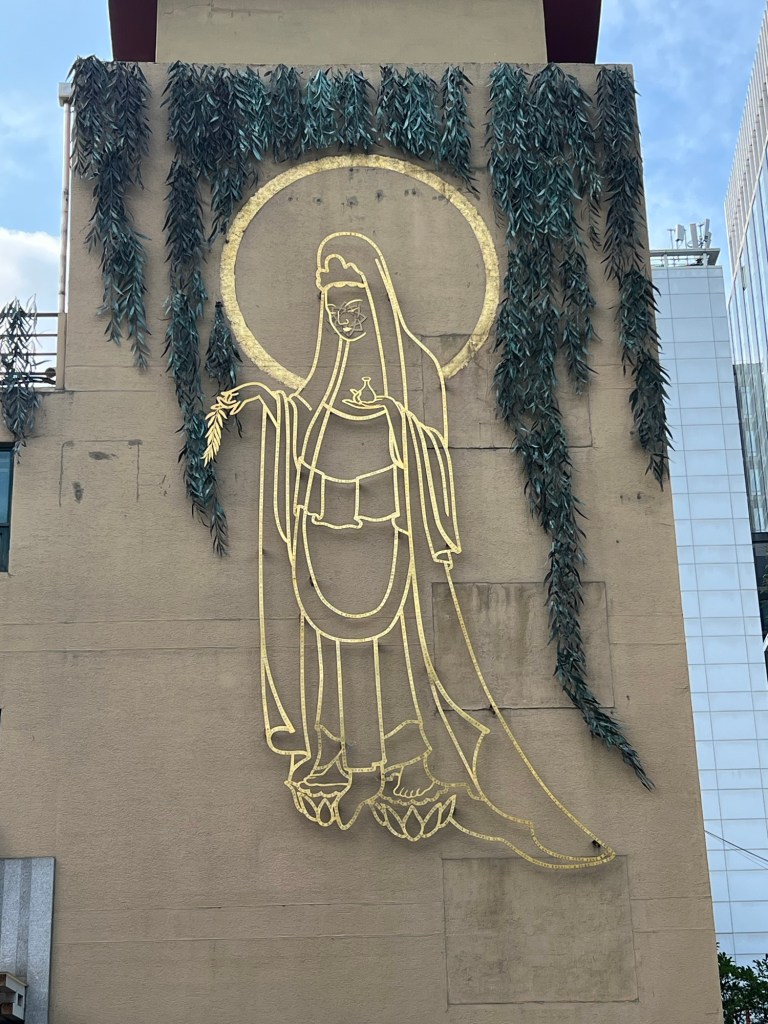
The temple was a real blend of the old, new and the colourful and had a very welcoming feel.
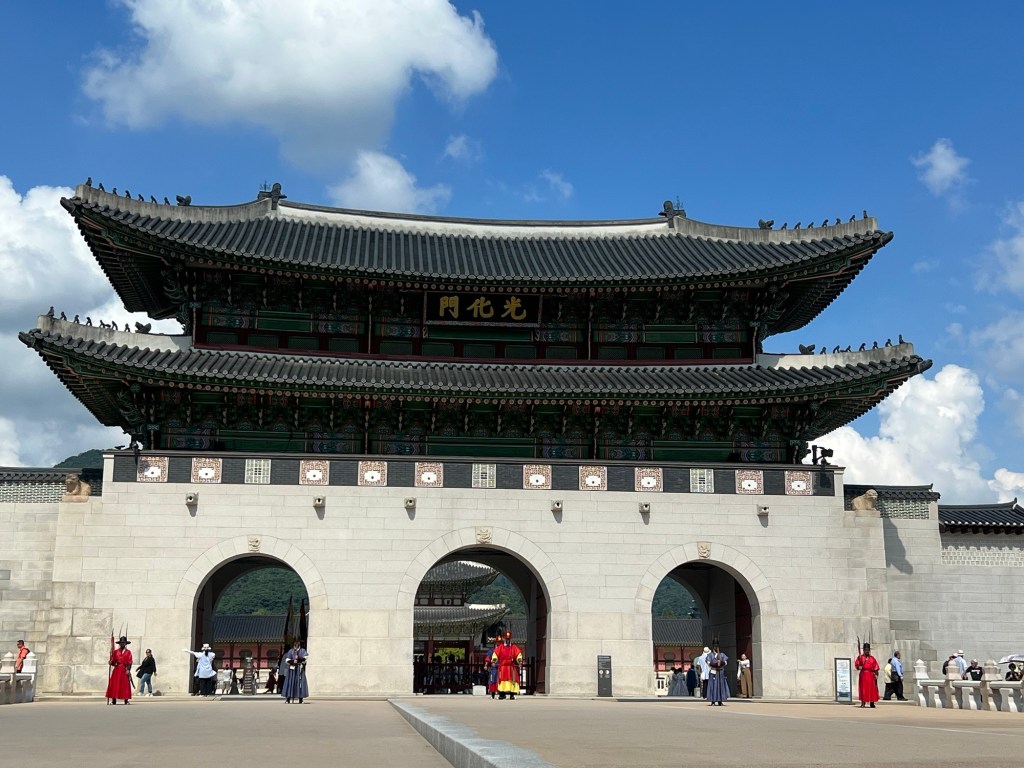
Next stop was the Gyeongbokgung Palace, the largest of the Five Grand Palaces built by the Joseon dynasty, Gyeongbokgung served as the home of the royal family and the seat of government.

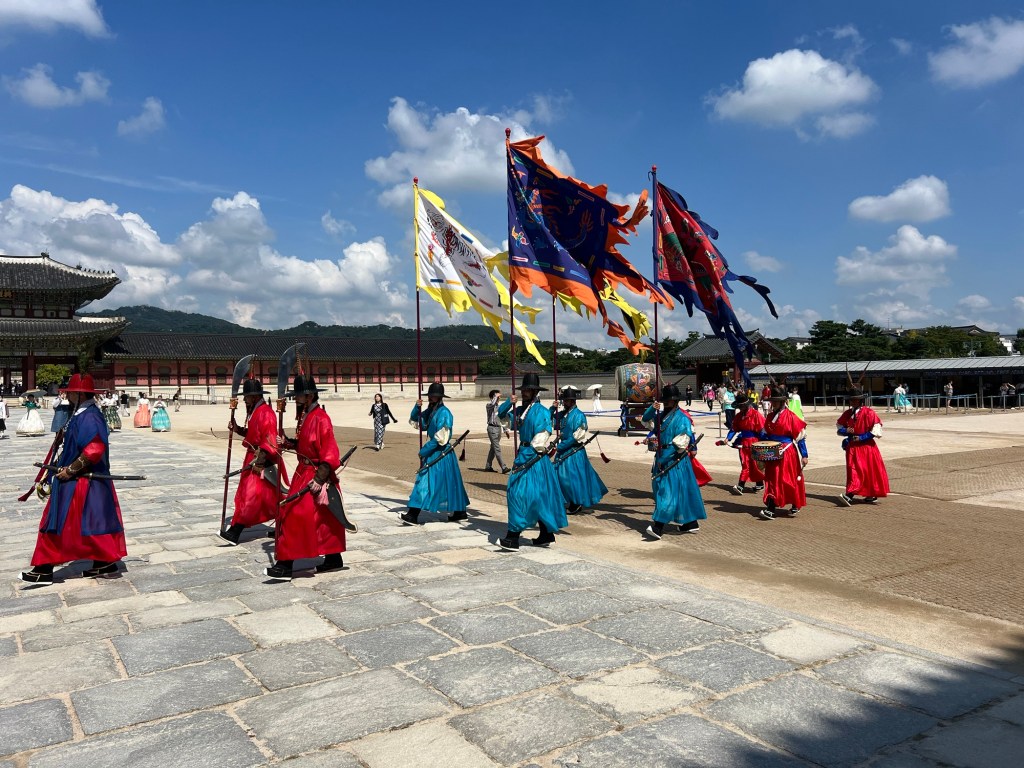
When Andy arrived it was just at the time of the changing of the guard at the main gate Gwanghwamuni. This occurs every hour from 10:00am and there were many other tourists wearing hanbok (traditional dress) while visiting Gyeongbokgung alongside a number of other traditional Korean clothing.
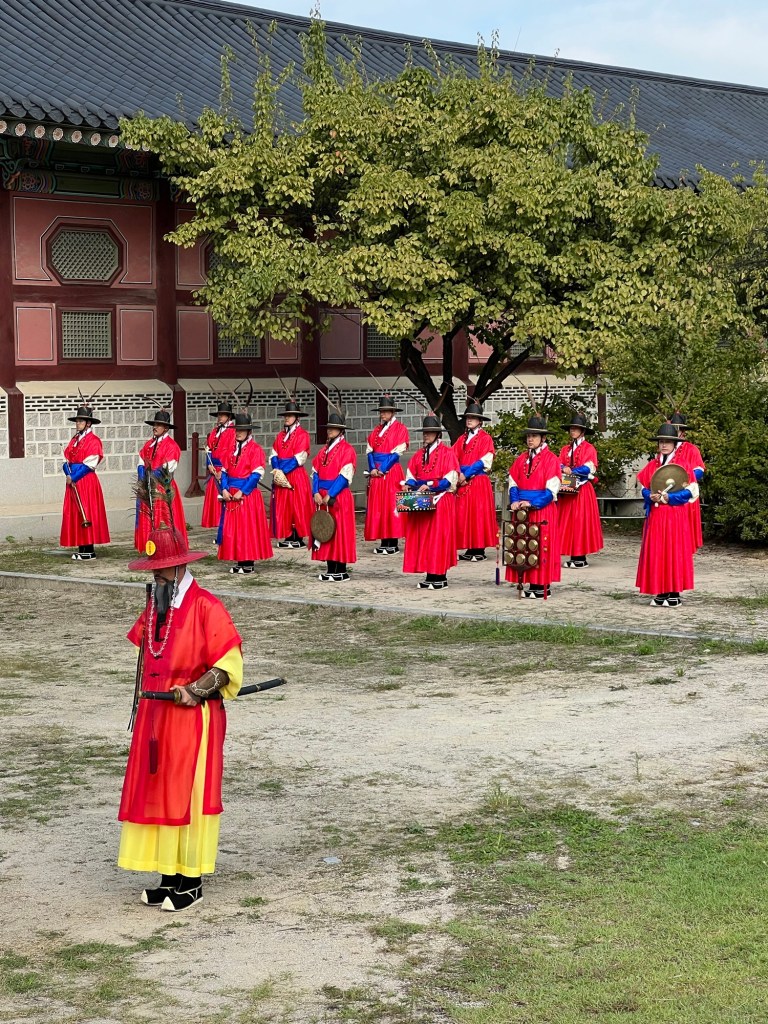
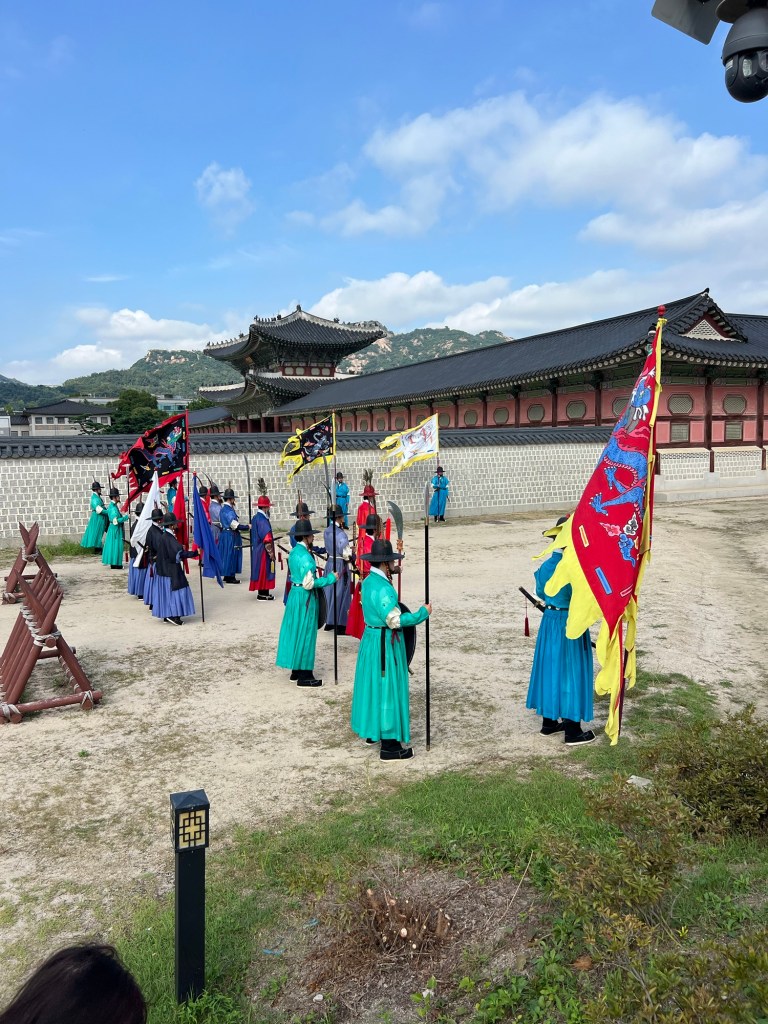

In the early 20th century, much of the palace was systematically destroyed by Imperial Japan during its occupation of Korea. On January 21, 1963, it was designated as a cultural property. Since the 1990s, the walled palace complex is gradually being restored to its original form.

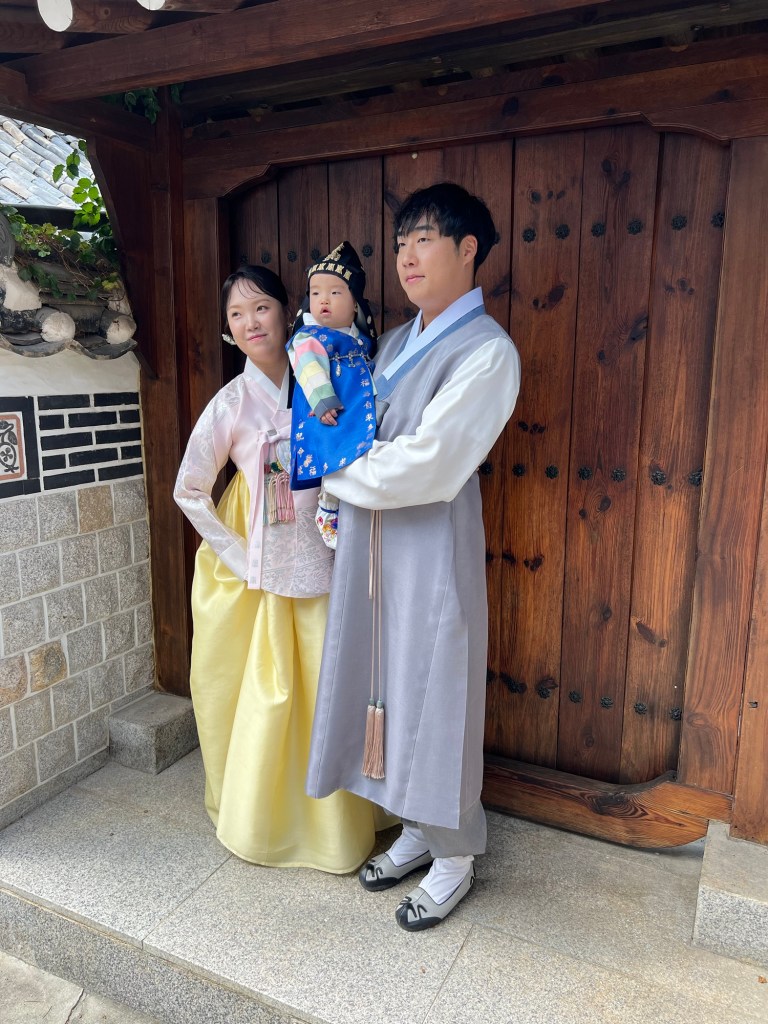
After leaving the palace, Andy headed north to Bukchon Hanok Village, a residential neighborhood in Jongno District. It has many restored traditional Korean houses, called Hanok. This has made it a popular tourist destination, which has caused some issues with the residents who still live there.
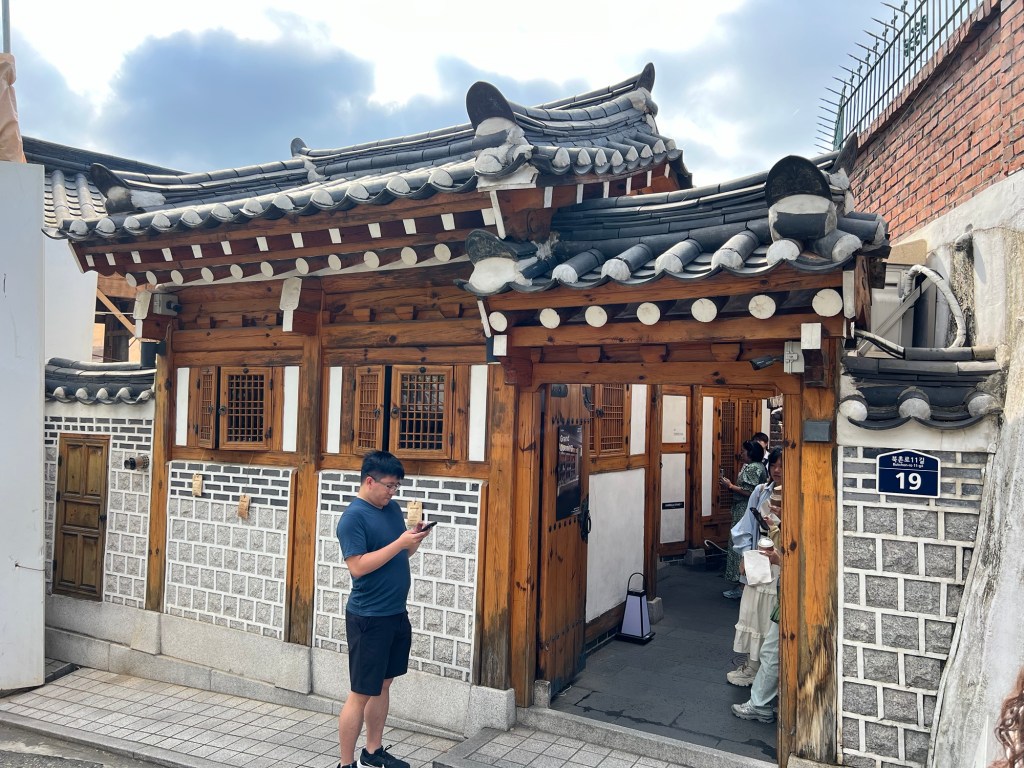
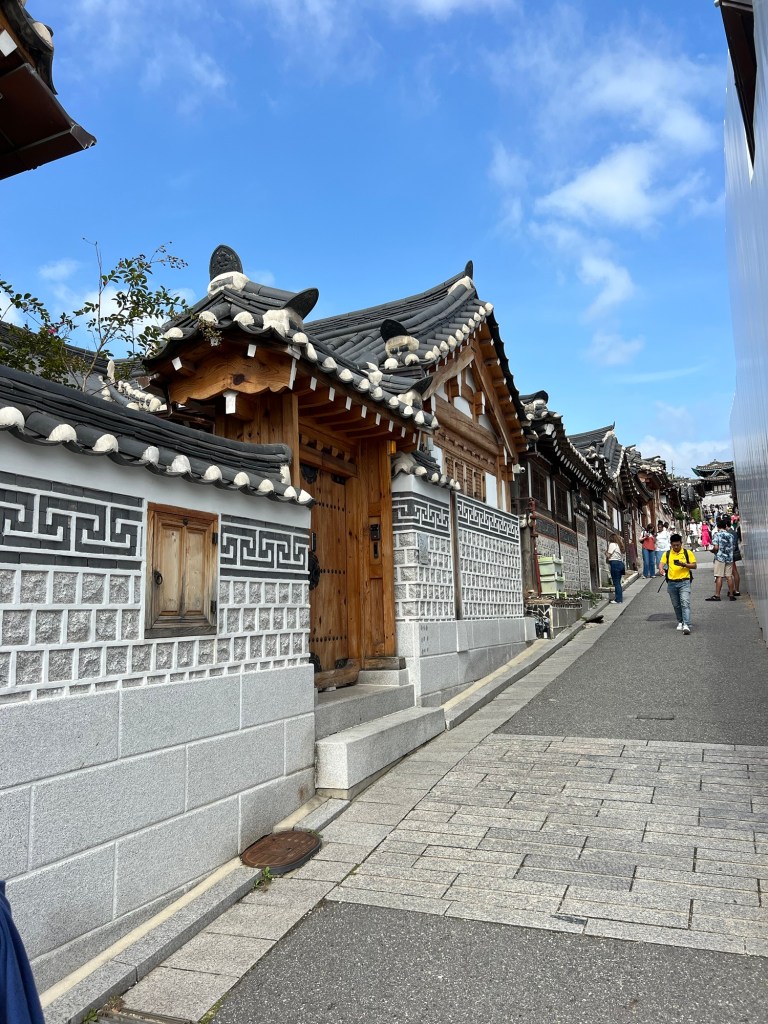
The area of Bukchon, which consists of a number of neighbourhoods including Wonseo-dong, Jae-dong and Insa-dong was traditionally the residential quarter of high-ranking government officials and nobility during the Joseon period.
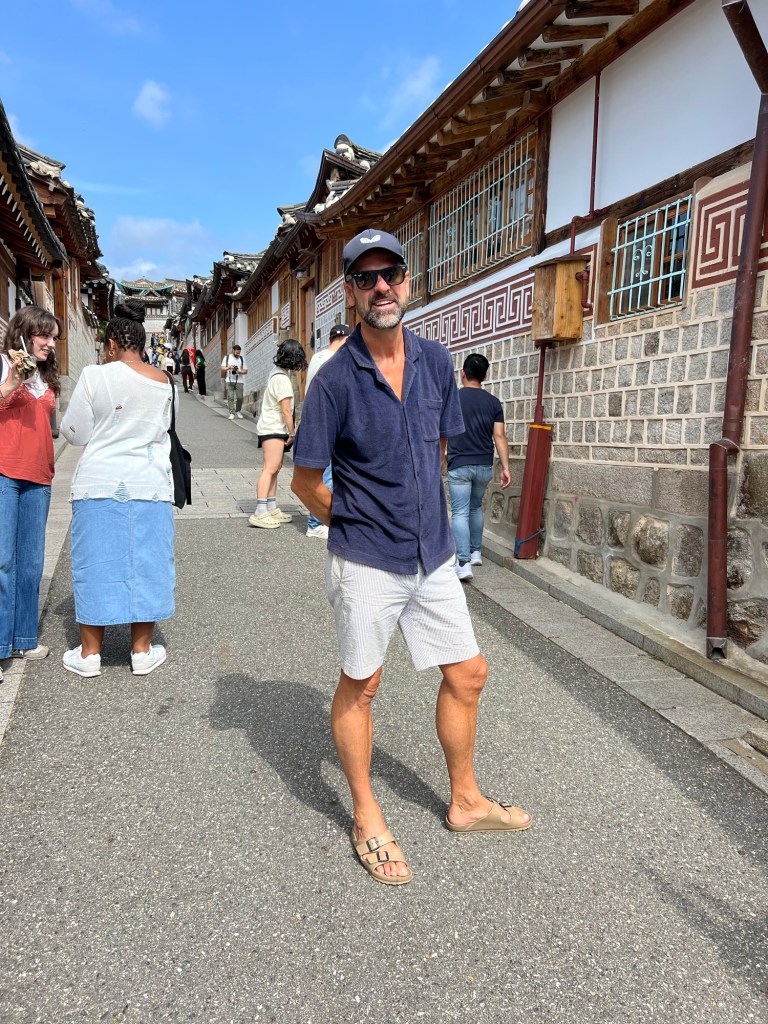
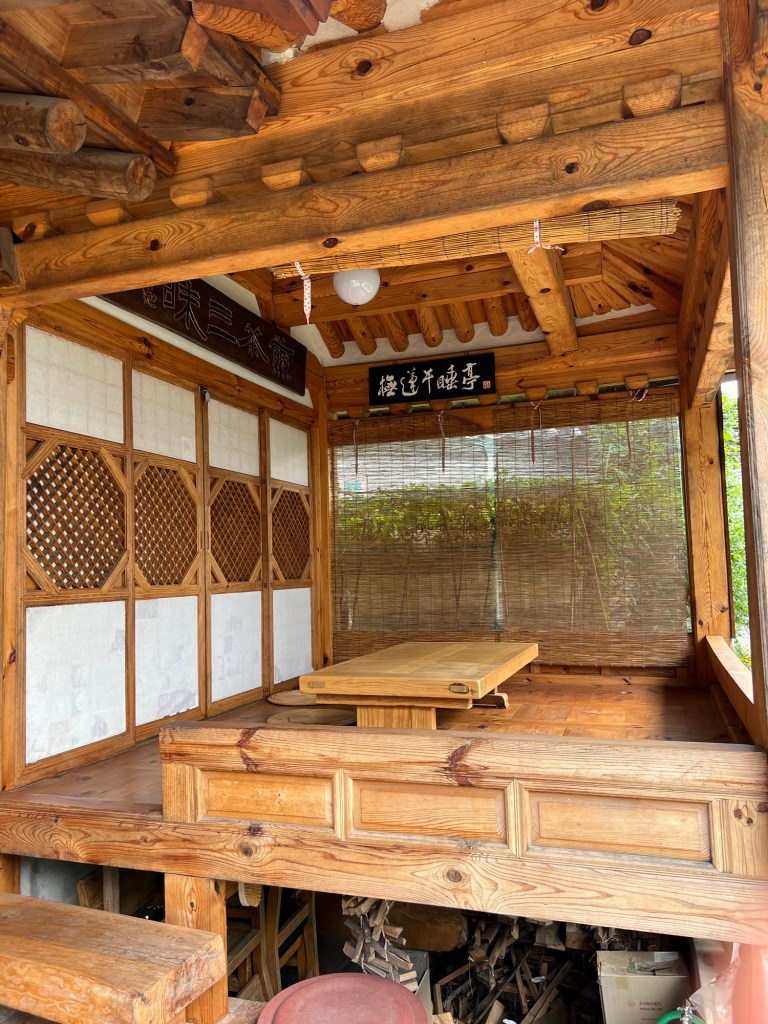
The Bukchon Hanok Village is preserved in a modern society and is renewed as a unique tourist sight. It’s awash with alleyways of traditional houses lining the street and feels like you’ve gone back in time.
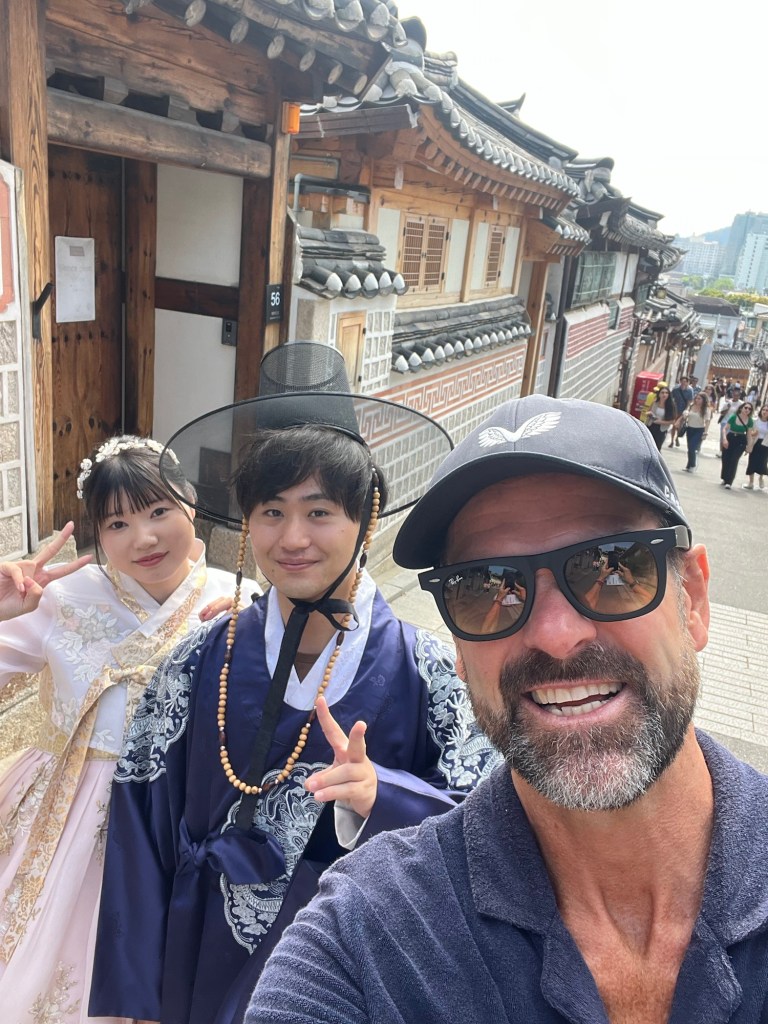
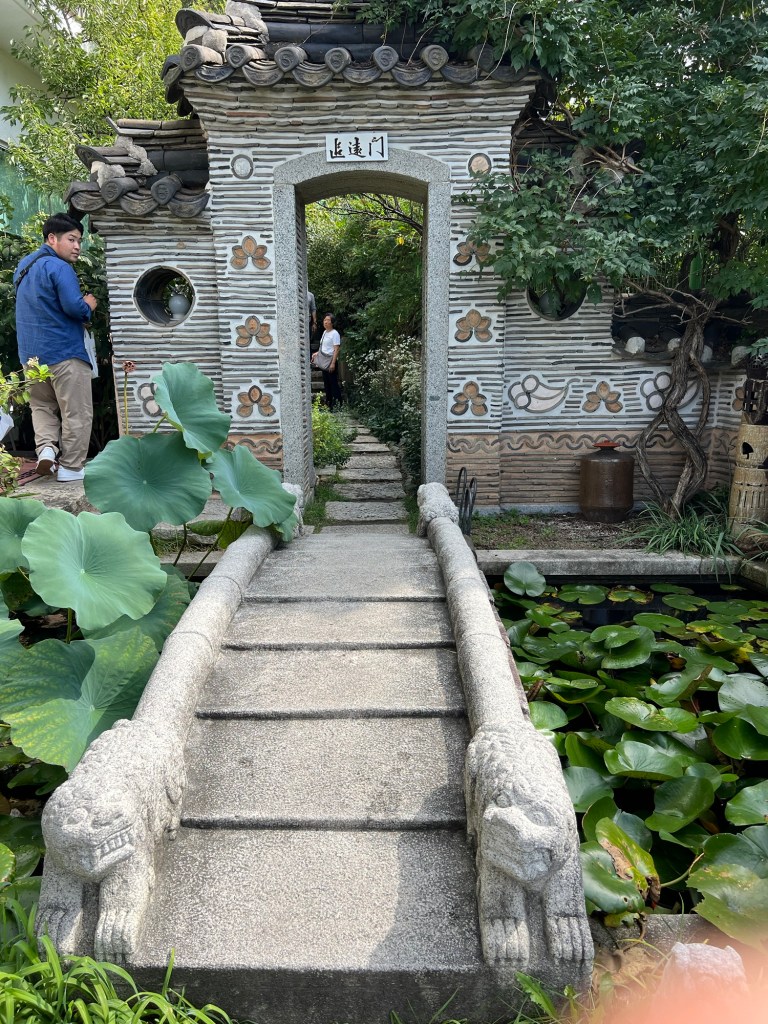
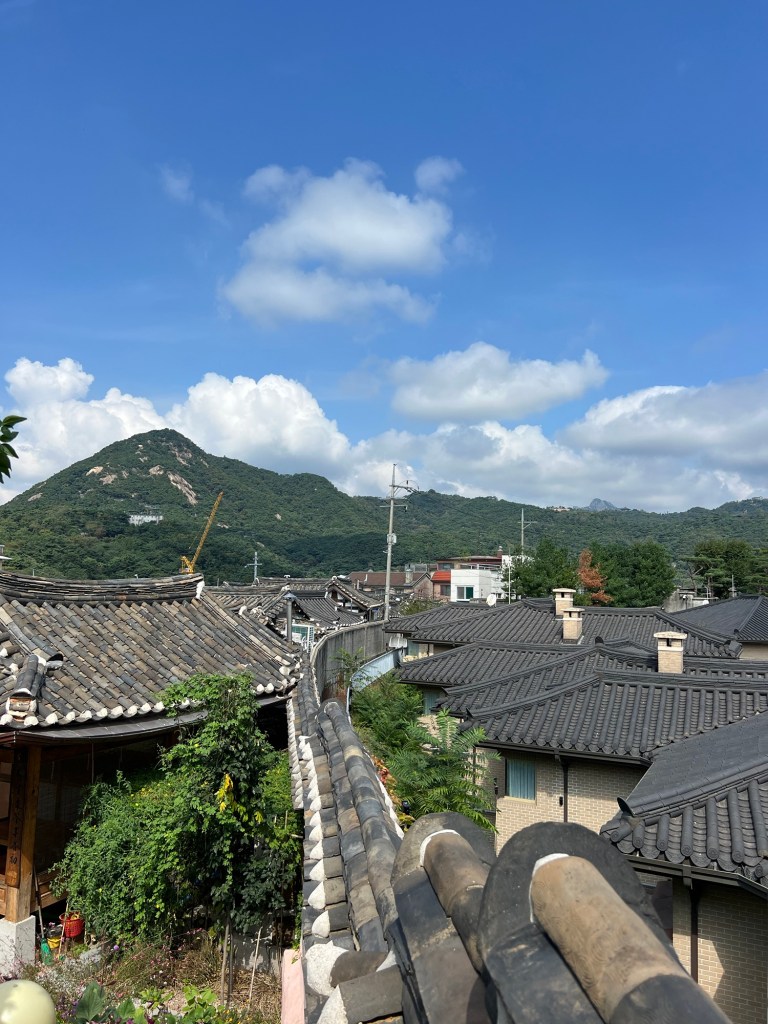
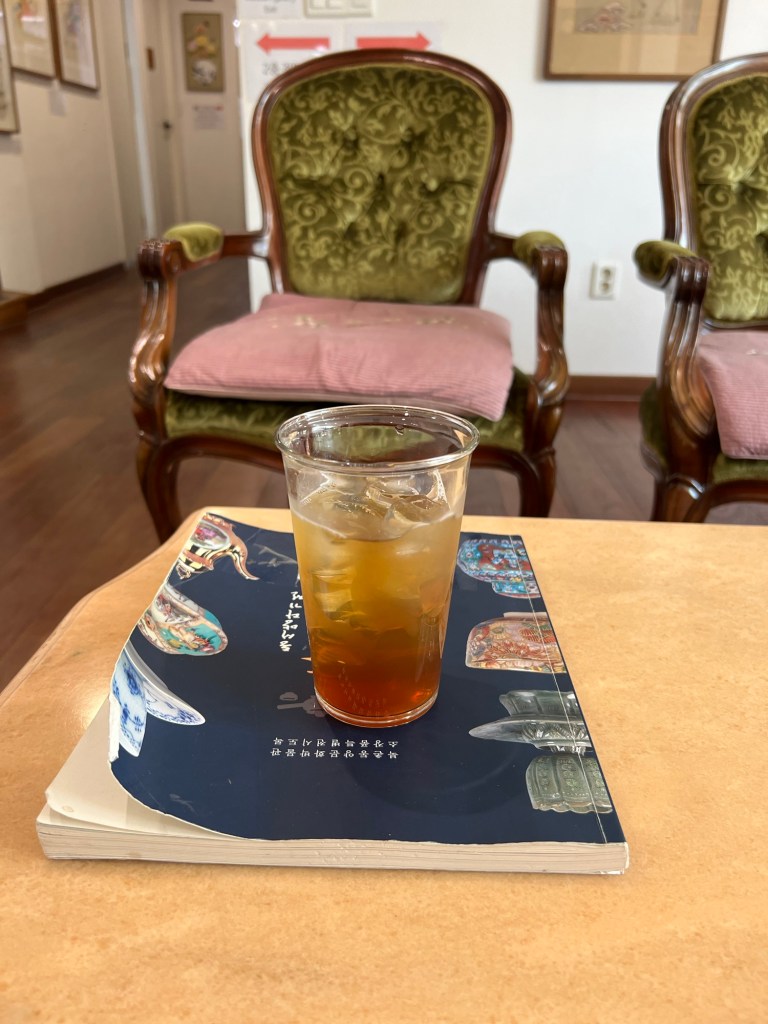
A visit to a small museum in the Hanok area was like entering an oasis of calm. Quiet and peaceful with amazing views across the neighbourhood and out to the mountains in the North.
As part of the entry fee there was a free drink and Andy choose a chilled red ginseng tea which helped to give him renewed energy to carry on his tourist journey.


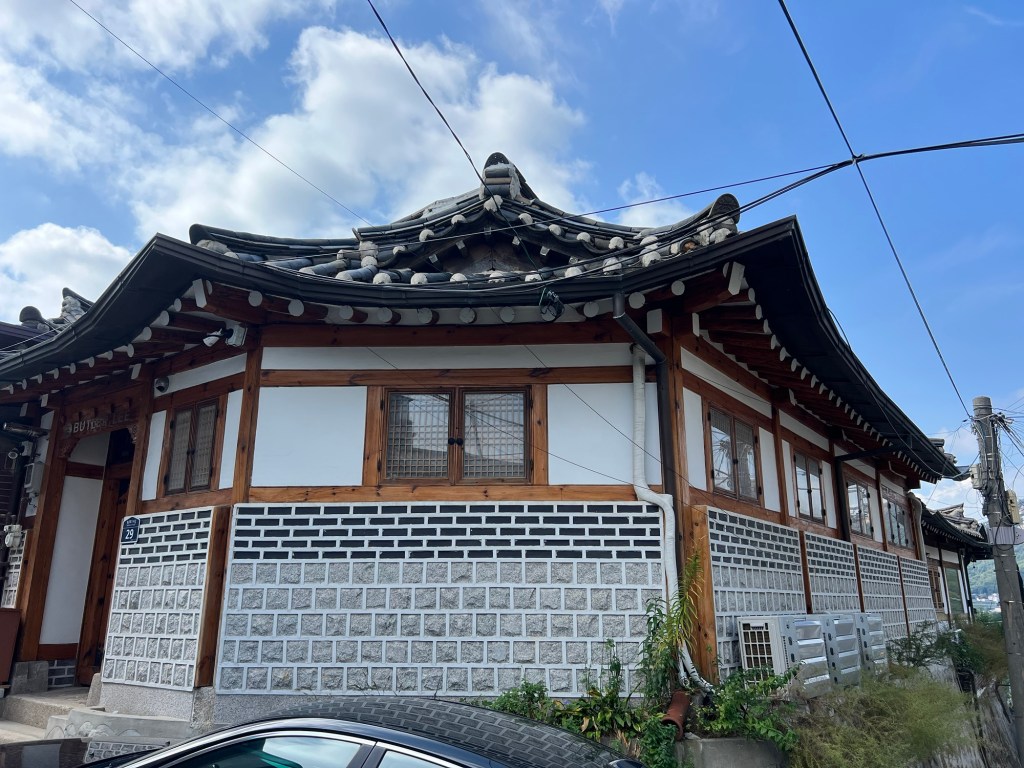
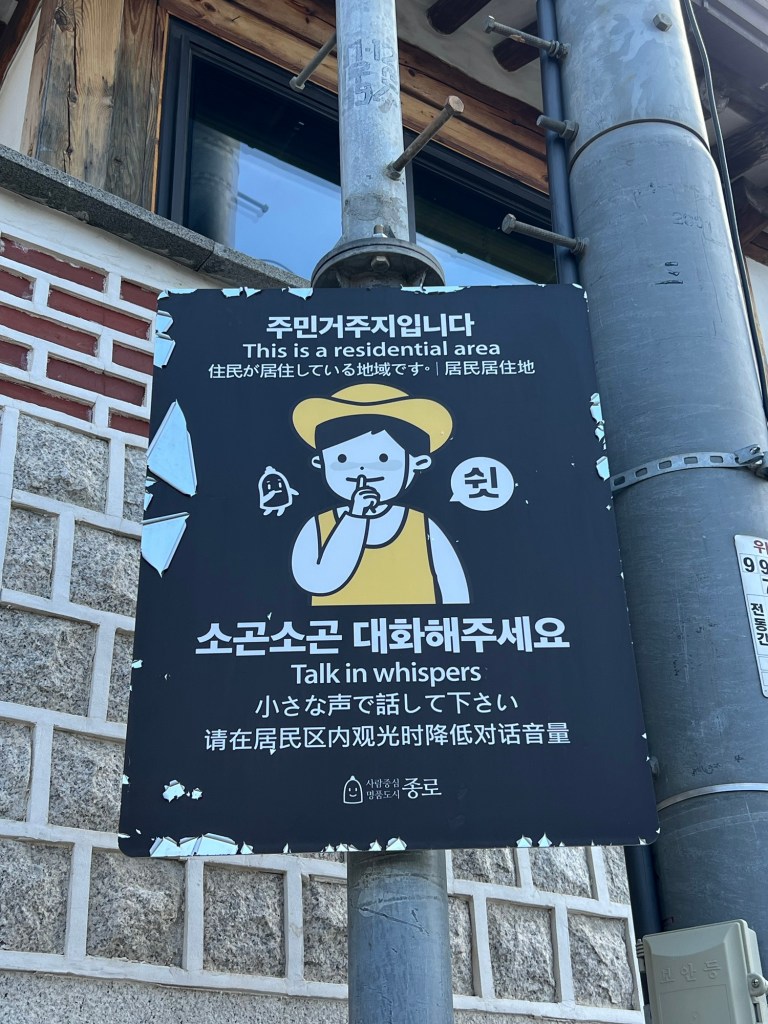
The houses are all perched on the hill to the north of the main city affording them great views. Being a residential area there were signs and wardens advising of the need to be quiet and respectful.
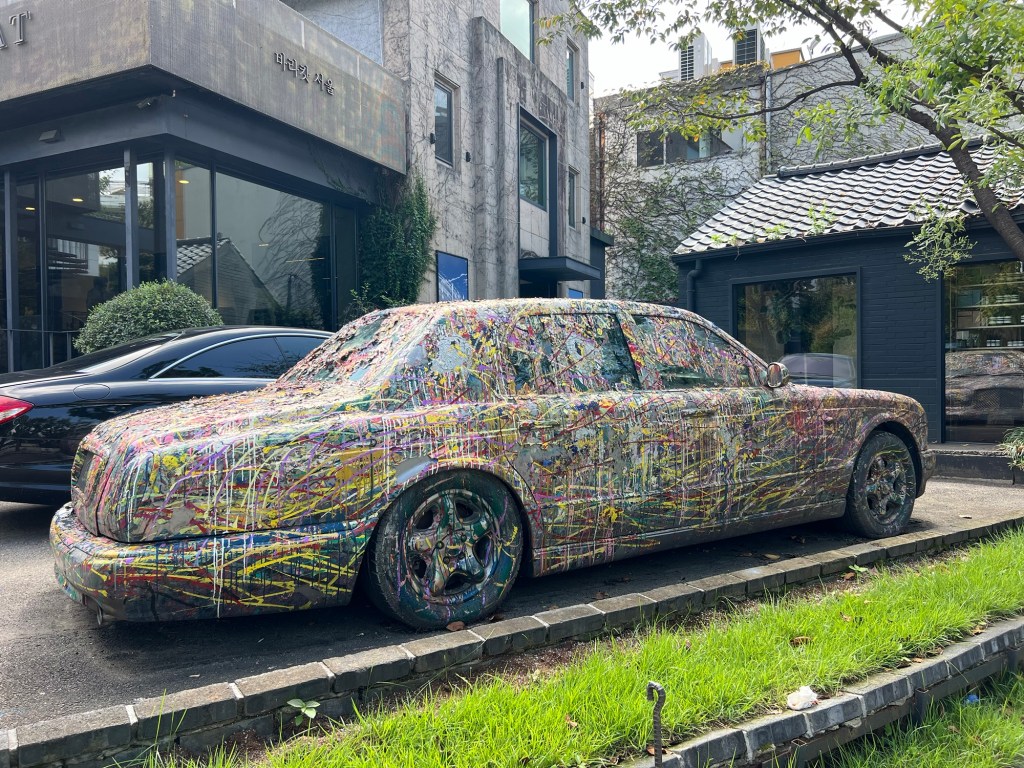
The area of Insadong is a vibrant traditional area and known for traditional tea houses and art galleries, as well as the occasion piece of street art. The car below is I assume part of the artwork.
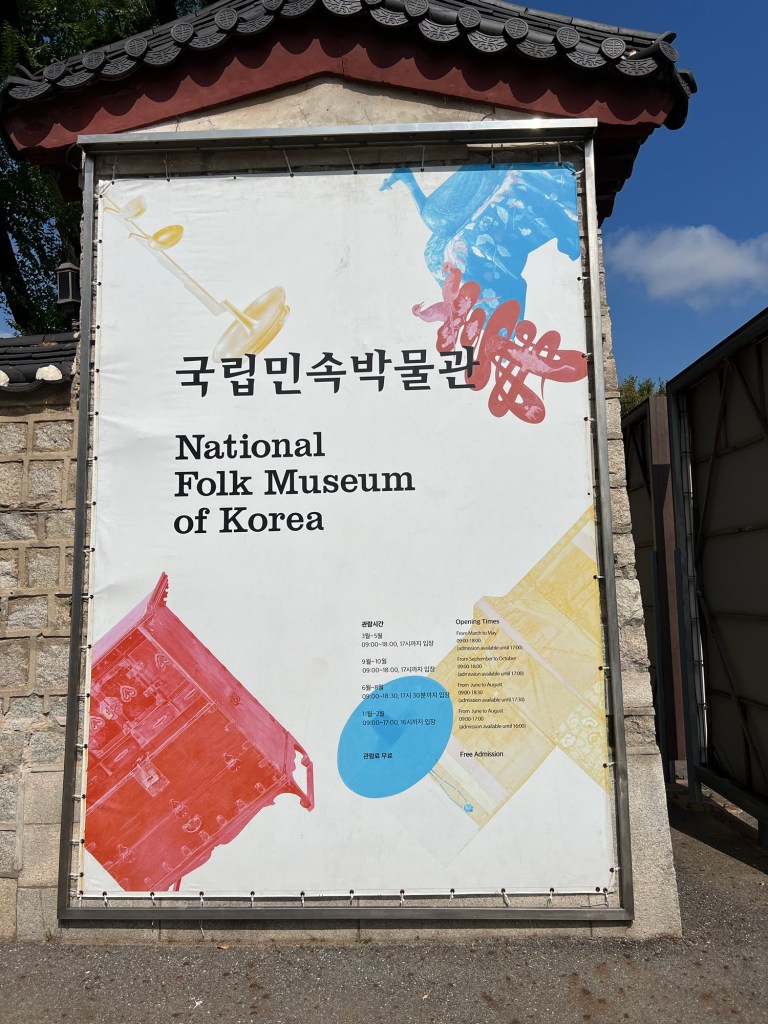
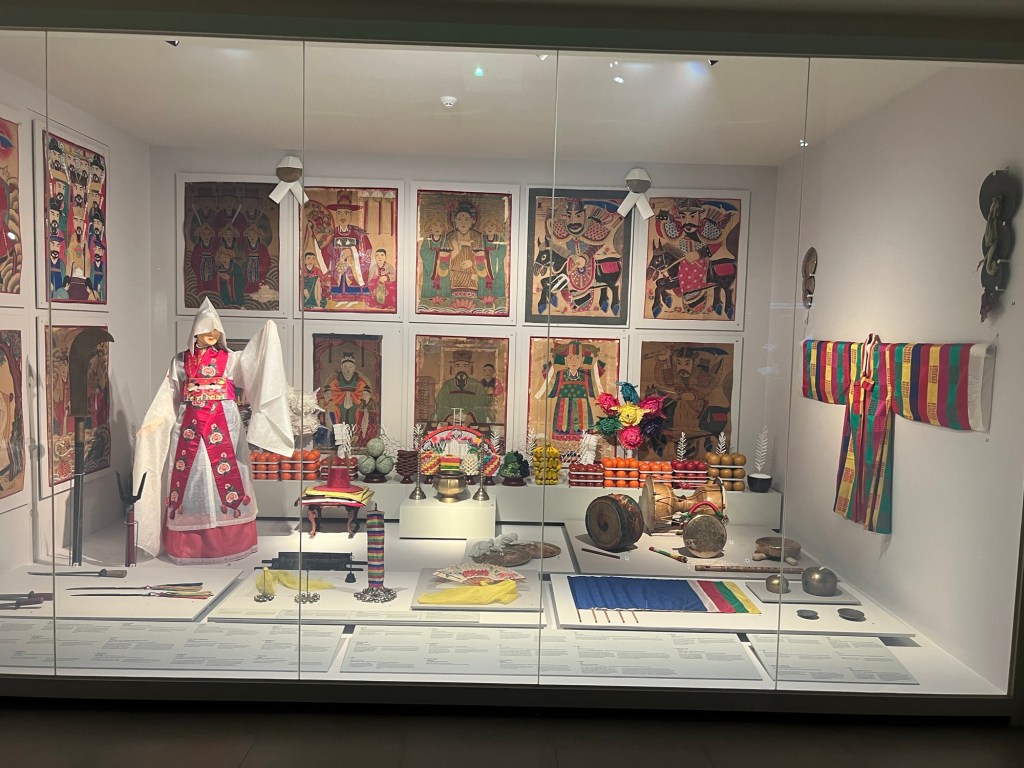
From there Andy kept up the pace and visited the National Folk Museum of Korea, a free exhibition space documenting the history of the country and its traditions.
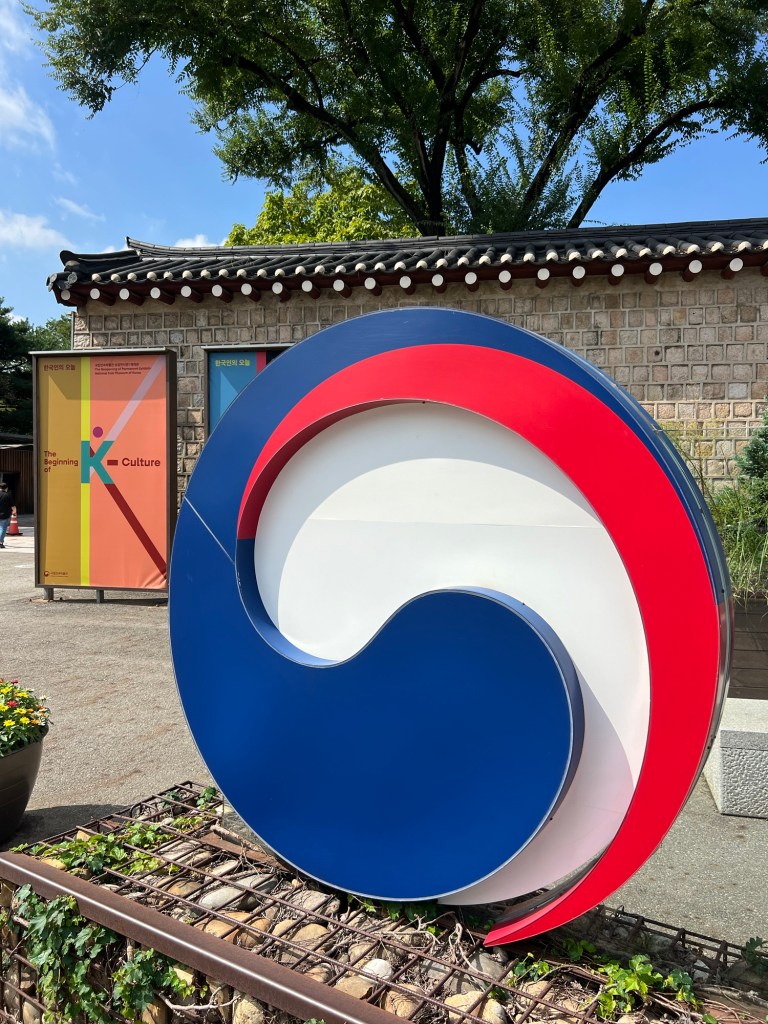
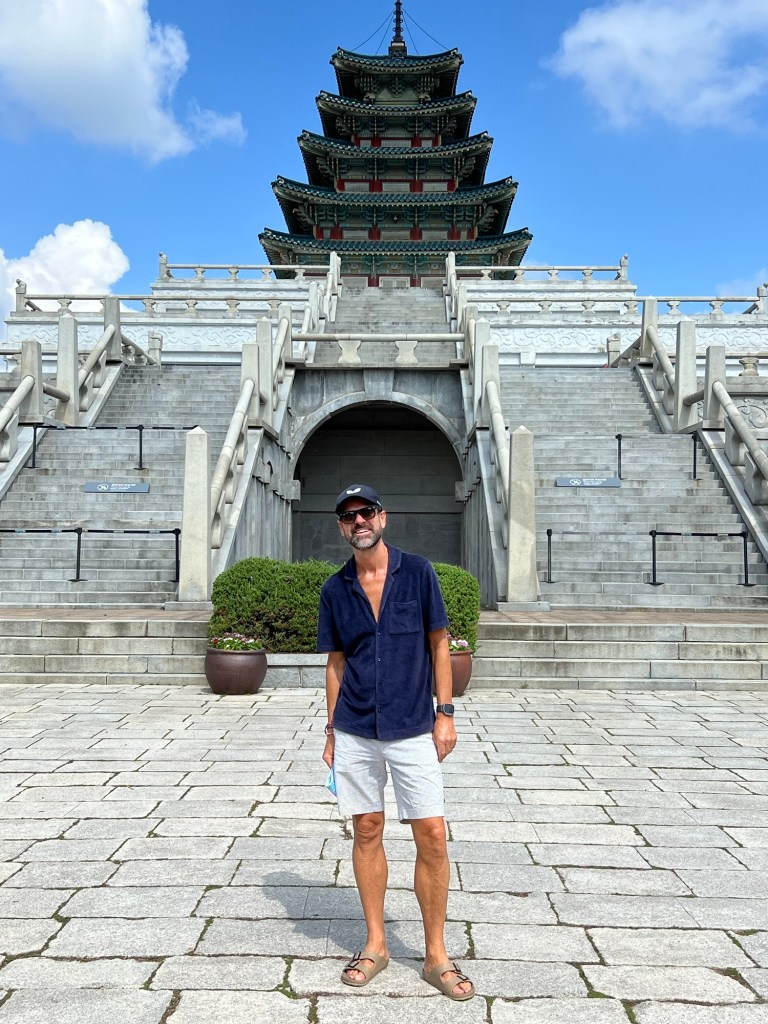
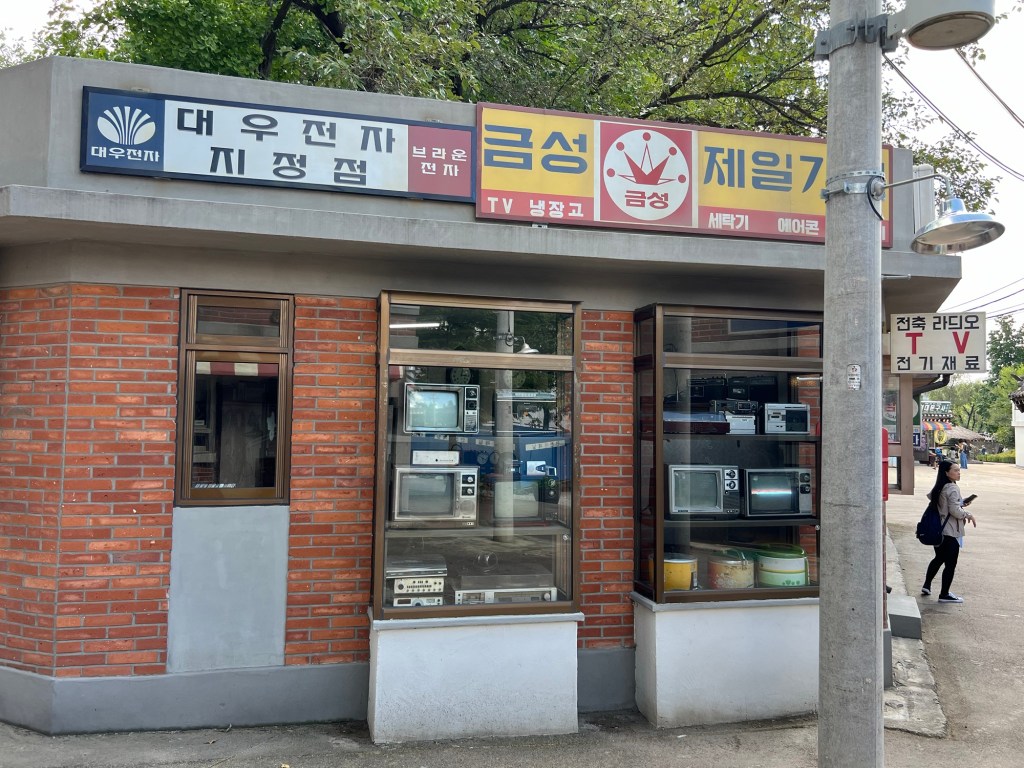
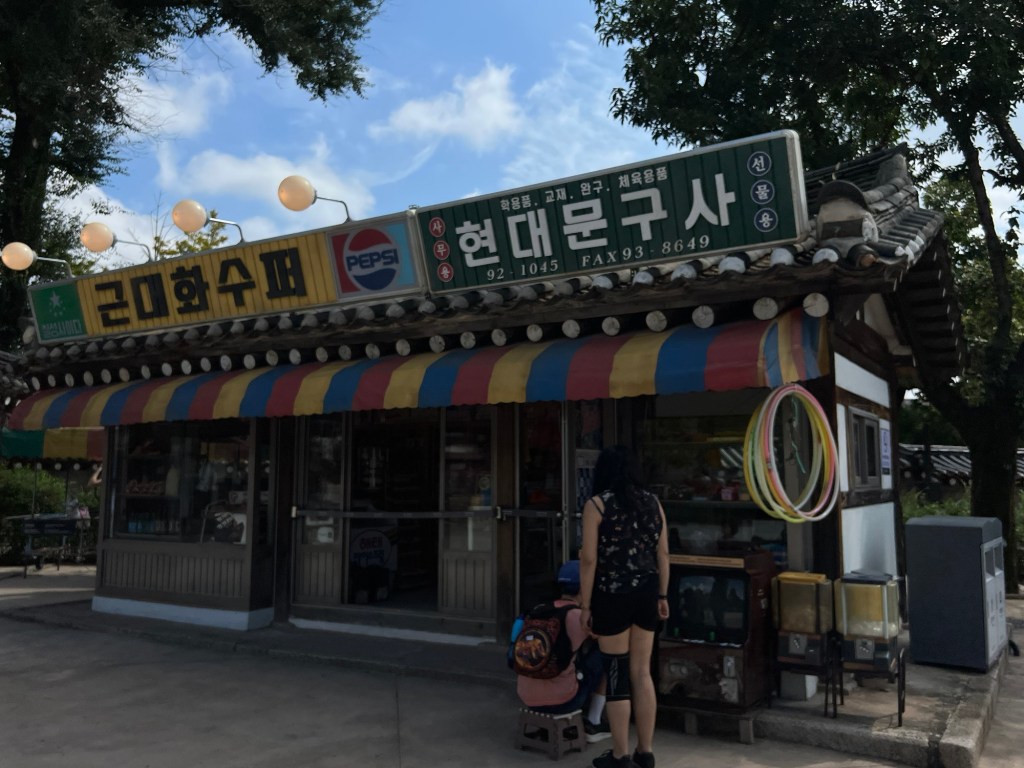
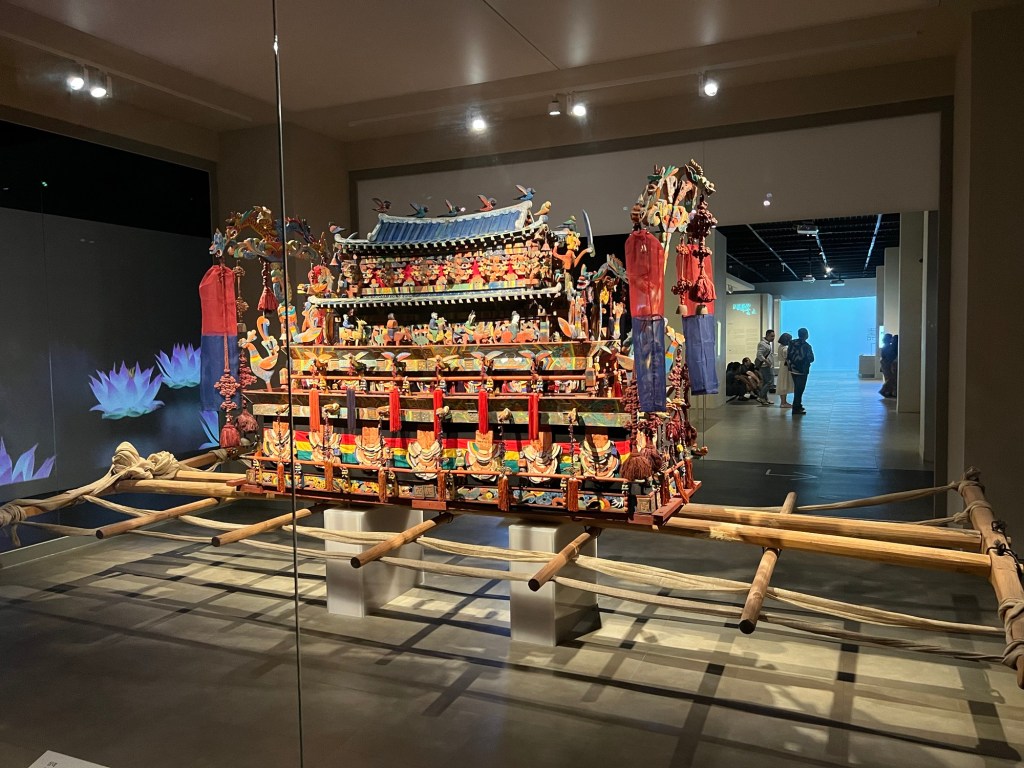
The museum space was pretty quiet, but others were missing out as there was lots to see and Andy could have spent the rest of the afternoon taking in the various exhibitions. Instead it was a whistle stop tour taking in a few of the key displays.

It was then time to return to Gyeongbokgung Palace and see the grounds and summer pavilion.
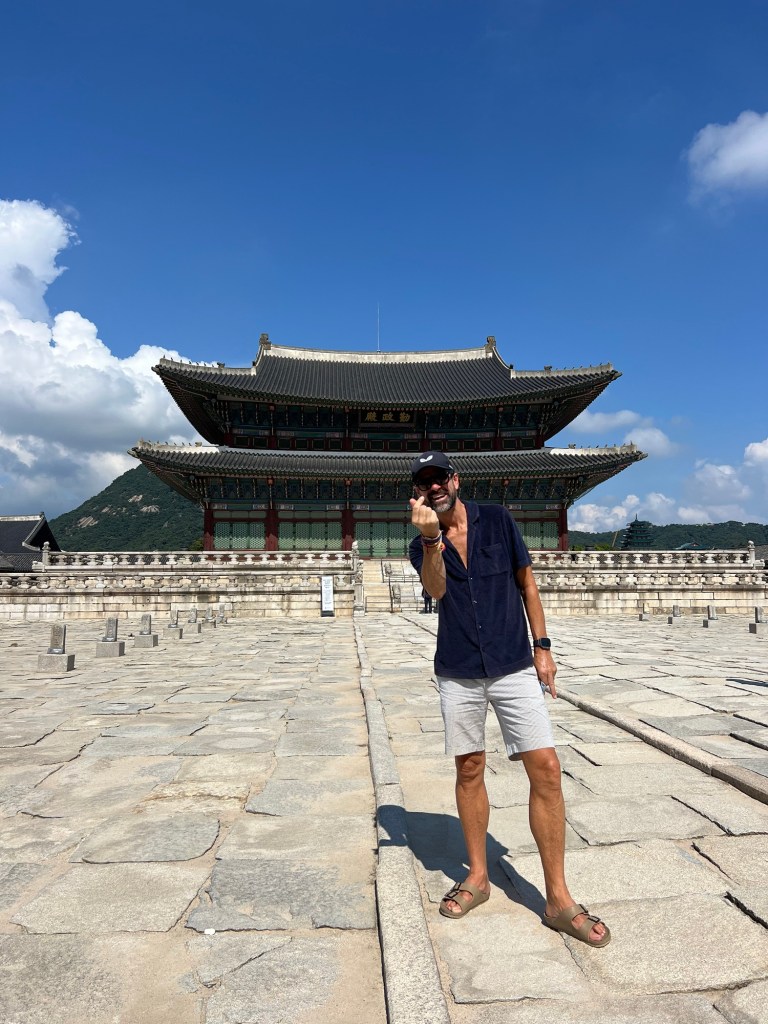
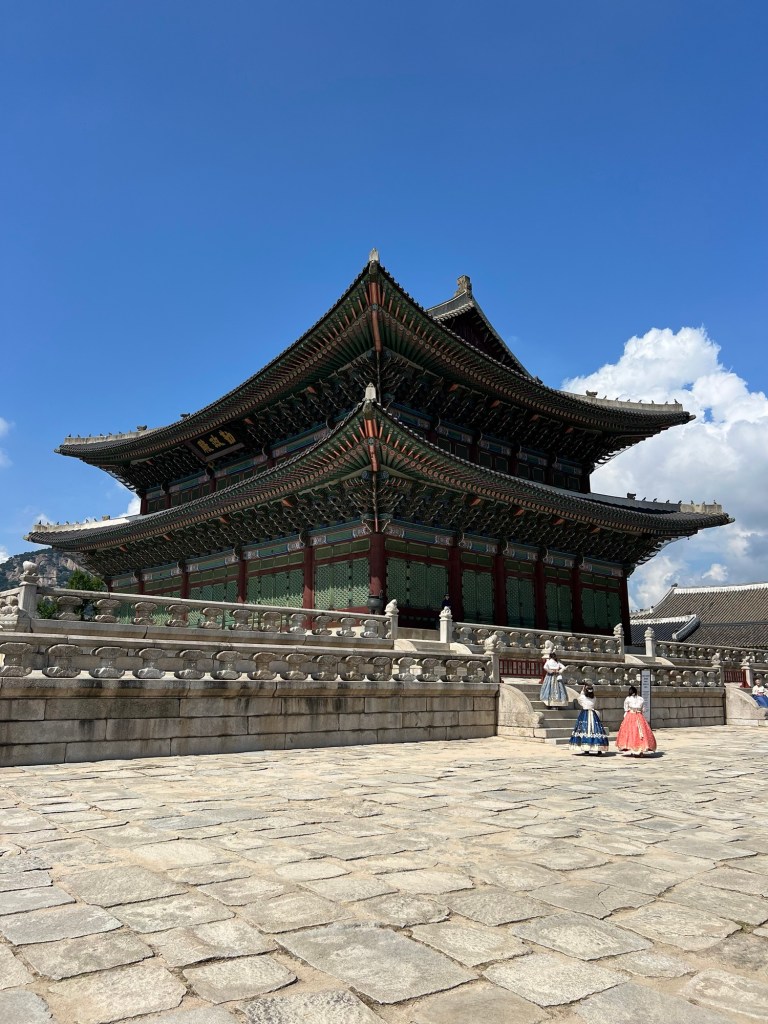
The buildings in the palace are all restored reproductions of the original buildings, with the originals having been destroyed initially by the invading Japanese in the 16th century and again when they annexed the country in 1910, until the end of WWII in 1945. The exteriors are so incredibly detailed, although there is less to be seen in the internal spaces, even so it’s an incredible sight and on a massive scale.

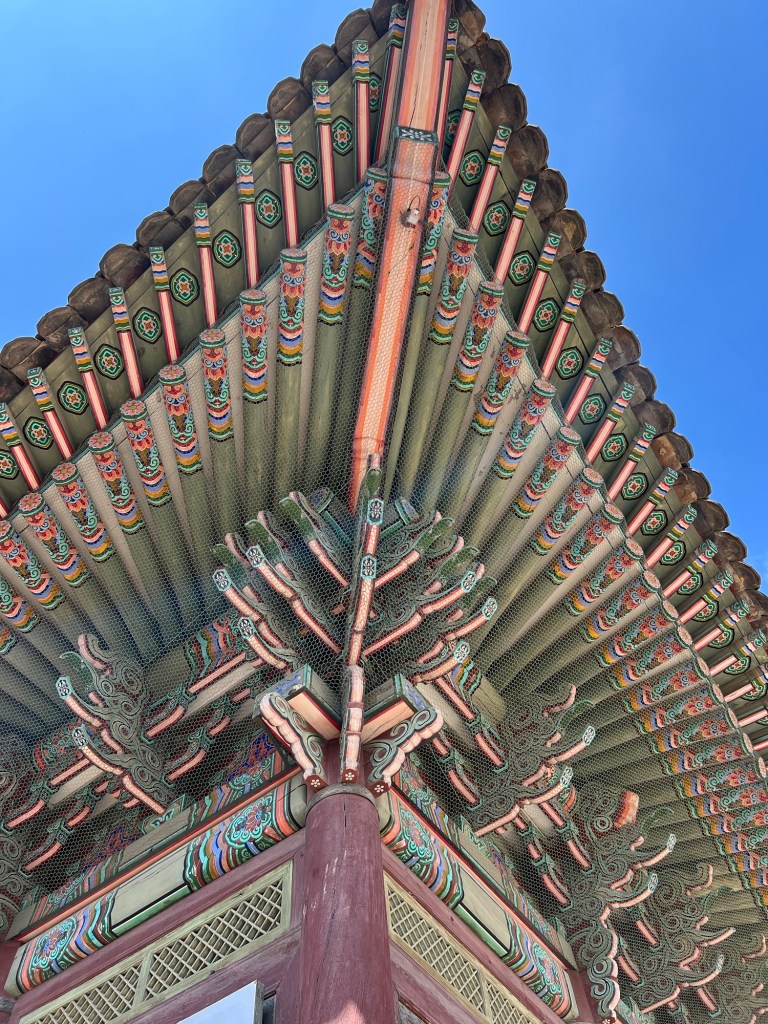
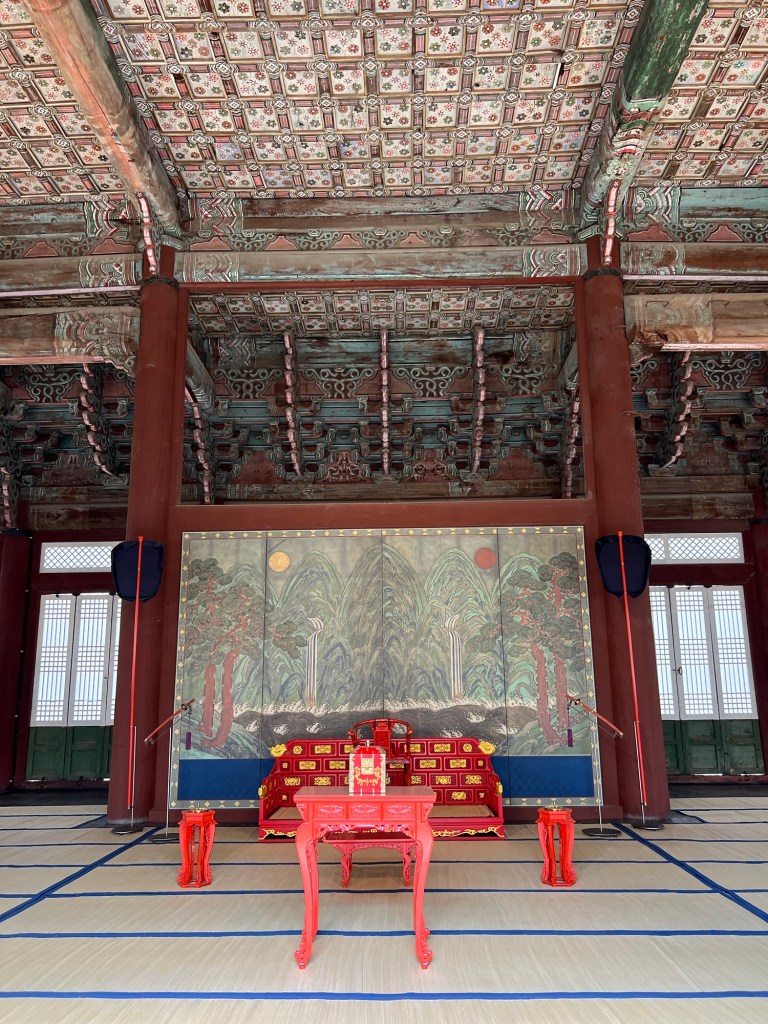


The palace grounds are immense and comprise over 5,000,000 sq ft of royal buildings and entertaining spaces.
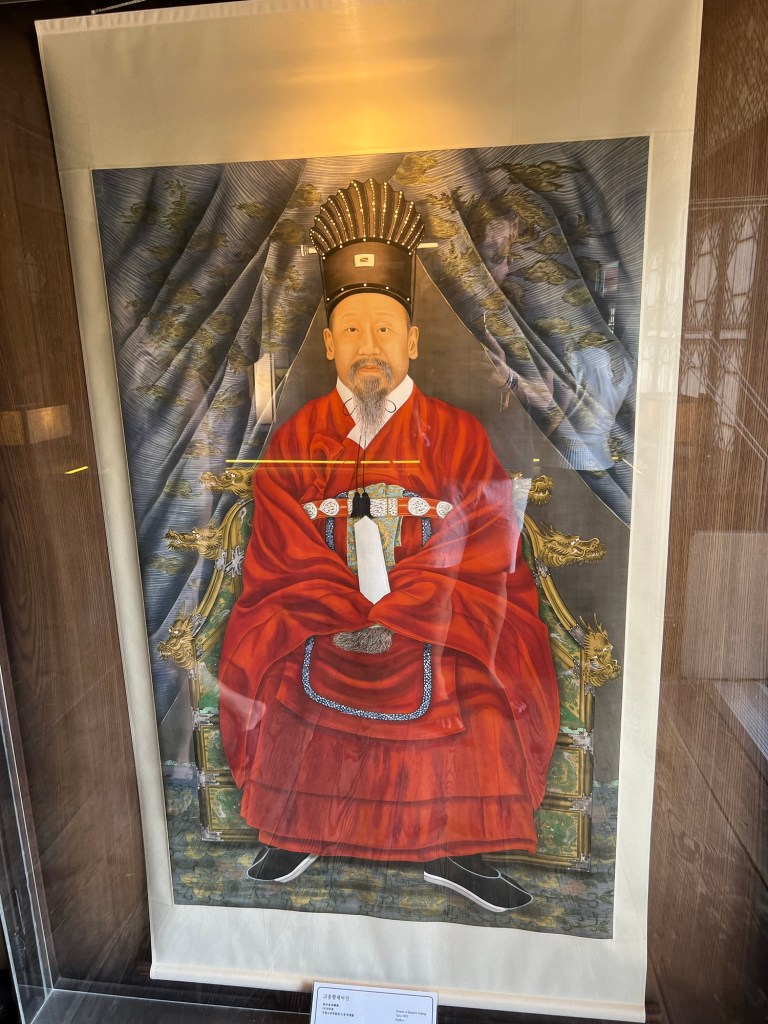
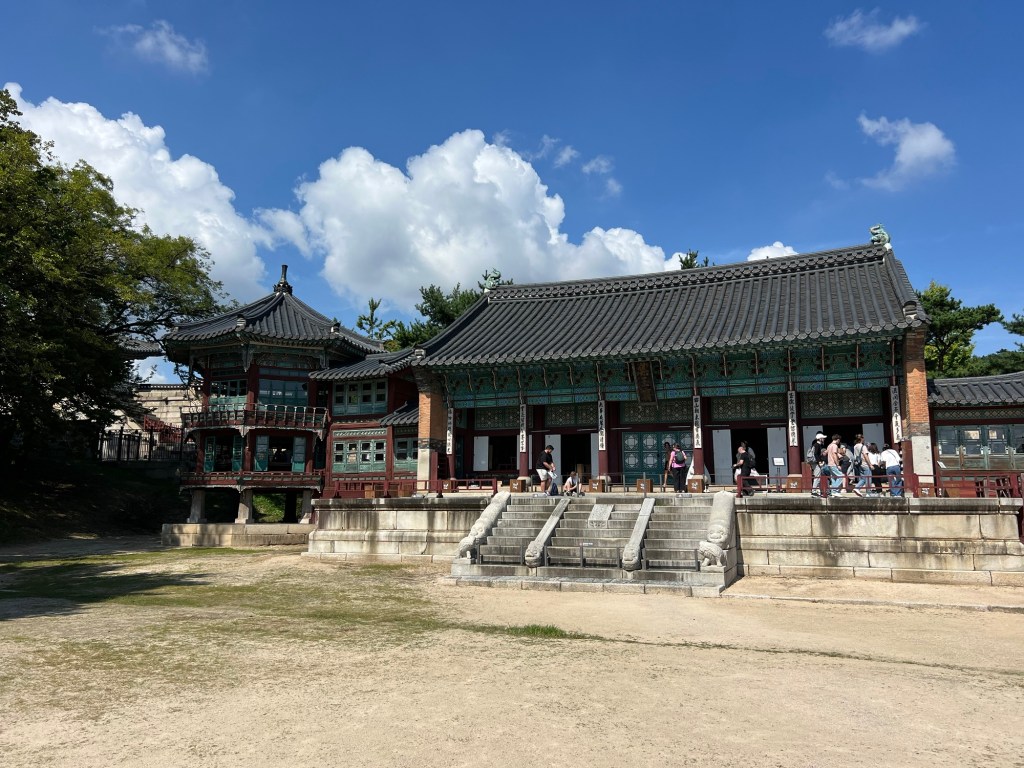
Gyeonghoeru, also known as Gyeonghoeru Pavilion, is a hall used to hold important and special state banquets during the Joseon Dynasty. It’s almost 10,000 square feet and open to the elements sitting within the middle of a lake, very imposing and a beautiful construction.



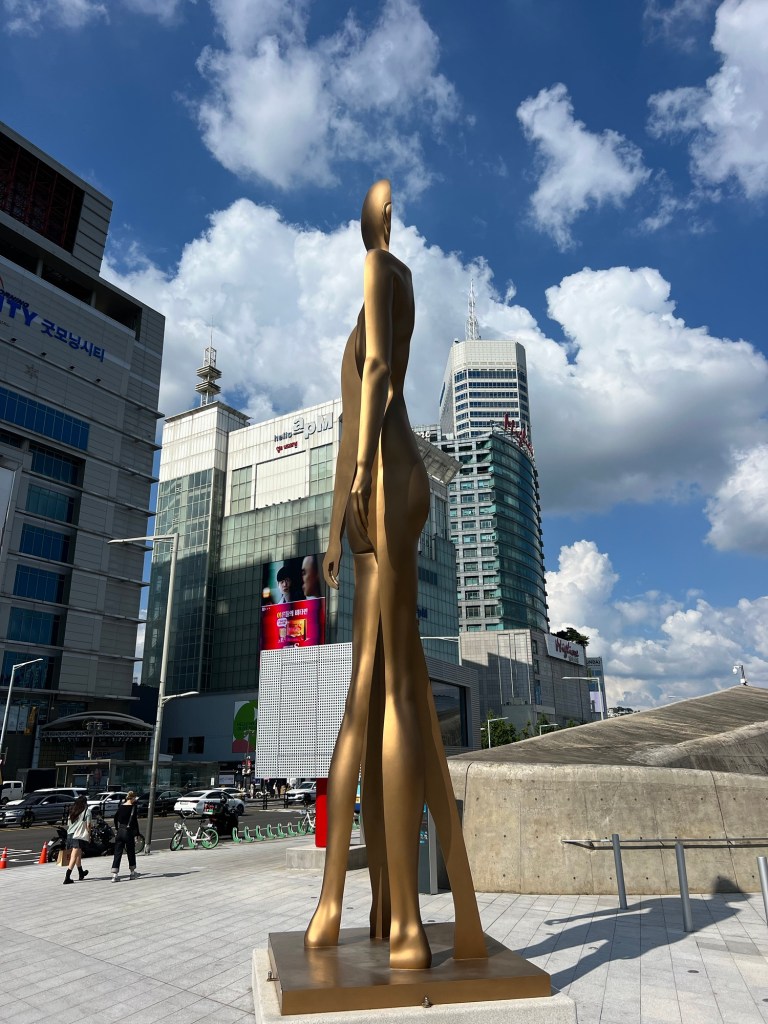
After leaving the palace for the second time, Andy headed to Dongdaemun Culture Park, a distinct change from the traditional landscape seen so far today.
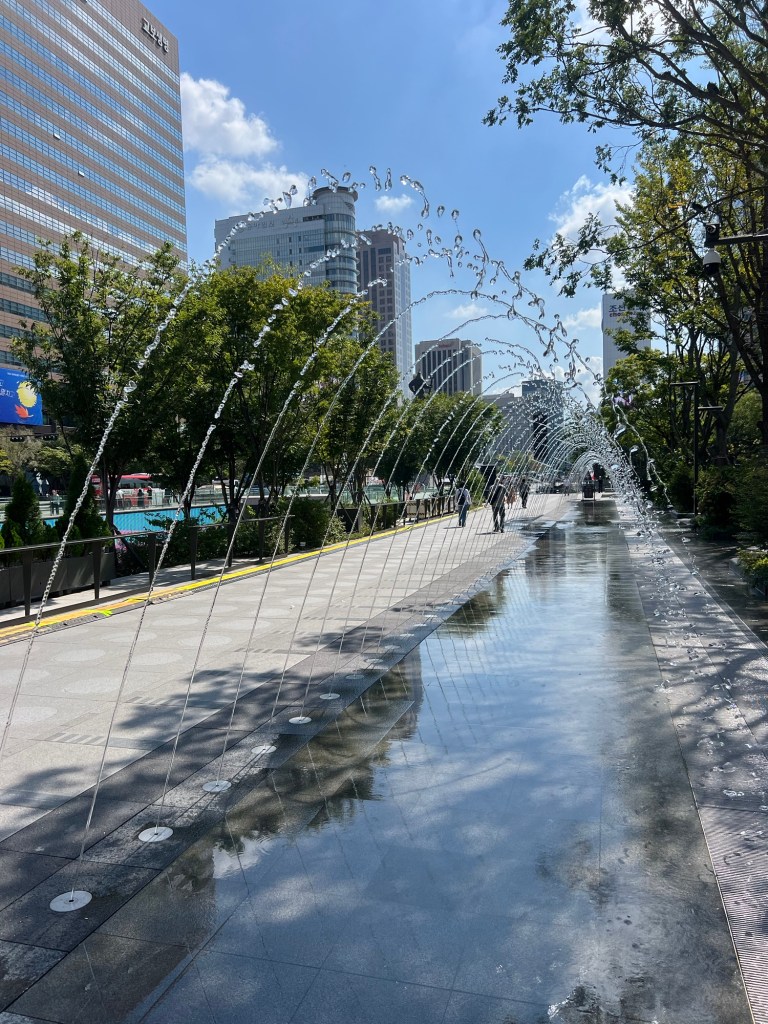
The park contains a number of attractions, including the Yigansumun Water Gate, the Dongdaemun History Museum, the Dongdaemun Excavation Site Exhibition Hall, Dongdaemun Stadium Memorial, an event hall, and the Dongdaemun Design Plaza. It was the latter where Andy spent the next couple of hours taking in the modern and tech environment.
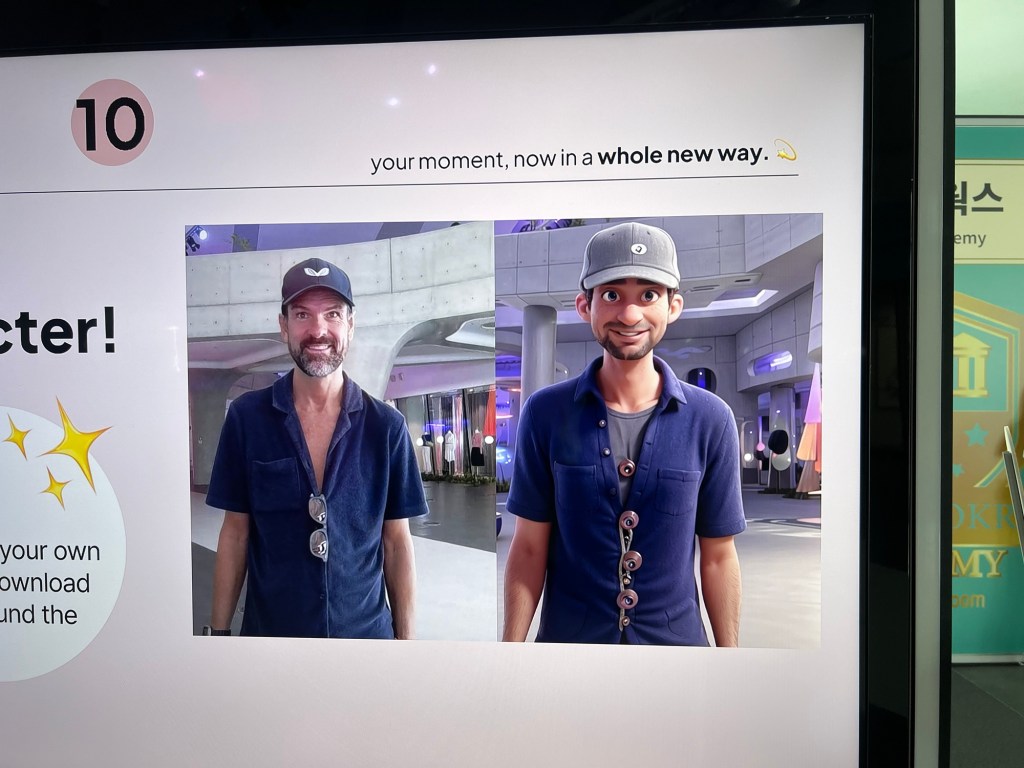
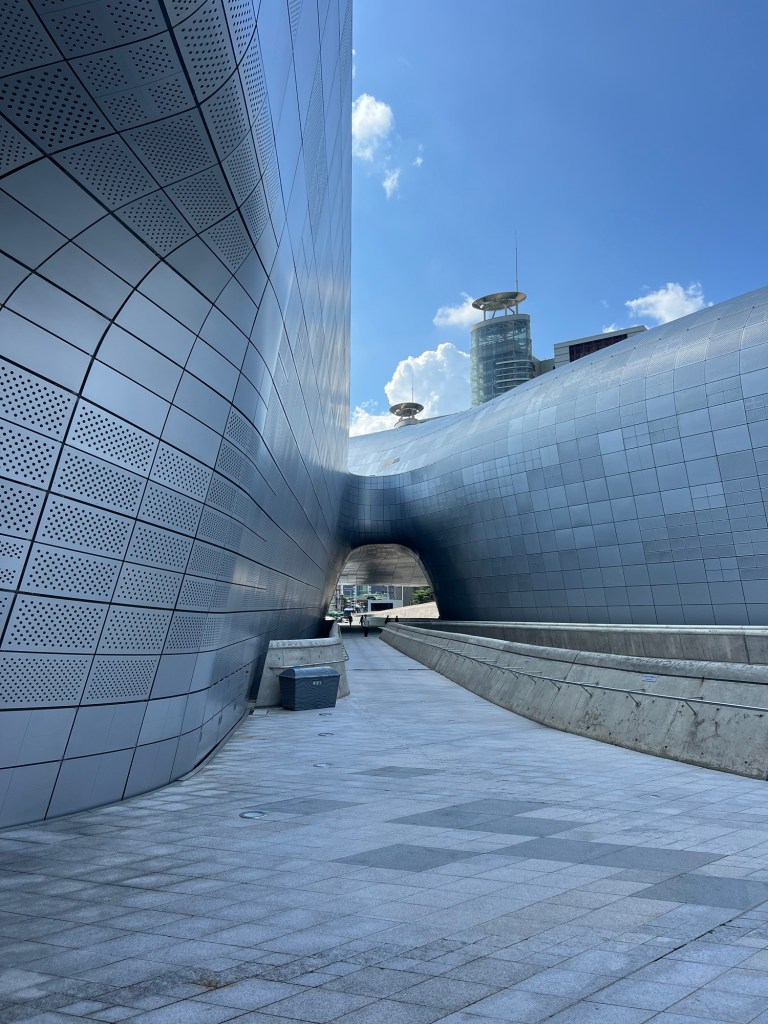
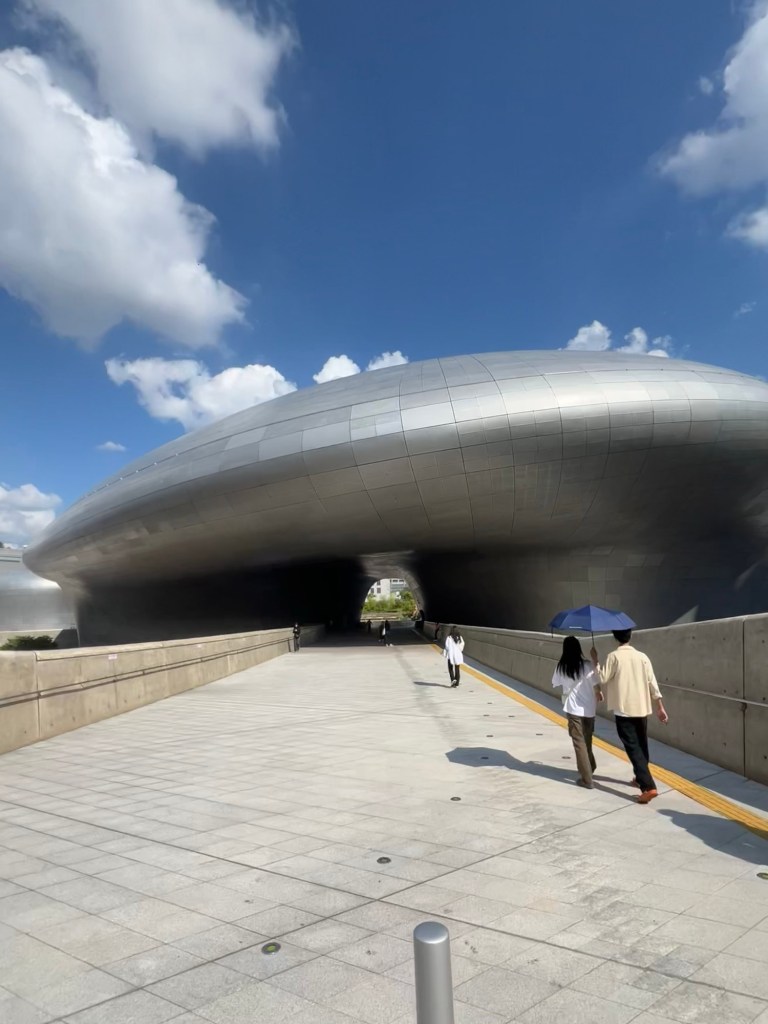
The design plaza is a major urban development with a distinctively neofuturistic design characterised by curving forms of elongated structures. The landmark is the centerpiece of South Korea’s fashion hub and popular tourist destination. It features a walkable park on its roofs, large global exhibition spaces, futuristic retail stores, and restored parts of the Seoul fortress.

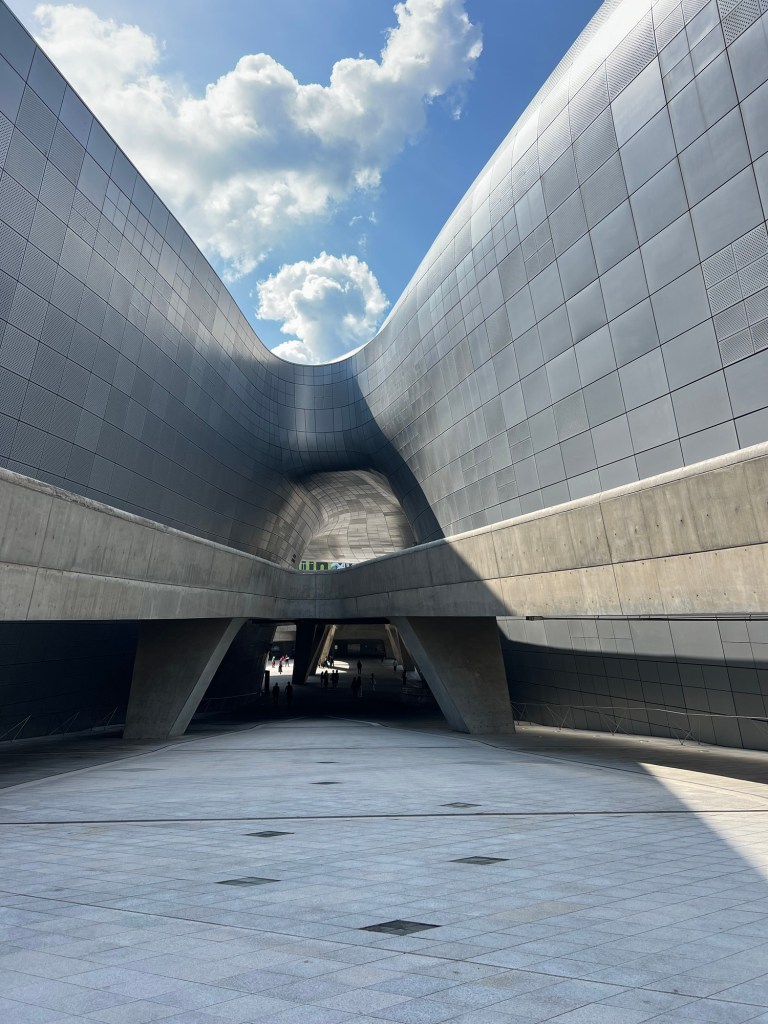

One of the free exhibits was a curved walkway bridging 4 levels with art displays on a scale that made you rethink how you see things. Very impressive and cool.
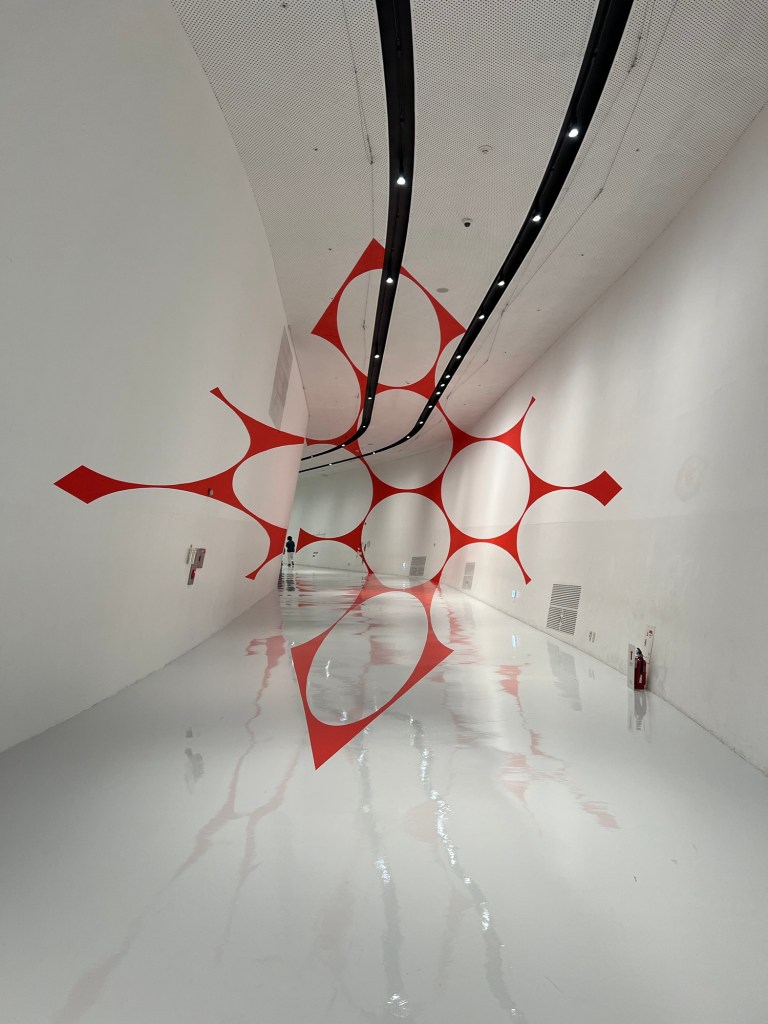
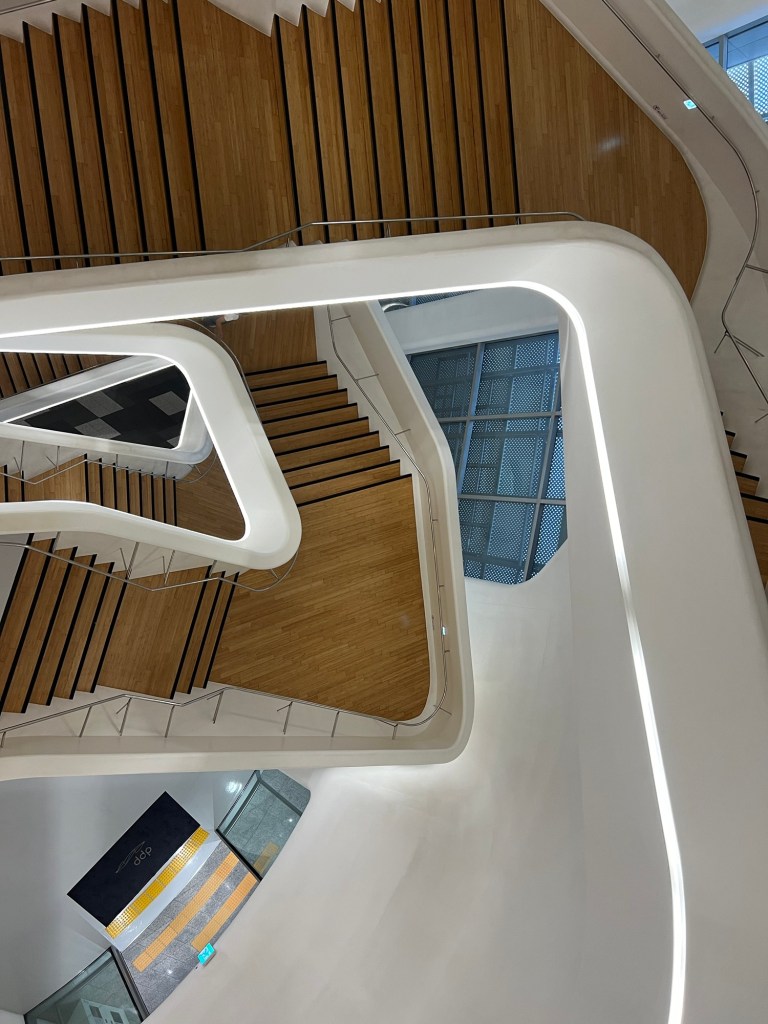
Designed as a cultural hub in South Korea’s largest fashion district, the DDP is composed of undulating surfaces that resemble the flow of liquid and allow flexibility in space. Impressive stuff and designed by British architect Zaha Hadid.
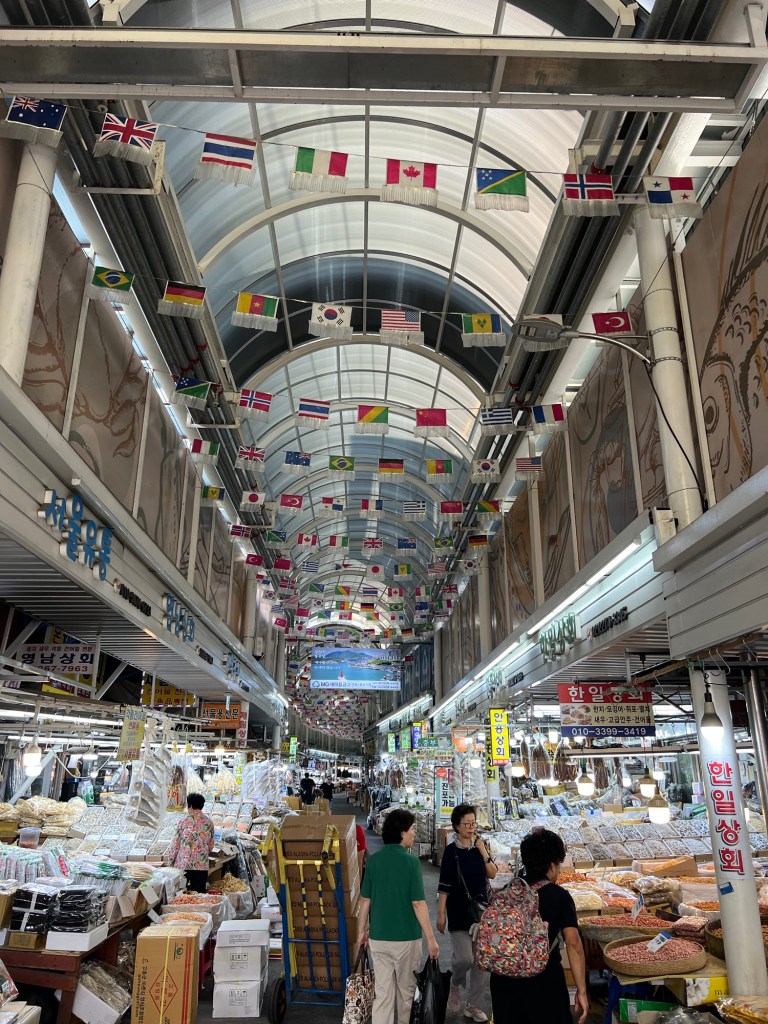
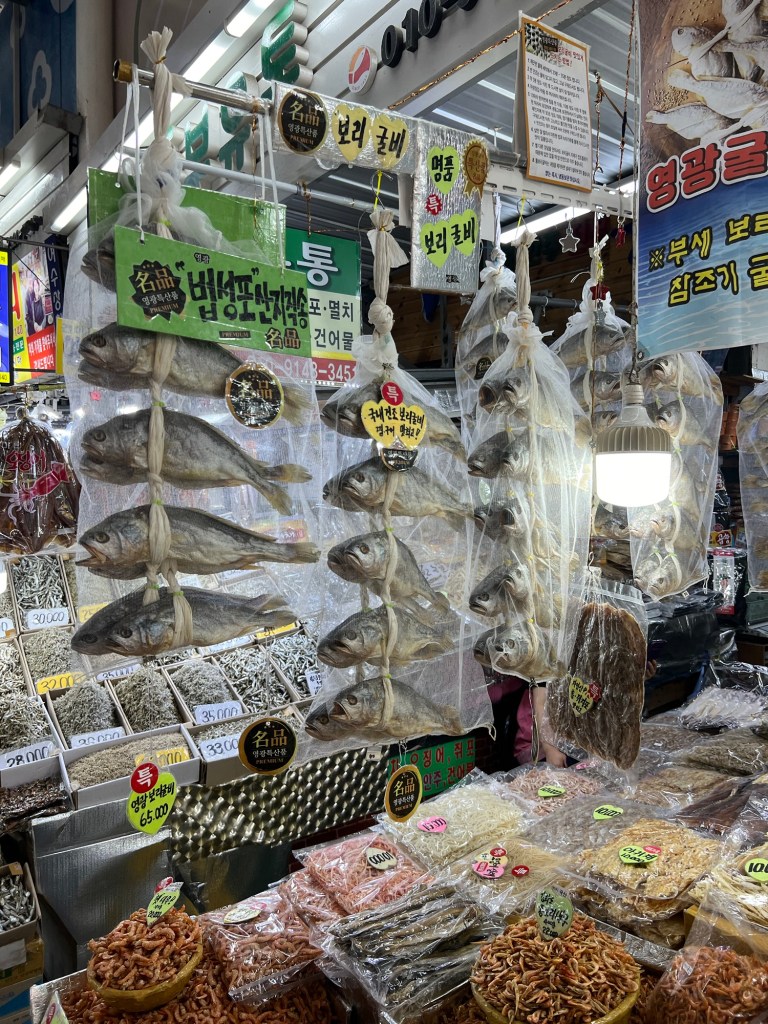
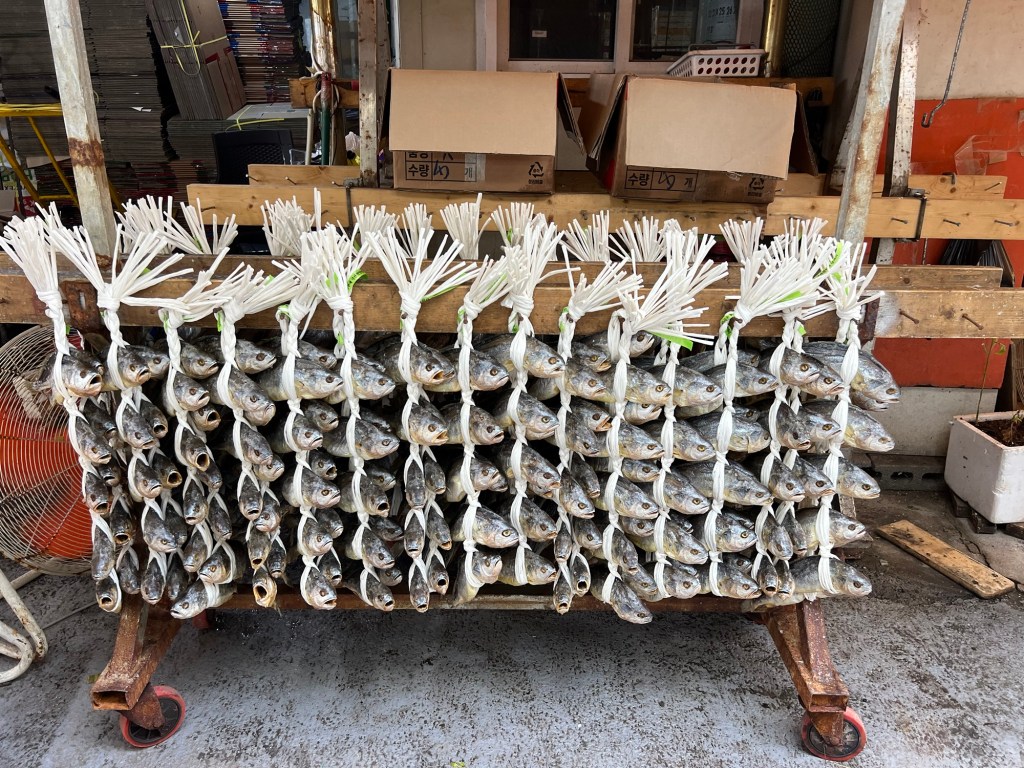
Going back to the hotel for a well earned break, Andy popped into the fish market in Dongdaemum and came across a range of delicious fish straight out of the sea. Well almost.
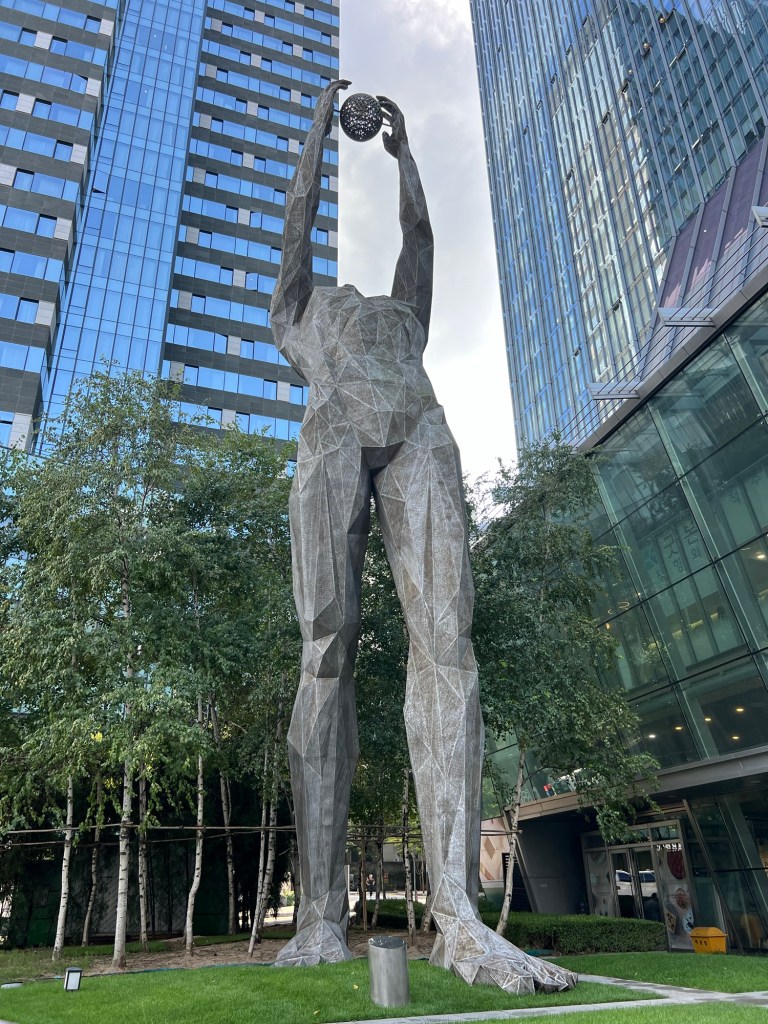
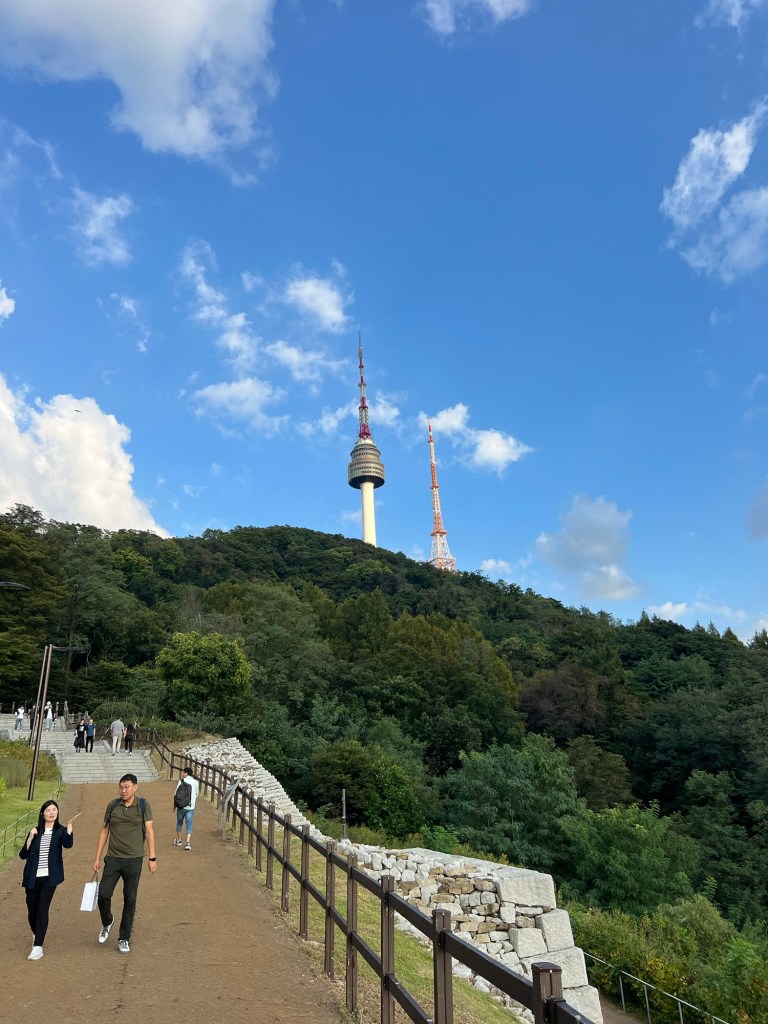
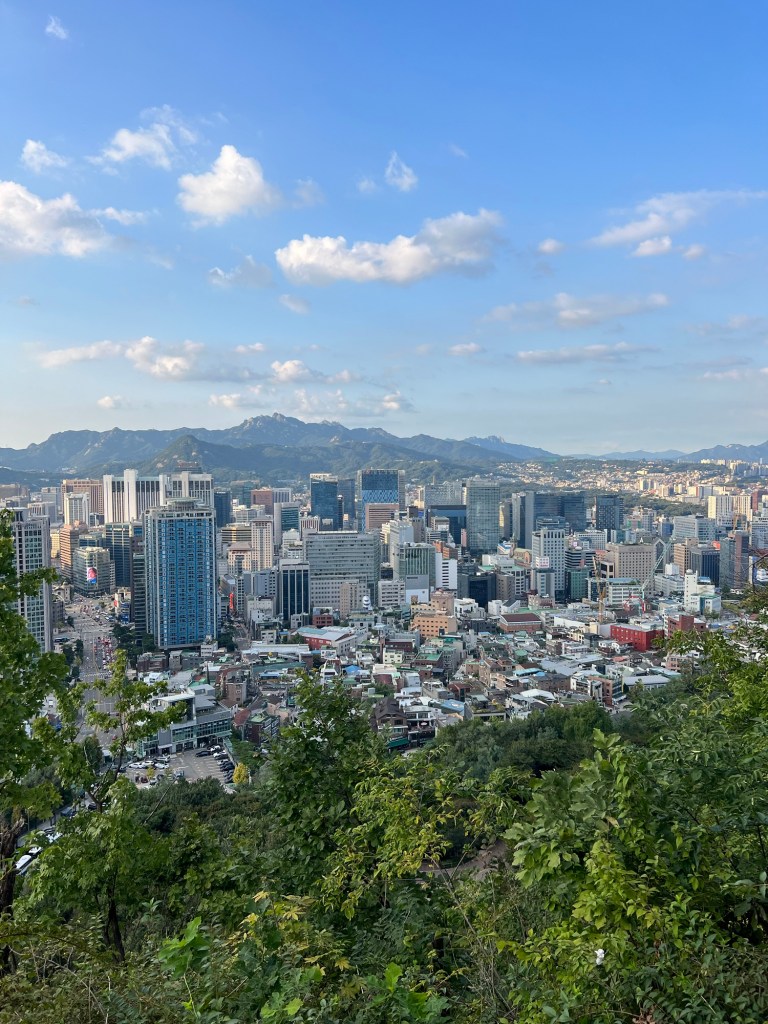
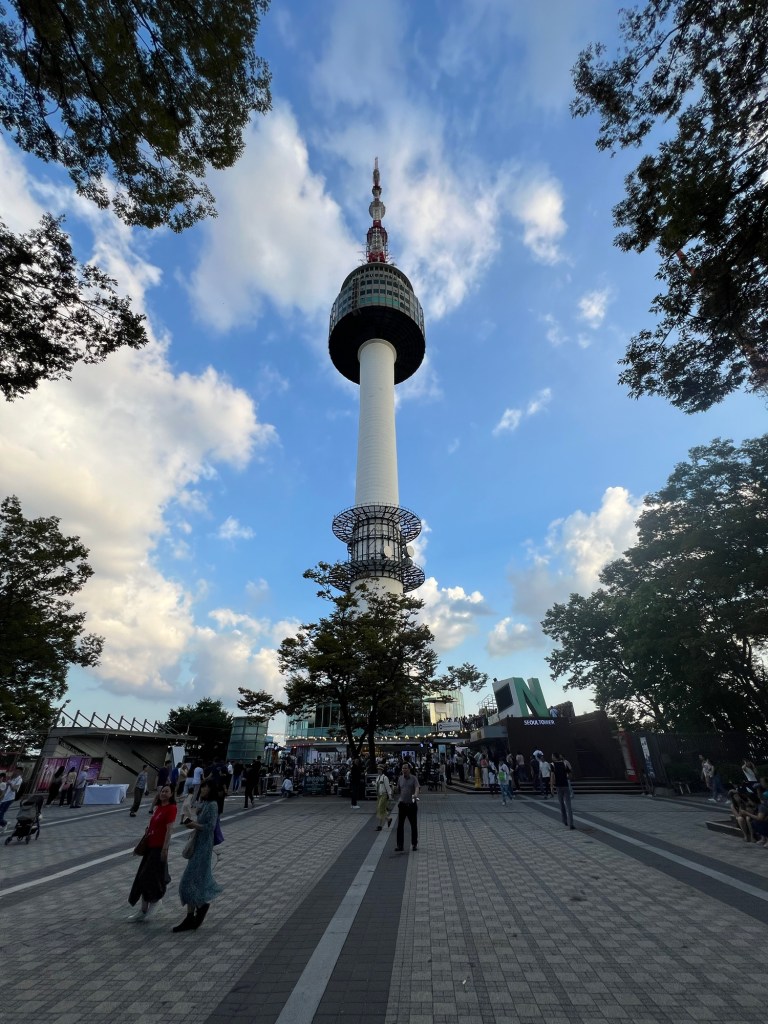
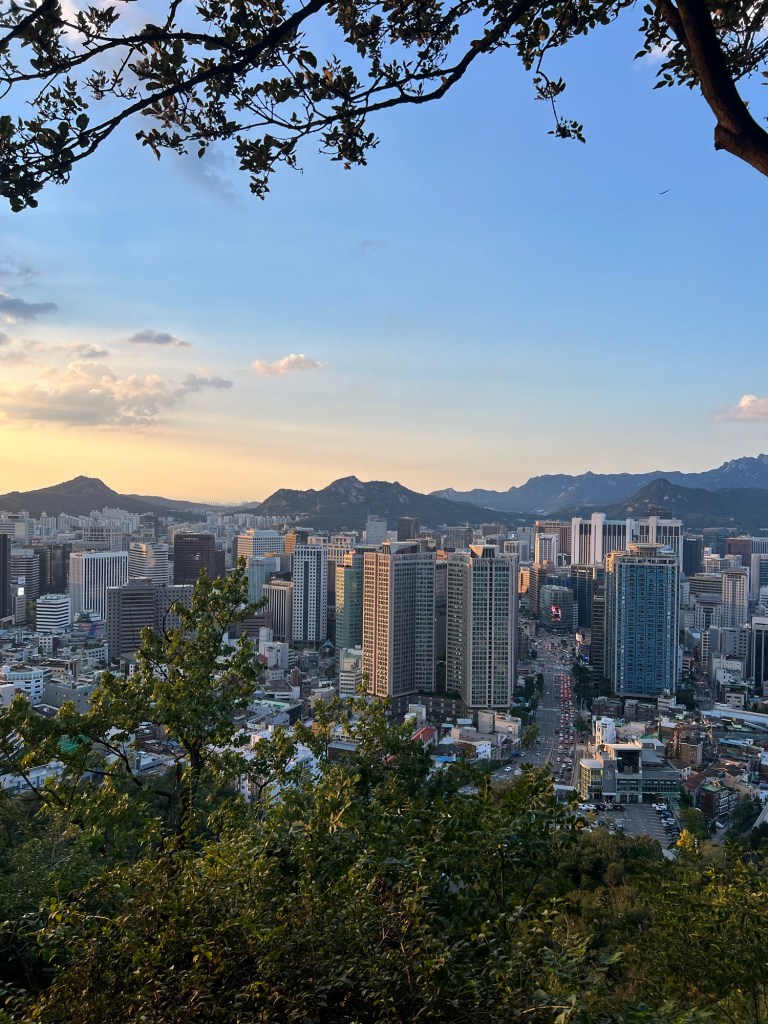
After checking up on Michelle, there was just enough time to climb up to the base of Namsan Seoul Tower to take in the sunset across the city.
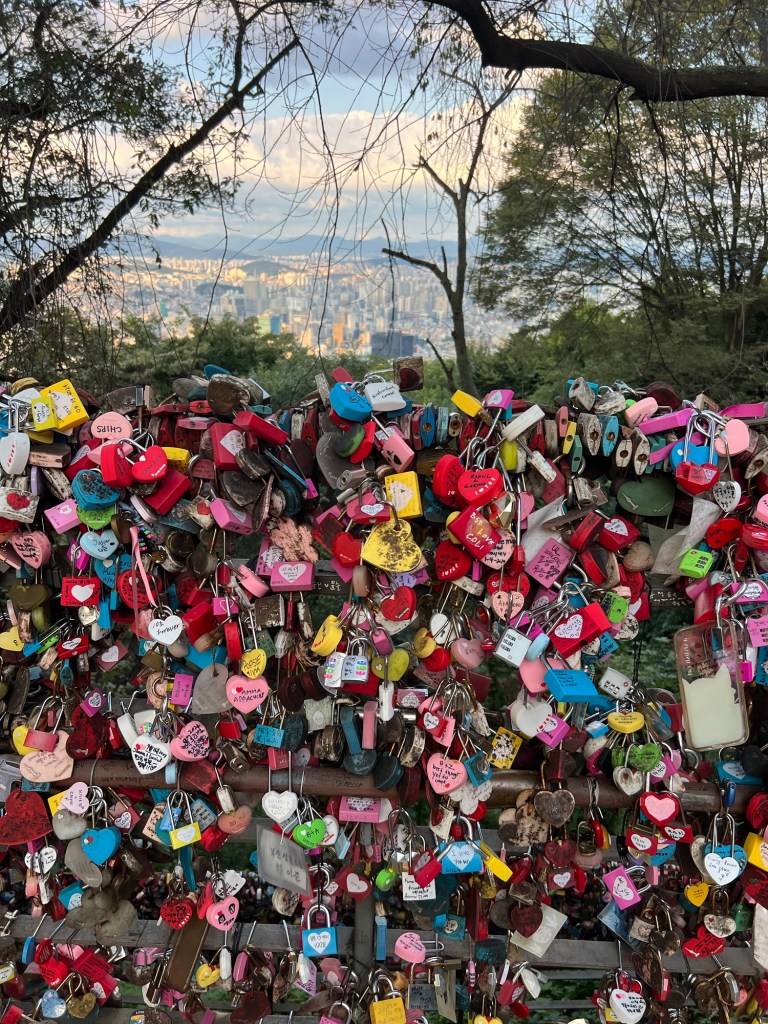
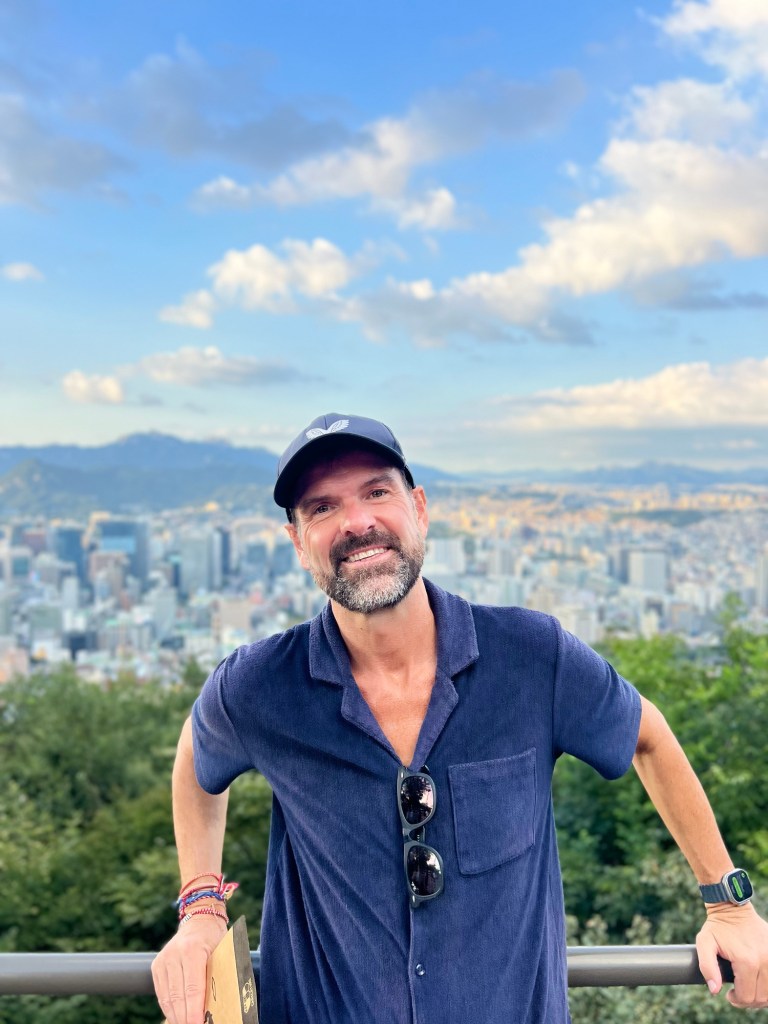
The walk of around 40mins takes you through the busy streets of Myeongdong past the cathedral, before you start a climb up steep streets, before arriving at the cable car station. Feeling particular fit and keen to keep going, Andy walked up to the summit involving some 1800 steps. The views on the way up looked out across the city in all directions and gave a Birds Eye view!
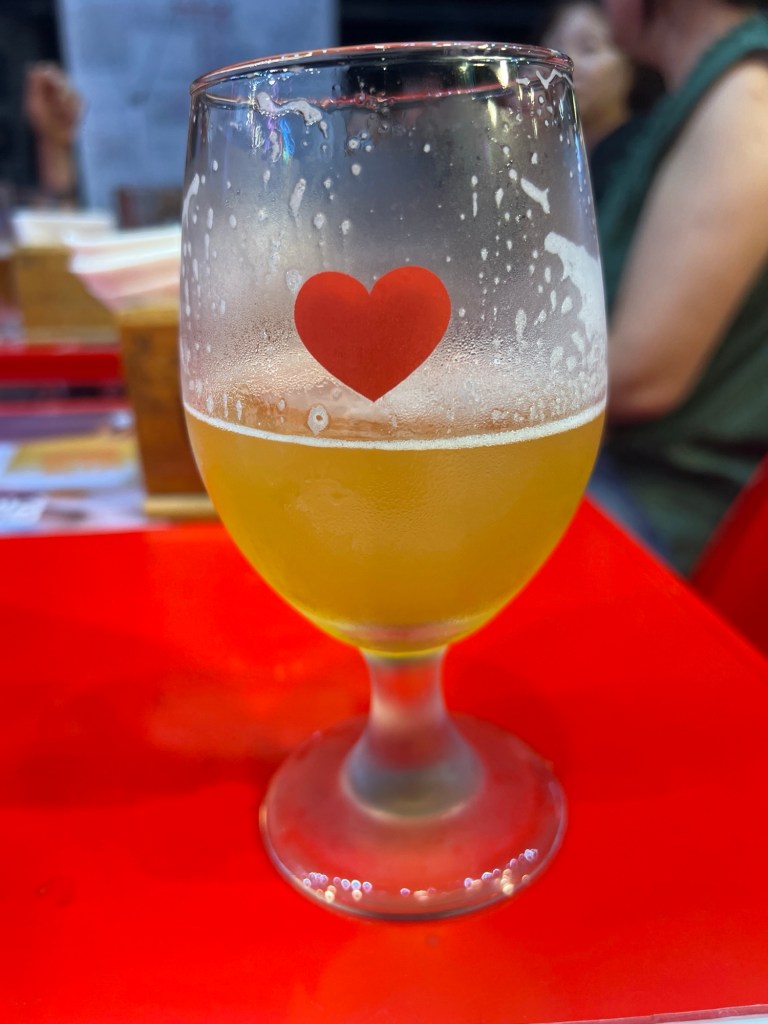
On the way back it was time to take in a chilled glass of IPA and some Chimaek, essentially chicken and beer!!
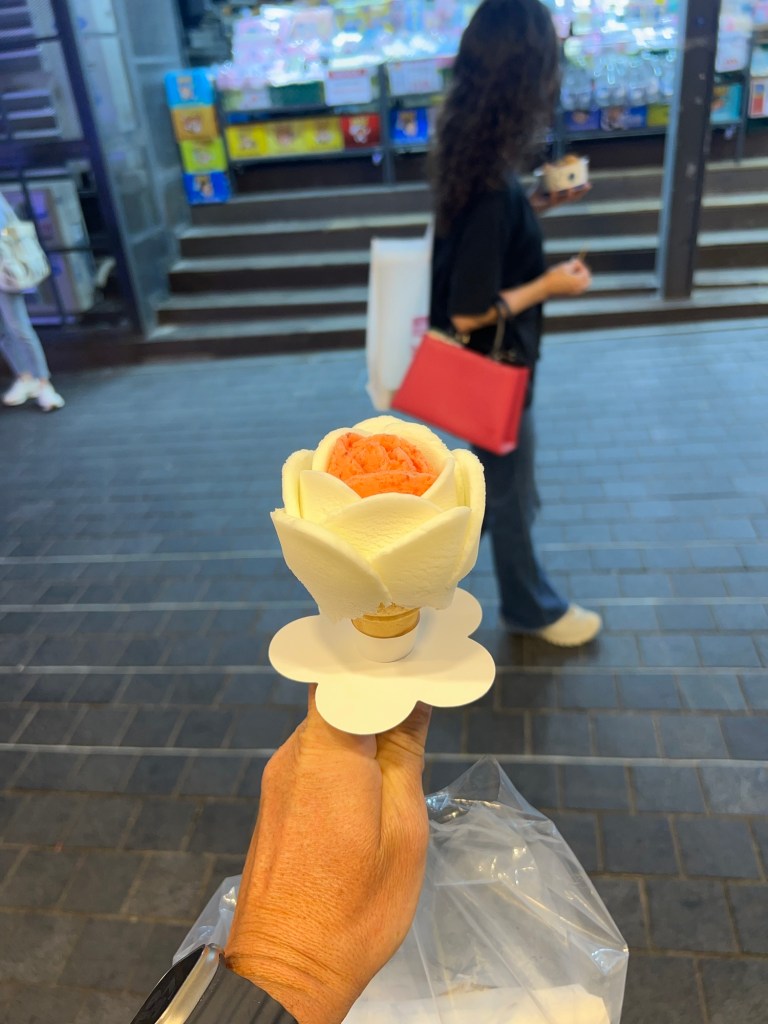
After dinner it was time for dessert and a yogurt ice cream.
After a busy day walking the streets and taking in the various sights Seoul has to offer, it was time to return back to the hotel and check on Michelle and see if the sleep has helped her to feel a little better.
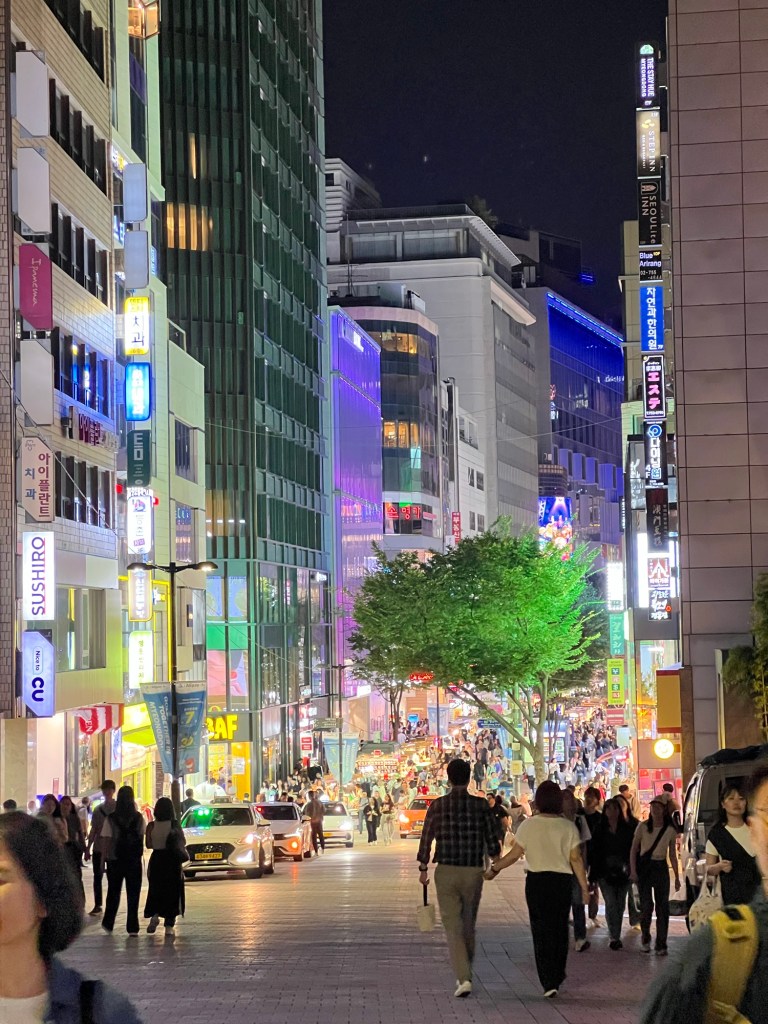
The walk back to the hotel passed the Myeongdong Cathedral which looked stunning in the night sky.

Assuming Michelle is feeling better tomorrow we plan to take a trip down to Gangnam for a walking tour of the area, a visit to Lotte Tower to see the sights from 120 floors up before grabbing a sunset cruise on the Hangang River before dinner in the trendy area of Hongik. Until then.
 @travellingwiththeateam