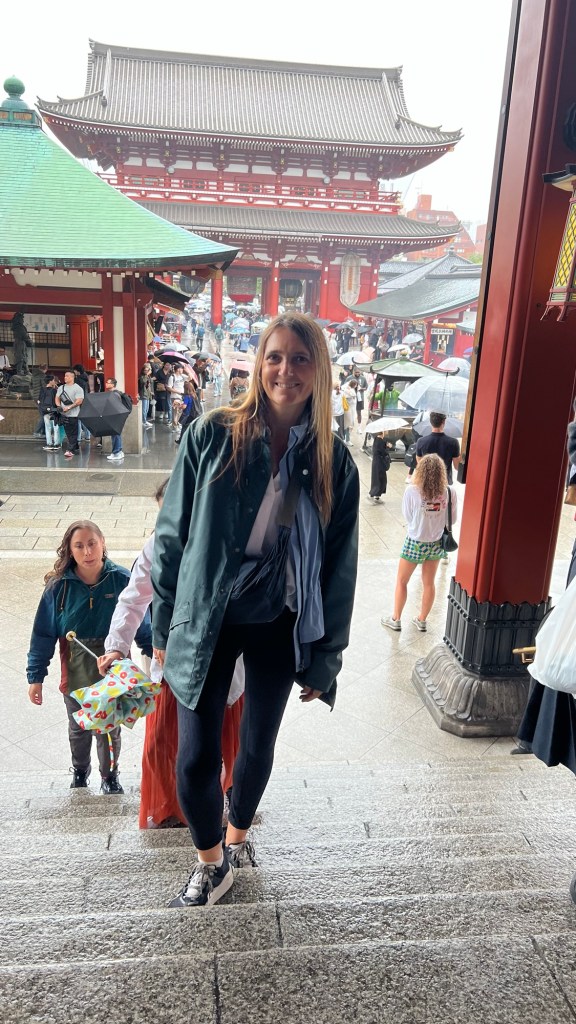
We woke today to find the sunshine gone and a day of rain. This didn’t deter us and we headed into central Tokyo to visit Senso-ji temple, the oldest and most famous Buddhist temple in Japan.
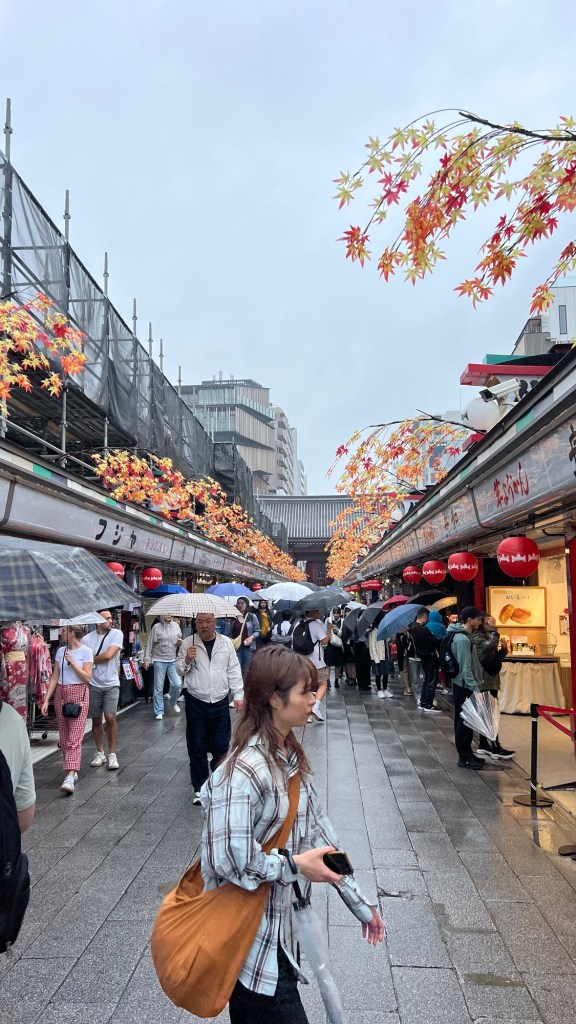
The area of Asakusa is vibrant, and the temple is a significant cultural site, offering a mix of traditional architecture, spiritual practices and of course bustling tourists.
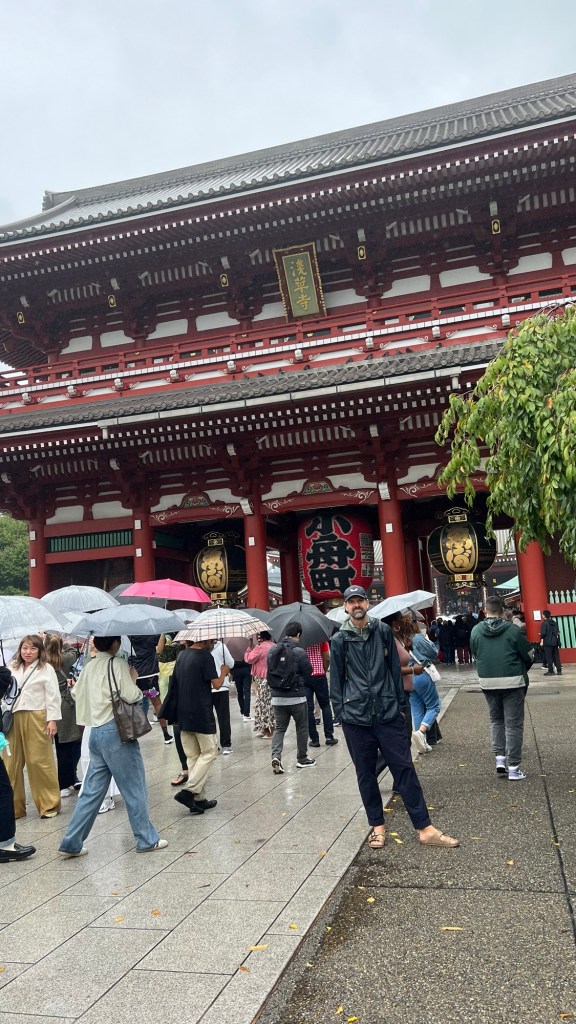
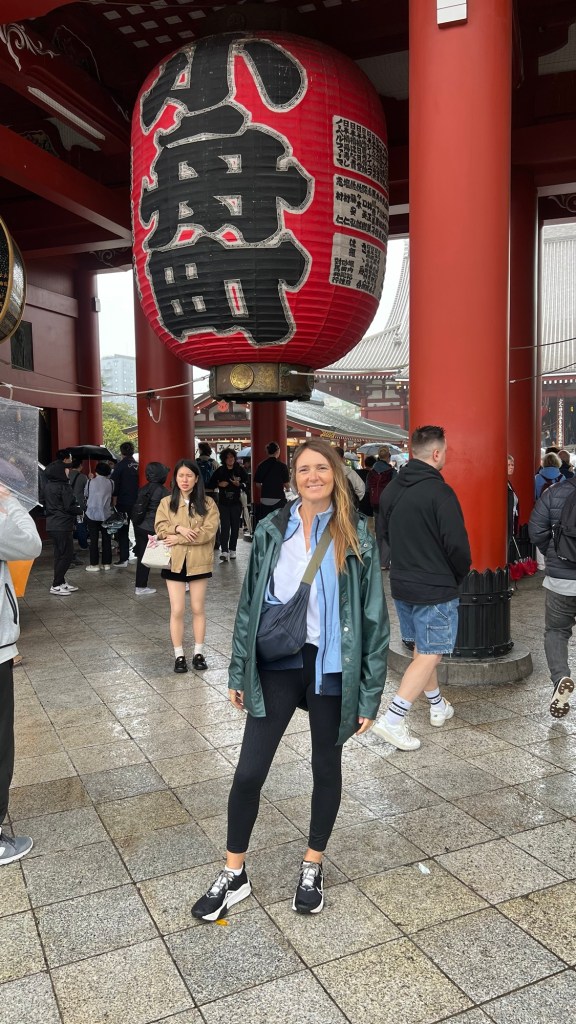
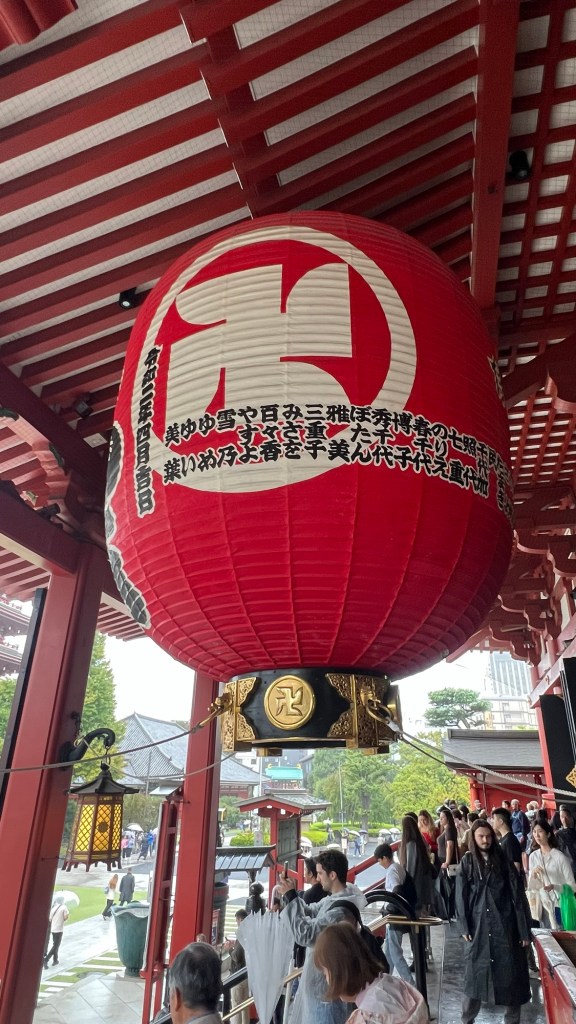
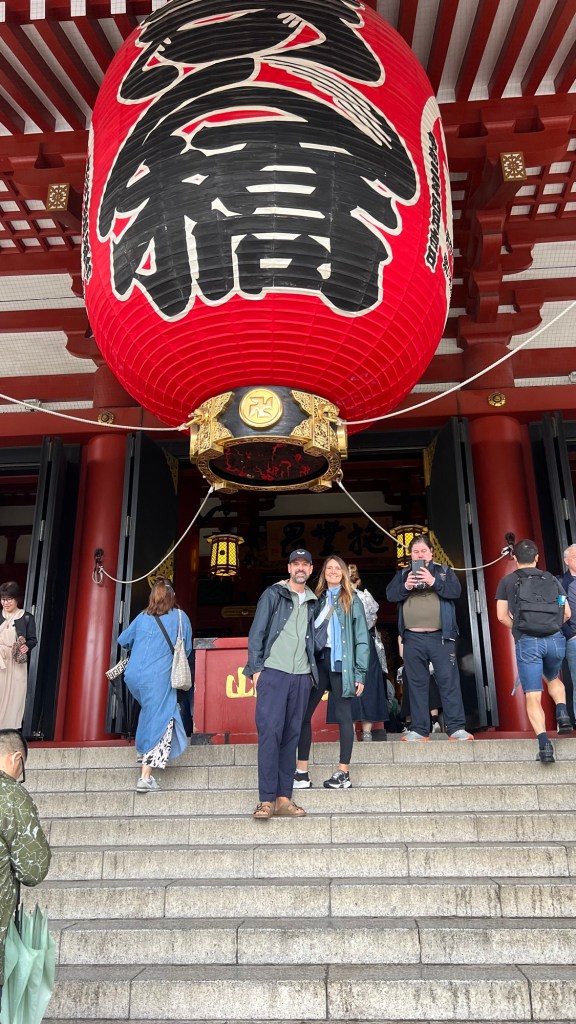
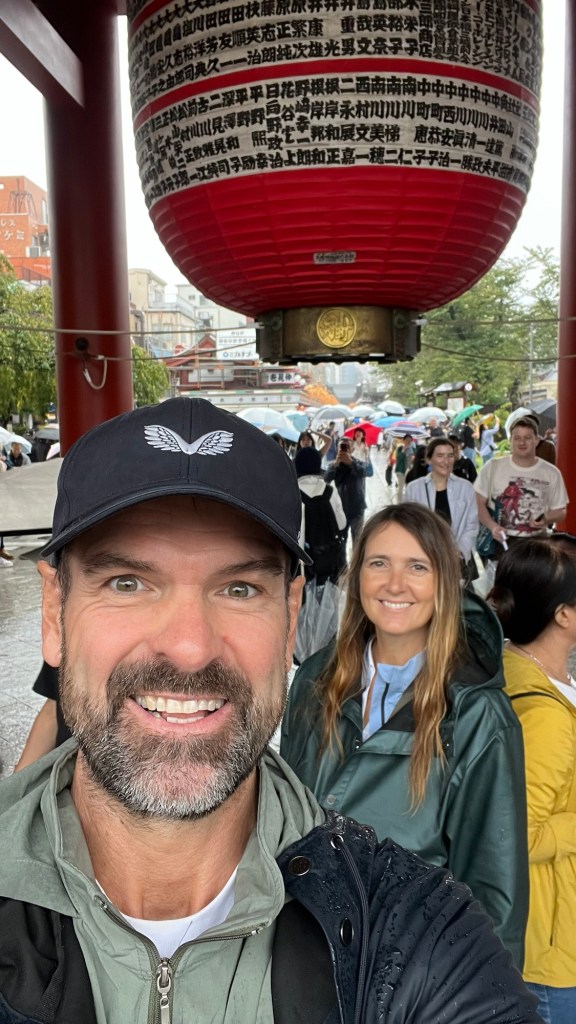
The temple features a striking red entrance gate called the Kaminarimon (Thunder gate), adorned with a massive paper lantern.
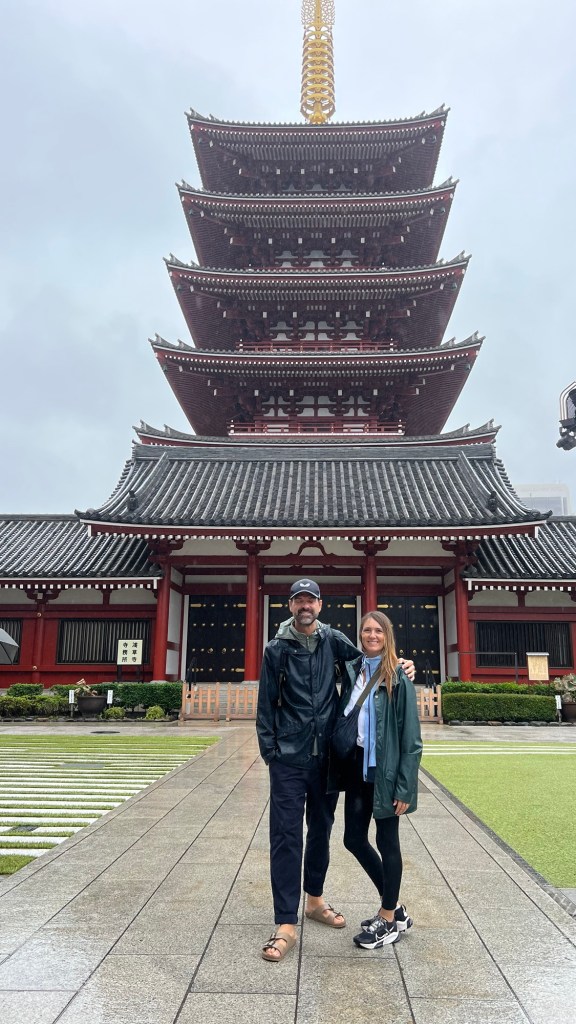
Next door was a beautiful five storey pagoda, another key feature of the temple complex.
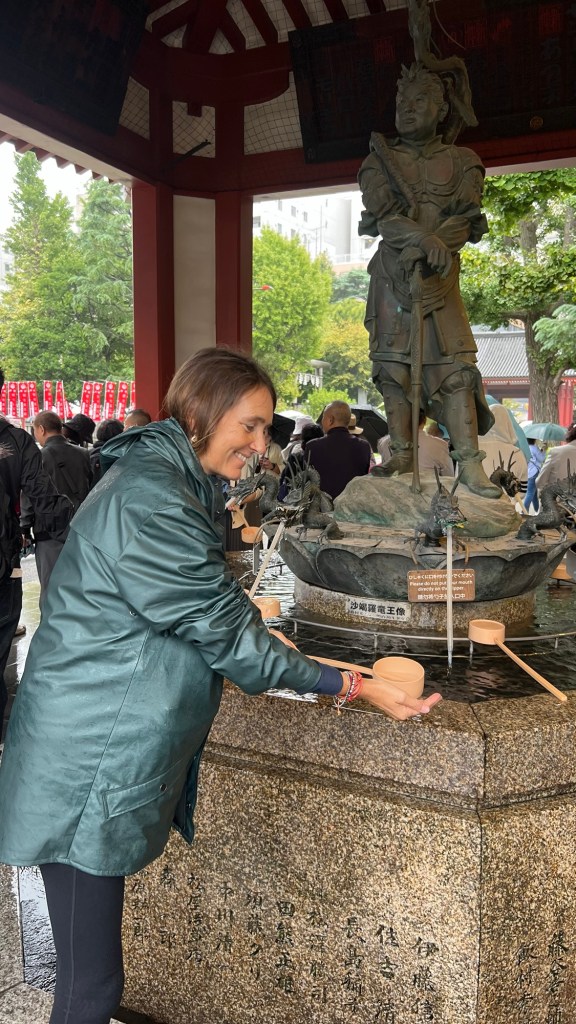
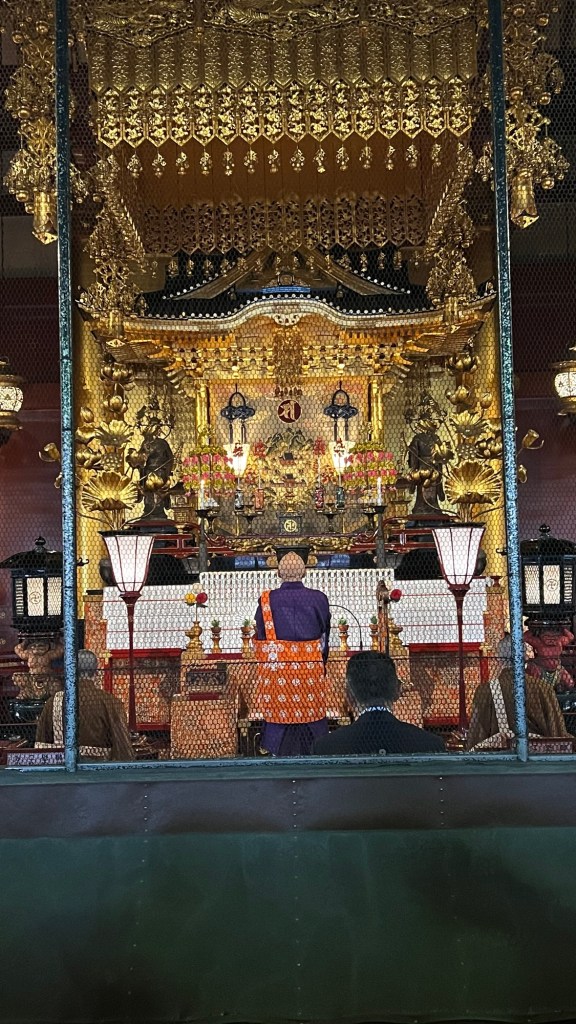
The temple’s main hall is a place for prayer where visitors can offer incense and make wishes. We felt like asking for the rain to stop!
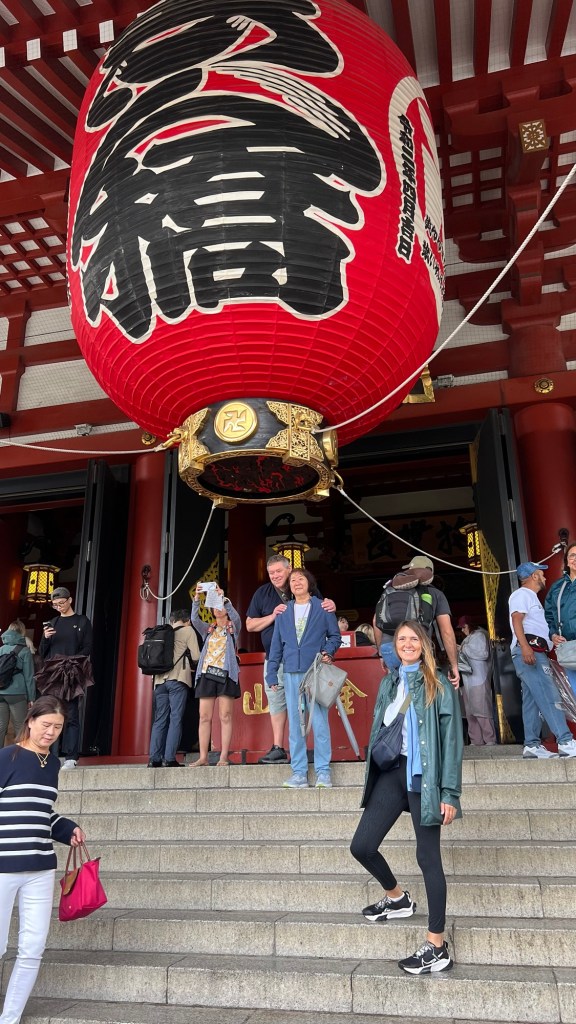
The inner gate, Hozomon leads to the main hall where the statue of Kannon is located.
After leaving the temple we he went to look around Nakamise Shopping Street. The place was lined with small shops selling traditional Japanese souvenirs so Michelle bought a couple of fans as presents. We also had a look at the kimono fabrics and of course the sweets. It’s definitely a must to see and is one of the oldest streets in Japan.
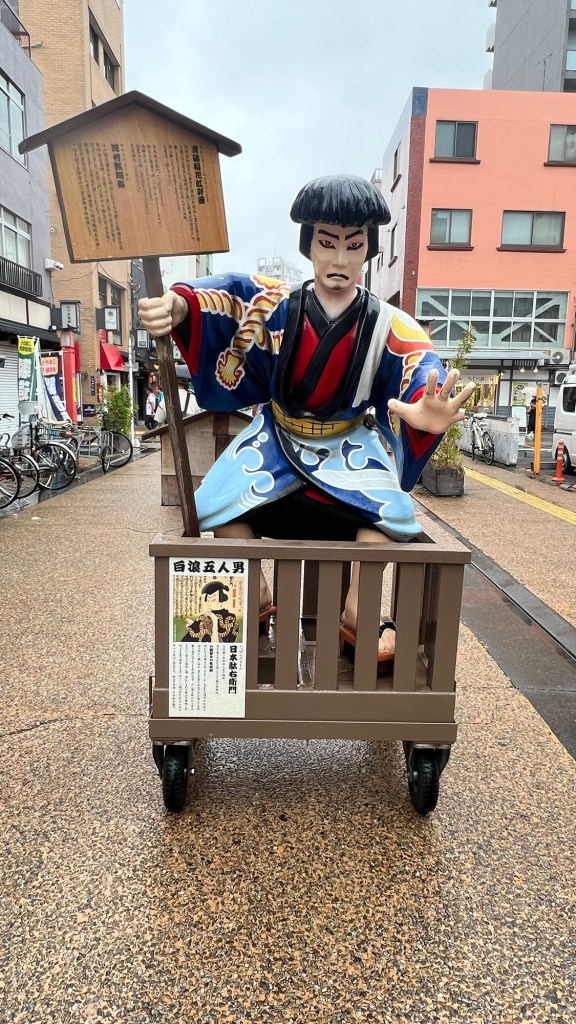
The Asakusa area retains a sense of old Tokyo with narrow streets, traditional inns and small restaurants. It was a fantastic place to explore to get a more historical vibe for the city.
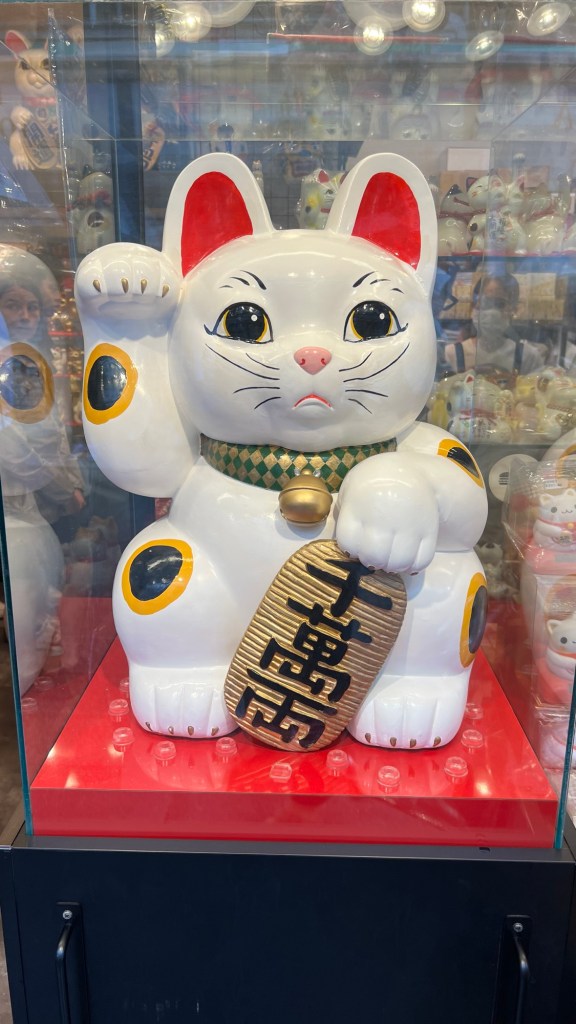
Late morning we headed down to the Imperial Palace to queue for the guided tour around the grounds in the early afternoon. It was a free tour and after securing our tickets and meeting up with Christophe and Barbs we battled the rain to walk around with a group of 300 others!
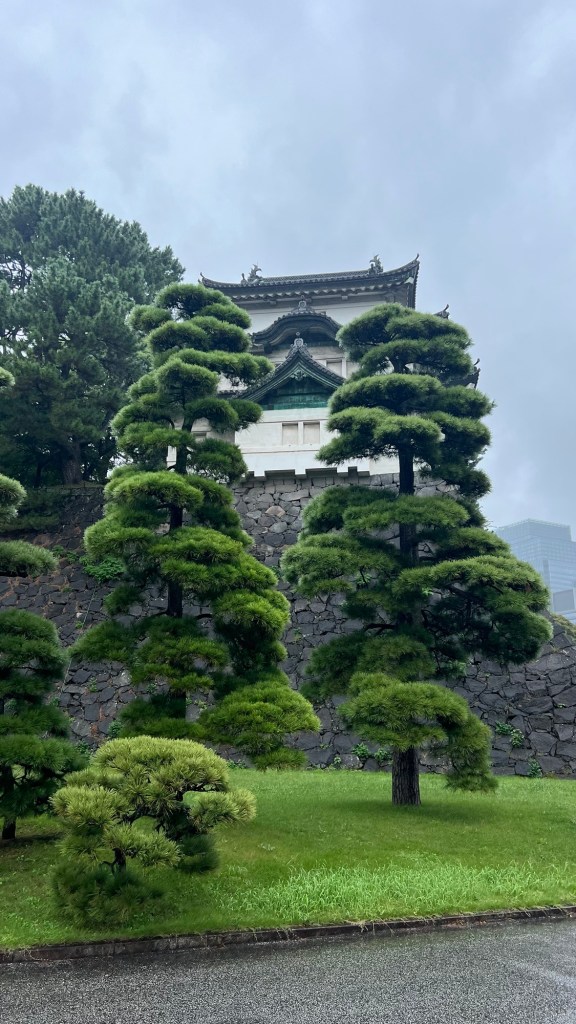
As the Imperial Palace serves as the home of the Emperor of Japan, we were restricted as to the places we could visit. It’s a historically significant and culturally rich site located in the centre of the city.
The original palace was damaged during World War II but was rebuilt in a traditional Japanese style in the post war period.
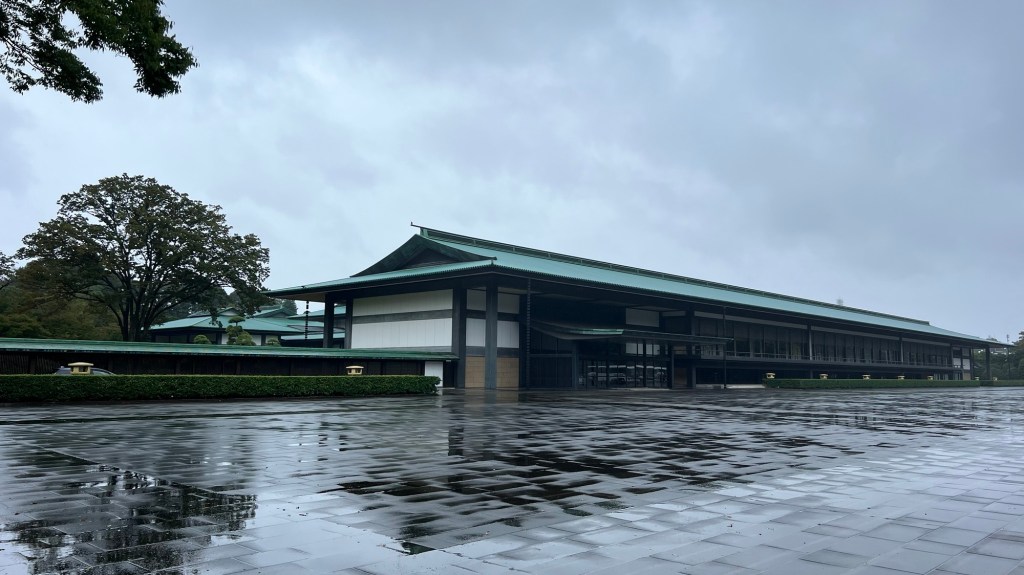
Surrounding the palace is a large moat and gardens, along with several parks. The main palace buildings, called the Kyuden, are used for official ceremonies and functions.
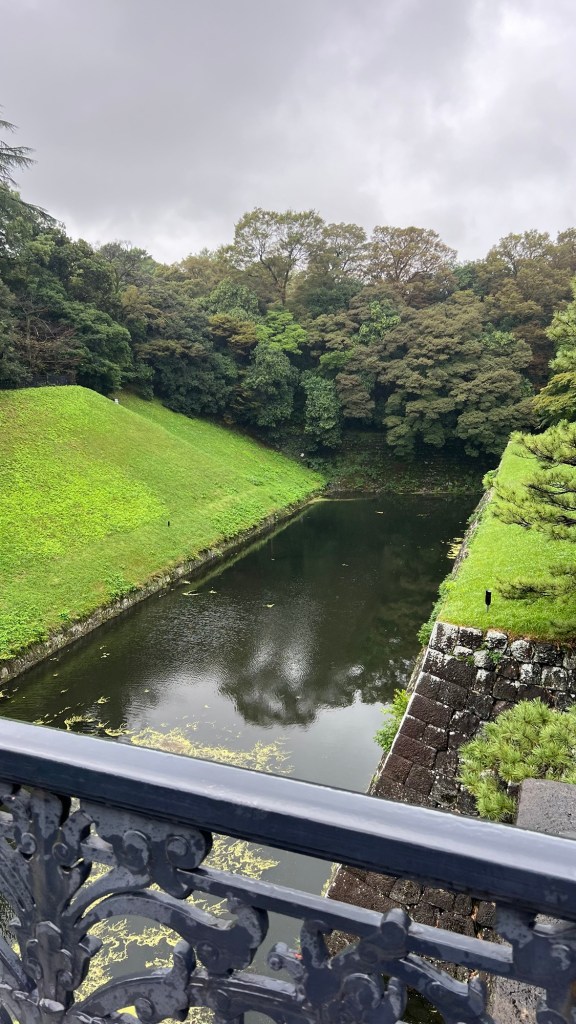
We got to see a slice of the palace and the Fukiage Garden, the private residence of the Emperor and his family.
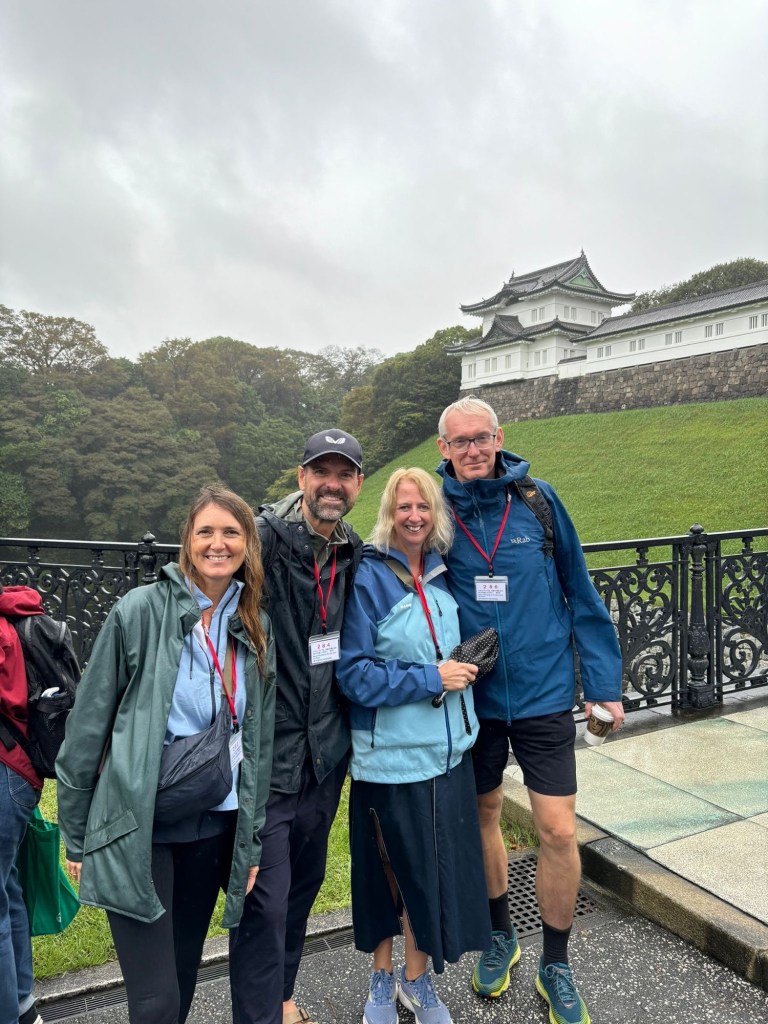
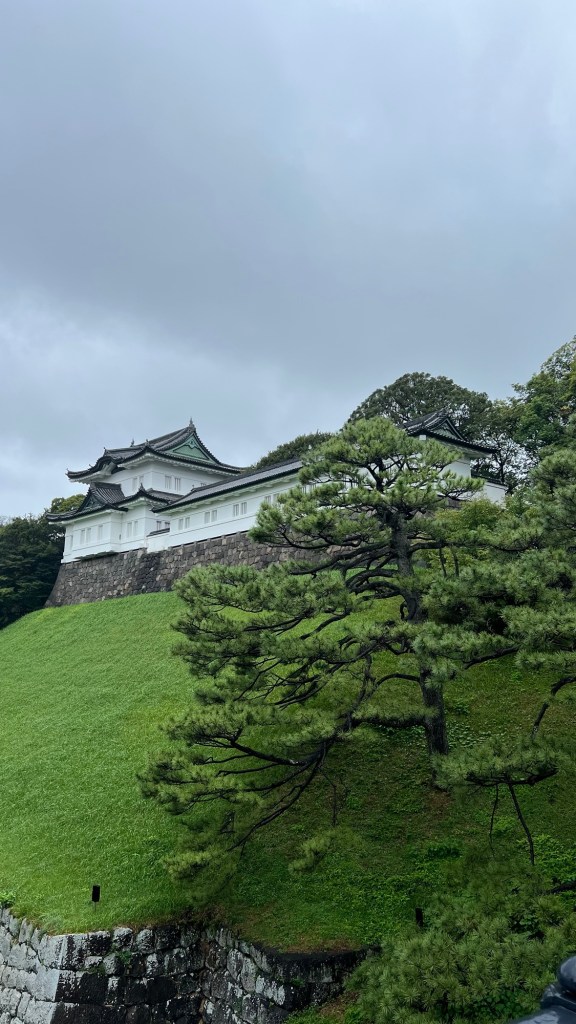
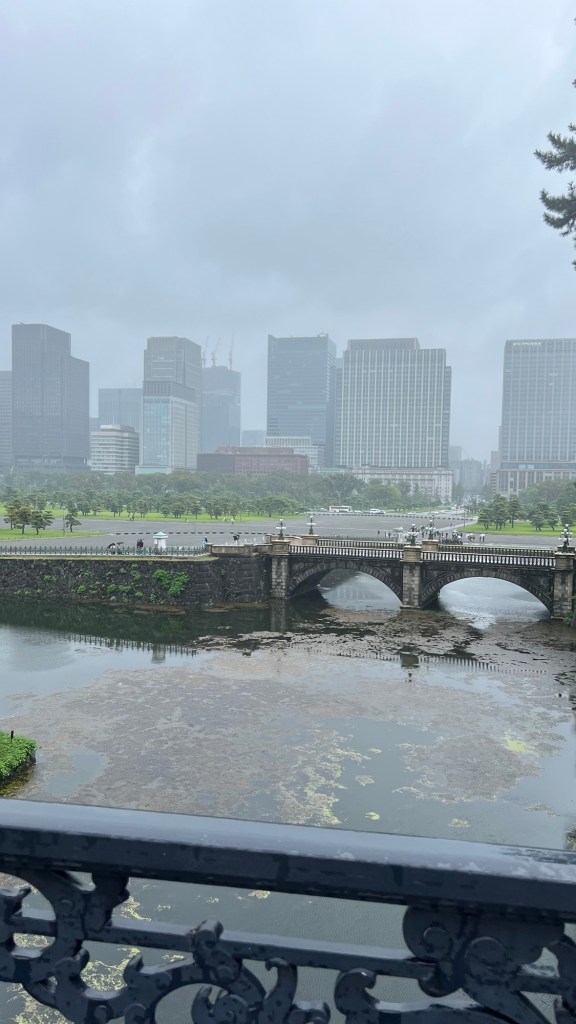
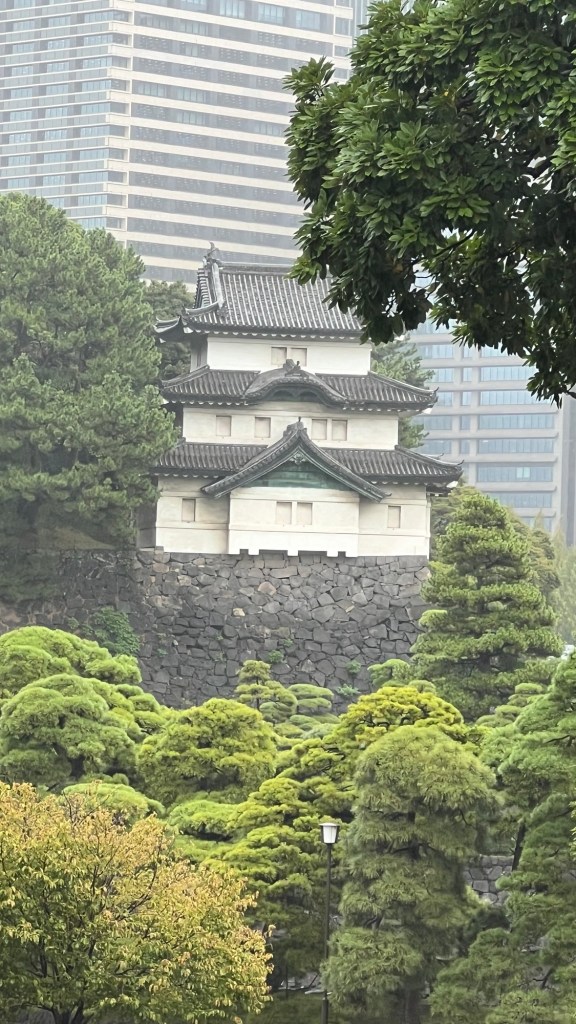
The palace stands as a symbol of Japan’s rich imperial history, blending traditional architecture with the modern cityscape of Tokyo.

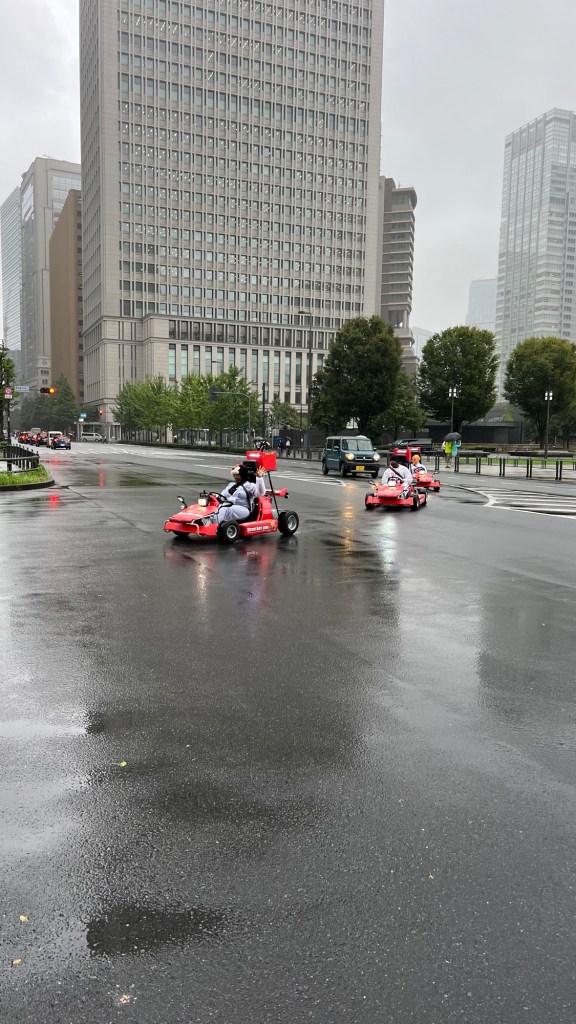
As Christophe had work matters to deal with in Yokohama, we said goodbye to him and Barbs for today, and went off to explore Ginza in more detail as it was close by.
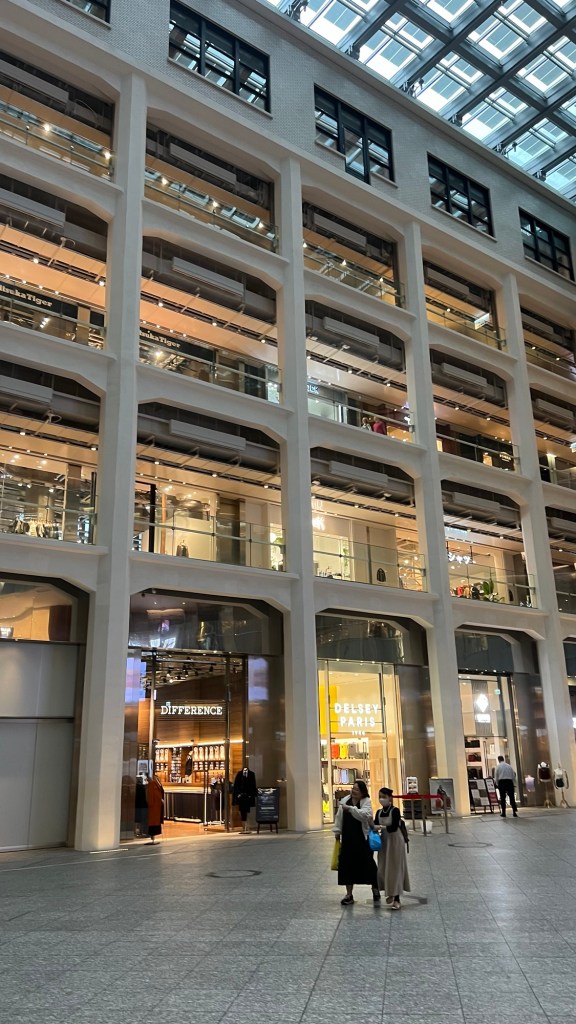
First stop was Ginza Six, a luxury shopping complex that seeks to offer an exceptional six star shopping experience.
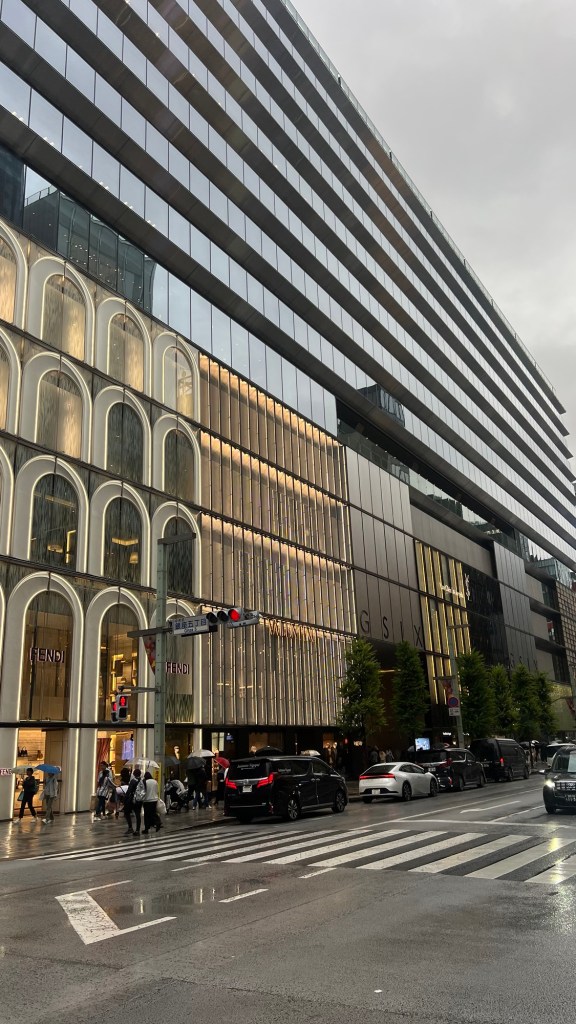
We then wandered around the nearby streets, passing the futuristic Nissan car showroom where we looked to pick out our new motor!
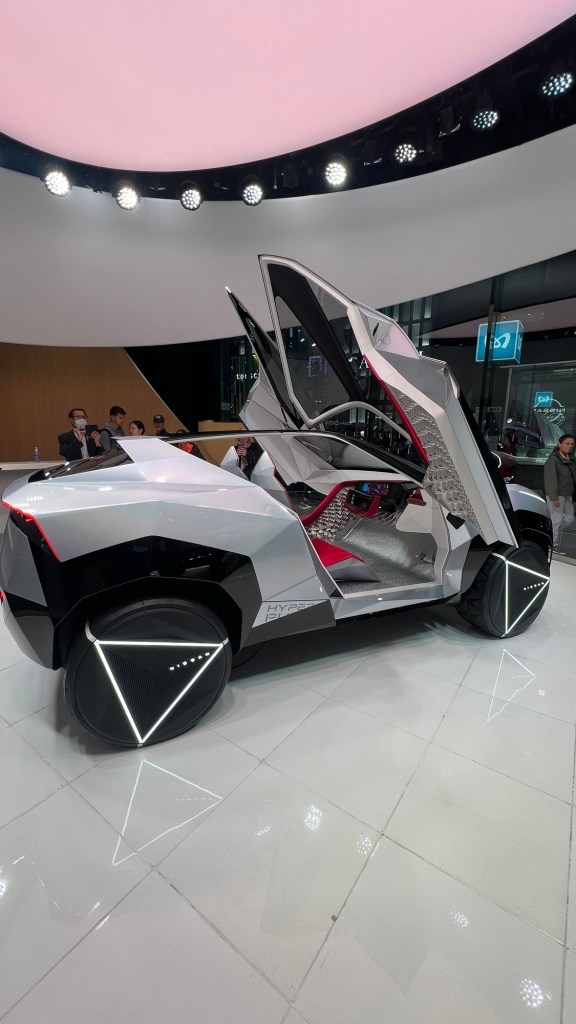
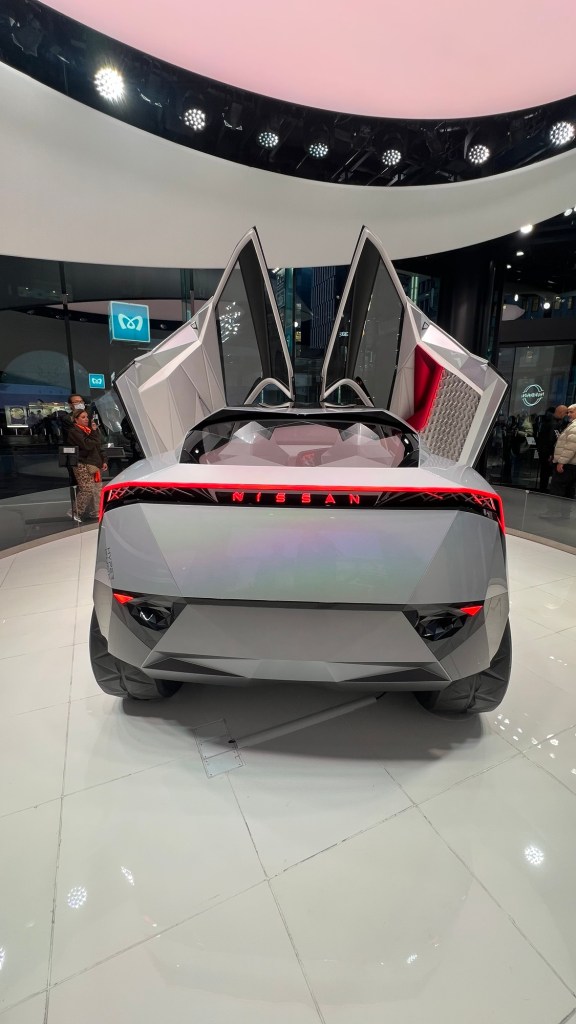
From there it was a trip to Uniqlo where Andy ‘invested’ in some new cashmere jumpers at half the price to the UK, before we made our way back across the city by subway to Shinjuku.
We returned to the Shinjuku cat (3D billboard). This digital calico cat looks incredibly realistic and has become a beloved favourite, with the cat appearing at certain times of the day. It’s one of the best examples of Tokyo’s cutting edge digital art.
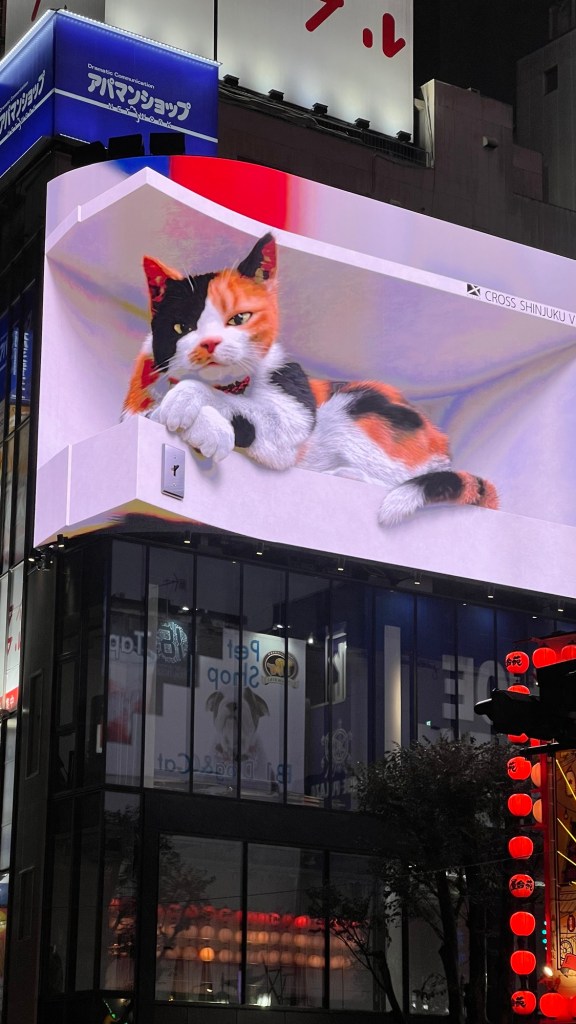
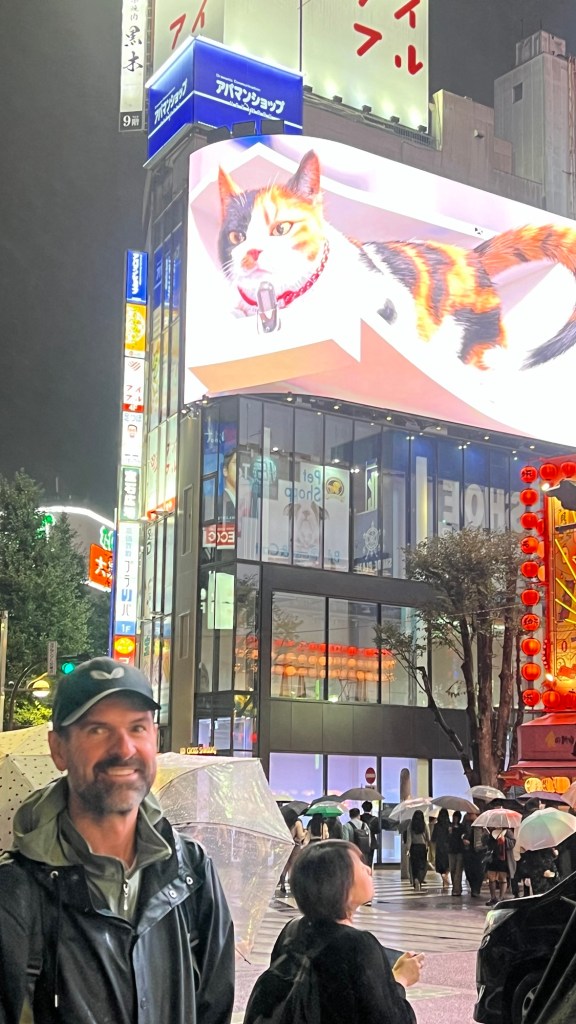
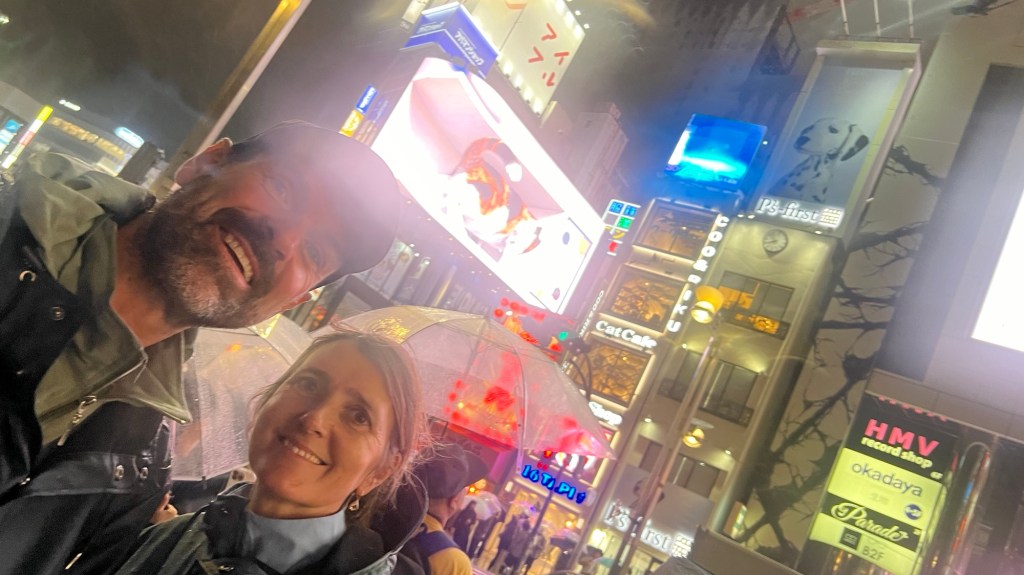
Next door to the sign is Calico cat cafe, where friendly cats let you pat and play with them while you enjoy a drink. A great place to unwind for the cat lovers out there – we are more dog people so decided to pass on this occasion.
Tomorrow we are off to Meiji Jingu temple and a walk around the Yoyogi Park, before heading to Harajuku and on to Shibuya for some retail and people watching. In the evening we are up in the Tokyo tower and then move to Roppongi Hills for some art culture and a decent Japanese meal.
 @travellingwiththeateam