After our first day in Hiroshima visiting the sombre A-Bomb museum, today was all about nature with a trip to Itsukushima, also known as Miyajima, a small island in Hiroshima Bay.
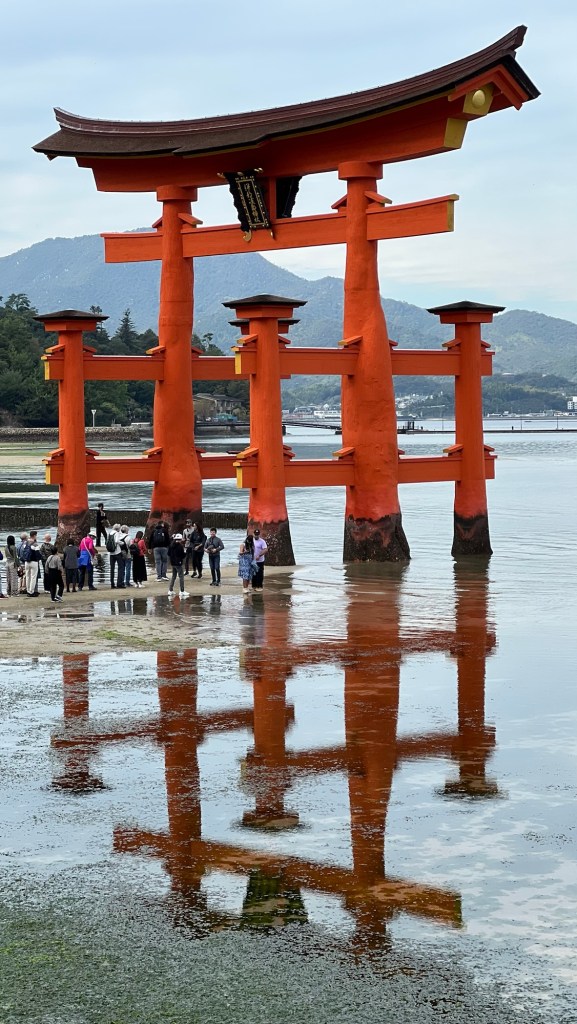
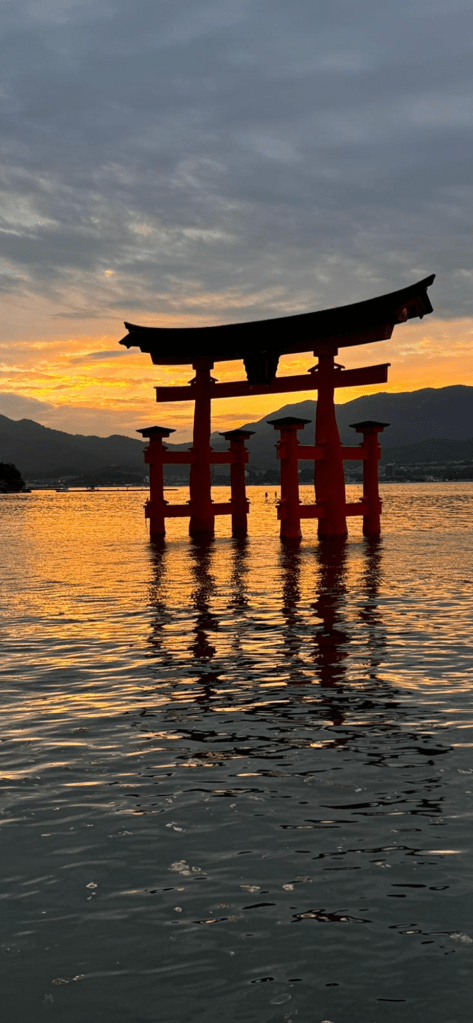
It is known for its forests and ancient temples. Just offshore, the giant, orange Great Torii Gate sits on the edge of the water, partially submerged at high tide.
It marks the entrance to the Itsukushima Shrine, which was first built in the 12th century. Nearby, the Museum of History and Folklore has cultural artifacts in a 19th-century merchant’s home.
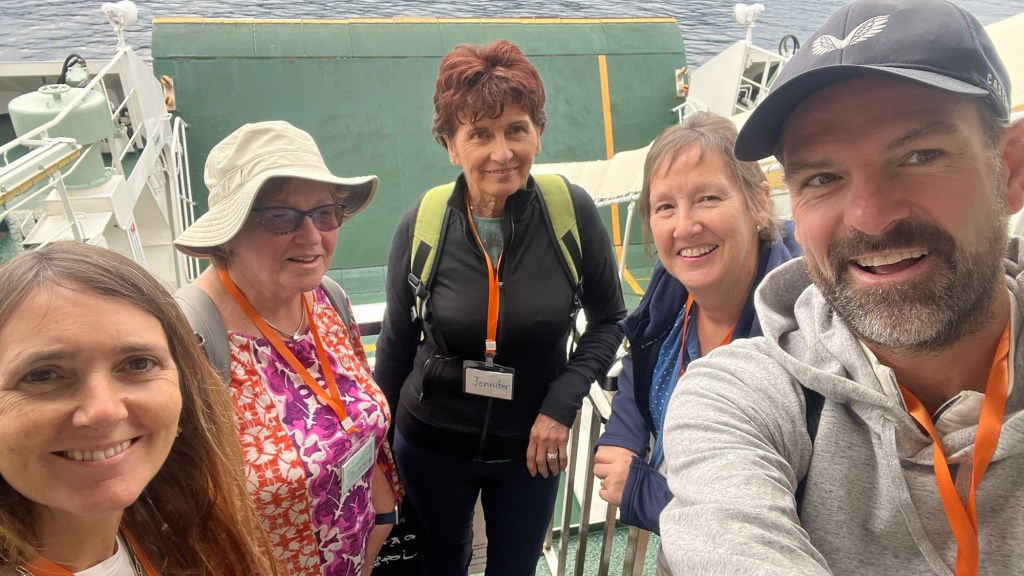
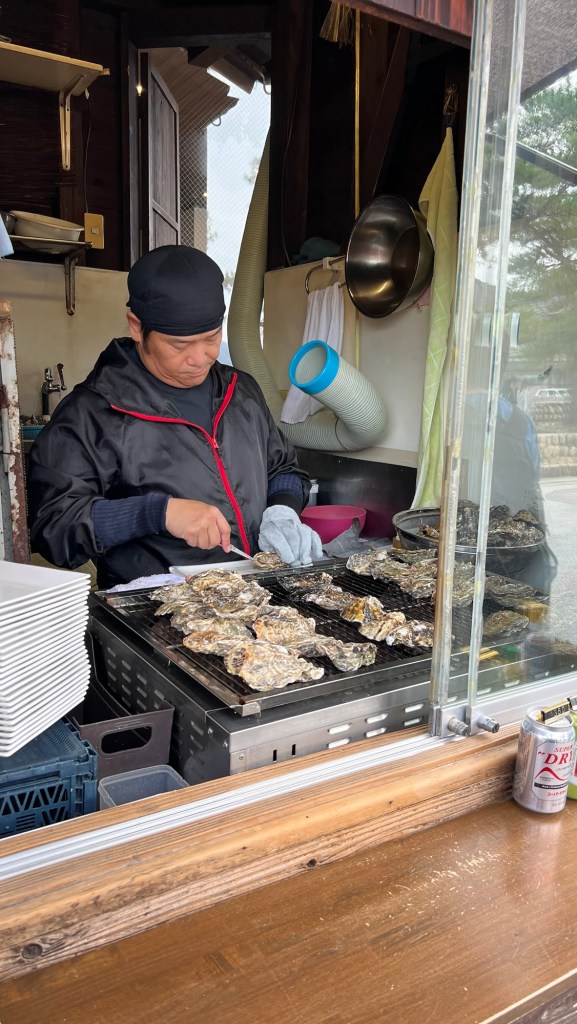
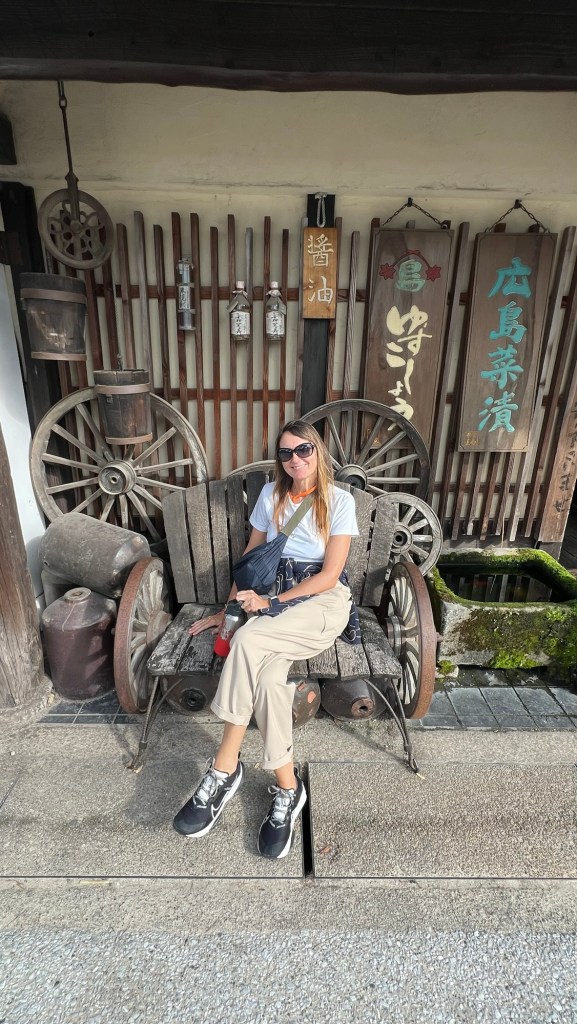
Once on the island we walked along the waterfront and passed the numerous seafood stalls selling oysters and eels.
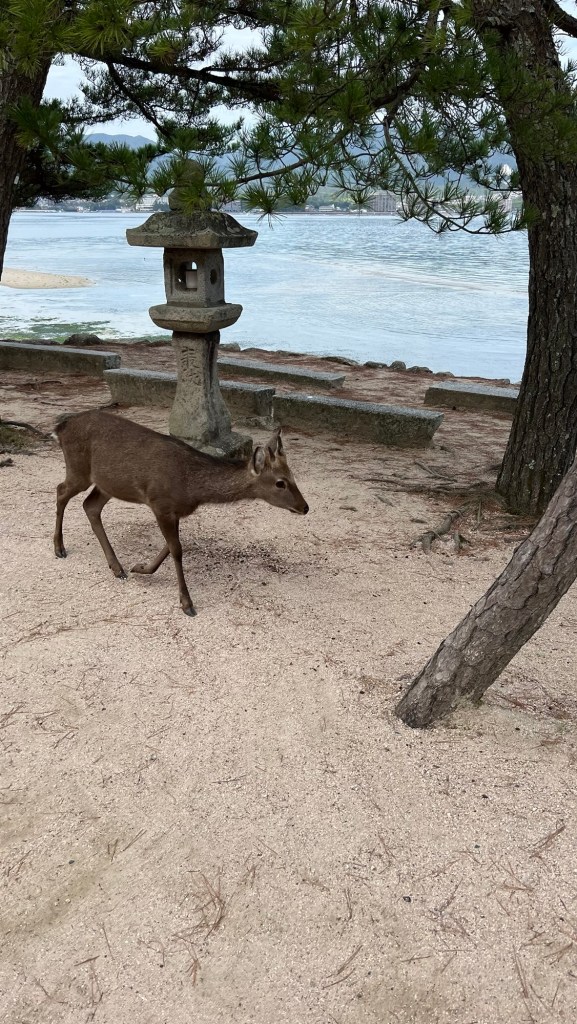
Across the island are wild deer, seen as sacred in the native Shinto religion because they are considered messengers of the gods. They walk the streets of the city, unafraid of tourists and searching for food. Andy was one of the unsuspecting victims losing one of his sandwiches to a young artful dodger!
This torii at the Itsukushima Shrine acts as a welcoming point for visitors to the island and draws the most attention and ‘selfies’.
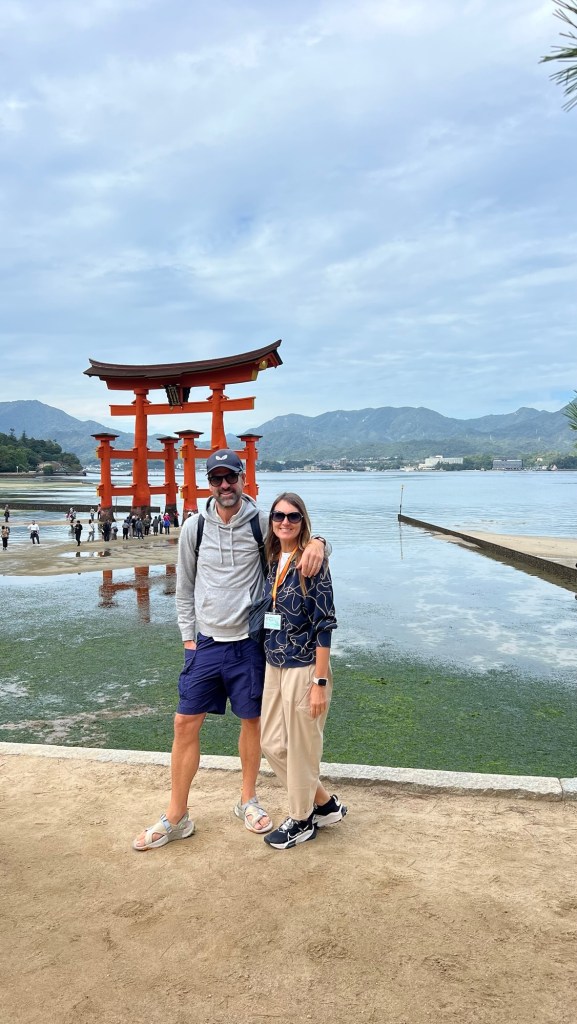
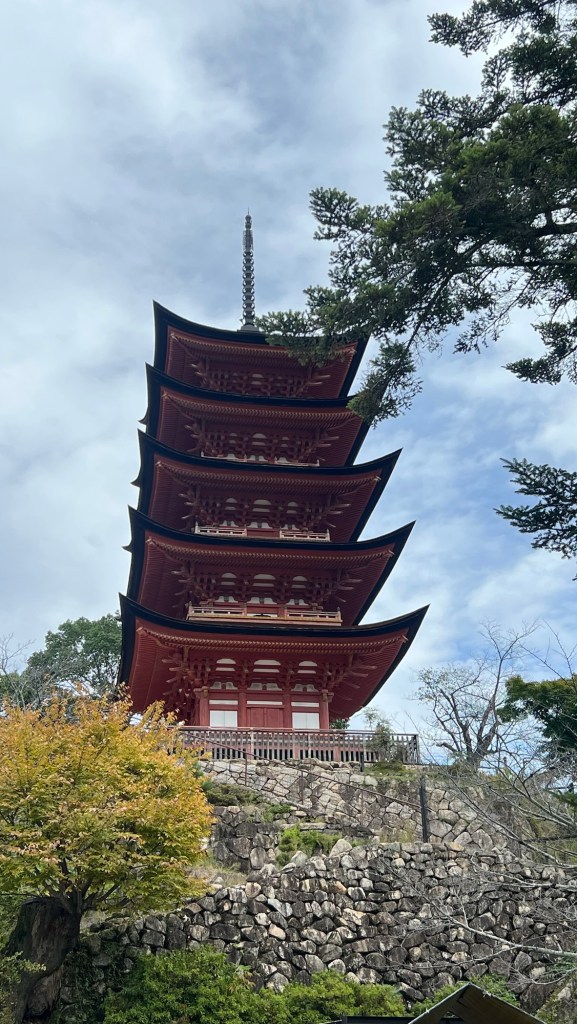
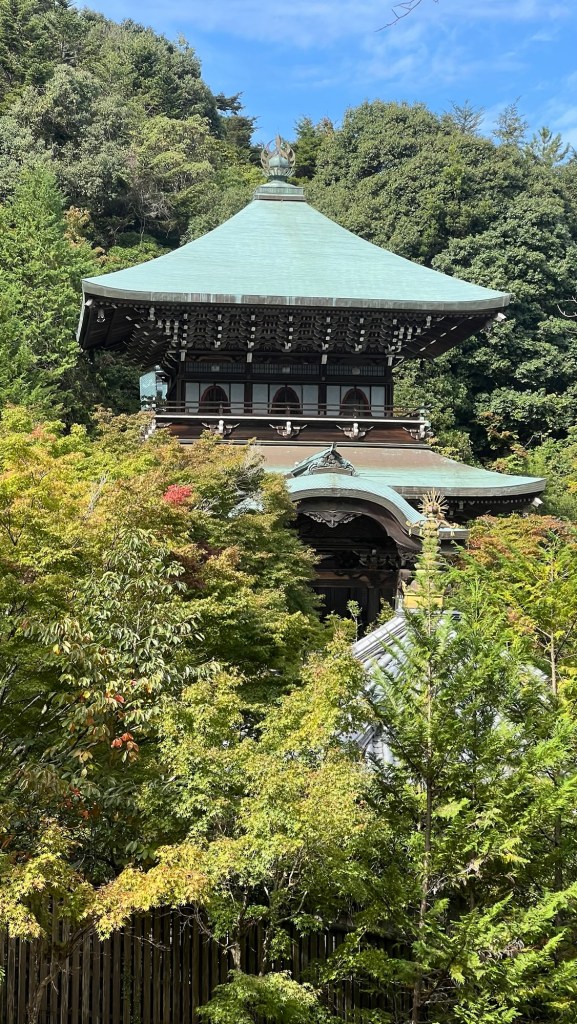
Itsukushima has a number of temples, including Toyokuni Shrine below a five-storied pagoda and Daiganji Temple – one of the three most famous Benzaiten temples that Andy hiked to later in the day.
The island is also famous for its hill side cherry blossoms and maple leaf autumn foliage, which was starting to come into its own during our visit.
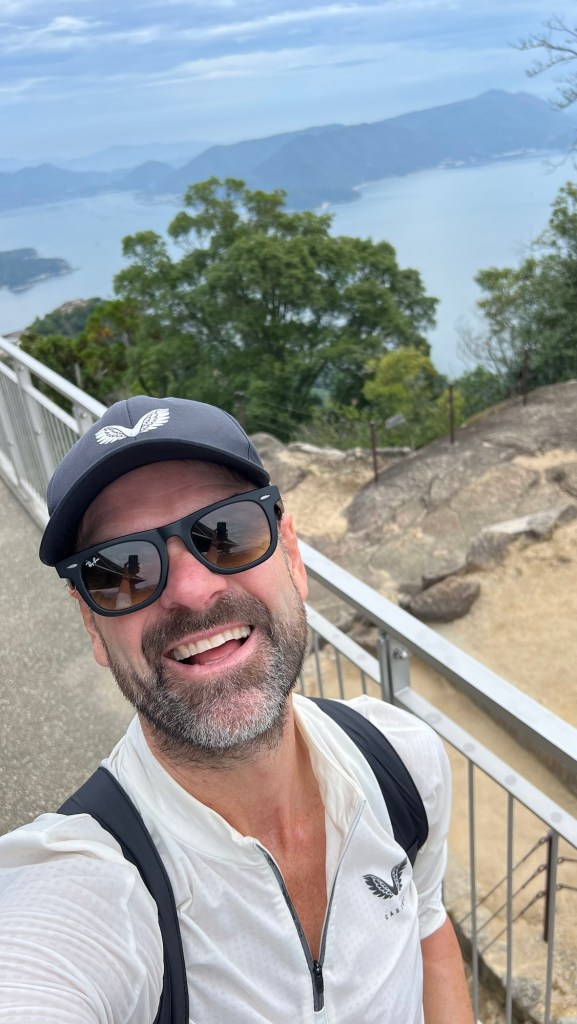
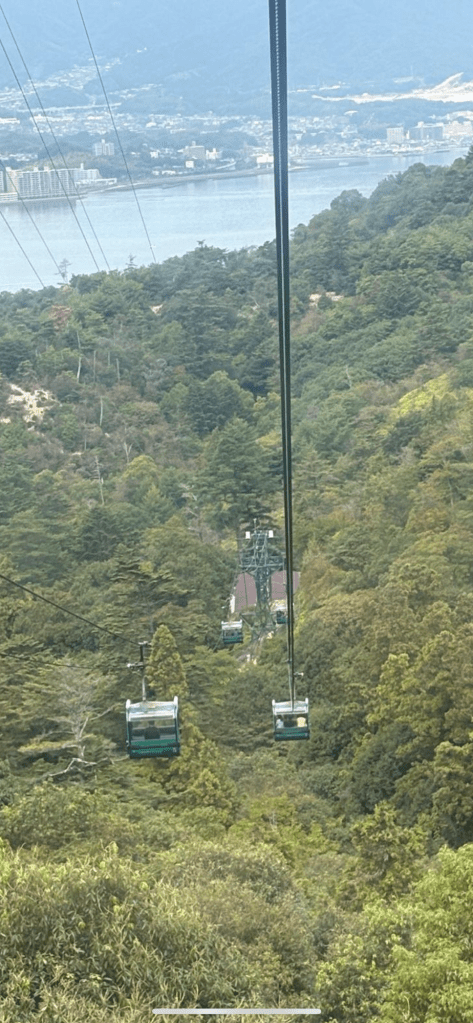
The peak of the island is Mount Misen, at 535 m, is the highest point on the island. Whilst most people, Michelle included take the Miyajima Ropeway (cable car) to the summit, Andy took the hiking option and walked the 3k to the top by foot up the steep stepped path.
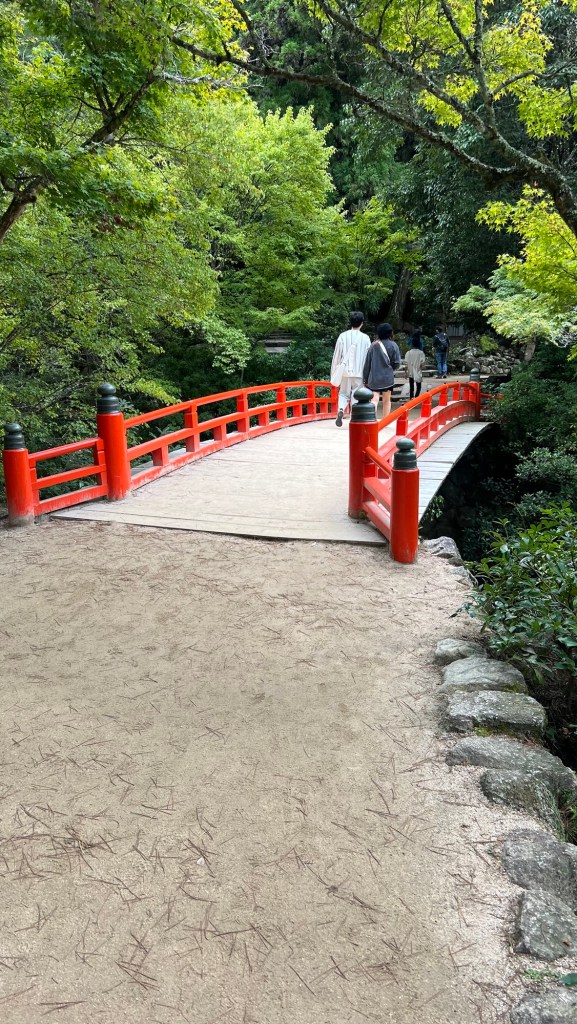
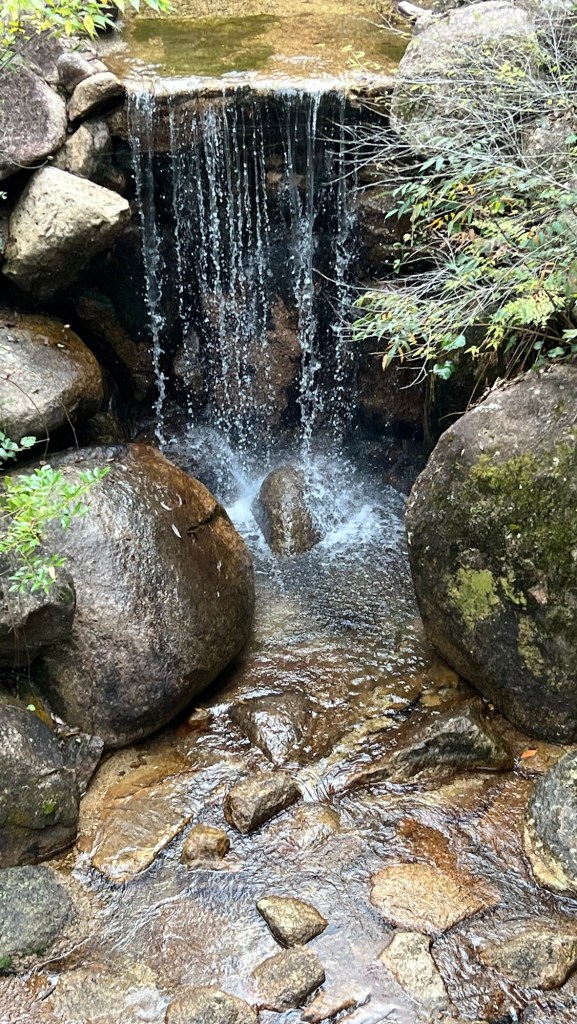
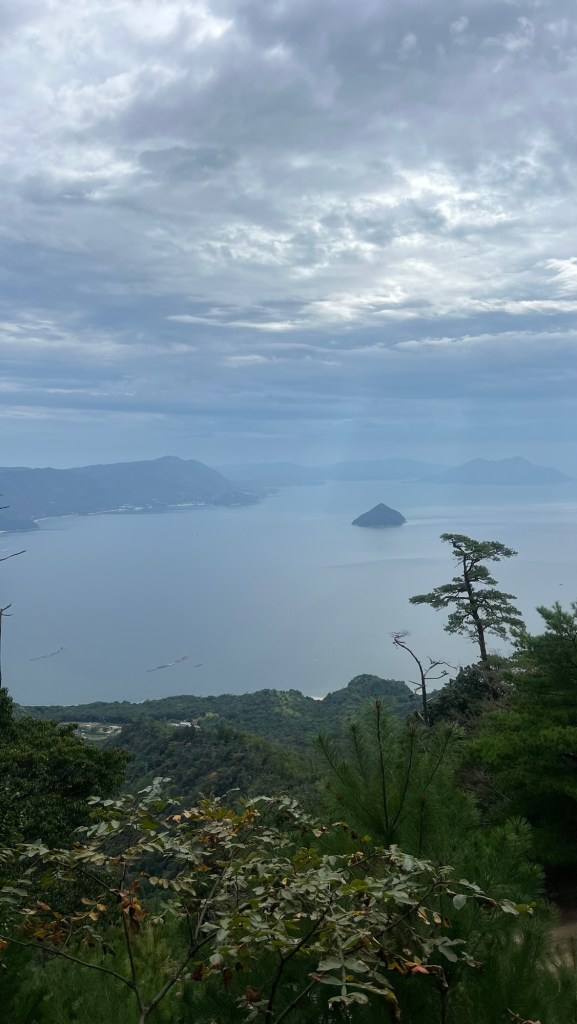
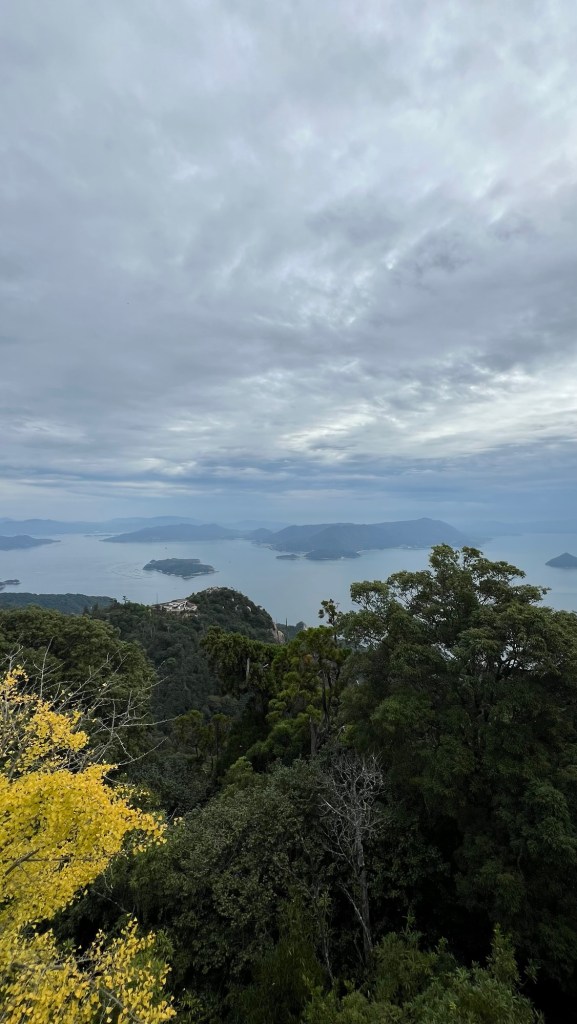
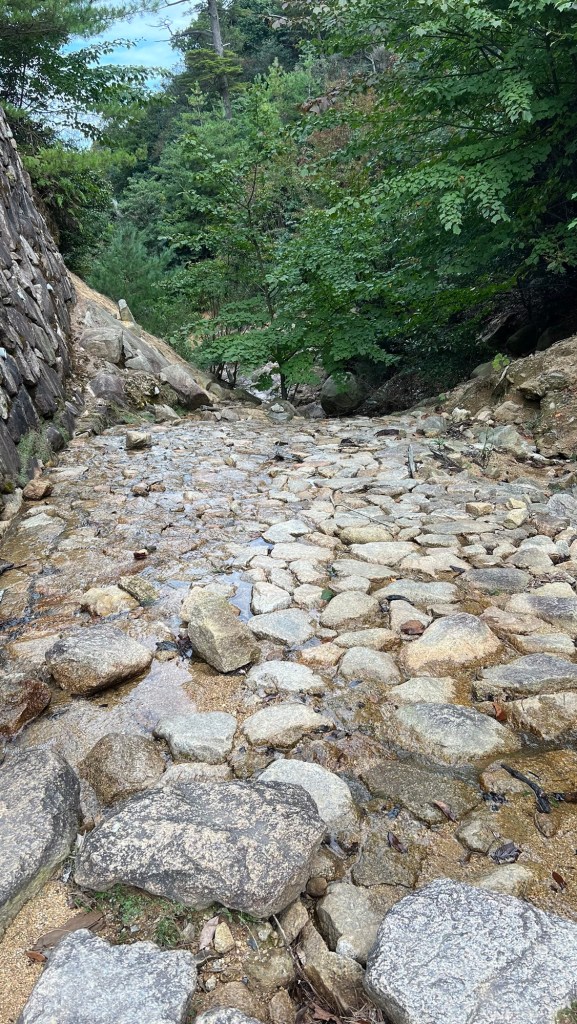
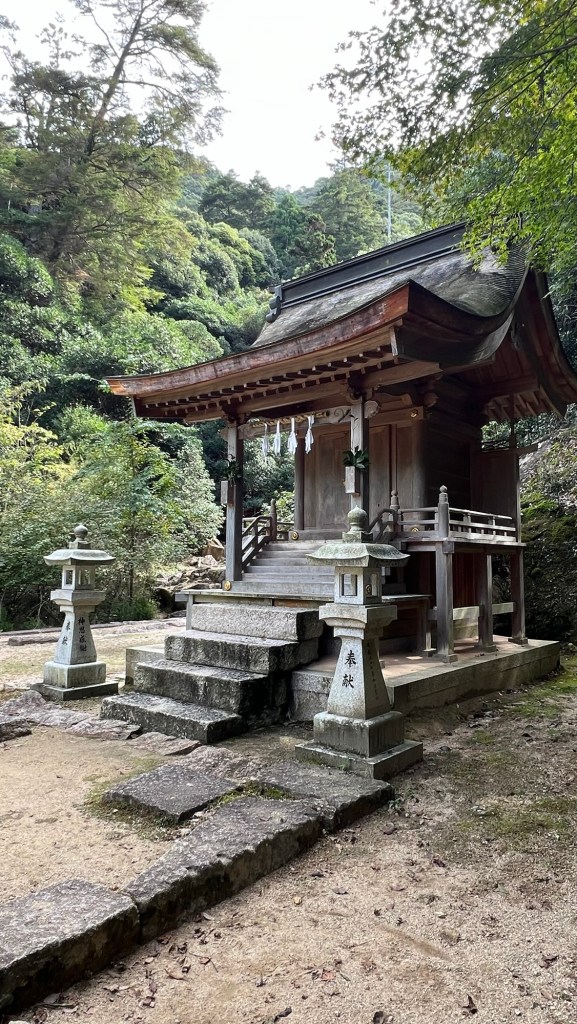
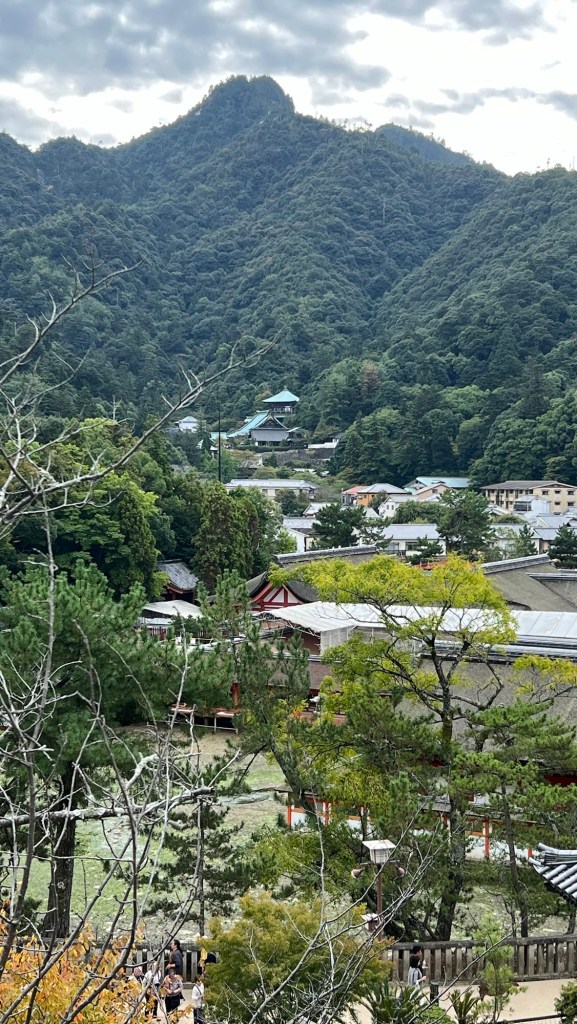
The hiking trail offered stunning views out across the bay and other nearby islands as well as waterfalls and an array of temples and shrines dotted across the island.
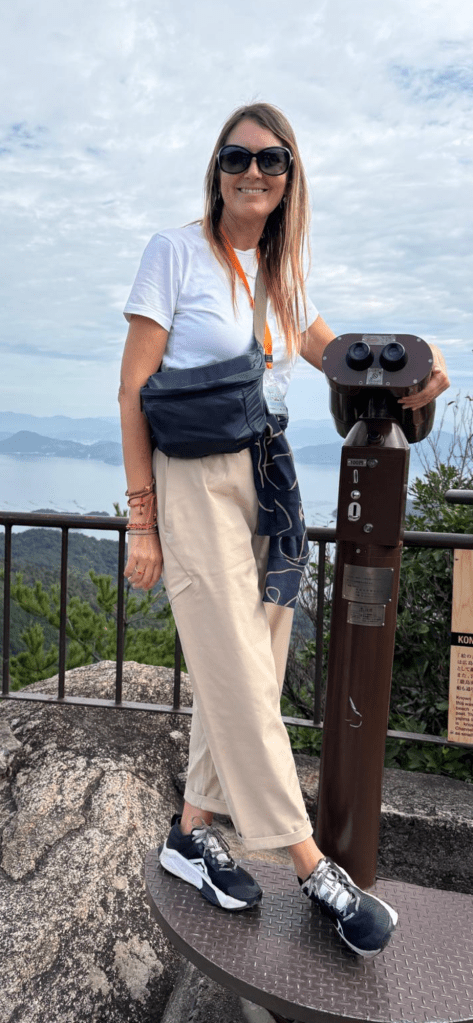
From the summit there were stunning 360 degree views across the island, bay and beyond.
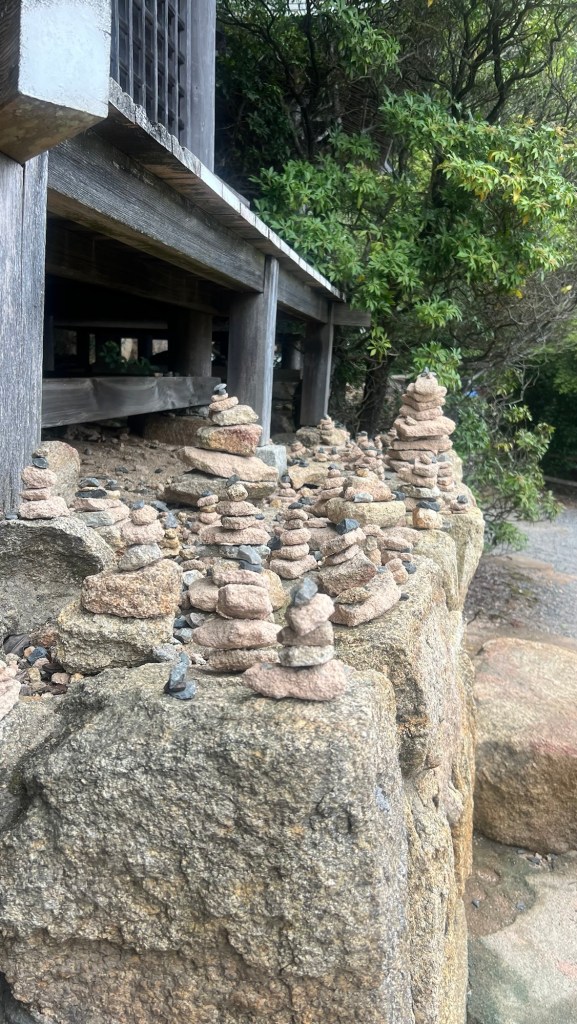
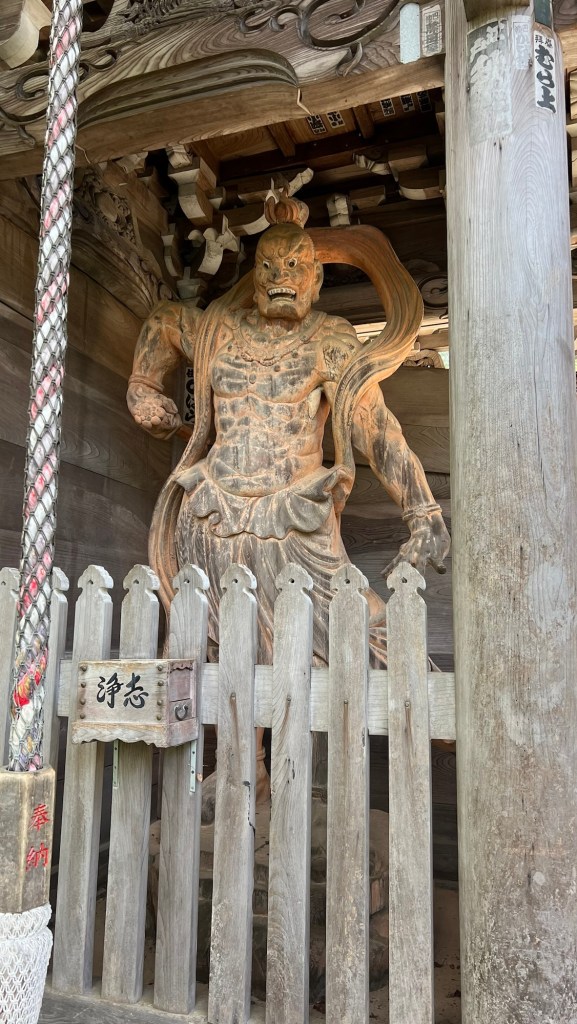
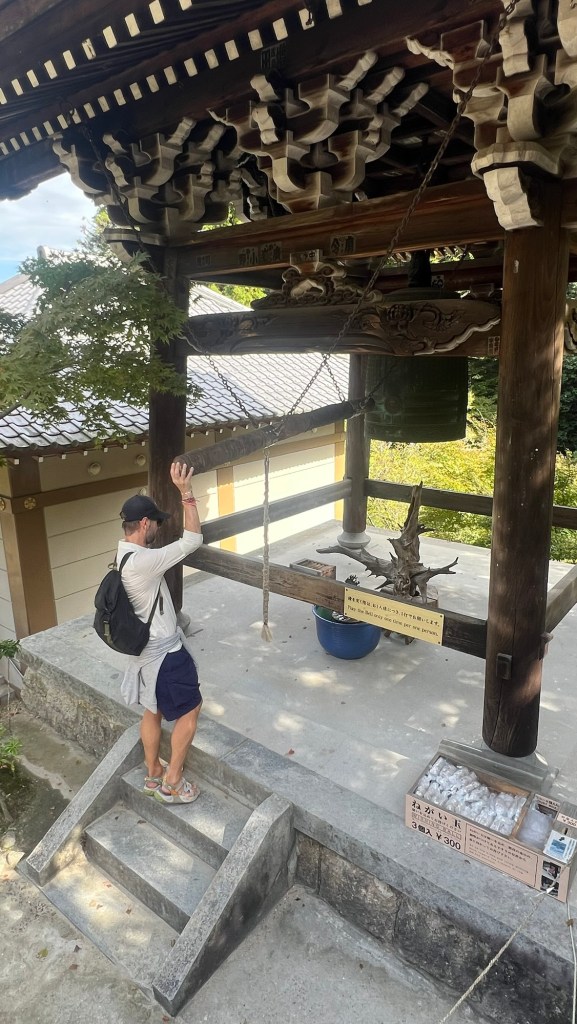
The climb to the summit and walk down for Andy was a round trip of a couple of hours and his descent took him to Daishō-in, also called Suishō-ji (Crystal Temple’). It’s a historic Buddhist temple complex with many temples and statues sitting at the base of Mount Misen.
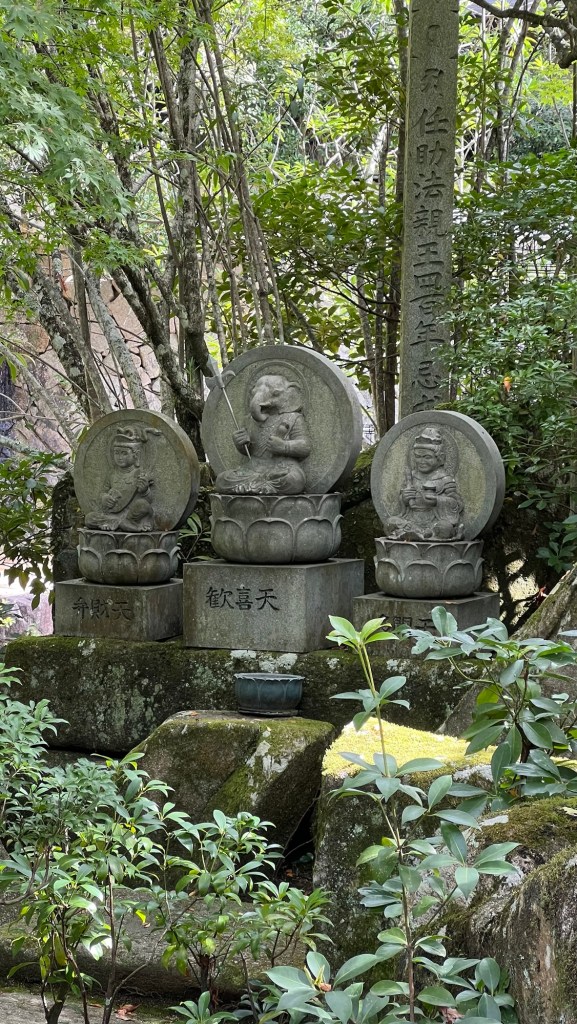
Statues of Saraswati, Ganesh, and Kubera in the Daishō-in temple.

Kannon-dō Hall
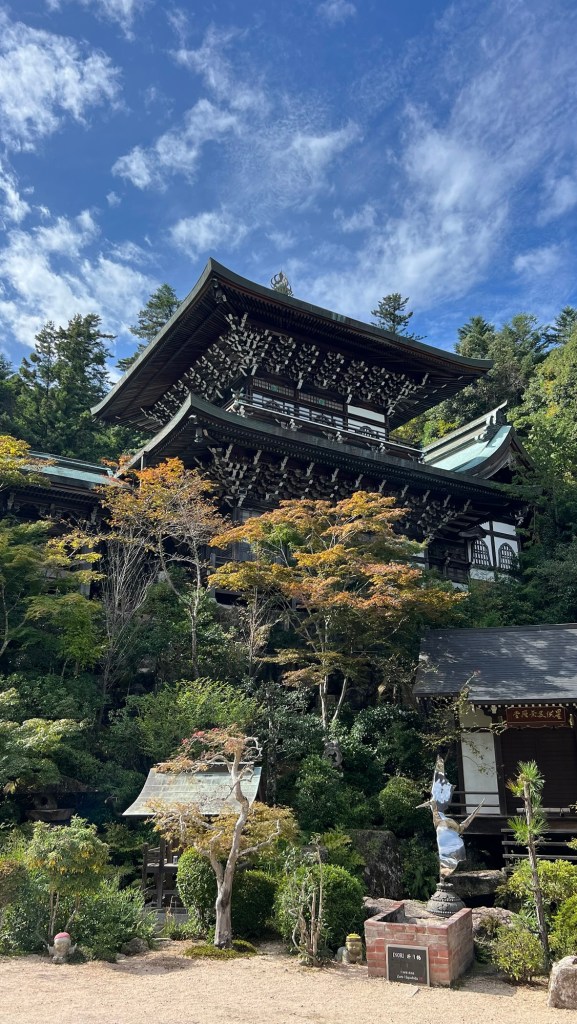
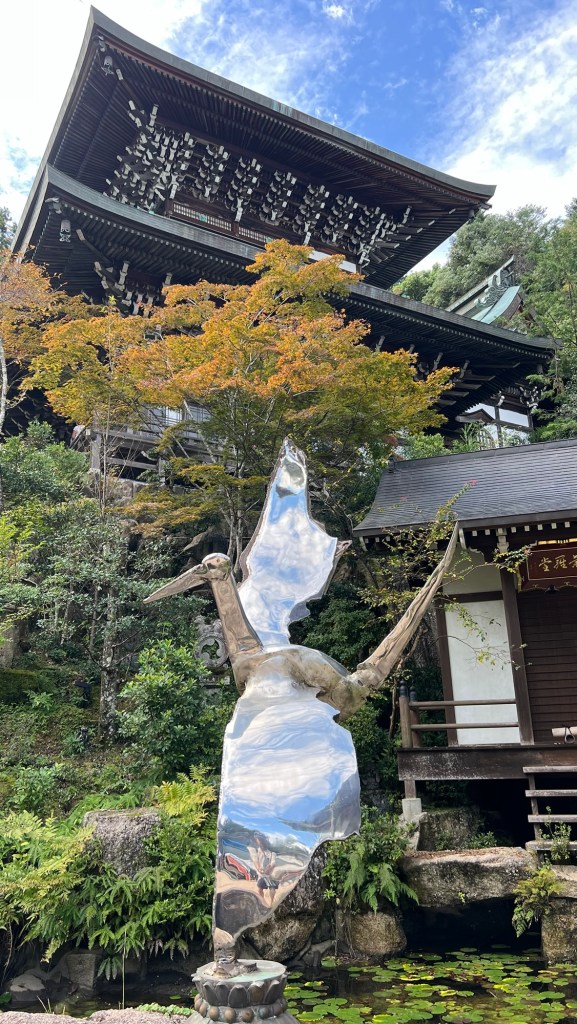
Daishoin Temple, is the oldest temple on Miyajima and is surrounded by maple trees that were starting to turn a stunning red.
Daiganji Temple is dedicated to Benzaiten, goddess of music, art, and water. It is said to be one of the most important temples dedicated to the goddess in Japan.

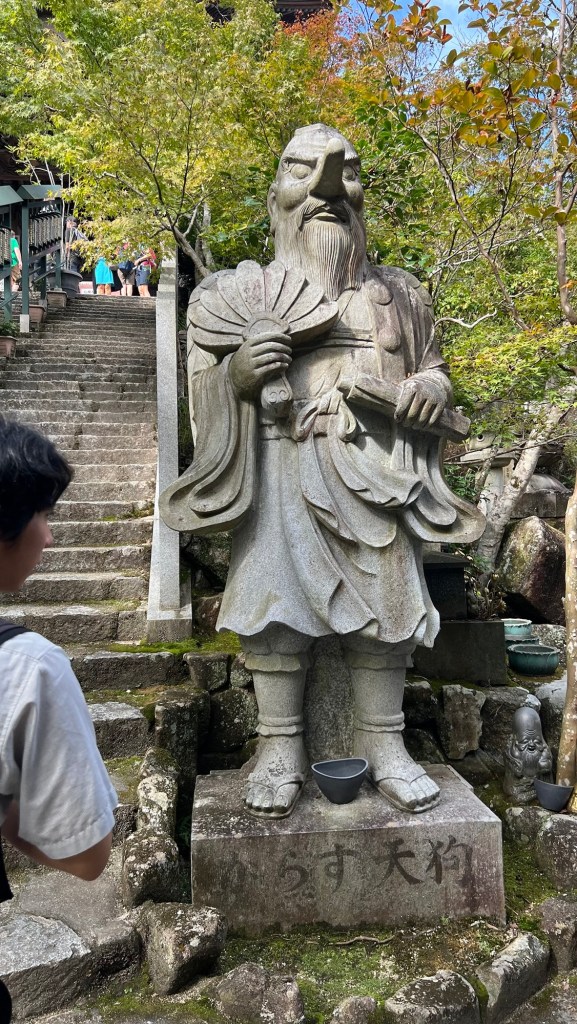
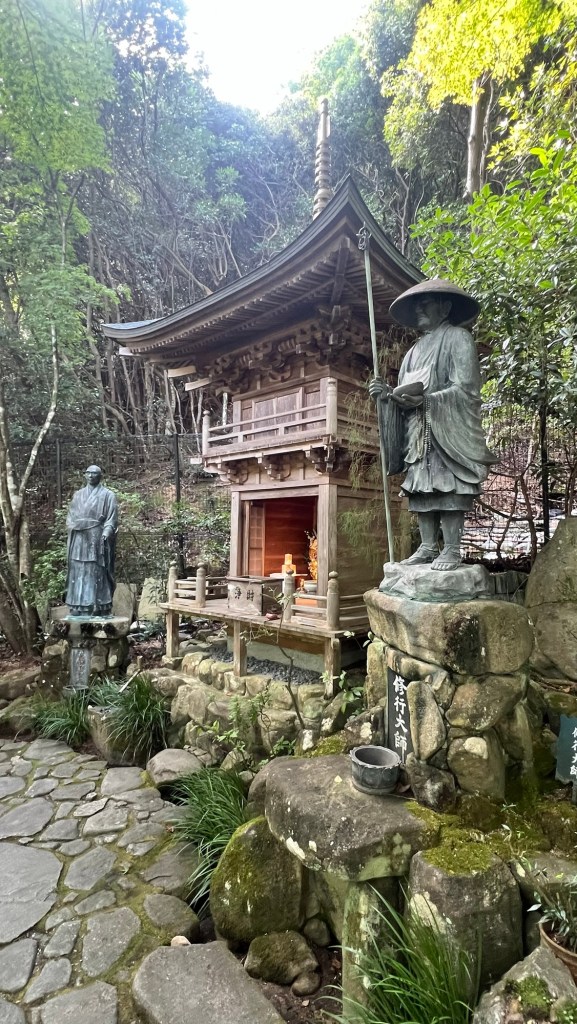
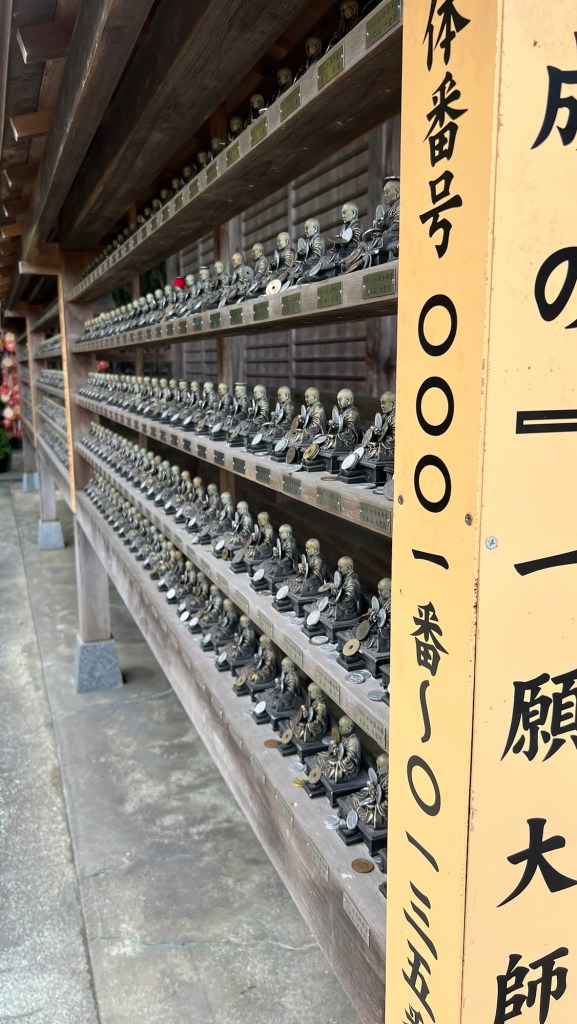
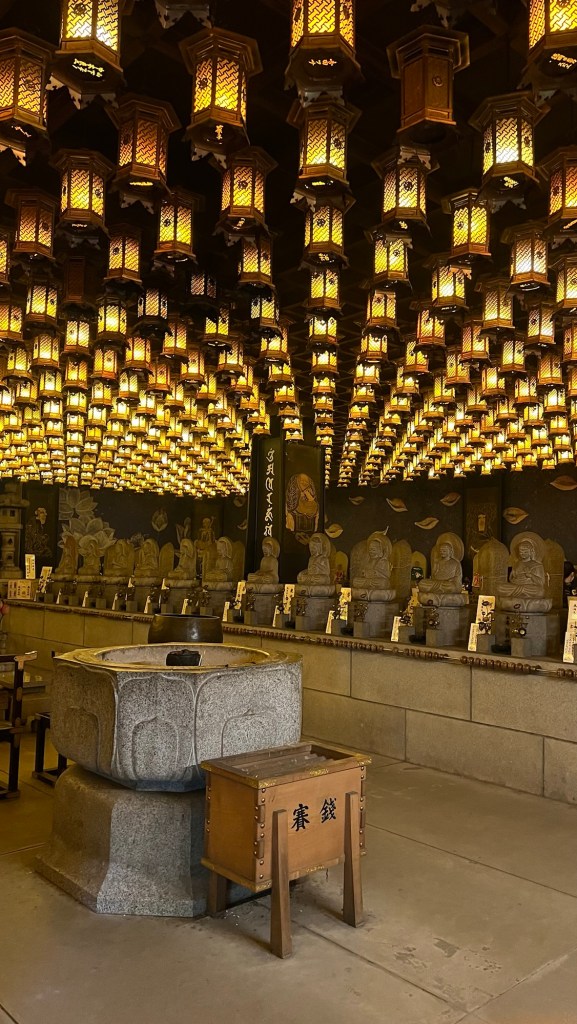
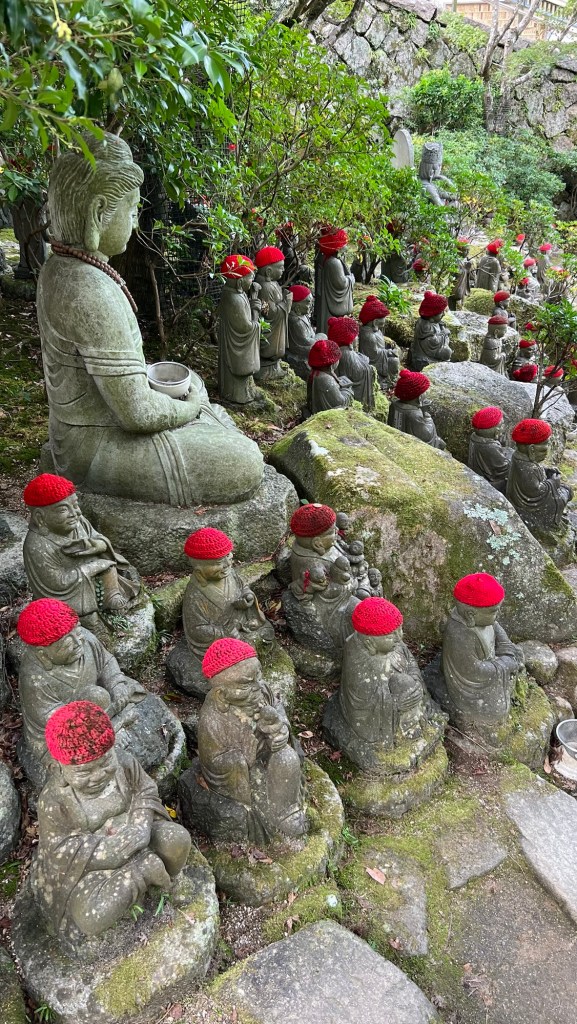
Daishō-in temple Jizo statues
After returning to the torii gate, the tide has started to come in and slowly submerging the base making them appear to be floating.

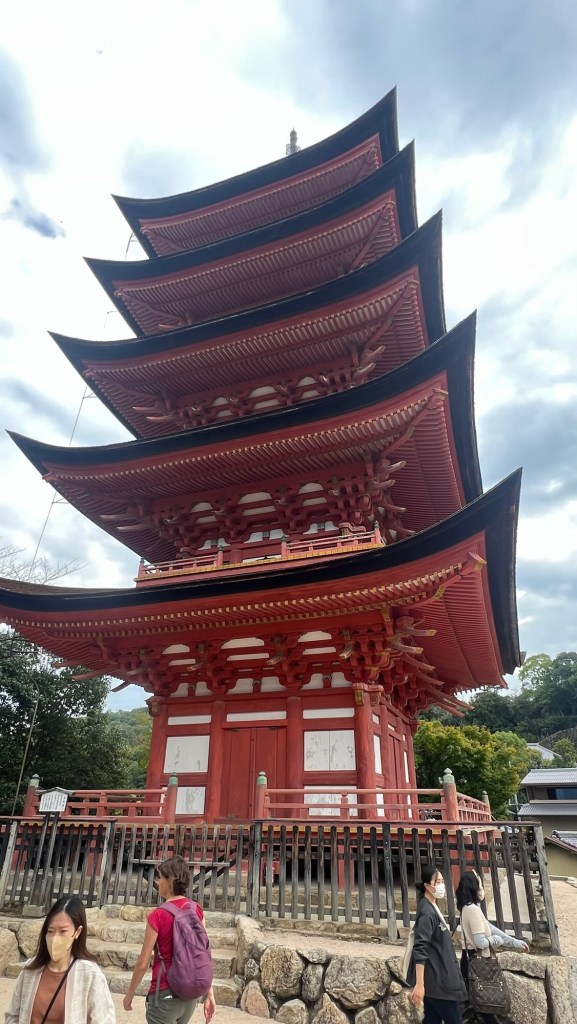
Gojunoto is a beautiful five-story red pagoda, originally built in 1407. The vivid red pagoda contrasted perfectly with the lush greenery and the sea beyond.
Michelle and a few others went up to the mountain via cable car and got to see a more elevated view of the island with some great views.

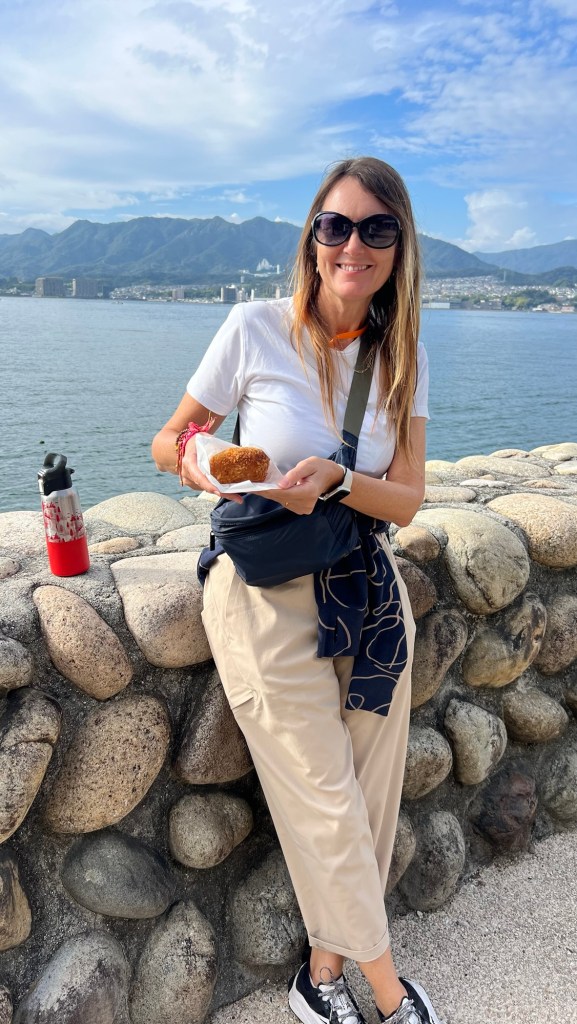
Before leaving the island we’d been recommended to try a curried battered oyster, a local delicacy which proved to be one of the best savoury dishes we’ve tried.
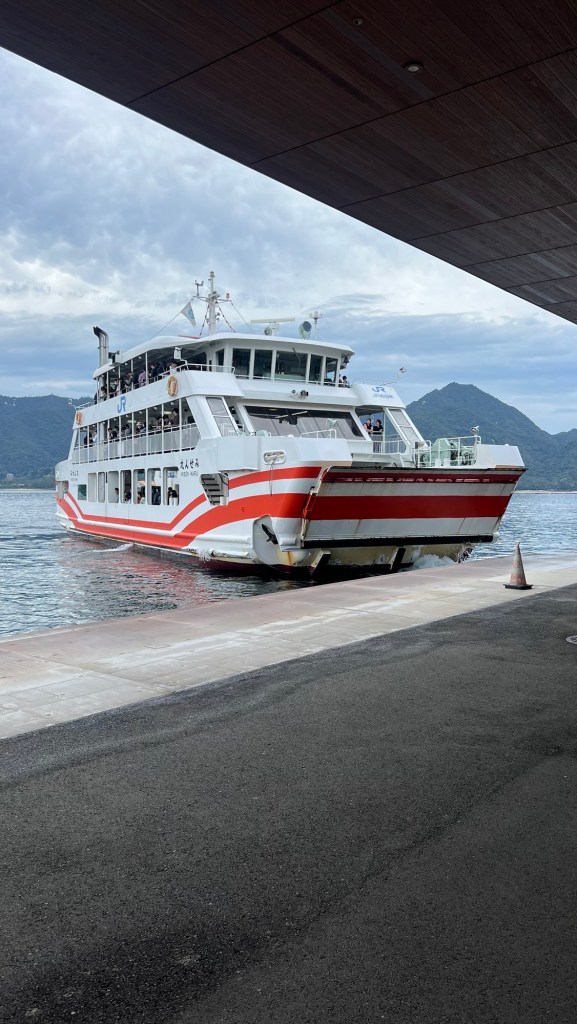
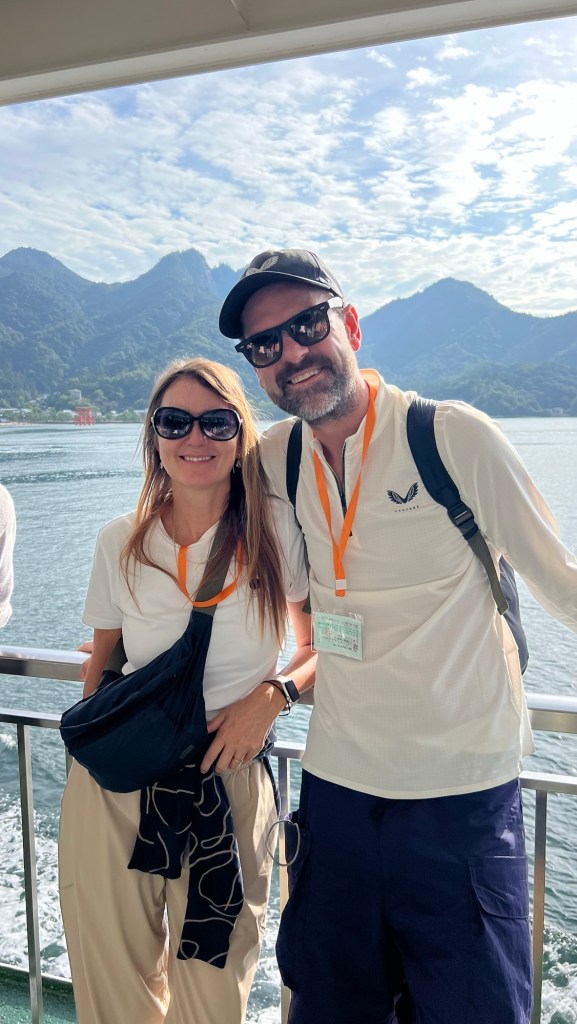
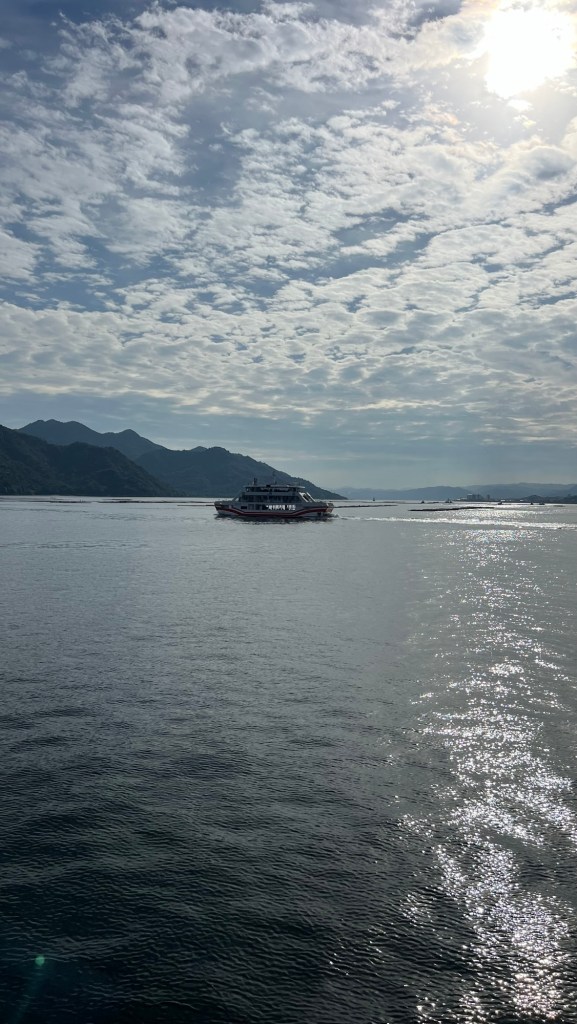
After an enjoyable day on the island, we took the 10 min ferry back to the mainland. The port itself is a short walk from Miyajimaguchi Station, and from there it was a 30 min train ride back to Hiroshima Station.
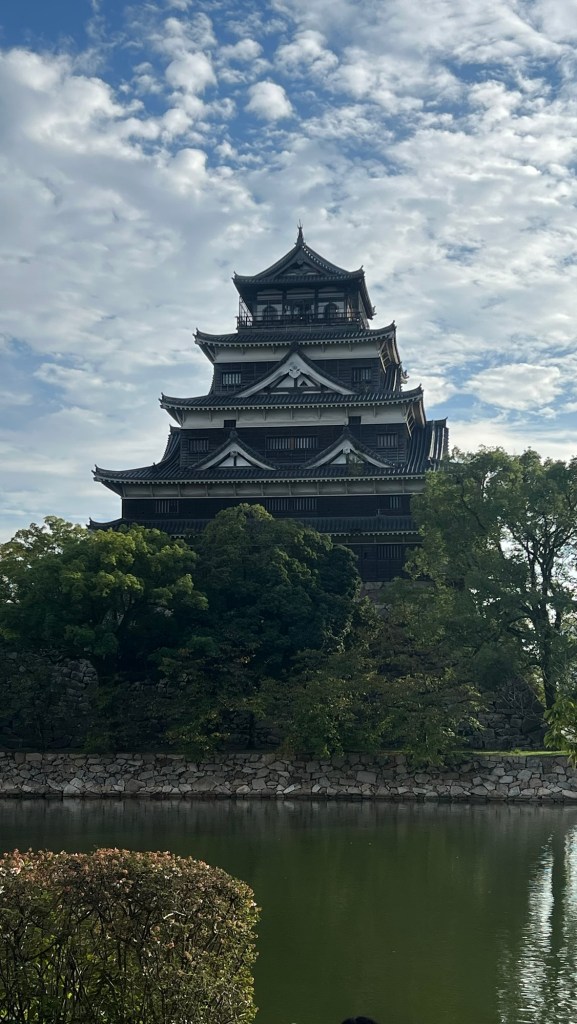
After returning to Hiroshima we decided to visit Hiroshima Castle, sometimes called Carp Castle, that was the residence of the daimyō of the Hiroshima Domain.
The castle was originally constructed in the 1590s, but was largely destroyed by the atomic bombing on August 6 1945 and then rebuilt in the late 1950’s.
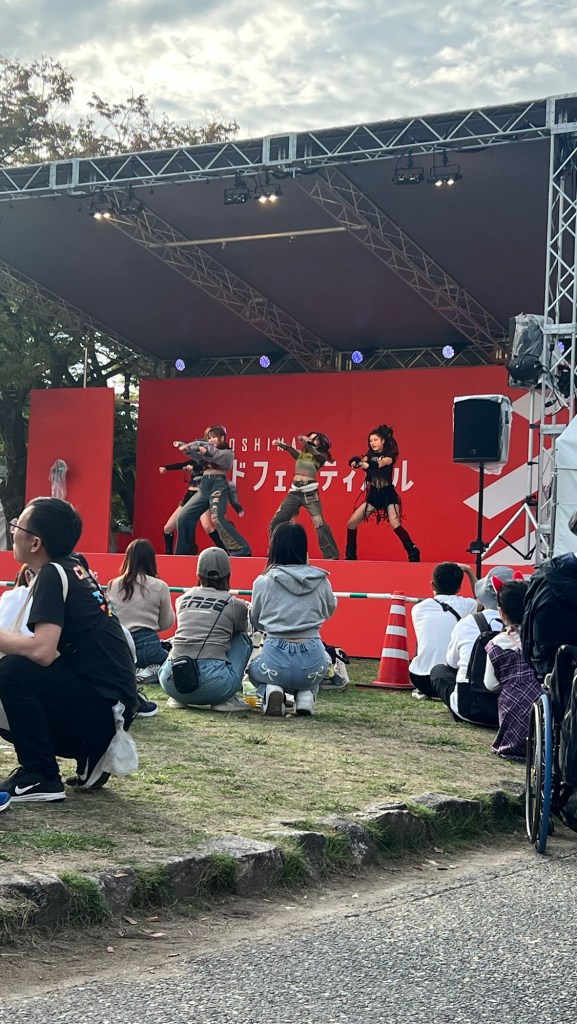
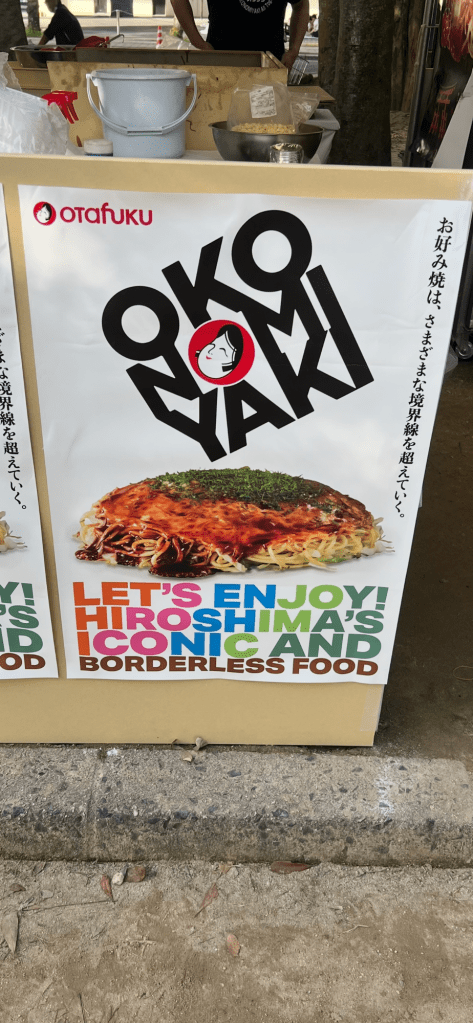
Our visit on a Saturday afternoon coincided with a food and music festival, making it a memorable event.
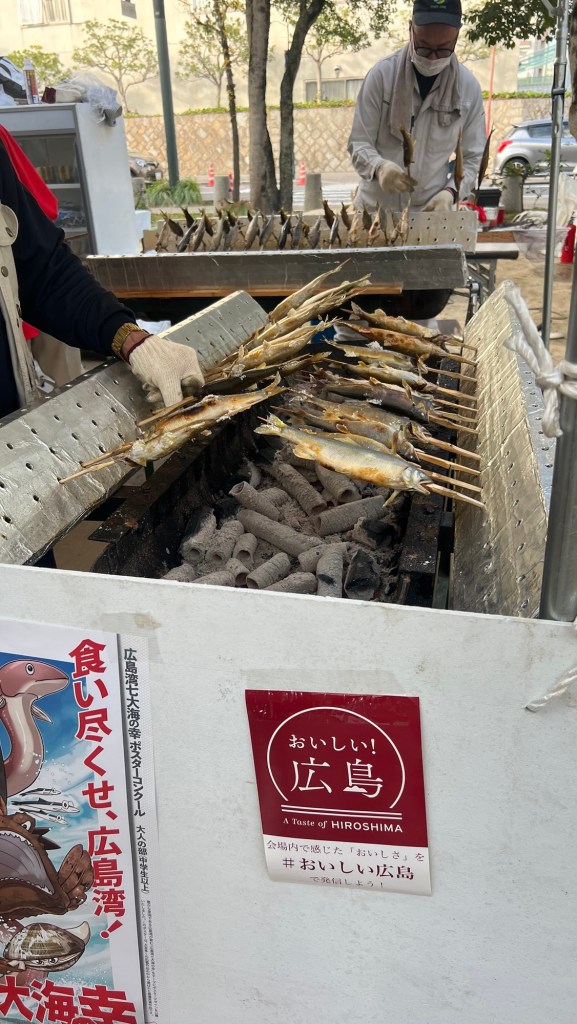
Seeing the locals at play was great, with their fish and meat steaks in one hand a beer in the other.
After our castle stop off we paid a visit to Hondori Street, a pedestrian arcade that is closed to traffic and lined with shops and is the main walking street.
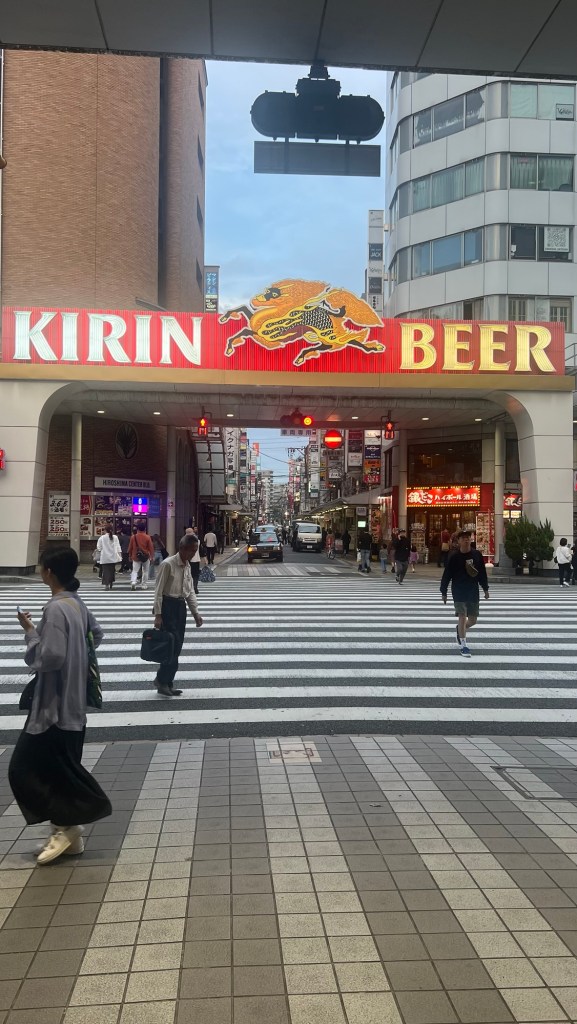
After another busy day walking around the sights of Hiroshima we returned to our hotel for a brief relax, before heading out in the evening for a ramen with a group from the tour.
Tomorrow we move on to Kyoto via bullet train, a return visit for us, and will be heading straight out to your the Nijo Castle along with the geisha district of Gion.
 @travellingwiththeateam