Today we decided to explore the dramatic Fox and Franz Josef glaciers, two of the most accessible glaciers in the world. With the cloud cover low we decided against a scenic helicopter flight and instead went for the traditional hiking option instead.
Our first stop was Fox Glacier, given the name in 1872 after a visit by then New Zealand premier, William Fox.
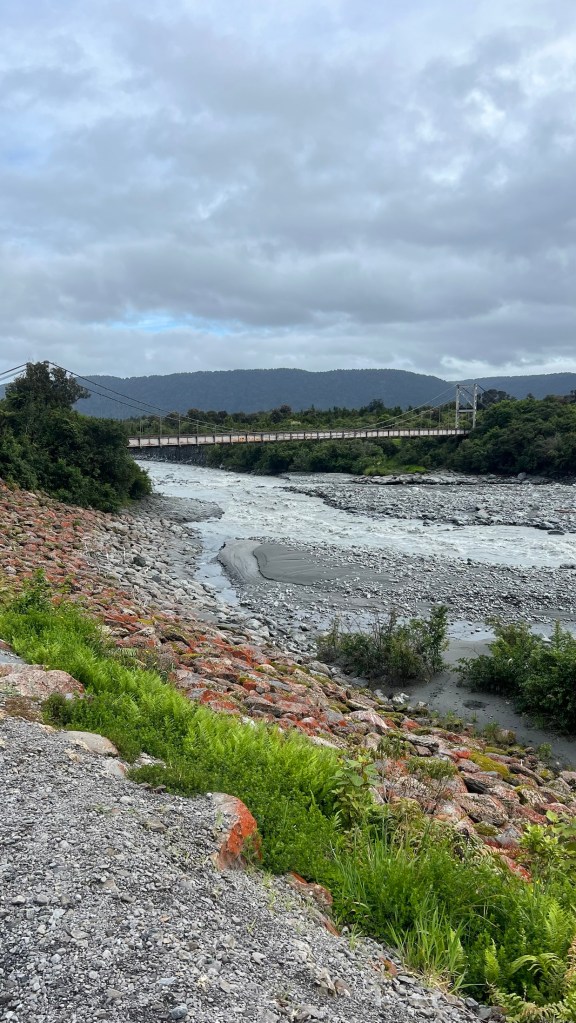
Our route was the Fox Glacier South Side Walkway which followed the south bank of the Fox River through ancient podocarp rainforest.
The track headed gently up the valley crossing ancient glacial moraine surfaces, with the forest reflecting the various ages of the glacier moraines which it has colonised.
The first view point was reached after 40 minutes walk.
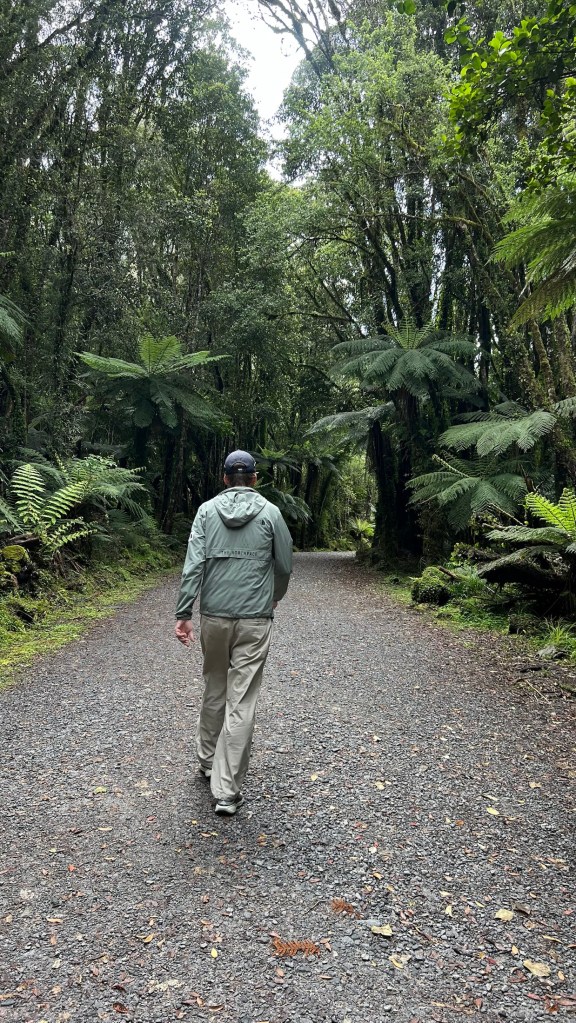
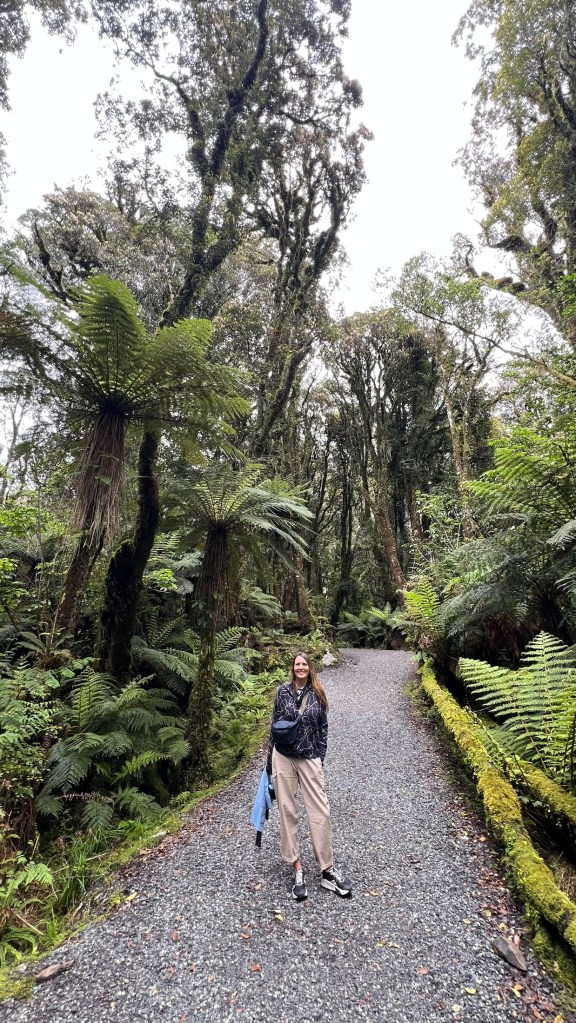
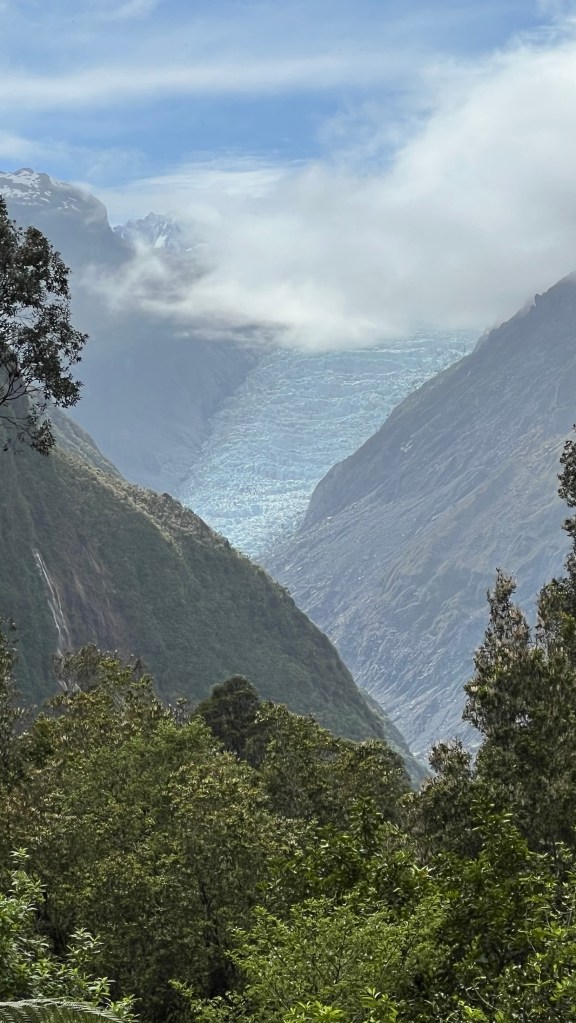
The track winded gently downhill through the rainforest for approximately 10 minutes to a view point of Fox Glacier Te Moeka o Tuawe.
As with our walks in New Zealand there is a feeling of having stepped into a Jurassic movie, surrounded by forest and a range of birdlife.
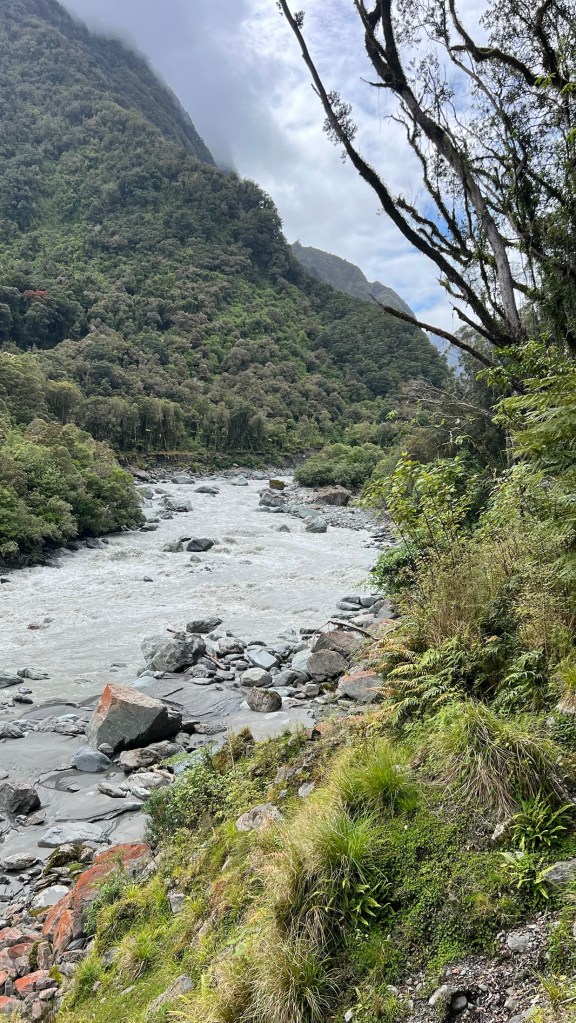
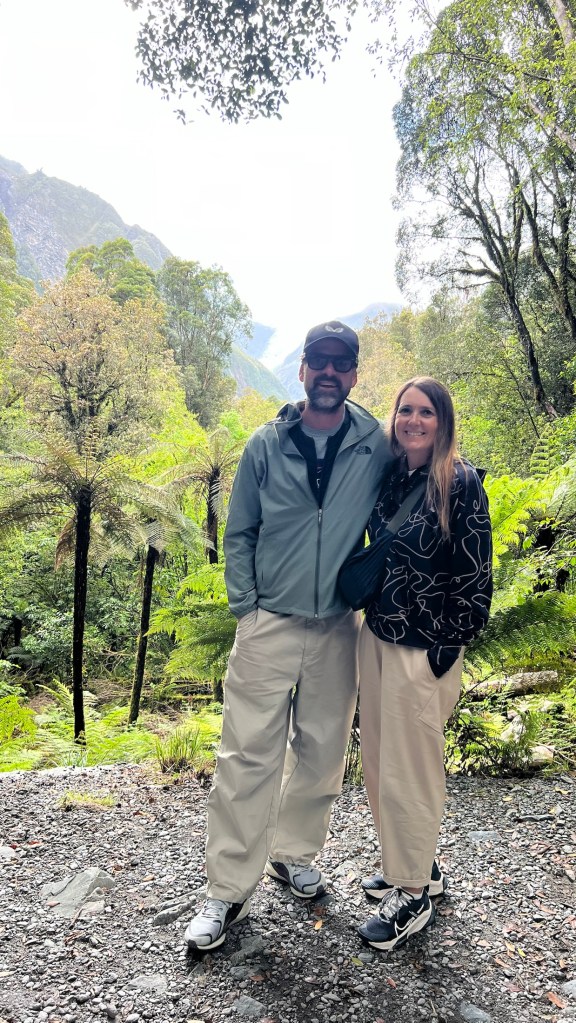
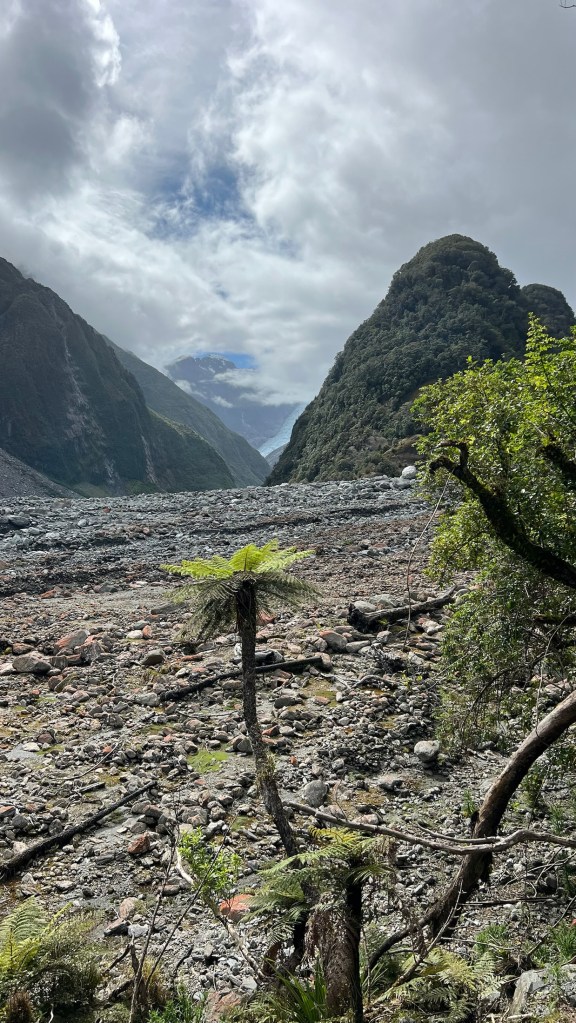
The views were pretty impressive, the first of which came just before we reached the peak of our climb.
We found a couple of viewing spots, which gave us arguably the best sight of the retreating glacier and the expansive rock & wood debris left behind in its wake.
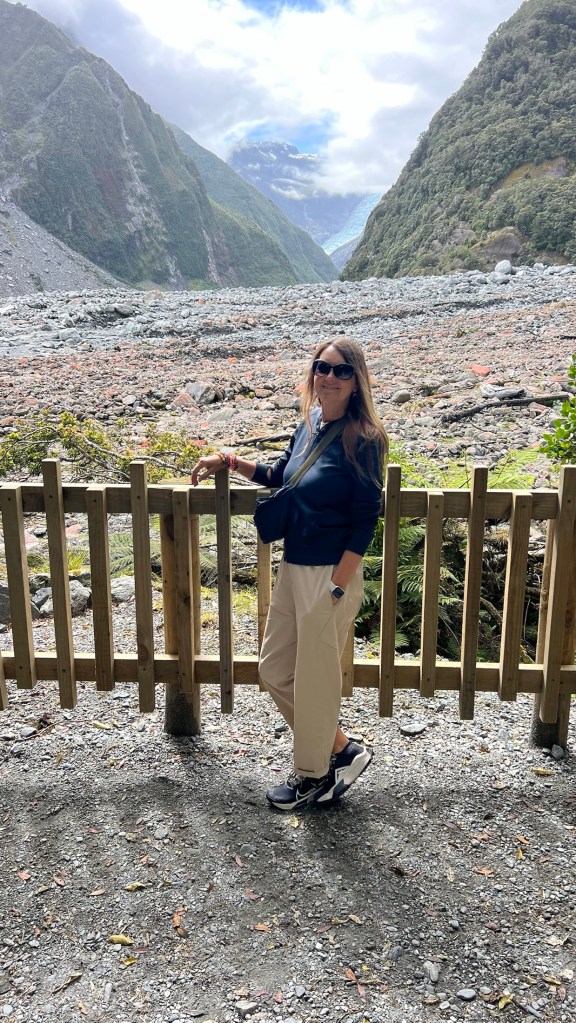
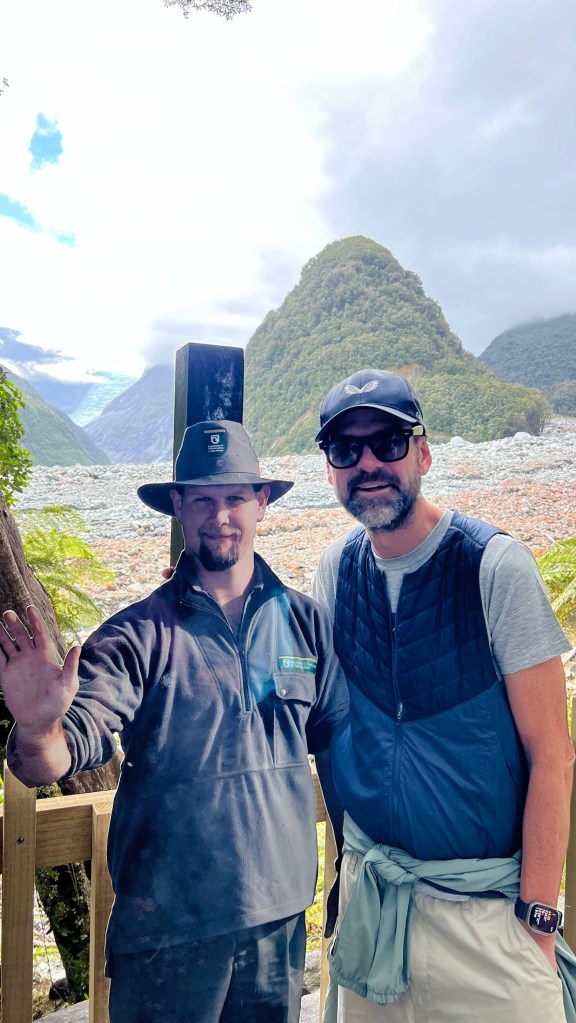
There were plenty of signs advising of landslides due to the erosion of the ice and as a result the ability to walk further and get to the ice cap of the glacier just wasn’t possible.

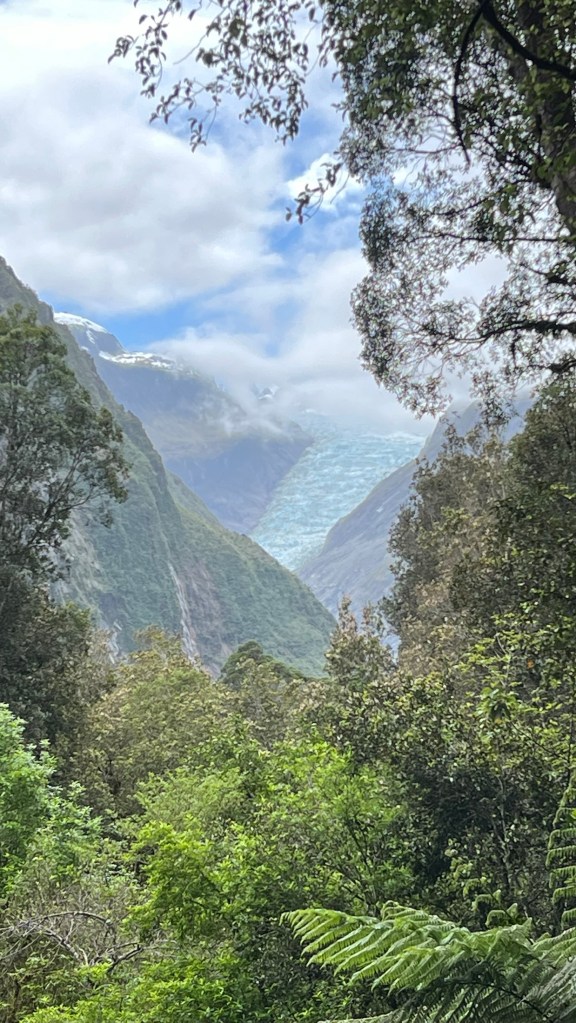
After a round walk of 90minutes/6km we got back in our car and drove the 20km up the highway to Franz Josef glacier, a place we had visited just over 20yrs ago and where we had vivid memories of physically climbing on to the glacier. Not so this time.

Unquestionably Franz Josef Glacier remains one of New Zealand’s must see sights, however the speed of the ice erosion was quite startling with the glacier having retreated more in the last 20yrs, than it had done in the prior 200yrs!!
Together with the Fox Glacier to the south, it is unique as it drops all the way from the peaks of the Southern Alps to just 300 metres above sea level, where it ends among the greenery and lushness of a temperate rainforest. According to Maori legend Franz Josef was created by a young woman called Hinehukatere who wanted to share her passion for climbing in the mountains with her lover Wawe. Sadly he wasn’t as good a climber as Hinehukatere and slipped to his death. The legend goes that Hinehukatere cried so much that as her tears froze they formed the glacier.
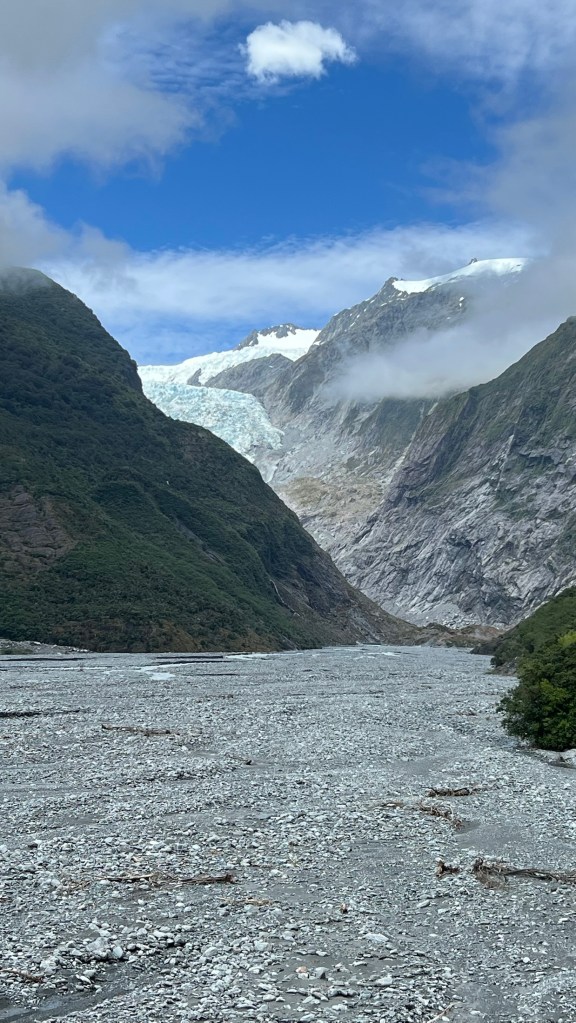
The Franz Josef glacier now sits almost 1/2km back from when we saw it last in 2003 and you can now longer access the ice due to changes in the river system and the erosion of the original path.
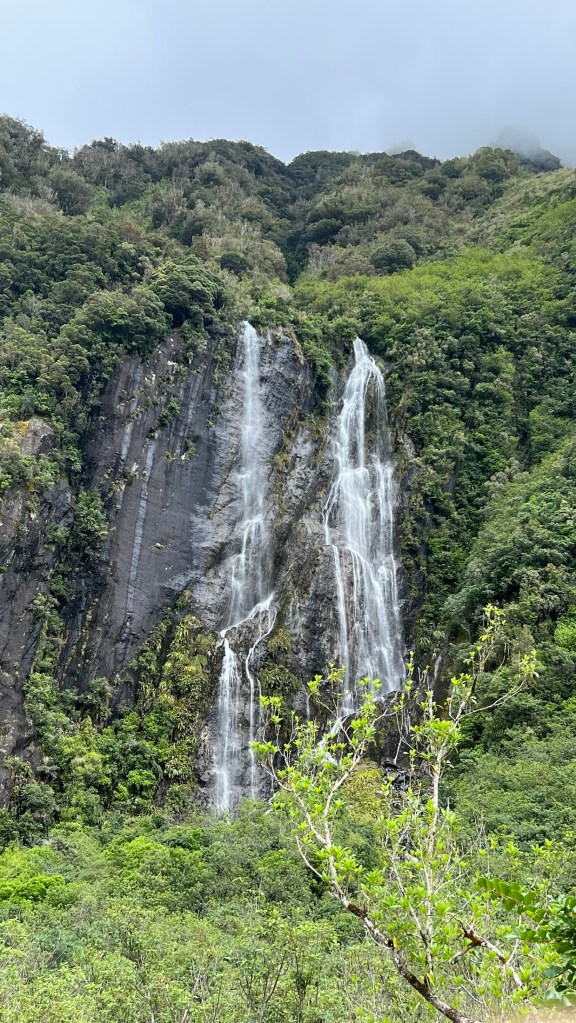
We still felt incredibly honoured to get to see the glacier and to see first hand the amazing backdrop of ice and rainforest at close quarters.
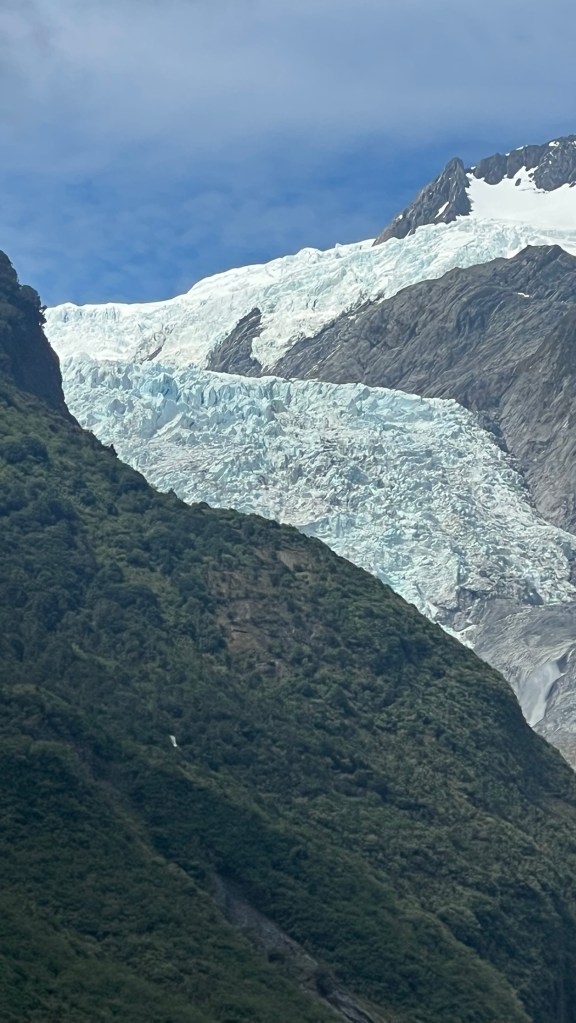
As the day wore on, conditions had improved and we were able to clearly see the top of the mountain and the scale of the glacier.
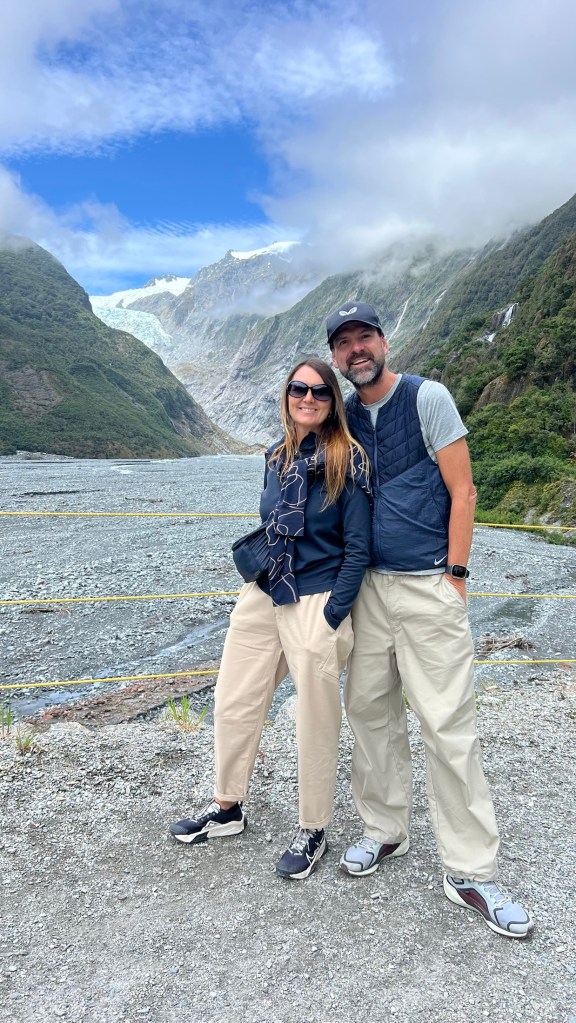
The furthest point on our walk was documented by a sign stating that this was originally where the glacier had extended to in 1908, but some 100yrs or so later has retreated half way back up the mountain.

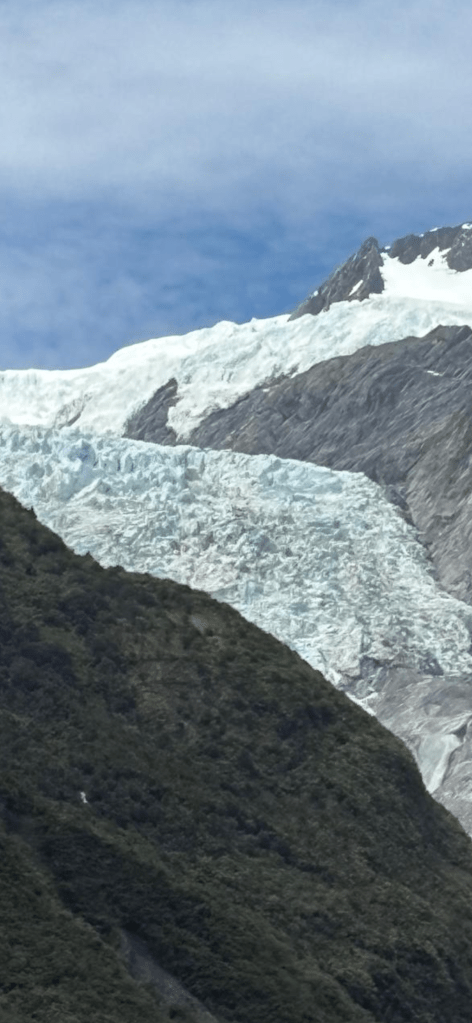
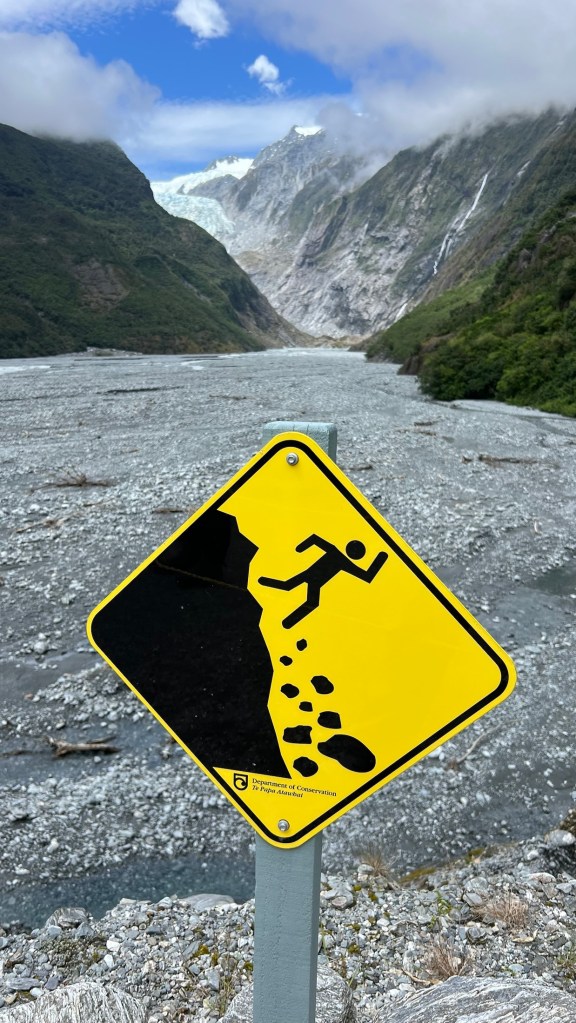
After an enjoyable and inspiring morning amongst the glaciers, we made our way up the ‘glacier highway’ along the West Coast and to our destination for the evening the seaside town of Hokitika.
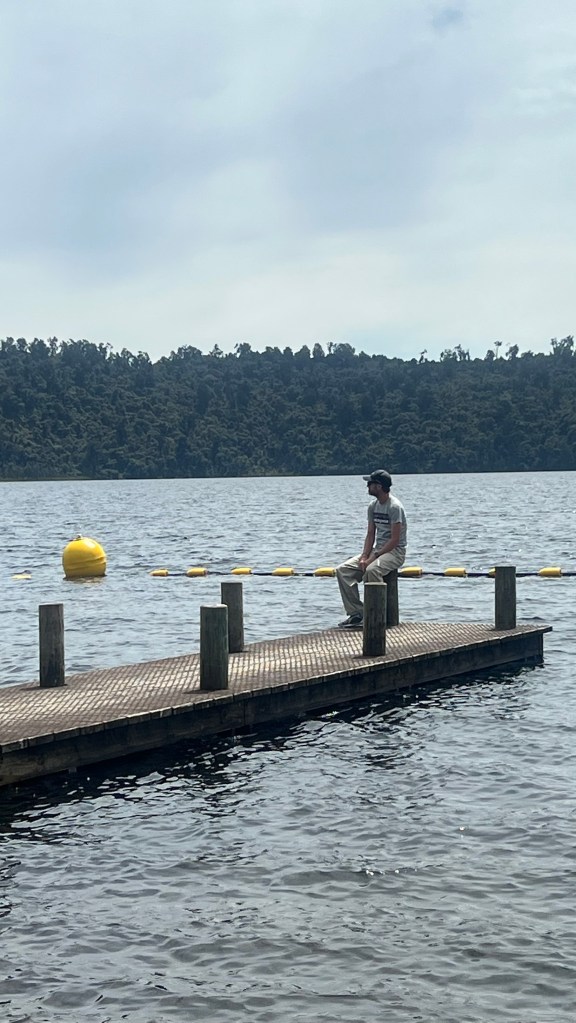
Hokitika sits about 40km south of Greymouth and close to the mouth of the Hokitika River. It’s a pretty place with a chilled vibe and is known as the Cool Little Town.
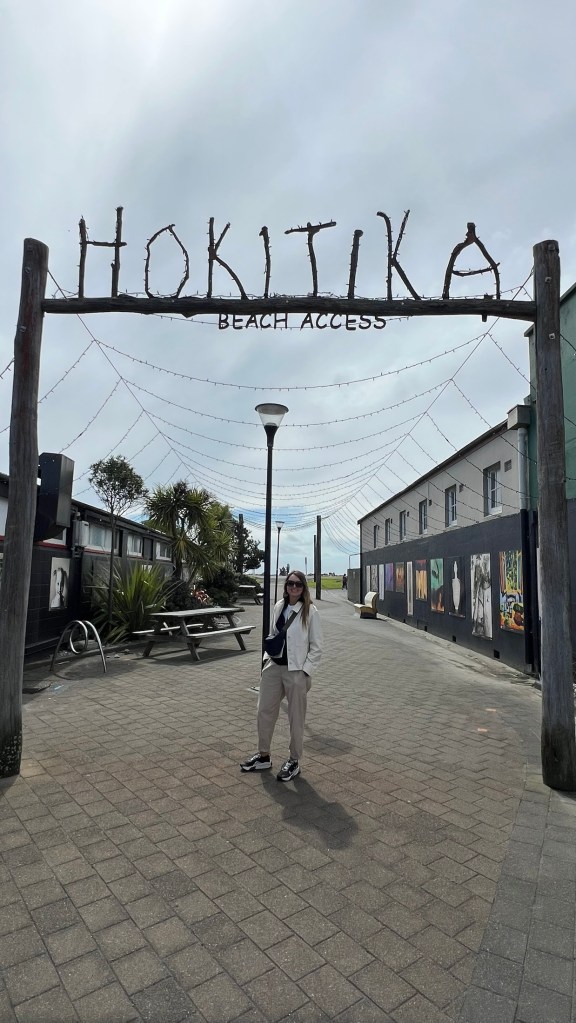
There were some lovely old buildings in the town’s historic centre, along with galleries specialising in pounamu jewellery and art works.

On a clear day we were told you could see Mount Cook from Hokitika’s Main Street, but despite the sight of the sunshine we couldn’t quite see the infamous mountain.
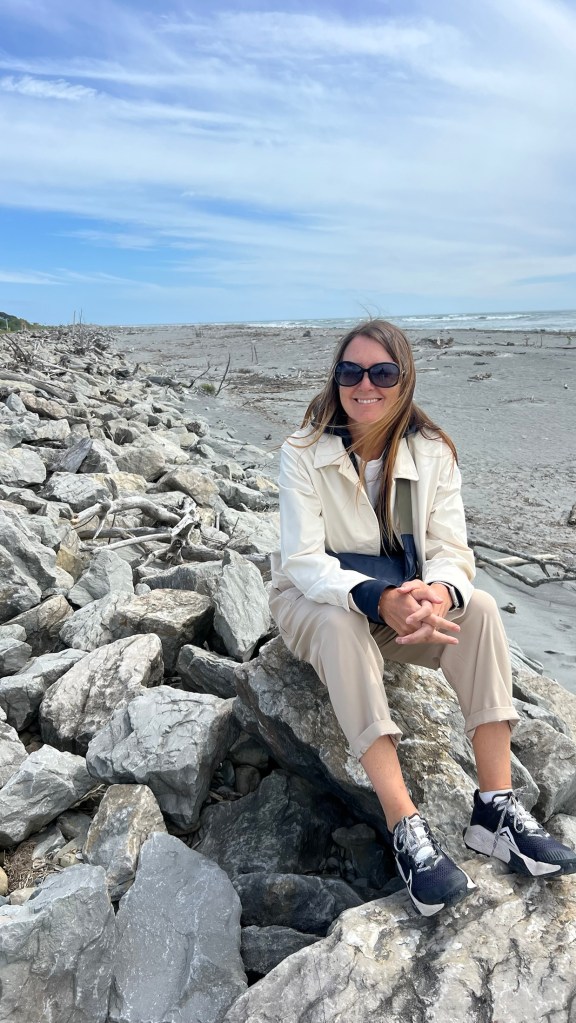
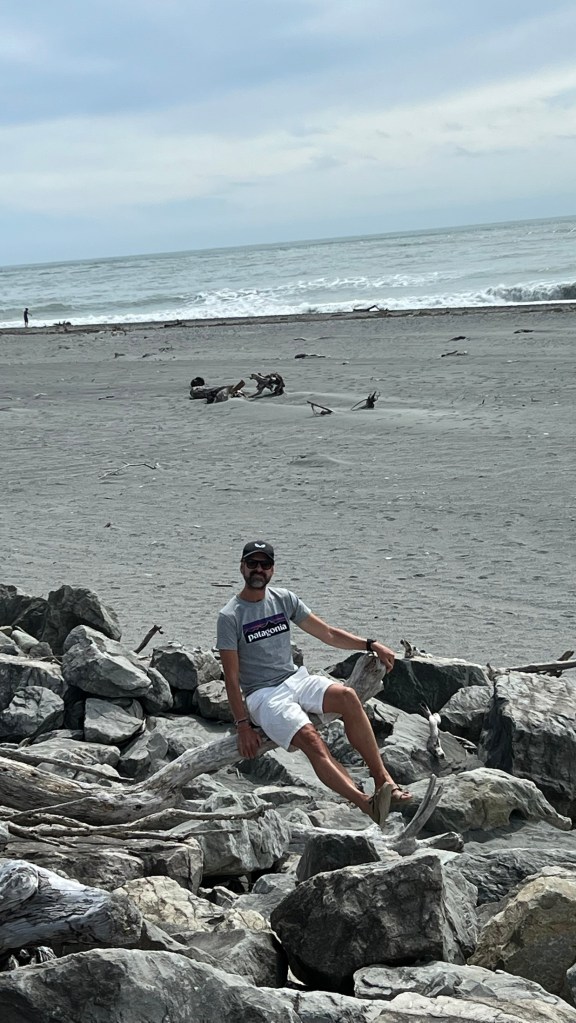
Instead we went for a wander along the beach, picking a path through the endless drift wood that was scattered across the sands.
After popping into the local tourist information centre we decided to pay a visit to the Hokitika gorge located about 25km inland.
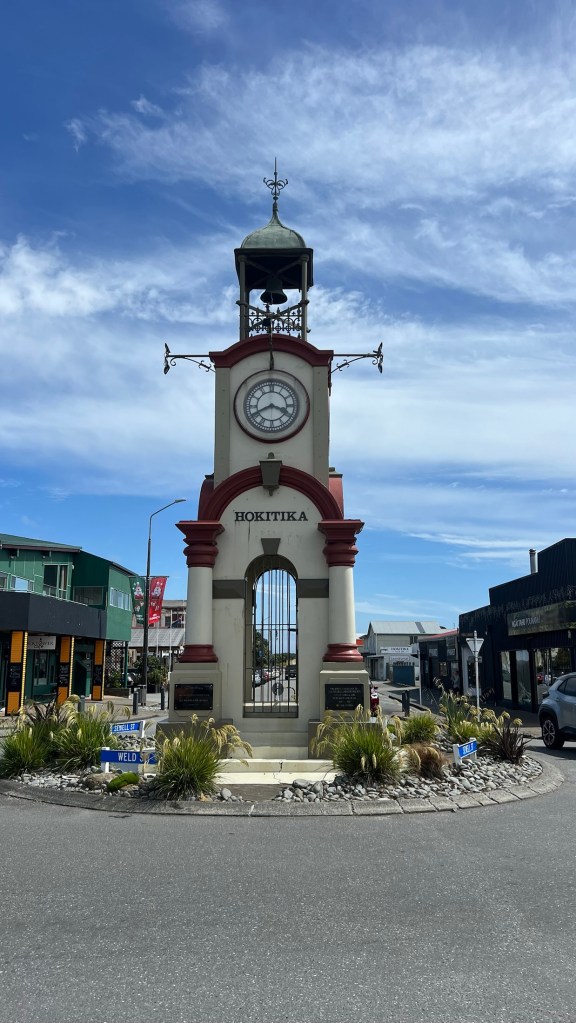
Nearby Hokitika Gorge is a popular short tourist walk, with vibrant blue waters and a “swing” (metal rope suspension) bridge.
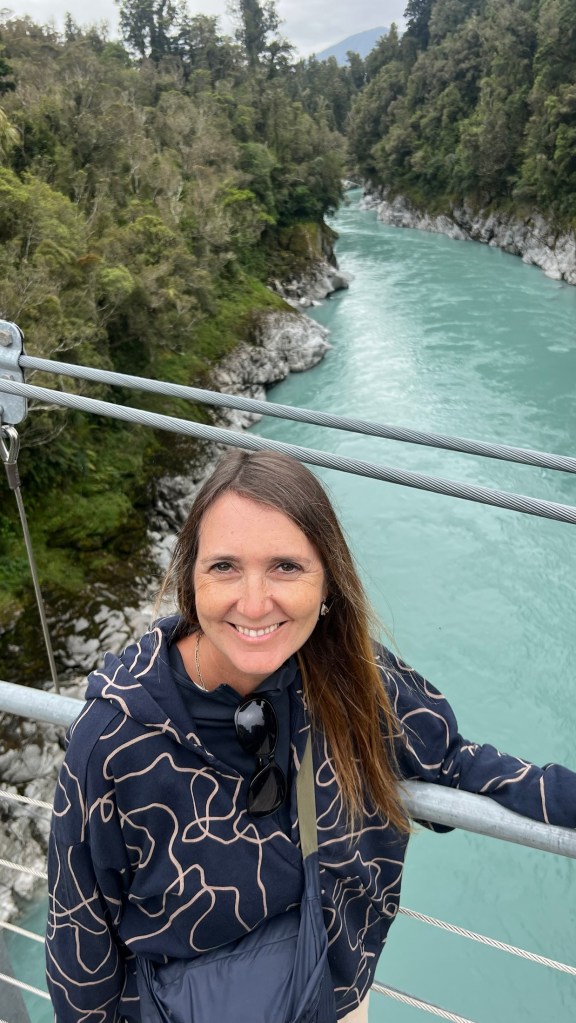
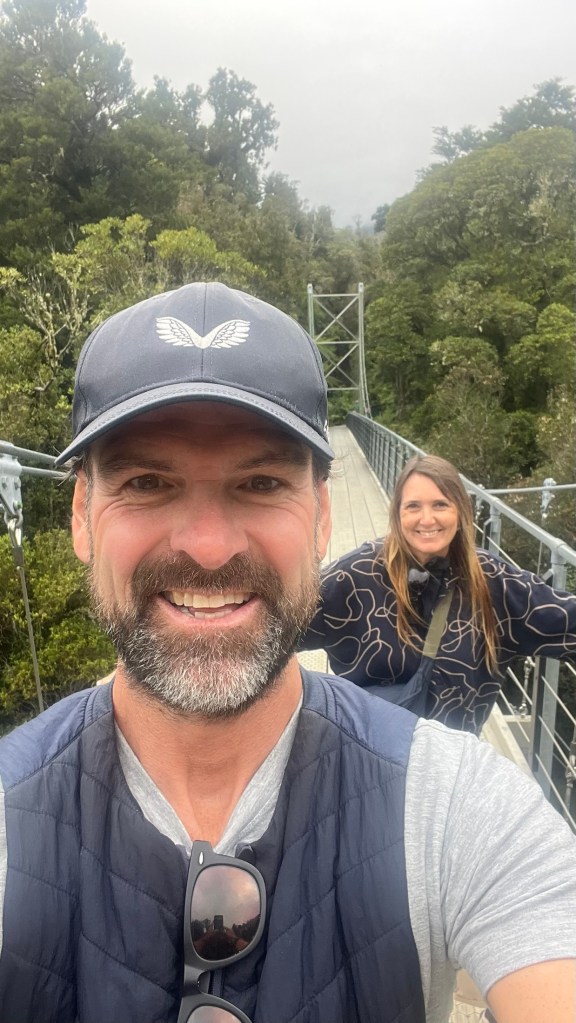
The colour of the water below was incredibly eye catching, almost unreal and looked very inviting despite its glacier source and cold temperature.
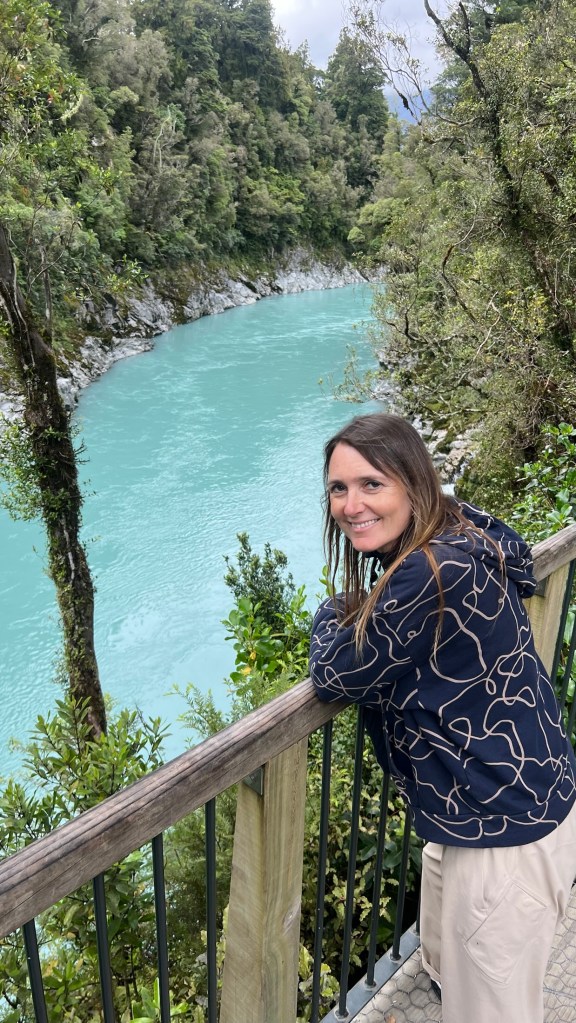
We ended up doing a circular walk for roughly an hour to get out to the gorge and were rewarded by wonderful scenery.
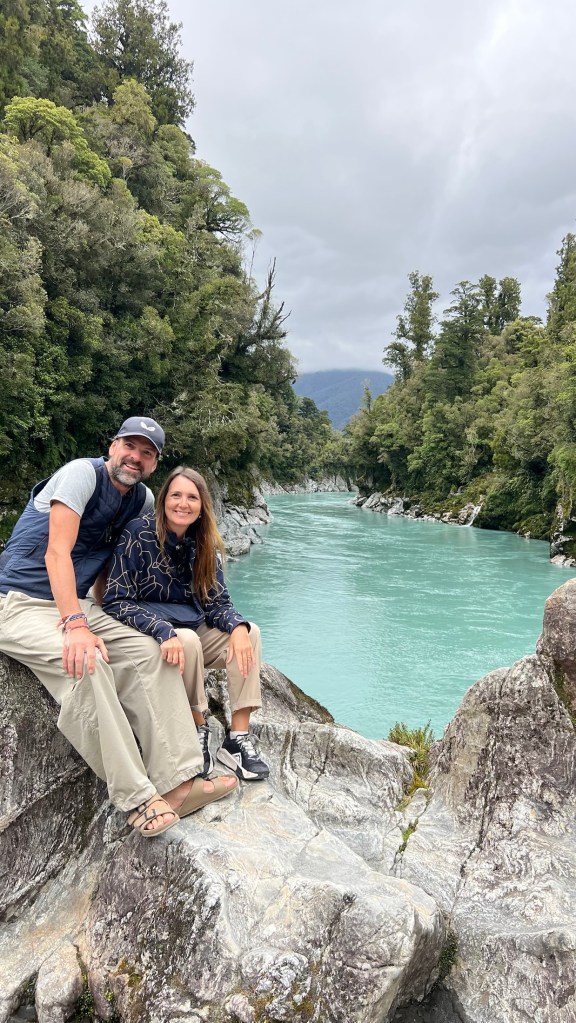
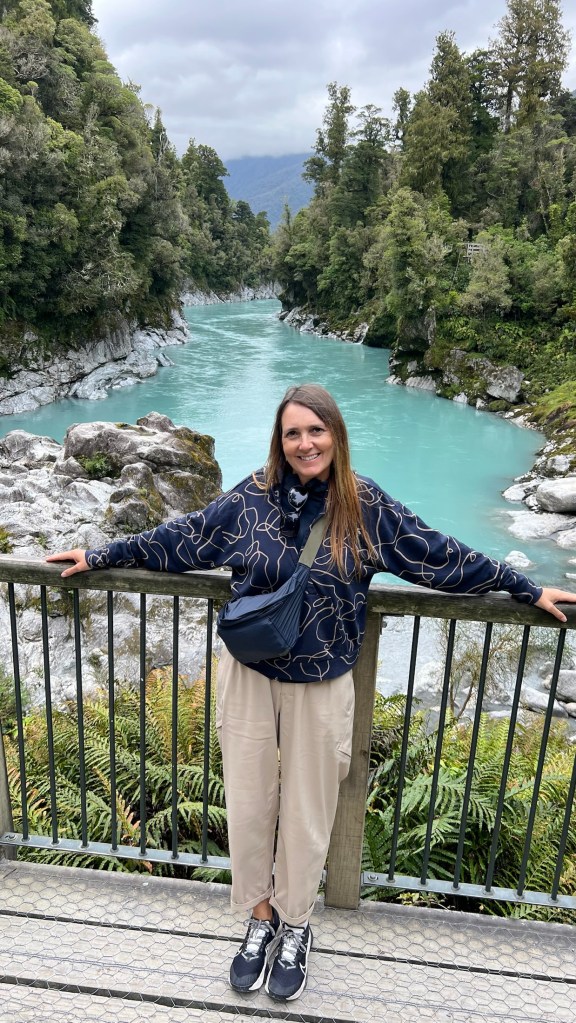
Stopping to view the turquoise waters of Hokitika Gorge is a definite must-do.
Our short walk took us to a lookout where stunning upstream views of the glacial river are surrounded by beautiful native rimu forests.
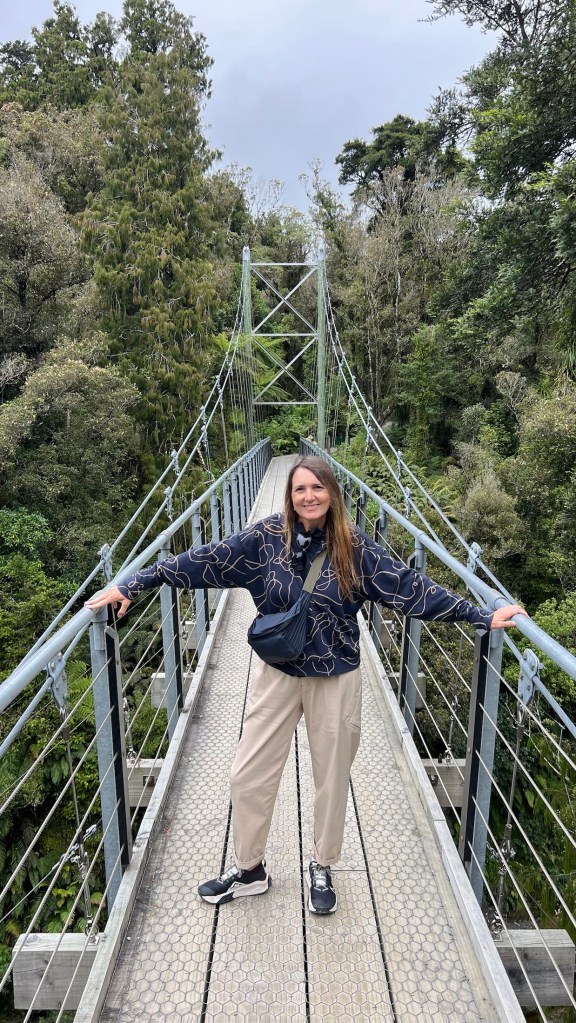
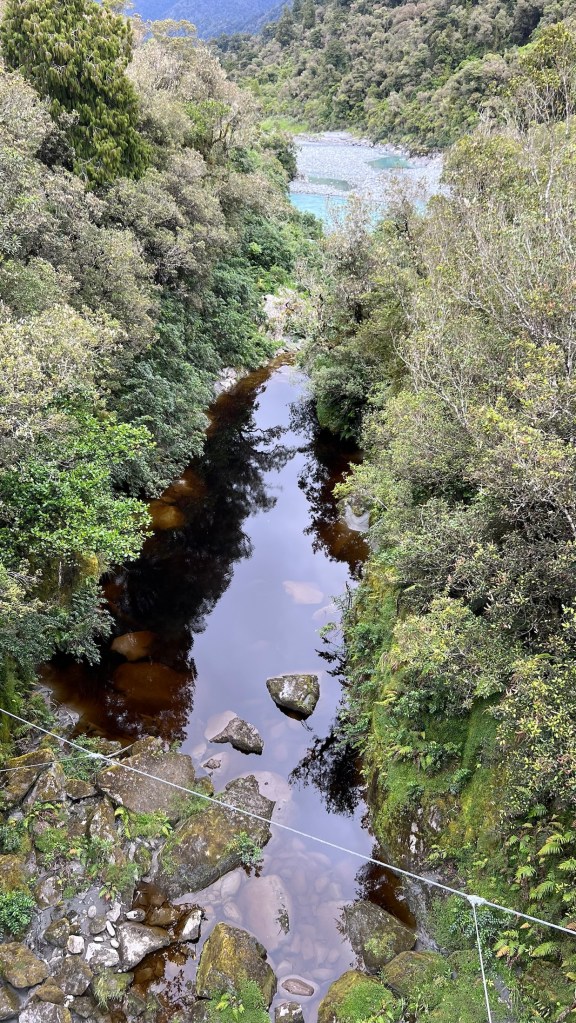

After our gorge walk we headed back on to the coast and our B&B a couple of miles north of the town. We were greeted by one of the owners who showed us round what looked to be an almost new studio. It was a great find with the bonus of a free breakfast in the morning. Added to this it was quiet despite the array of farmyard animals in the paddocks around the property.
Tomorrow we continue our drive up the West Coast to West Port. Along the way we intend to drop in on Pancake Rocks and Blowholes in Punakaiki and discover the Ōpārara basin in the Kahurangi National Park, walking through its unspoiled native subtropical forest, cathedral-like arches and limestone formations and cave systems.
 @travellingwiththeateam