After a great 8 days in South Korea it was time to wave goodbye.
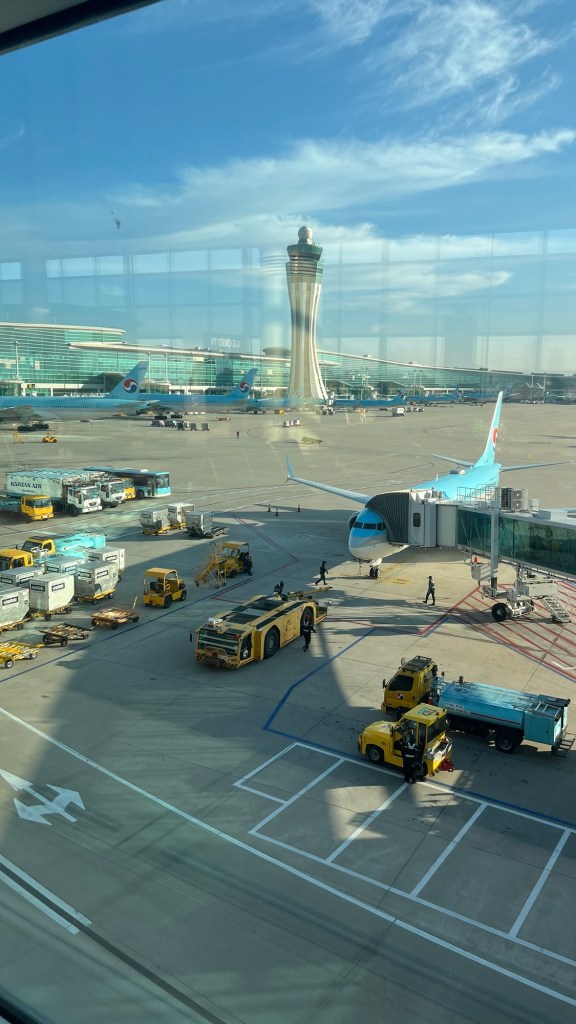
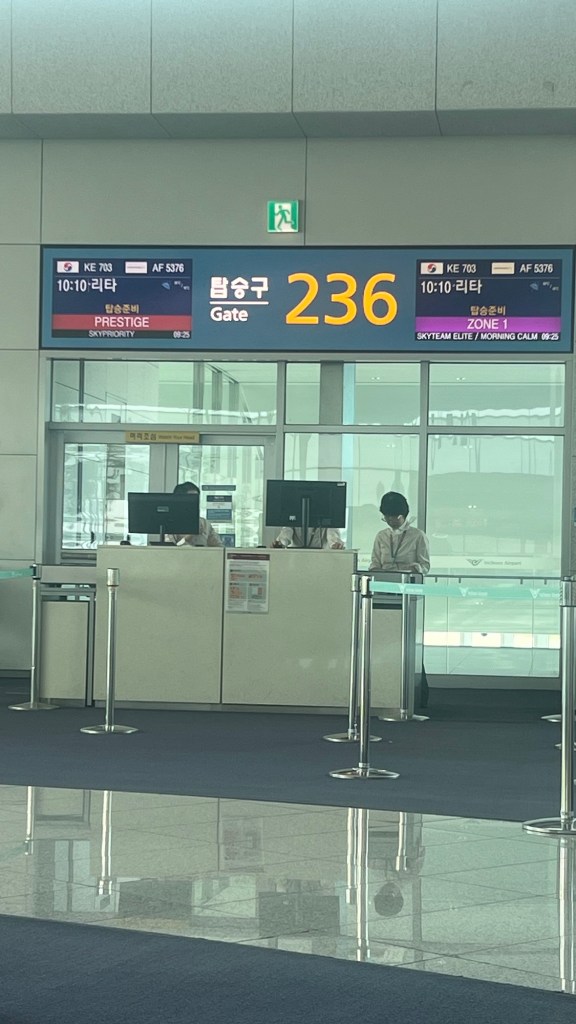
The morning involved numerous forms of transport, starting with the Uber to the Incheon Airport at 6.15am, where we very quickly worked our way through check in, security and getting to the gate.
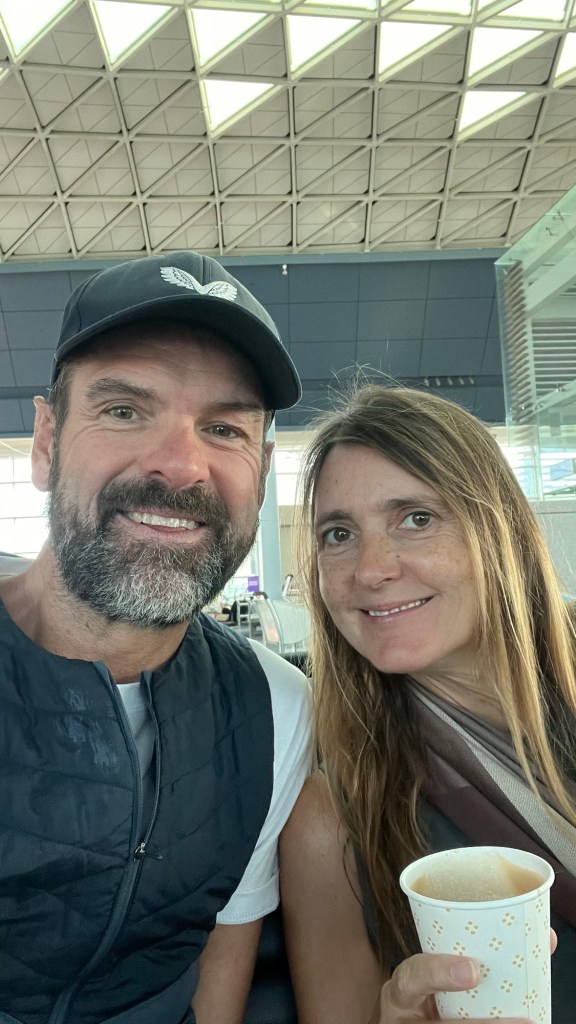
With just 90mins before the flight, it was time to catch up with messages to family and friends before we boarded the Korean Air flight to Tokyo, a short flight just under 2hrs.
We have been so impressed by how modern, clean and well ordered everything is in Seoul and the airport experience maintained that view, with boarding to the flight being bang on time and the departure of our flight being 5mins early!
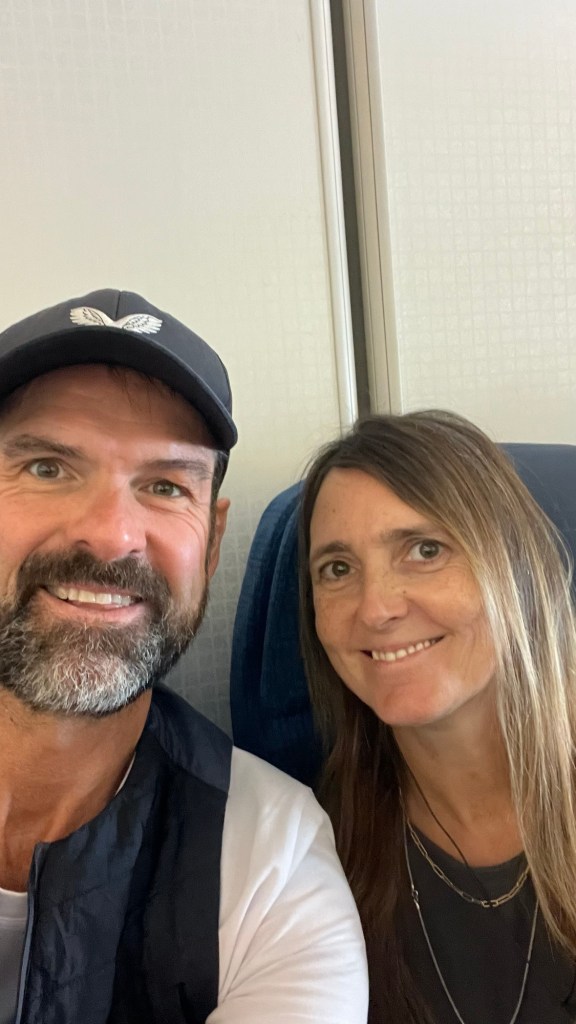
Once on the flight, the service with Korean Air was impressive, good selection of drinks and a decent cooked meal, despite the relatively short time in the air.
Enjoying out travels with Korean Air
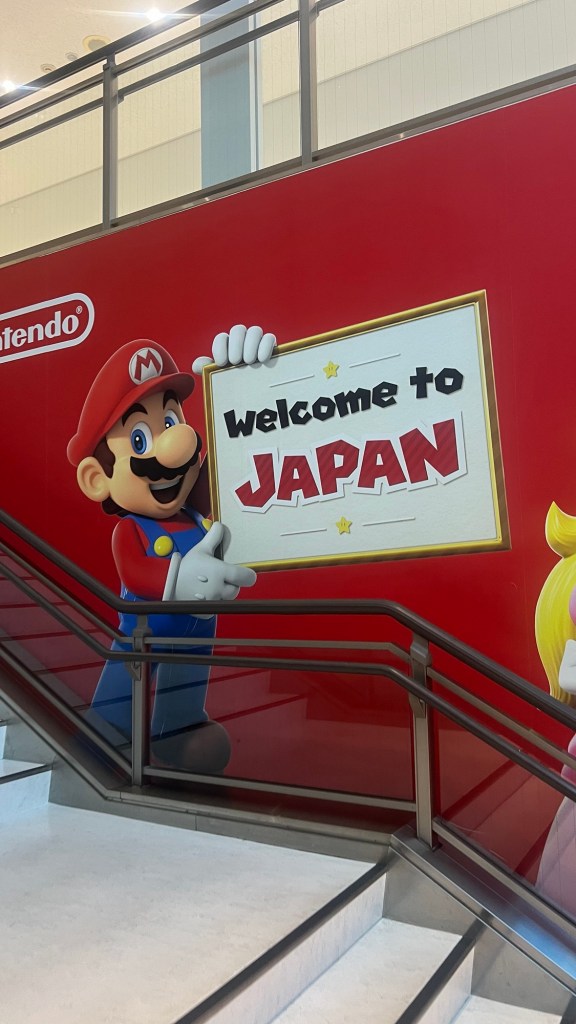
Within 2hrs we had landed in Tokyo, the eleventh country we have visited so far on our tour.
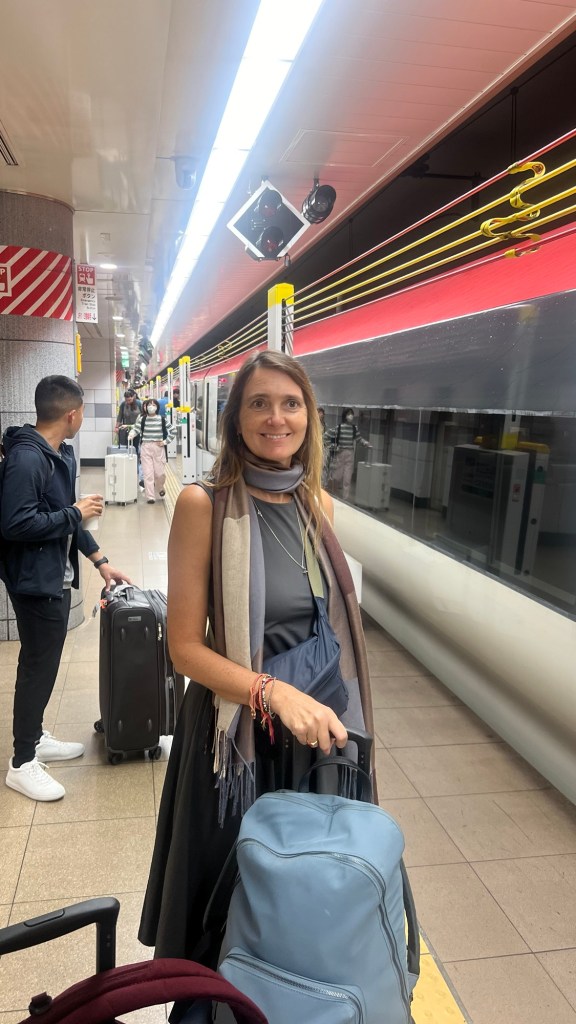
On to our third mode of transport by 1pm, we were on the train into Tokyo, a 55min journey into the heart of the city.
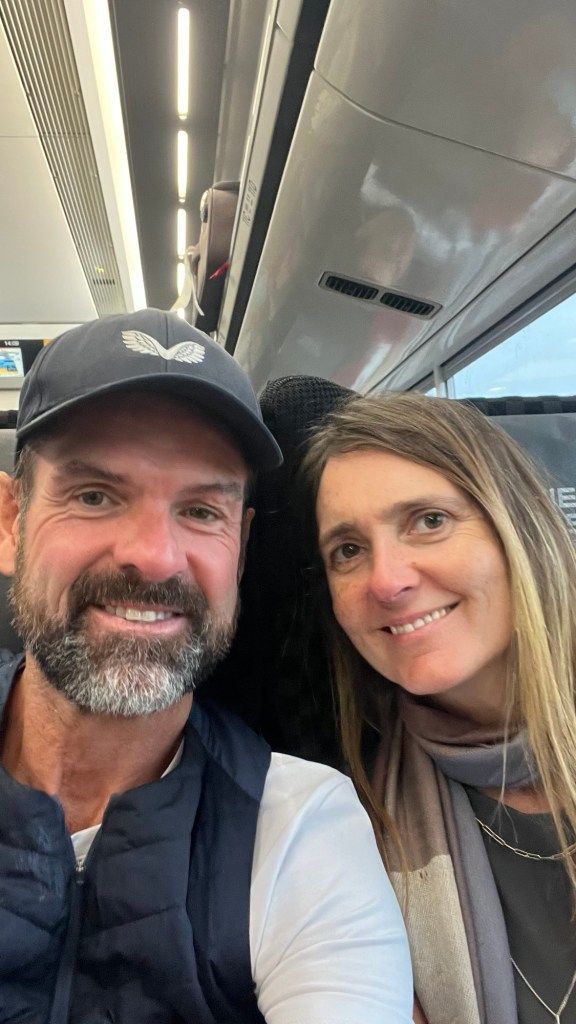
Relaxing in the comfort of the Japanese train service
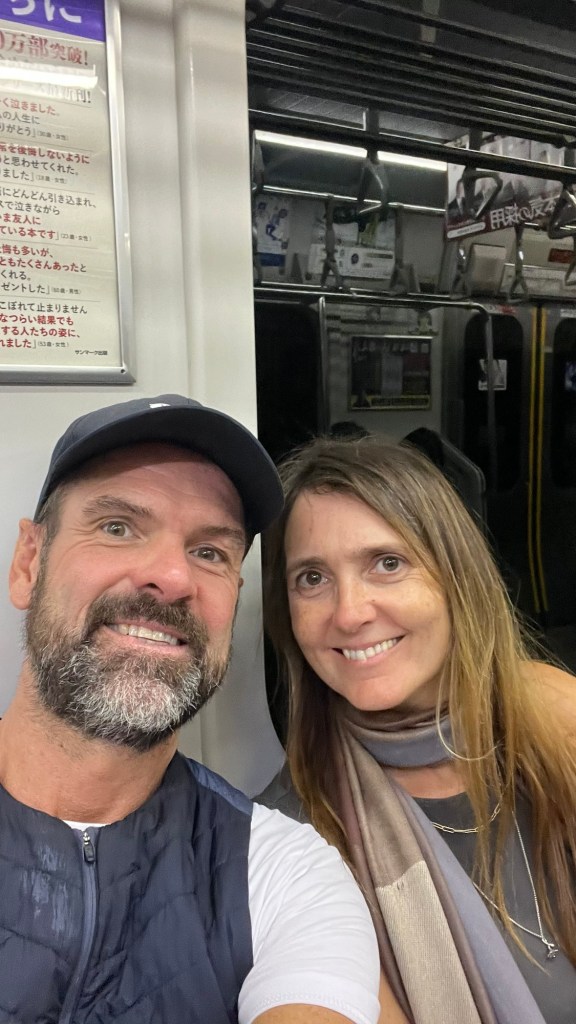
On to the fourth mode of transport today, the Tokyo underground and a relatively short journey of 3 stops to Shiomi, out in the east of the city where we are staying at a fabulous place called Hotel Kaie. Great service and lovely rooms.
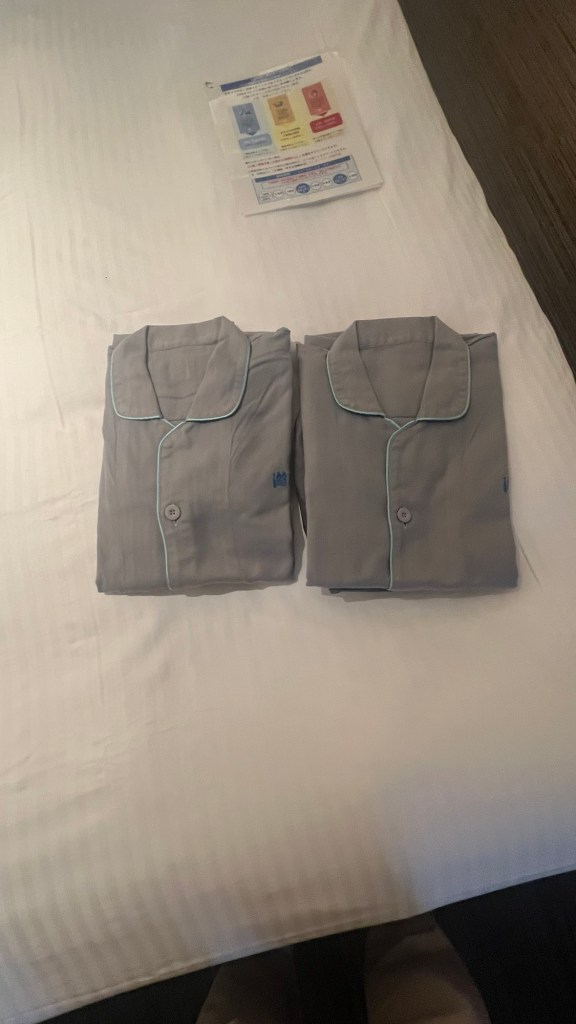
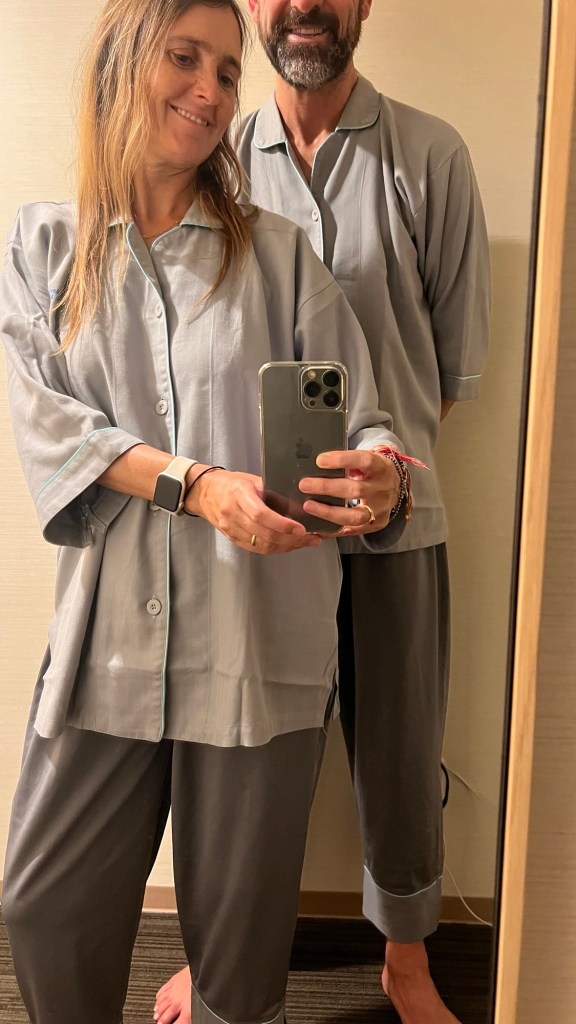
Only in Japan, our hotel room, though modest in size came with matching pyjamas that get changed each day!
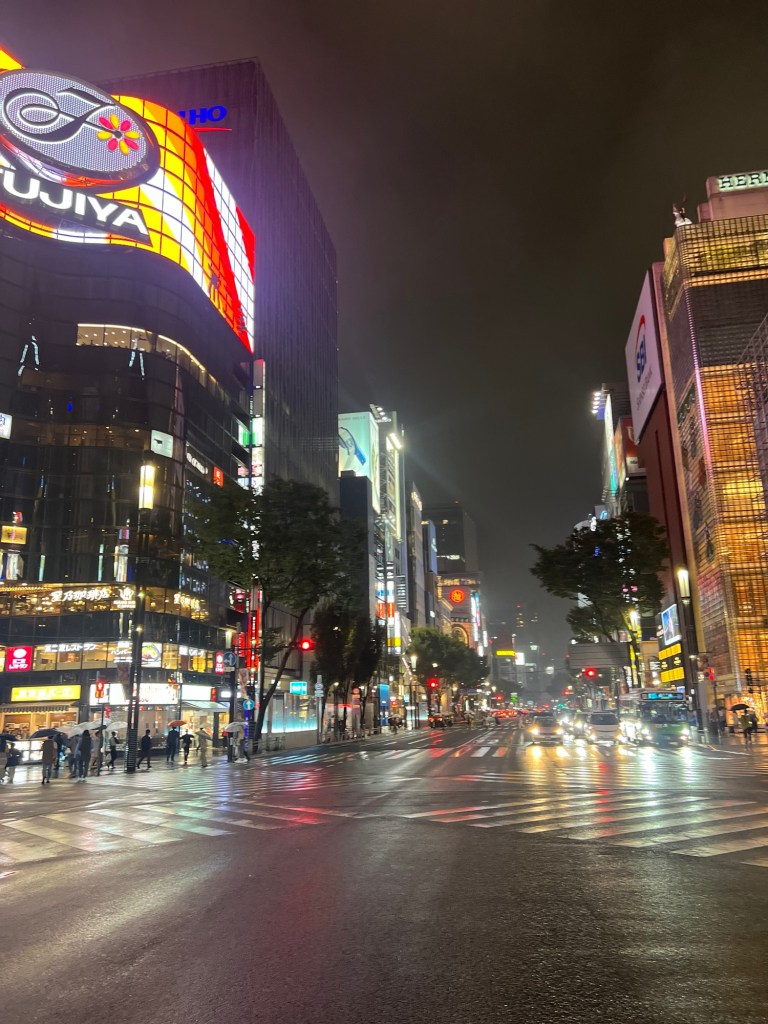
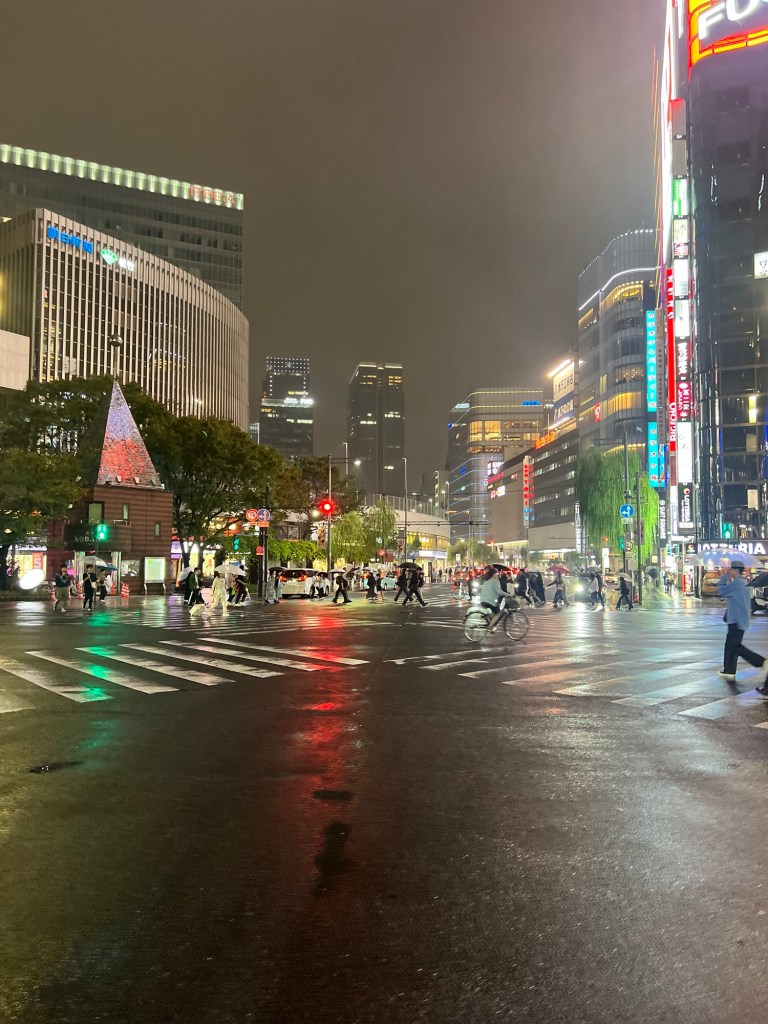
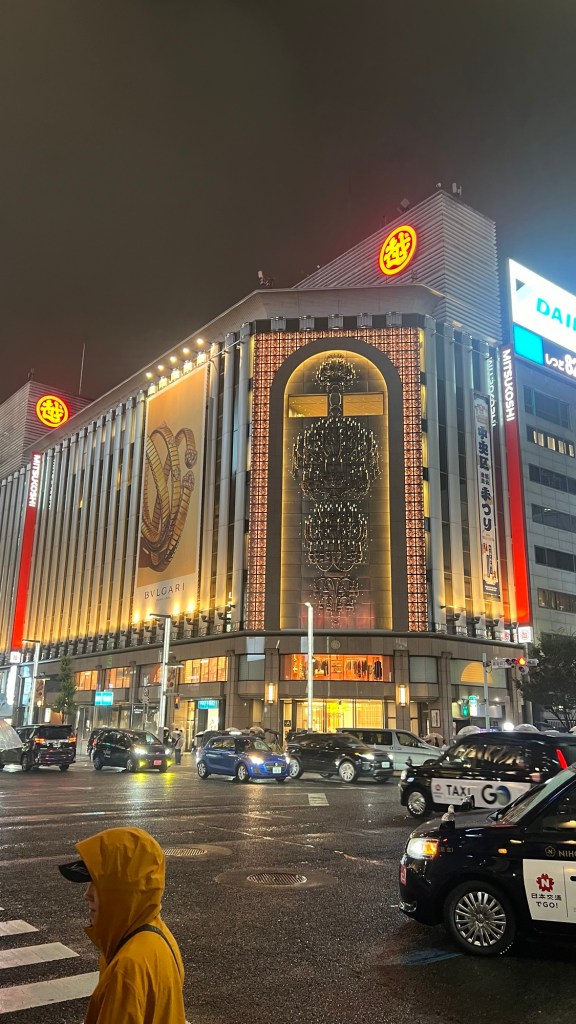
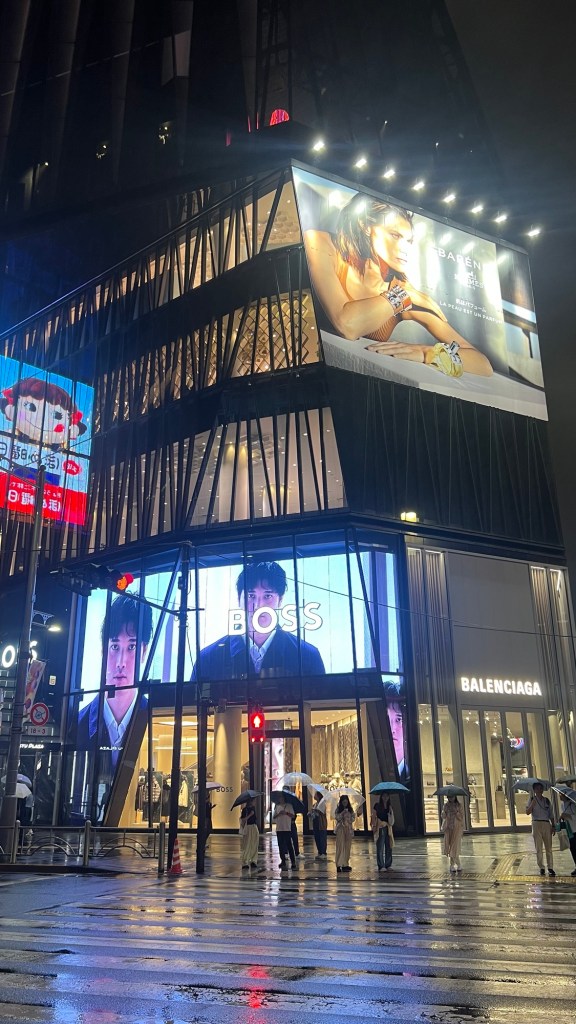
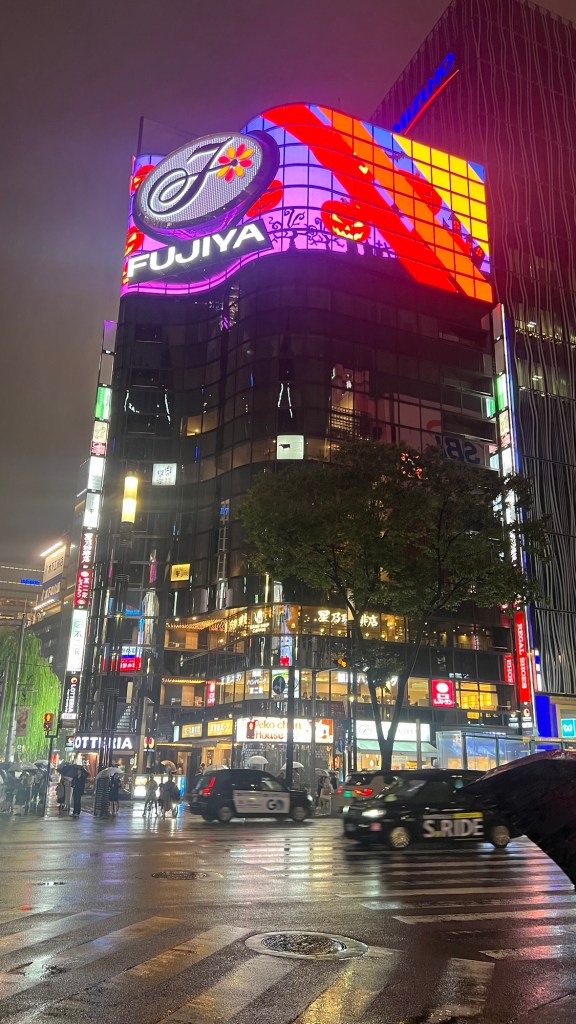
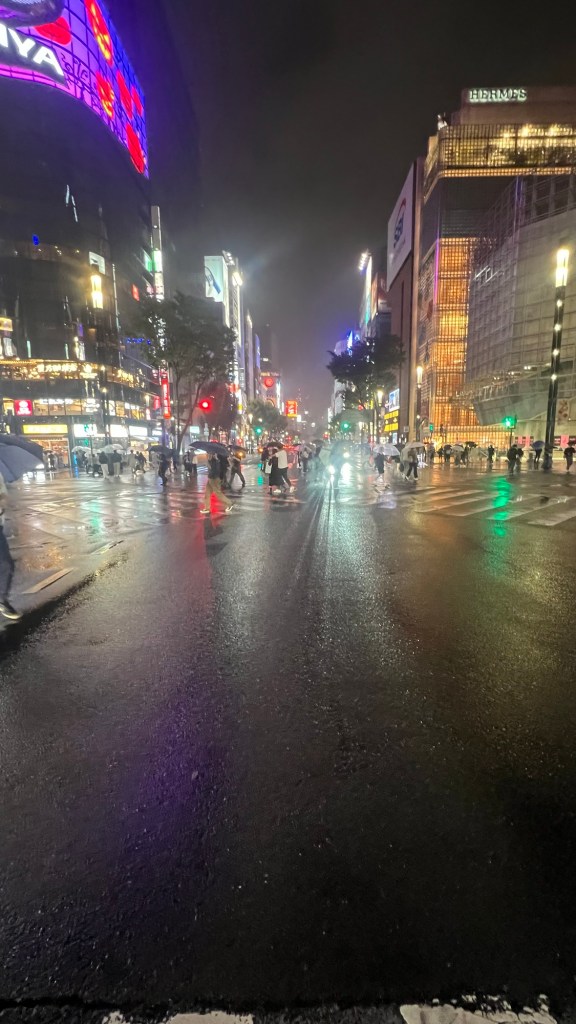
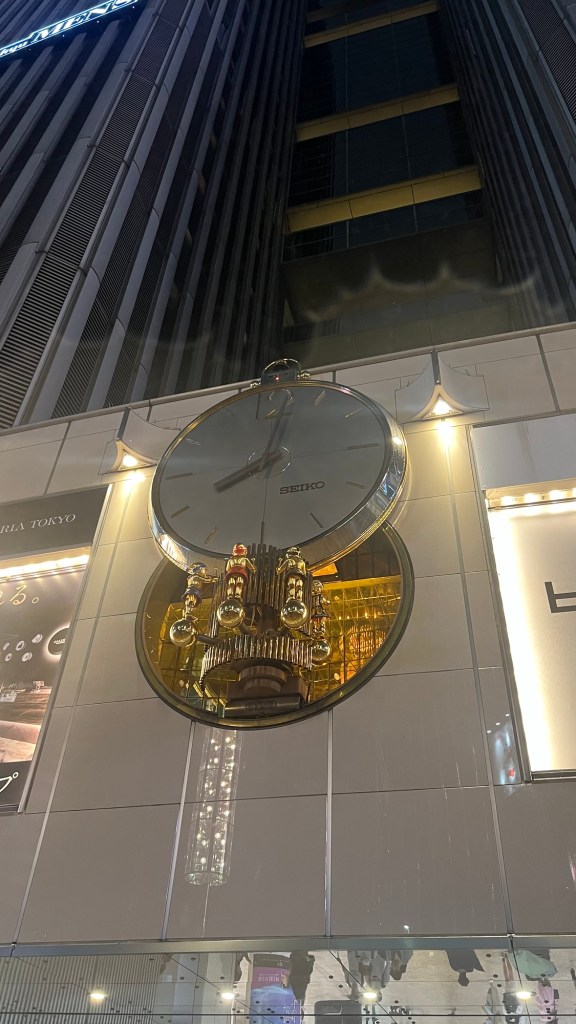
After a quick turn around, we unpacked and then headed back into the city to visit the Ginza area for a bite to eat and a lot around the prestigious shopping streets, akin to Bond Street and 5th Avenue.
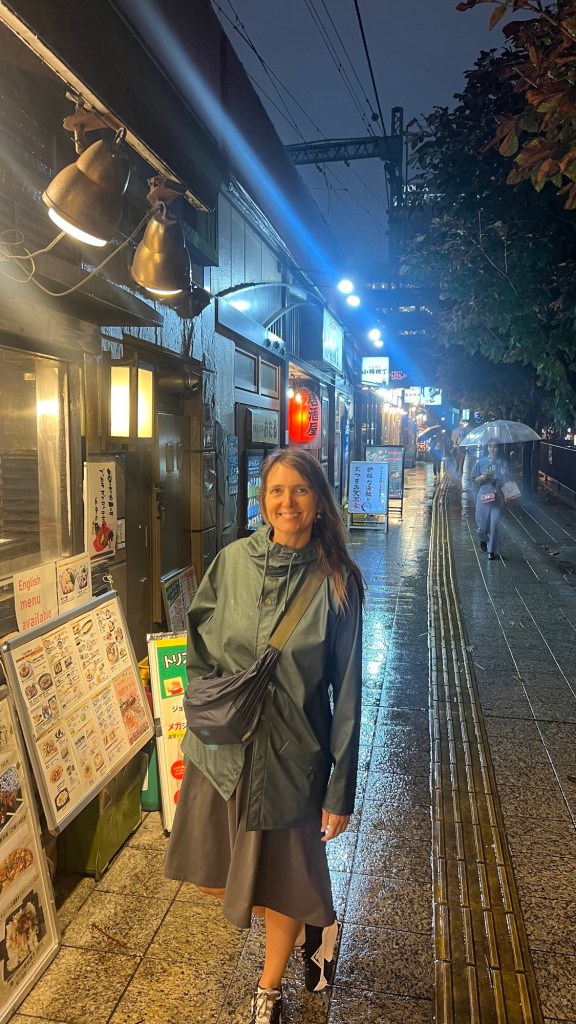
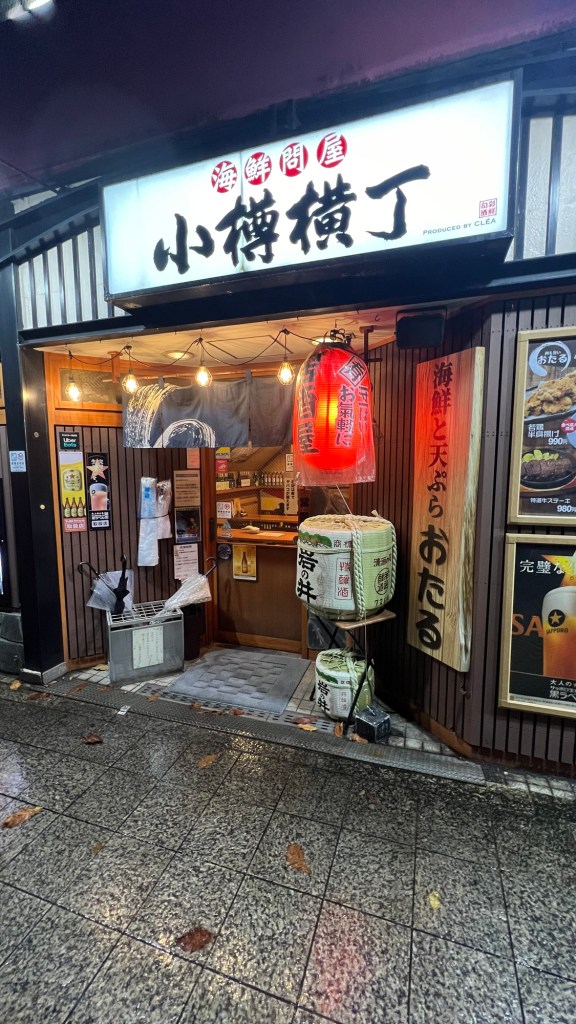
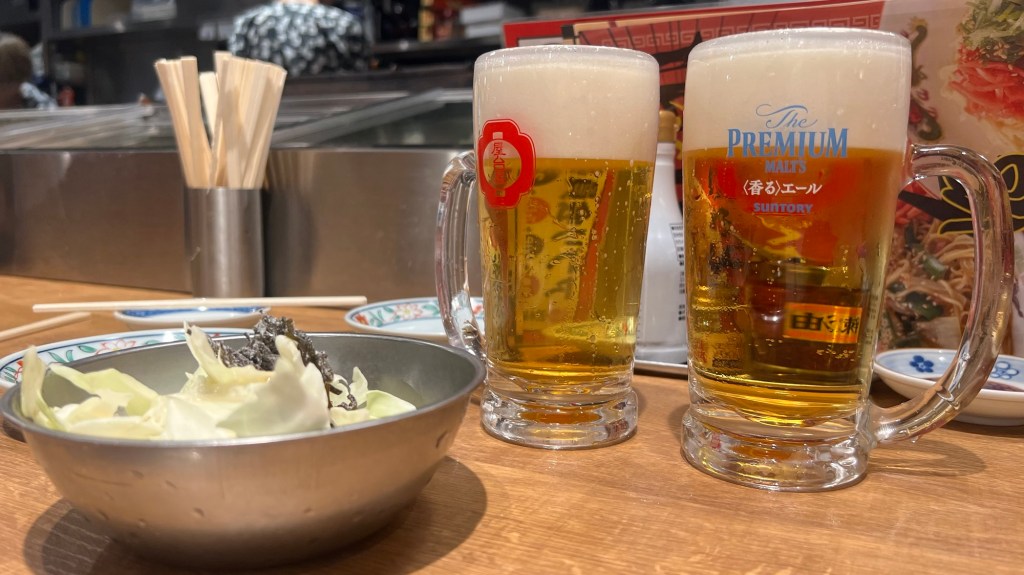
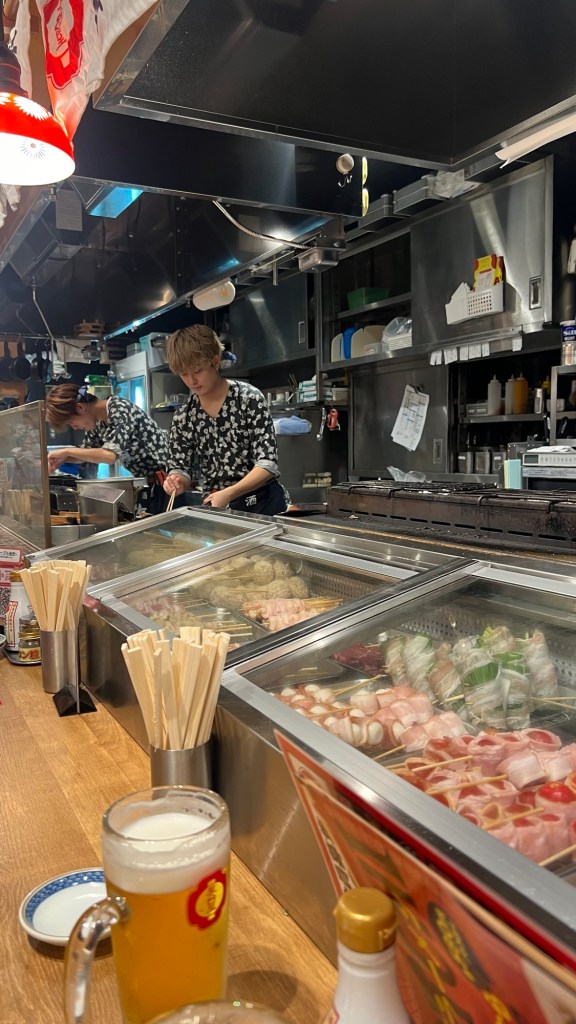
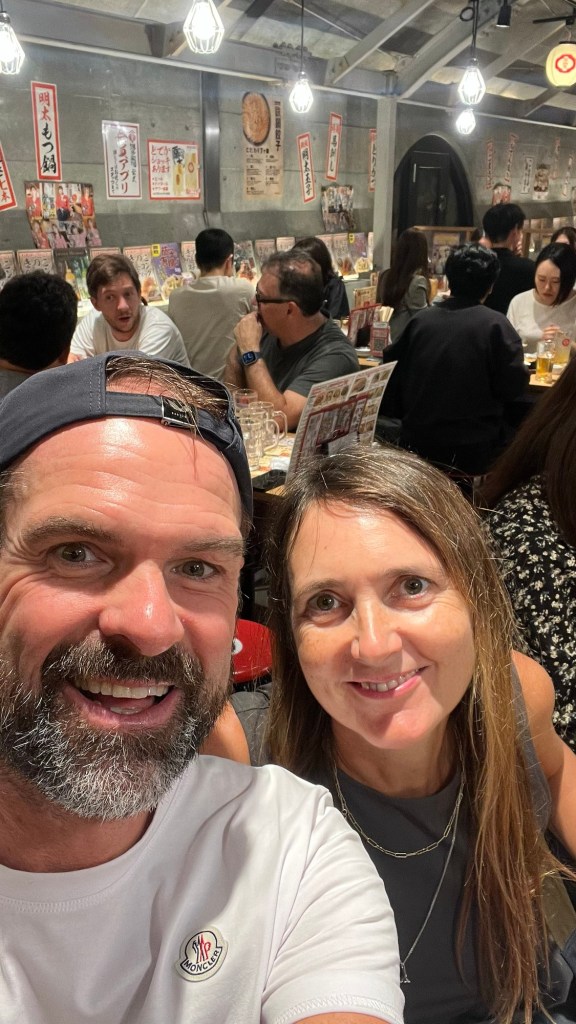
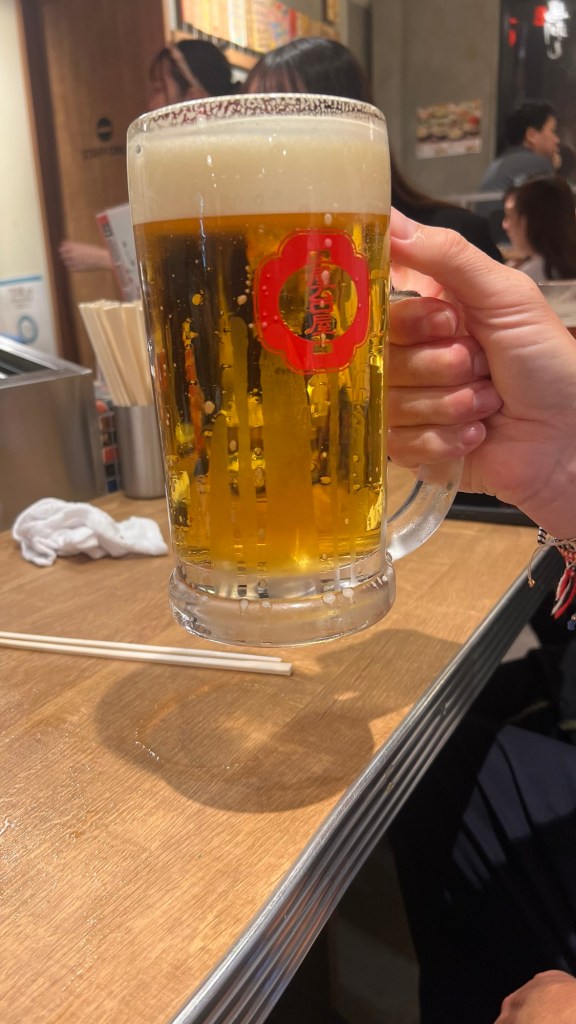
Time for a spot of street food Our restaurant for the evening First beers of the evening
We managed to grab some front of house seats enabling us to watch the chefs.
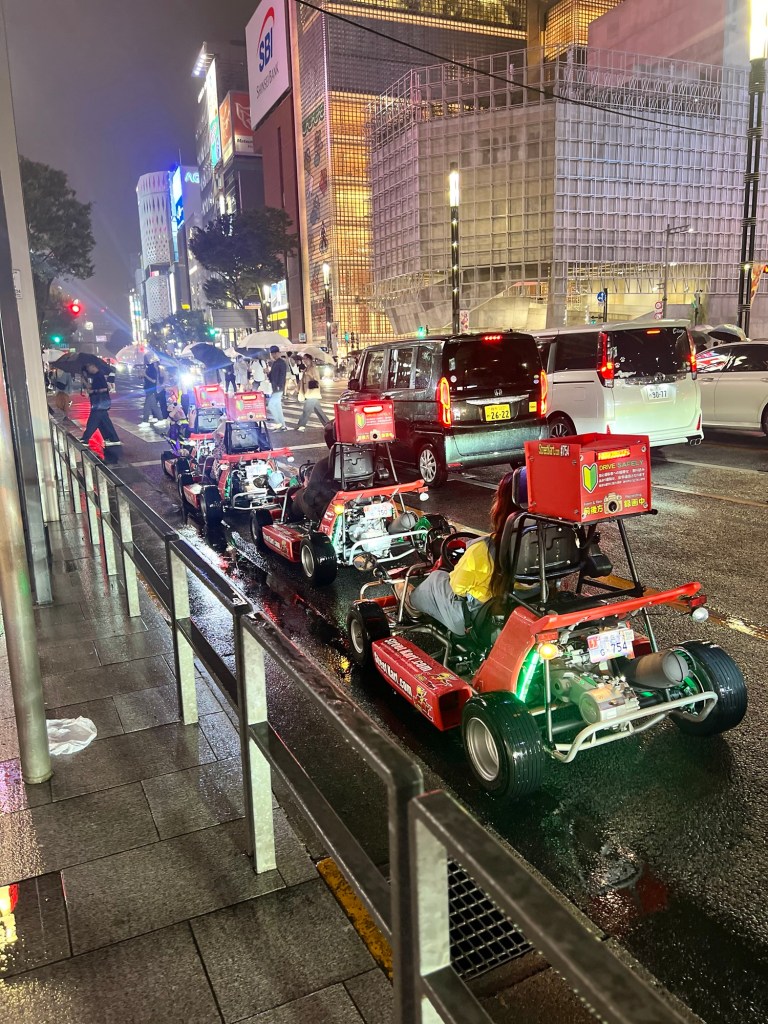
Tapas Japanese style Getting into the Saturday night vibes in Tokyo Super sized beer Mario Cart driving around central Tokyo
After a wonderful dinner and drinks in a great restaurant in Ginza, we went for a wander around the magnificent shopping area.
Despite the wet weather that greeted us on our arrival in the city, we found Ginza to be a busy place and full of the buying public.
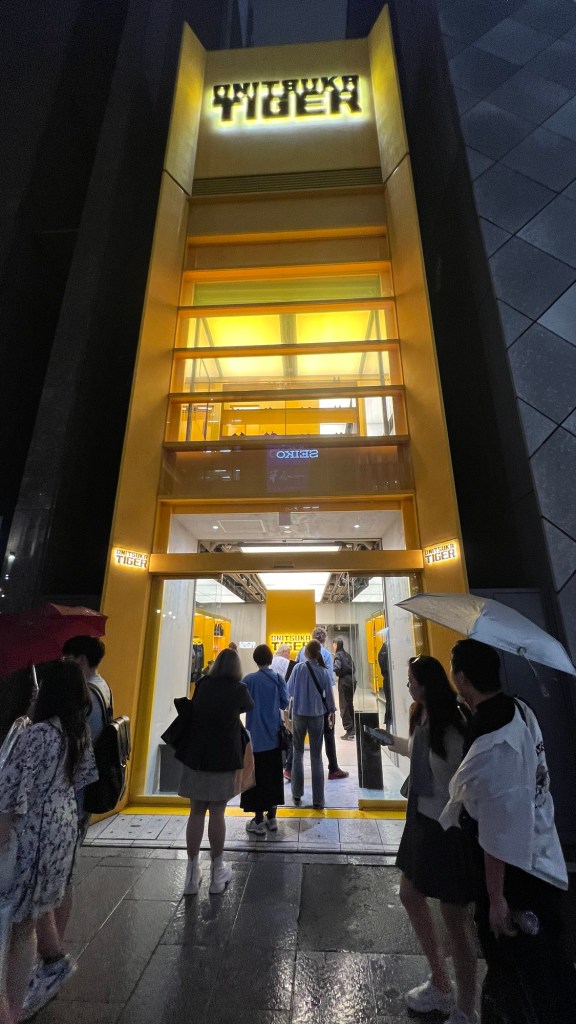
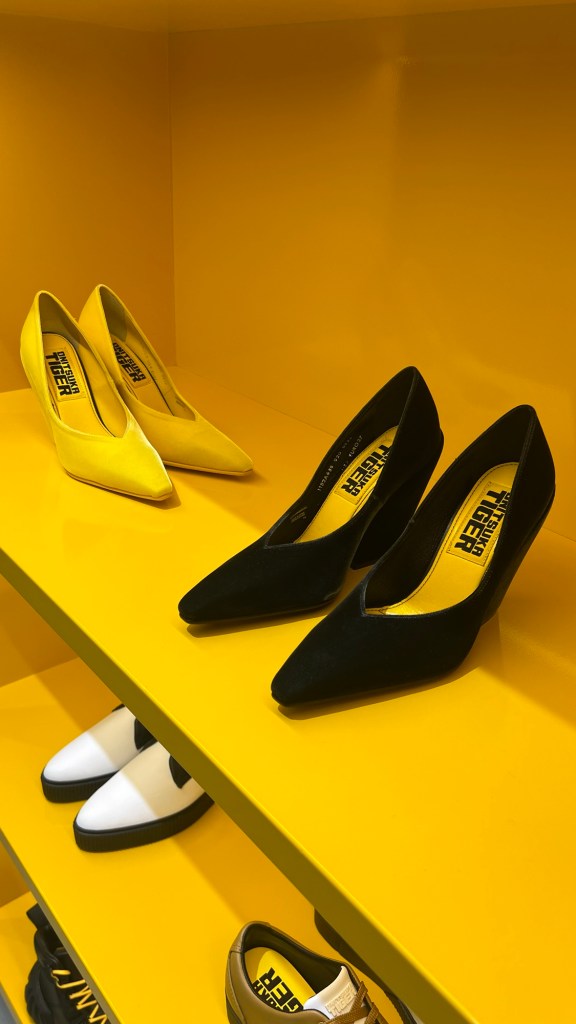
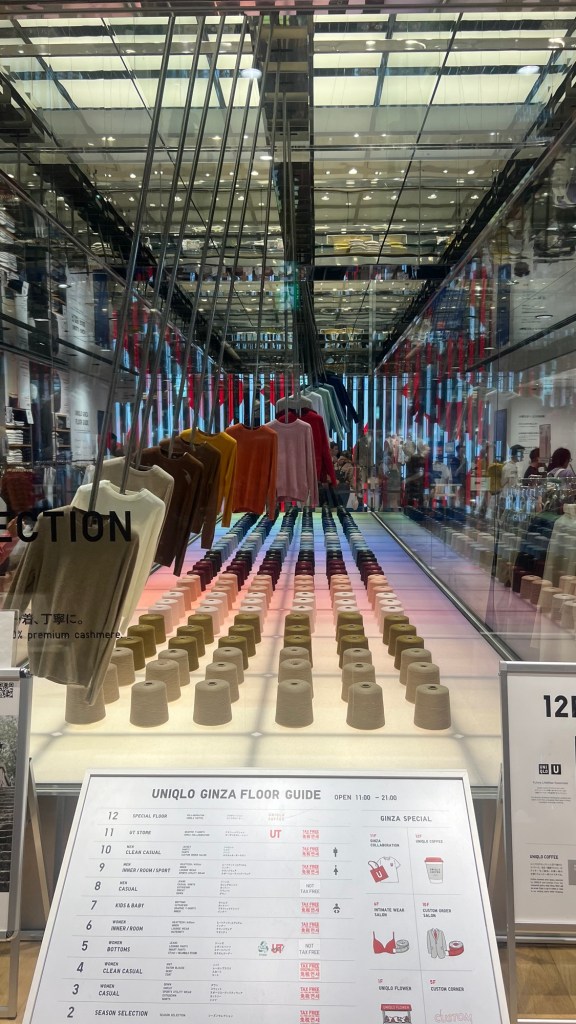
One of our favourite Japanese brands
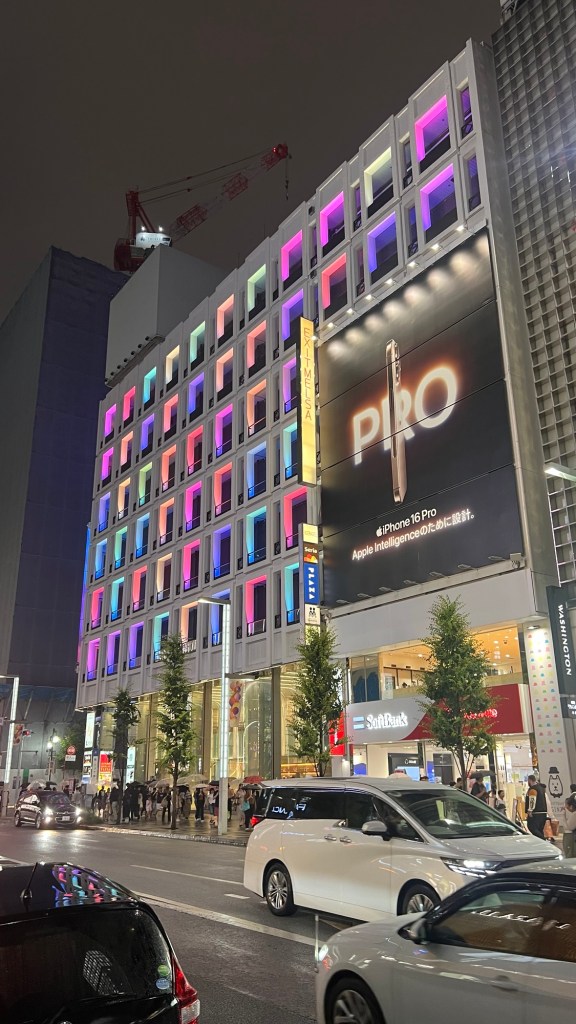
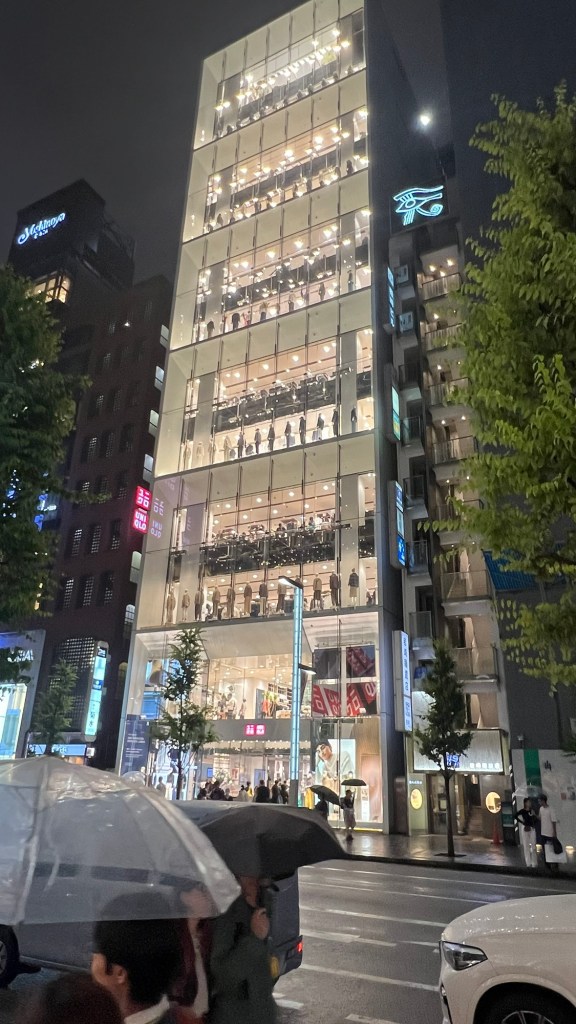
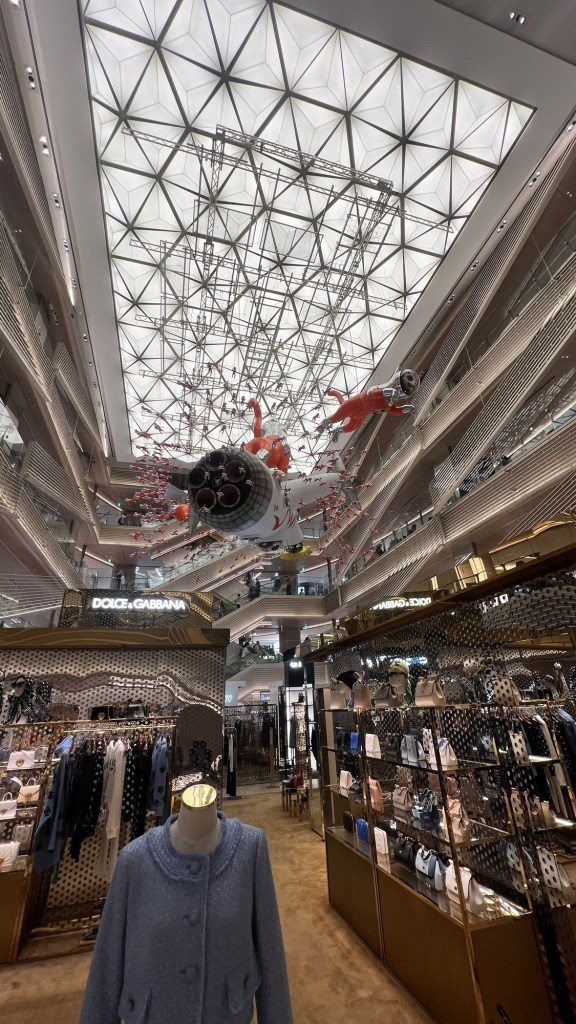
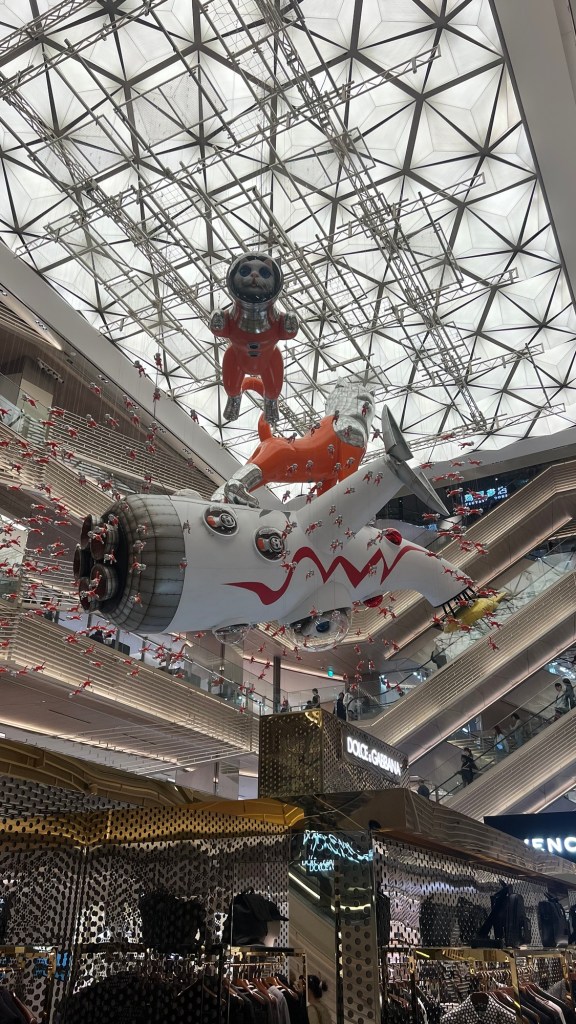
Ginza is wall to wall premium shopping with every global brand being represented.
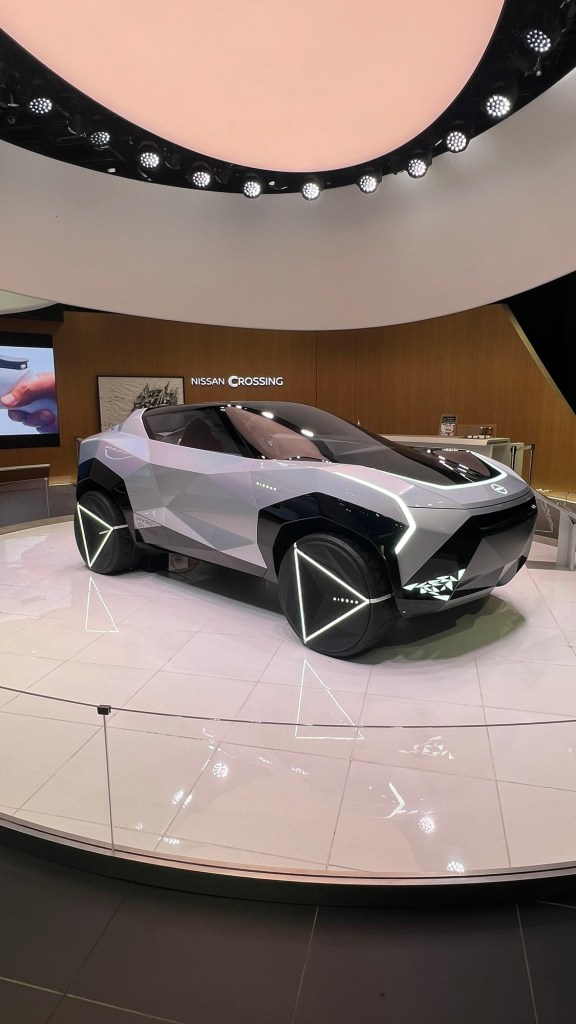
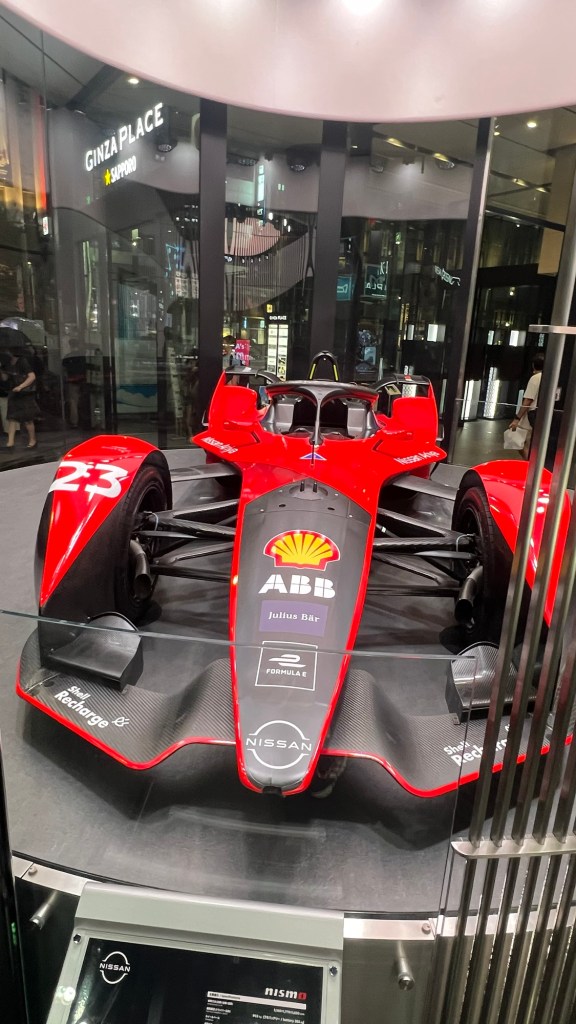
Japanese brands are also well represented with Nissan showing off its plans for the future of the automobile.
As for the shops, they go from the ground to the 7th, 8th even the 9th floor, with Uniqlo’s flagship store sitting over the 10 floors!!
Fendi darling Uniqlo heaven Crazy world of Ginza Six Let your imagination go wild Back at Uniqlo Ginza Illuminated retail heaven
After a busy day travelling, then eating, drinking, watching and shopping in Ginza, we eventually retired back to our hotel in Eastside in time to sport our freshly ironed pyjamas.
Time for bed…
Tomorrow it’s walking tour time again starting in Akihabara, before a visit to Ueno Park and an evening visit to the immersive Teamlab Planets in Toyosu.
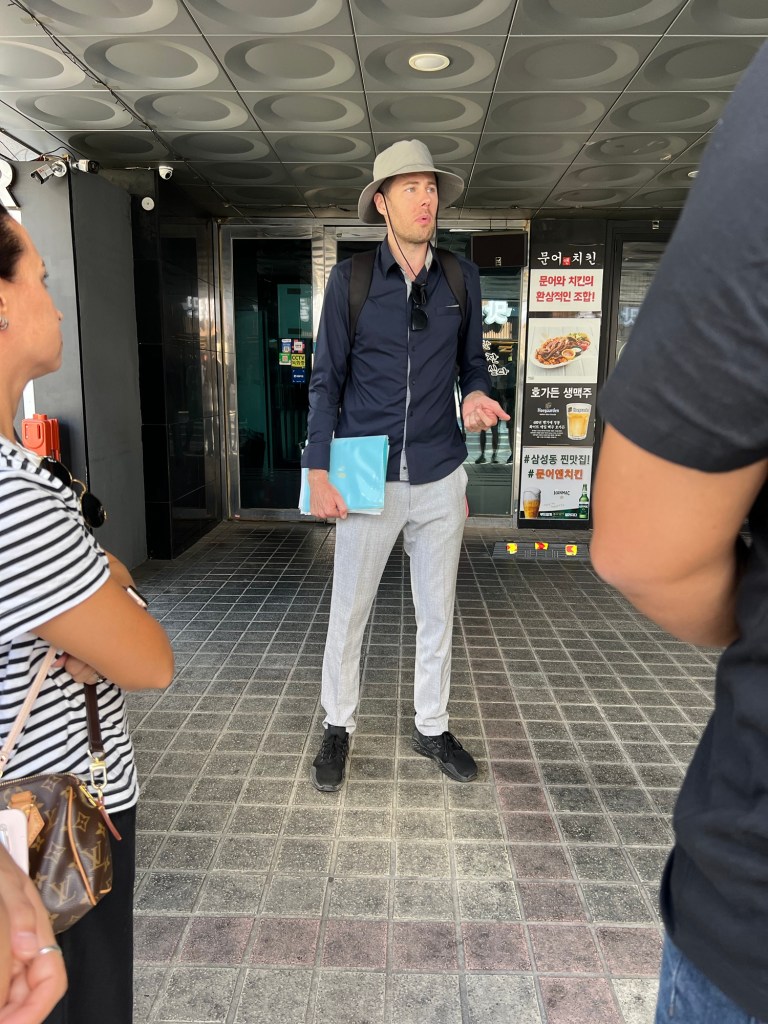
On our final full day in Seoul we decided to keep with a theme and join one final walking tour starting from Gwangtonggwan. Our guide was Jongmyeong, a local student who was keen to introduce us to the Seoul he knows and loves.
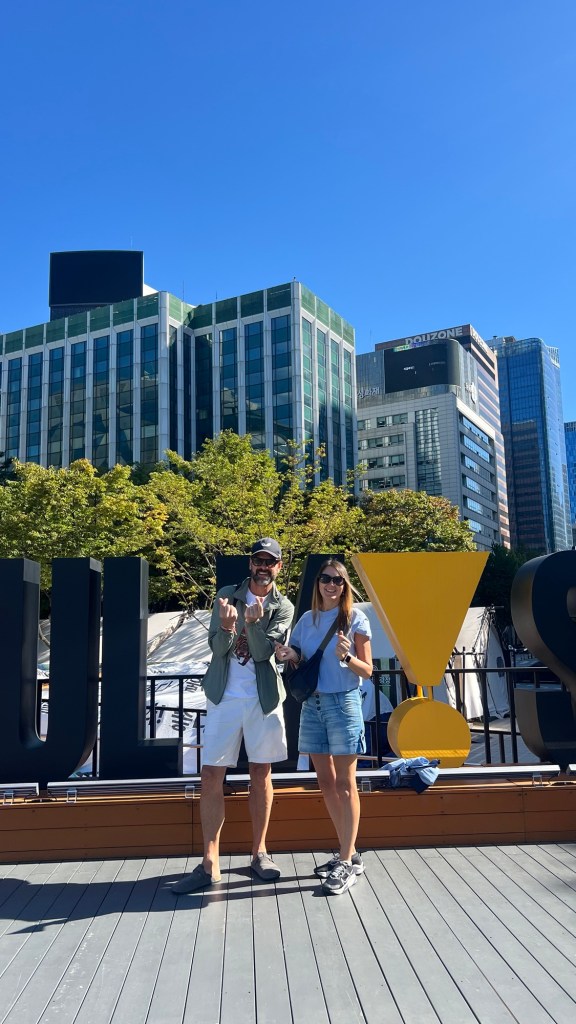
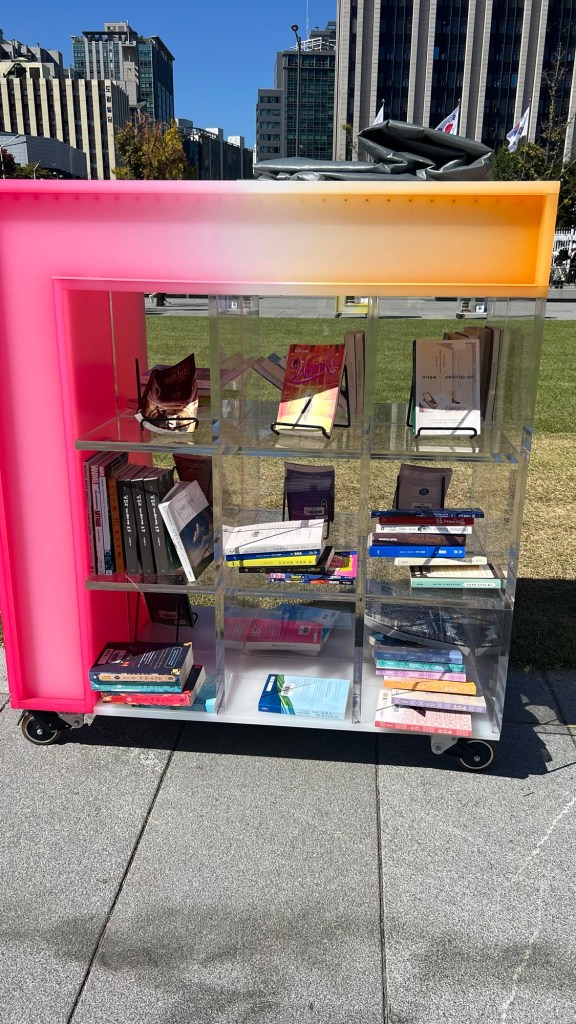
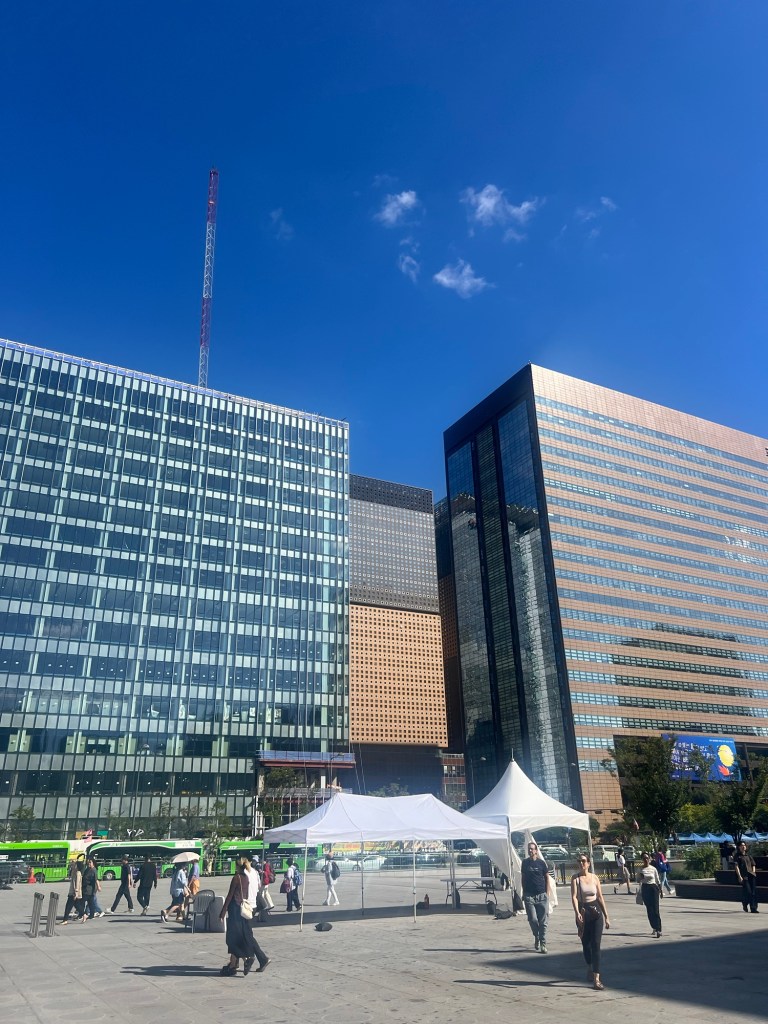
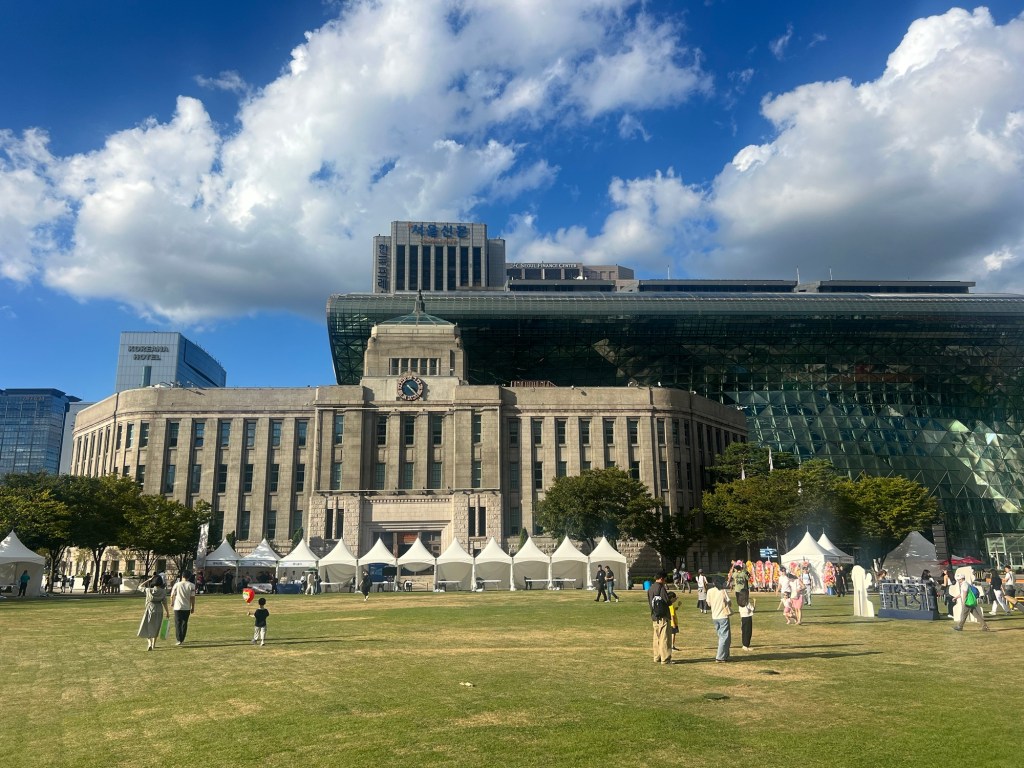
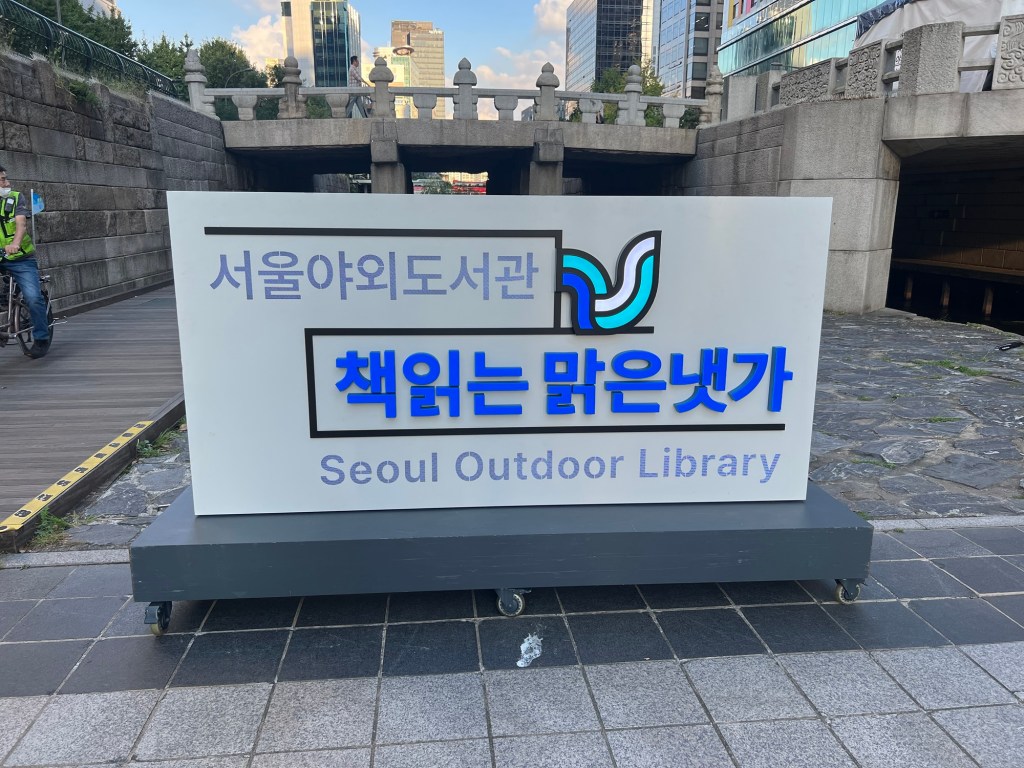
Our first stop was at the City Hall, where almost daily there are either protests or events…today they were preparing an outdoor library for the start of the weekend. As it’s been a glorious sunny day, it sounded just the way to start the weekend along with a beer in hand.
Jongmyeong explained that Friday is a big night for the young, who think nothing of hitting the bars for beer, makgeolli and Soju (rice liquor akin to Vodka), the latter is the nation’s favourite and which accounts for 97% of the spirits drunk in Korea!
From there we wandered up Sejong Daero the main thoroughfare in the city and where the majority of the theatres, arts and culture are situated.
Sejong Centre is the largest arts and cultural complex in Seoul. Its claim to fame is that it is home to the biggest pipe organs in Asia!
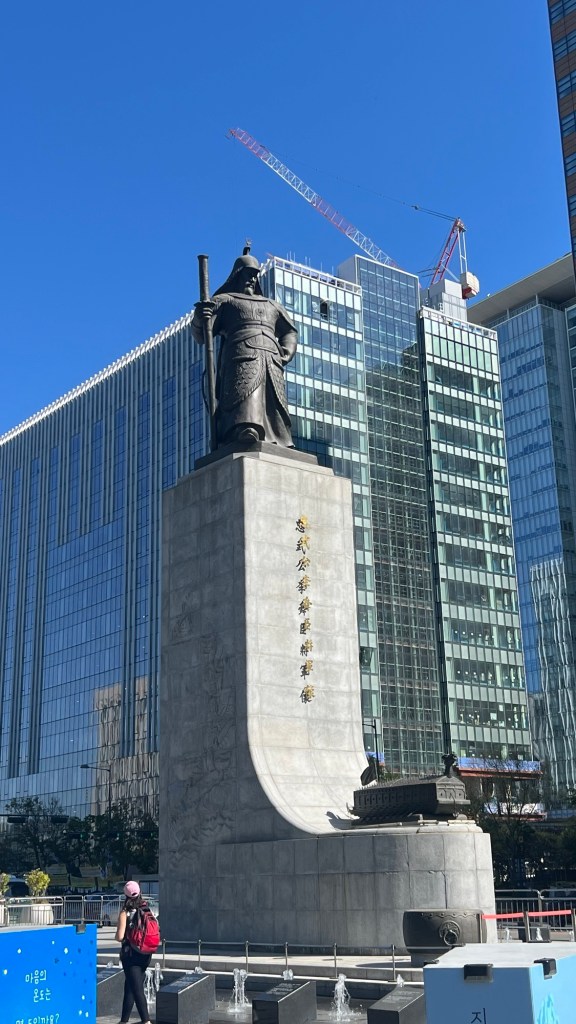
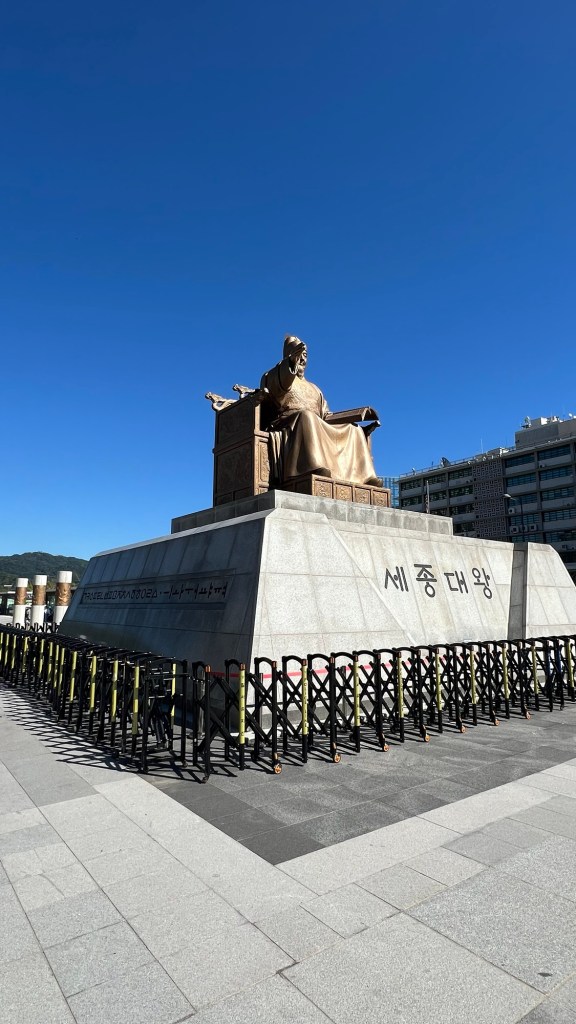
We got a history lesson on the various warrior kings in statue form, notably Sejong the Great, the fourth king of the Joseon dynasty, who personally created Hangul (the Korean alphabet) in 1443.
As we idled our way to the Gyeongbokgung Palace we walked past another outdoor library, a thing we’d never heard or seen of until we arrived in Seoul a week ago.
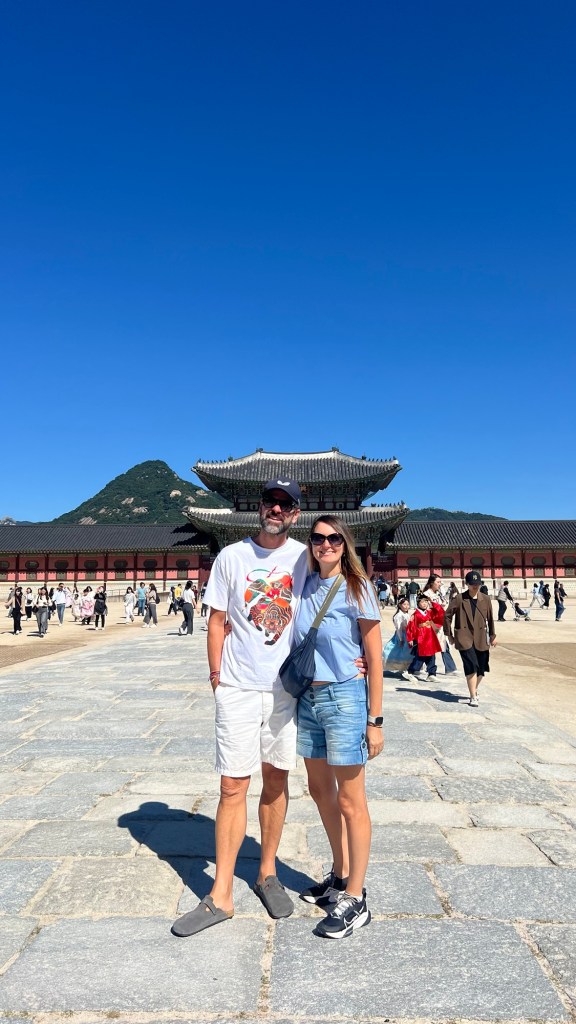
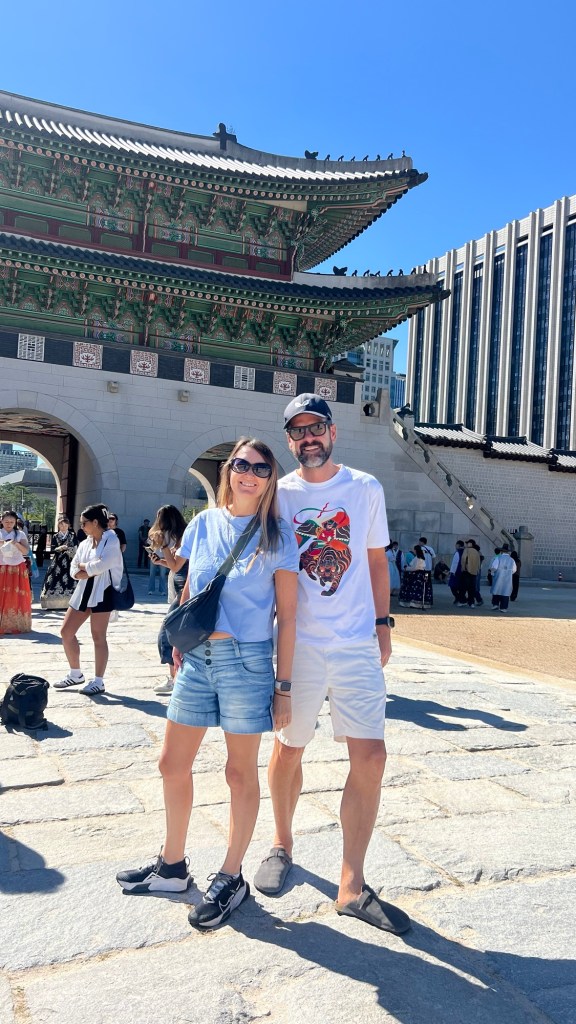
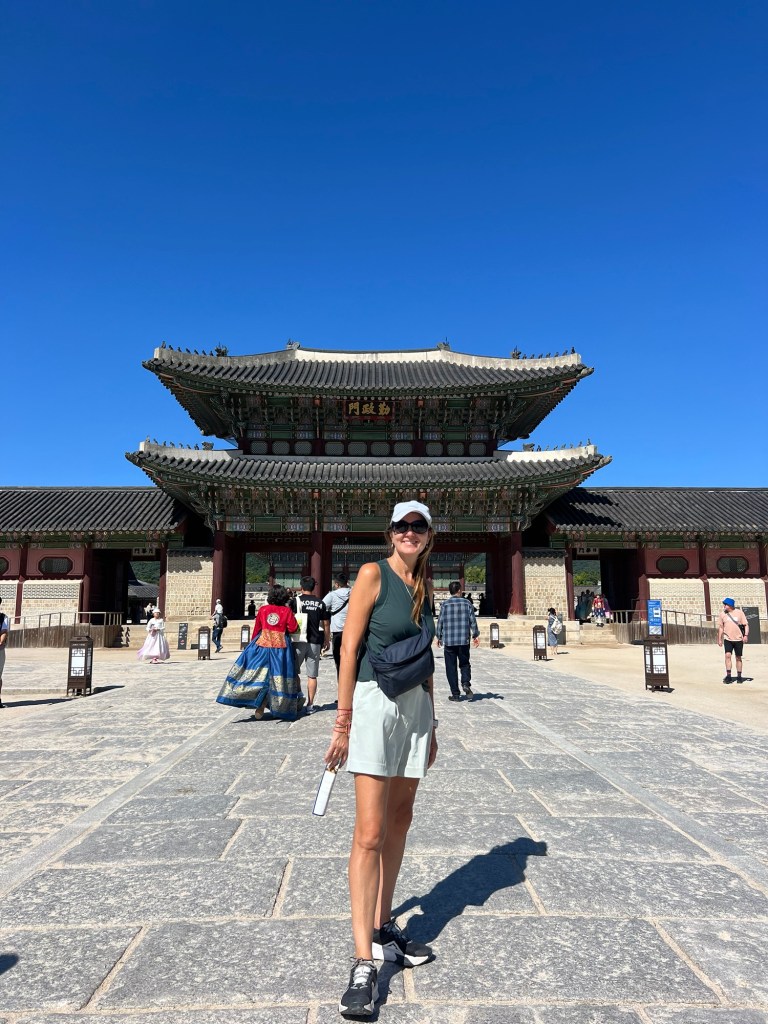
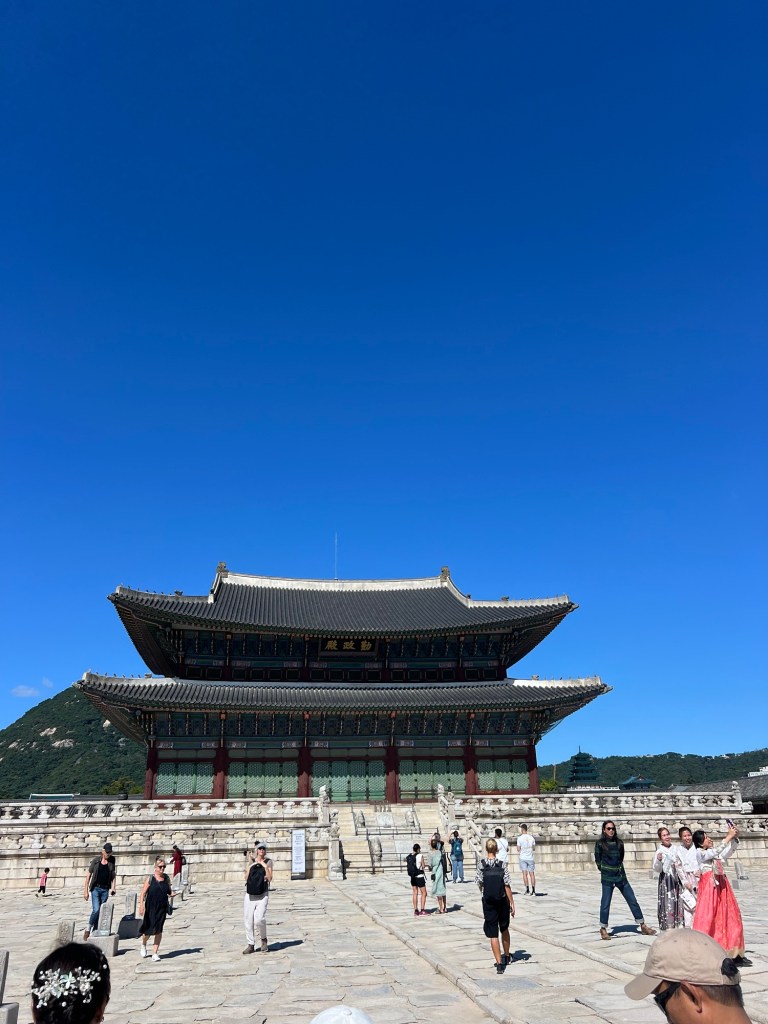
Back at the Gyeongbokgung Palace, we managed to grab a few last photos of this amazing place, aided by the clear blue skies that were helping to make this a perfect last day in Korea.
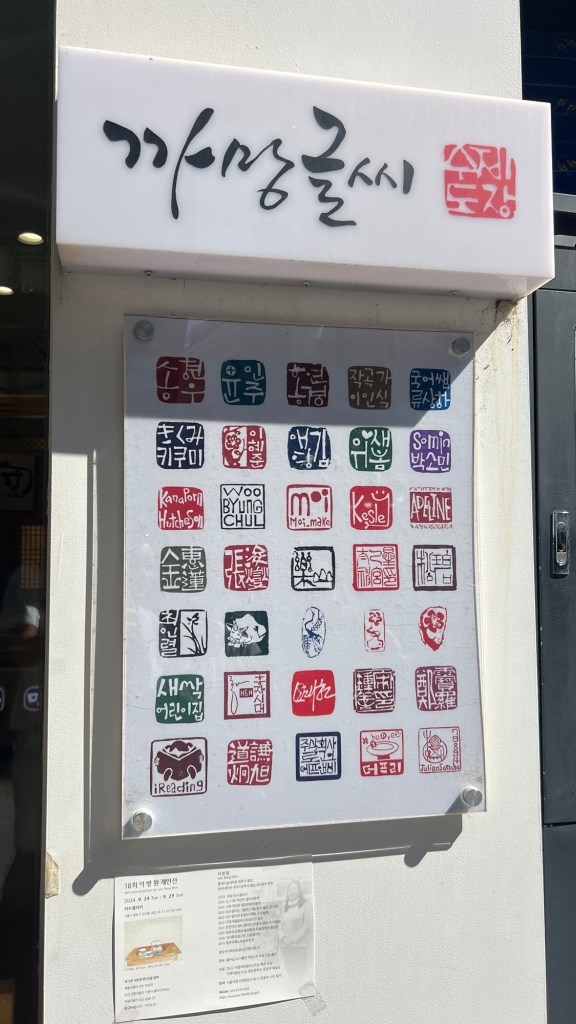
Keeping with a narrative around life in Seoul as a local, we headed to a store where you can get your own stamp created. This is a key part of Korean life and every family has one that they use when making a purchase or demonstrating ownership.
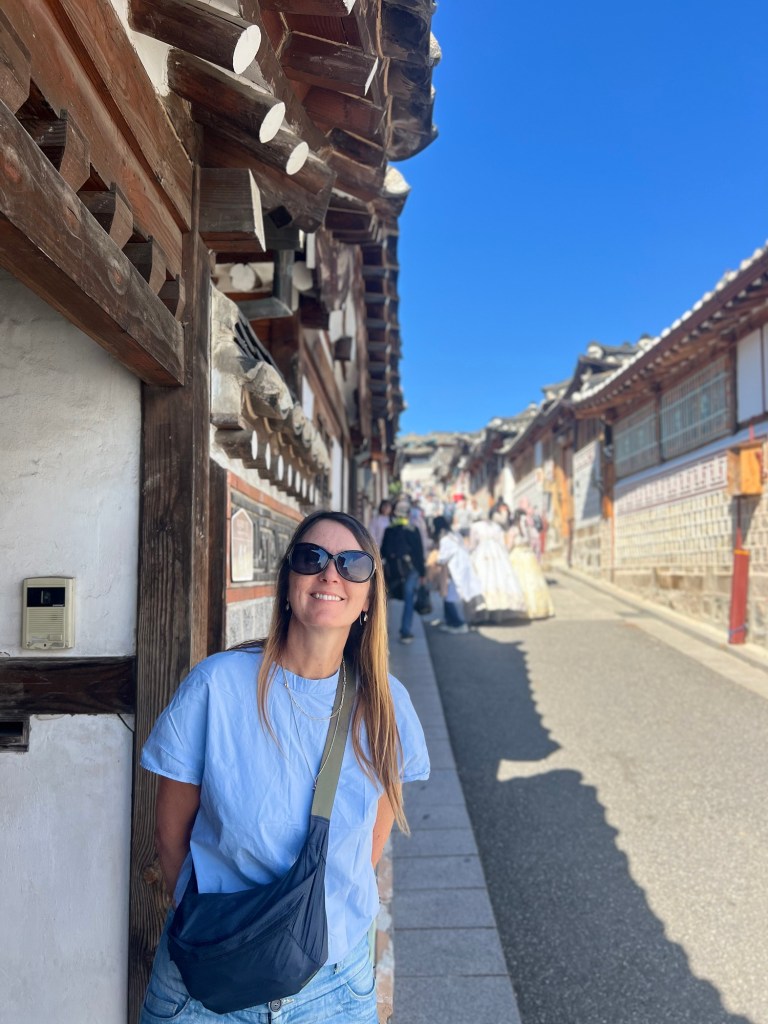
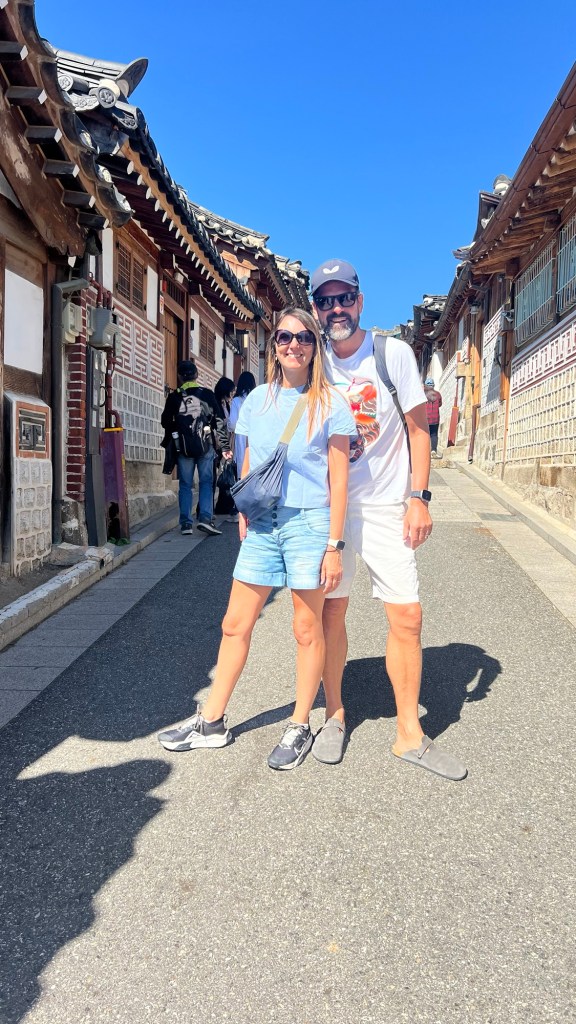
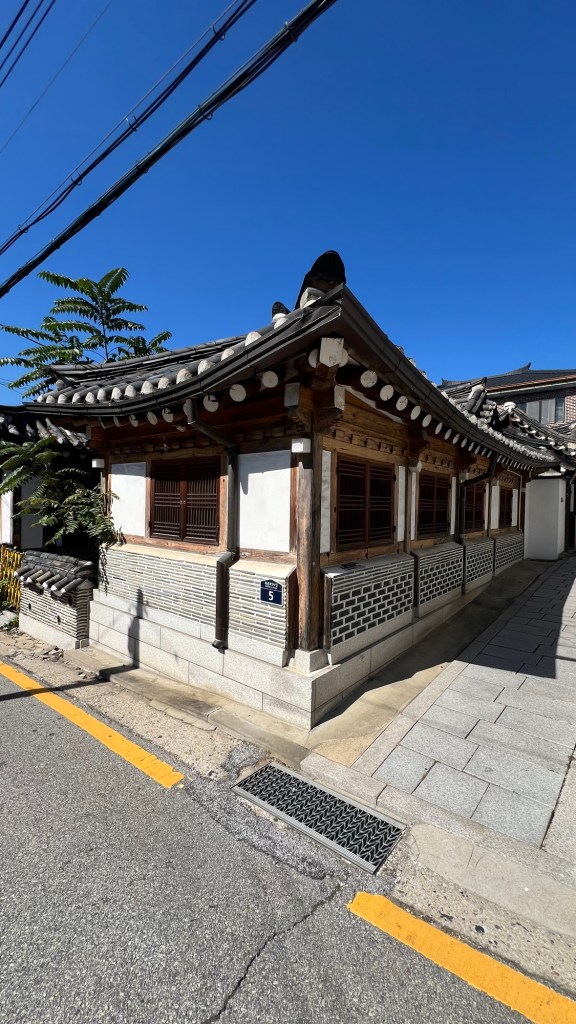
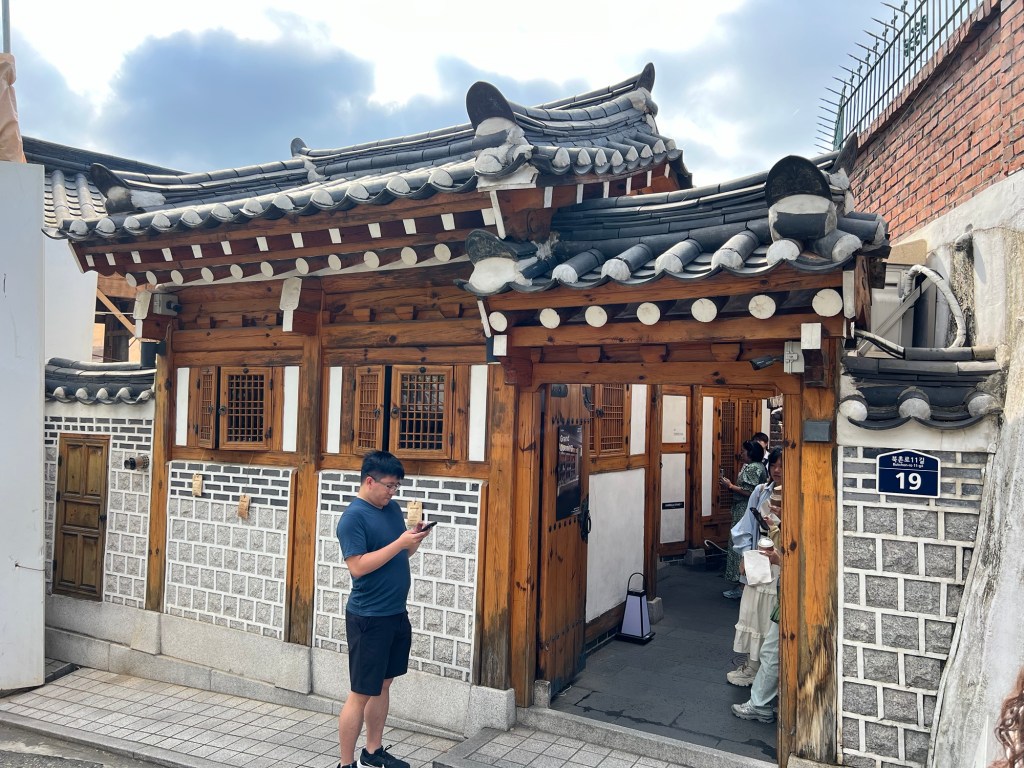
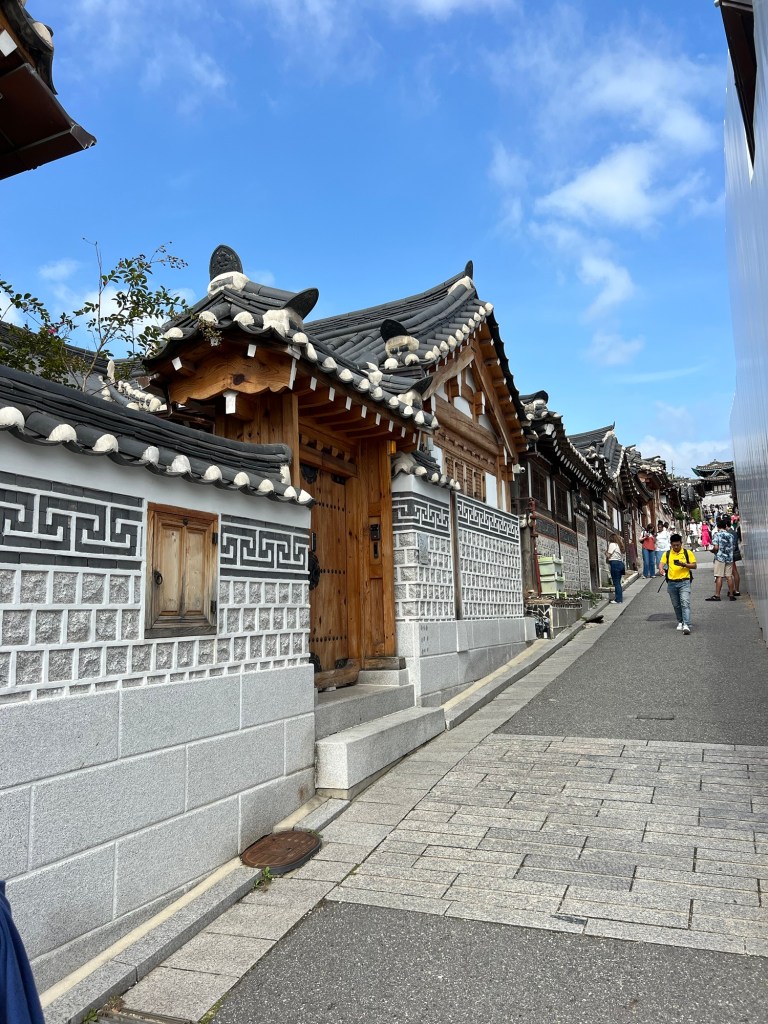
Before we knew it the 3hr tour had finished and we said our goodbyes to the group and headed up to Bukchon Hanok Village to have a proper look around the traditional houses first occupied by the wealthy palace courtiers, traders and businessmen.
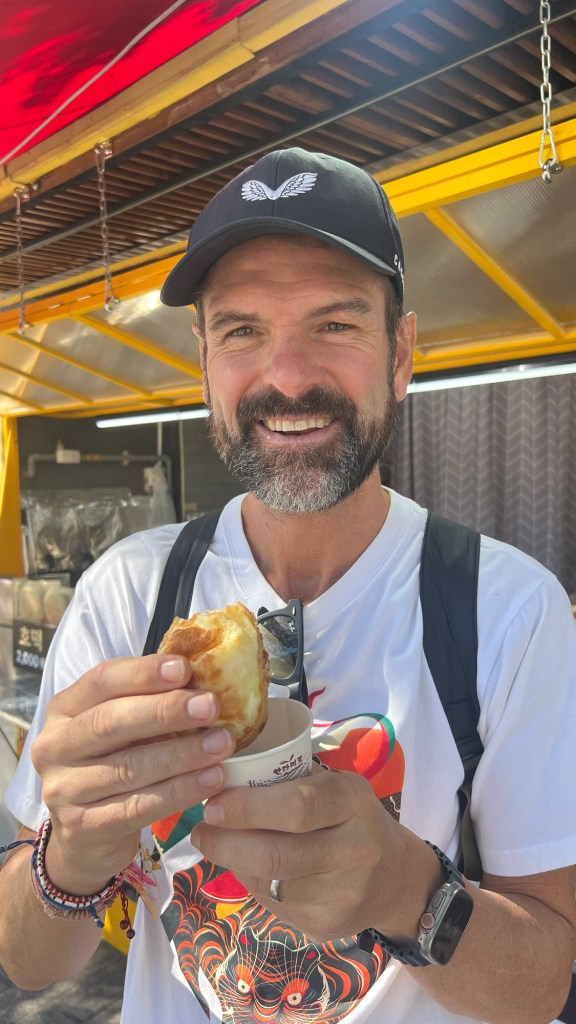
On the way we stopped for some street food and Andy bought himself a Gyeran ppang, essentially eggy bread which proved scrumptious.
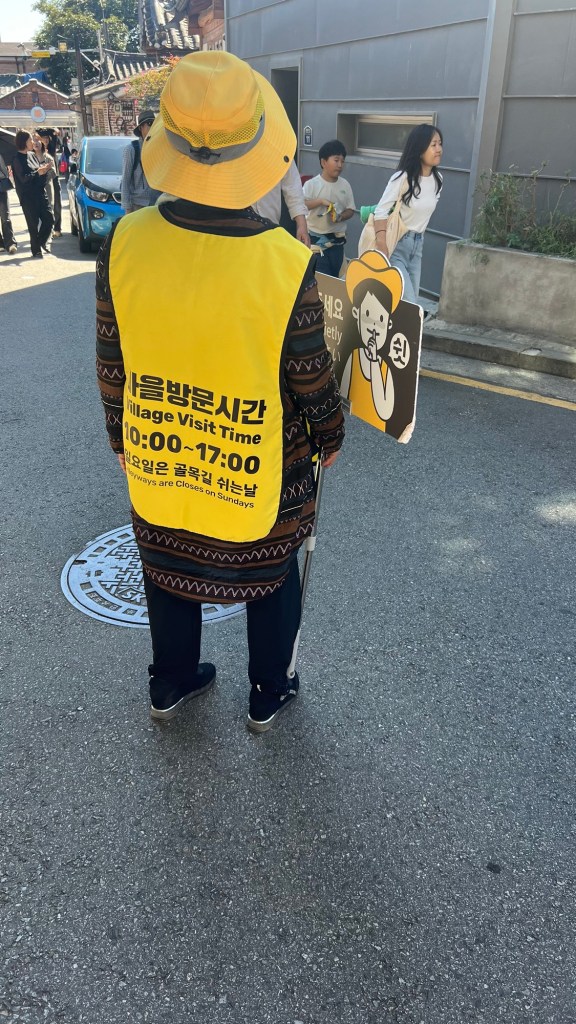
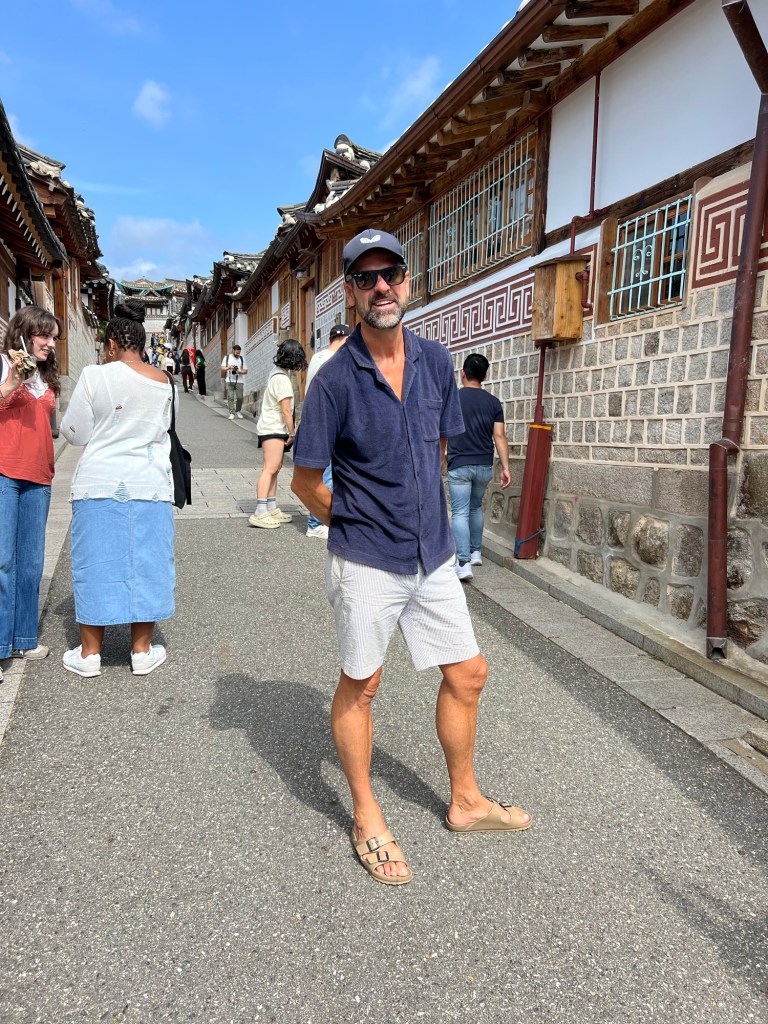
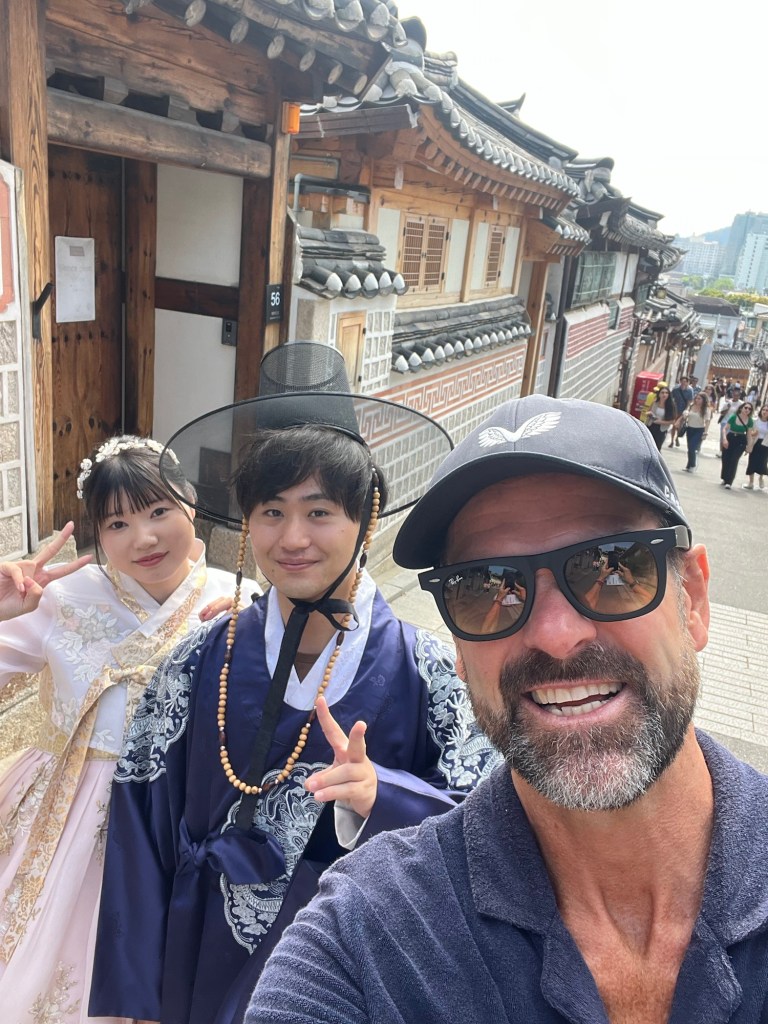
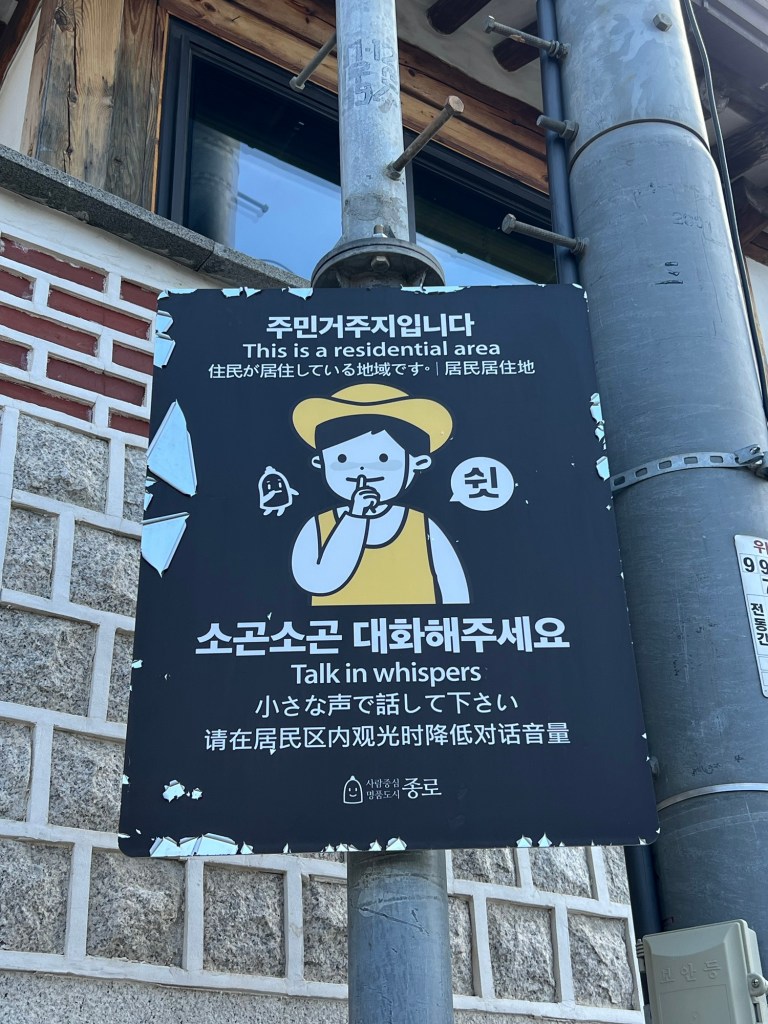
Up at the Bukchon Village, we were under surveillance from the guarding patrons in yellow reminding us to be quiet as this was an area that people still live and work in. Must admit we aren’t sure if we’d be happy for people to march up to our doors and get photos on our steps and hang around the windows!
Tourist heaven Classic Hanok house
After taking a break at one of the local tea houses and then a great little bakery for another sweet dessert, we decided to take a look at the famous Namdaemun Market where the locals go to shop and eat.
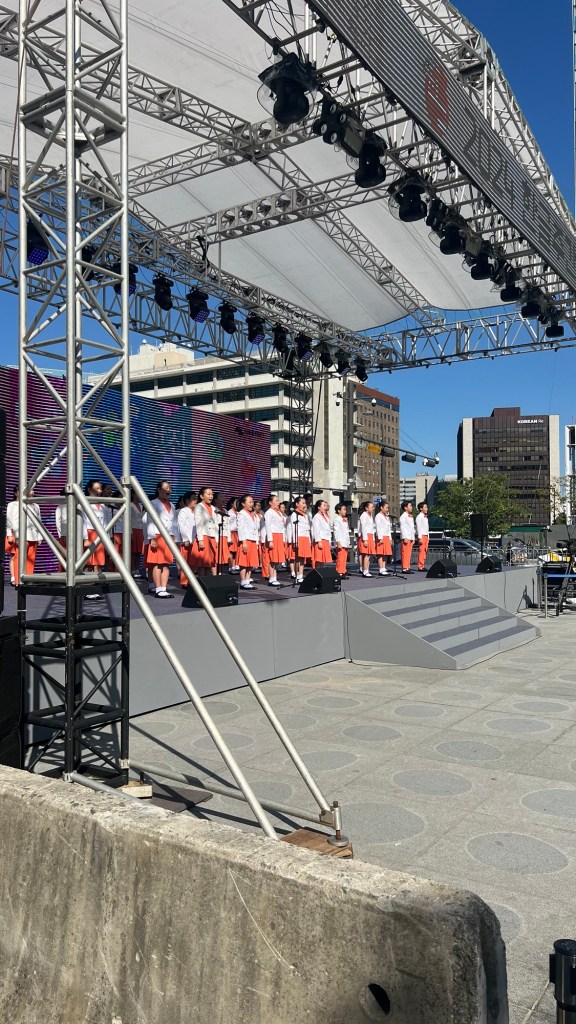
On the way we passed a school choir practicing for a weekend event and we watched in awe at the children’s singing and courteous expressions when we clapped as they finished.
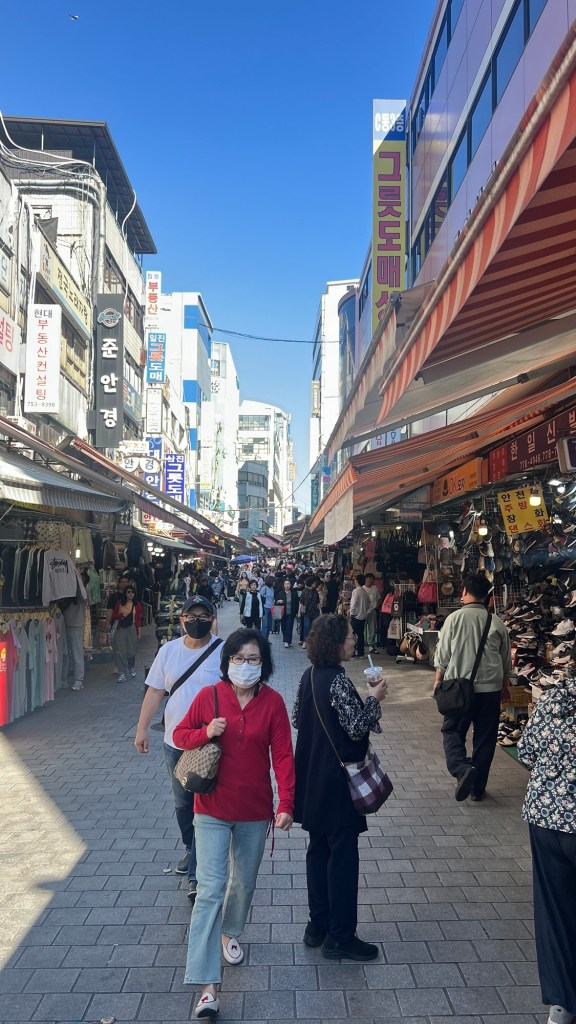
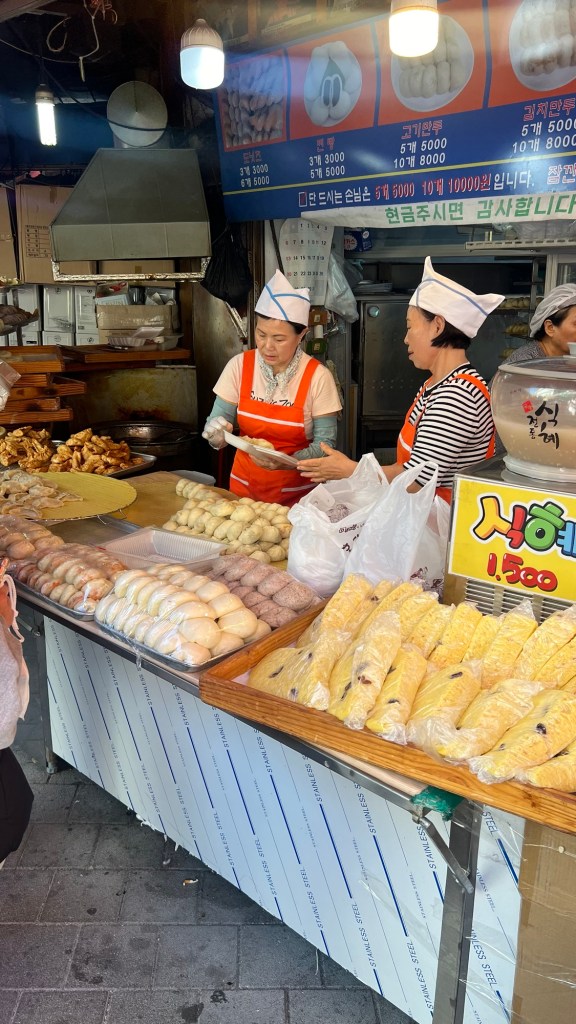
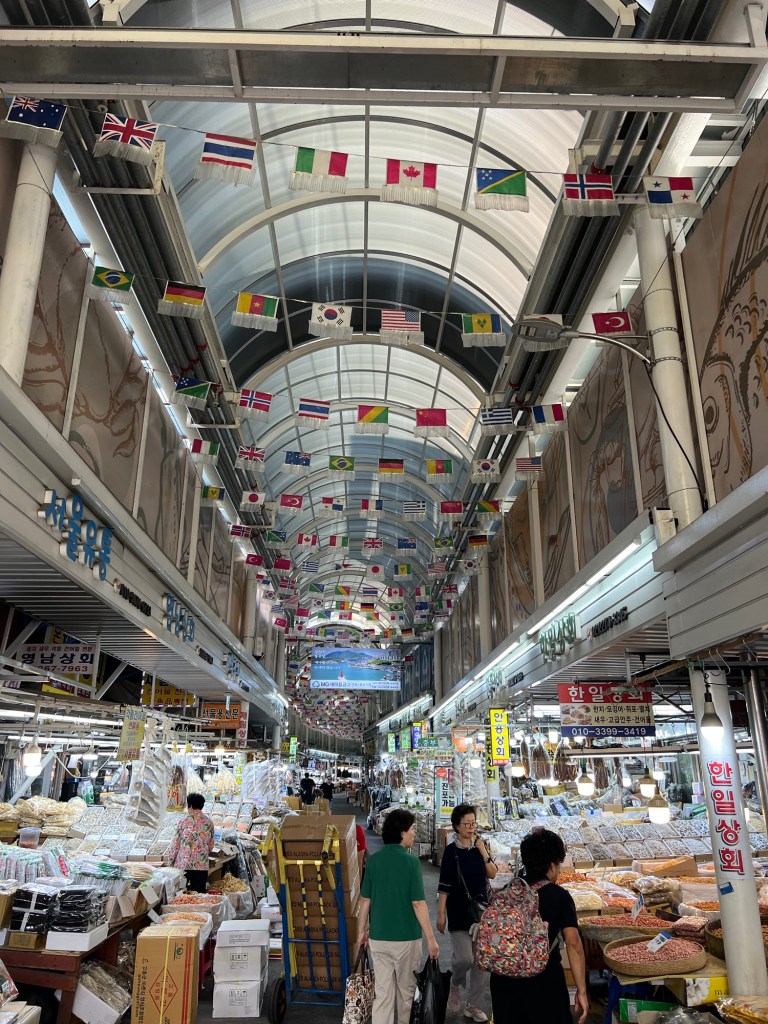
Once at the market, we realised the scale of the place and how many stalls there were and how much cheaper it was than the Myeongdong night market, which is clearly aimed at tourists and their willingness to pay more.
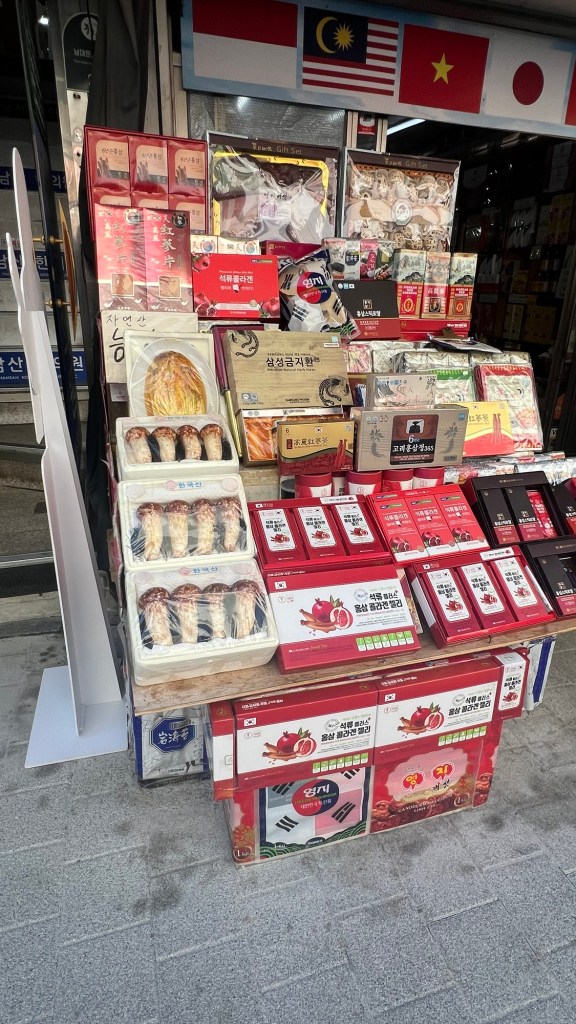
There was a great array of foods on offer, hot & cold, sweet and savoury as well as every dried herb and vegetable you can think of.
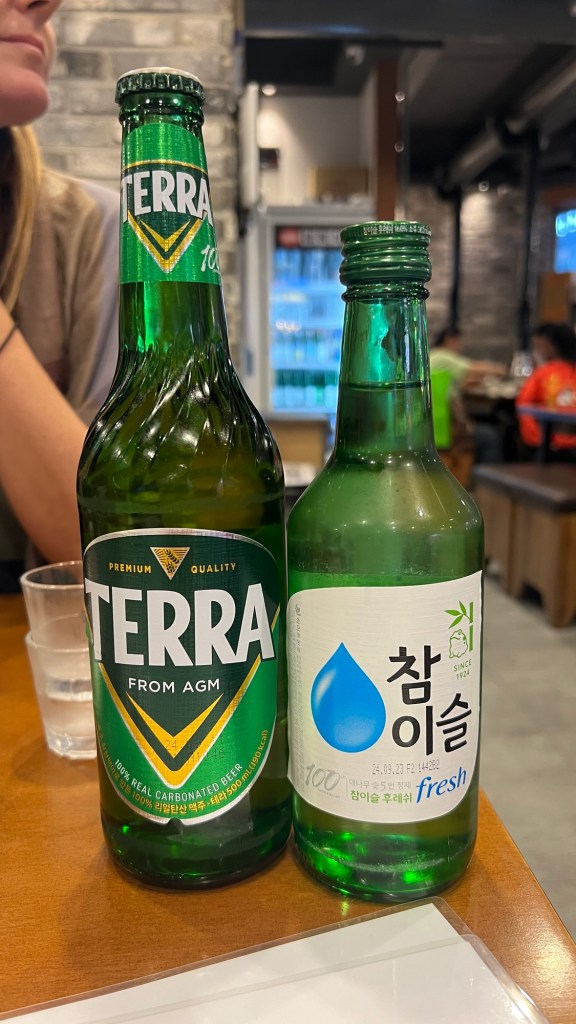
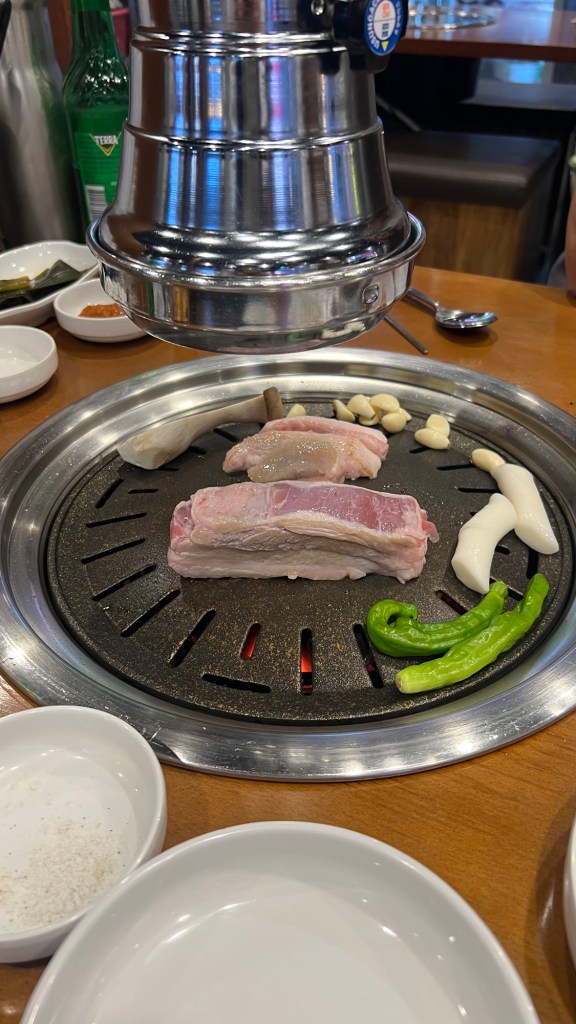
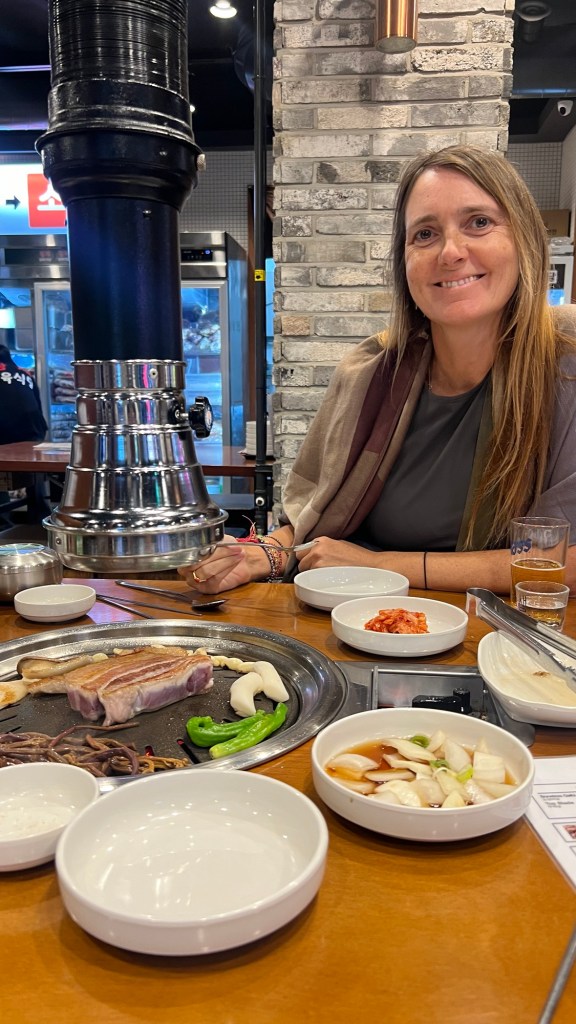
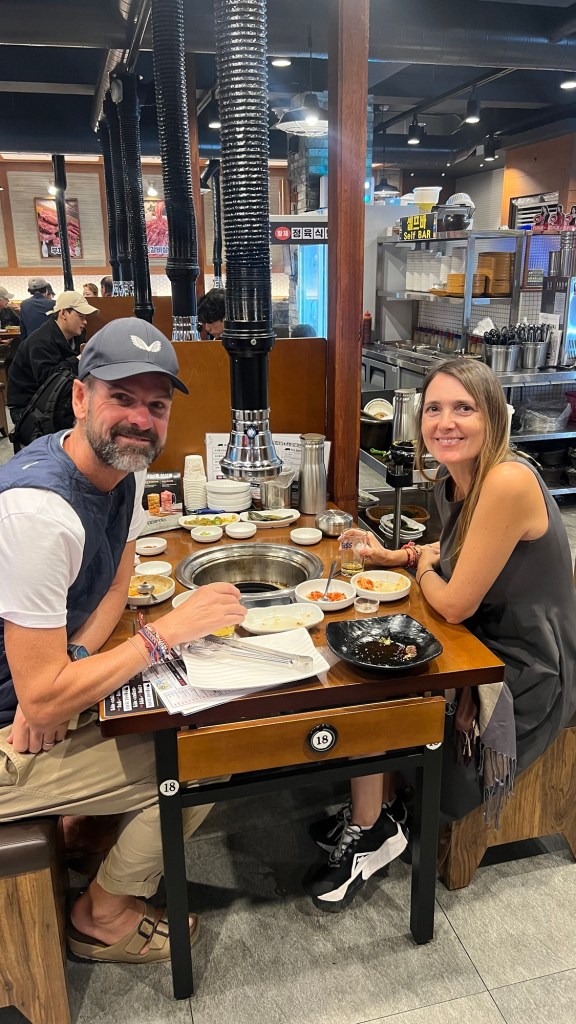
This evening we went for a Korean BBQ and experienced the full range of alcoholic local drinks with both Soju and a Terra beer, before hitting the pork loin on the bbq along with mushrooms, garlic, peppers and onions.
The experience of cooking our own food bbq style was helped by the intervention of one of the waiters who could see we were a little inexperienced at this cooking game. Well we haven’t had the opportunity in the last 12months with all this travelling.
The meat once cooked was excellent, helped by numerous dips and seasonings including wasabi and chilli, that we had to choose from.
Once we had finished the meat and kimchi, Andy was able to help reduce the remaining soju, although we couldn’t finish the whole bottle and ended up gifting it to a group of young Korean men on the next table.
In the end the meal for two with a beer and soju was very filling, not bad for c. £16 all in.
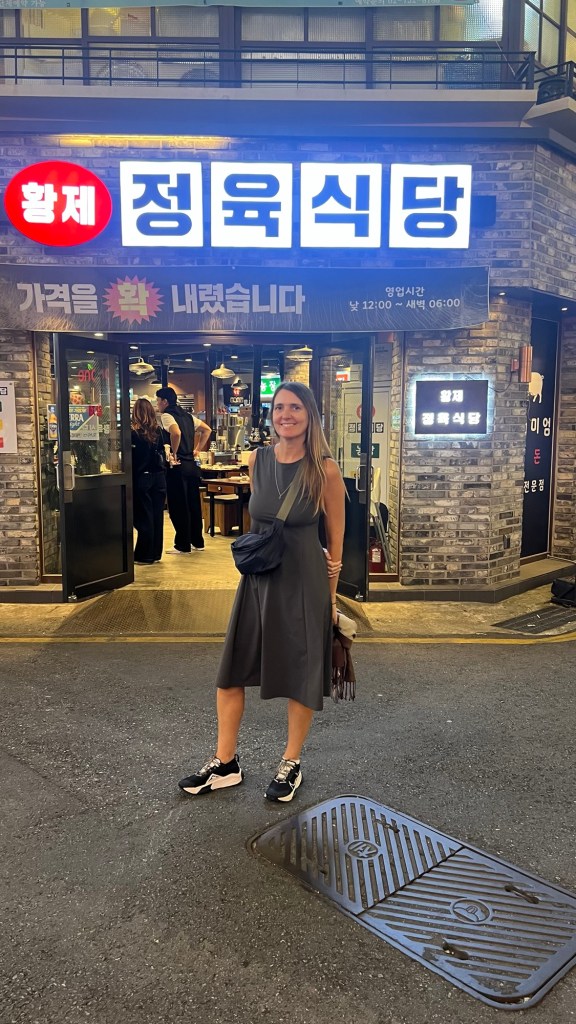
Our Korean BBQ restaurant
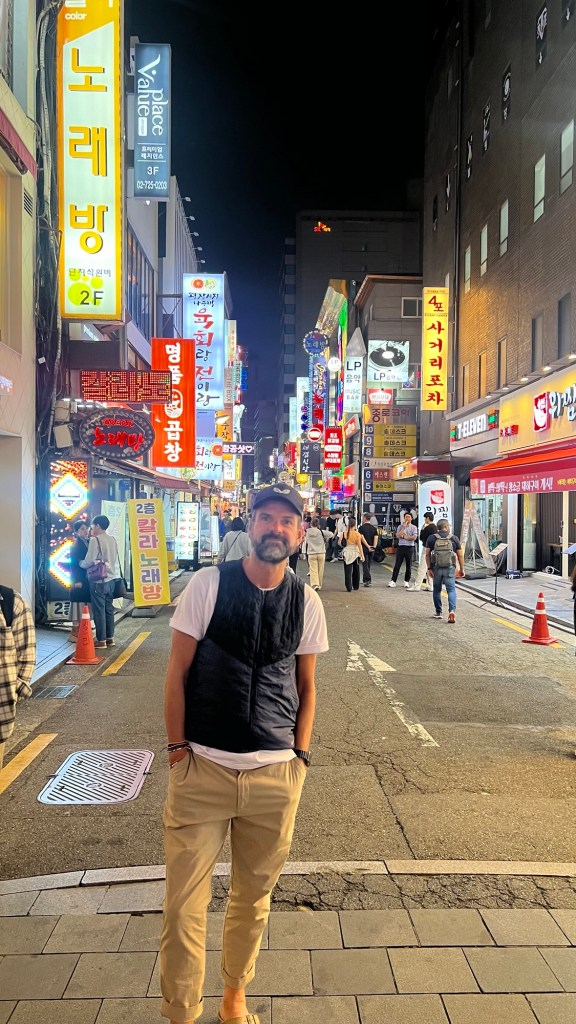
Before heading back at the end of the evening, we went for a walk around Gwangtonggwan to see an ever increasing number of office workers descending on the various restaurants and bars. This is just the beginning for many, with many hardcore drinkers carrying on well into the night with many of the bars & restaurants open until 6am. This is roughly the time we will be up and in a cab on our way to the airport…!!
We’ve had a fun time in Seoul and have really enjoyed our Korean experience. The people and the city have been so very welcoming and we will definitely return in order to see more of the country. Until then the memories we have made here will help to encourage us to revisit.
Change of plan today, after discovering that the latest National Holiday in Korea would mean getting to and from Suwon was a real bind. Instead we opted for more culture in the form of palaces, museums and food areas in central Seoul.
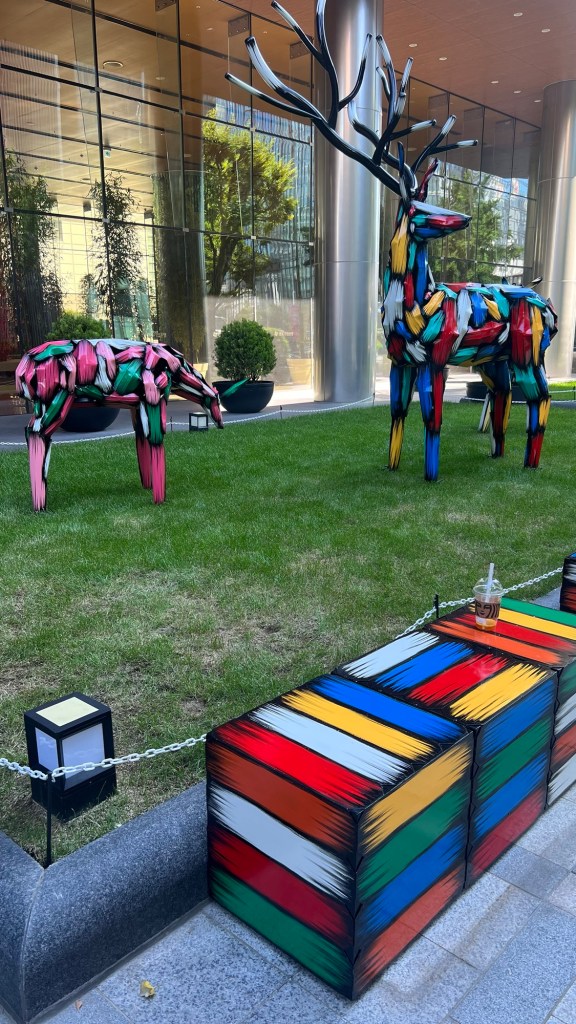
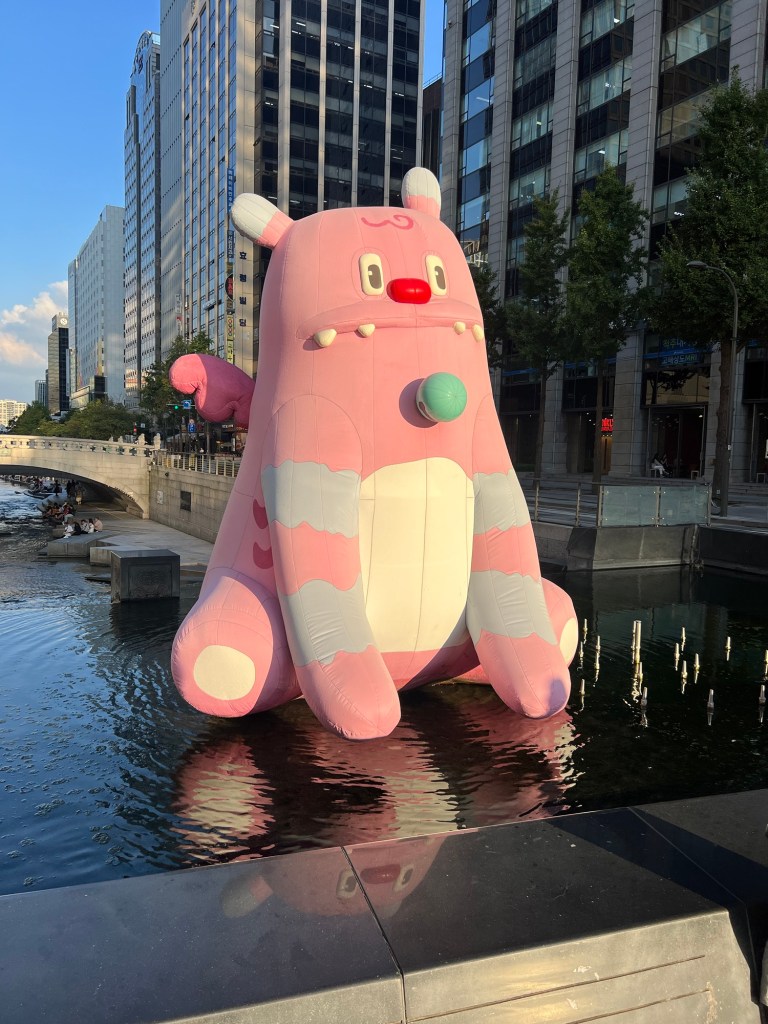
Leaving the hotel around 9.15am, we passed a multicoloured animal kingdom, outside a funky office building opposite to where we are staying.
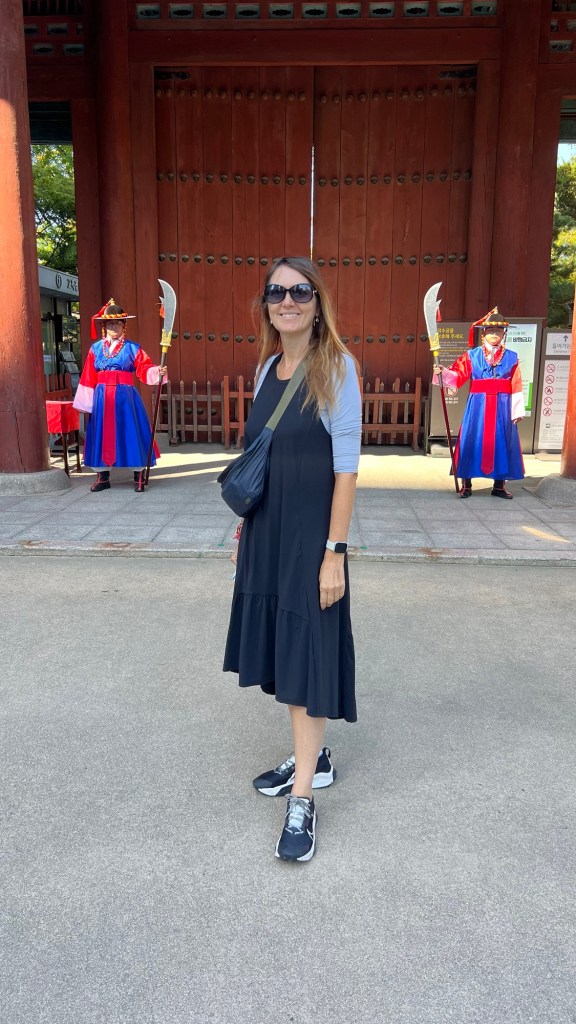
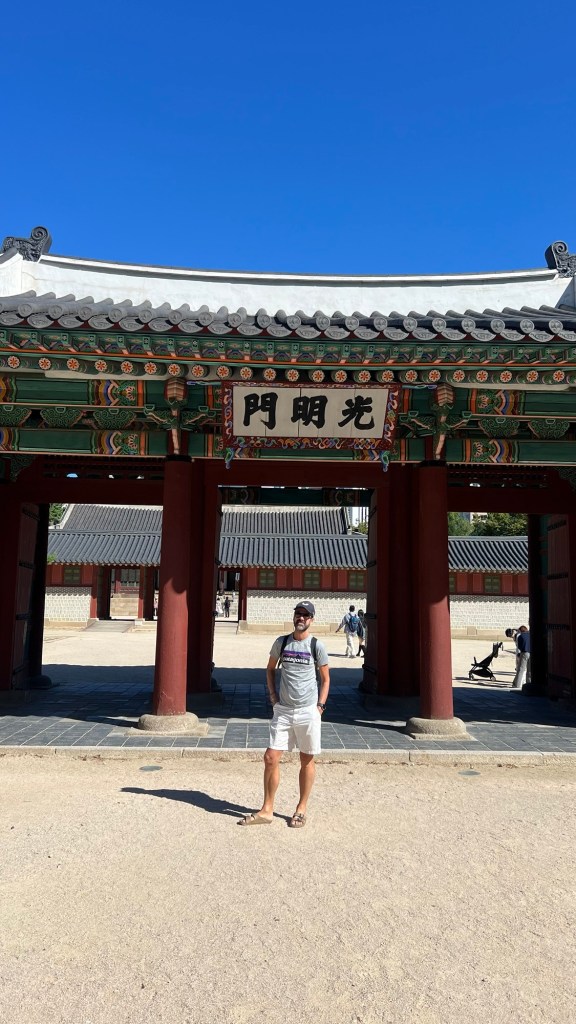
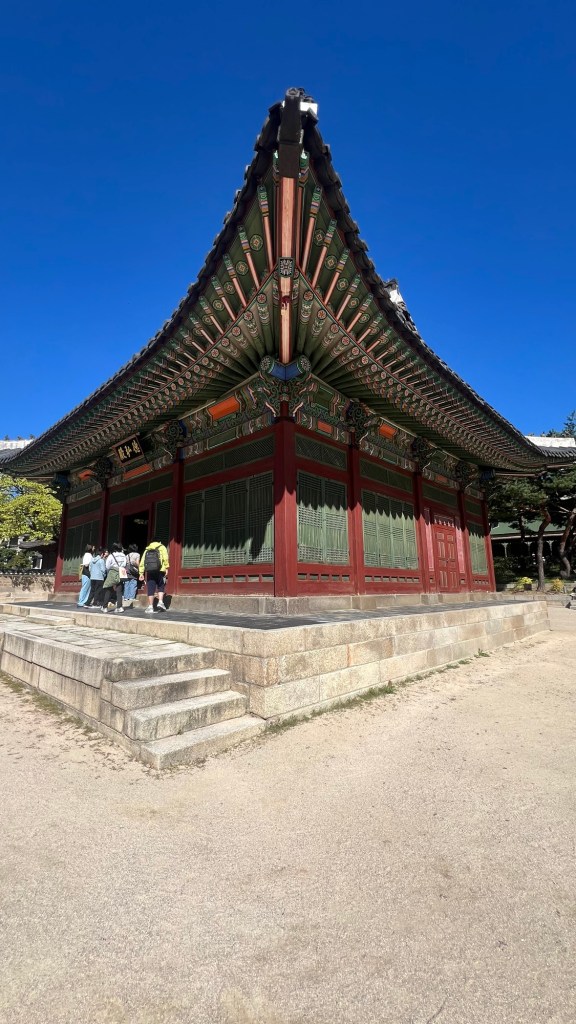
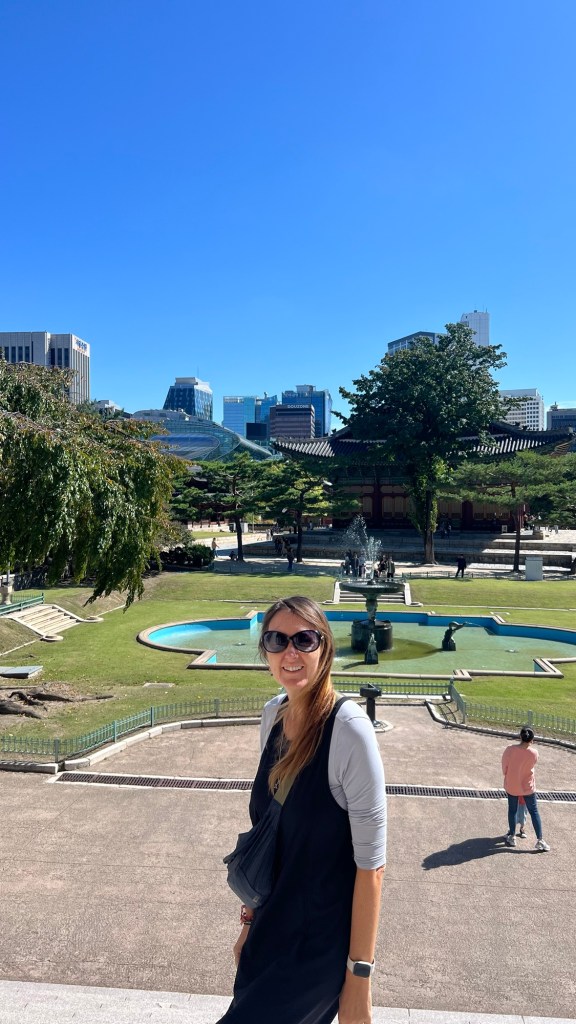
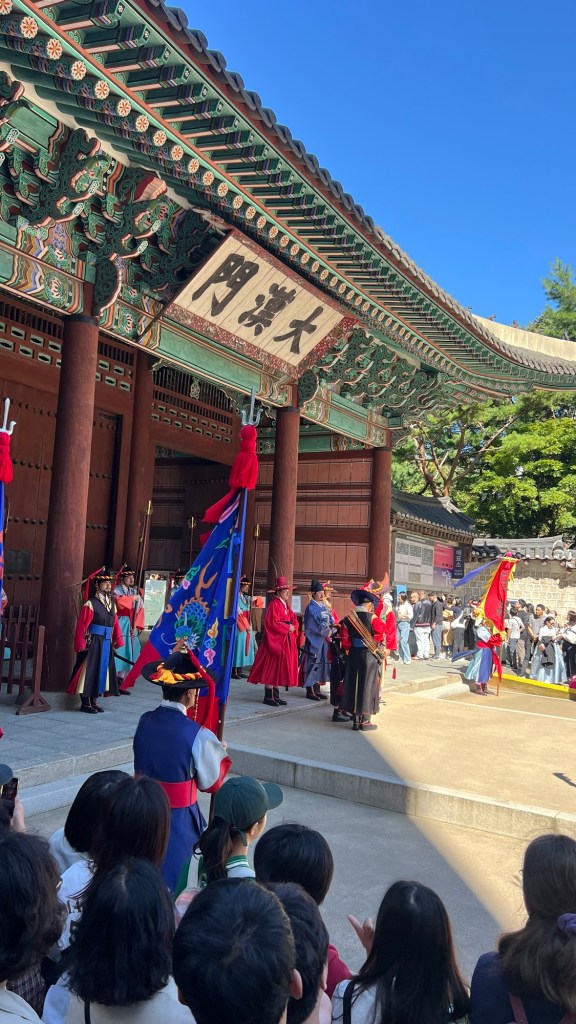
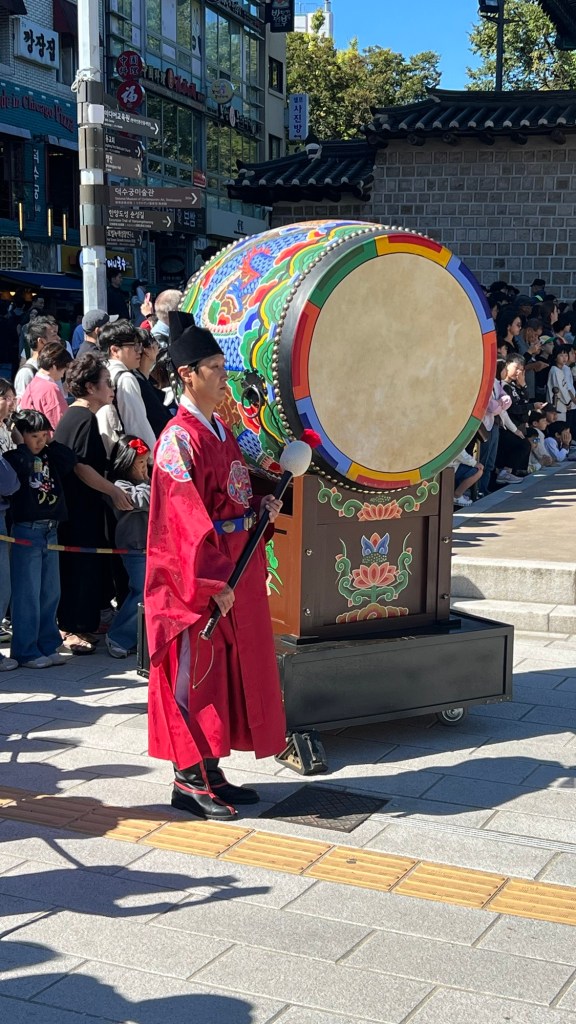
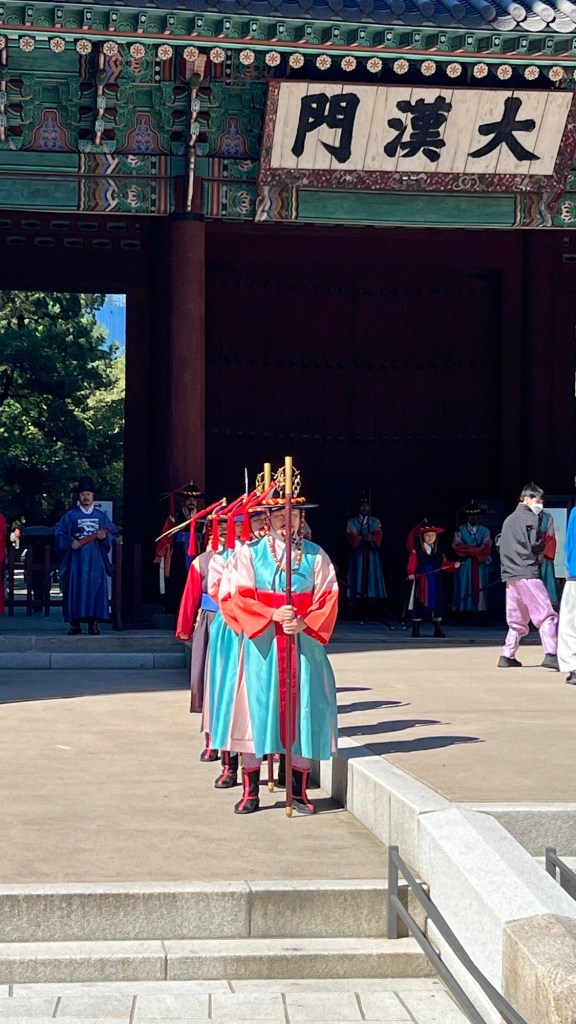
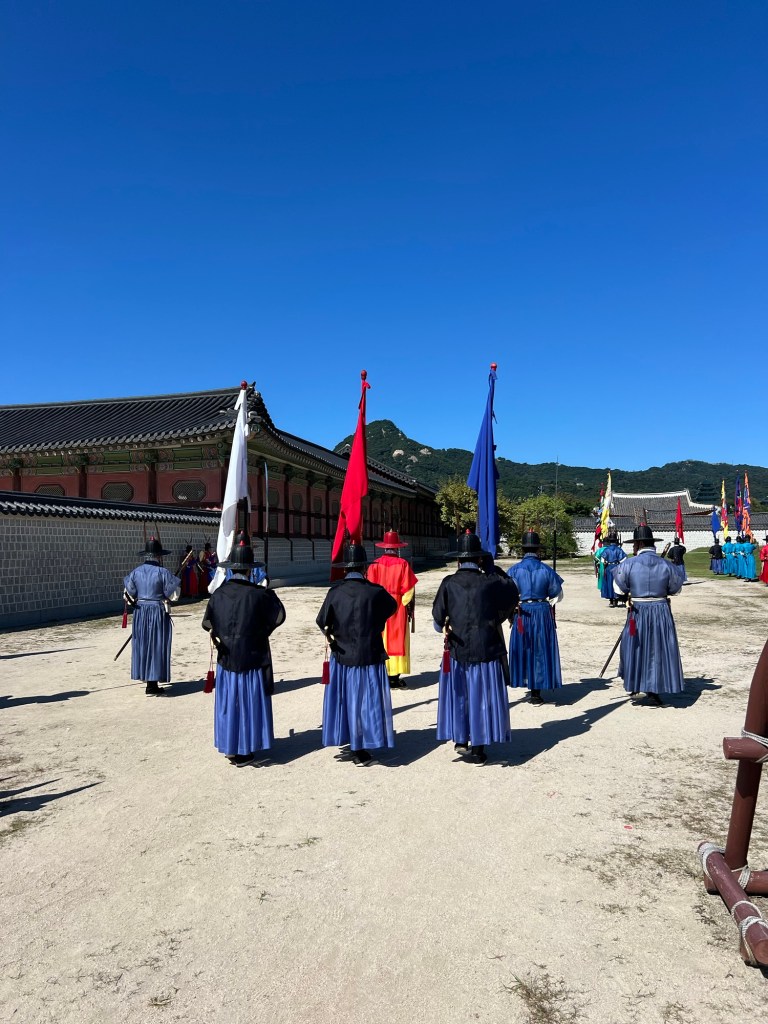
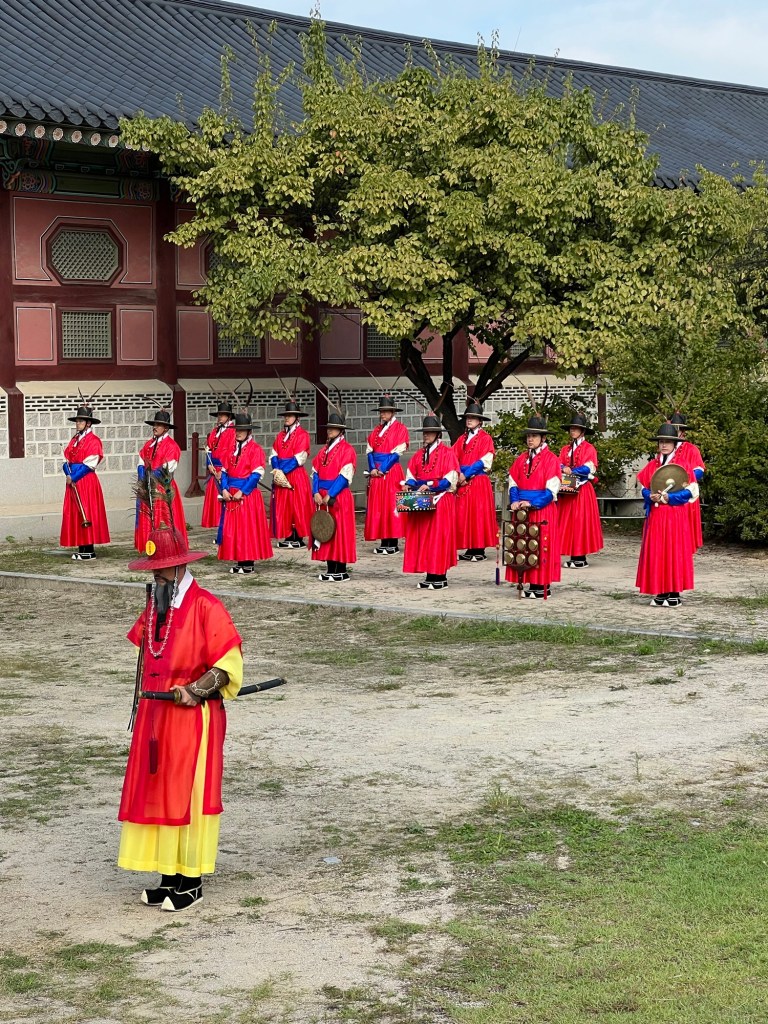
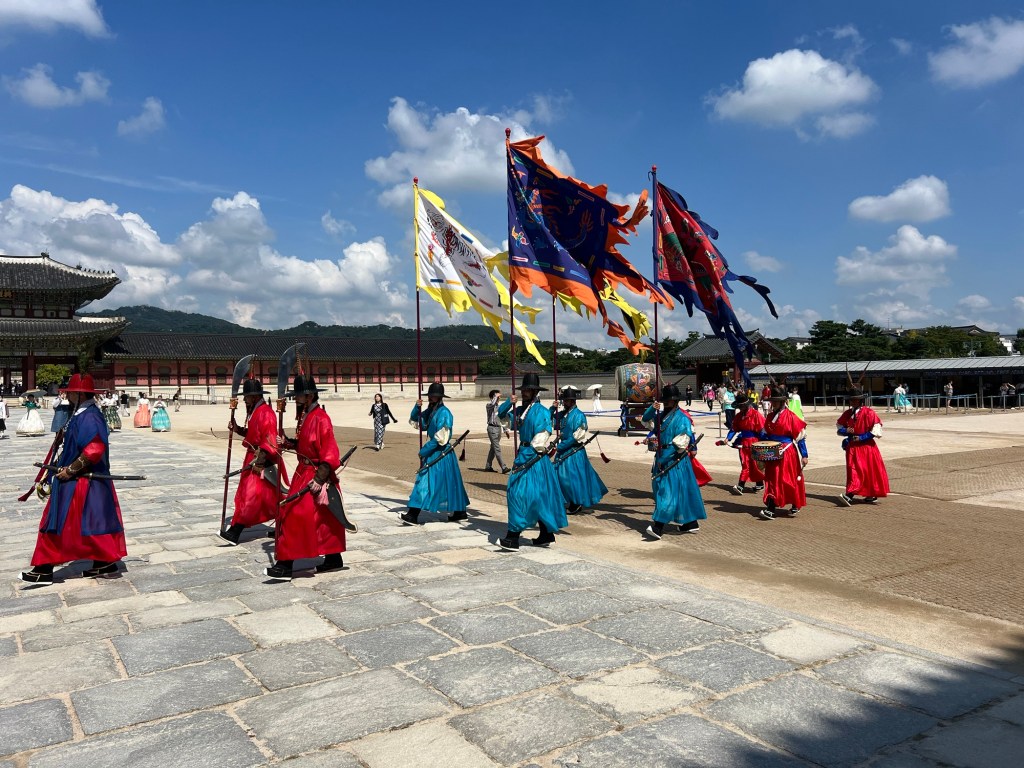
By visiting Deoksugung Palace, it meant we had crossed off the last of the 5 palaces in the city and got to see some more fanfare with the ‘changing of the guard’ performed by soldier/actors.
This last palace is the smallest of the lot, having been reduced in size over the years to enable consulates to be built in the area and new roads to be constructed. As a result it was a modest set of buildings, with the remaining area dominated by a park and the museum of National & Contemporary Art.
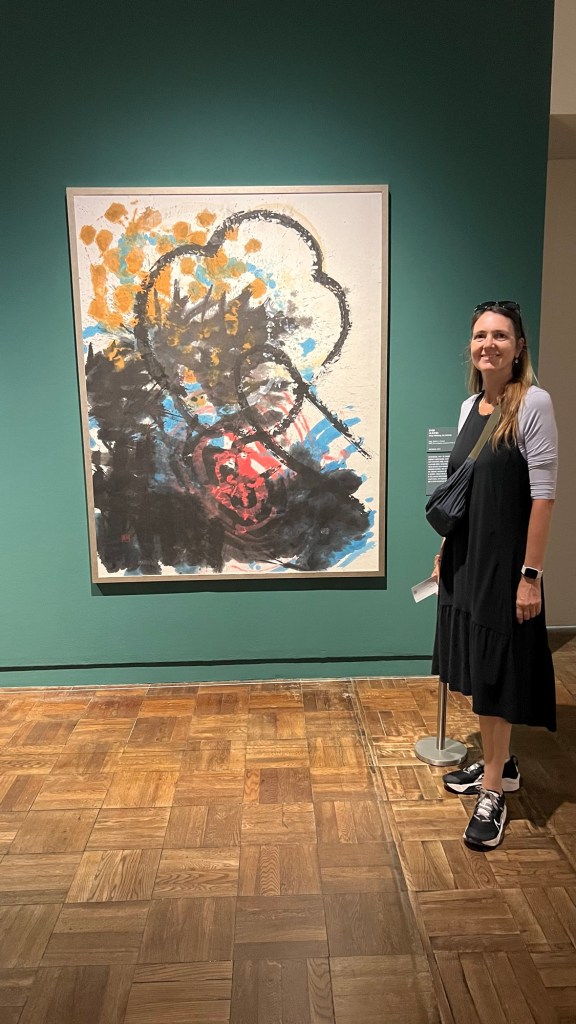
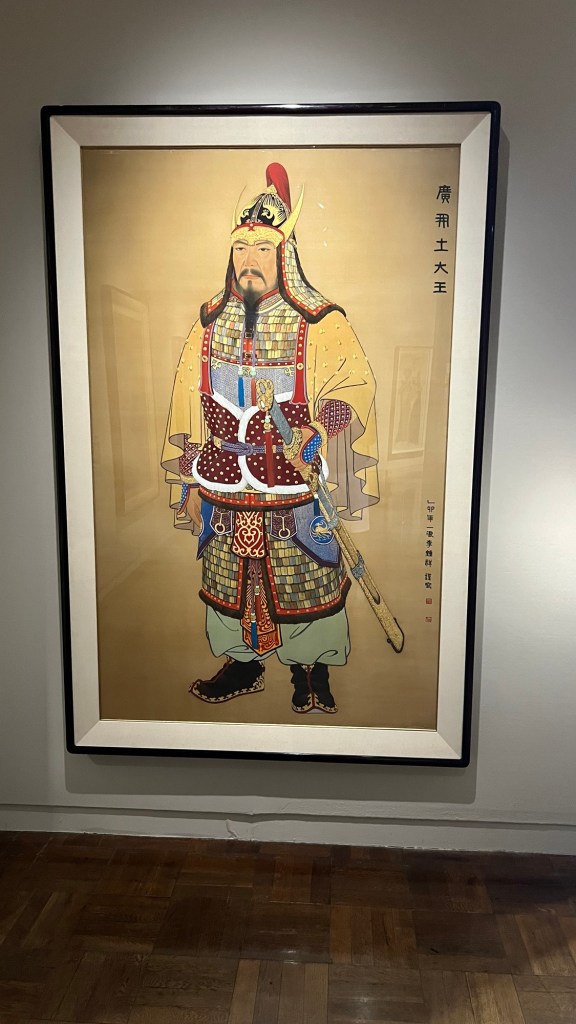
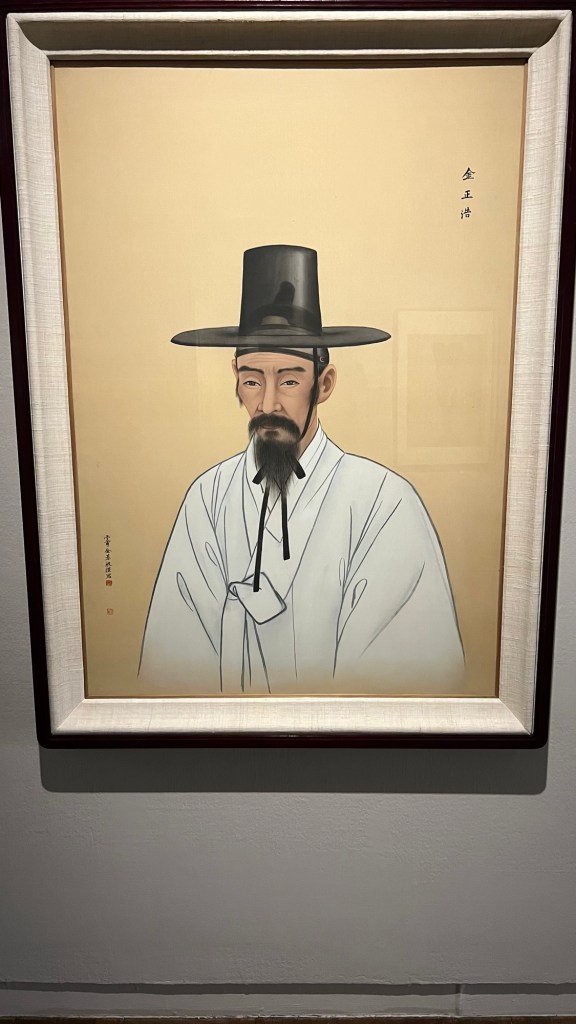
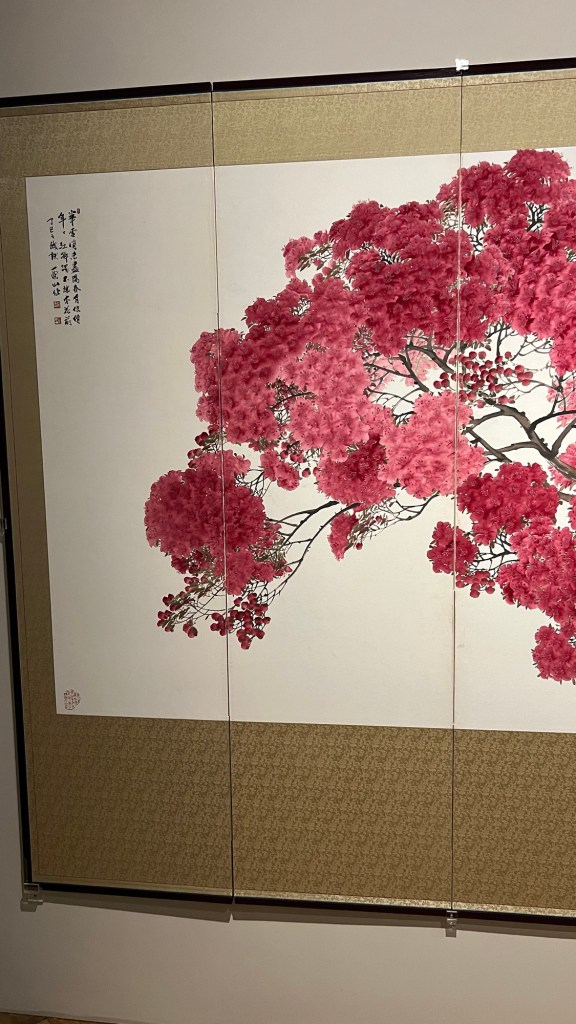
We decided to pop our nose in the door of the Art Museum and were pleasantly surprised by the scale of the art work on display and the diversity.
MoMaCA – a very European styledstructure
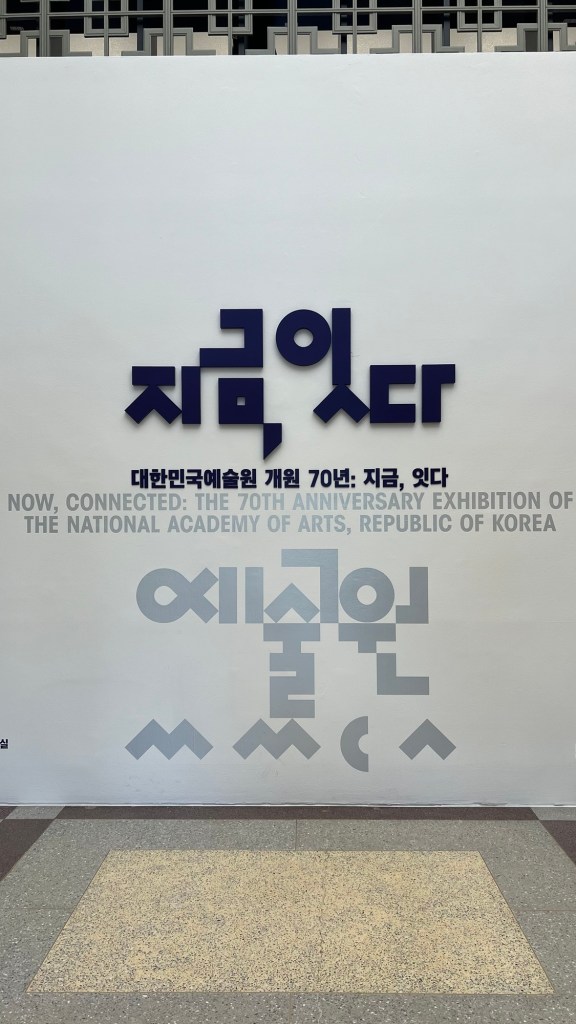
Inside the gallery which was free to enter was a show of 70yrs of Korean Art following the establishment of the Academy of Arts in the 1950’s.
A favourite of Michelle’sA favourite of Andy’s A classic Korean gentleman from the 1600’sLoving the colours View over the palace and the grounds The ‘changing of the guard’ and other performances for the watching public Drummer boyFollow my leader
After a pleasant hour or so at the palace & museum, we got back to the street to walk the 2 miles down to The War Memorial of Korea.
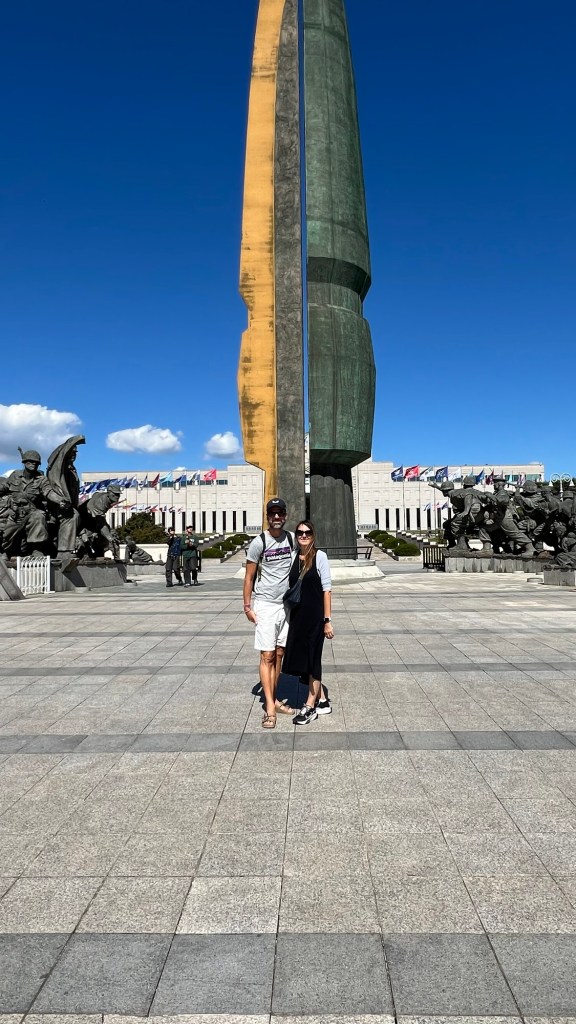
This is one of the best and largest museums in Seoul and is very on the ‘must do’ list when visiting the city, and to better understand the Korean War.
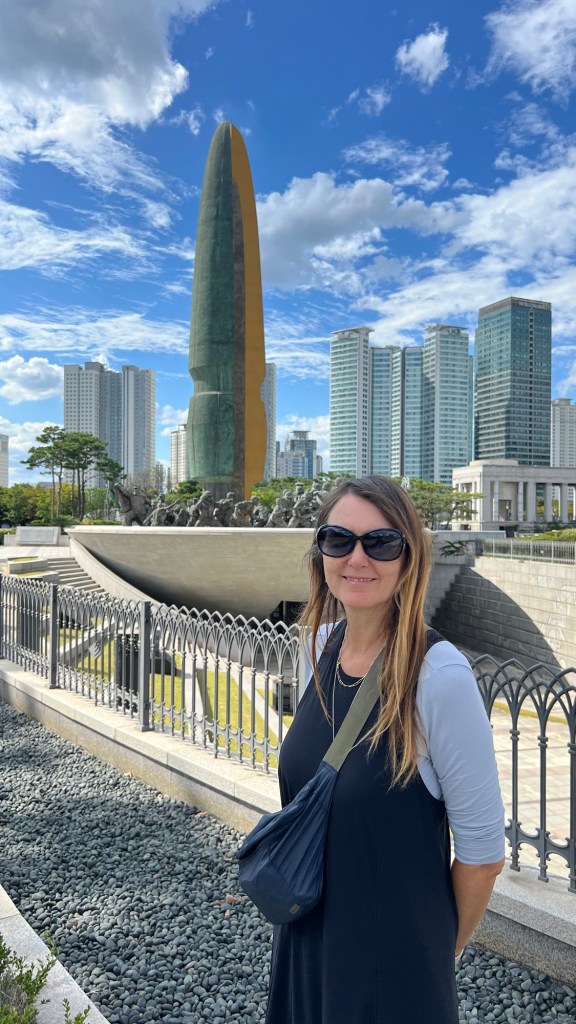
Outside the Memorial of Korea Museum
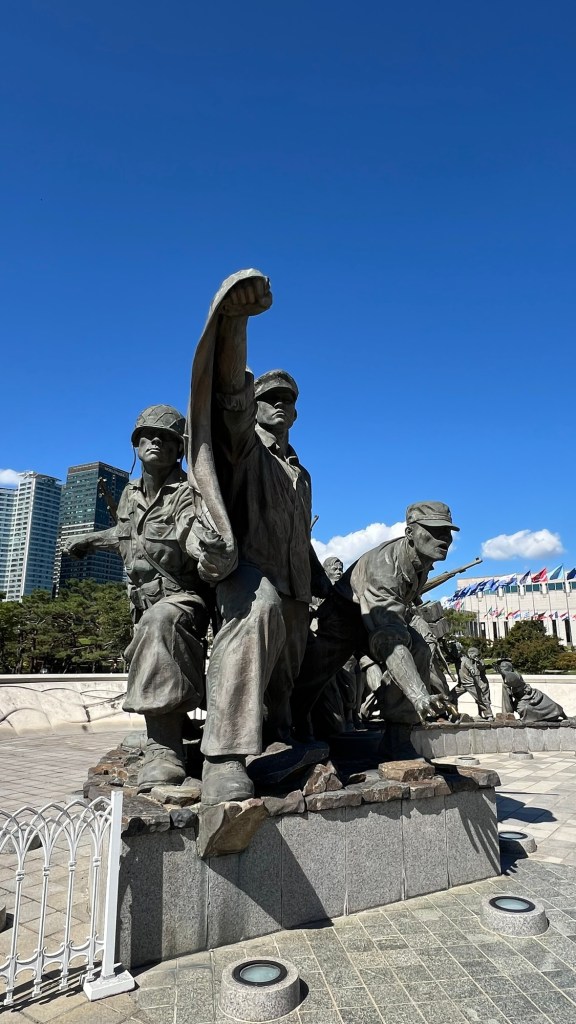
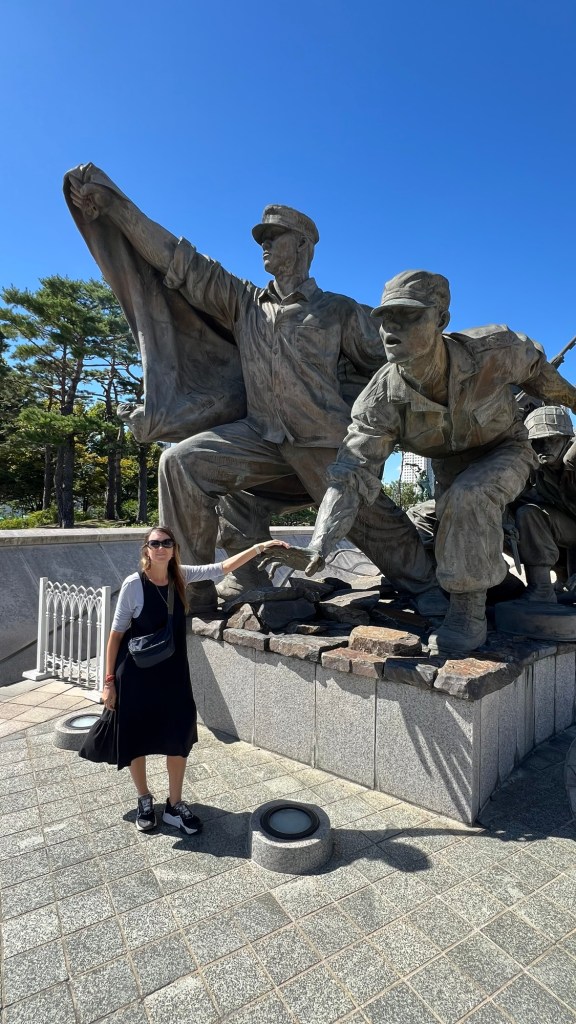
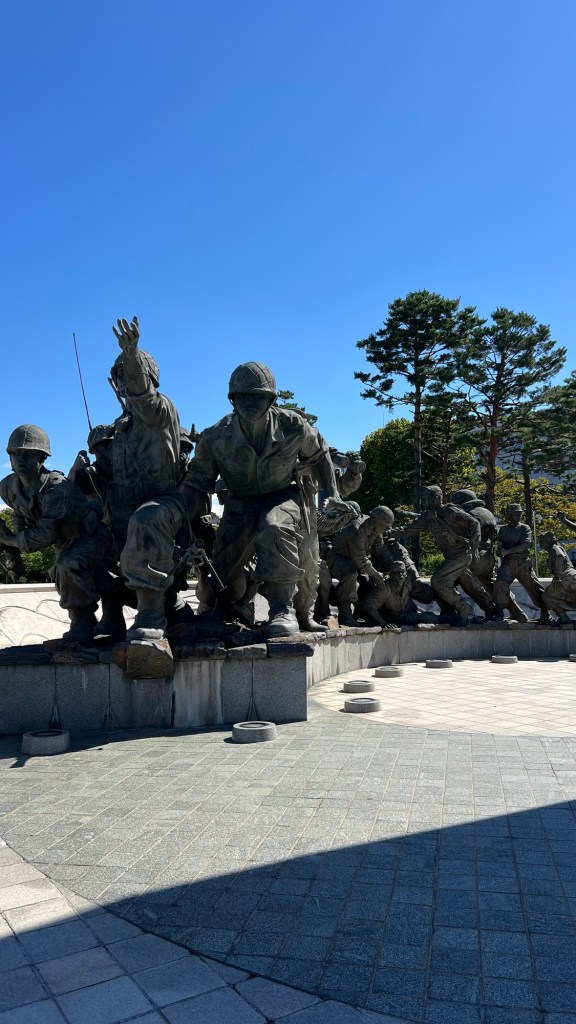
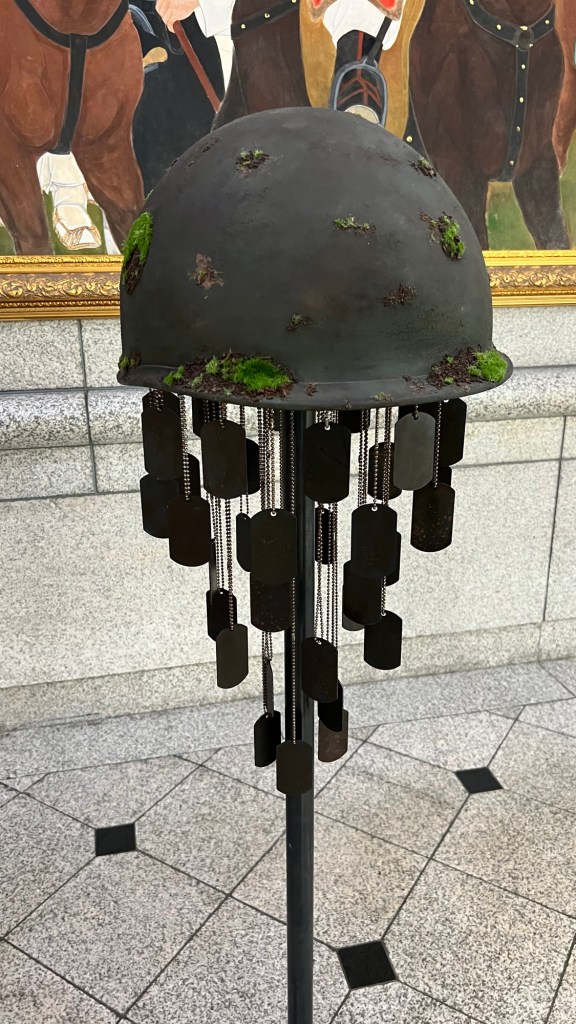
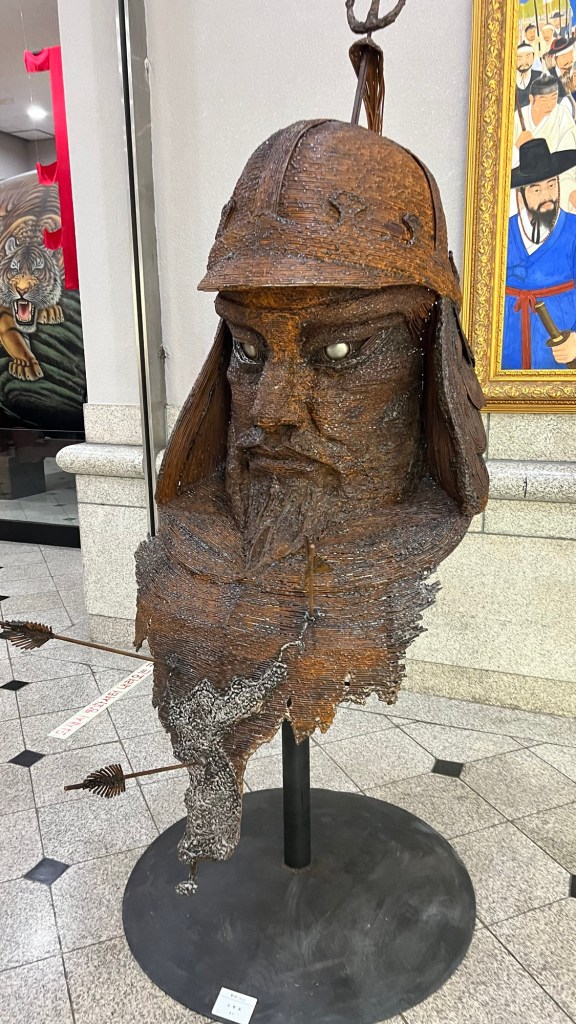
The sculptures and memorials commentating the Korean War are powerfully displayed and vivid.
The Korean War sculptures are truly stunning and really capture the sentiment of what the country & those that fought in the conflict went through.
Wise words
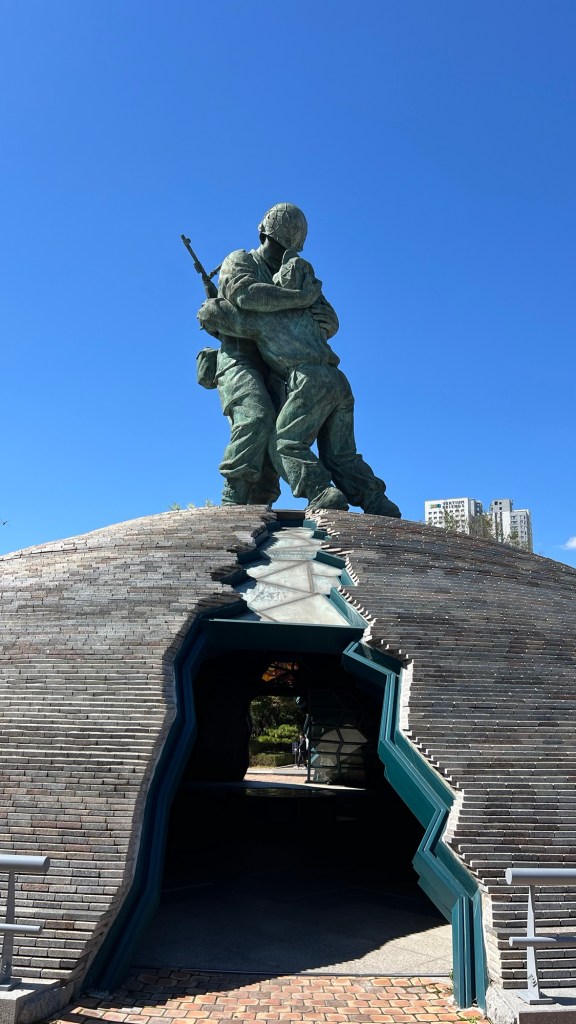
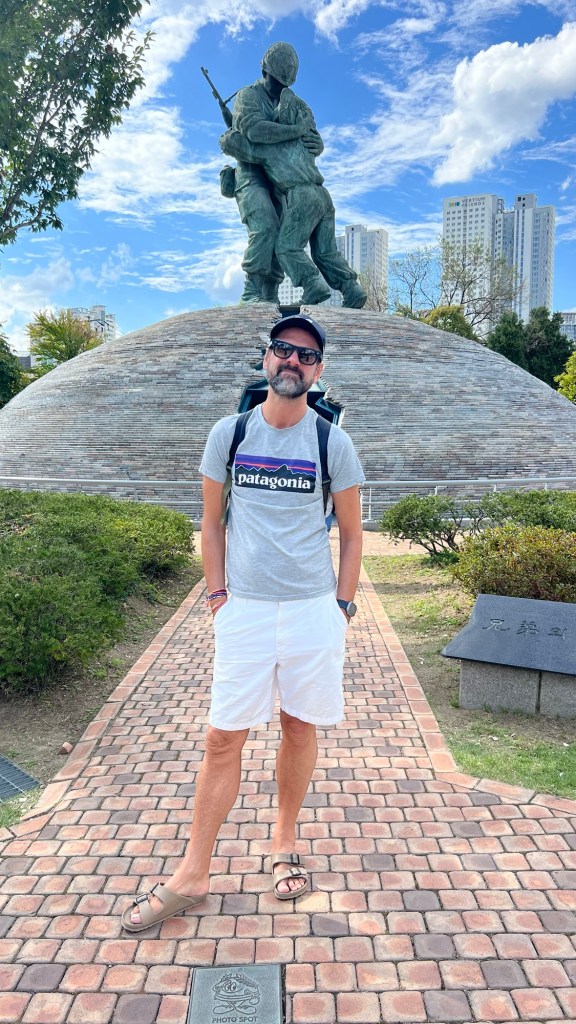
One of the most poignant sculptures is the brothers embracing on the battlefield, the eldest an officer in the South Korean army and the younger a soldier in the North Korean army. The desire for unification at some point, is abundantly clear.
Two brothers statue
In recognition of the UN contribution in the 3yr Korean War , each country has a plaque acknowledging the sacrifices they made to help in the fight against North Korea and the communist regime. Needless to say we were keen to view the UK’s military assistance of the numbers involved, with their losses second only to the Americans.
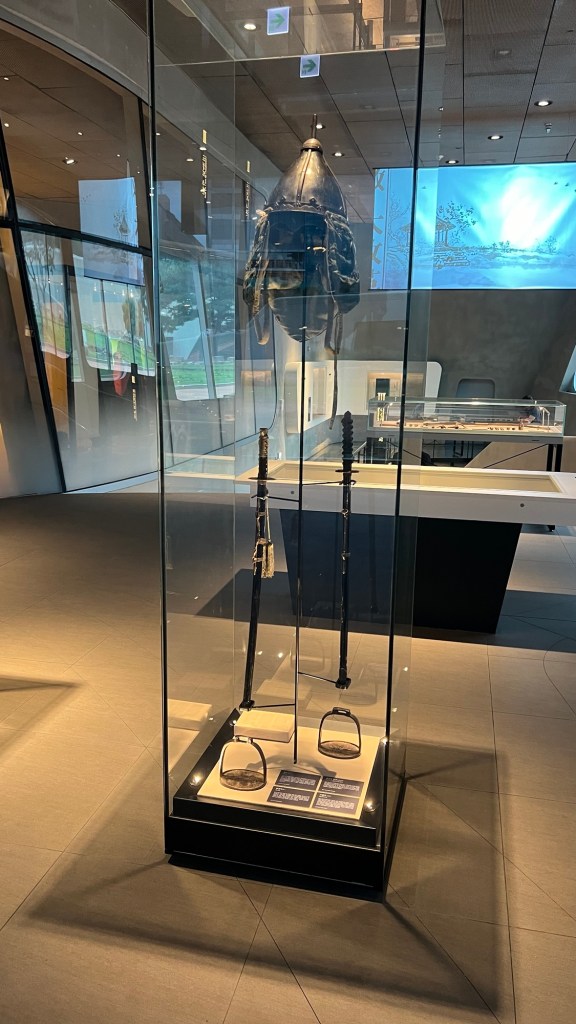
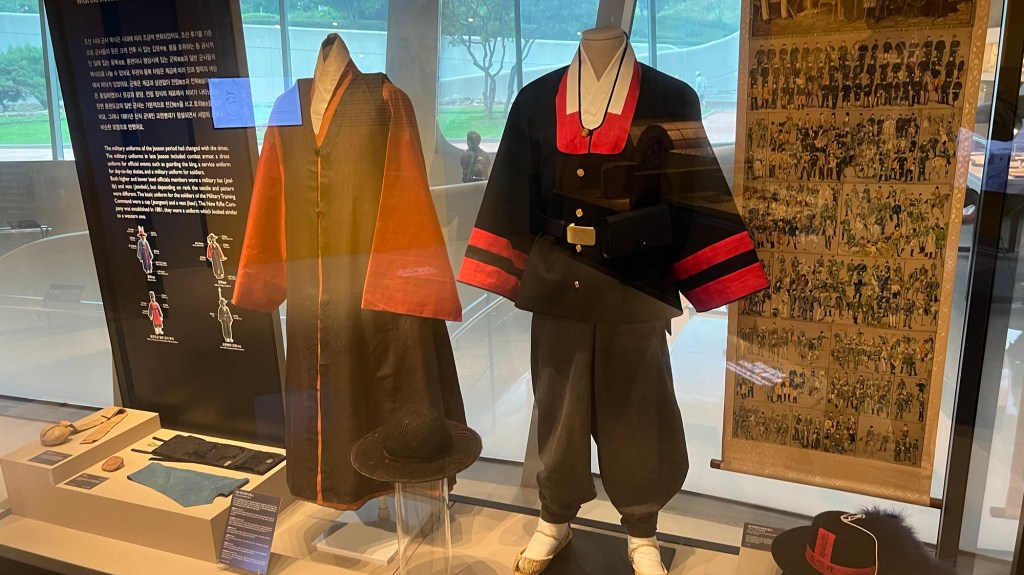
Inside the museum we walked through a series of rooms charting the country’s wars and military conflicts over their 3,000 yr history.
Korean War artwork Korean history from the 1600’s
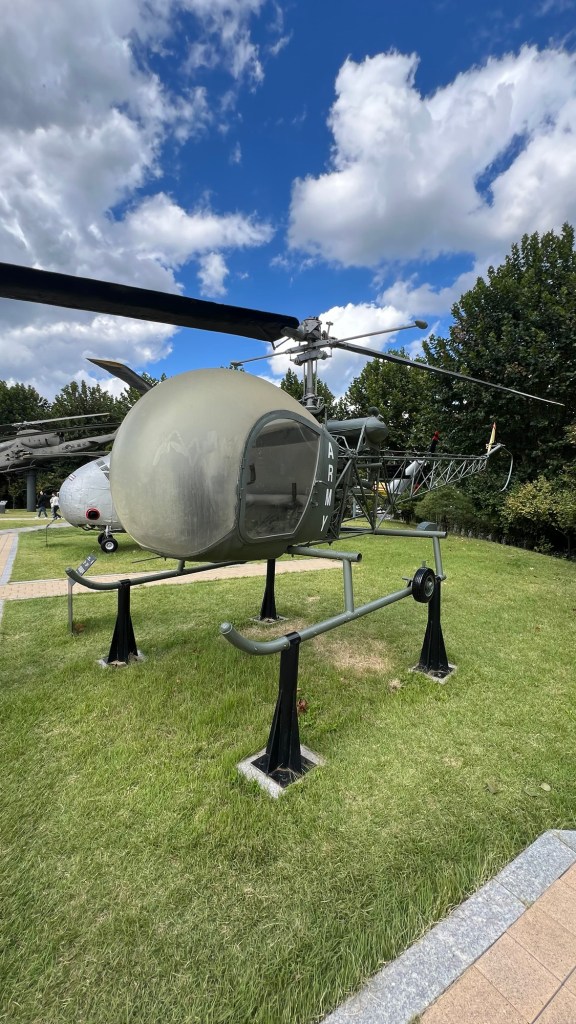
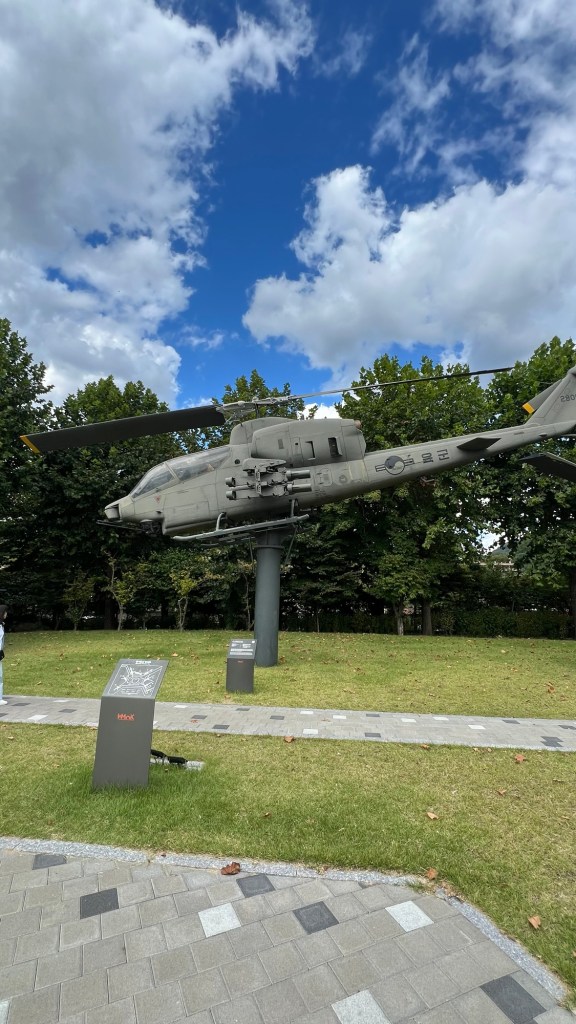
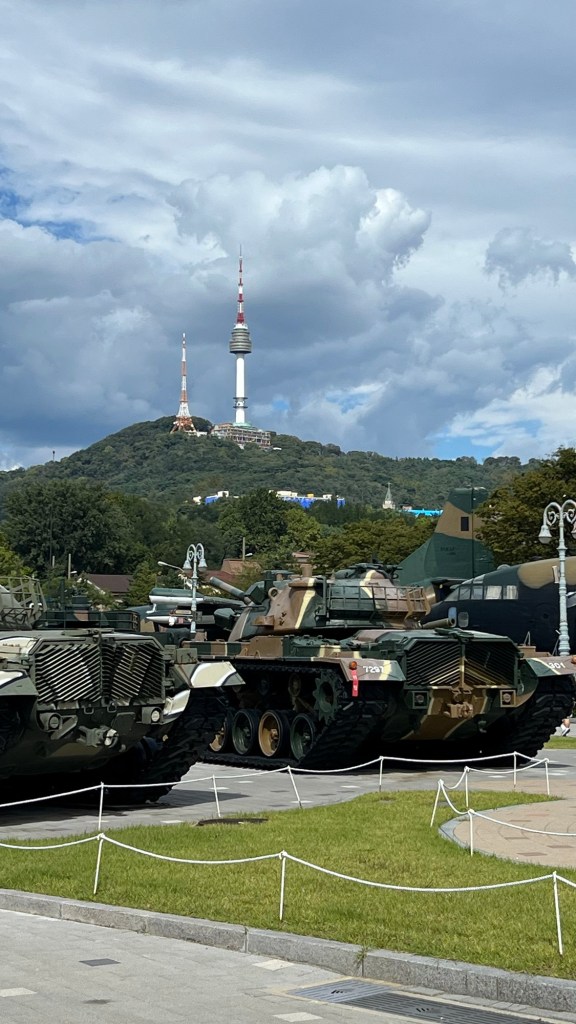
Once we were back outside, there was an array of old military aircrafts, helicopters and even a ship.
Amazing stuff and great to see so much close at handUS helicopters Tanks from the Korean and Vietnam conflictsView from the Museum of Korea back over the city
Mid-afternoon we left the Museum of Korea and picked up the underground and headed to Hongdae for a late lunch and some retail therapy.
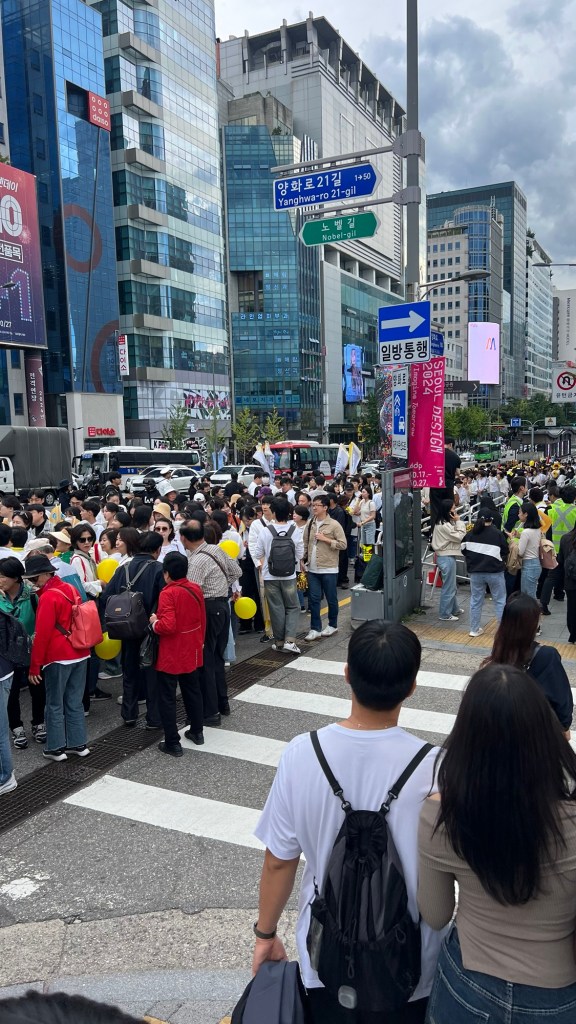
When we arrived on the main shopping street in Hongdae there were protests and tons of police, which we gather was down to local elections and a desire from a section of the population for change. The rest carried on shopping and hitting the restaurants on their national holiday.
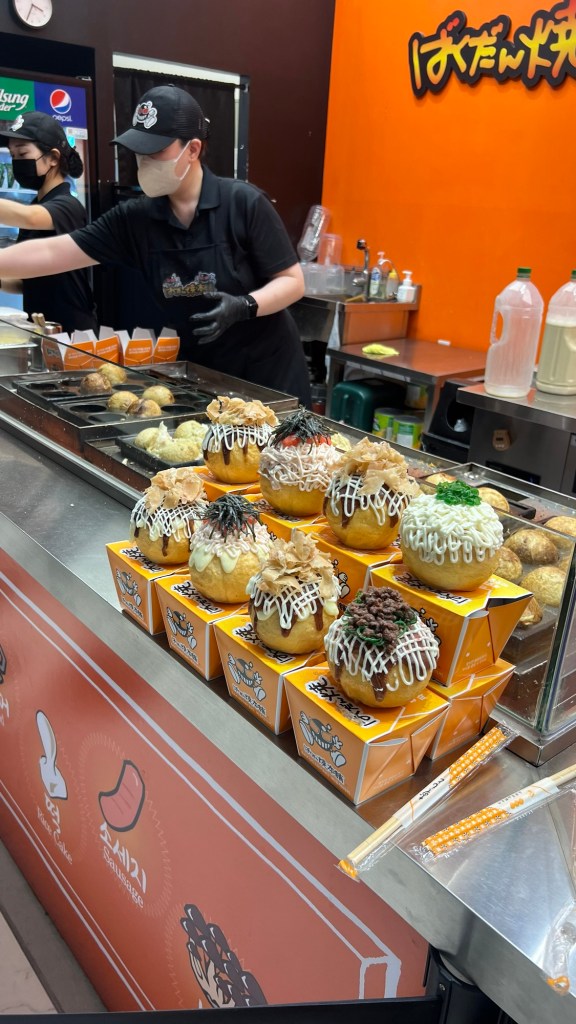
Hongdae – Yeonnam Road Local delicacy in one of the shopping malls
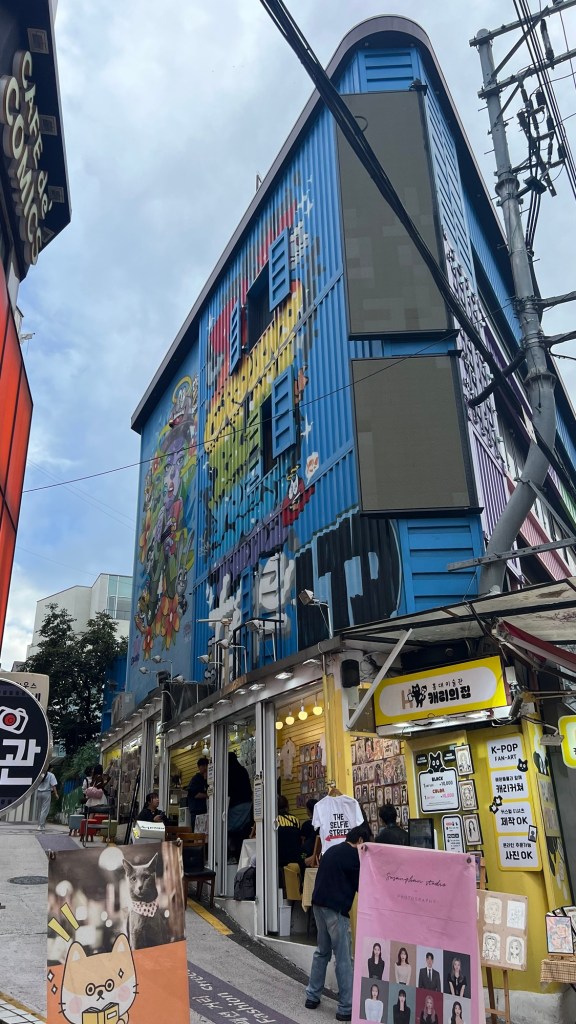
After lunch at a cool bakery on one of the side streets, we had a wander around the busy shopping area and took in the atmosphere of the eclectic Eoulmadang Road.
Whilst we both really love this part of Seoul, it’s clear we were twice the age of most shoppers and wanting to find a more relaxing place for dinner, we decided to get back on the subway and return to Insadong, where we spent last night and enjoyed the great selection of restaurants and bars along with independent craft stores.
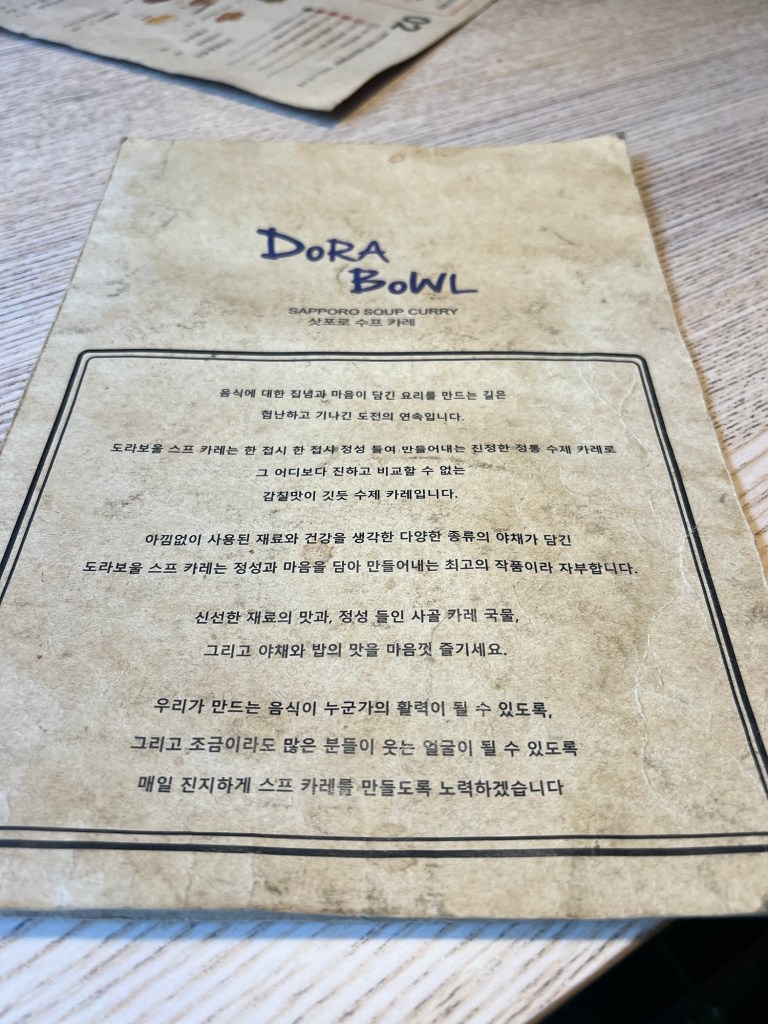
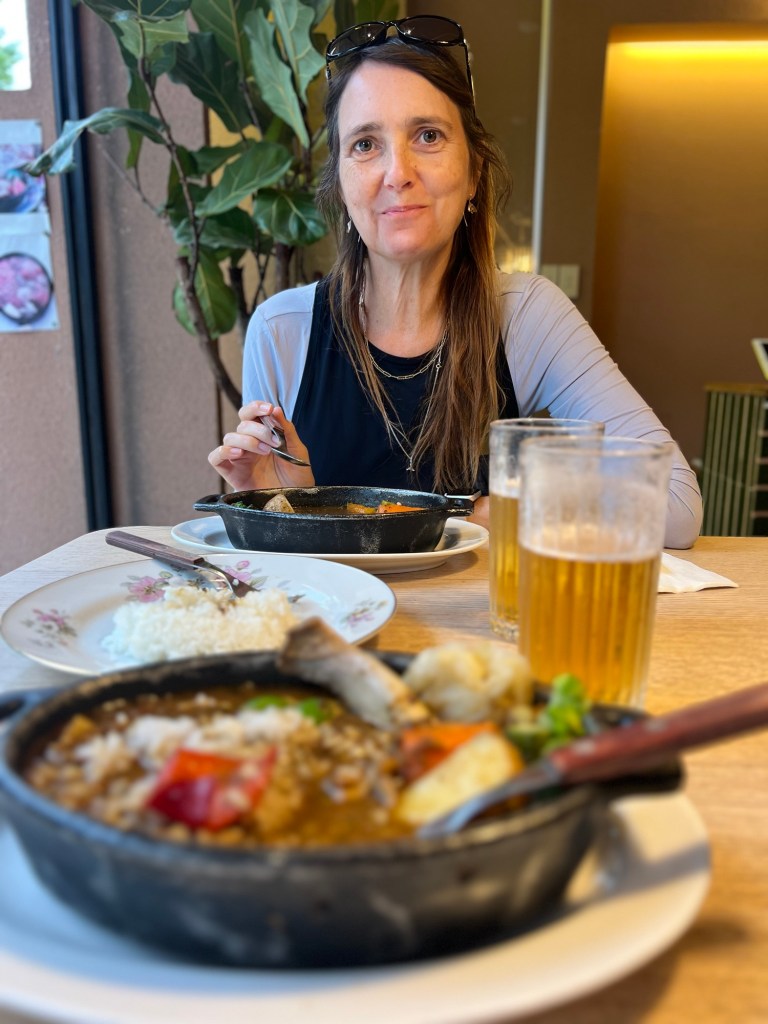
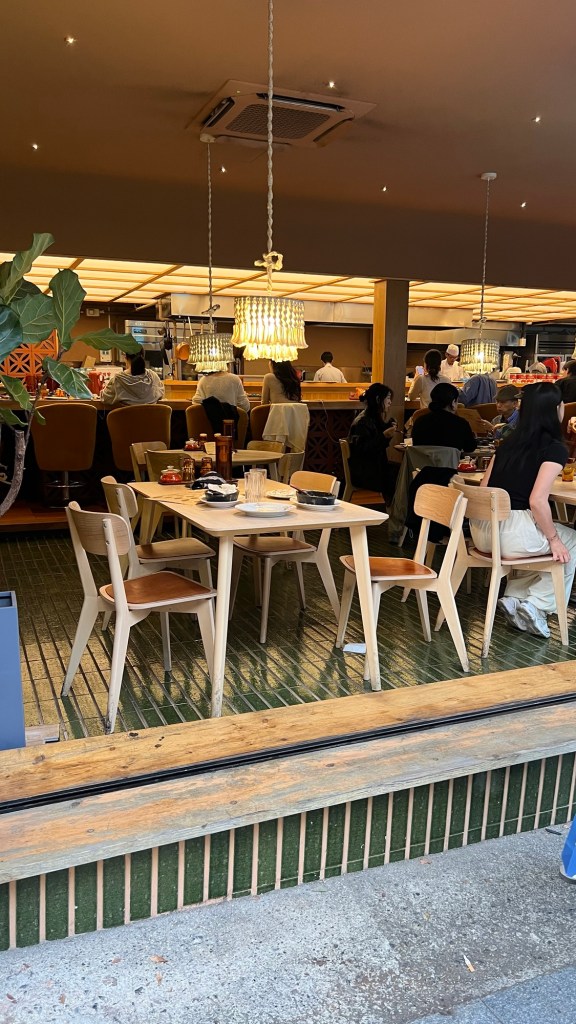
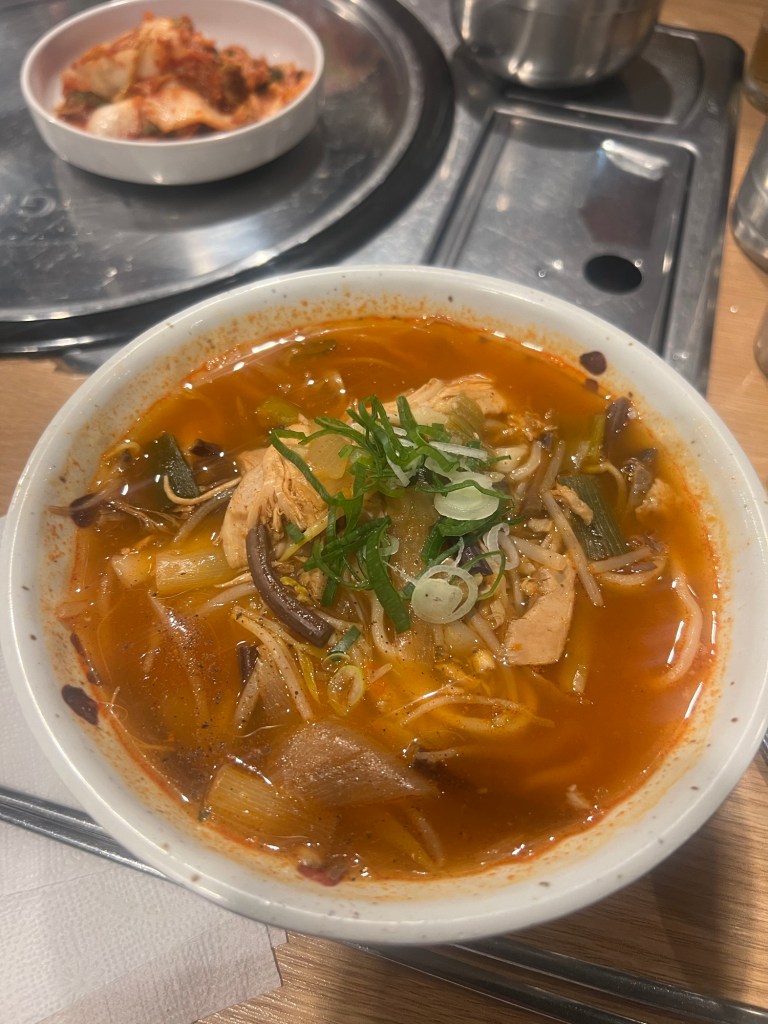
Fortunately we found a great restaurant, with views down the Main Street and went for their speciality, a curry soup of vegetables and chicken. It’s fair to say that it was one of the best dishes we’ve had in South Korea. Incredibly flavourful and filling and not bad at just £6 a dish.
Possibly the best meal yet in Seoul Our table spot
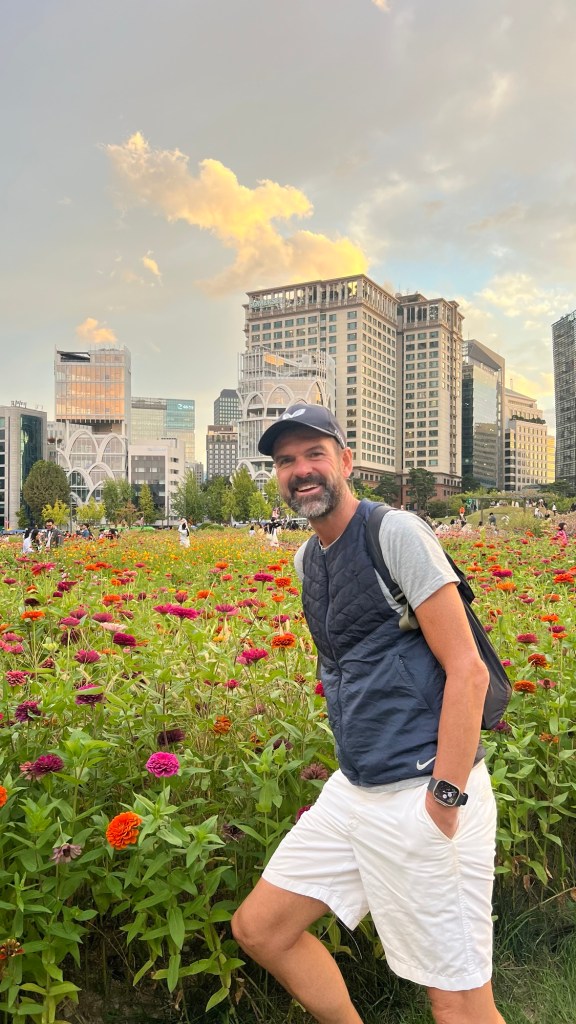
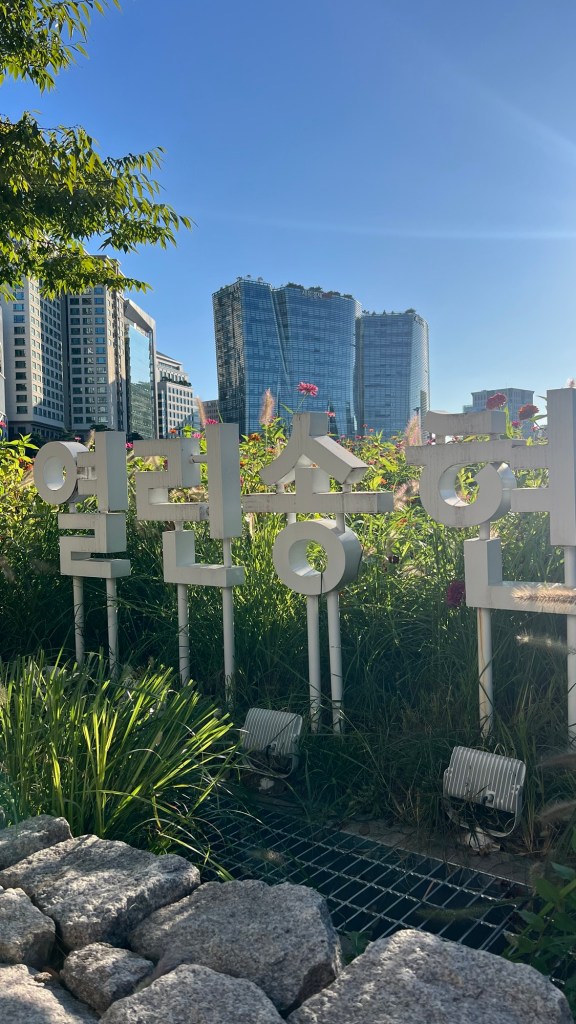
After a fabulous dinner we wandered back into the city, passing the much visited and beautiful green plaza and the wild flowers. The place was packed even though it was close to 7pm with locals making the most of the final hours of their holiday.
Tomorrow is our last day in Seoul and we have decided to finish with one final walking tour around Jonggak & the historical parts of the city. We’ve had such a wonderful time over the last week and will definitely return at some point in the future.
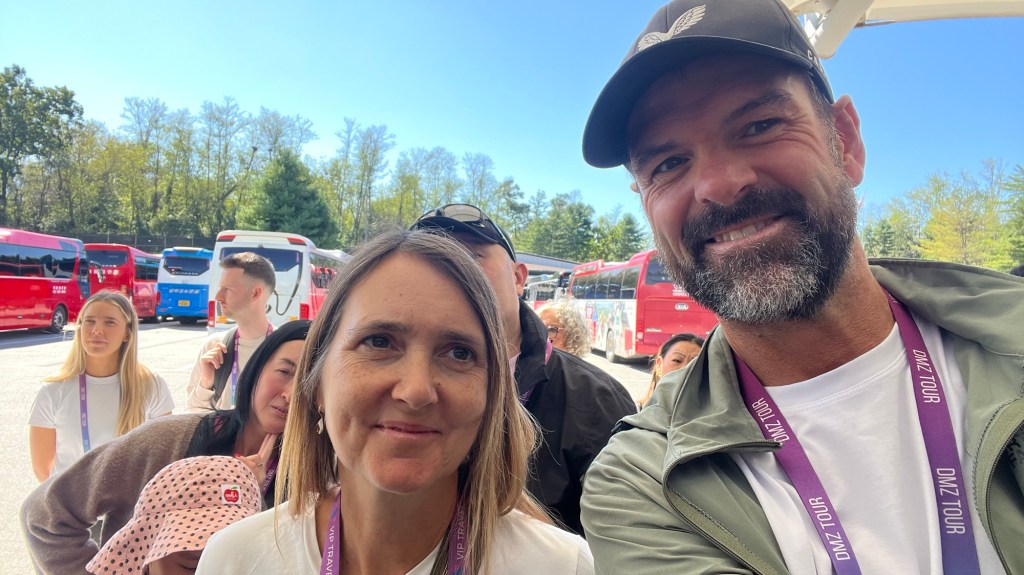
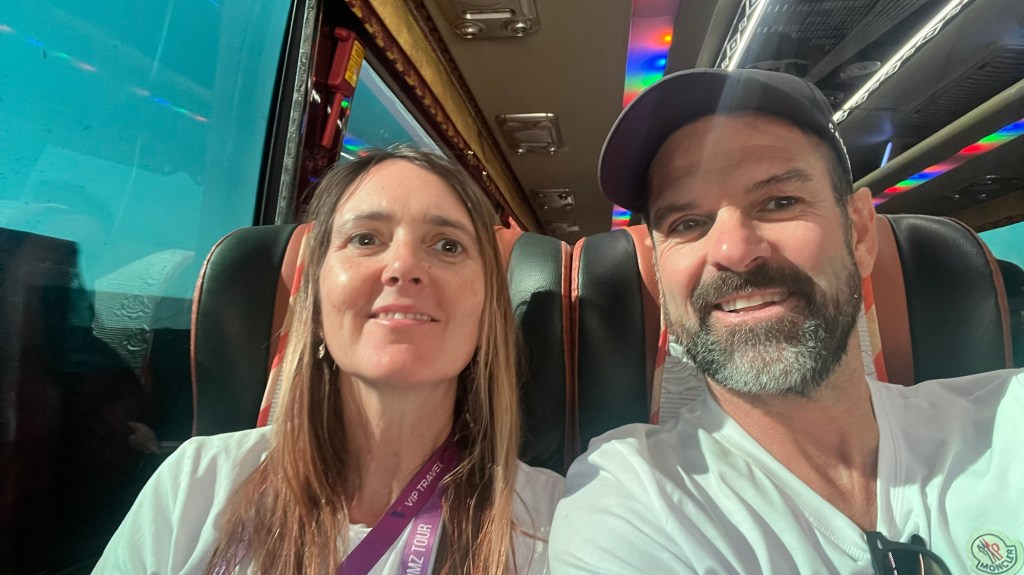
Back on the early starts, with a 5.30am alarm call in readiness for our tour meet up at Myeongdong Station for 6.20am and the start of the DMZ day trip.
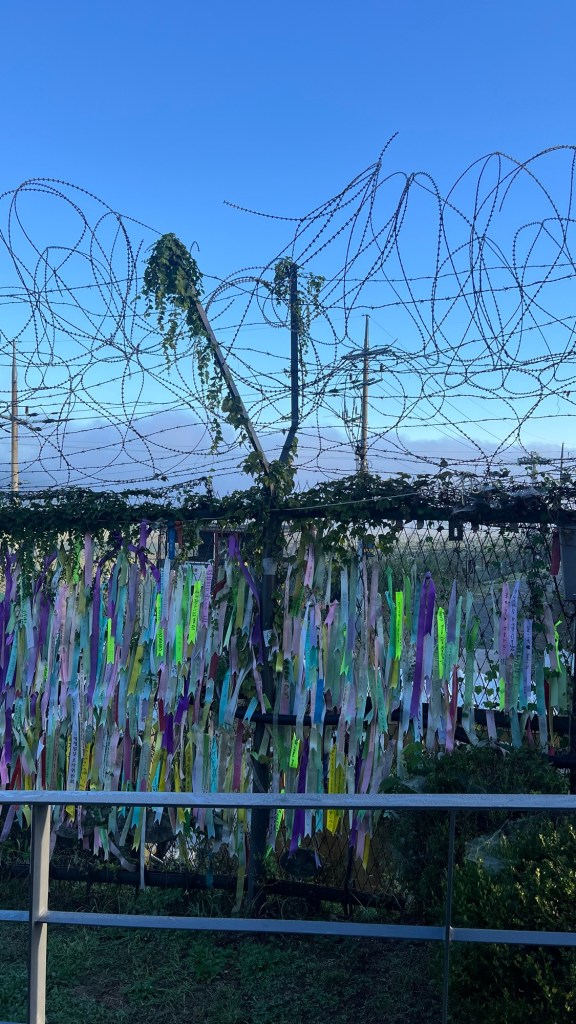
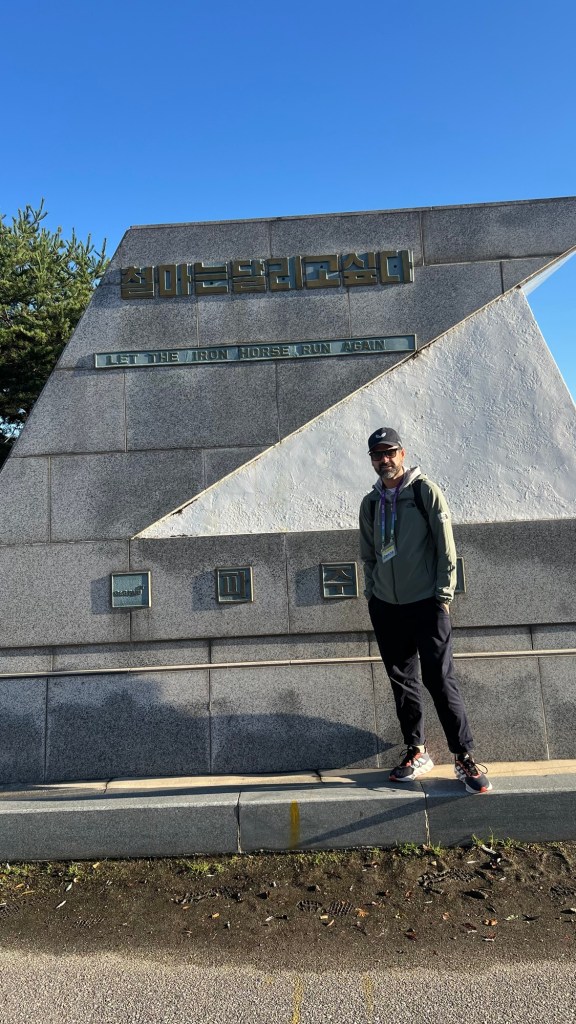
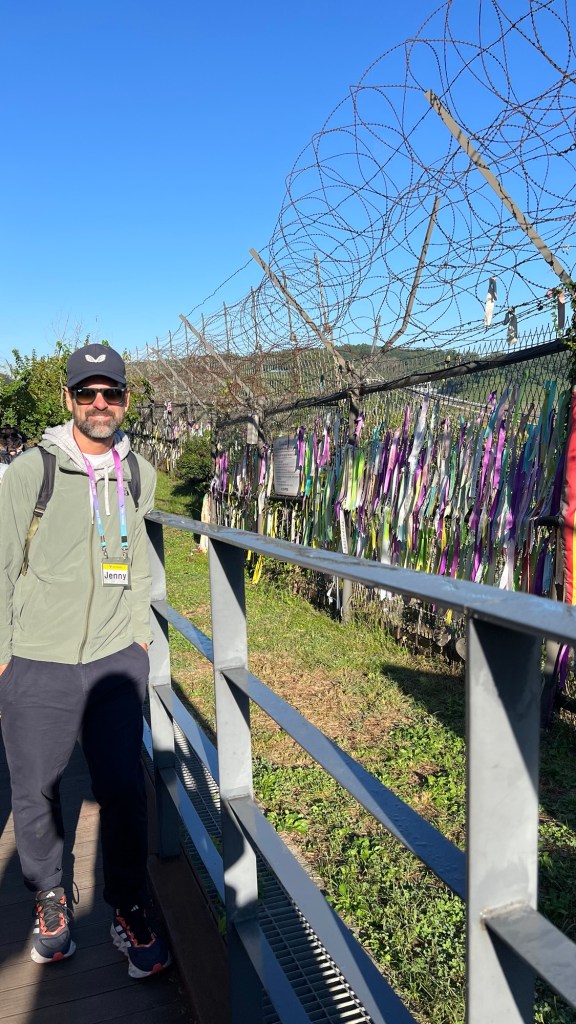
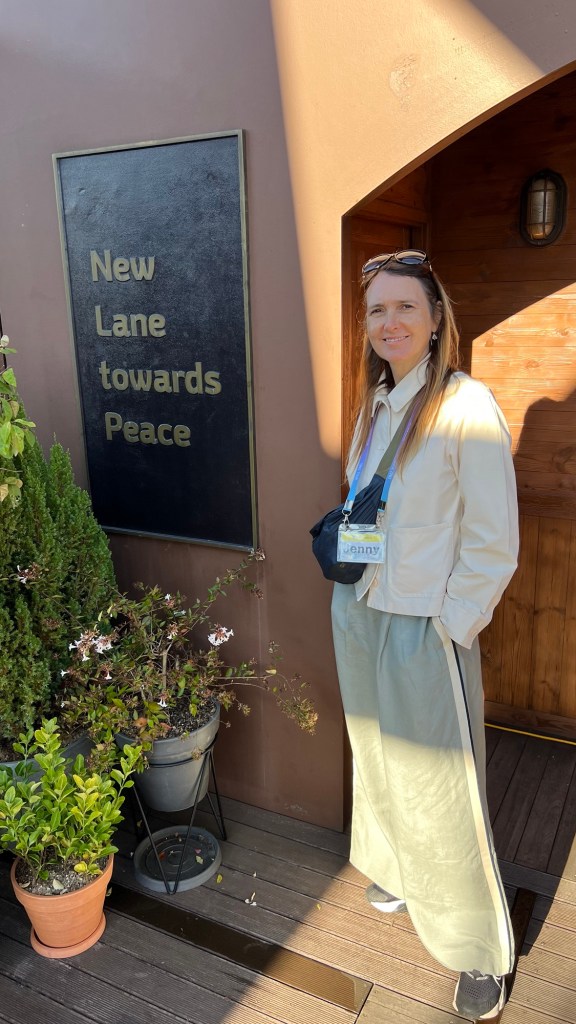
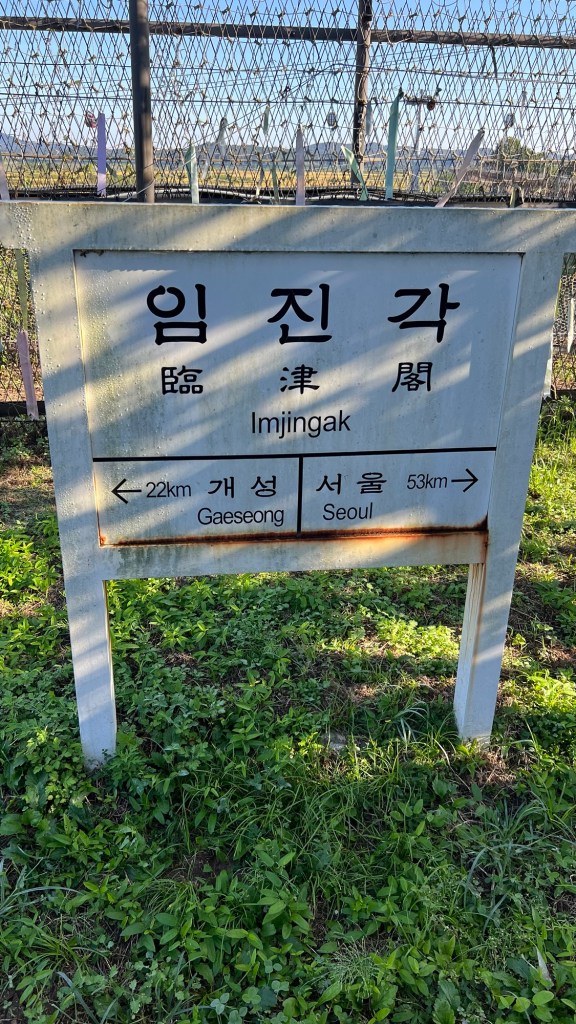
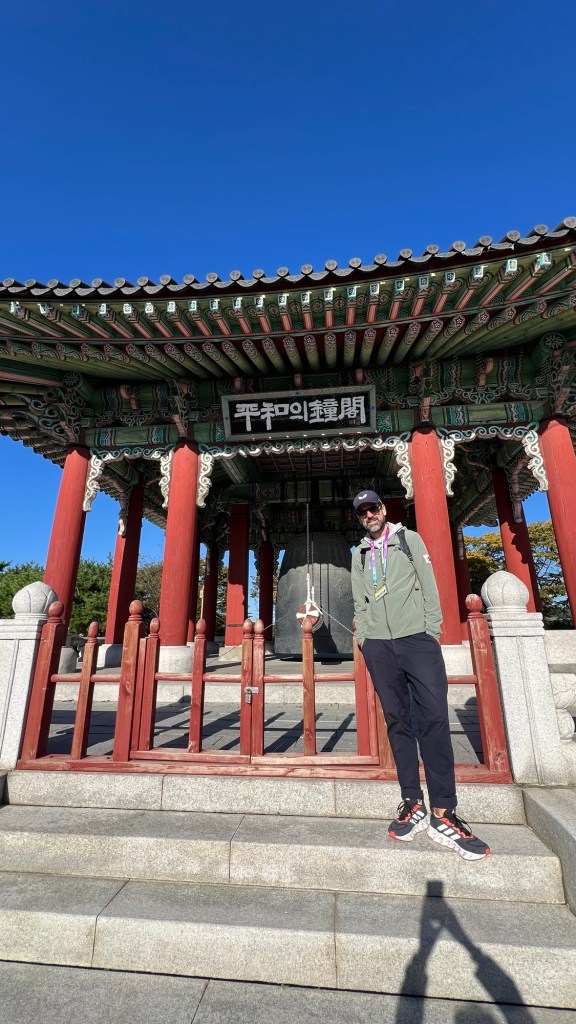
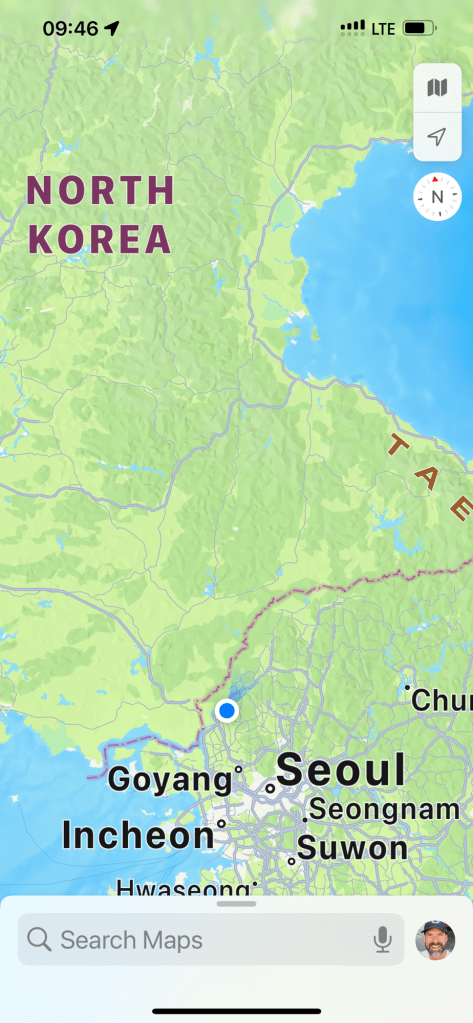
After a 1hr drive north we arrived at our first stop Imjingak Pyeonghwa-Nuri Park and The Bridge of Freedom. Here for the first time we were able to see across into the Demilitarised Military Zone which is surrounded by high barbed wire fencing and a mass of land mine’s dropped by the Americans post the ceasefire of the Korean War in 1953.
This area witnessed a significant amount of fighting during the Korean War between the communist forces in the North, supported by the then USSR and the South who were assisted by the UN led by the Americans, English and another 15 countries.
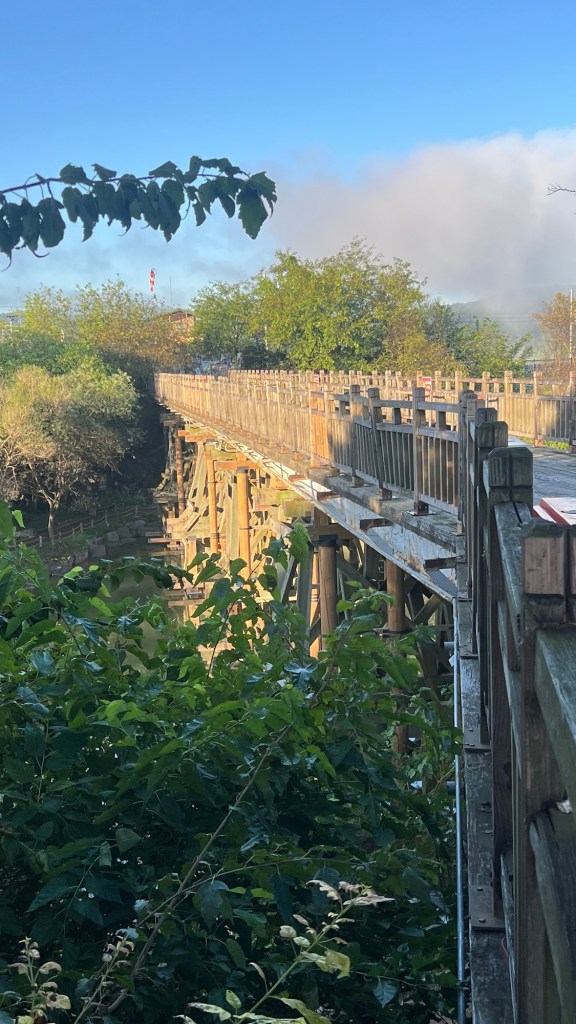
Bridge of Freedom
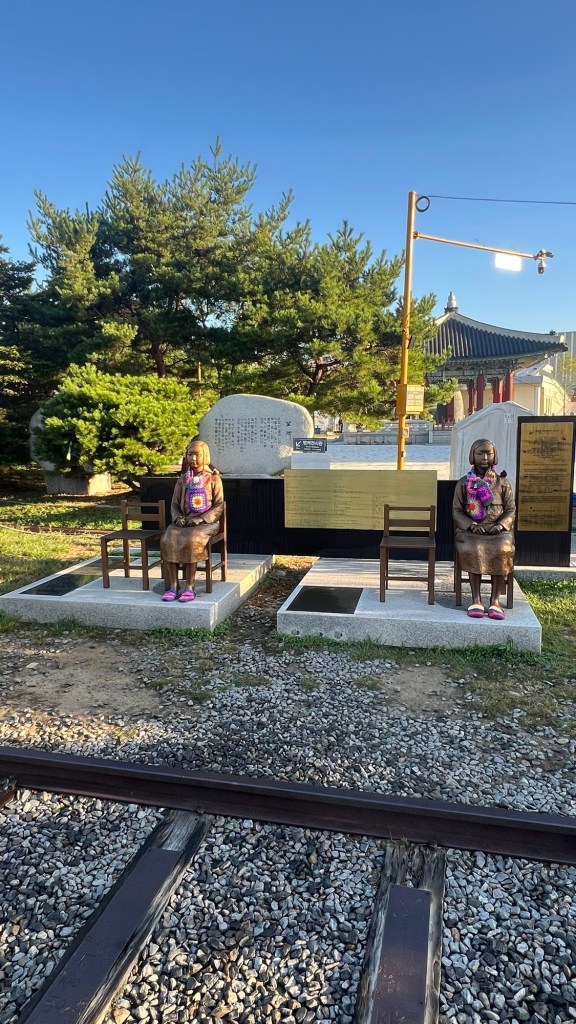
Prior to the Korean War, Korea was annexed by the Japanese who committed a number of atrocities, notably the prostitution of young Korean women, who are honoured by the statues below.
After the end of WWII, despite becoming independent of Japan, the invasion by the North in 1950 and the subsequent peace treaty in 1953 meant the country was divided into North and South, with no ability to cross from one part to the other.
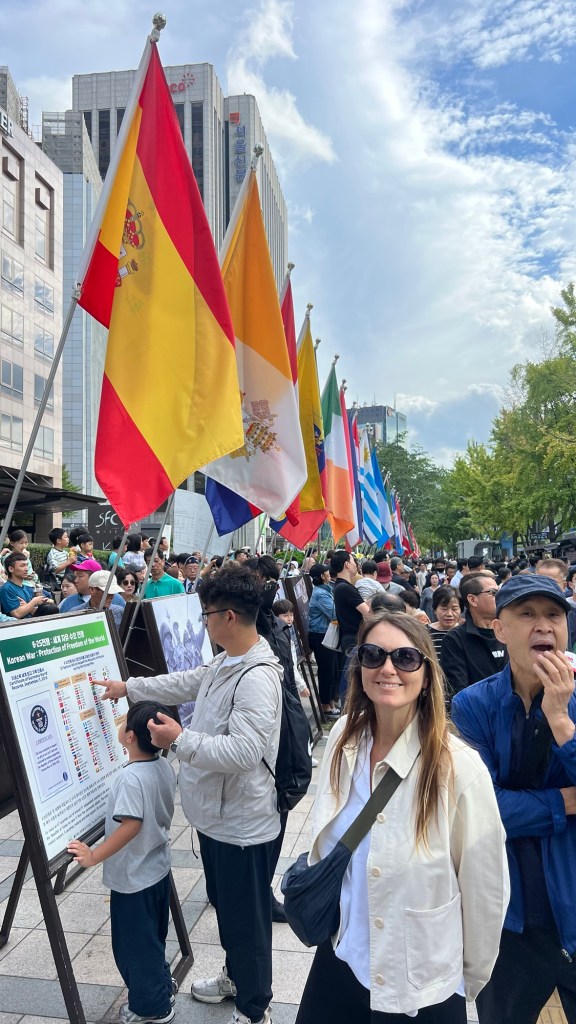
There are a number of monuments and statues that commemorate those Korean people who lost their lives in the civil war and the assistance given to the South by America and the UN nations to help preserve South Korea as an independent nation. Strictly speaking the two countries still remain at war, with no peace treaty ever having been agreed, despite the fighting ending over 70yrs ago.
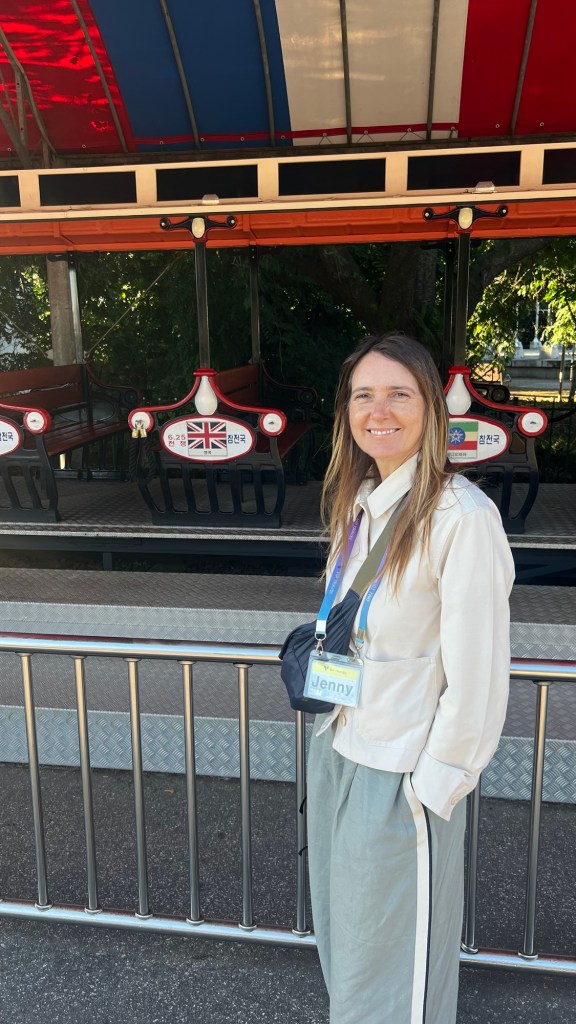
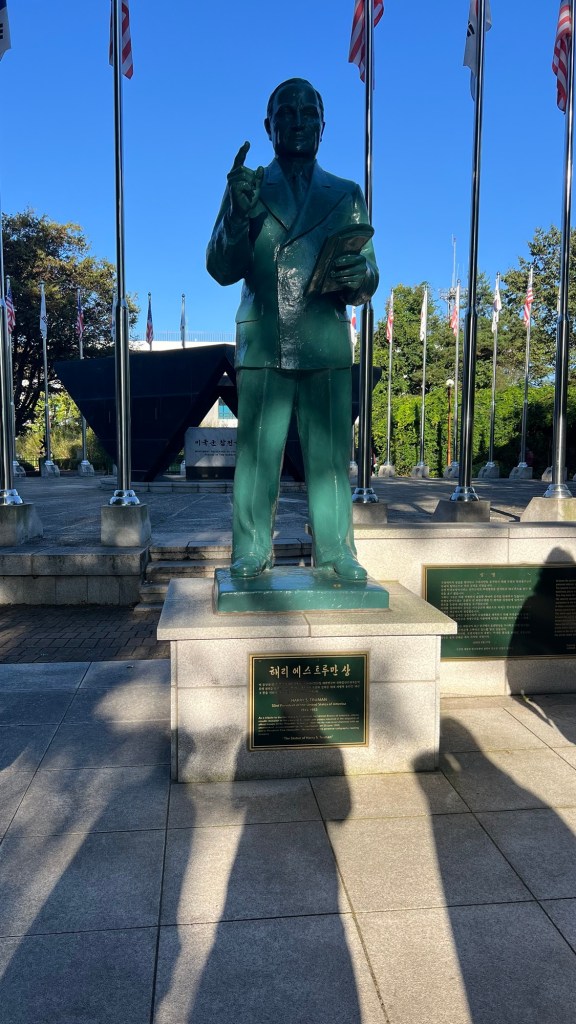
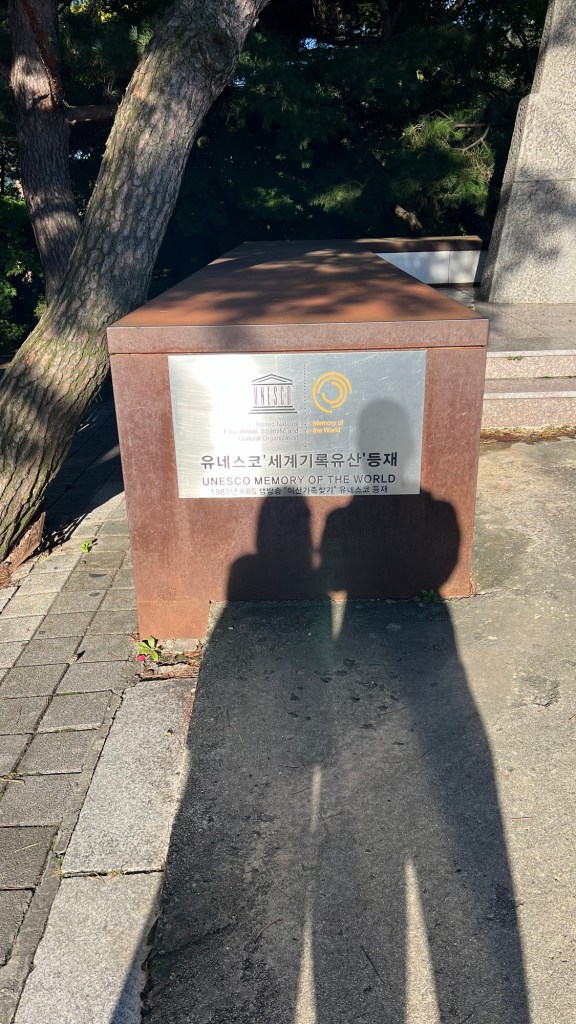
Ice Horse Train – waiting for unification to travel north Harry Trueman – US president who brokered the ceasefire with N Korea UNESCO Memory of the World in honour of S Korea
After the end of the hostilities with North Korea, the POW returning to South Korea final steps took them across the ‘Bridge of Freedom’.
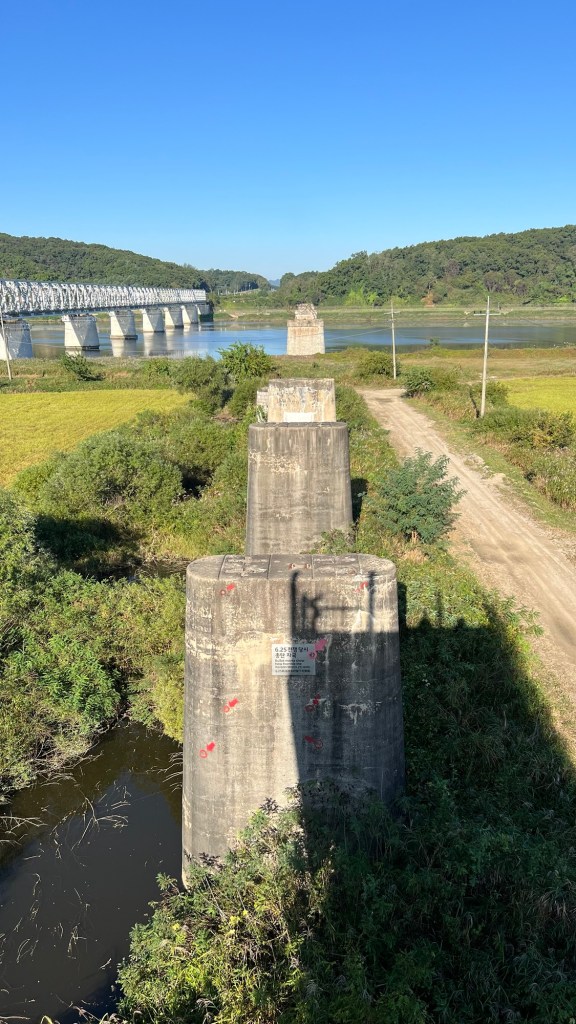
From the park we were able to walk out to viewing platforms to look out into the DMZ, a neutral area still within South Korea which borders the North. Here the former bridges linking to the lands have been closed or removed/destroyed.
Former rail bridge to North Korea Our location close to the border
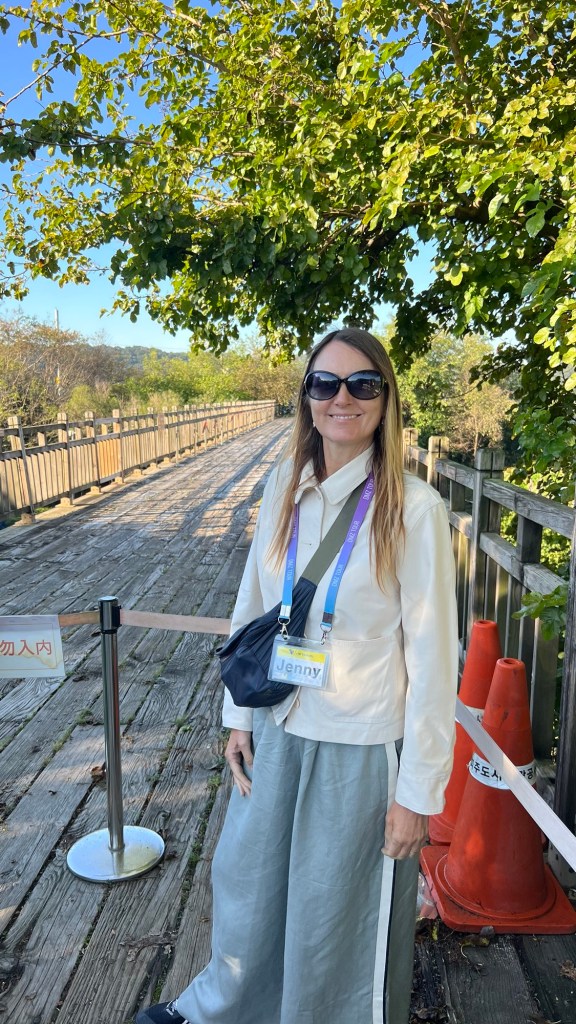
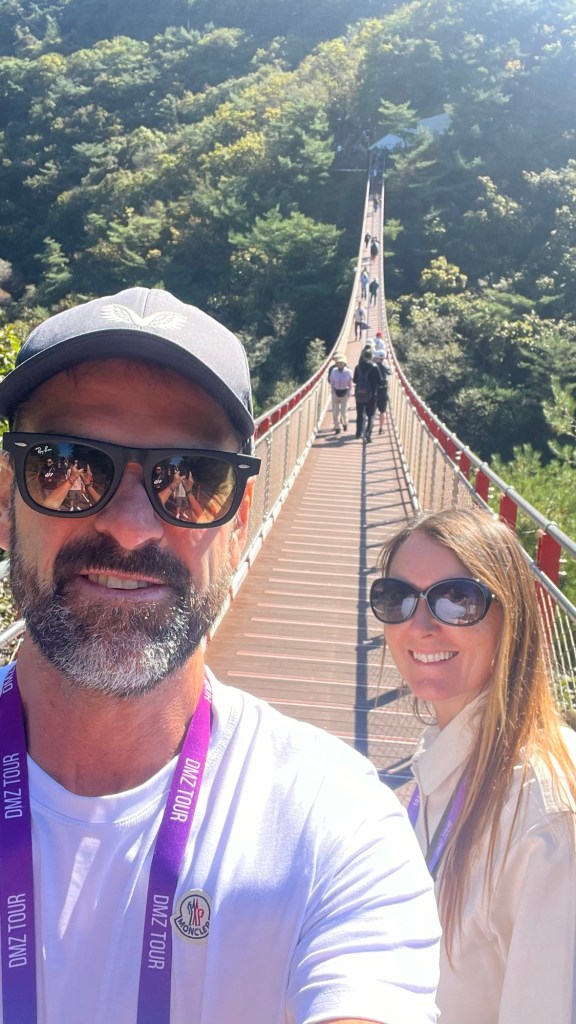
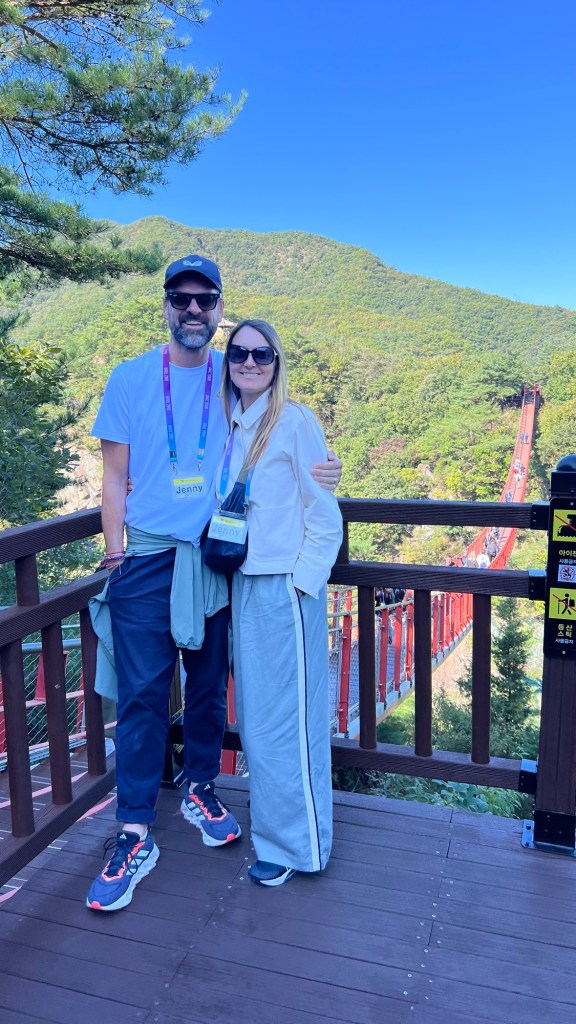
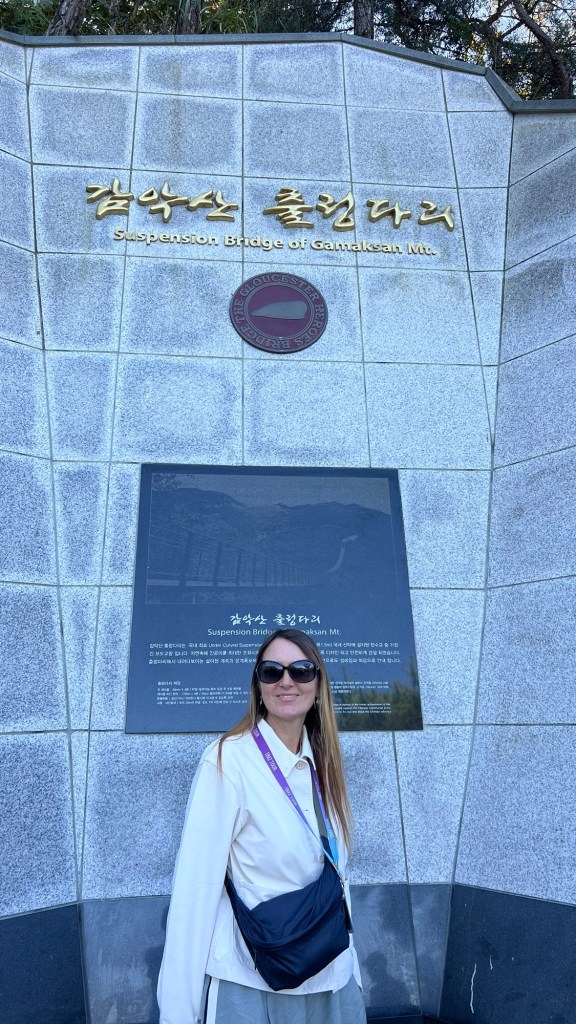
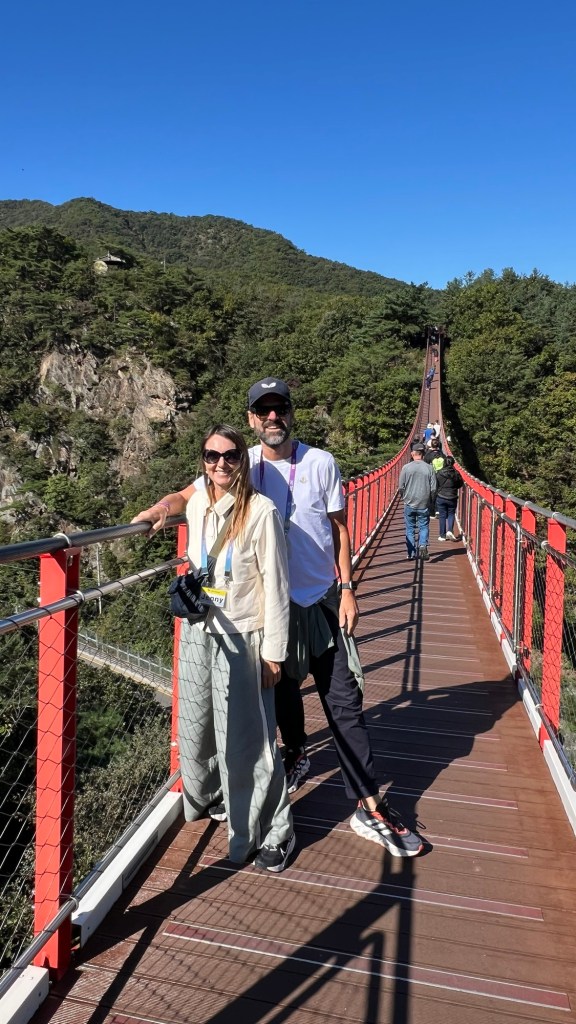
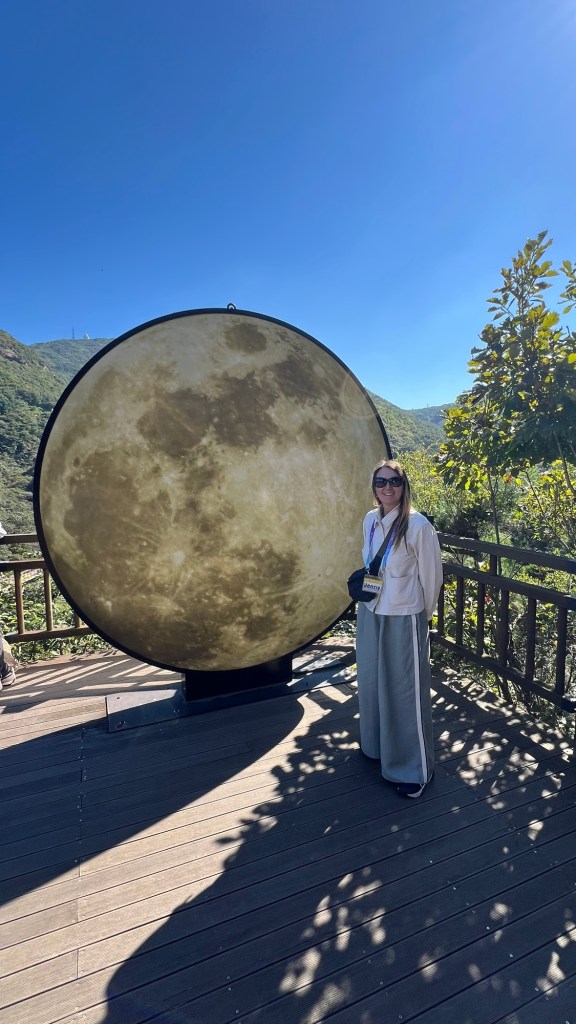
From there we moved to Red Suspension Bridge, built by the British Gloucester Battalion who lost 500 personnel during heavy fighting with the North Korean and Chinese armies during the hostilities in the Korean War.
The sun made the bridge light up with a red glow as we walked from one side and back allowing us to take in the beautiful scenery.
Red Suspension Bridge plaque
Crossing the bridge at it swayed side to side was an interesting experience, but made for some great views and photos.
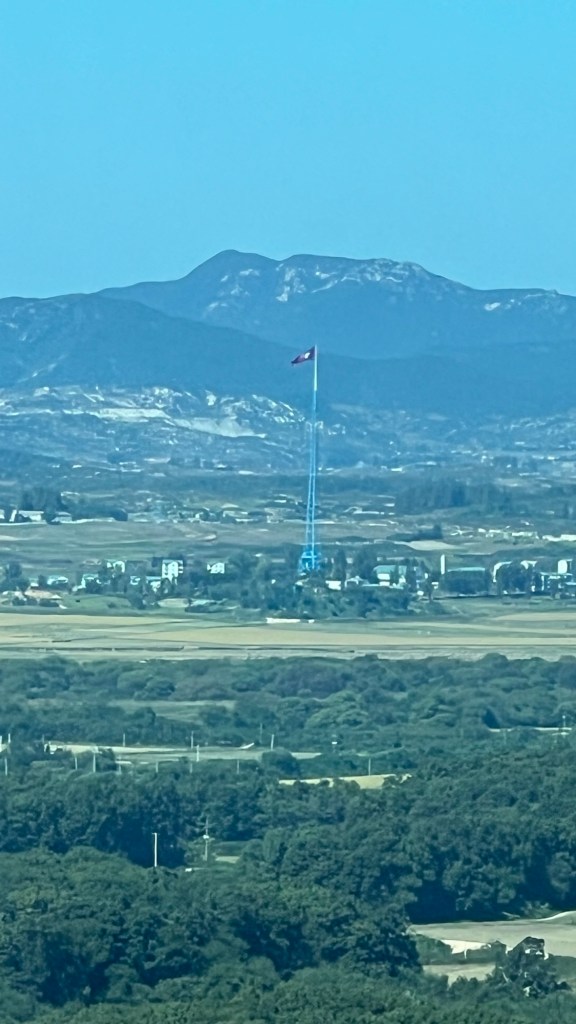
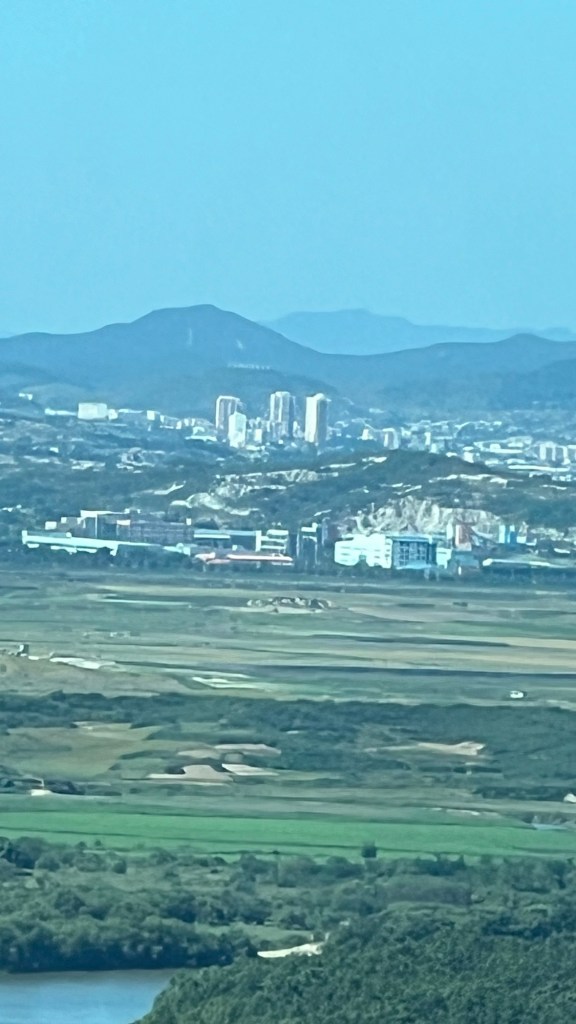
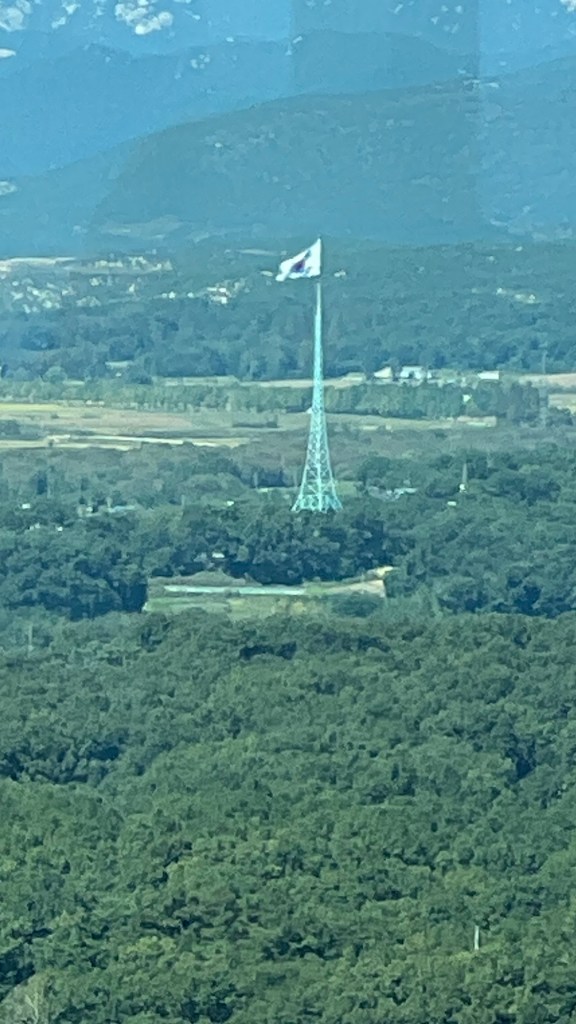
After leaving the suspension bridge we returned by coach to the Dora Observatory where we were able to fully observe North Korea for the first time within the DMZ.
North Korean flag and pole (tallest in the world at 160m in height)Views out across North Korea
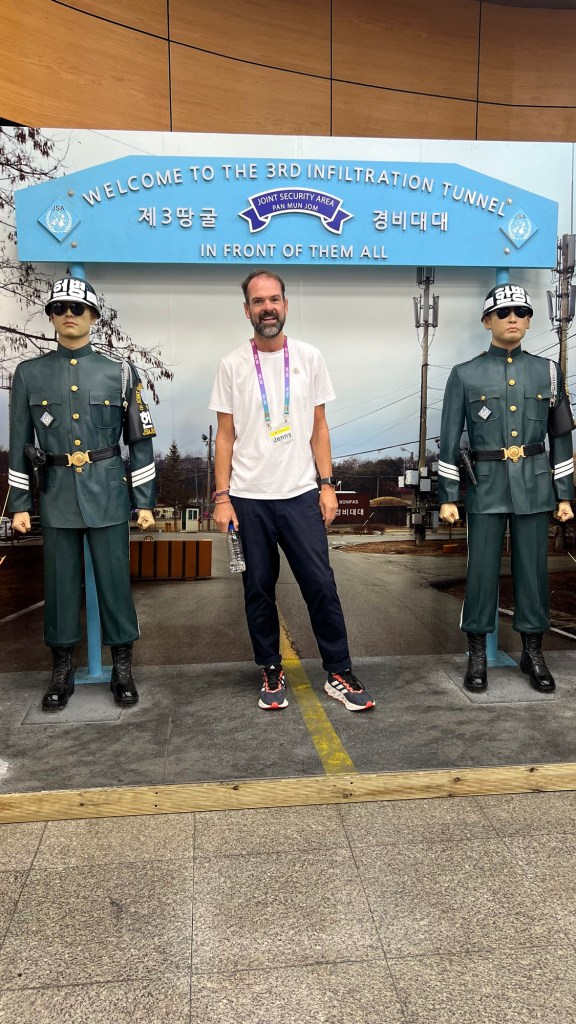
After visiting the observatory to look out over North Korea, our final trip involved visiting one of the tunnels discovered by South Korean, that were dug using explosives by the North Koreans.
The tunnel in question was discovered in 1978 and is located 70m below the surface and stretches over the 1.6km from the north into South Korea. This is one of four tunnels discovered, although it’s thought there are up to ten in existence, dug to assist with a planned invasion by the Northern Korean Army. Fortunately no such attack has occurred and the last tunnelling was thought to date back to the late 1970’s.
The South Korean government have quite cleverly turned the discovery of the tunnels into a tourist attraction, having closed them off and created an access down for visitors to see and experience the conditions in the tunnel. Andy walked down with a number of our tour group and said that the height of the tunnel was only 1.4m, meaning you had to bend down throughout to walk along the 300m section open to the paying public.
Andy and the tunnel 3 walk
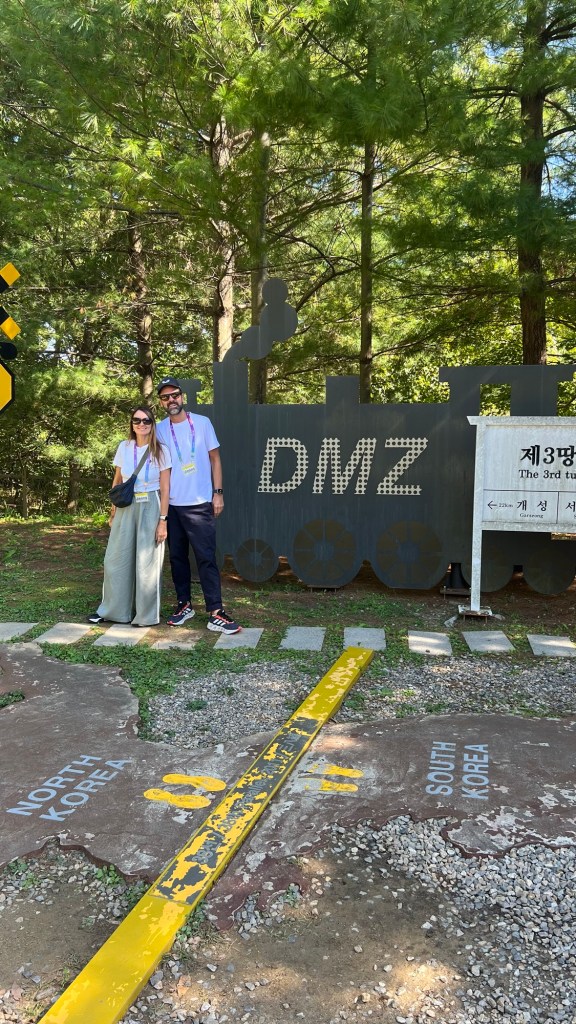
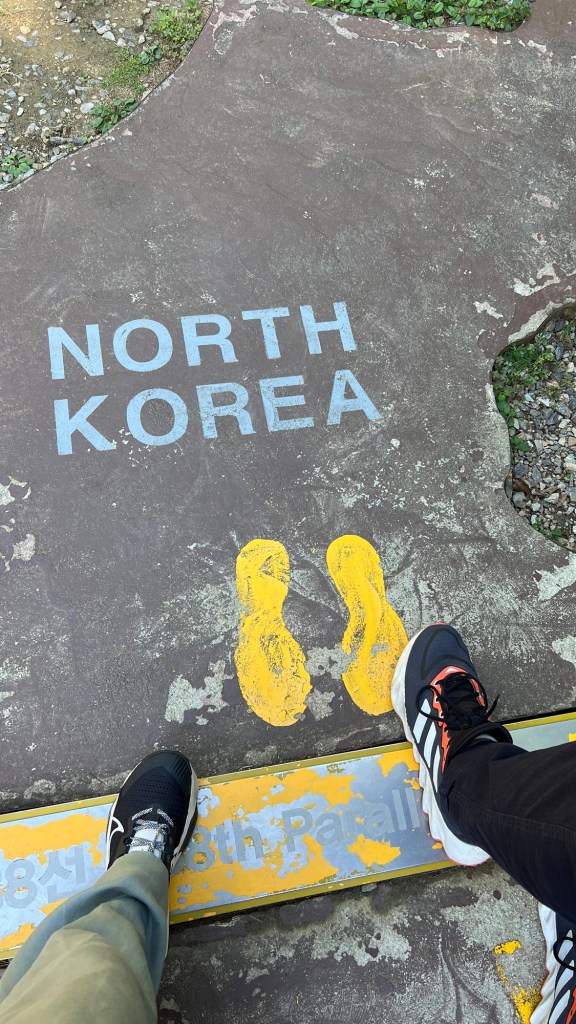
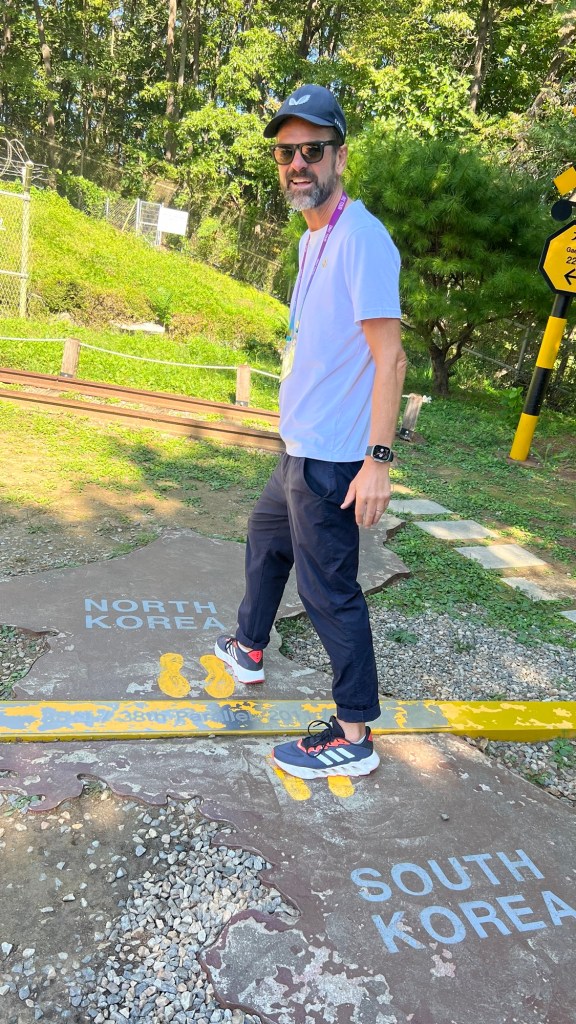
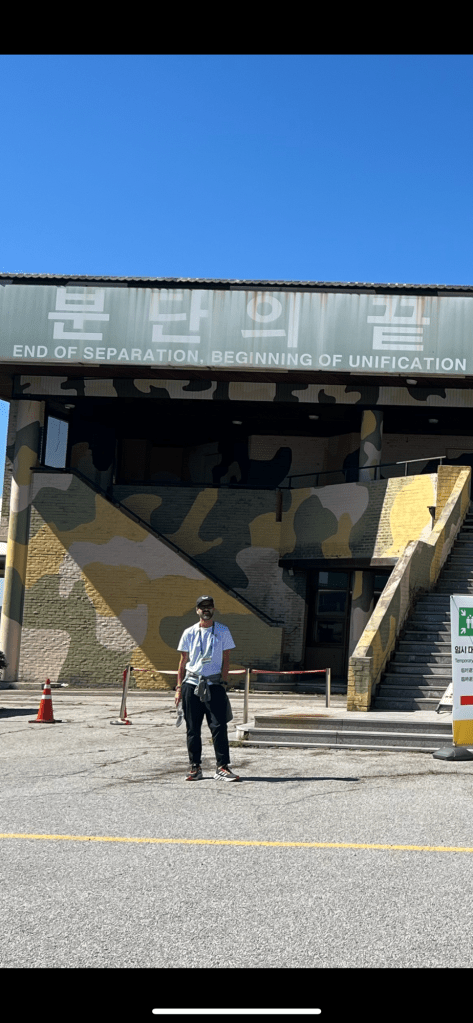
Once out of the tunnel we were able to get some photos of ‘mock’ crossings between North and South Korea.
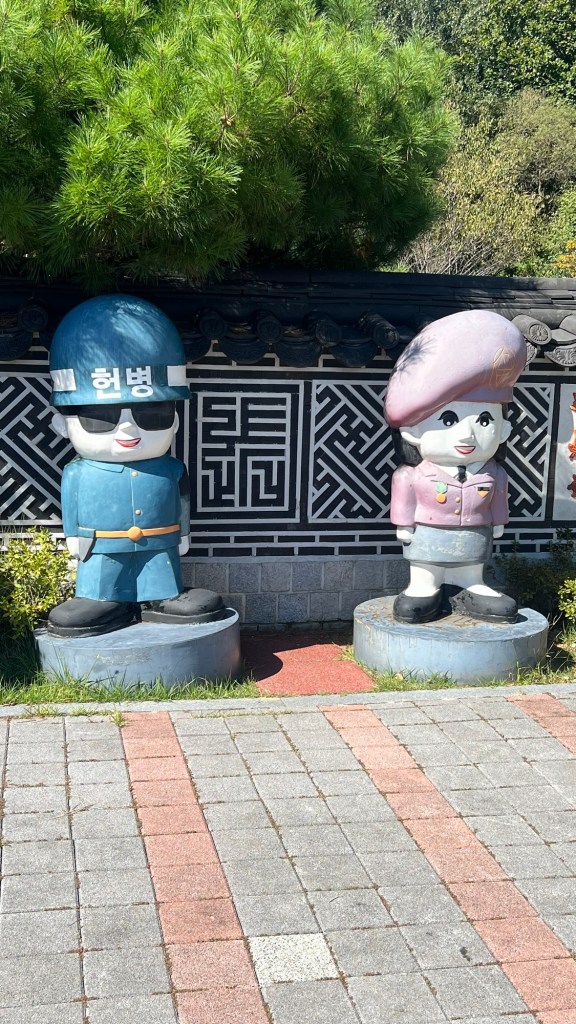
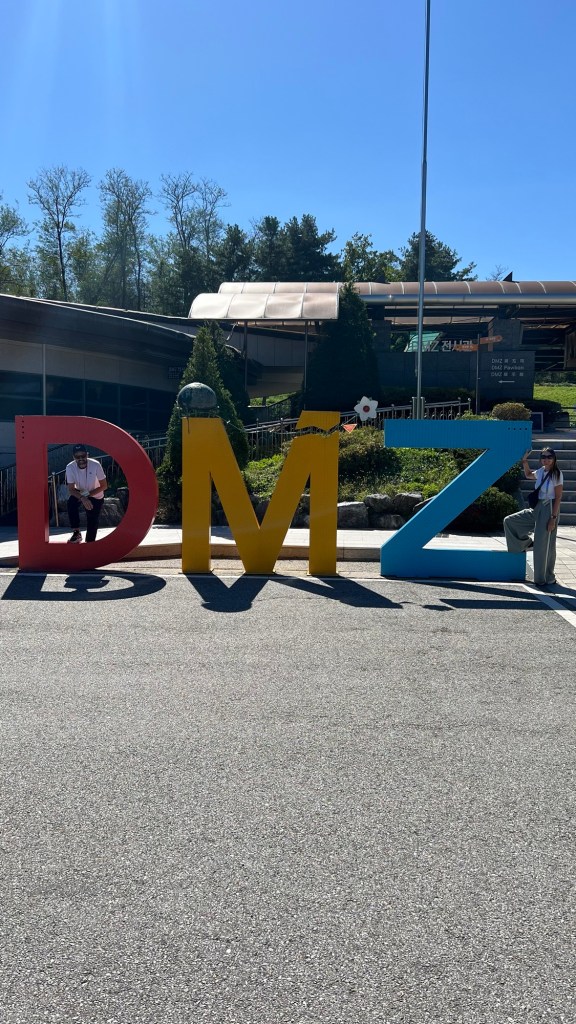
Stepping into North Korea That’s a wrap at the DMZ
It’s still hoped by the Korean that unification of the country will happen within their lifetime, however from today’s evidence we think that’s an optimistic view.
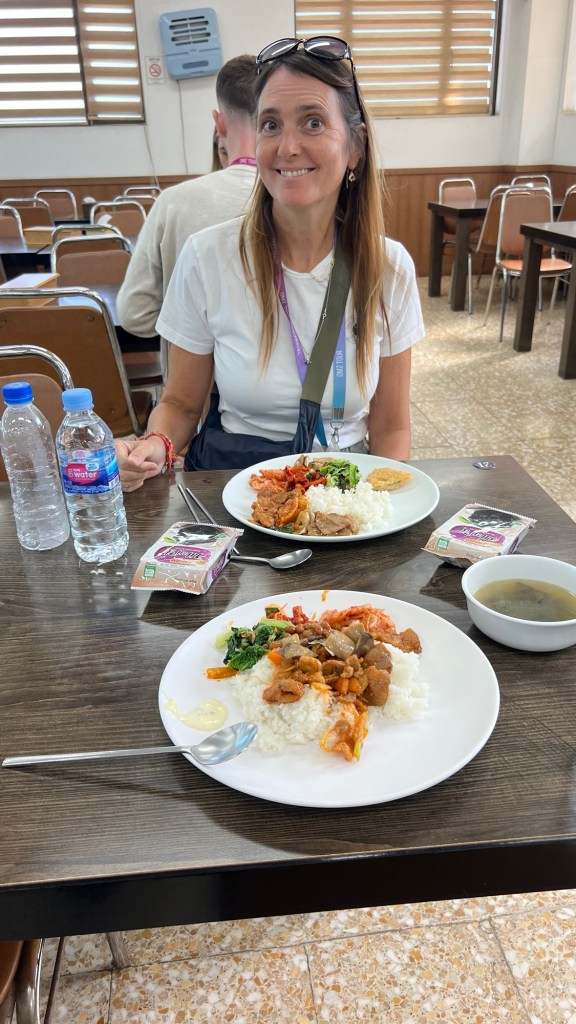
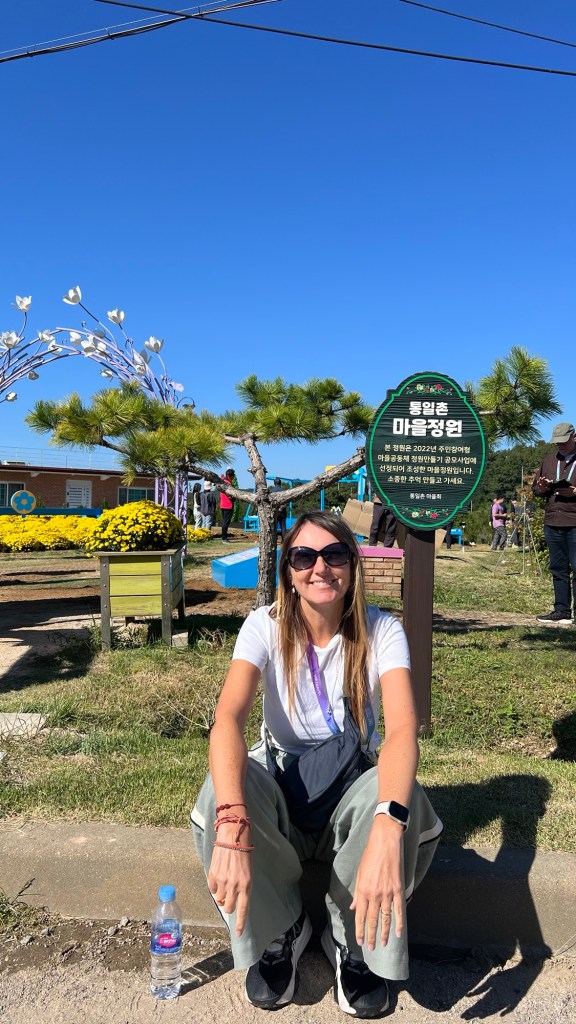
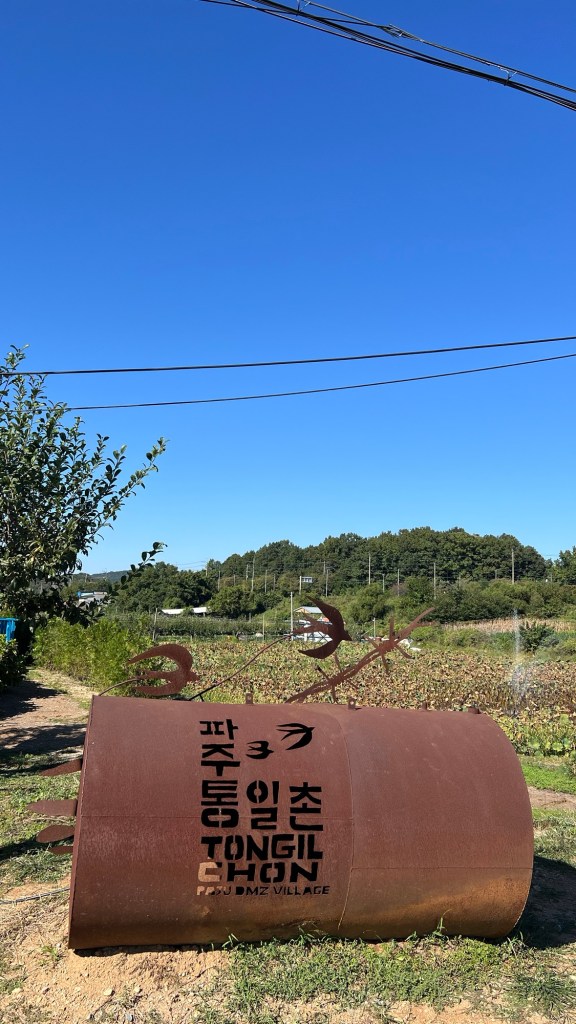
Before we headed back to Seoul we stopped in Chorigol-gil village within the DMZ for lunch. This was an opportunity to eat some local dishes of pork & rice with fish and kimchi.
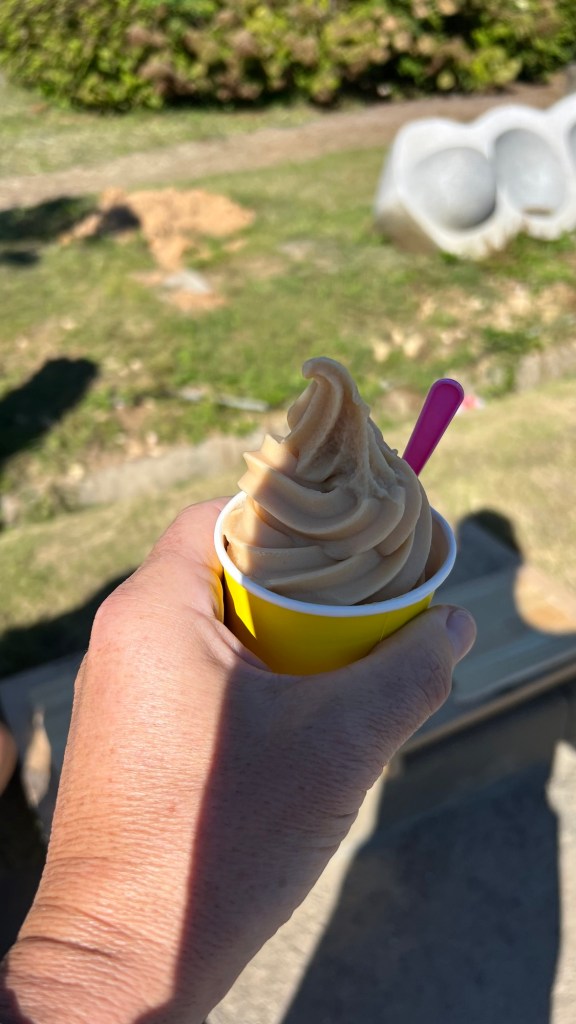
Taking in the sunshine post lunch Ice cream soya bean flavour
From there it was a 1hr drive back to Seoul and the end of a wonderful day at the DMZ, a truly amazing experience.
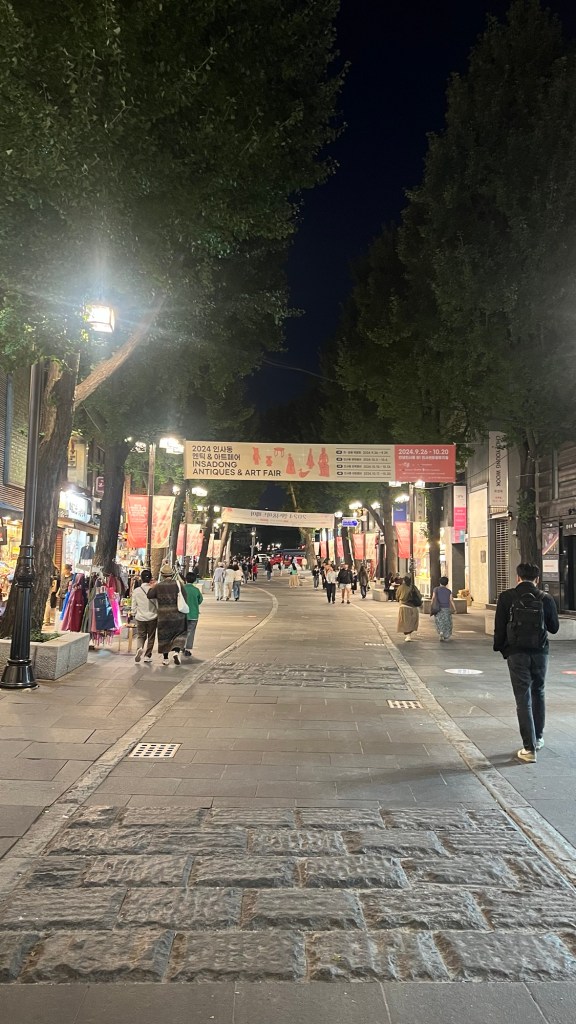
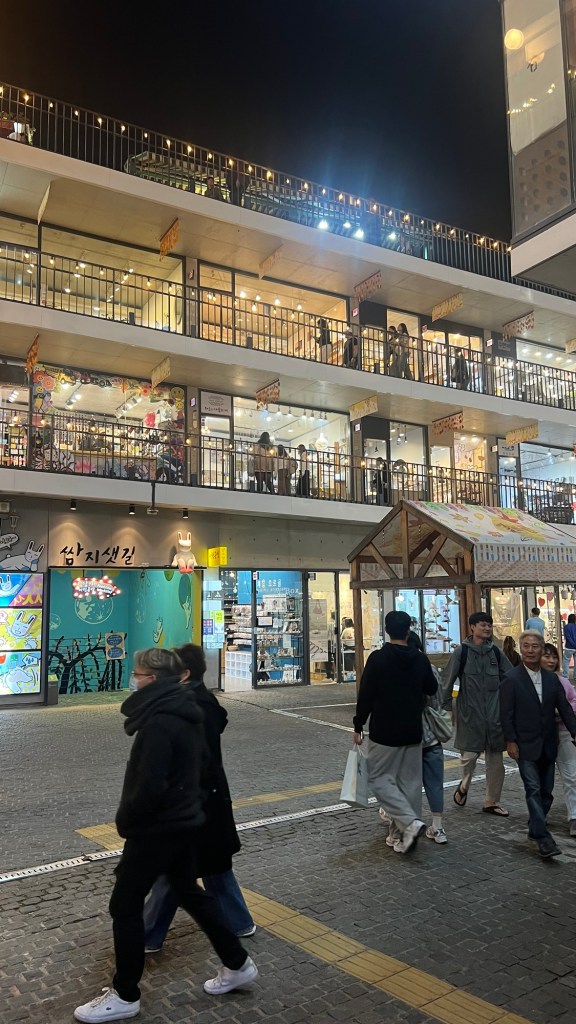
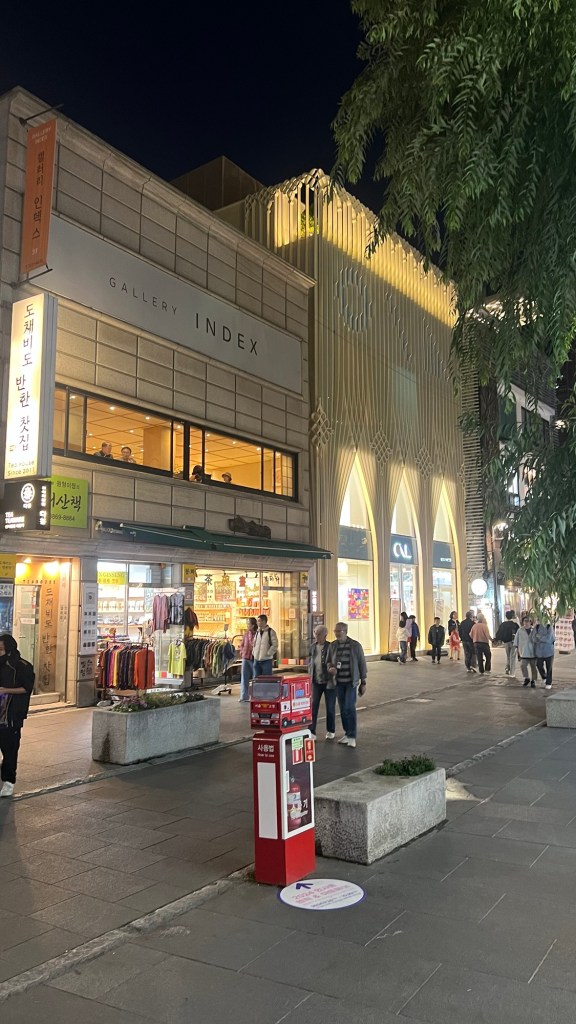
With the late afternoon sunshine in full glow, we headed up to Jongno district, past the Open Songhyeon Green Plaza and into the quaint Insadong area, where there is a huge selection of beautiful cafes and art galleries, as well as craft stores.
Back in the wild fields of Songhyeon Green PlazaLove this street art Beautiful craft stores Stunning cafes and bakeries More cafes Art galleries They must of known we were coming to South Korea!
After working up an appetite we decided to stop and enjoy the late afternoon with a coffee and a cake and take in the views.
Enjoying the sweet cakes A great bakery
After our cake treat, we decided to walk off the calories and headed down to our hotel via the Insadong district passing numerous independent stores selling beautiful craft & jewellery products.
By the time we returned to our hotel, we had been out and about for over 14hrs and experienced another interesting day in Seoul and the DMZ. It’s a wonderful city and one we will definitely return to in the future.
Tomorrow it’s another national holiday in South Korea and we have decided to pay a visit to the nearby city of Suwon, a hour city of Seoul.
Traditionally known as the ‘City of Filial Piety’, modern Suwon retains a variety of historical landmarks. As a walled city, it is a popular destination for day-trippers, notably visits to Hwaseong Fortress.
Suwon also plays an important economic role as it is home to Samsung, Korea’s largest and most profitable company where you can visit their campus and experience their ideas for future technology.
Another full day walking the city of Seoul, however as it’s a National Holiday in Korea today, many public buildings were closed so we had to plan for outdoor activities where we could.
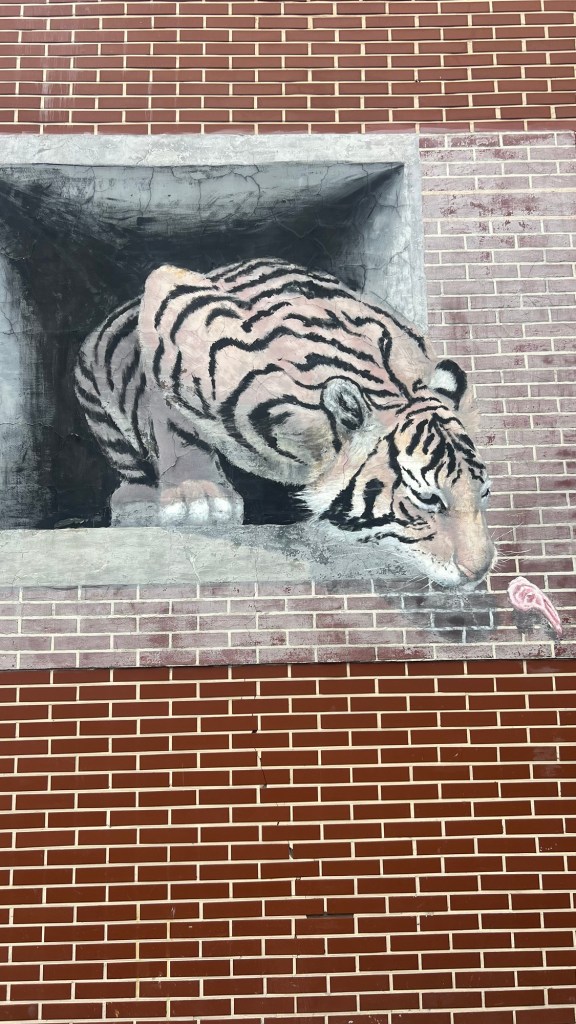
Our first stop was a return to Dongdaemun Design Plaza, as Michelle had missed seeing the area due to her day’s illness. On the way we passed an animal themed area, tigers on a wall and tiny puppy dogs in shop windows.
When we arrived at the plaza, thankfully it was all open and was reasonably quiet.
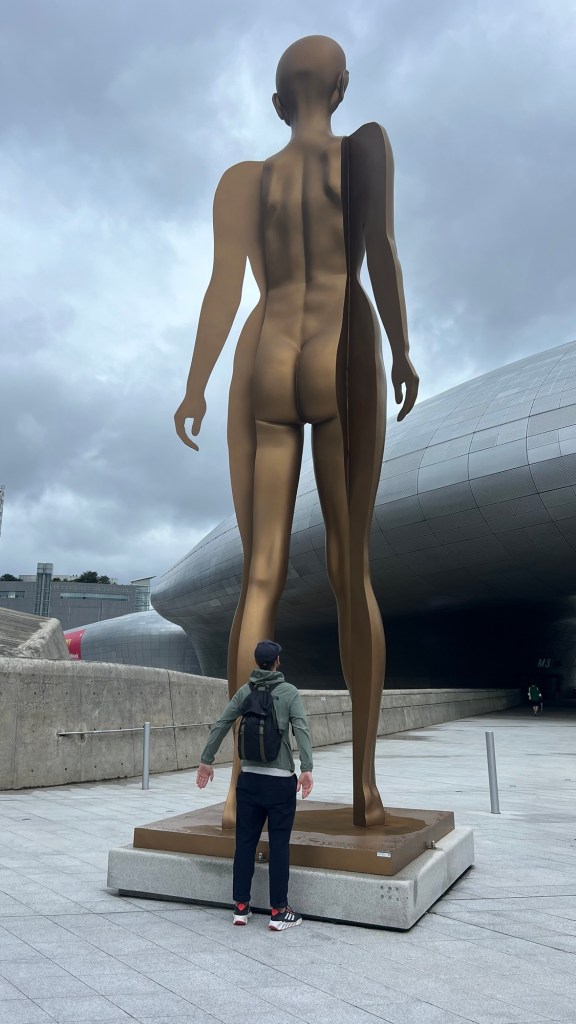
Who’s mirroring who?
We went into the design store and museum and took in the exhibits which were on a huge scale and really eye catching.
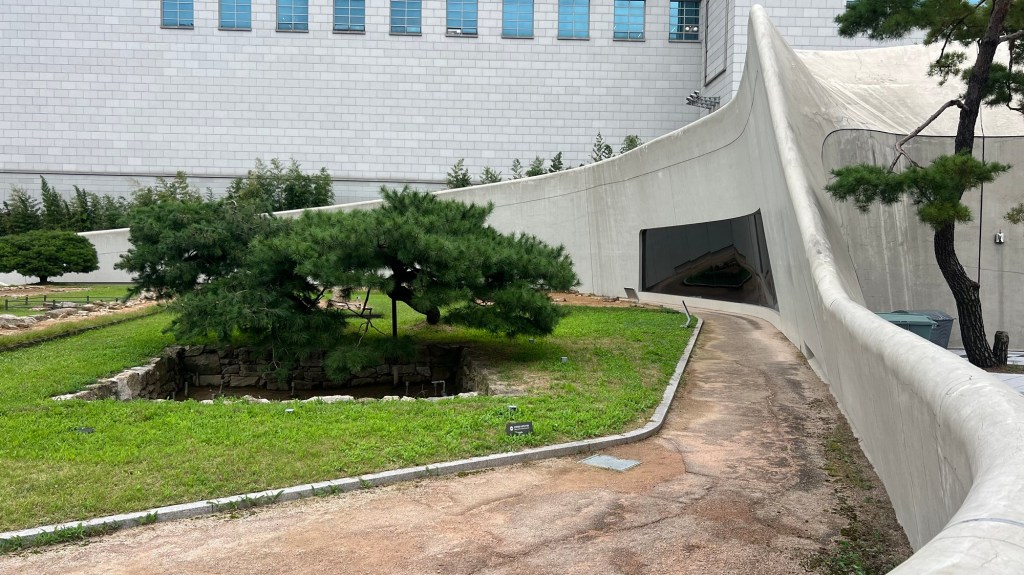
Culture Park grounds History of the site from Joseon dynasty era Eye catching Local graffiti Eye altering designs
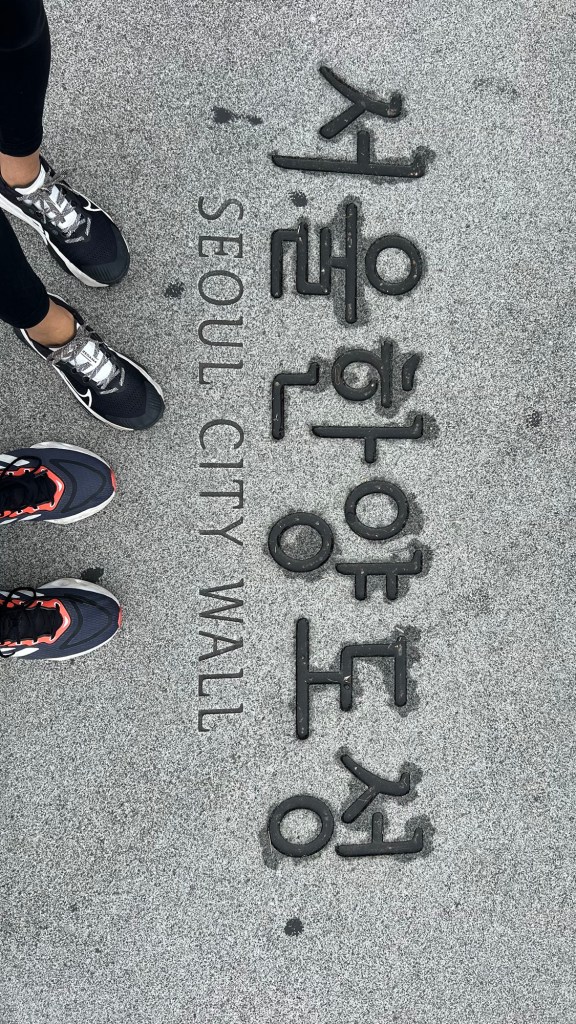
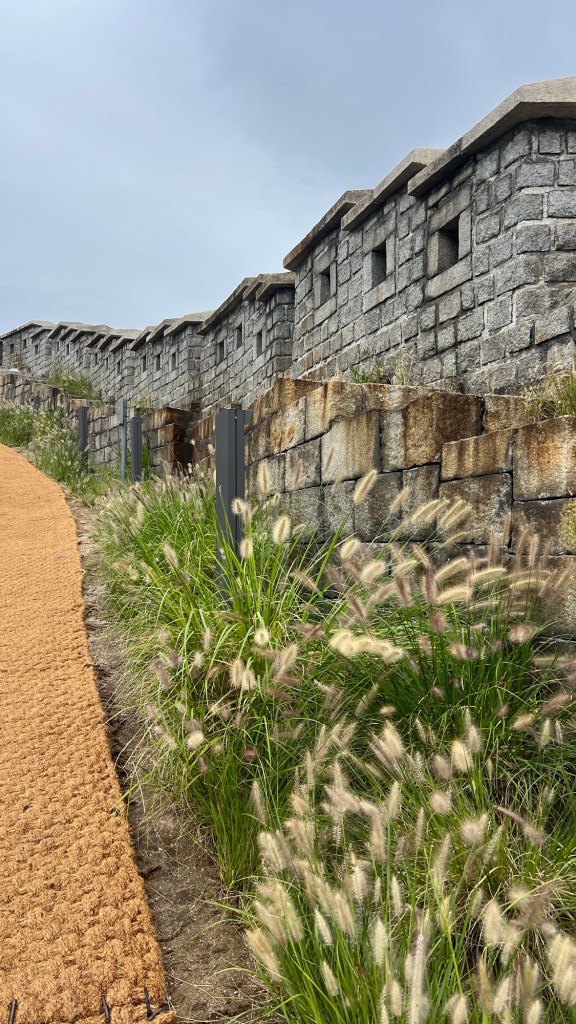
After a couple of hours at the Dongdaemun Design Plaza, we crossed the road to visit the Seoul City Wall walk.
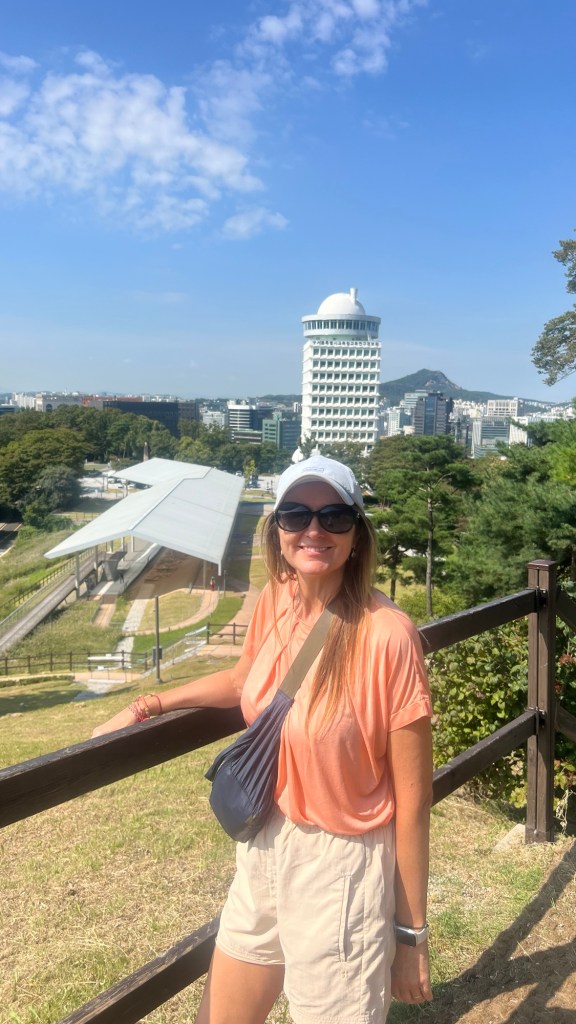
The Seoul Wall was impressive and we were able to walk a 2k section up the side of the nearby hillside.
Quite quickly we were up on high with views across the city.
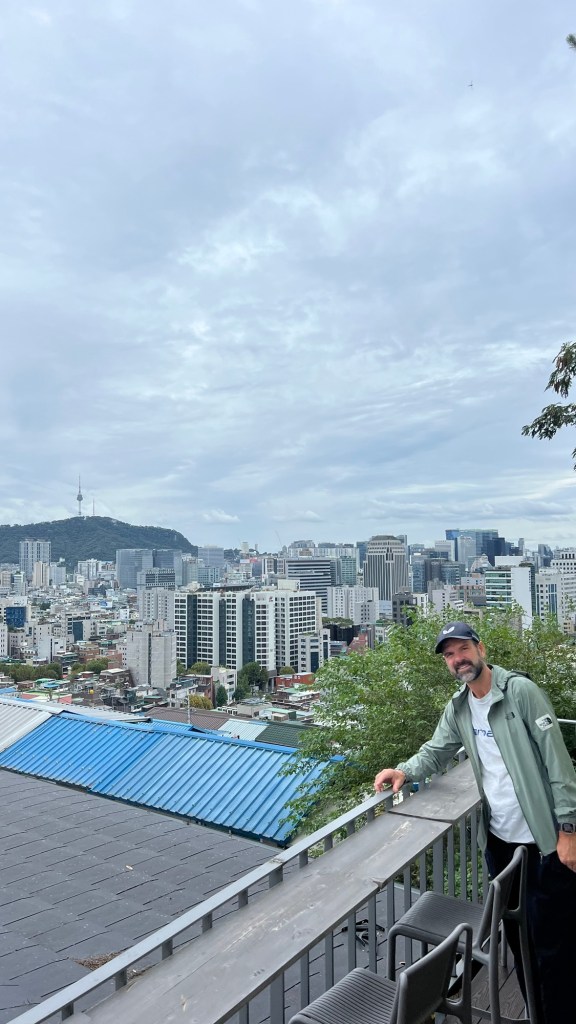
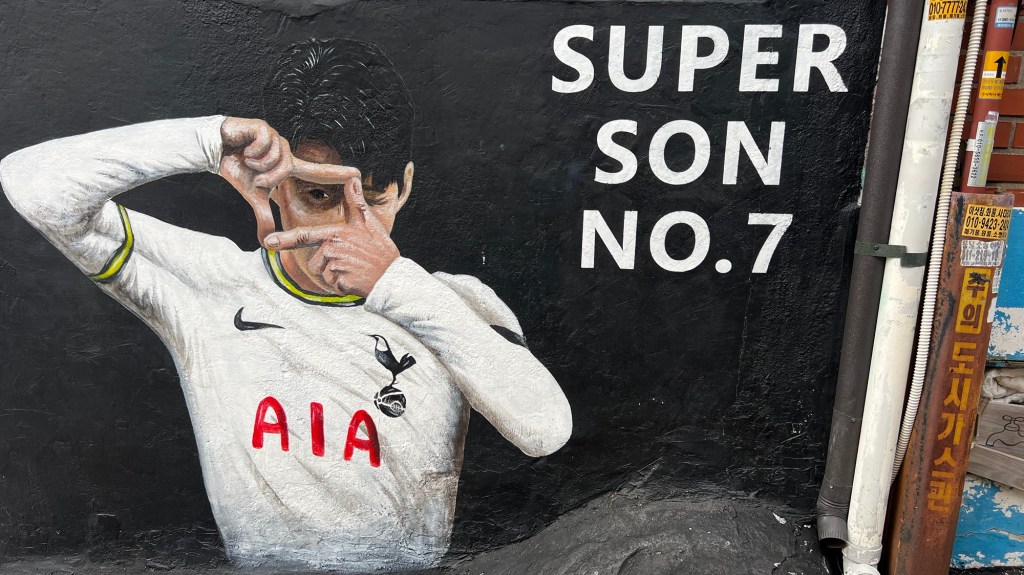
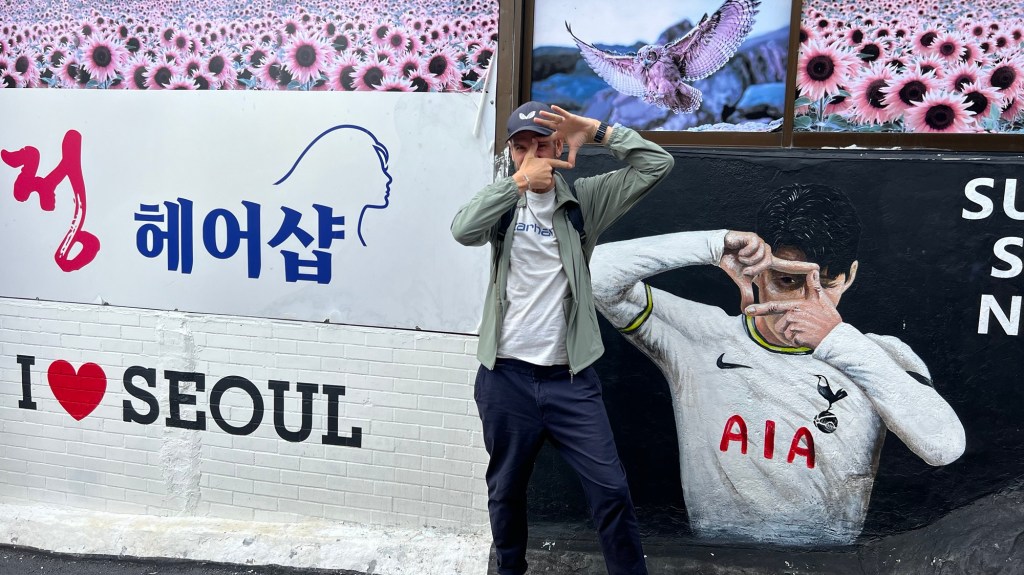
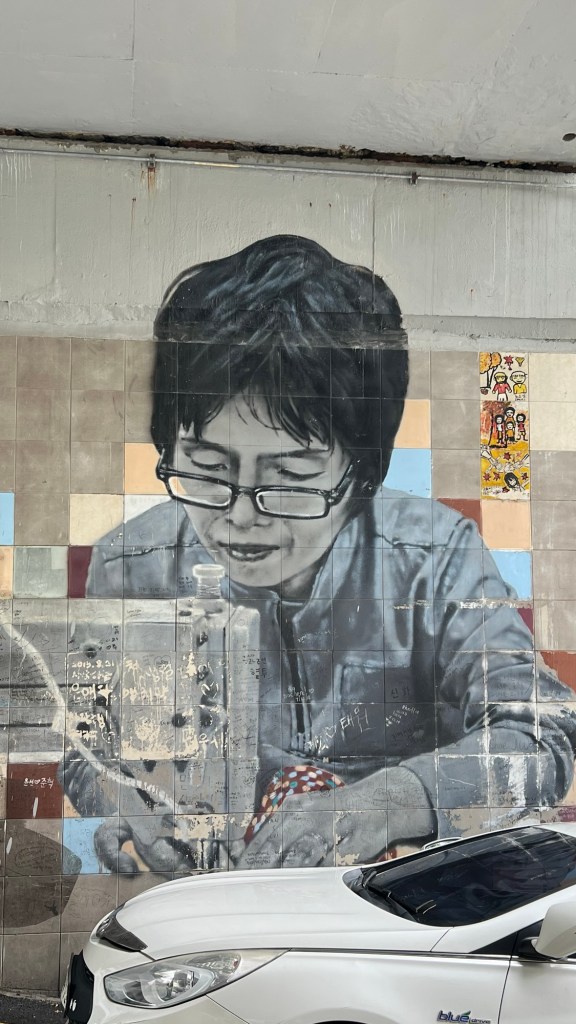
From the Seoul Wall we moved on to Ihwa Mural Village. This area was first occupied by refugees from the Korean War and was tagged a moon village due to elevated terrain. It’s become a tourist hot spot due to its quirky sculptures and murals. It’s also a pretty quaint historic area with real character. A definite must to visit.
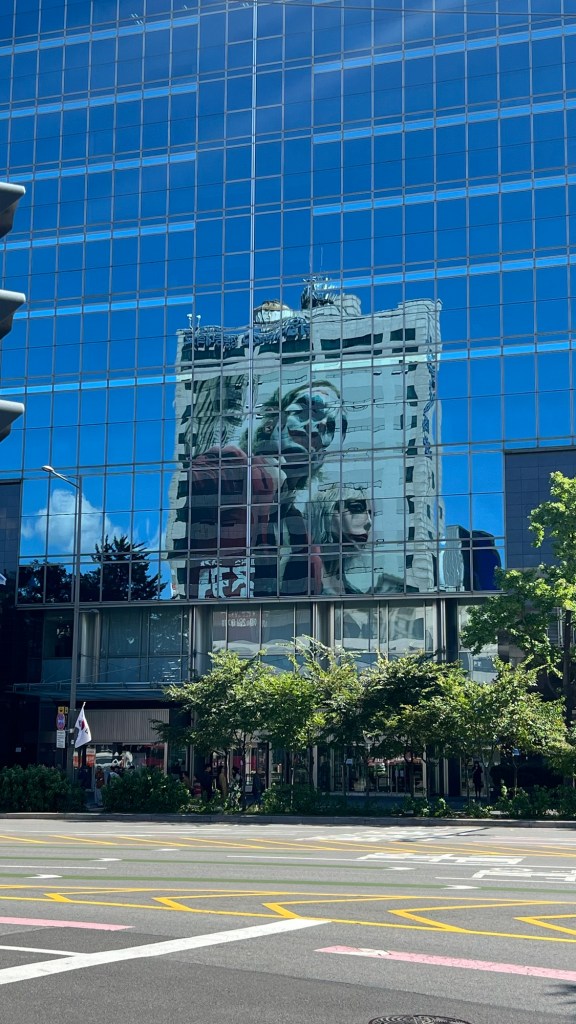
A face Andy recognised from the Premier League – Super Son!!
The murals are diverse and have increased over the years reflecting modern culture.
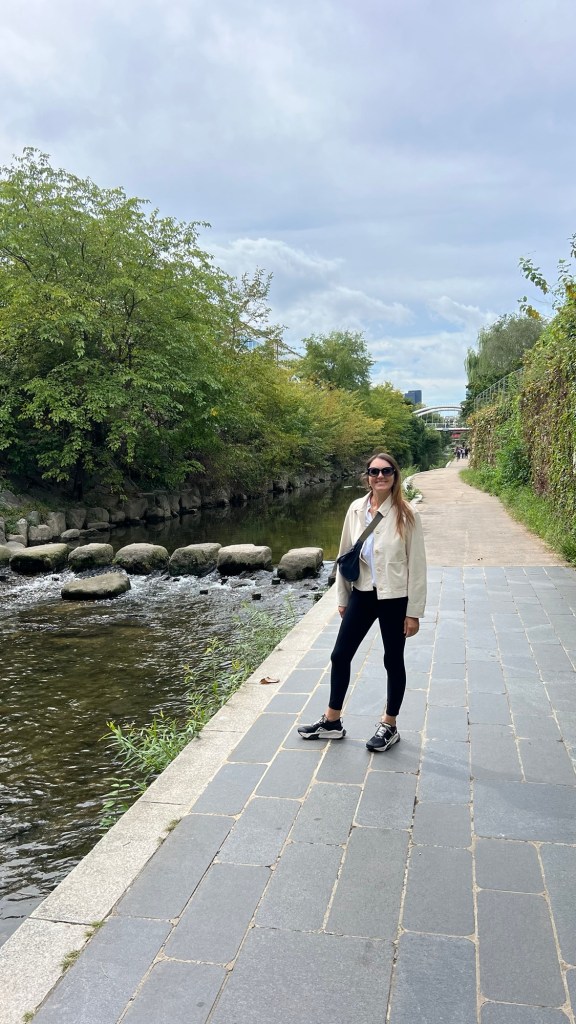
We returned to the downtown and picked up Cheonggyecheon Stream, the urban renewal waterway and well used pathway that runs 10k through the city.
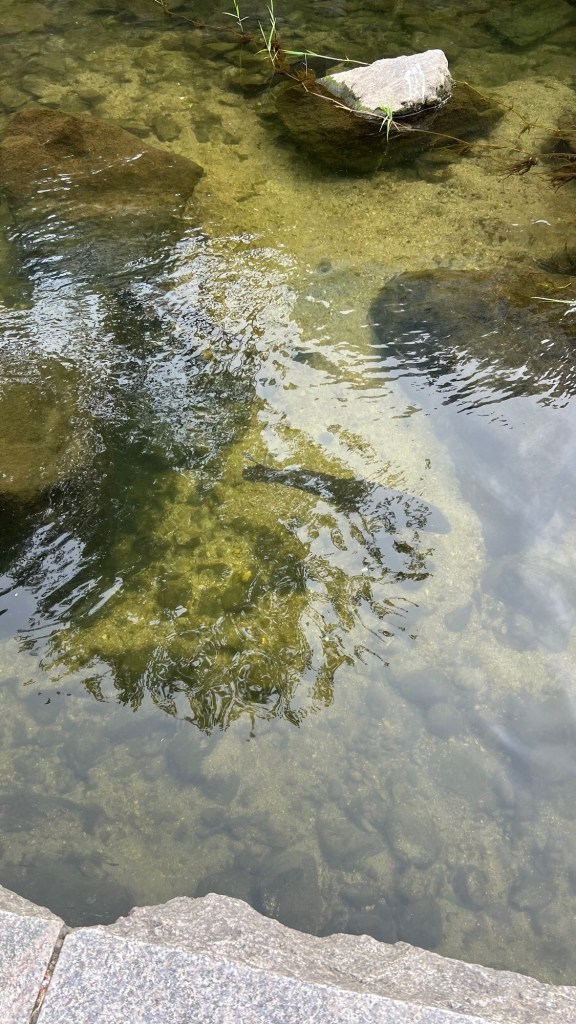
Some huge carp fish swimming in the stream
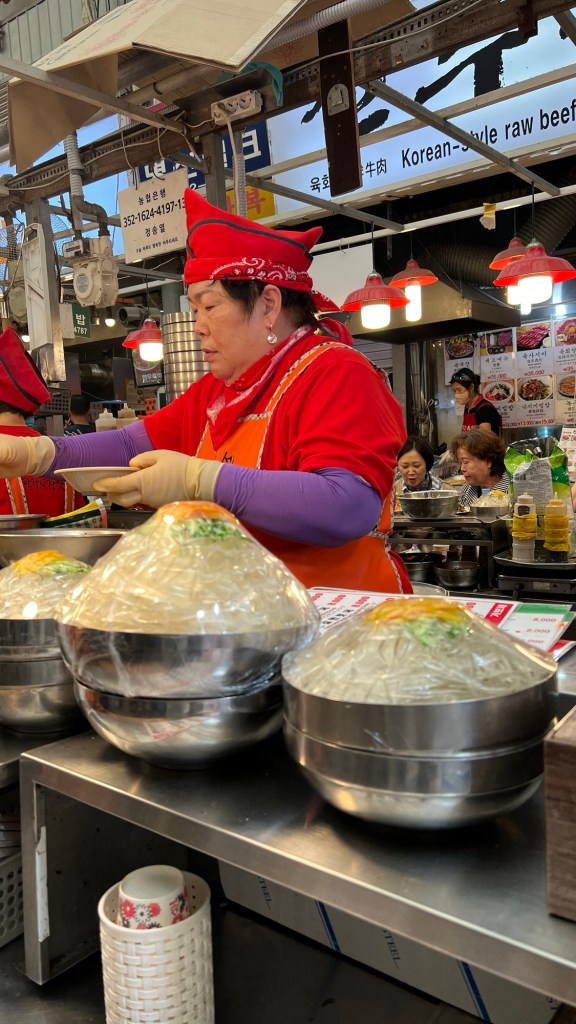
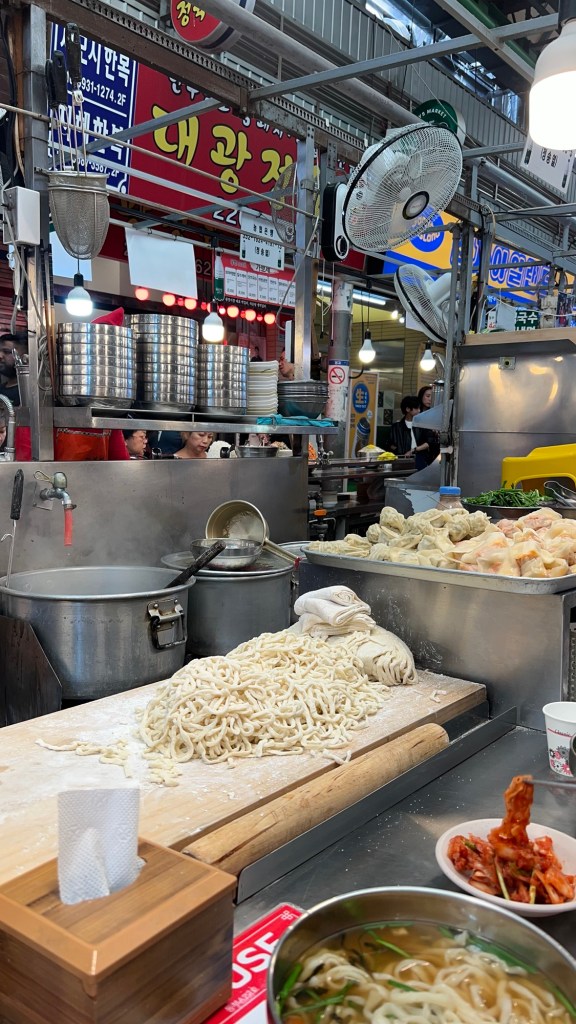
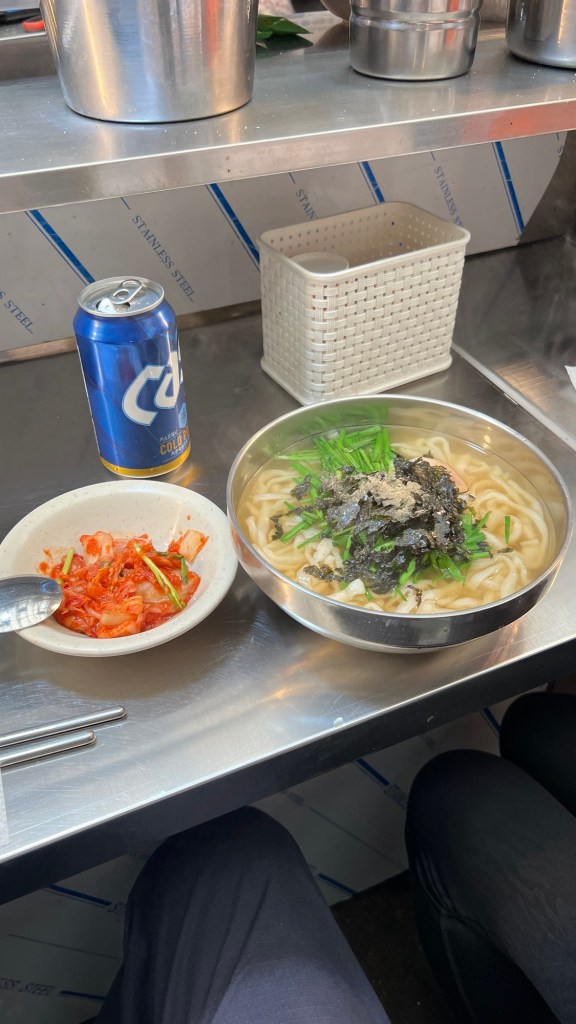
As midafternoon approached, we decided to stop at Kwangjang Market for some street food. We went for dumplings in a soup with kimchi. Great Korean cuisine with a spicy kick.
Post lunch we found time to wander around the rest of the large Kwangjang market selling seafood and other delicacies.
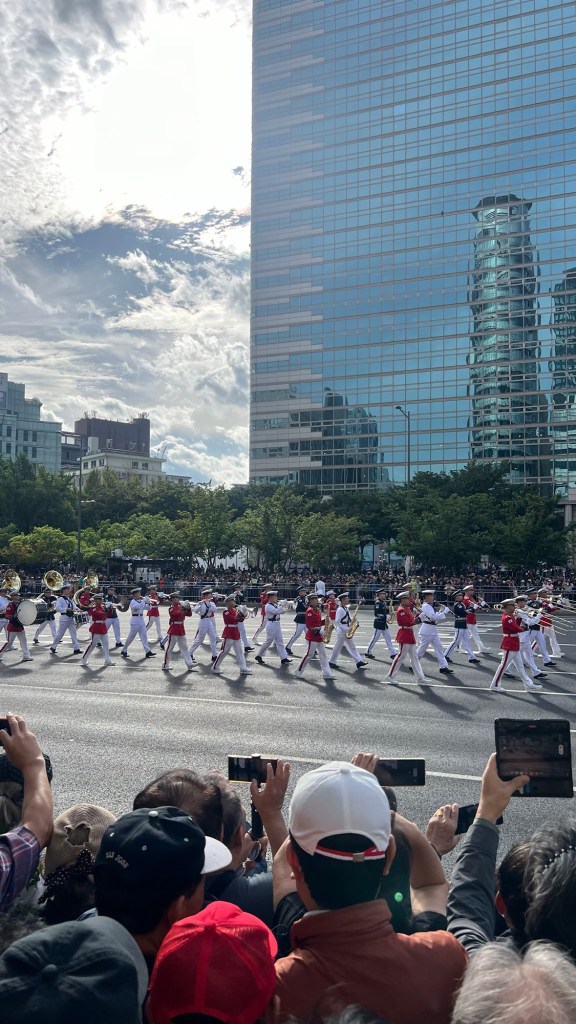
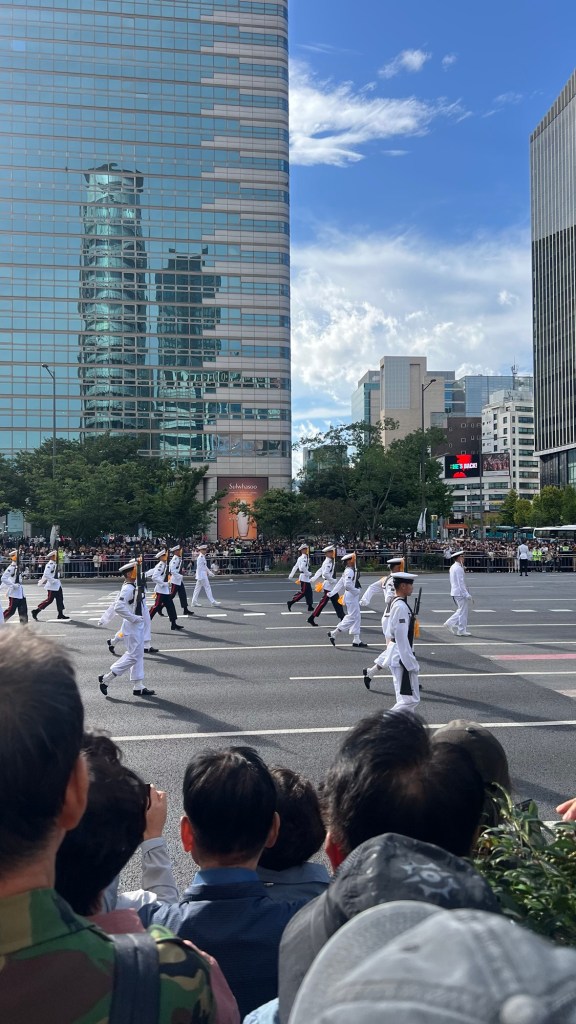
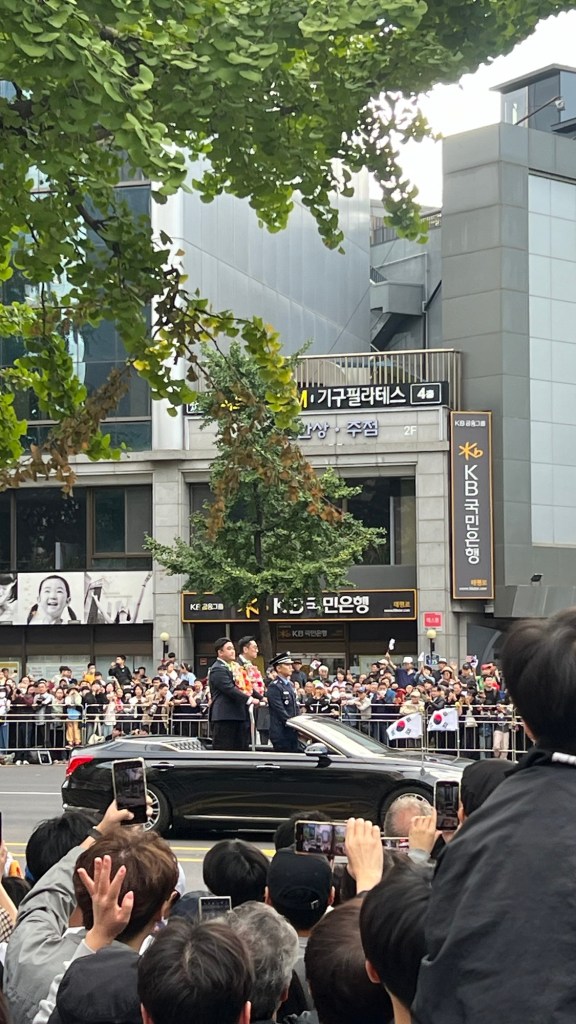
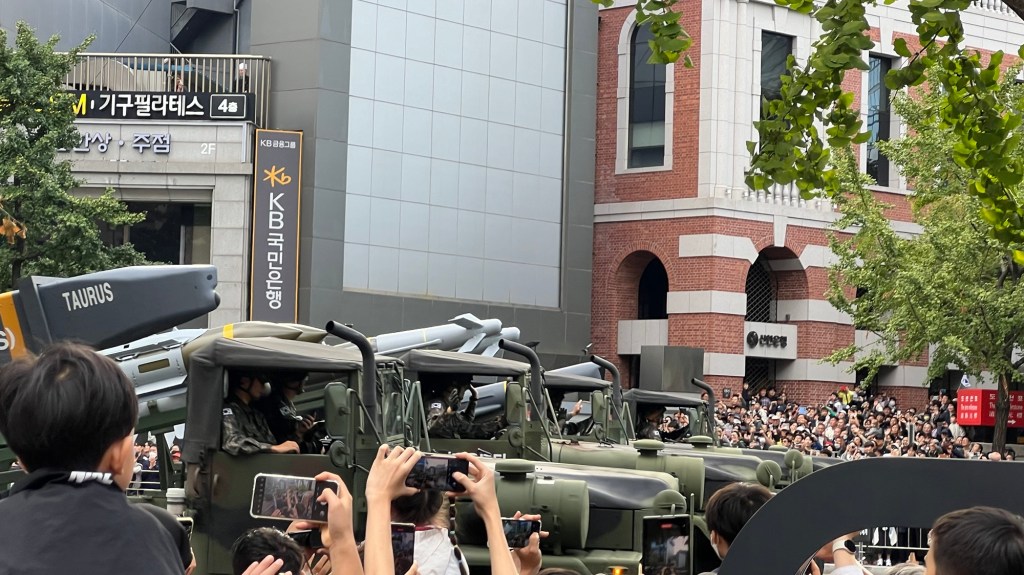
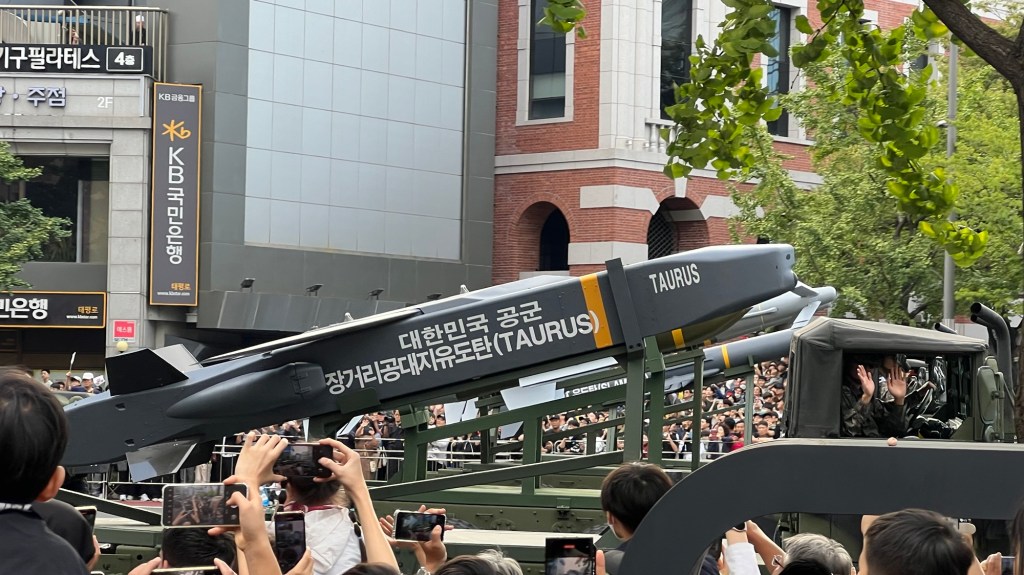
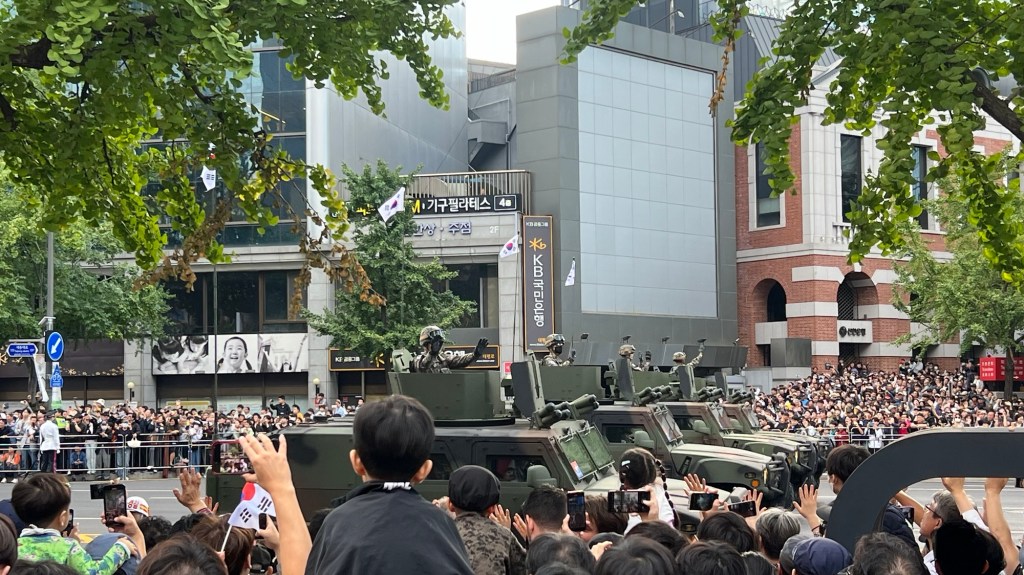
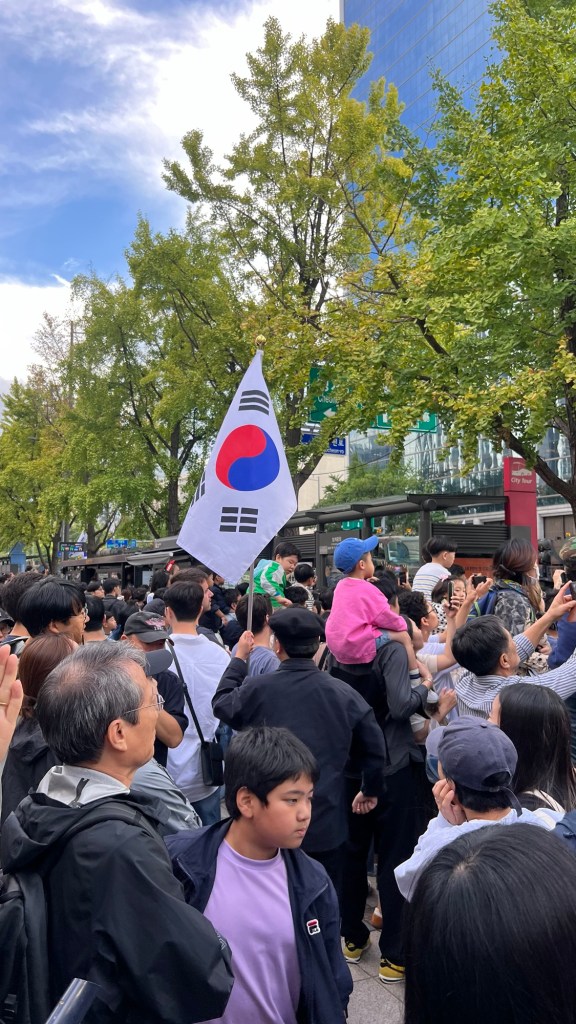
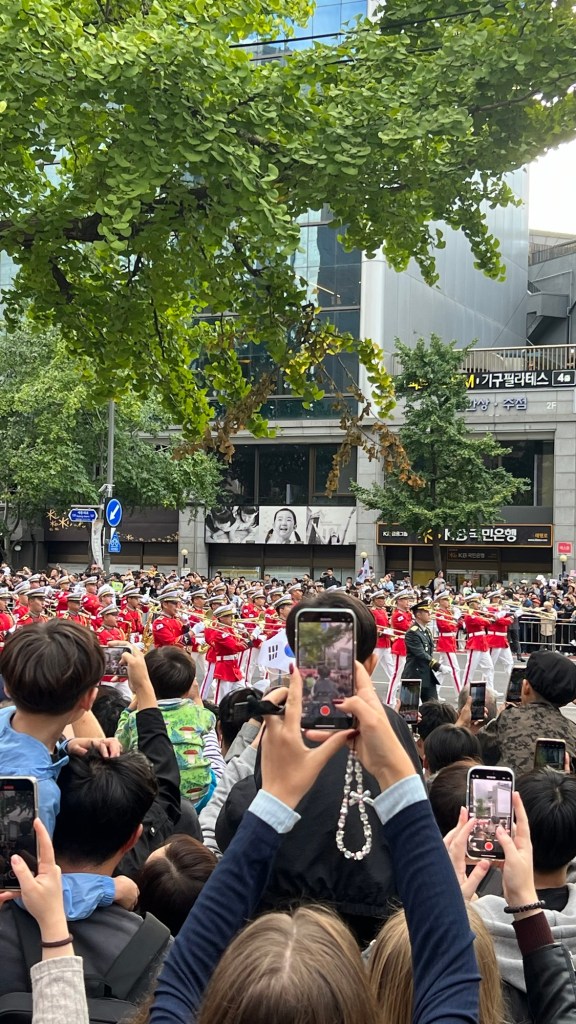
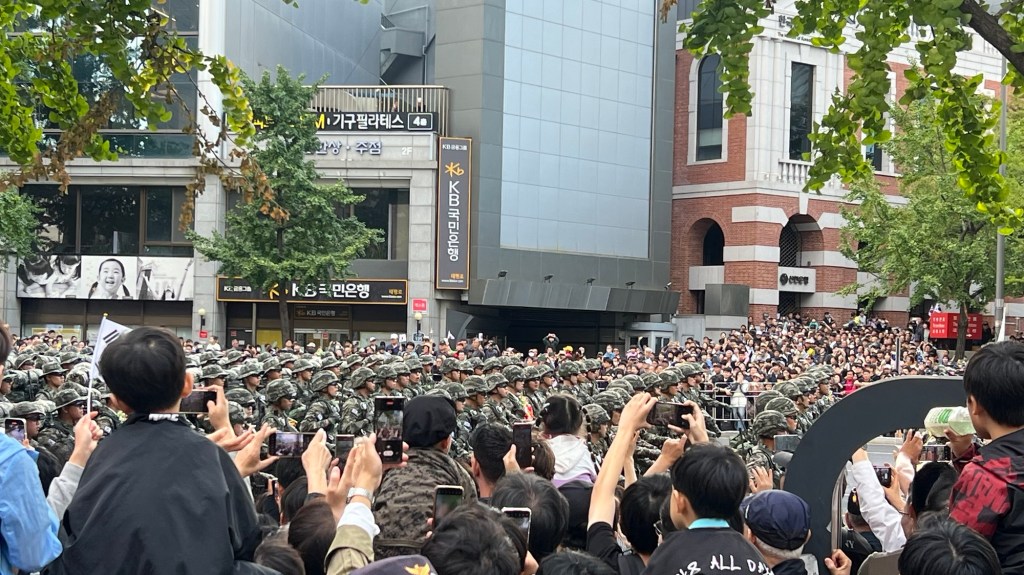
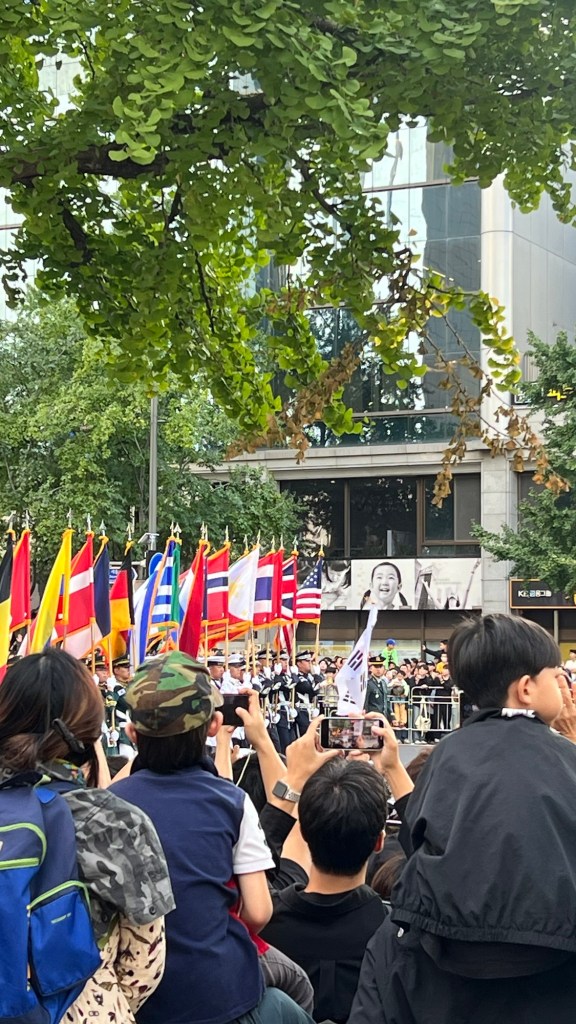
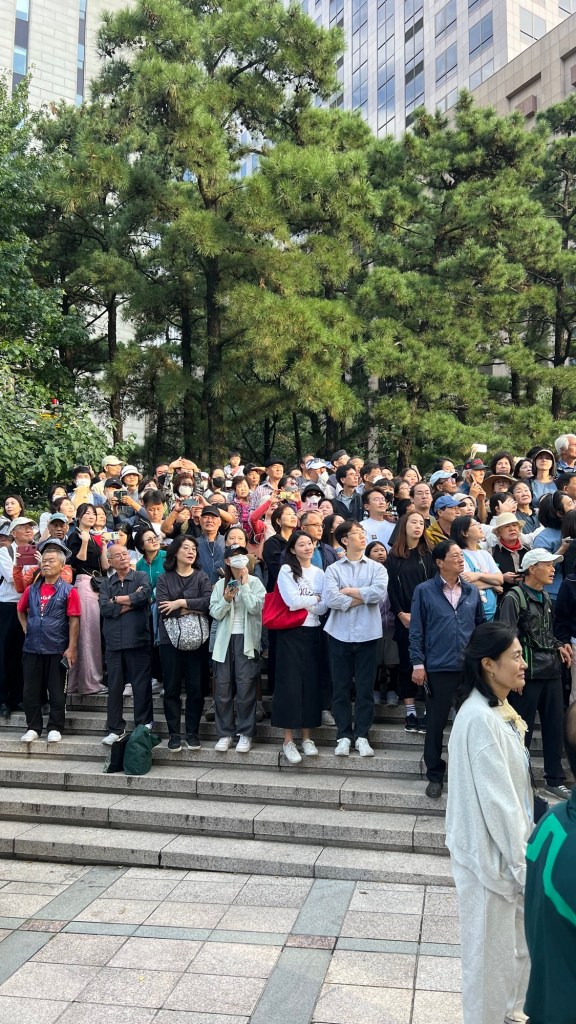
With the military procession due to start around 4pm, we wandered along the urban stream to its source and to Seoul City Hall, where we found a good spot to watch the Korean military parade.
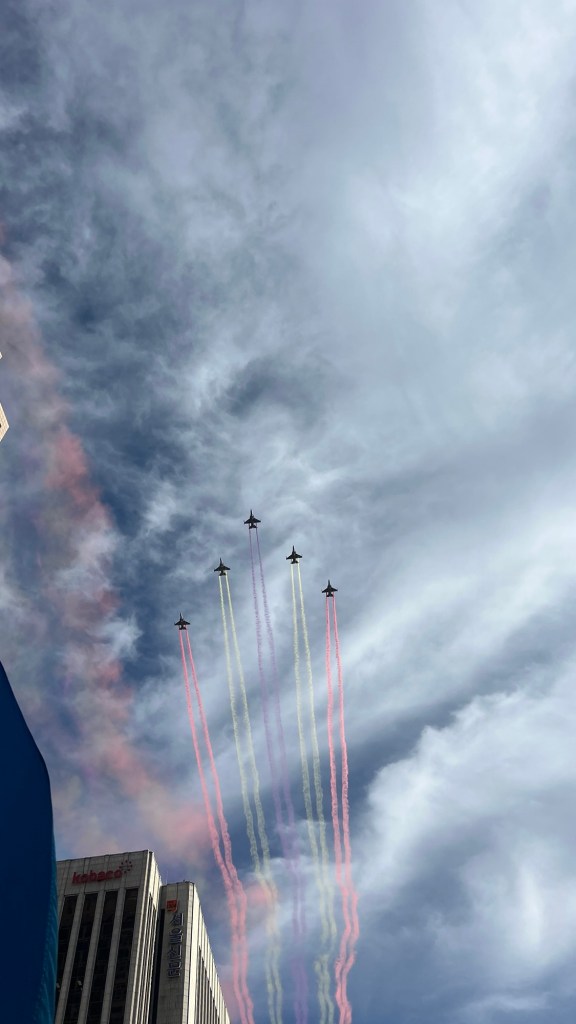
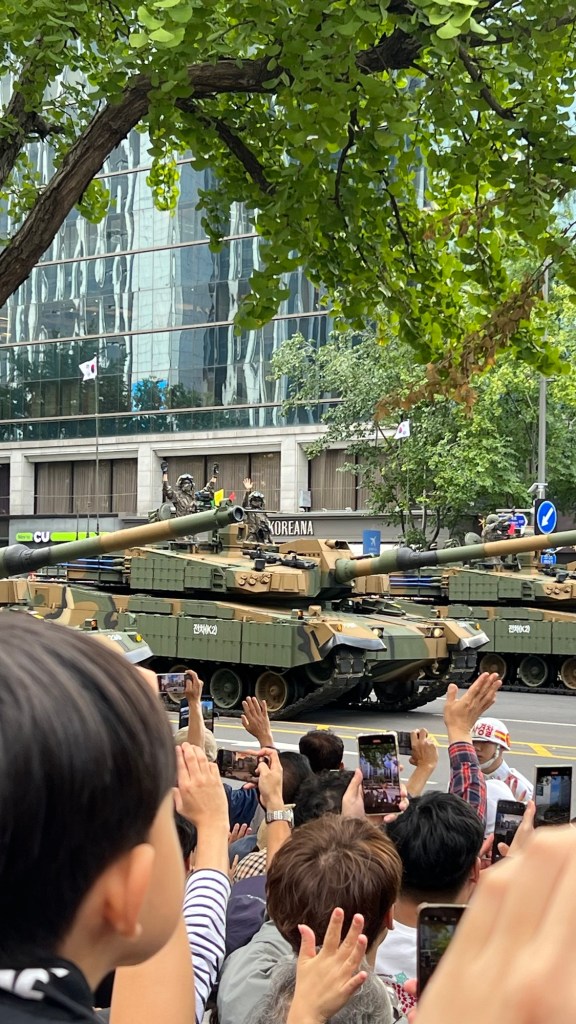
As it’s a national holiday today the locals were out in large numbers to watch the spectacular parade of military hardware including planes, tanks and not forgetting the marching bands etc.
Watching from the front of the Town Hall National dignatories Korean red Arrows….?Military might in full swing Every machine and piece of hardware was out on display Korean flags on display
Military flyover Watching crowds of the military parade
Seeing military might on this scale and up close was incredible and not something we have ever experienced before. It seems clear it’s as much about how they project their strength to North Korea.
Tomorrow we are off on a guided DMZ tour to learn about the history and current situation between North and South.
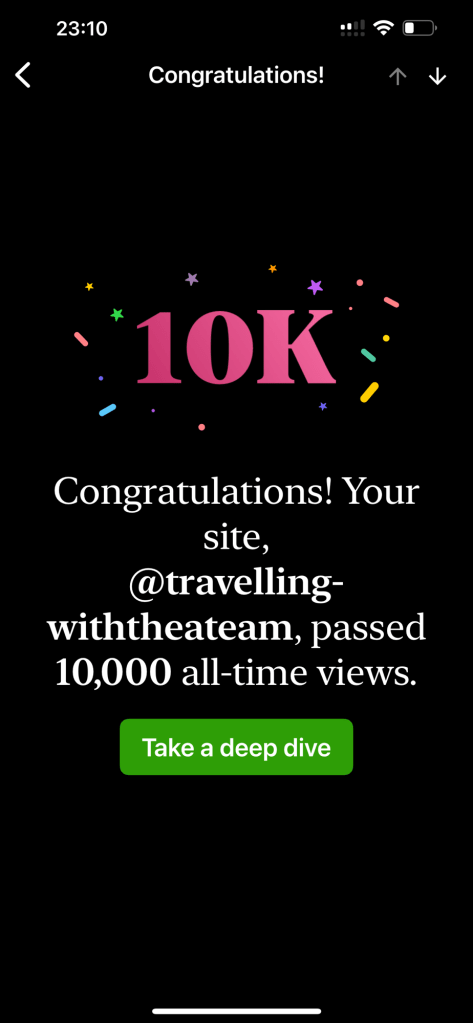
As a final note we are pleased to celebrate that we have surpassed 10,000 views of the blog since we started our adventures 10 months or so ago. Thank you for reading and keeping up to date with our tour and we hope to continue to encourage travel and entertain along the way.
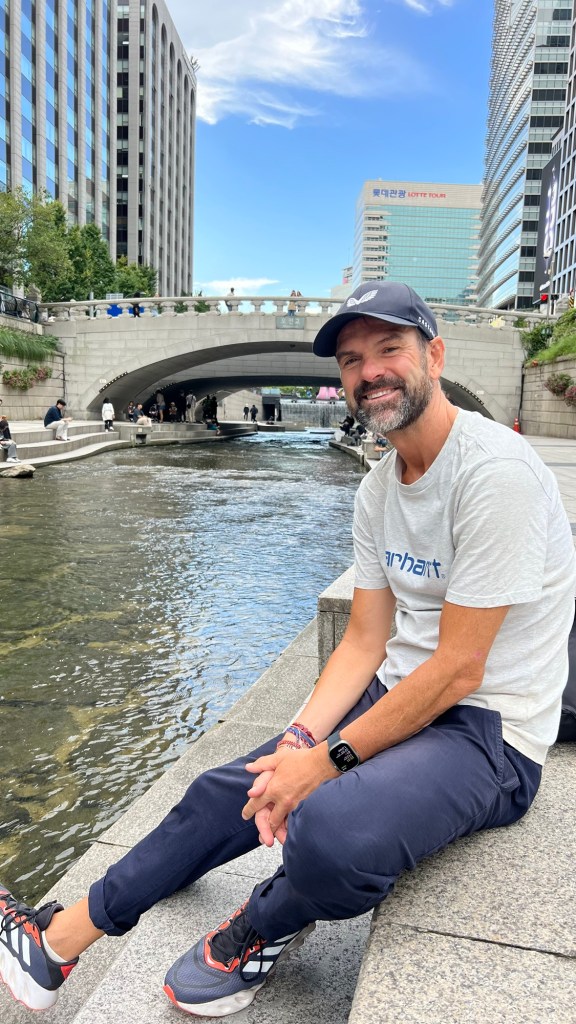
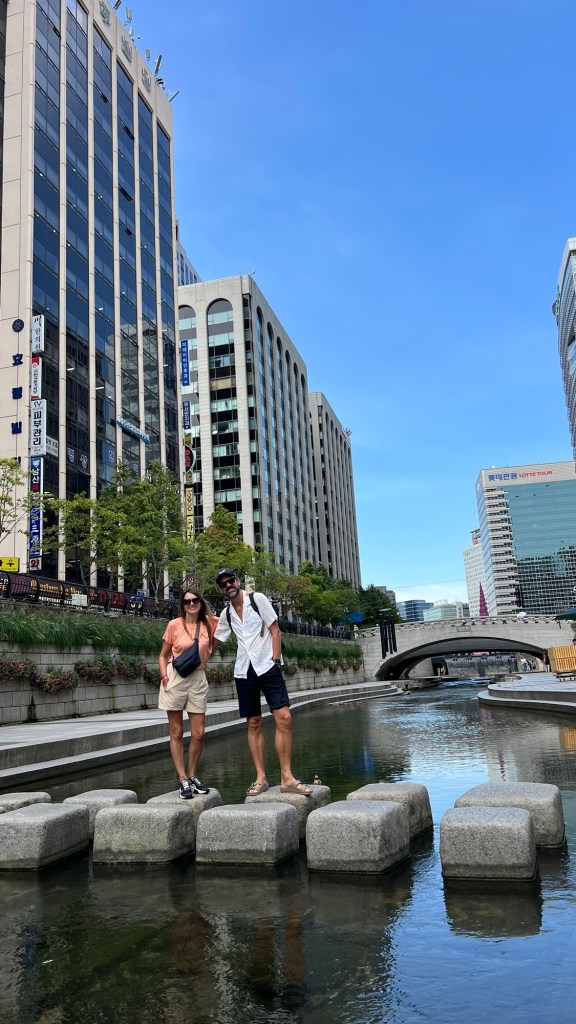
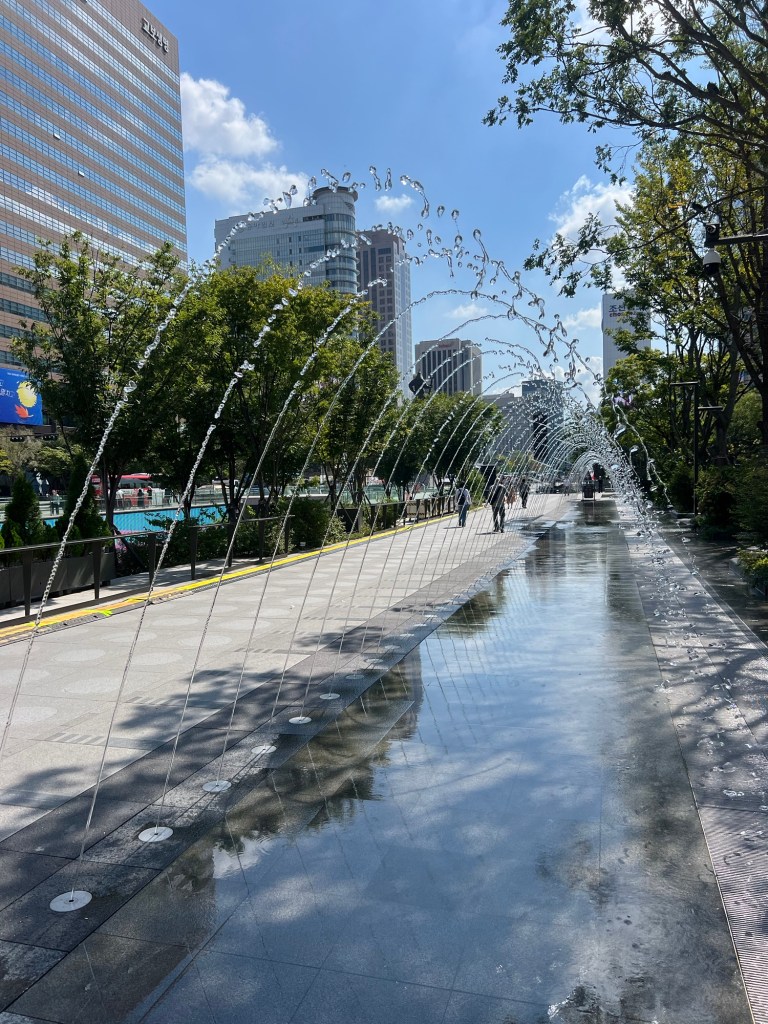
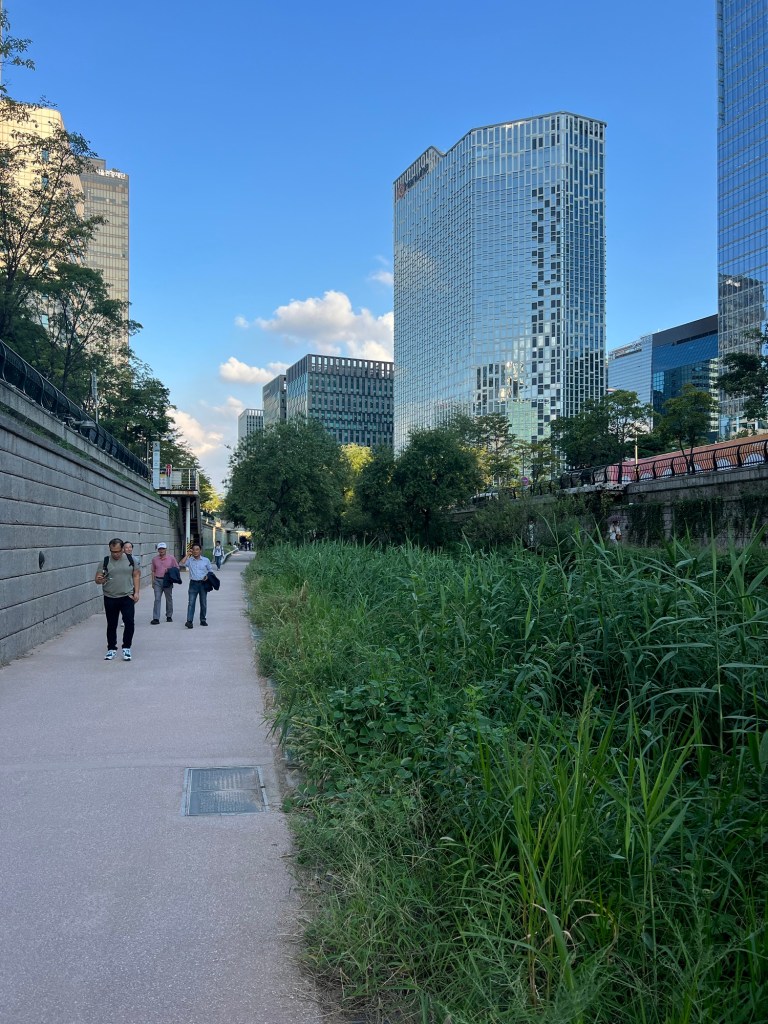
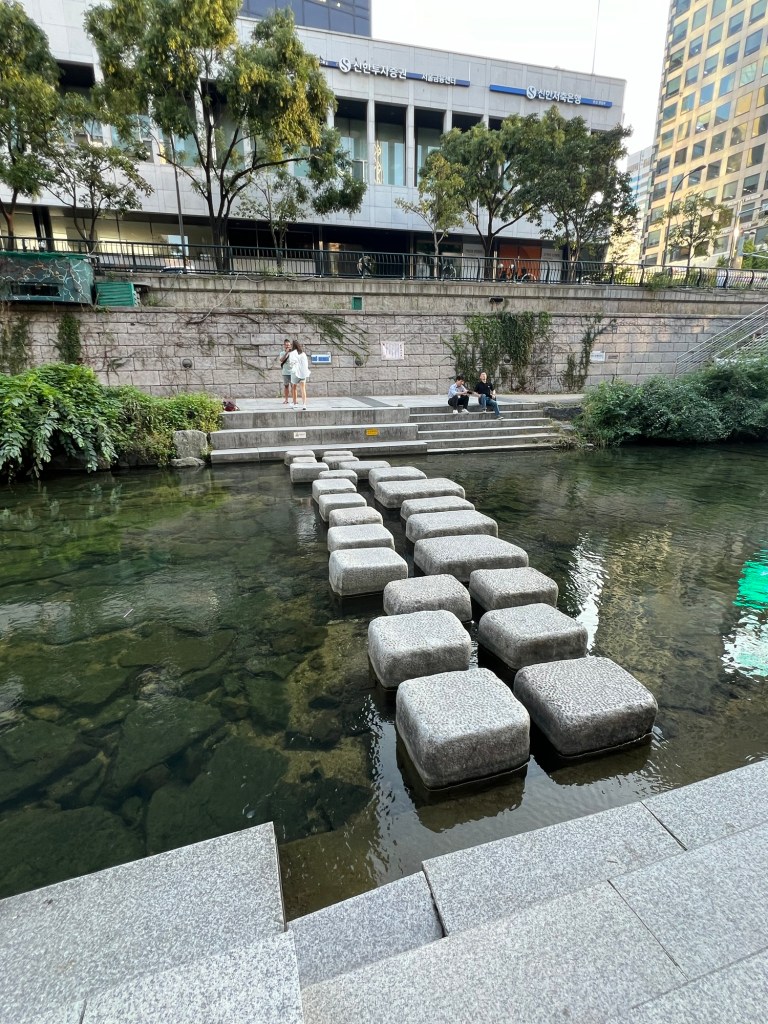
Another busy sightseeing day, with our first port of call being Cheonggyecheon Stream, that runs through downtown Seoul and was on our way to a breakfast stop. It’s a real pleasure to walk amongst the greenery whilst also being able to enjoy the urban landscape above.
One of the river crossing Start of the urban stream
Seoul is blessed with having a coffee shop on literally every corner, so we didn’t have to walk far to find a cafe for a morning flat white.
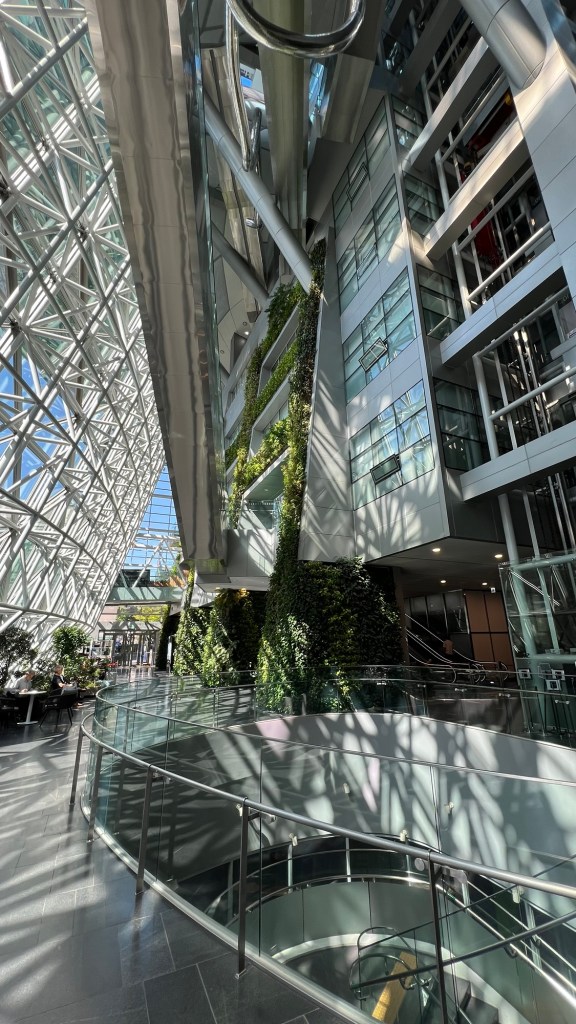
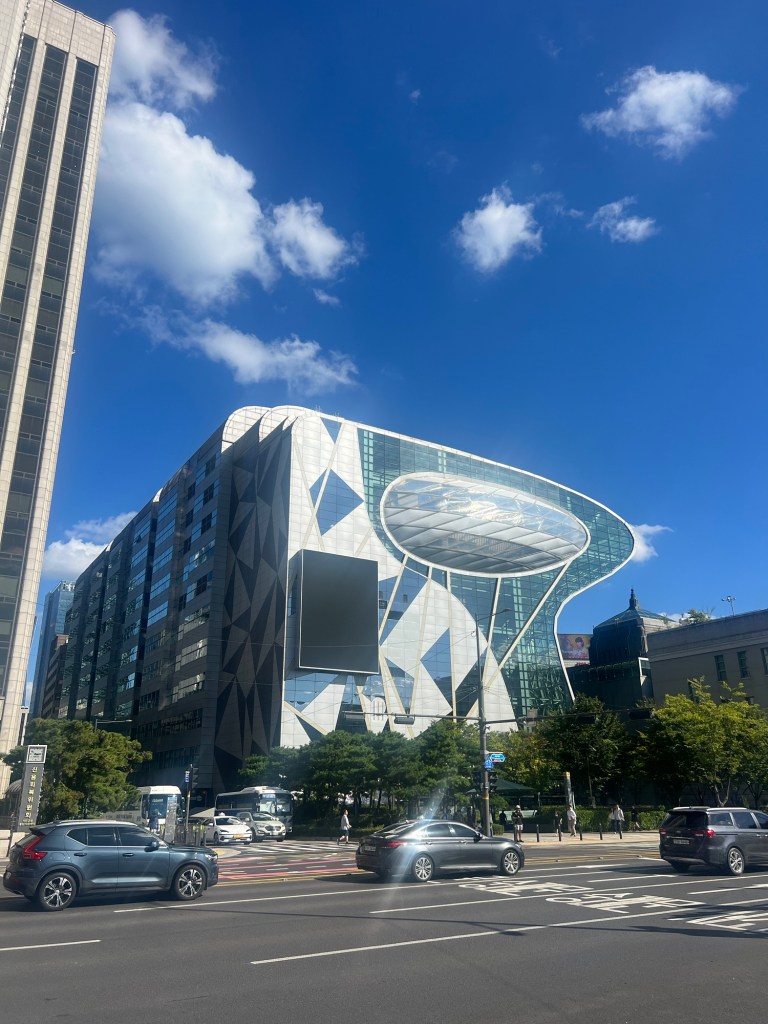
From there we walked to the Town Hall and took a look a the living walls that stretch up to three storeys.
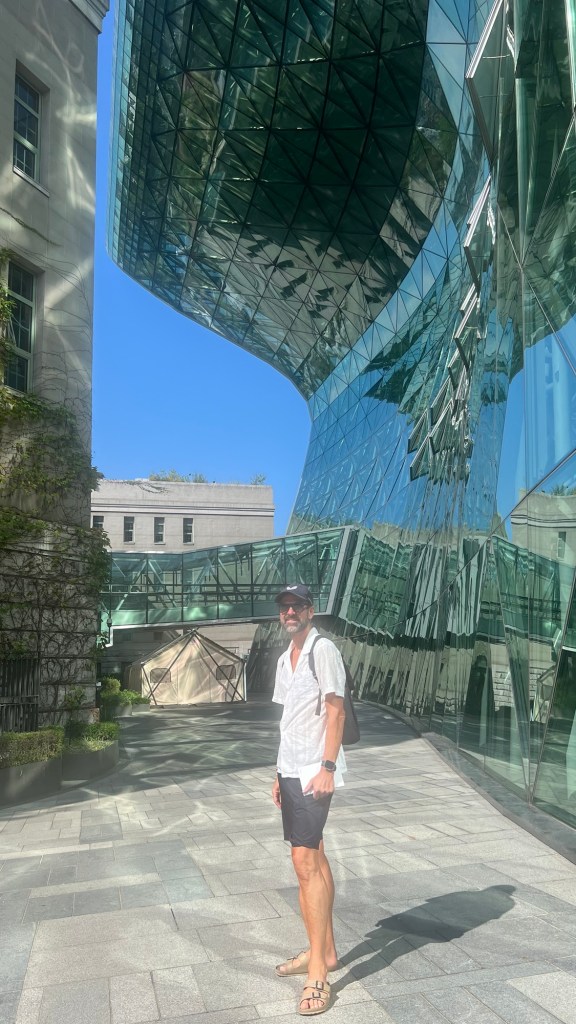
On the outside the building bends into obtuse shapes that don’t see possible.
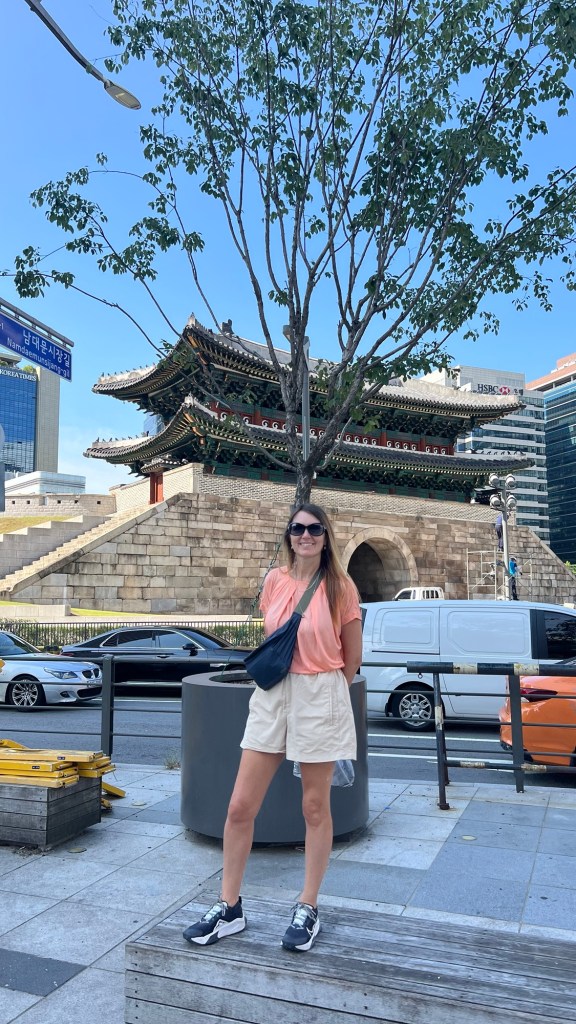
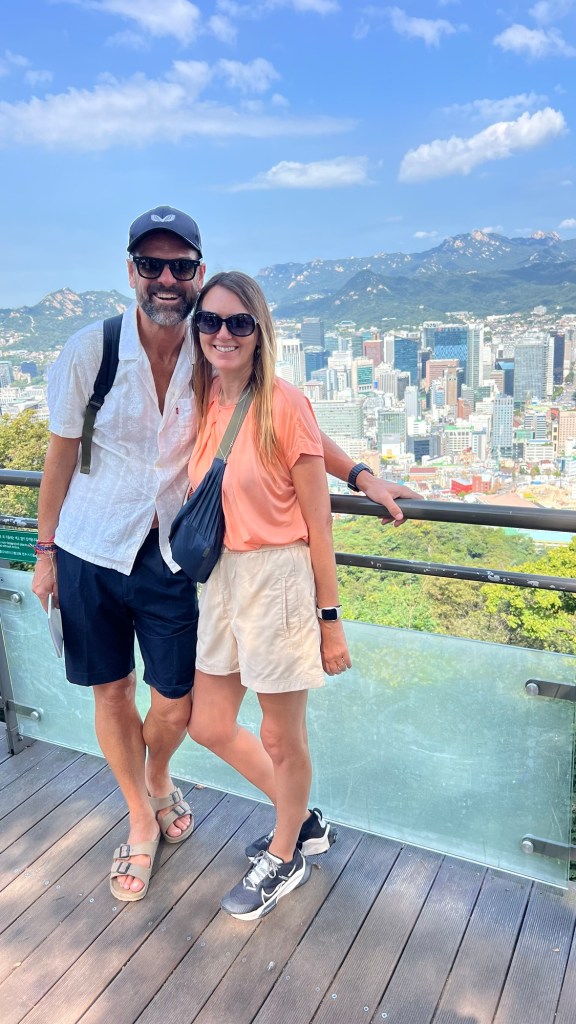
We continued on to Sungnyemun Gate, the southern entry point to the Old City on our way to the cable car up to Seoul Tower on the hill.
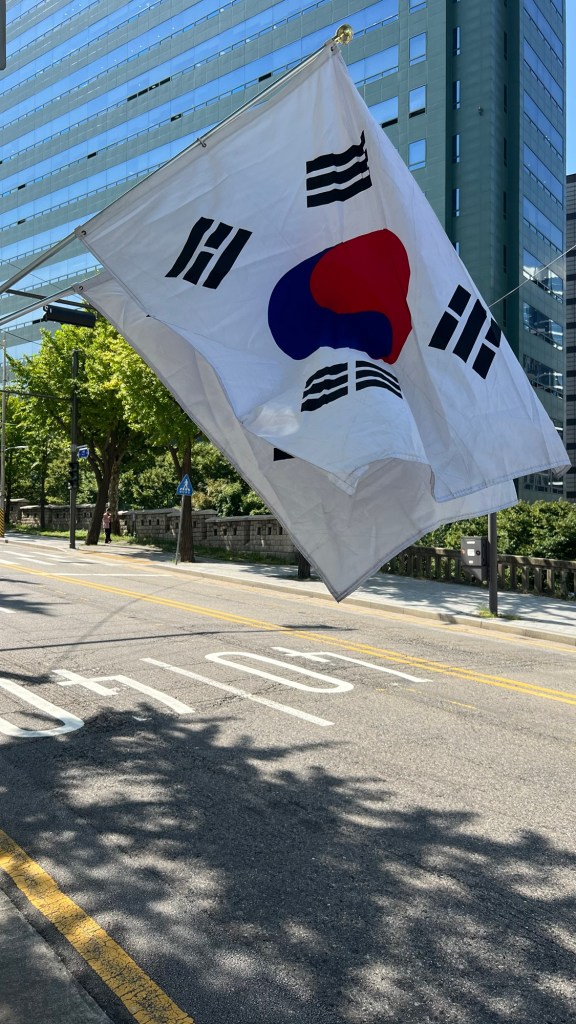
As tomorrow is a national holiday in both South and North Korea there are flags flying across the city and we plan to go and watch the military procession tomorrowthat climaxes with a procession of troops and military vehicles finishing at Gyeongbokgung Palace.
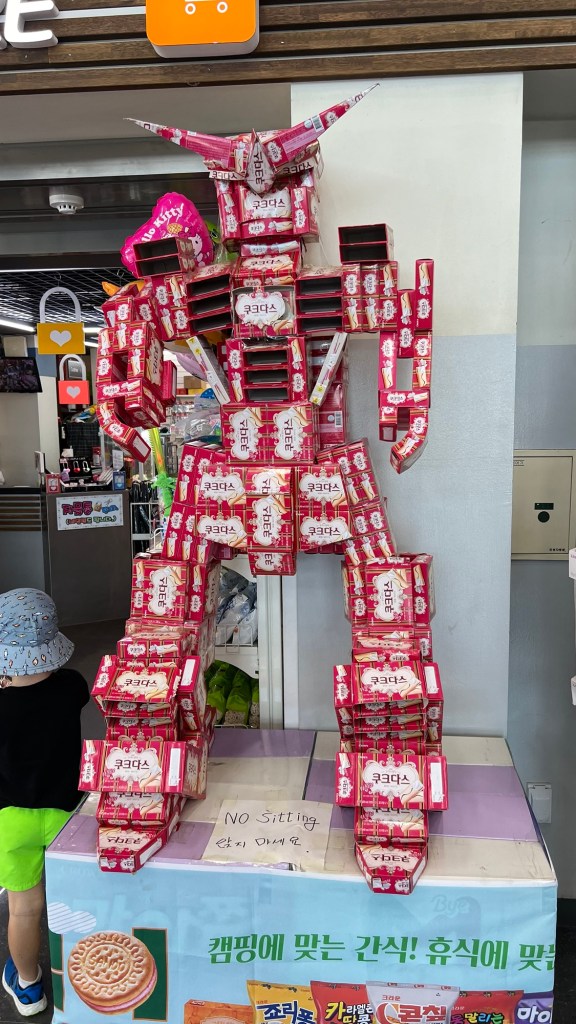
Sweet box scary
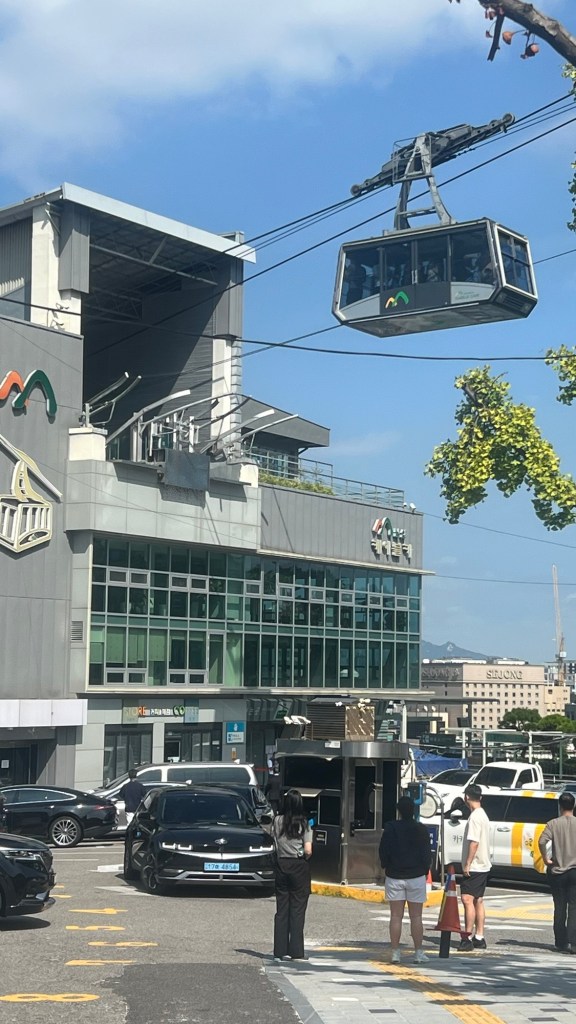
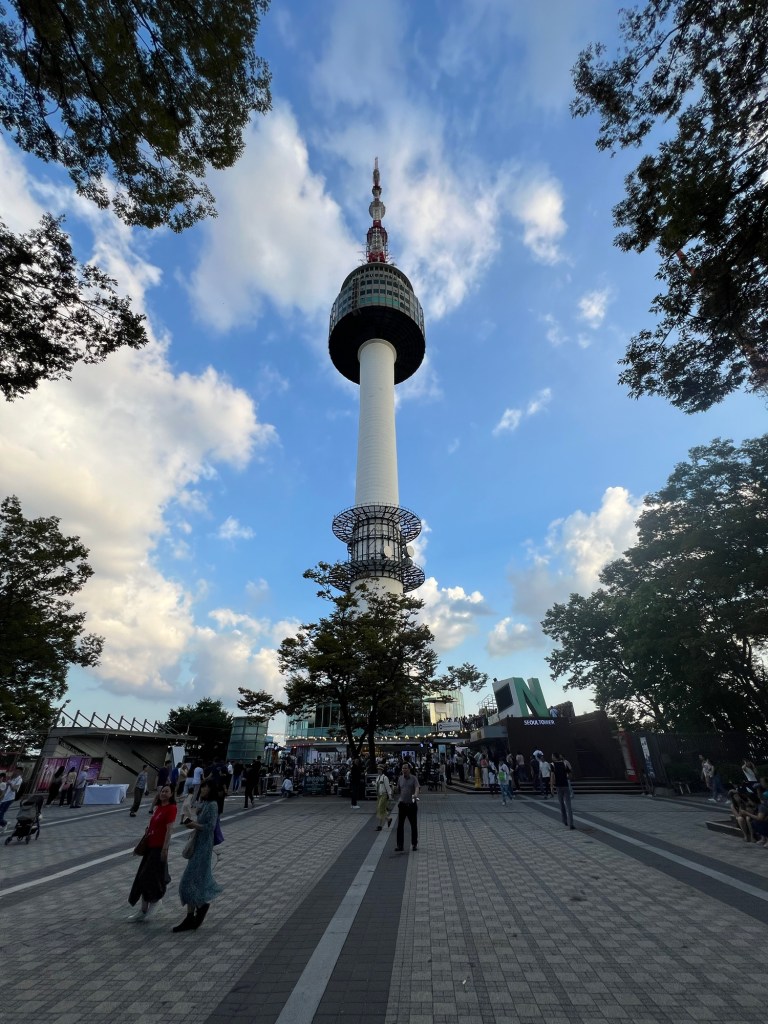
We eventually arrived at the cable car station that takes you to the base of the Seoul Tower and we couldn’t have picked a better day with clear blue skies.
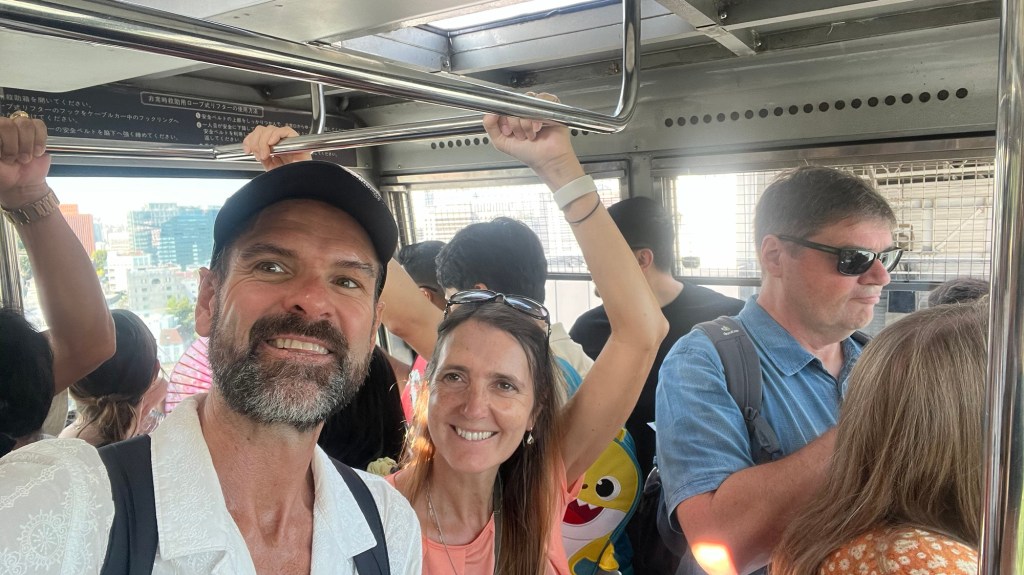
The cable car was filled to the brim with tourists and locals eager to get some photos as we ascended to the summit.
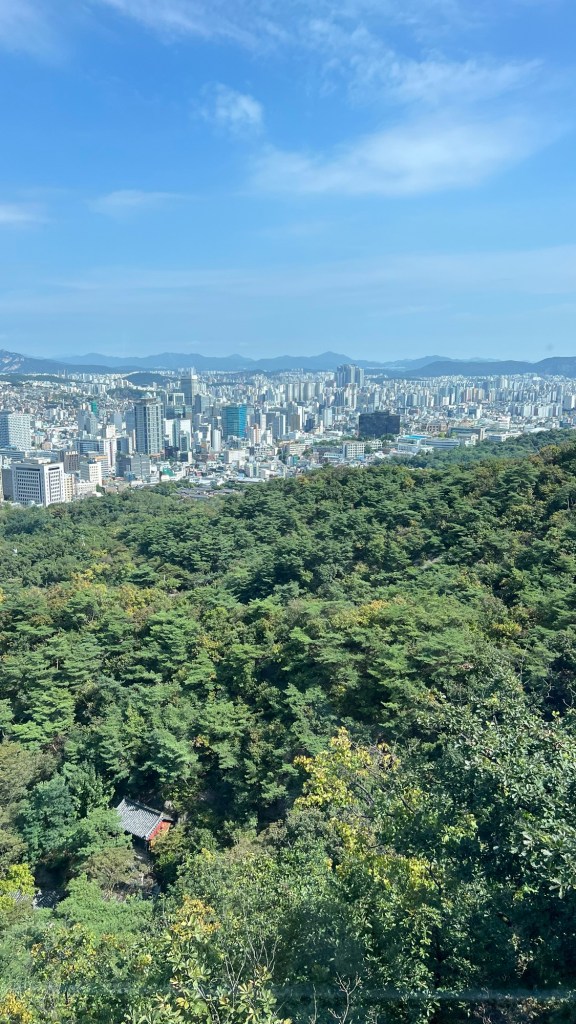
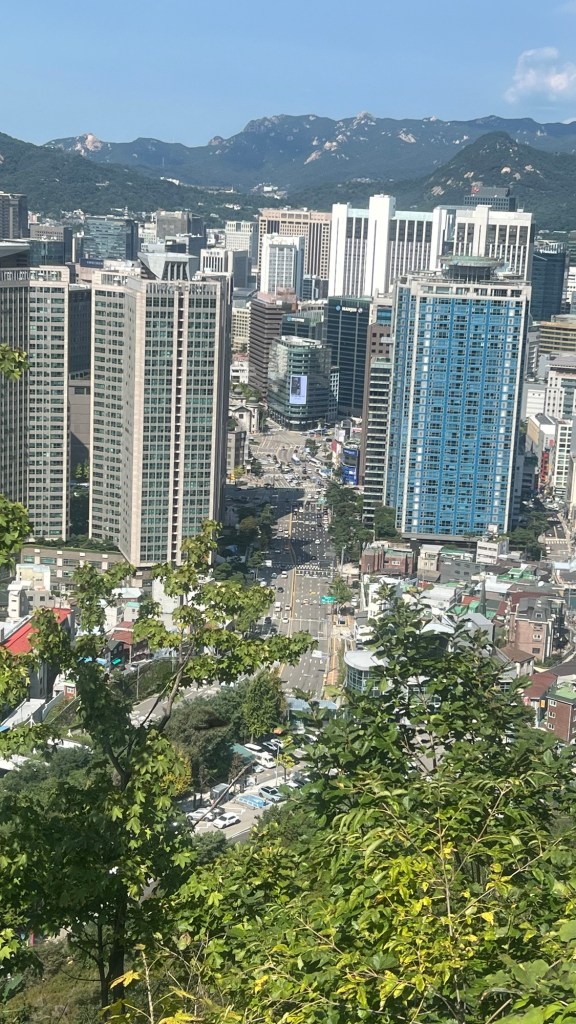
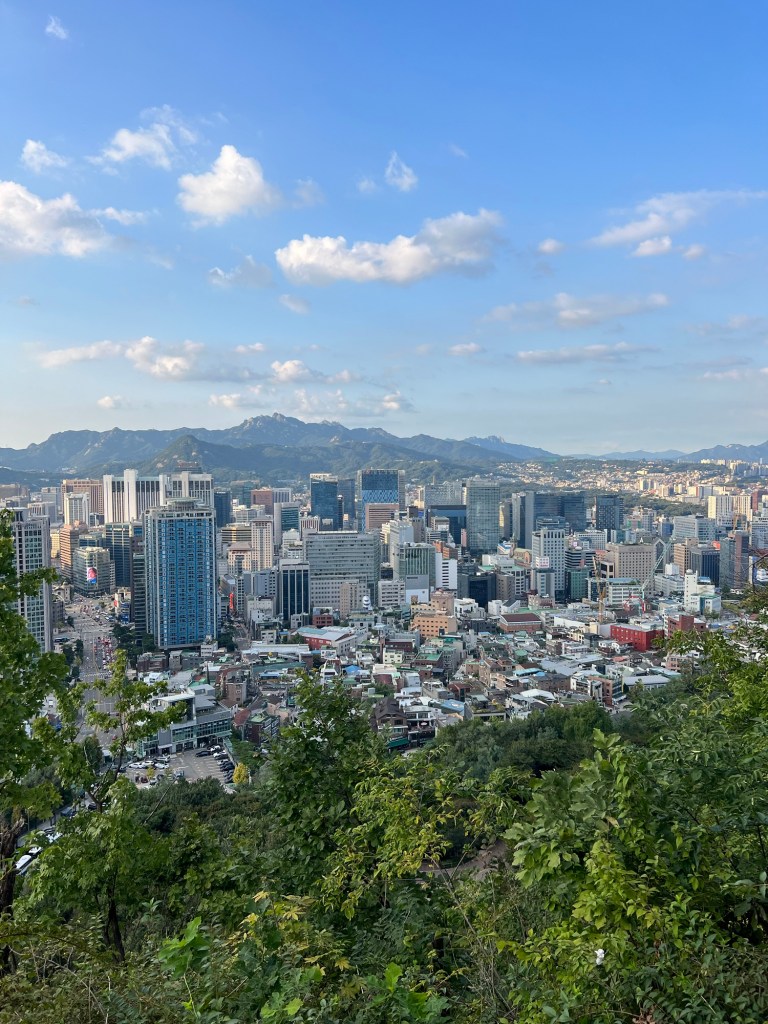
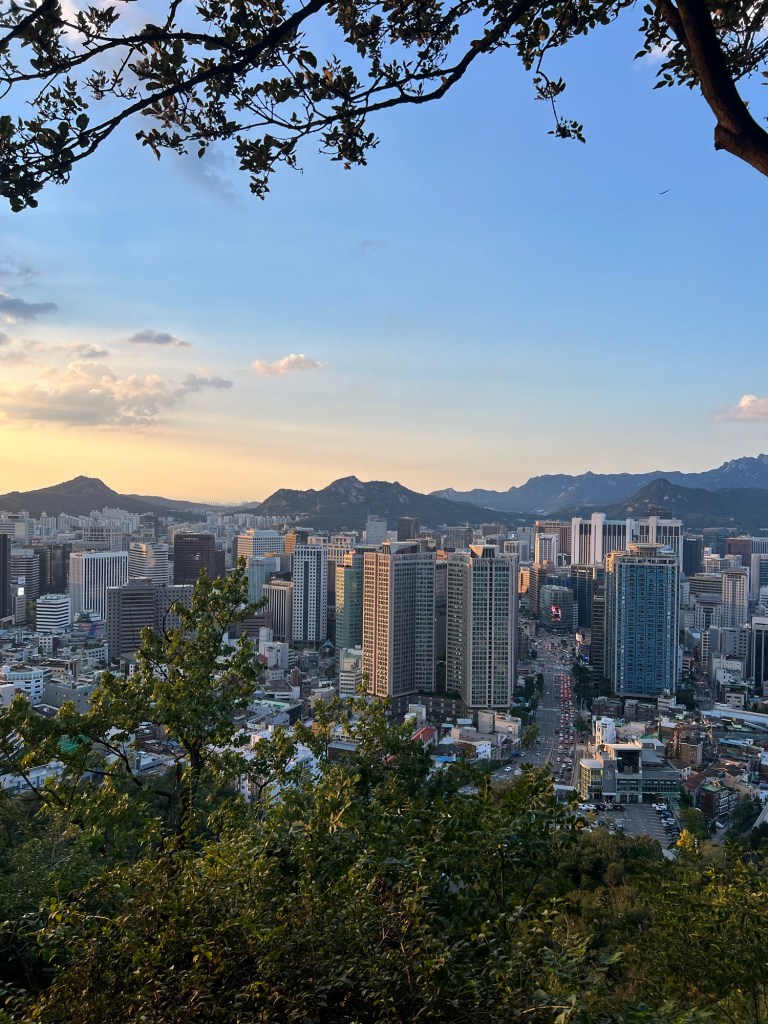
Once at the top you could see all around this large city and it was fantastic to see so much greenery alongside the sprawling high rises.
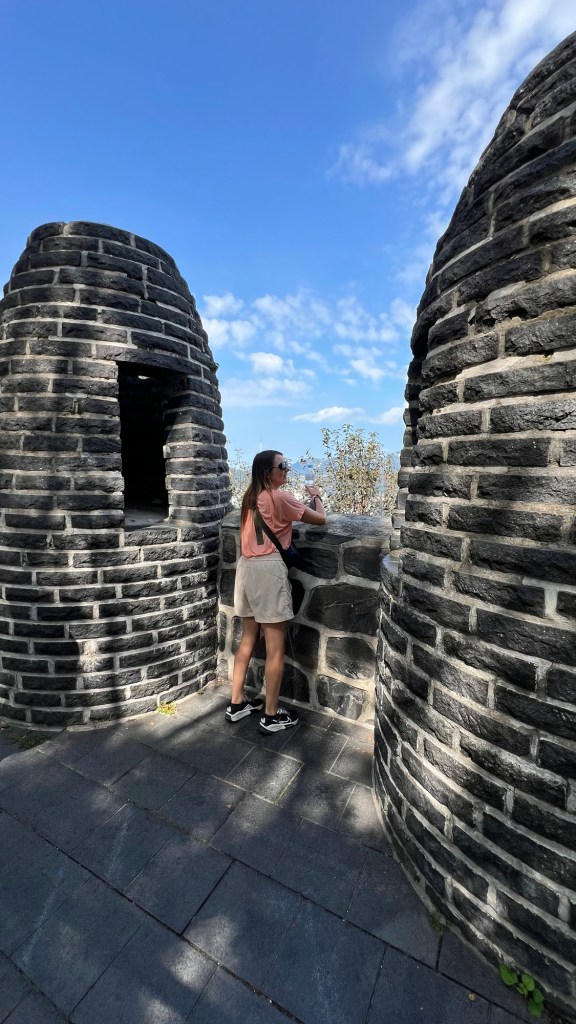
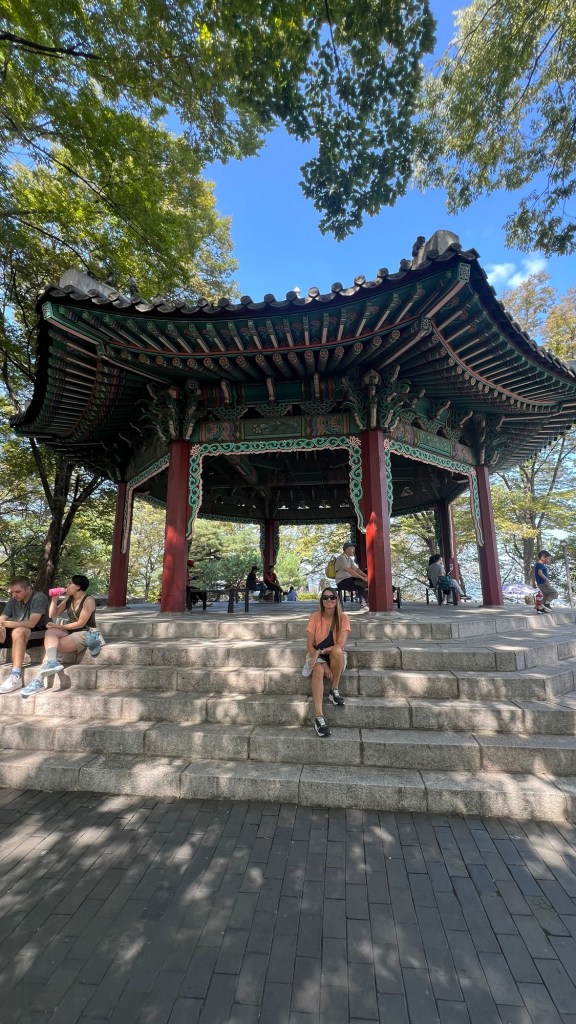
At the top there are still sections of the Seoul City Wall that once defended the city from foreign invaders.
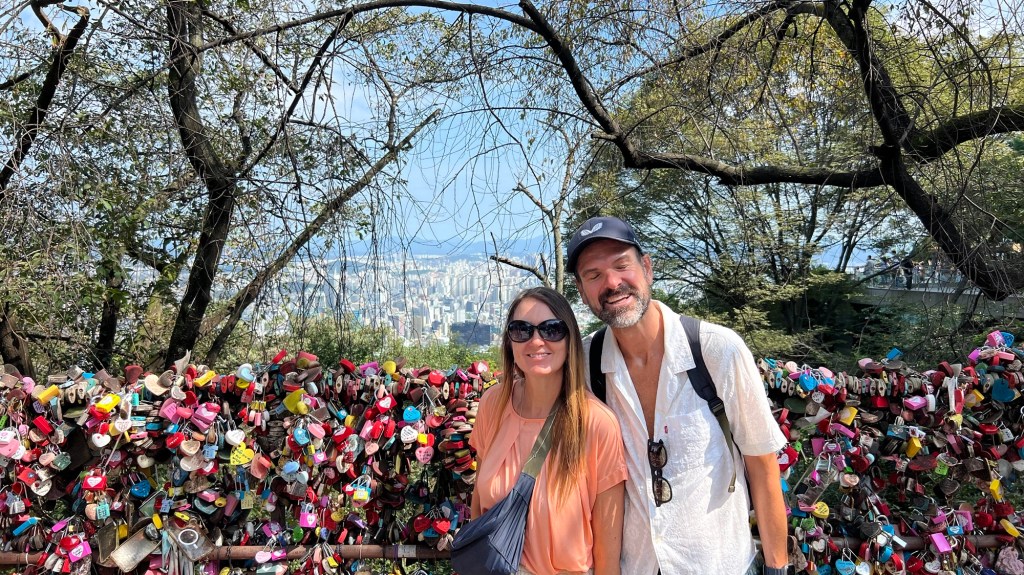
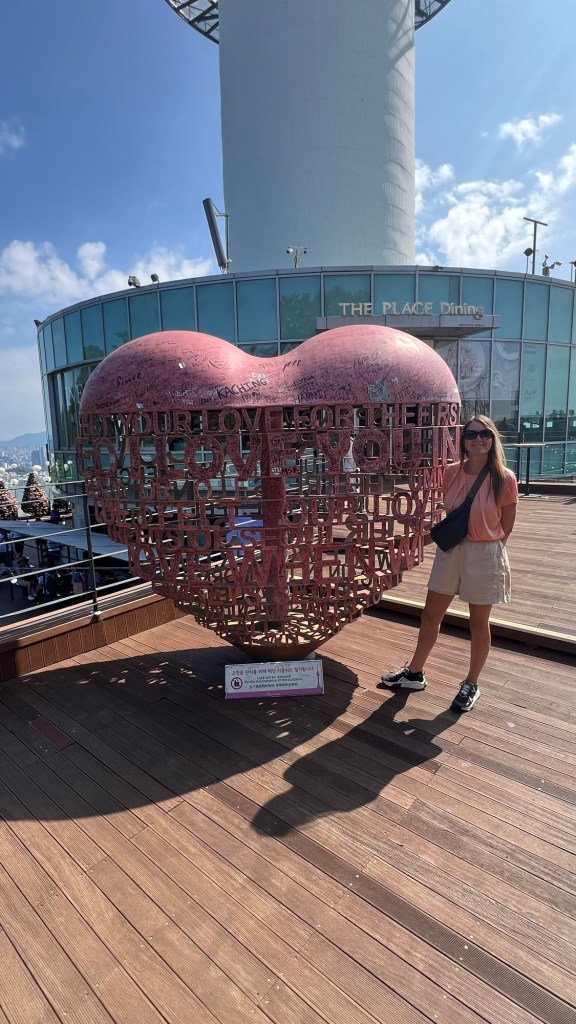
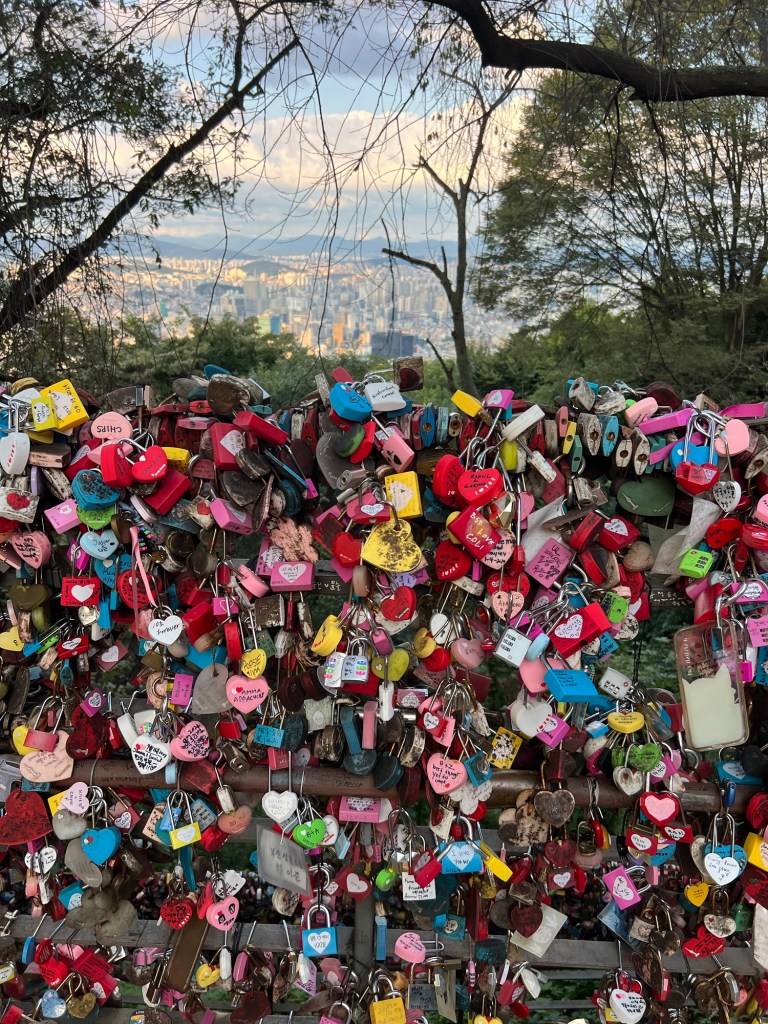
Like a lot of other cities in Asia, they love a good lock to chain to a fence, as a lasting memory of the visit and their loved ones.
The views of Northern Seoul out to the hills and mountains were stunning and gave you the impression of being in a plane looking down on the city.
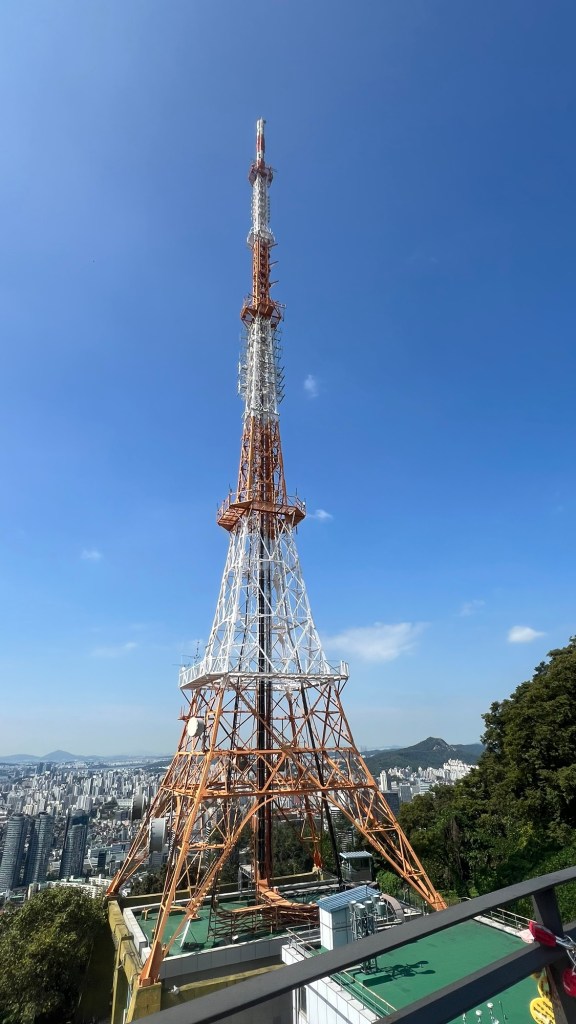
More love locksAerial at the Seoul Tower base
After enjoying a short break at the top and looking across the city in all directions, we started our descent down by foot, stopping intermittently to check out the new view.
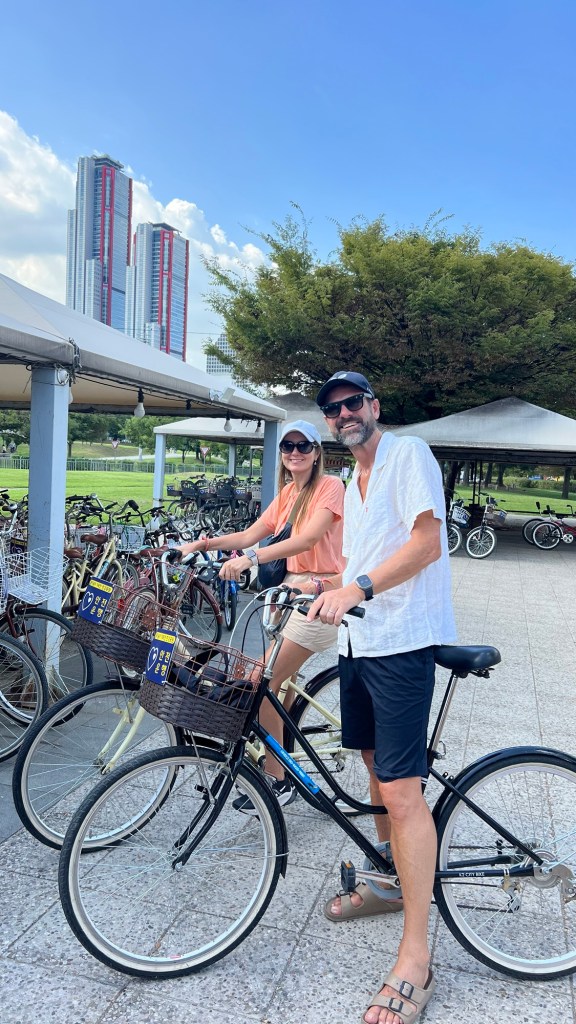
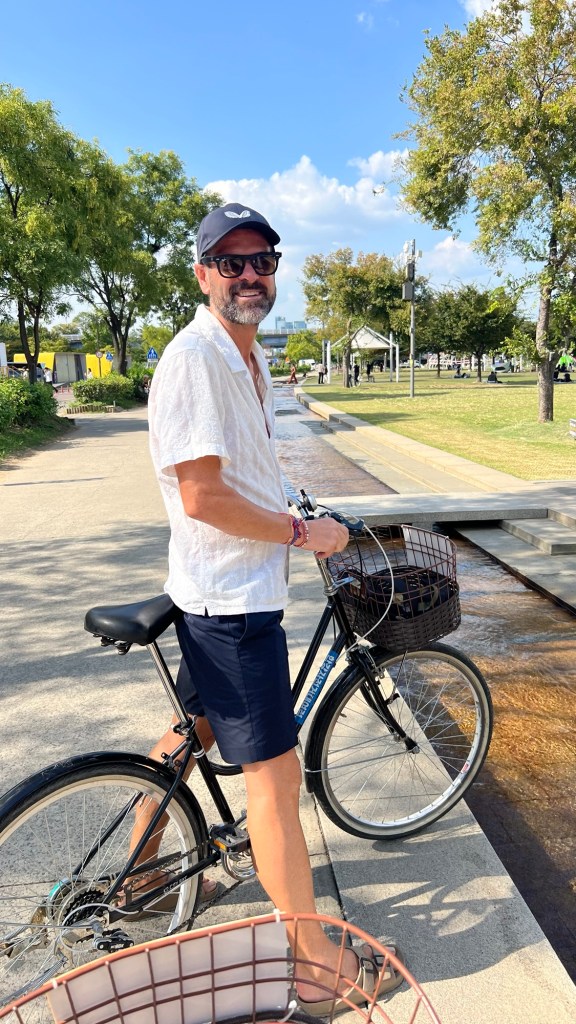
Once we were back in Myeongdong, we picked up the subway and made our way down to Yeouido Hangang Park where we found out you could hire bikes and explore this part of the city.
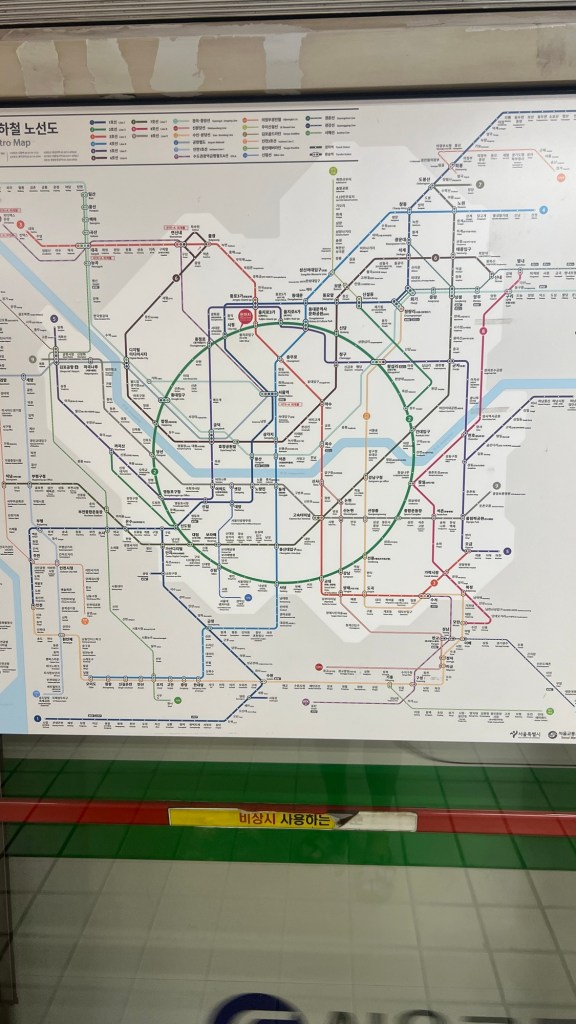
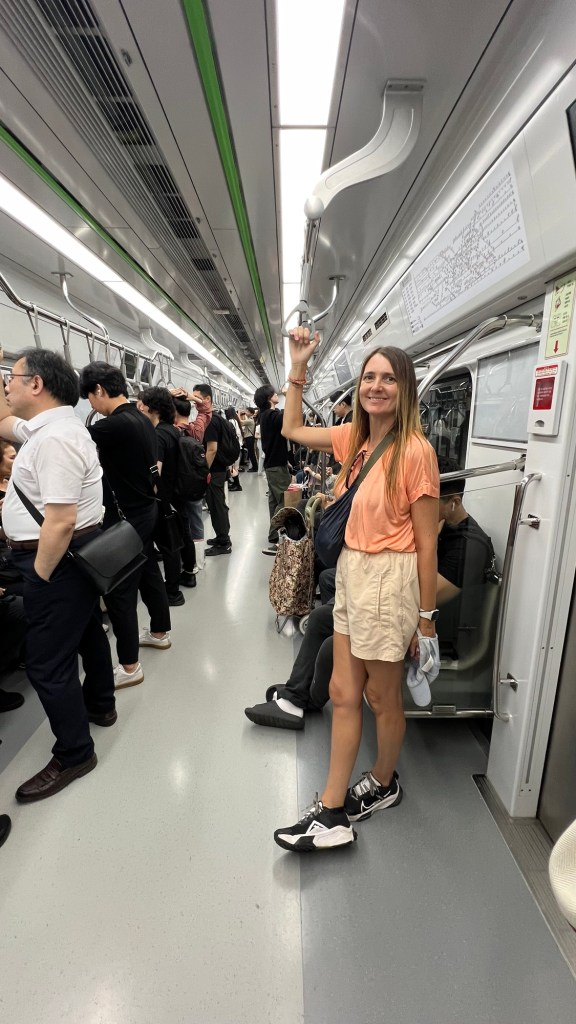
The boy got Seoul Through Myeongdong shopping area Seoul Underground Map – a tricky place to navigateOn board the clean and quiet subway Andy’s king of subway station
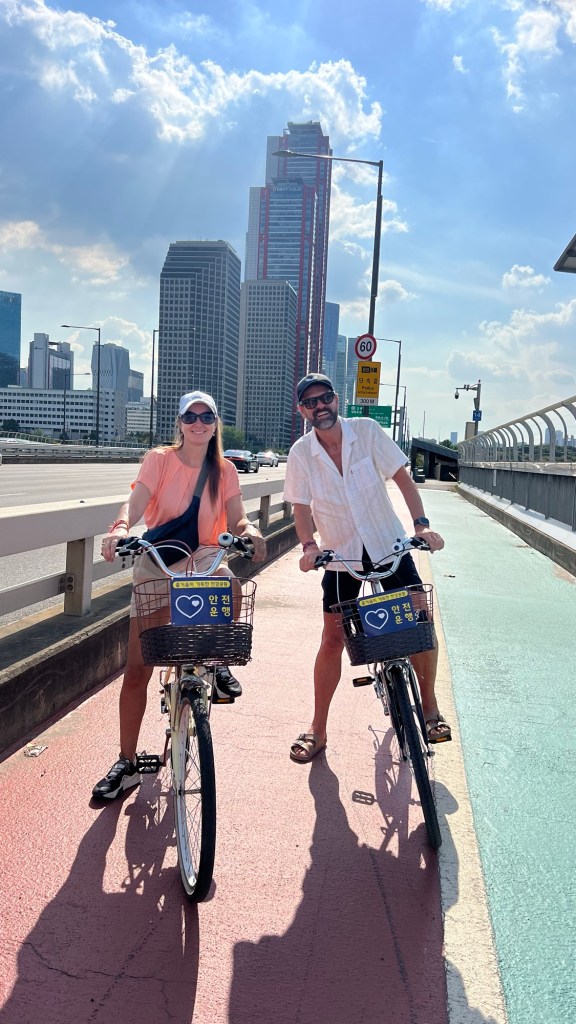
Once at the river we picked up our bikes and had a circular route mapped out that took us along the river and across two bridges to circumnavigate the pleasant cycle friendly route and passed Seonyudo Park.
The cycling path was fantastic and enabled us to stay close to the river without any intervention with the normal road and other traffic.
The Han River route took us across Mapo Bridge, past the Jeoldusab Martyrs Shrine, Seonyudo Park and then back past the Seoul Marina and National Assembly. It went through numerous parks, notably the Yeouido Saetgang Eco Park which it was wilder and more natural. All in all it was a great way to explore a part of Seoul and enjoy 90mins on two wheels.
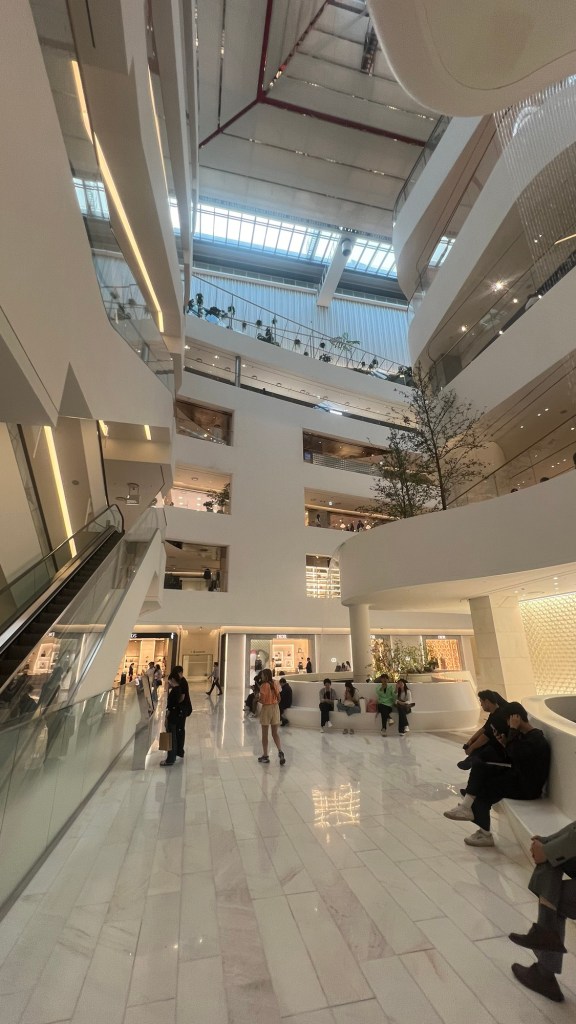
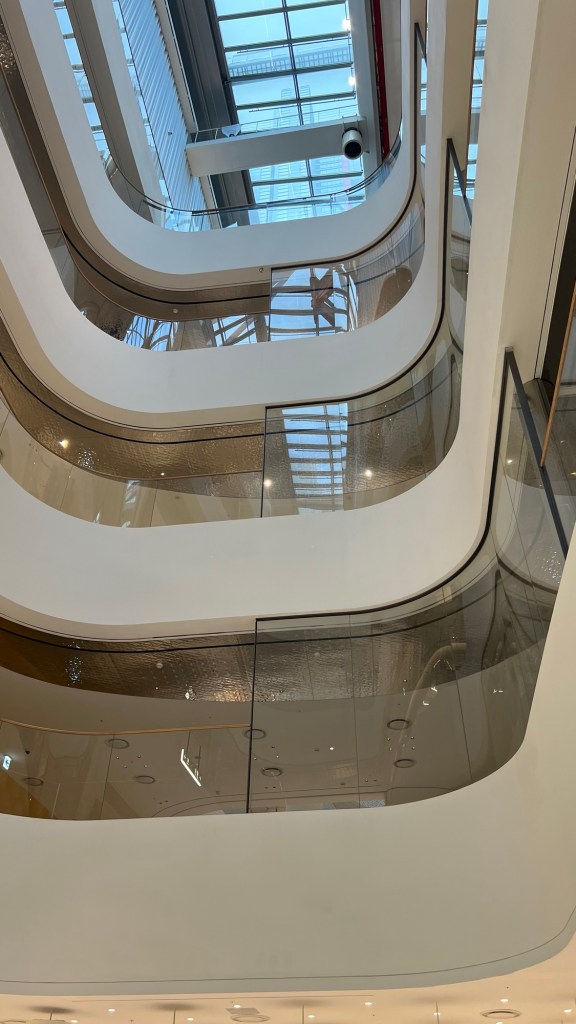
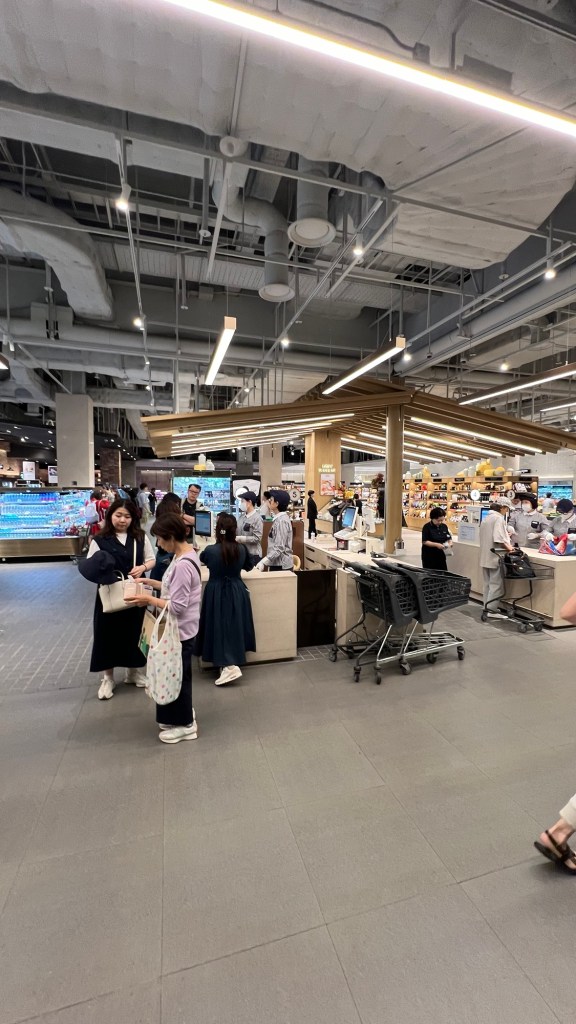
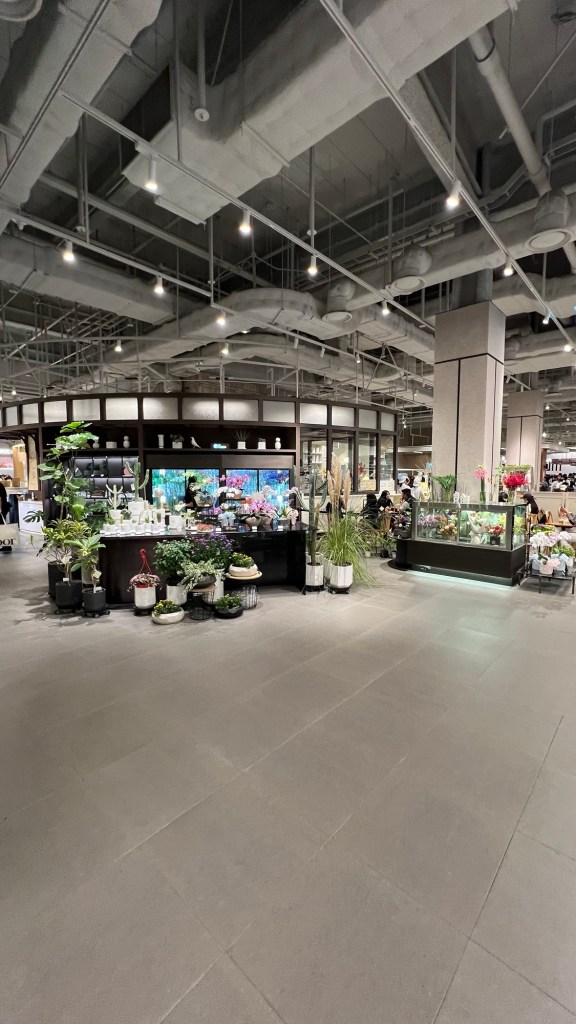
After all that exertion, we decided to take a break in the newly opened IFC Mall in one of the Hyundai department stores. It was stunningly beautiful and we found our way to the basement food hall for a coffee and cake.
After a relaxing break, it was back down to the underground and off to Gangnam for an early evening dinner.
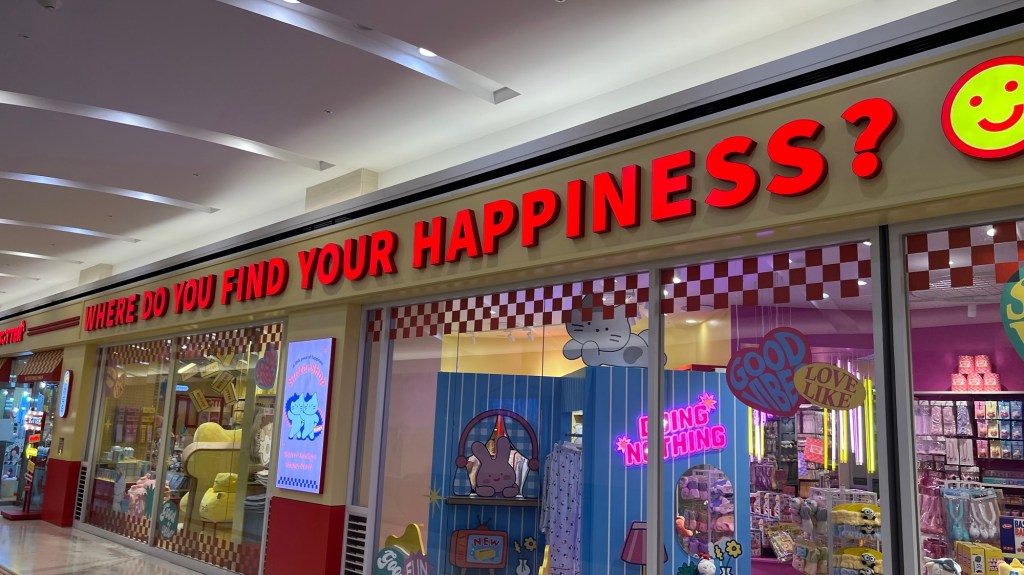
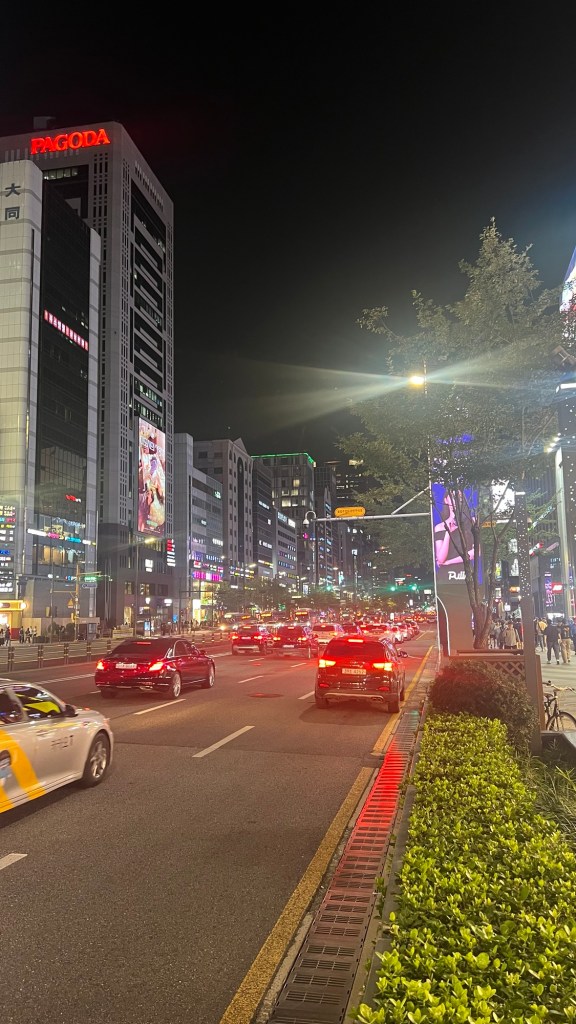
Shopping for happinessBusy night to Gangnam
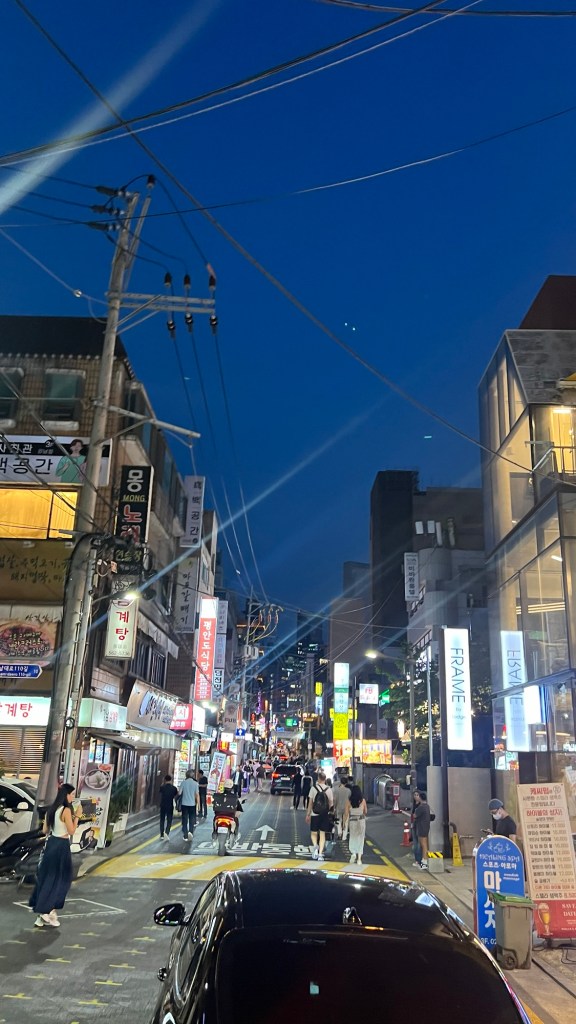
We’d been keen to return to this part of Seoul having been recommended a bar and a nearby restaurant close to Sinnonhyeon, where there was a feast of options to choose from.
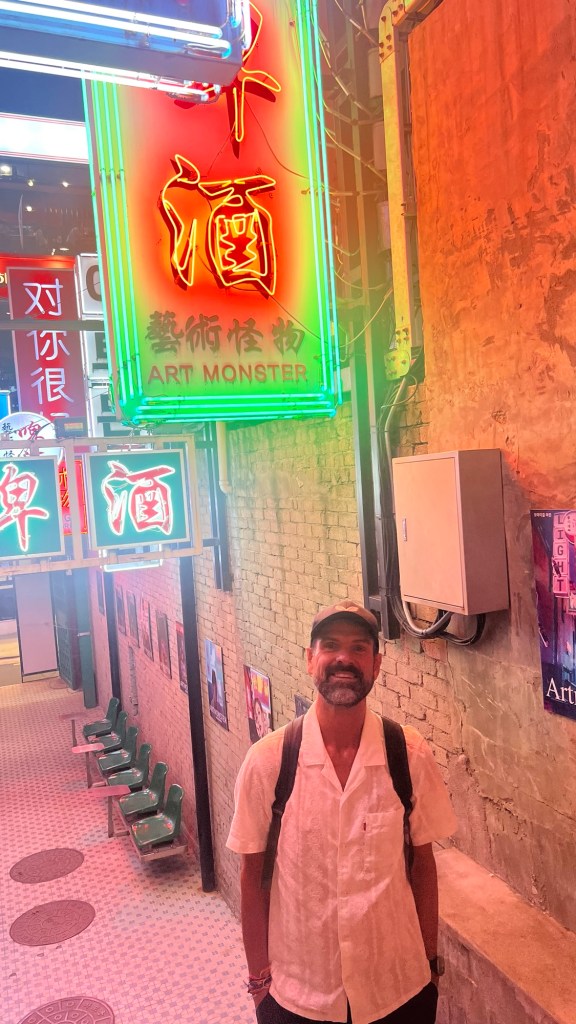
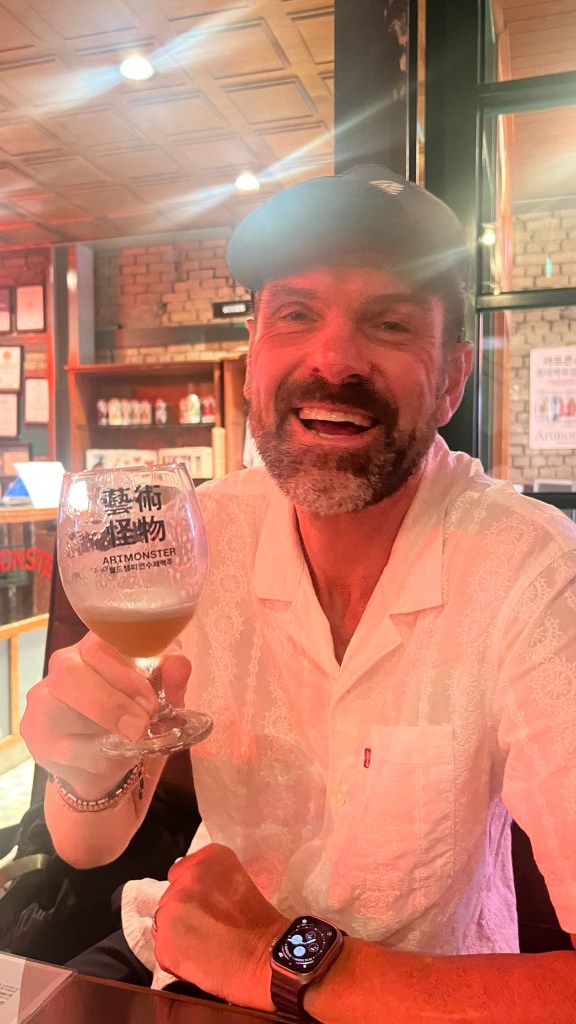
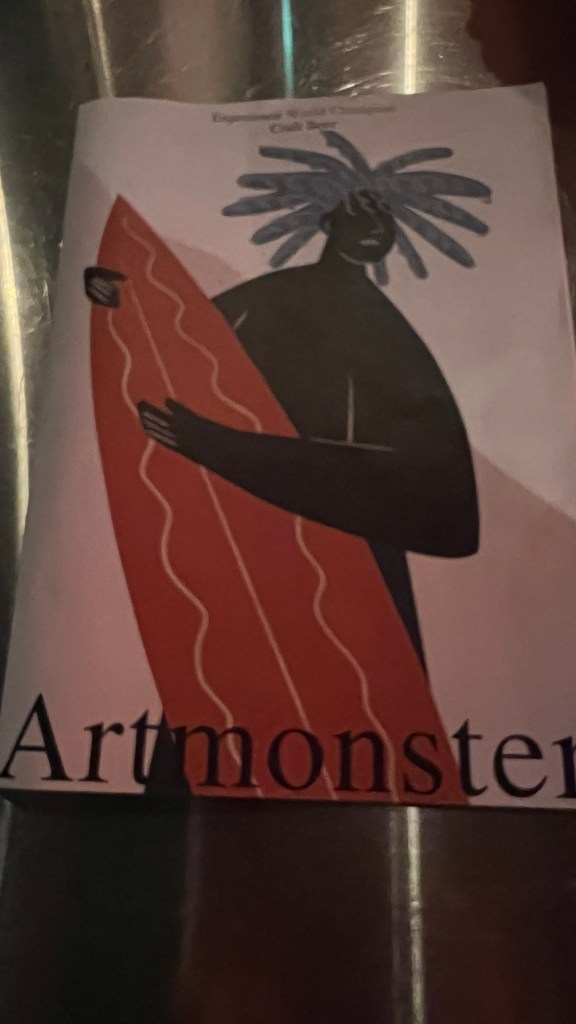
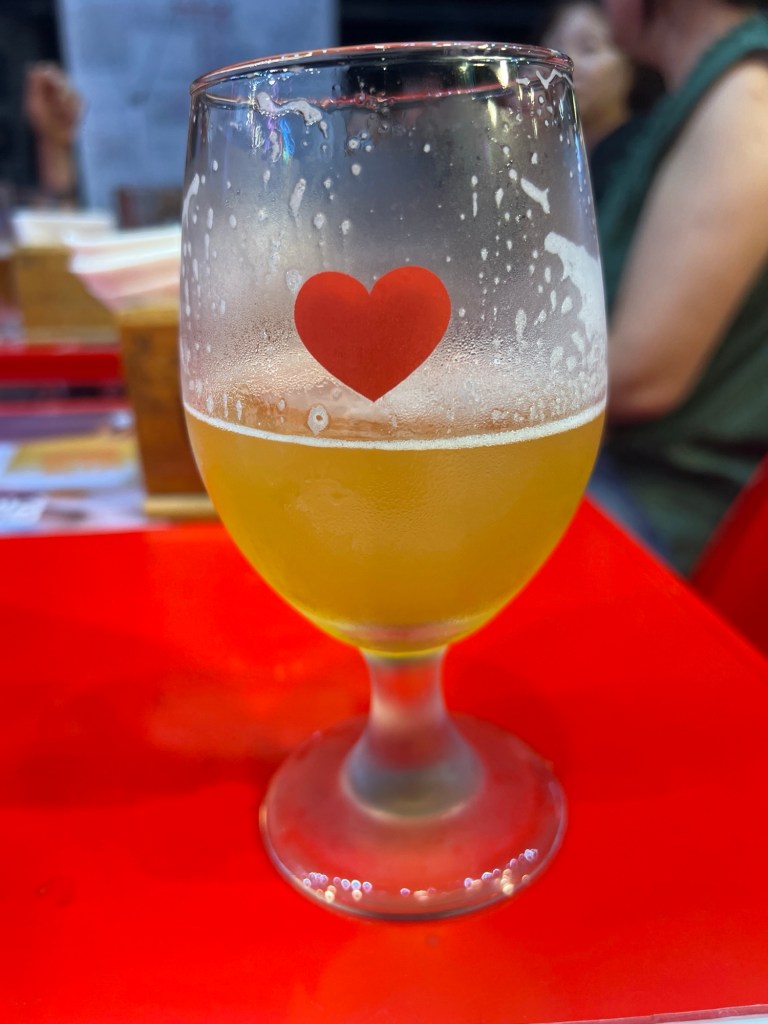
Our first stop was a self service brew house called Art Monster where you poured your own. The good news was that they did a great Hazy Pale Ale that Andy was instantly infatuated by and had a couple of glasses.
One happy customer
Next stop was a Korean restaurant called Nam So Givan and we ended up ordering bbq pork in a spicy sauce & rice with shrimp spring rolls. Both were an instant success and were devoured within 15mins.
The great thing about the restaurant apart from the fact the menu was in English and Korean, was it was via a tablet at the table and within minutes or making the order the food and drink arrived.
Here’s the bill
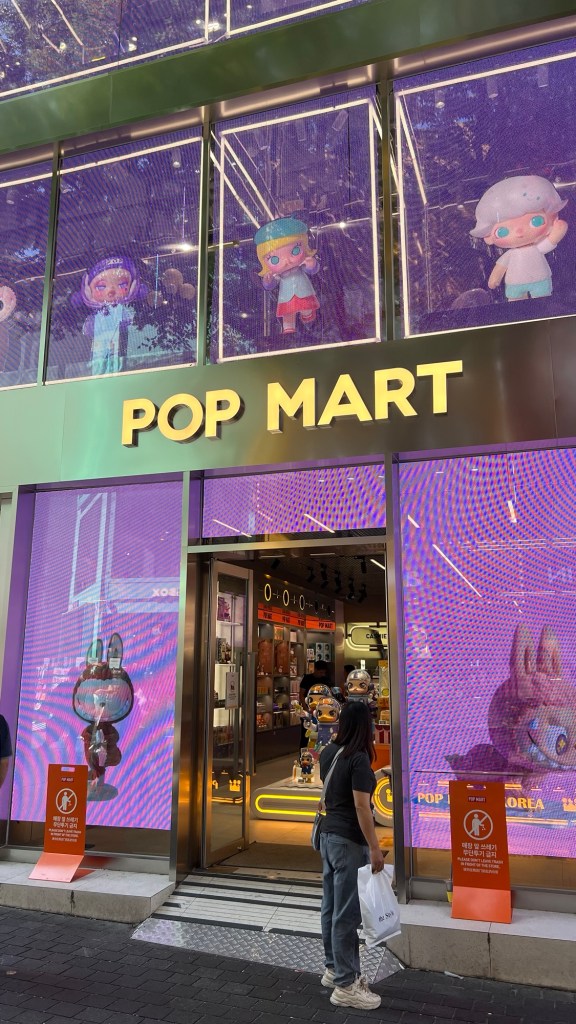
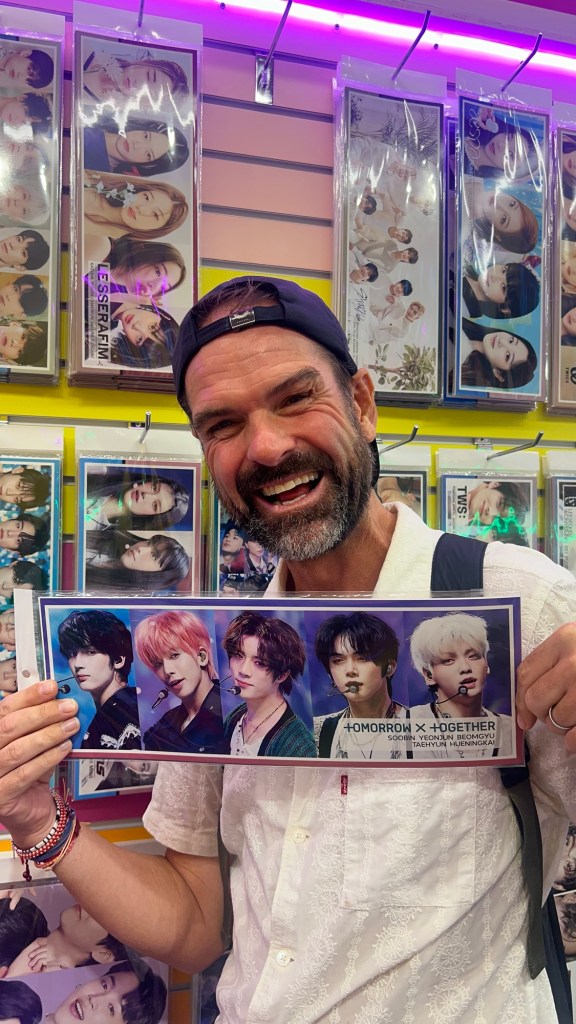
We then went for a shop in Gangnam and found ourselves in a K Pop store. Not sure about the hairstyles on display….Andy’s included!
After popping into a few stores it was clear this was a very expensive part of town and we soon retreated to the subway on our way back.
Busy night in Gangnam
Tomorrow we have plans to visit Dongdaemun History and Culture Park, Seoul City Wall Museum, Ihwa Mural Village, Kwangjang Market and finally the Korean Military Procession to celebrate the days holiday in North and South Korea. It’s going to be another busy one.
We are getting firmly back into the city tourist trail and today was all about the temples and palaces.
Our first stop was a revisit to Jogyesa Temple which Michelle missed seeing a day or so ago because she was unwell. Being Sunday the temple was busy with worshipers and the sound of prayer.
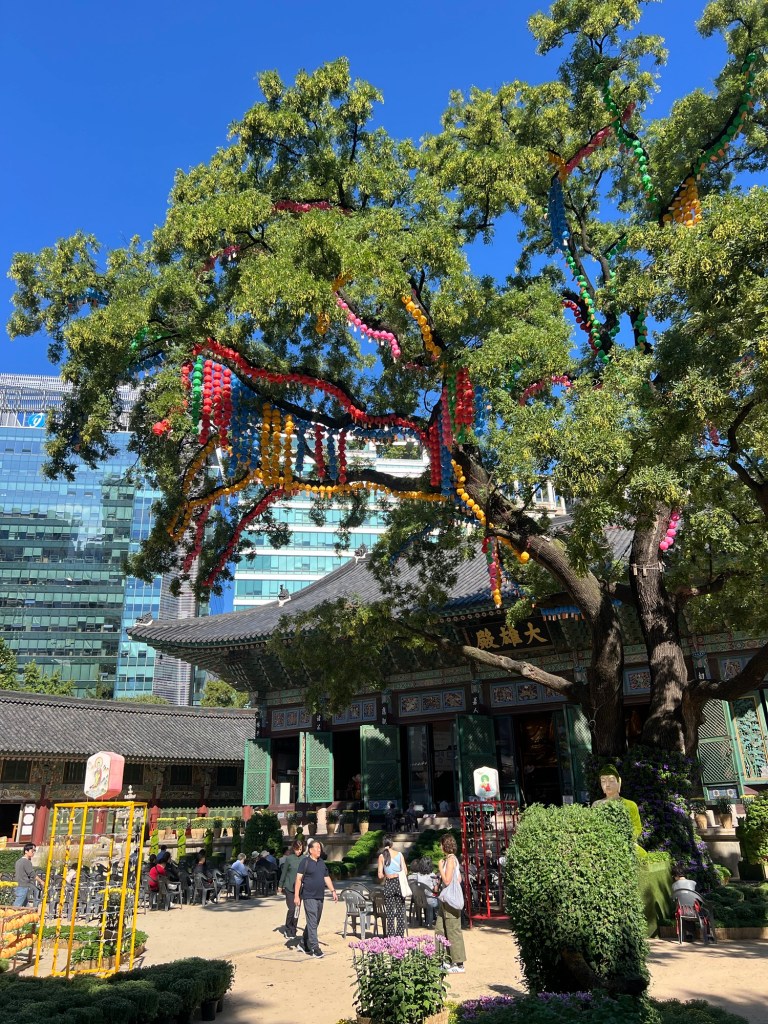
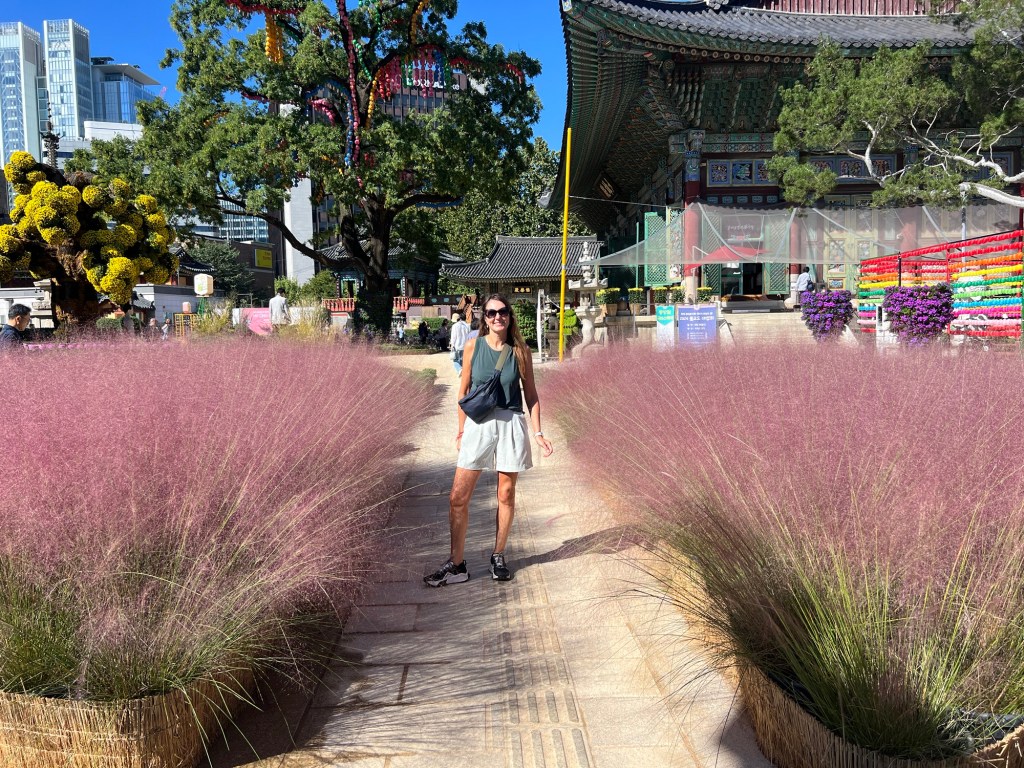
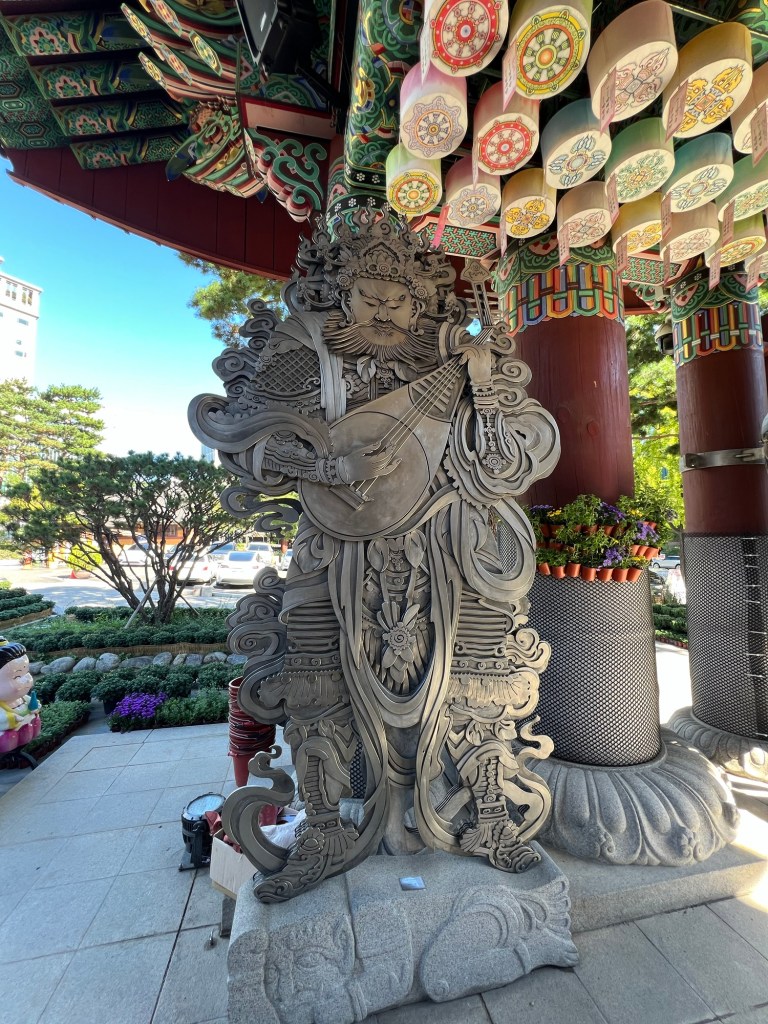
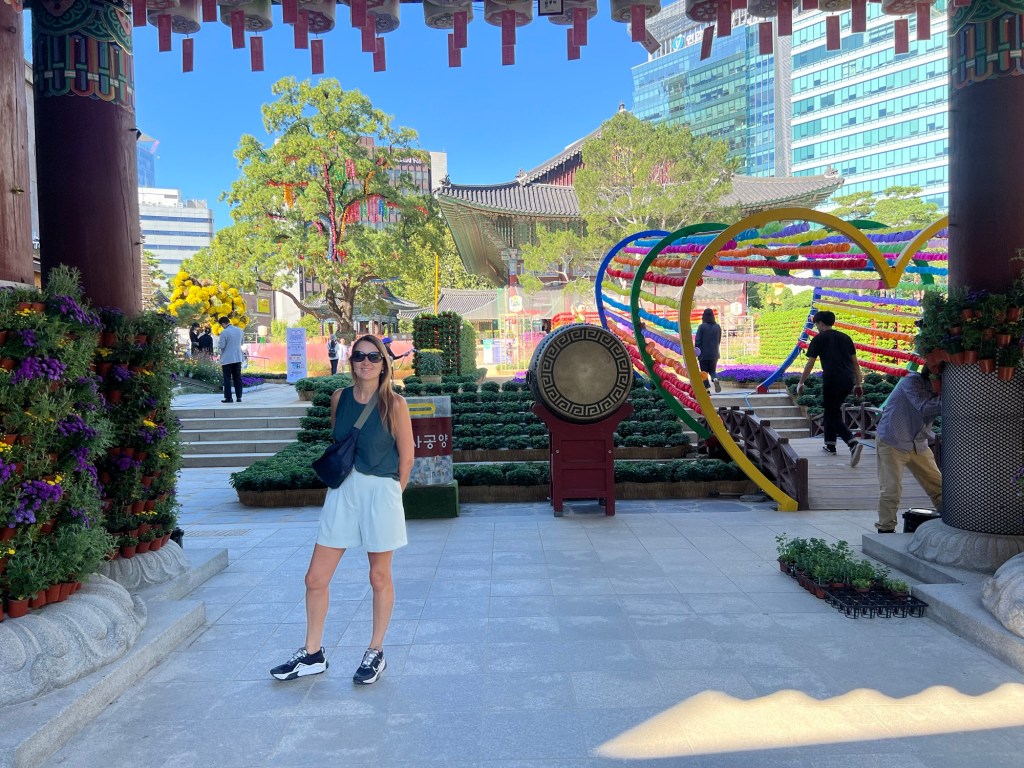
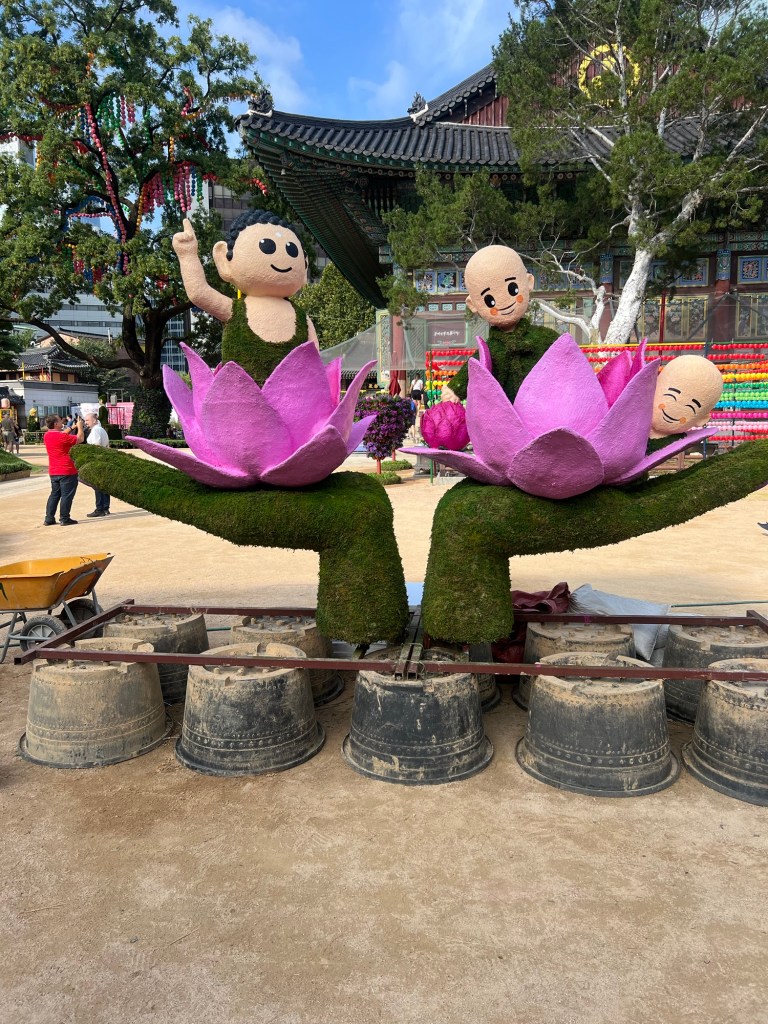
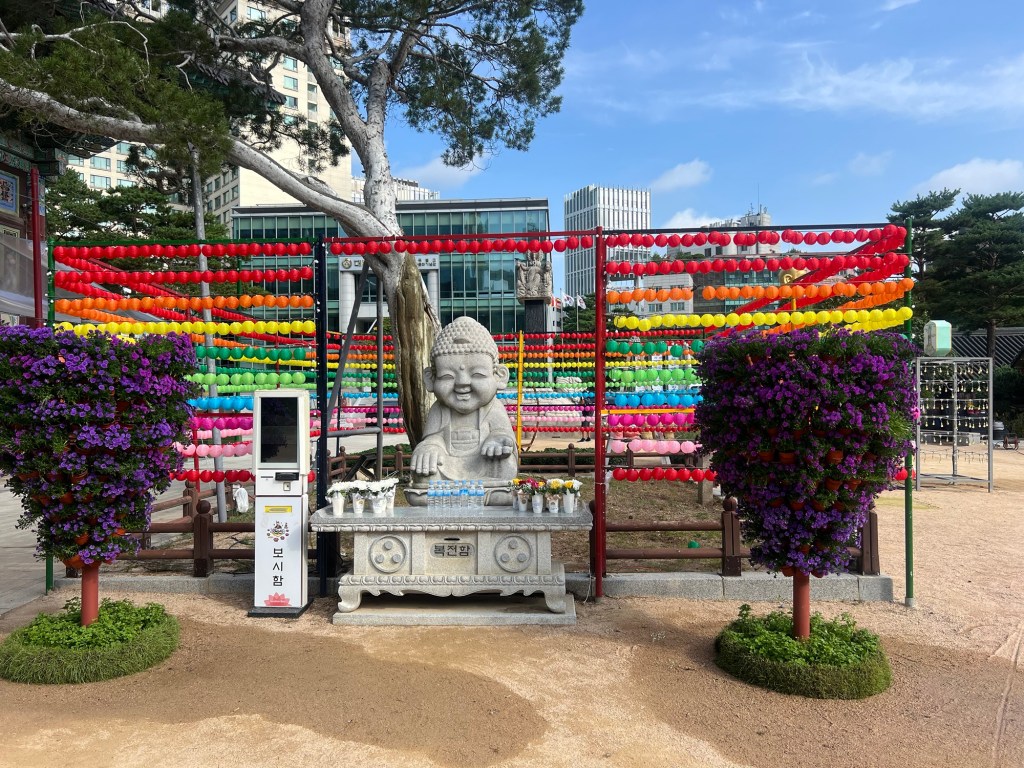
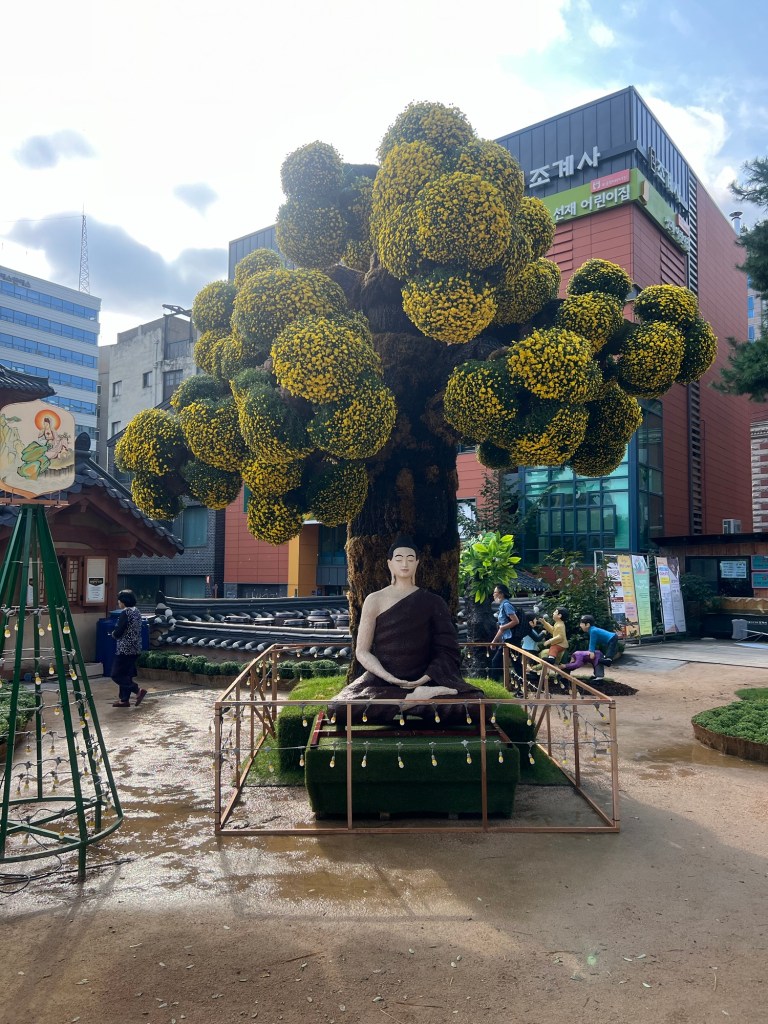
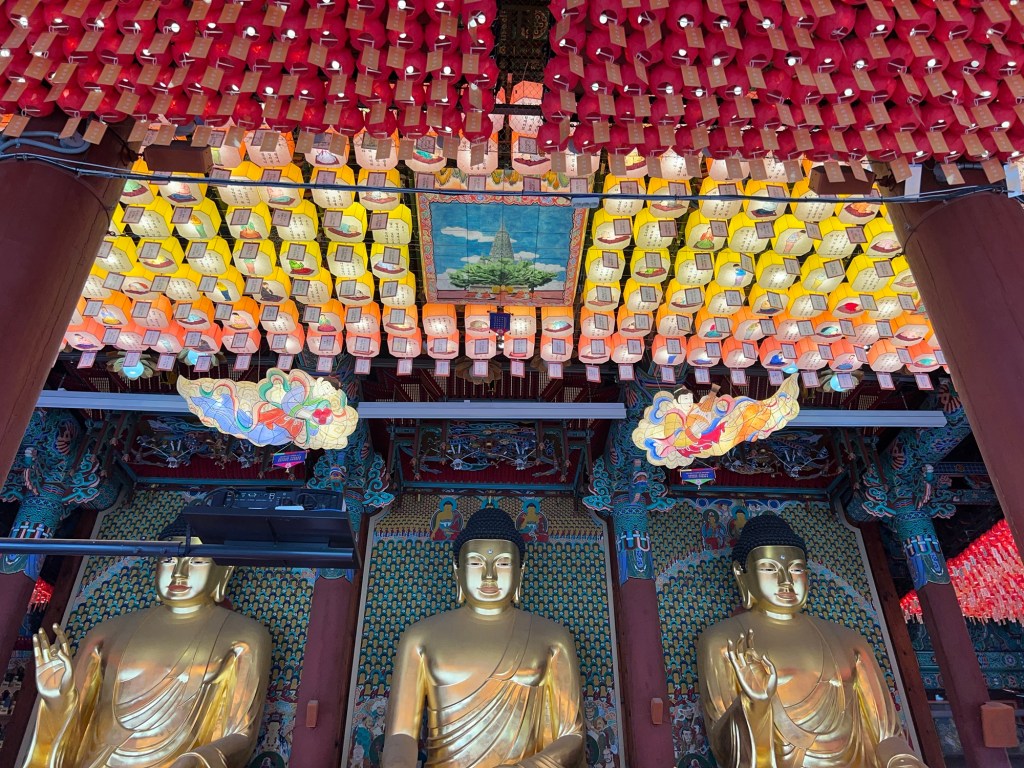
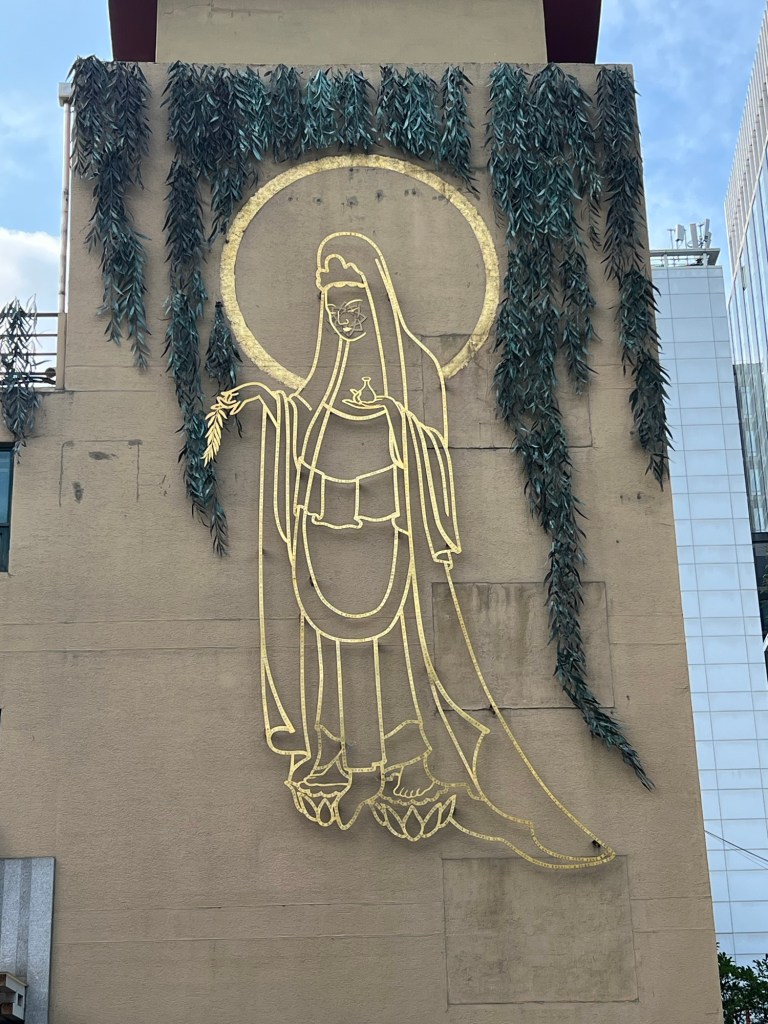
The temple is such an interesting place with the external areas cultivated with greenery and planting in and around the sculptures and temple buildings. There is clearly a love of nature and the colours and forms created really help to beautify what is already a magnificent array of temple buildings.
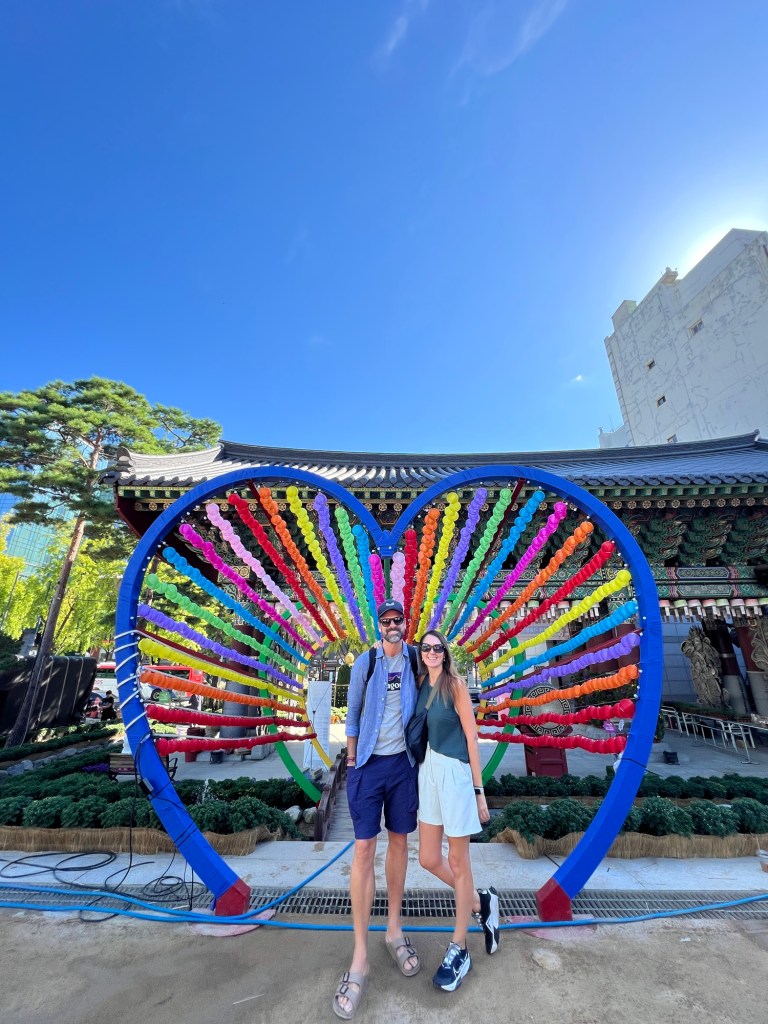
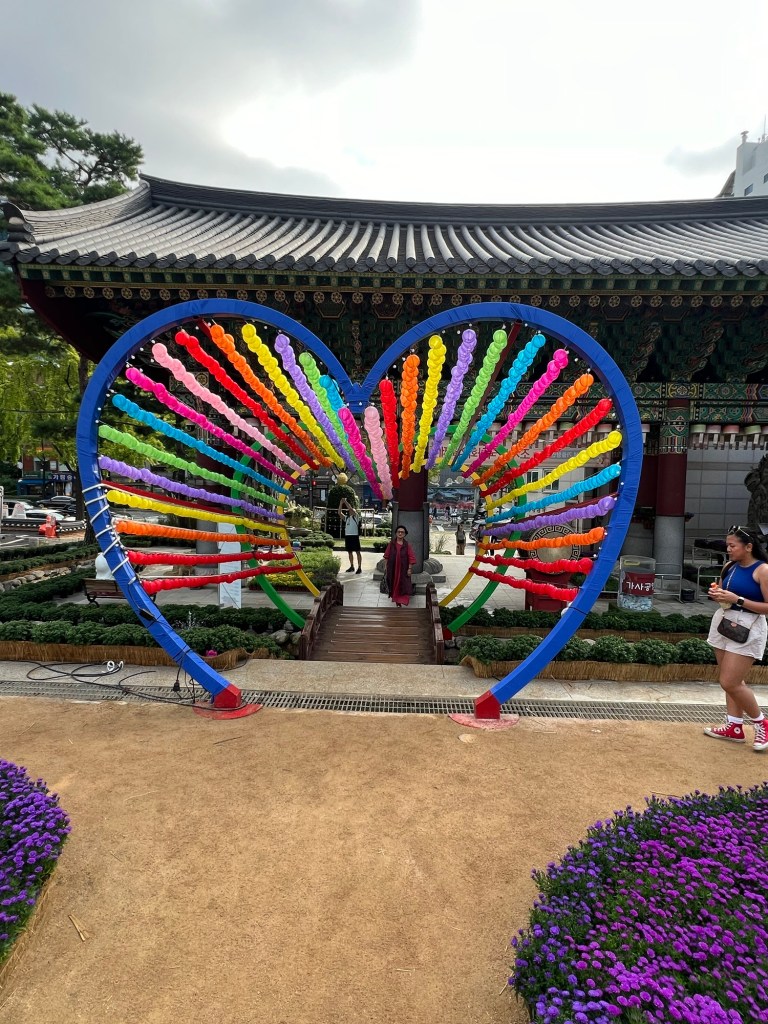
With the heart shaped colourful entrance it was too good an opportunity to pass up for a photo.
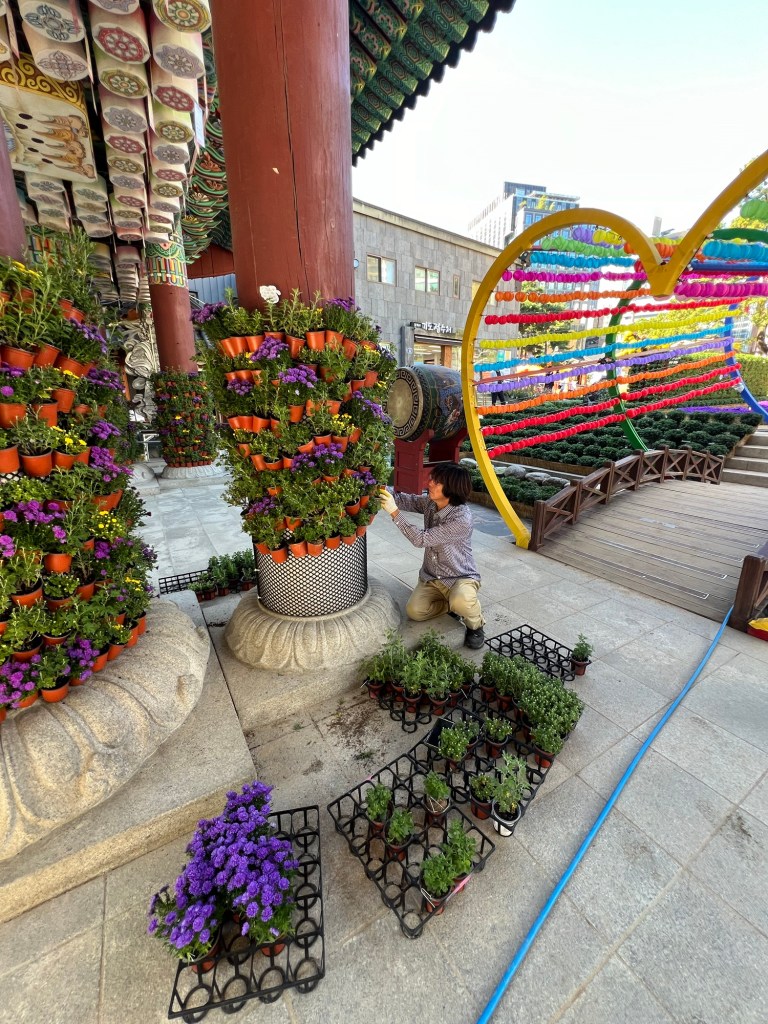
Throughout the 30mins or so we were there, a number of gardeners had planted and redesigned the entrance to the temple from the road.
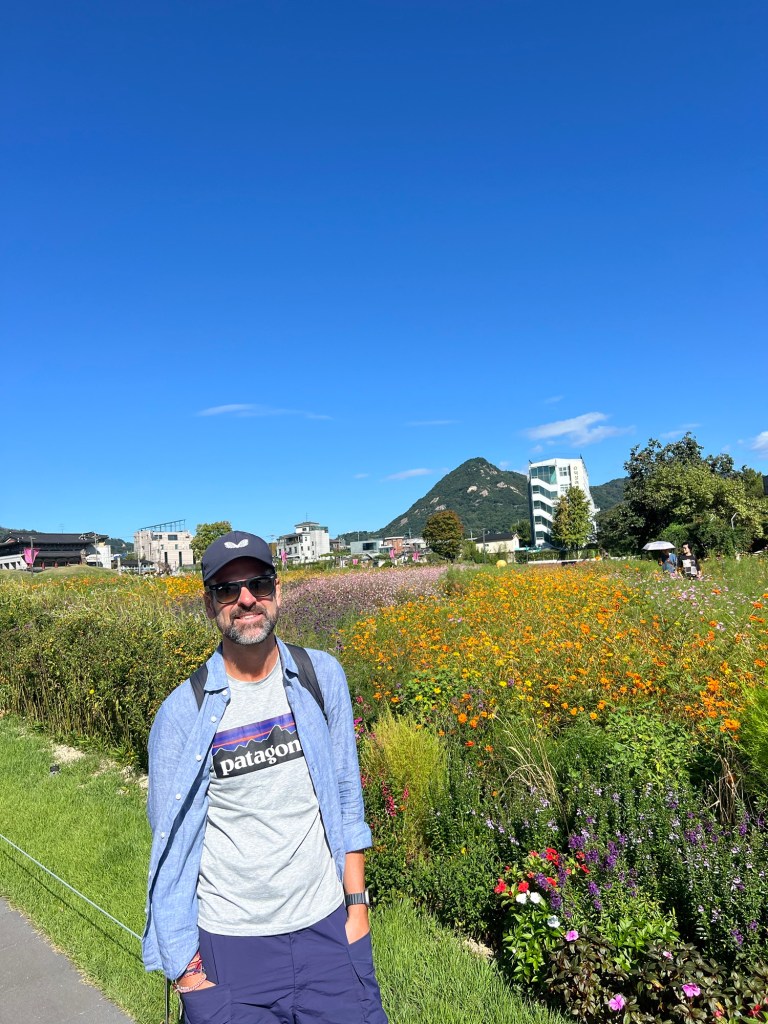
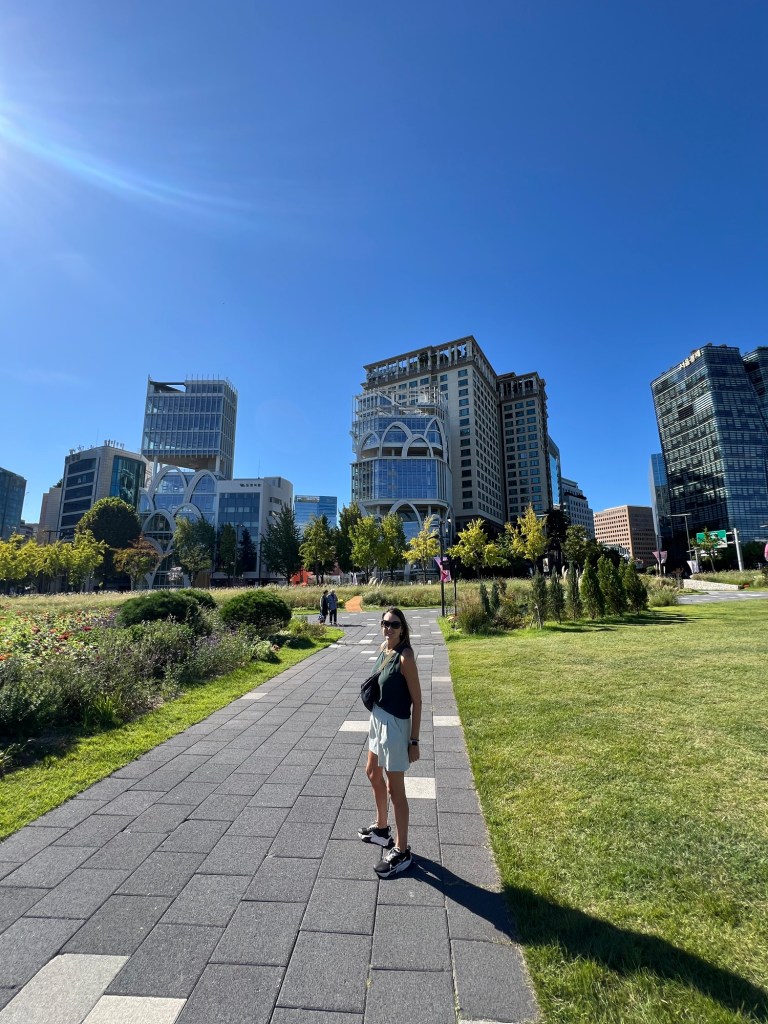
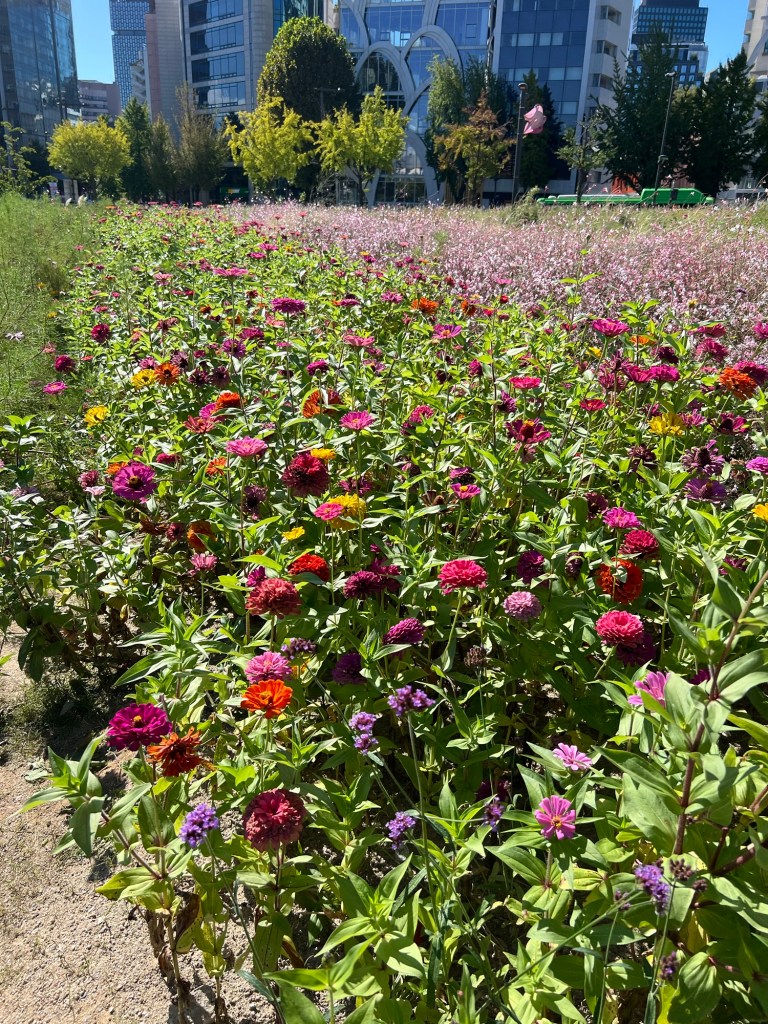
Leaving the temple, we made a detour to Open Songhyeon-dong Green plaza. This was a large field where natural wild plants have been encouraged to grow and small walkways created to enable people to enter the field and get up close with nature.
It’s such a clever but basic concept, which signifies one of the many ways that the South Koreans have chosen to give back to their fellow citizens and encourage harmony and unity.
What a lovely view
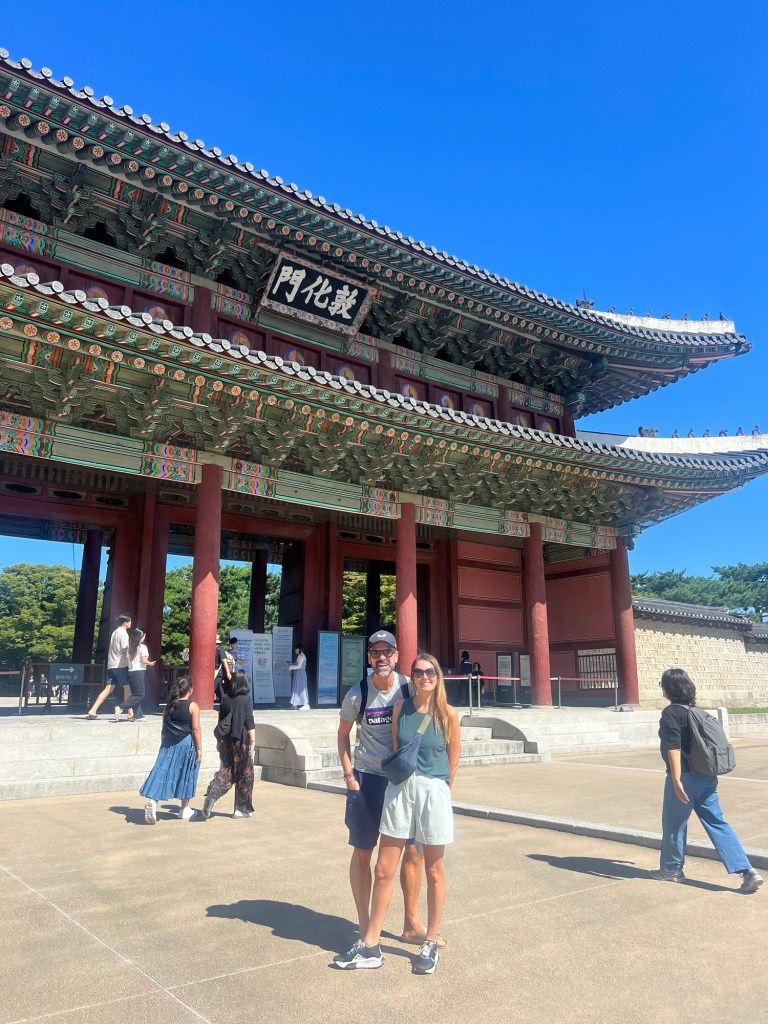
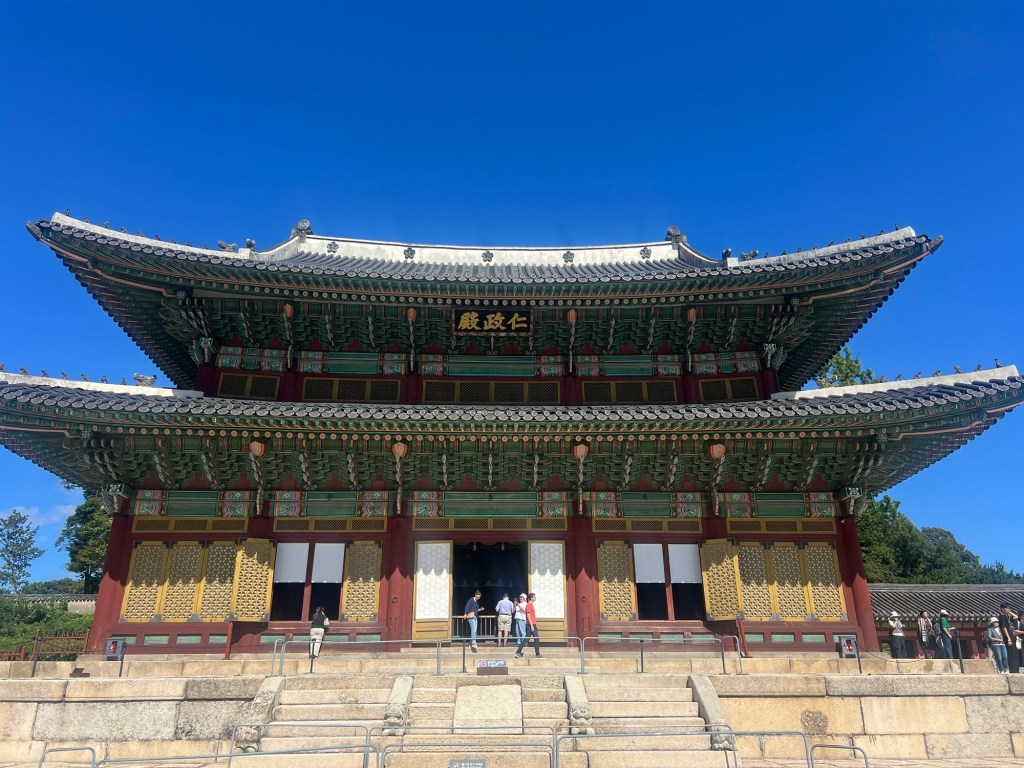
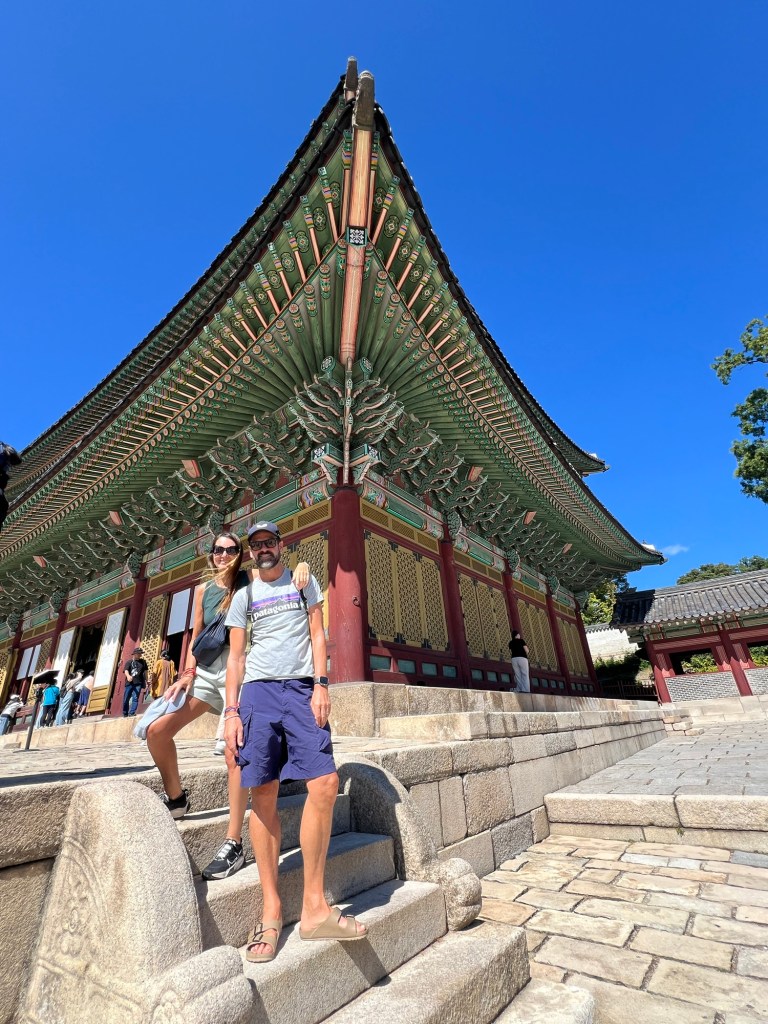
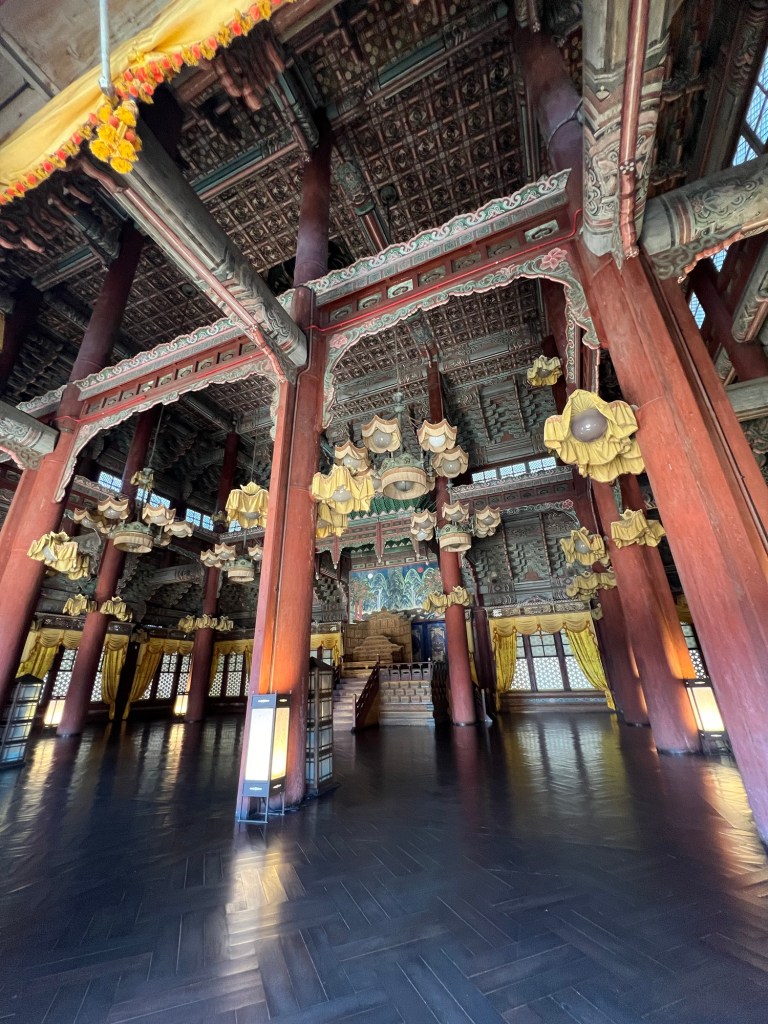
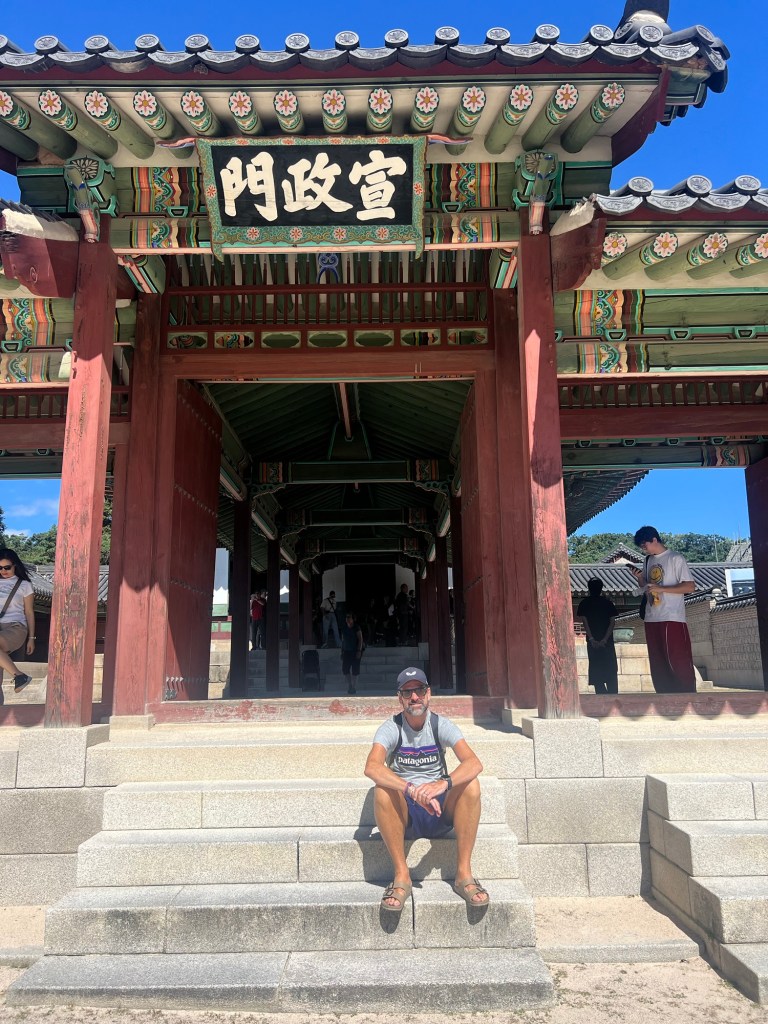
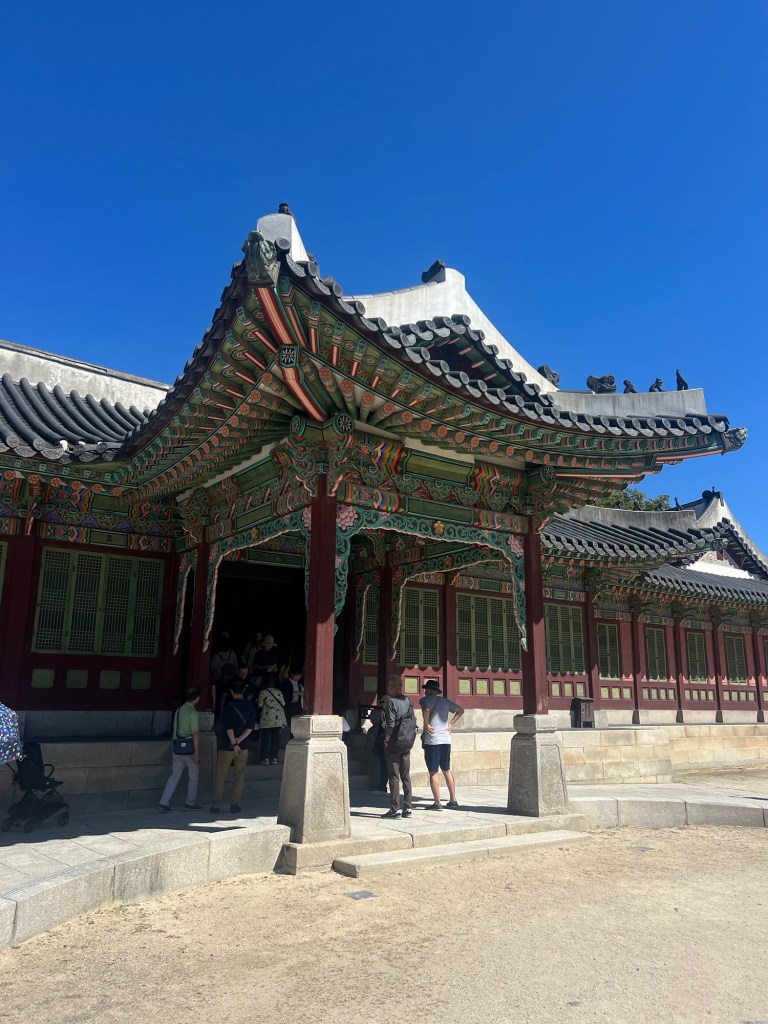
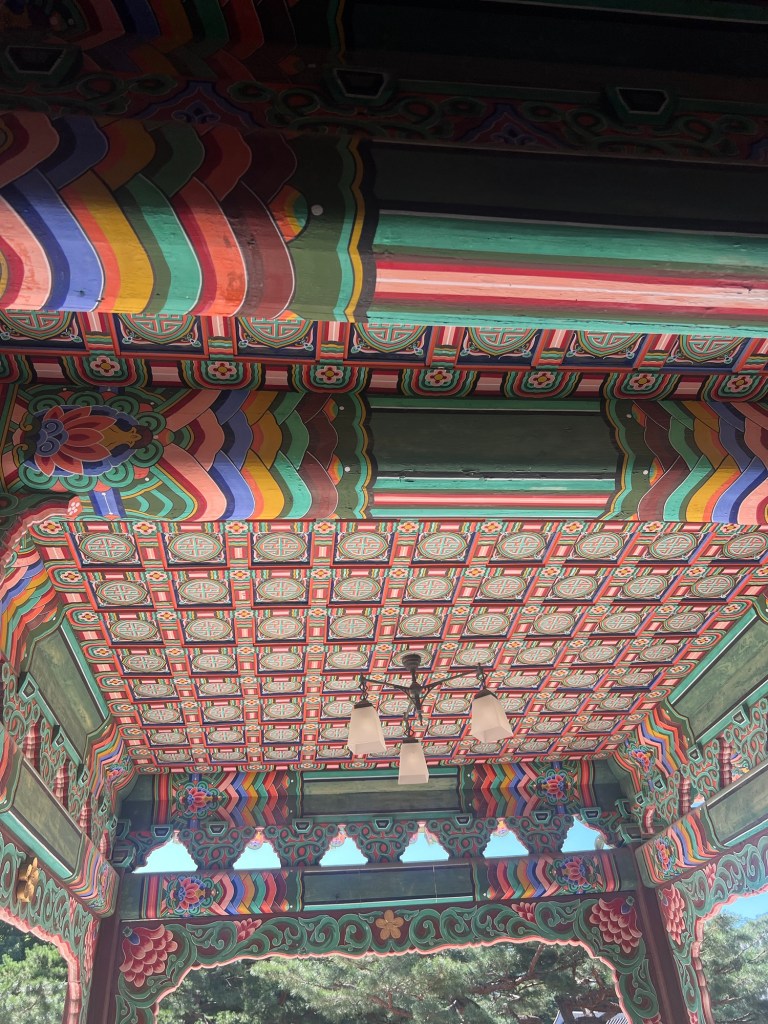
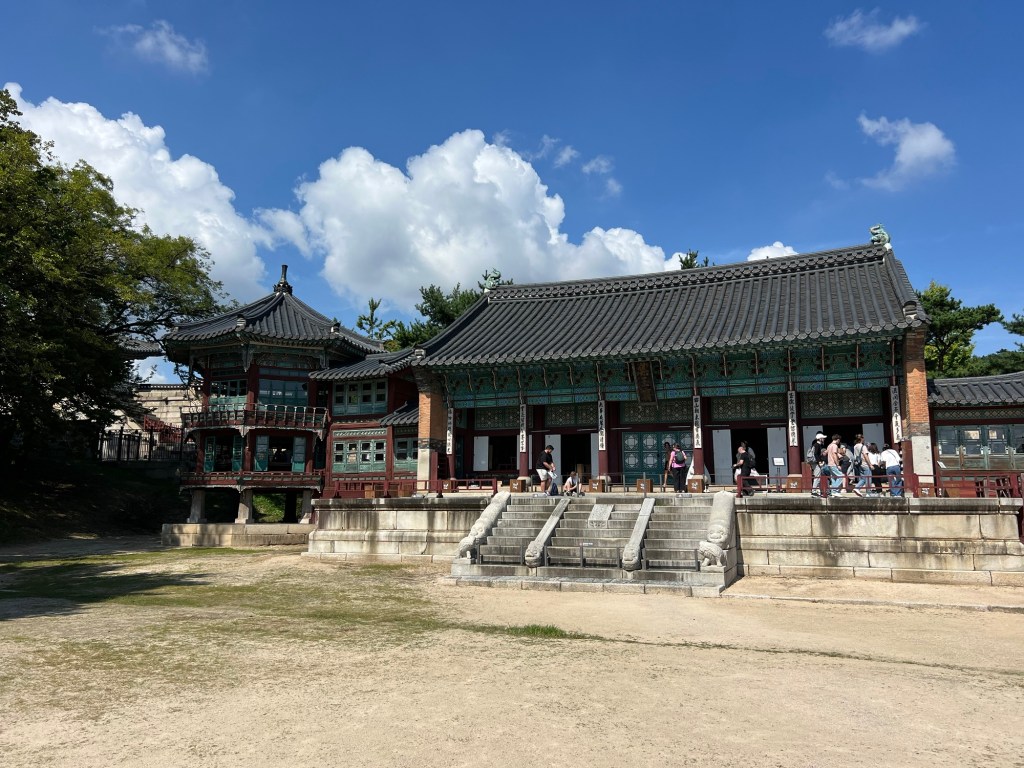
The first palace visit was to Changdeokgung, the palace of prospering virtue.
It is one of the Five Grand Palaces built by the kings of the Joaeon dynasty (1392–1897). As it is located east of Gyeongbokgung Palace it’s also referred to as the “East Palace”.
Changdeokgung was the most favored palace of many Joseon kings and retained many elements dating from the Three Kingdoms of Korea period that were not incorporated in the more contemporary Gyeongbokgung. One such element is the fact that the buildings of Changdeokgung blend with the natural topography of the site, instead of imposing themselves upon it.
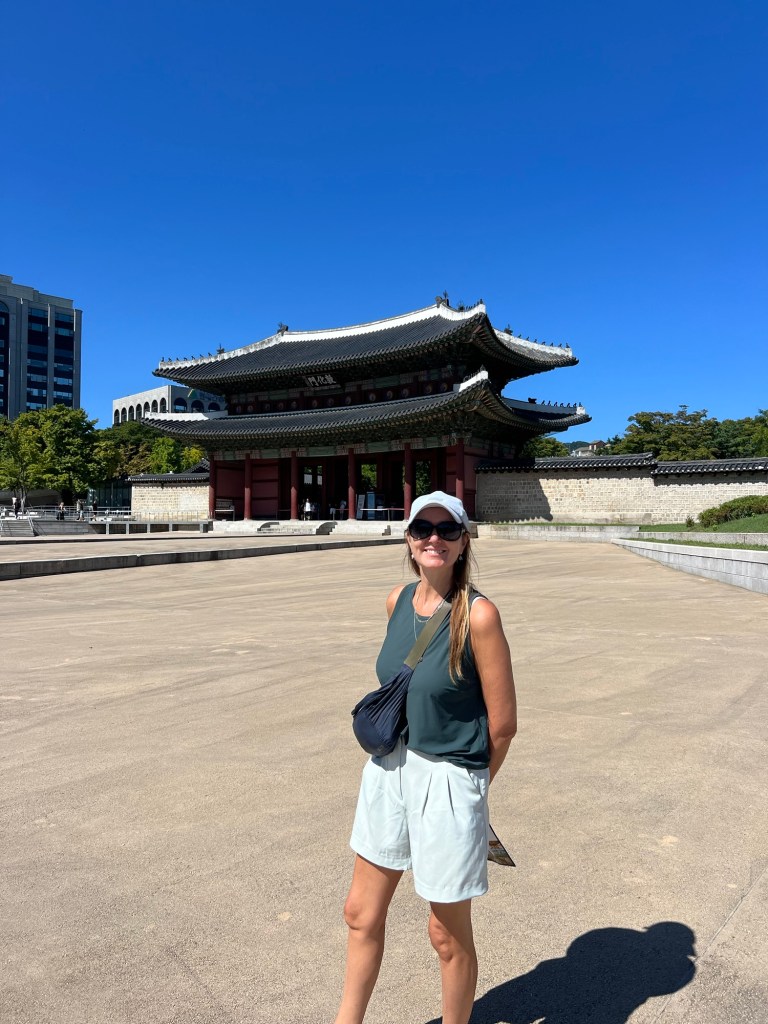
Next stop was ChanggyeonggungPalace, located right next door to Changdeokgung Palace. Like its neighbour it sits in wonderful grounds and has been restored over the last 20yrs to its originally status and splendour.
With the heat of the day getting ever stronger and temperatures exceeding 32c, we were keen to get into shade wherever possible.
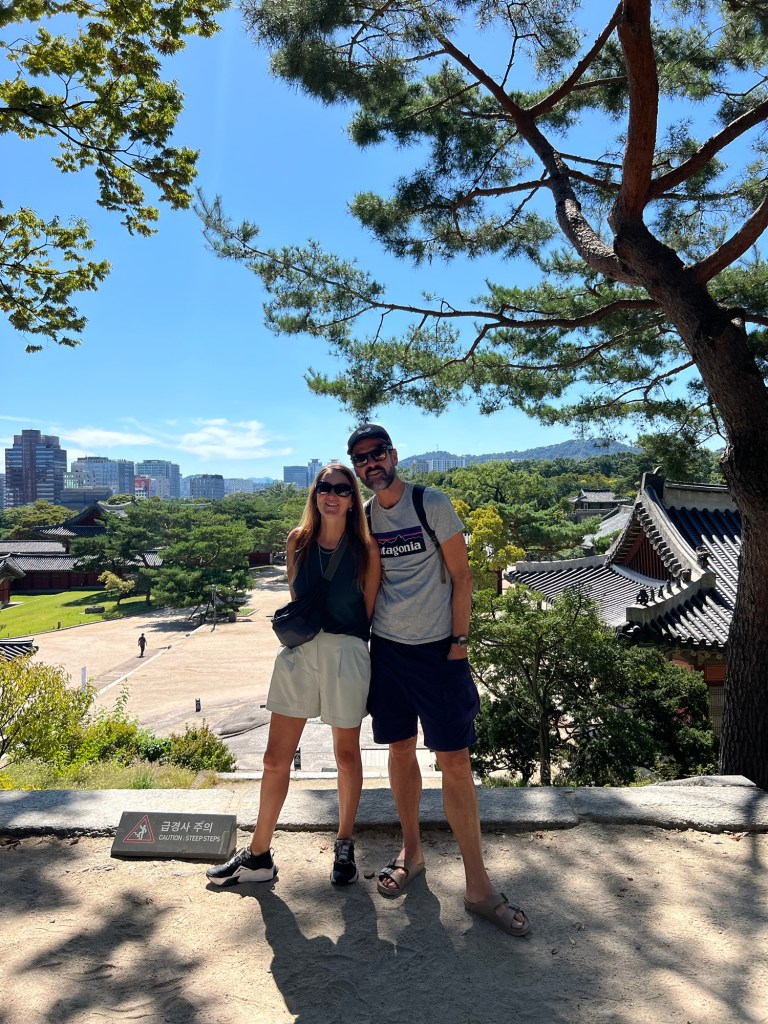
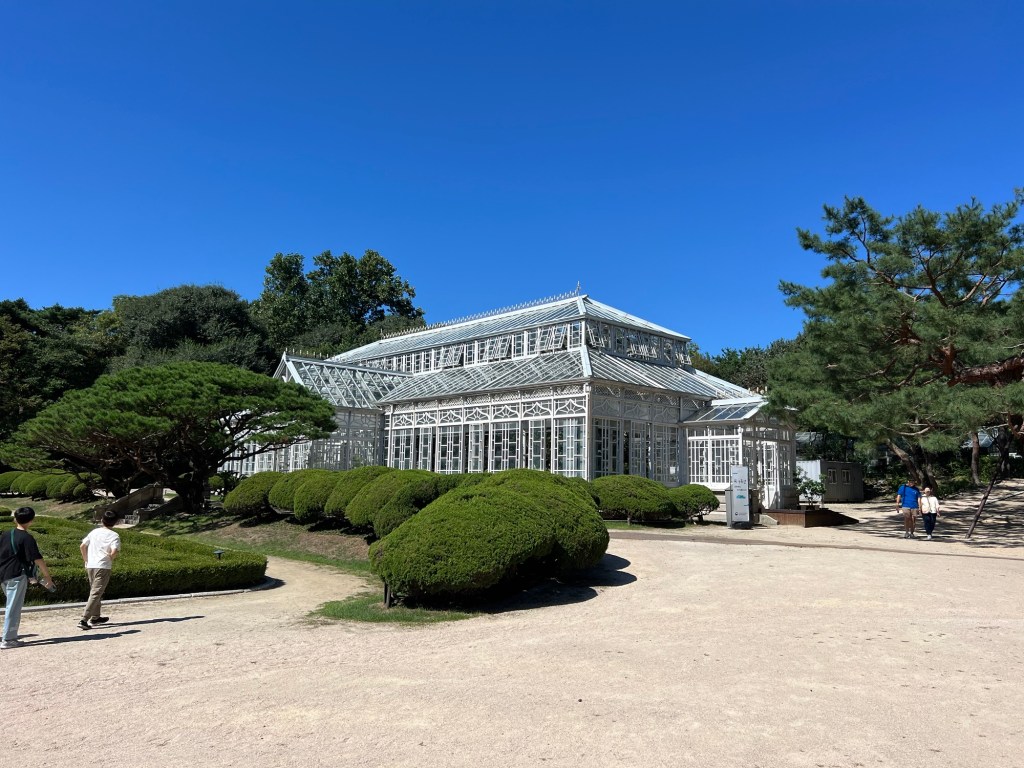
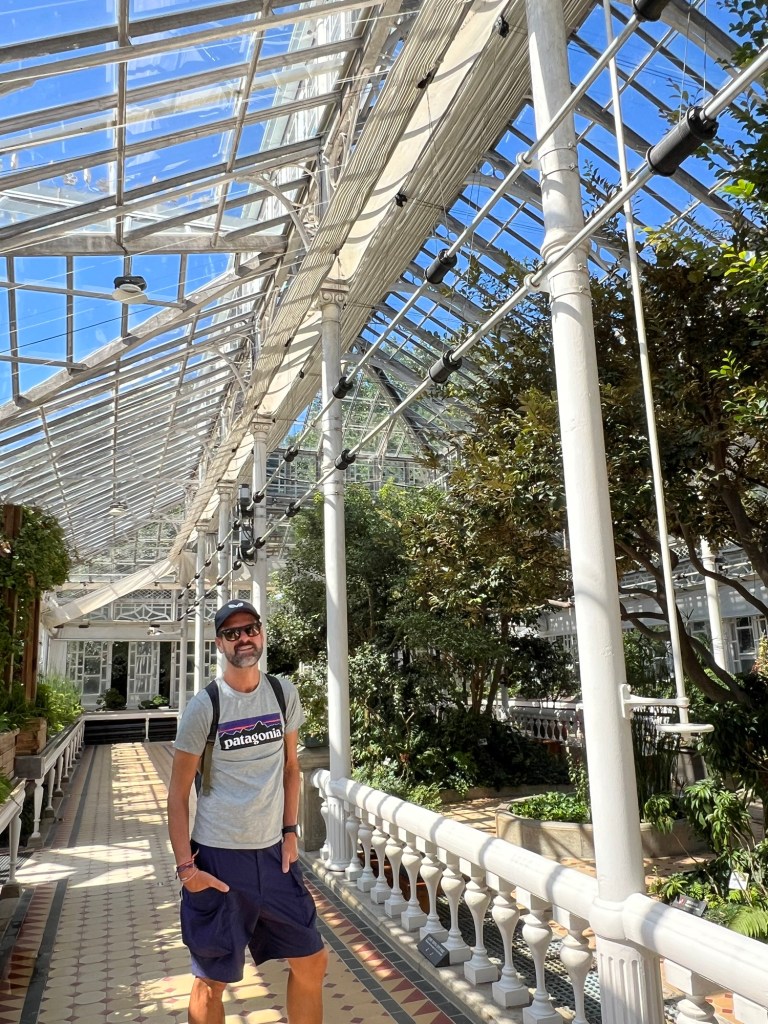
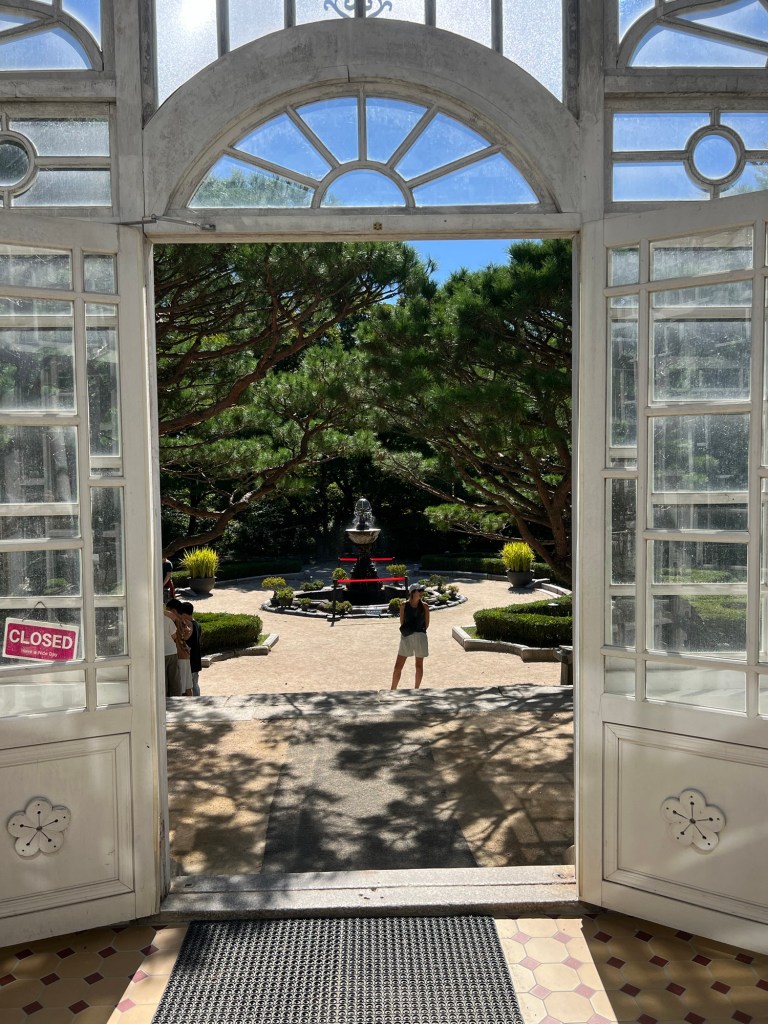
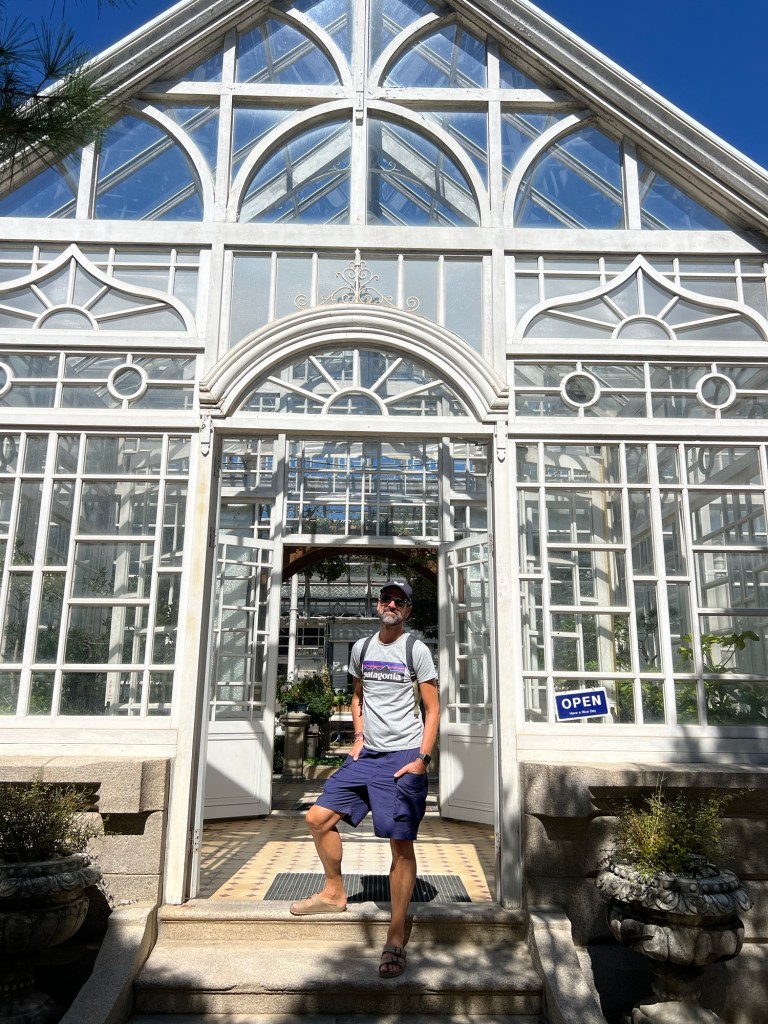
Fortunately the lake grounds afforded us this much needed shade and we also came across a wonderful summer garden palace, with a Victorian influenced styling.
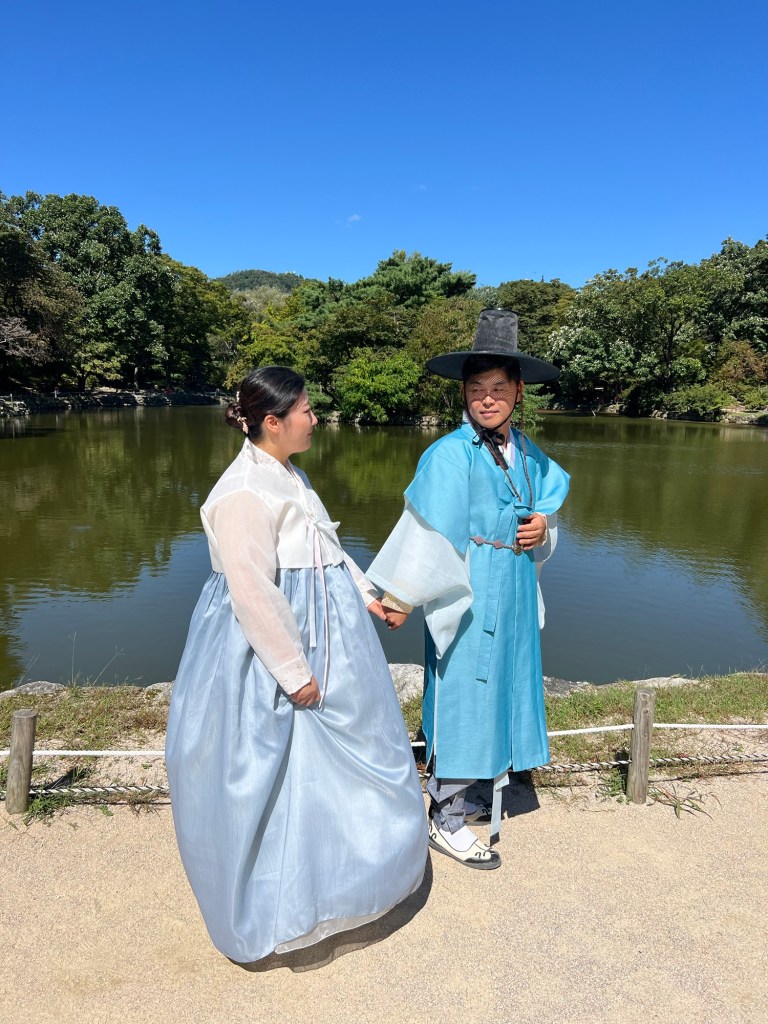
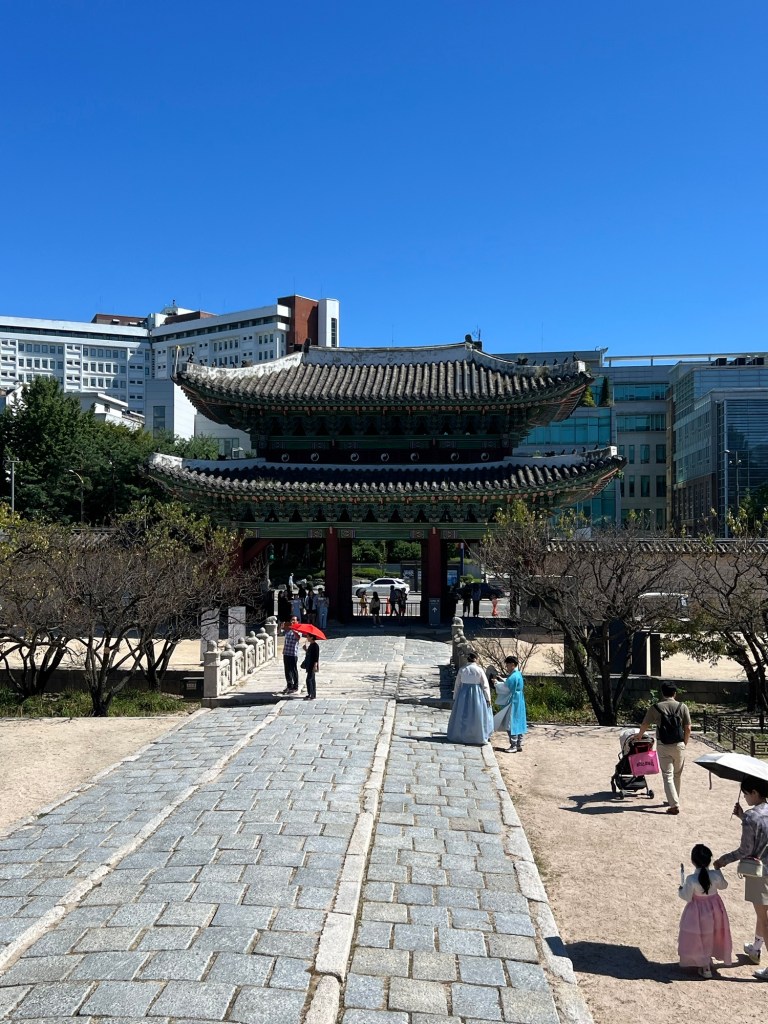
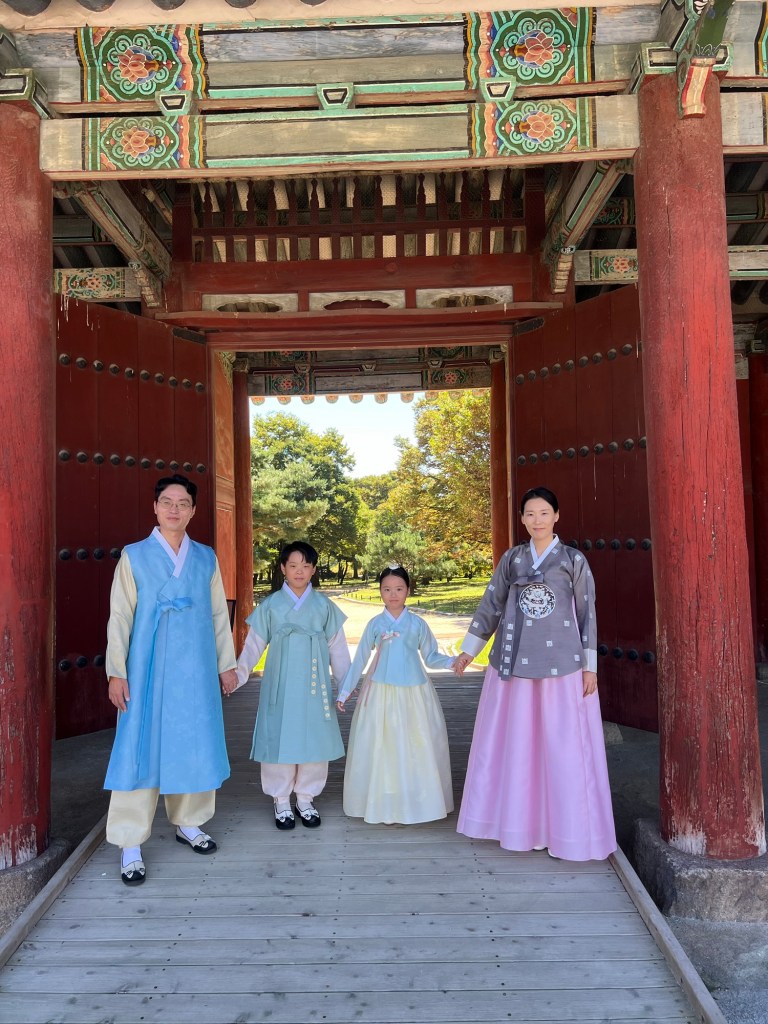
More locals in traditional Korean dress Crystal Palace in Seoul! Two palaces down Local family in clothes designed by the lady’s mother
We then made our way to Jongmyo Shrine, the oldest royal Confucian shrine in Korea. We had a pleasant walk around the grounds and popped into a couple of the buildings to enjoy the artefacts that remain in the temple buildings.
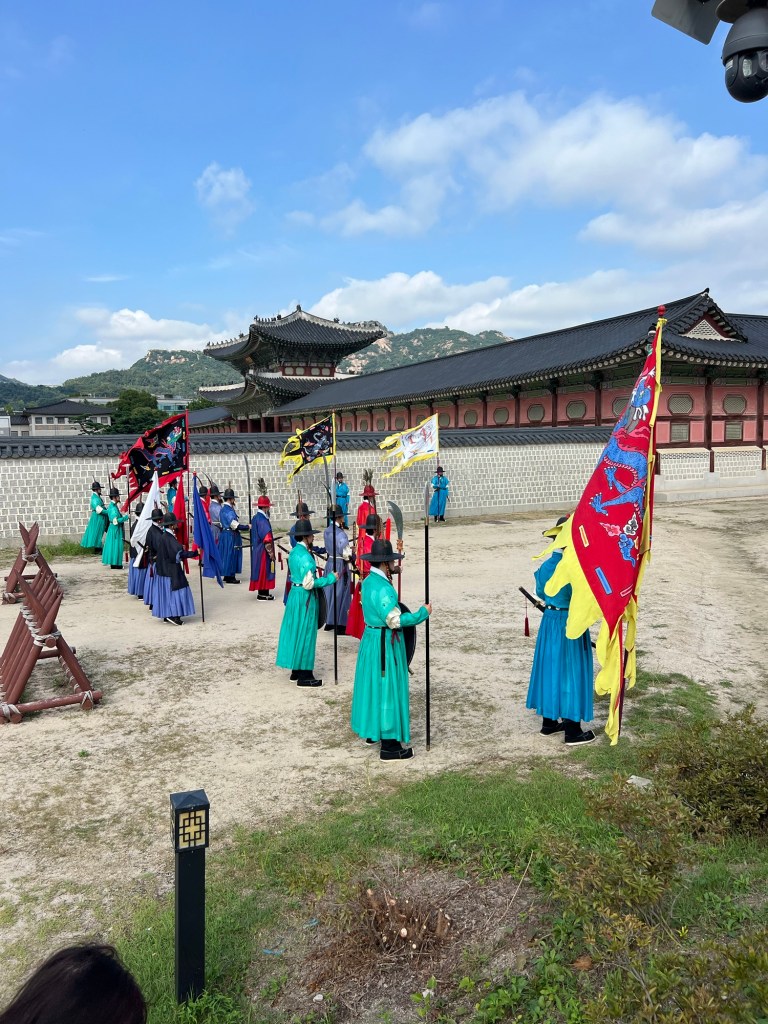
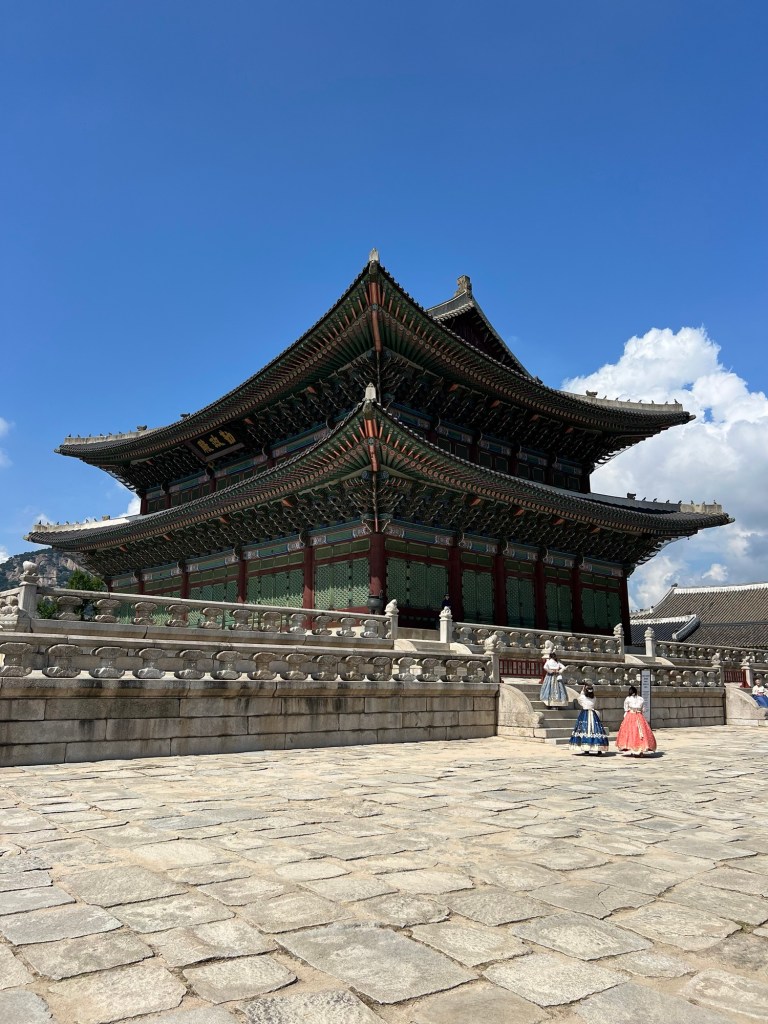
With the step count for the day already close to 15,000, we walked across the city to Gyeongbokgung Palace, the largest of the big 5, and the most revered. This was a return visit for Andy and again we timed it well to see the changing of the guard.
Gyeongbokgung Palace Changing of the guard Part II
It’s clear to us that Gyeongbokgung Palace is the most beautiful and on scale is the largest of all the five palaces.
Our plan was then to head to Deoksugung Palace, however the queues were proving too long, so we made a detour for a late lunch and a rest. We found a pleasant restaurant and tucked into a tuna salad sandwich with all the trimmings. Not very Korean we admit but hunger pains took over.
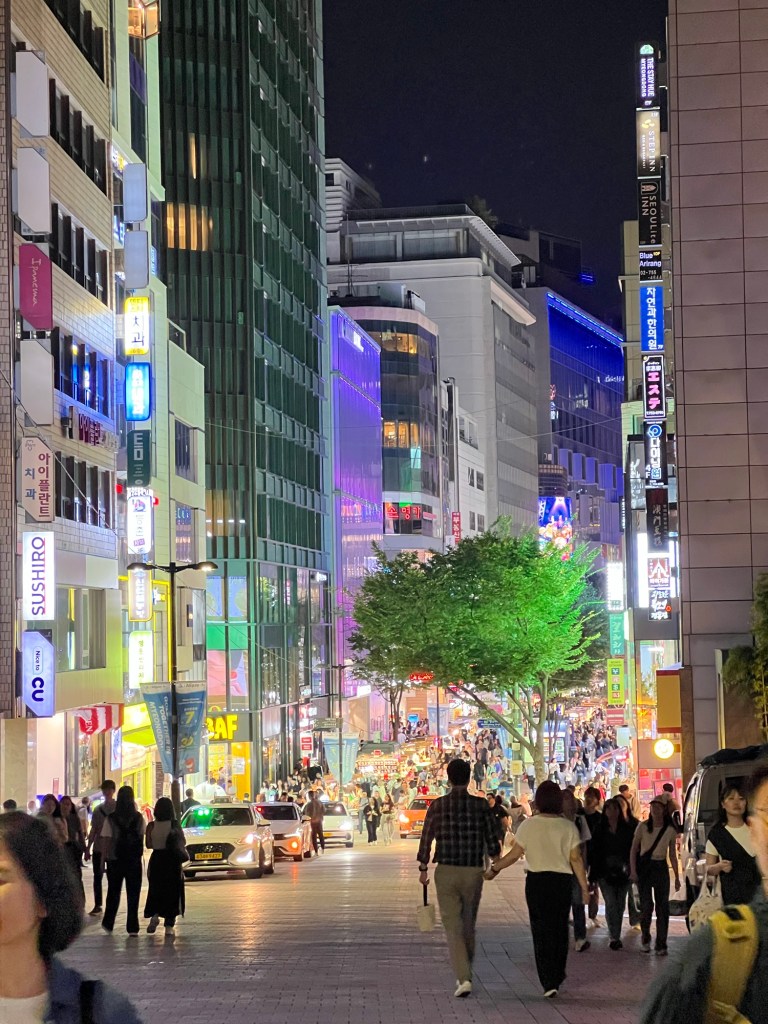
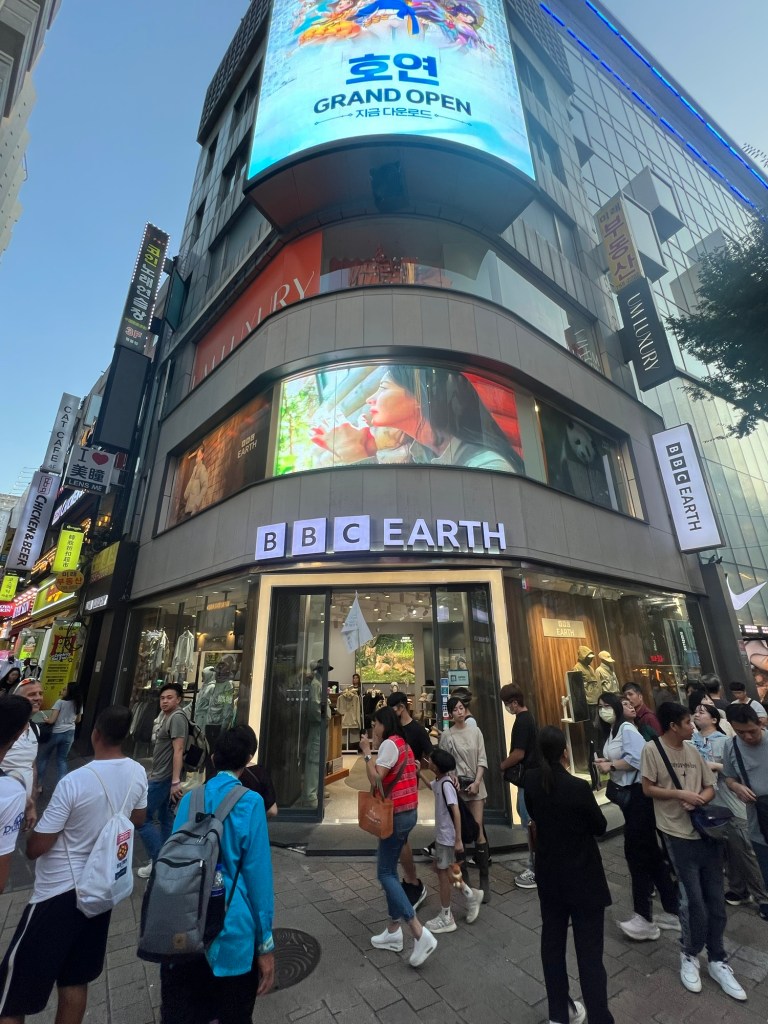
Heading down to Myeongdong we then wandered the streets and experienced the sights and sounds of this bustling shopping area.
Myeongdong is Korea’s most famous shopping and fashion district. Shoppers can enjoy ‘total’ shopping in a pedestrian-friendly car free area.
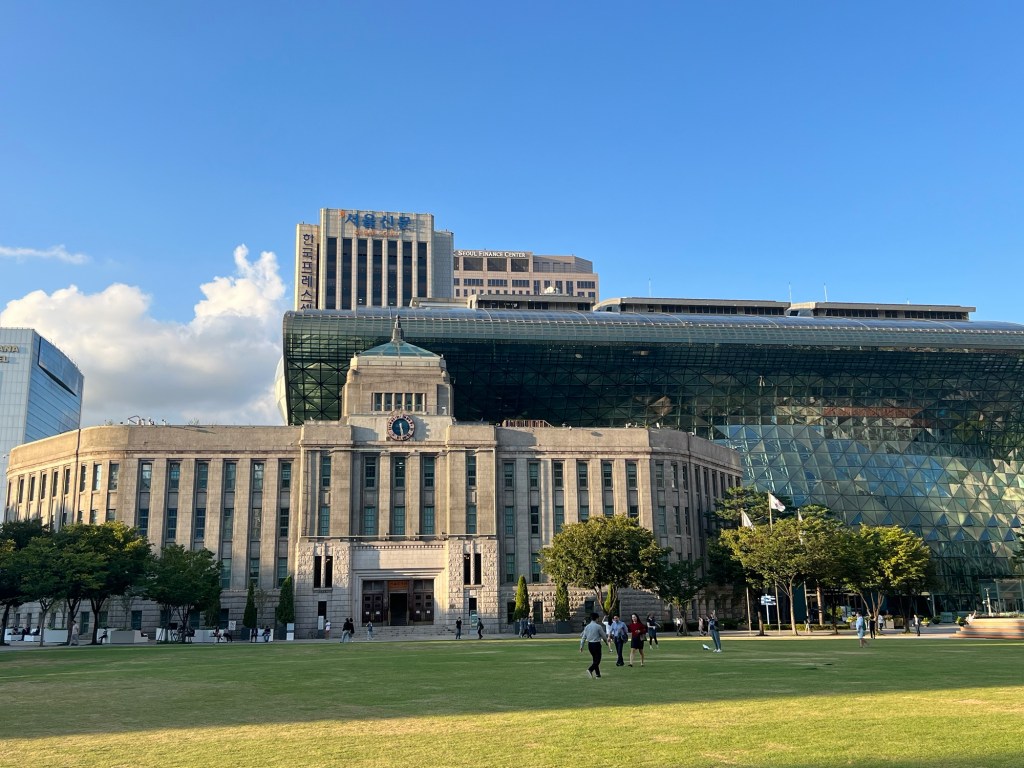
On the way we passed Seoul’s city hall, which was completed redeveloped in 2013 and extended to include a huge glass and steel extension to the rear. It is now a major architectural attraction of the city with a modern reinterpretation of traditional Korean design; the cresting wave provides shade (like the curved eaves found on palaces and temple roofs in Korea) over the handsome old City Hall.
Down town Myeongdong with department stores a plenty
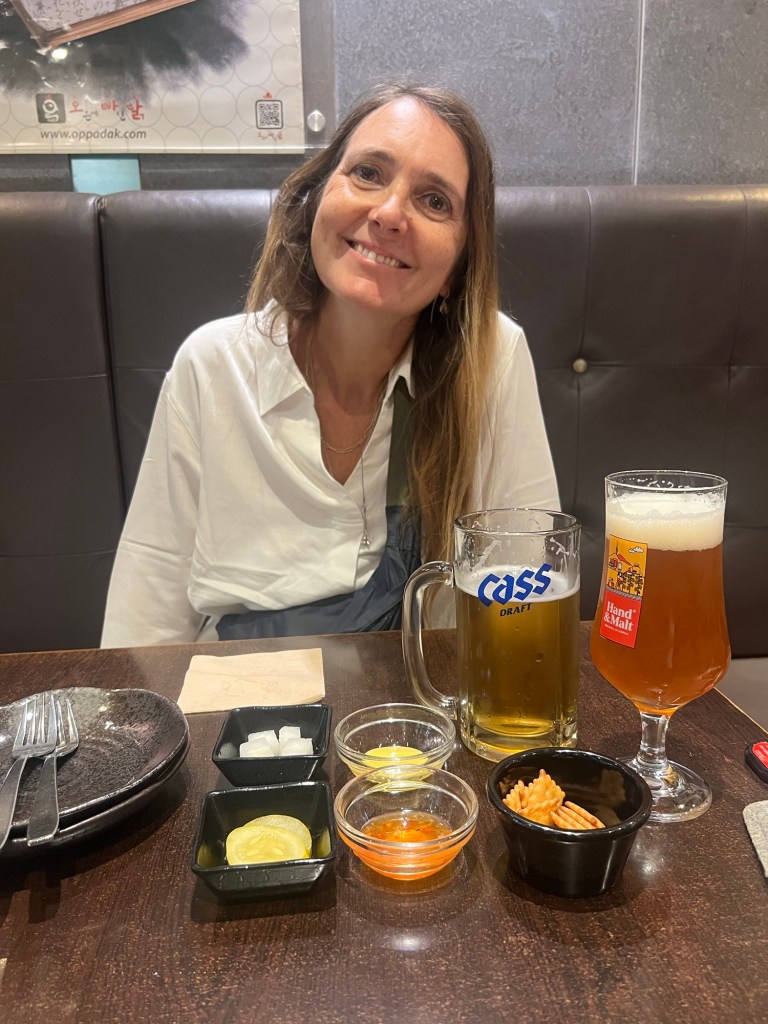
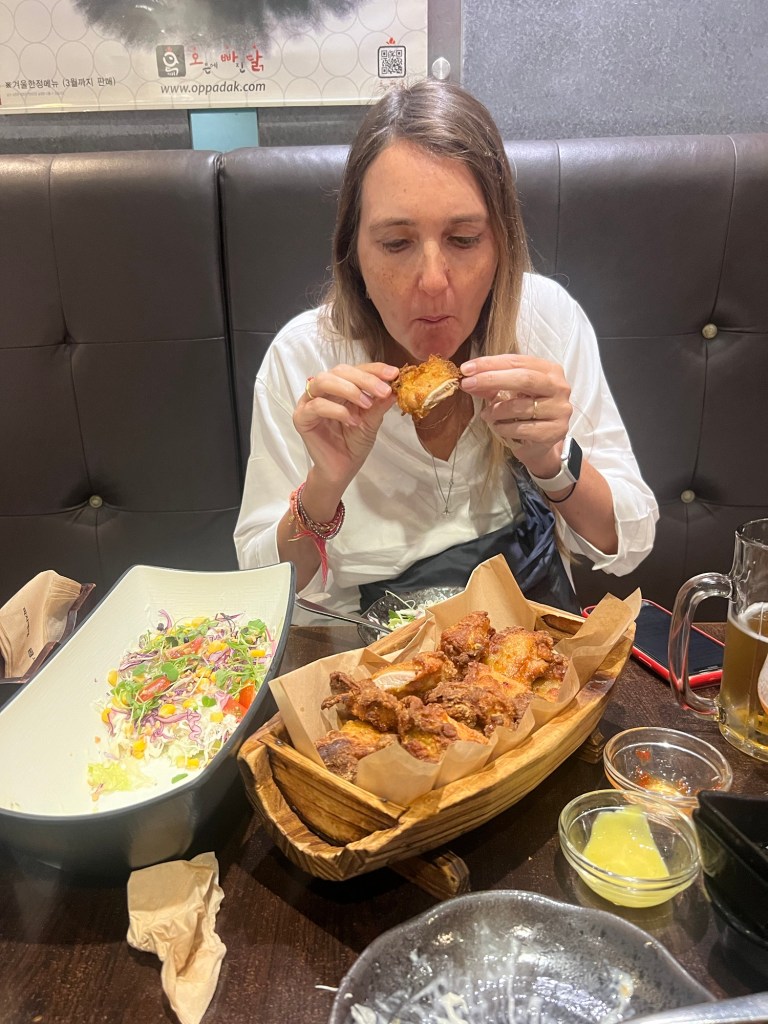
This evening we reverted to the culinary delights of Korea with BBQ chicken at OPPADAK in the centre of Myeongdong restaurant area. The place specialised in chicken in all its various forms and when the food arrived it could have fed a table of six, never mind just the two of us. Fortunately we were both hungry and determined not to leave anything.
We had a selection of starters with our beers, before the chicken and salad arrived and then it was a case of digging in and enjoying the delicious tasting BBQ and fried chicken. After a couple of breaks to make room for more chicken, we managed to finish it off.
It proved a very enjoyable meal and definitely the most filling we have had since arriving in Seoul. We then decided to walk it off with a wander around the shopping area until 10.30pm before returning to the hotel and some much needed rest after another day of walking that took us north of 25,000 steps/20k.
Tomorrow we are taking in a few of the museums and the other night markets as well as a return to Gangnam in the evening to experience the bar and restaurant scene.
We were back on the walking tour front and I’m pleased to report Michelle had recovered sufficiently from her cold and sore throat to join me down in Gangnam.
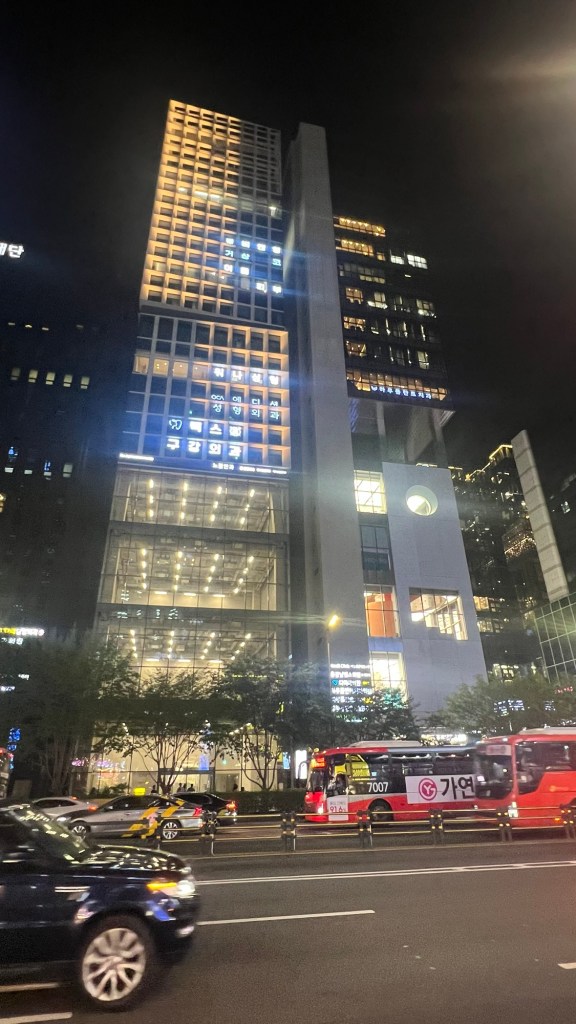
Gangnam tube station
We were guided by Marko, from Montenegro, formerly of New York and now residing in Seoul. He proved to be an excellent leader and was quick to highlight the virtues of life in this amazing city.
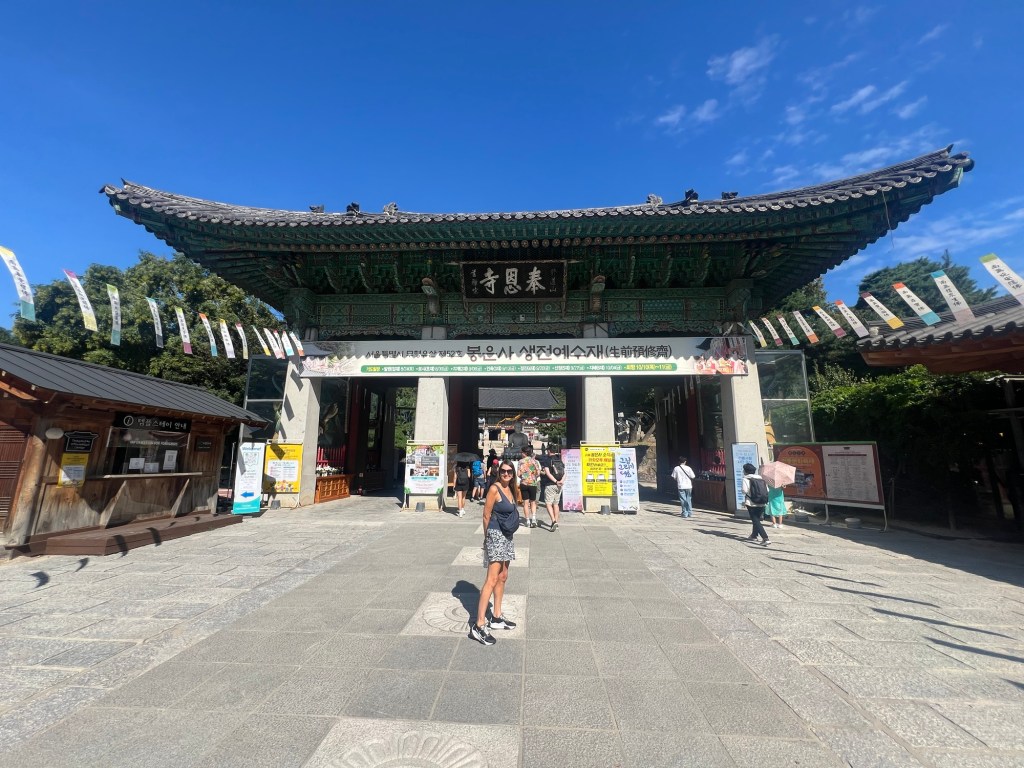
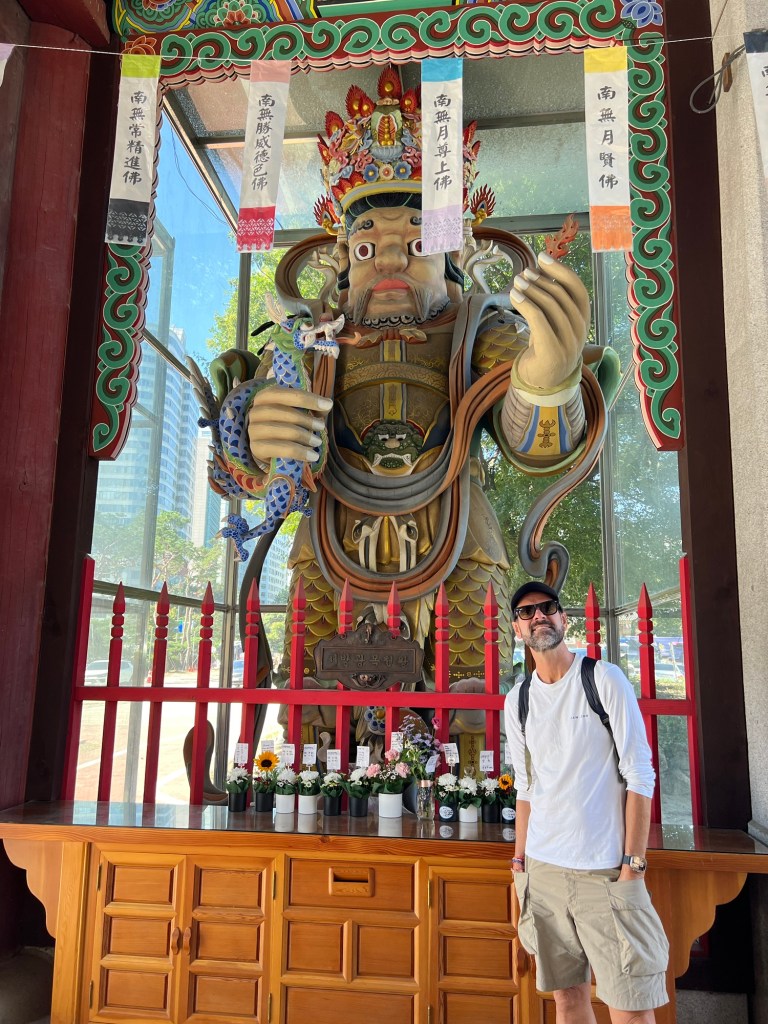
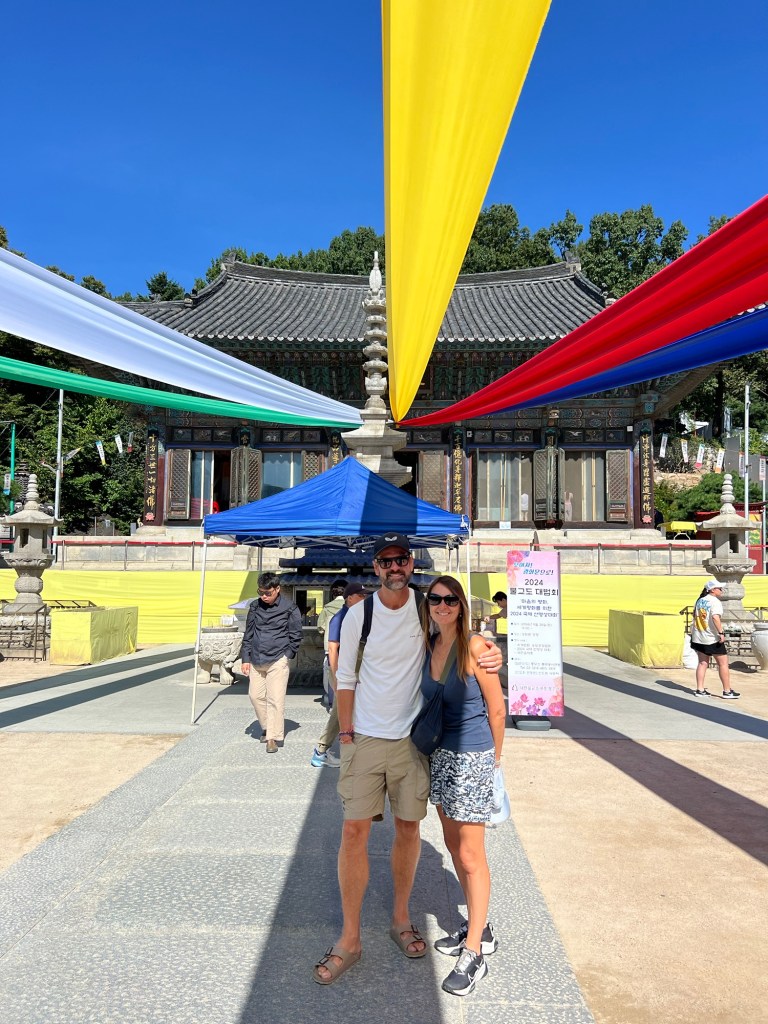
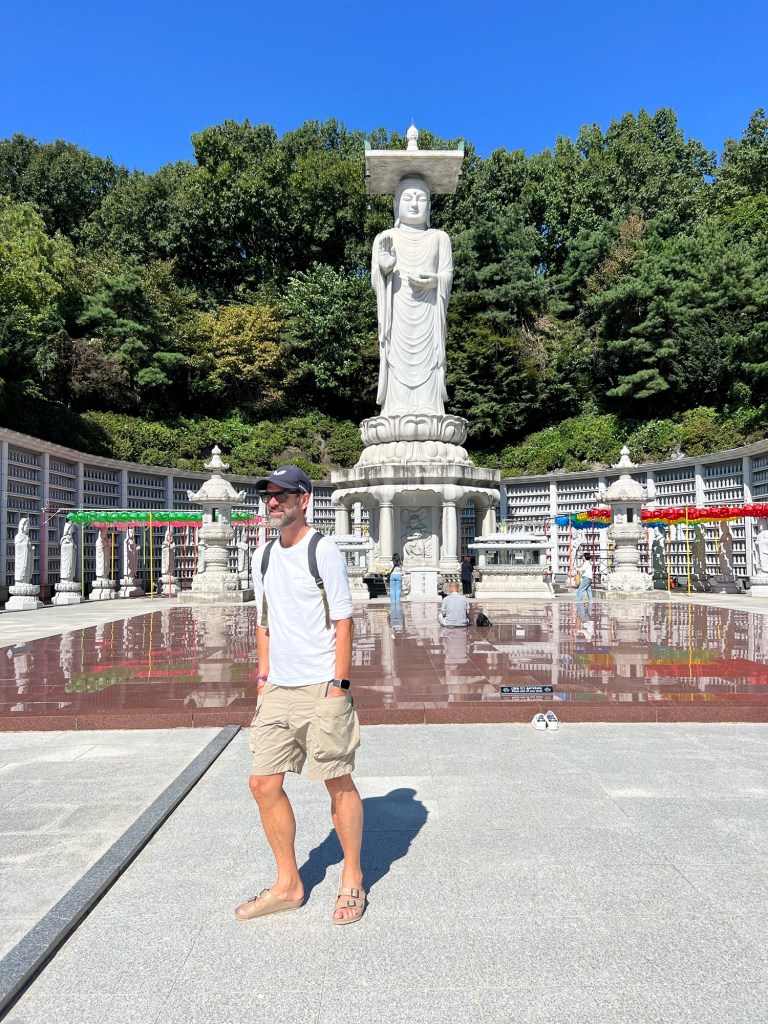
Our first stop was Bongeunsa Temple, a serene Buddhist retreat from the urban hustle of Gangnam. The temple is known for its impressive statue of Maitaya Buddha along with the beautiful garden grounds.
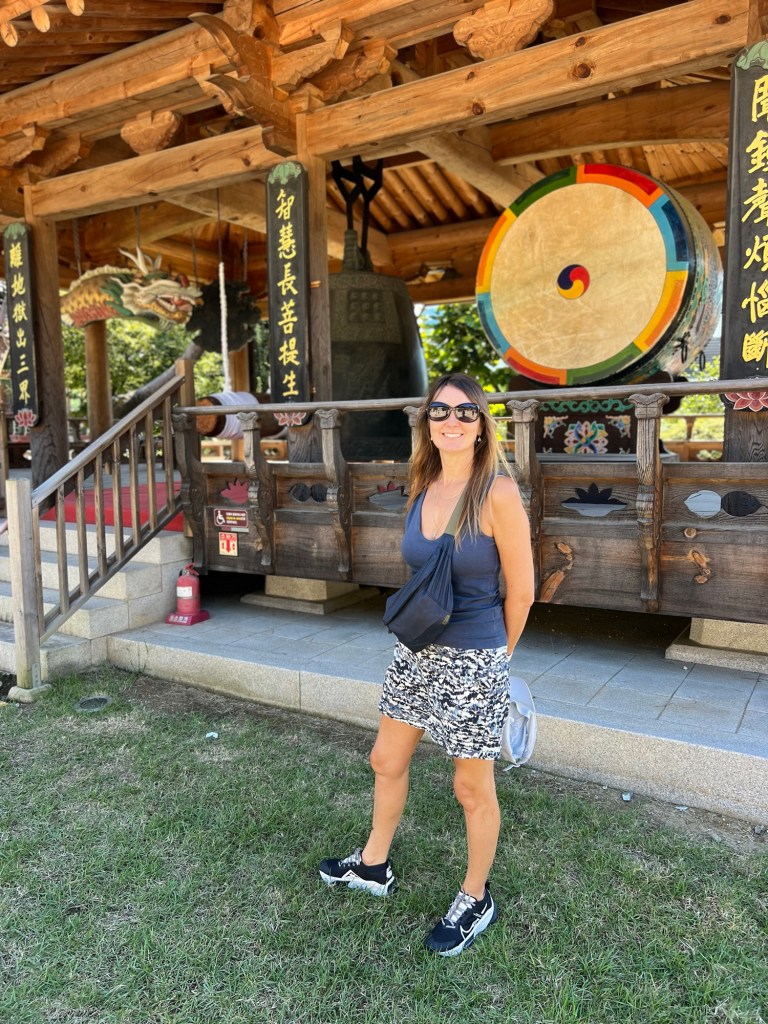
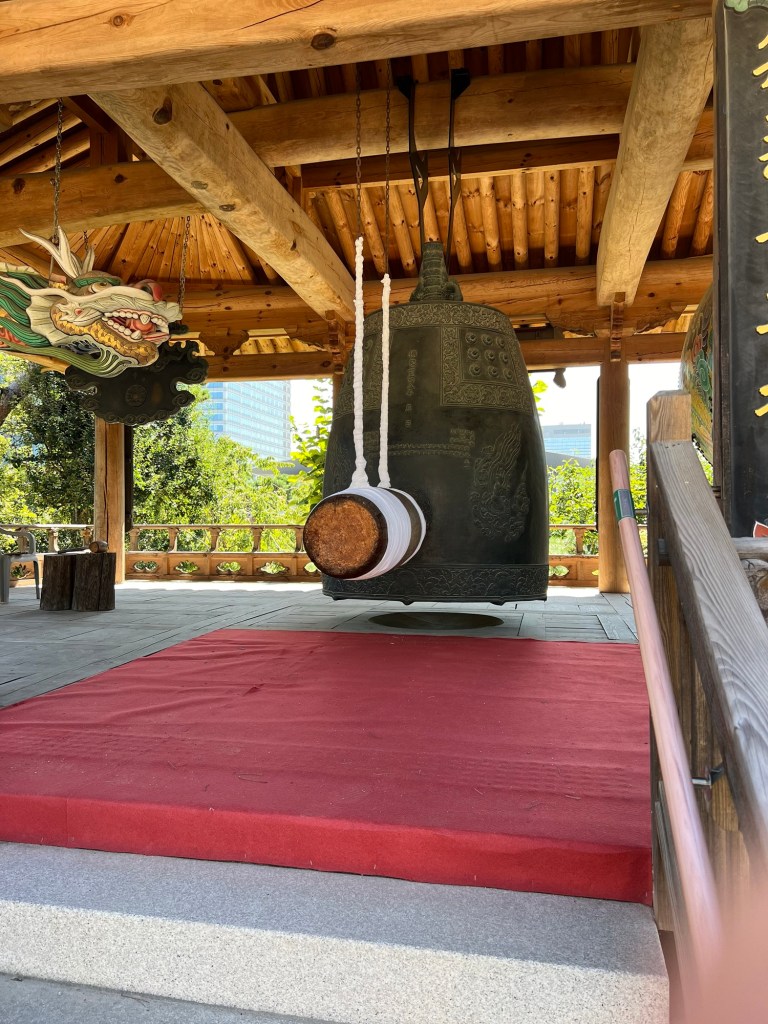
Entrance to Bongeunsa Temple Demons keeping out evil spirits at the temple gates Colourful temple grounds We witnessed Buddhist preaching Maitreya Buddha, at 20m it’s the tallest in S Korea Bell tower to message worshippers The temple bell
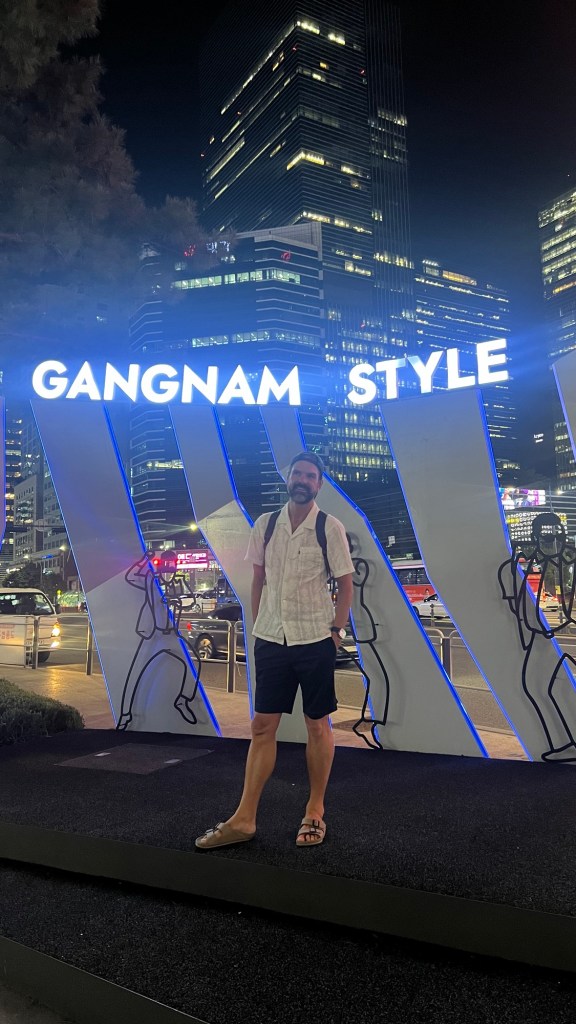
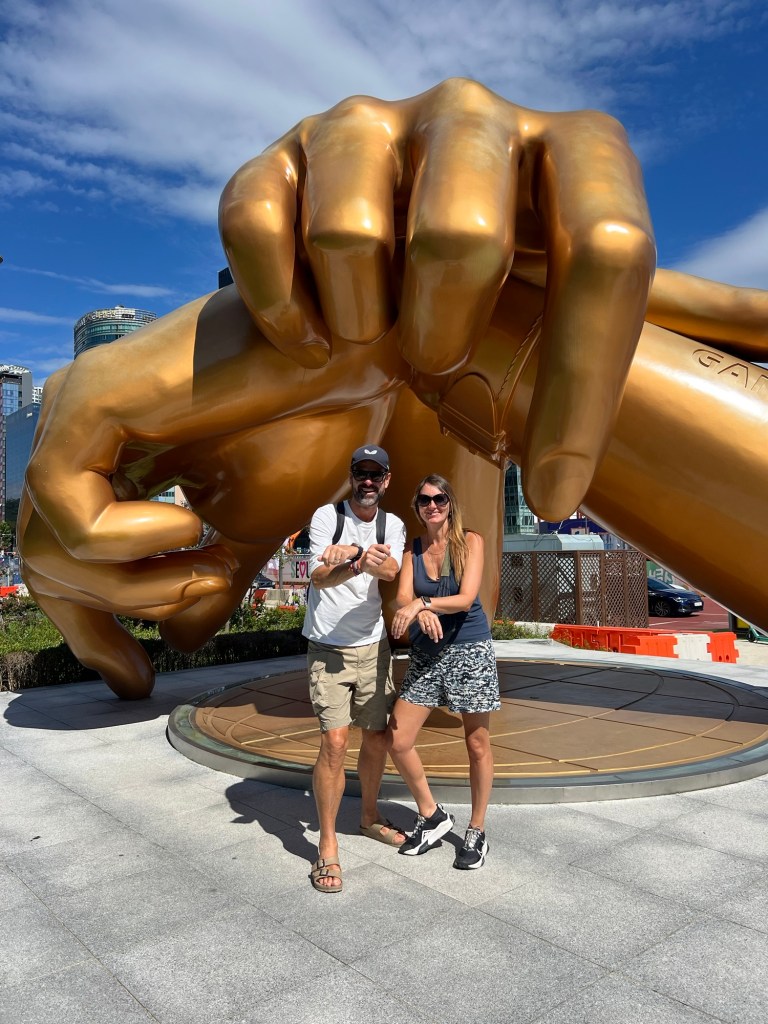
From the quiet and serenity of the Buddhist temple we then went to the infamous Gangnam Style statue. It’s located near the COEX mall, and pays tribute to Psy’s global hit ‘Gangnam Style’.
It proved to be a great photo opportunity and where we acted out the Gangnam dance for comedic effect…The giant sculpture has the infamous dance pose that swept the world!!
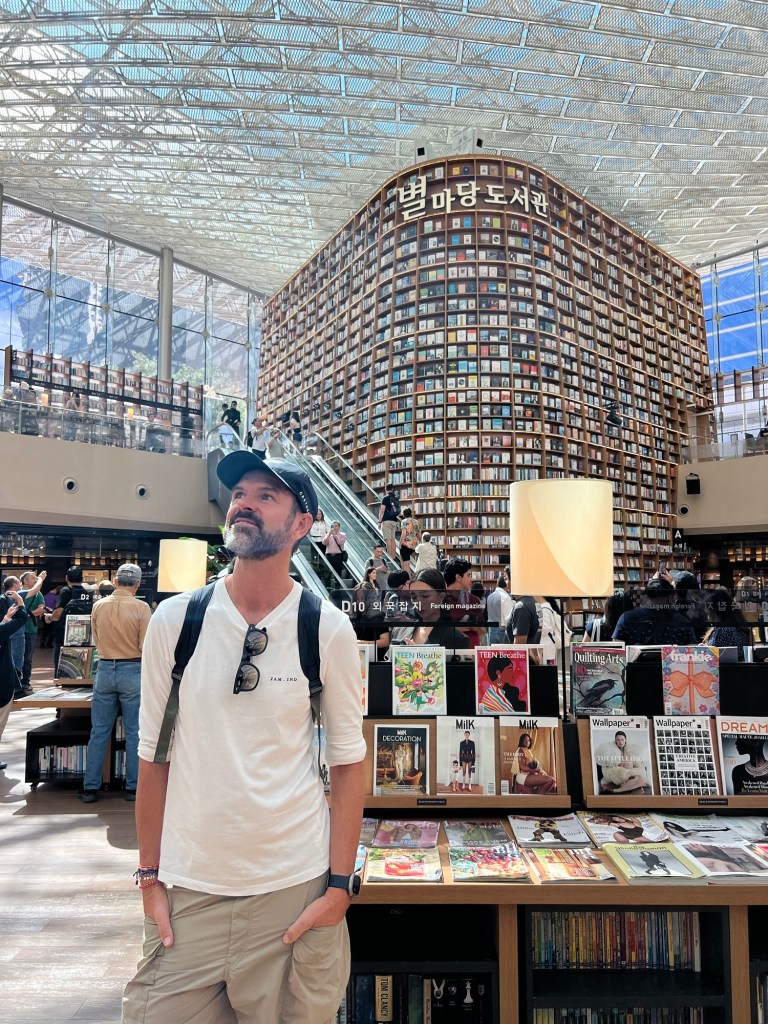
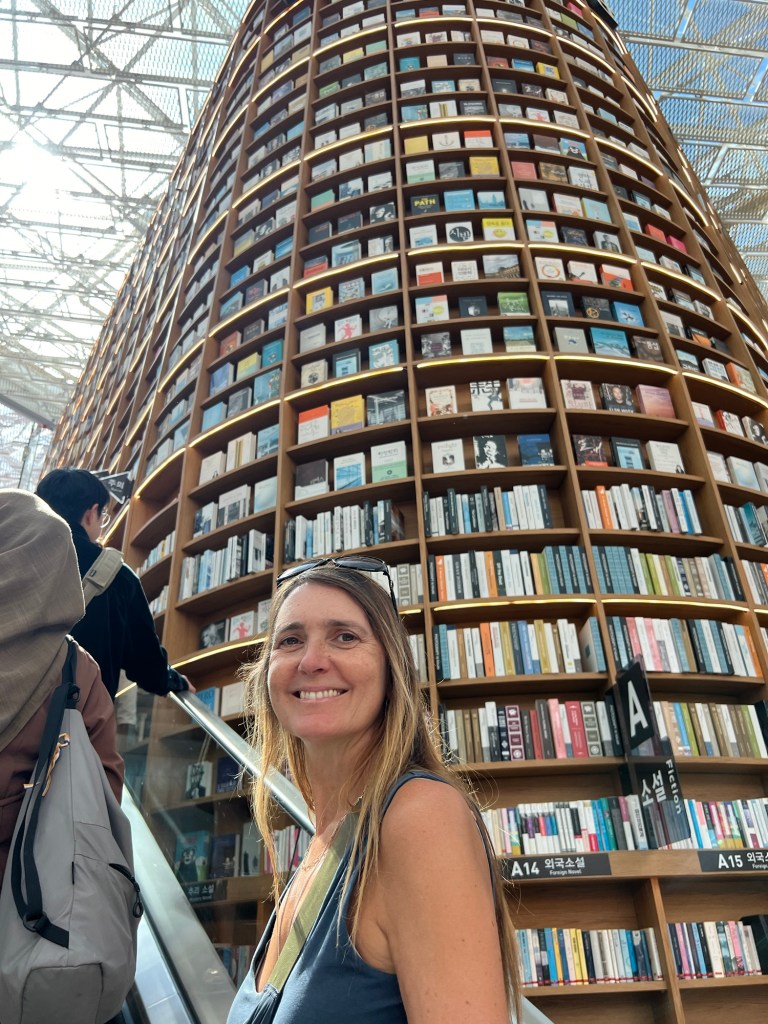
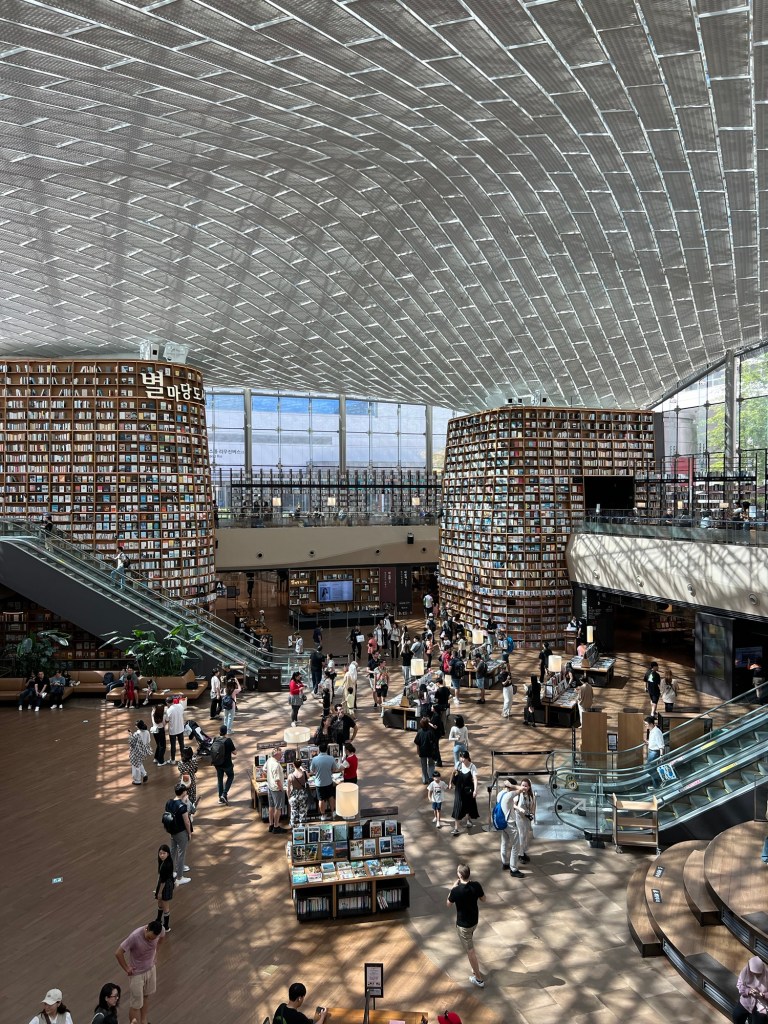
From there we entered the COEX mall, one of Asia’s largest underground shopping malls, with something for everyone-shopping, dinning and the famous Starfield library, one the centre pieces of the development. It’s an amazing space where books and magazines can be read on site or at home at no charge. The presentation of the books and magazines is so clever and makes it a real showpiece which draws you in. Next door were various cafes and restaurants where people sit with their newly acquired book and relax with a good read.
Leaving the shopping mall, we headed to Samsung D’light, an interactive exhibition by Samsung where you can view futuristic innovations and explore the latest in smart devices.
Our guide Marko explained a little more about the bars and restaurants in the area, taking us to Nonhyeon-dong restaurant alley, a bustling street filled with traditional Korean BBQ spots, fusion cuisine and trendy restaurants. It was a foodie’s paradise. We ended up going for Gimbap and Samgyeopsal with a few of the group from the tour.
Marko our trusted guide Foodie street Dakgalbi Samgyeopsal
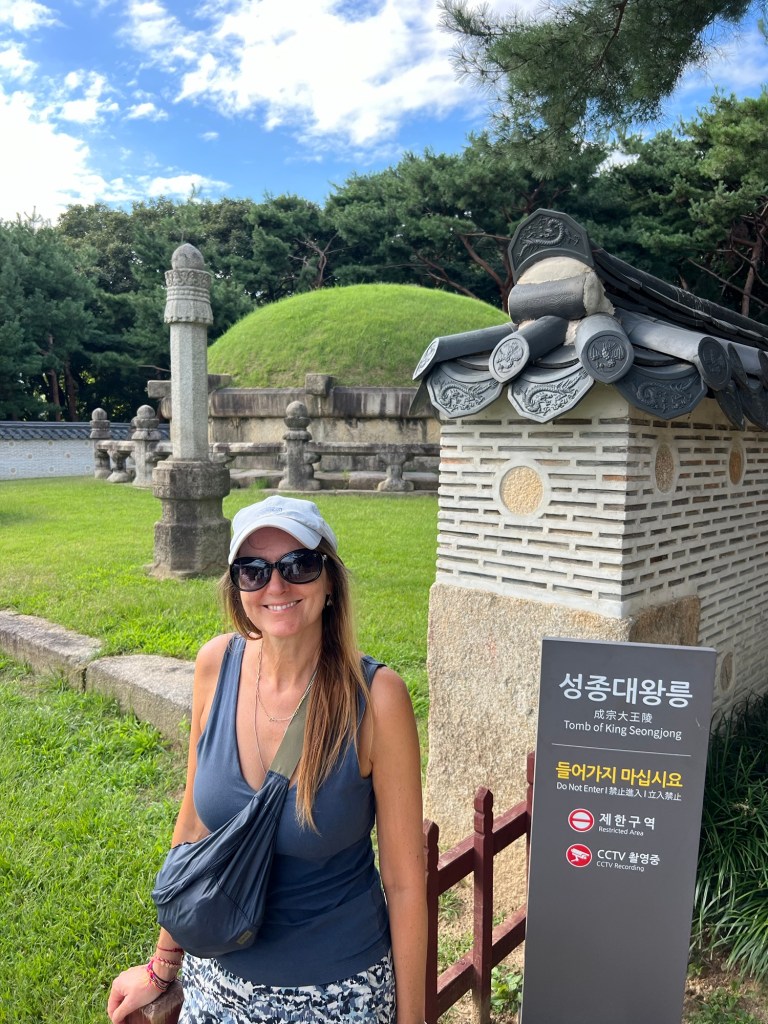
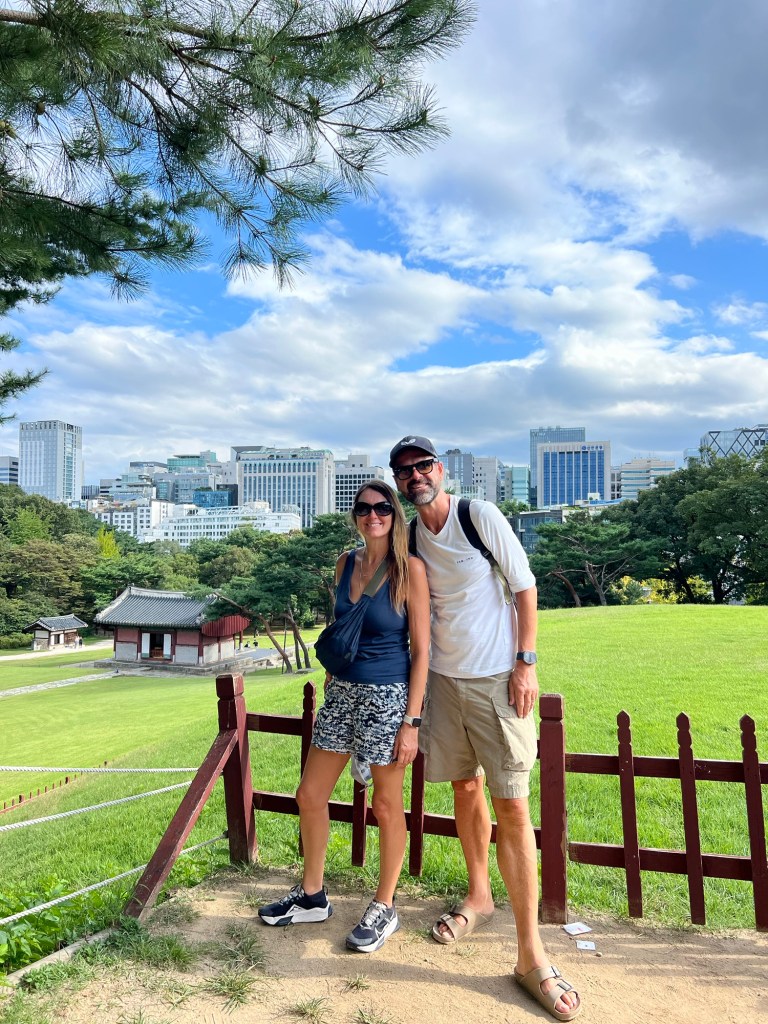
After the tour had finished and we’d refuelled over lunch we headed to the Seonjeongneung Royal tombs. A UNESCO world heritage site, this tranquil park features the royal tombs of kings and queens from the Joseon dynasty. Again it was a peaceful historical escape in the middle of modern Gangnam.
Walking in the park of the Royal Tombs One of the Joseon King tombs View back on the city
As an area Gangnam has come a long way since the early 1960’s when it was little more than padi fields. However, since being the chosen area for government and bureaucrats in the intervening 60yrs, it’s now one of the most popular and expensive areas to live. A standard 2 bedroomed apartment will set you back 3-4 million US dollars.
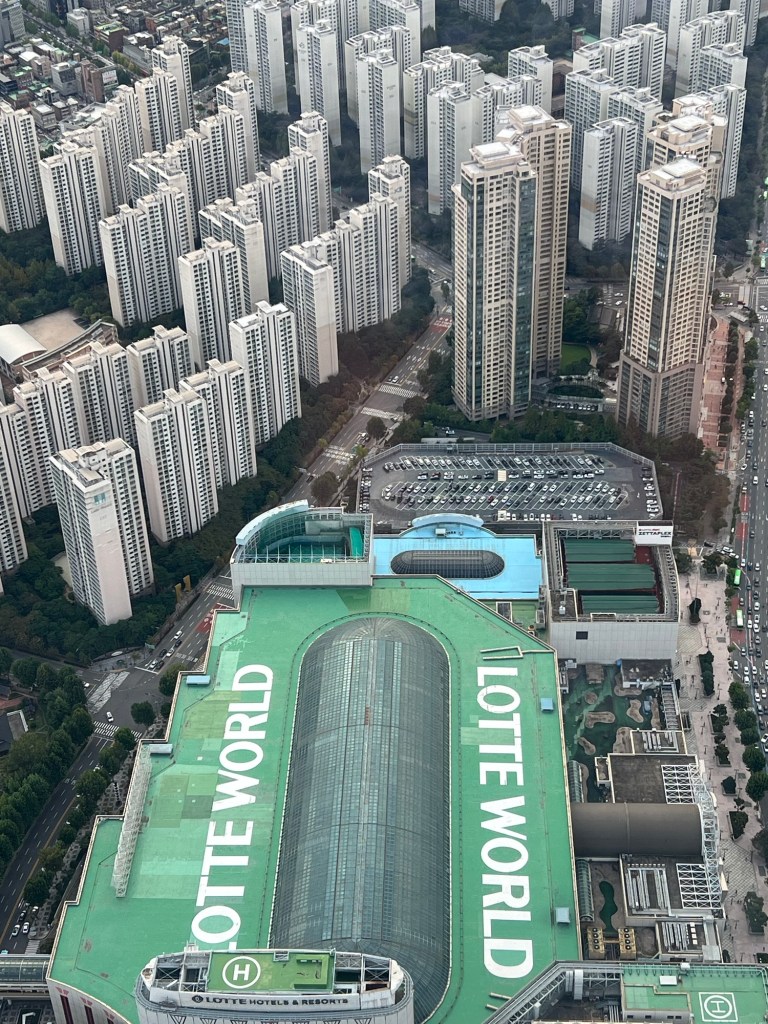
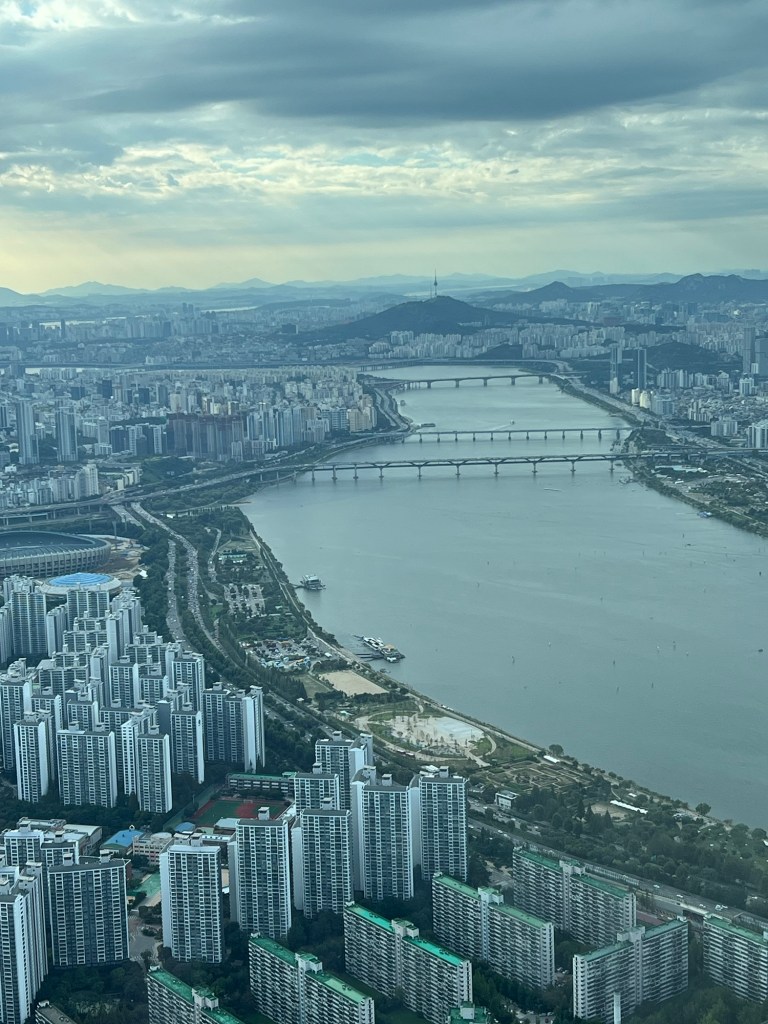
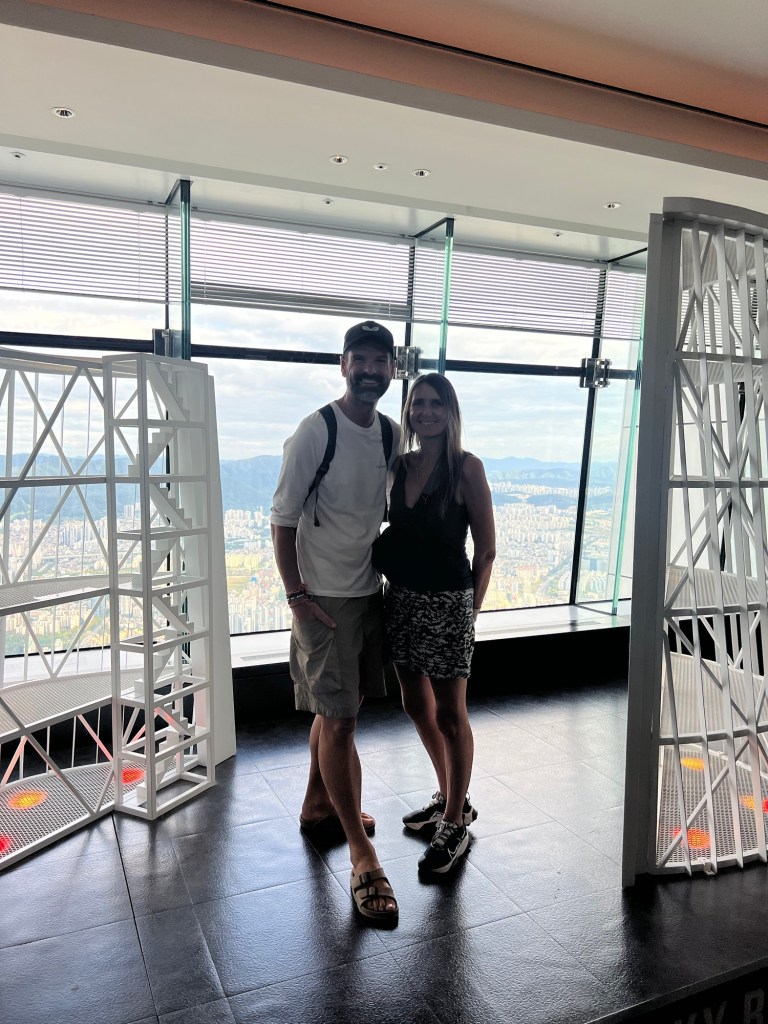
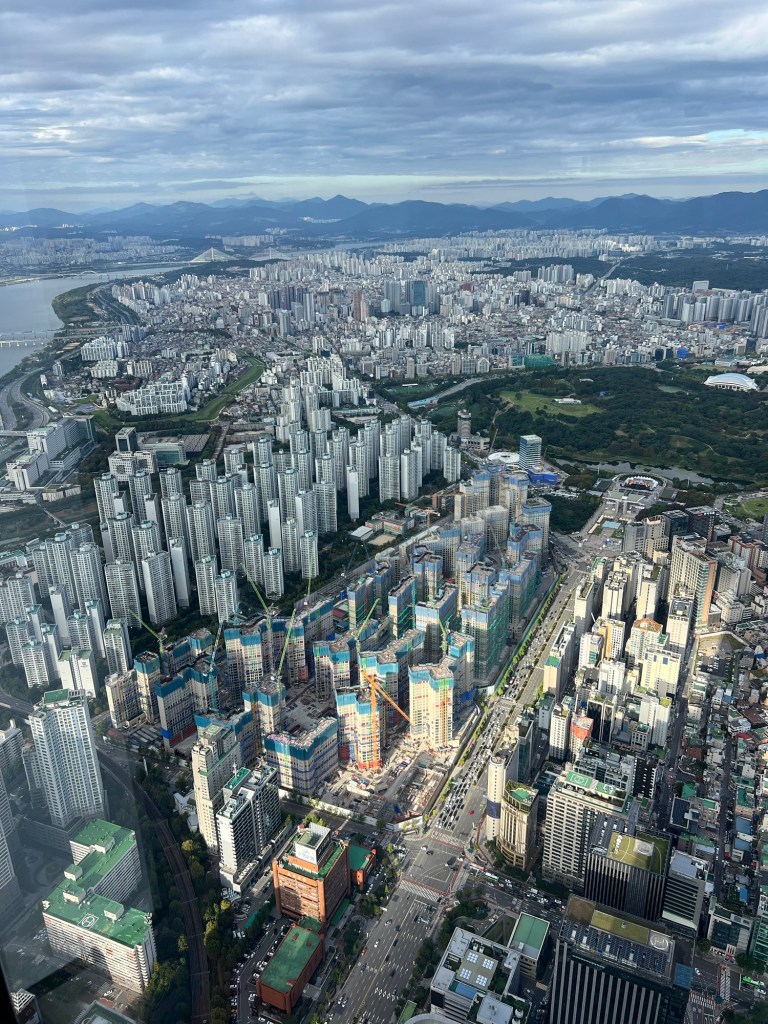
Leaving Gangnam we headed along the river to the nearby Lotte Tower, the tallest building in South Korea. It stands at 555m and we ascended to the 120th floor to check out the views across the city.
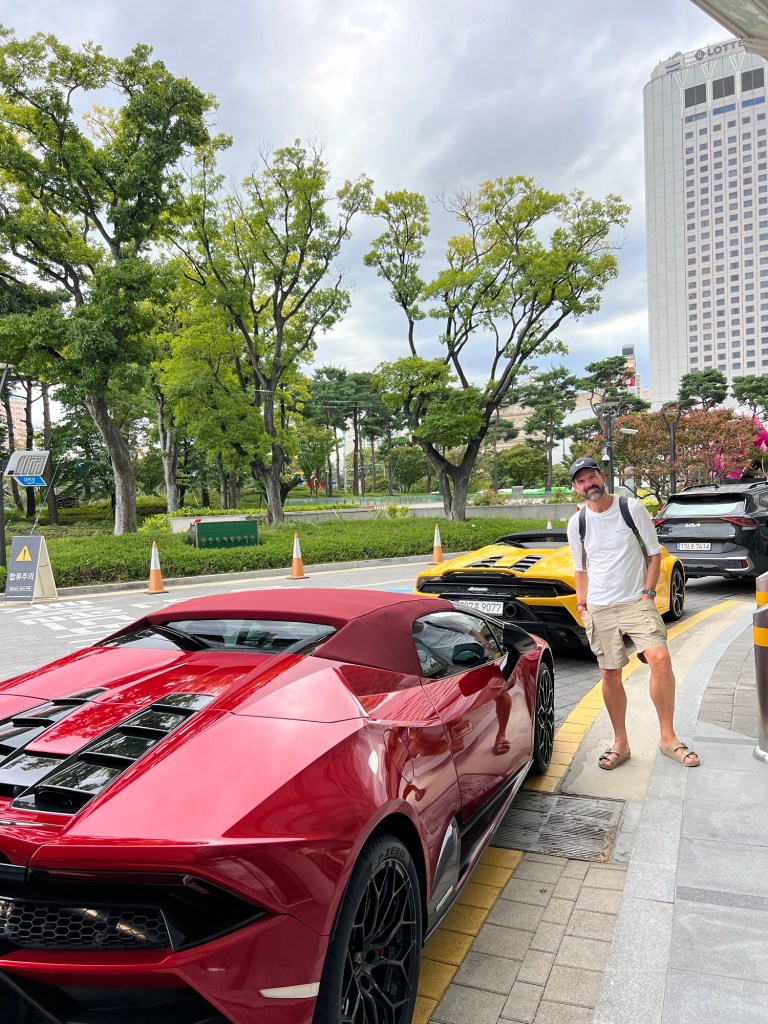
Gangnam style motor The full effect experience before heading up the tower
The Lotte World Tower, to give its full title is a supertall skyscraper and is the sixth highest building in the world, the tallest in OECD countries, and also the first in the country to be over 100 stories tall.
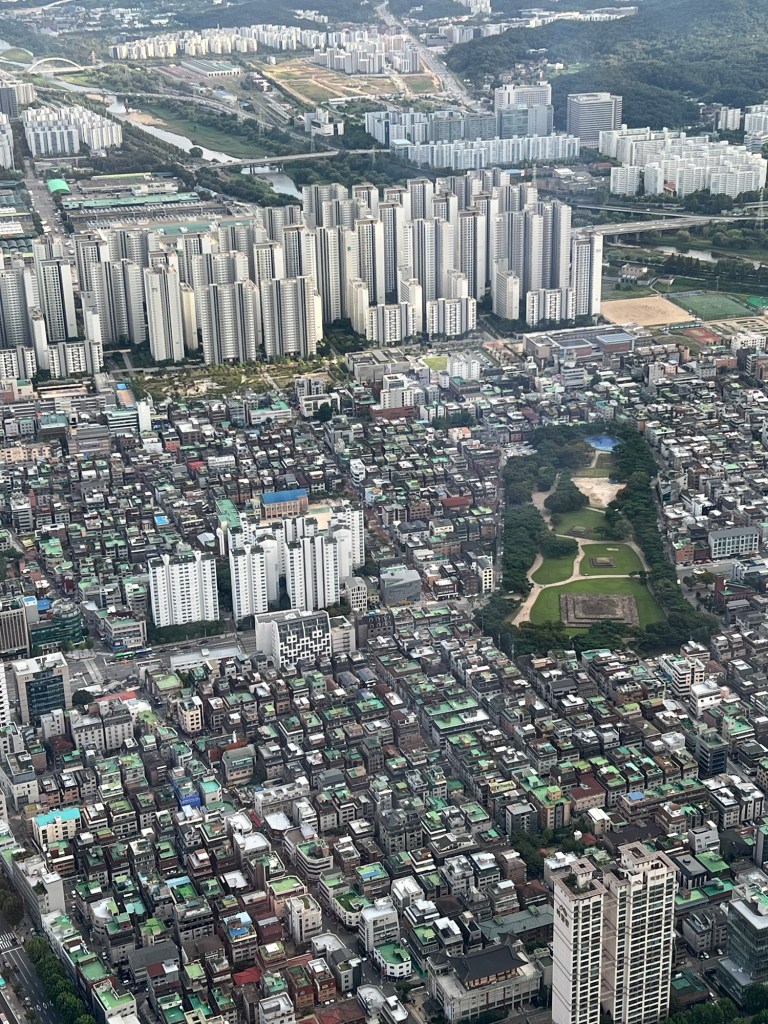
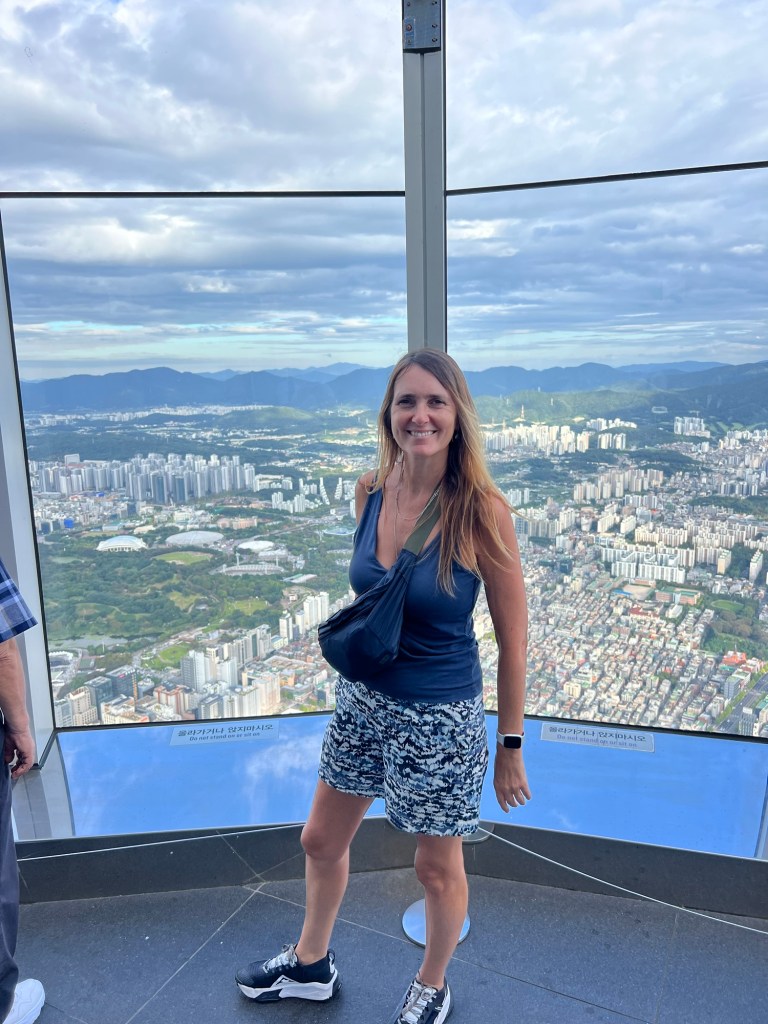
It’s located next door to Lotte Tower (Disneyland styled park) and provides views across the city, highlighting the scale of the city and the number of tower blocks. It’s truly breathtaking.
Up in the heavens
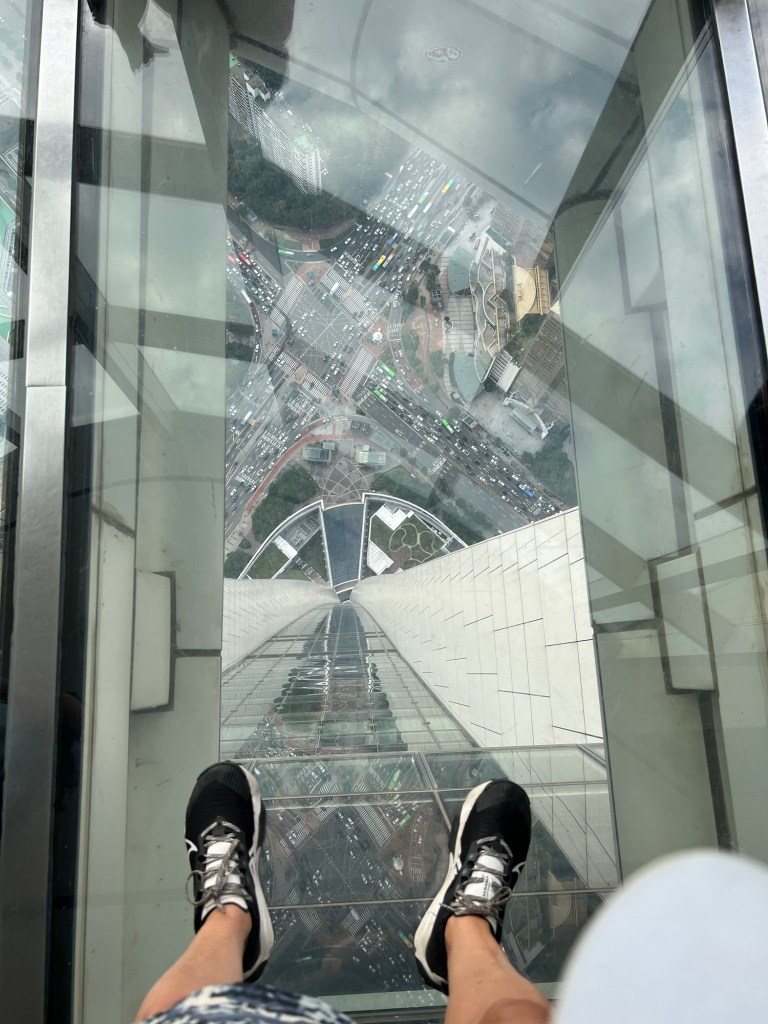
Michelle is more fearless when it comes to heights and had no issue standing on the clear floor at the top with views all the way down from 120 stories. Not something Andy would be prepared to do.
This is close enough
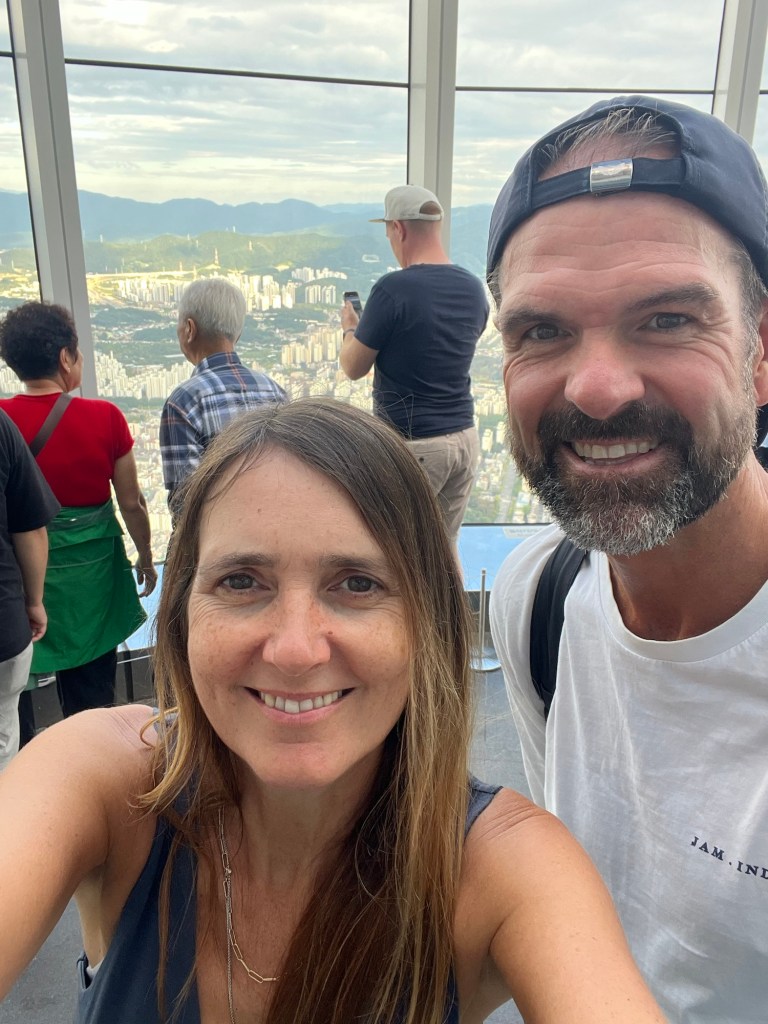
We got some great 360 degree views and photos from the top floor and all for the cost of just £10 per person.
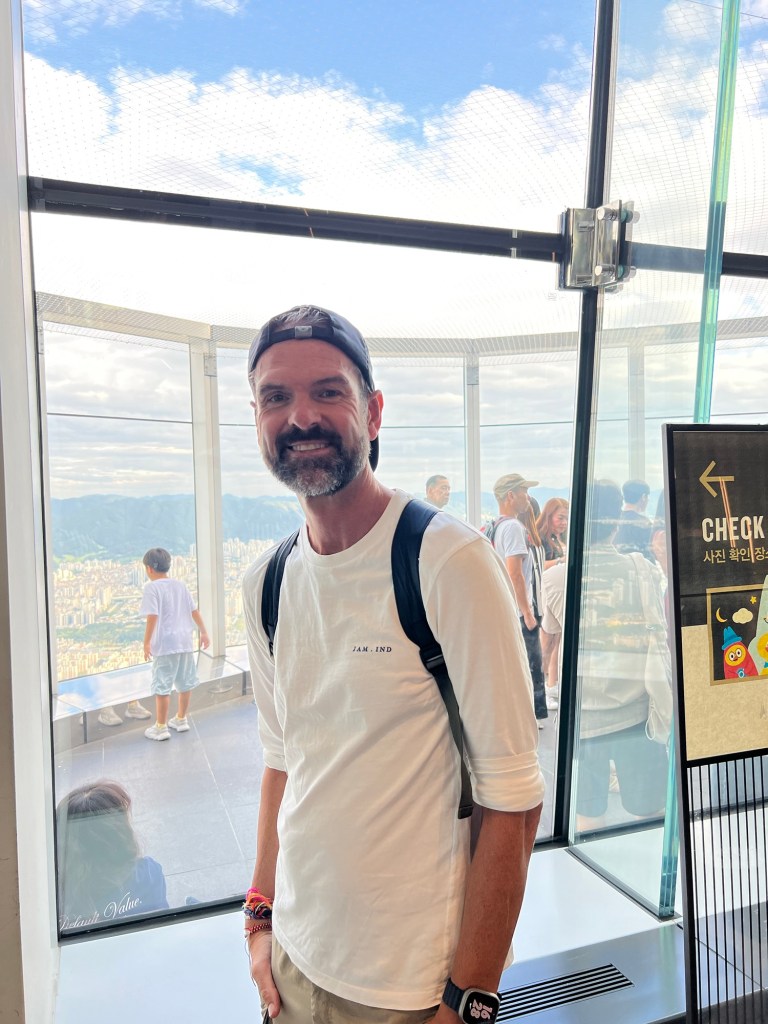
Evidence that we both made it to the top
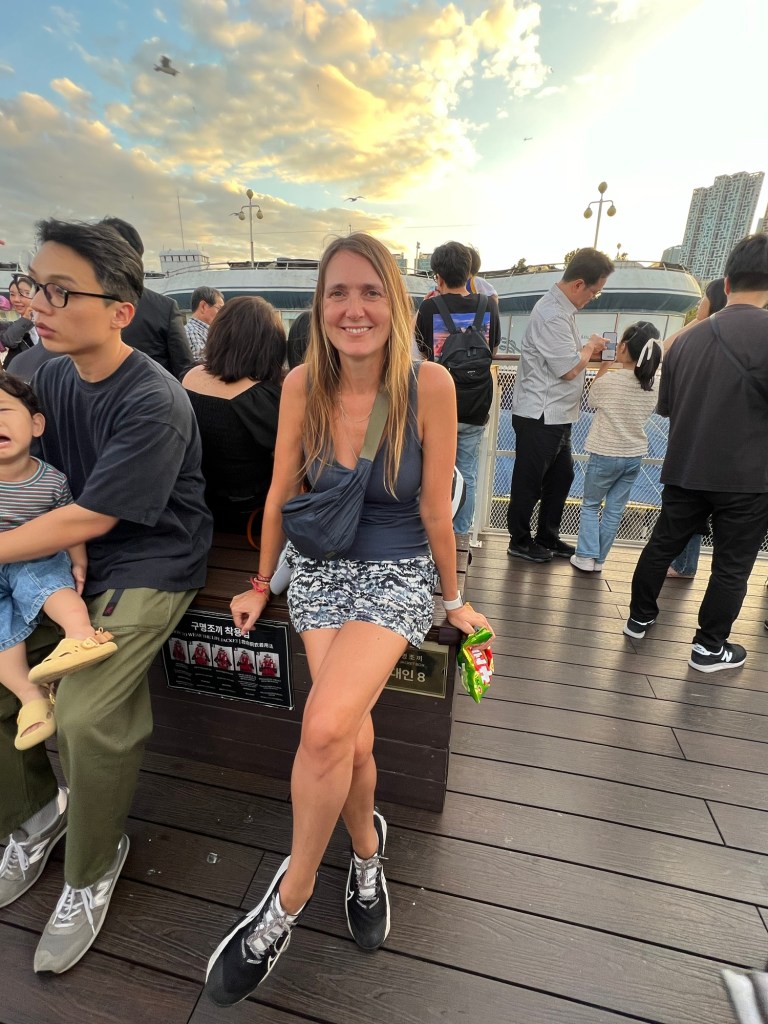
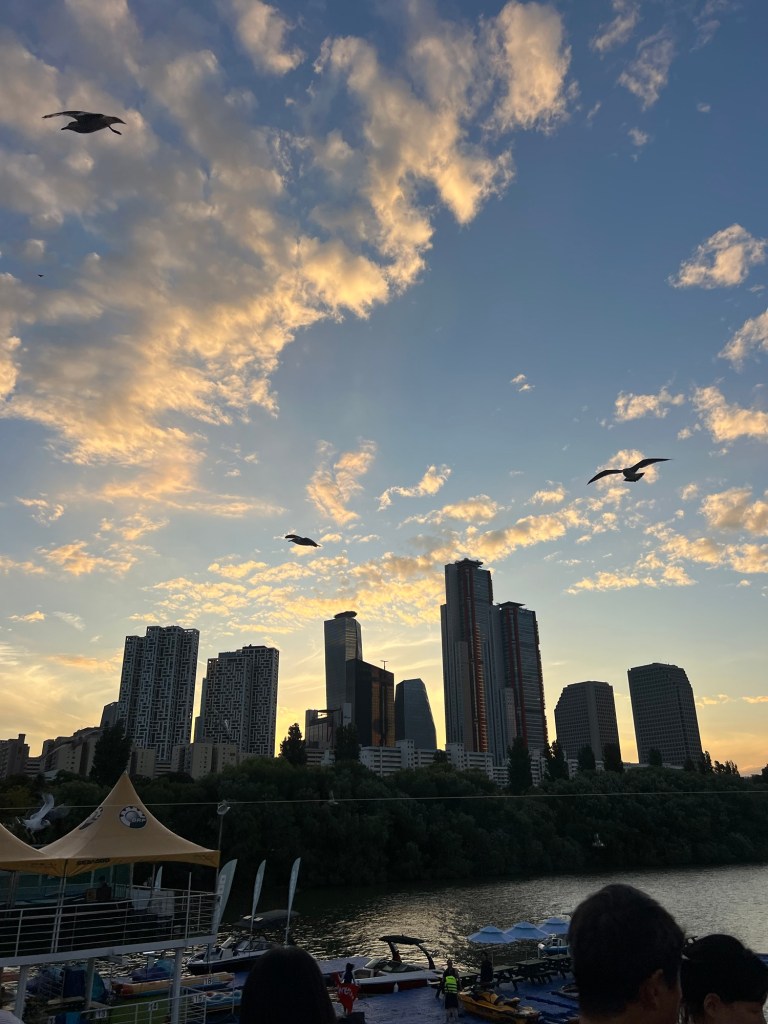
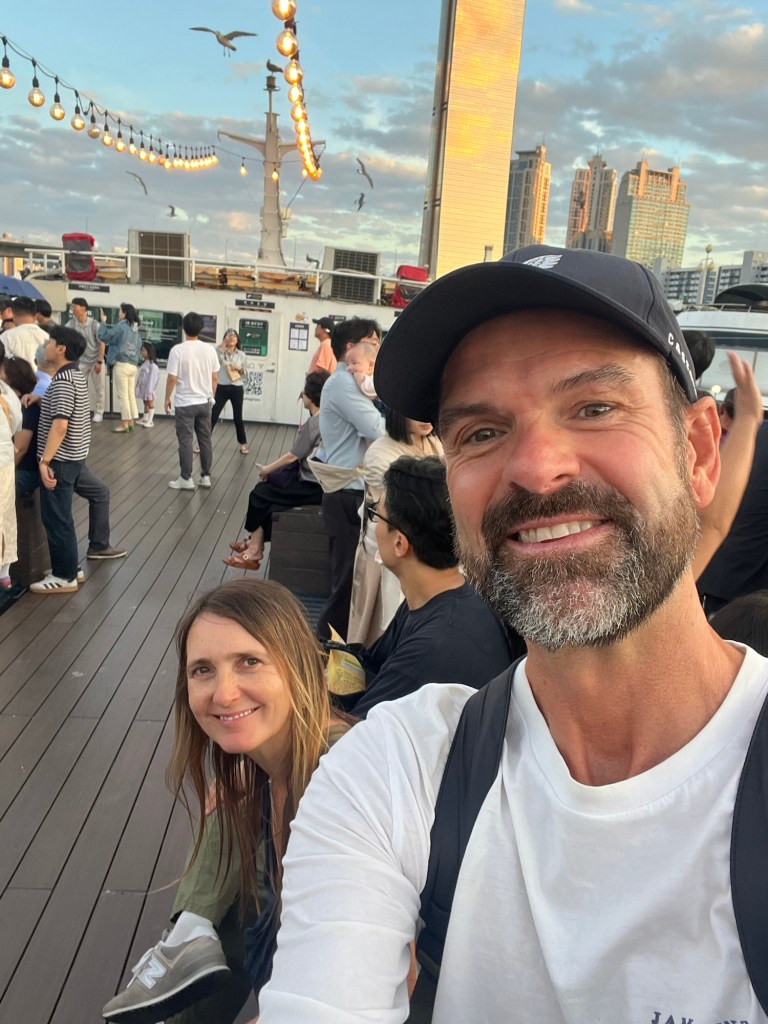
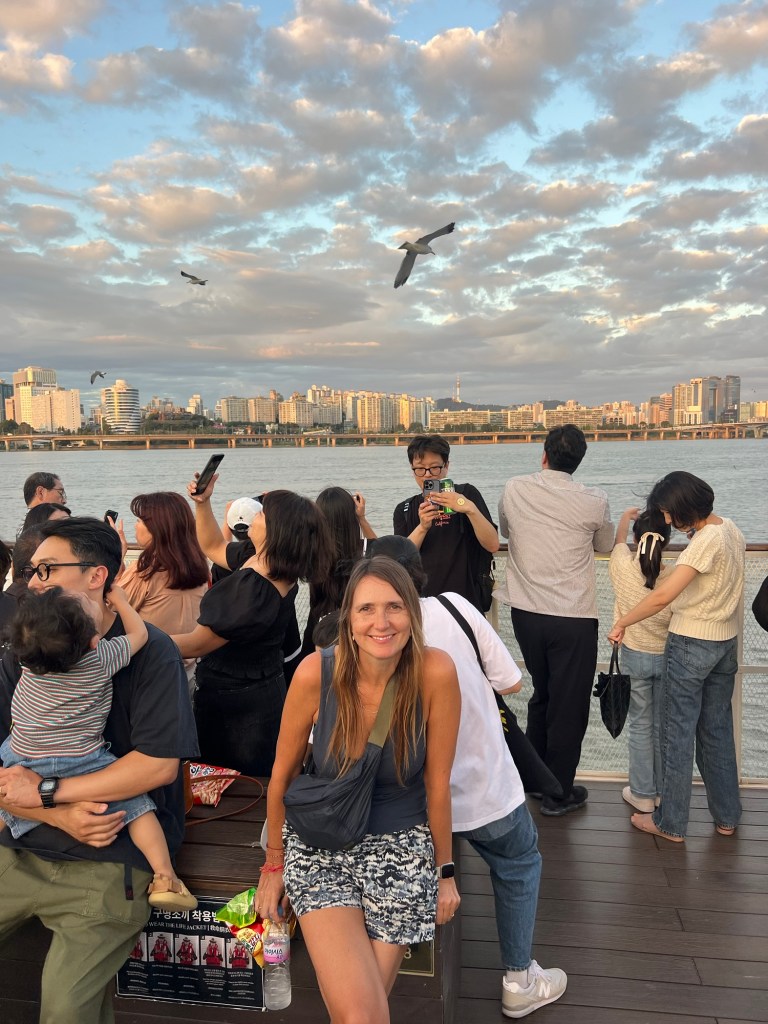
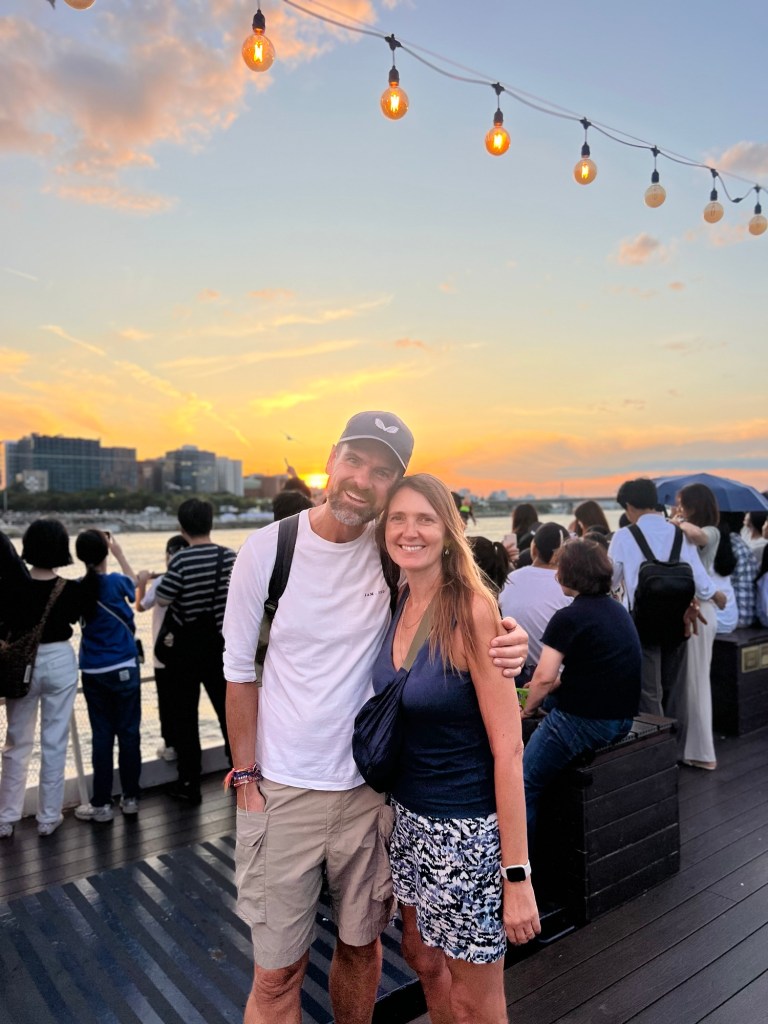
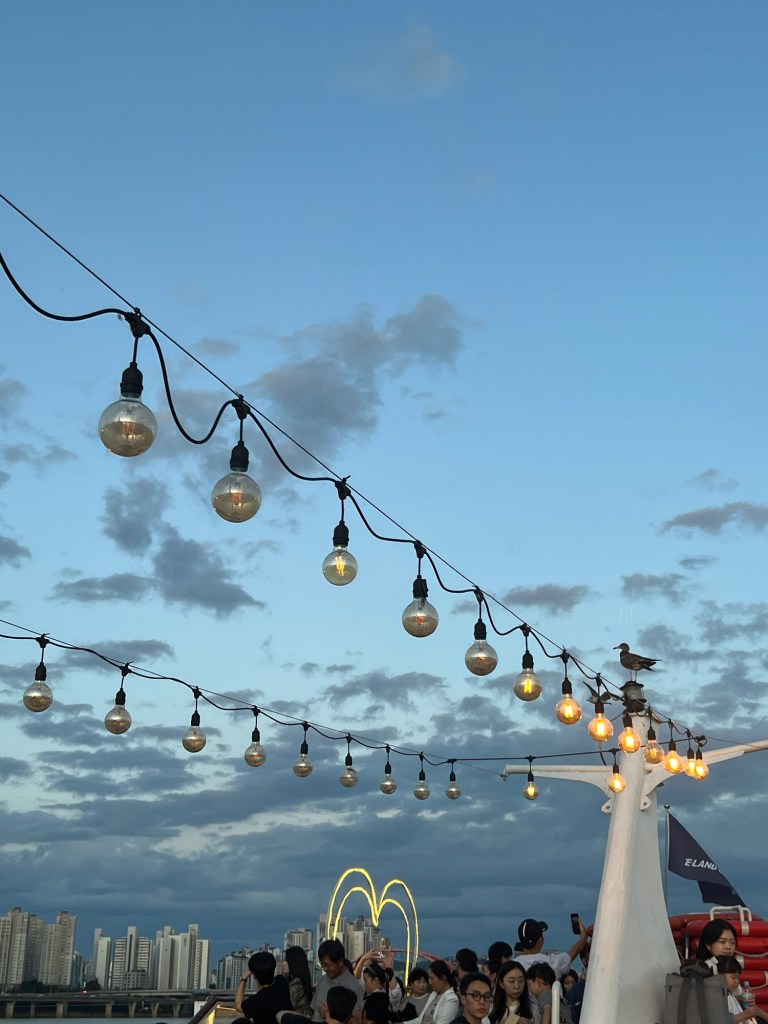
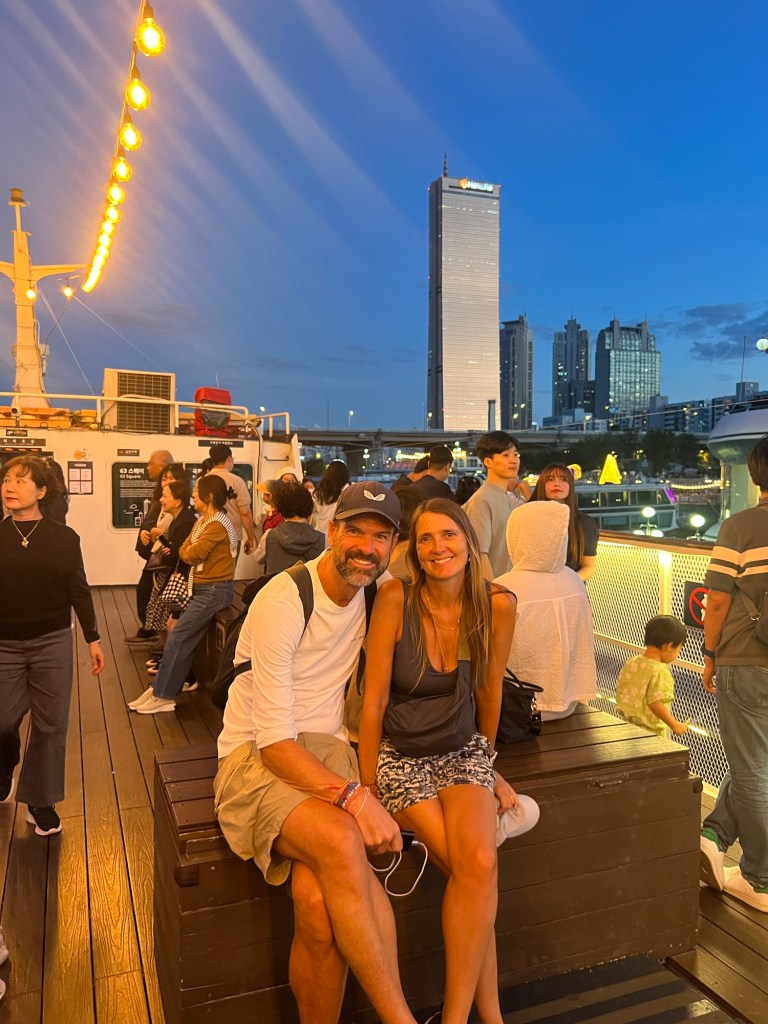
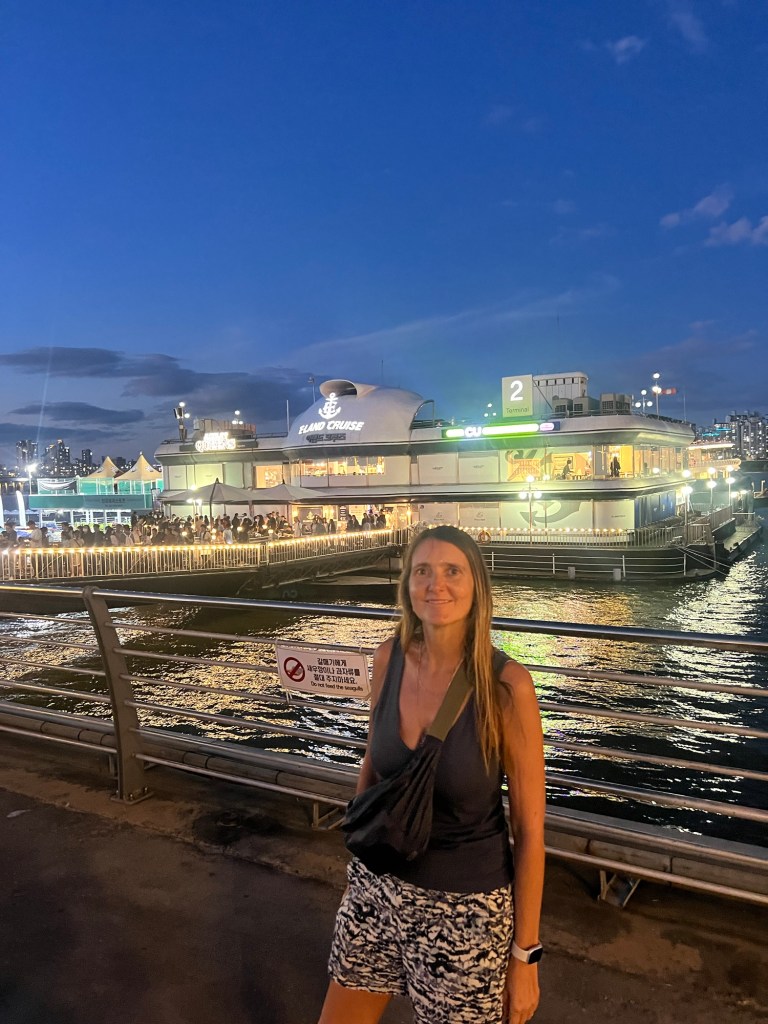
Next on the list was a sunset tour on the Hangang River which we had booked a week or two back. After rushing across the city by tube, we made it to the boat a couple of minutes before it set sail at 6pm. Once on board it was a lovely experience to watch the city go by and the sun slowly drop.
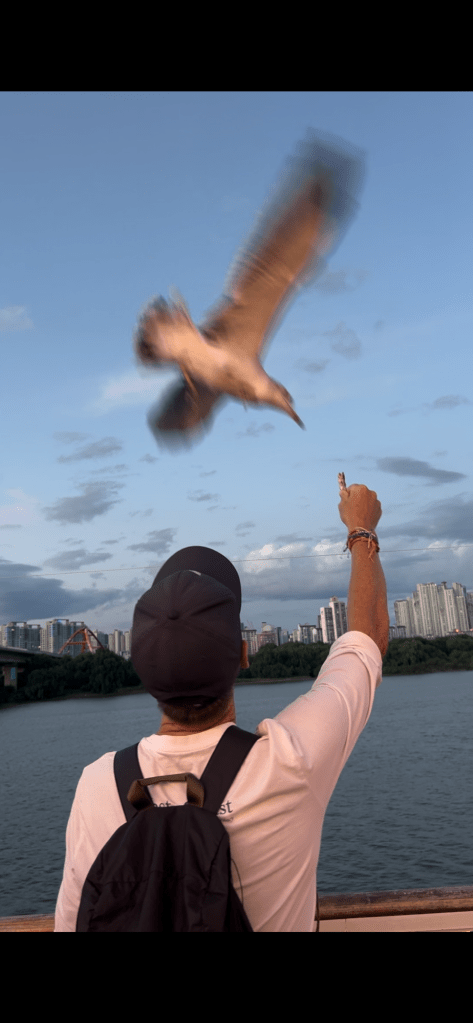
The family orientated trip drew lots of children as it was a Saturday and many had small fish to feed the waiting seagulls that hung above the boat waiting to dive.
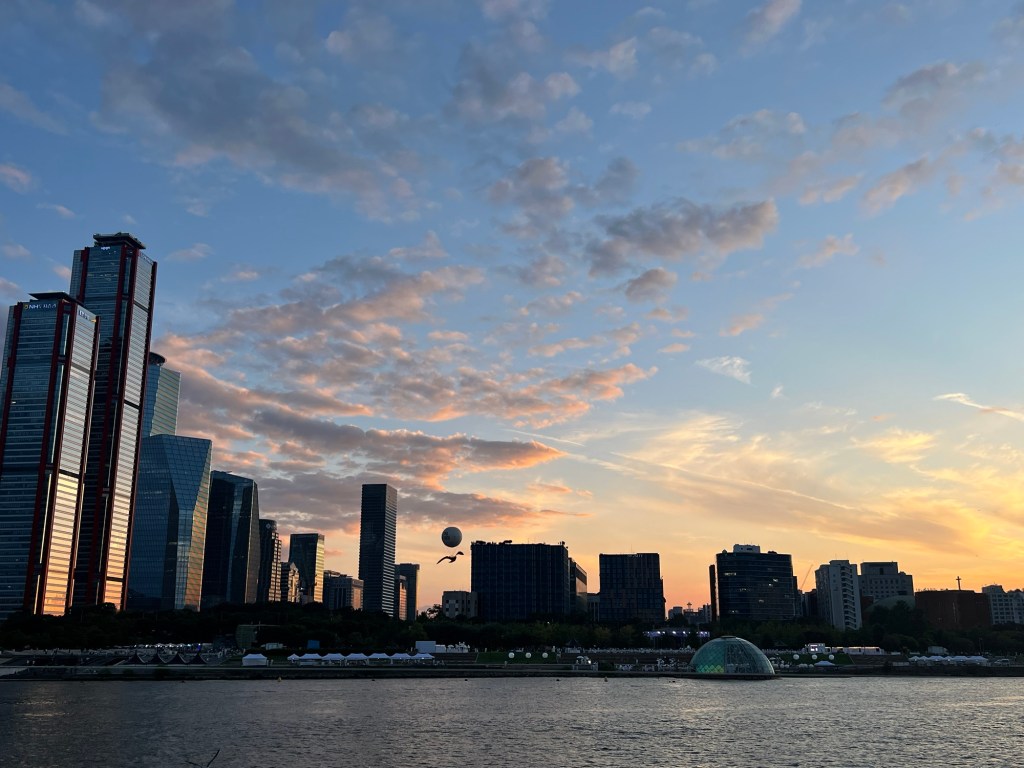
The trip took us down the river to the KBS Performing Arts building and then circled back around Seonyudo Park Island. As the sun slowly disappeared, the night’s sky took on a beautiful orange glow framing the south bank of the city’s skyline.
Andy feeding the seagull’s
After our 90min cruise, we picked up the pace again and headed back to the tube and dinner in Hongdae.
On the tube Counting the calories
It is known for its urban arts and indie music culture, local shops, clubs, cafés and entertainment. The area is located in Mapo District in the western end of Seoul.
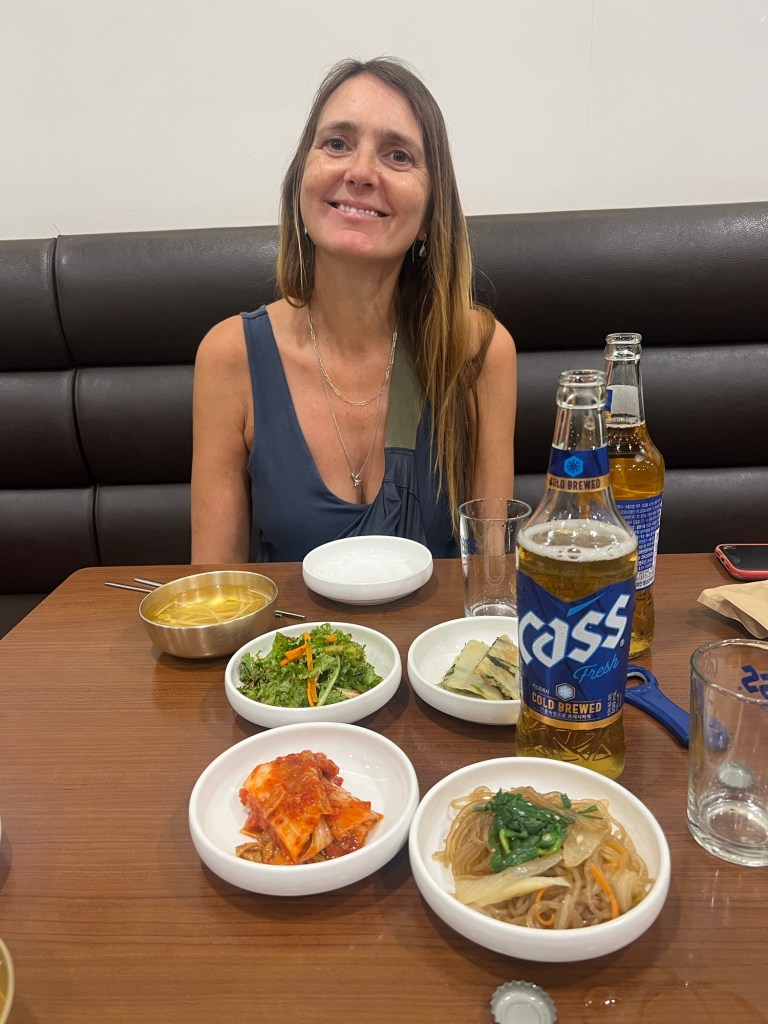
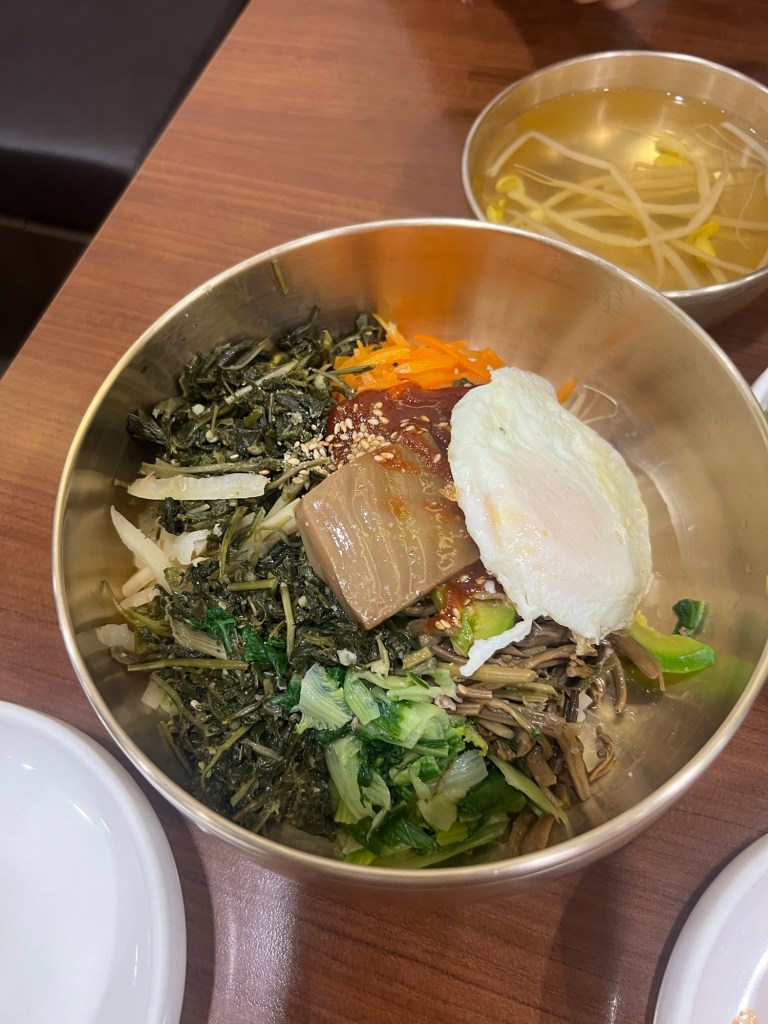
We were really keen to try another Korean dish called Bibimbap. Essentially it’s a bowl with a salad of rice, mixed vegetables, beef and egg. We found a great traditional restaurant in the Hyundai Department Store up on the 10th floor. The portion was so large we ended up sharing along with a couple of Cass beers.
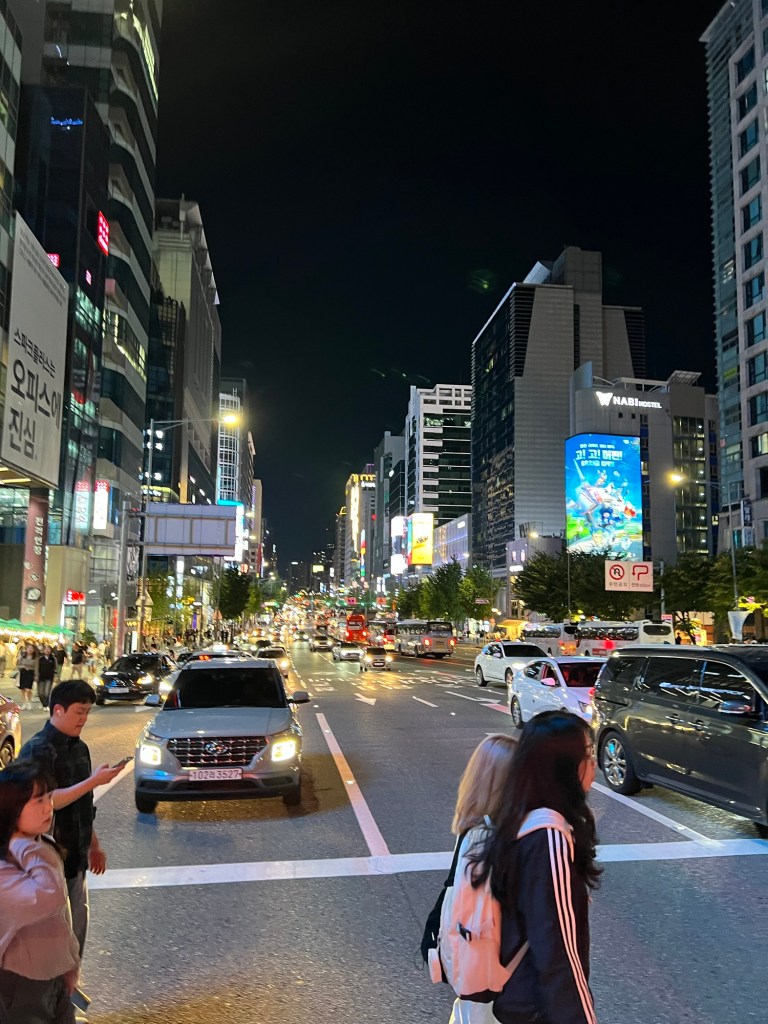
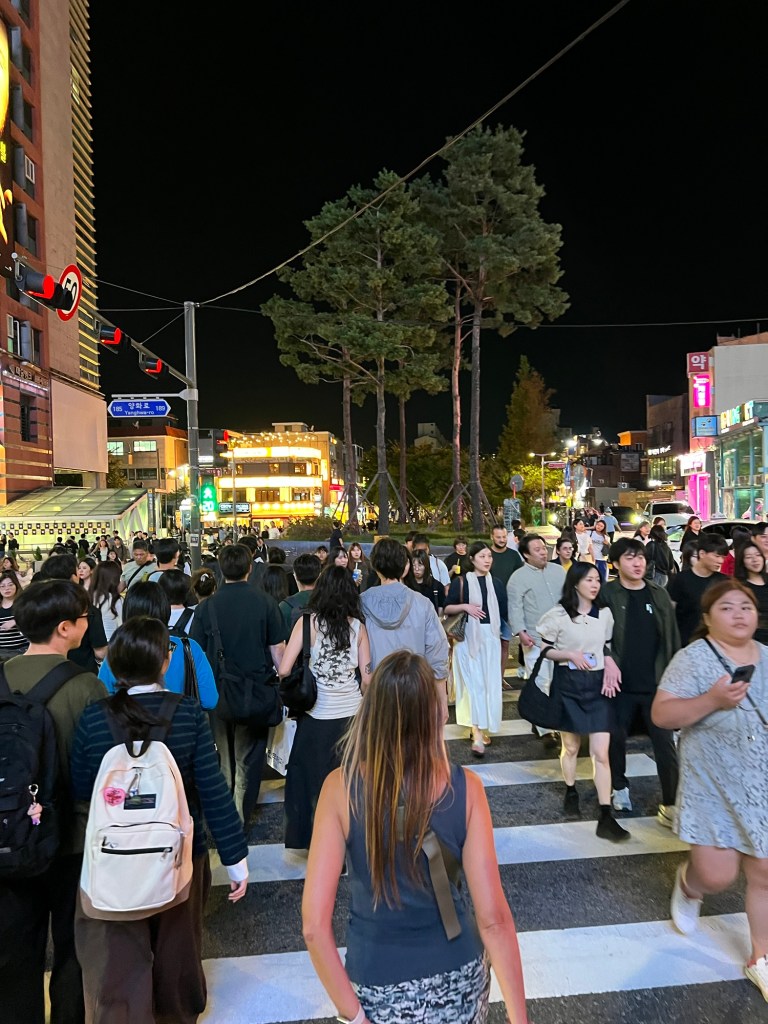
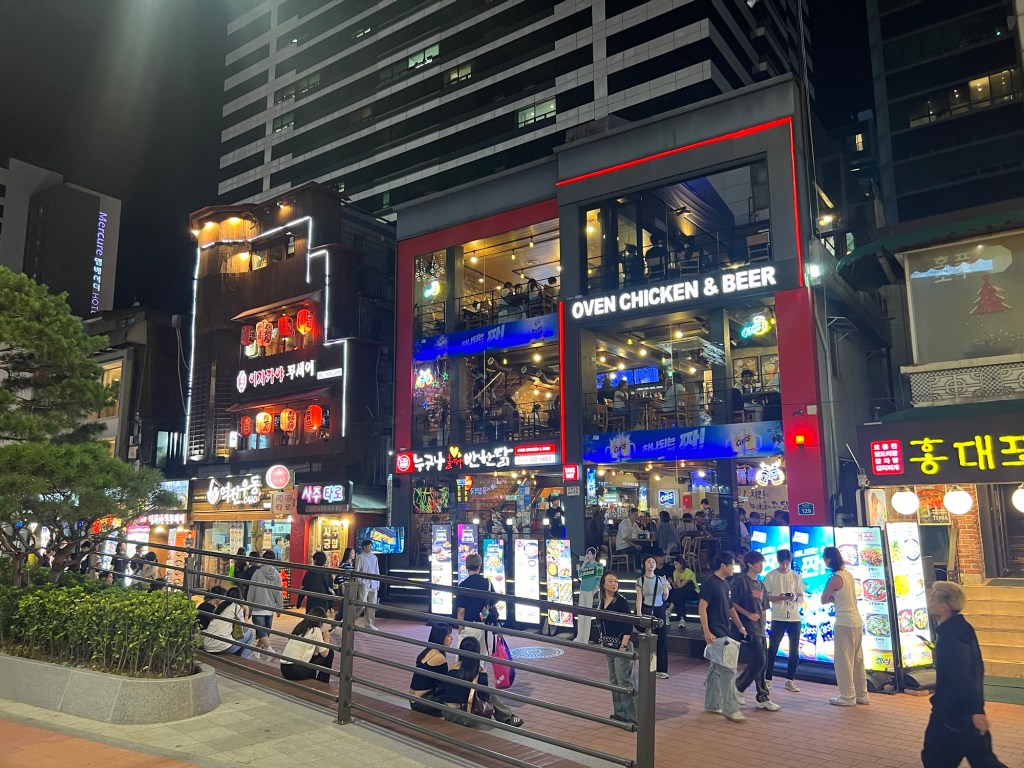
Following our delicious dinner we decided to explore Hongdae given it was a Saturday night. The place was packed with students and the cooler kids on the block. Lots of interesting bars, restaurants and quirky shops.
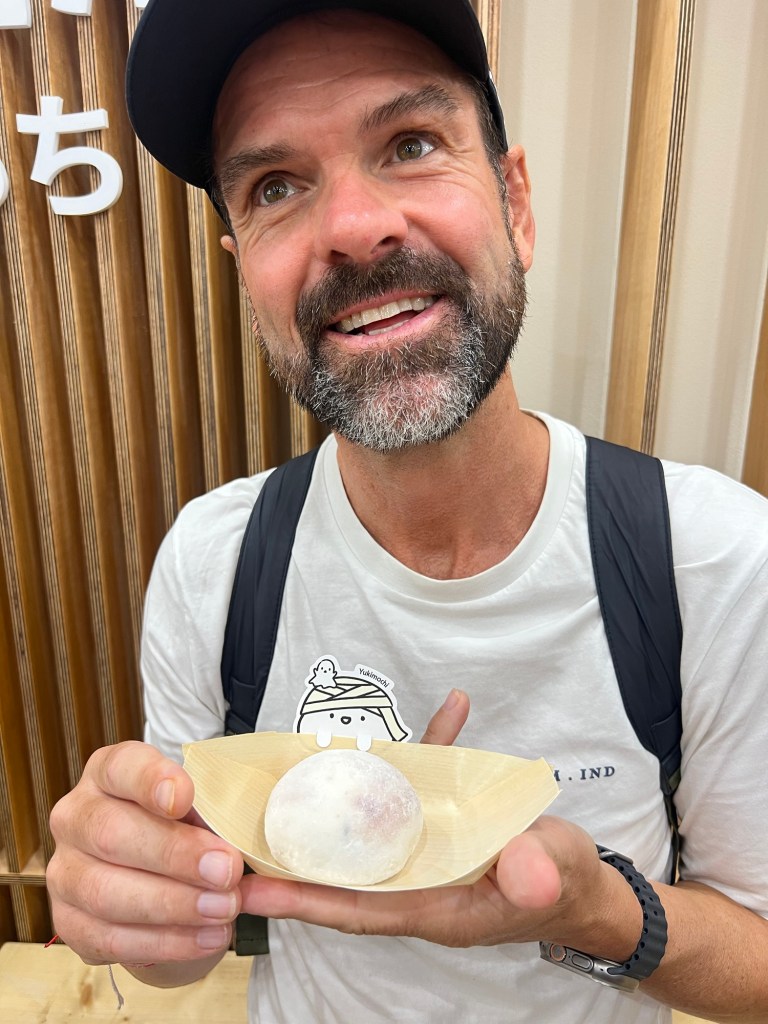
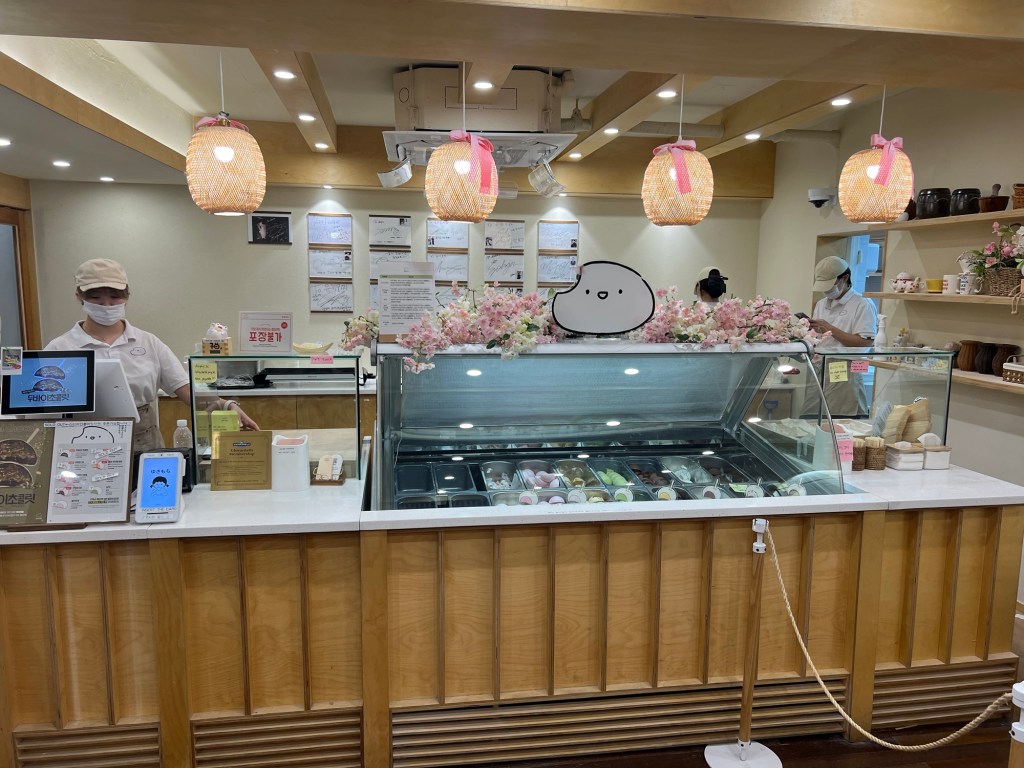
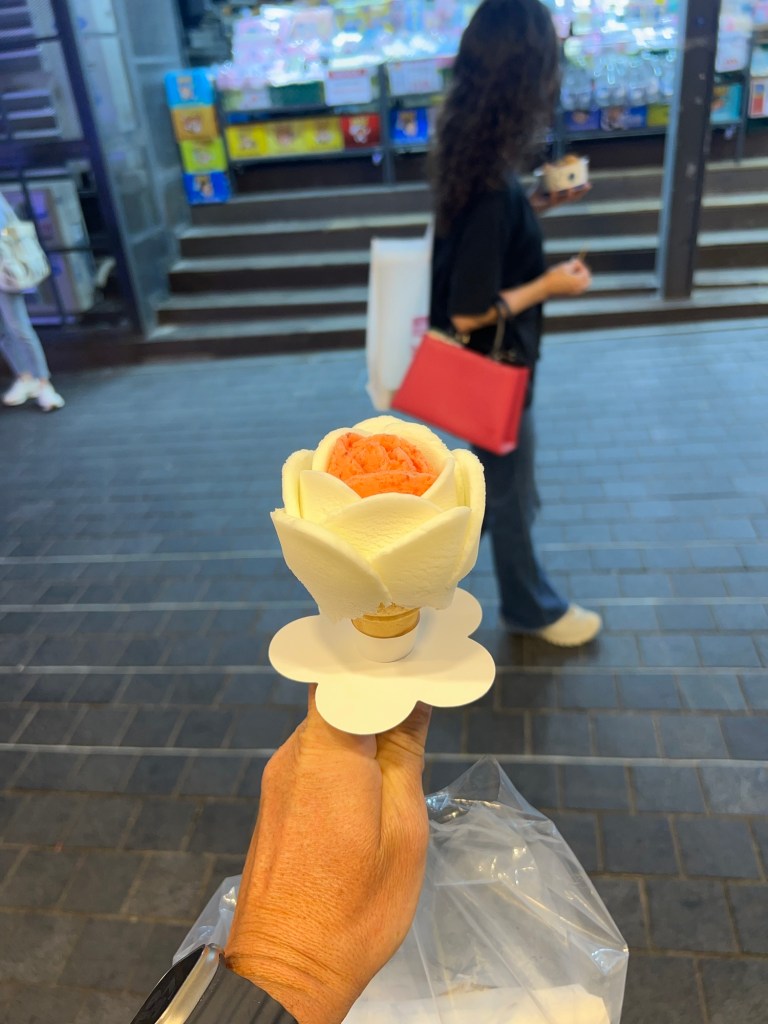
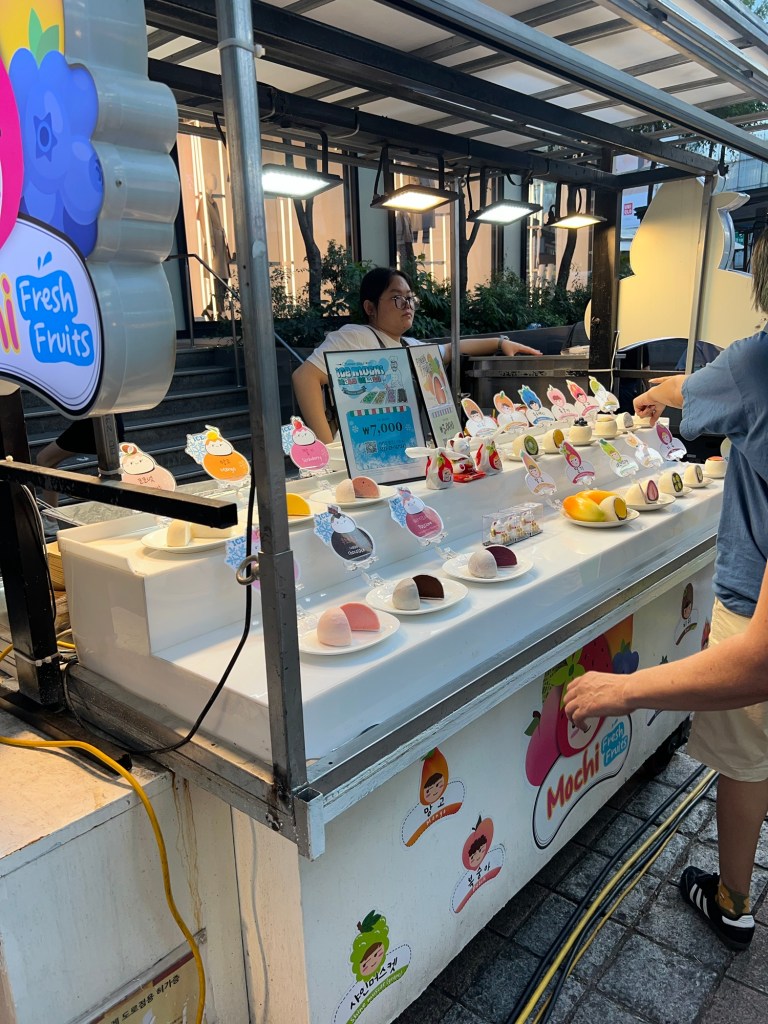
We decided to treat ourselves to a sweet ice cream covered in mochi. Wow that was good.
We ended up wandering around for an hour or two, taking in the spectacle and generally people watching.
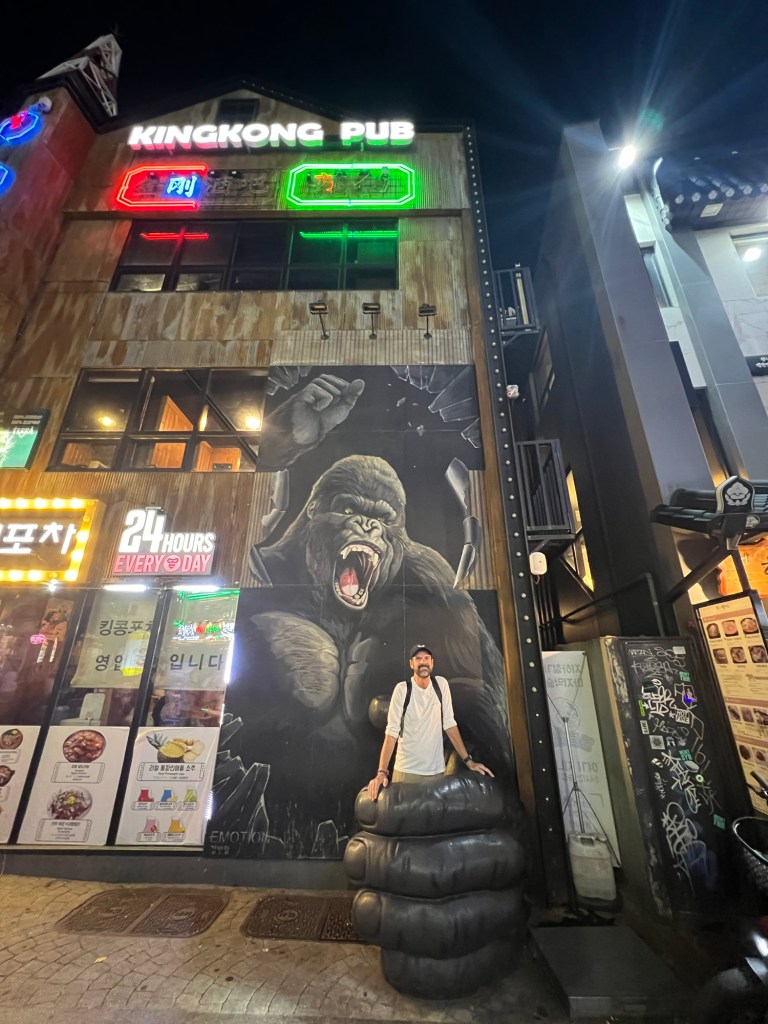
Godzilla time Friendly pooch
As it neared 10pm we decided to head back to our hotel, via the tube, which we appear to have conquered and now know our way around the coloured/numbered lines without getting lost.
We really enjoyed our late night visit to Hongdae and would definitely recommend a visit if you’re ever in the city. It’s definitely got a bit of an edge, but it’s a friendly one.
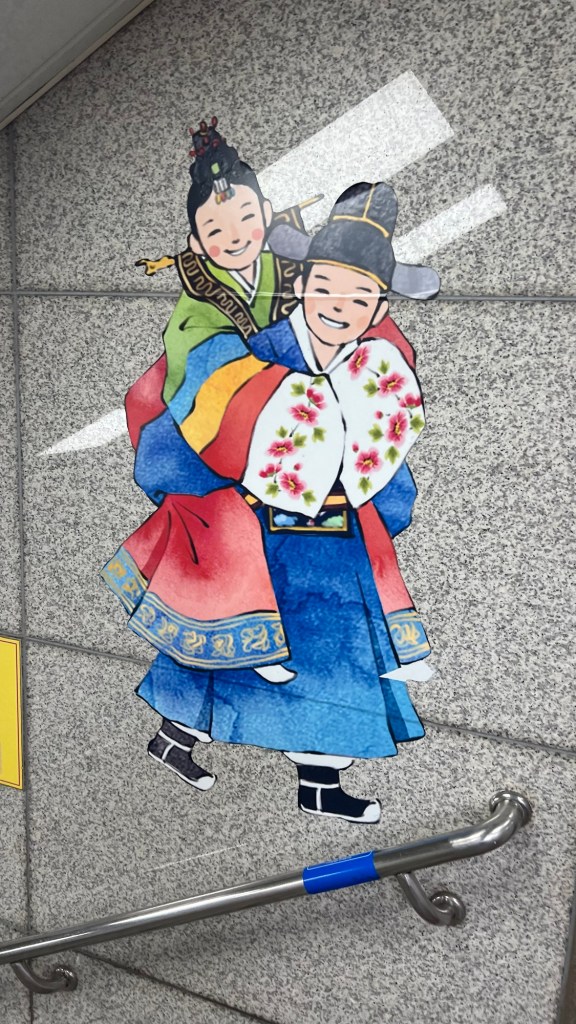
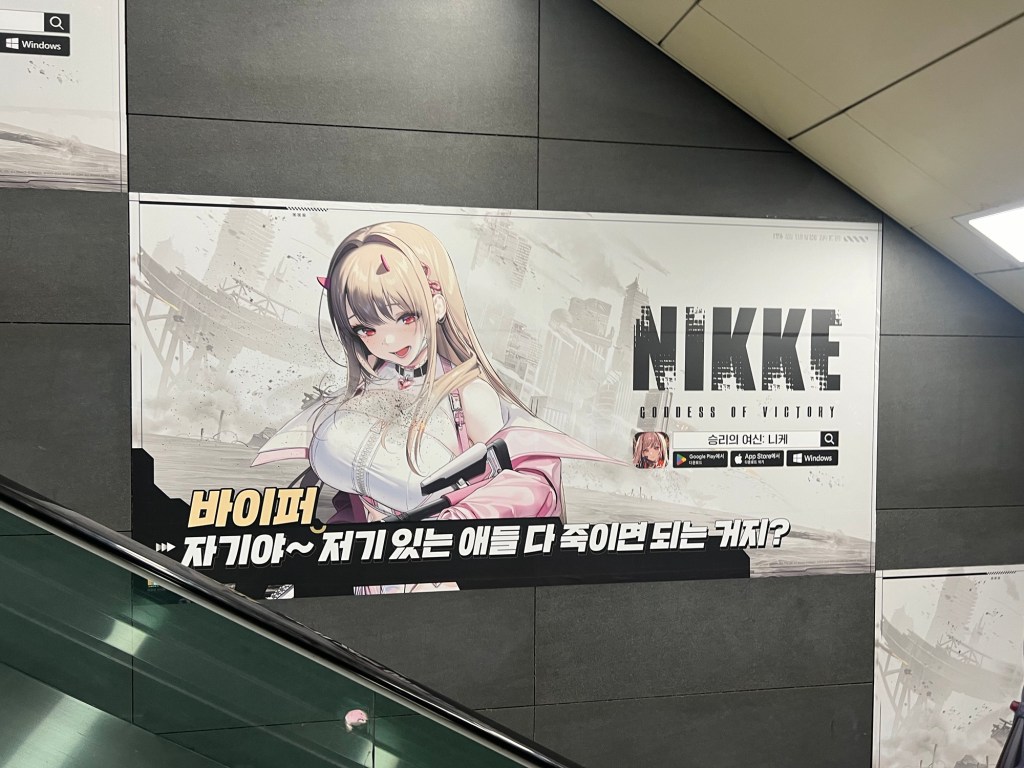
Back to the tube, and the interesting posters of Korean style comic strip characters.
The final street to cross and we are back at the hotel after a full and fun packed day.
Tomorrow we are picking up the palace visits, all five, if we have the time and inclination.
We woke today and sadly Michelle has come down with a heavy cold and decided the best option would be to rest up in bed and try and sleep it off.
Andy therefore took up the solo traveller mantle and headed out to visit Gyeongbokgung Palace, Bukchon Hanok Village, Insadong, Jogyesa Temple, Namsan Seoul Tower and Dongdaemum Design Plaza.
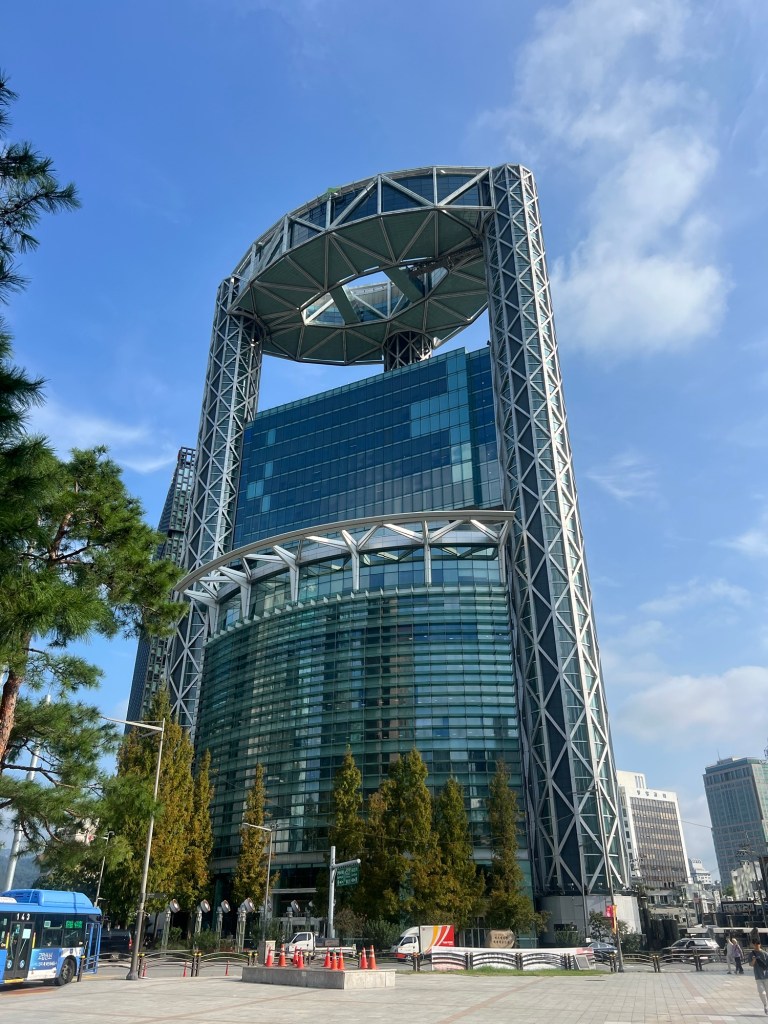
Jongno Tower
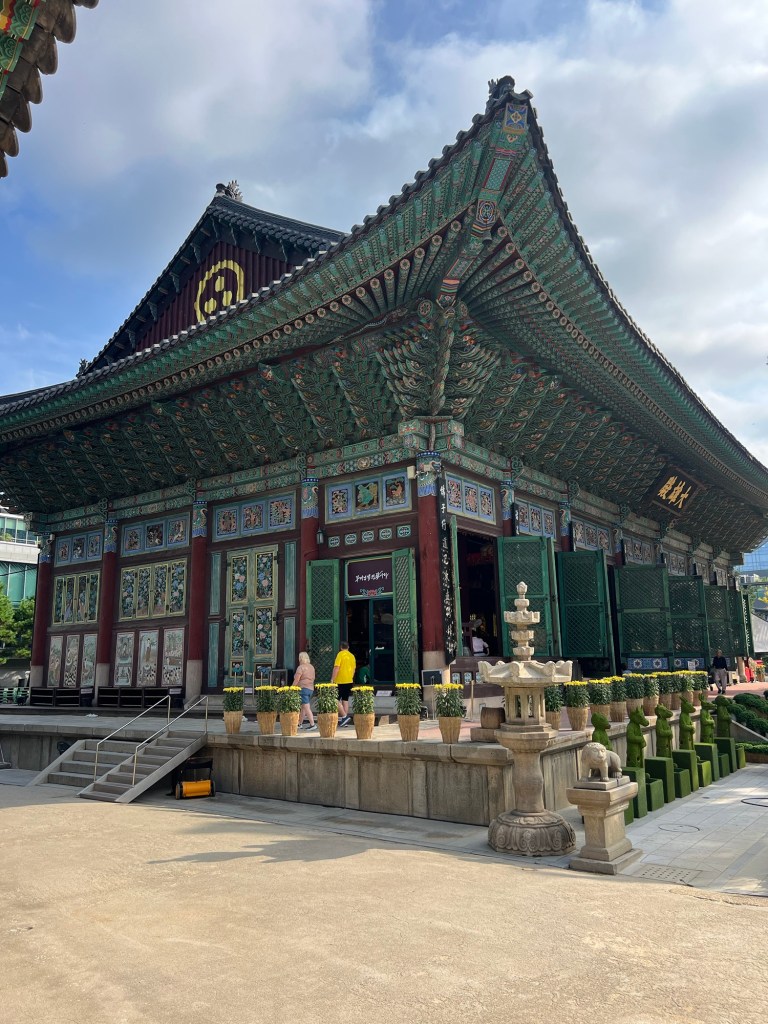
The first stop was Jogyesa, the chief temple of the Jogye Order of Korean Buddhism. The building dates back to the late 14th century. The temple was first established in 1395, at the dawn of the Joseon Dynasty.
Jogyesa Temple is located in one of the most popular cultural streets in Seoul, Insa-dong, near the Gyeongbokgung Palace.
This temple participates in the Templestay program, where visitors can sign up to experience the life of Buddhist monks at the temple, eat Buddhist food, and learn the history of the temple and of Korean Buddhism as a whole.
Jogyesa Temple’s features a mix of traditional temple and palace architecture. The lattice designs found on the doors and windows of the Daeungjeon are unique in their own right.
The temple was a real blend of the old, new and the colourful and had a very welcoming feel.
Loved the entry to the temple
Next stop was the Gyeongbokgung Palace, the largest of the Five Grand Palaces built by the Joseon dynasty, Gyeongbokgung served as the home of the royal family and the seat of government.
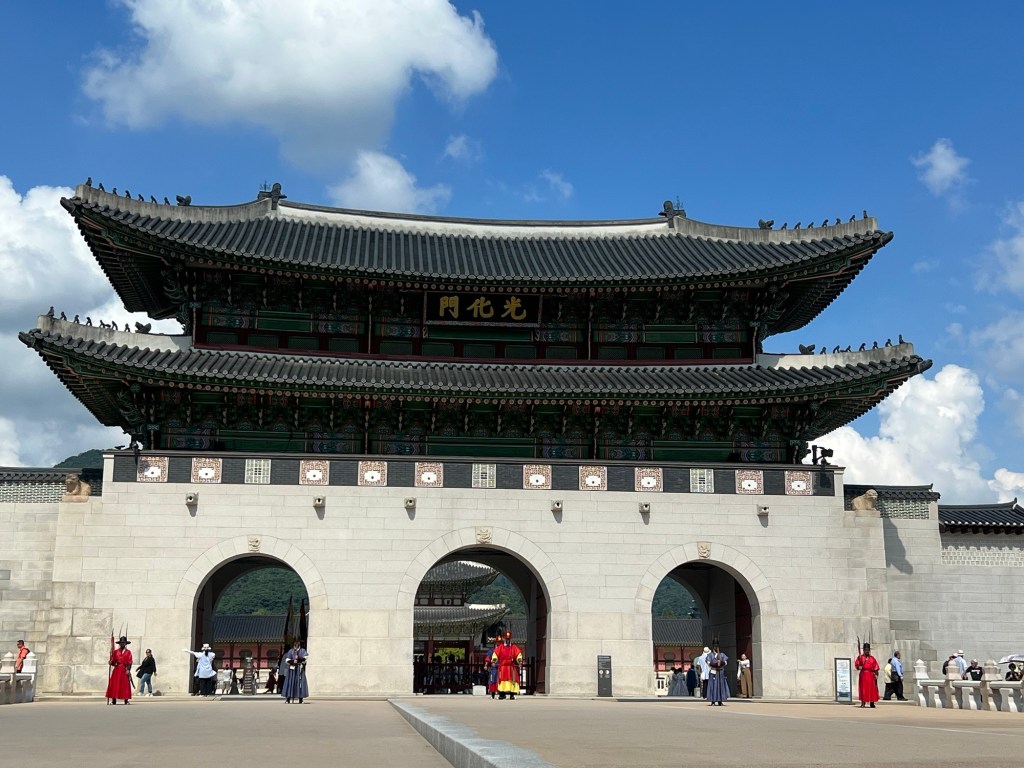
When Andy arrived it was just at the time of the changing of the guard at the main gate Gwanghwamuni. This occurs every hour from 10:00am and there were many other tourists wearing hanbok (traditional dress) while visiting Gyeongbokgung alongside a number of other traditional Korean clothing.
Changing of the guard
In the early 20th century, much of the palace was systematically destroyed by Imperial Japan during its occupation of Korea. On January 21, 1963, it was designated as a cultural property. Since the 1990s, the walled palace complex is gradually being restored to its original form.
The main gate into Gyeongbokgung Palace
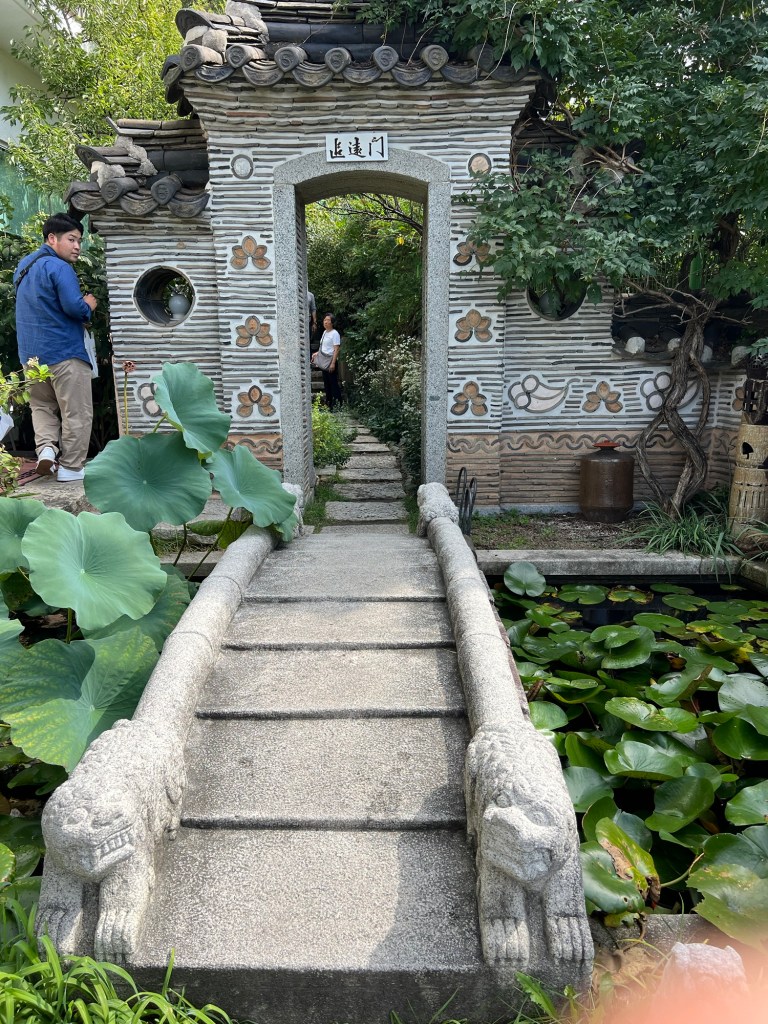
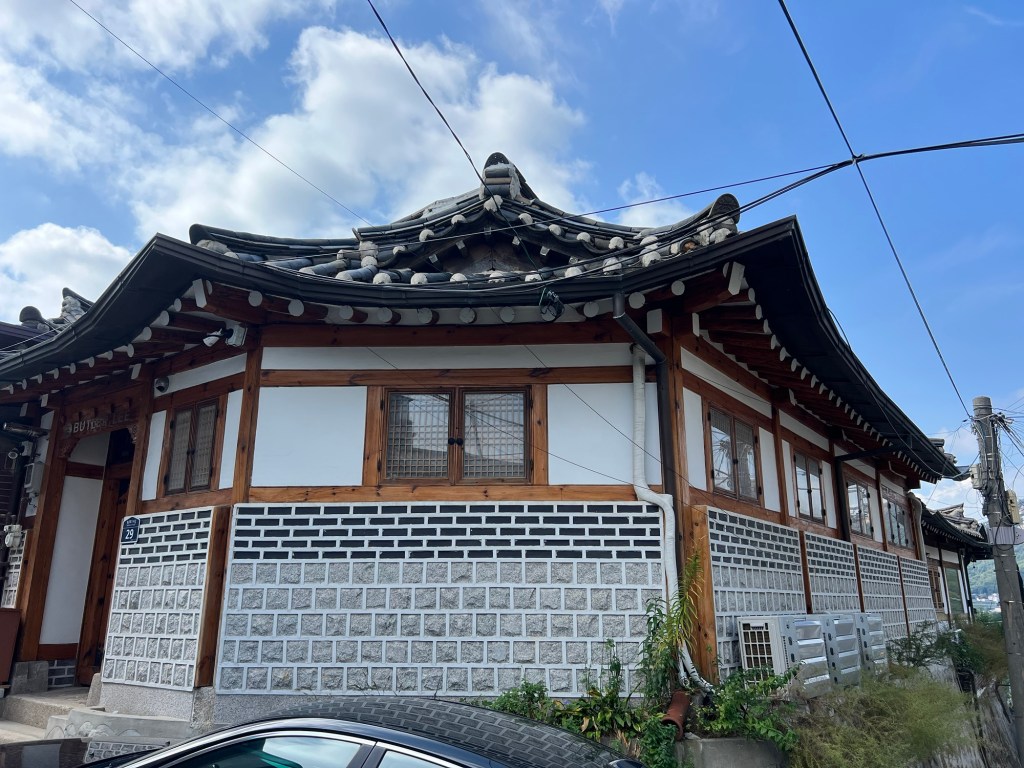
After leaving the palace, Andy headed north to Bukchon Hanok Village, a residential neighborhood in Jongno District. It has many restored traditional Korean houses, called Hanok. This has made it a popular tourist destination, which has caused some issues with the residents who still live there.
Hanok house
The area of Bukchon, which consists of a number of neighbourhoods including Wonseo-dong, Jae-dong and Insa-dong was traditionally the residential quarter of high-ranking government officials and nobility during the Joseon period.
The Bukchon Hanok Village is preserved in a modern society and is renewed as a unique tourist sight. It’s awash with alleyways of traditional houses lining the street and feels like you’ve gone back in time.
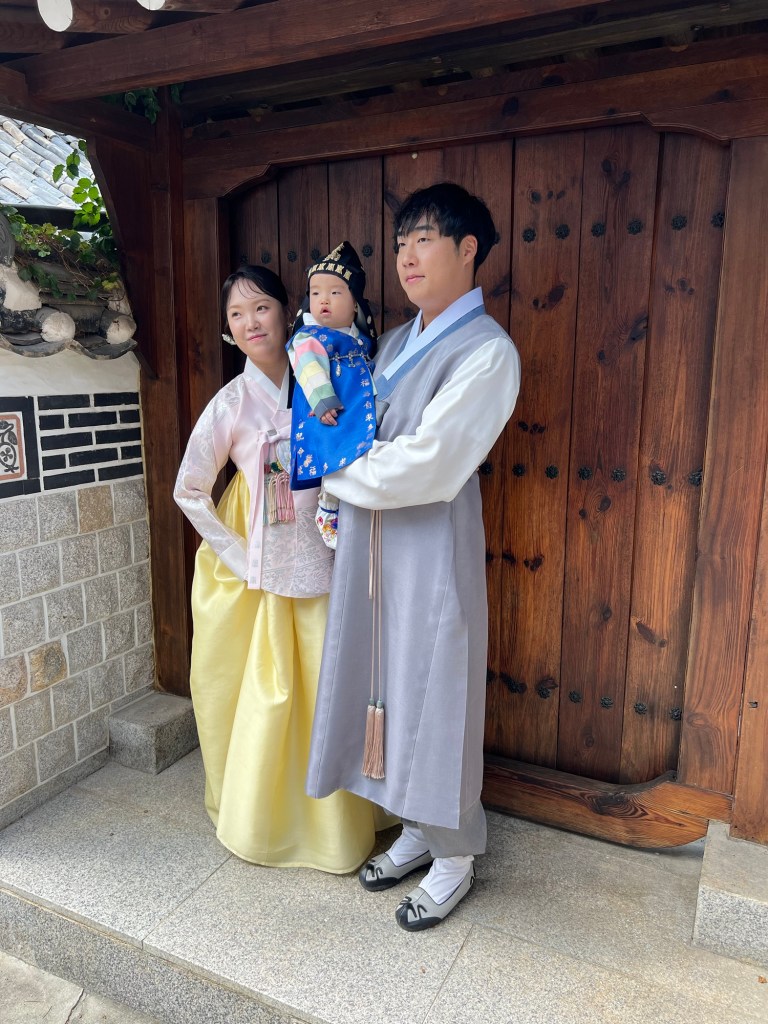
Locals in traditional dress
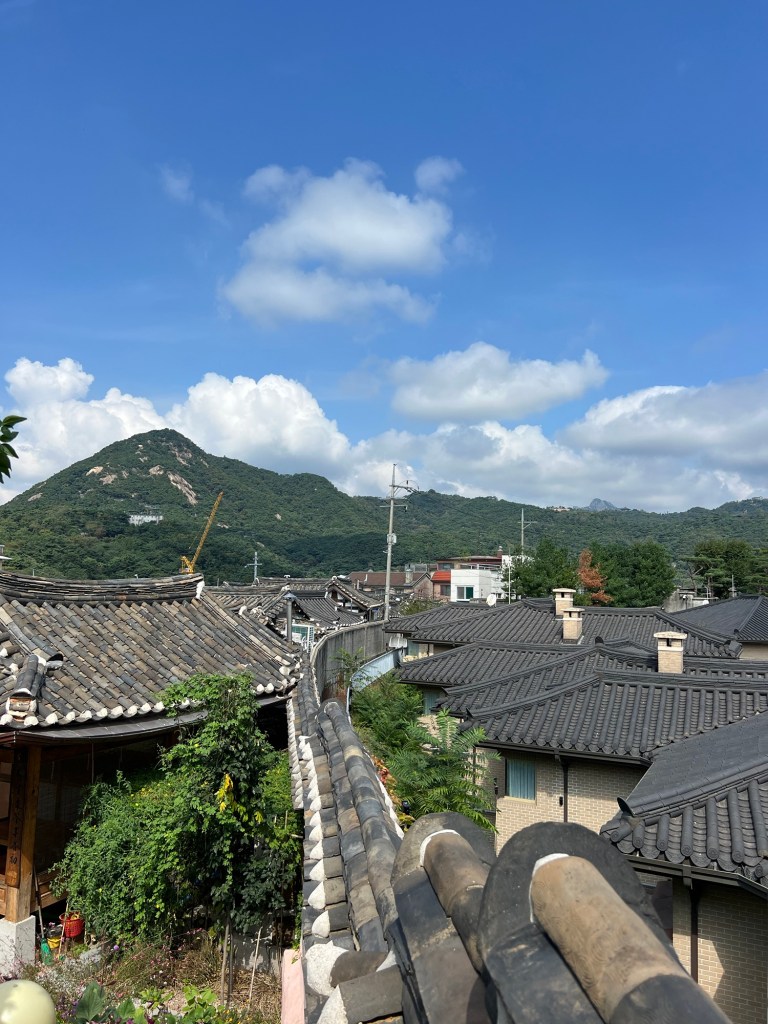
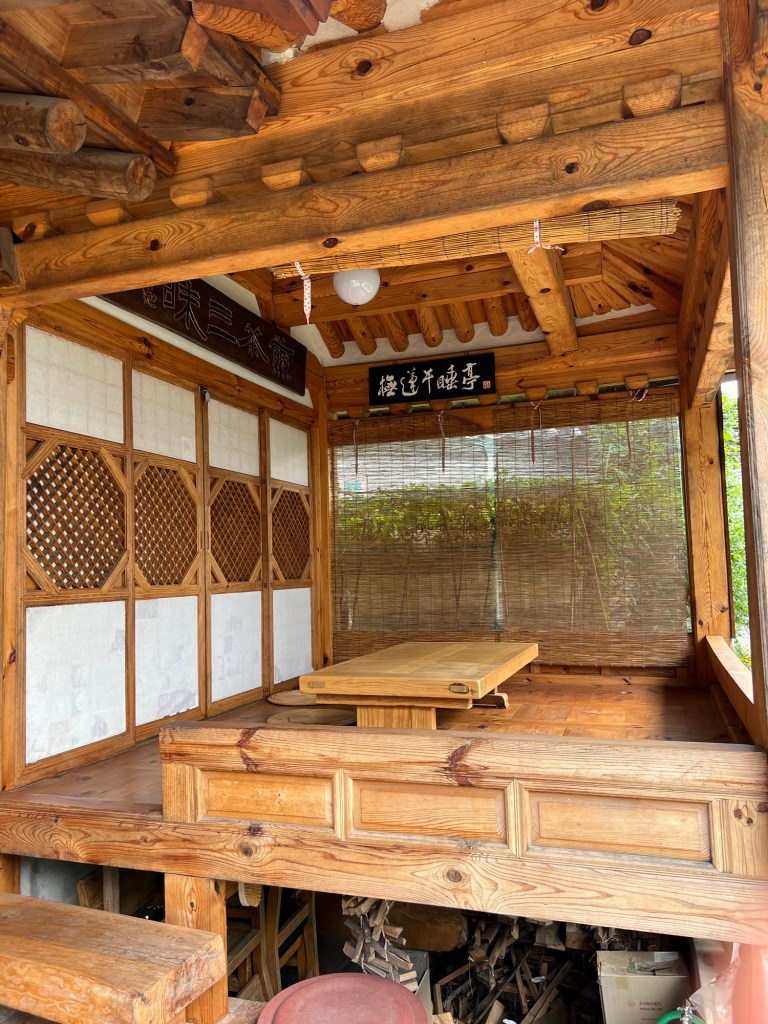
A visit to a small museum in the Hanok area was like entering an oasis of calm. Quiet and peaceful with amazing views across the neighbourhood and out to the mountains in the North.
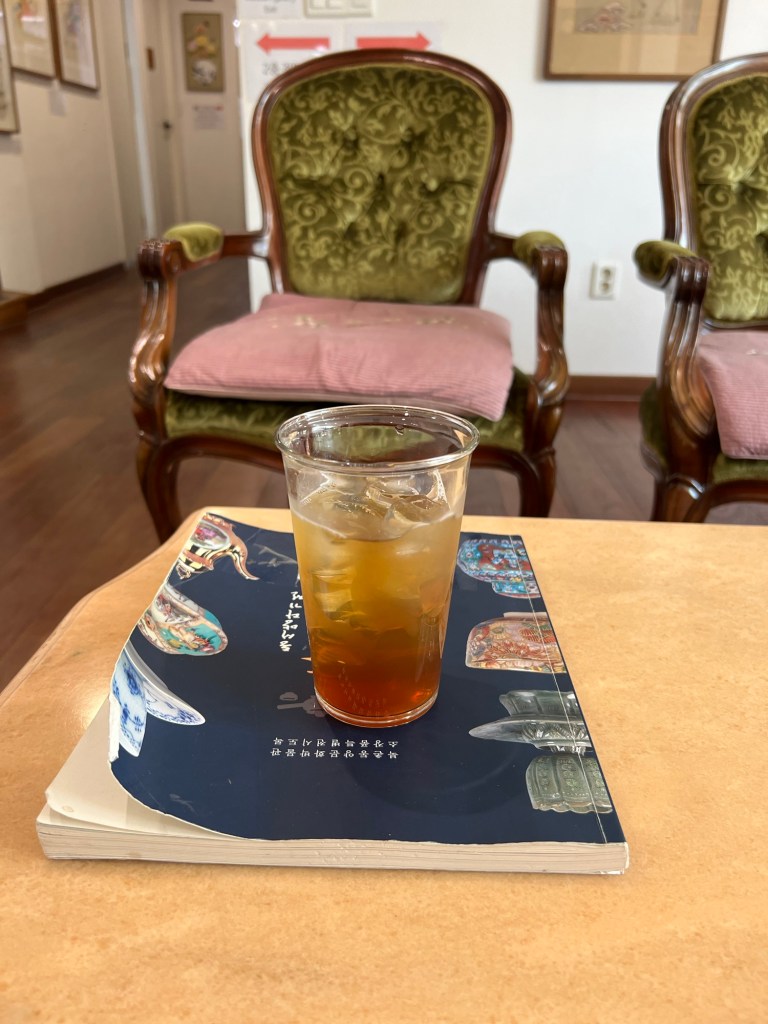
As part of the entry fee there was a free drink and Andy choose a chilled red ginseng tea which helped to give him renewed energy to carry on his tourist journey.
Just the ticket in the heat Traditional Hanok inside and outside Traditional living
The houses are all perched on the hill to the north of the main city affording them great views. Being a residential area there were signs and wardens advising of the need to be quiet and respectful.
Local family in traditional Korean dress
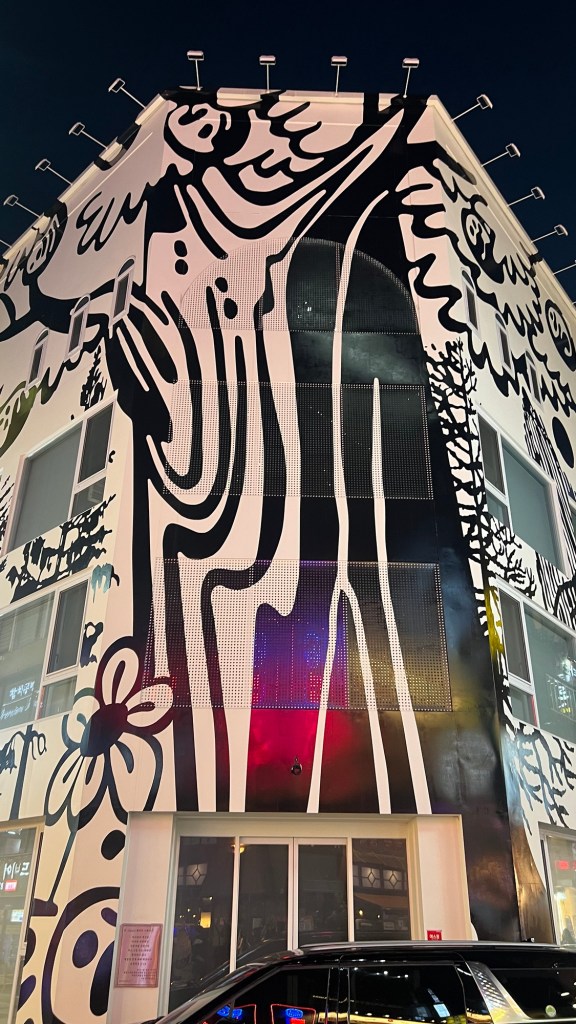
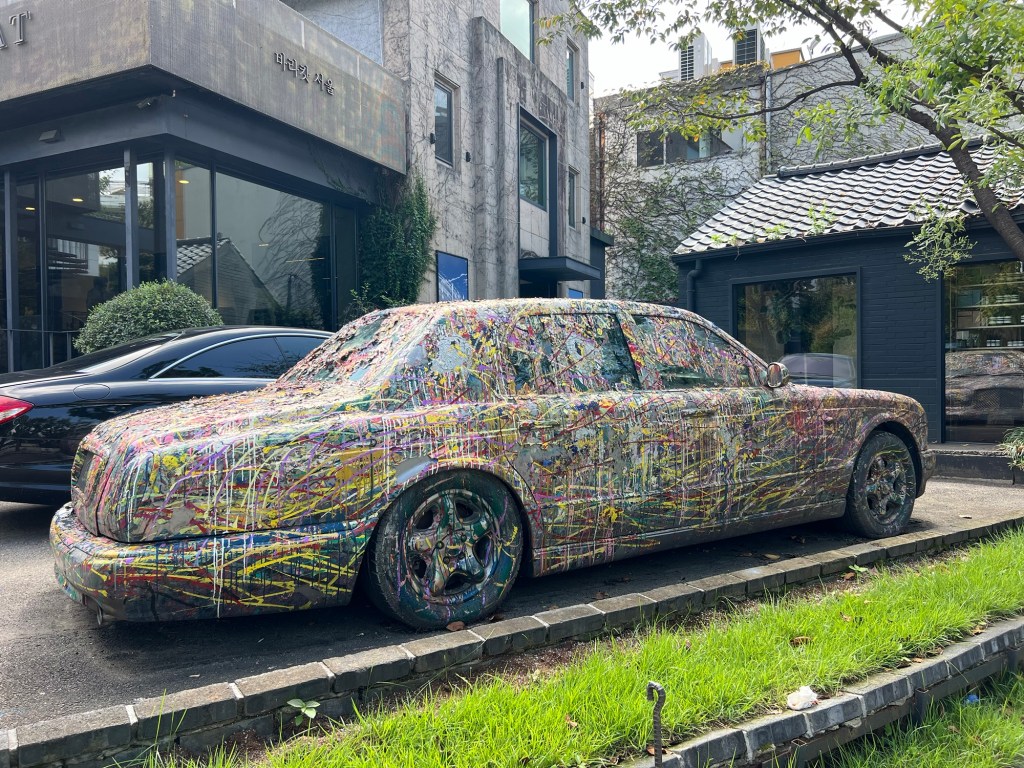
The area of Insadong is a vibrant traditional area and known for traditional tea houses and art galleries, as well as the occasion piece of street art. The car below is I assume part of the artwork.
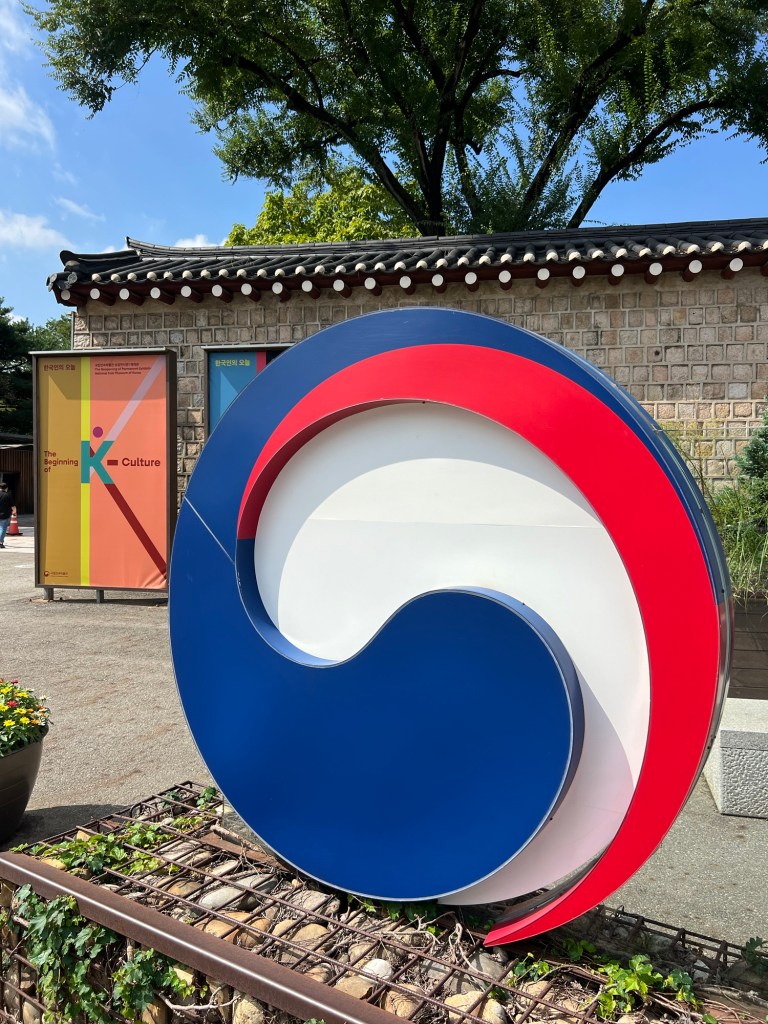
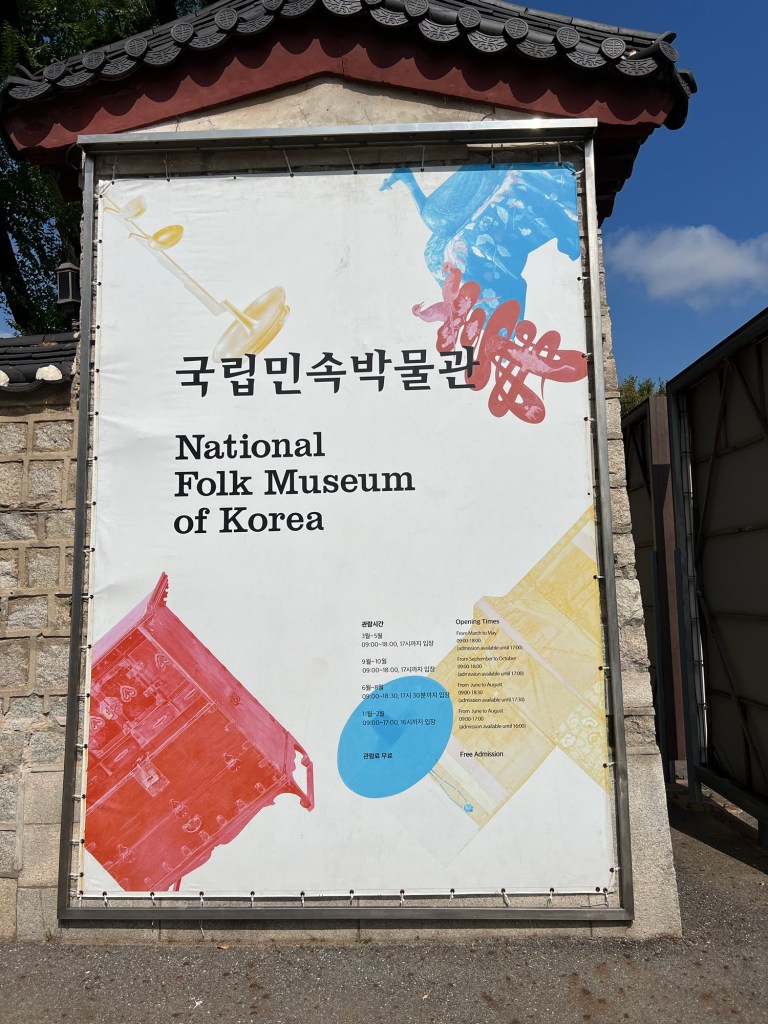
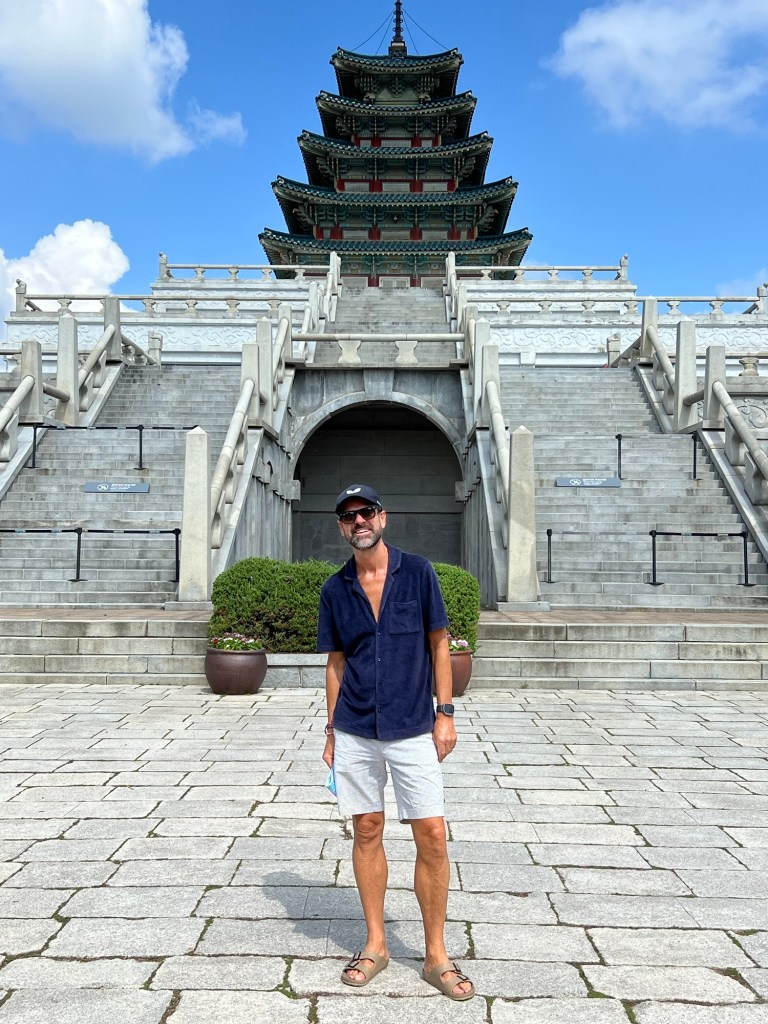
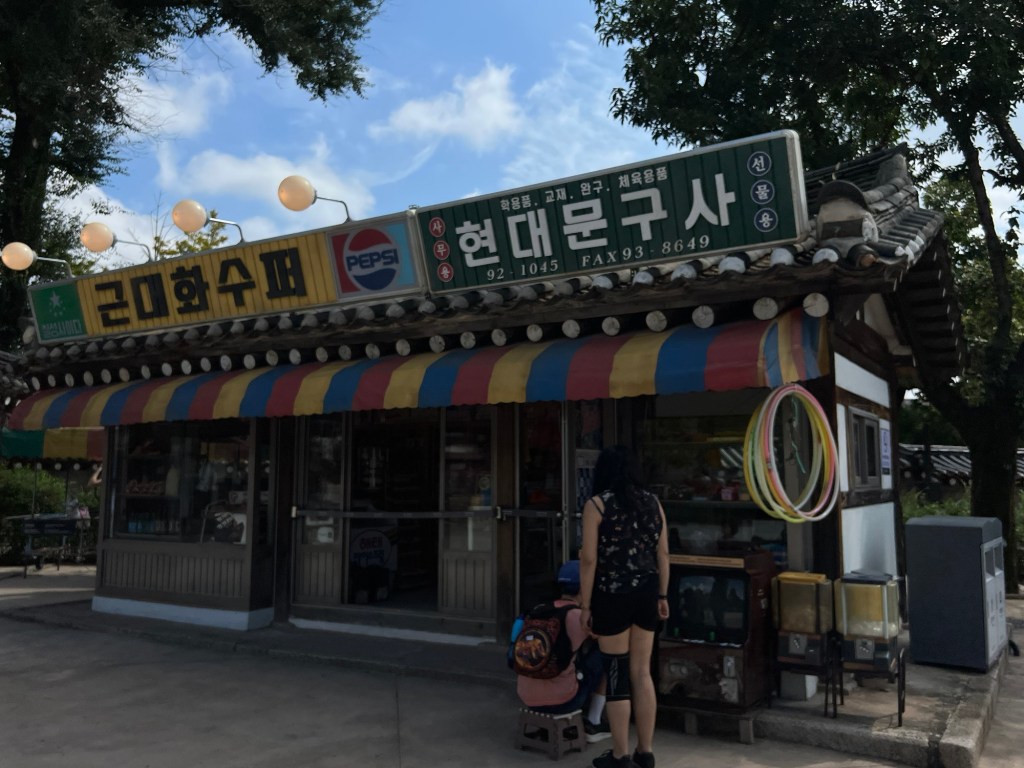
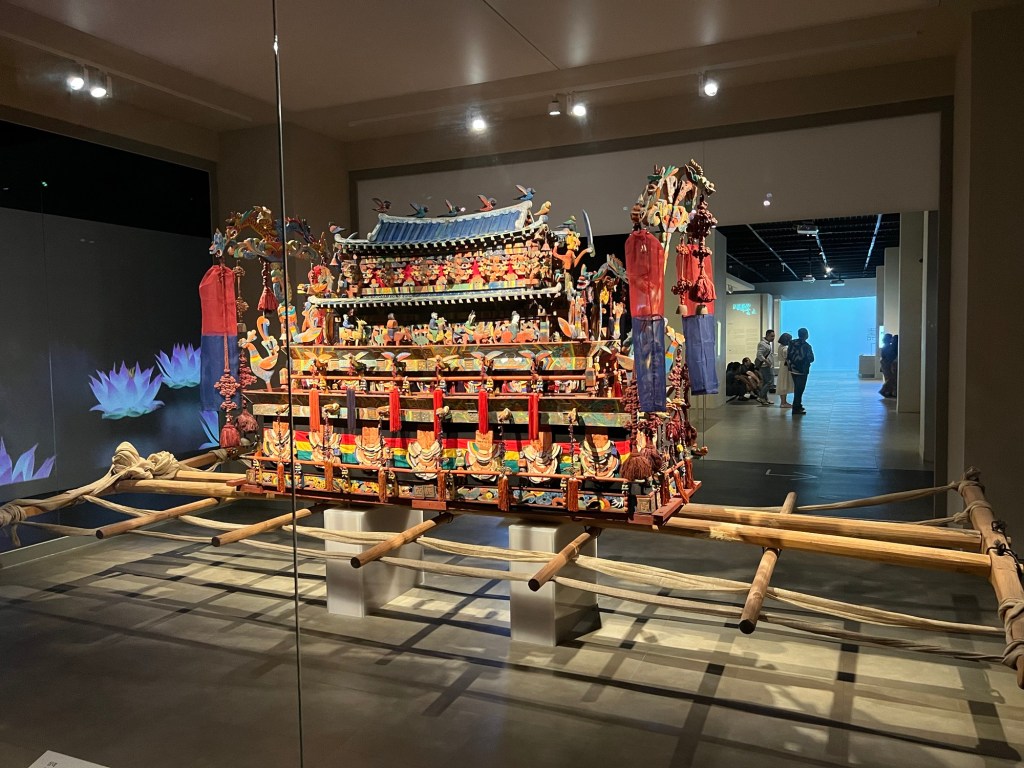
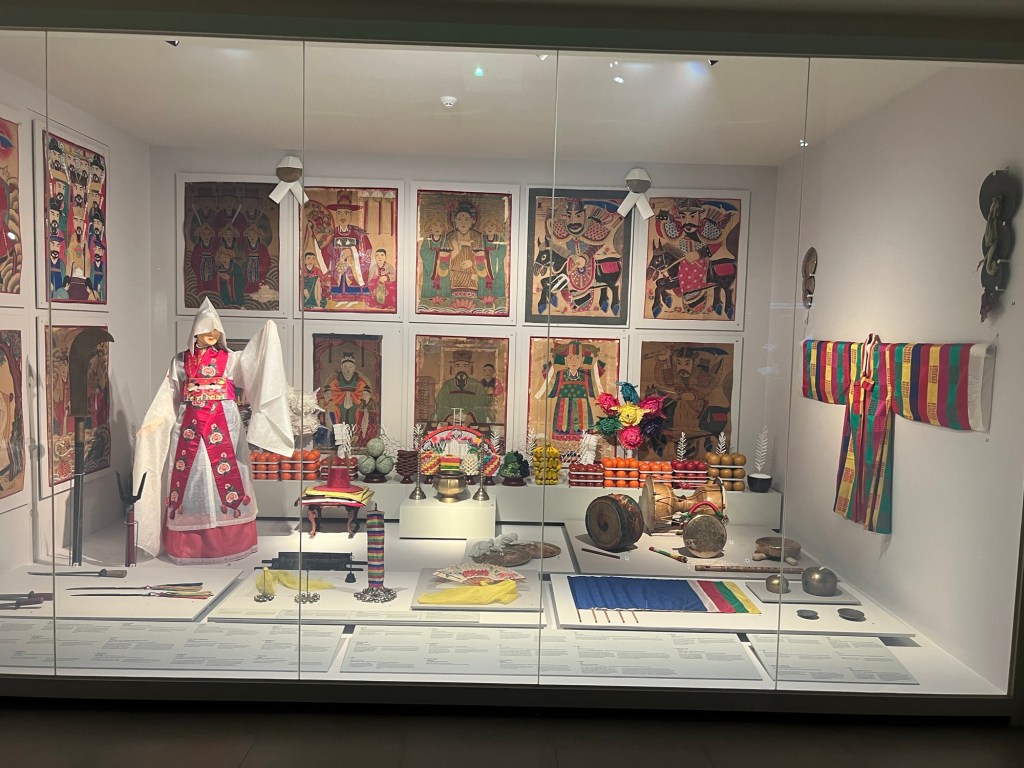
From there Andy kept up the pace and visited the National Folk Museum of Korea, a free exhibition space documenting the history of the country and its traditions.
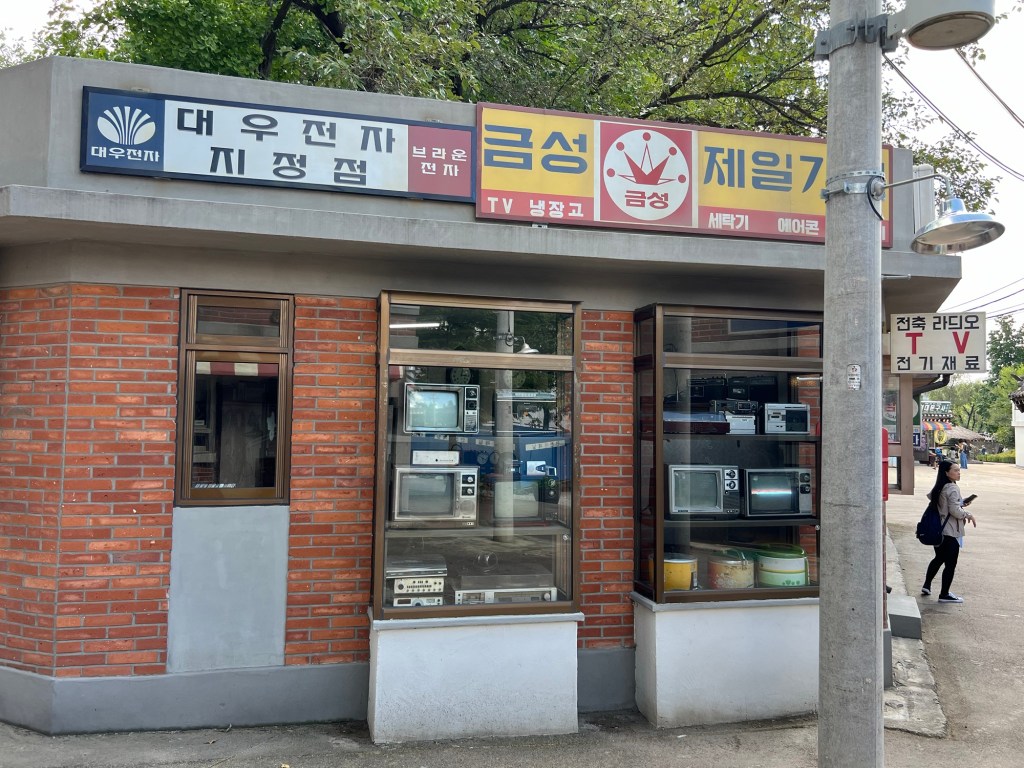
Korean flag A free entry Korean shop in the 1960’sAnother one
The museum space was pretty quiet, but others were missing out as there was lots to see and Andy could have spent the rest of the afternoon taking in the various exhibitions. Instead it was a whistle stop tour taking in a few of the key displays.
Traditional artefacts Lanterns of Korea
It was then time to return to Gyeongbokgung Palace and see the grounds and summer pavilion.
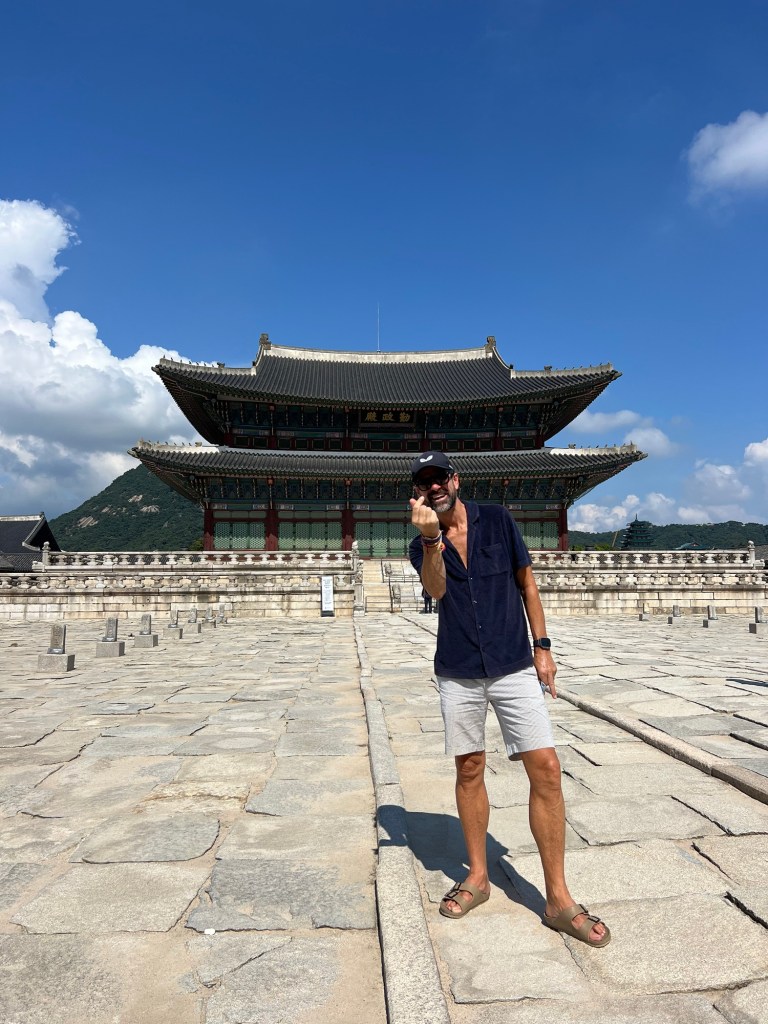
Getting the money shot
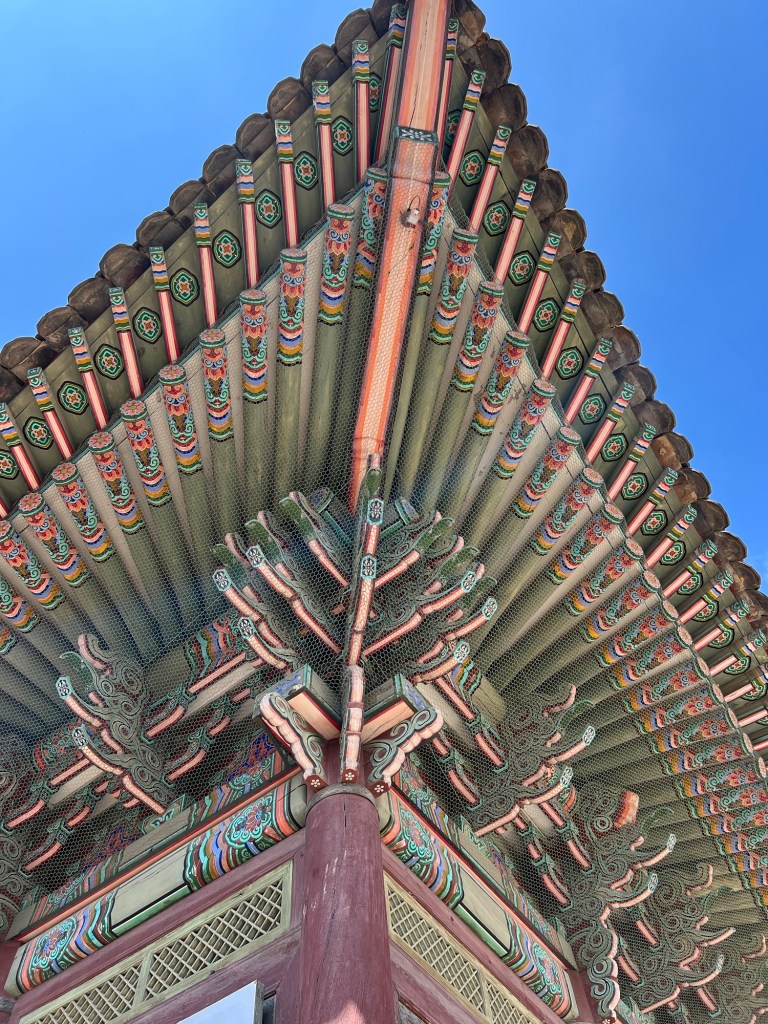
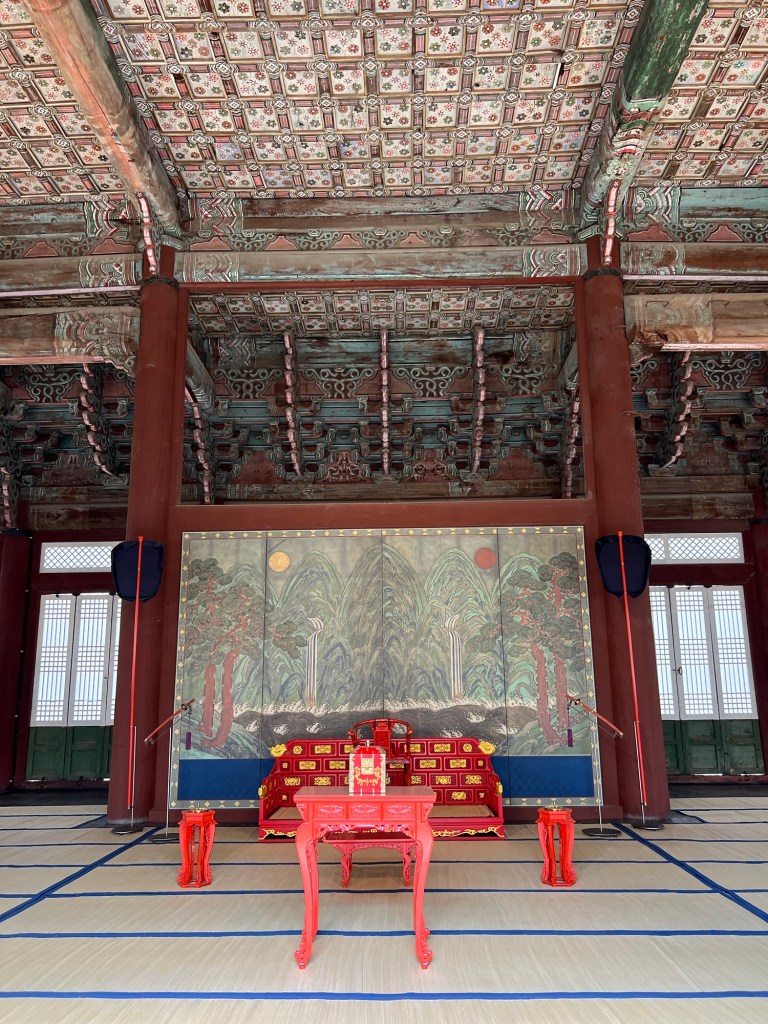
The buildings in the palace are all restored reproductions of the original buildings, with the originals having been destroyed initially by the invading Japanese in the 16th century and again when they annexed the country in 1910, until the end of WWII in 1945. The exteriors are so incredibly detailed, although there is less to be seen in the internal spaces, even so it’s an incredible sight and on a massive scale.
Pavilion of Gyeongbokgung Palace Views back across the city
The palace grounds are immense and comprise over 5,000,000 sq ft of royal buildings and entertaining spaces.
Gyeonghoeru, also known as Gyeonghoeru Pavilion, is a hall used to hold important and special state banquets during the Joseon Dynasty. It’s almost 10,000 square feet and open to the elements sitting within the middle of a lake, very imposing and a beautiful construction.
Changing of the Royal Guard Part IIUp close and personal Main gate and guard change
After leaving the palace for the second time, Andy headed to Dongdaemun Culture Park, a distinct change from the traditional landscape seen so far today.
The park contains a number of attractions, including the Yigansumun Water Gate, the Dongdaemun History Museum, the Dongdaemun Excavation Site Exhibition Hall, Dongdaemun Stadium Memorial, an event hall, and the Dongdaemun Design Plaza. It was the latter where Andy spent the next couple of hours taking in the modern and tech environment.
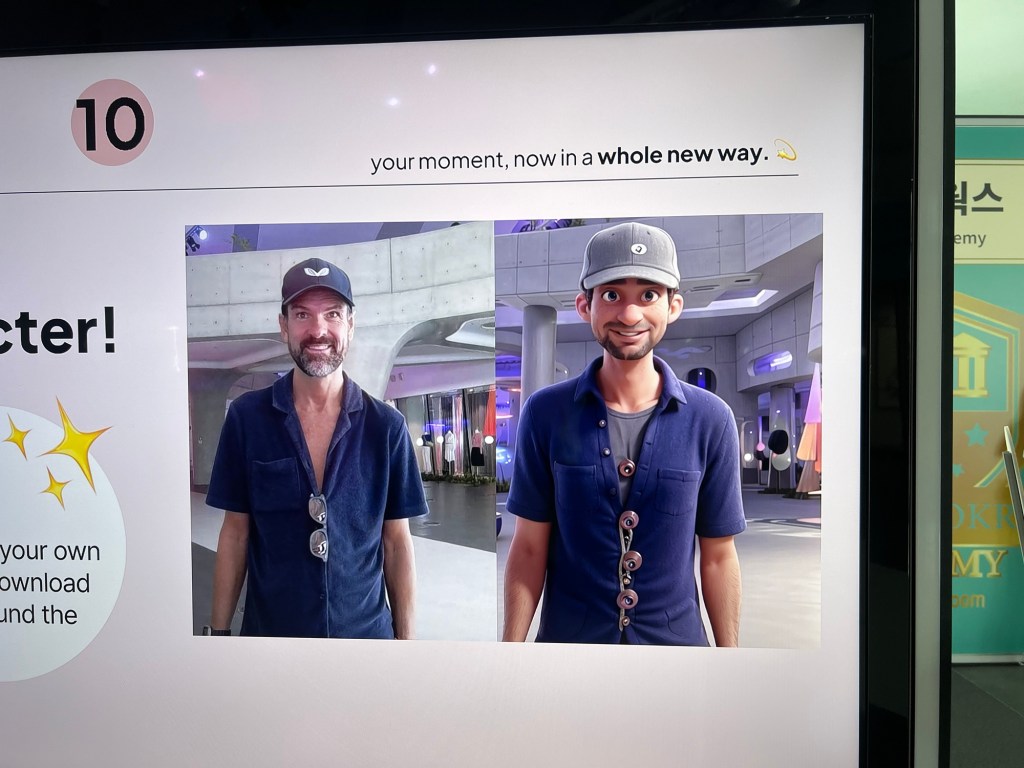
Andy and his AI alto-ego.
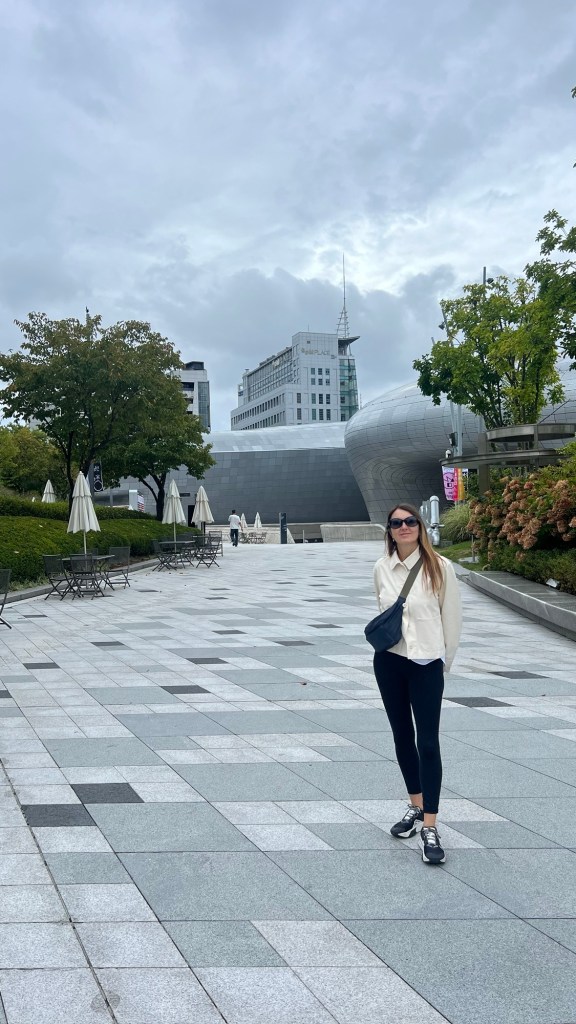
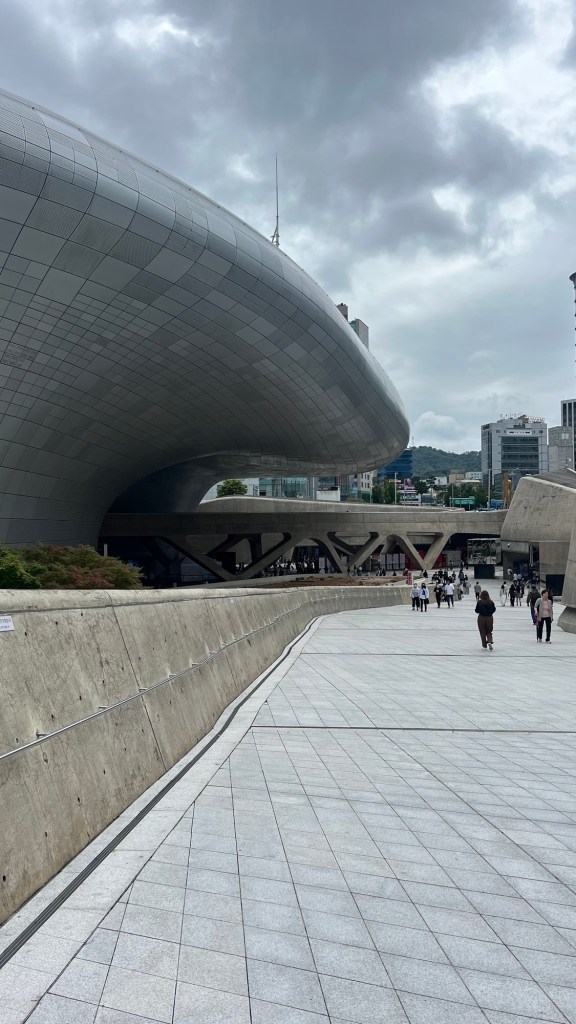
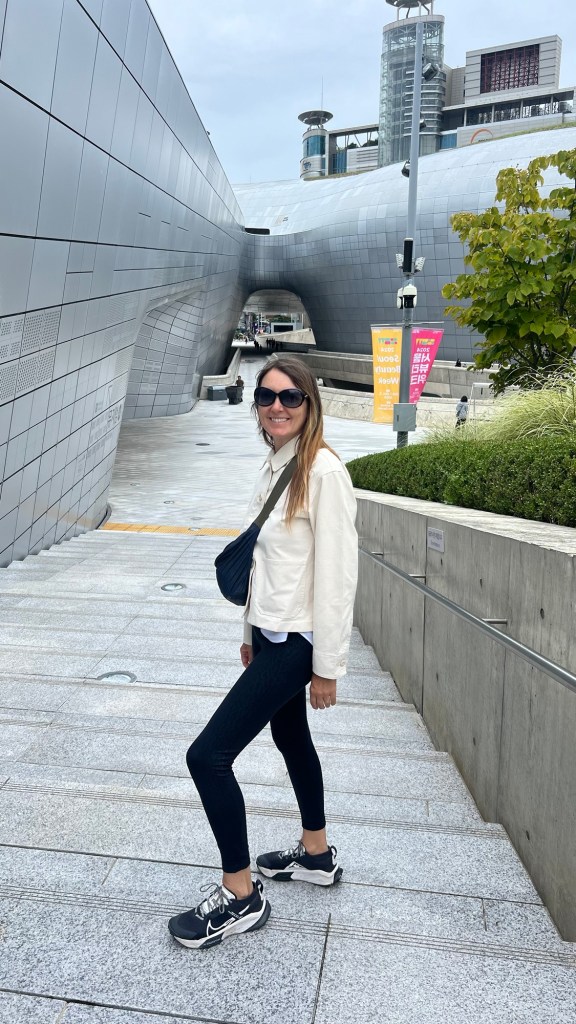
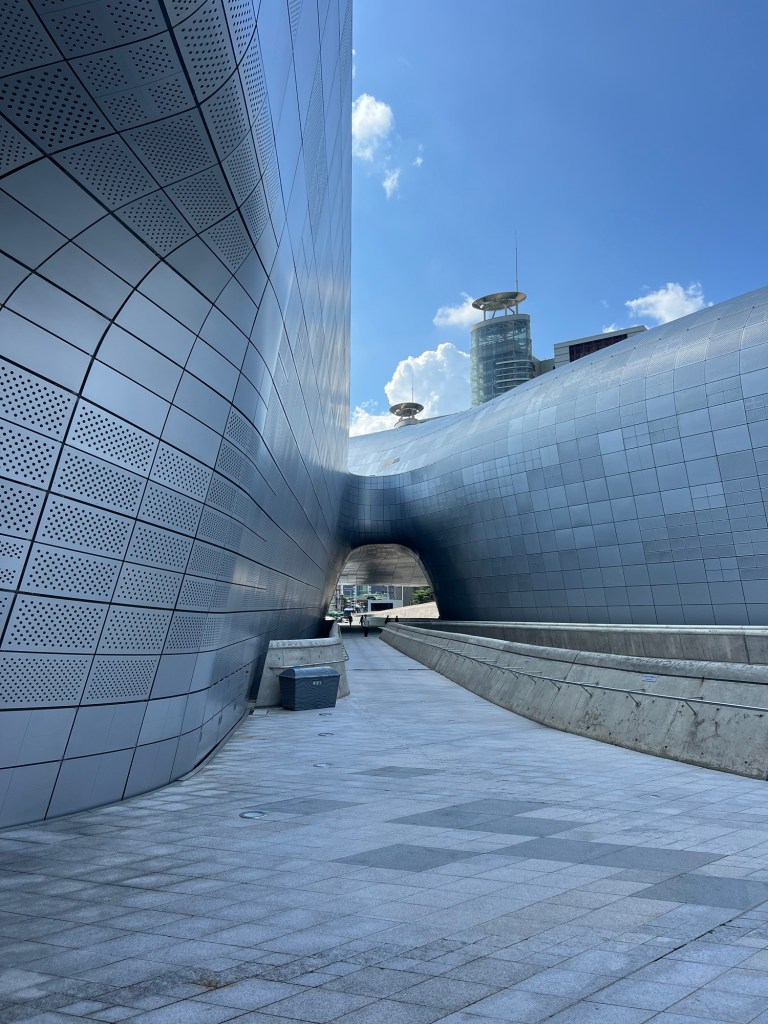
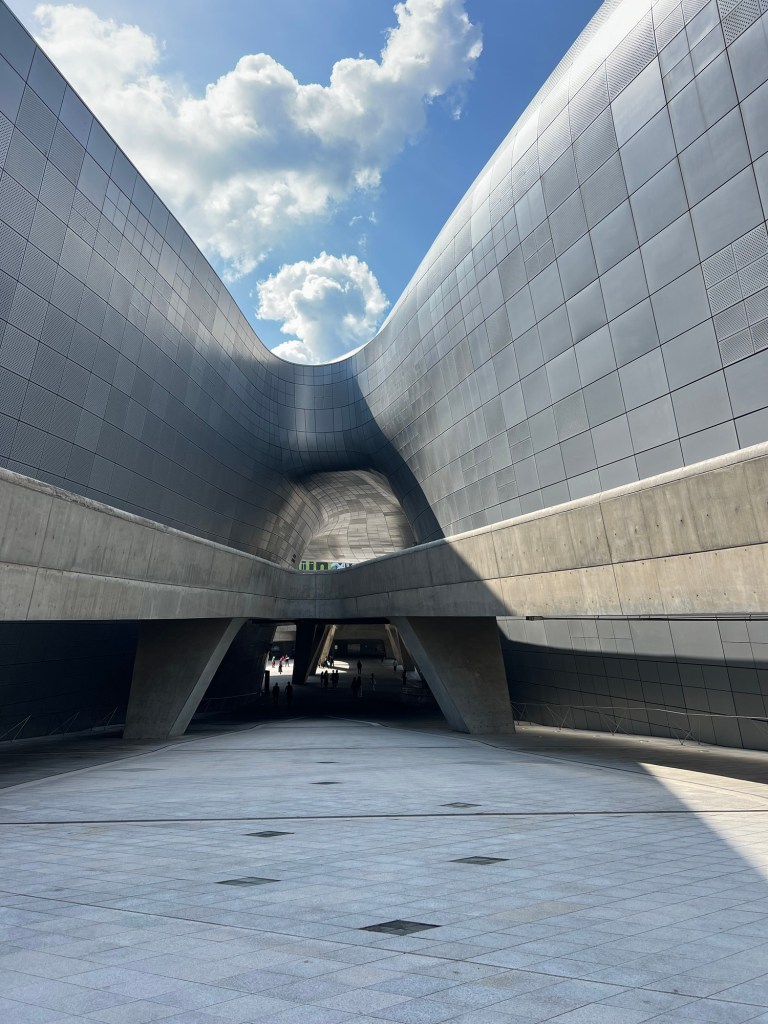
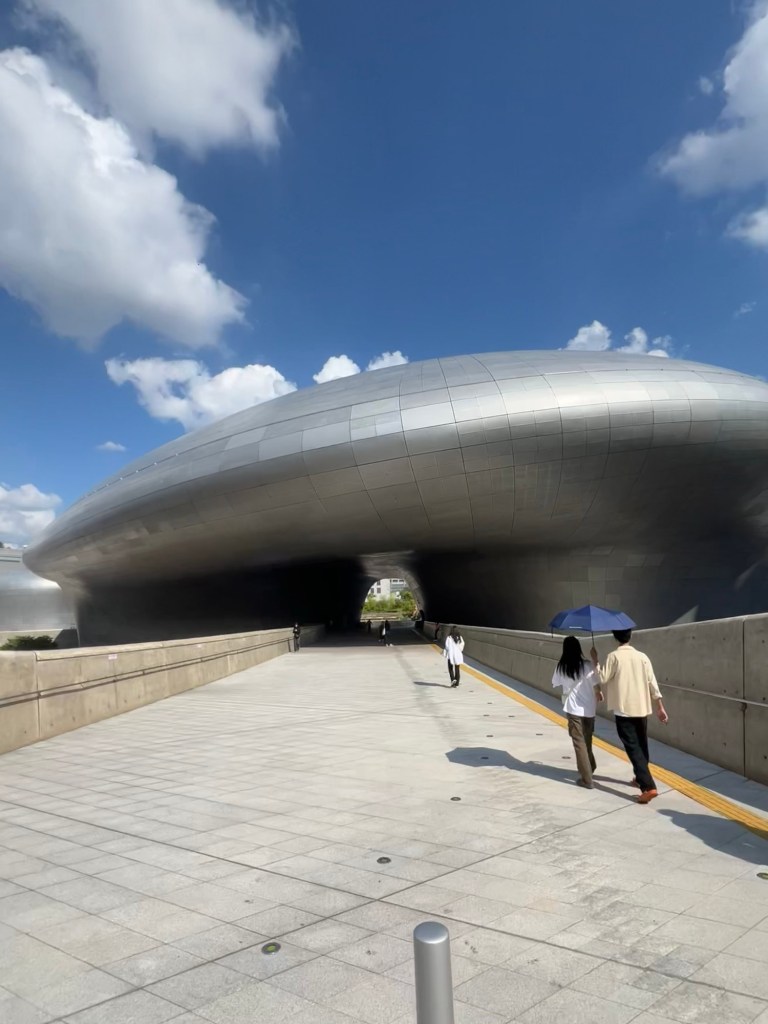
The design plaza is a major urban development with a distinctively neofuturistic design characterised by curving forms of elongated structures. The landmark is the centerpiece of South Korea’s fashion hub and popular tourist destination. It features a walkable park on its roofs, large global exhibition spaces, futuristic retail stores, and restored parts of the Seoul fortress.
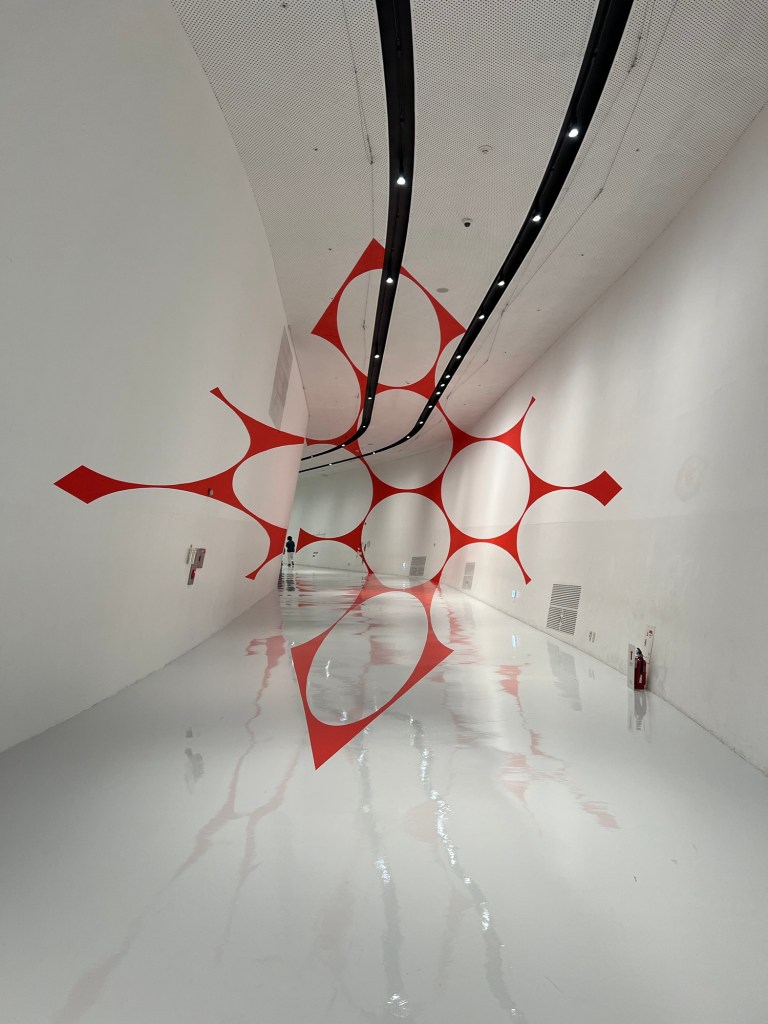
Stunning architecture One of the permanent exhibitions.
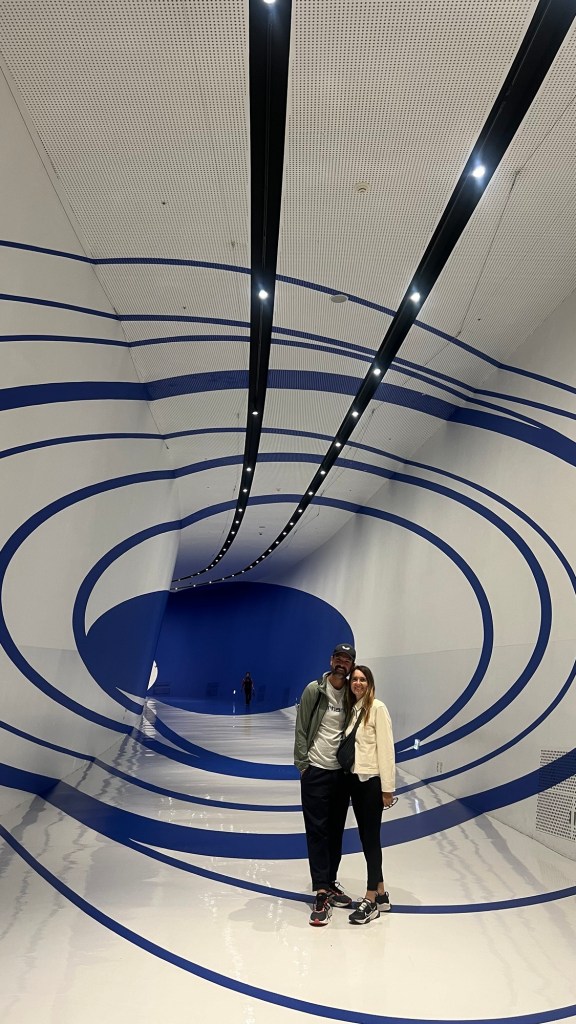
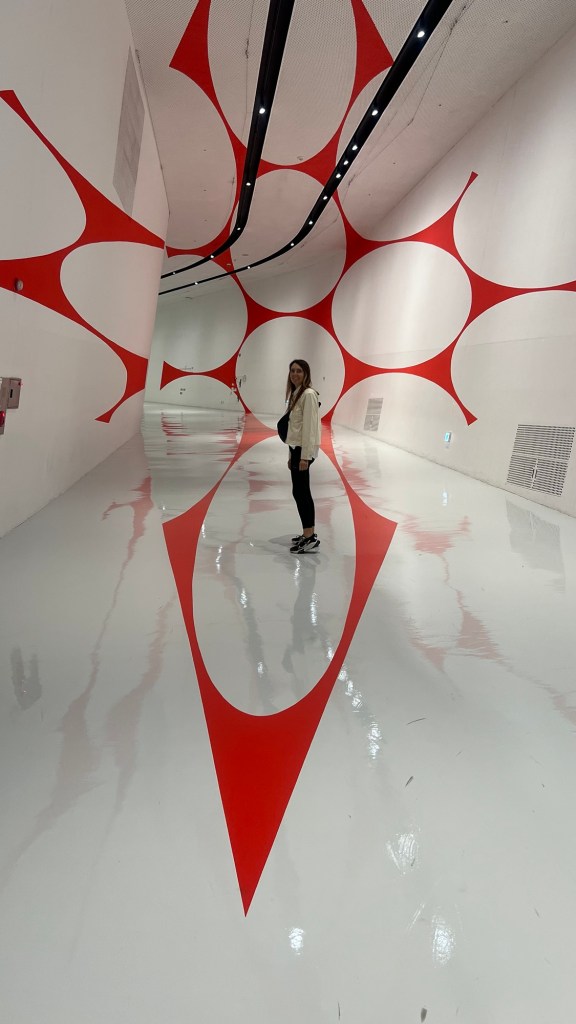
One of the free exhibits was a curved walkway bridging 4 levels with art displays on a scale that made you rethink how you see things. Very impressive and cool.
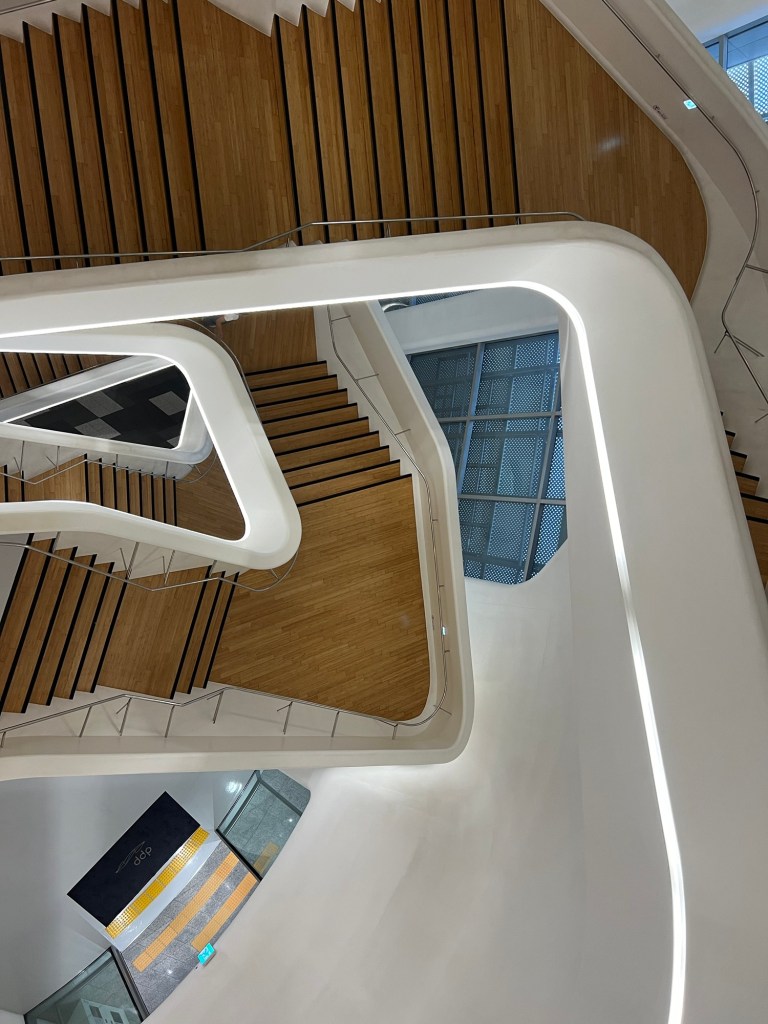
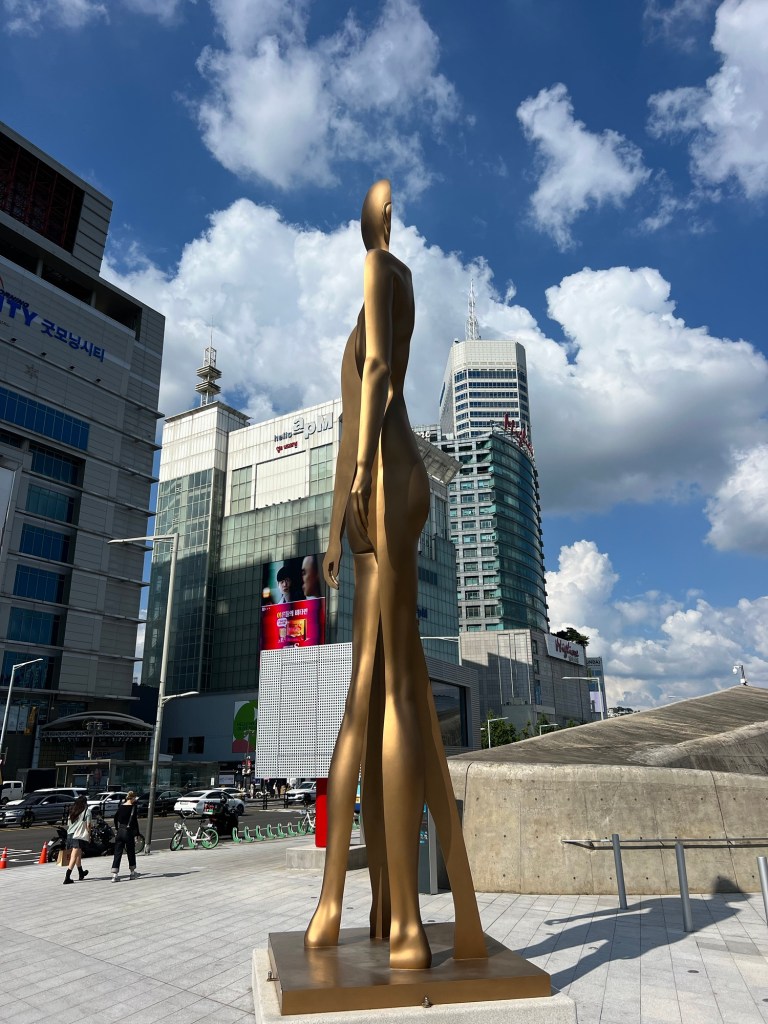
Even the stairs are a work of art Sculpture on the entrance to the design plaza
Designed as a cultural hub in South Korea’s largest fashion district, the DDP is composed of undulating surfaces that resemble the flow of liquid and allow flexibility in space. Impressive stuff and designed by British architect Zaha Hadid.
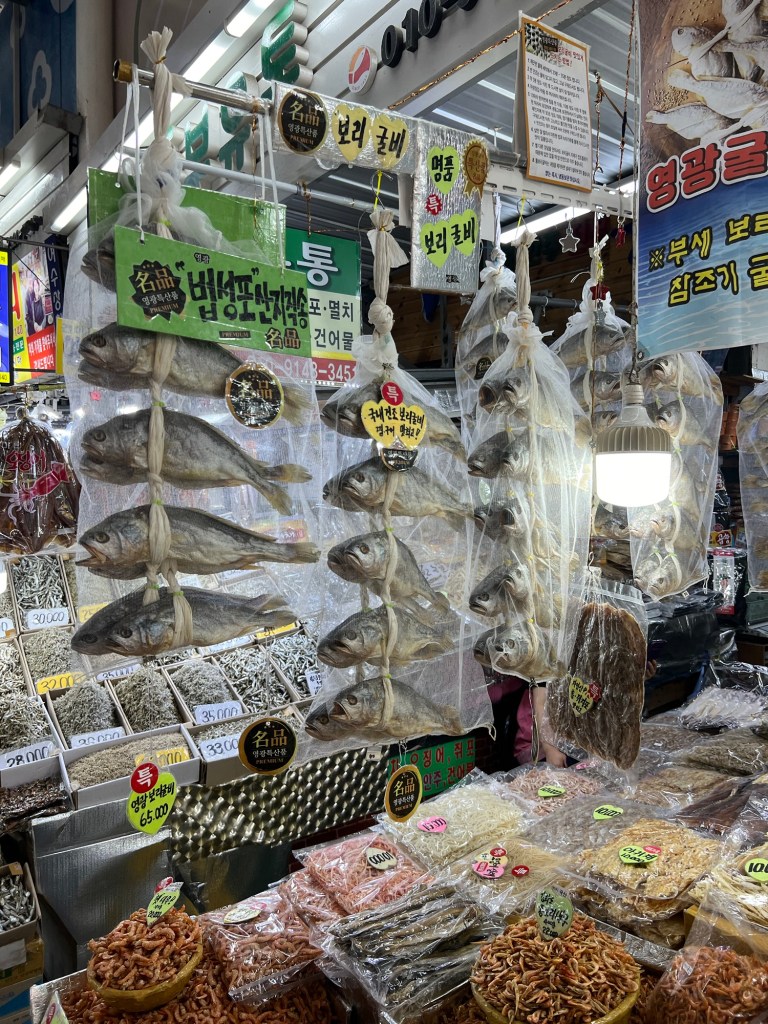
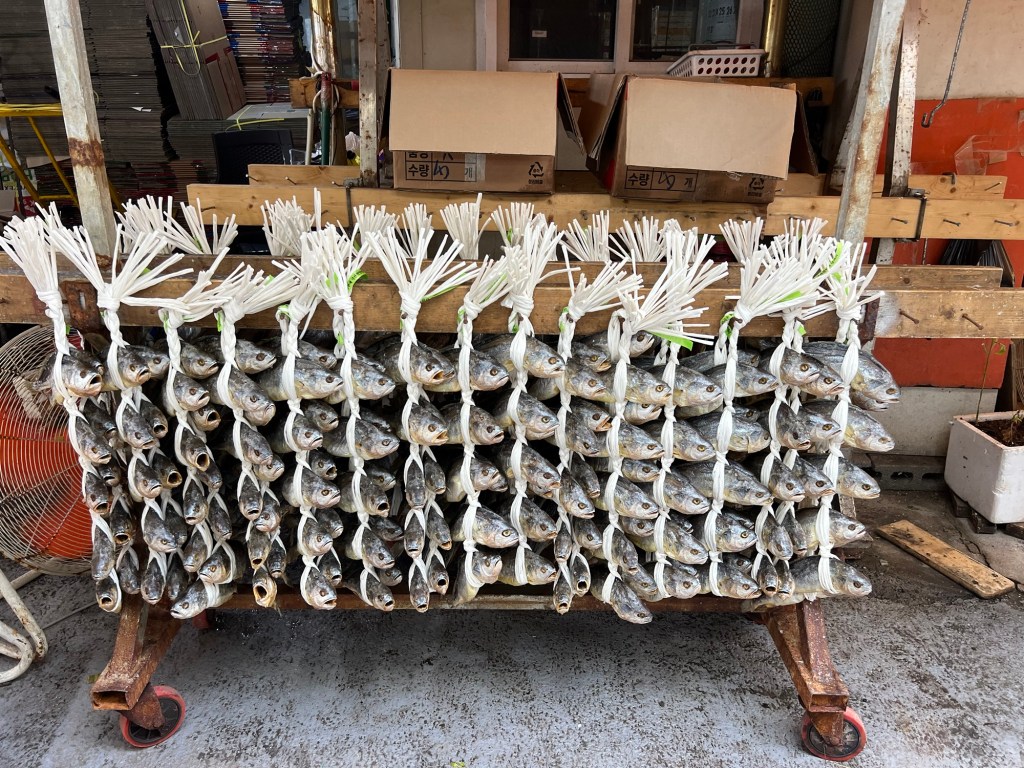
Going back to the hotel for a well earned break, Andy popped into the fish market in Dongdaemum and came across a range of delicious fish straight out of the sea. Well almost.
Pick a fish Lined up ready to go – take your pick Back at the hotel for a short break
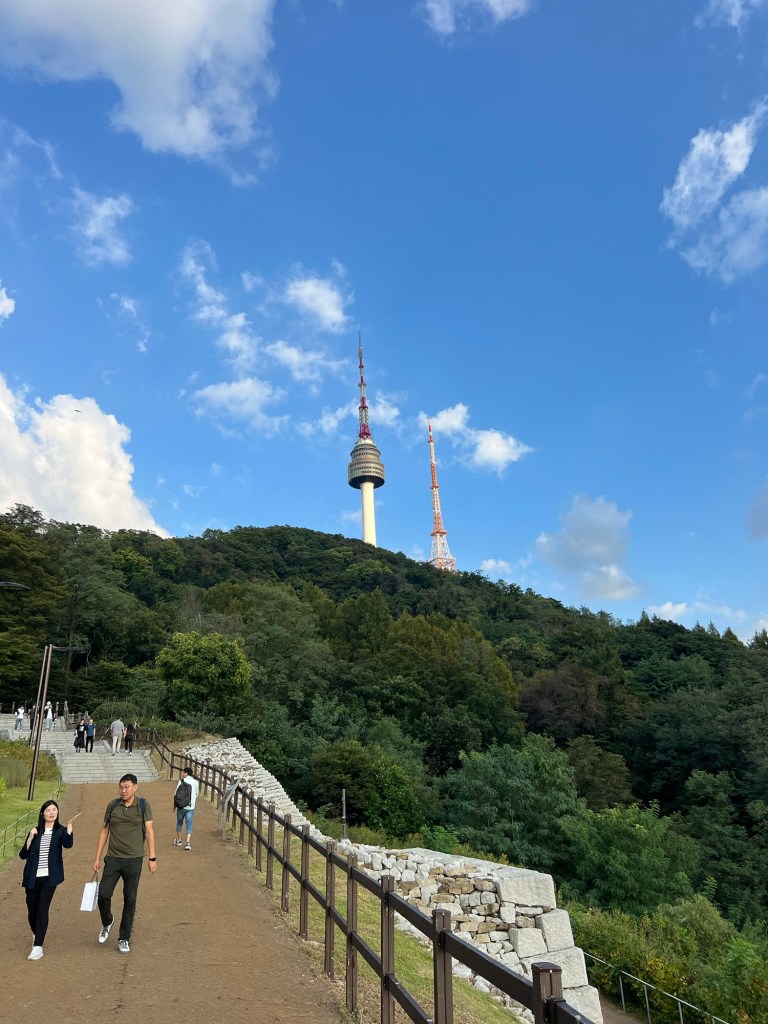
After checking up on Michelle, there was just enough time to climb up to the base of Namsan Seoul Tower to take in the sunset across the city.
The walk of around 40mins takes you through the busy streets of Myeongdong past the cathedral, before you start a climb up steep streets, before arriving at the cable car station. Feeling particular fit and keen to keep going, Andy walked up to the summit involving some 1800 steps. The views on the way up looked out across the city in all directions and gave a Birds Eye view!
At the top and ready to enjoy the views Sunsetting at the summit
On the way back it was time to take in a chilled glass of IPA and some Chimaek, essentially chicken and beer!!
After dinner it was time for dessert and a yogurt ice cream.
After a busy day walking the streets and taking in the various sights Seoul has to offer, it was time to return back to the hotel and check on Michelle and see if the sleep has helped her to feel a little better.
The walk back to the hotel passed the Myeongdong Cathedral which looked stunning in the night sky.
Assuming Michelle is feeling better tomorrow we plan to take a trip down to Gangnam for a walking tour of the area, a visit to Lotte Tower to see the sights from 120 floors up before grabbing a sunset cruise on the Hangang River before dinner in the trendy area of Hongik. Until then.
Today we said goodbye to Shanghai after our very enjoyable 5 day stay of Part II of the China adventure.
We had a mid-morning flight, so we were up and in a cab by 7am trying to avoid the Shanghai rush hour. It became little more fraught when we discovered that the cab fare was more than we had money left. Thankfully the cabbie was kind enough to let us off the 20 yen underpayment!!
Checking into Korea Air flight to Seoul
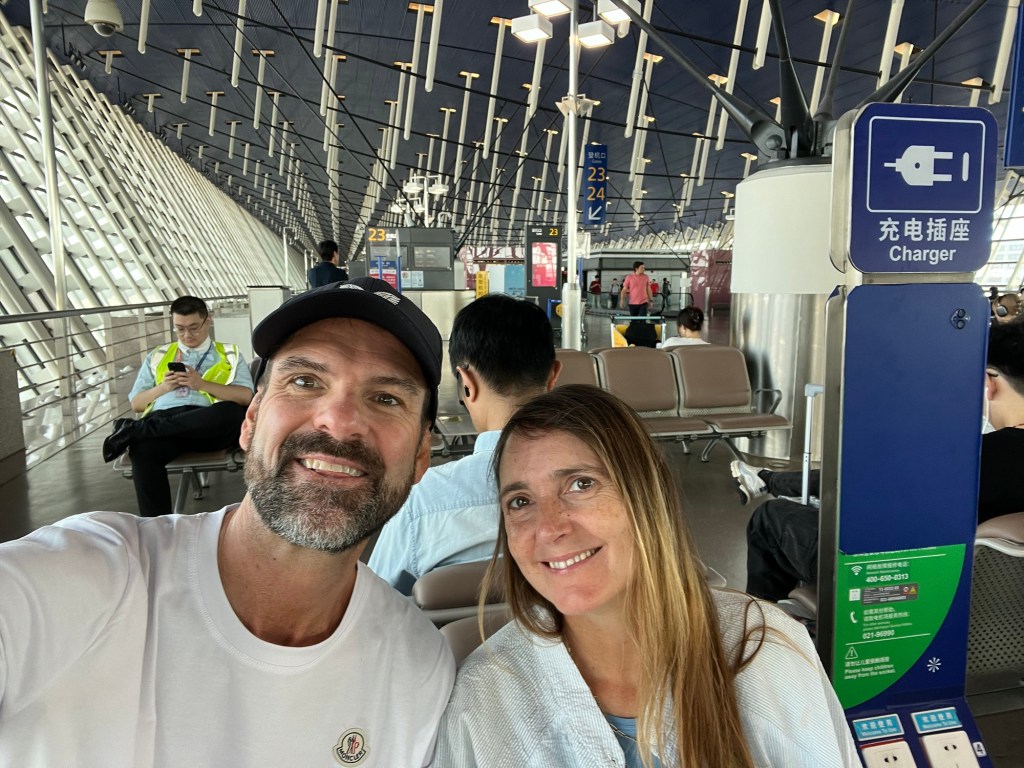
Shanghai airport is a huge modern affair, and we found ourselves walking about 20mins down to our gate. The fact we were still an hour early before the flight is down to our desire to always be punctual. Anyway it gave us a good opportunity to read up on Seoul and what we should be seeing and doing.
At the gate for our Seoul flight Shanghai airport hangar
After a short flight of just 90mins we landed in Seoul and were soon on the Airport Express train heading into downtown Seoul. Incheon Airport is a good hour from the city and located on a small island, affording wonderful views of the beautiful mountains and countryside to the North of the city.
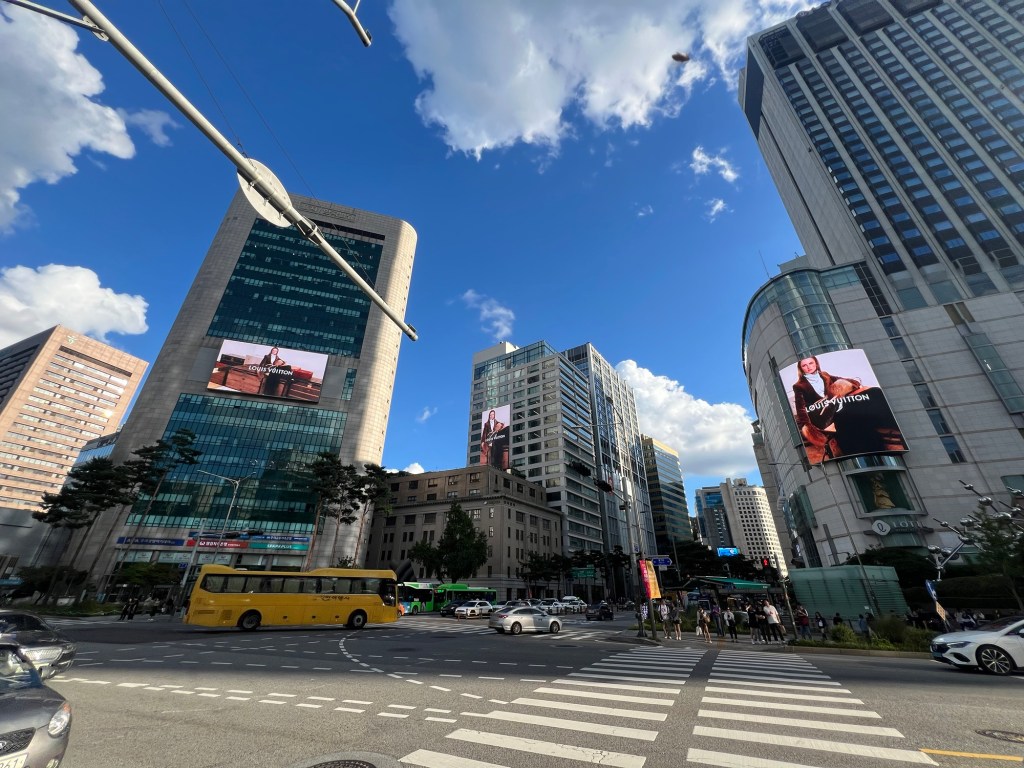
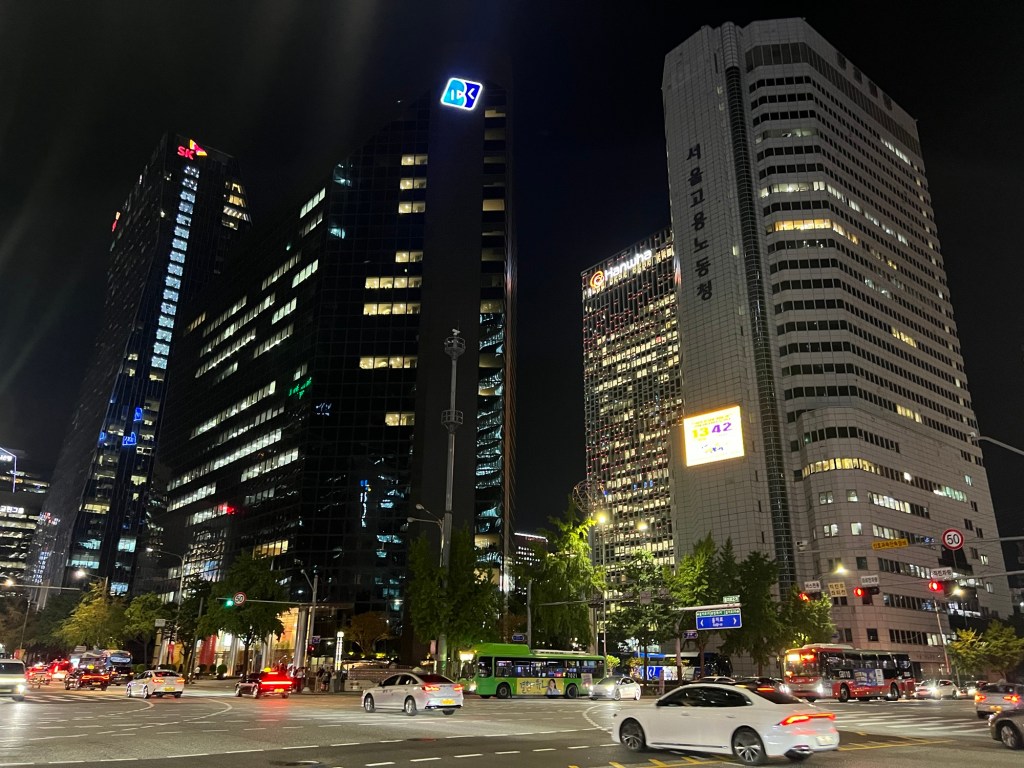
As expected the train was quick, efficient and very reasonable, at just £3 per person and interconnected into the subway network, dropping us within 5 minutes of our hotel, the Lotte City in central Myeongdong. This is one of the main business hubs in the city and all around are shiny modern office buildings with high tech advertising screens.
After checking into the hotel, we went for a wander and soon discovered the Cheonggyecheon Stream, an urban renewal street that runs through downtown Seoul.
The stream stretches for over 10k. It was originally sourced from the Suseongdong Valley, until the mid-20th century, when deteriorating conditions prompted the filling of the stream with concrete and the construction of a freeway in its place. In 2003, the city government began an urban renewal project to disassemble the expressway and restore the stream, which was completed in 2005 at a cost of over £250 million.
The Cheonggyecheon restoration project initially attracted significant public criticism, but since its opening in 2005 it has become popular among residents and tourists.
The Seoul Outdoor library next to the urban stream was created to bring everyday happiness, uniqueness, and relaxation. You can enjoy a unique urban book retreat free of charge and bring a beer or wine if you so choose. It’s such a great idea and was well attended when we walked past.
At the end of the urban stream we came across Seoul Soul a themed area for families where you can relax and listen to music and performances in the heart of the city.
Seoul Plaza Large projected tv advert on an office buildingCity Hall
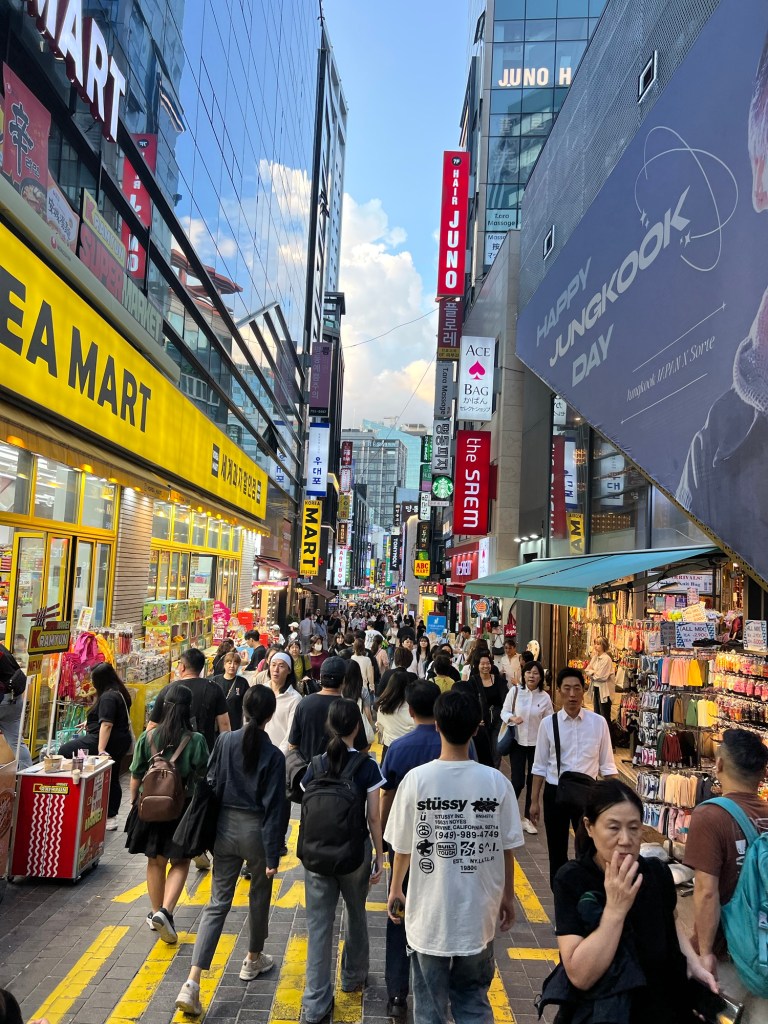
From there we carried on walking to the Myeongdong area, known for being one of Seoul’s main shopping, parade route, and tourism districts. In 2023, it was listed as the ninth most expensive shopping street in the world. The area is known for its two historically significant sites, namely the Myeongdong Cathedral and Theatre.
It is a particularly popular area for young people and tourists as a centre for fashion and sight-seeing.
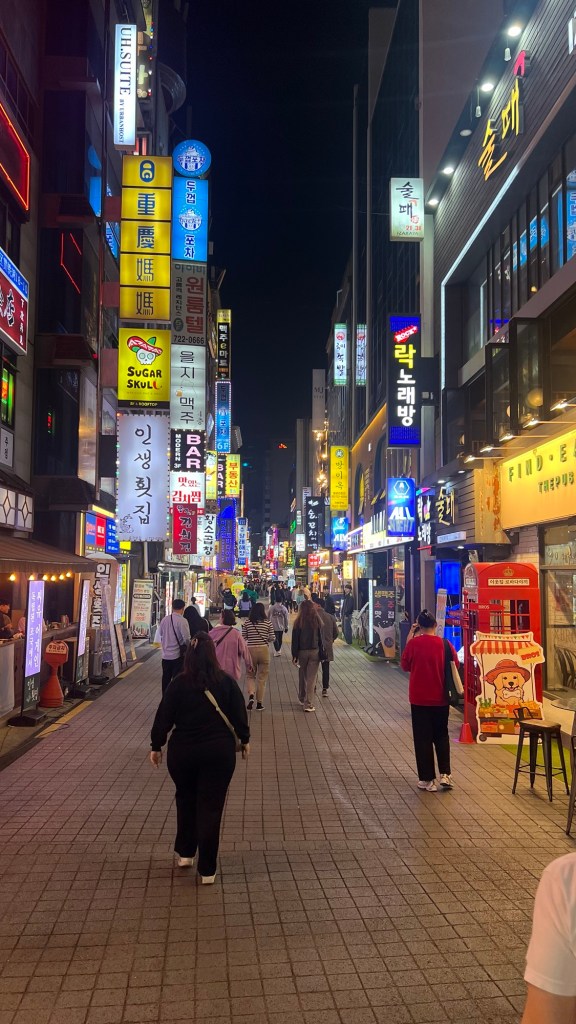
Myeong-dong is a hot bed for restaurants and street food, and we saw a range of options from Korean, Western and Japanese.
Many restaurants in the area specialise in dongaseu (pork cutlet) and kalguksu (noodle soup).
K-pop music banging from speakers and the latest fashion or beauty items fill the streets where foodies flock to traditional eateries offering all sorts of culinary delights.
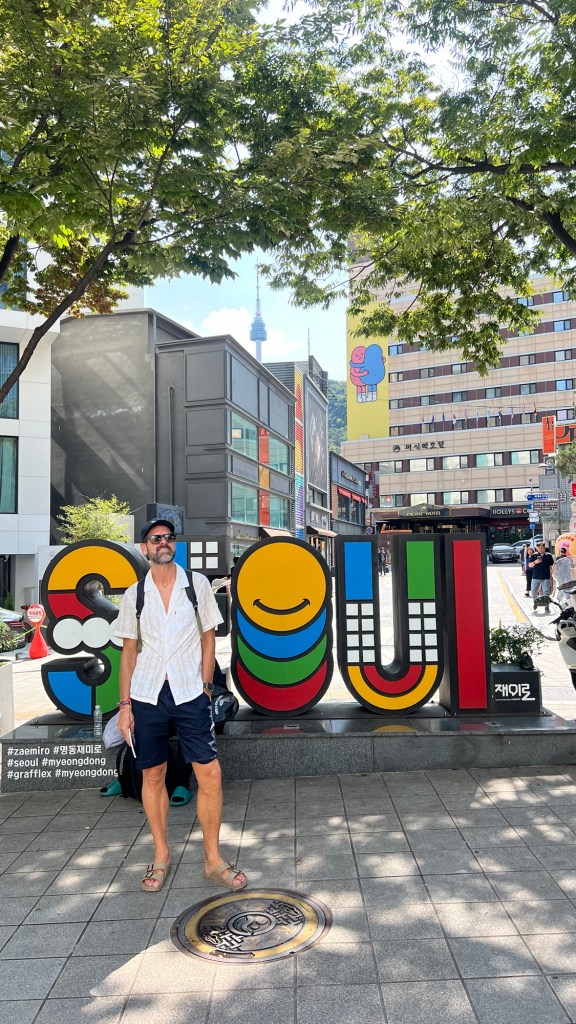
With Namsan Seoul Tower in the background, it is a real melting pot of cultures and highlights the diversity of this part of Seoul.
As we strolled through small alleys targeted towards the young shopping enthusiasts, we reached the crossroad of Myeongdong Theatre, which is widely appreciated as the pioneer of Korean culture and art.
The venue hosts traditional plays, experimental theatrical works, non-verbal performances, musicals, and theater and art festivals.
The Myeongdong Underground Shopping Centre close by was awash with K-pop items and souvenirs all begging to be bought!
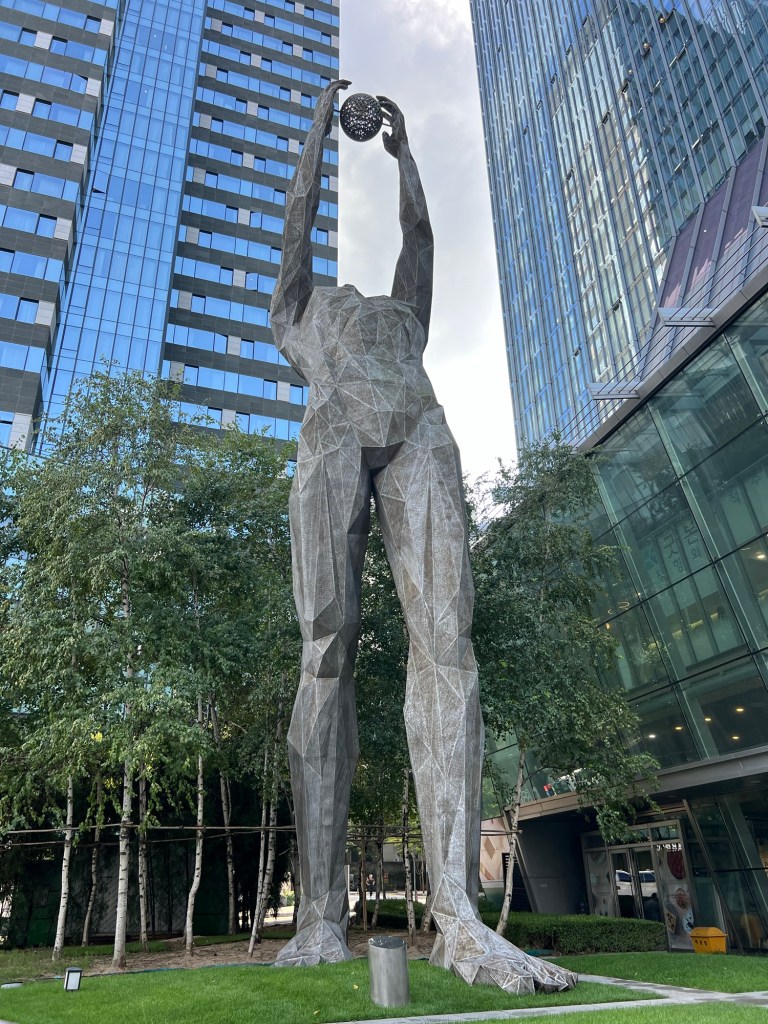
Statue in front of our hotel
Later in the evening, we popped out for a drink and a bite to eat and took in some of the cafes in the Myeongdong district.
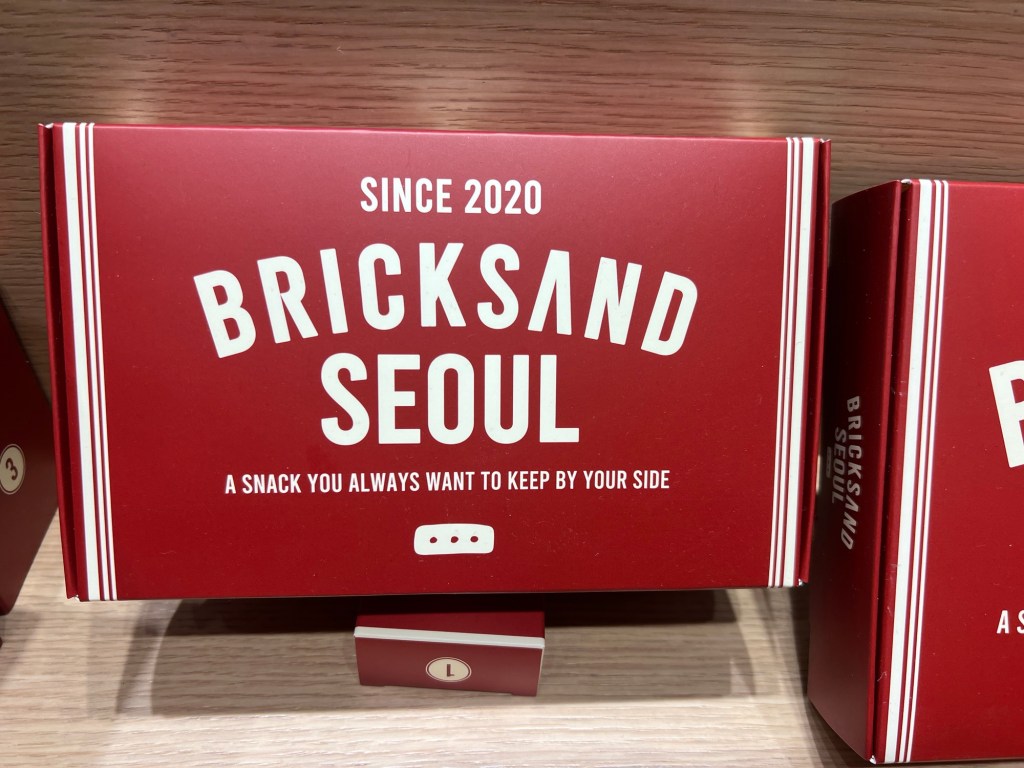
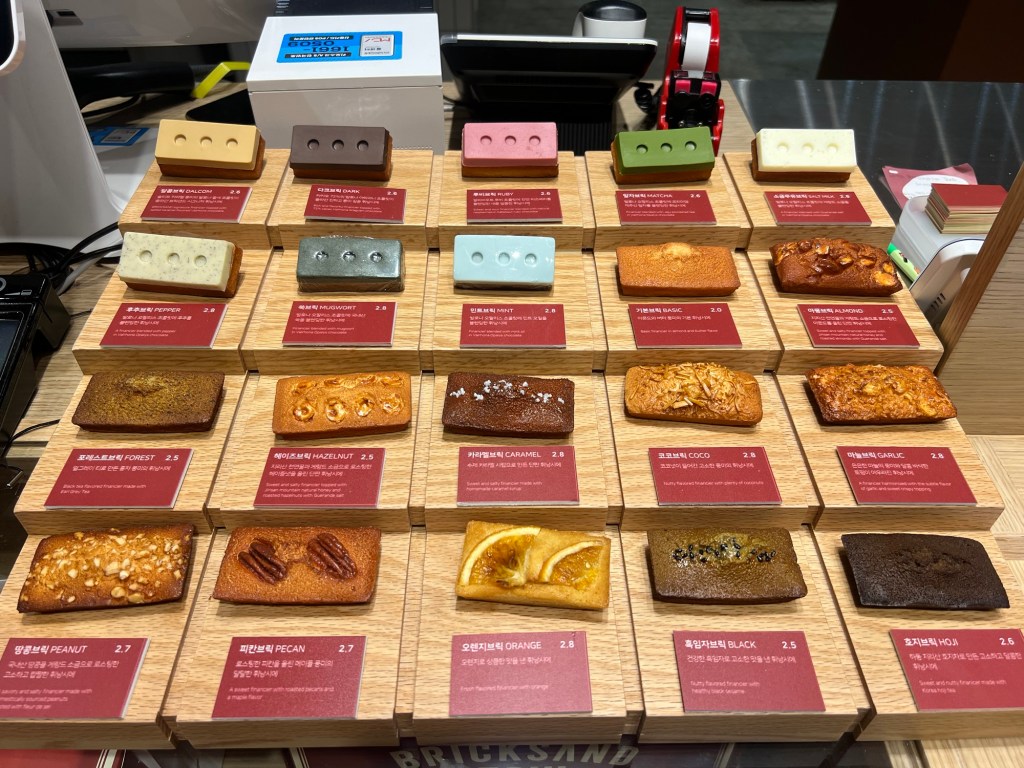
Andy was keen to try a sweet snack from Bricks and Seoul a cool delicatessen for those with a sweet tooth.
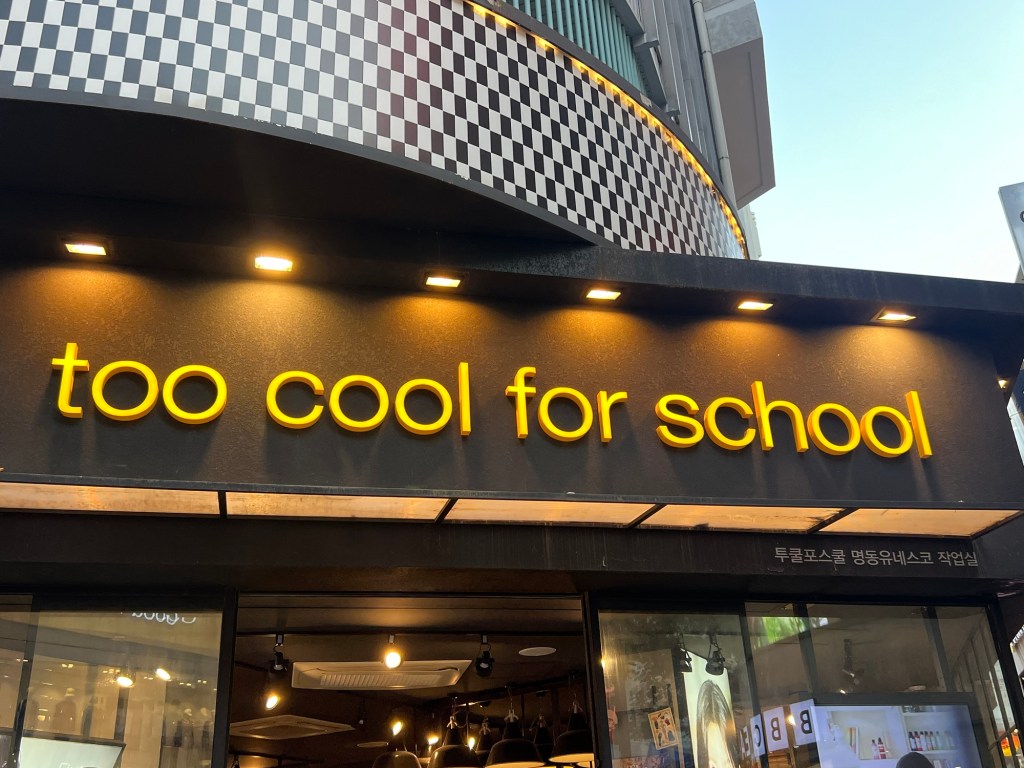
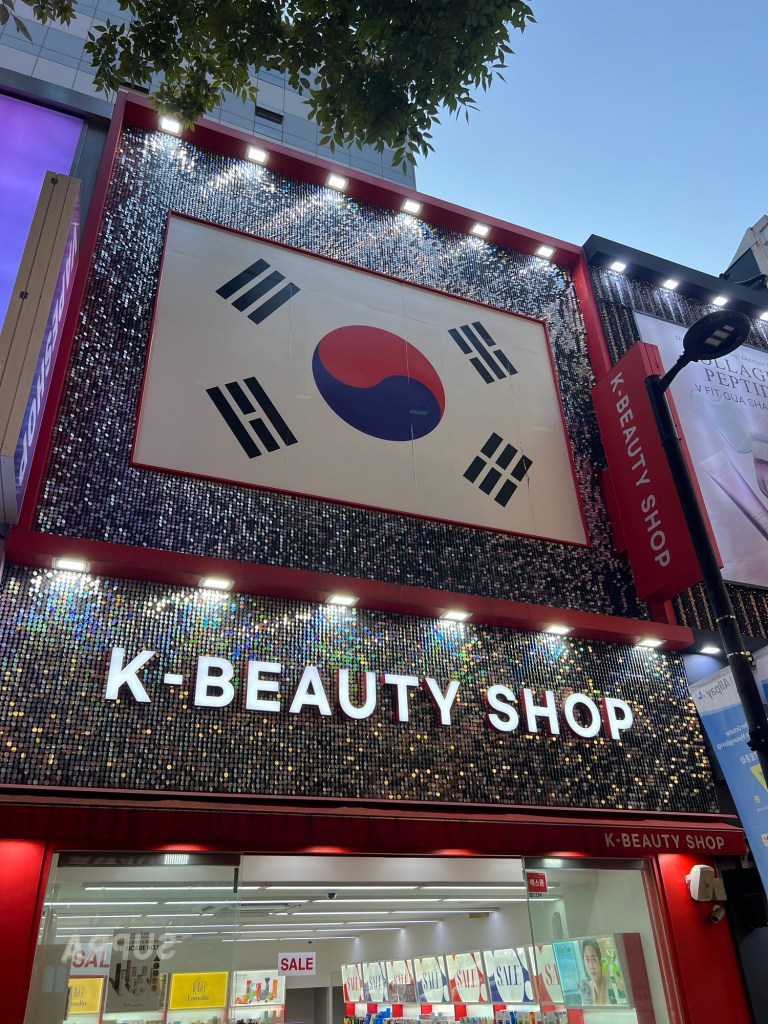
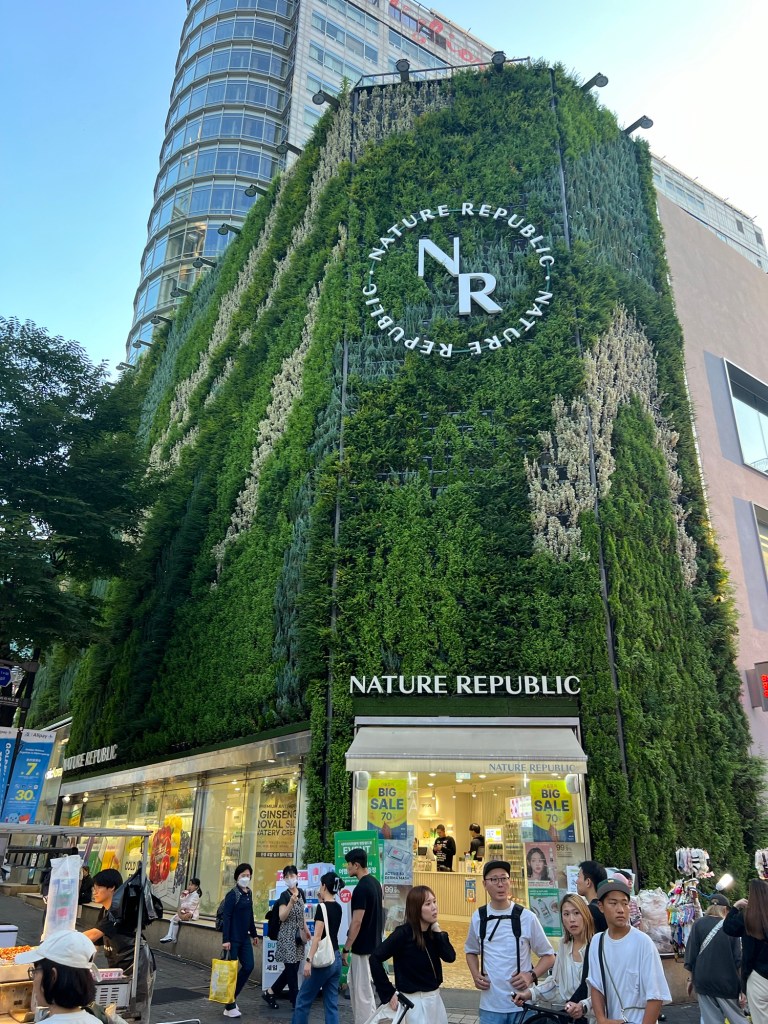
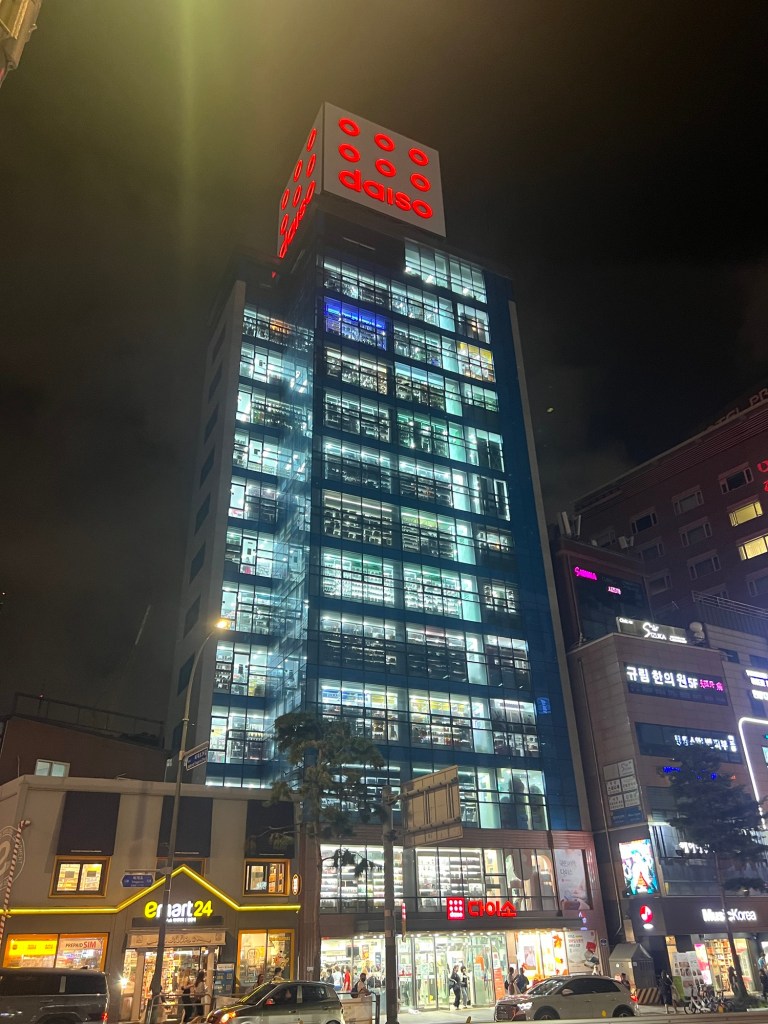
The area is a mix of high fashion and tech brands, like Apple and Nike intermixed with smaller Korean stores with an emphasis on cosmetics.
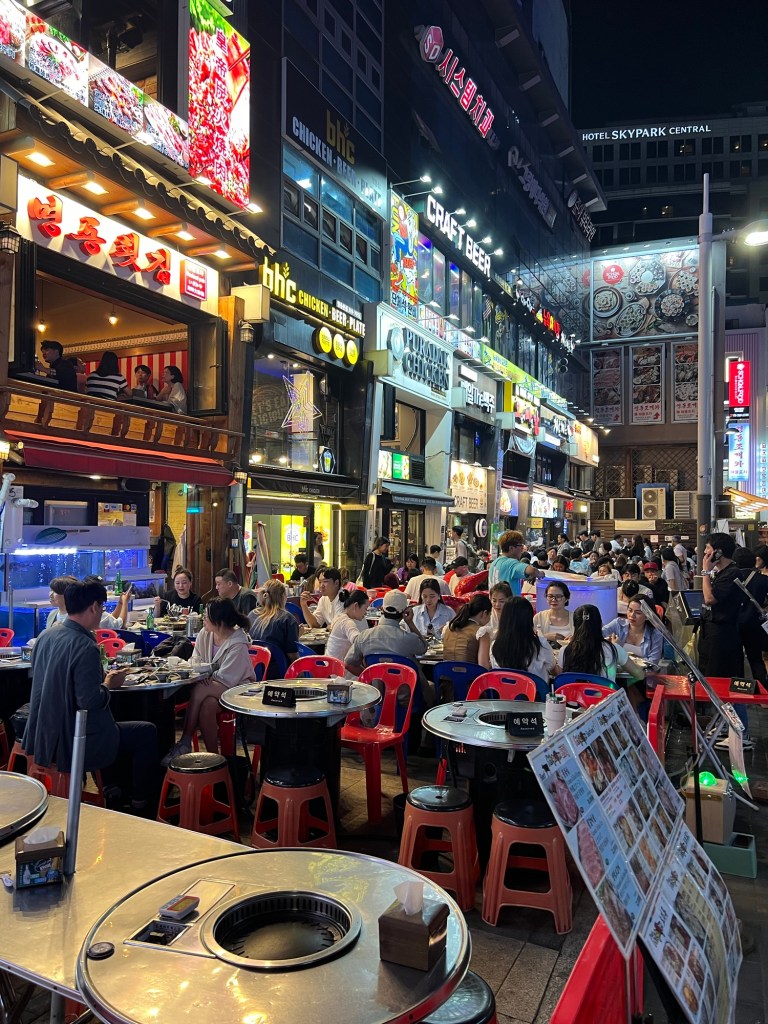
The bar scene is also very big in Seoul and we came across a plethora of ‘chicken and beer’ options selling IPA and local beers with crispy chicken on the side.
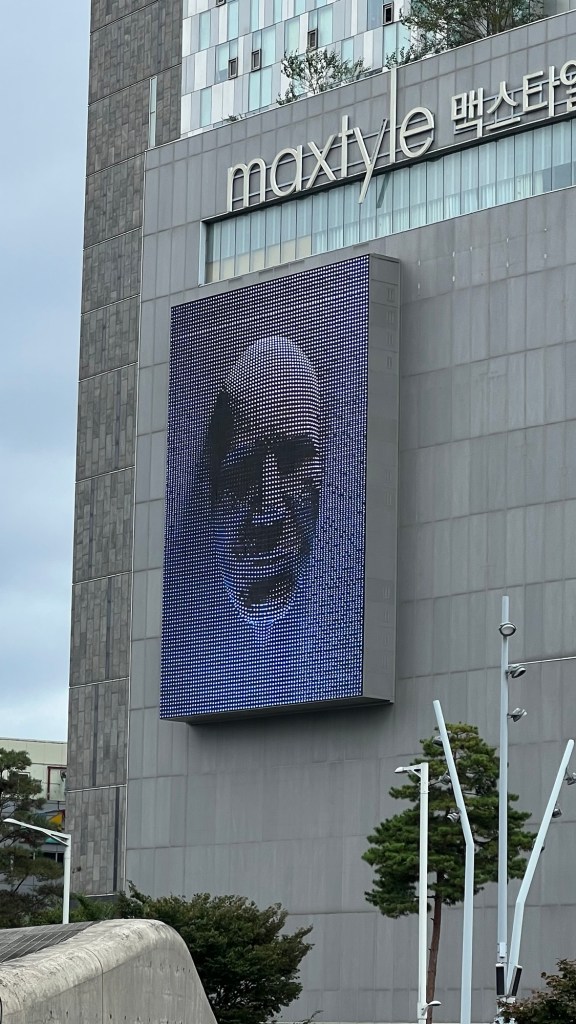
On every corner you can’t miss a neon advertising board. The one we recognised was of footballer Son, who plays for Spurs and is a big face in South Korea due to his success in the Premier League.
After a busy first day in the bustling city of Seoul, we headed back to the hotel and prepared ourselves for a days tour around the palaces and Seoul Tower tomorrow.

























































 @travellingwiththeateam