• The next chapter…

@travellingwiththeateam

  • Overseas tour Day 299 – Yangtze River Cruise Day II – Lesser Three Gorges & Mahjong Game

    Aug 26th, 2024

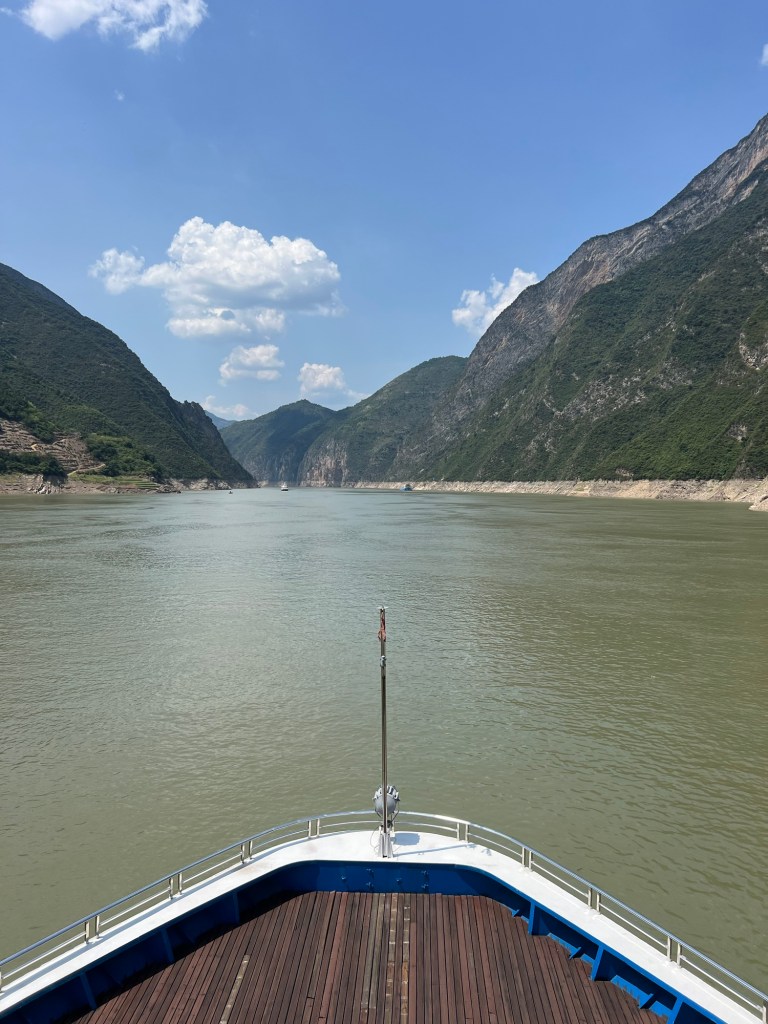
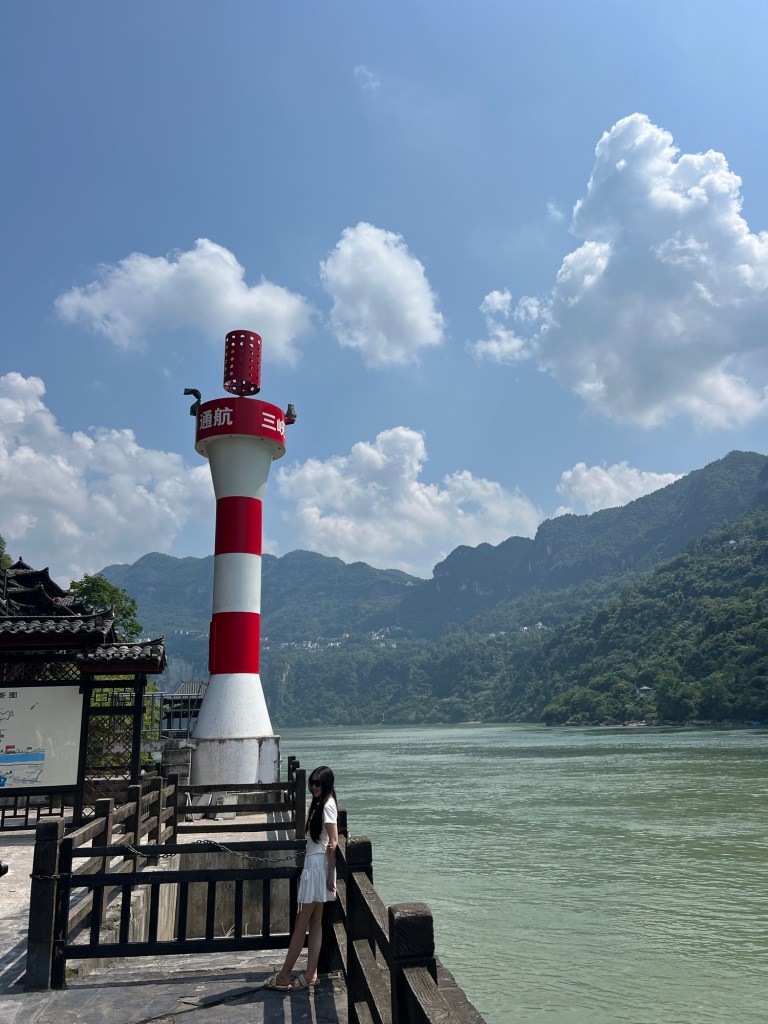
    Another day on the Yangtze River and this time a 6.45am meet up on the top deck of the boat to witness our passing through the Wu Gorge.
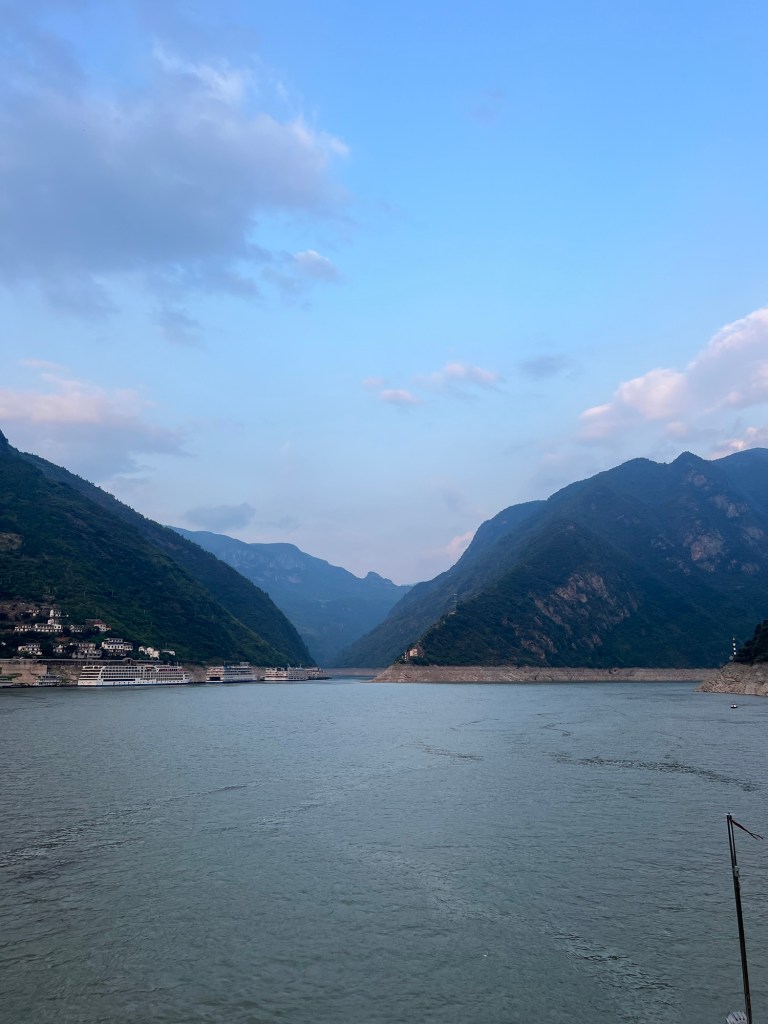
    Wu Gorge, sometimes called the Great Gorge is the second gorge of the Three Gorges system. Formed by the Wu River it stretches 45 km from Wushan to Guandukou.

    Despite being only 7am the temperature out on the deck was blistering and we were warned that it was predicted to hit 42c later in the day.
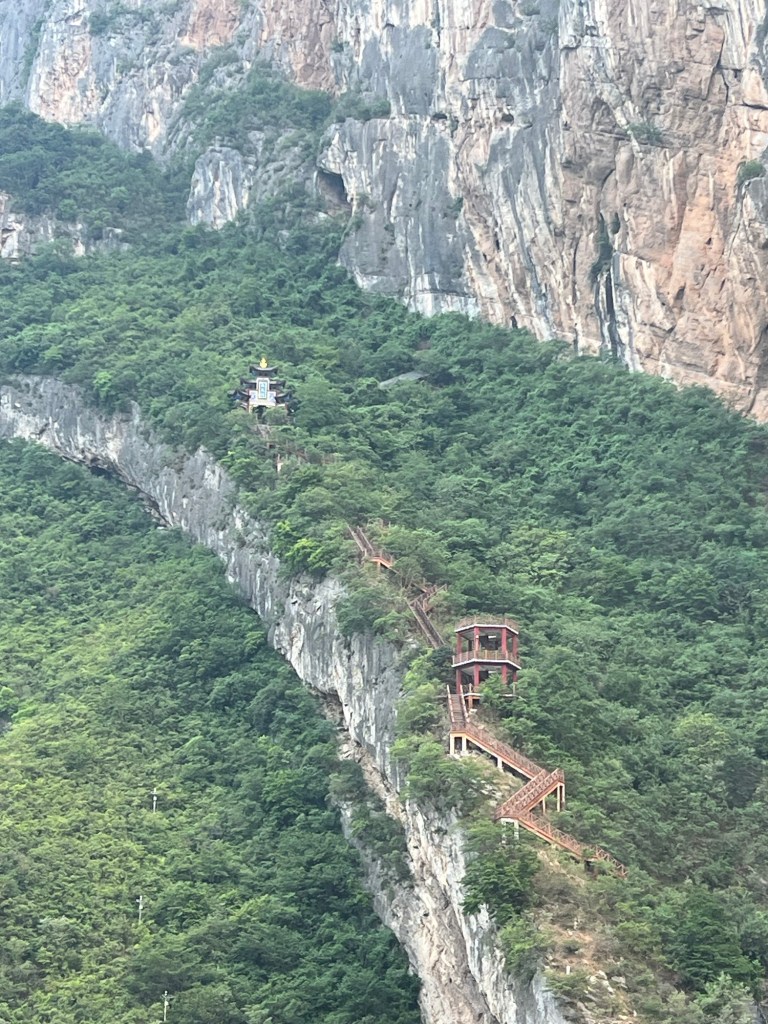
    After breakfast we left our boat for an excursion to witness the Lesser Three Gorges that stretch 20 miles down the Daning River, which is one of the tributaries of the Yangtze River.

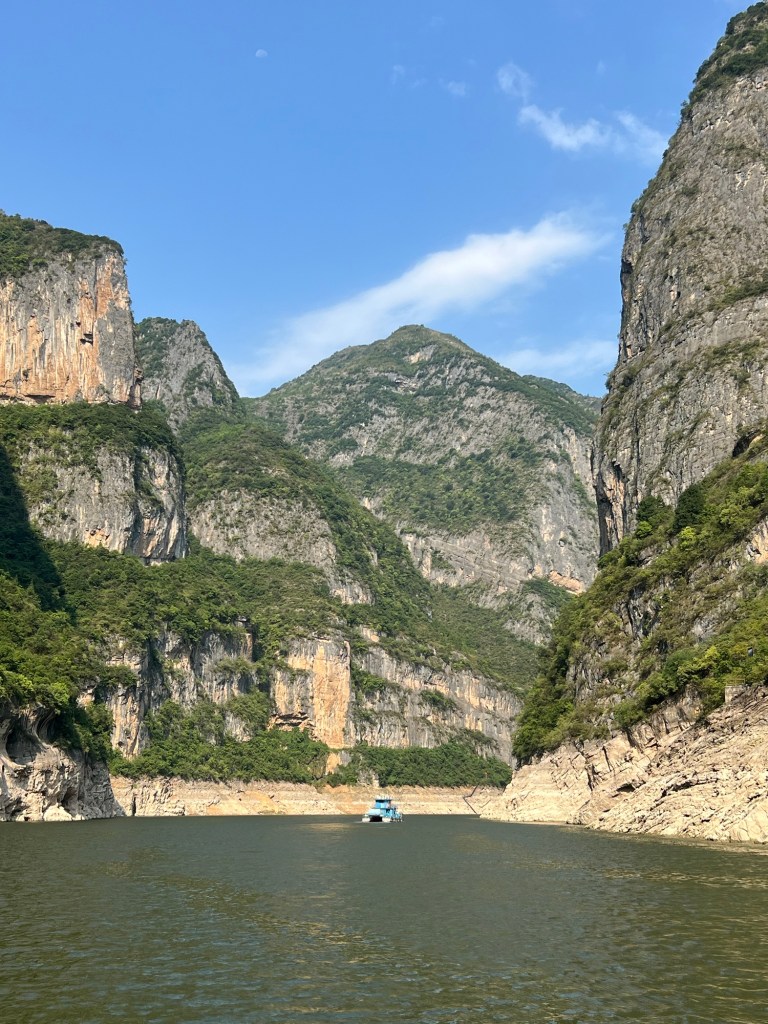
    As the river narrows we picked up a smaller touring boat, to take in the magnificent sheer cliffs on either side.
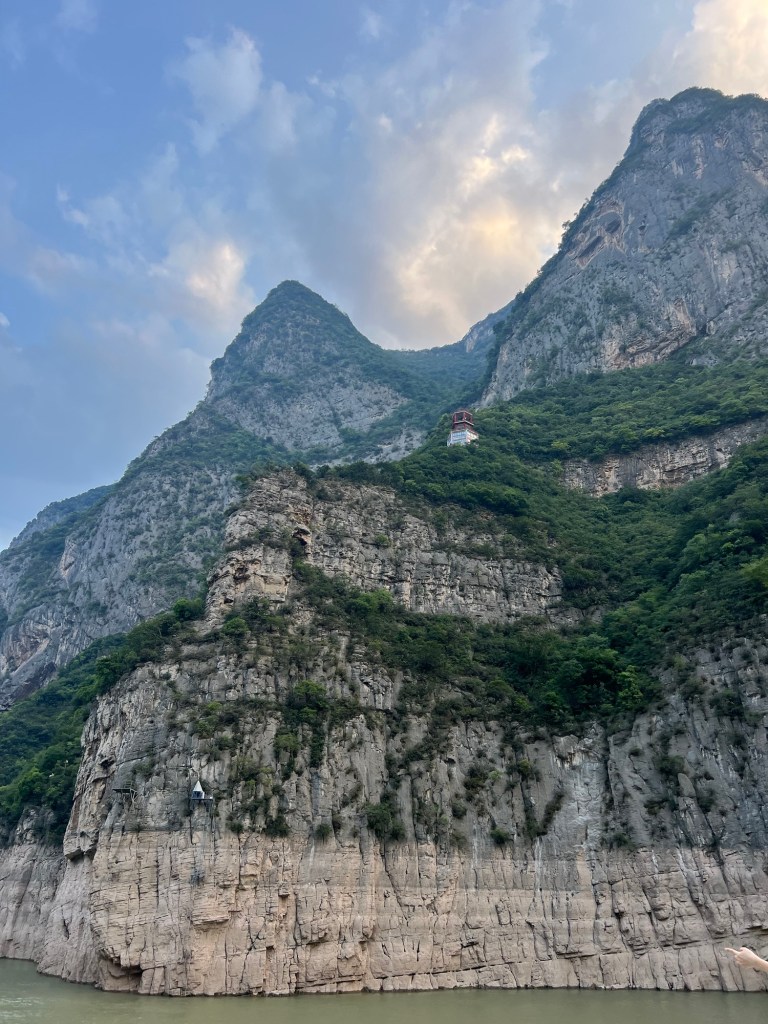
    One of the larger River touring ships

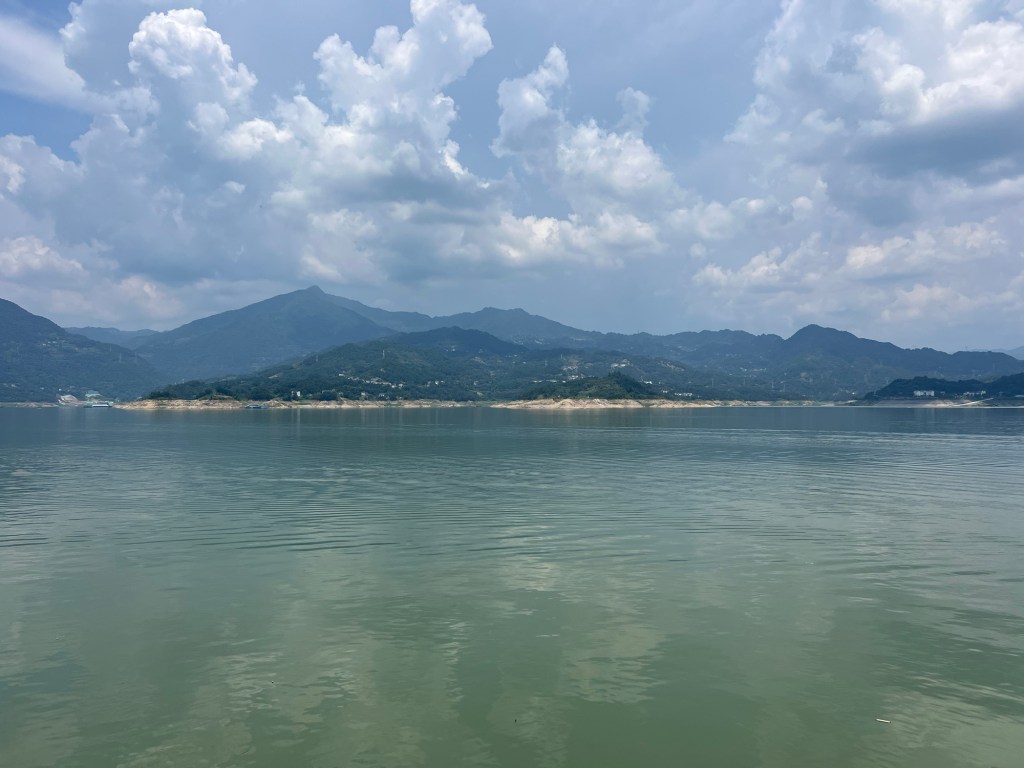
    As the boat made its way down the Daning River, you couldn’t help but be impressed with the sheer beauty this area displays.

    In addition to the cliffs covered with lush, green vegetation, we got to watch some of the local wildlife including native monkeys along with Mandarin ducks.
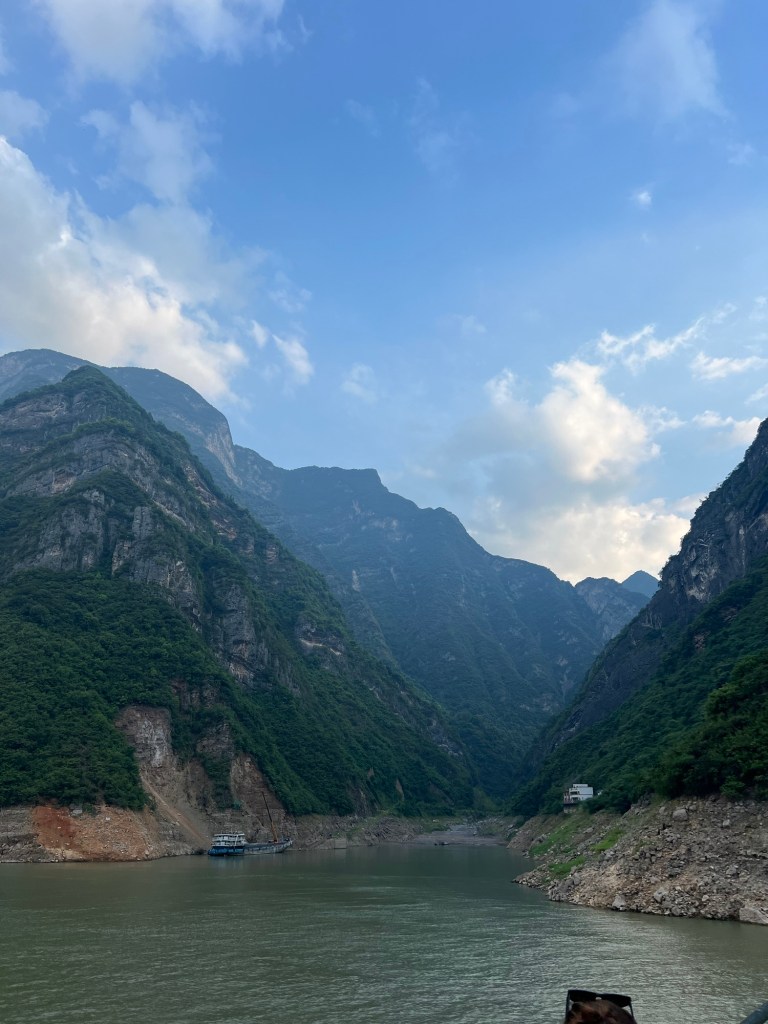
    Views down the gorge
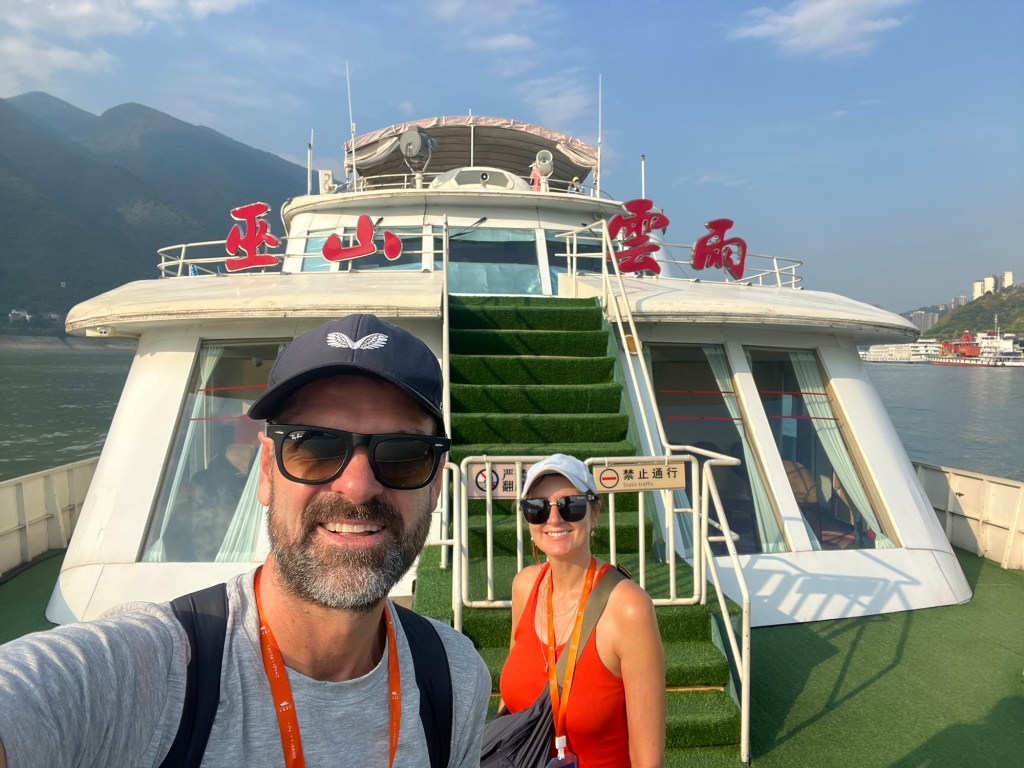
    On board our smaller cruising boat

    High above the cliffs are remnants of tribes that occupied the Daning River area, in the form of suspended boat coffins. Archaeologists have unearthed findings including armour, swords and other artefact’s dating back to the Bronze Age.

    Floating down the Daning River provided an amazing opportunity to view nature at its finest whilst learning about the rich culture of ancient China.
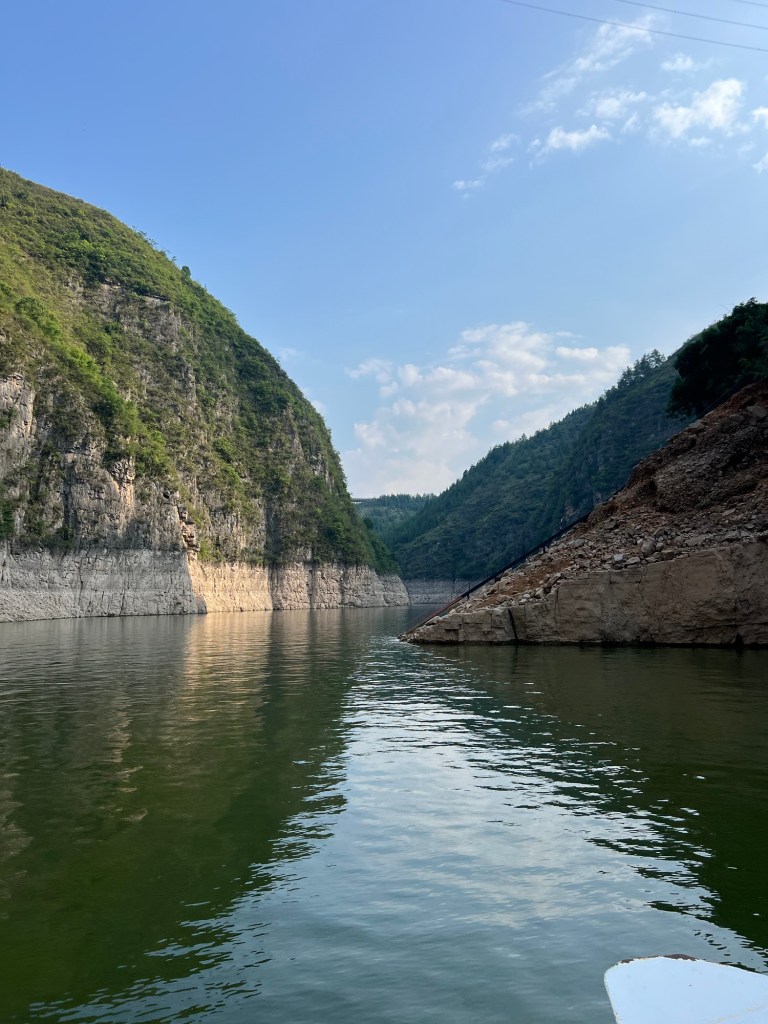
    The Lesser Three Gorges consists of Longmen Gorge, Bawu Gorge and Dicui Gorge. It is referred to by the Chinese as the “Peculiar Gorge under Heaven” with its gorgeous and elegant natural landscapes. 
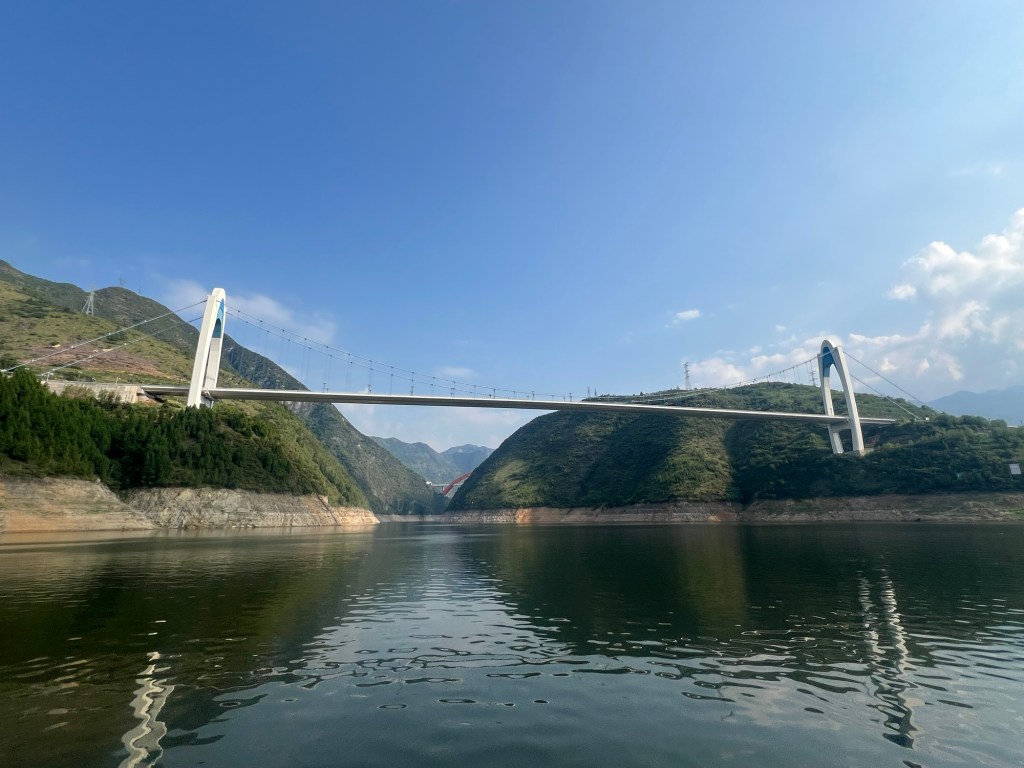
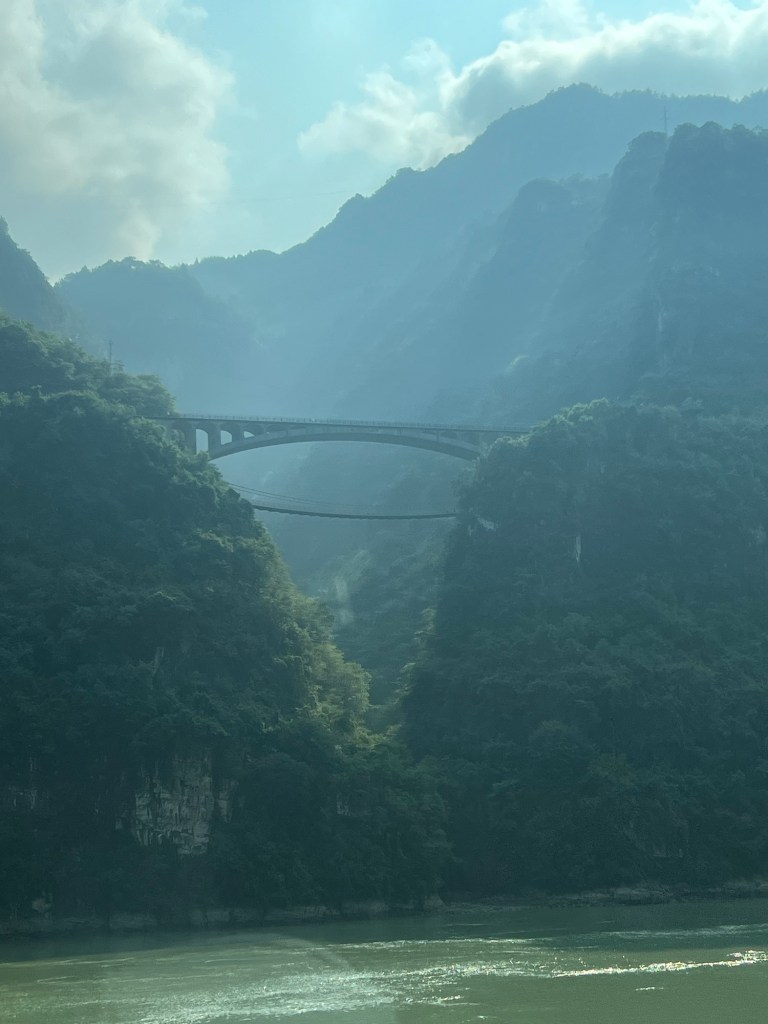
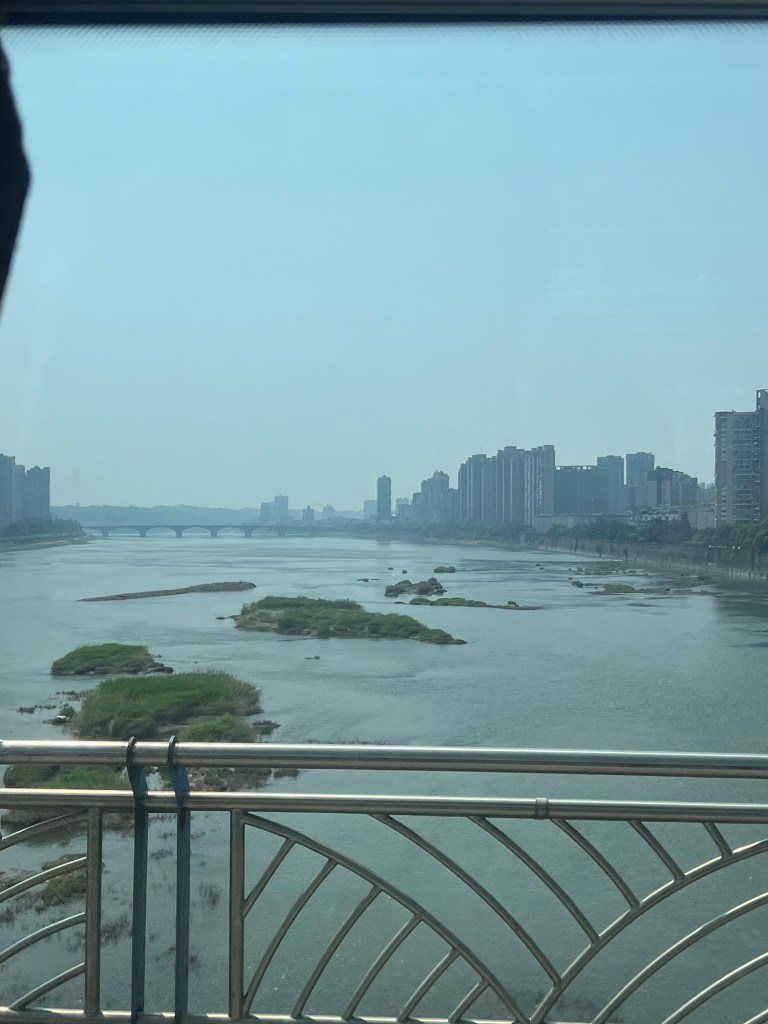
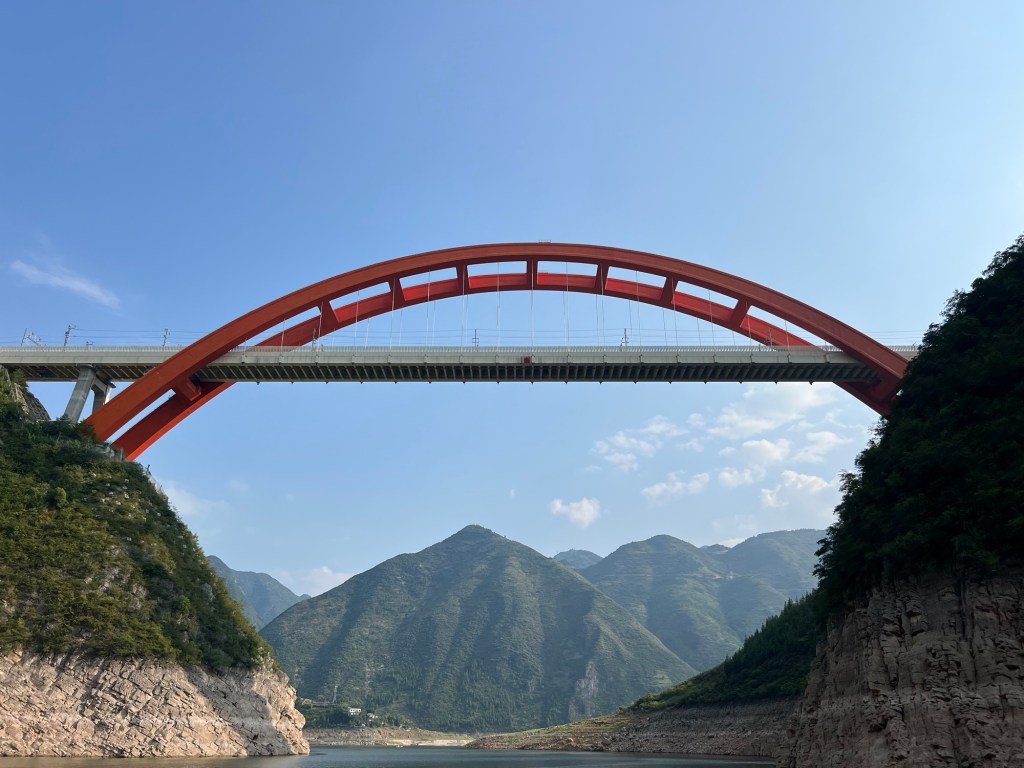
    Also the Chinese have taken the opportunity to create numerous bridge links across the Yankze since the dam was constructed over the last decade. As the water levels have risen, so the need for higher newer modern bridges. With the area famed for its fruit oranges, the same coloured orange has been used in the painting of one of the larger bridges.

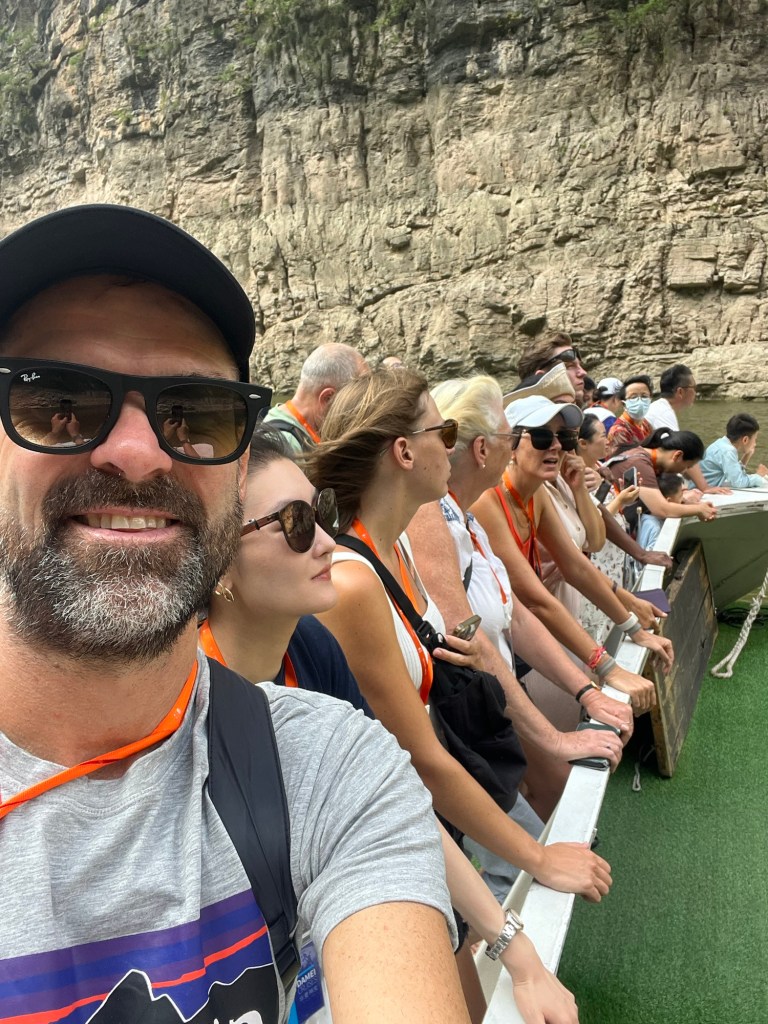
    Girls on tour (Laura, Chris & Michelle)

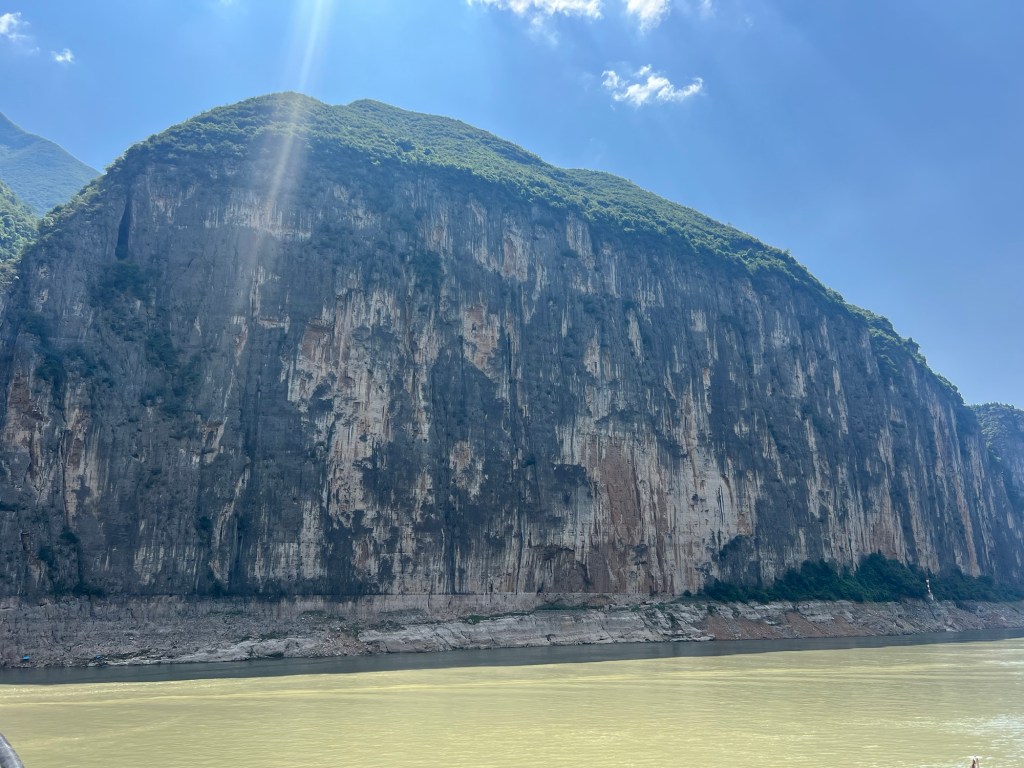
    The scale of the gorges cannot be underestimated, they are huge, but would have been even larger prior to the creation of the dam, when the water levels were over 60m shallower.
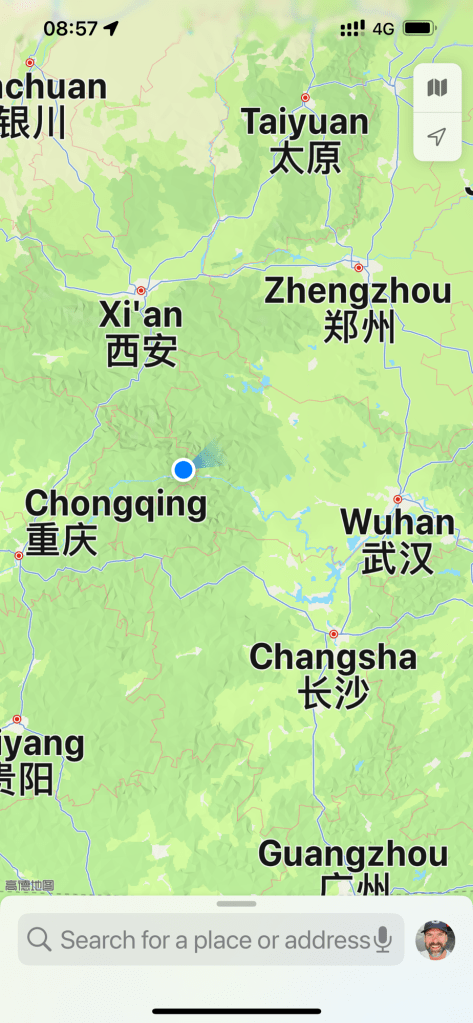
    Location of our cruise on the Yankze River
    Enjoying the view from the front of the ship

    Dicui Gorge is the longest, deepest and deemed the most elegant of the three, with a complete length of about 20km from Shuanglong to Tujiaba. In Dicui Gorge, we got to see multiple peaks with steep cliffs, lush forests with waterfalls high up above.
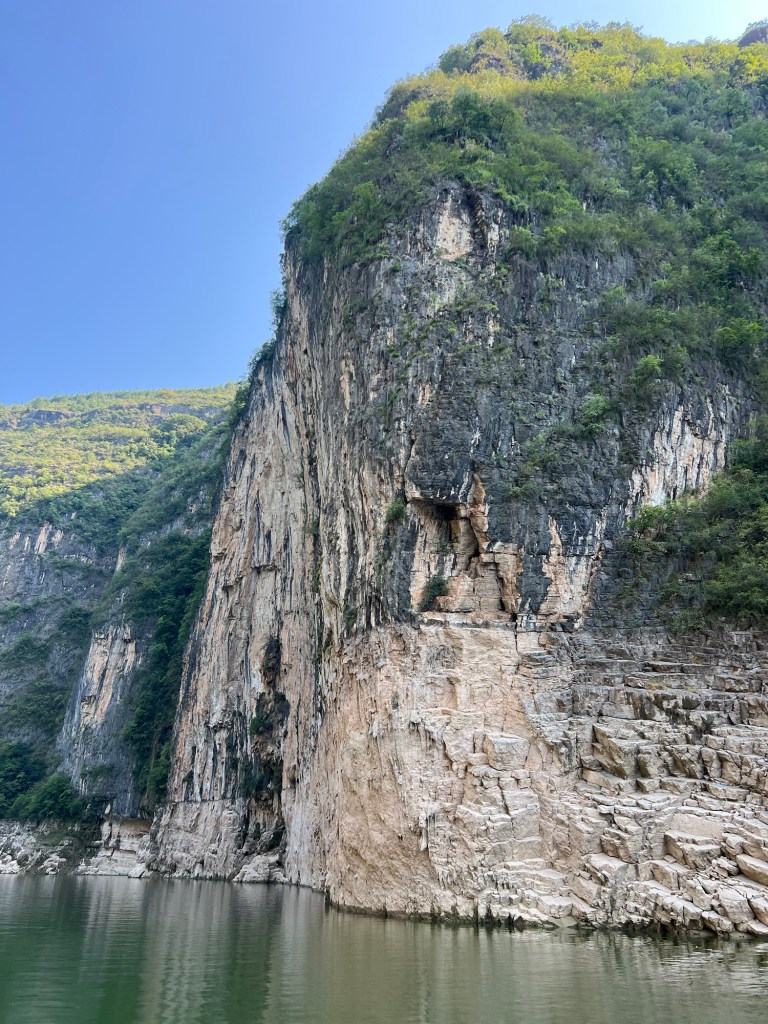
    Some of the cliff faces were so steep and sheer that they appeared to have been cut like cheese.

    Added to this the colouring of the rocks made them appear as though they were painted canvases.
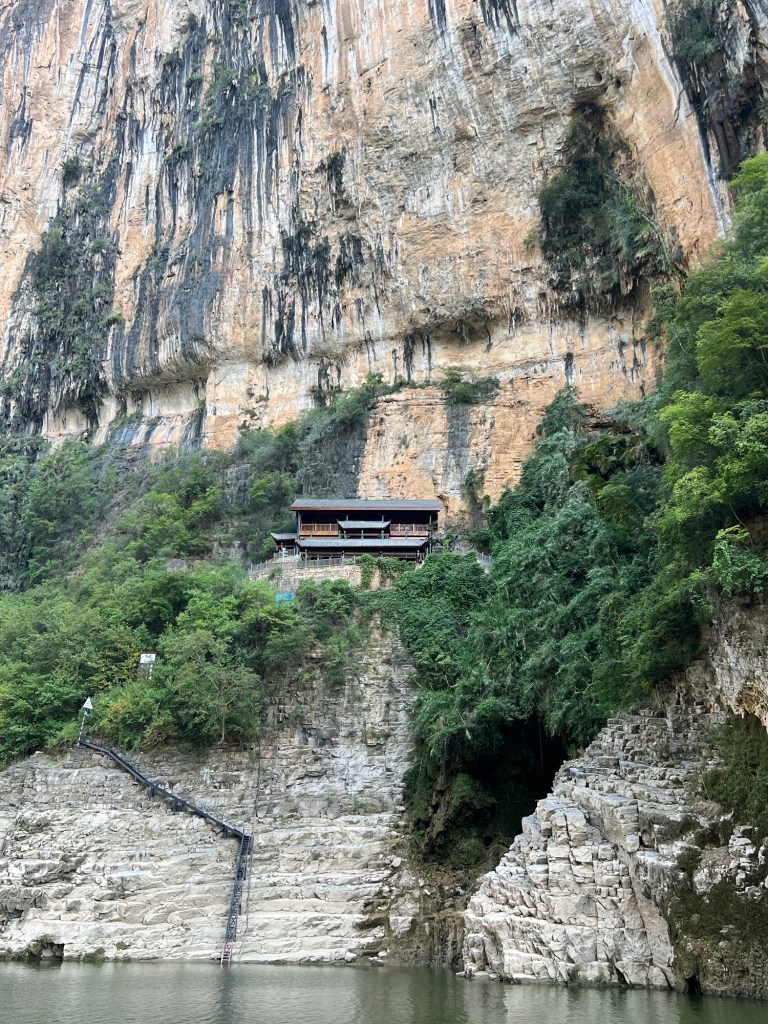
    Dotted along the lower reaches of the cliffs were small temples and monasteries with the only access being from the river via precarious ladders attached to the cliff faces.
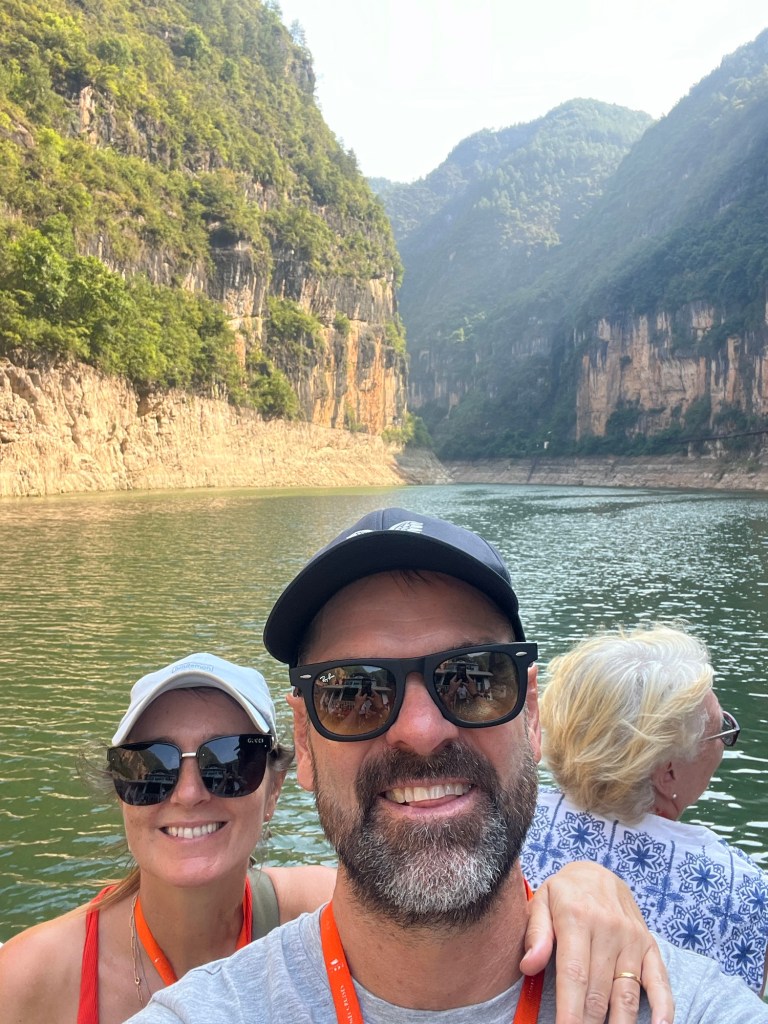
    The natural beauty of this part of China is breathtaking and has been such a pleasant surprise as we hadn’t imagined we would get to see such beautiful untouched landscapes.
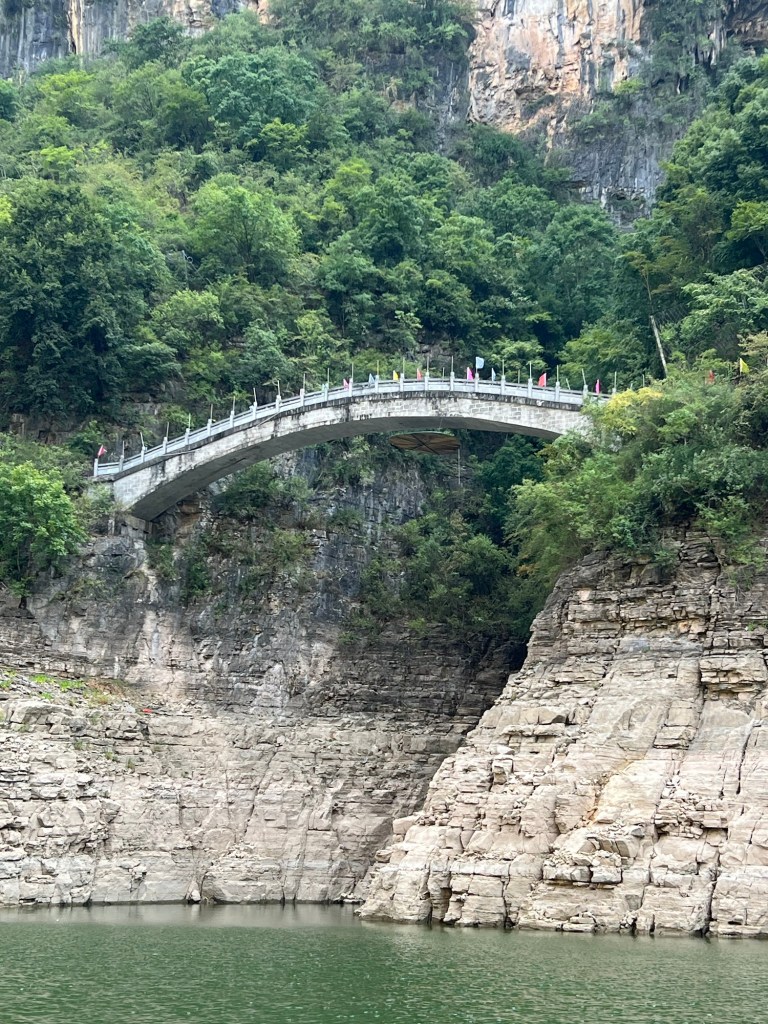
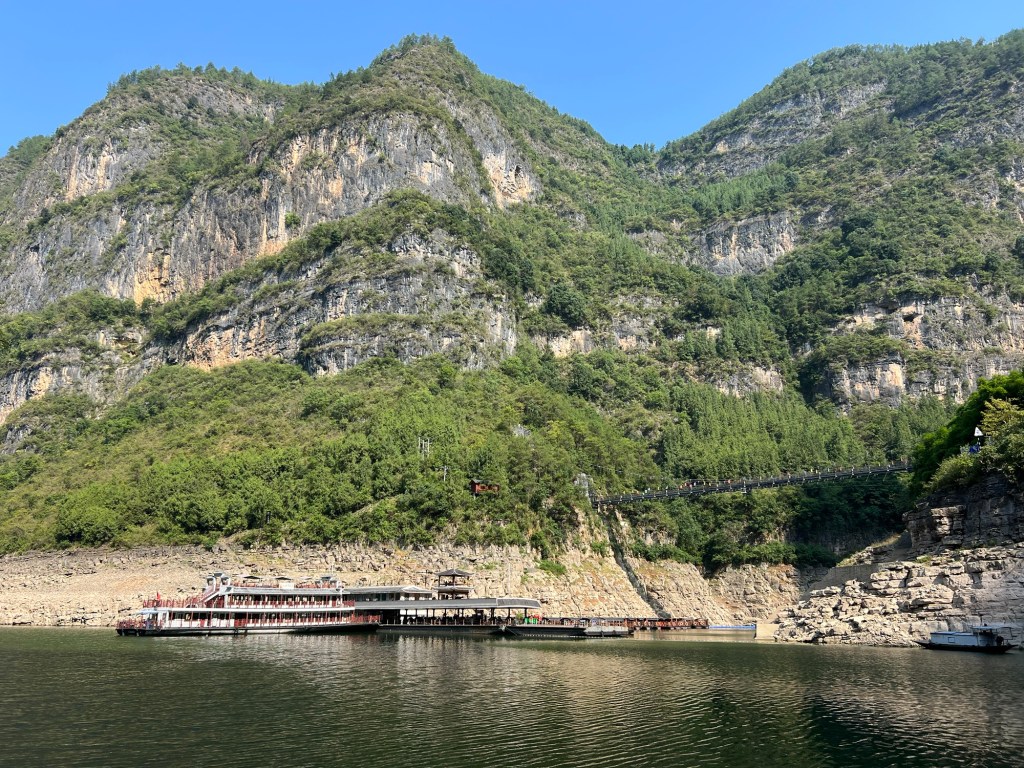
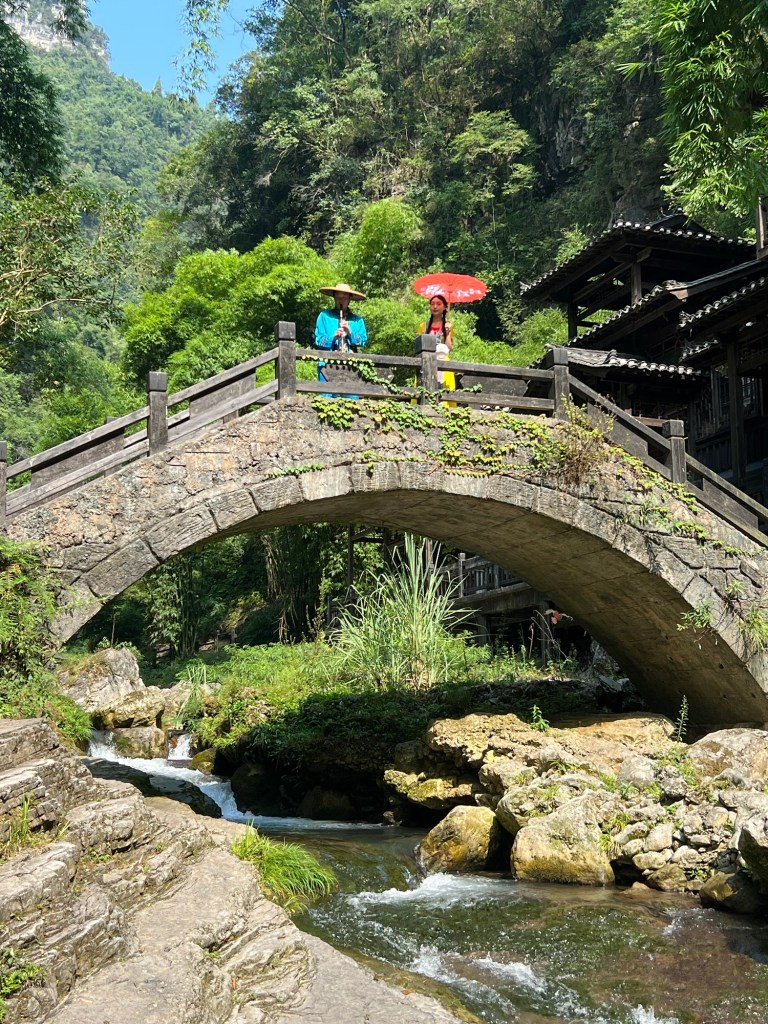
    Historic bridge along the cliff edge
    Lunch stop at the floating village

    With the morning boat tour of the Three Lesser Gorges completed, we returned to our boat for our buffet lunch and a short break.

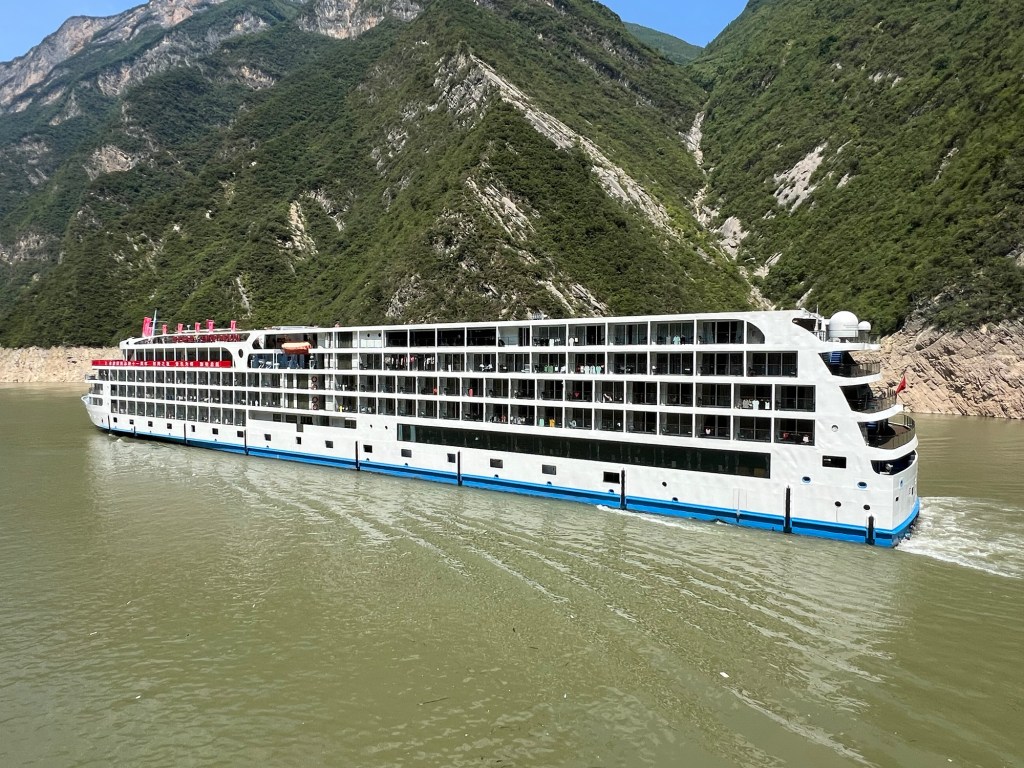
    Time for lunch
    Neighbouring boat cruise
    Heading up river

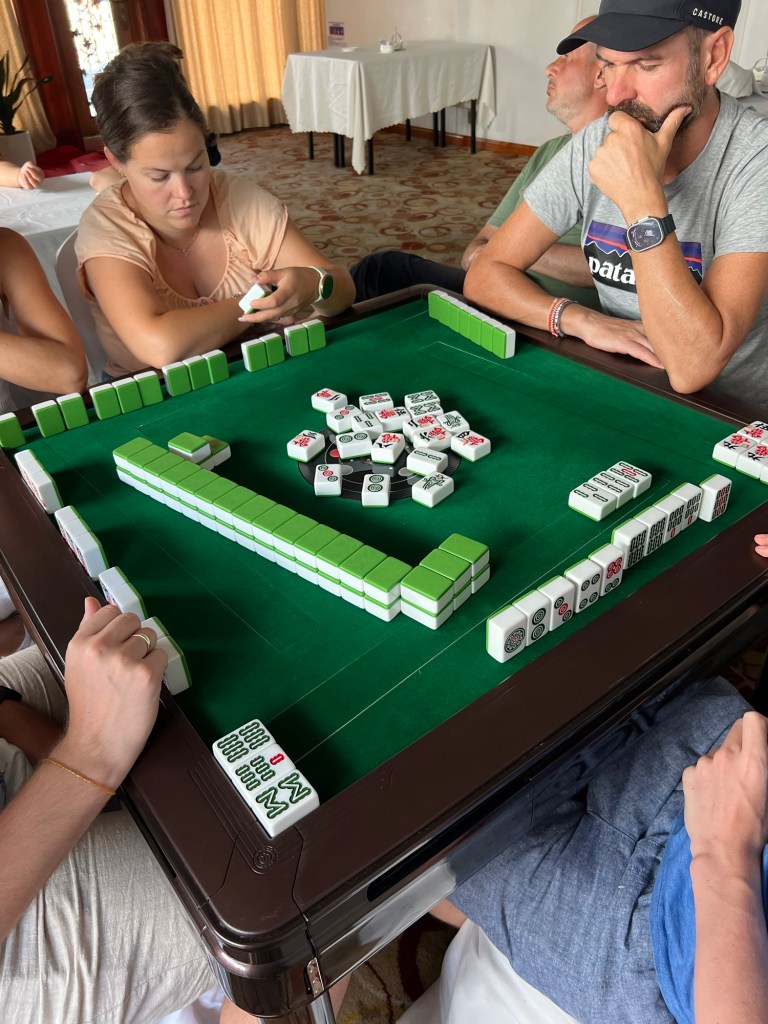
    After this mornings tour, we had a more leisurely afternoon and joined a game of Mahjong.

    The boat has a room set aside for this tile based game that was developed in the 19th century in China. It’s played by four players throughout Southeast Asia. Mahjong involves skill, strategy and a bit of luck, so ideal for our tour group members.
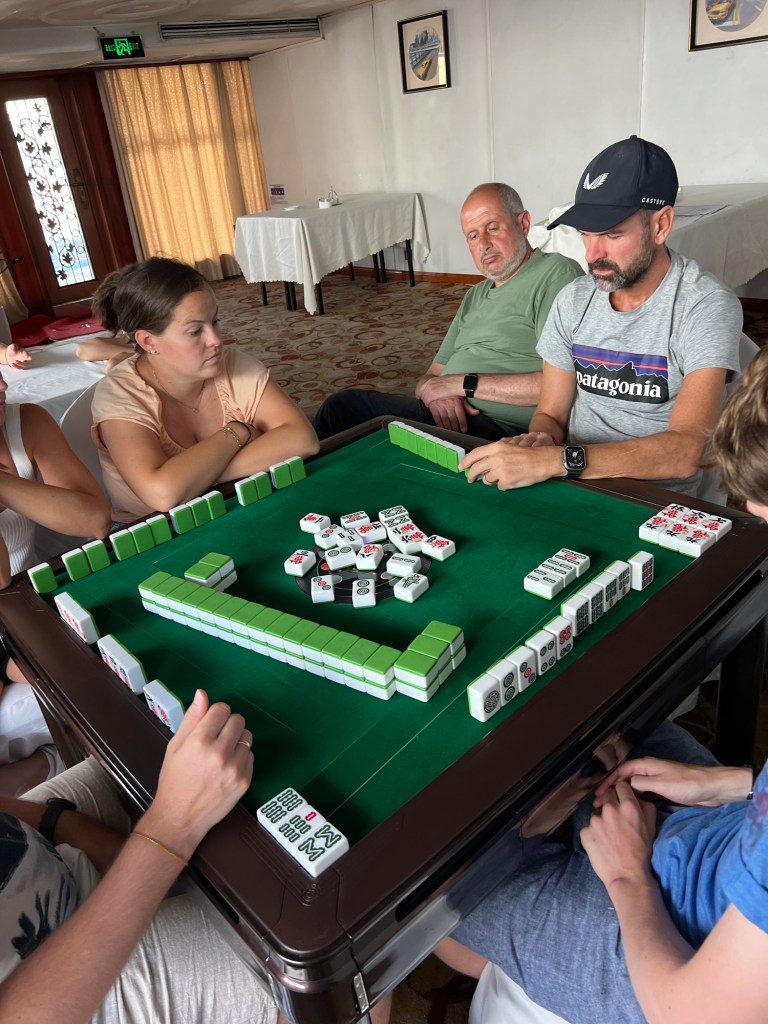
    The game prove quite addictive and after two hours of playing the spoils were shared equally with 2 wins per person.
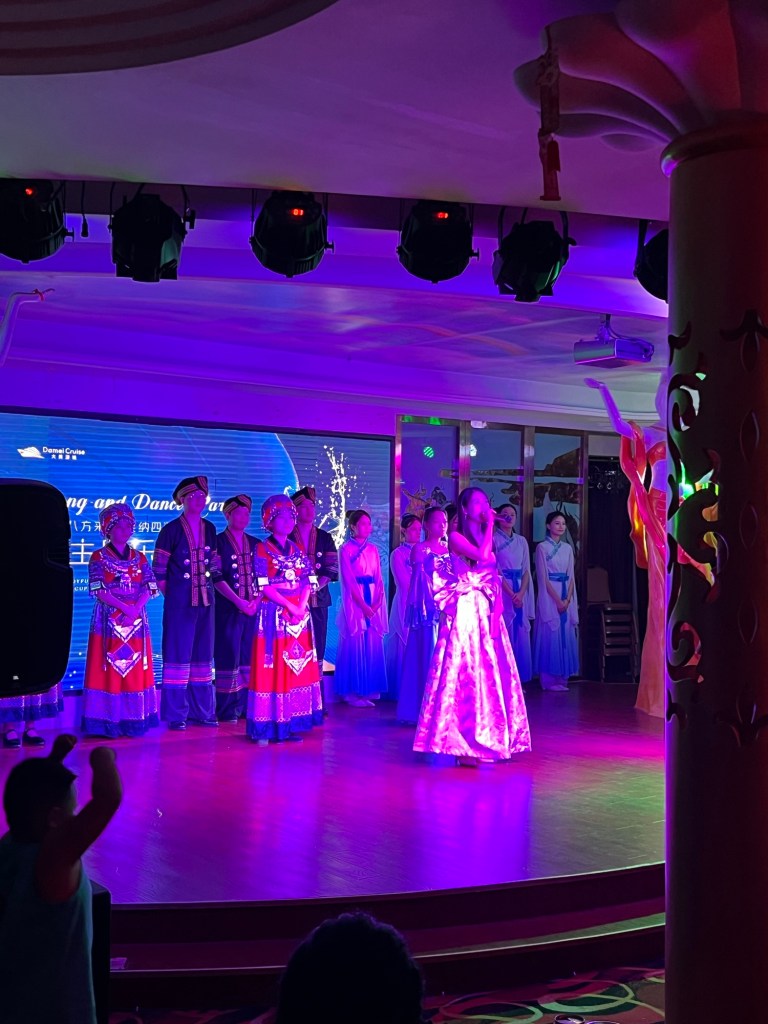
    After dinner we were treated to the crews cabaret show with a series of Chinese acts both modern and traditional. It was fun to watch the Chinese letting their hair down, although even when they do this their culture seems to stop them showing it with a smile. All the performers remained stoney faced throughout which in a way for funny in itself.
    Tomorrow is our last full day on the river and we head off on our final river cruise trip, with a visit to Snowy Jade Caves at Fengdu. There we will have the chance to see China’s only pure white jade like stalagmites and stalactites.


  • Overseas tour Day 298 – The Tribe of Three Gorges & Three Gorges Dam – on board the Huaxia Goddess Cruise

    Aug 25th, 2024

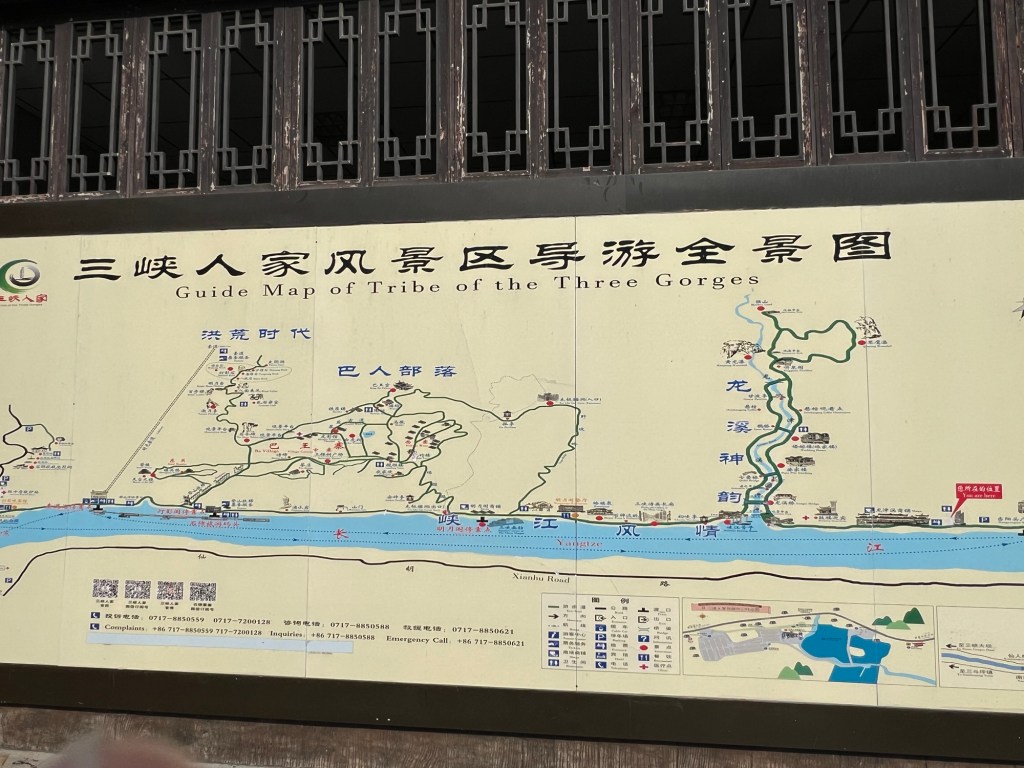
    Early morning start, with a 7am breakfast on board Huaxia Goddess and then off at 8am on a tour of the Tribe of Three Gorges.

    The tour offered an immersive experience of the Three Gorges culture and breathtaking scenery of the original Xiling Gorge.

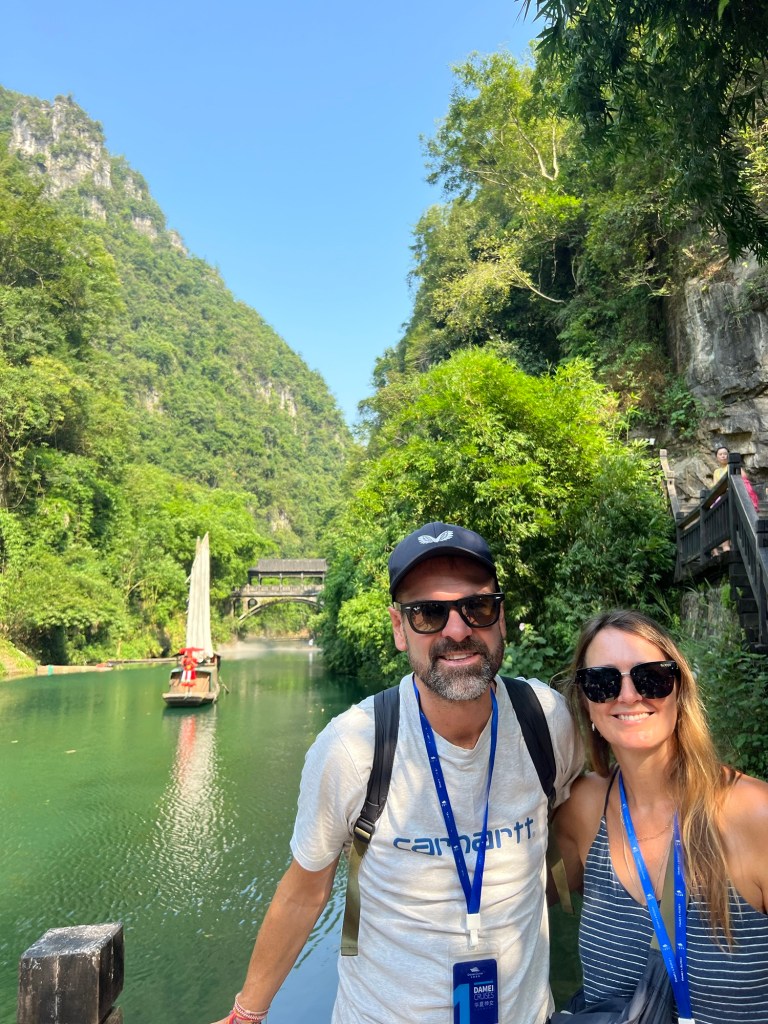
    Cruise pass in hand

    It proved to be one of the most charming scenic spots in the Tribe of the Three Gorges.

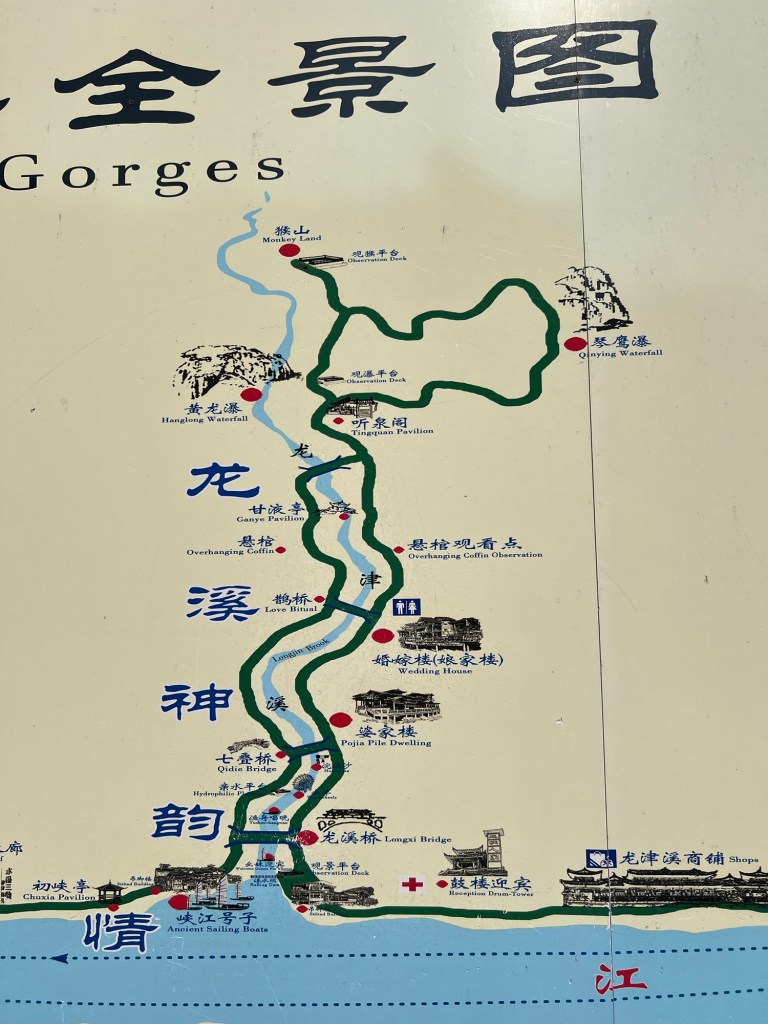
    Map of our walking route through the gorge

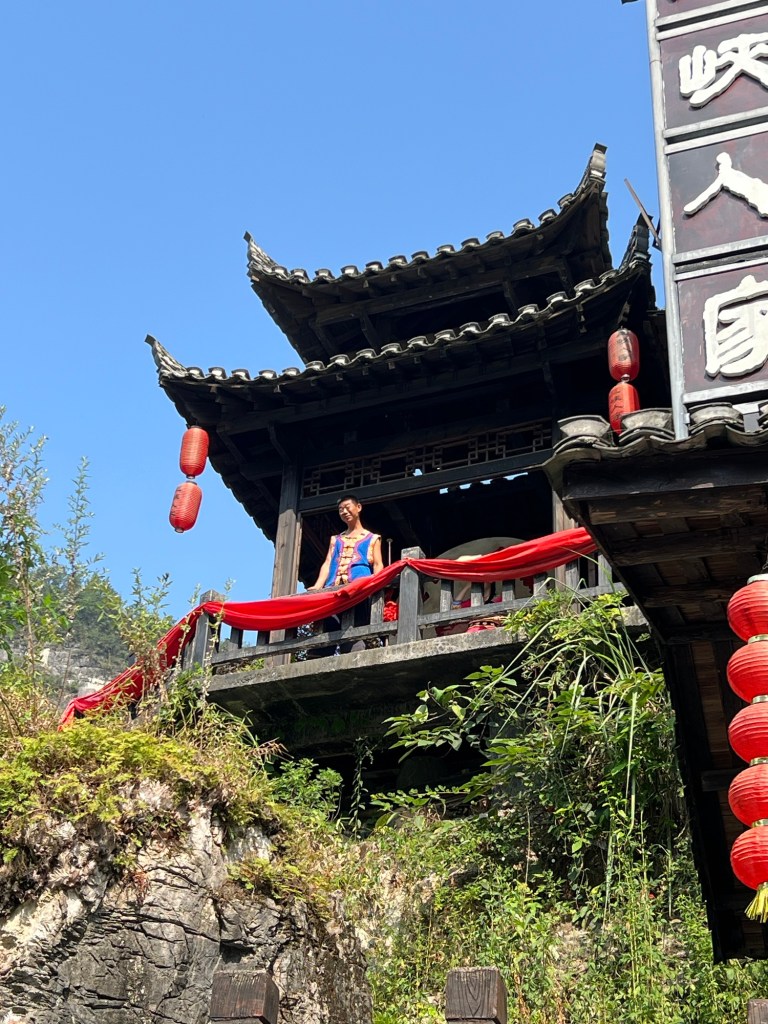
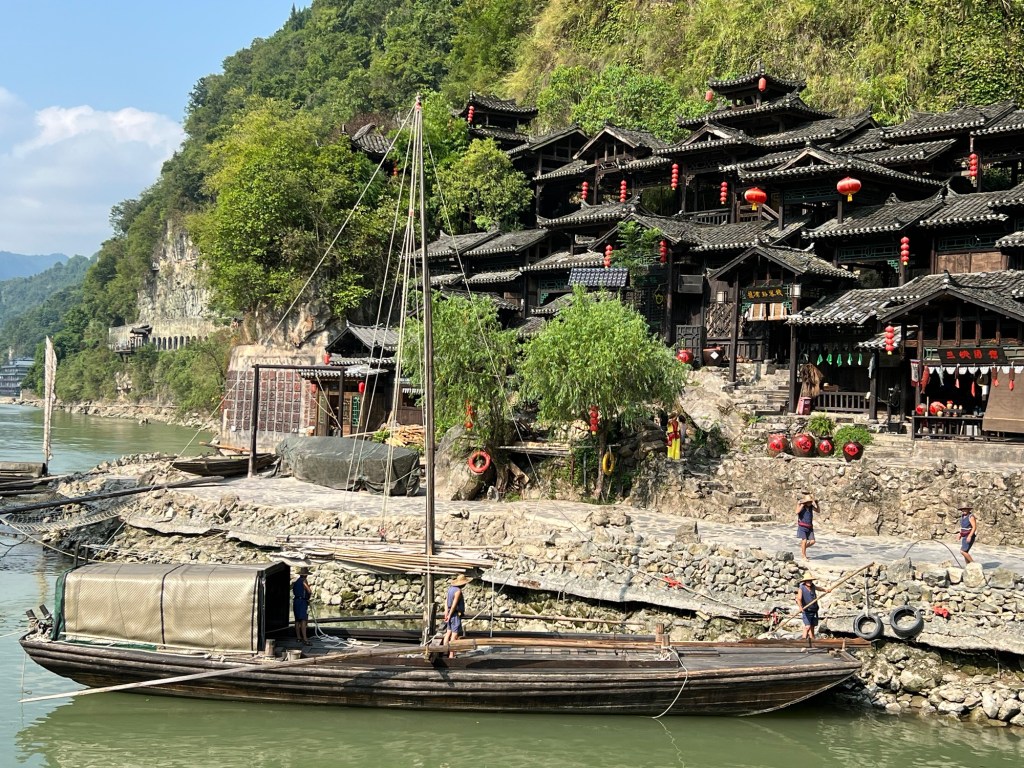
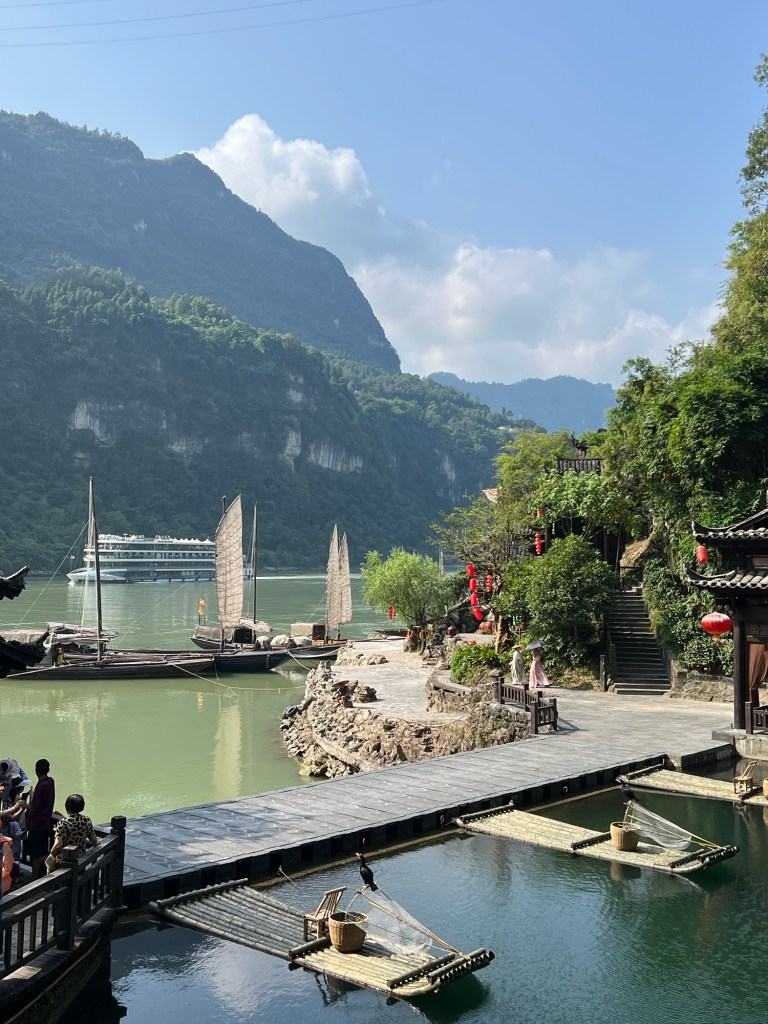
    The original village has been restored with stilted houses by the river, built by local people, many of whom are from the ethnic minority group, Tujia.

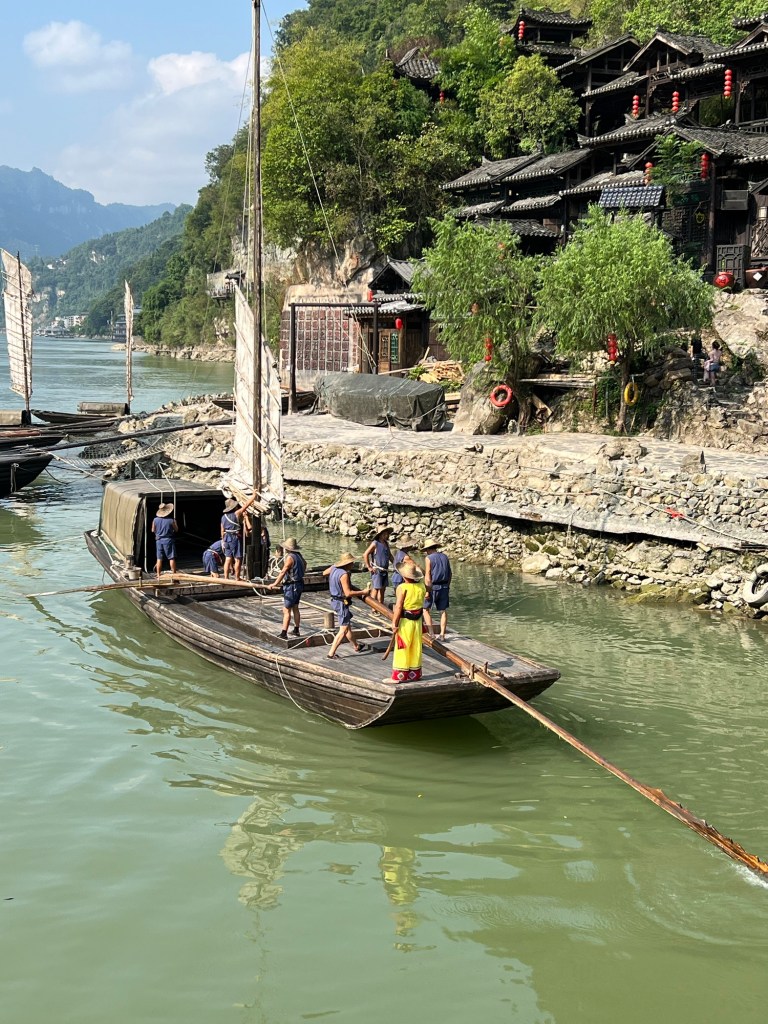
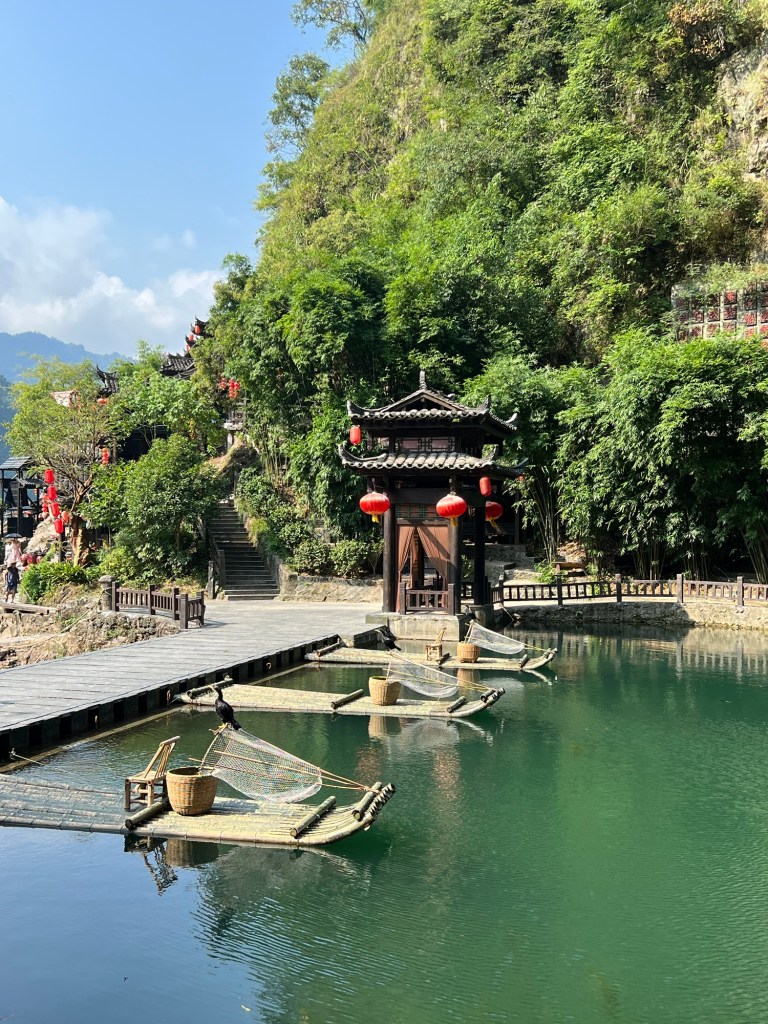
    The local villagers recreated scenes from their past. Fishing boats were rowed into view and manoeuvred to show how they fished.

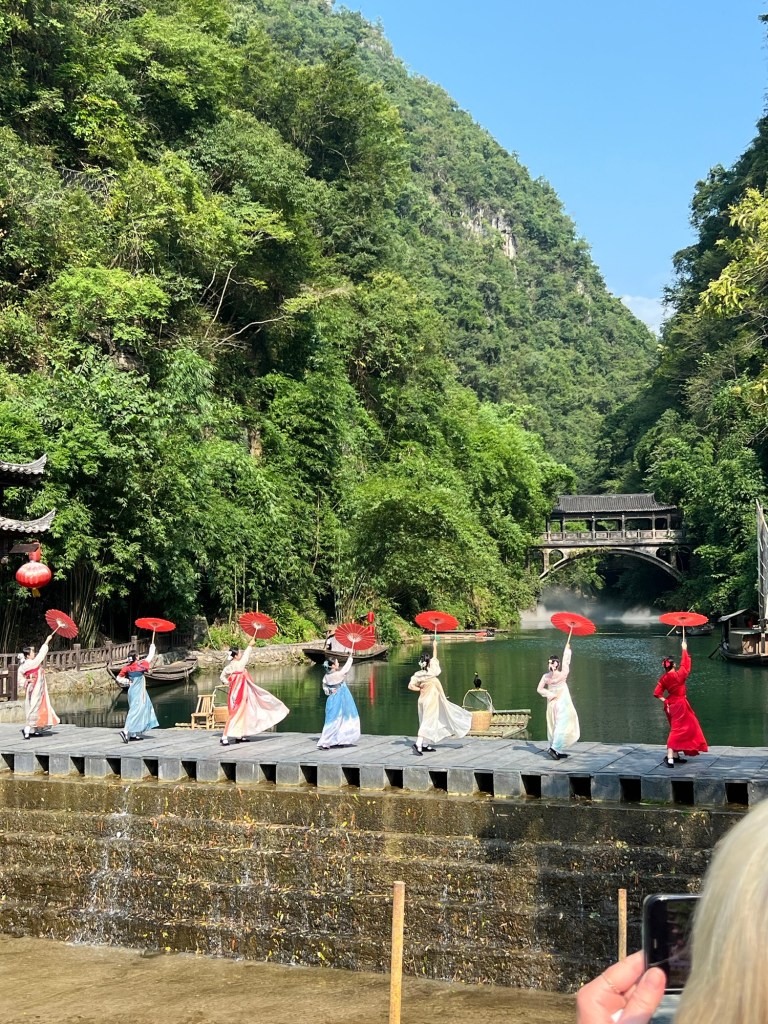
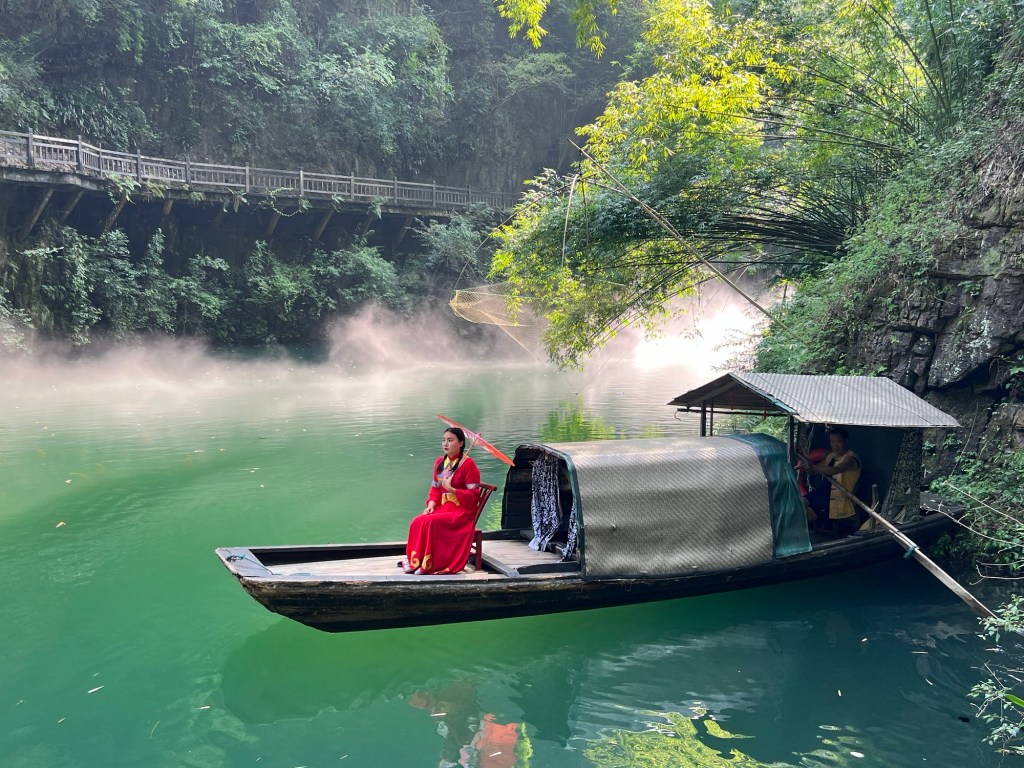
    Young girls performed a traditional dance with their umbrellas, which made for a truly beautiful scene against the backdrop.

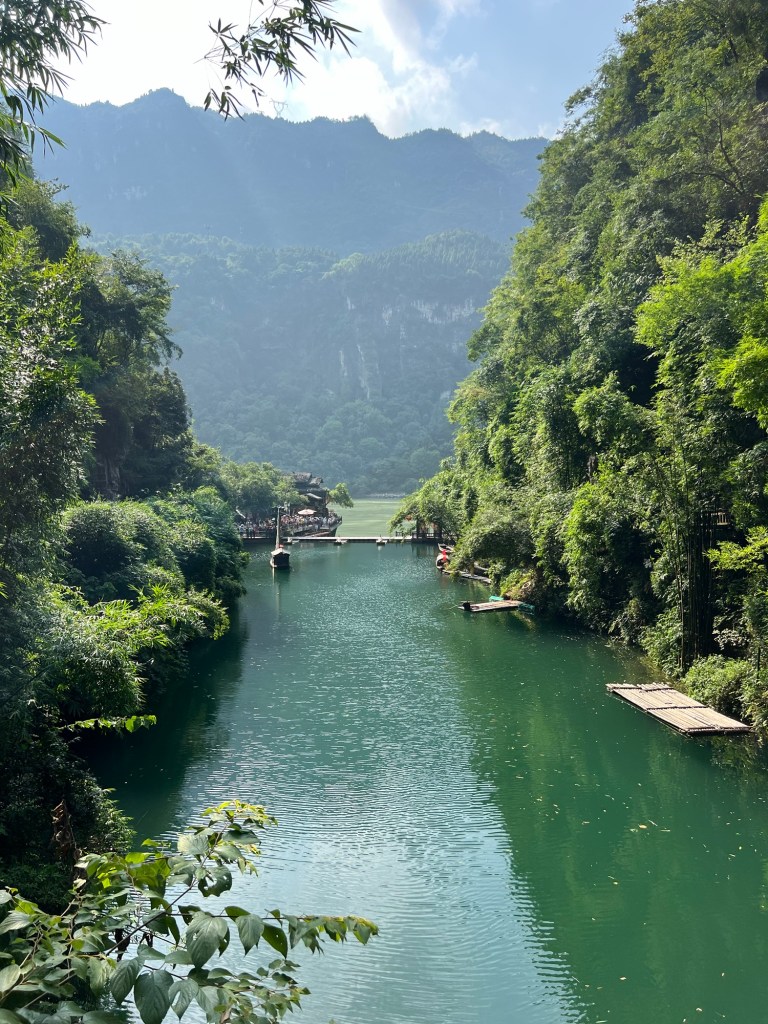
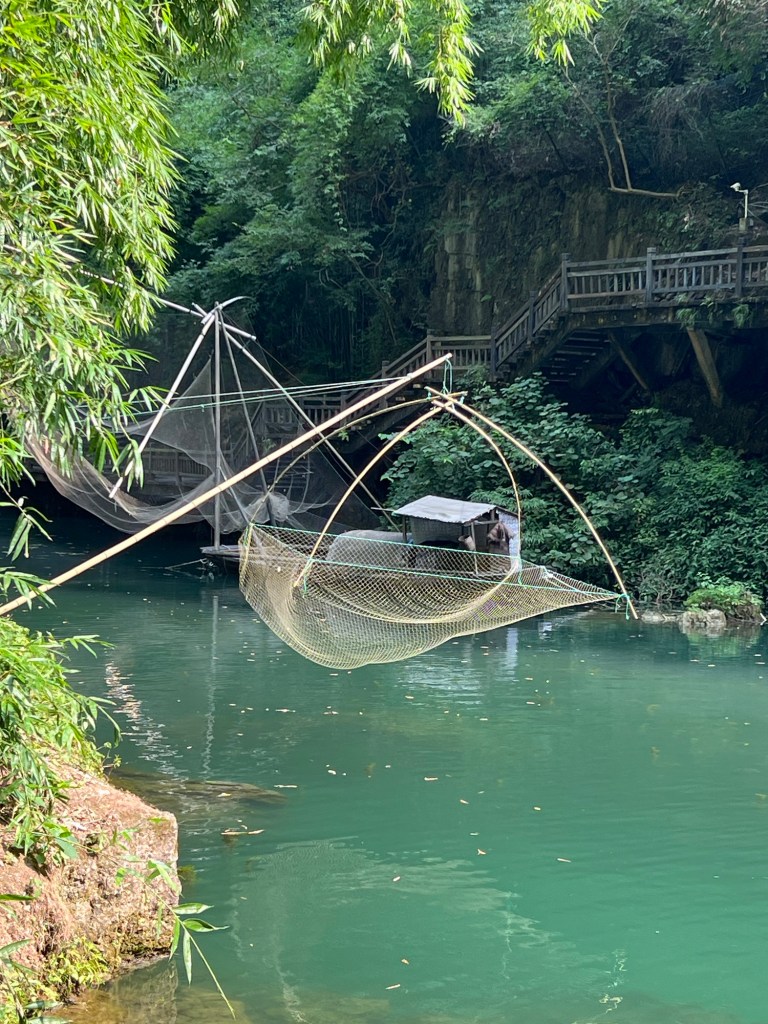
    As we walked up a tributary, we came across more scenes of original village life with old fishing nets and boats moored up.

    The scenery was captivating and we were pleased to have made the decision to join this additional tour which we’d had to pay extra for.

    Along the Longjin Brook, there is the Brook-side Village, where we found young girls washing clothes in a traditional way, and a girl in red holding a red umbrella standing in the front of wooden sailboat.

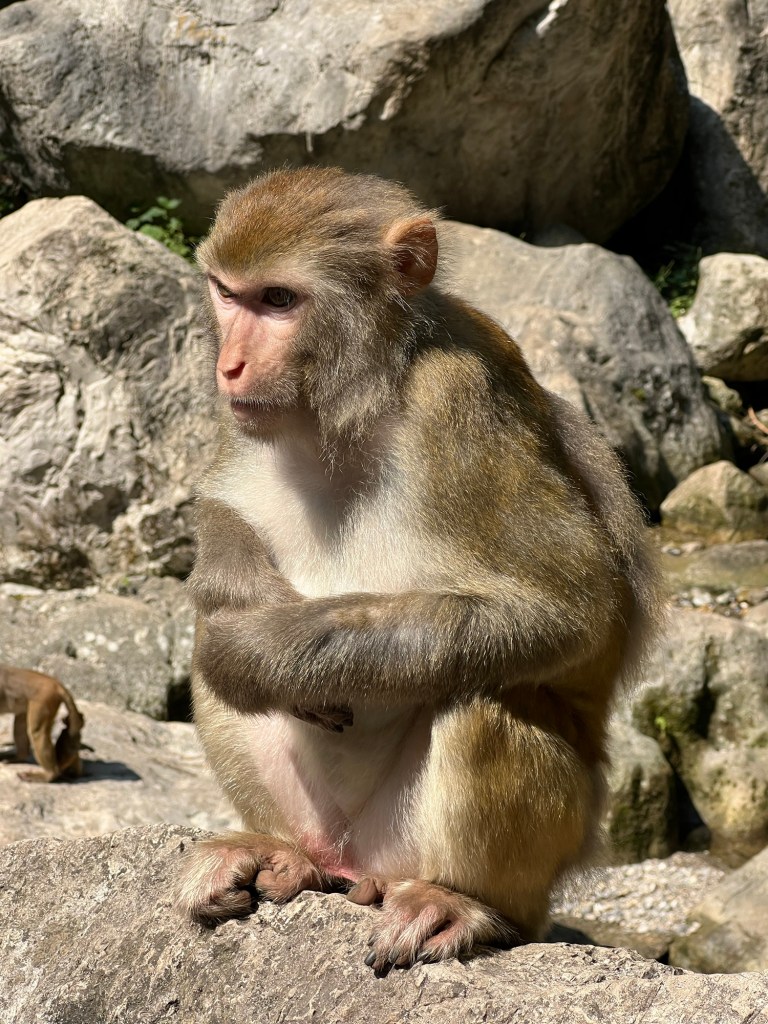
    The Chinese have made this place very popular and as we worked our way around, other tourist groups joined us as we made our way to a waterfall and area frequented by forest Macaque monkeys.

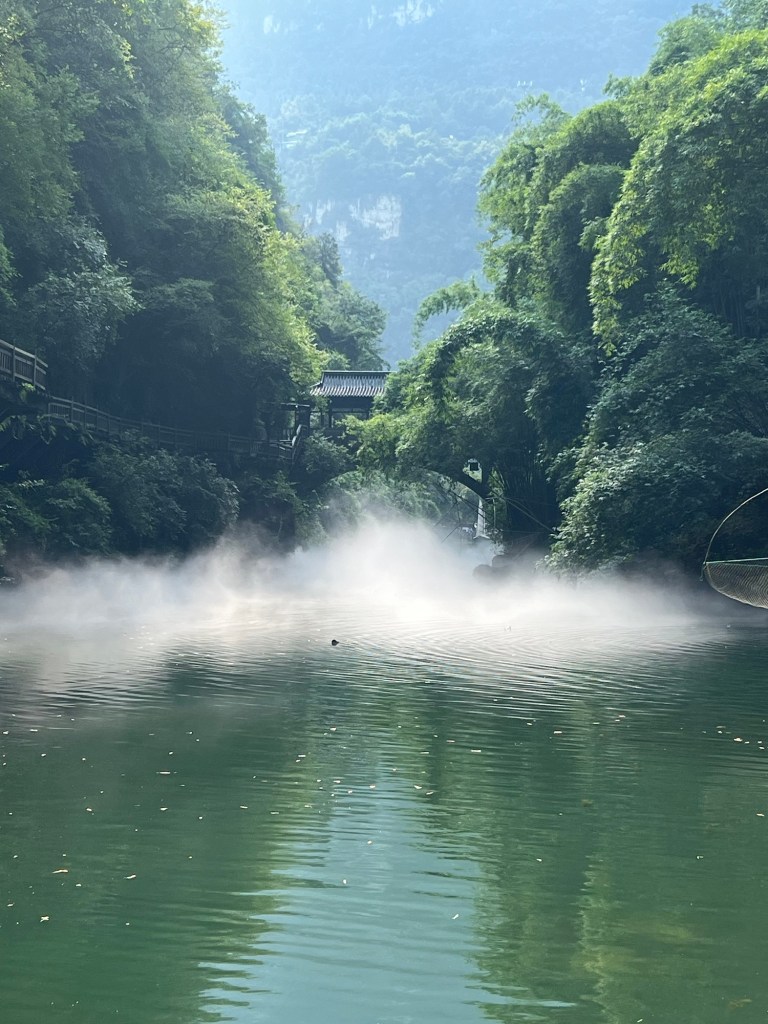
    The scenery, with the green mountains covered by mist against the clear water, creates a beautiful magical landscape.

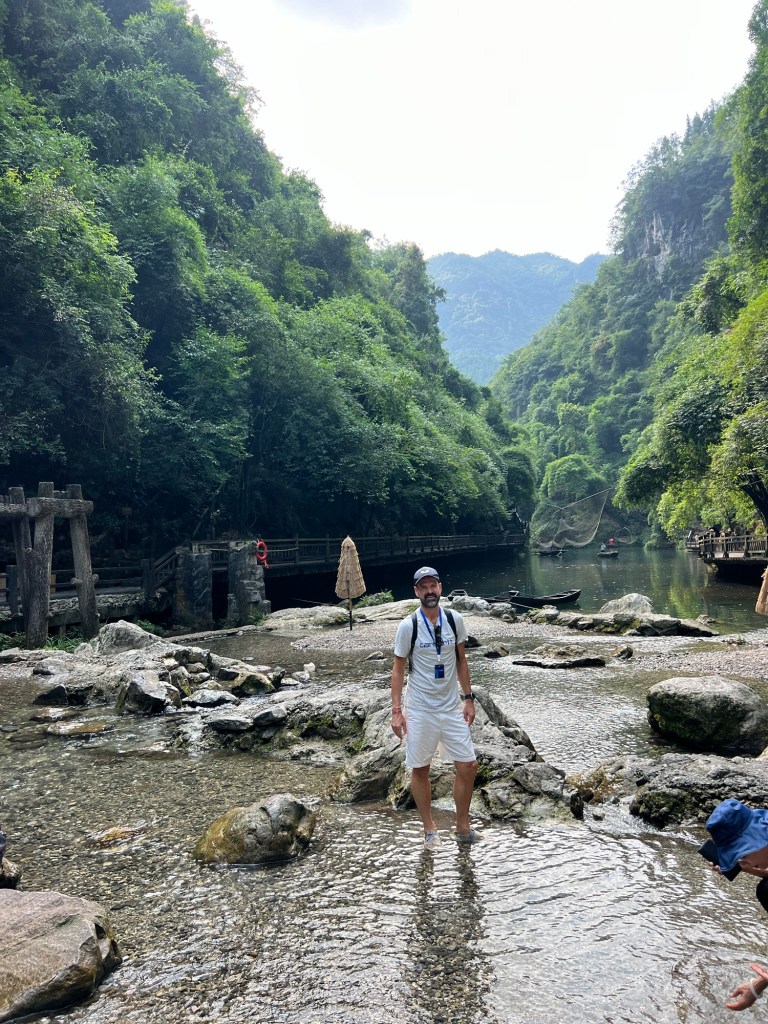
    We stopped to take a paddle in the mountain water which whilst cool was crystal clear and awash with small schools of fish.

    In paddle mode

    Further up the path we walked past old bridges across the small river along with traditional homes and shops.

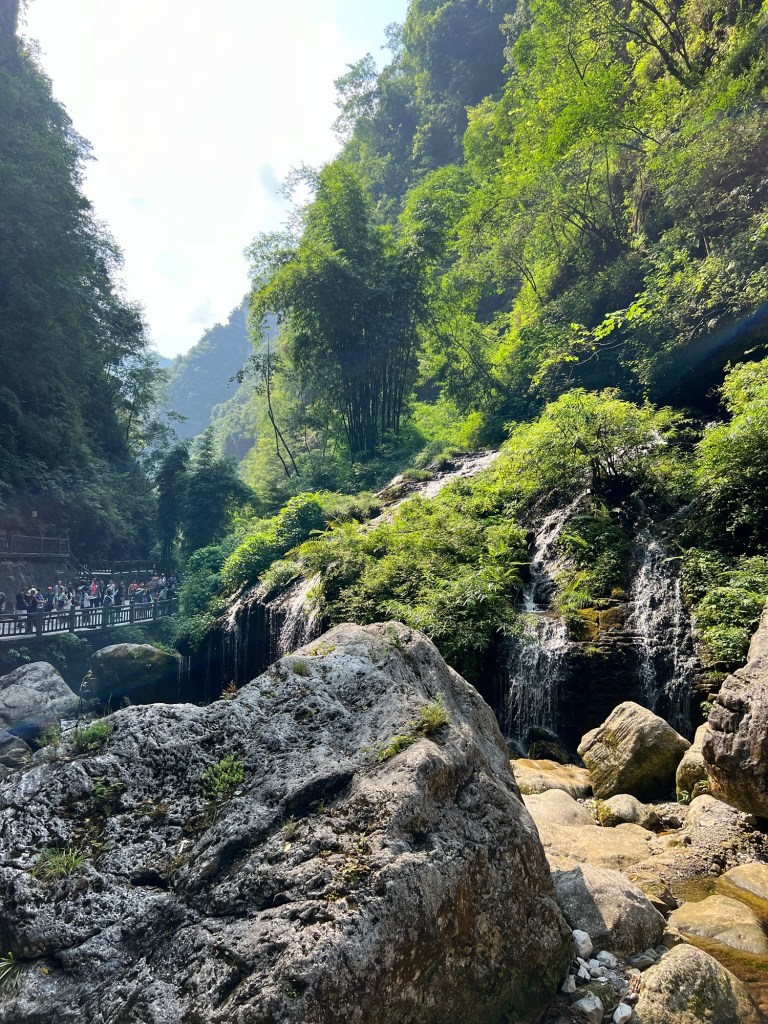
    The path along the banks of the river enabled us to snake along the base of the gorge.

    Gorge tour group
    Traditional Chinese theatre

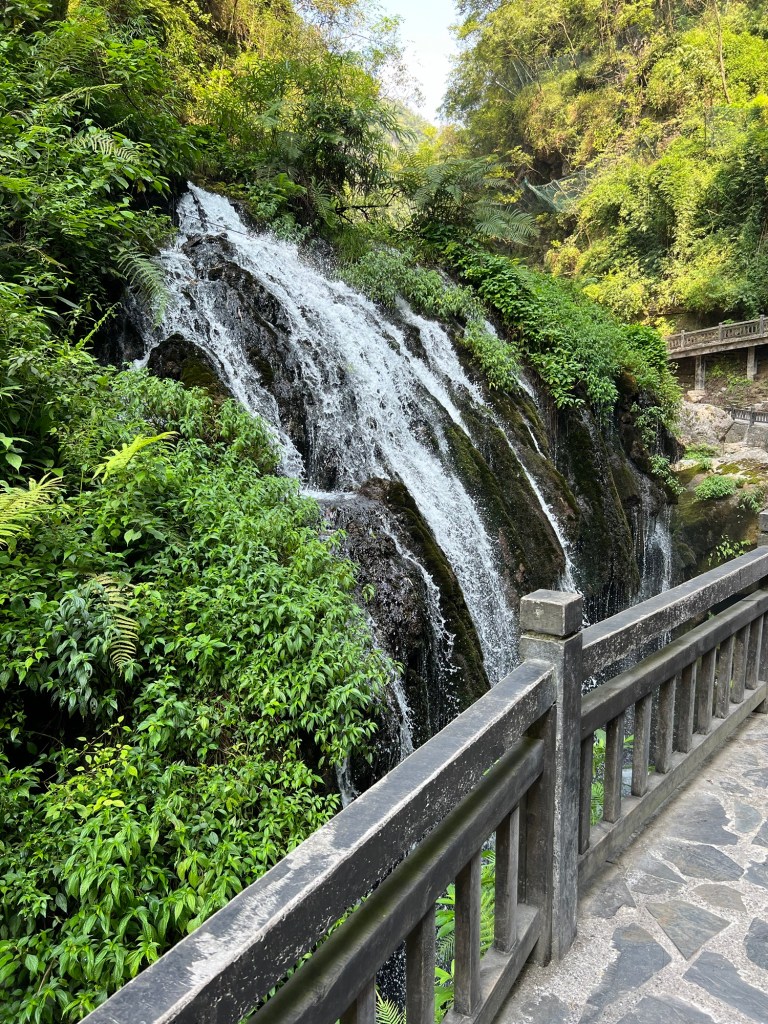
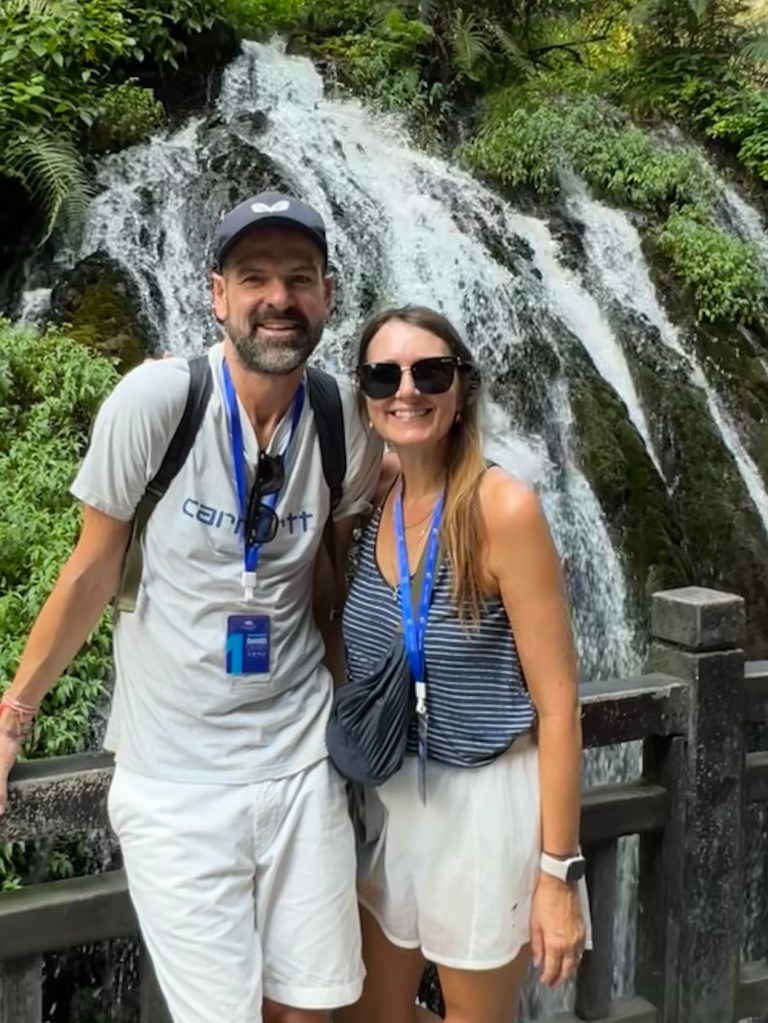
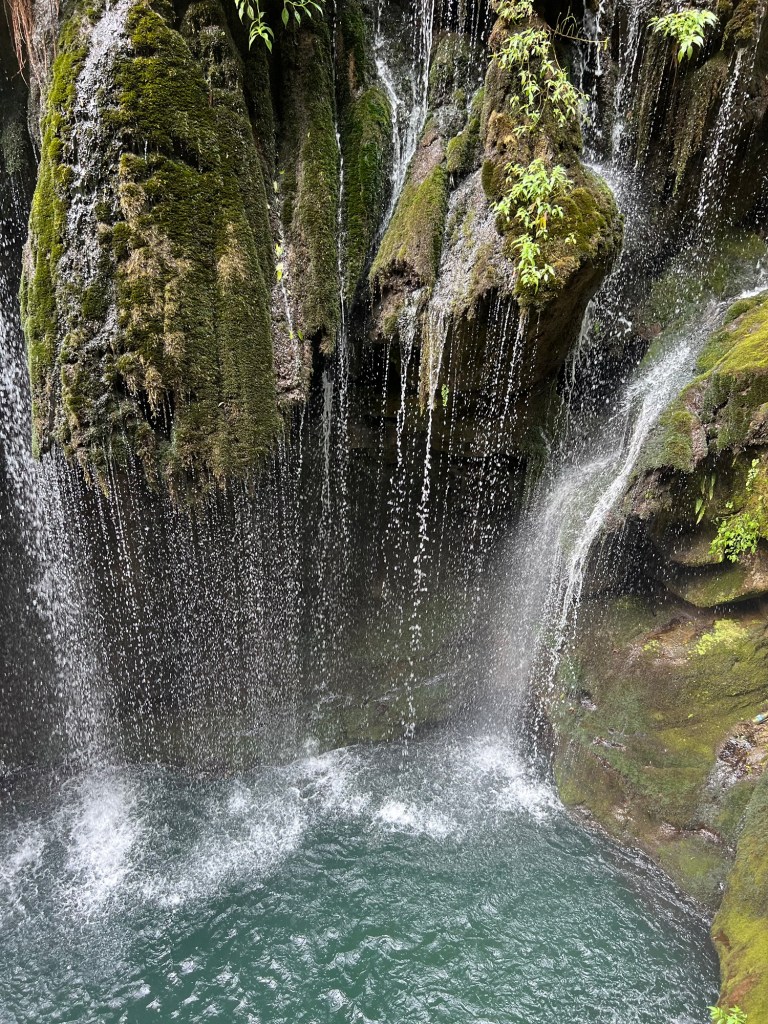
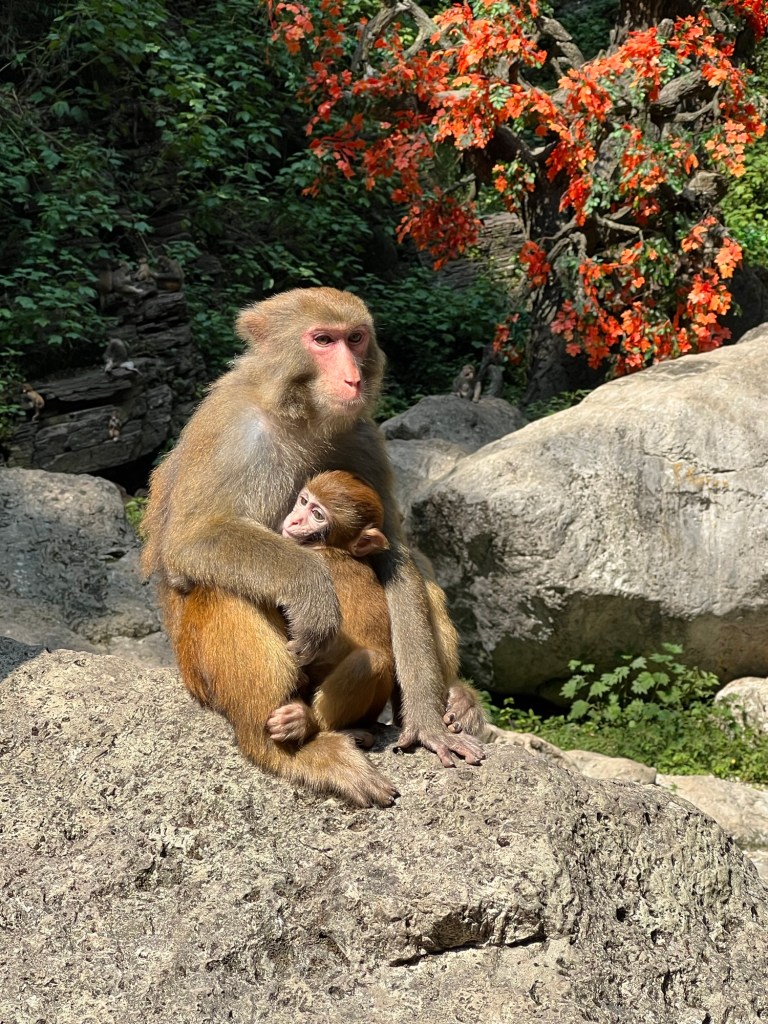
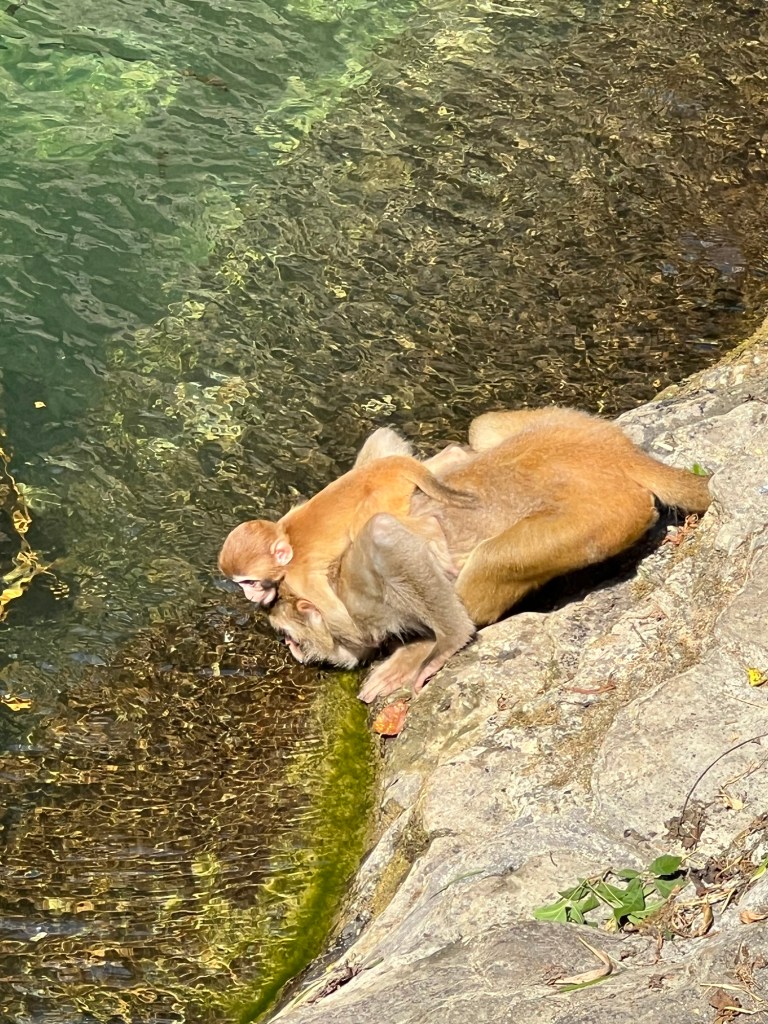
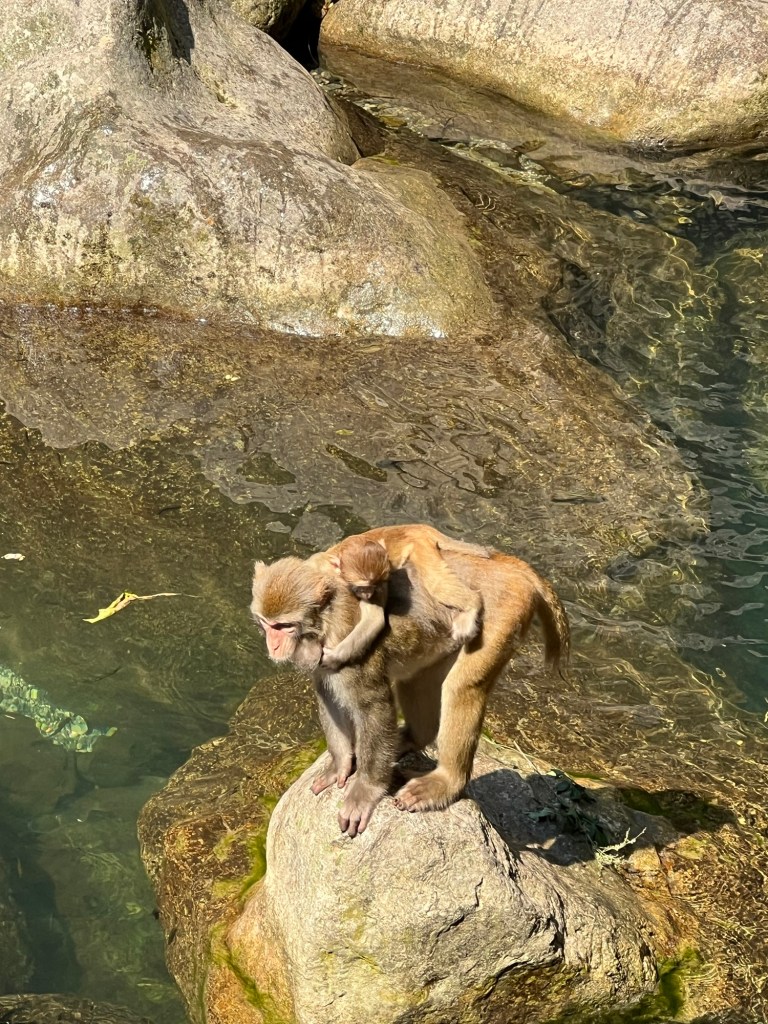
    As we got to the end of the path we came across a ‘dragon’ shaped waterfall and stopped to watch a family of monkeys who had gathered to watch our arrival.

    The scenery in and around the tributary was spectacular and we felt privileged to be able to see a part of China few get to visit.

    Our monkey friends
    Drinking time
    It’s a family affair
    Up close with a Macaque monkey

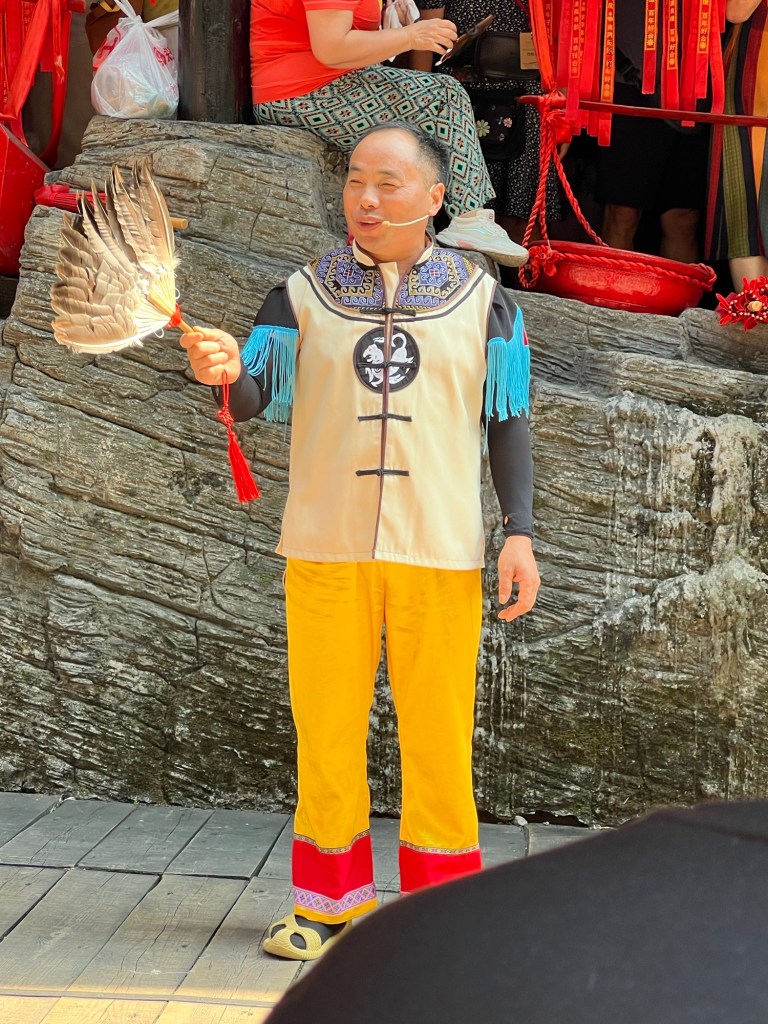
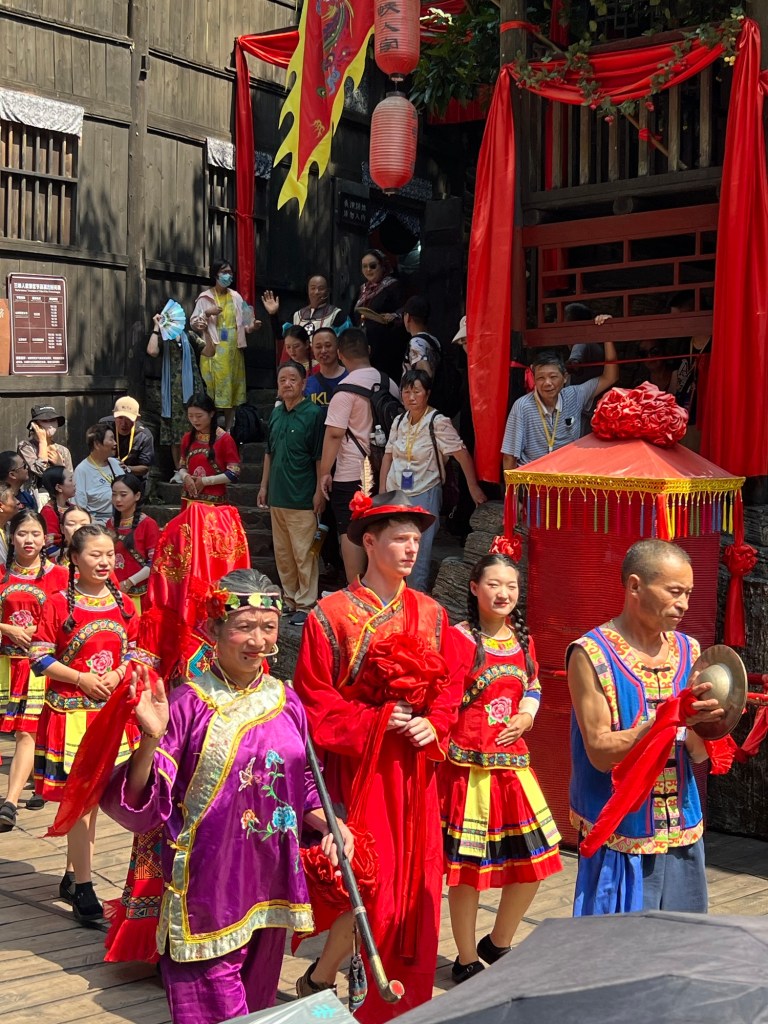
    On our way back we were entertained with a show by the village actors. They told a story about the marriage of one of the local girls to a young man (for comedy effect they picked Jamie in our group to take on the role). The performance was entertaining and thankfully short, as we were sat out in the midday sun with temperatures hitting 39c.

    Jamie the new groom

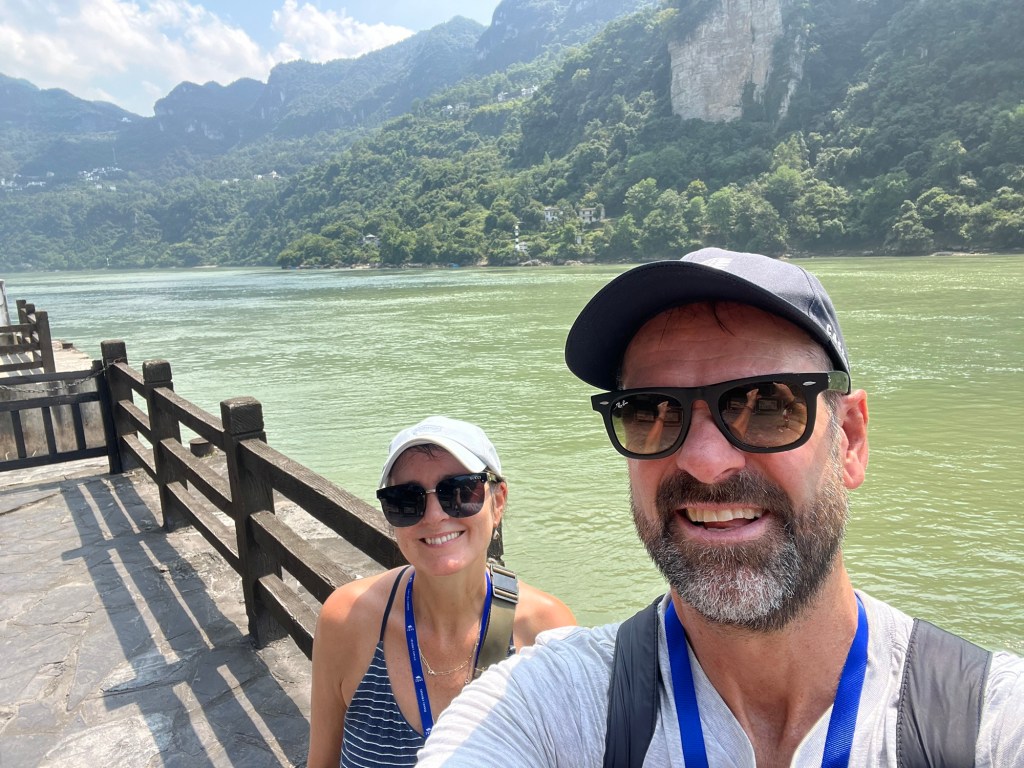
    Once back at the main Yangtze River we took a couple of final photos of the gorge and surrounding mountain range, before we returned to our boat for a brief respite and a spot of lunch.

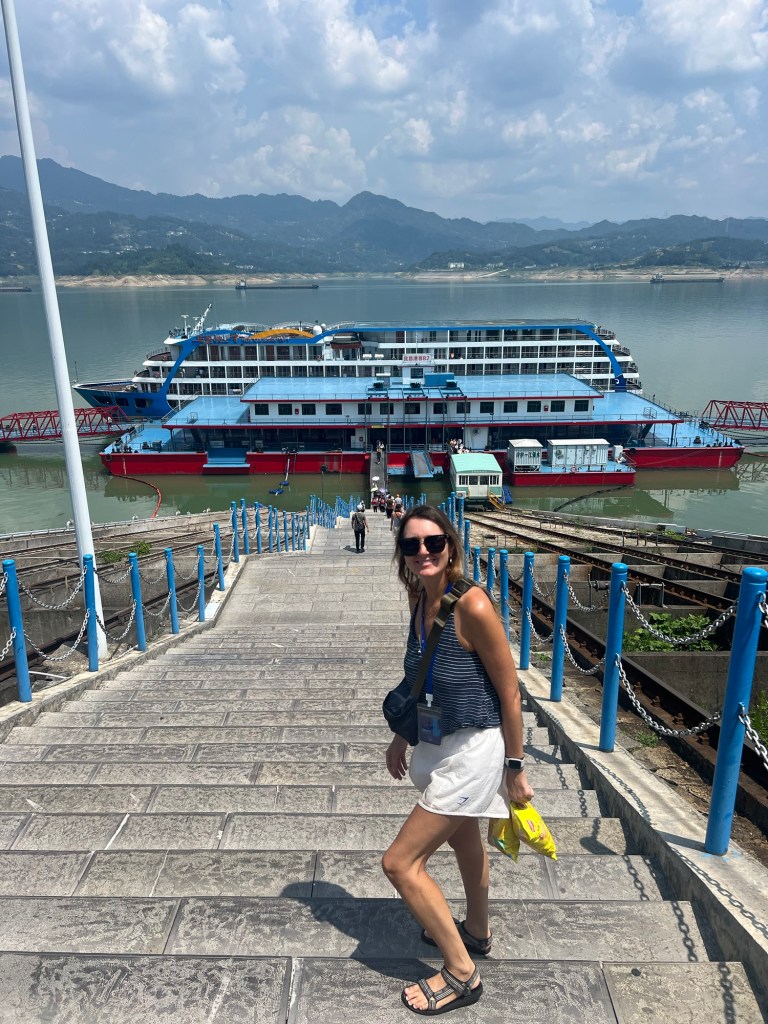
    Heading back to our river boat home
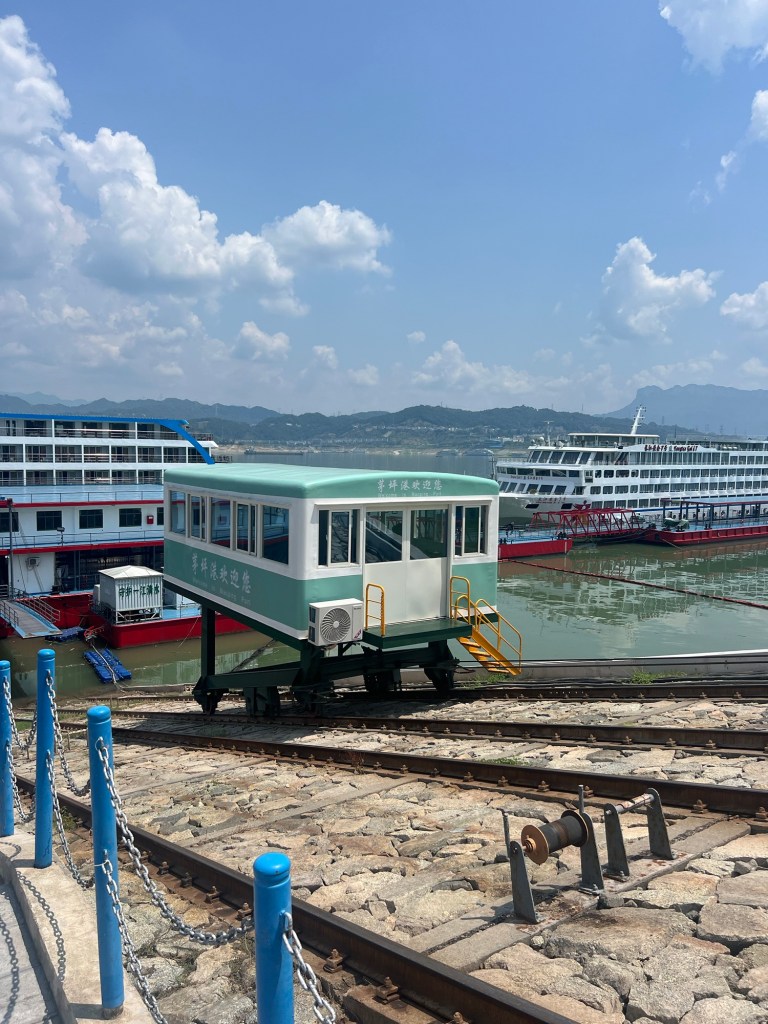
    Cable car down to the boat
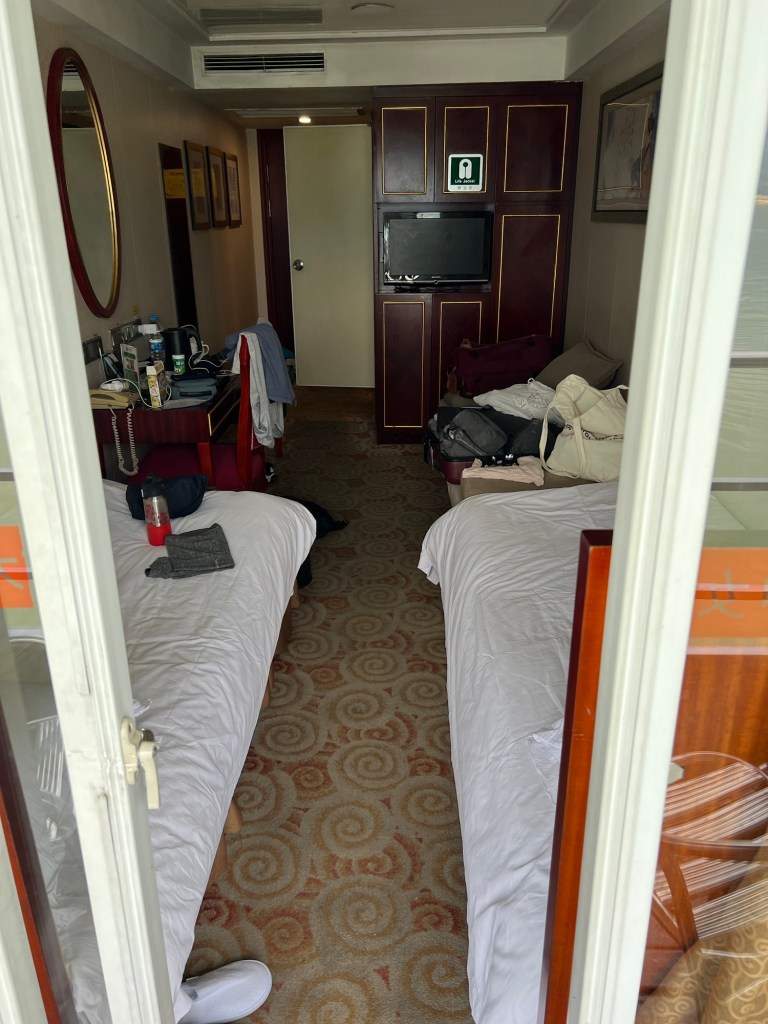
    View from our cabin
    ‘Luxury’ living on board the boat

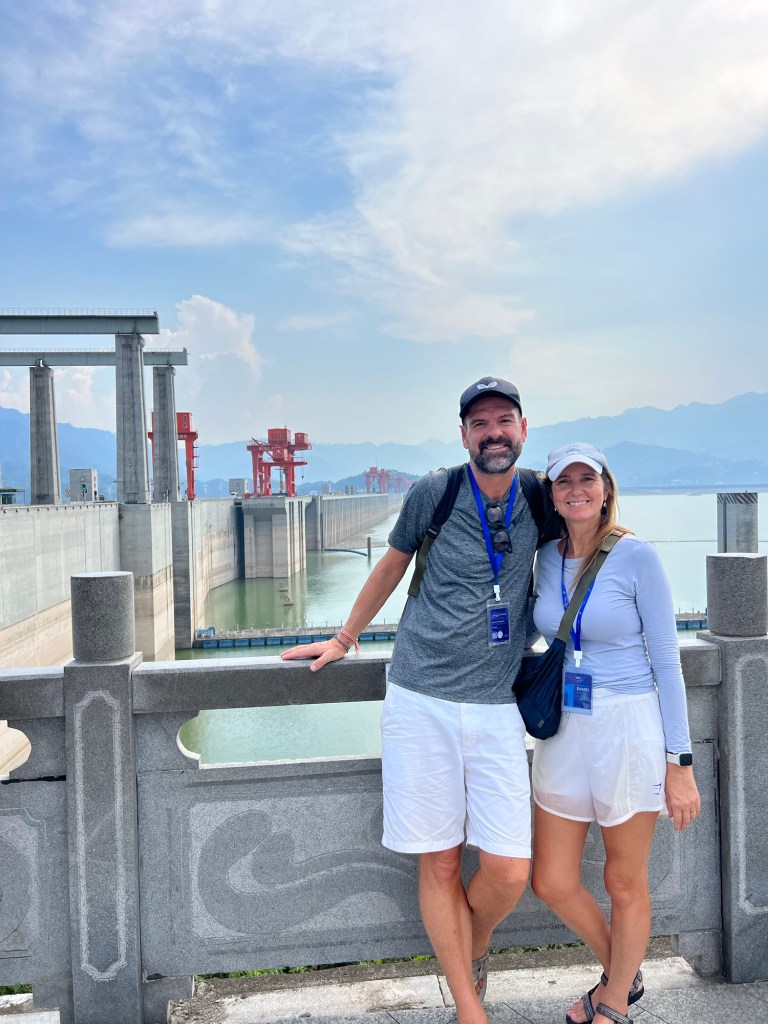
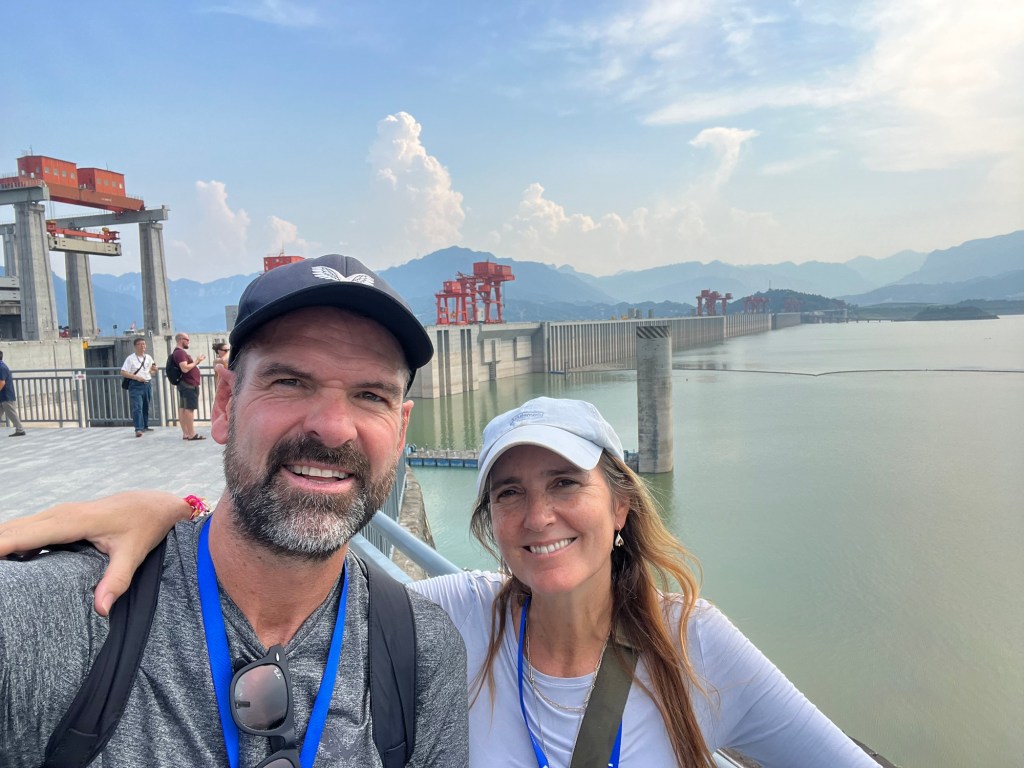
    After a filling lunch back on the boat, we headed out again on a tour of the Three Gorges Dam.

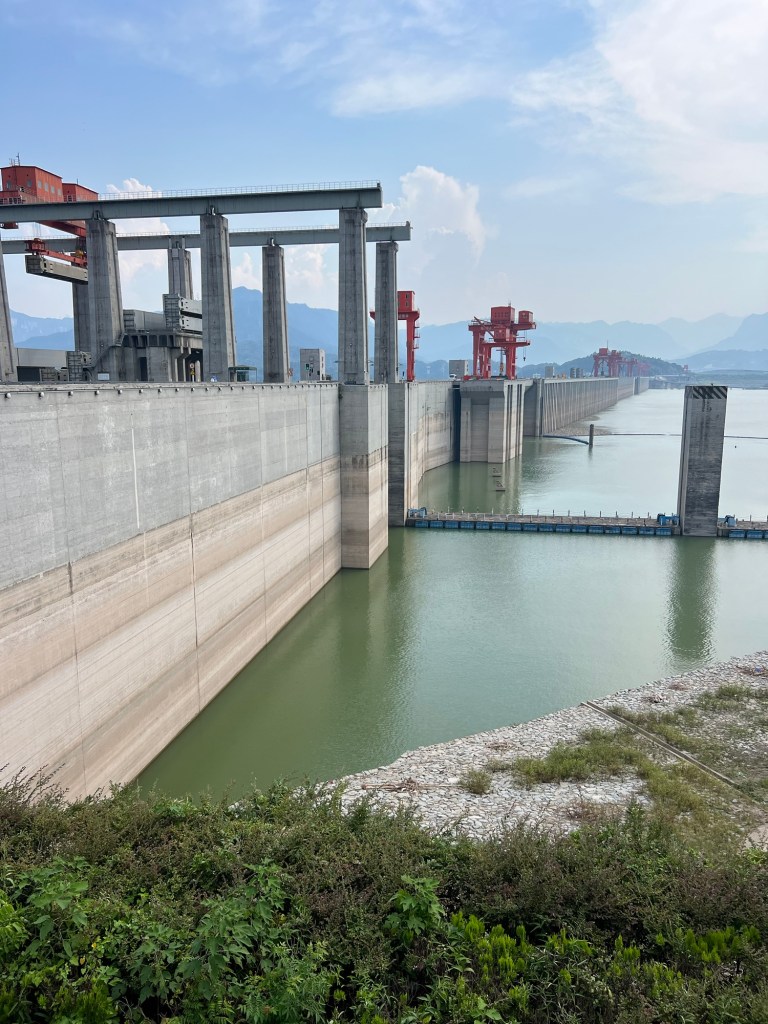
    This is the world’s largest power station in terms of installed capacity.  The level of outcome varies depending on the time of year and whether it’s the wet or dry season. Currently the water levels are low and some 20m below its optimal height.

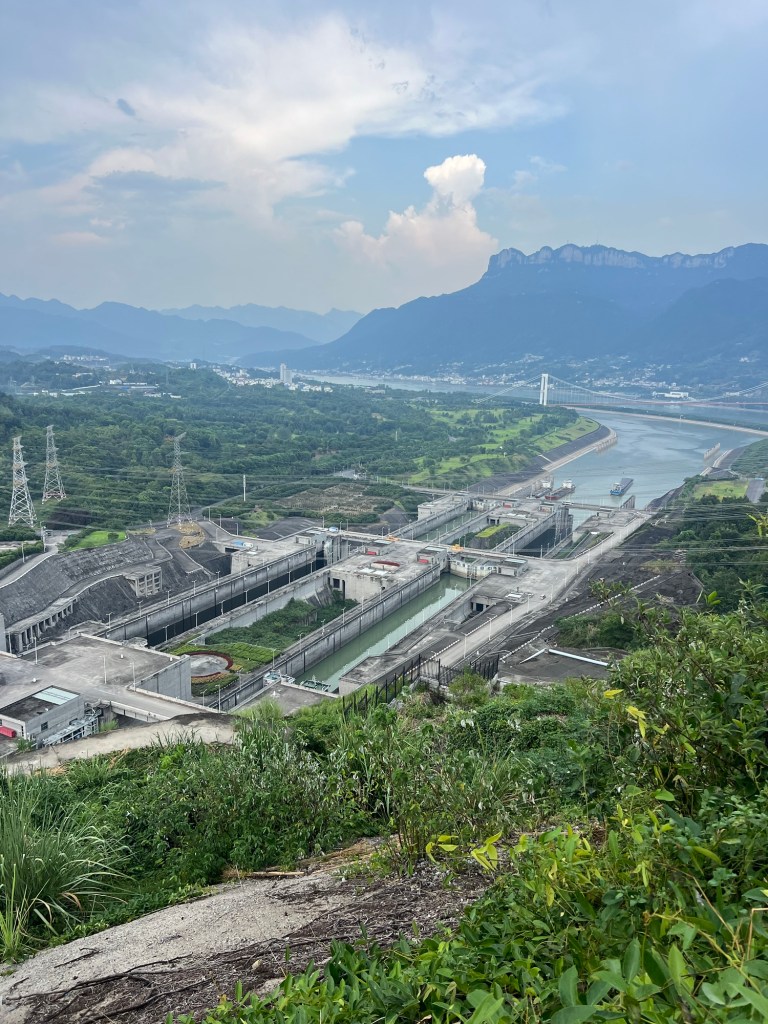
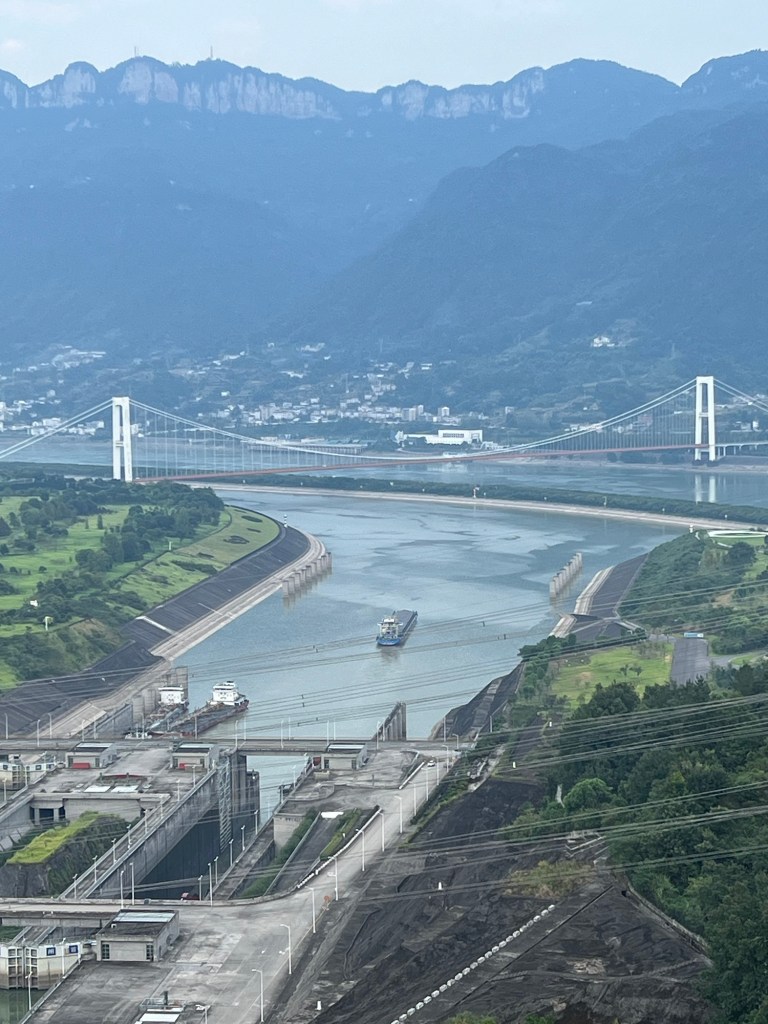
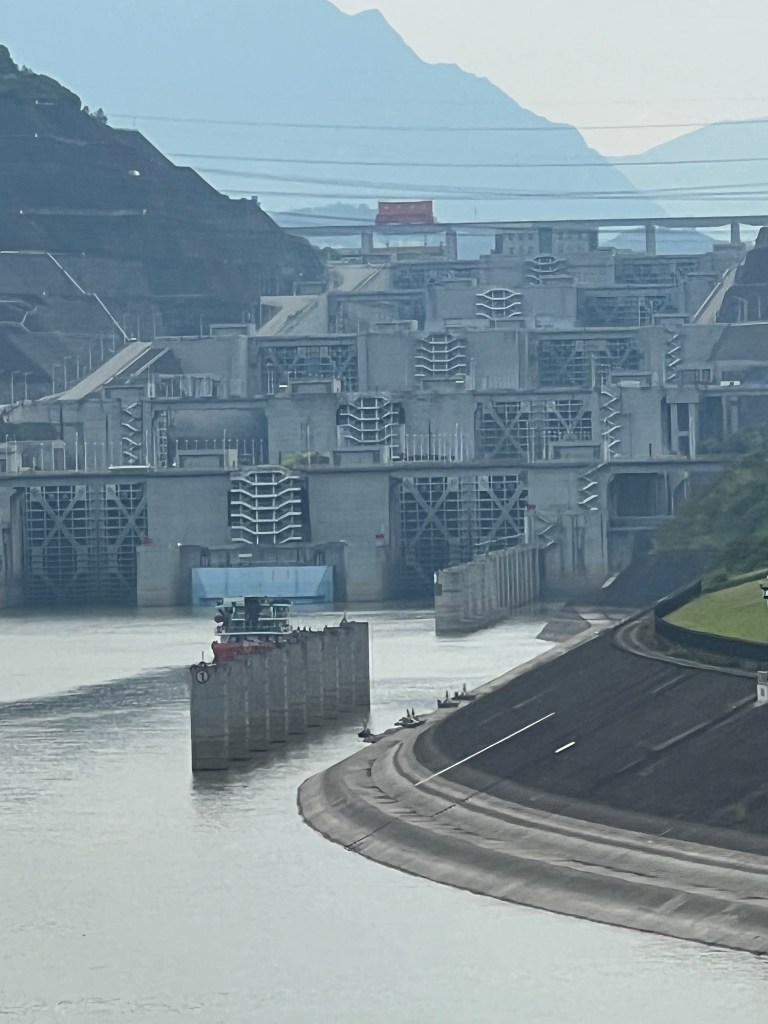
    The views across the canals that were formed to allow the boats to detour around the dam and move up the river.

    The development & scale of the Three Gorges Dam is immense and took over 16 years to complete. Not only did they dam the full width of the powerful river (almost 300m in width) they cut through rock to form wide canals enough to allow 6 boats to move through at one time.

    Despite this the usage of the river is such, that they have already breached capacity and have decided to build another canal system through a nearby mountain which is due to be completed in 10yrs time!

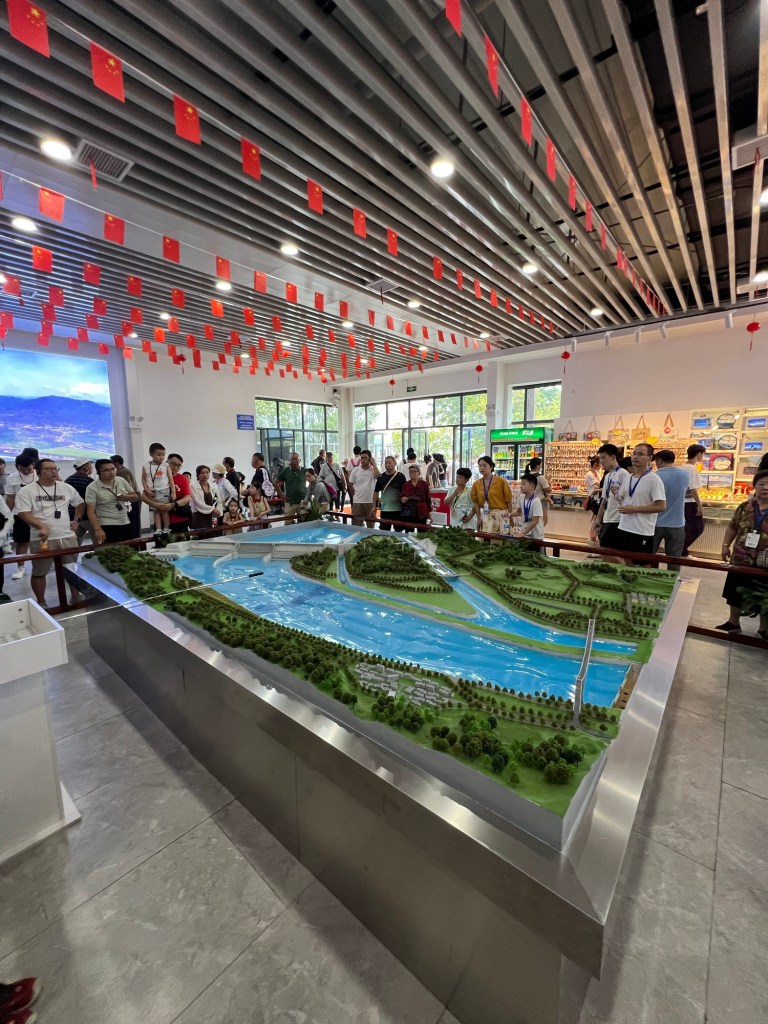
    Model of the dam and canal system

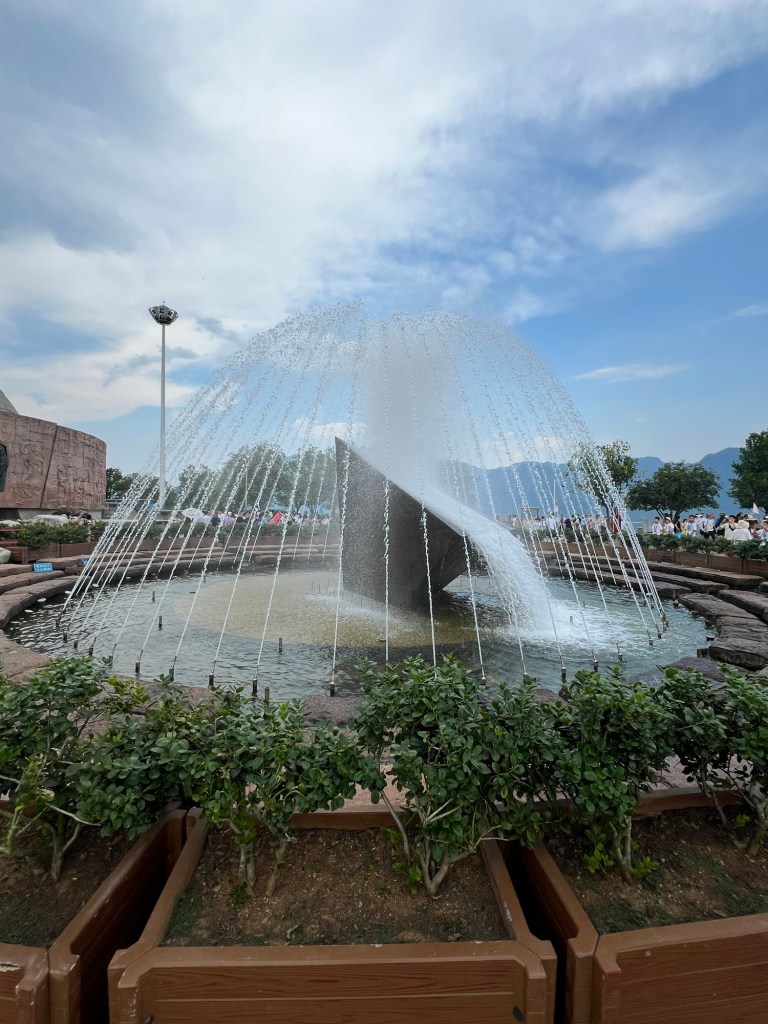
    We got the chance to walk around the dam ‘park’ and view it from above and also up close from one side. To see the scale of this project is incredible and something that the government achieved in a relatively short period of time. Its effects have not all been positive with over 1.5m people displaced. Several cities and towns were relocated to enable the river levels to be increased to their current depth of 110m, an increase in parts of over 60m.

    In addition the fish population was depleted and there is currently a total ban on fishing for the next 10yrs to enable the numbers to grow again.

    After a full day of sightseeing we returned early evening to the boat.

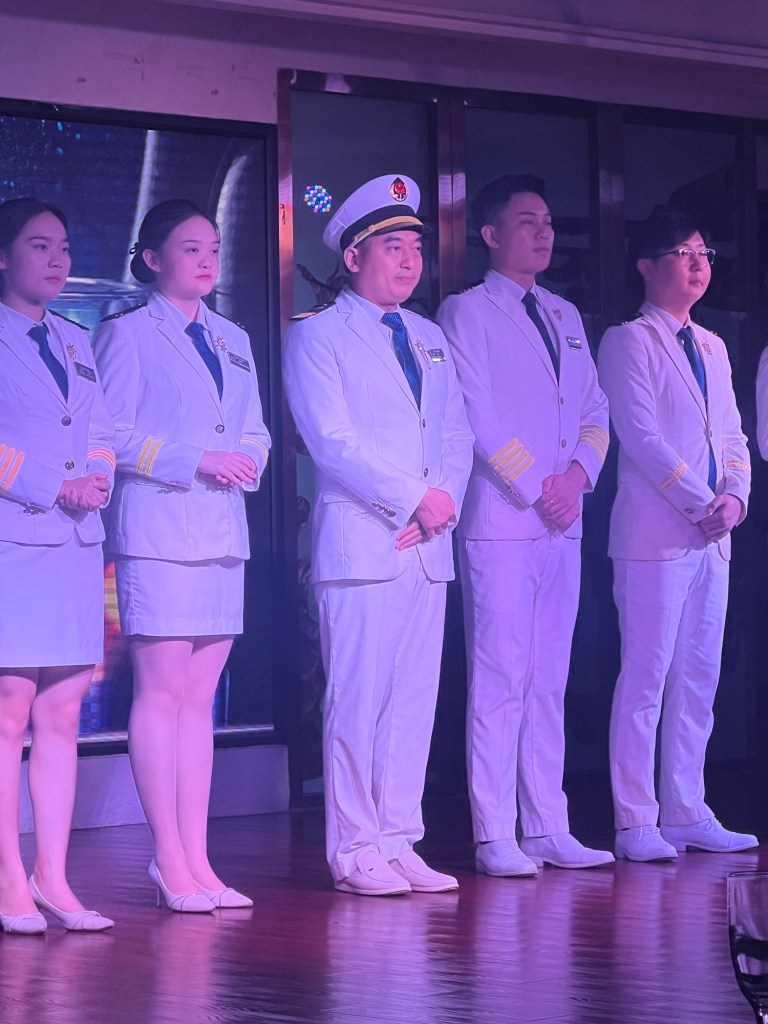
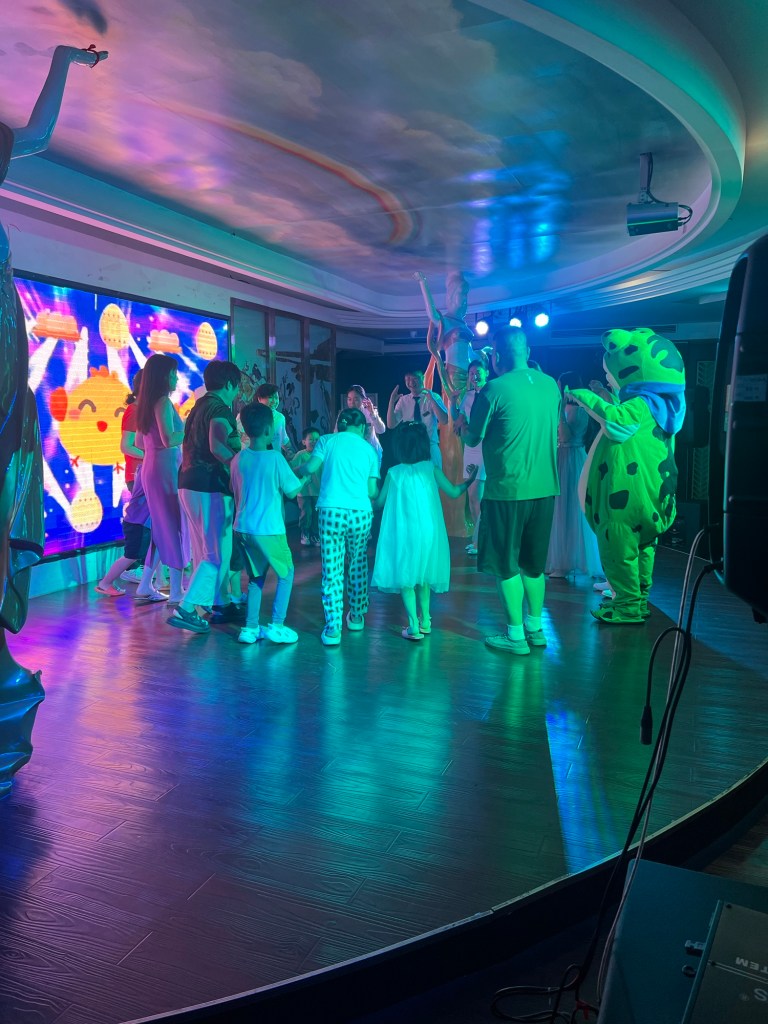
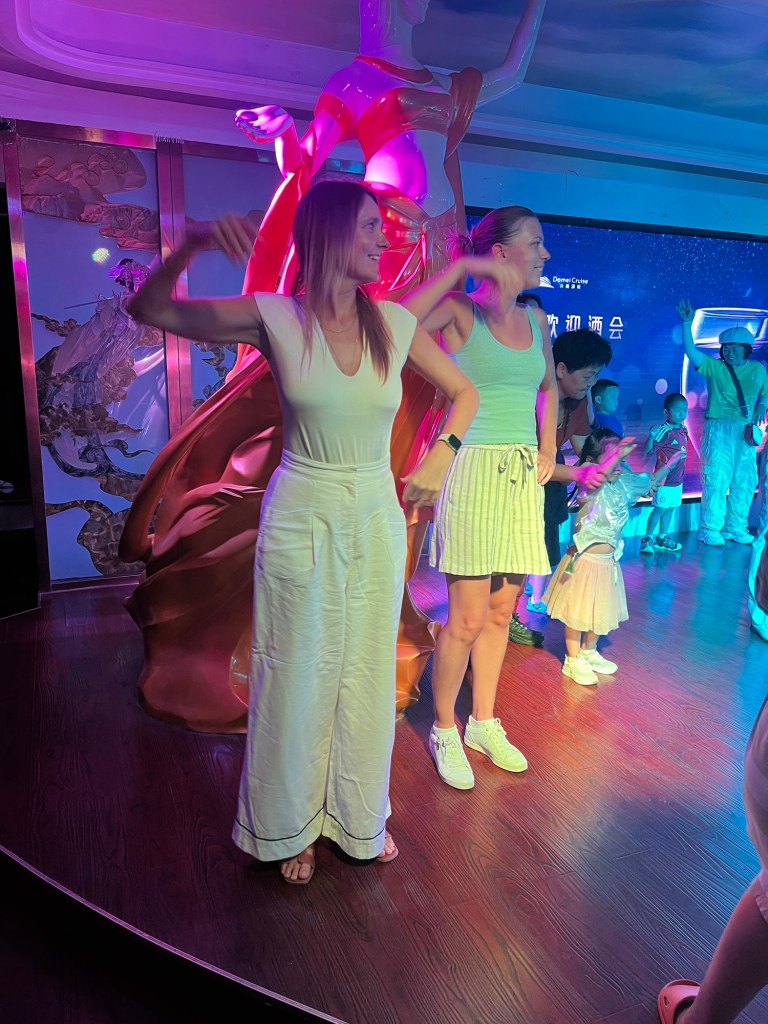
    Post dinner we were invited to a welcome party from the staff and crew which led to some interesting dancing and music that took us back to kids’ parties in the early 1980’s.

    Welcome to the captain and his team
    Michelle & Laura doing their best YMCA impressions

    Tomorrow we up early again, at 6.30am to watch as we pass by the Second Gorge and later on a tour to the Lesser Three Gorges.

  • Overseas tour Day 297 – Yinchang & Yangtze River

    Aug 24th, 2024

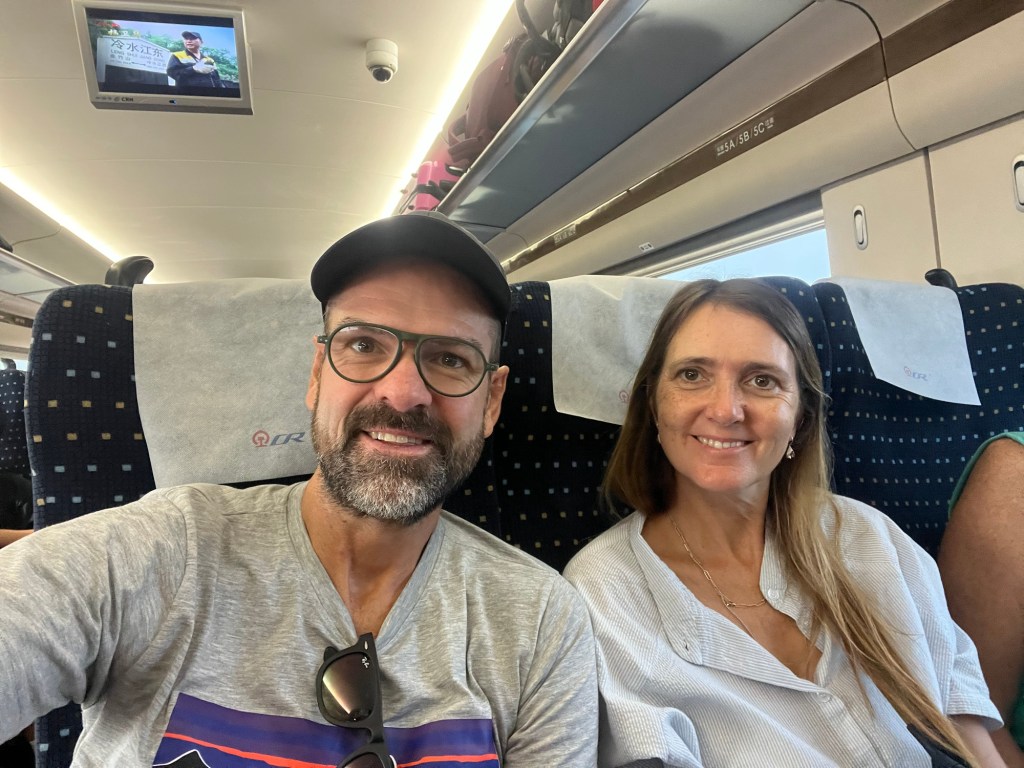
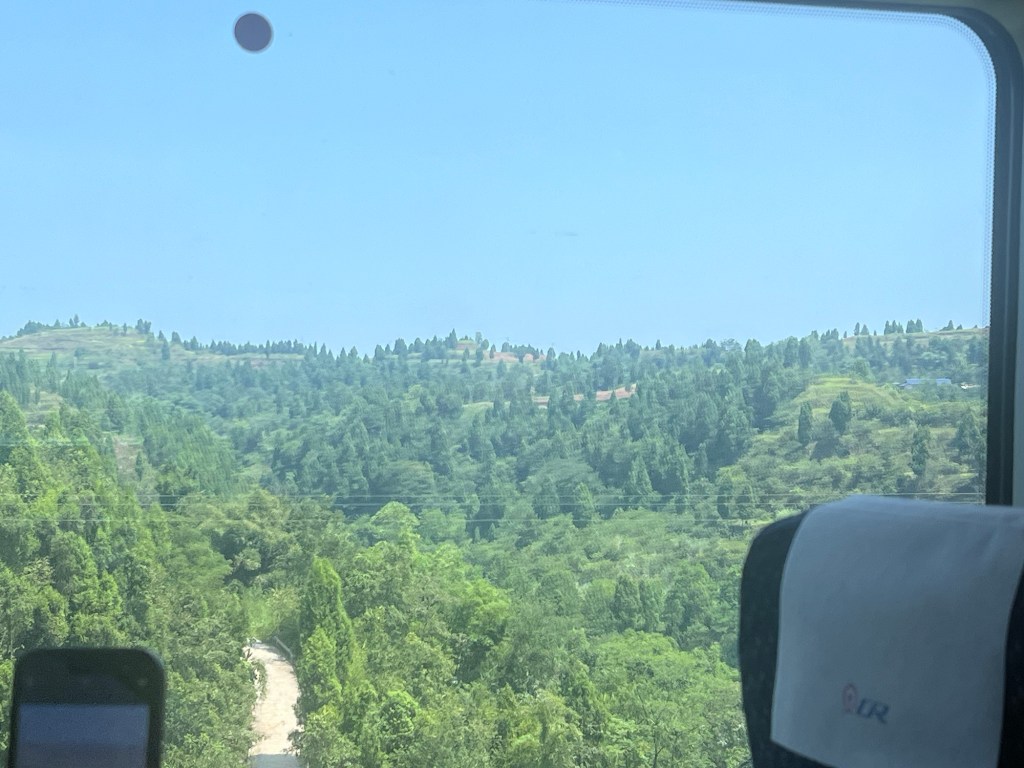
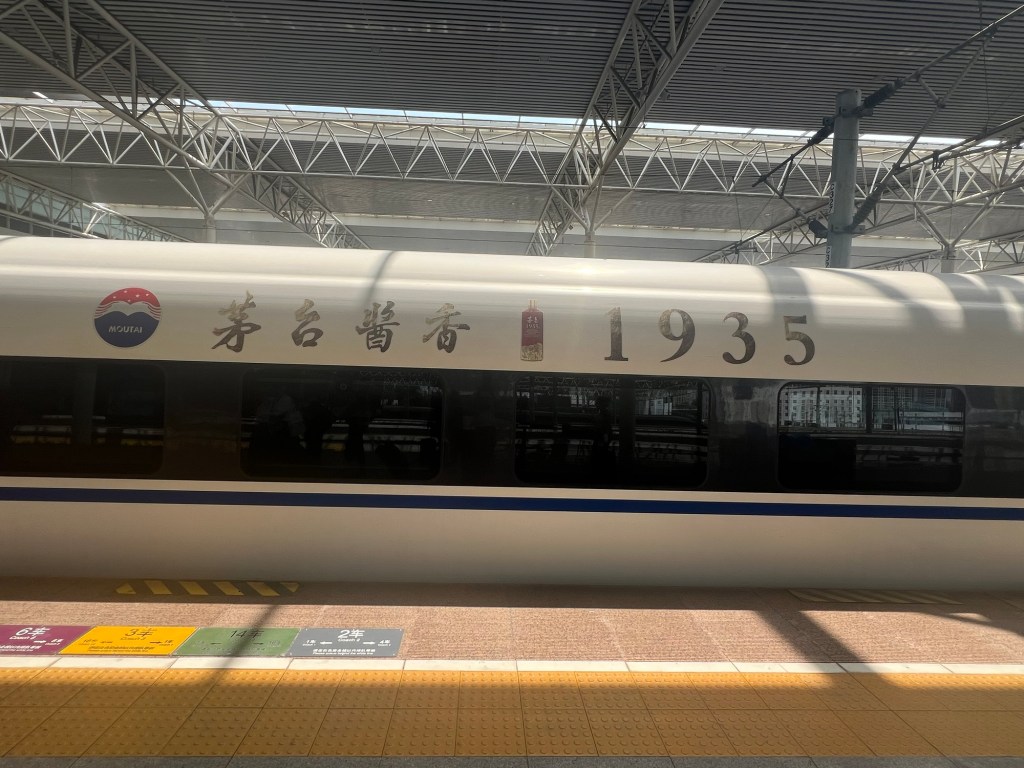
    A full day of travel today as we headed across country on a 7hr train journey to Yichang, the gateway to the Yangtze River.

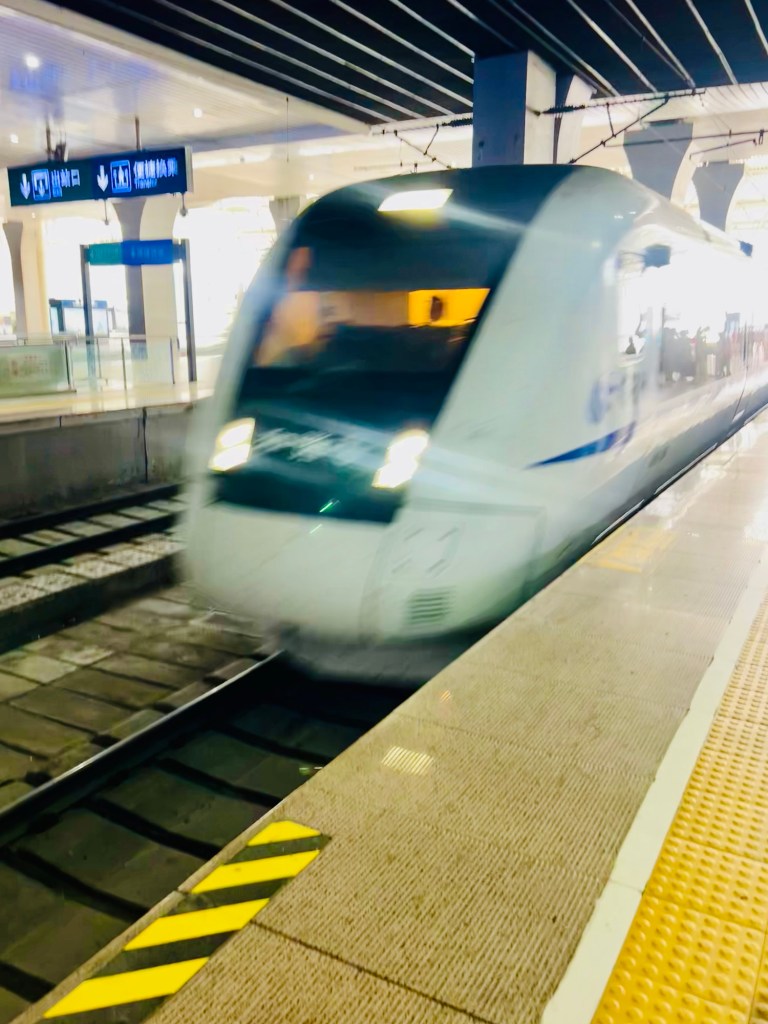
    Our two bullet trains took us 1,250km across country through a series of tunnels cutting through the mountain terrain.

    We had a 1hr layover back at Chengdu were we indulged in some Tom Horton bagels (not v Chinese we know but we were hungry and in need of food we recognised!).

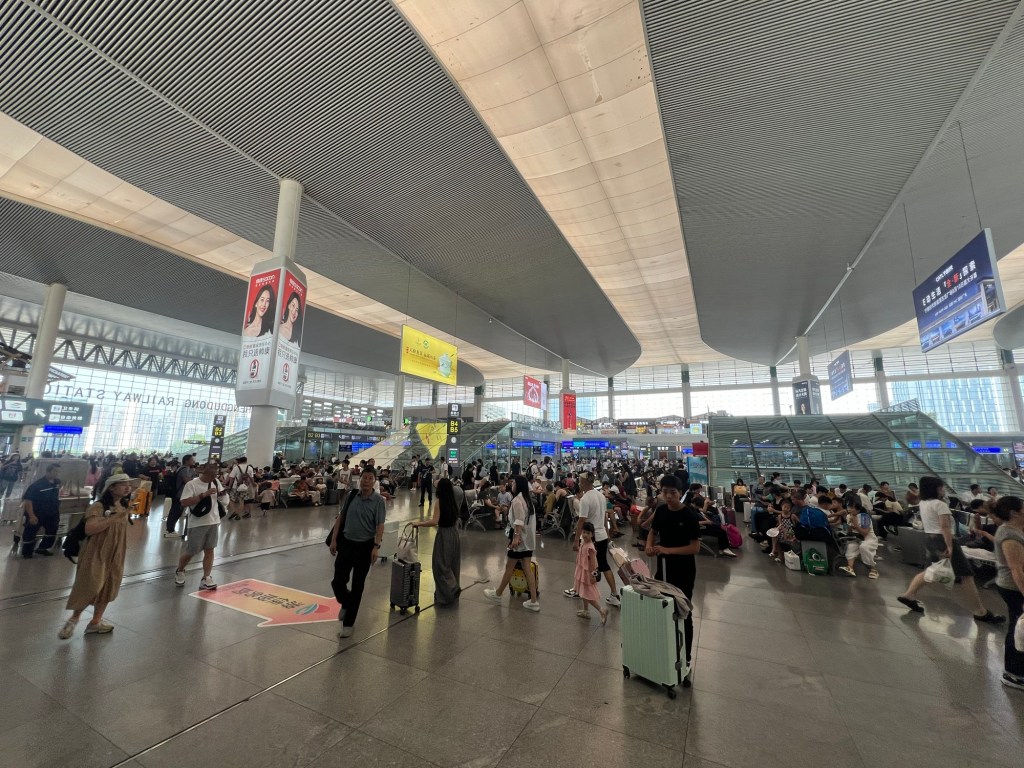
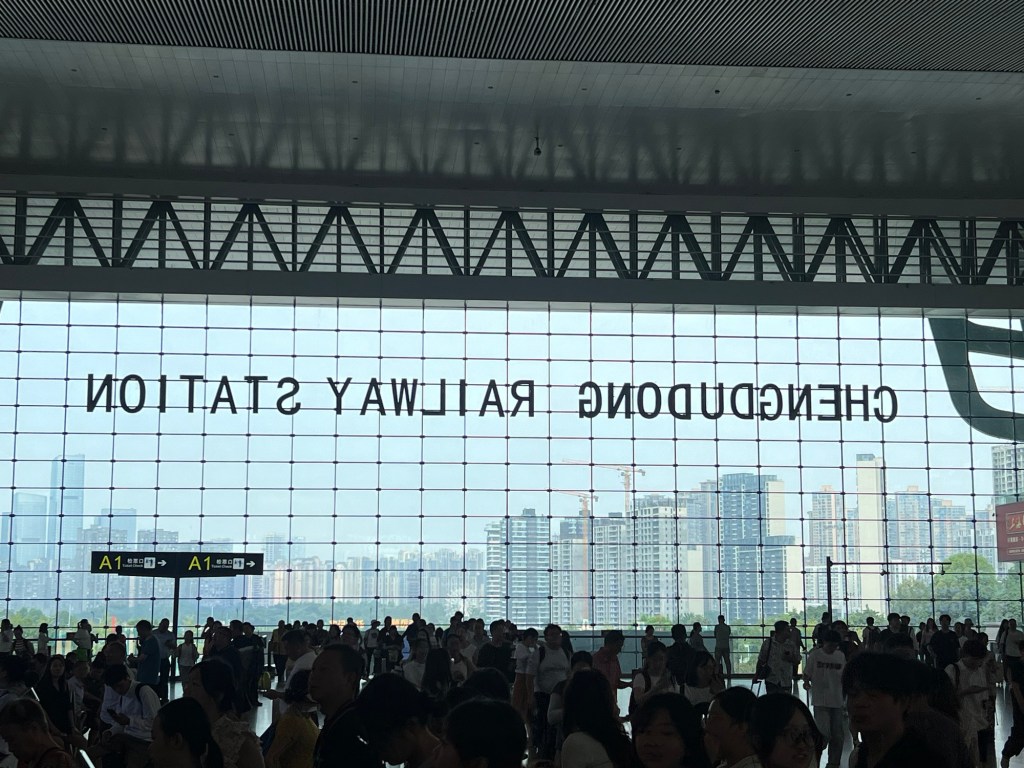
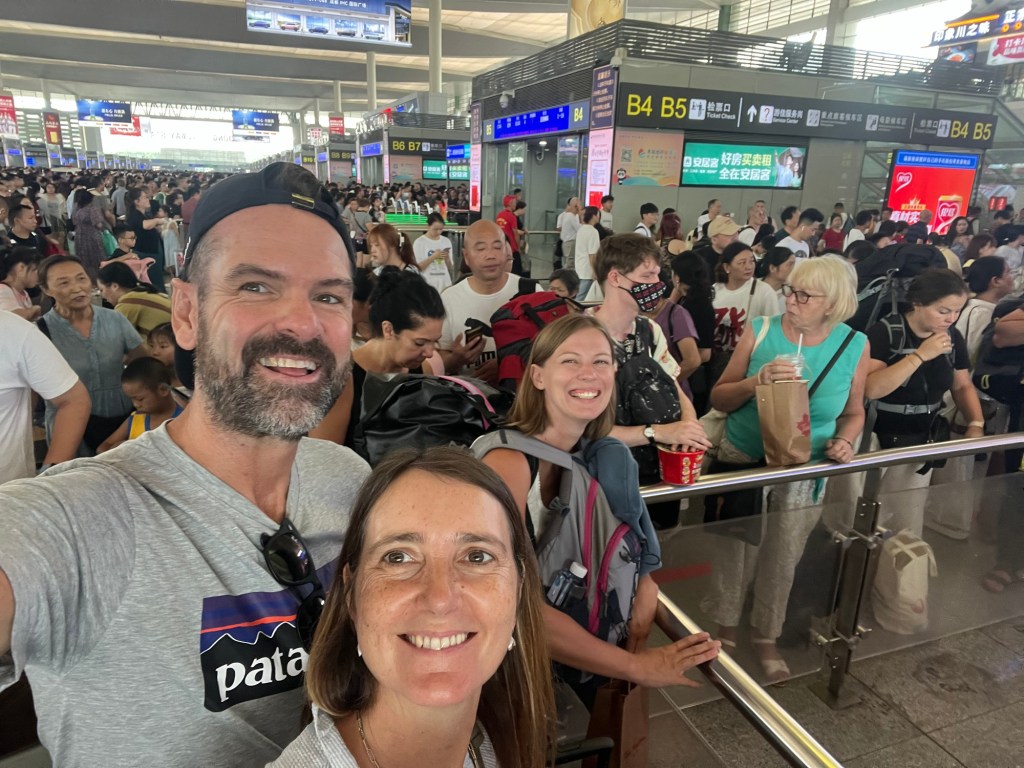
    After some nourishment we went for a wander to explore this goliath train terminal.

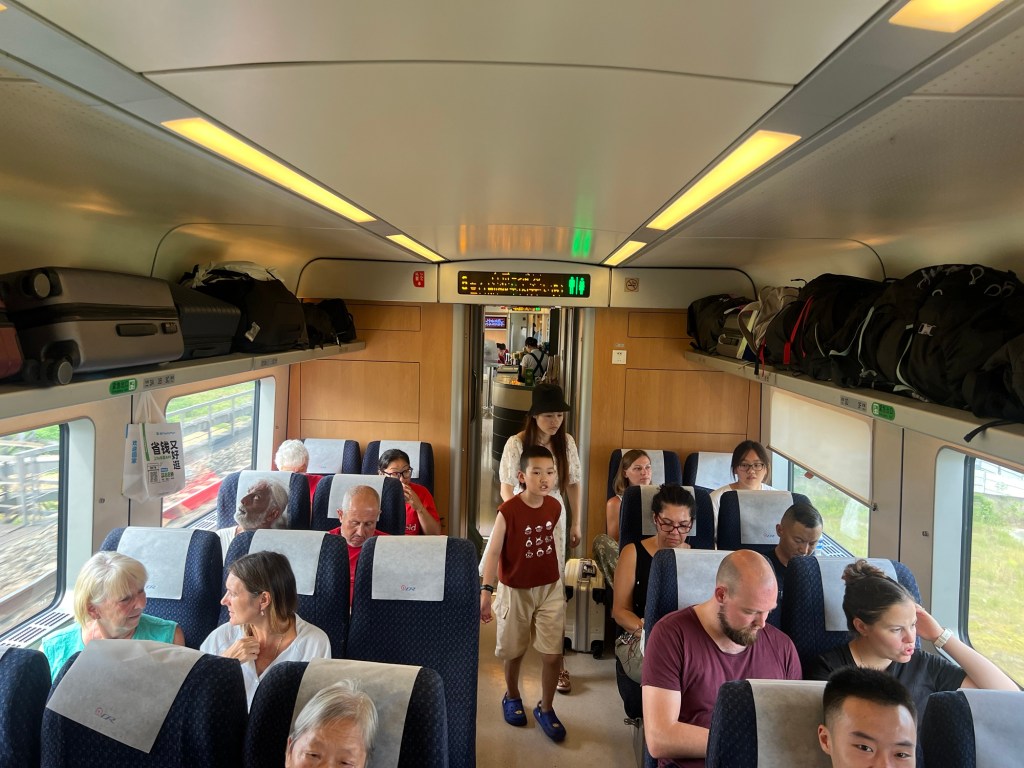
    The journey whilst long was in reasonable comfort and after a few card games with other friends on the tour group we managed a little snooze.

    The epic Chengdu train station

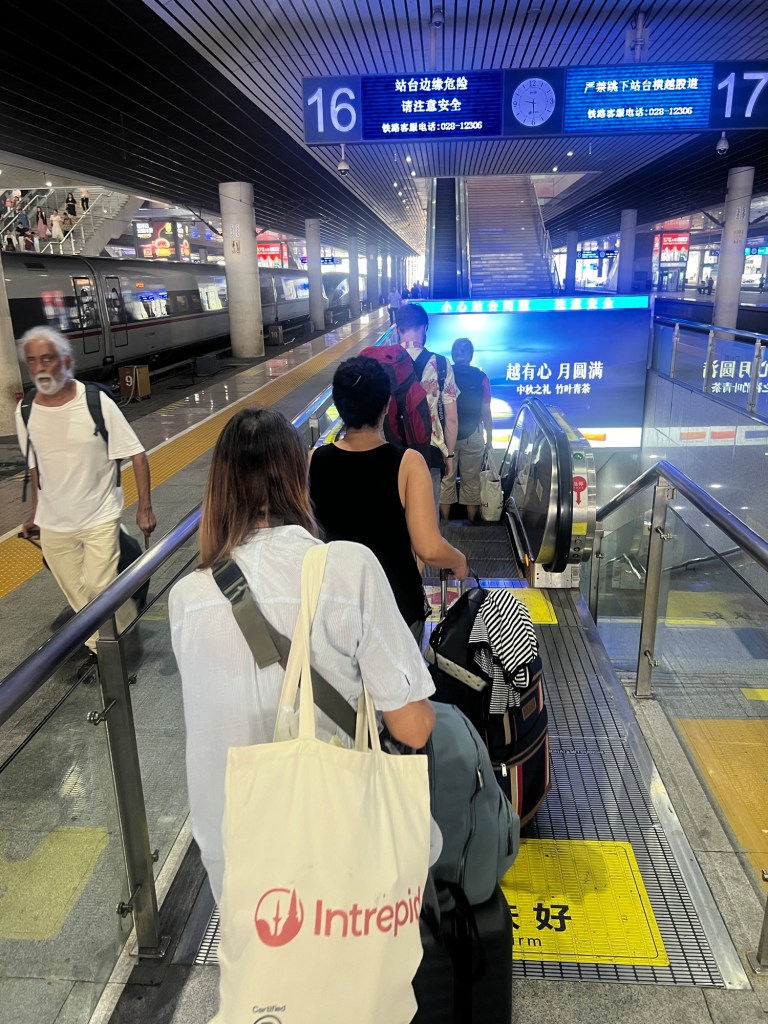
    Our day of travel involved 2 buses and 2 trains and the inspection of our passport ID on at least half a dozen occasions!

    Train travel in China has come a long way in the last 20yrs and it’s now a quick, reliable and affordable means of transportation for much of the population, preferable to flying for most.

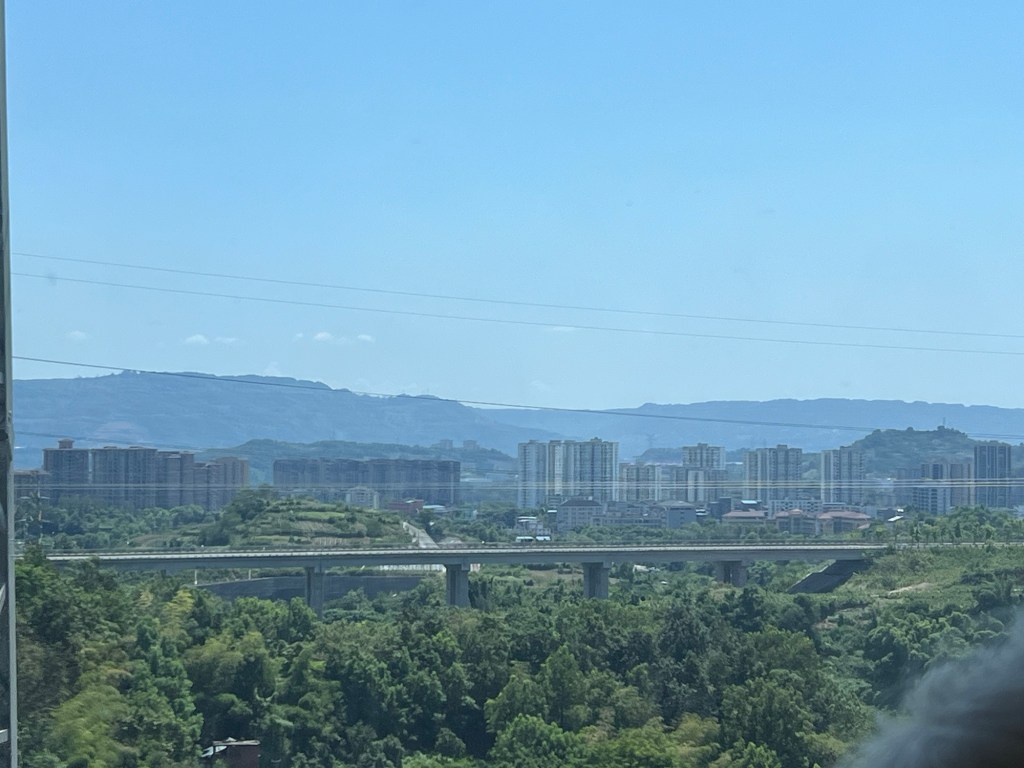
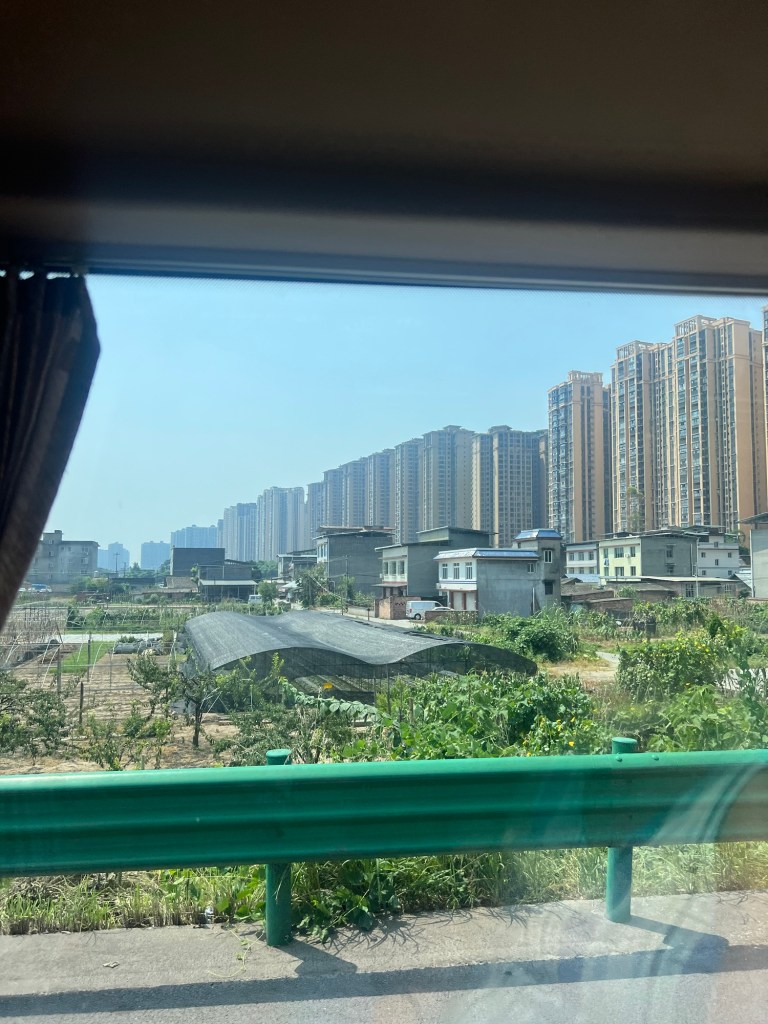
    The countryside scenery was inter-dispersed with unknown cities of high rise buildings that appeared out of nowhere then grouped together in high blocks.

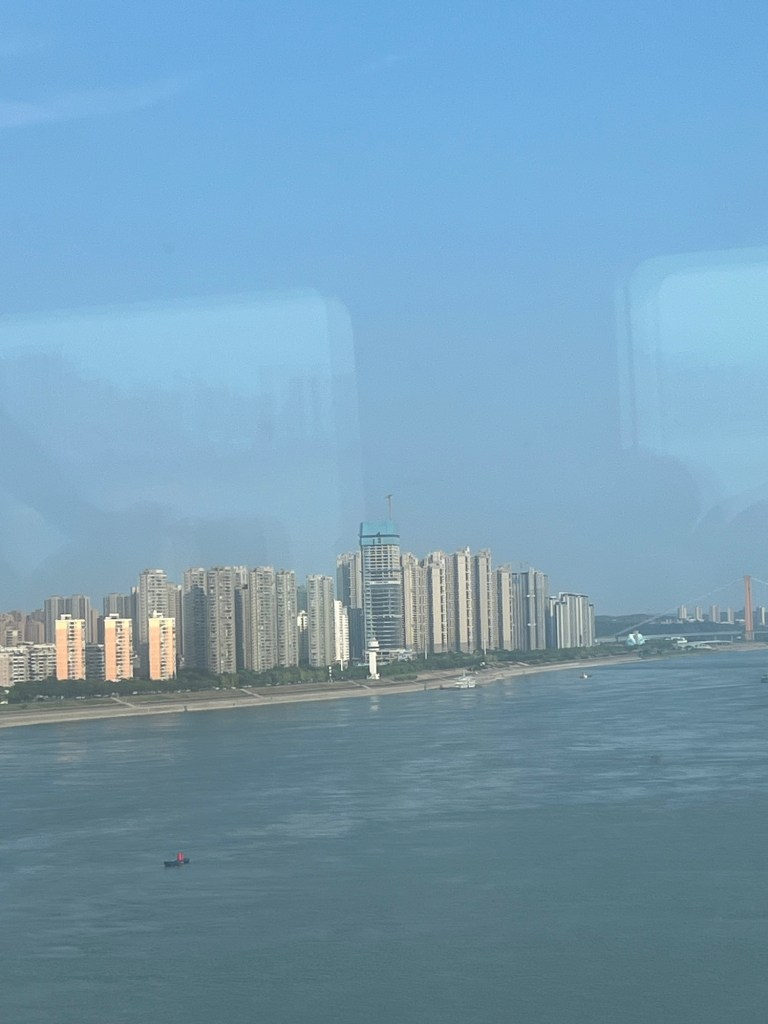
    Our arrival at Yichang our final destination was a pleasant surprise, as the city was cosmopolitan and looked more Mediterranean with large homes sitting next to the Yangtze River.

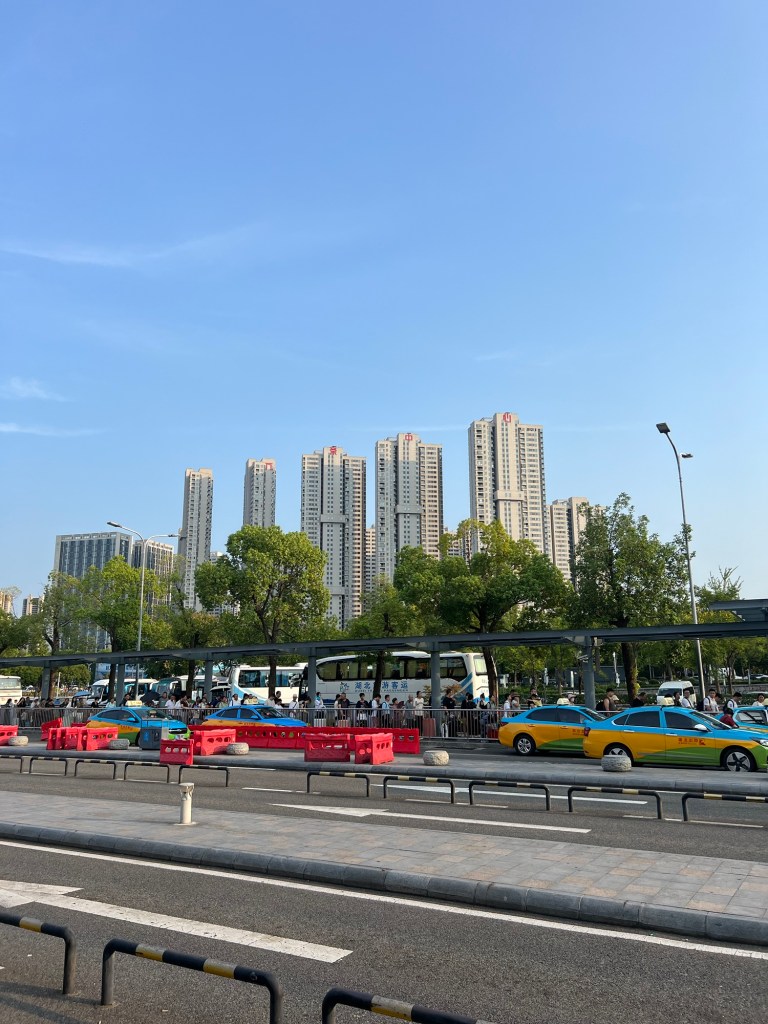
    Yichang bus station

    We left Yichang at around 6pm and picked up a coach for a final 90min journey to our cruise boat on the Yangtze River, the gateway to Three Gorges Dam.

    Arriving at the boat, our home for the next 3 nights, we checked into our pleasant cabin, before heading up to one of the Upper Deck bars for a much needed cool beer and a catch up with the ‘young guns’ in the tour group!

    Whilst the boat is a little old and perhaps in need of some TLC, the staff are friendly and helpful and we have already booked to go on an excursion tomorrow to The Tribe of Three Gorges.

    Titanic style lighting on our cruise boat
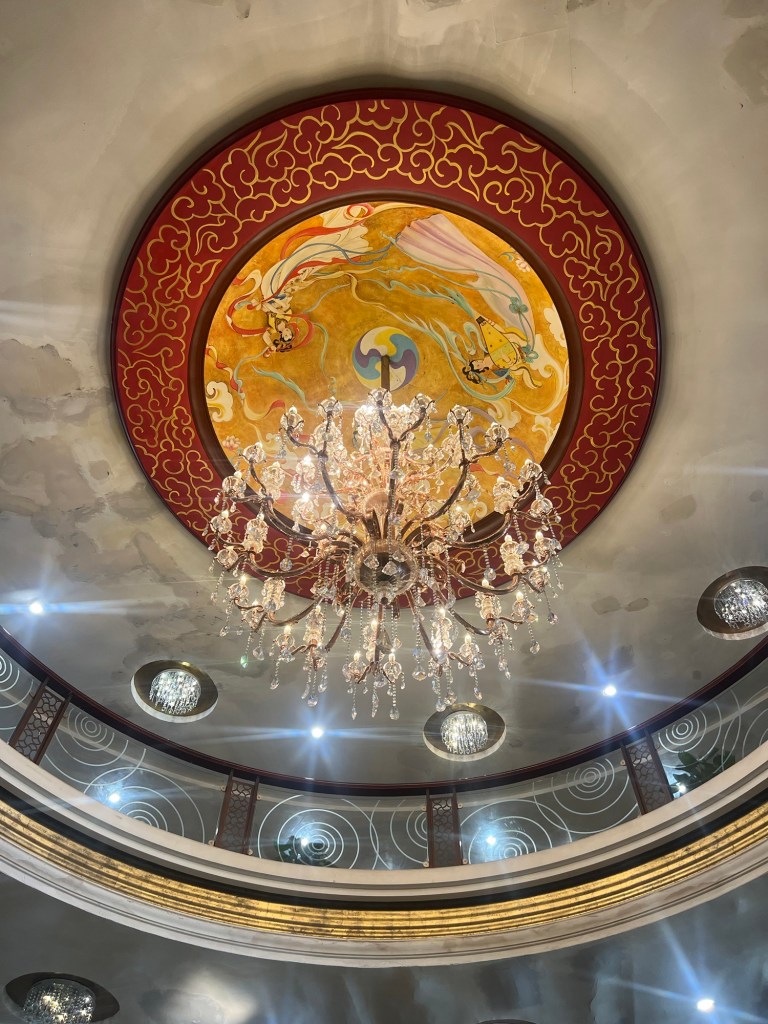
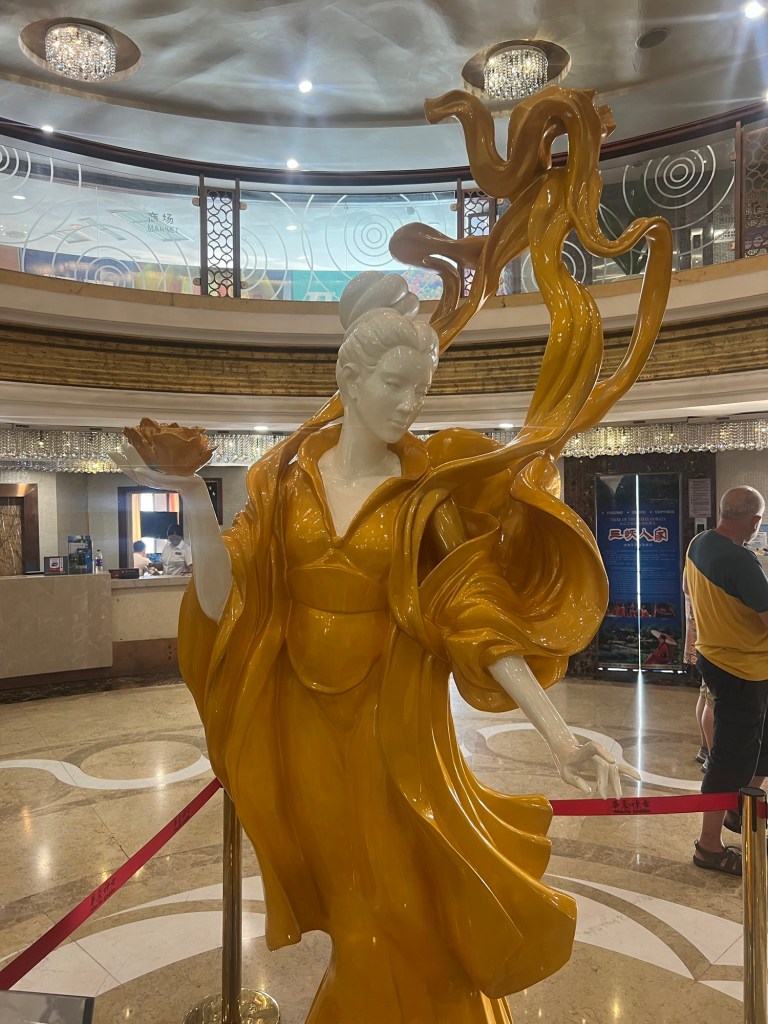
    The boats centrepiece in the main staircase hall

    Our tour tomorrow will take us along the river to one of the inlet gorges where we will get to see an old fishing village with the locals in their historic dress performing songs and dances.

  • Overseas tour Day 296 – Emei Shan

    Aug 22nd, 2024

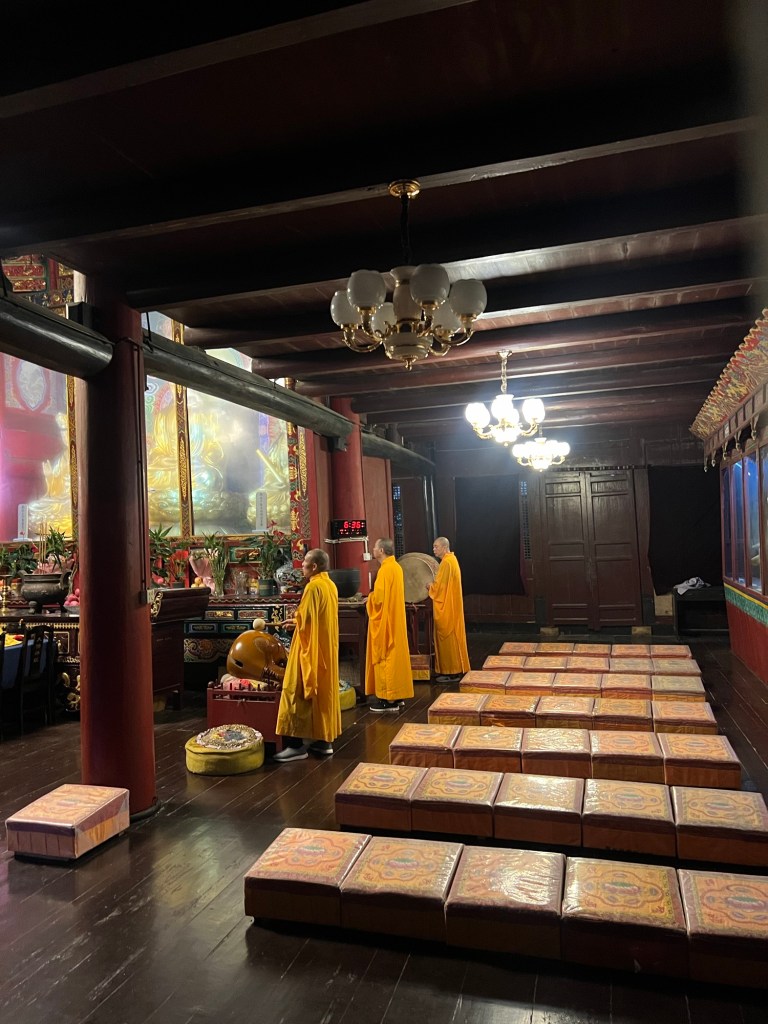
    After our first ever nights sleep at a monastery (!), we woke early in order to watch the monks carry out their mornings chanting.

    This all started around 6.15am, and by 6.45am we were up, dressed, washed, packed and sitting ready for breakfast.

    At this time of the morning you would normally expect quiet & calm, however not in the monastery, as everyone was up and readying themselves for another day of hiking in the mountains!

    The morning with the monks

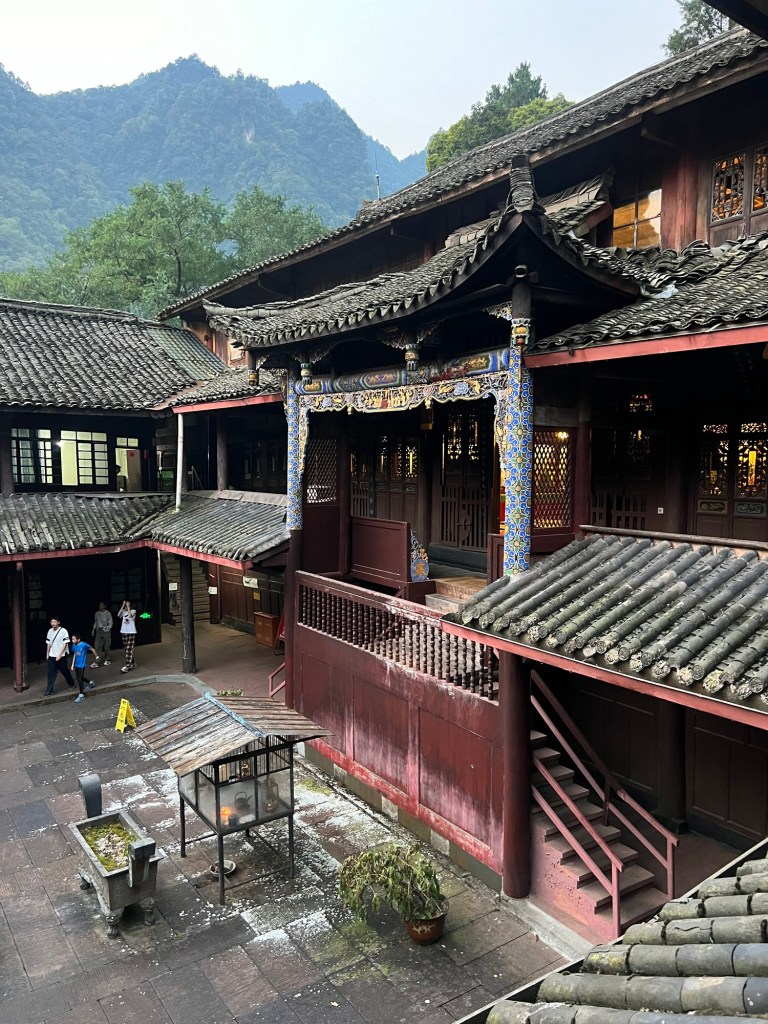
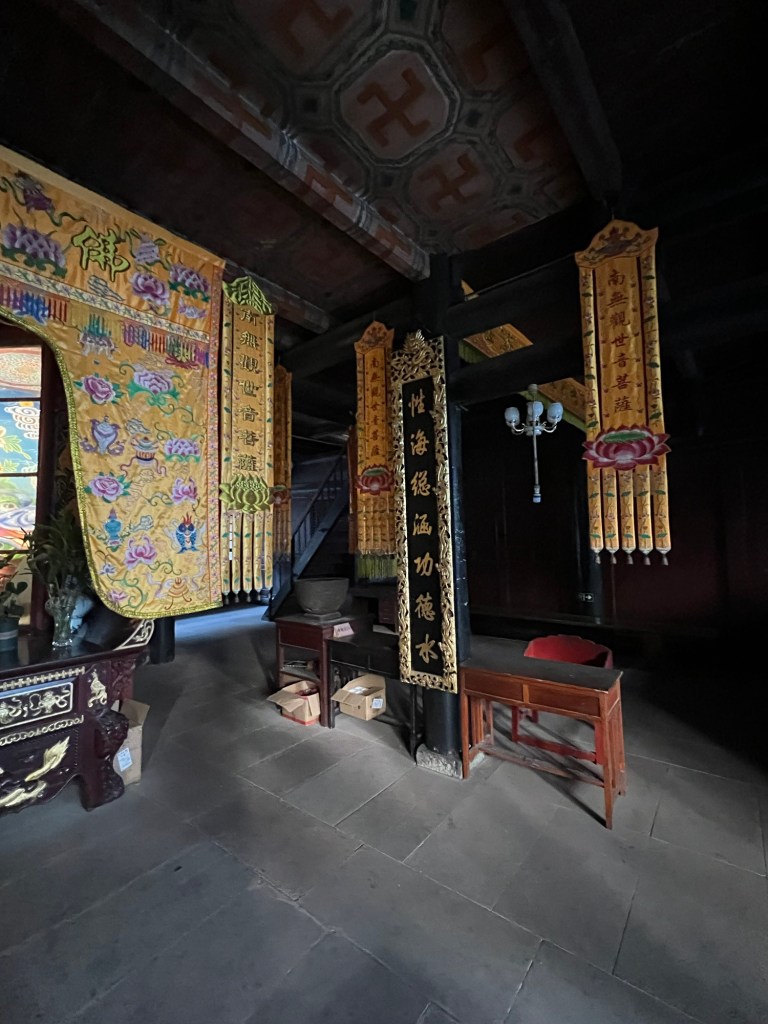
    After finishing a very basic breakfast offer, we went to capture a few last moments in the monastery before we departed. It was a real honour to stay there and we will not forget this experience for a very long time.

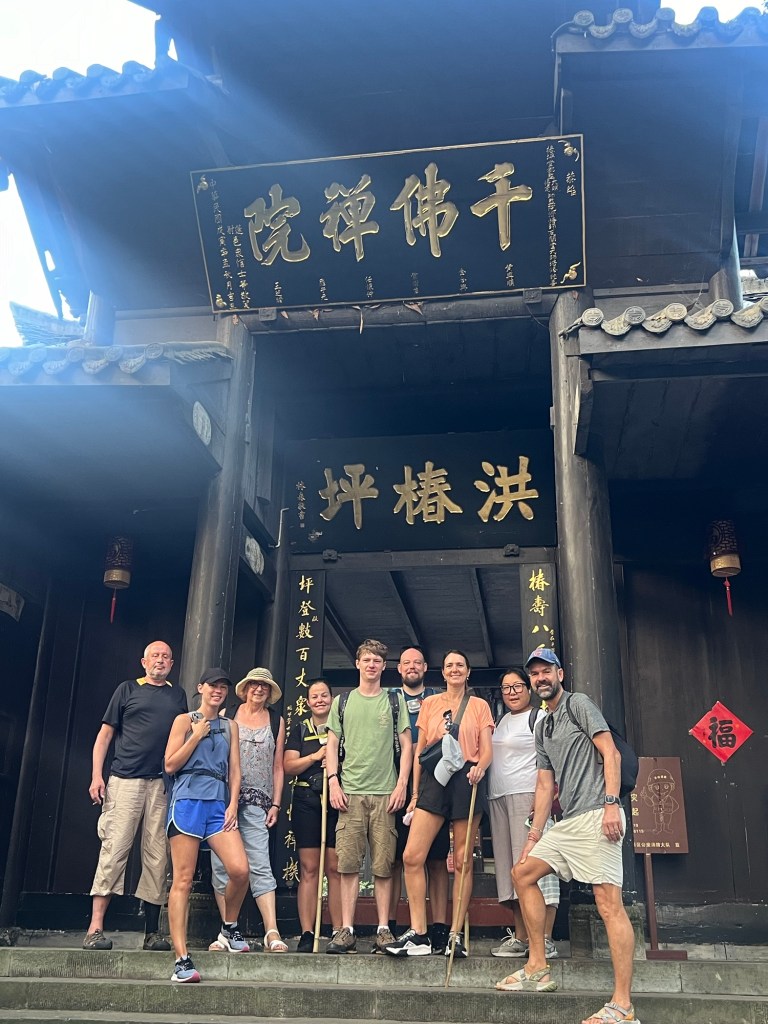
    Leaving the monastery we started the return 7k hike down the mountain back to the town of Emei Shan. Before setting off we took the obligatory team photo.

    The monastery massive

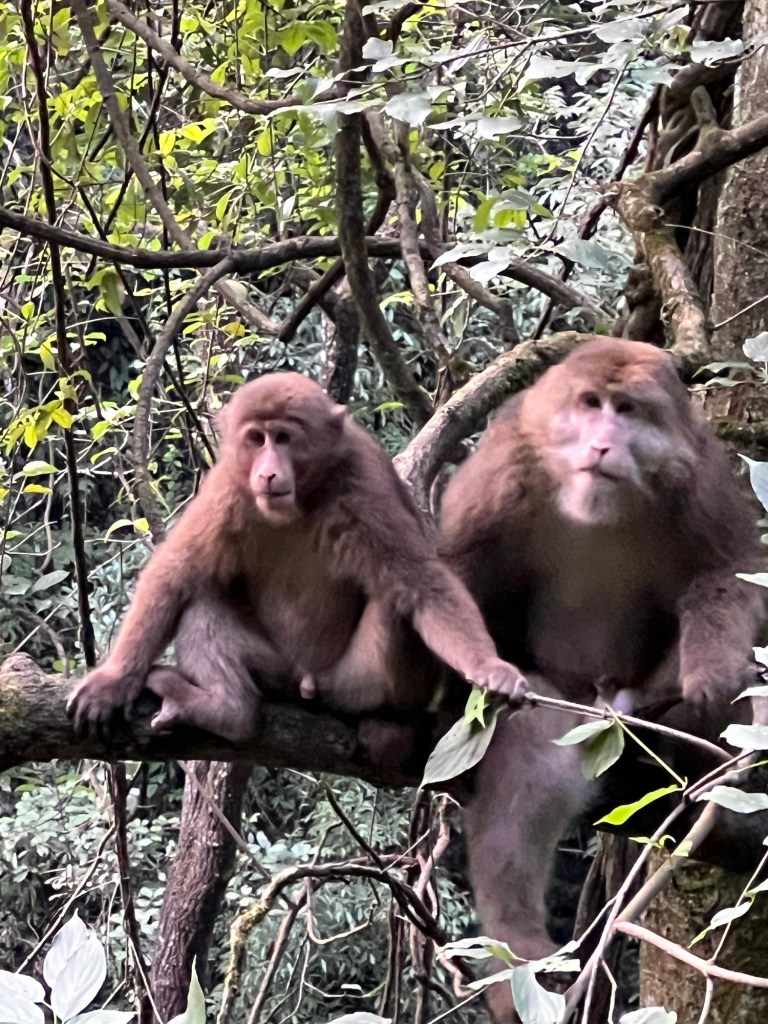
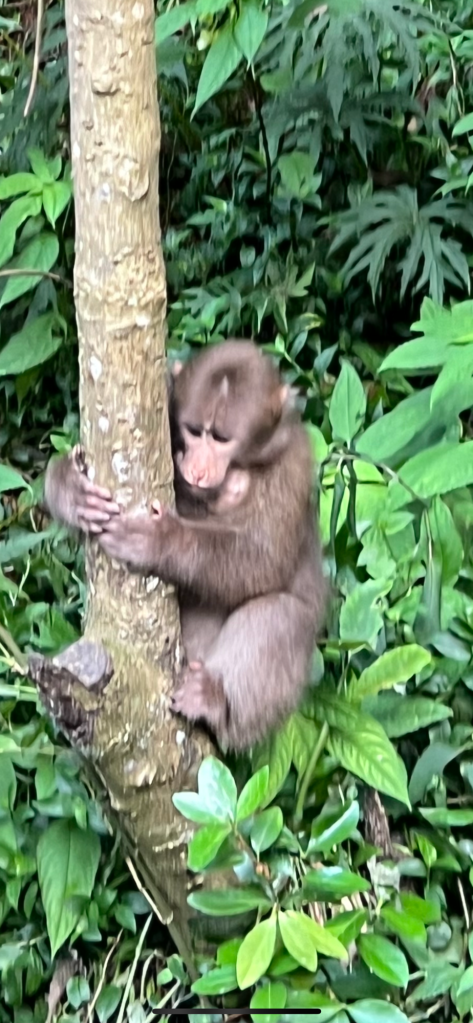
    Going down we came across less troublesome monkeys, who had plagued the path the day before, instead there was just a couple, the King leader and one of his male offspring.

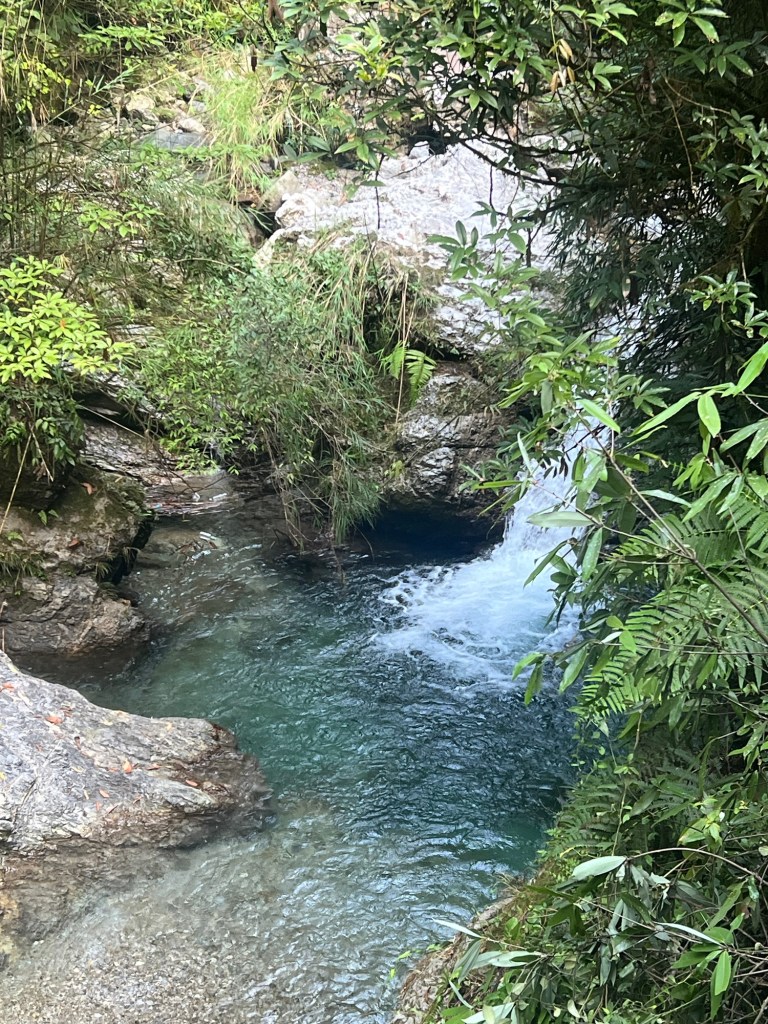
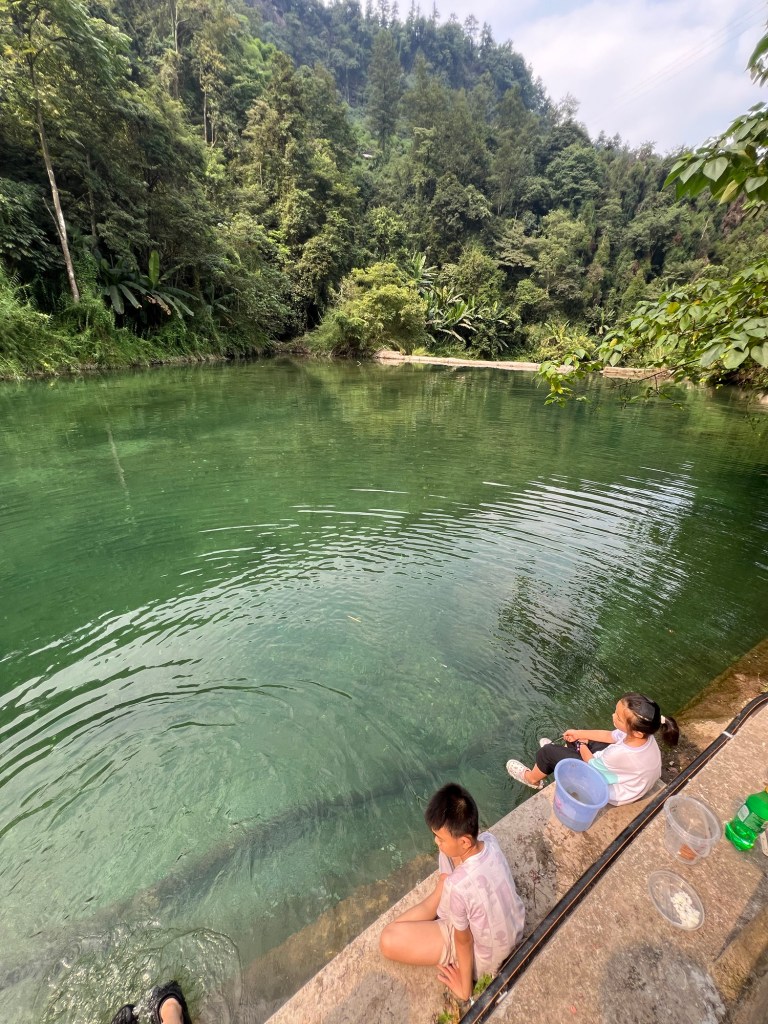
    Although it was still before 8am, the heat of the day had already started to take hold, and the sight of the clear waters of the river were very inviting. Sadly there wasn’t time for a swim.

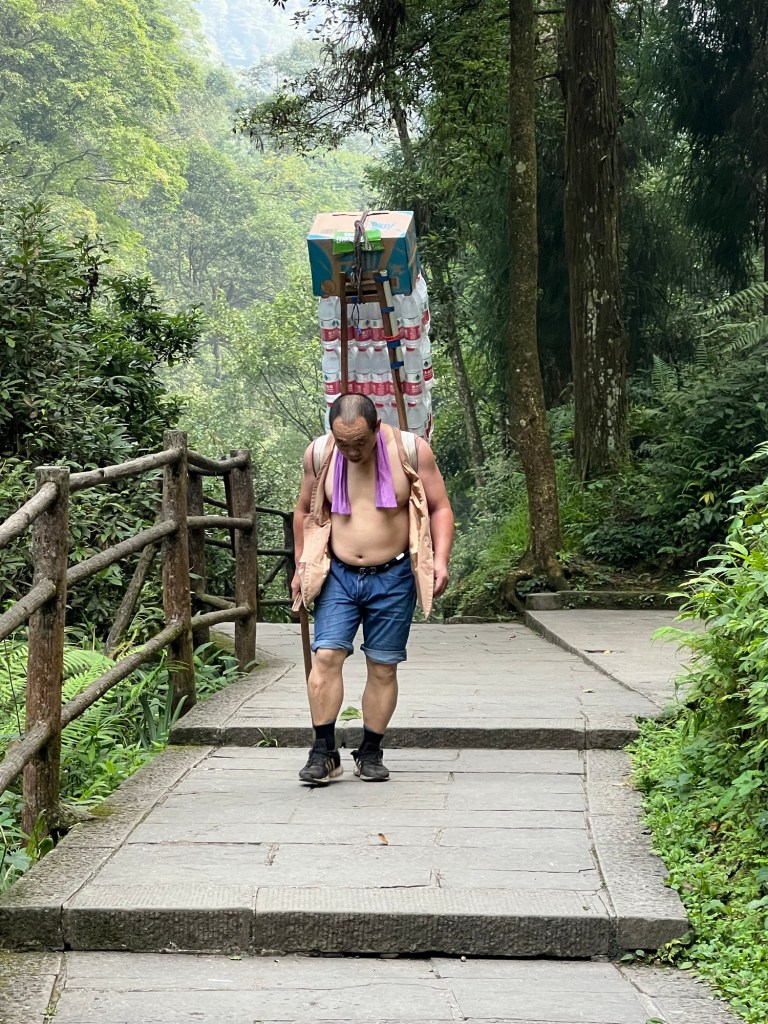
    Along the walk we passed a number of couriers taking supplies to the stores and monasteries and were taken aback by the weight they were carrying.

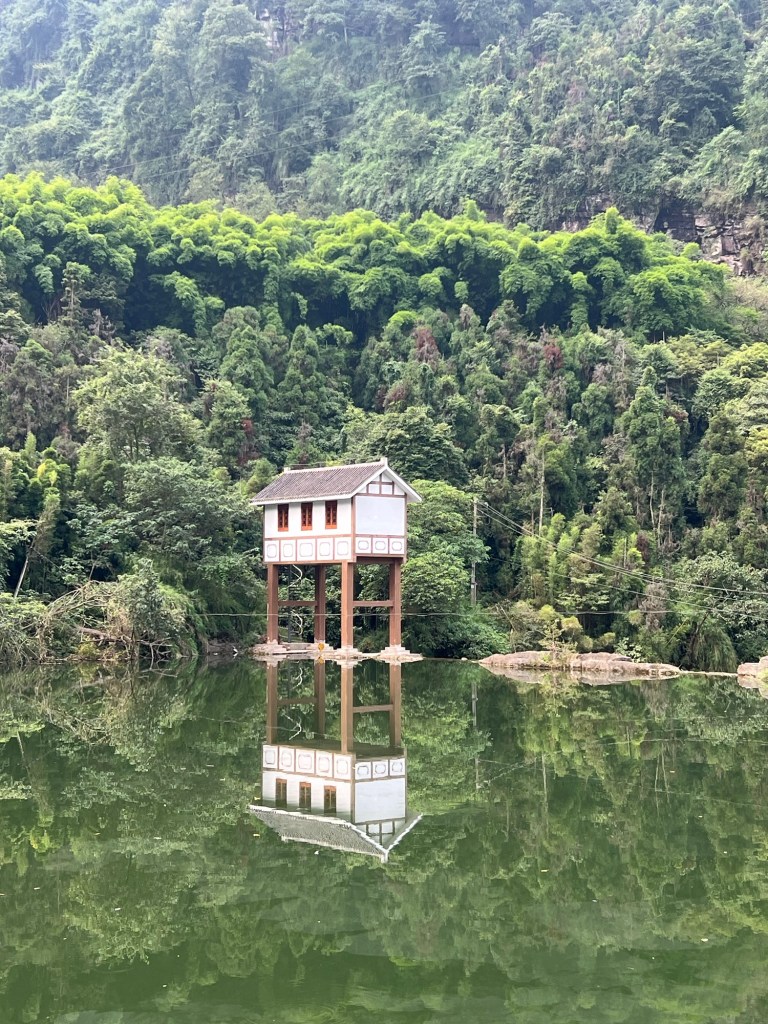
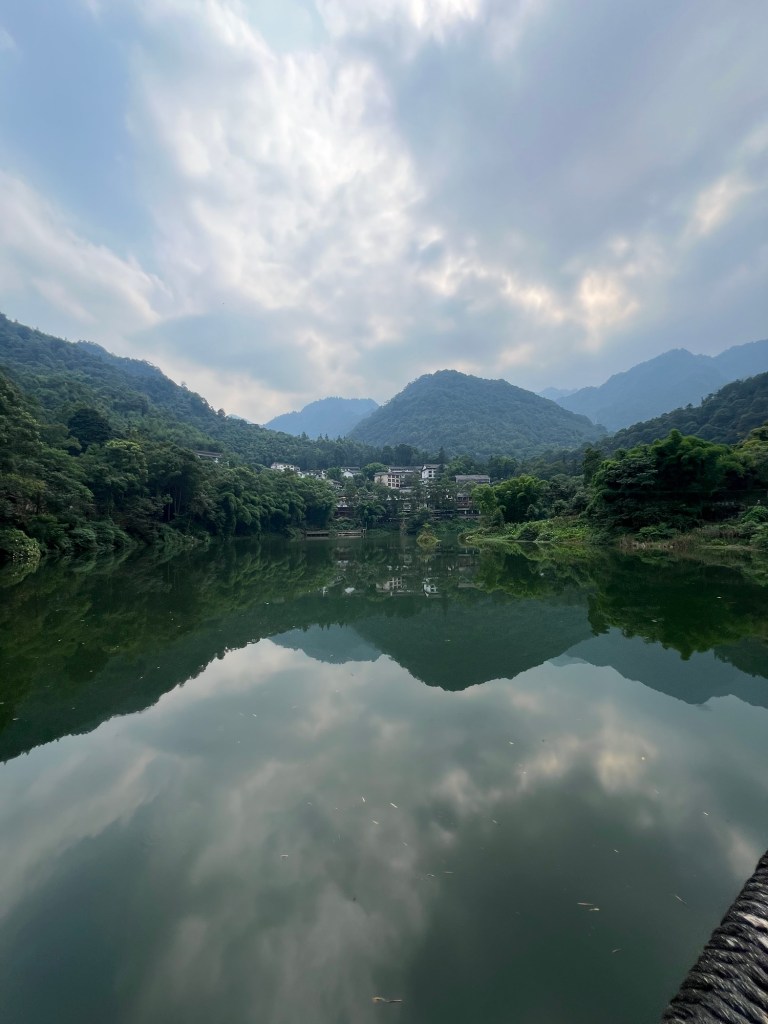
    Towards the end of the hike we came across the glistening lake and we were able to acknowledge the natural beauty we were walking in.

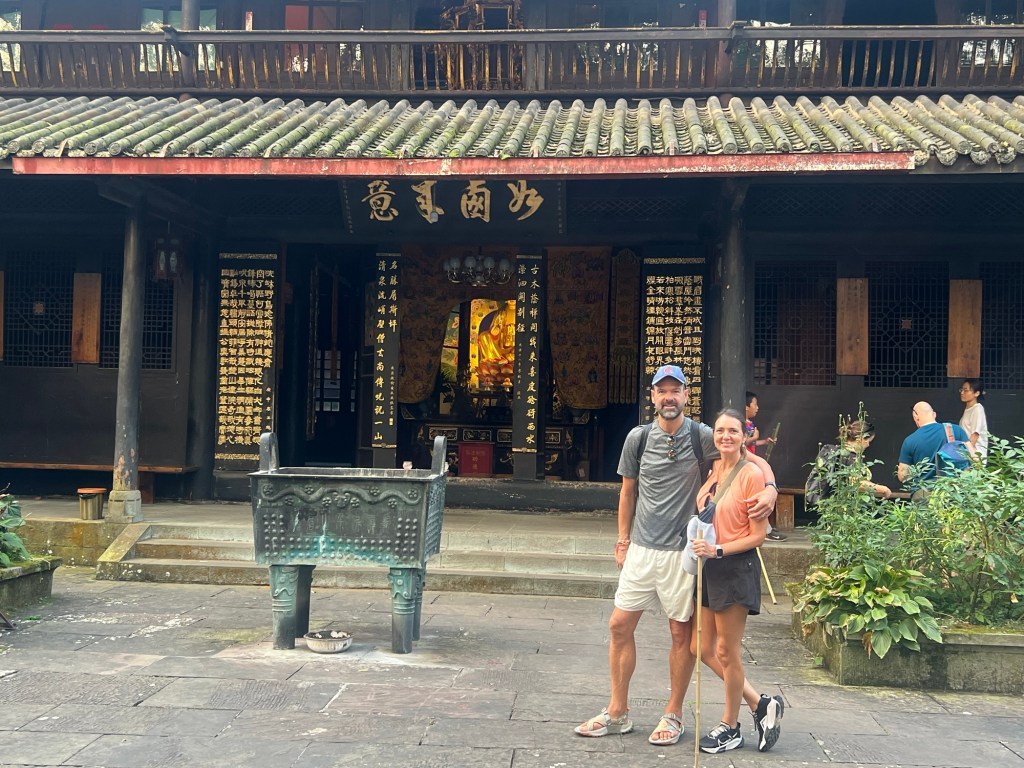
    Once back at the hotel, we headed out for an early lunch, and from there a further walk to explore nearby temples and the Baoguo monastery in Emei Shan.

    Emei Shan No. 1 Shanting

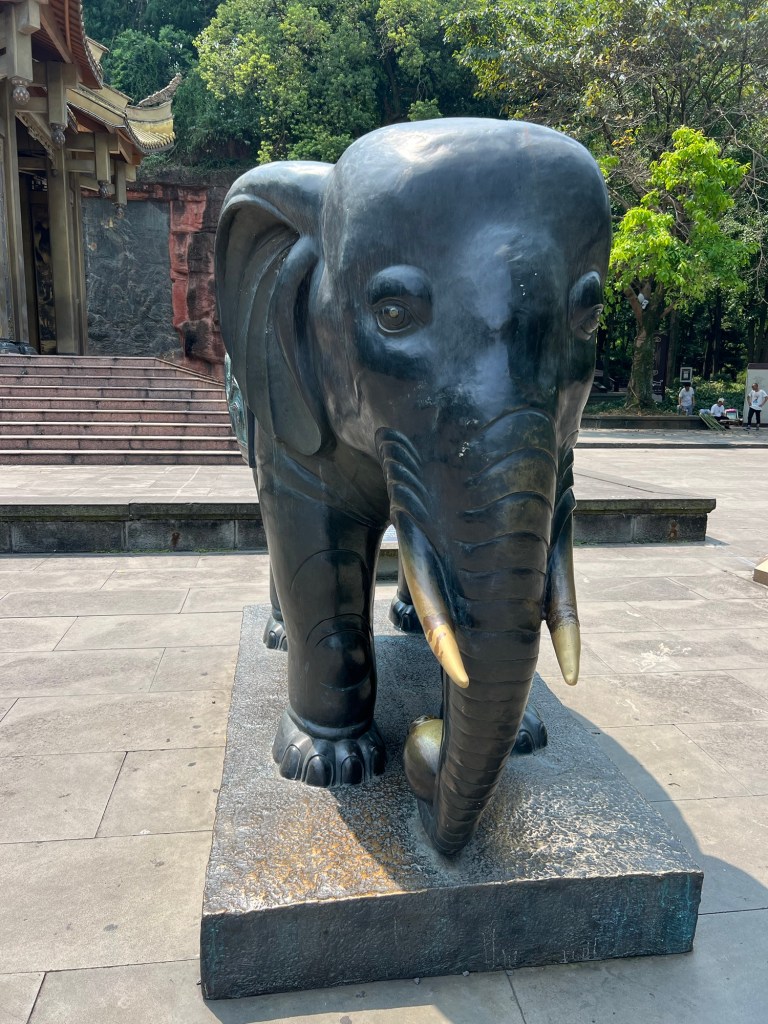
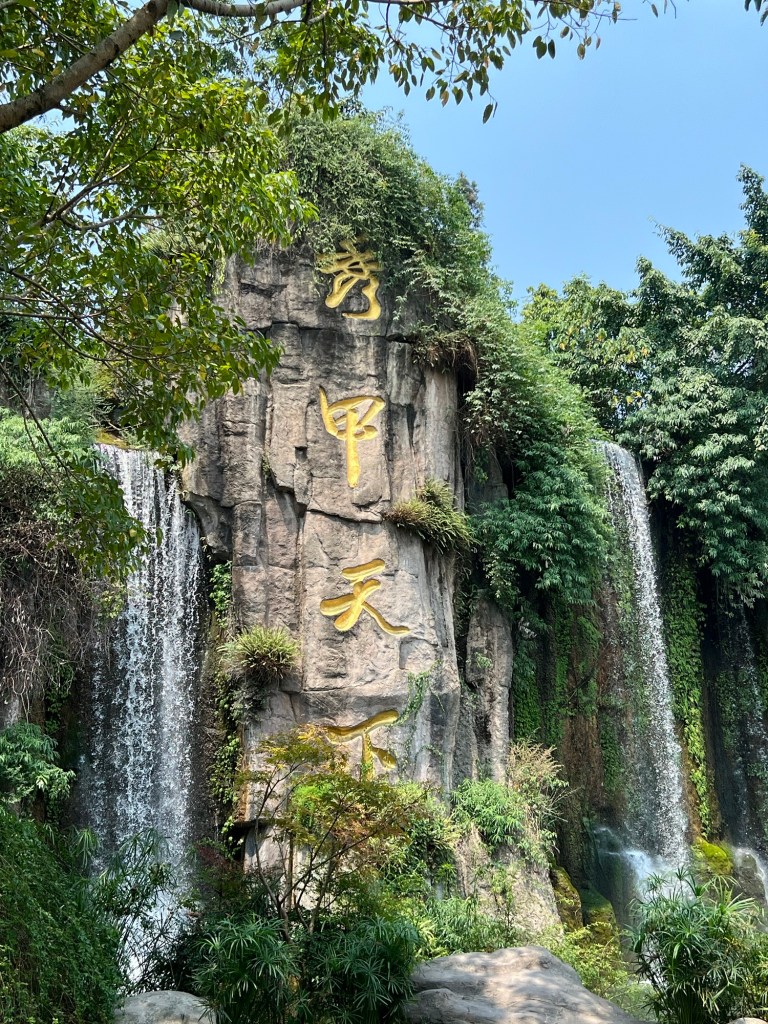
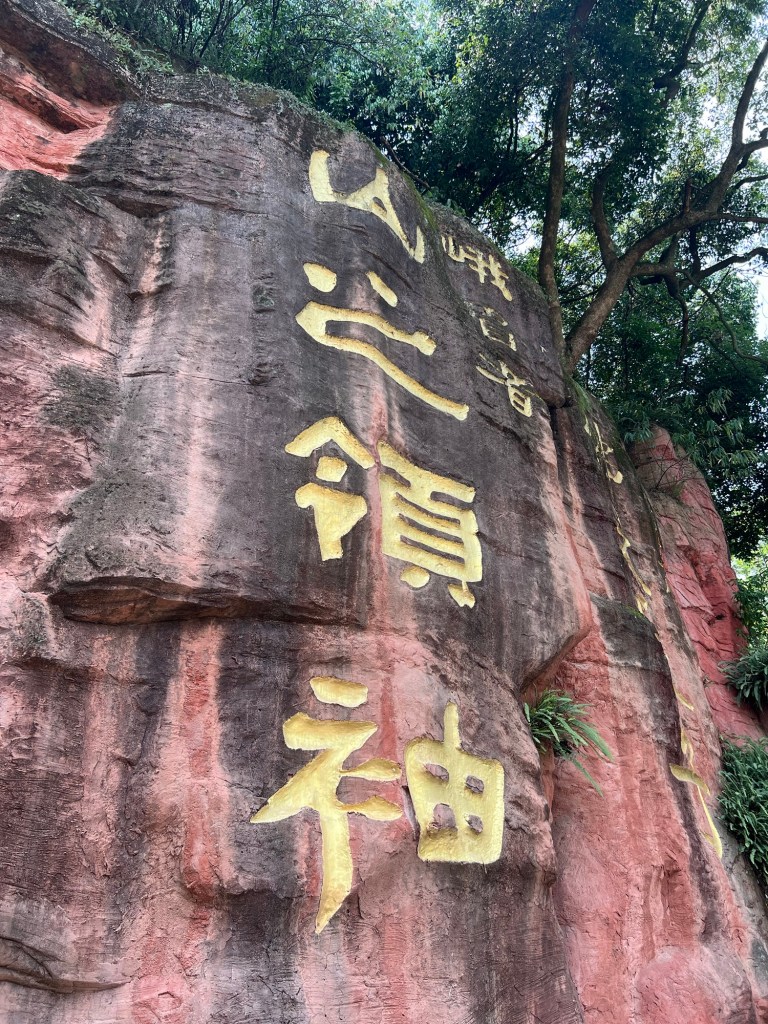
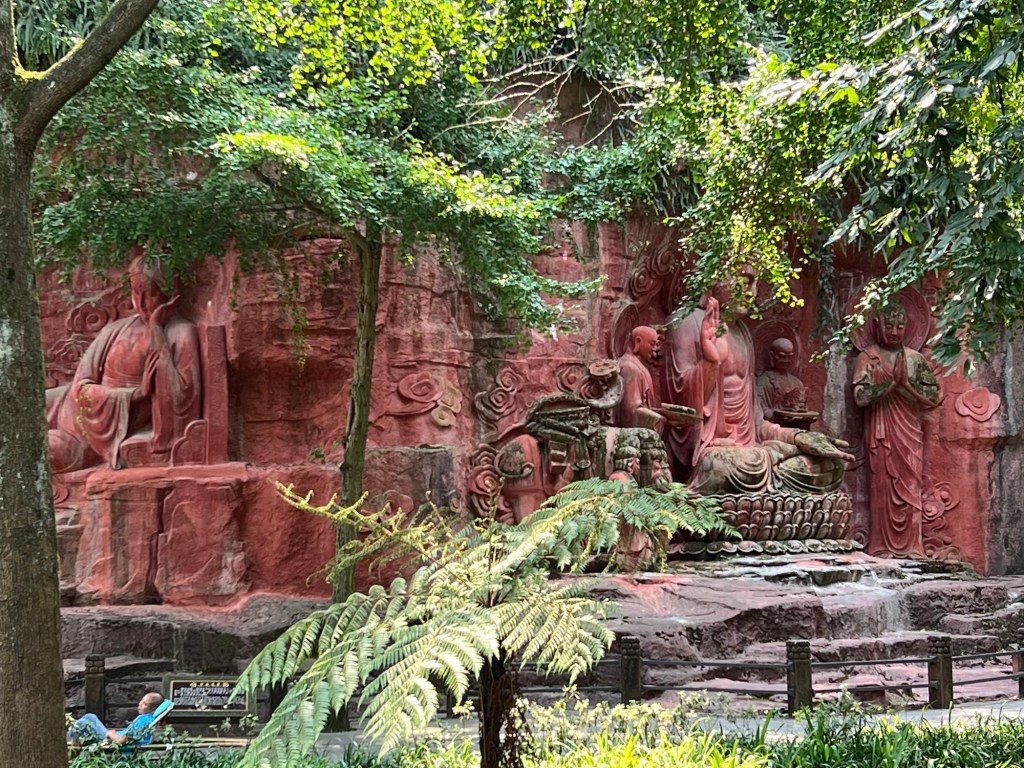
    The town is blessed with an array of beautiful statues, waterfalls, rock carvings.

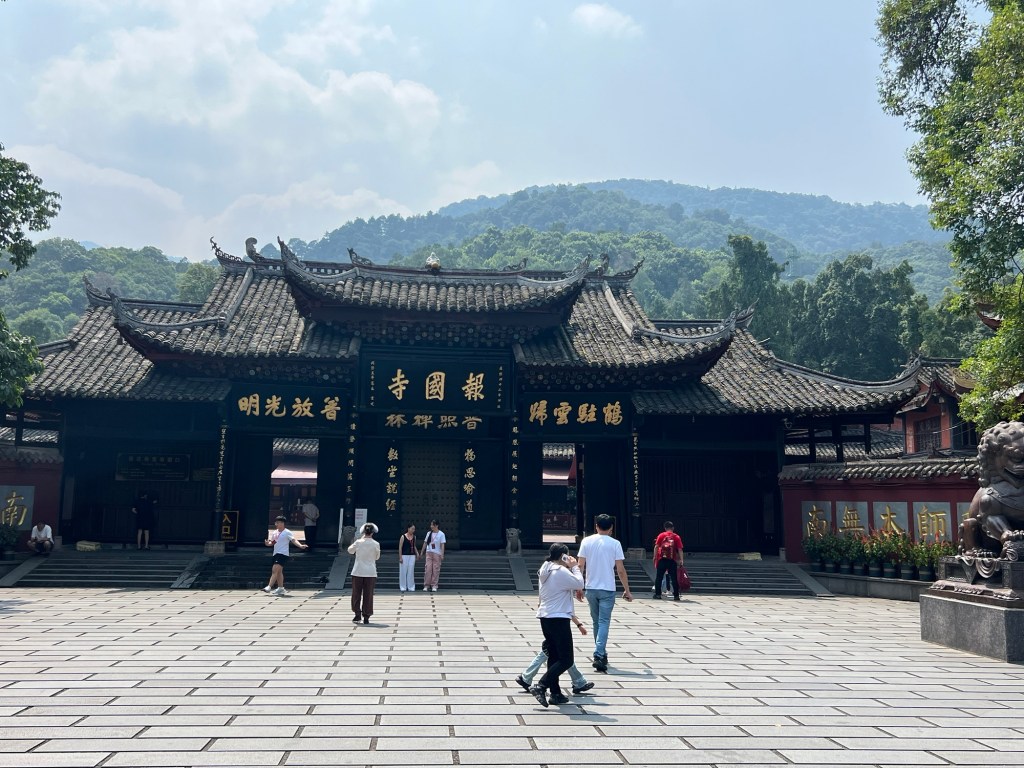
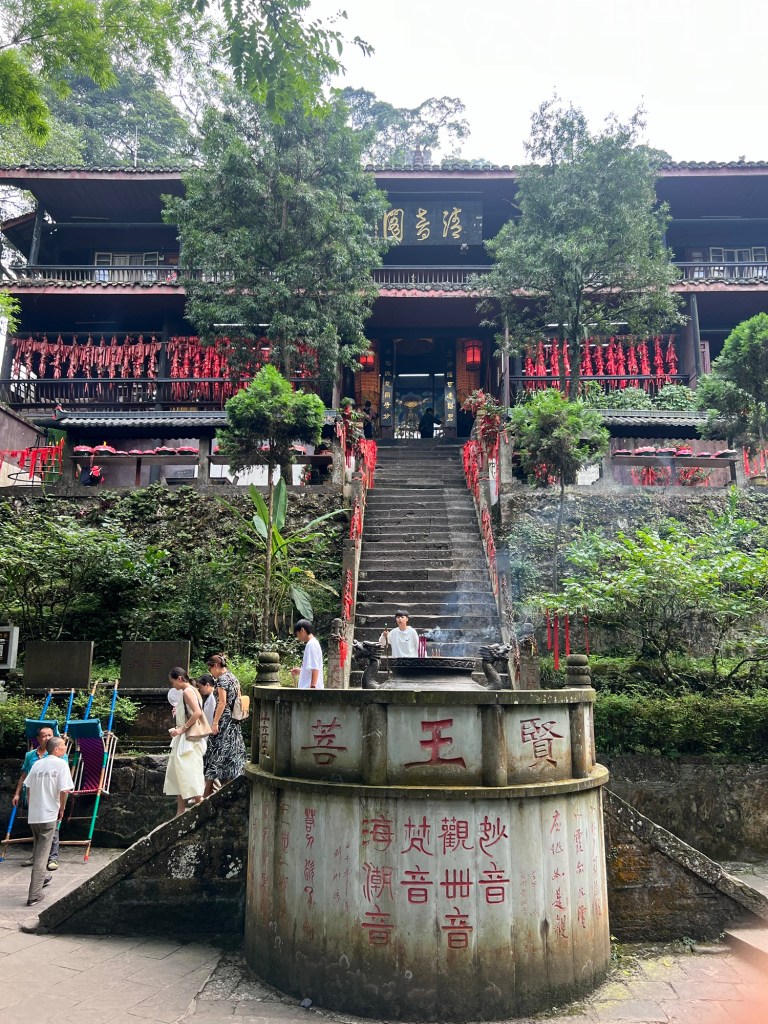
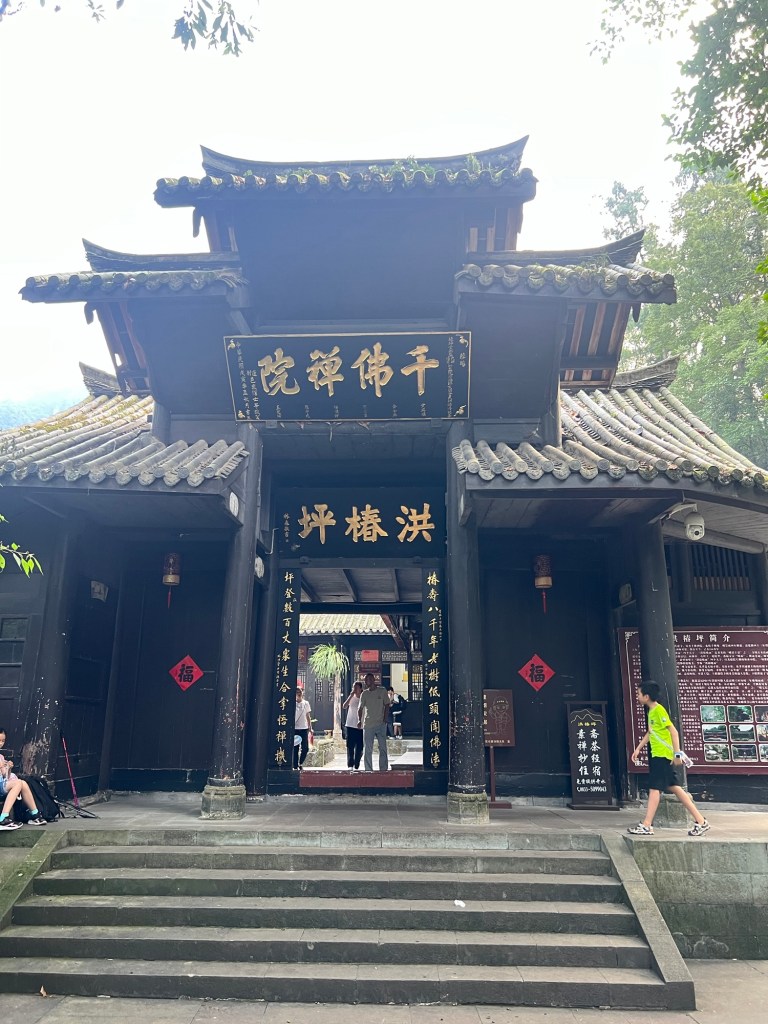
    Our last stop was Baoguo monastery which has a rich history and enshrines Buddhist Bodhisattvas as well as well as sages of Confucianism and deities of Taoism which makes it a unique temple of three spiritual traditions.

    Baoguo Temple

    By mid afternoon we were all feeling a little fatigued and decided to retire back to the hotel for a drink and an afternoon snooze in order to recharge our batteries.

    Early evening we headed out to a local restaurant for our last spicy & oily rich meal, before retiring to our comfortable beds for a good nights sleep.

    Tomorrow we are on back to back train journeys totalling 7hrs taking us first to Chengdu and then on to Yichang, the gateway to the Yangtze River where we start a 4 day cruise.

  • Overseas tour Day 295 – Emei Shan Monastery & Golden Summit

    Aug 22nd, 2024

    Another day, another early start with a 7am departure for our next big adventure.

    Coach….foot….cable car….foot

    Today we spent the whole day exploring the landscape surrounding Emei Shan, one of China’s four sacred Buddhist mountains.

    Queuing for our cable car

    After our early departure we travelled by the park bus and then cable car (about 3hrs in total) to the Golden Summit.

    Andy & Jamie at the cable car entrance

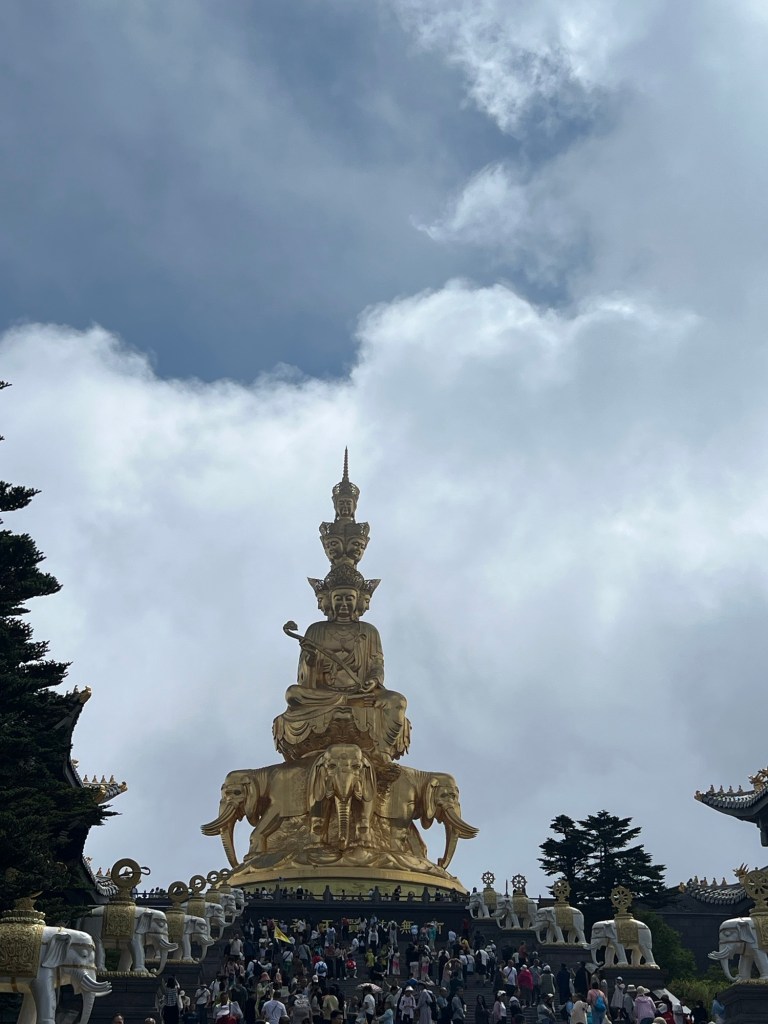
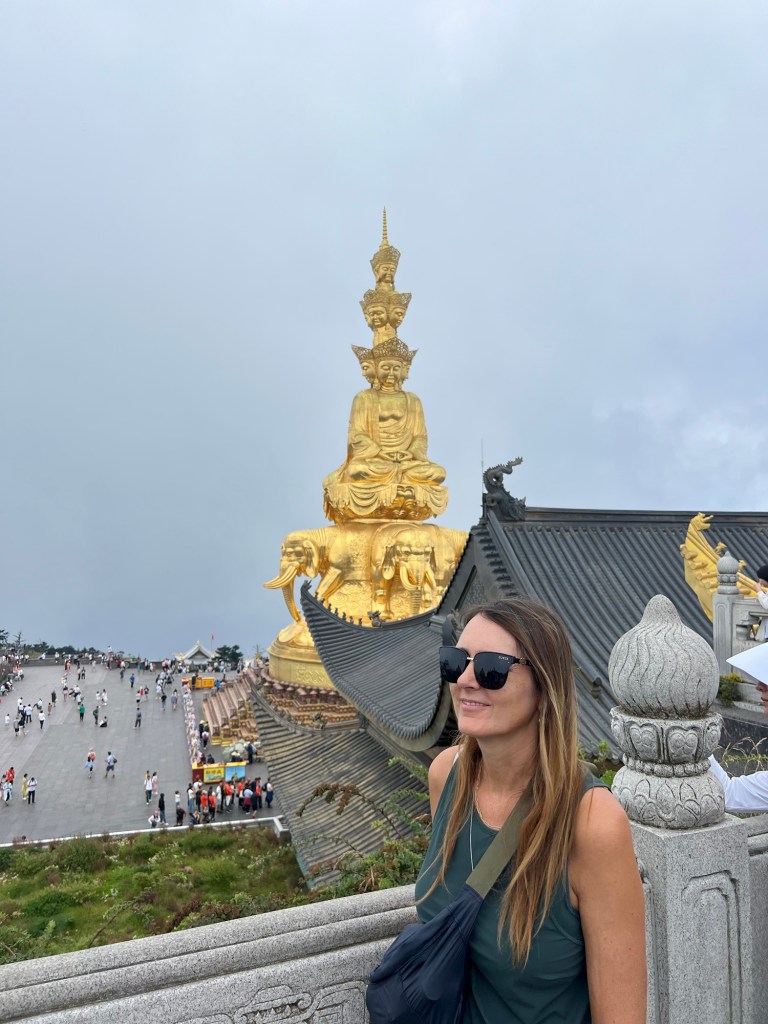
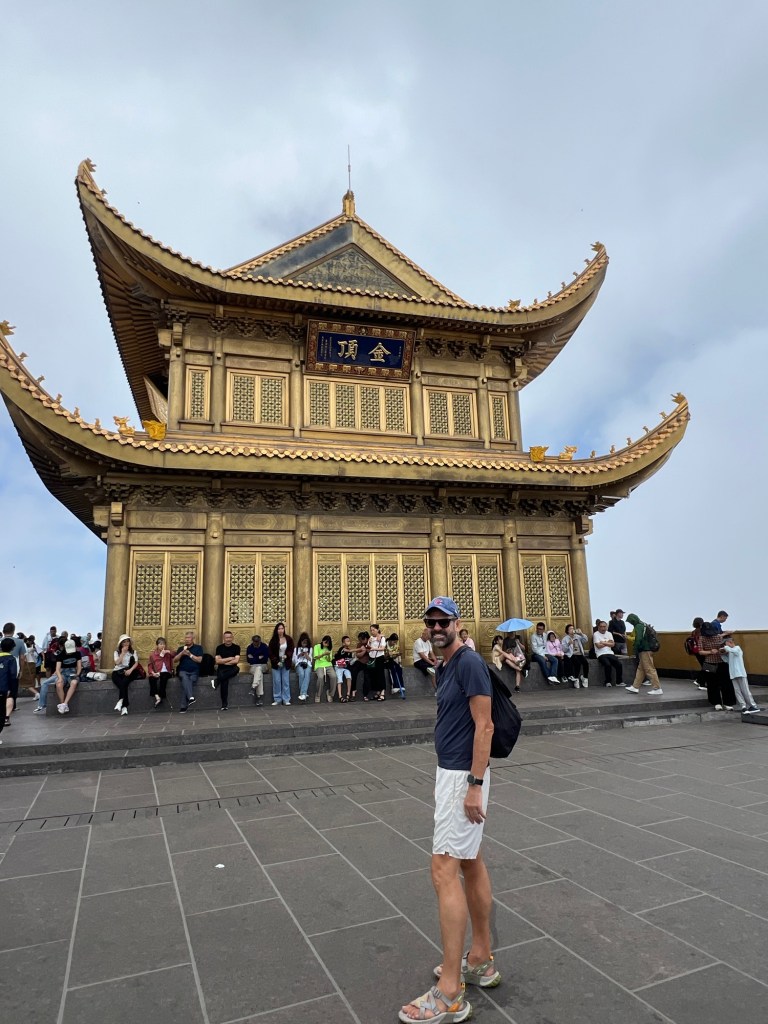
    The views from the 3,100m summit were truly spectacular helped by this being one of the very few days where conditions at the top provided us clear views of the Golden Summit, with the clouds sitting below.

    We were able to experience the Wonders of Mount Emei: Buddha Light & Cloud Sea.

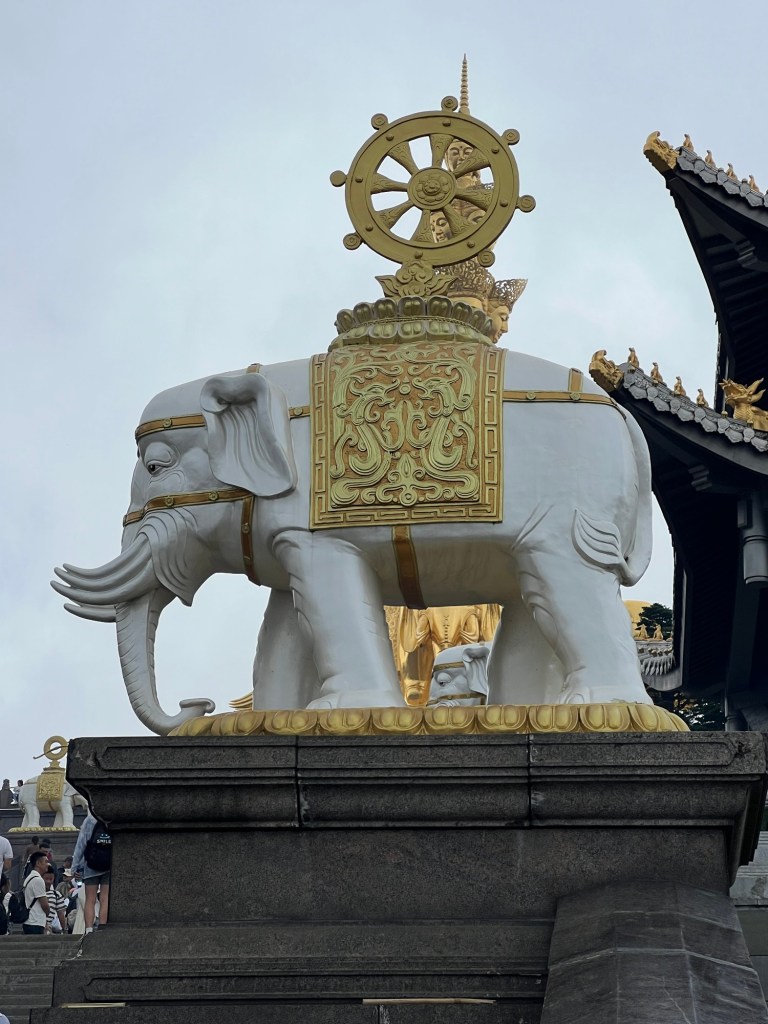
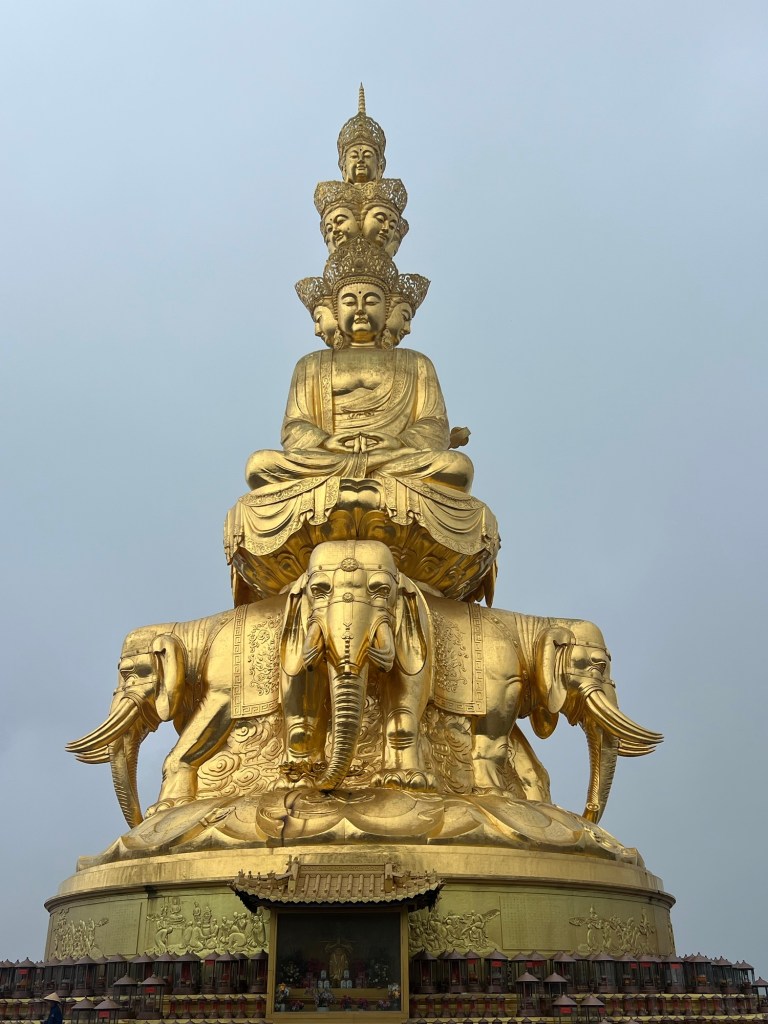
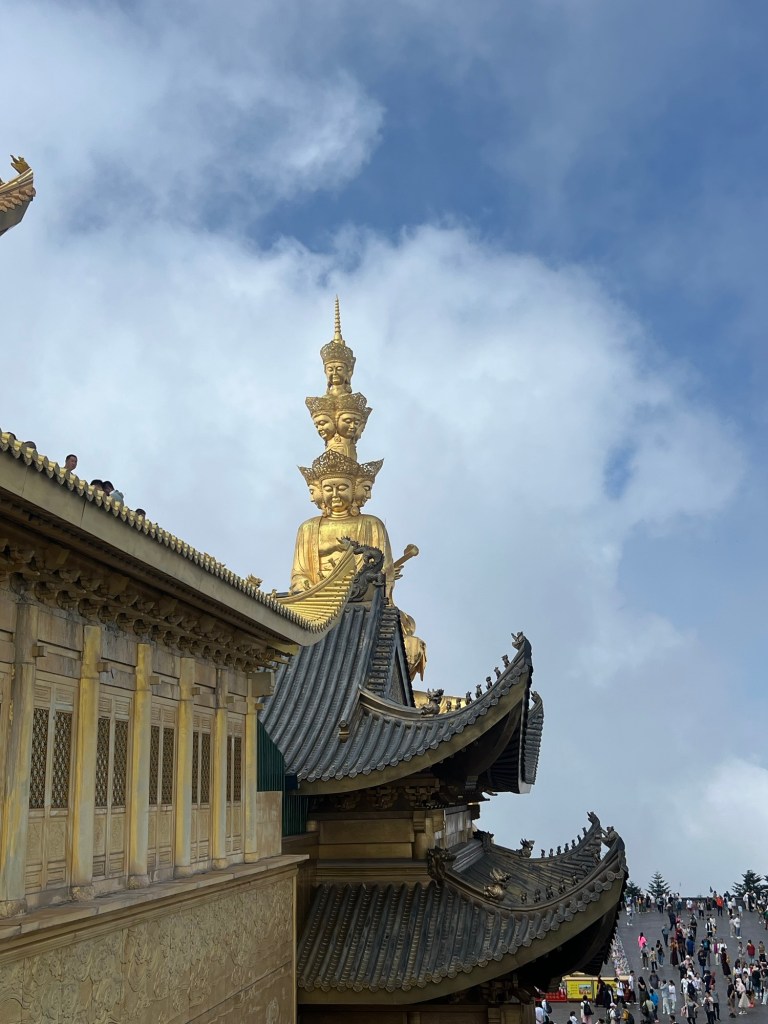
    In addition you can also worship the highest golden Buddha in the world – the multi-faced golden statue of Samantabhadra Bodhisattva, sitting at 50m in height. 

    Mount Emei boasts breathtaking natural beauty, with its lush forests, cascading waterfalls, and diverse wildlife. The mountain is also home to numerous ancient temples, which hold great religious and cultural significance.

    One of the most notable is the Baoguo Temple, which dates back over 1,000 years and houses precious Buddhist relics.

    Pilgrims and tourists alike embark on a spiritual journey up the mountain, following ancient stone steps and winding paths.

    Along the way, we encountered sacred sites including the Wannian Temple, known for its massive bronze statue of Puxian Bodhisattva, and the Golden Summit, the highest peak of Mount Emei.

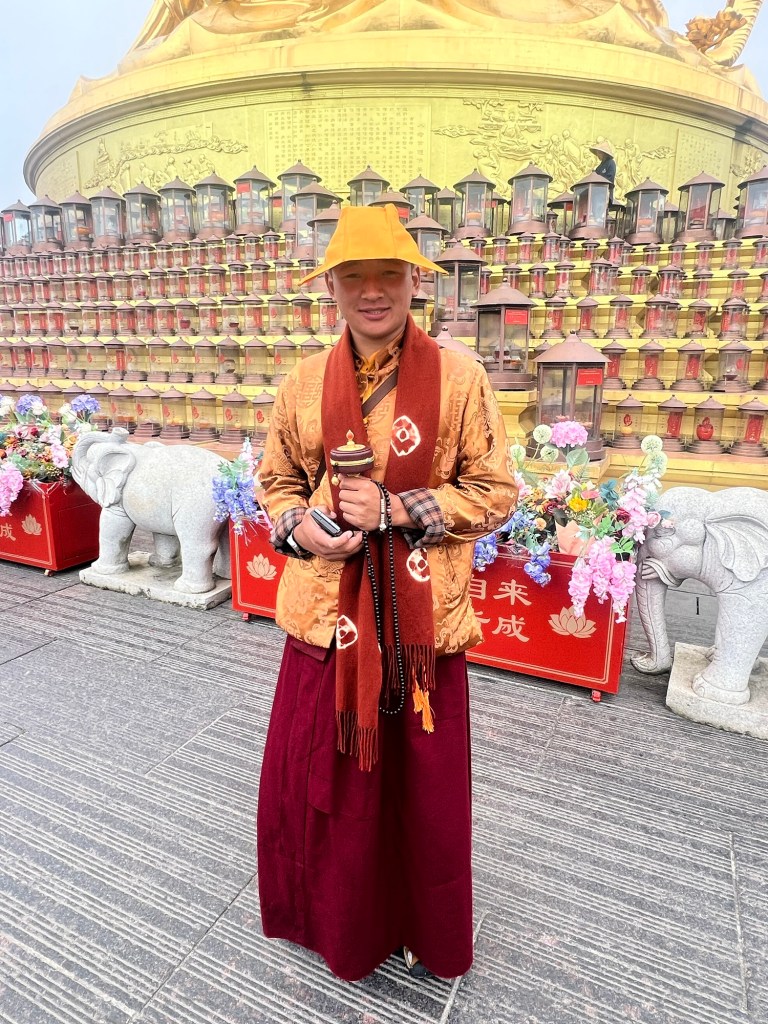
    Tibetan monk

    This awe-inspiring statue, adorned in gold, symbolizes wisdom and compassion.

    It is the highest peak of the mountain and holds great spiritual significance in Chinese Buddhism.

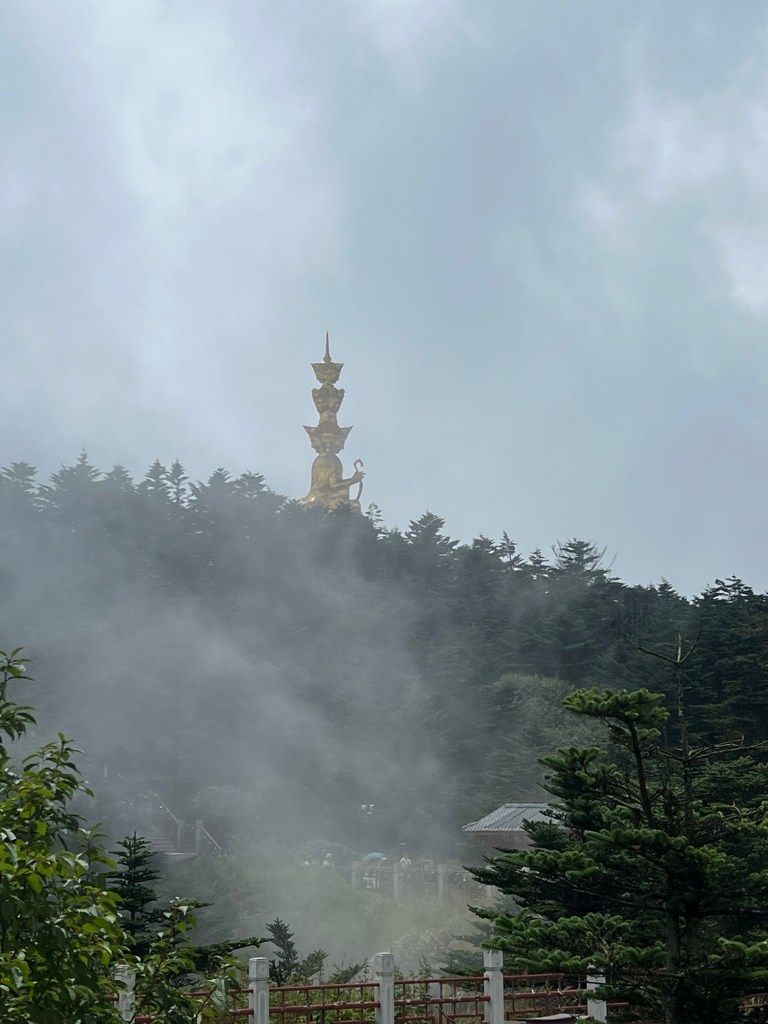
    When we looked out from the summit all we could see were clouds, a not unfamiliar sight, with 325 days of the year experiencing almost permanent clouds with limited visibility. Thankfully we got to see the Golden Summit unhindered.

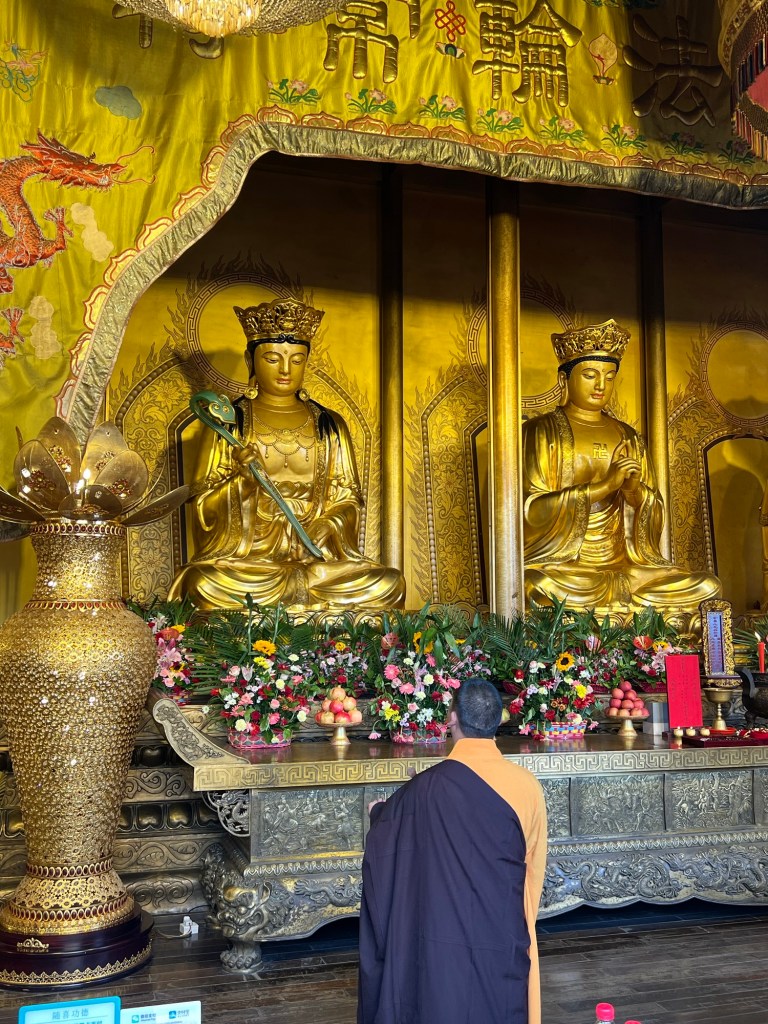
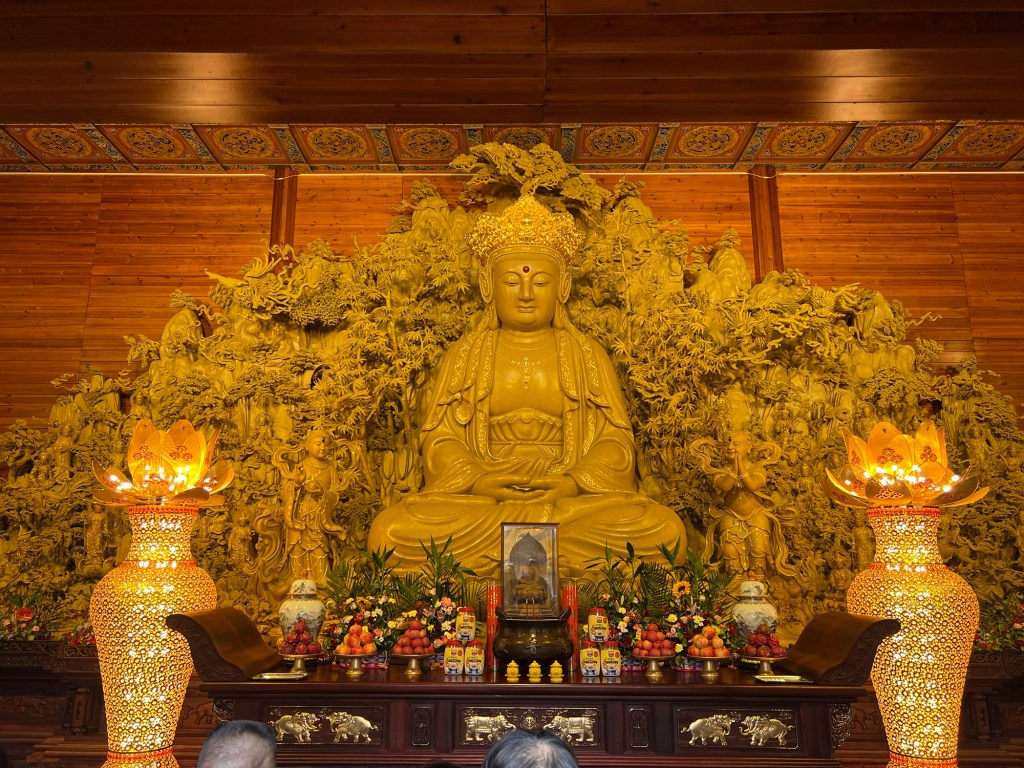
    More gold more offerings

    It’s currently high season in this part of China with lots of people on summer vacation and as a result the paths, cable car and road are all busy with Chinese tourists and religious pilgrims visiting the mountain and nearby monasteries.

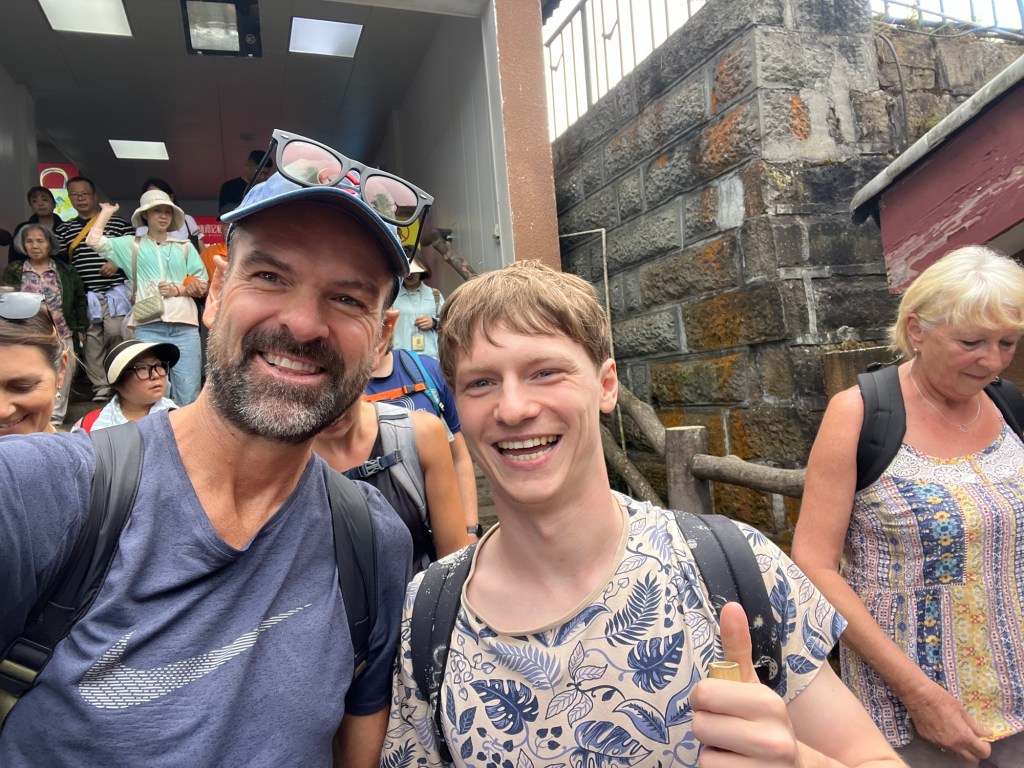
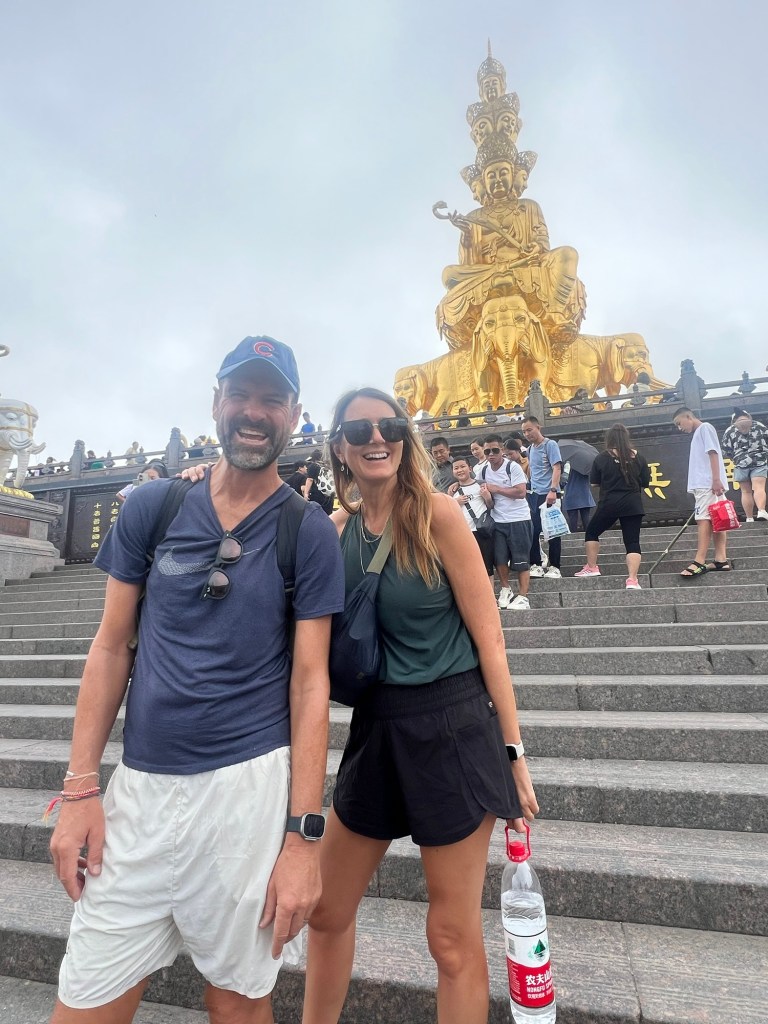
    Checking out the views from 3,100m up

    After spending an hour on the summit taking in the views and visiting the various temples that have been erected, most in recent times, we started our descent.

    By 1pm we were soon back in the park coach heading down the mountain for our lunch stop and thereafter the start of our mountain hike to our monastery hideaway where we will spending the night.

    The cloud dispersing from the Golden Summit
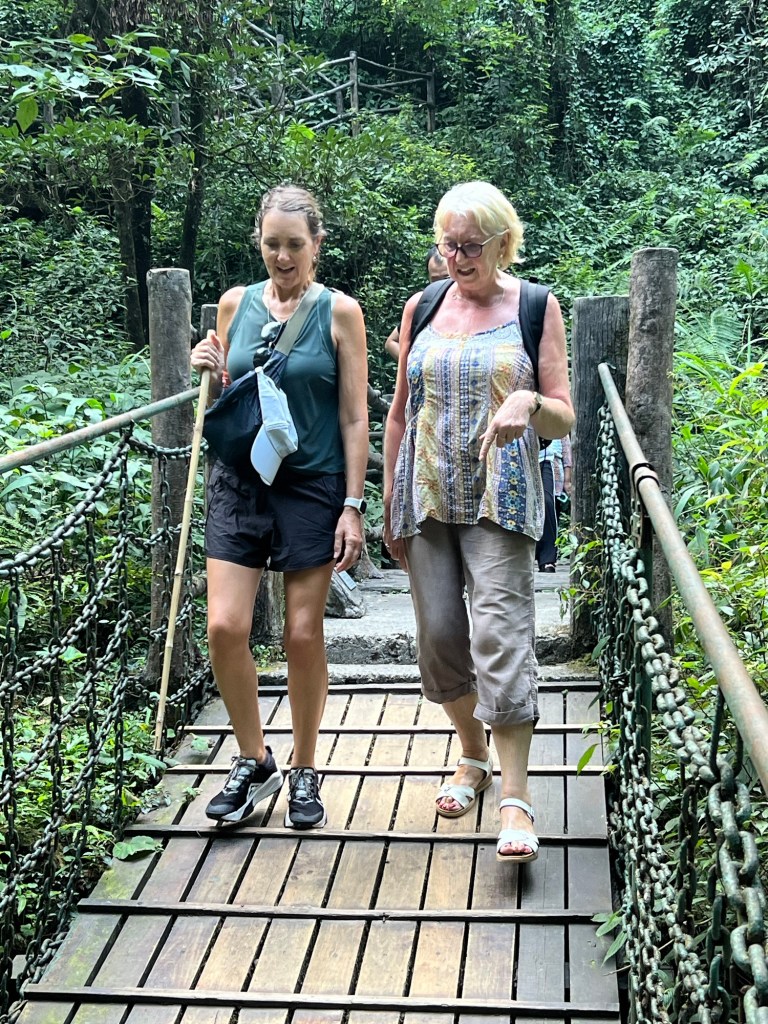
    Julie, Laura, Michelle & Chris – the ladies that like to hike

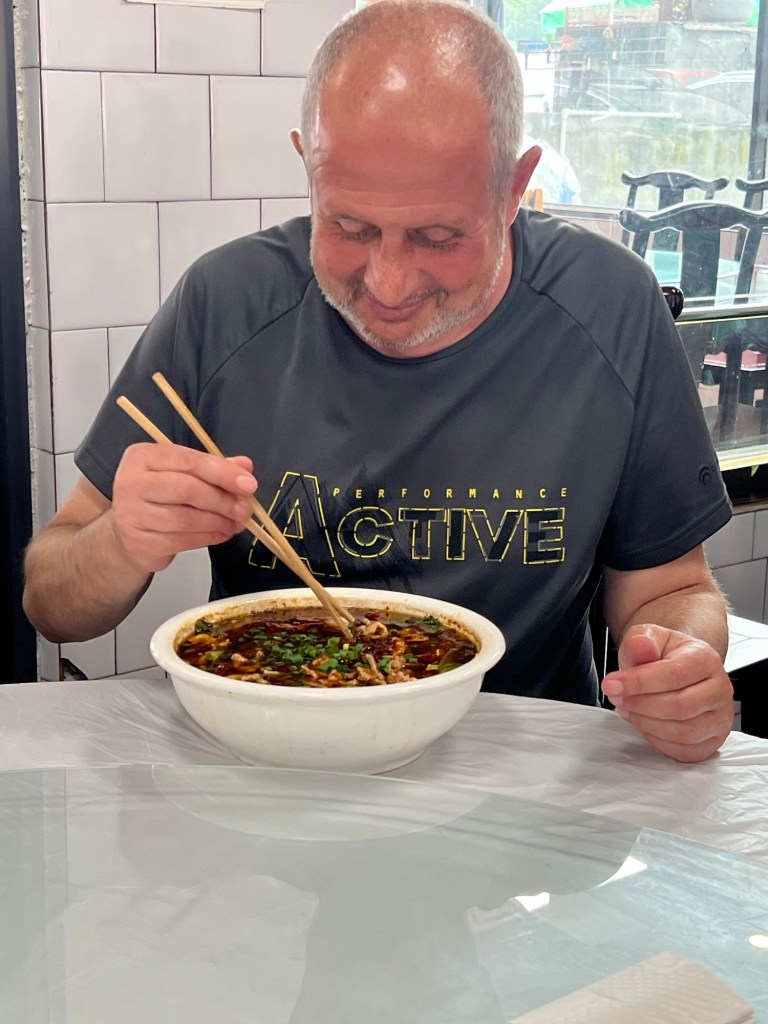
    We popped into a local family restaurant for lunch and Oleg, our Russian representative, was soon ordering a spicy soup off the menu and within a few minutes his eyes were watering as a result!

    Once watered and fed, we started our afternoon hike to one of the famous monastery’s in the mountains where we will have dinner and stay the night.

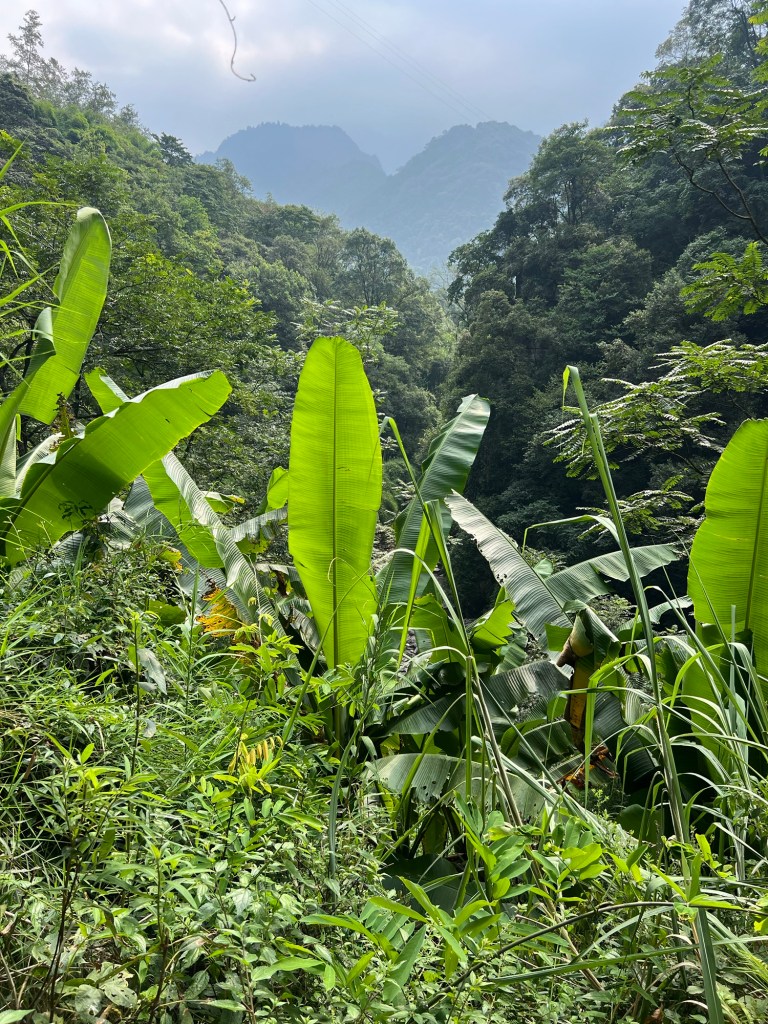
    The views along the way were spectacular and we soon firmly in the mountain jungle along with other ‘pilgrims’ journeying our way up the many steps into the remote parts of Emei Shan.

    Whilst we were fortunate to have the sunshine and avoid any rain, the humidity levels remained high and we were soon sweating and having to stop regularly for water refuelling.

    The stops close to the river and nearby lake were spectacular. Being so quiet and serene, we felt honoured to be able to experience this part of rural China.

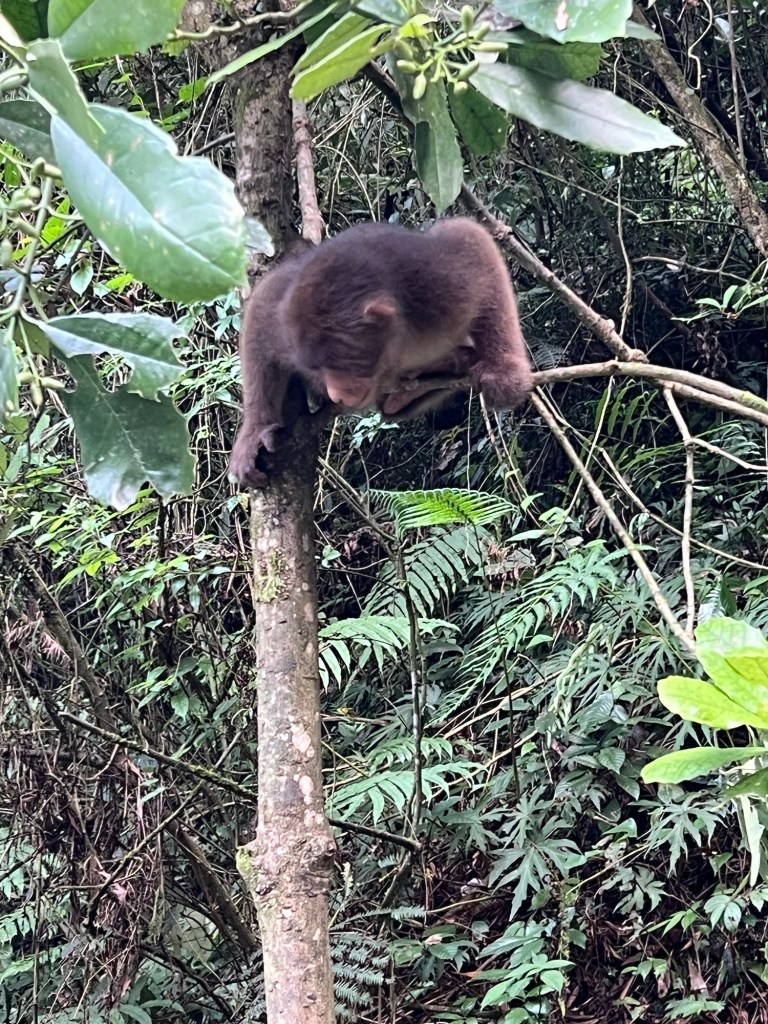
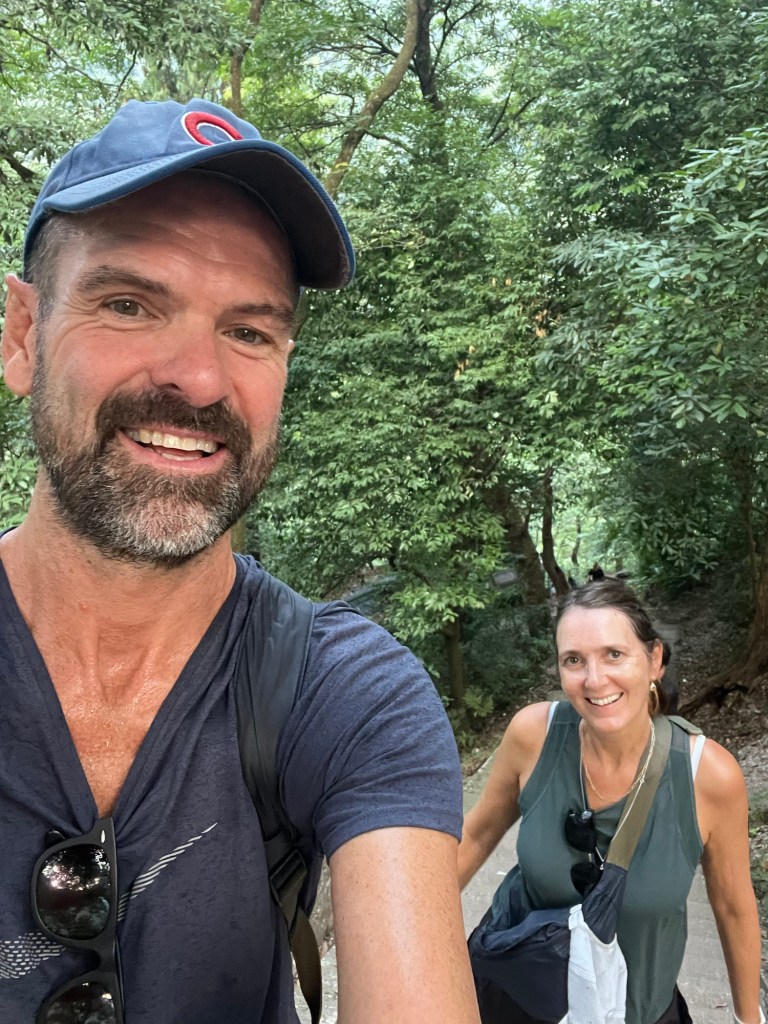
    Whilst there were steep paths and no end of steps, the walk of 2hrs proved very enjoyable, made even more entertaining by the sight of Tibetan monkeys who are drawn to the paths by the chance of food.

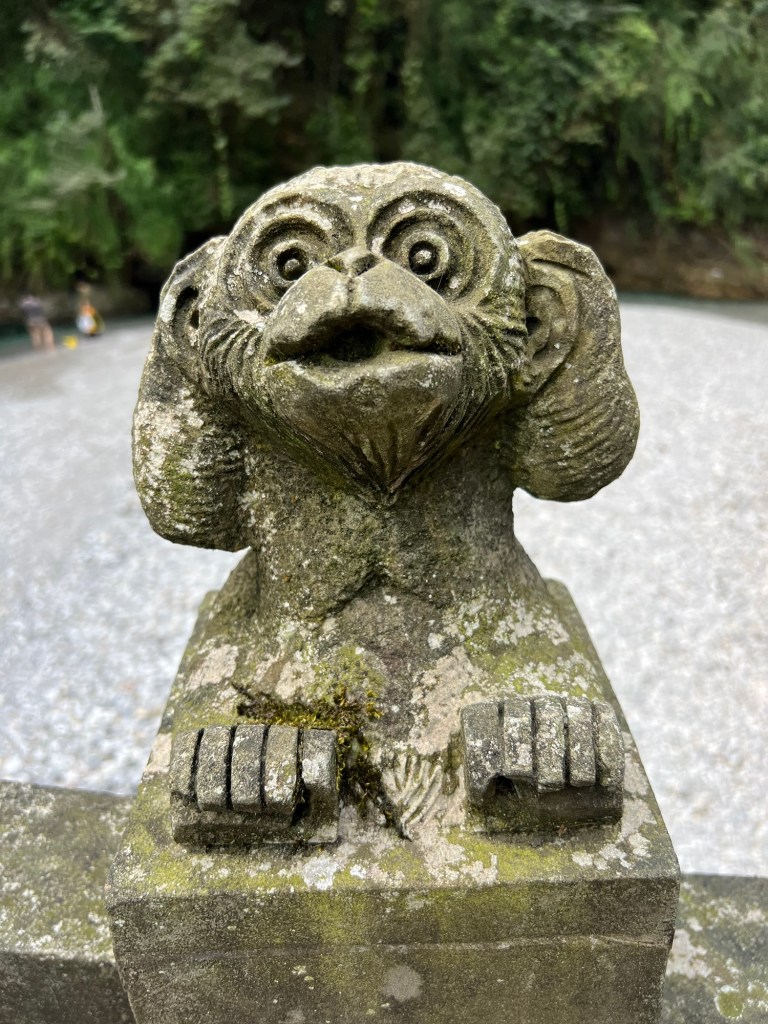
    Monkey sculpture
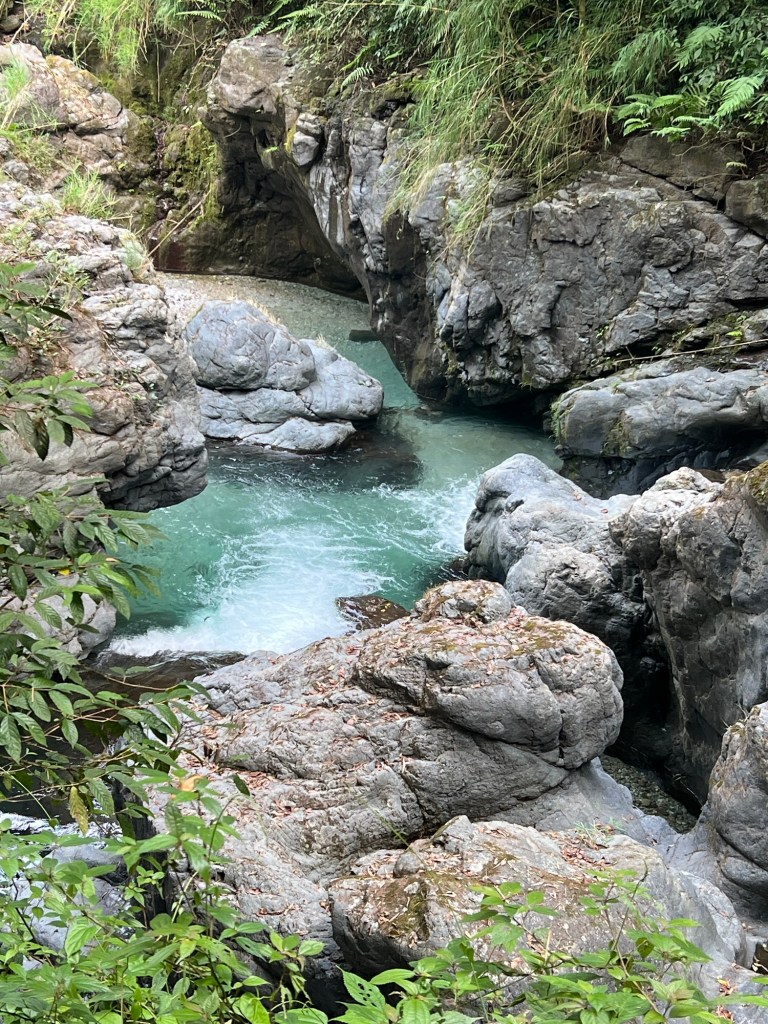
    Clear blue waters of the mountain river

    Along the route we passed another monastery where other hikers, can stay the night and share their dinner with the resident monks.

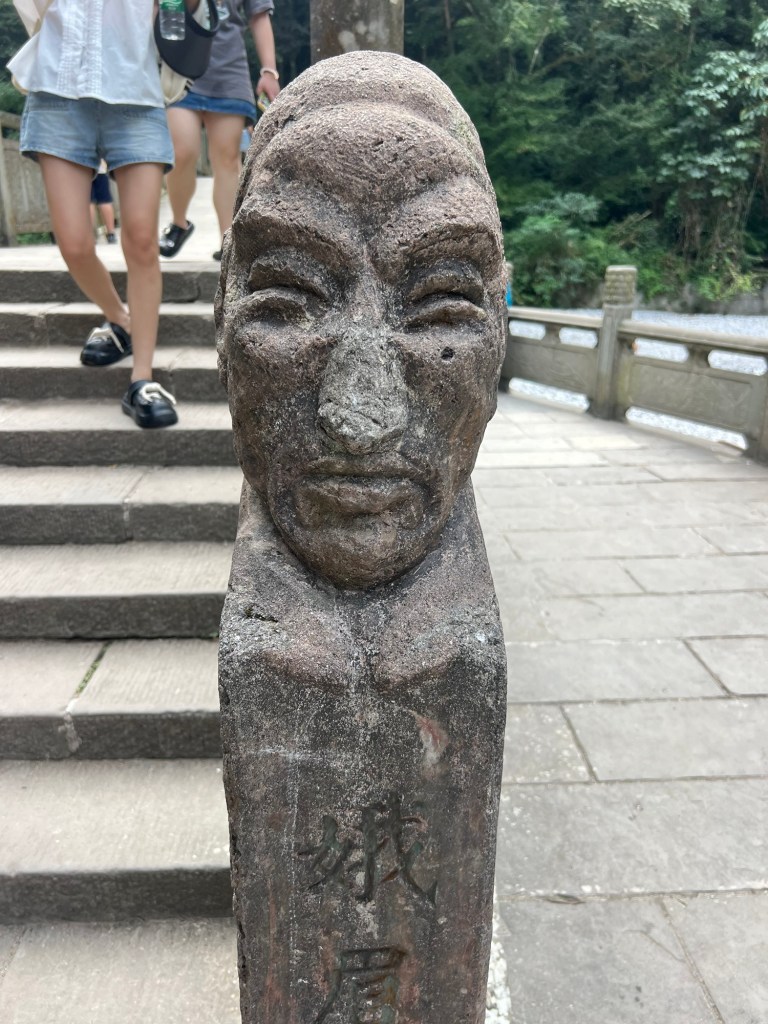
    Inscriptions and sculptures adorned one of the mountain walls we passed by on our way to the monastery.

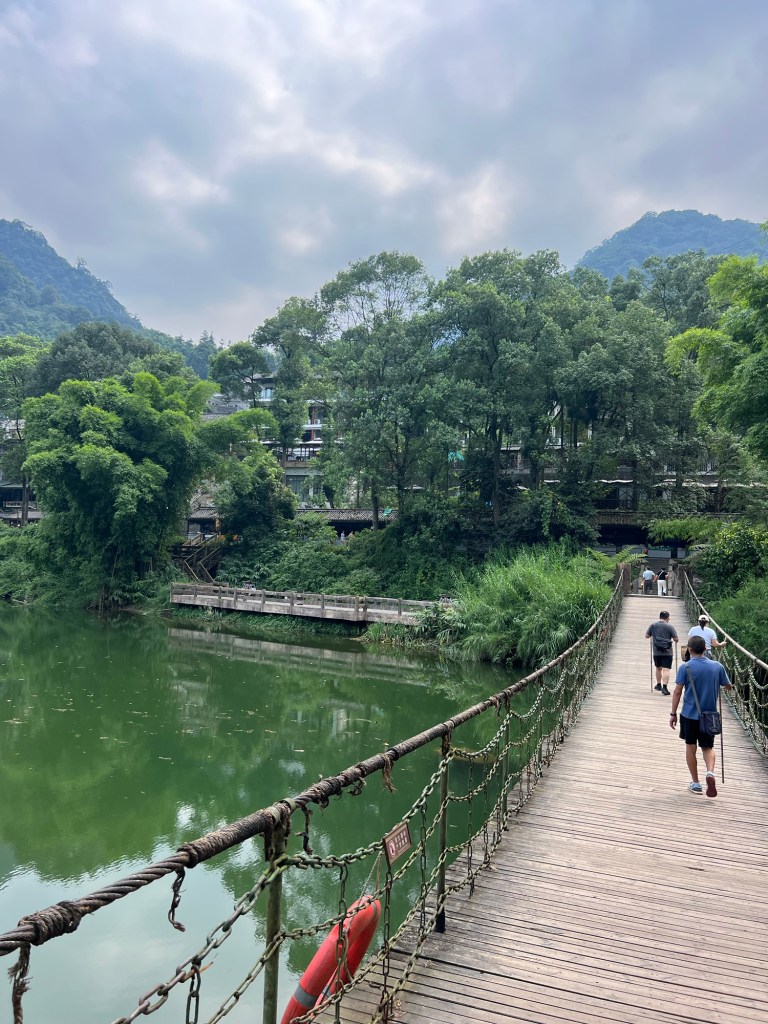
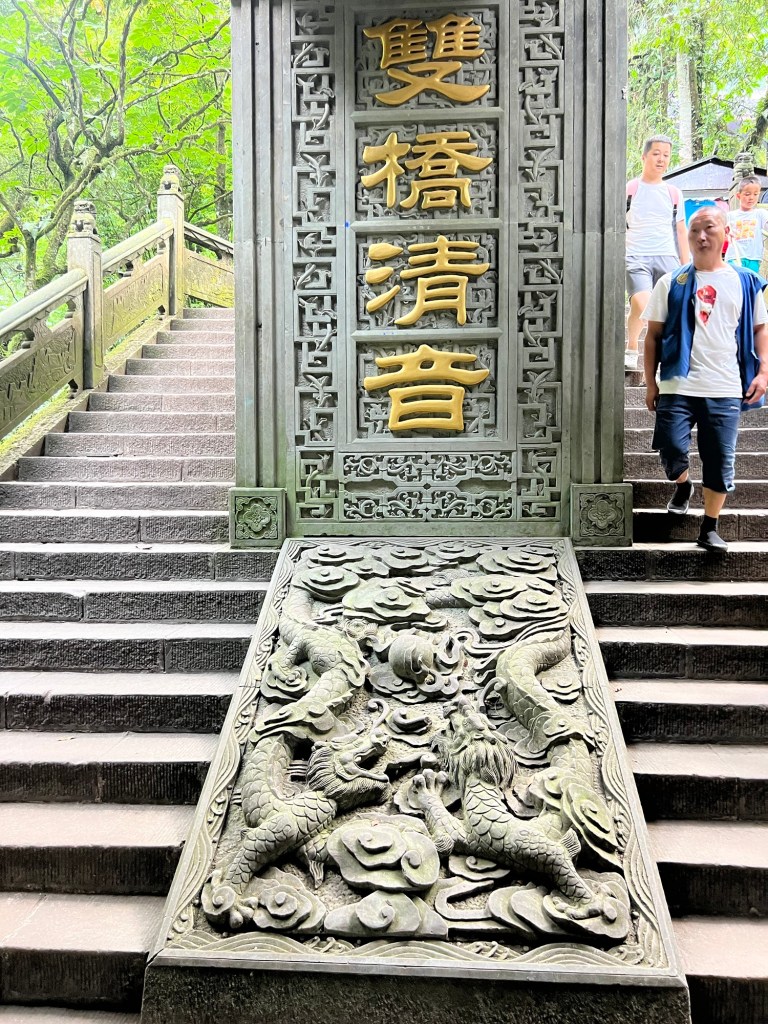
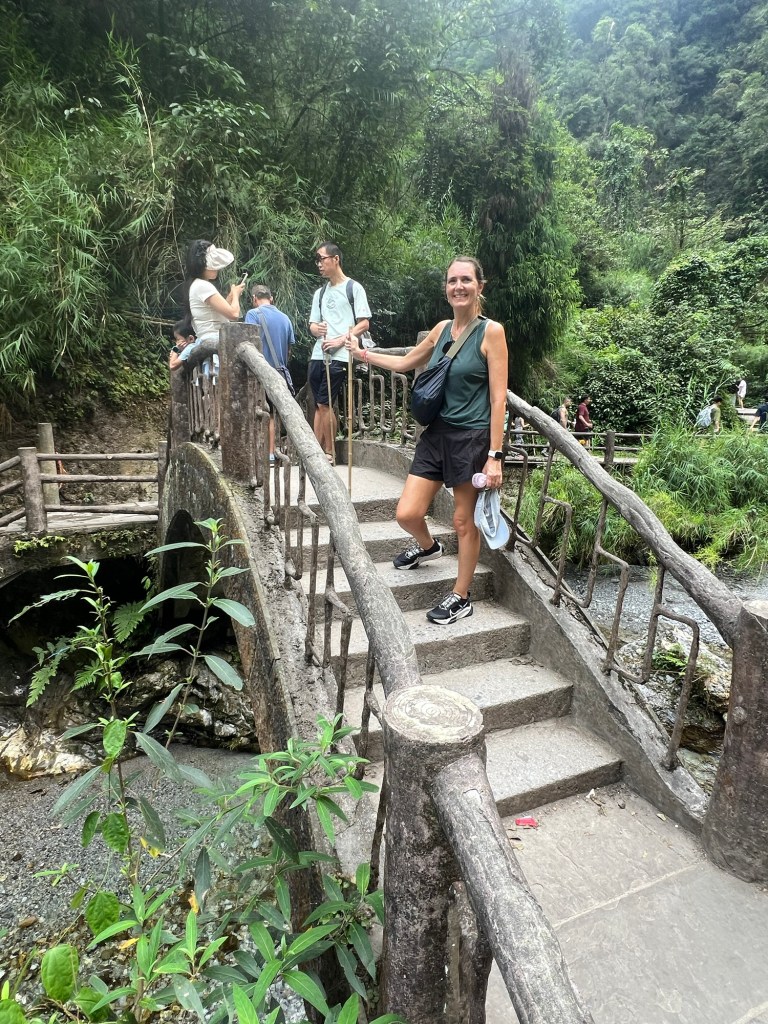
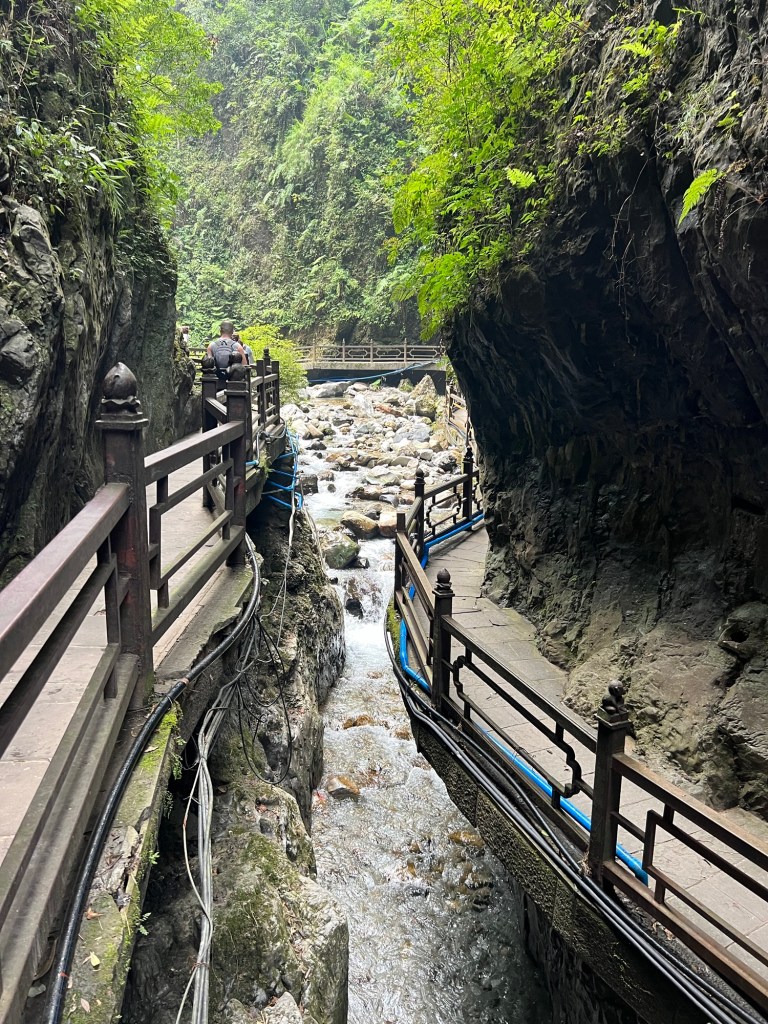
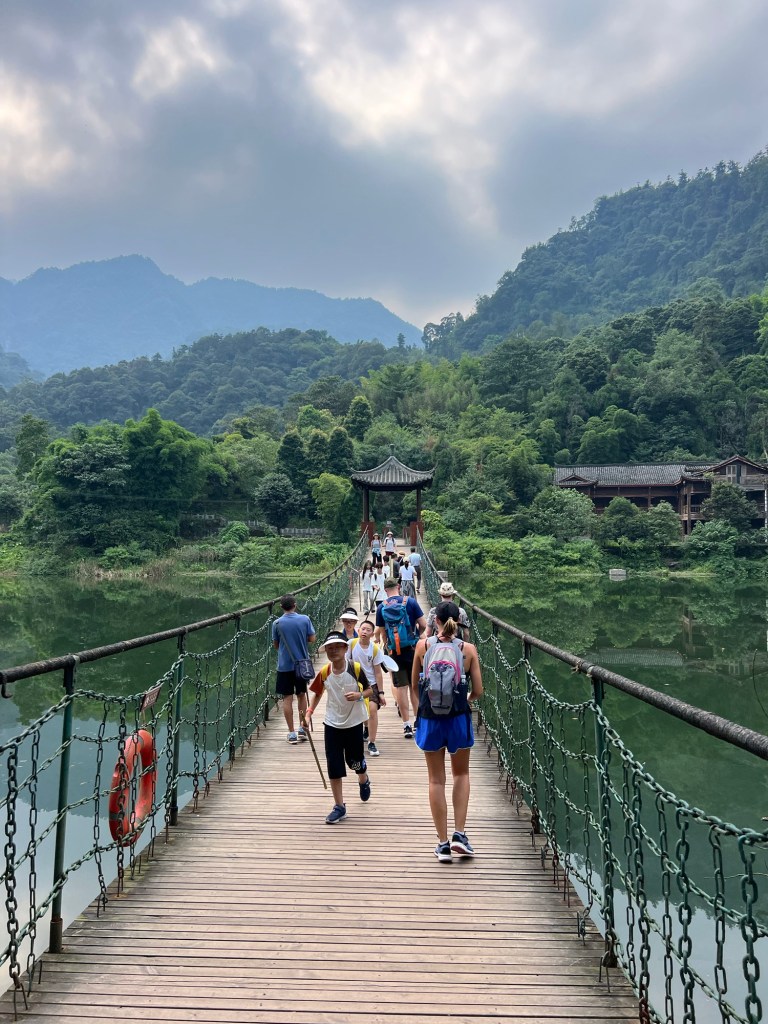
    As we ebbed ever closer to the end of the hike we snaked alongside the river, with ancient bridge crossings dating back over a 1,000yrs.

    Despite the remote nature of the walkways, their upkeep and tidiness couldn’t be faulted and it wasn’t until we came across a family of monkeys close to the end of the hike that we understood the devastation they could cause.

    Our path snaking its way along the narrow river
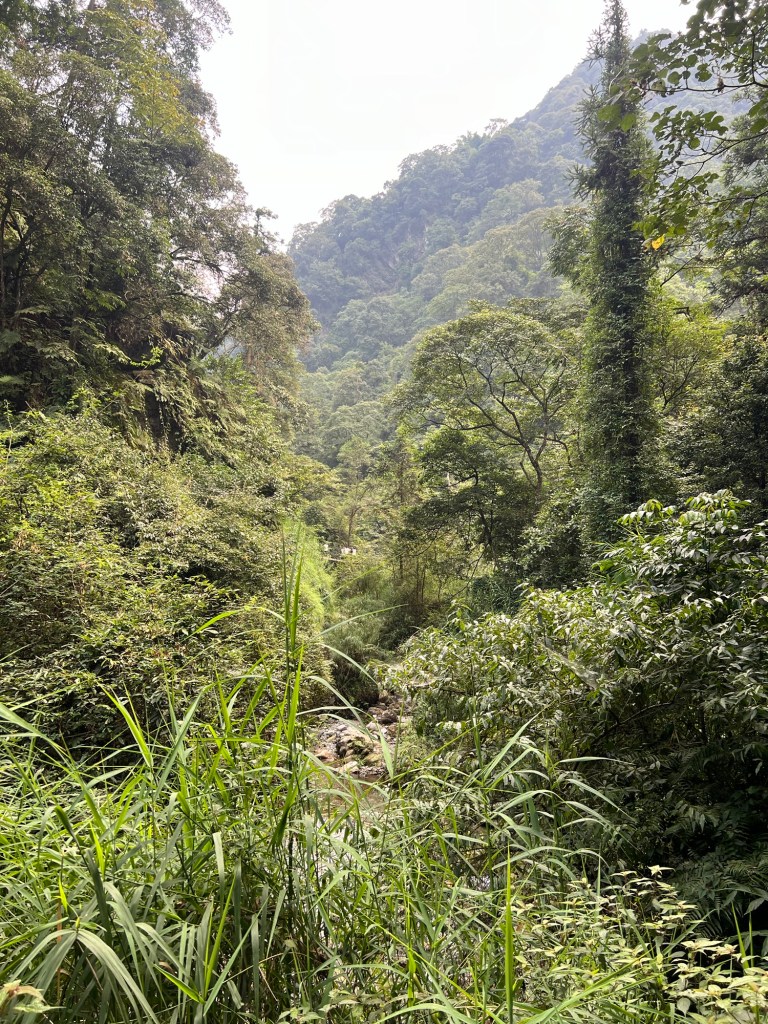
    Lush green Mountain views
    Michelle & Chris enjoying a good natter

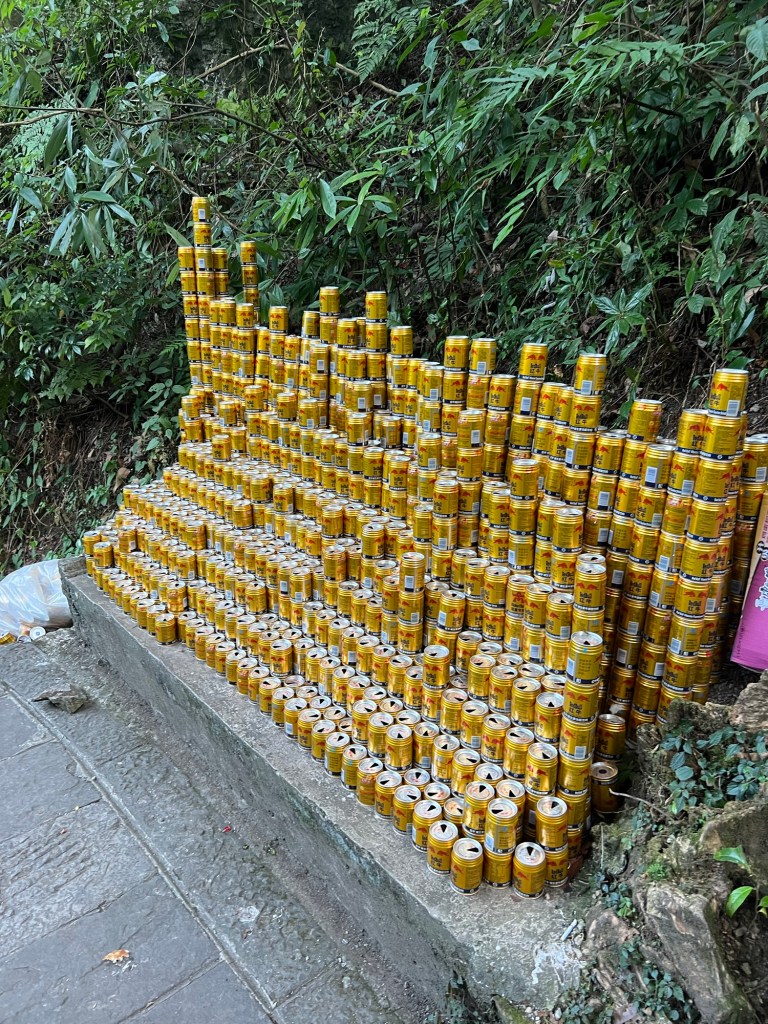
    Along the route were also a few small snack bars selling China’s favourite energy drink – Red Bull. The photo below shows the extent of their sales of RB over the last couple of days.

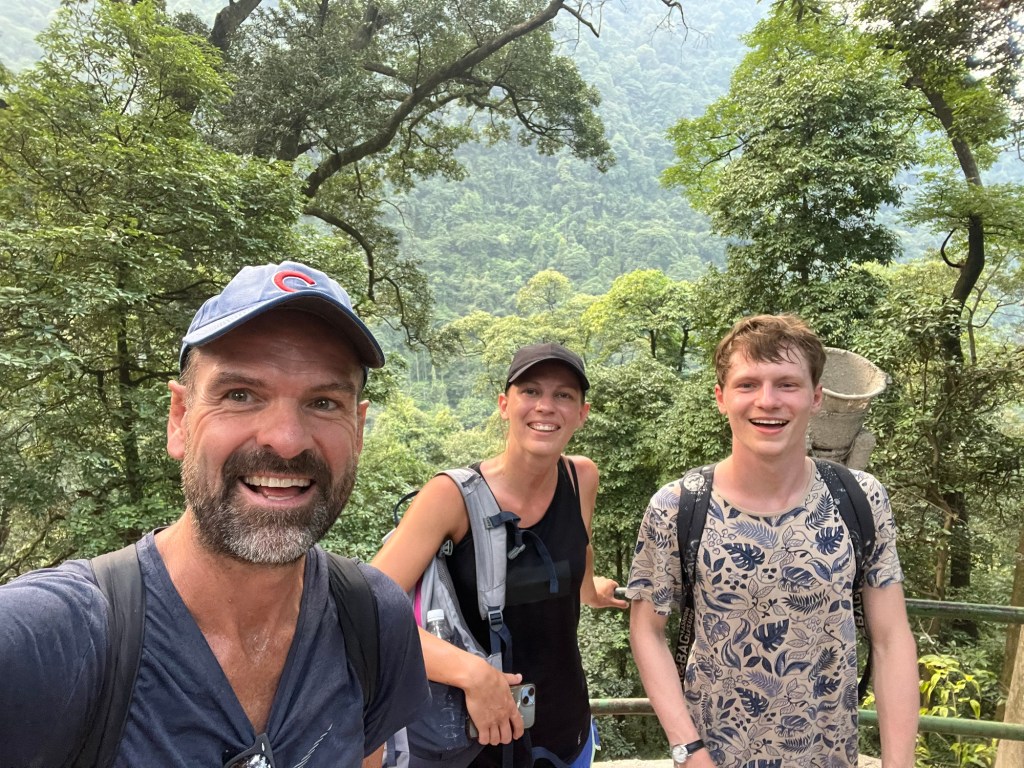
    After 2hrs of walking the front group of Andy, Jamie and Laura made it to the entrance to the monastery, followed 2mins later by Michelle, and lastly by Chris and Oleg. A great effort given the heat and the amount of steps to be marched up.

    The speed walkers
    The finishing line
    Monkey business

    Our monastery was a welcome sight and we quickly settled into lodging, before our dinner with the monks.

    The vegetable & rice dinner was very well received despite the lack of choice, not surprisingly, given our hunger and keenness for sustenance.

    After the active day, we said our goodnights to the rest of the group around 9.30pm, and within 30mins we were both fast asleep.

  • Overseas tour Day 294 – Leshan & Emei Shan

    Aug 22nd, 2024

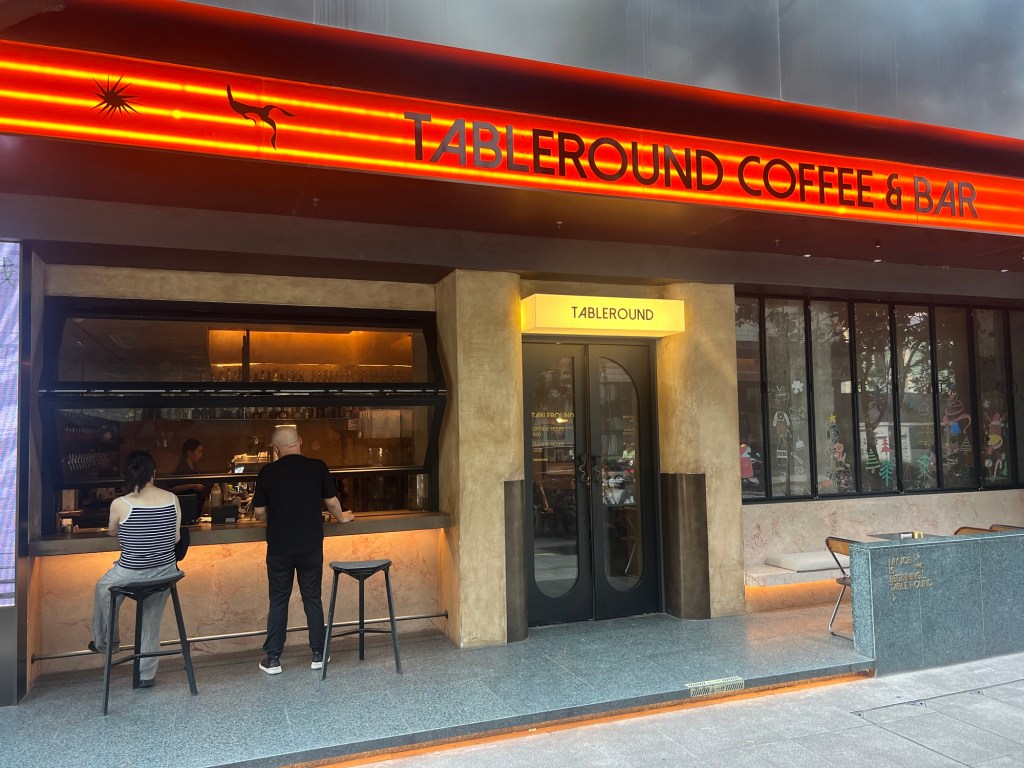
    This morning we waved goodbye to the city of Chengdu, but not before grabbing a final coffee at our favourite bar opposite the hotel. Quite possibly the best flat whites we’ve had since arriving in China.

    Once on the road we travelled by coach to the sacred mountains of Emai Shan.

    Along the way we stopped in the town of Leshan to visit the World Heritage listed Giant Buddha.

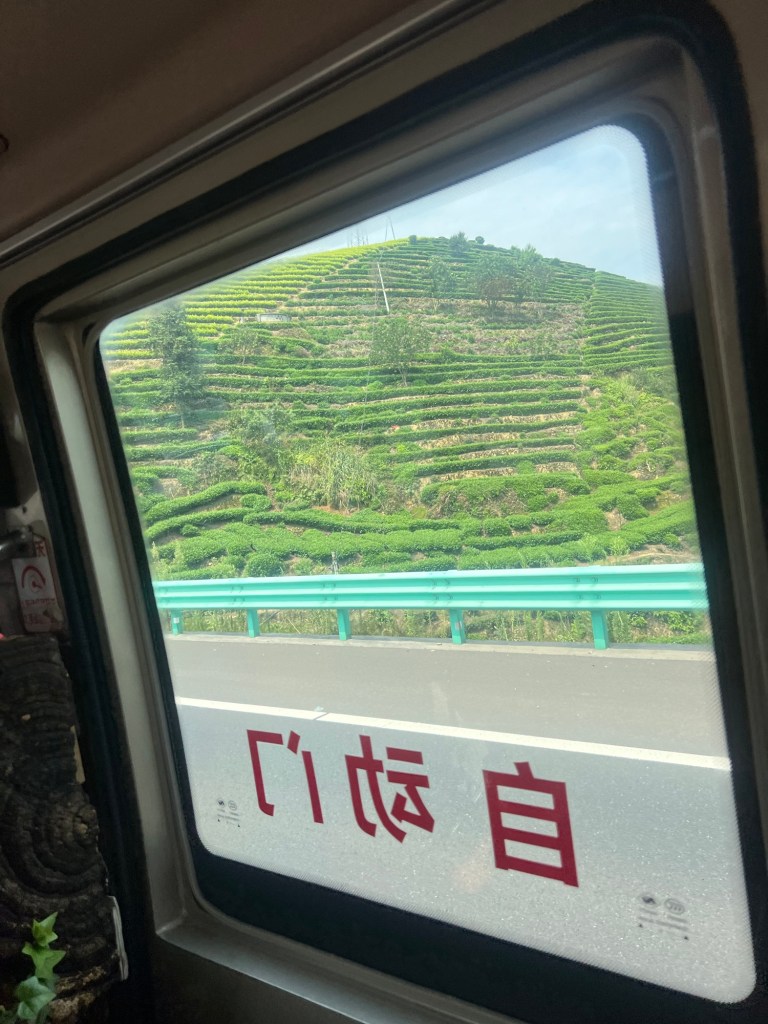
    Starting to see stepped paddy fields
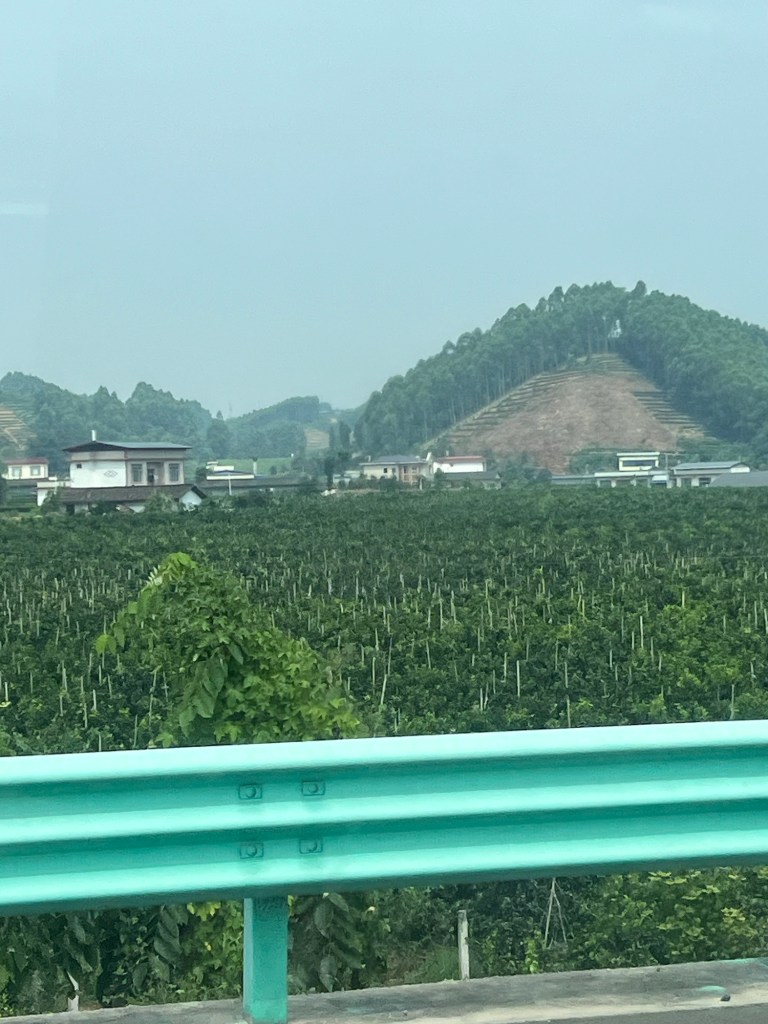
    Vineyards
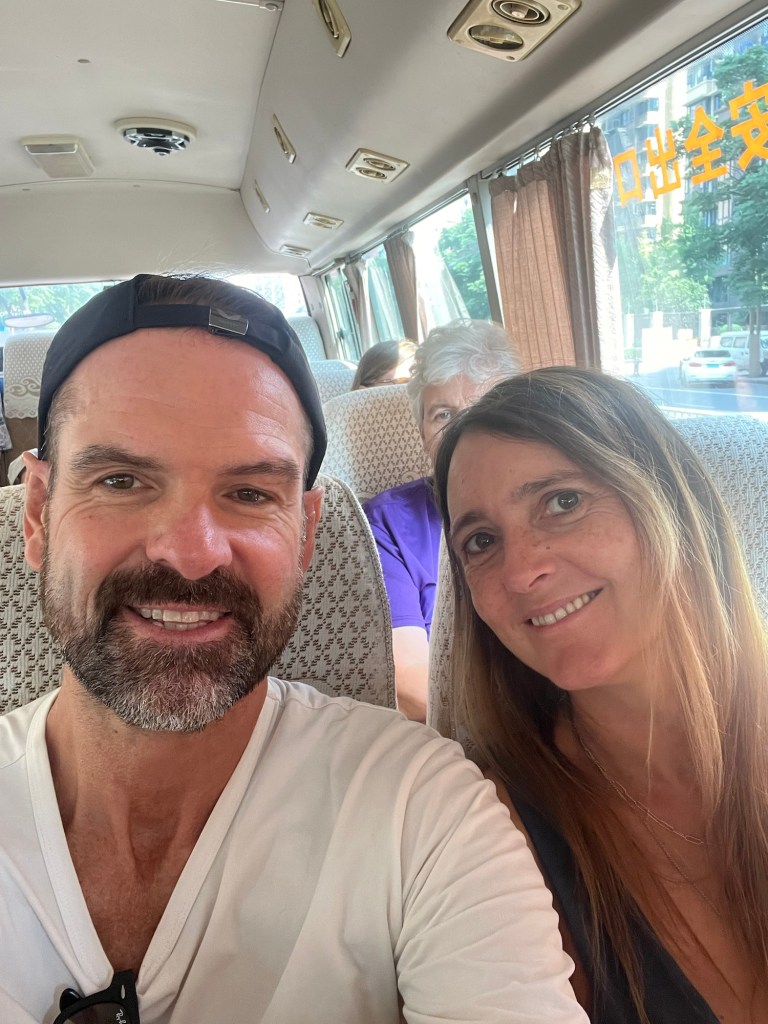
    On board our private coach
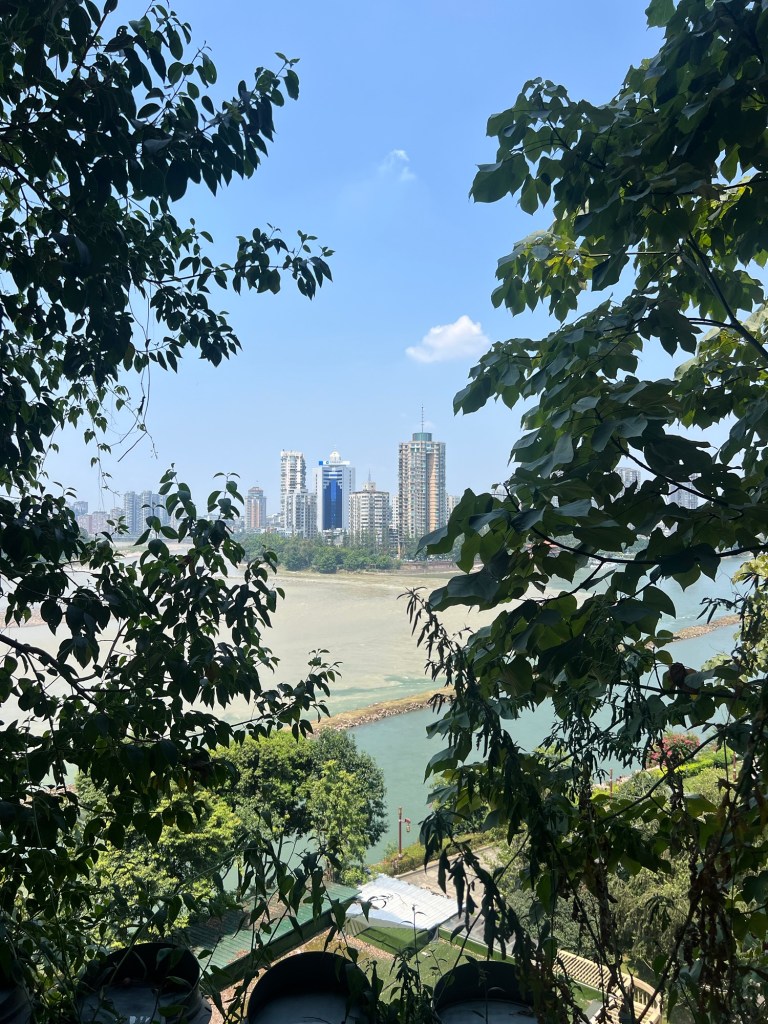
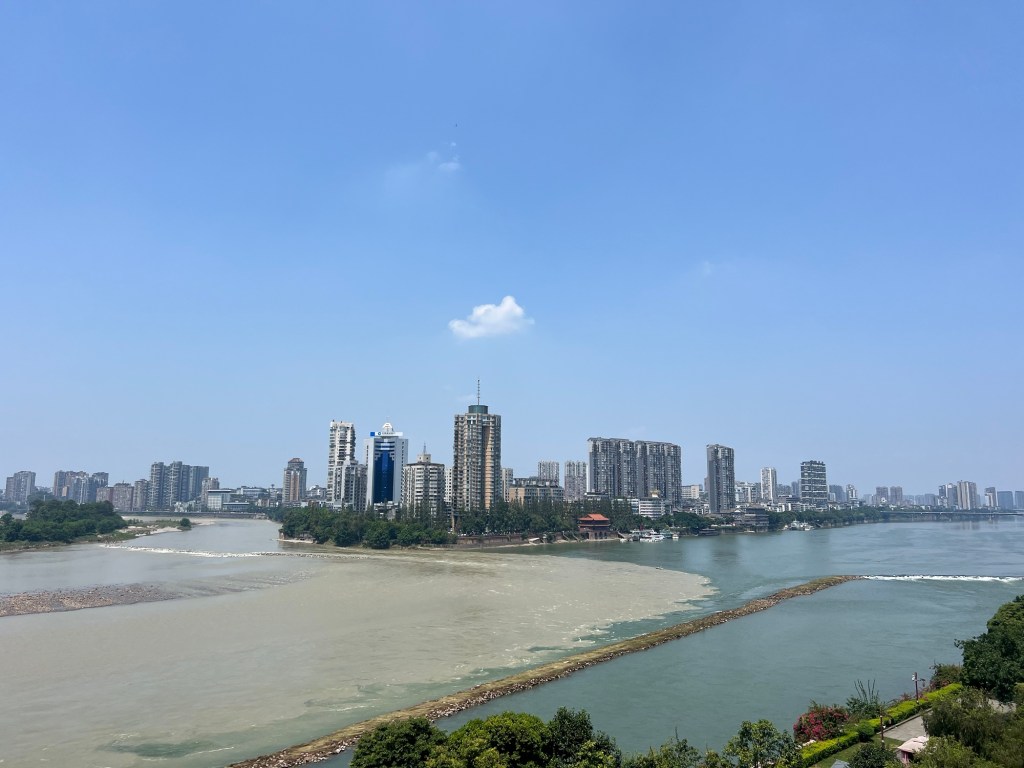
    River view over the city of Leshan

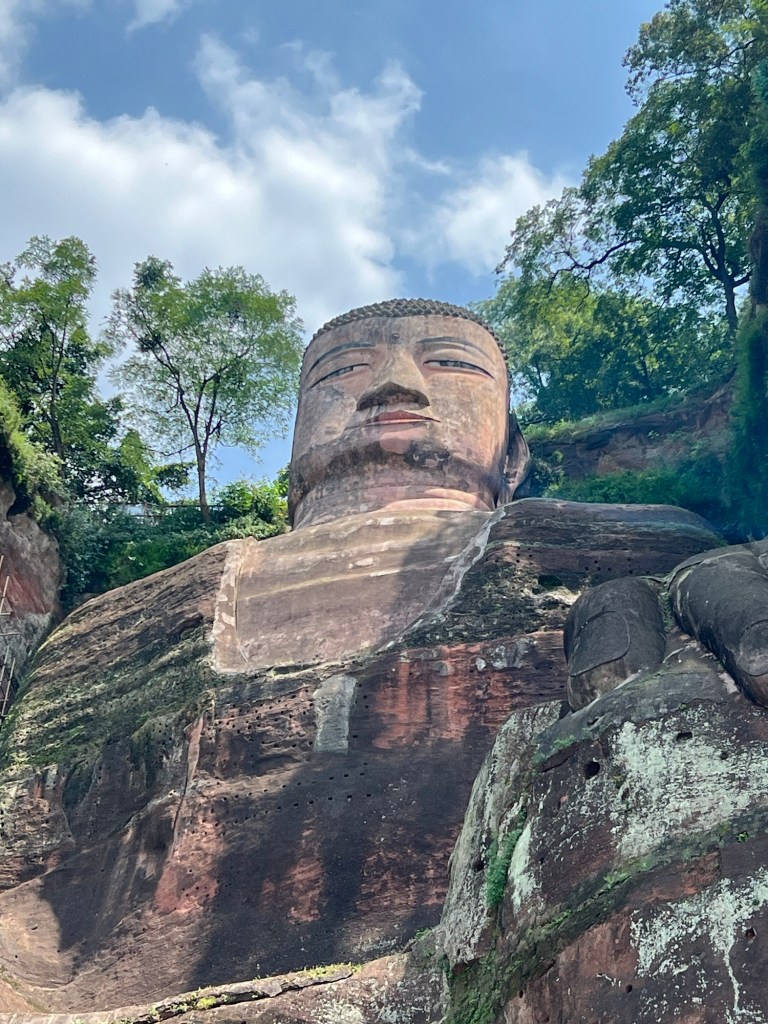
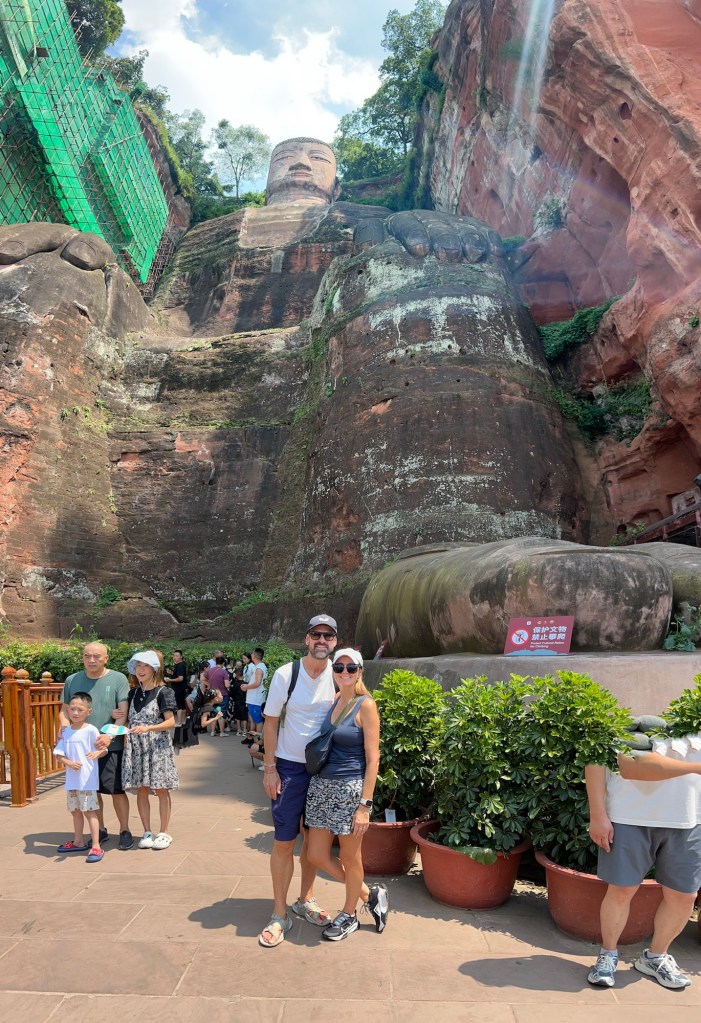
    The Leshan Giant Buddha is over 70 metres in height and was built in the 8th century during the Tang dynasty.

    It is carved out of a cliff face of Cretaceous red bed sandstones that lies at the intersection of the Min River and Dadu River.

    Whilst you can view the Buddha from the river, sadly today the boat cruises were fully booked and we instead hiked up the mountain to get up close to this giant sculpture.

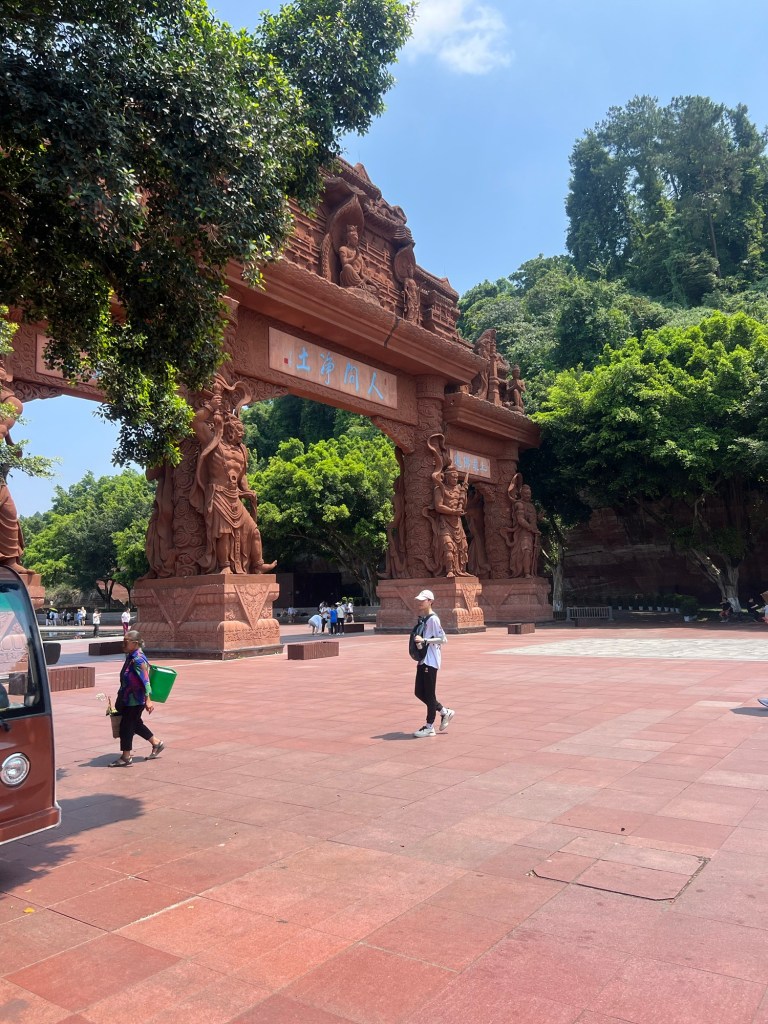
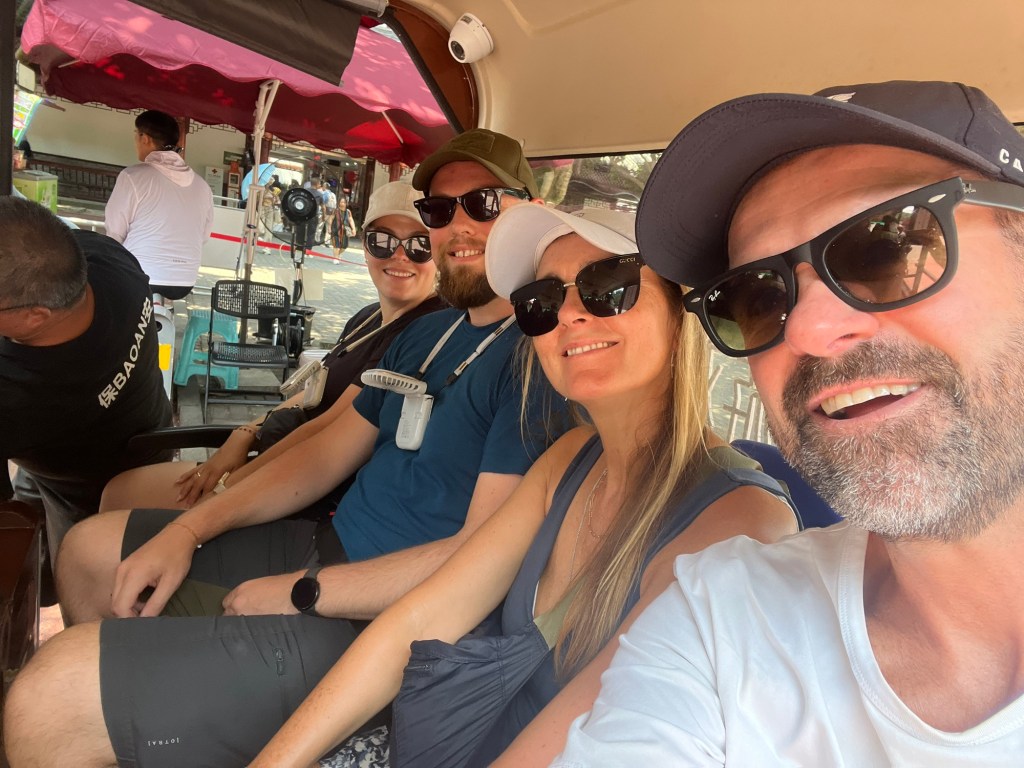
    Before the proper walking started, we were treated to another buggy ride to the entrance to the temple grounds.

    The Buddha carving took almost a 100yrs to be completed, such was the scale and the difficulty of the work.

    It is the largest and tallest stone Buddha statue in the world and is the tallest pre-modern statue in the world.

    Views looking down on Leshan
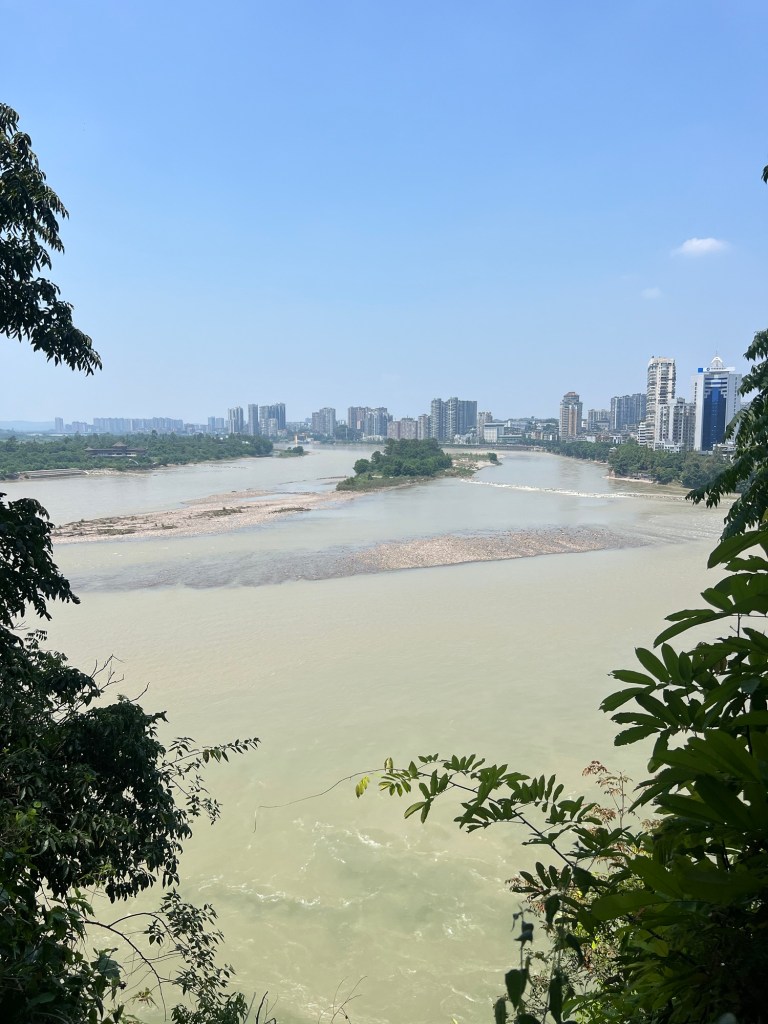
    A city surrounded by rivers

    Being one of the six world cultural heritage sites in the province of Sichuan, it receives a lot of tourist visits with over 2 million last year alone. The Leshan Giant Buddha is most popular during Chinese New Year when tourists from all over the world come to pray for good luck.

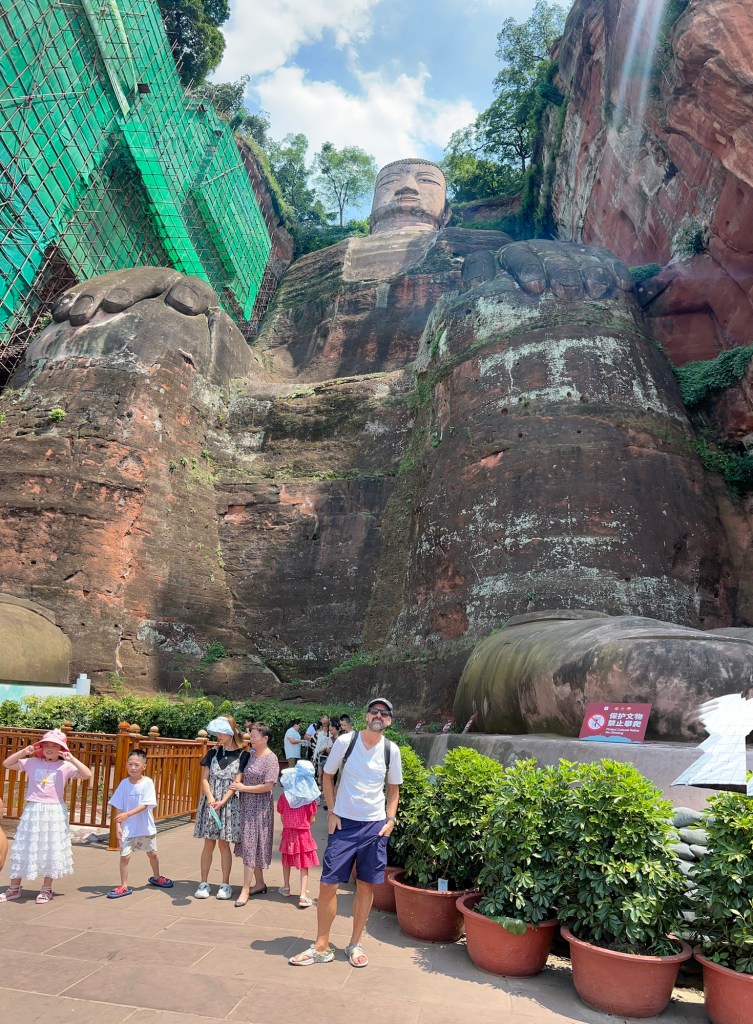
    The statue depicts a seated Buddha with his hands resting on his knees. His shoulders are 28 metres wide and his smallest toenail is large enough to easily accommodate a seated person.

    There is a local saying: “The mountain is a Buddha and the Buddha is a mountain”. This is partially because the mountain range in which the Leshan Giant Buddha is located is thought to be shaped like a slumbering Buddha when seen from the river, with the Leshan Giant Buddha as its heart.

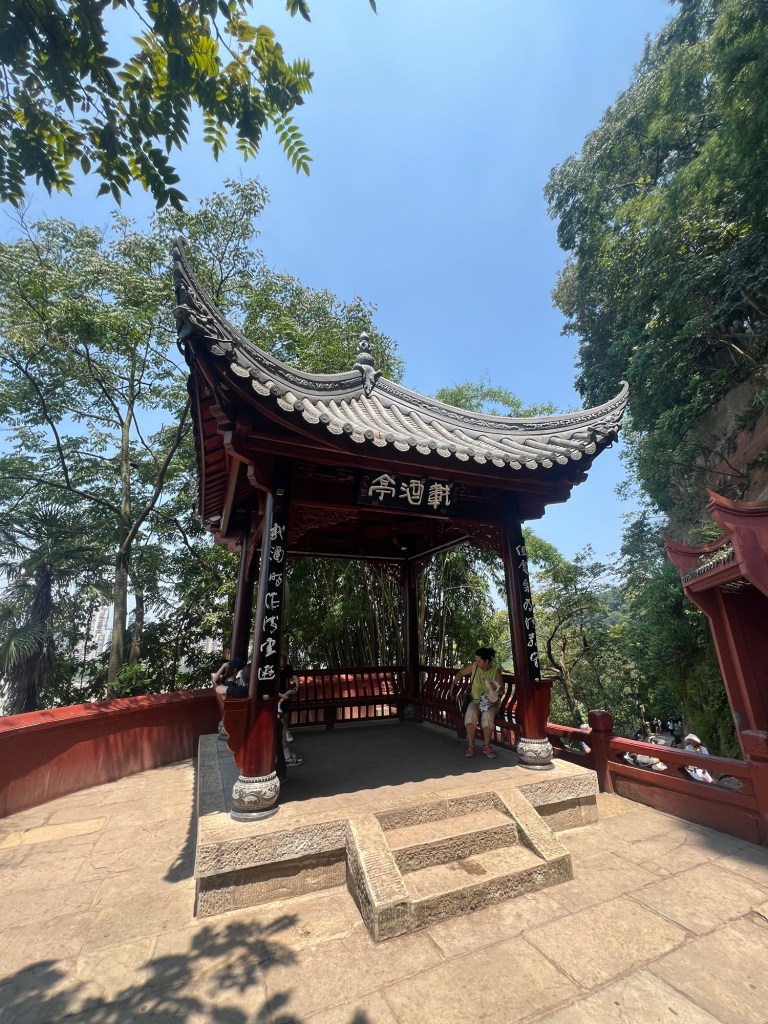
    Apart from the main attraction, there are dozens of pathways throughout the mountain that can be explored by foot.

    The walk along the mountain path offered up great views over the city and the fast flowing river that sat below us.

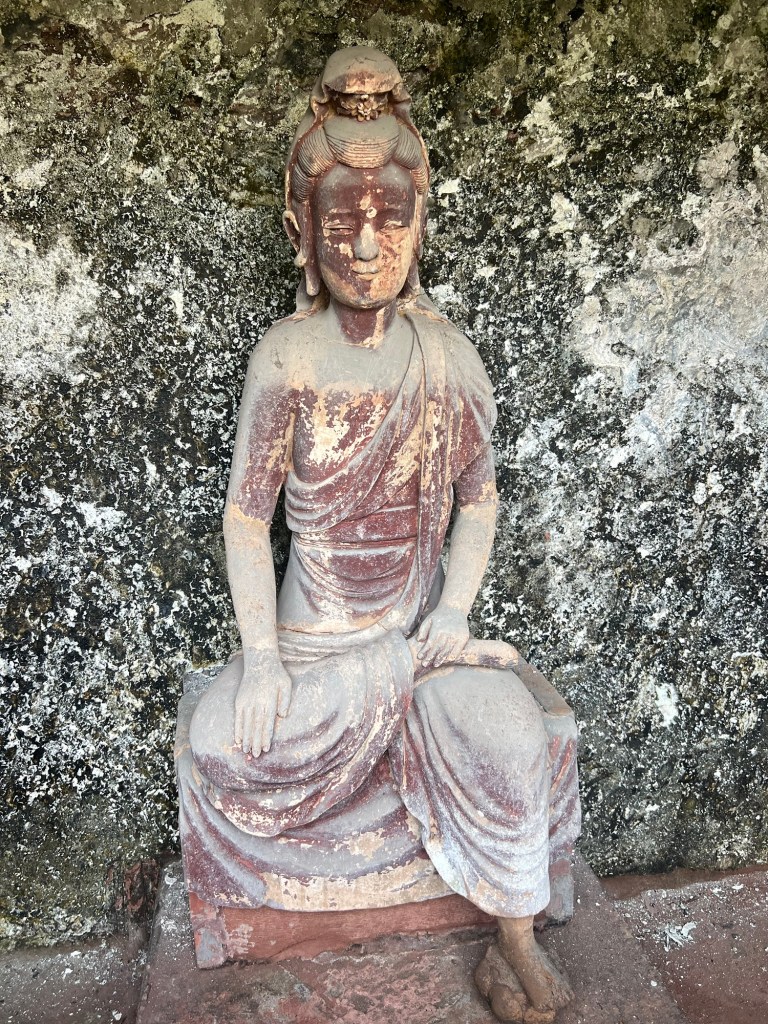
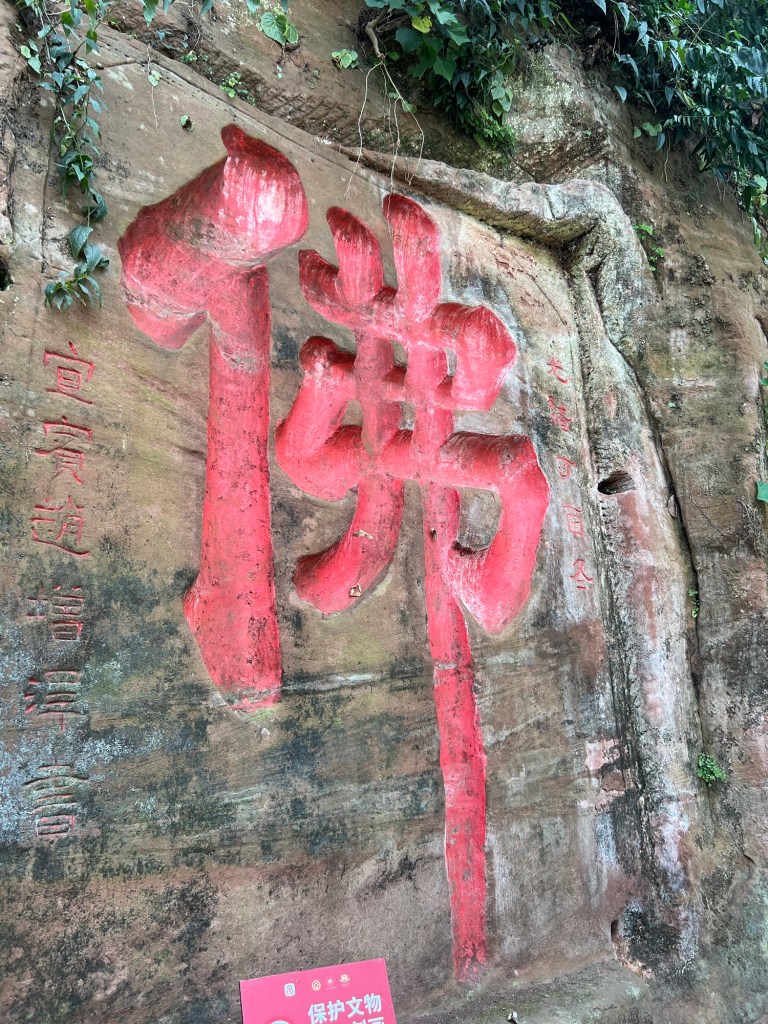
    As well as the Leshan Giant Buddha, we came across numerous inscriptions imparting good fortune on those who pass through.

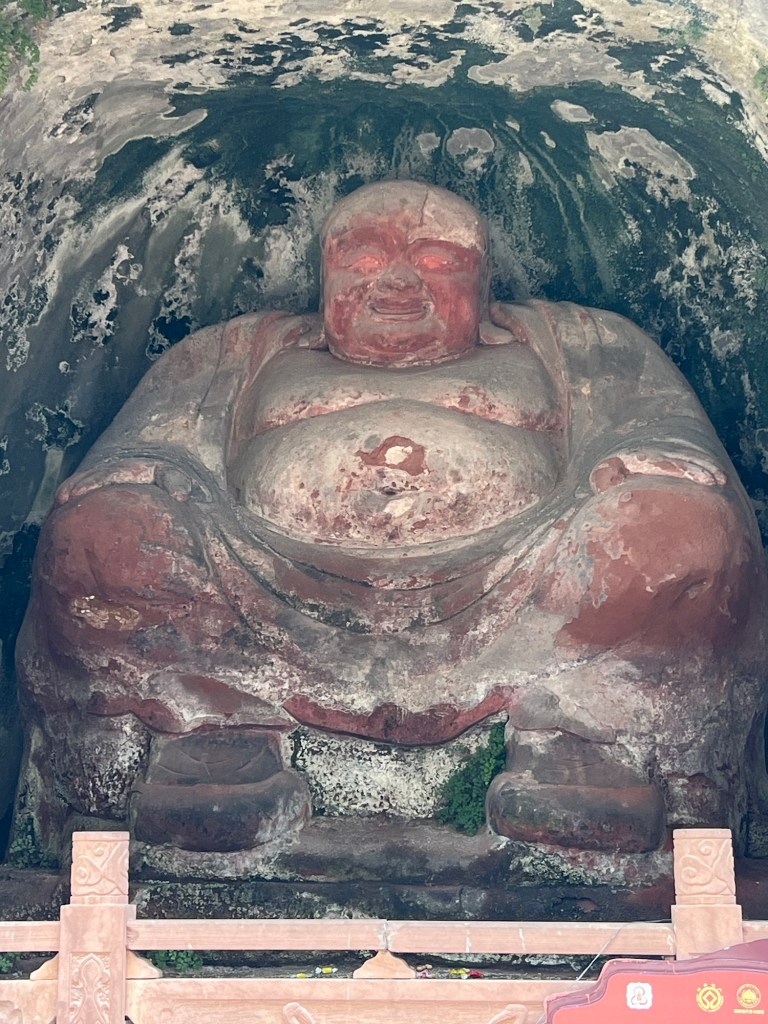
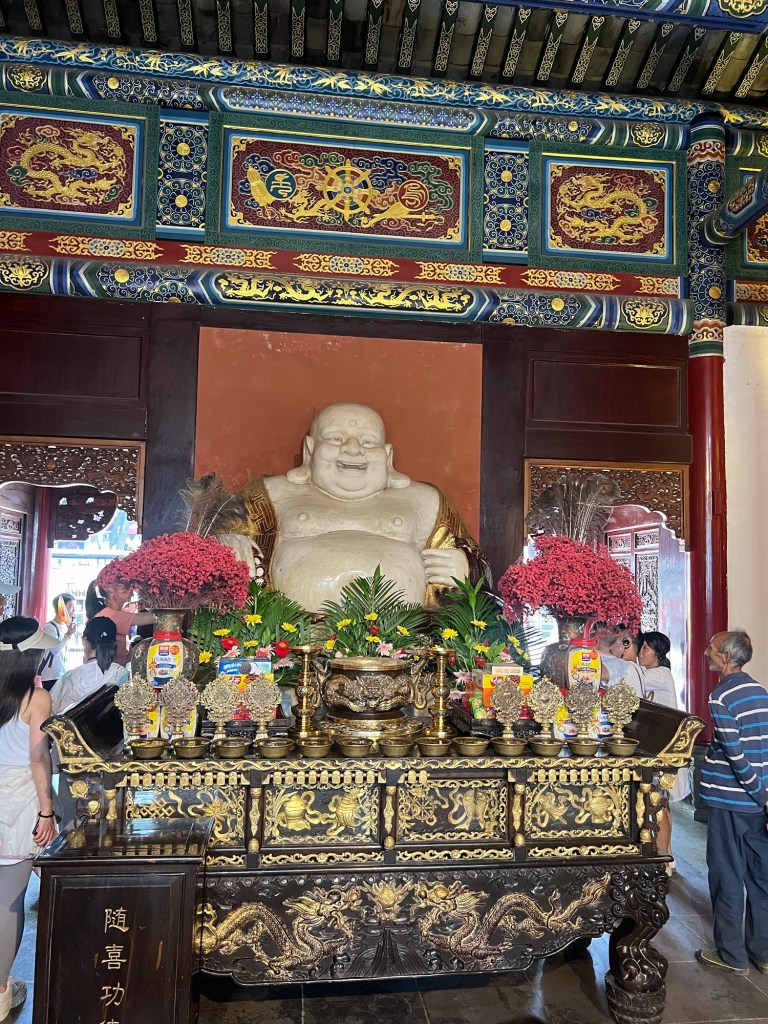
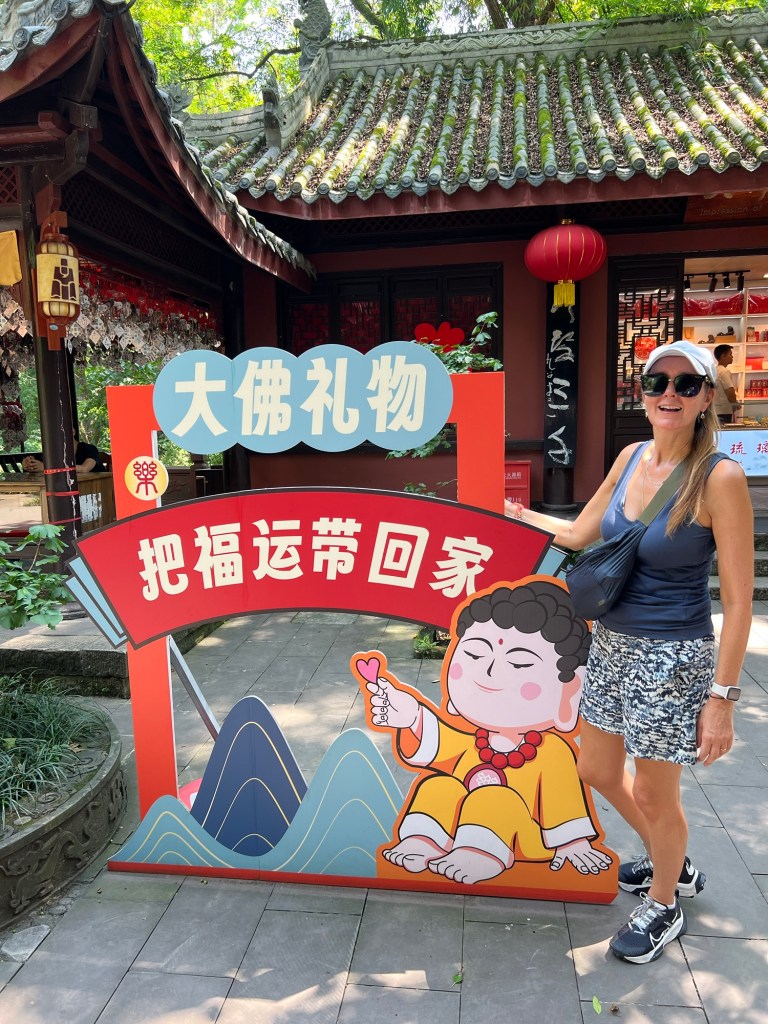
    The happy Buddha
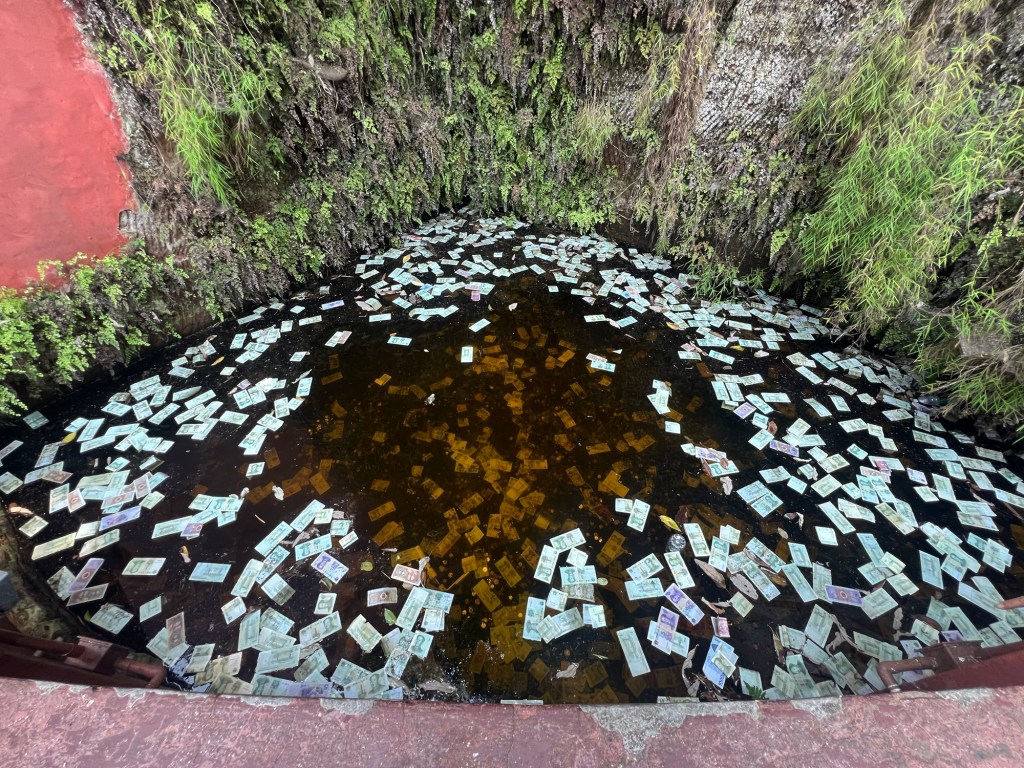
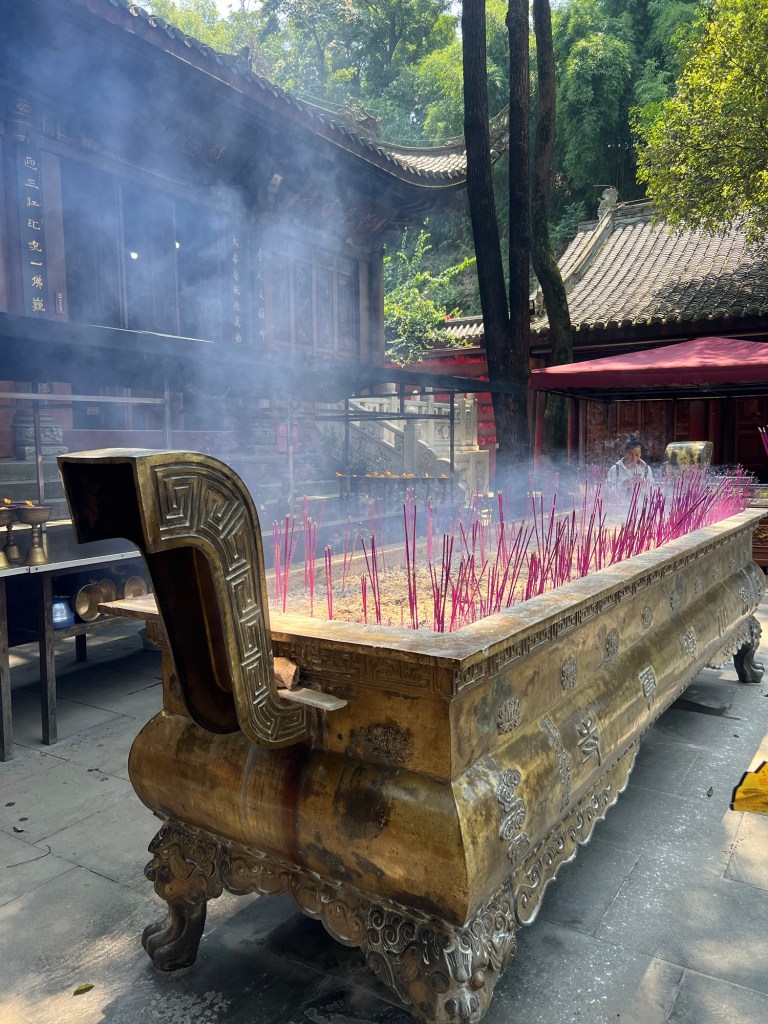
    Money donations for more good luck

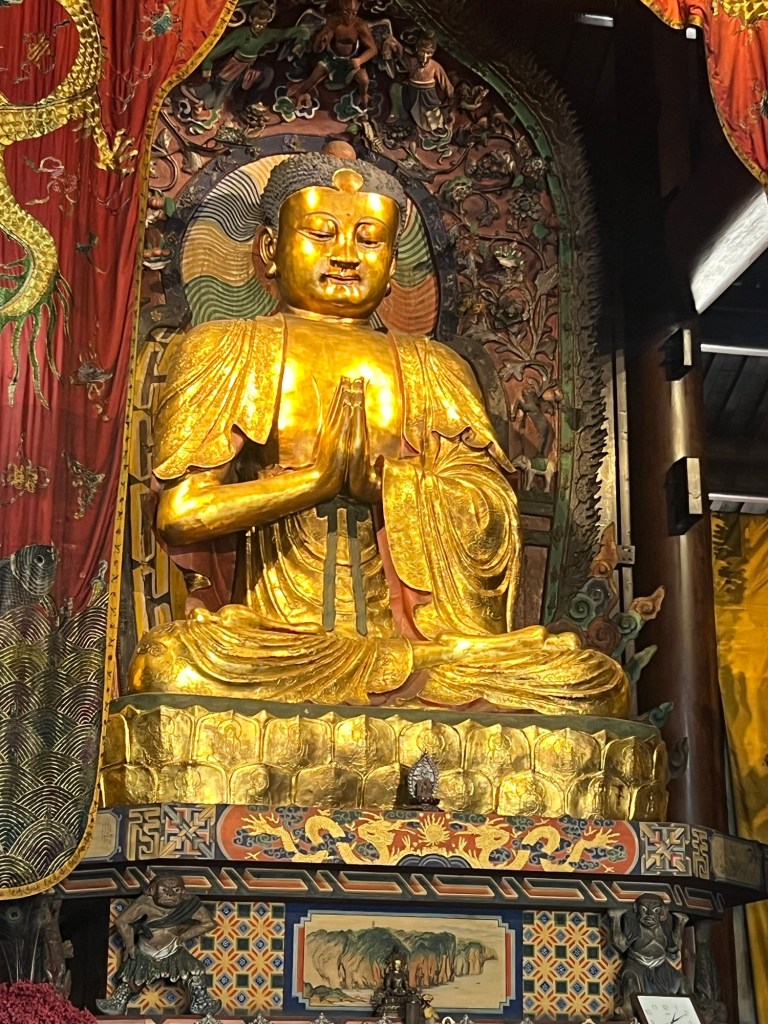
    Before the climb down to the Buddha, we visited one of the temples close by and came across a selection of Happy Buddha’s along with a smaller Golden Buddha shrine.

    Golden Buddha Mk XI
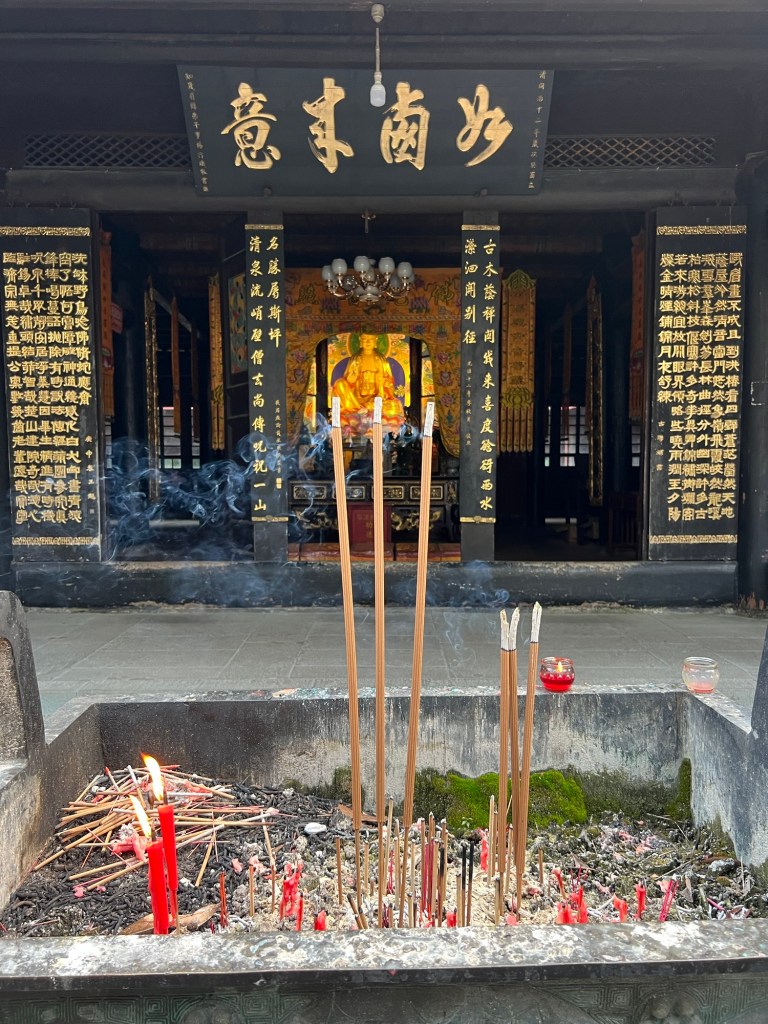
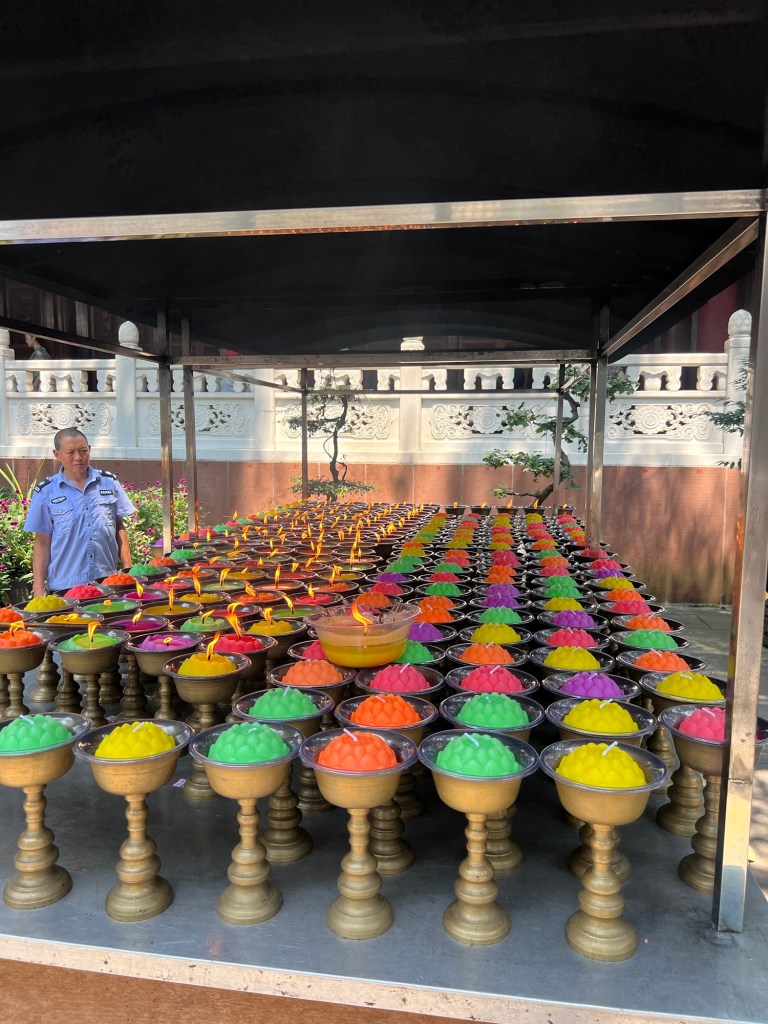
    Colourful candle offerings
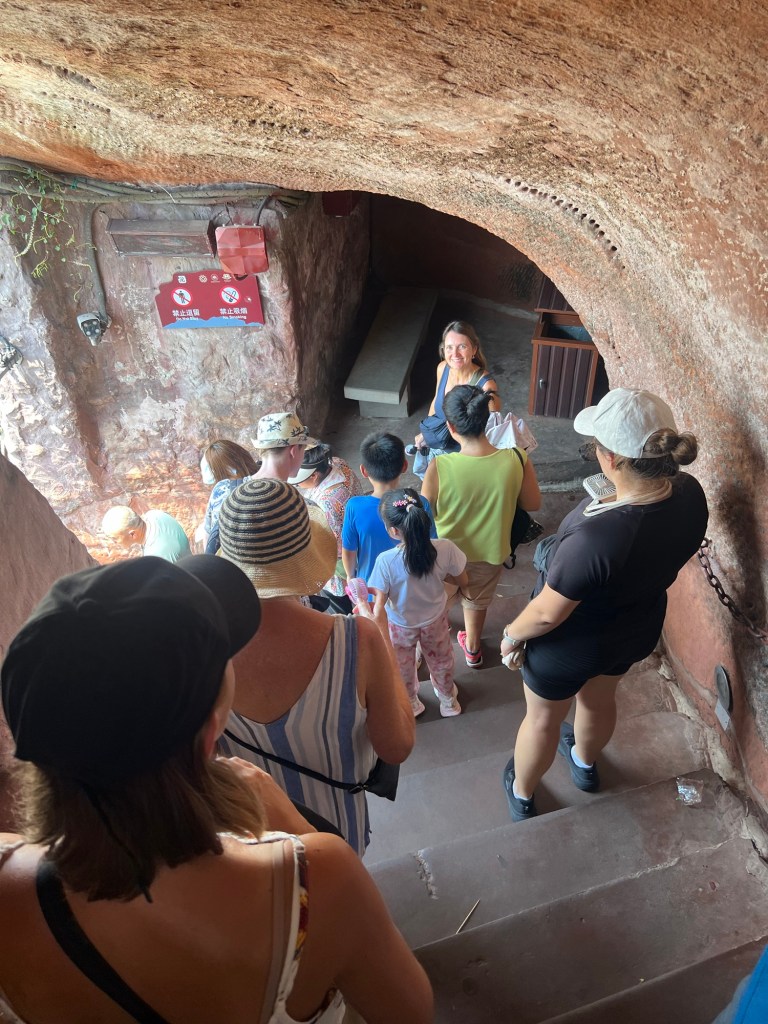
    The walk down to the foot of the mountain to view the Big Buddha

    After the founding of the People’s of China, the Leshan Giant Buddha was designated as a cultural relic and is protected by the local Sichuan Province.

    Sadly the Leshan Buddha has been affected by the pollution emanating from the unbridled development in the region. 

    The body of The Giant Buddha of Leshan is covered today by different organisms lichen, ferns and other bryophytes, and various shrubs and gramineous plants. Current research hopes that greater understanding of plant and microbe-induced weathering effects may aid in the preservation of The Giant Buddha of Leshan.

    The entire statue is built in stone, except for the ears that were designed in wood, covered with mud on the surface to make clay, and attached to the head.

    Apparently, the massive construction resulted in so much stone being removed from the cliff face and deposited into the river below that the currents were indeed altered by the statue, making the water safe for passing ships.

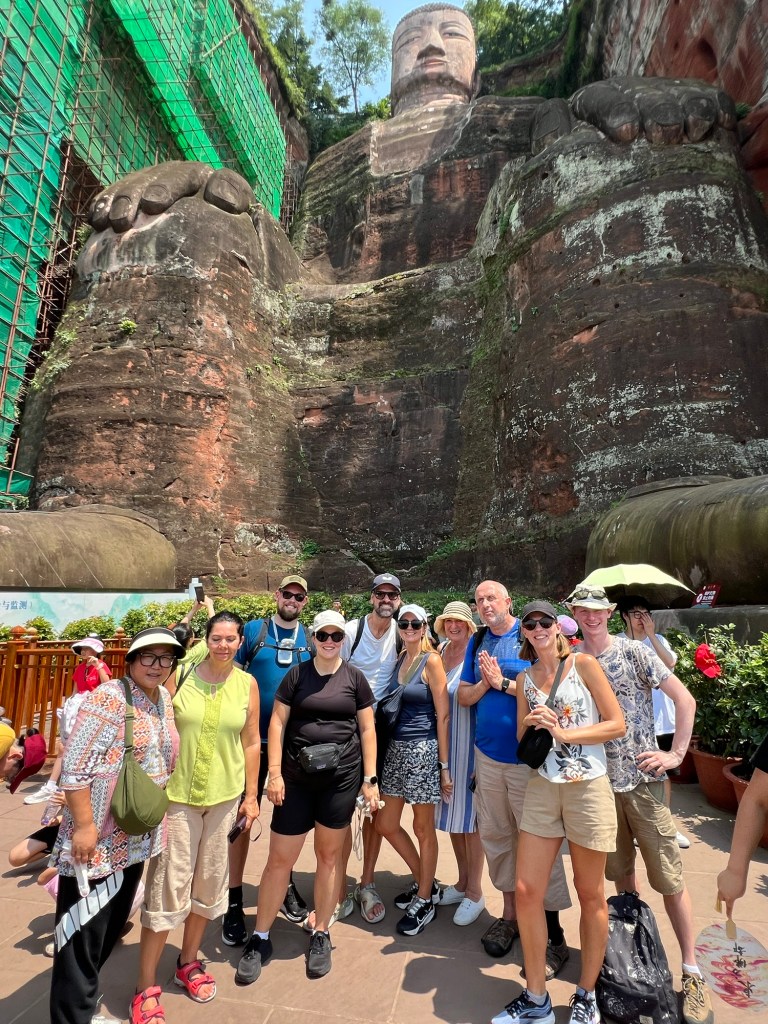
    Team Giant Buddha
    Personal good luck messages to Buddha
    Happy holidays

    This marks the start and end of our walk to the Great Buddha on the rock.

    After a short break we boarded our coach again and headed for Emei Shan, the gateway to the Buddhist mountains and where we will be staying for the next 3 nights.

    Tomorrow we head up via cable car to visit the Golden Summit and then hike to a remote monastery. We can’t wait!

  • Overseas tour Day 293 – Chengdu panda & Sichuan Opera

    Aug 20th, 2024

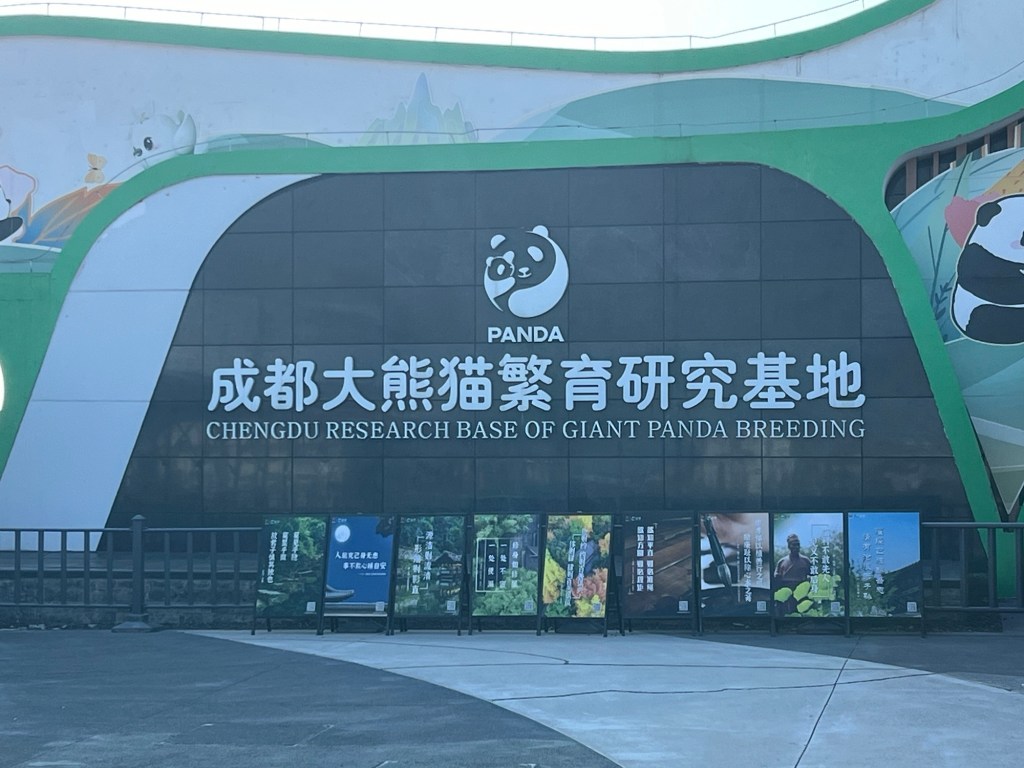
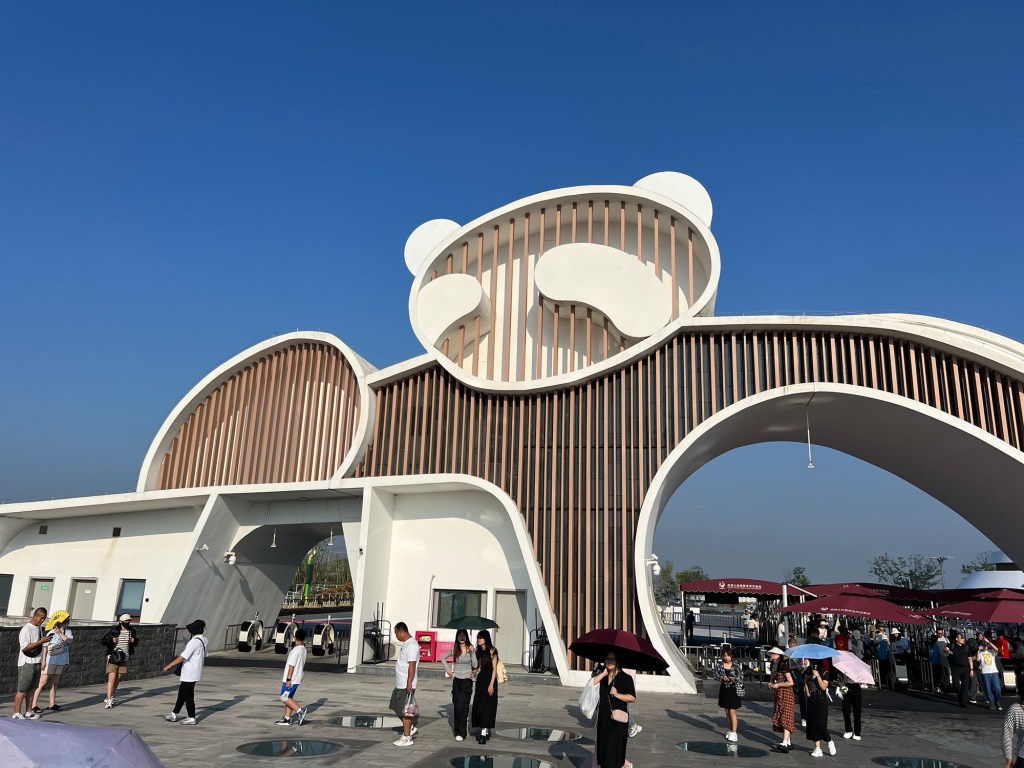
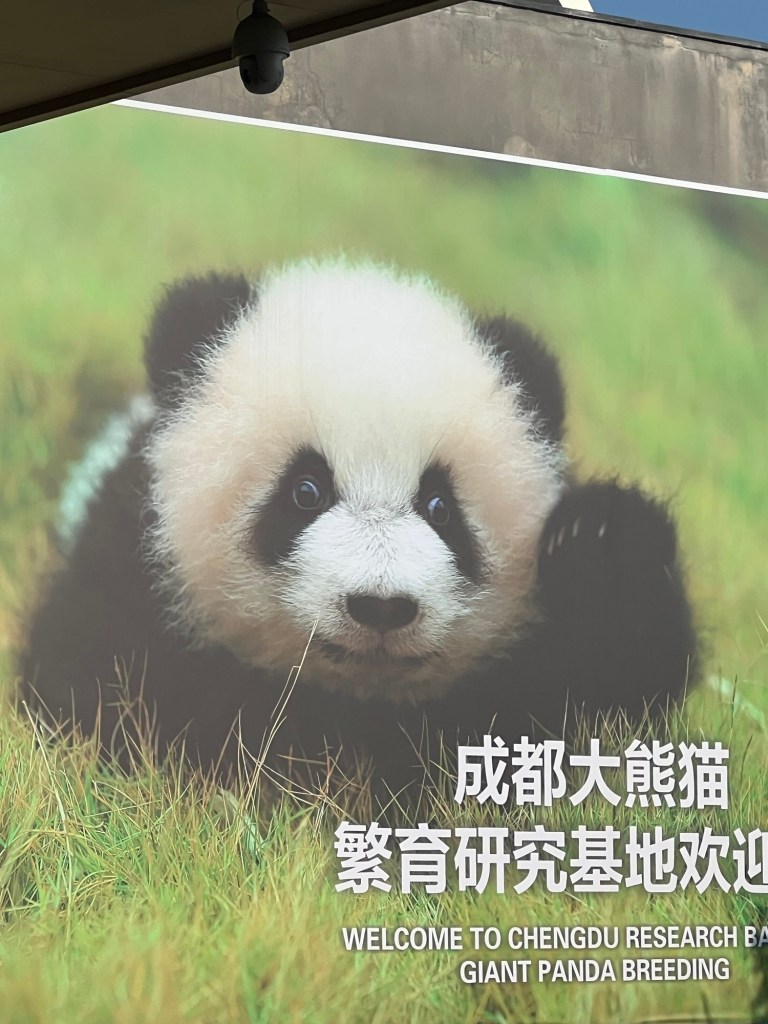
    This morning we visited the Giant Panda Breeding Research Base where we were able to witness the conservation efforts being made to save this endangered species.

    There are only around 1,000 pandas left in the world and 80% of them are found in the mountains in Sichuan.

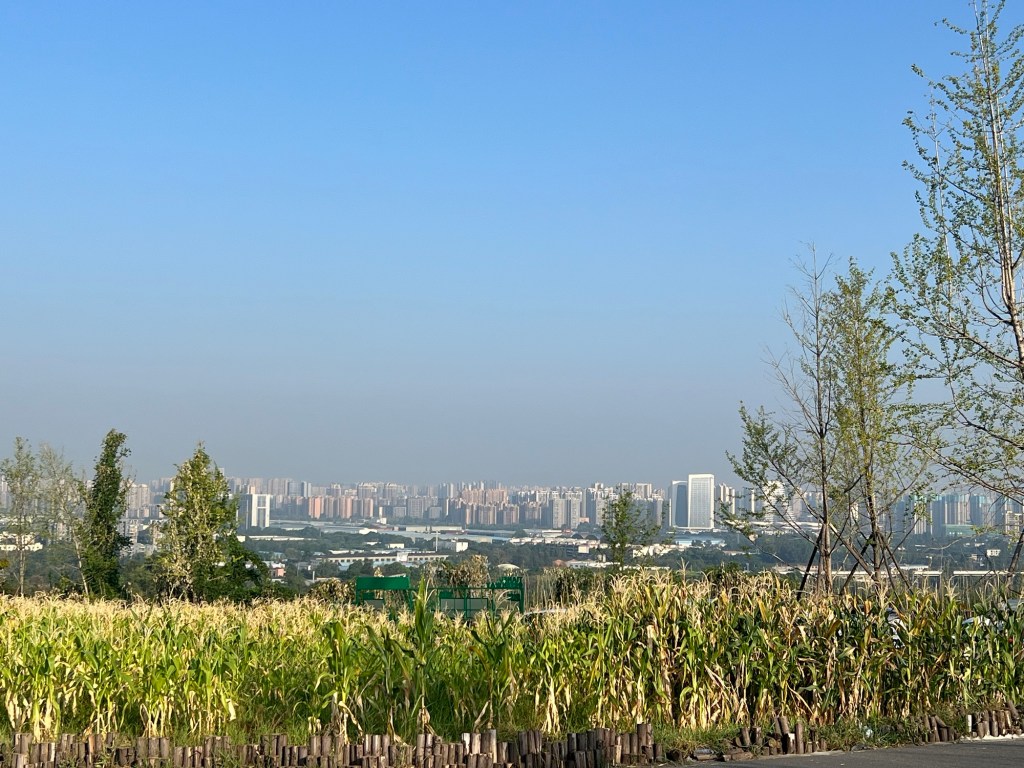
    View back across the city of Chengdu

    The facility was set up 30yrs ago to help protect the panda and they now have the biggest number of Giant Pandas in the world living within the base, along with Red Pandas.

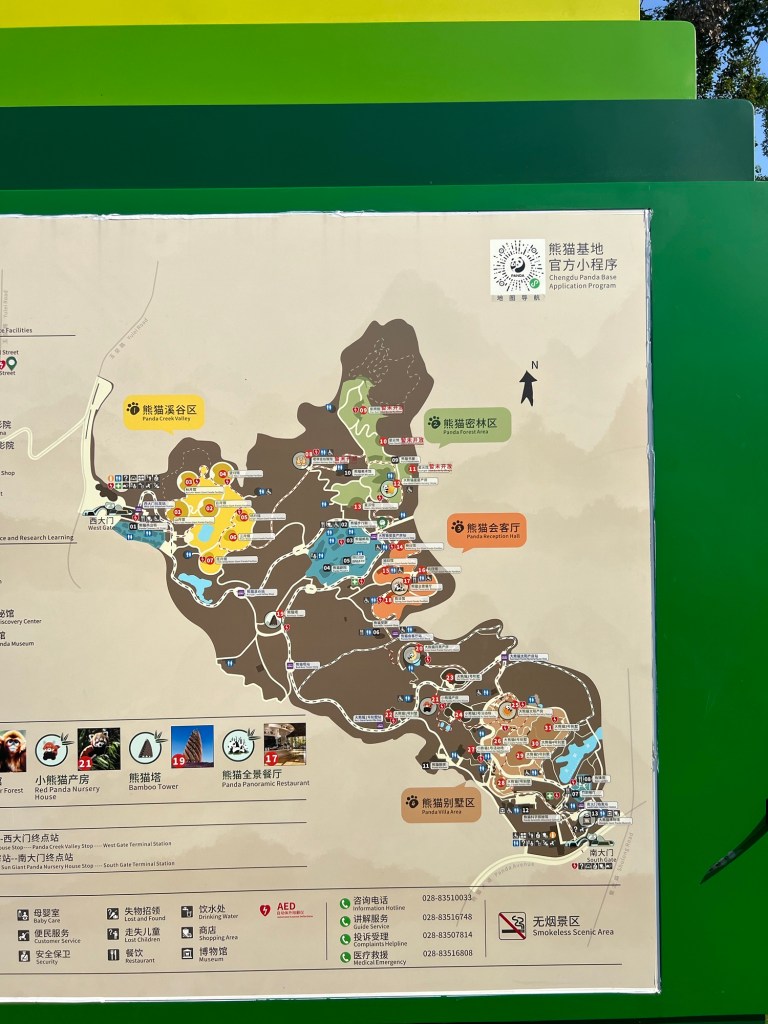
    The pandas have over 600 acres of parkland to live in, and today we had the honour of getting up close and personal with these gorgeous animals.

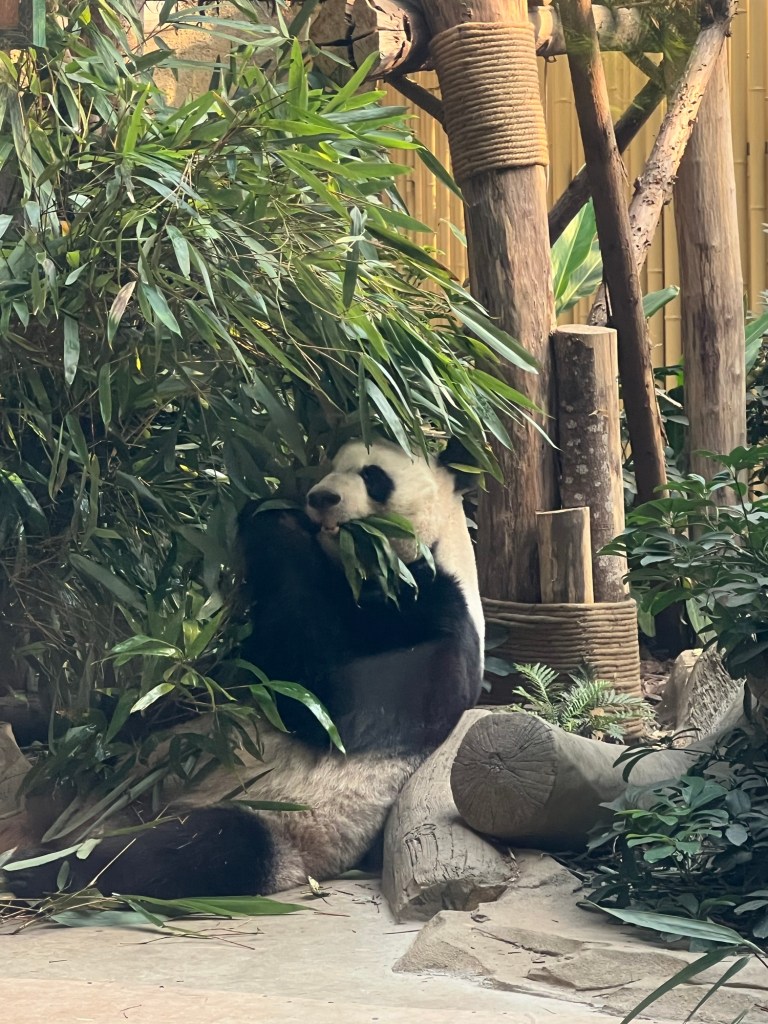
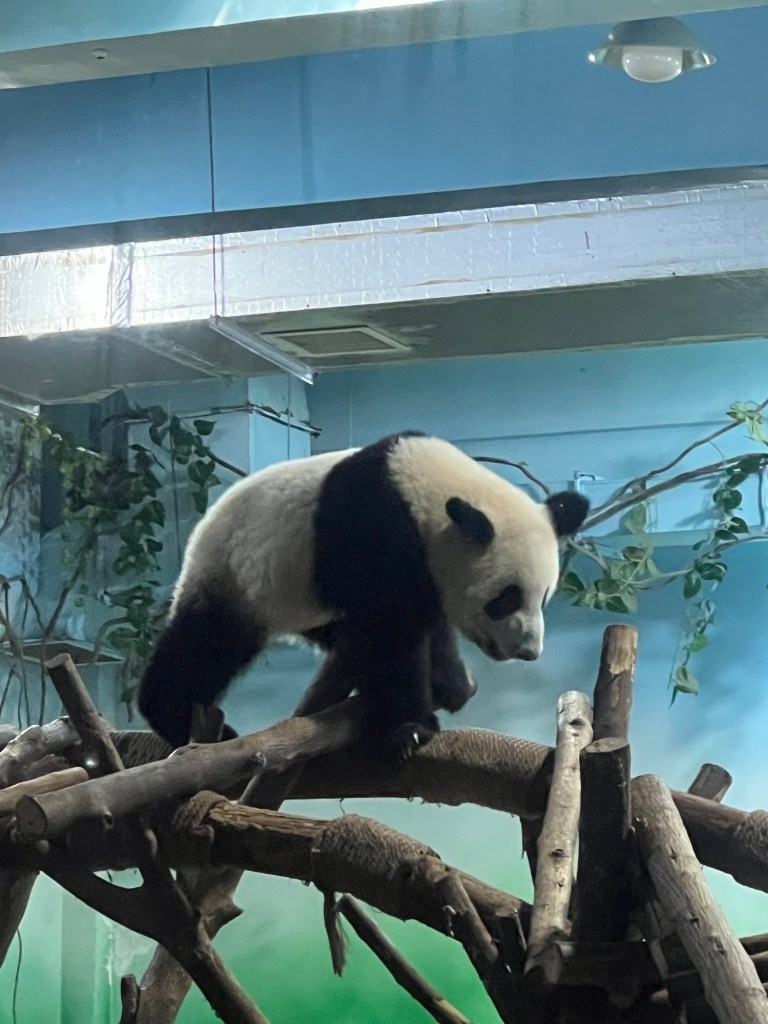
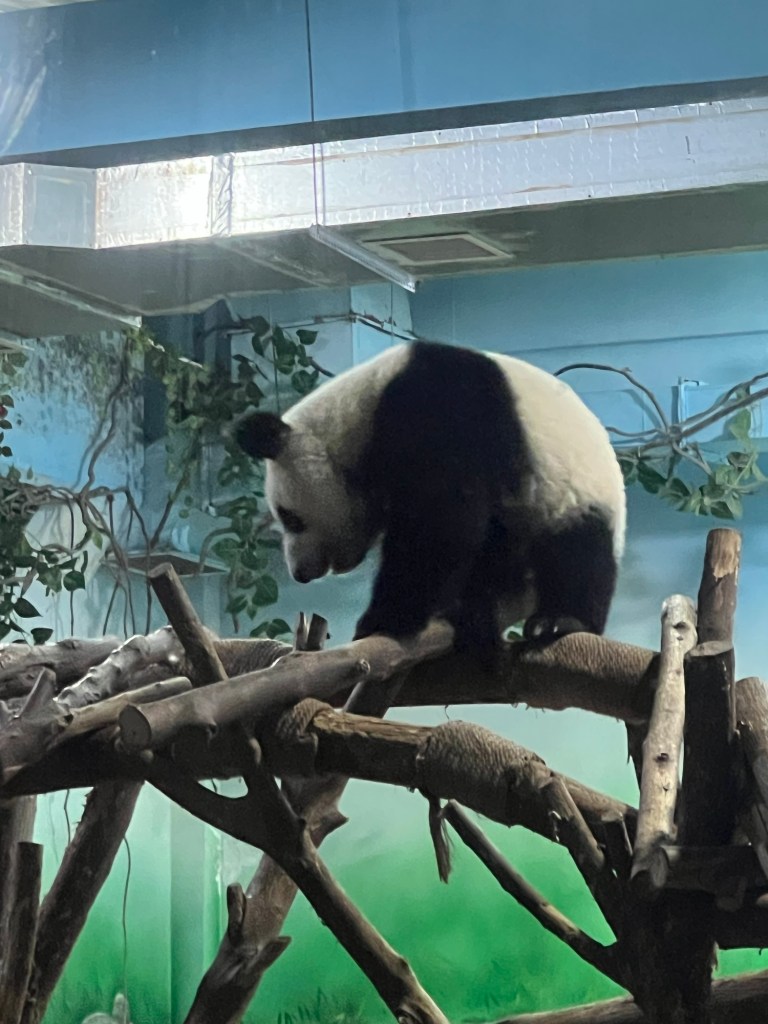
    We got to watch them play, eat bamboo and climb trees.

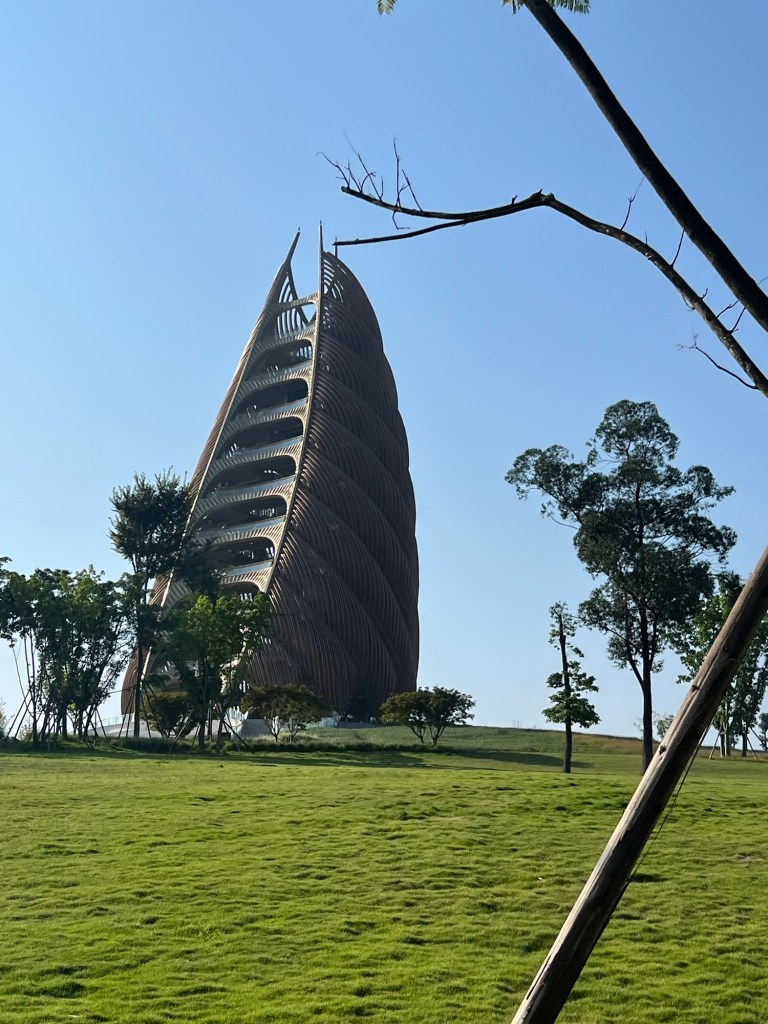
    Viewing tower
    The park map showing the 600 acres base

    We saw a number of the young pandas in the nursery quarters taking their first steps and being fed by the park rangers.

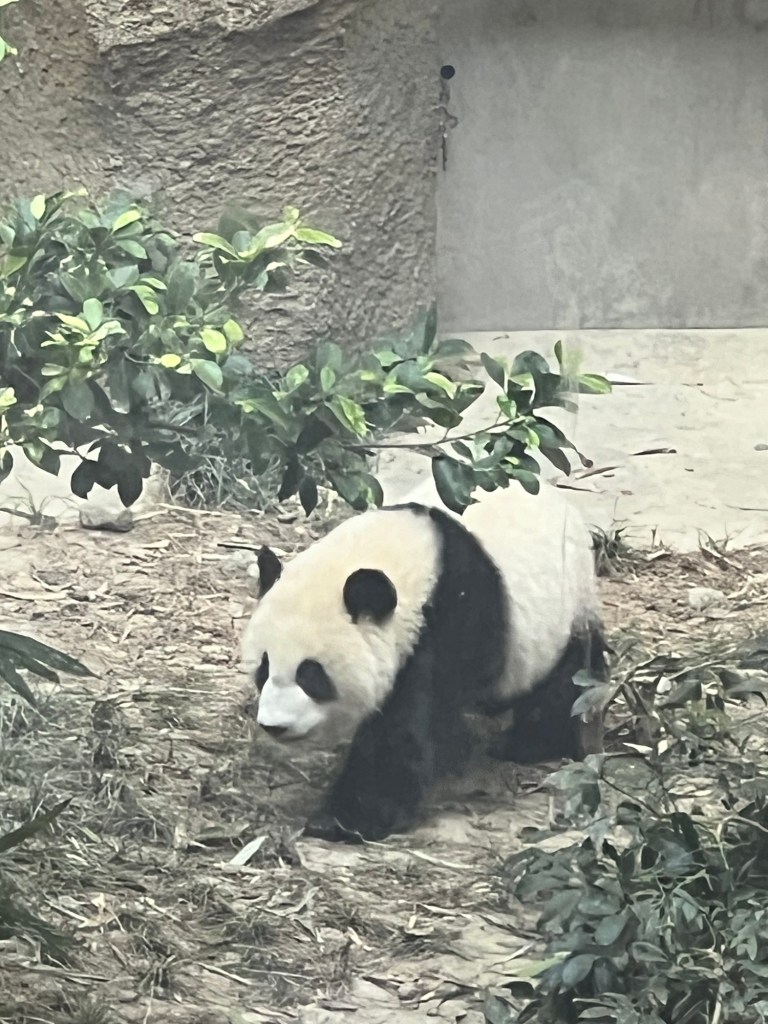
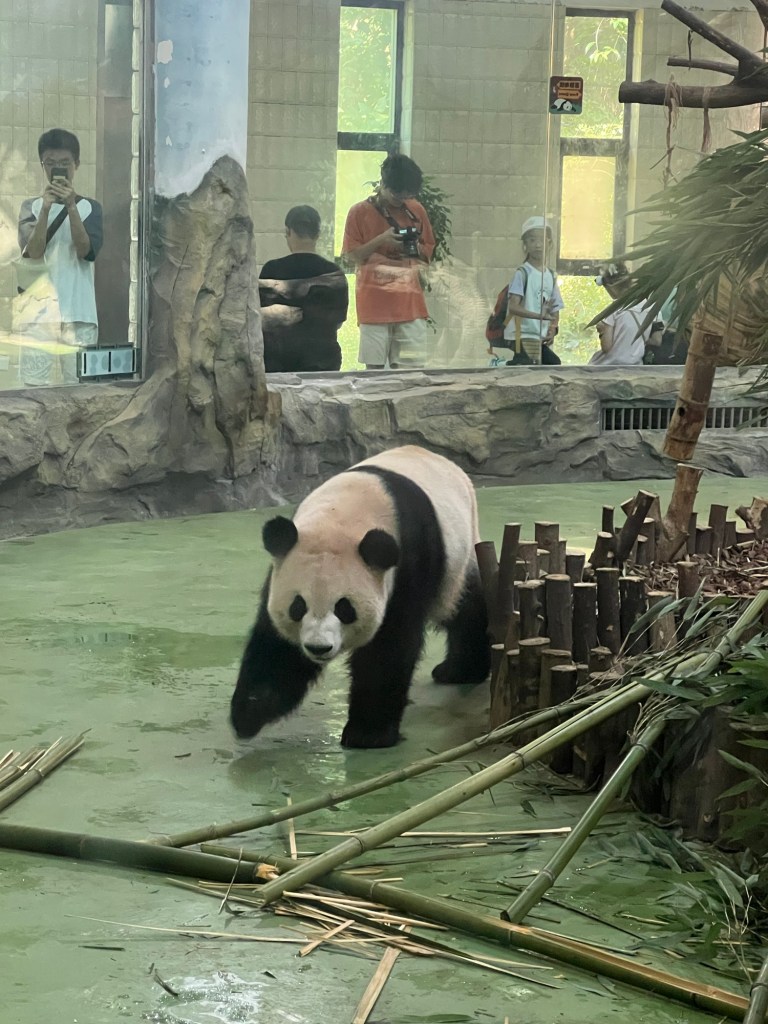
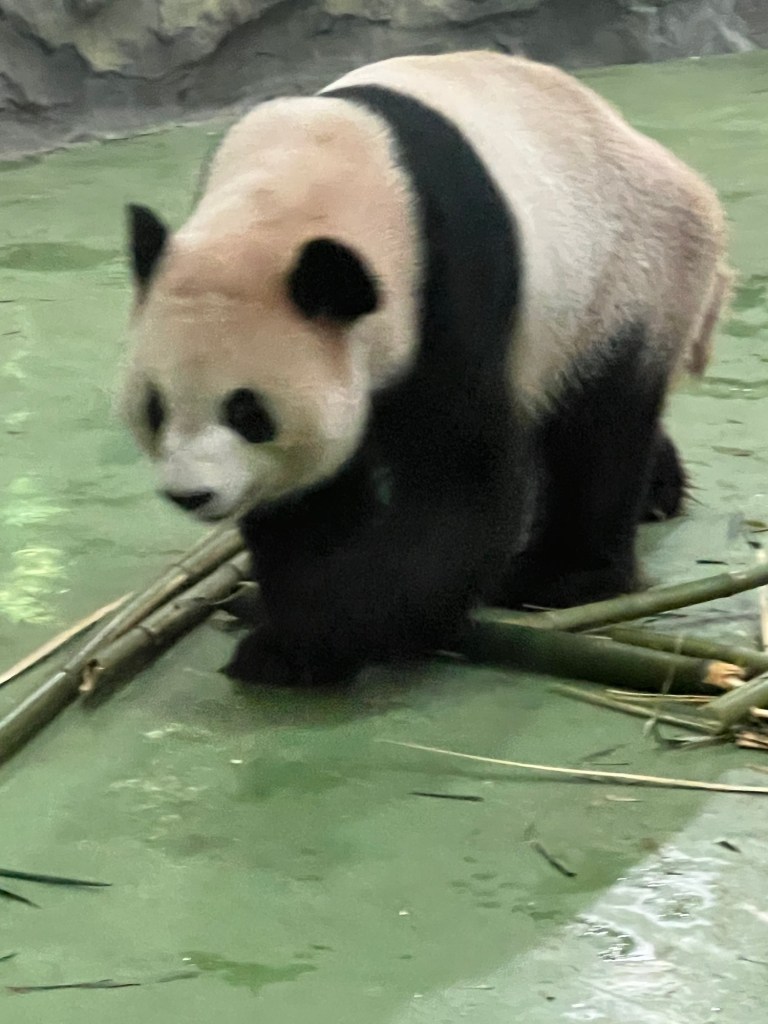
    One of the adult pandas
    Out for a stroll

    With so many adorable pandas, it was hard not to just take endless photos of each one…

    With a little restraint we managed to limit ourselves to a handful of pictures & videos in their comfortable captivity.

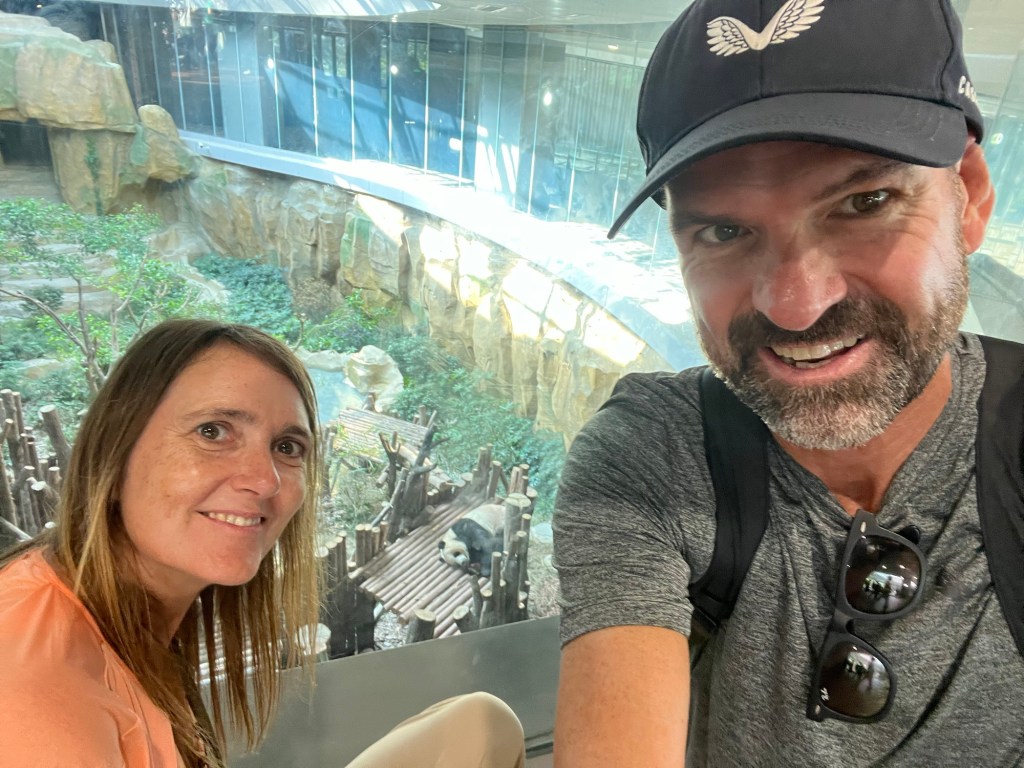
    Michelle, Oleg & Andy

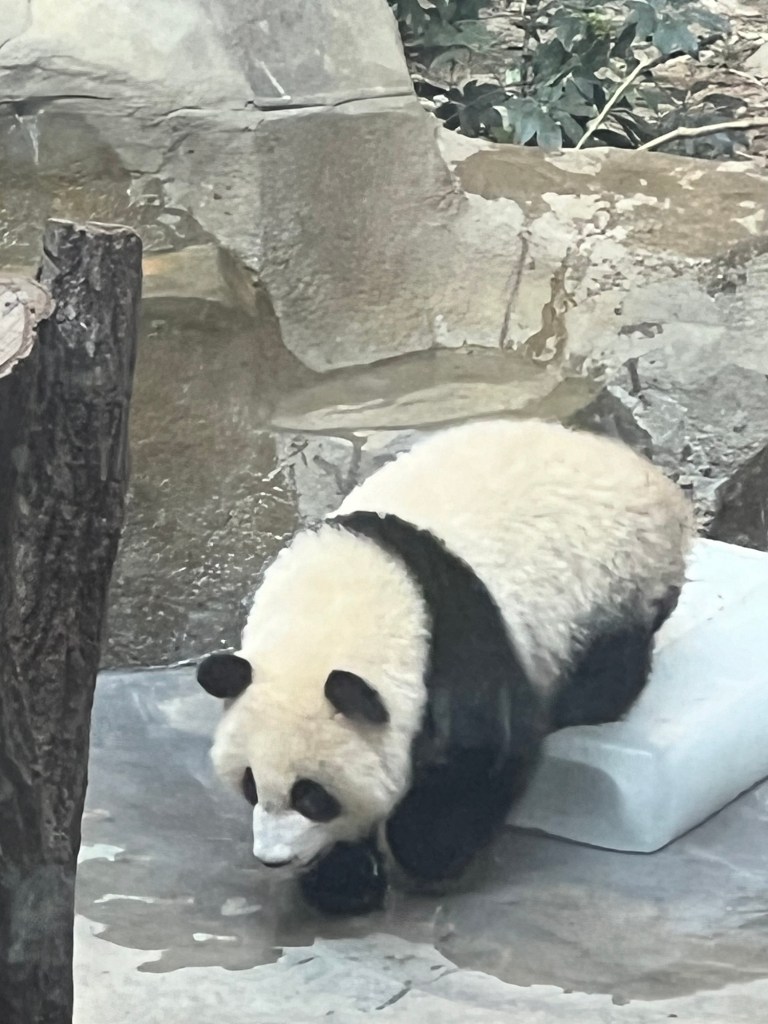
    The pandas struggle with the Chengdu heat, with their natural habitat being high up in the mountains. In the base they are kept cool with air conditioning and the occasional large block of ice!

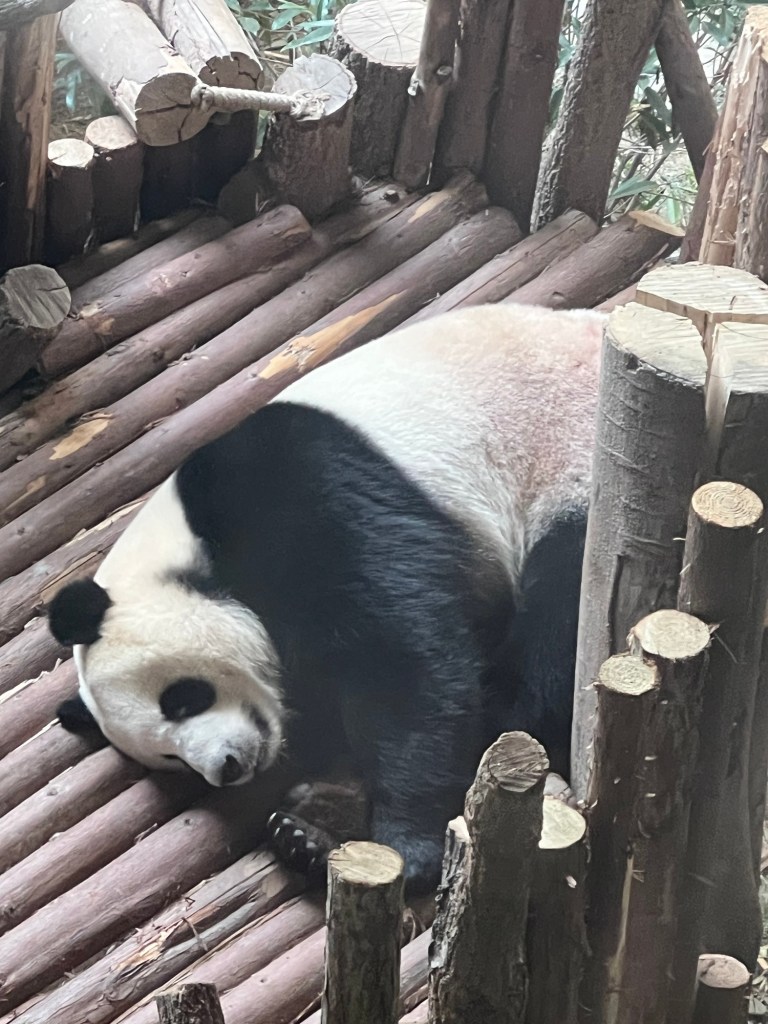
    Catching one of the pandas snoozing

    Due to the heat and their tendency to be dormitory, the pandas find it hard not to laze around and snooze when they are not eating.

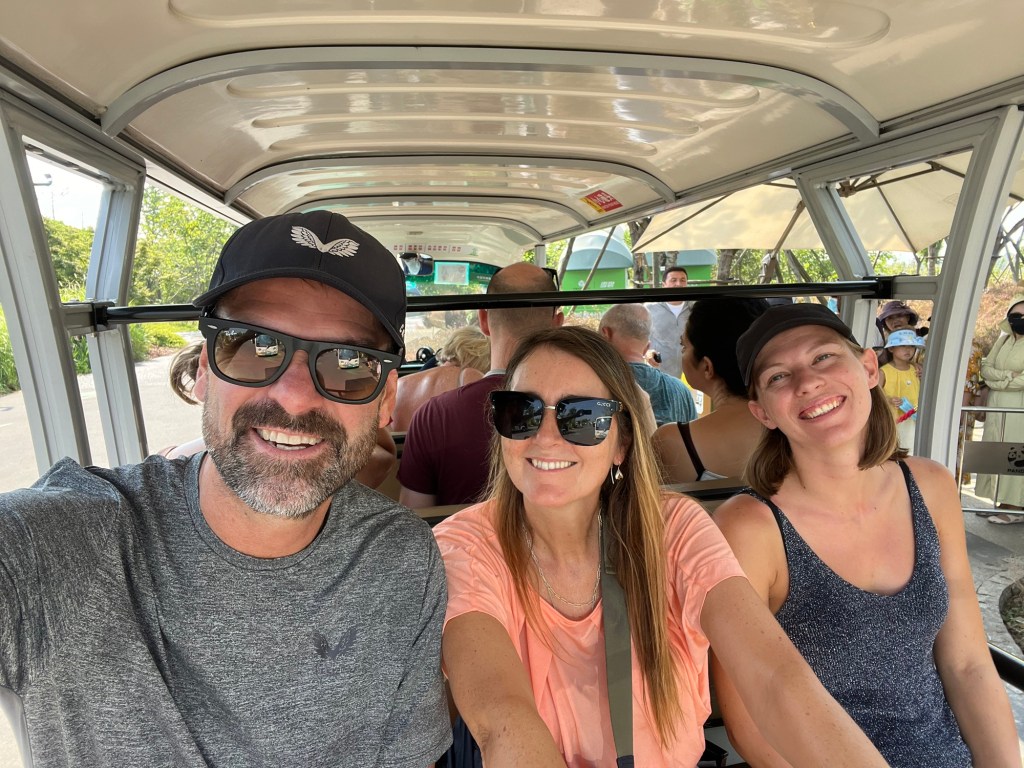
    Due to the large area of the breeding base, the best way to get around in the intense heat is by electric golf styled buggies.

    Andy, Michelle & Laura in buggy mode

    With pandas love for eating and sleeping, the best way to coax them into moving around was by offering up bamboo, and then ice blocks to keep them cool. Both proved to be very successful and tempted the less inclined pandas to show their faces.

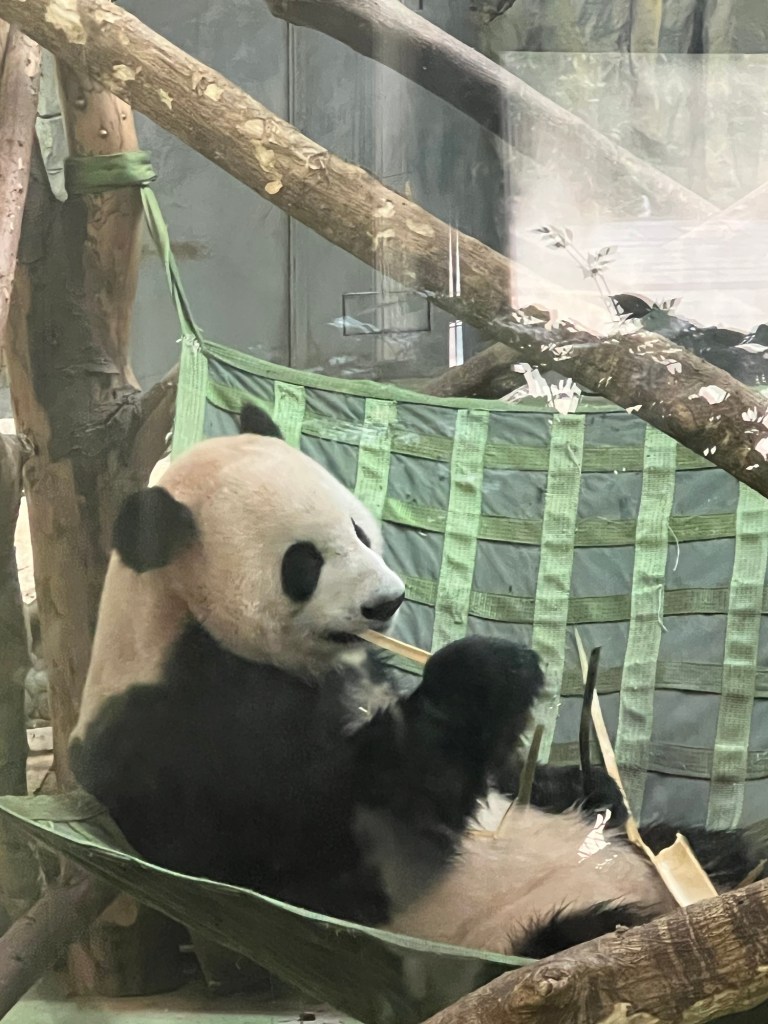
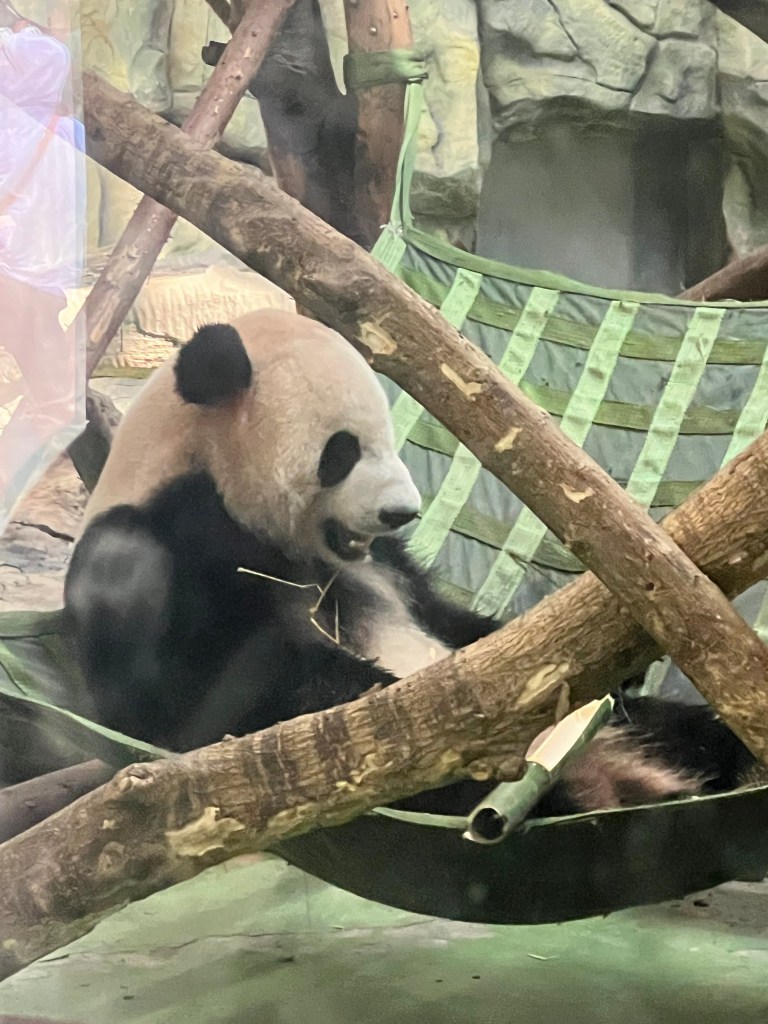
    Lunch time

    Watching the panda sit up and eat bamboo in a hammock styled bed was incredible and made us realise how intelligent and creative animals they are.

    We did a fair share of walking between buildings and with little shade from the sun, it proved to be tiring work meaning a constant need for rehydration.

    Some of the pandas made it known that they too were exhausted and laid down and snoozed.

    With a little encouragement other pandas did get up and about and we watched them climb along raised walkways.

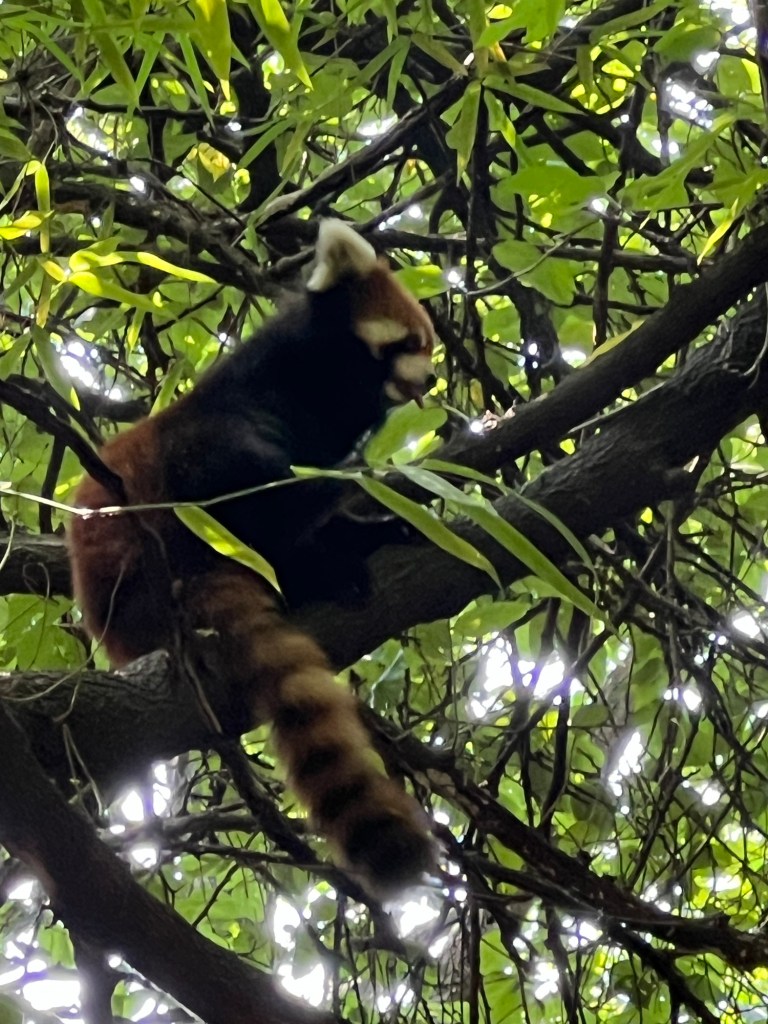
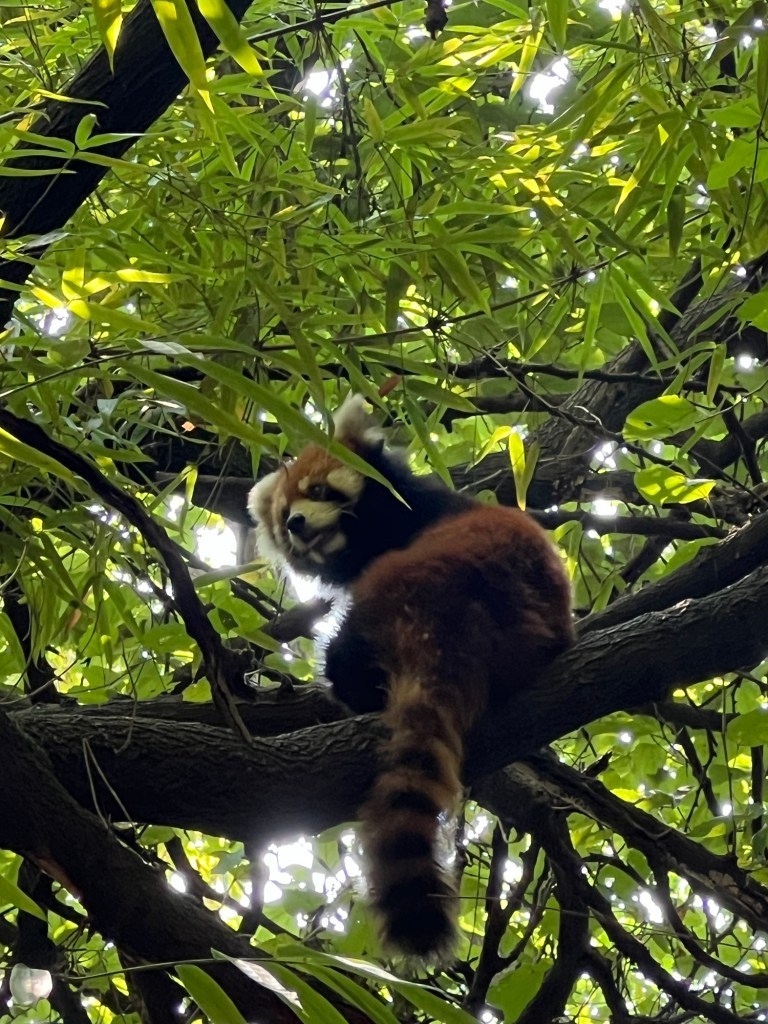
    After seeing the Giant Pandas indoors, where the temperatures are controlled, we moved outside to see the Red Pandas. They tend to roam along the ground and then sleep up in the branches of the trees.

    Red pandas look altogether different, with a more raccoon like appearance with long bushy tails and smaller fox like faces.

    As it turns out they aren’t even pandas, emanating from a different species group to the larger more recognisable giant pandas.

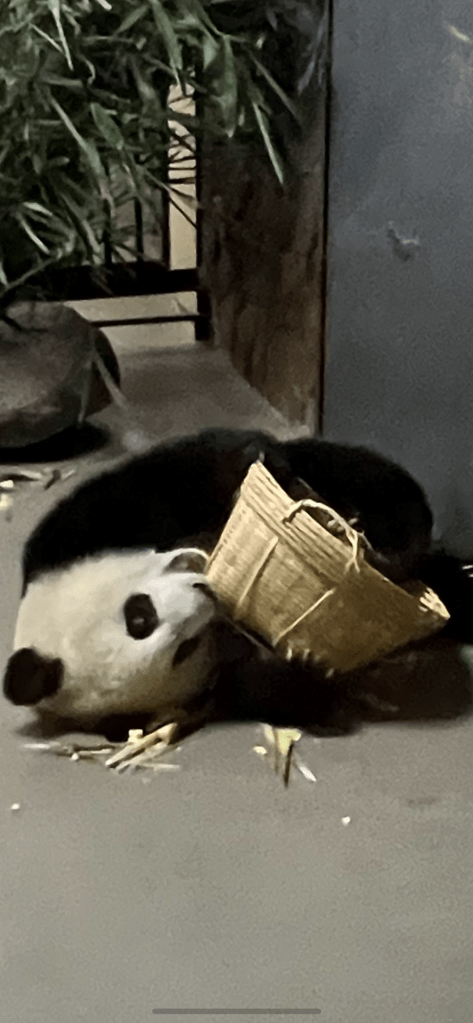
    A young panda chewing on a bamboo basket

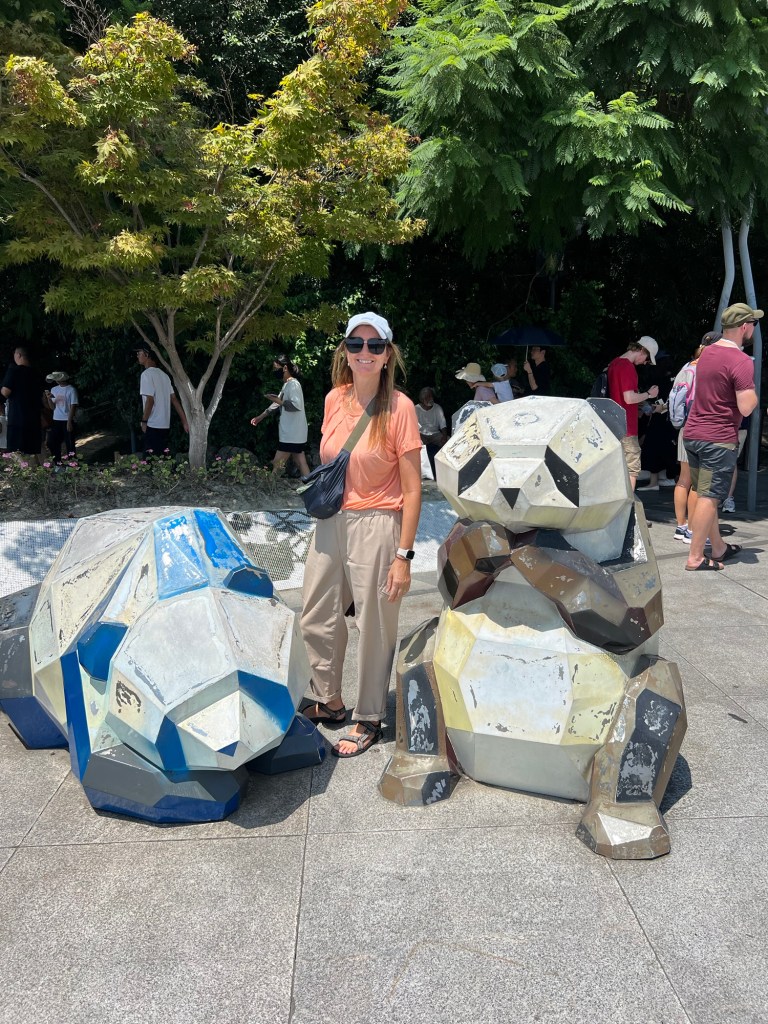
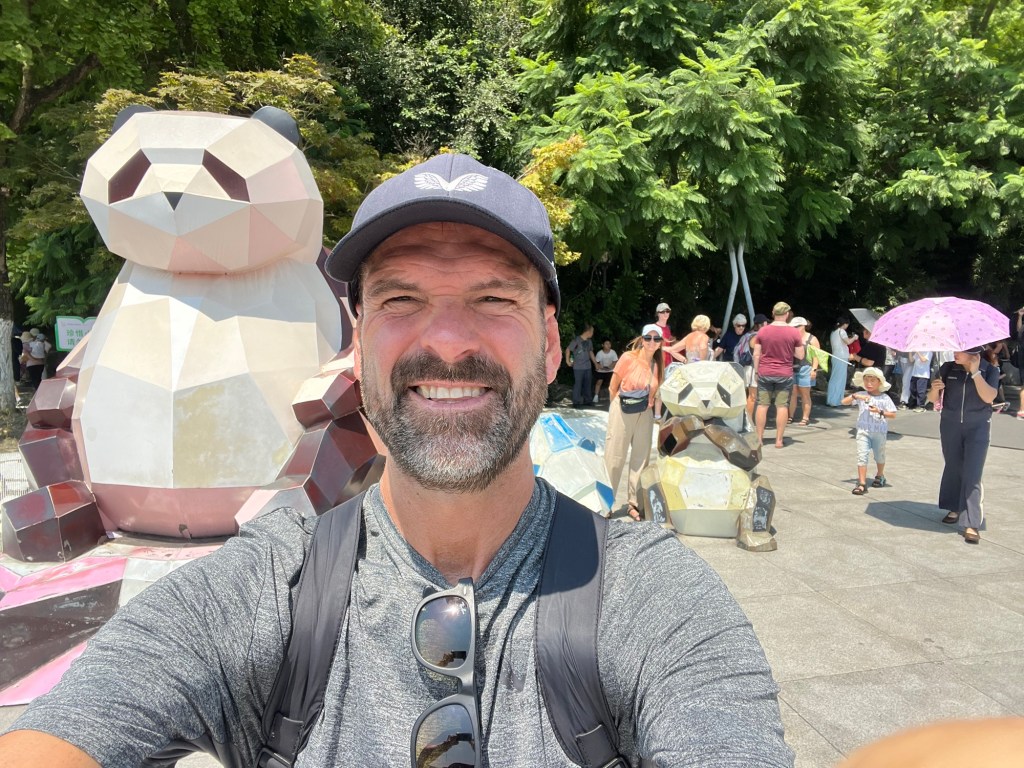
    We finished the tour of the base with a spot of souvenir shopping and the obligatory panda themed sculptures and photos.

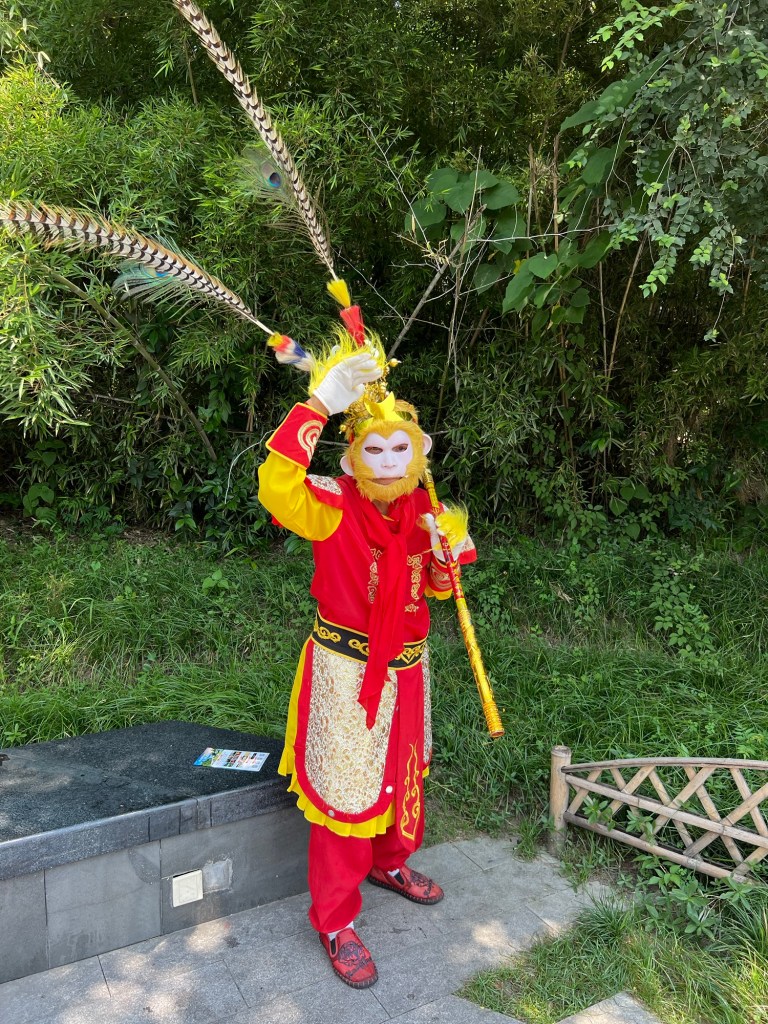
    Our old friend Monkey

    After several enjoyable hours at the panda sanctuary, we headed back to the city and popped into a restaurant opposite our hotel for noodles.

    This was no normal eatery, but one that commanded Michelin stars for the last 3yrs.

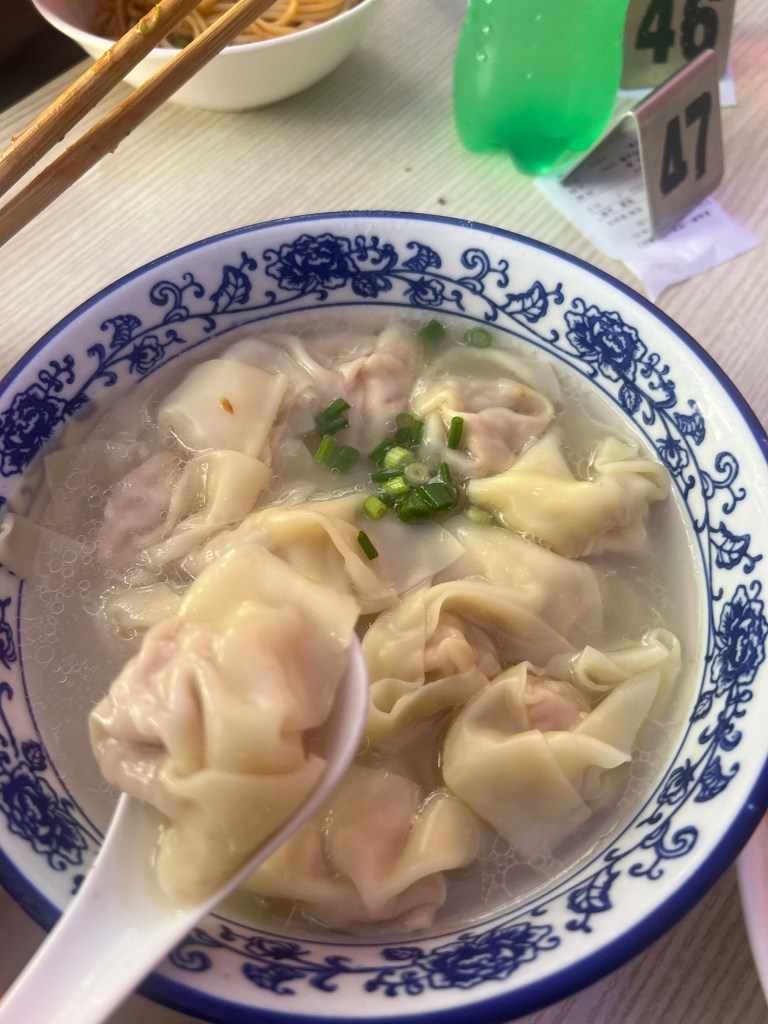
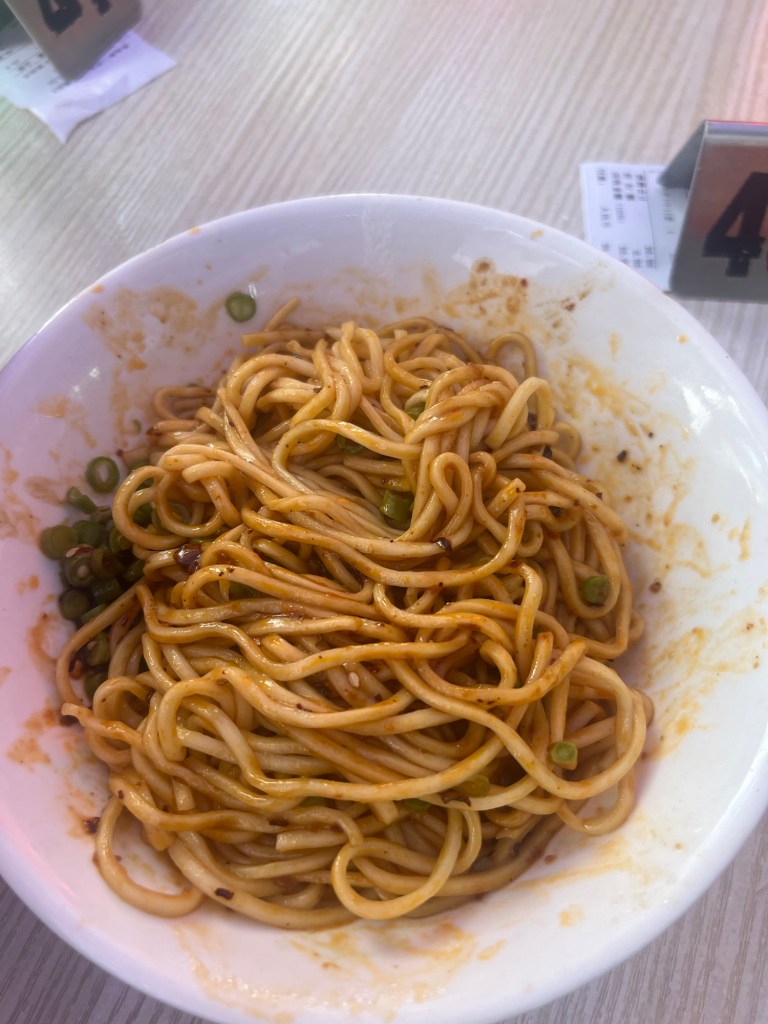
    Having ordered veggie noodles and dumplings for two we were amazed to be told that it was just £3!

    Pork dumplings – yummy!
    Not so spicy noodles….

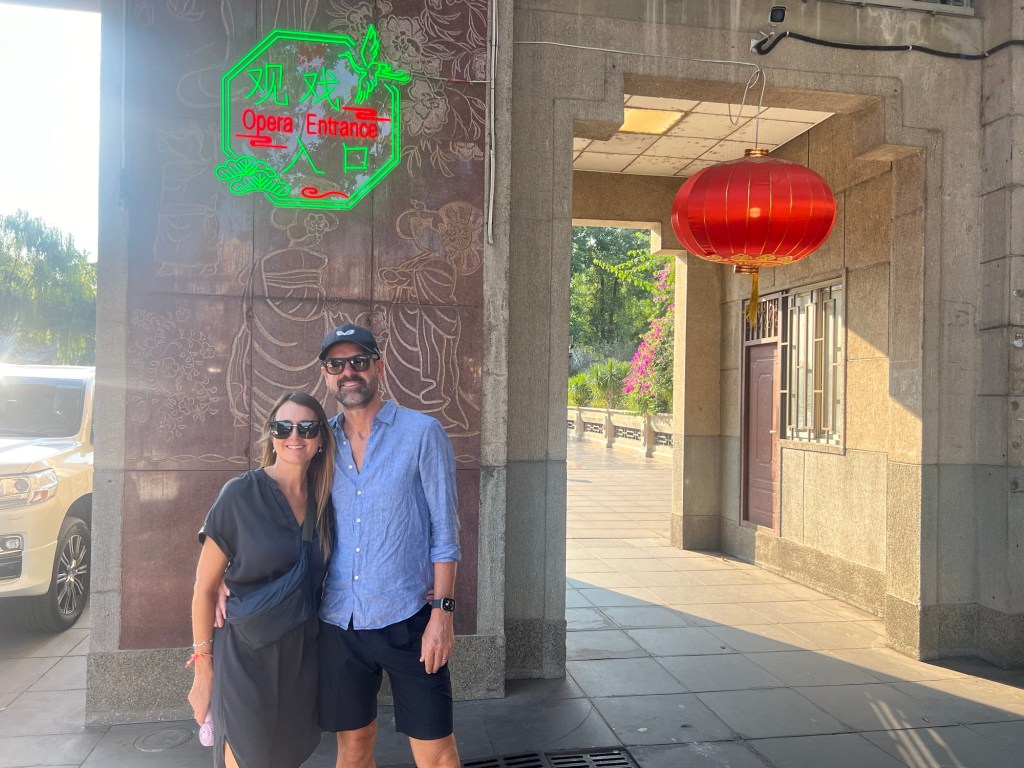
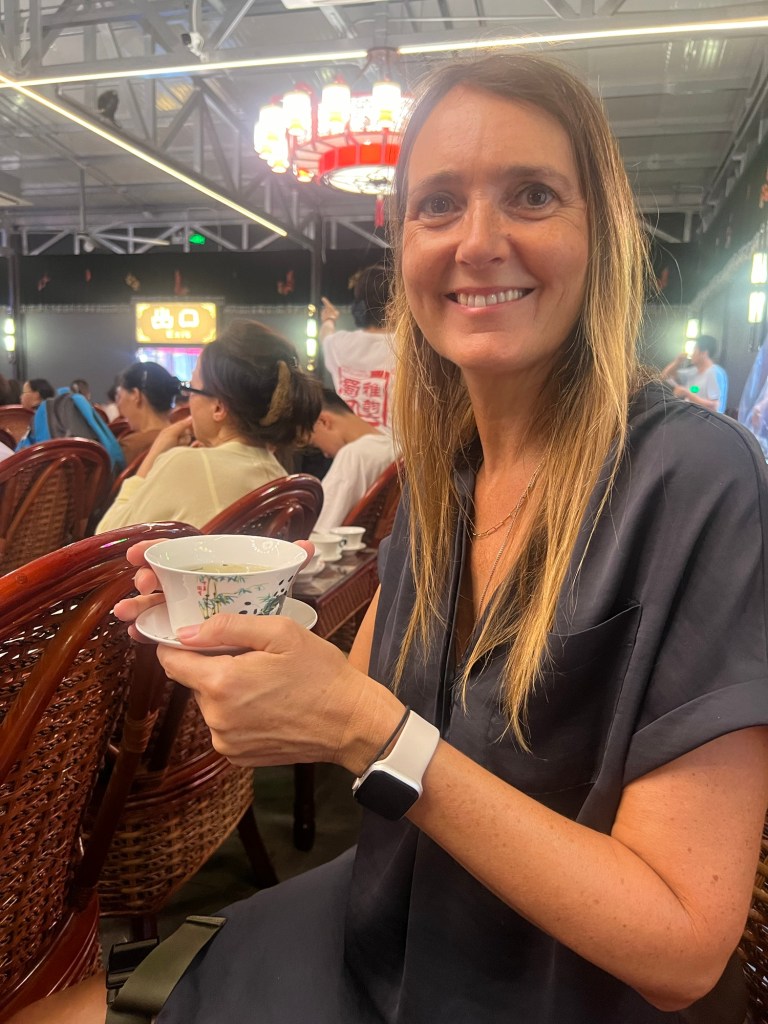
    Late afternoon after a quick shower and change, we headed out for some culture and a visit to a traditional Sichuan Opera.

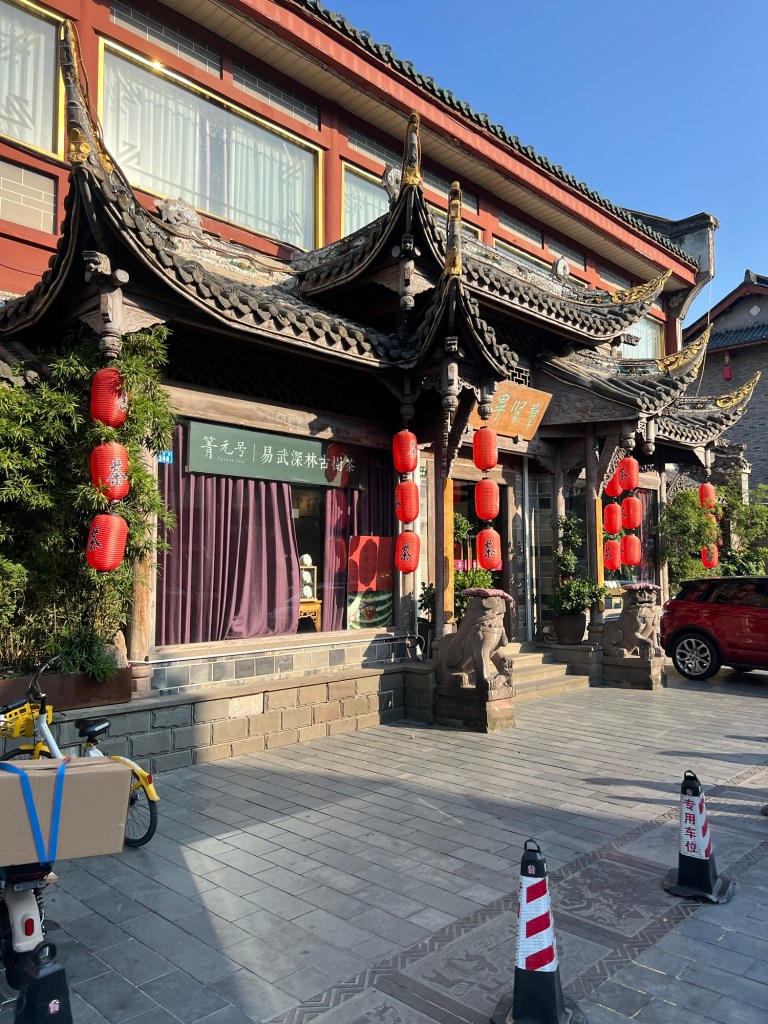
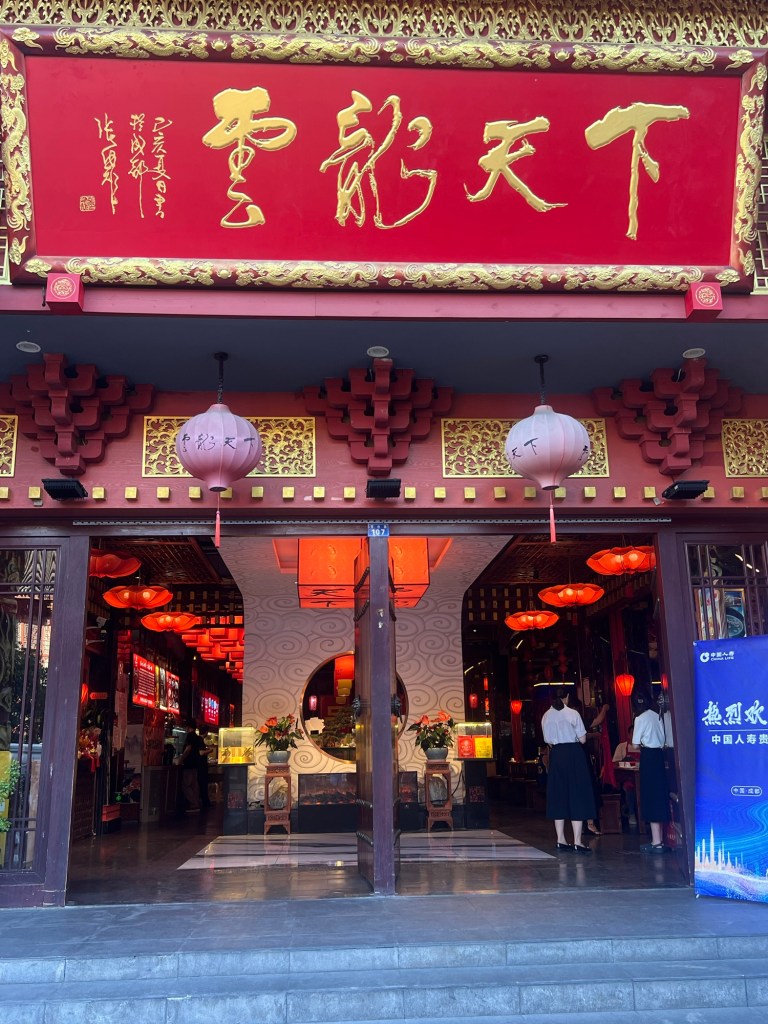
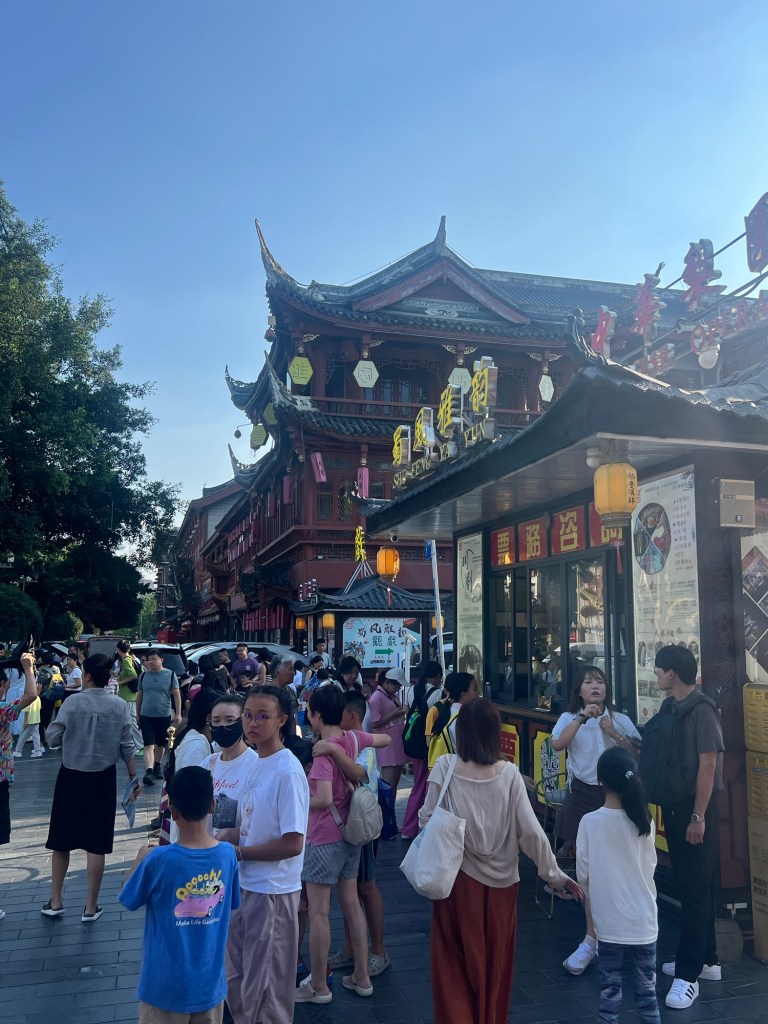
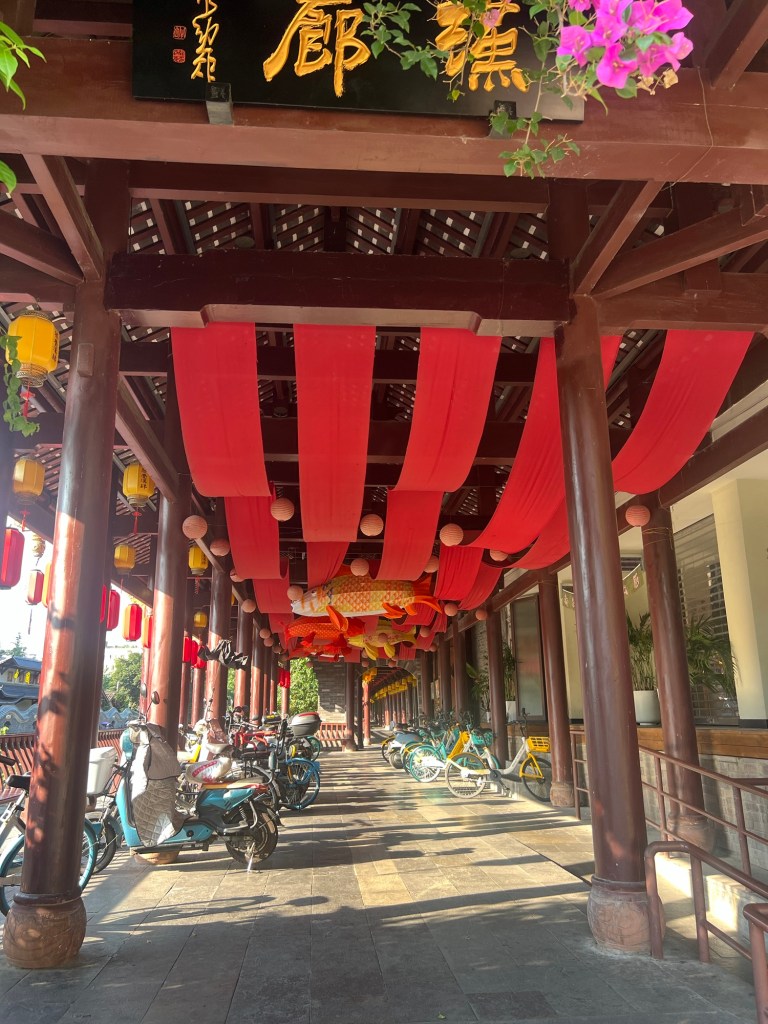
    Along the way we walked through one of the oldest cultural parts of the city where numerous tea houses, opera houses and high end jewellery stores are located.

    There were numerous stunning shops and restaurants selling to the wealthy residents.

    High-end restaurant
    Busy streets of Chengdu
    Showtime and a spot of opera
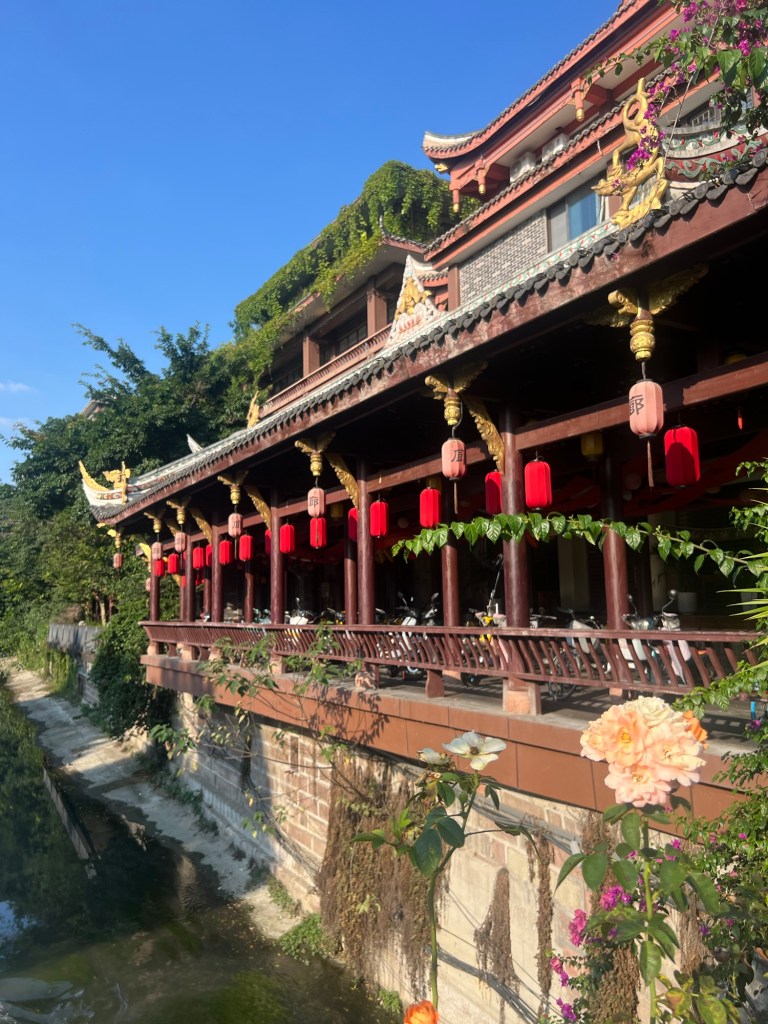
    Stunning traditional architecture
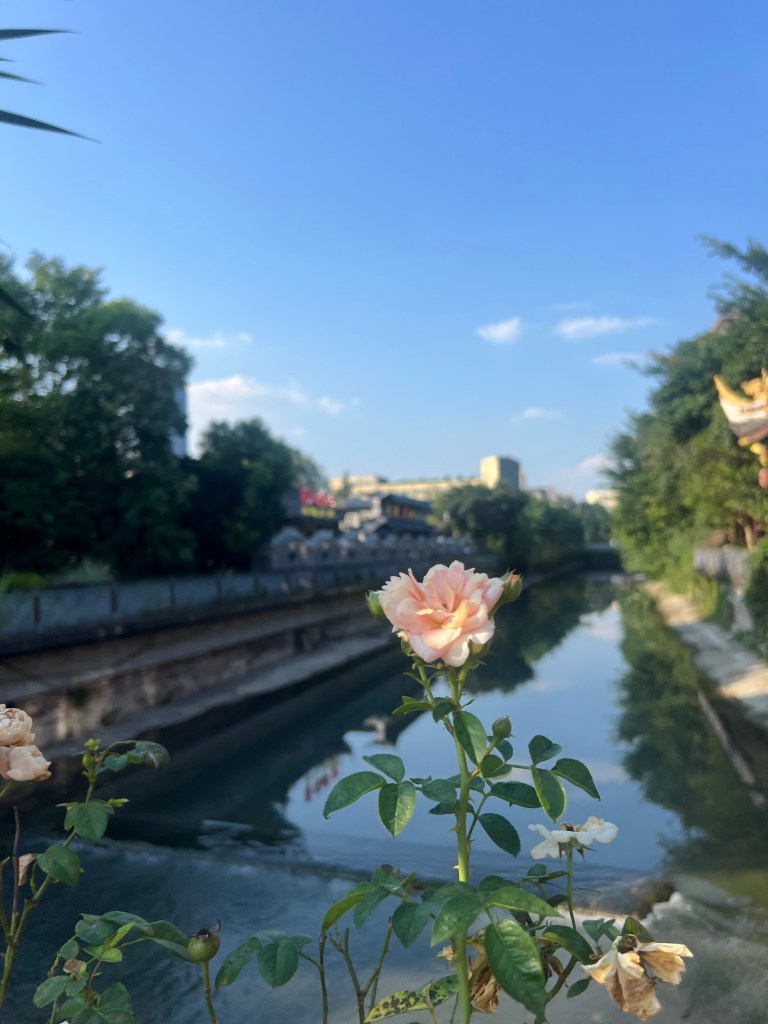
    View down the Chengdu canal
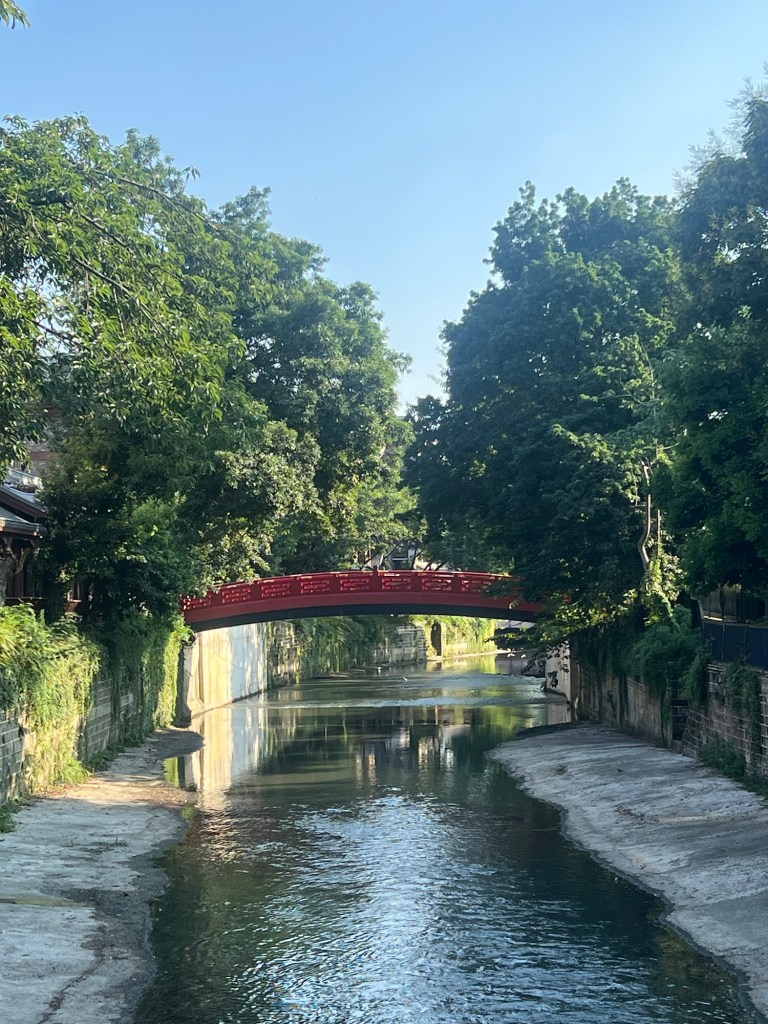
    Beautiful Red Bridge
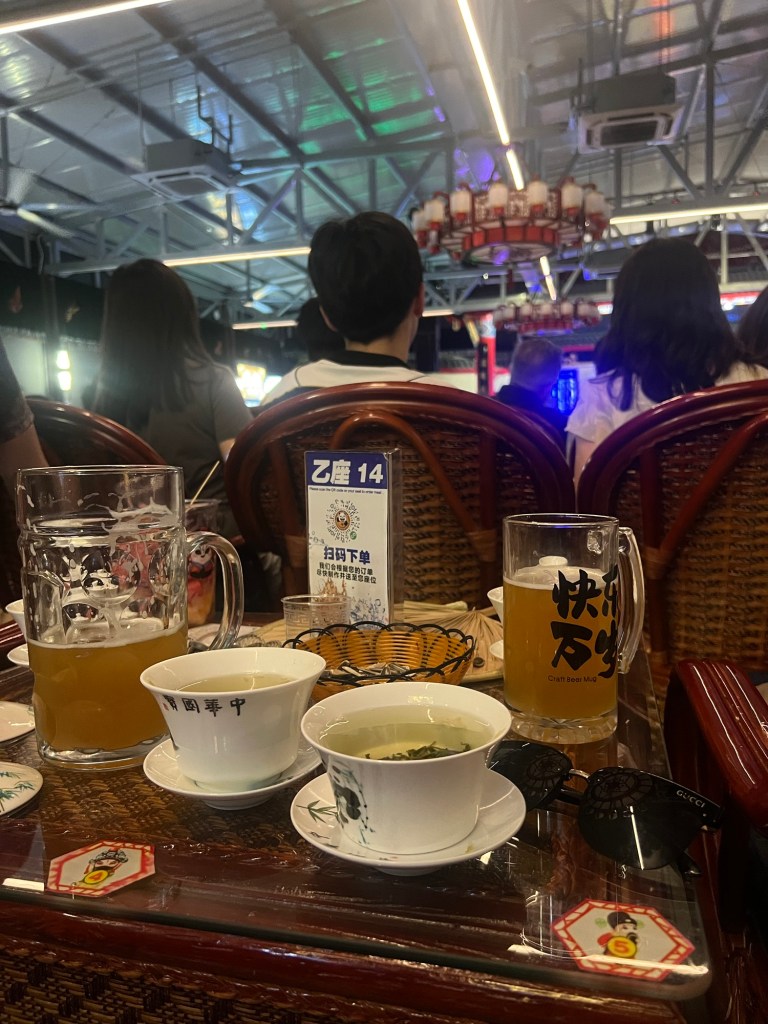
    Chinese Jasmine tea at the Opera
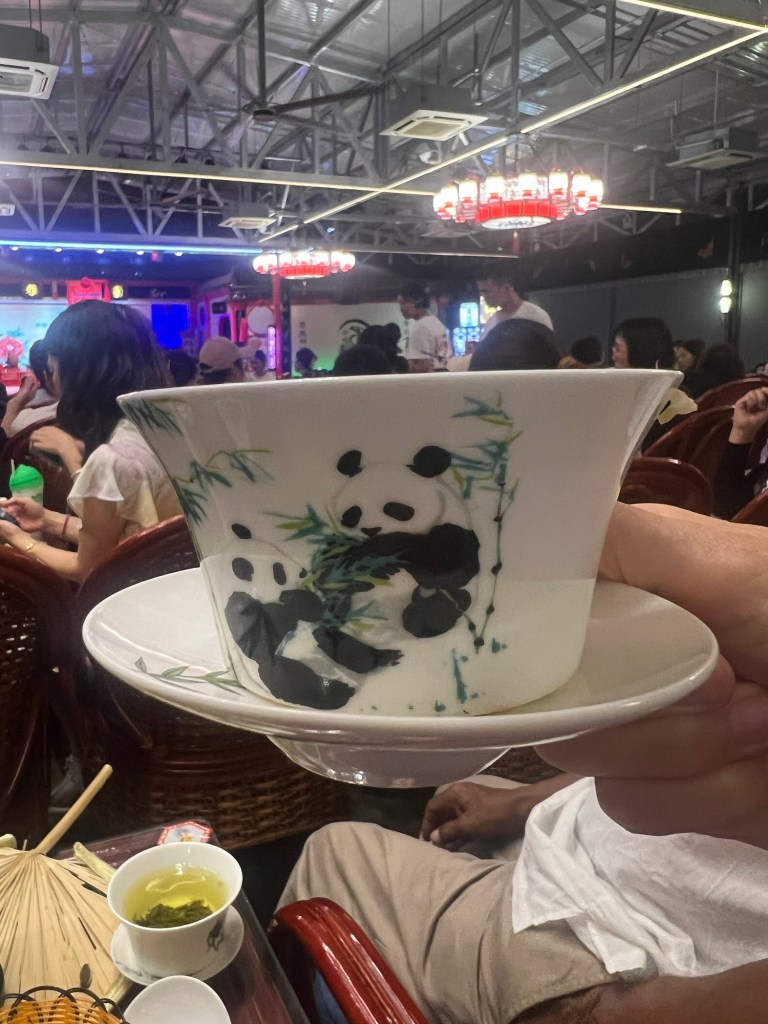
    Panda themed tea ware
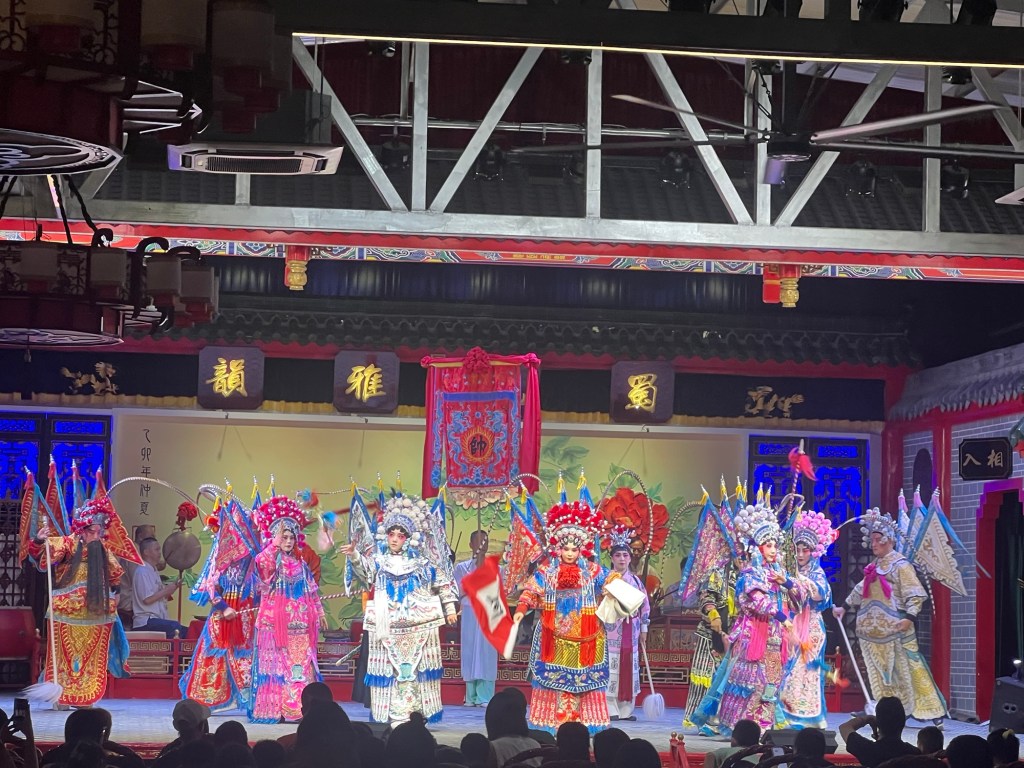
    Chinese Opera characters
    Drinks for all occasions

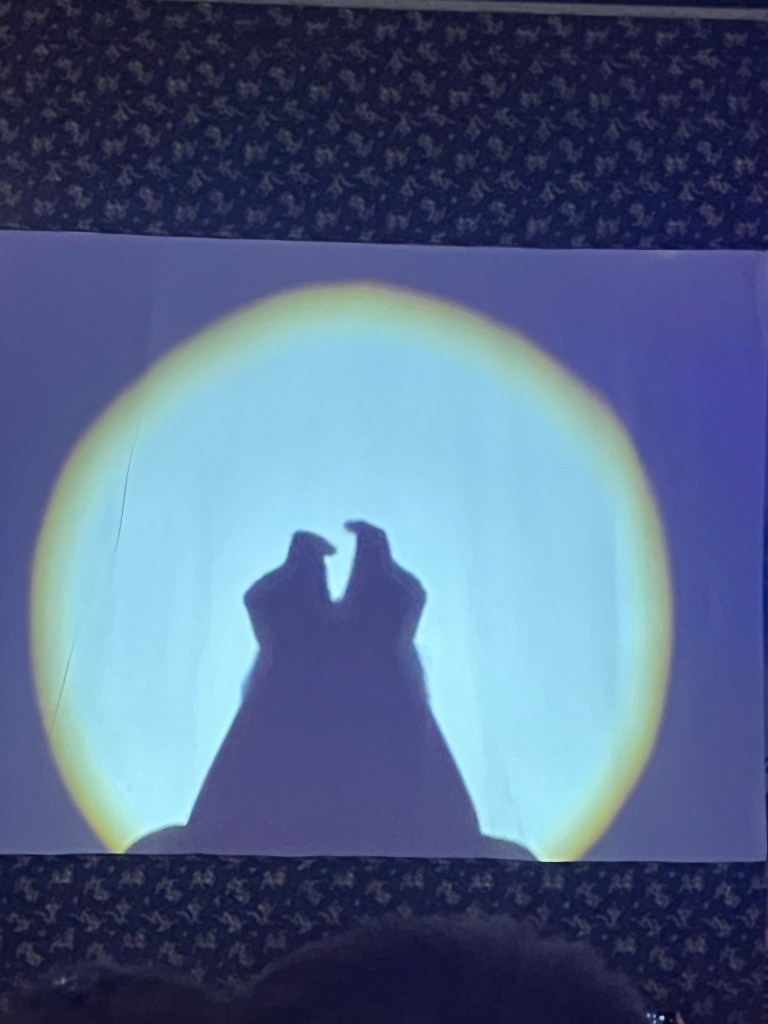
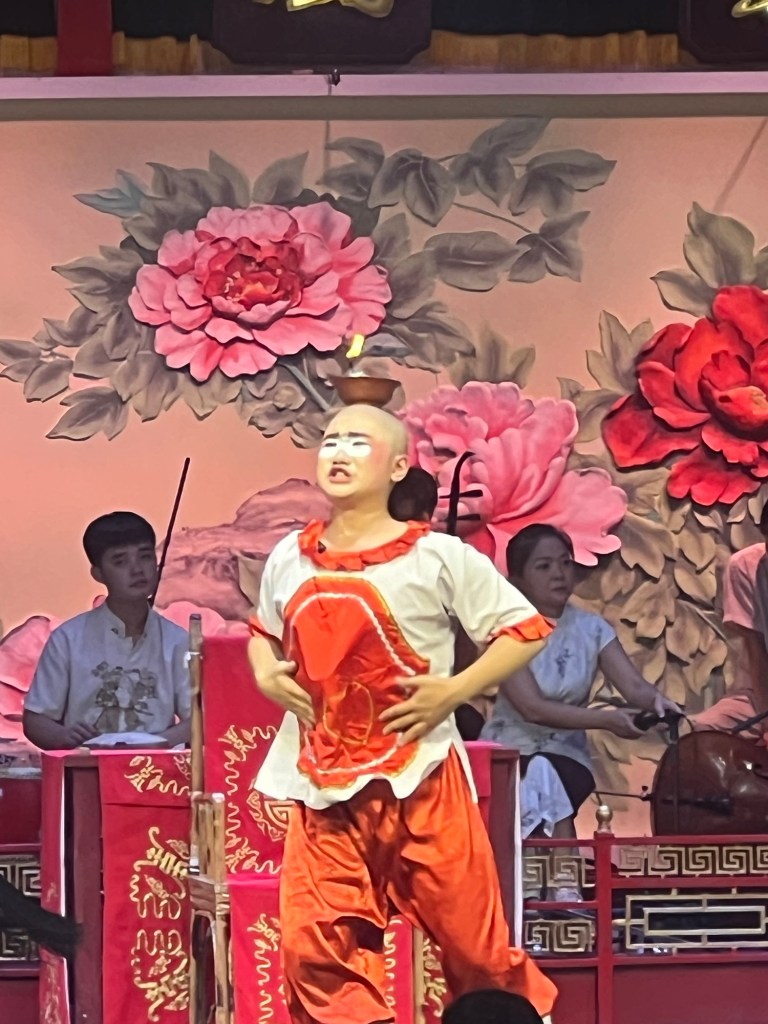
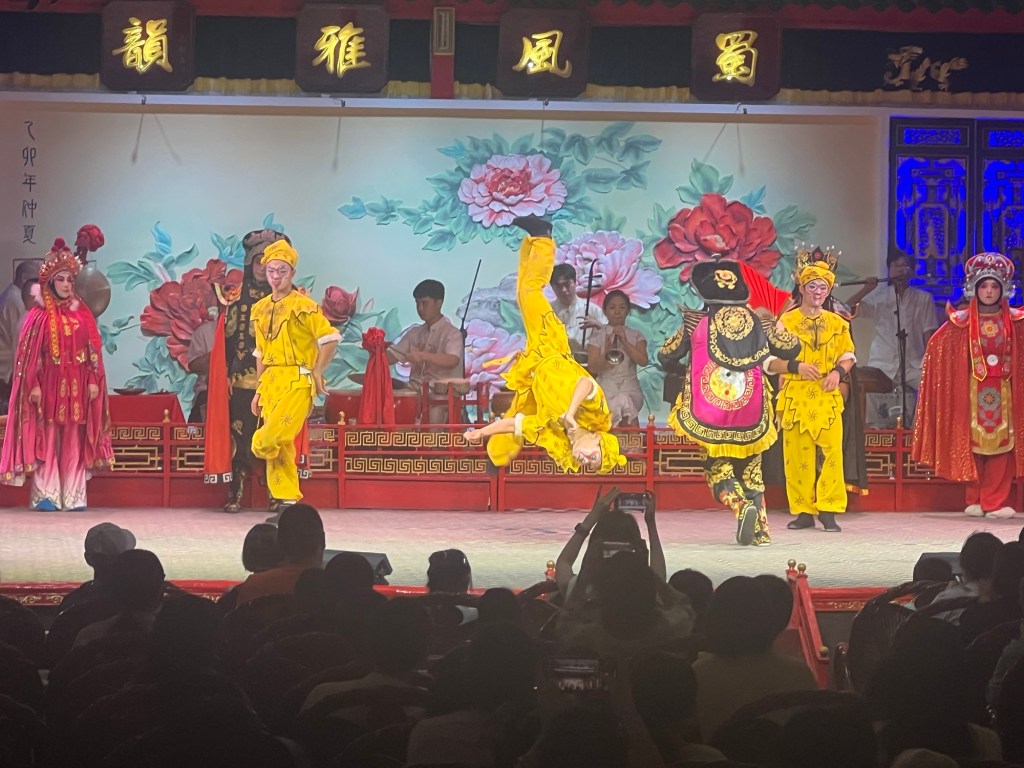
    The Opera proved to be more a variety show with different acts performing short 10min segments including acrobats, comedy, shadow puppetry and Bian Lian.

    The latter is is an ancient Chinese dramatic art with the performers wearing brightly coloured costumes dancing to dramatic music. They depict well known characters from the opera, which they change from one face to another almost instantaneously with the swipe of a fan, a movement of the head, or wave of the hand. So impressive, and hard to fathom.

    Hand puppetry
    Shadow puppetry
    Comedy act
    Chinese acrobatics
    The opera gang

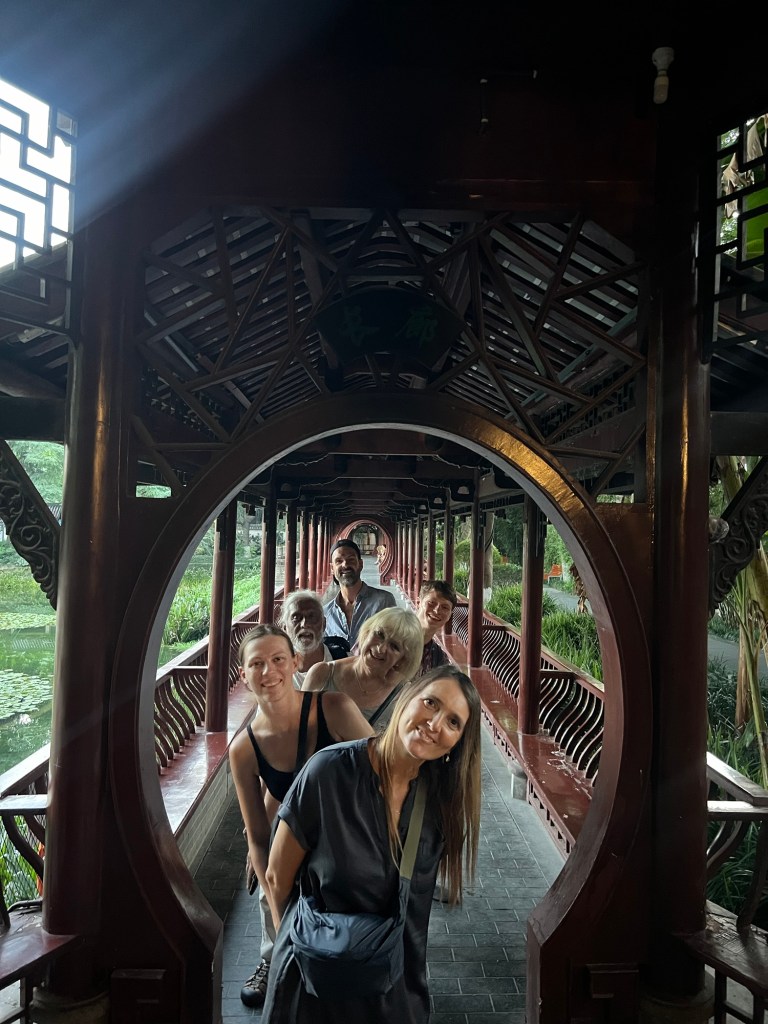
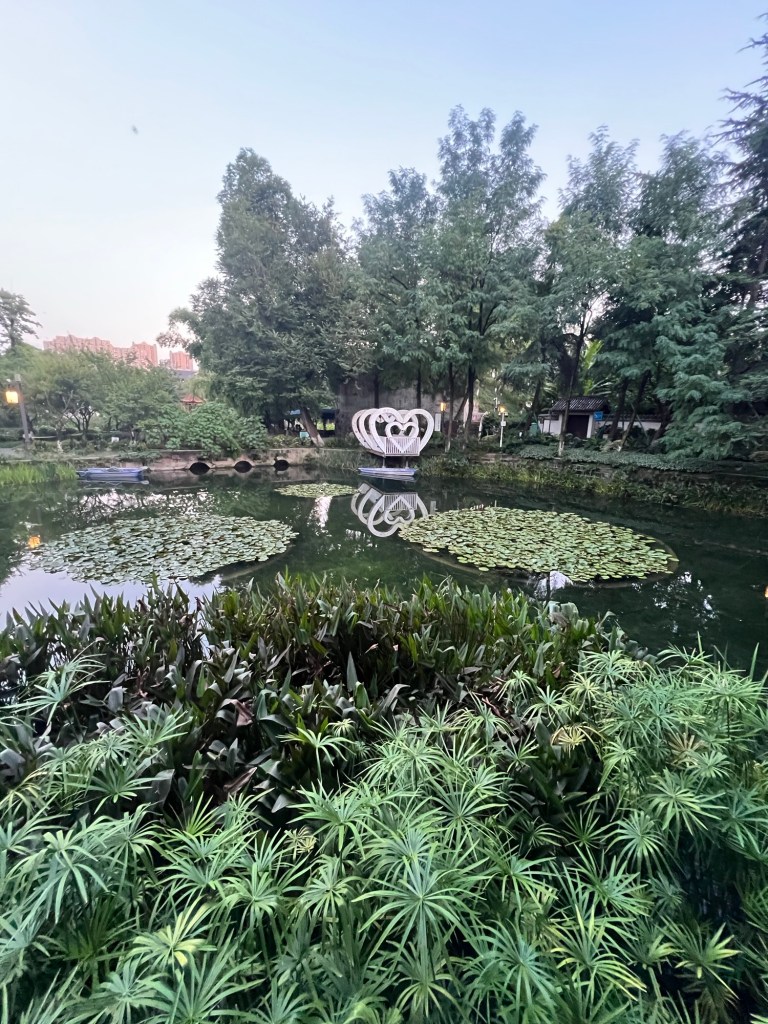
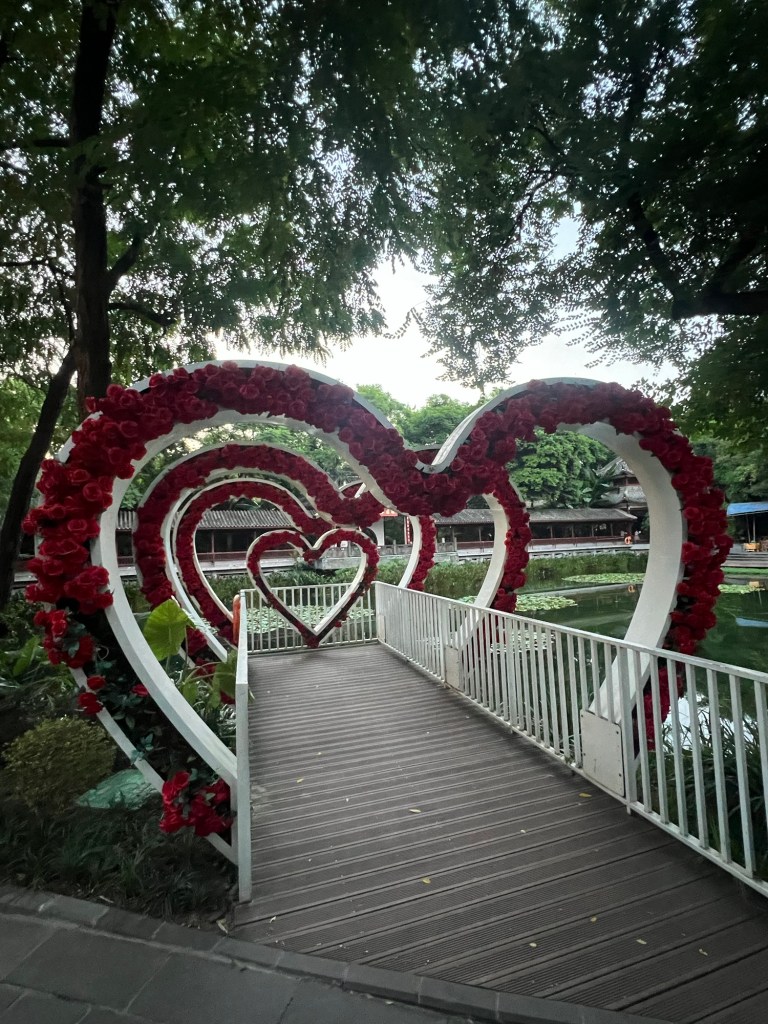
    After the opera we had a wander around the beautiful park grounds with their heart shaped viewing deck over the lake.

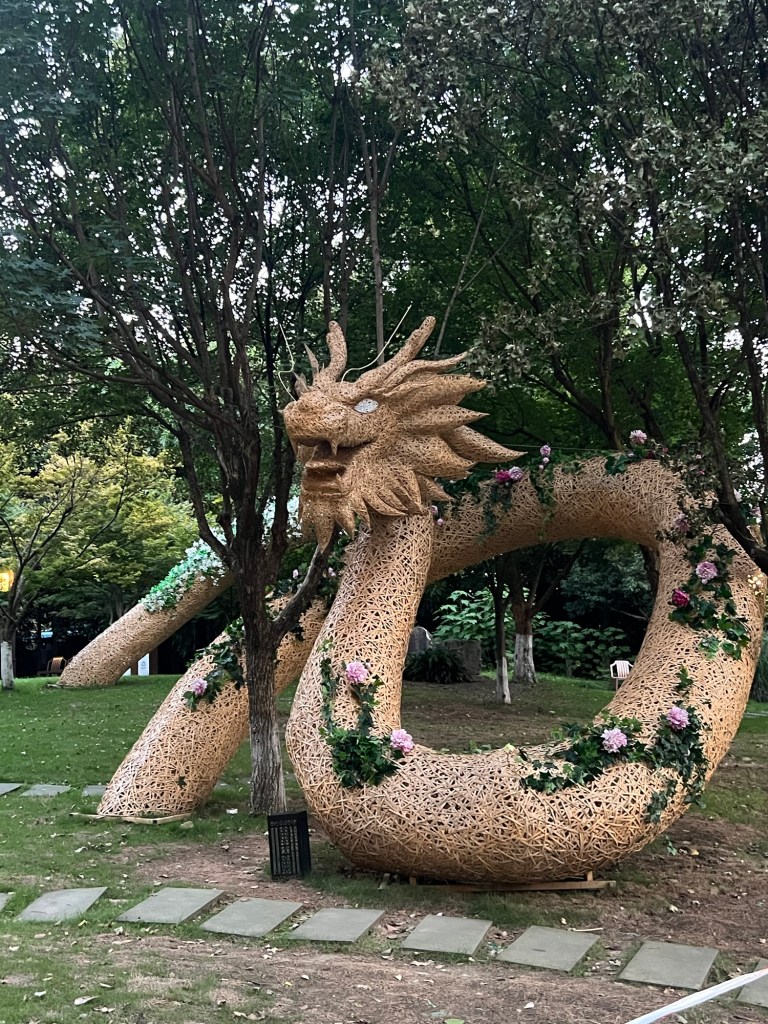
    Dragon with flowers sprouting from the body

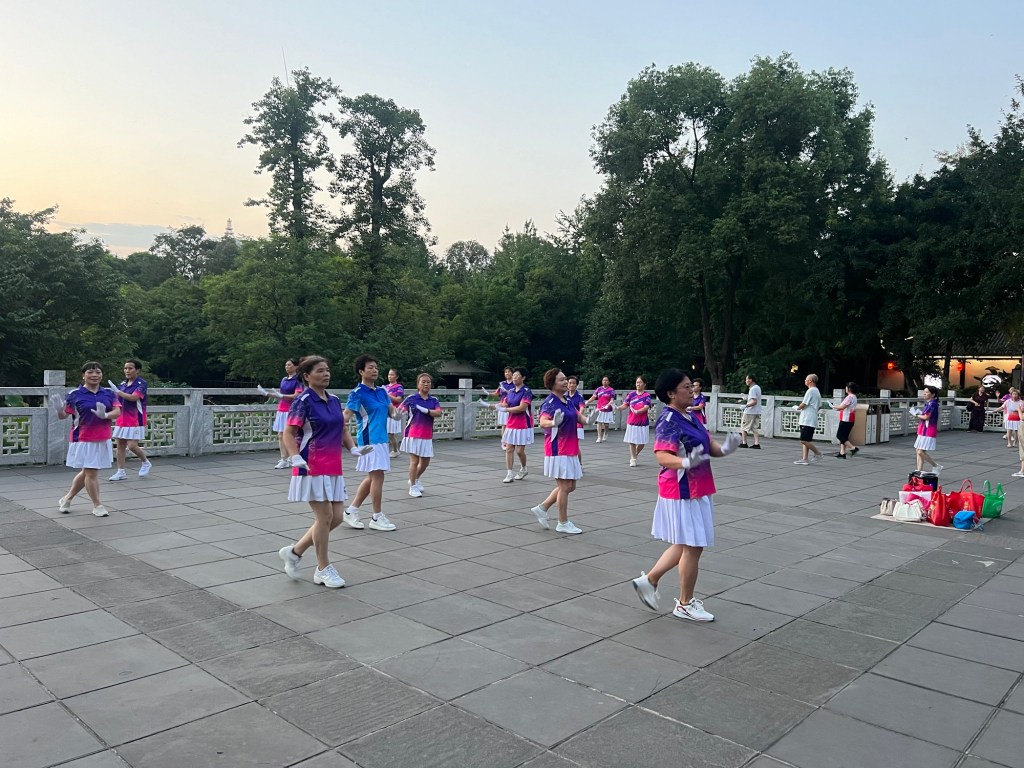
    As we have experienced elsewhere in South East Asia, the local residents love to get out in the evening and dance to keep fit. We came across a large group, all in uniform, marching in band formation around the central square.

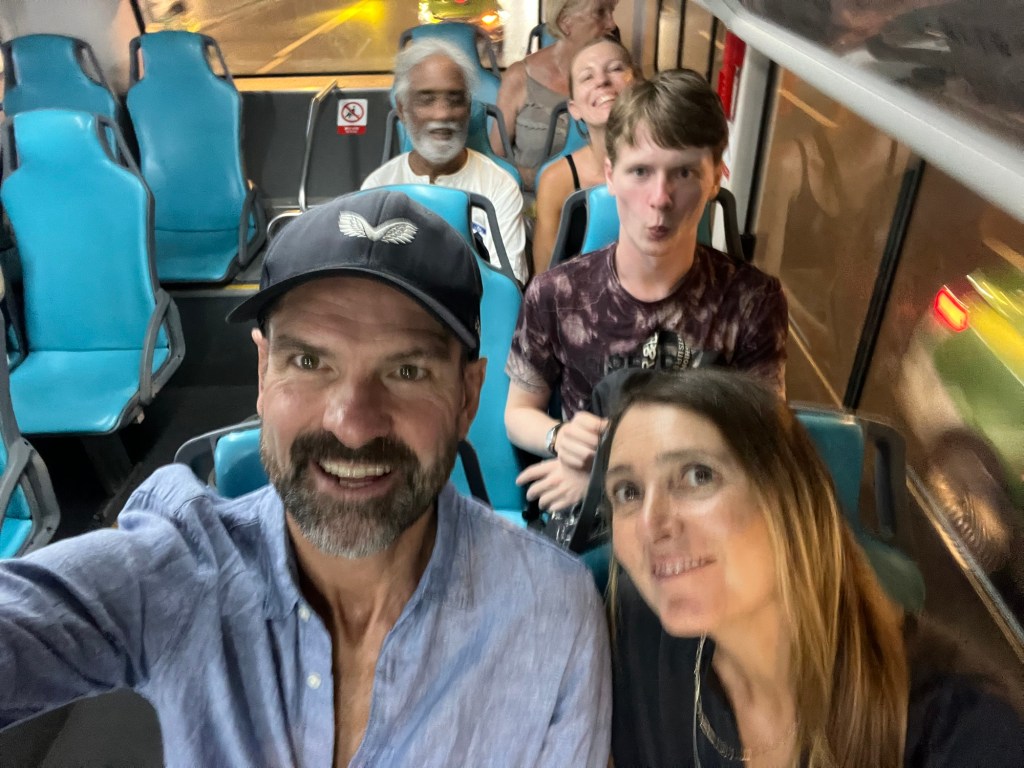
    With sunset approaching, we left the park and picked up a bus to make our way back to the hotel. The bus network is fantastic with a regular, inexpensive service making it easy to get around and a great opportunity to meet local residents.

    On the buses

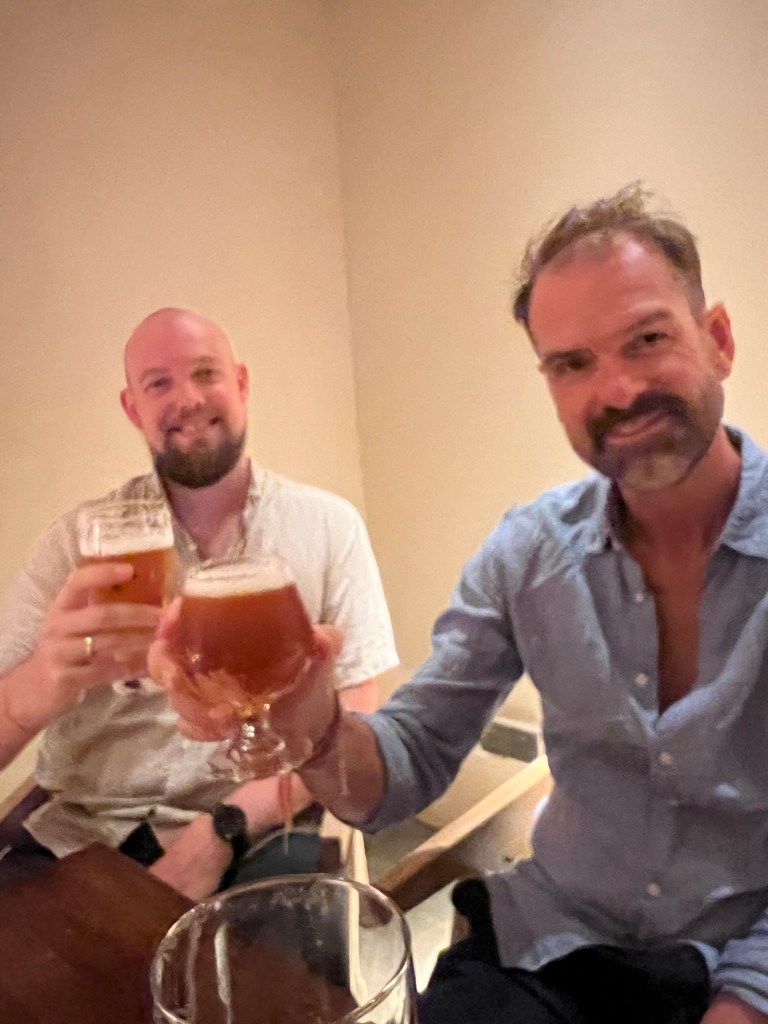
    After an enormously enjoyable evening at the opera, we met up with Simen and Julie from our tour group, to celebrate Simen’s 32nd birthday.

    Fortunately there was a great bar close to our hotel selling craft beers.

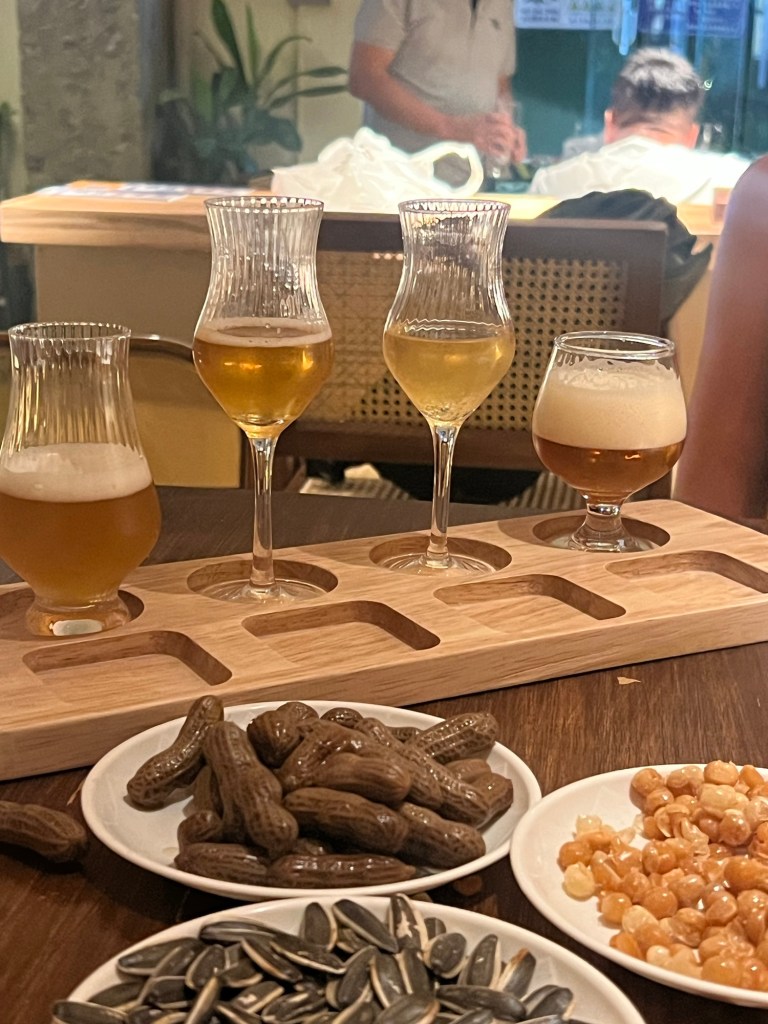
    The owners were so friendly and accommodating, offering us a tasting paddle and snacks before we made our choice of IPA and pale ales.

    We ended up staying for a couple of hours and had a fun time toasting Simen’s birthday with a beer or two.

    Tomorrow we are on the move again, this time by coach to Leshan to visit the world heritage listed Leshan Giant Buddha.

  • Overseas tour Day 292 – Chengdu

    Aug 18th, 2024

    Another early start, another new city, this time we were heading 3hrs south to Chengdu, the home of the pandas.

    Chengdu is the capital city of the Chinese province of Sichuan and has a population of over 21 million making it the fourth most populous city in the country.

    Goodbye to Xi’an and hello to Chengdu
    Arriving in style

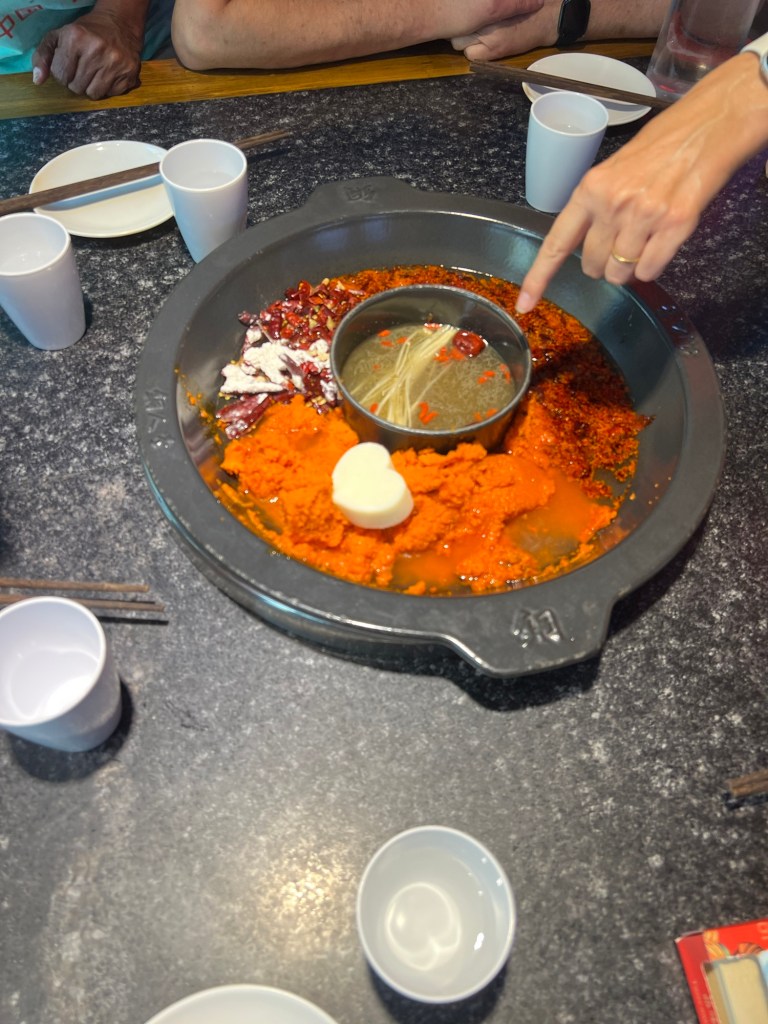
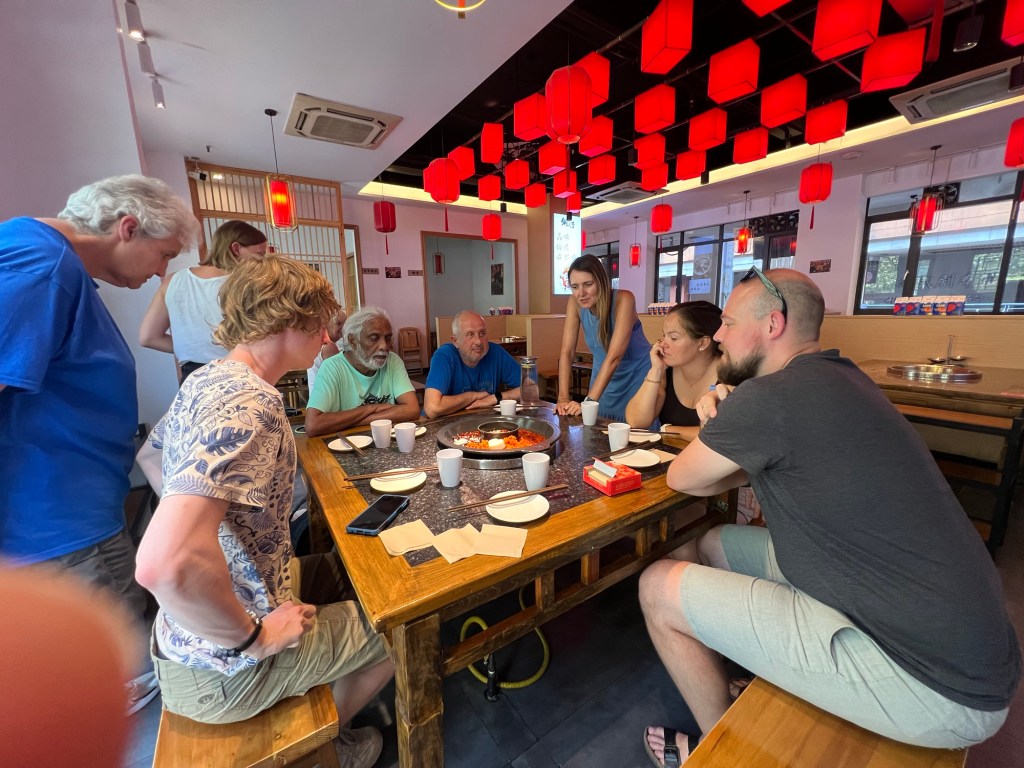
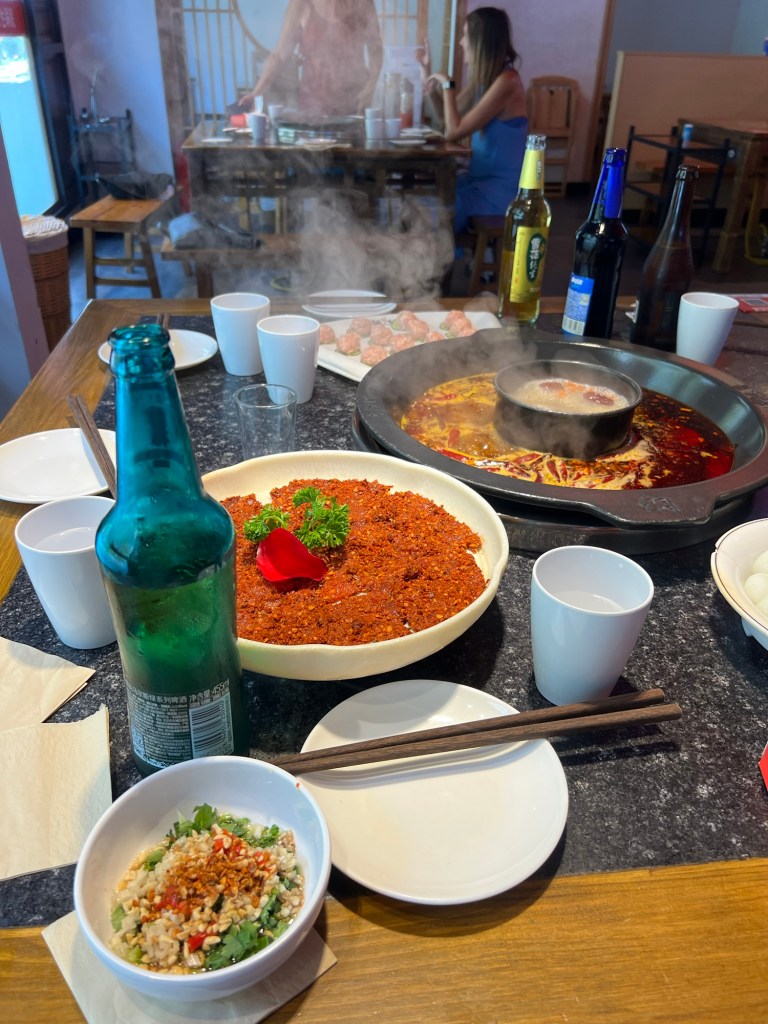
    Chengdu’s signature spicy cuisine is largely recognised as the best in China, so with that accolade we headed out for lunch to a nearby family restaurant for a Sichuan ‘hot pot’.

    The food proved to be spicy, but our guide Kris suggested it was tourist level and just 1 out of 5 on the spice range!

    Our two tables indulged in a range of vegetables and meats dipped in a chilly inspired sauce that glowed red and required a good amount of beers to help temper the heat.

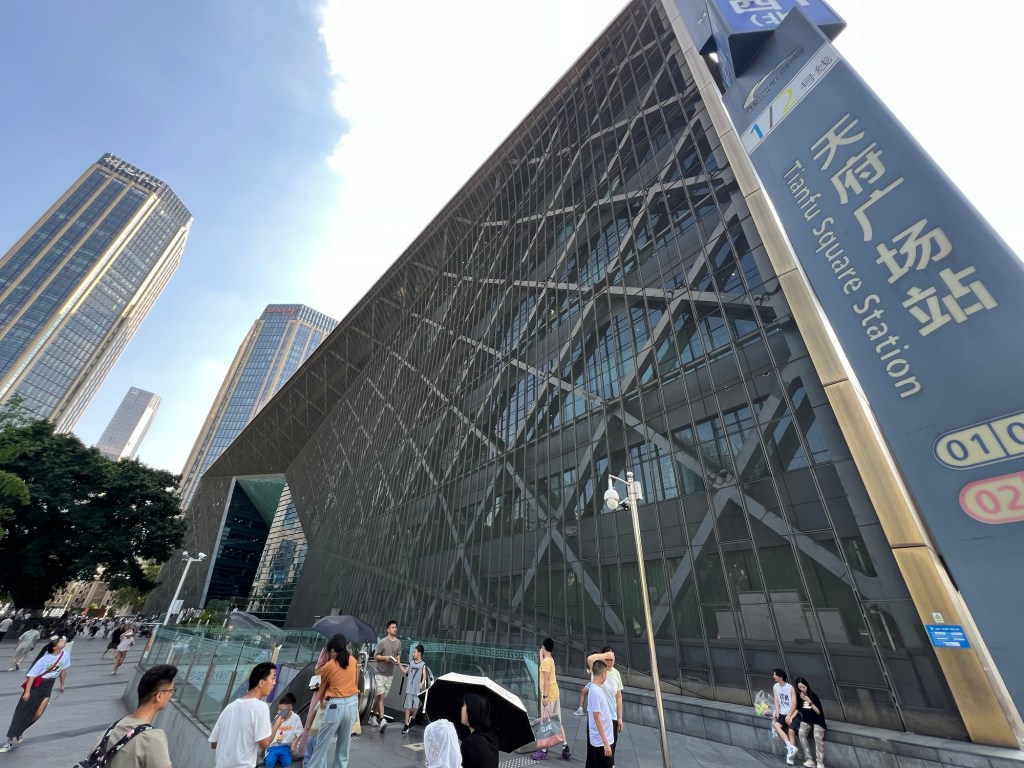
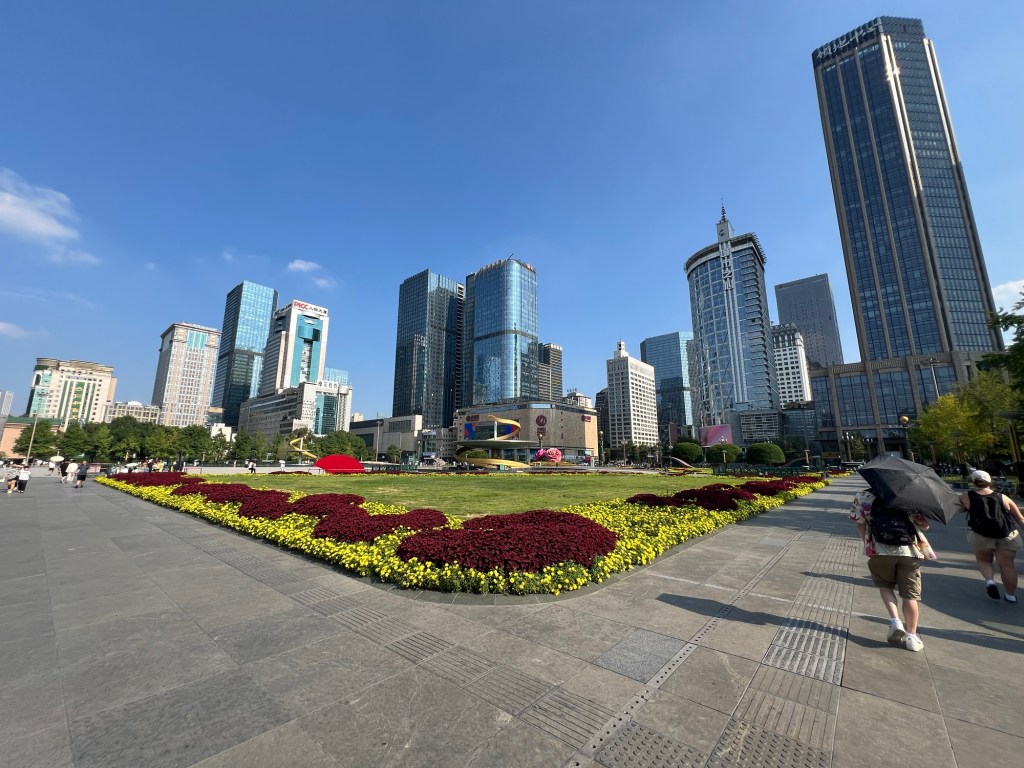
    After a very filling meal we went for a walking tour of the city to check out Tianfu Square.

    Tianfu means abundance, referring to the rich land and good climate in the area.

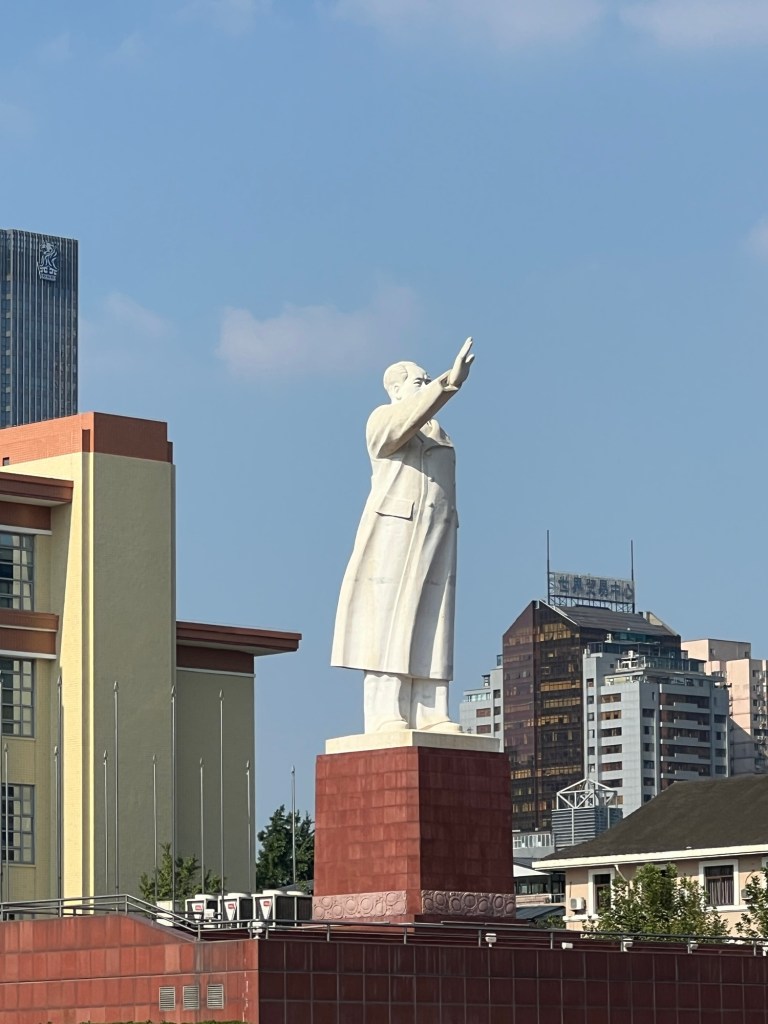
    It is the centre of Chengdu and one of the icons used in the modern growing city. North to the square is a 30-metre statue of Mao, the former head of Chinese Communist Party.

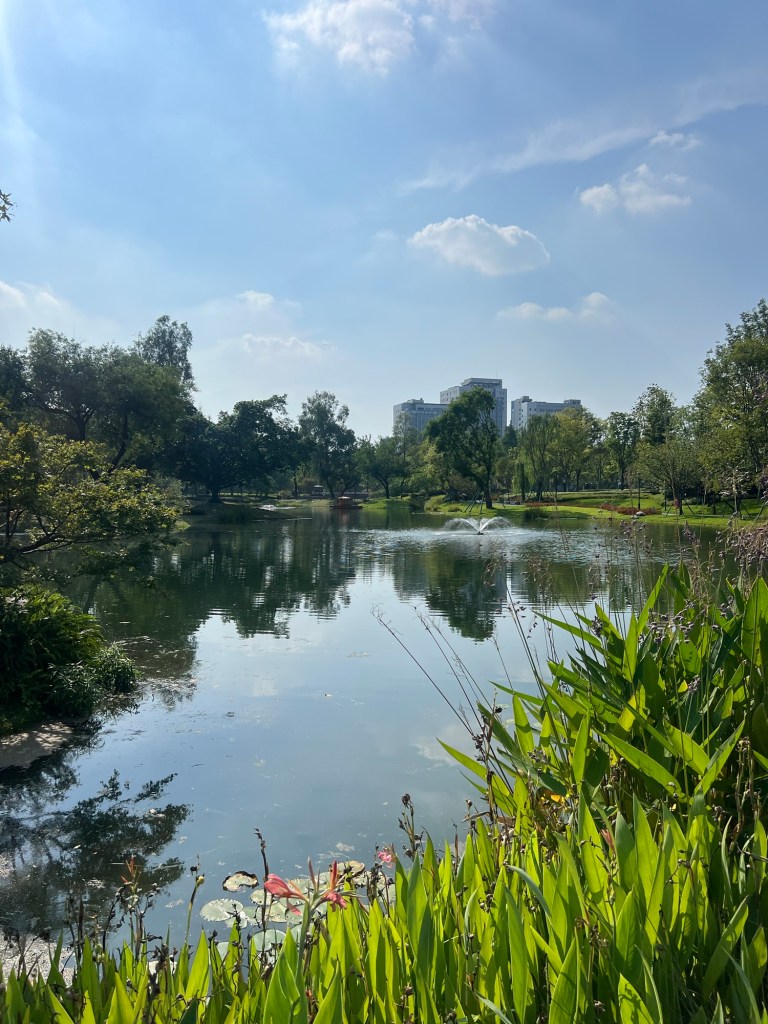
    The green of the city parks
    Tianfu Square Station – home to a museum & shopping mall
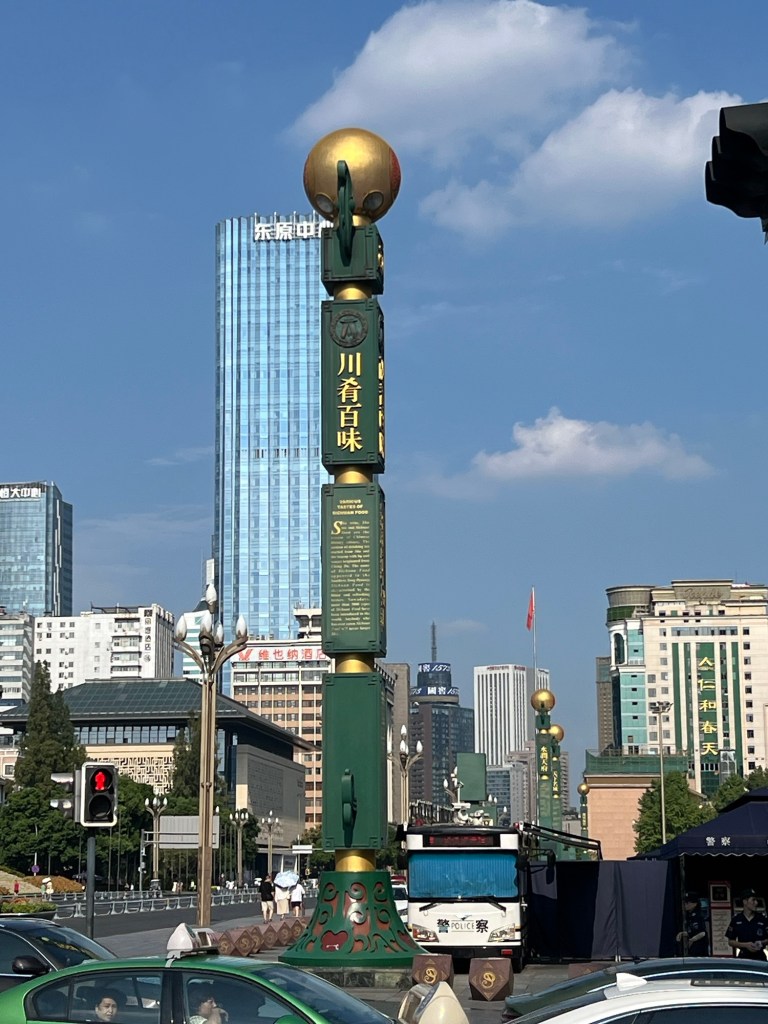
    The pole recognises the cities culinary history
    Tianfu Square
    Chairman Mao statute

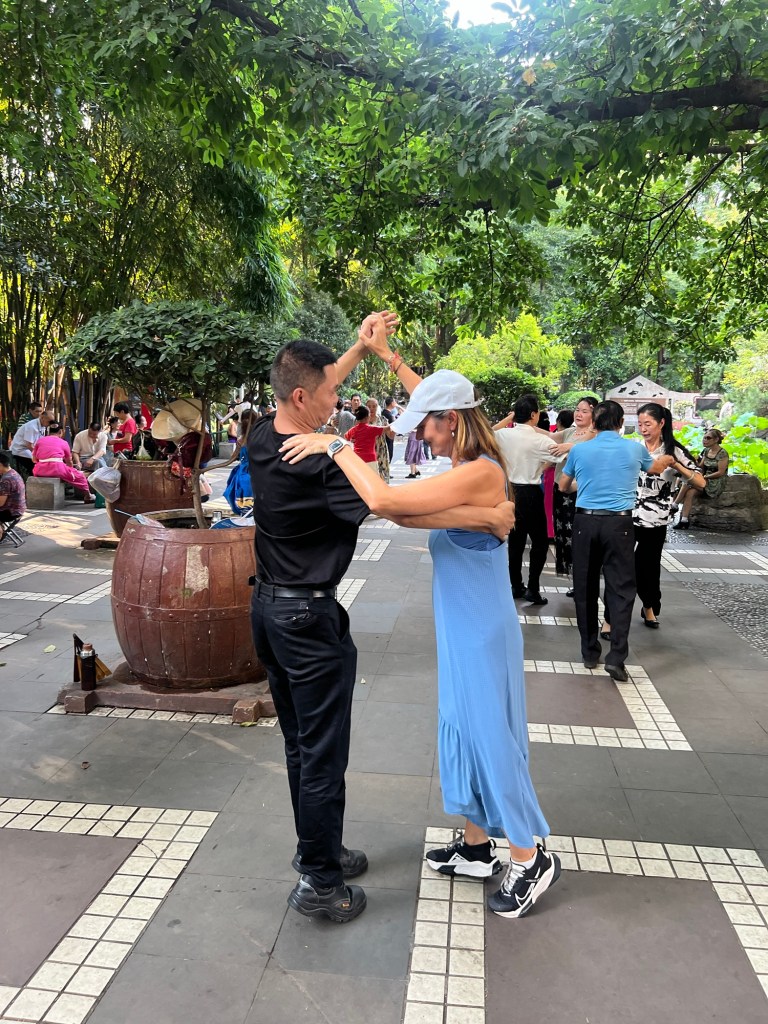
    Next on our tour was People’s Park, arguably the most lively and noisy park we have witnessed in China, full of locals dancing, singing and doing tai chi.

    We stopped to watch some older couples dancing in the park and the next thing Michelle was being invited to join in. Thankfully she took to it like a duck to water and was soon moving her way across the park..!!

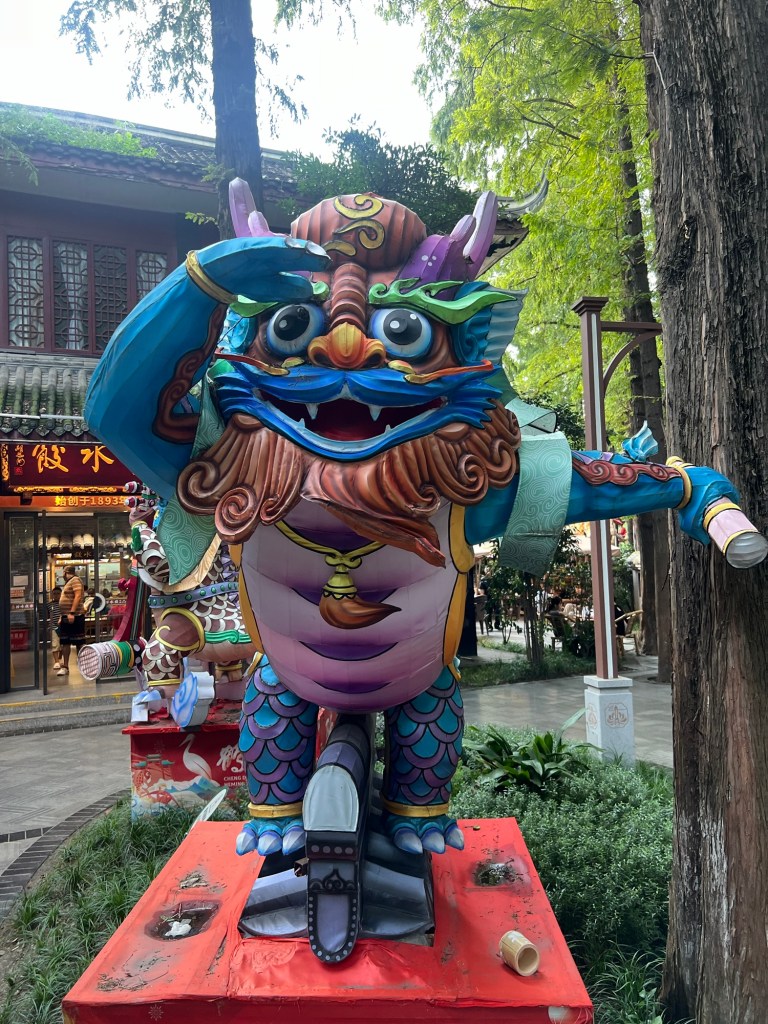
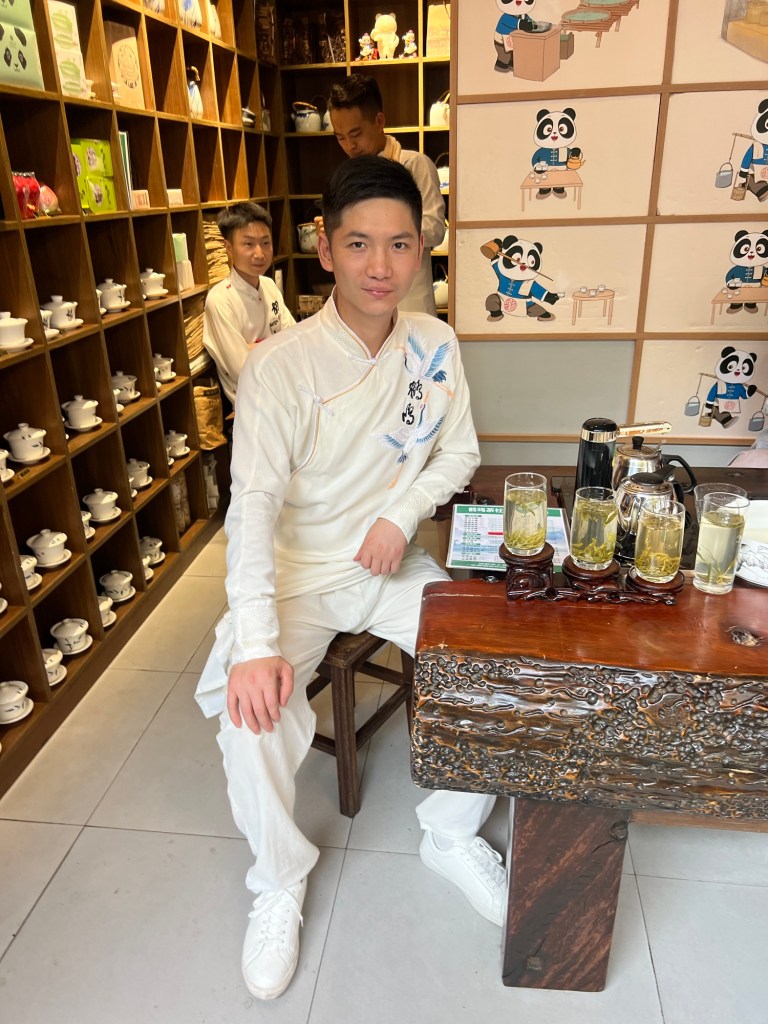
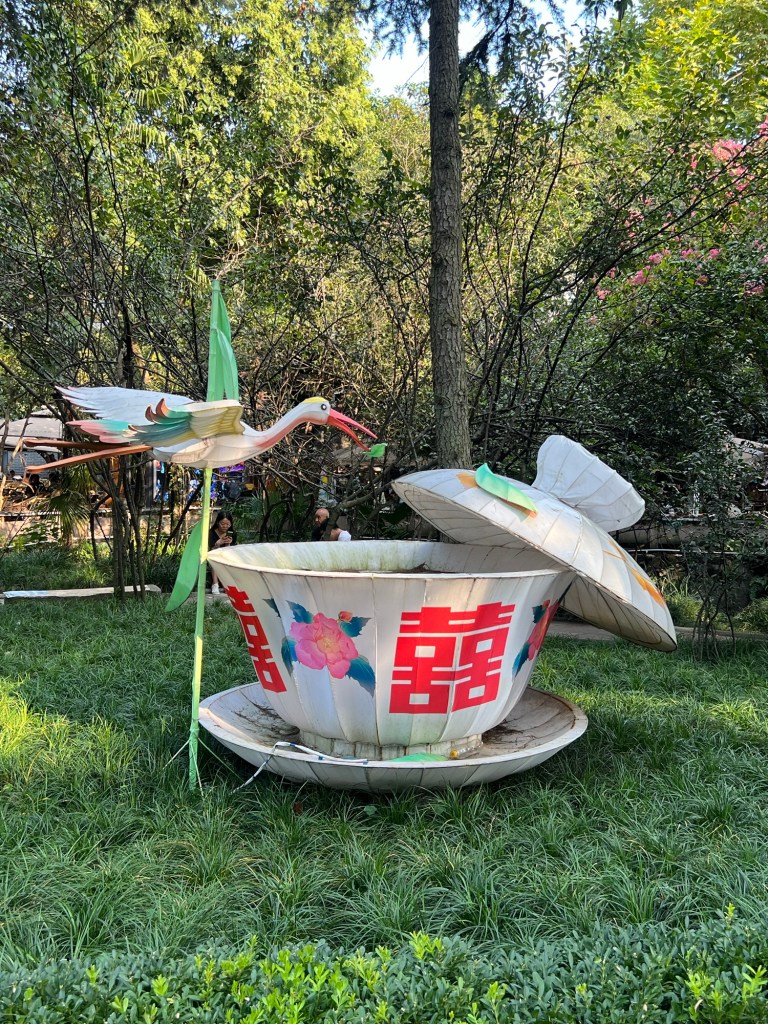
    As we ebbed our way through the park we came across a number of tea houses, as well as a few unusual Chinese characters and of course a panda or two.

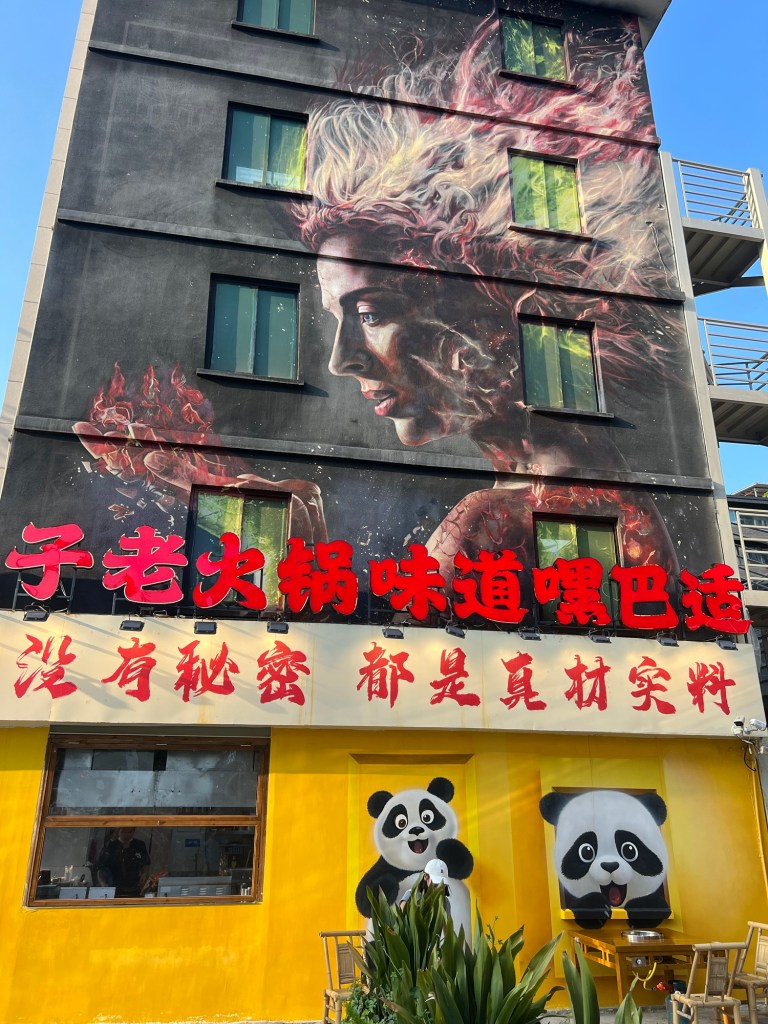
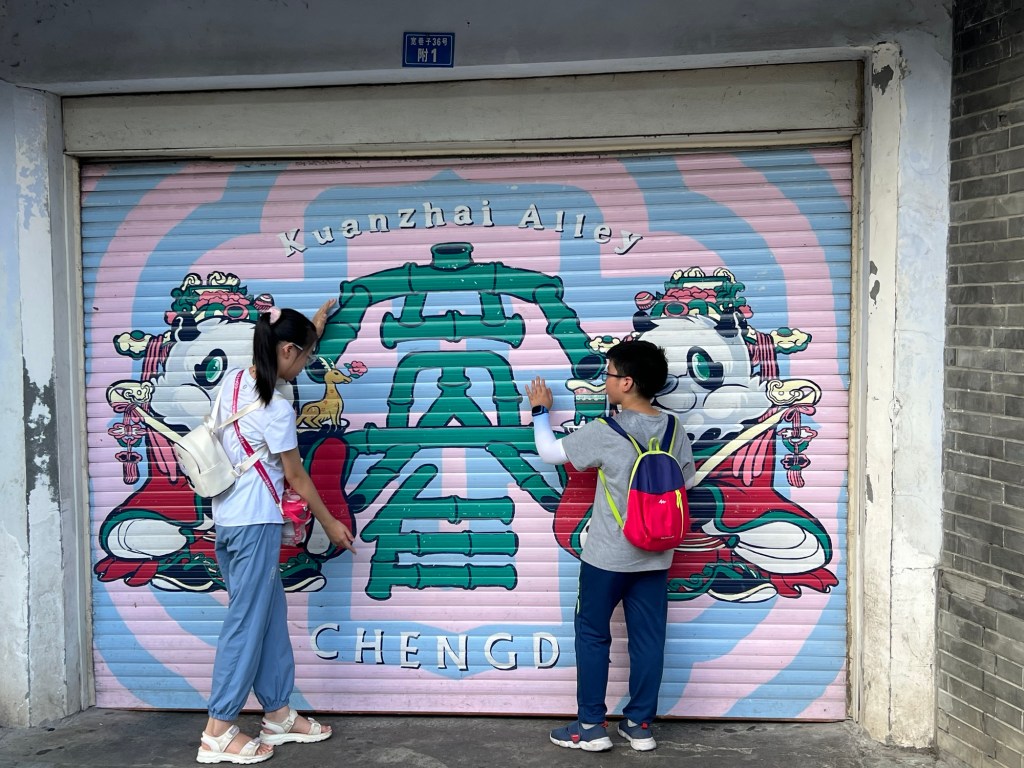
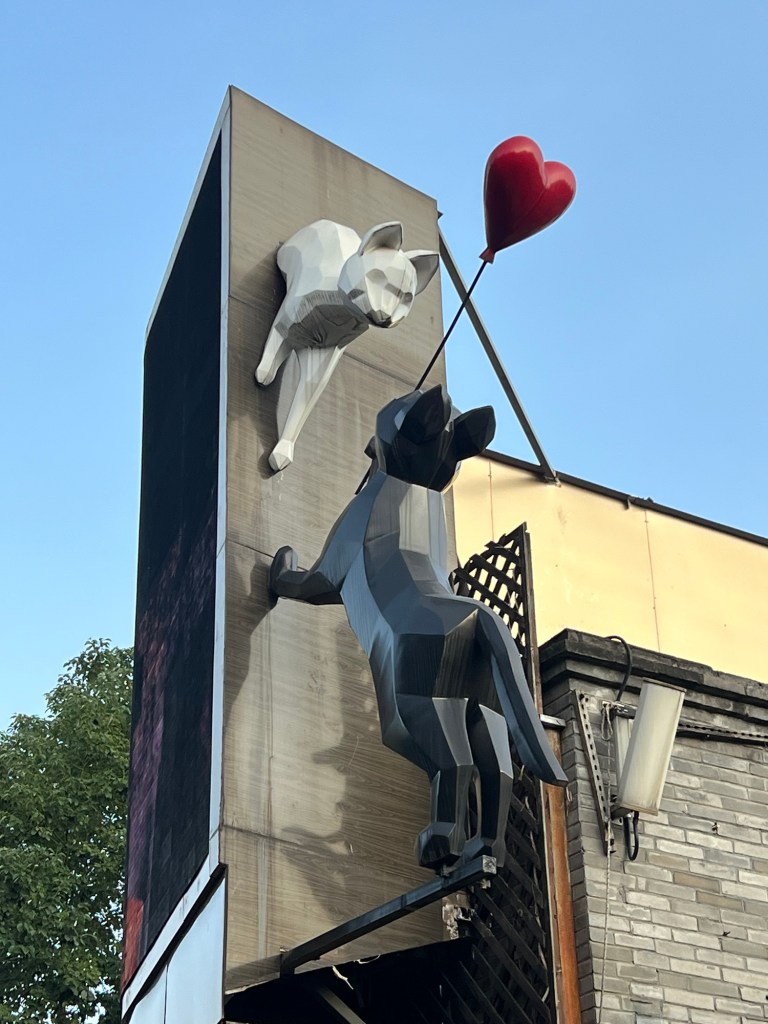
    Street art Chengdu style
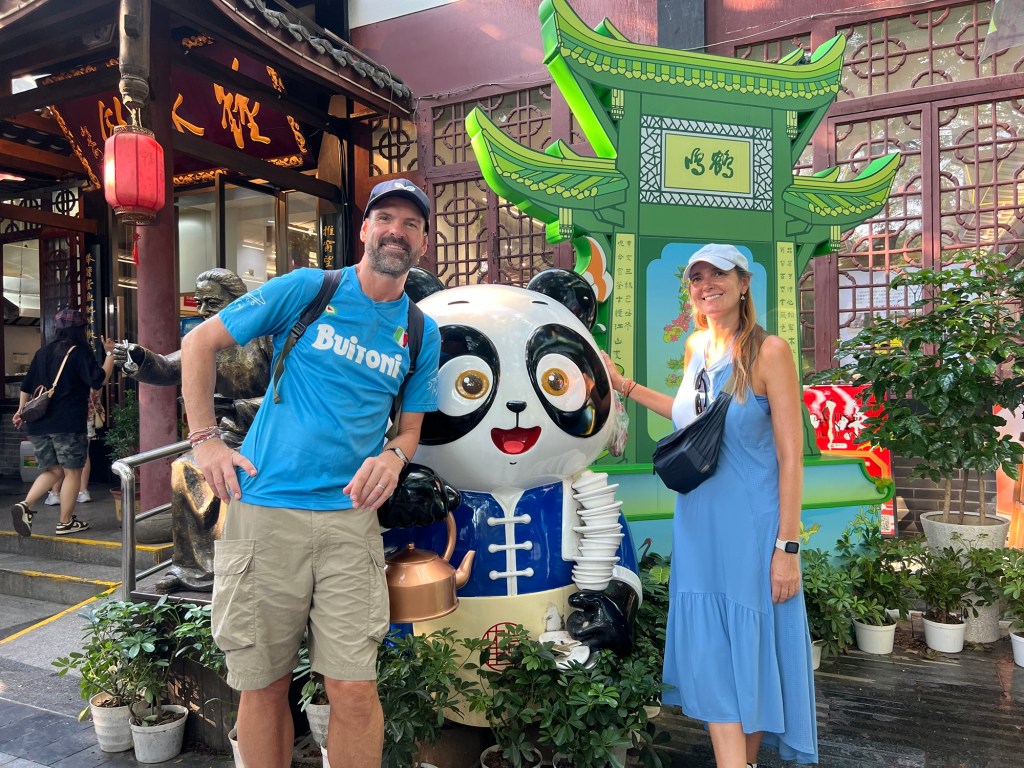
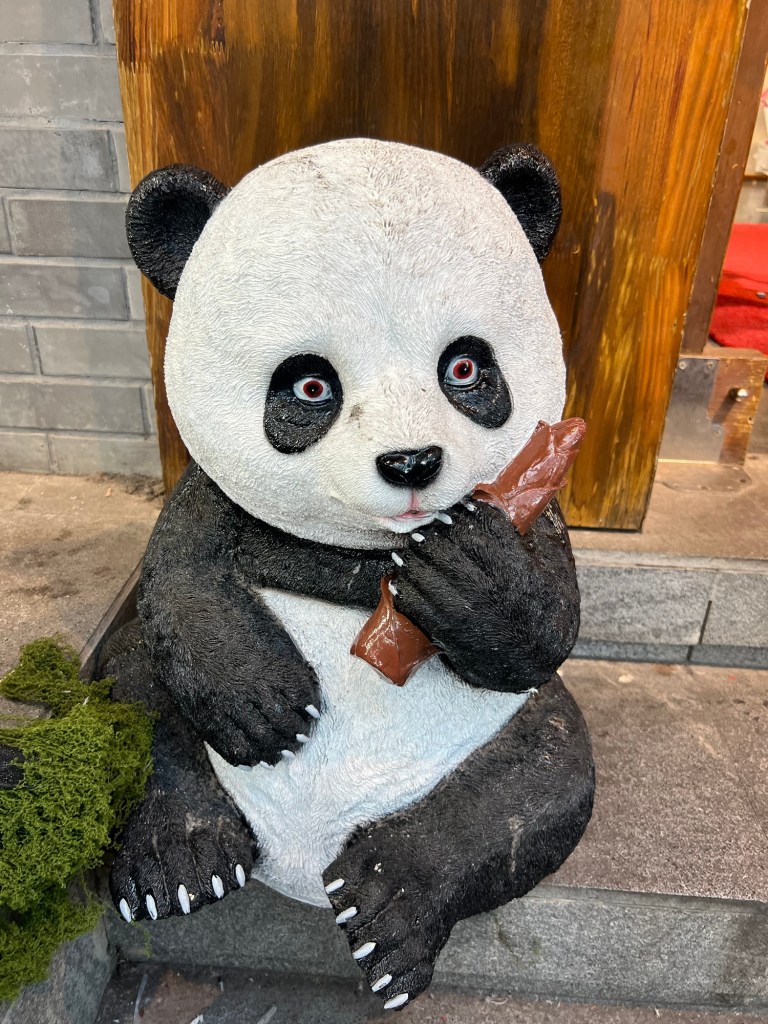
    Our pal the panda
    A welcoming tea room host

    The whole park was awash with eye- catching visual arts. As we left the area and made our way to Kuanzhai Alley, often referred to as the Epitome of Old Chengdu Life, we walked past street graffiti with the obligatory panda reference.

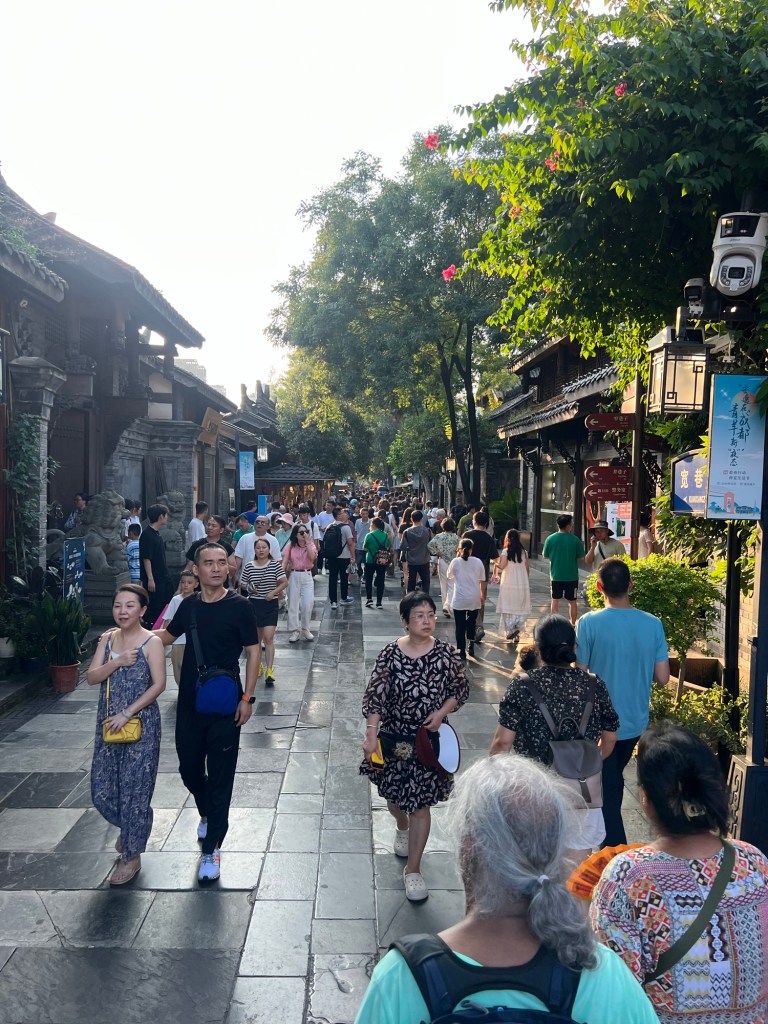
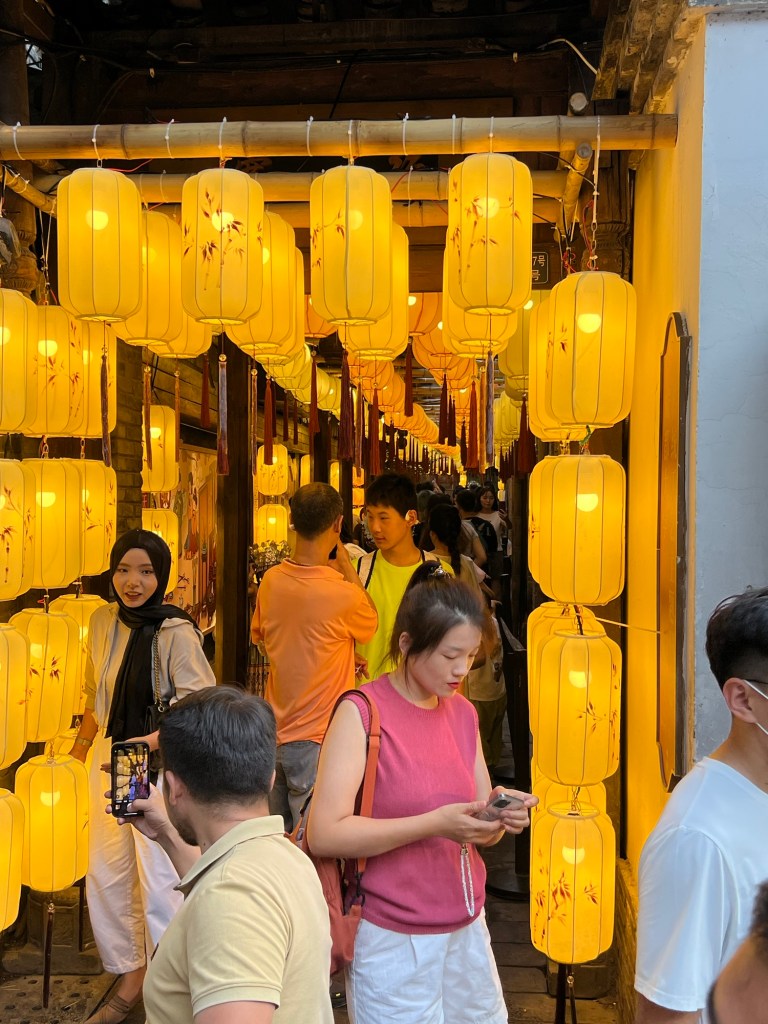
    Kuanzhai Alley, also known as ‘Wide and Narrow Alley’, consists of three historic paralleled alleys from Qing dynasty. The ancient styled buildings create a stunning backdrop selling delicious Sichuan snacks & handicrafts making it one of the most attractive places in the city.

    The three streets are the left over part of the buildings after the chaos of war in the Qing Dynasty.

    Kuanzhai Alley attracts millions of tourists to the Qing style of quadrangle courtyard and houses some fashionable bars and various restaurants, making this place a combination of traditional Chinese culture and modern life.

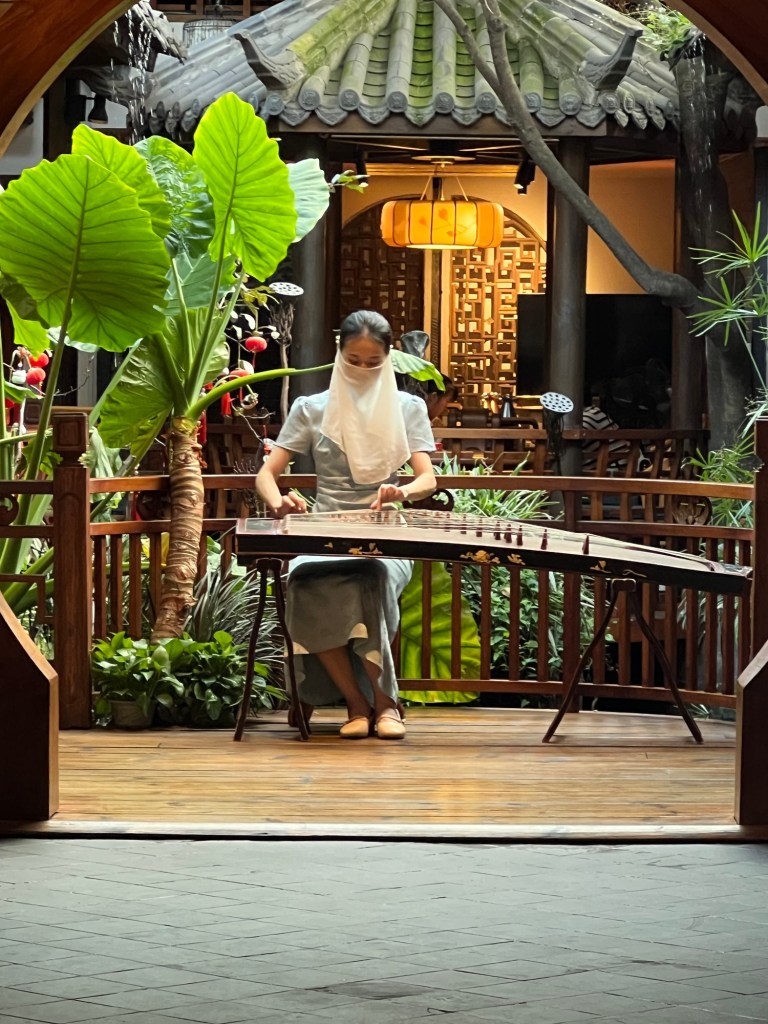
    Every corner in Kuan Alley shows the nostalgic past, providing the opportunity to choose a tea house to taste the famous covered-bowl tea or the world famous Sichuan cuisine in a restaurant to feel the old life of Chengdu.

    More panda
    Local kids checking out the street art

    Visitors and local young artists gather in Zhai Alley to spend time, taking photos or chatting and we saw plenty of artistic backdrops for people to enjoy.

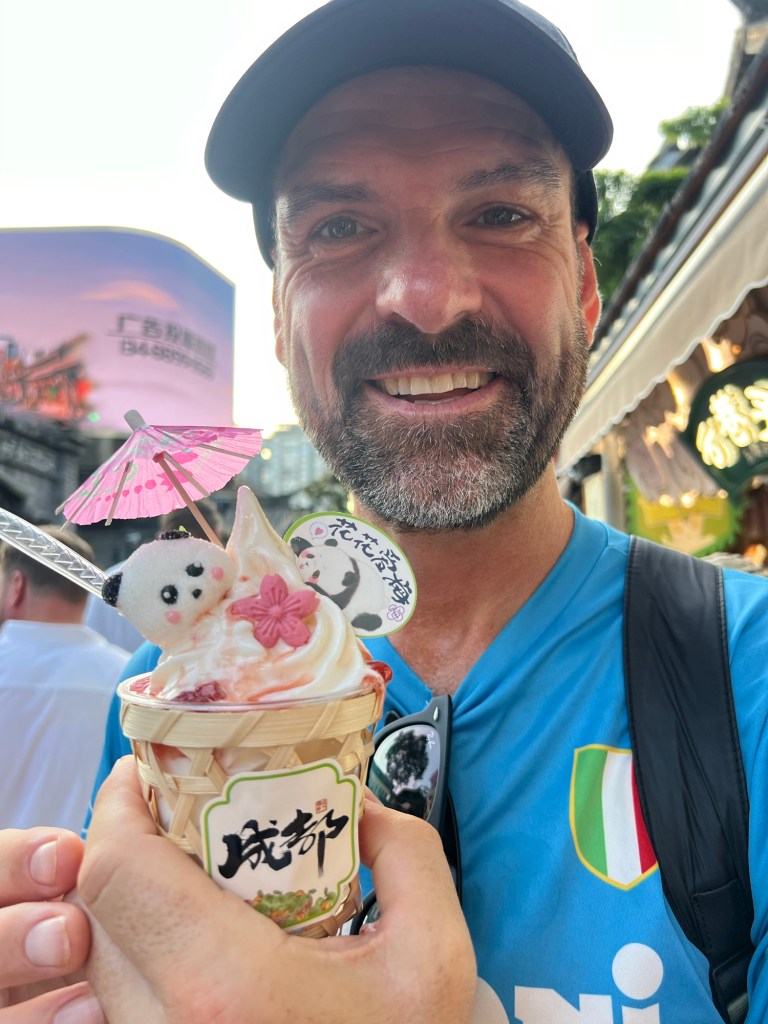
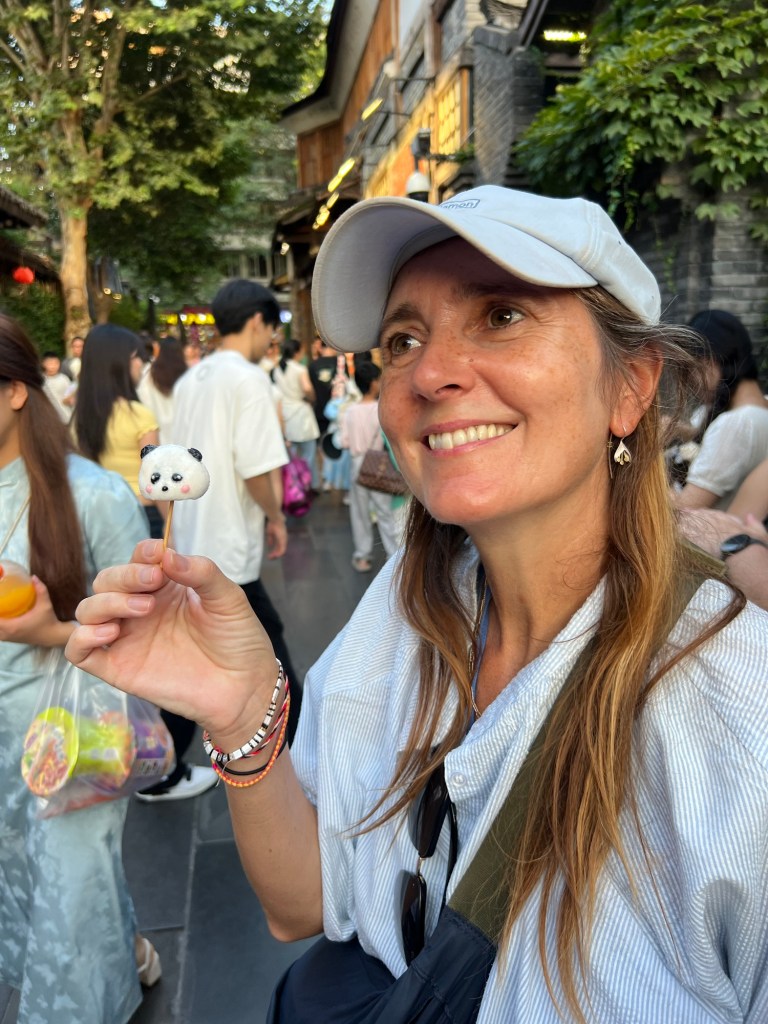
    As a group we opted for ice cream, having had our fill of hot pot and instead went for a panda inspired treat.

    Having worked his way through the ice-cream, Andy passed the panda sweet to Michelle to finish off.

    Tomorrow we are off to Chengdu Panda Base, also called Chengdu Research Base for Giant Panda Breeding, the world’s only museum that focuses entirely on the critically endangered giant pandas. Another day to remember.

  • Overseas tour Day 291 – Terracotta Warriors, Xi’an

    Aug 18th, 2024

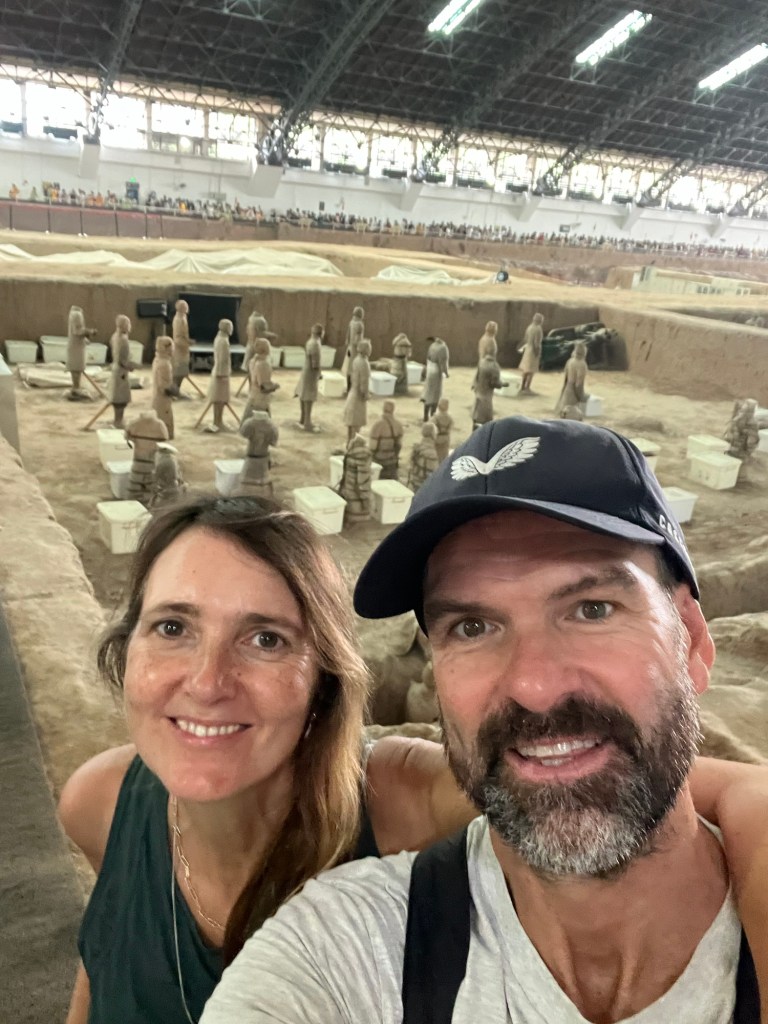
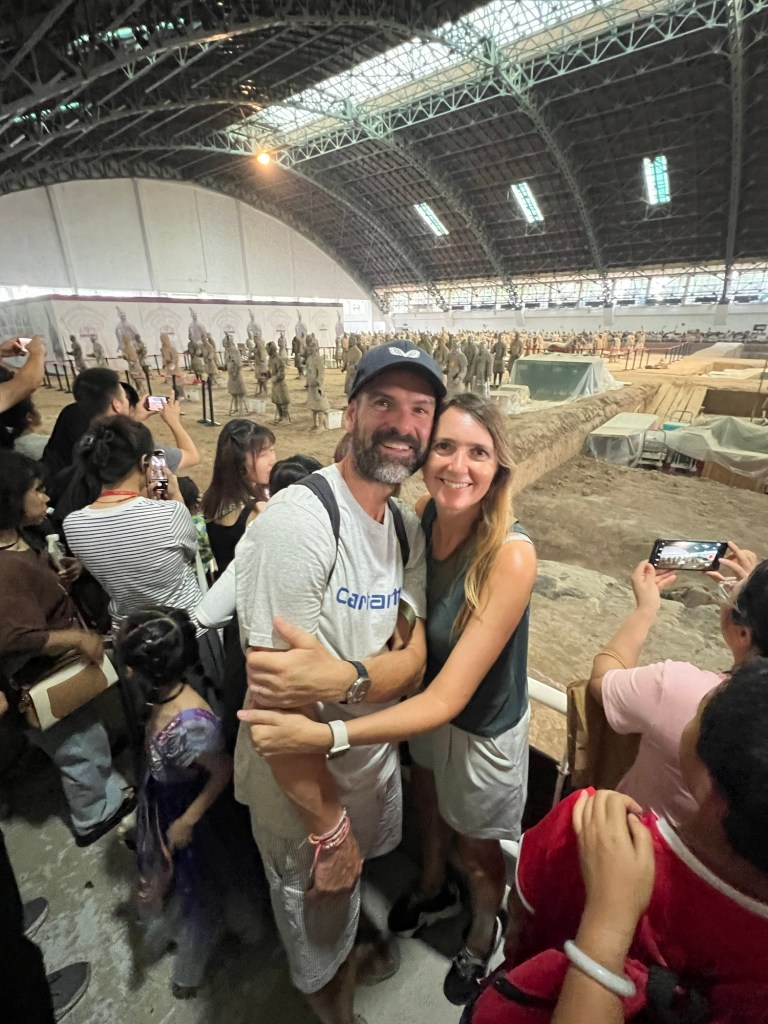
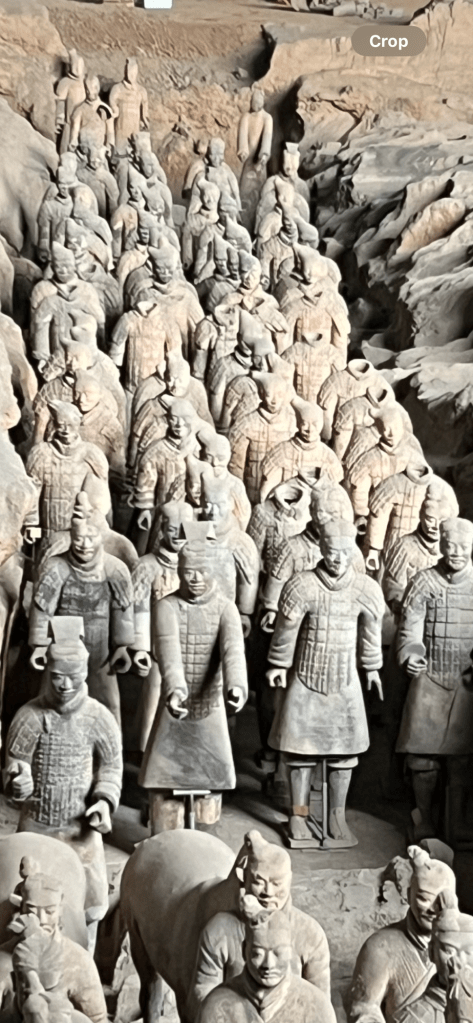
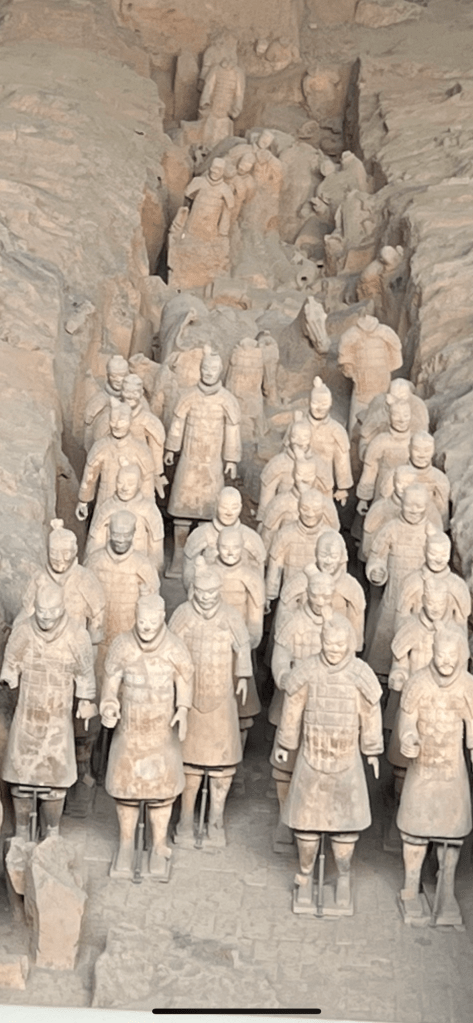
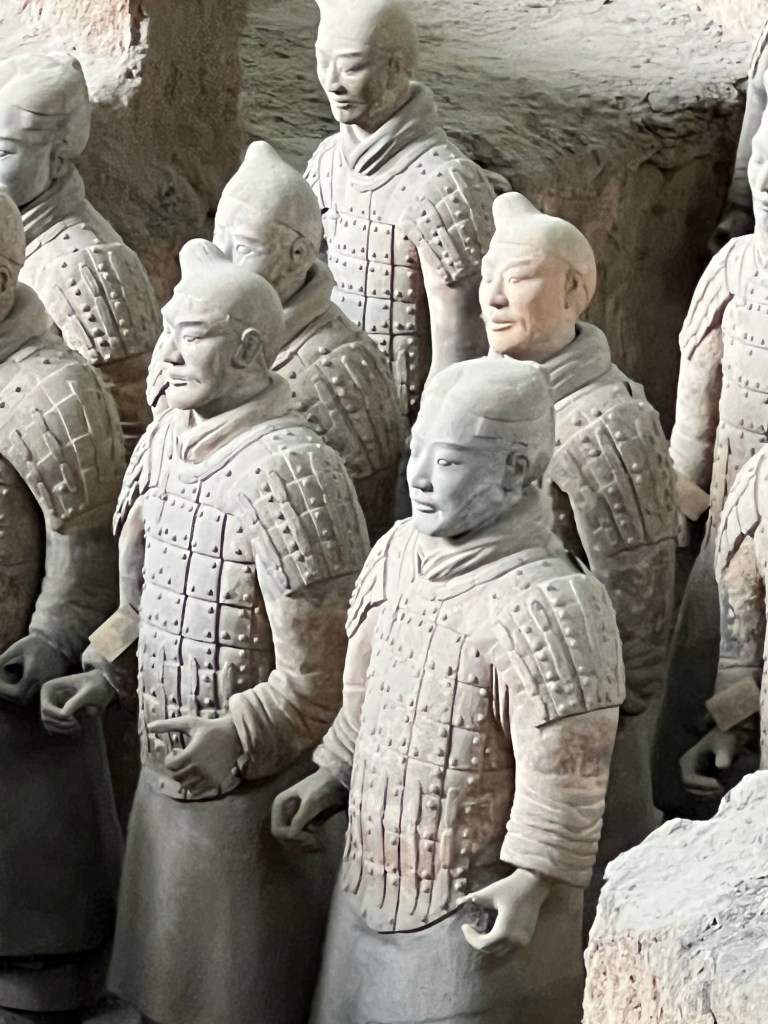
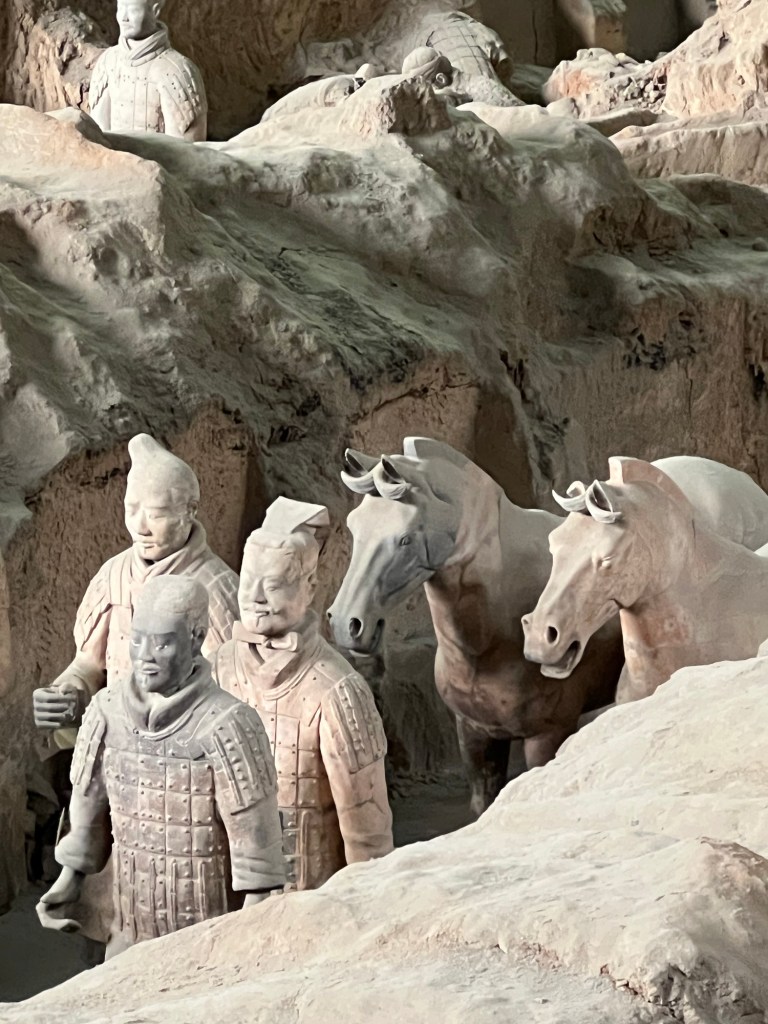
    Another incredible day with a visit to see the infamous Terracotta Warriors.

    The figures, date from 200BC and were discovered in 1974 by local farmers in Lintong County, outside Xi’an.

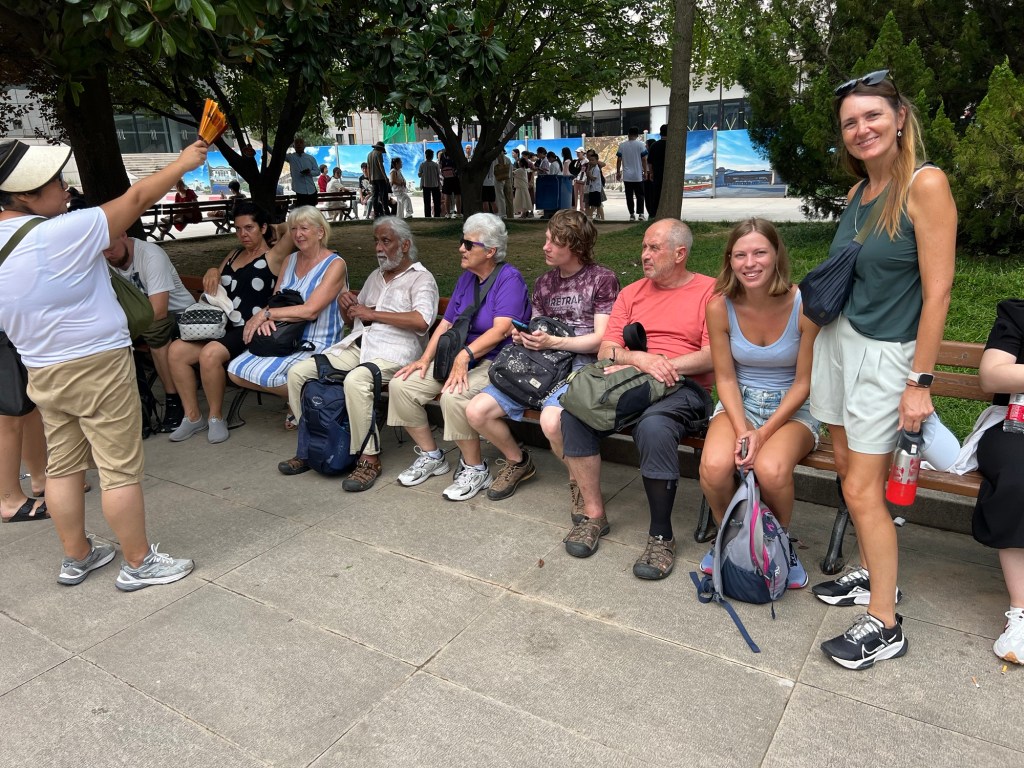
    Our tour group taking instruction from Kris our guide

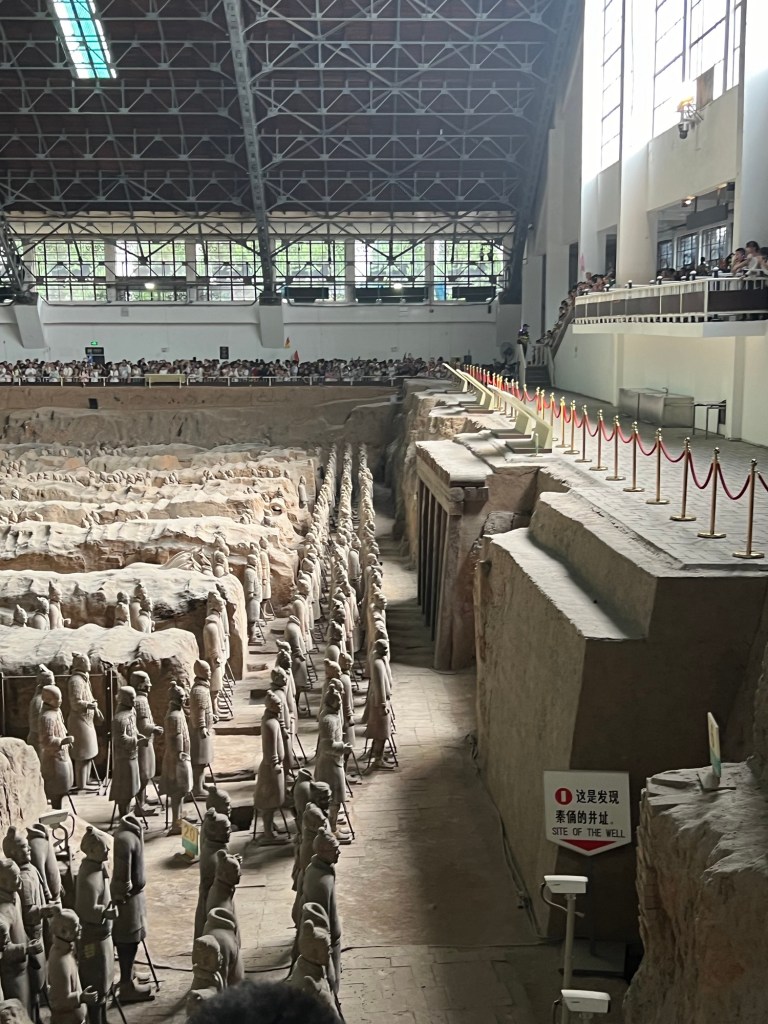
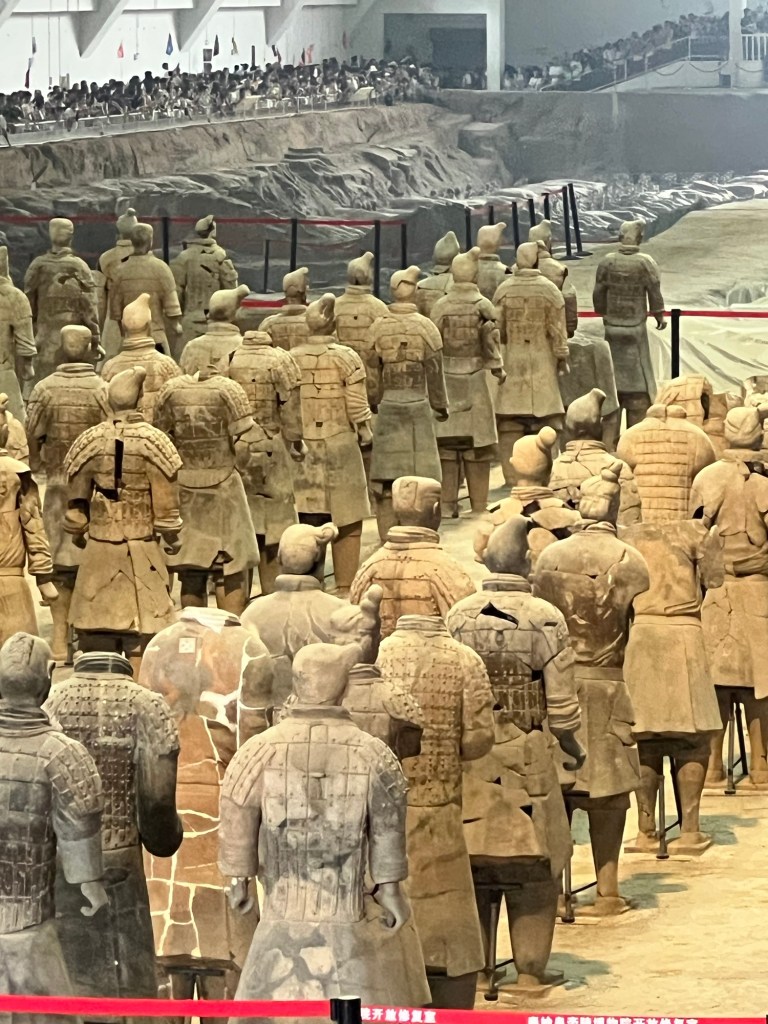
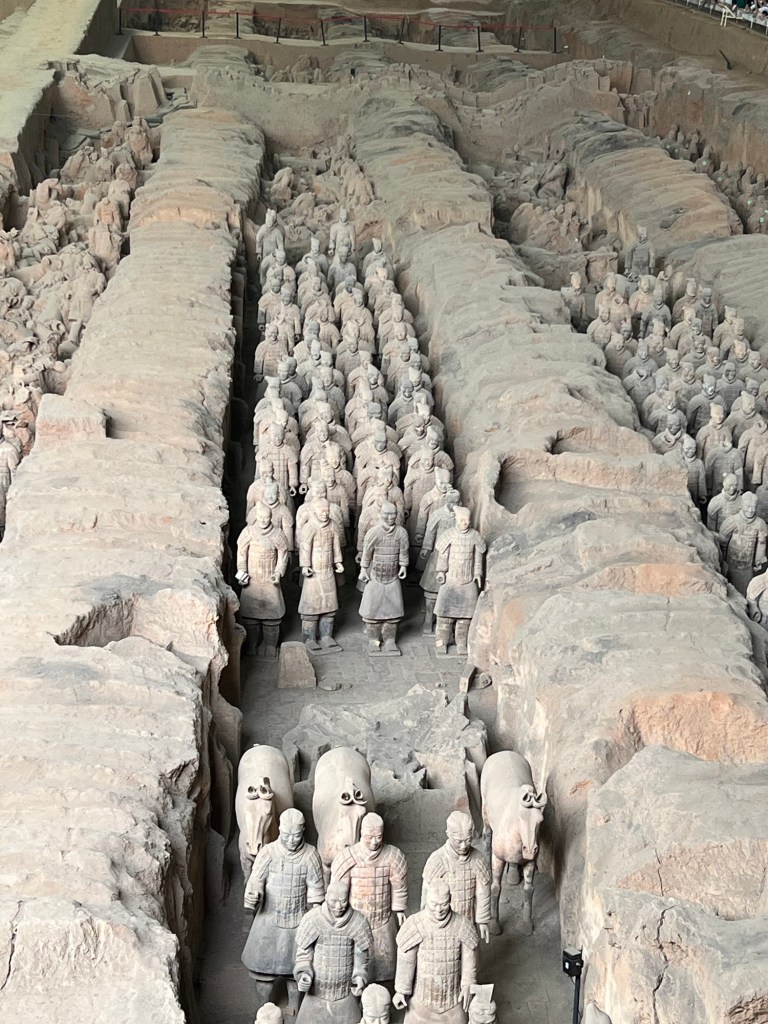
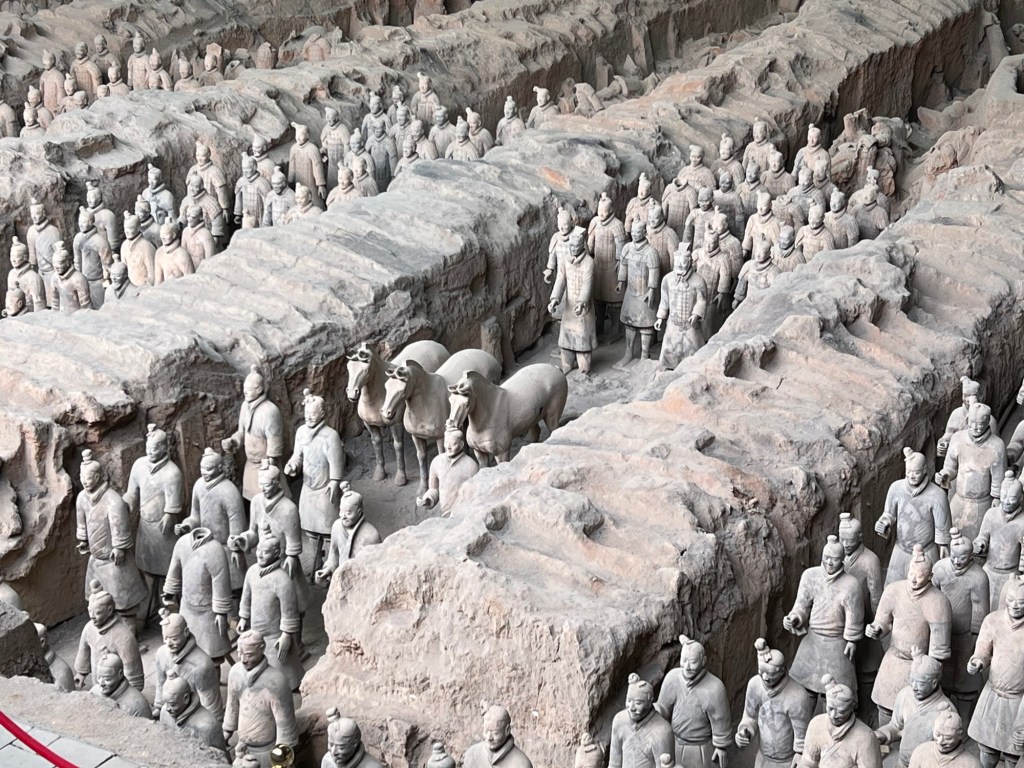
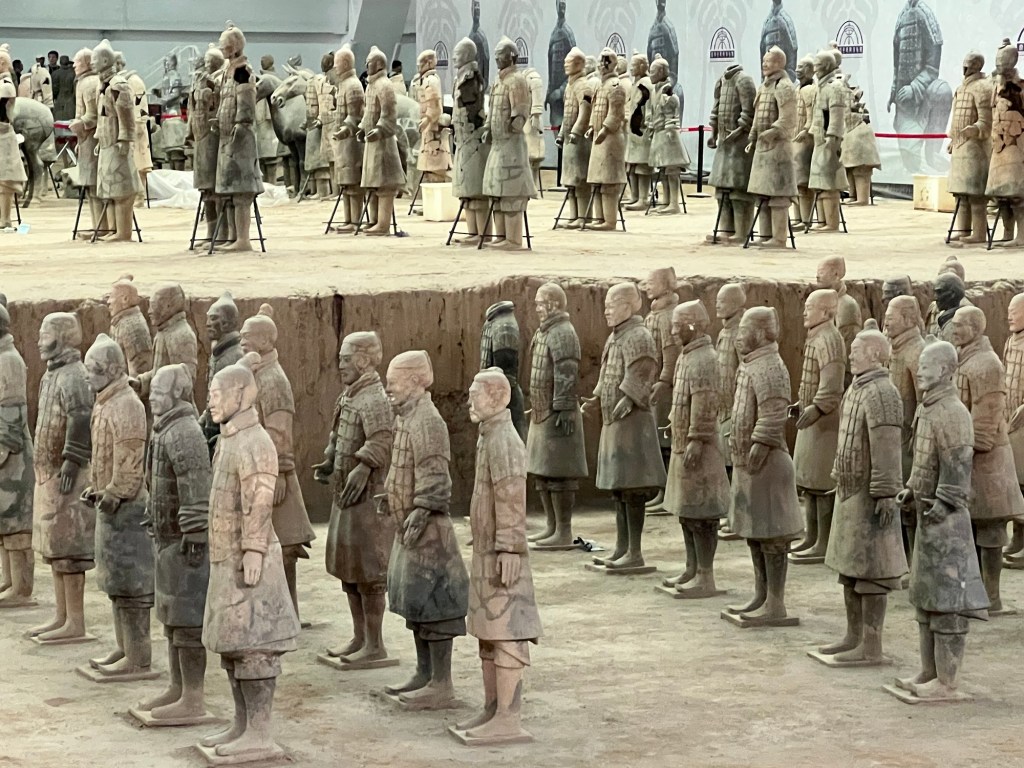
    The three pits containing the Terracotta Army hold more than 8,000 soldiers, 130 chariots with 520 horses, and 150 cavalry horses, the majority of which remain in situ.

    Work on the mausoleum began in 246BC, soon after Emperor Qin (then aged 13) succeeded his father as King of Qin, and the project eventually involved 700,000 workers.

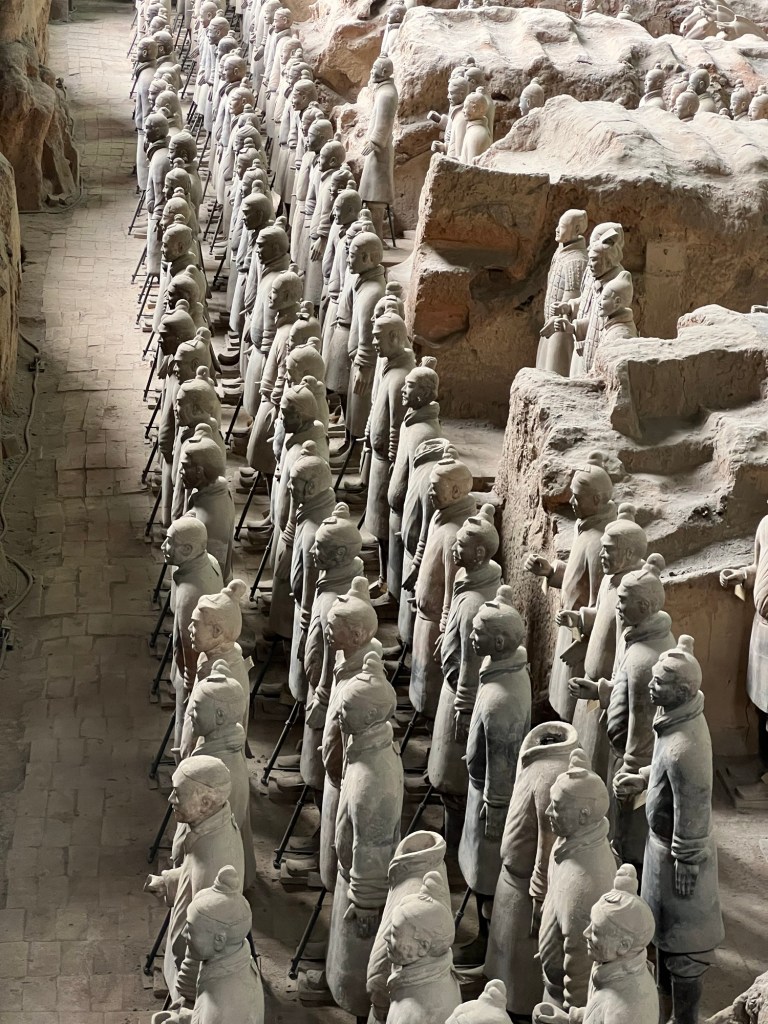
    We first visited Pit 1, which is 230 m long and 62 m wide and contains the main army of more than 3,000 figures. It is the largest of the four pits and has eleven parallel corridors, most more than 3 m wide and paved with small bricks with a wooden ceiling supported by large beams and posts.

    This design was also used for the tombs of nobles and would have resembled palace hallways when built.

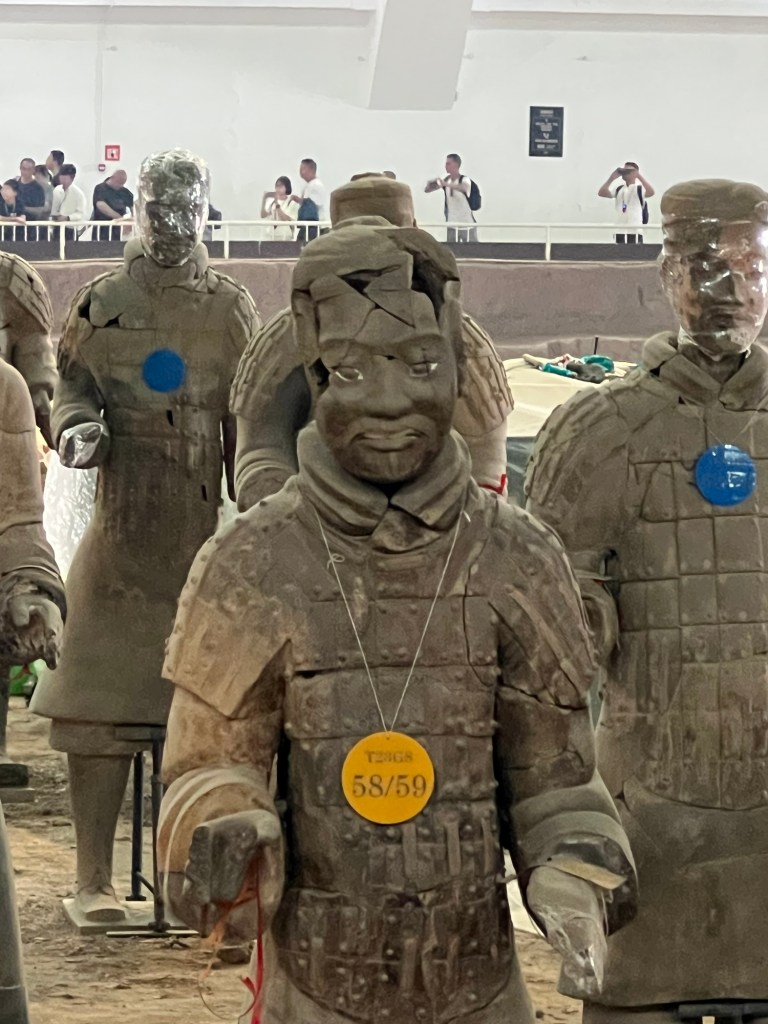
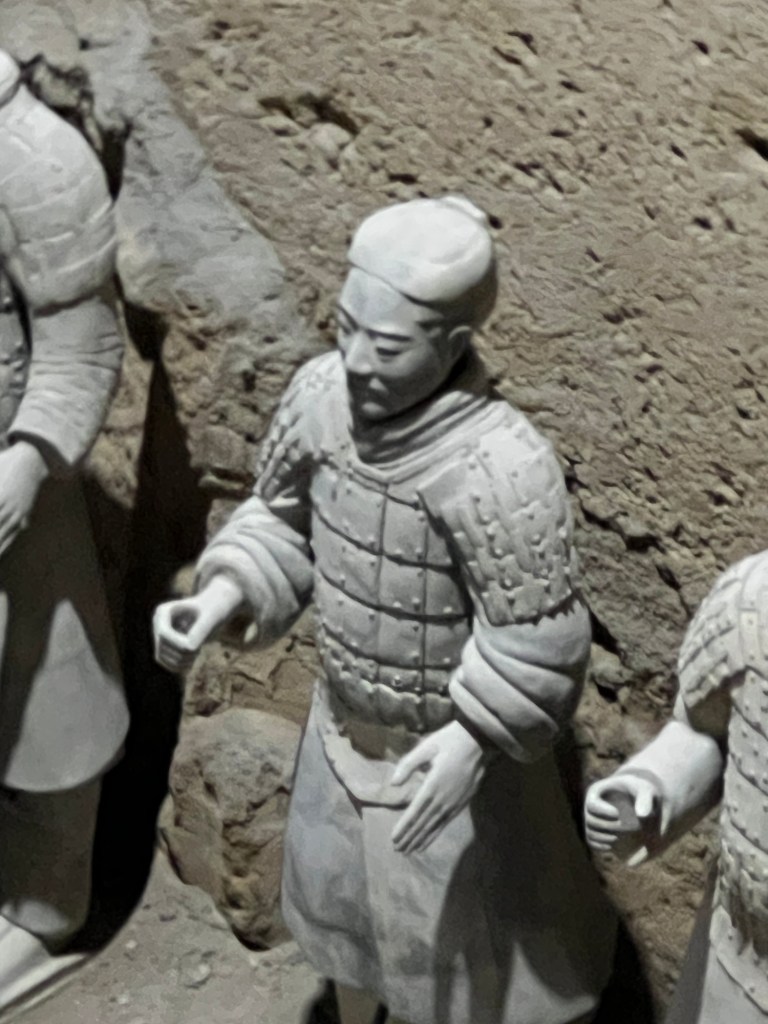
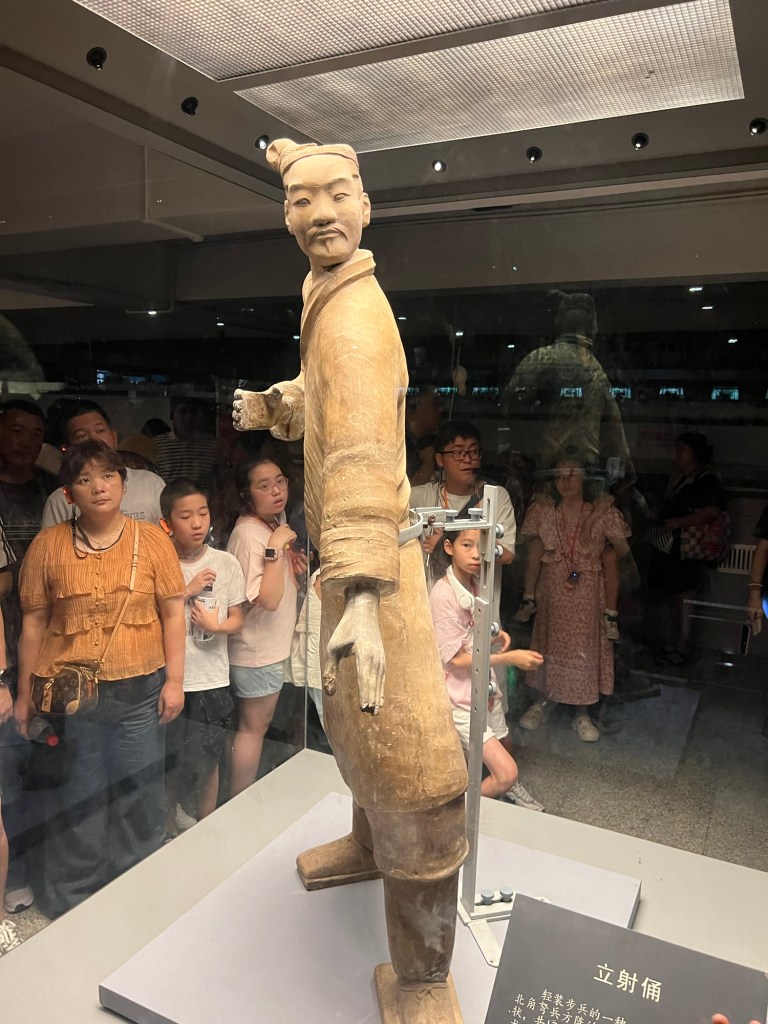
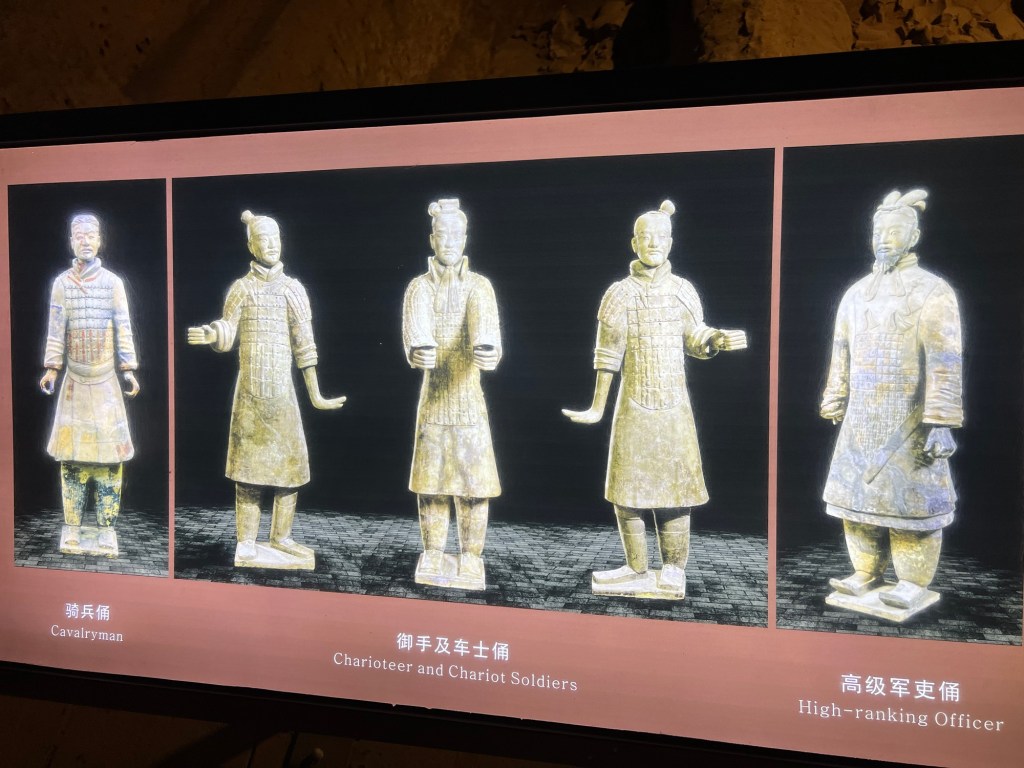
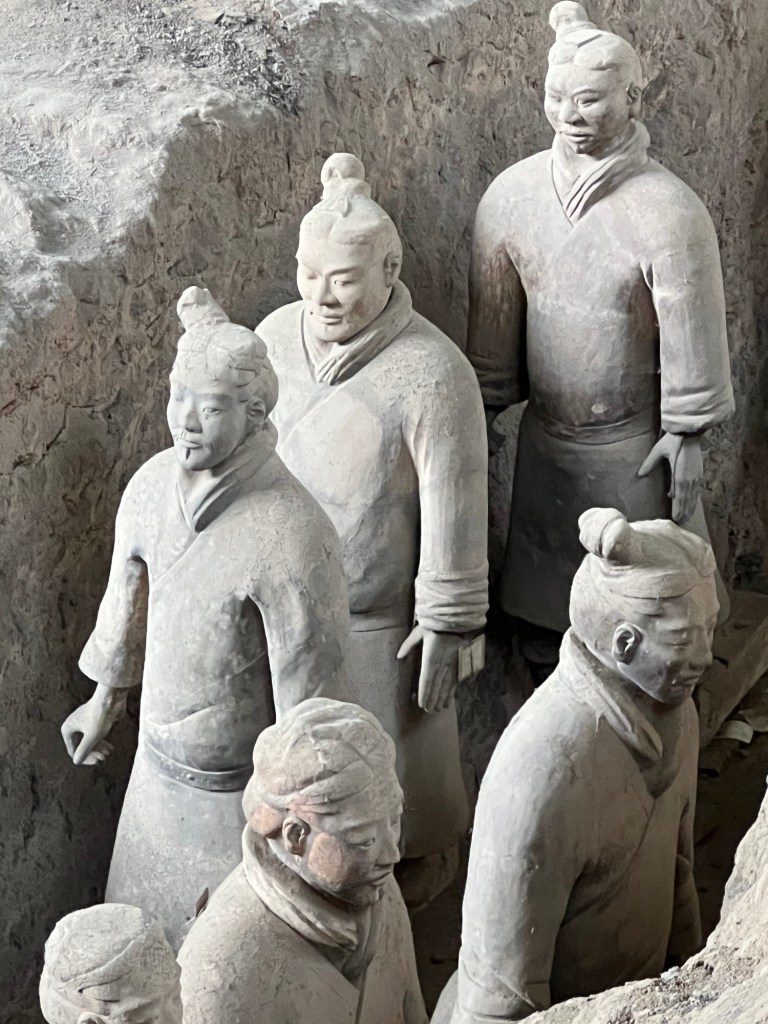
    The terracotta figures are life-sized, typically ranging from 175 cm to about 200 cm, the officers being typically taller. They vary in height, uniform, and hairstyle in accordance with their portrayed rank. Their faces appear to be different for each individual figure.

    We moved on to Pit 2 which has cavalry and infantry units as well as war chariots and is thought to represent a military guard. Lastly on to Pit 3 the command post, with high-ranking officers and a war chariot.

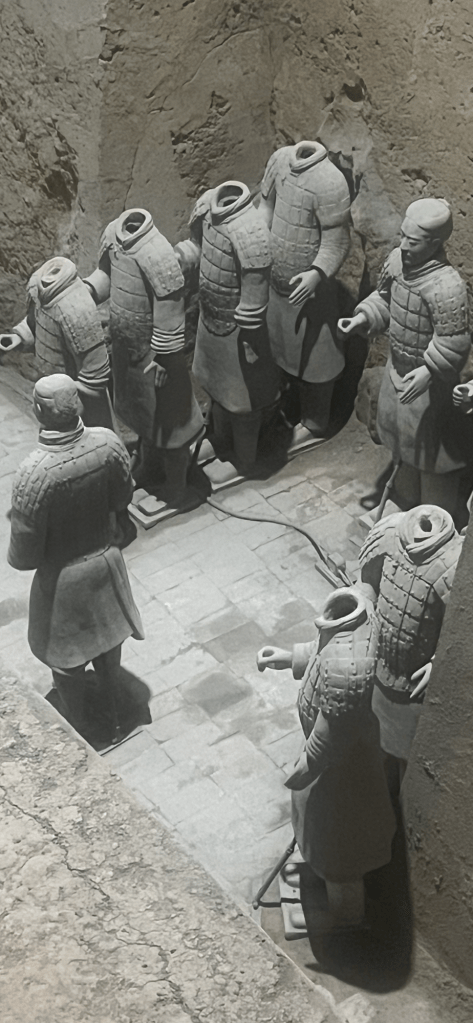
    The terracotta army figures were manufactured in workshops by government laborers and local craftsmen using local materials. Heads, arms, legs, and torsos were created separately and then assembled by luting the pieces together. When completed, the terracotta figures were placed in the pits in precise military formation according to rank and duty.

    Studies have shown that there is a strong resemblance between the statues and that of the local region’s modern inhabitants, which has led some to theorize that the high level of stylistic realism stems from the figures being modelled on actual soldiers.

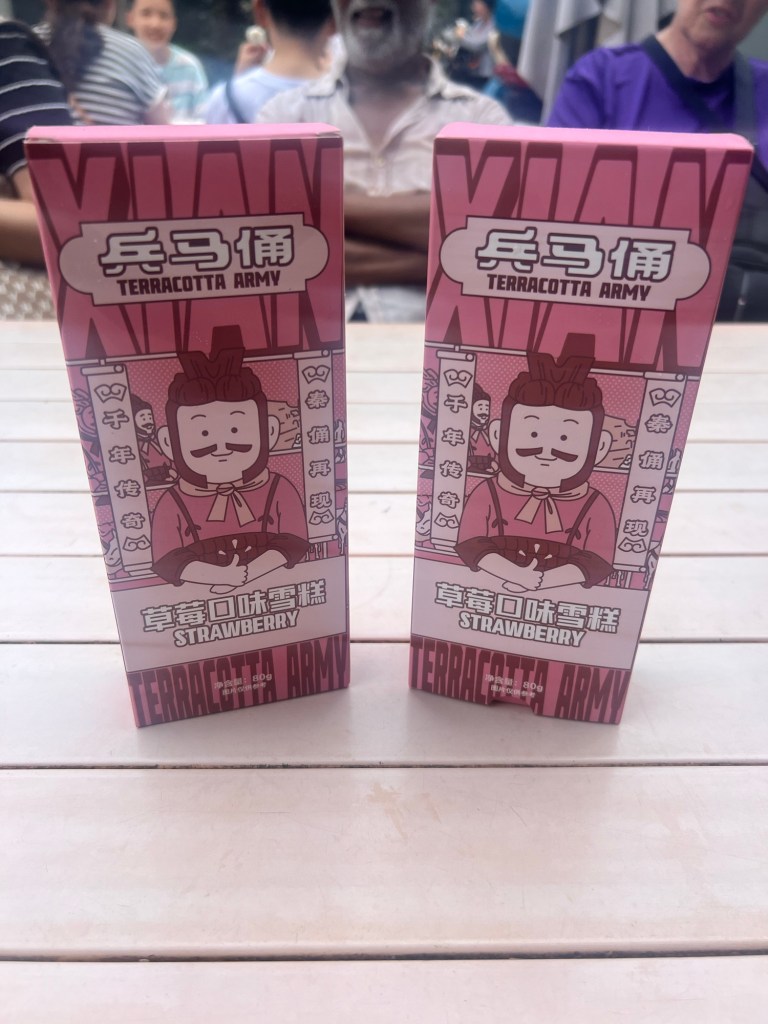
    Good to see Chinese commercialism in the ice cream form!
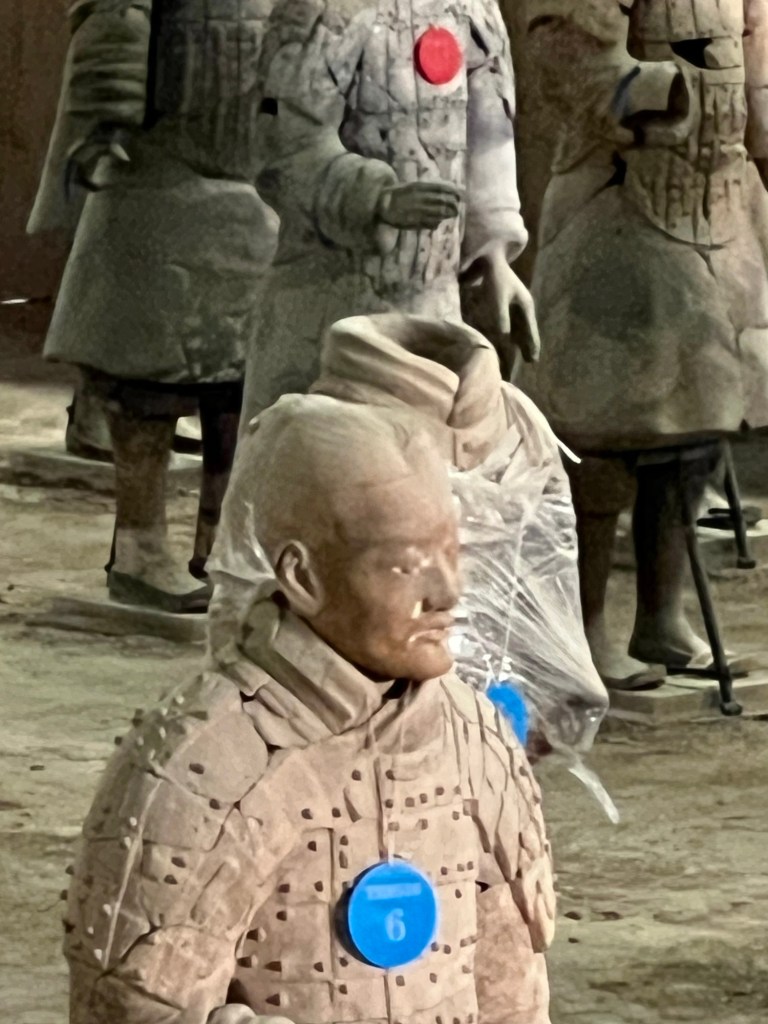
    Up close and personal

    Originally, the figures were painted with ground precious stones however, in Xi’an’s dry climate, much of the colour coating would flake off in less than a few minutes after removing the mud surrounding the army.

    Seven of the figurines found were in a degree of preservation that enabled them to be reconstructed from their original fragment shards.

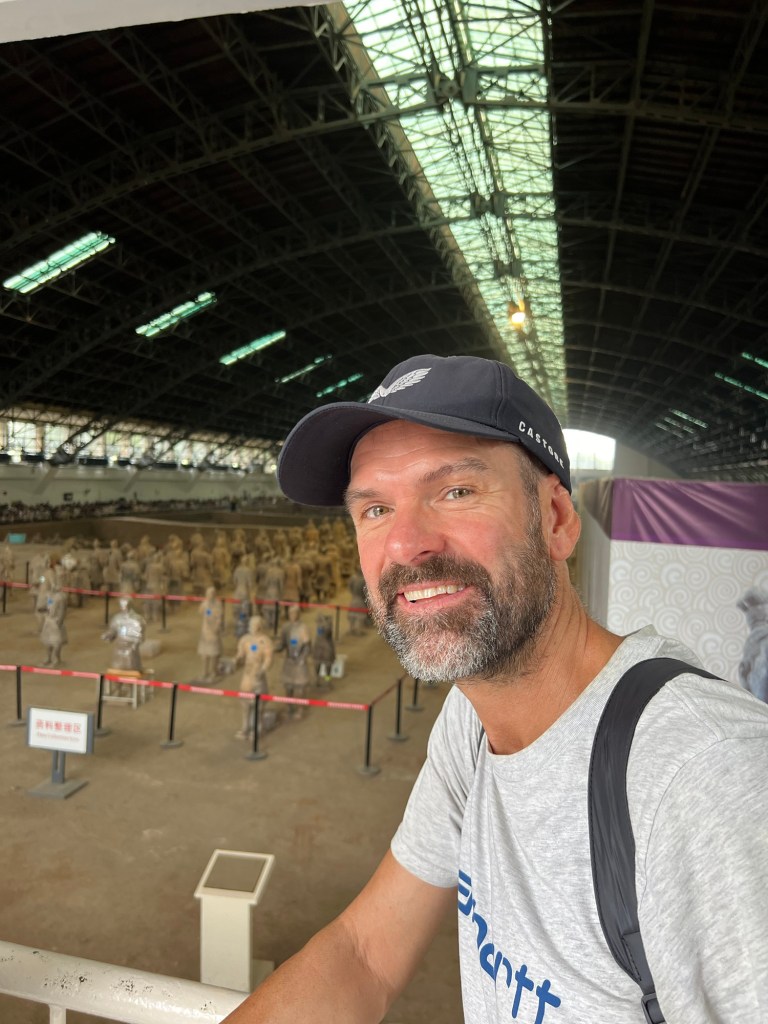
    Towards the end of our tour we returned to Pit 1 around lunch time when it was quieter and we were able to get some close up photos of the soldiers. It proved to be an incredible experience seeing them at close quarters and witnessing the detail on each soldier and animal.

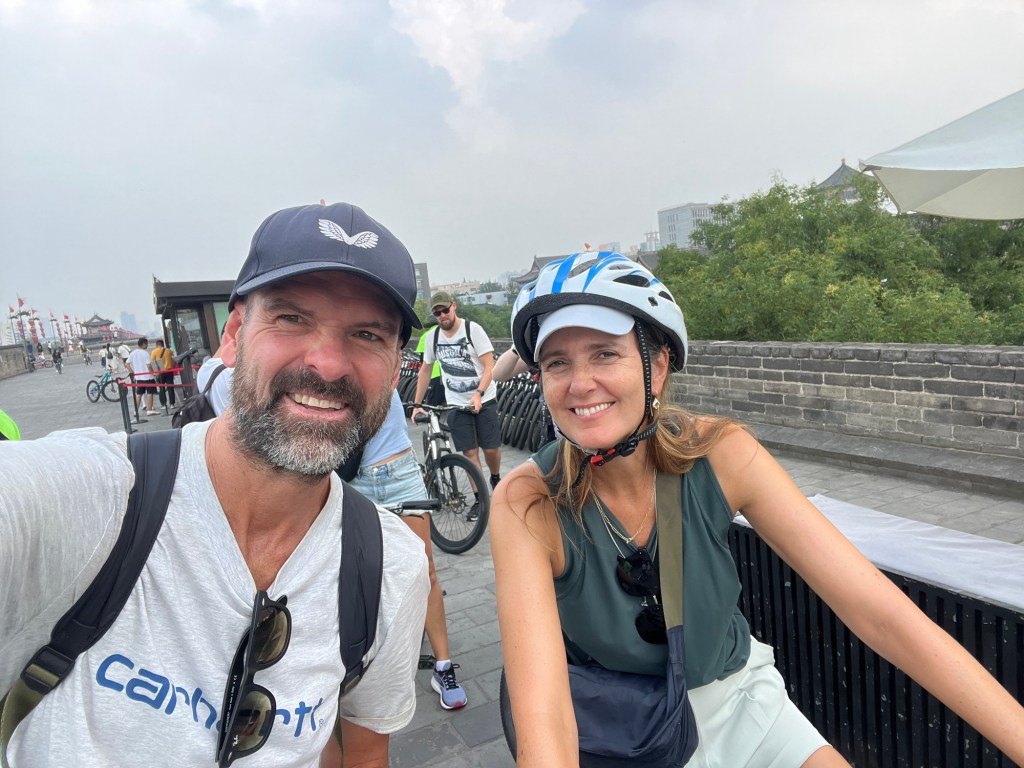
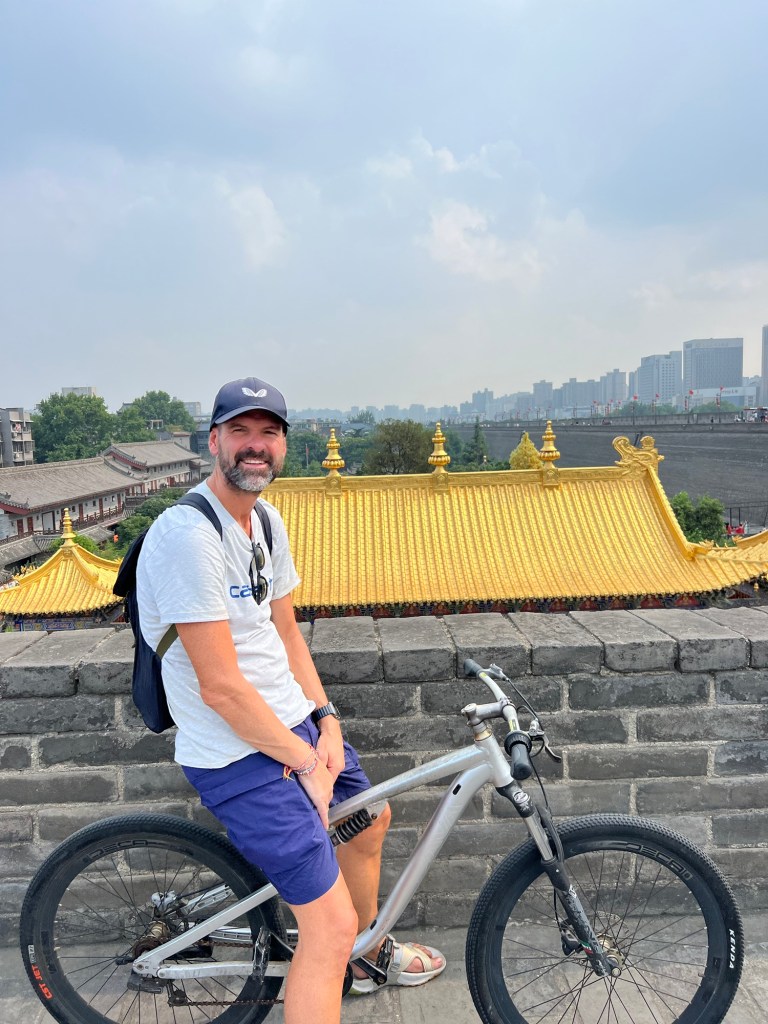
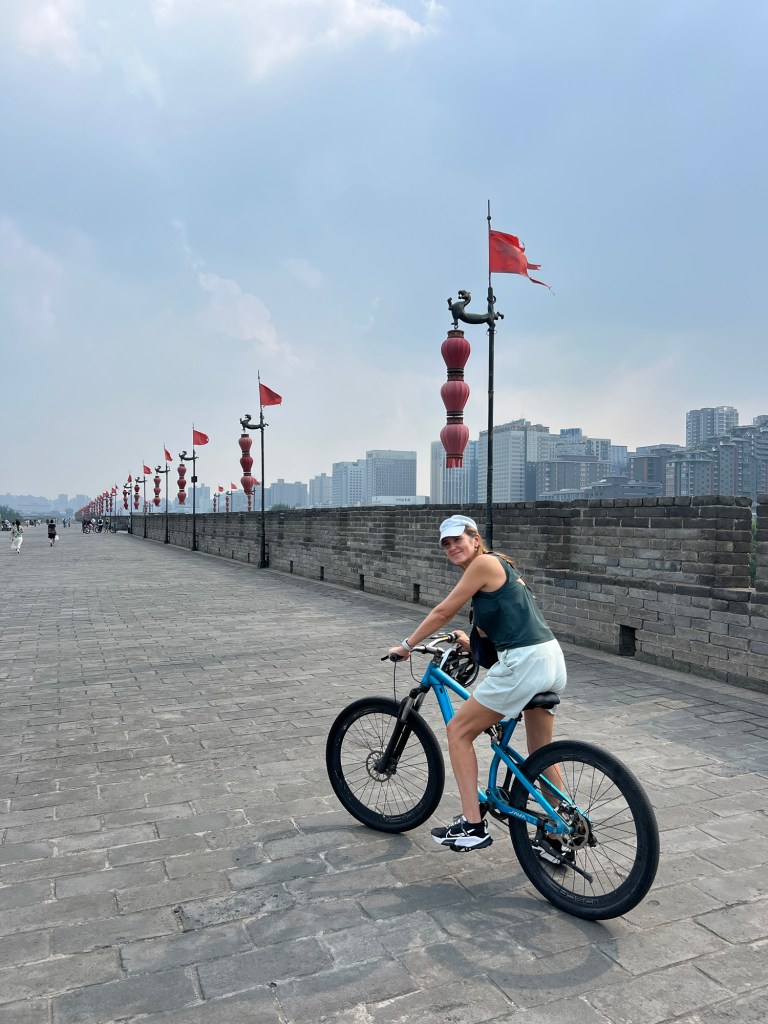
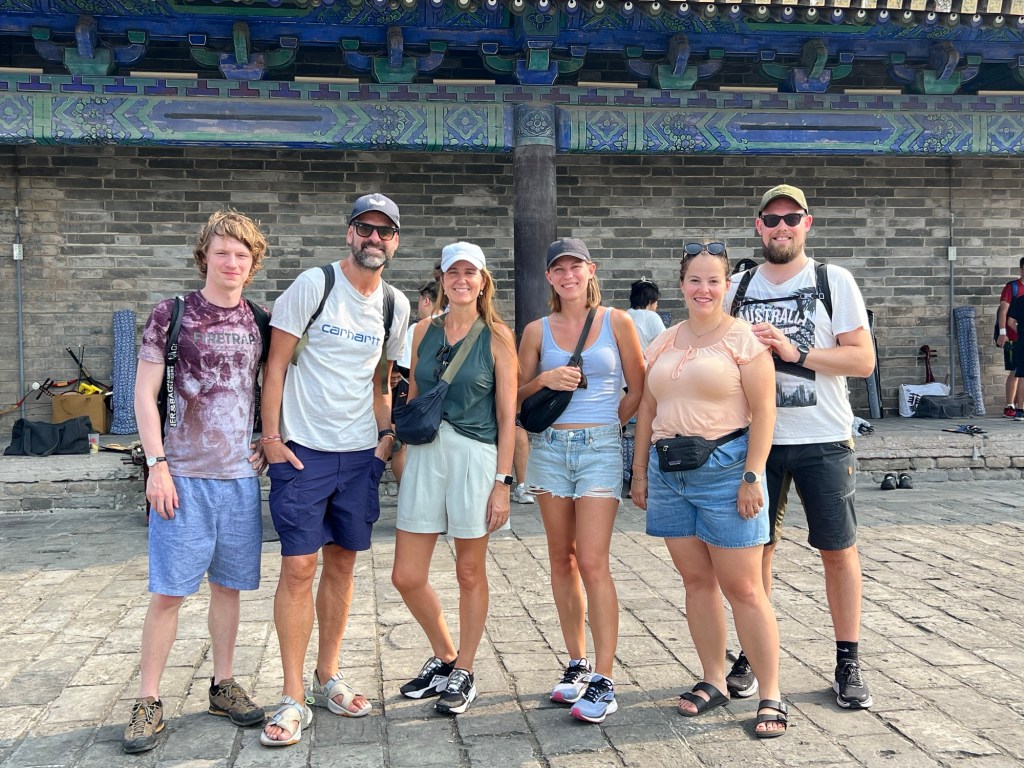
    After an amazing few hours, we returned to Xi’an and went straight out to do a bike tour along the top of the Old City Walls. We managed to convince the younger members of the tour group to join us, see we went out as a posse of six on hired mountain bikes.

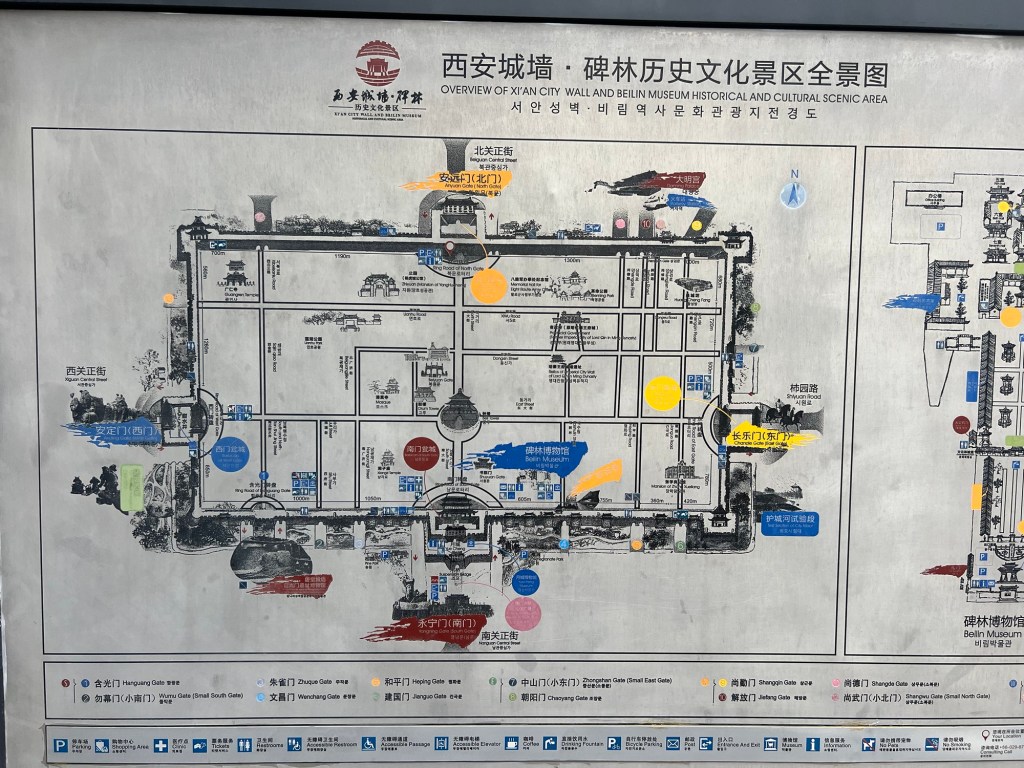
    Map of the Old City Walls

    Xi’an City Wall is one of the oldest, largest and best preserved Chinese city walls. They were built in the 14th century and enclose an area of c.14 sq km. 

    As a defense fortification, it was constructed with a moat, drawbridges, watch towers, corner towers, parapet walls and gate towers. The wall is 12 metres in height with a width of 14 metres and base width of 18 metres. It’s fair to say they are substantial!

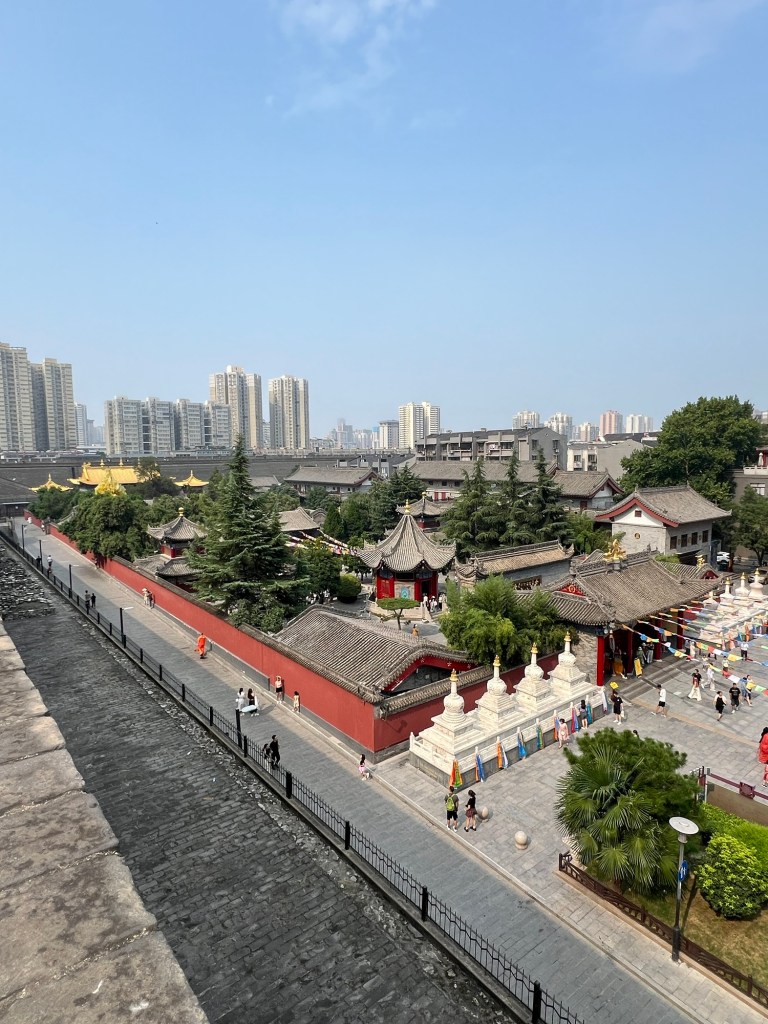
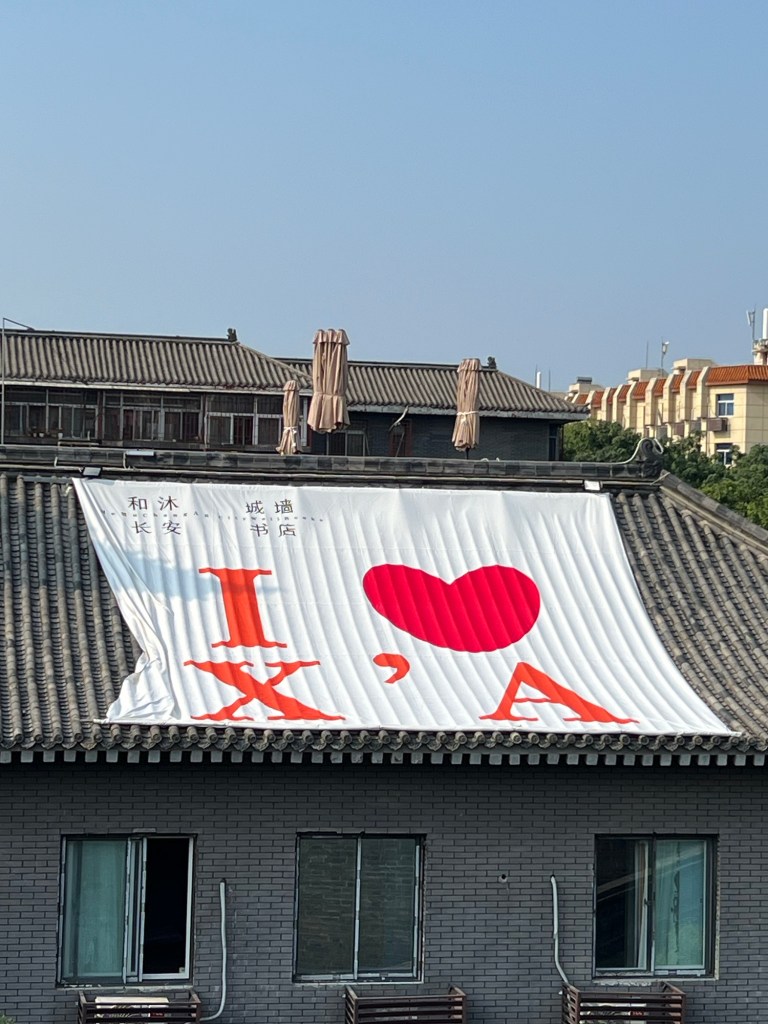
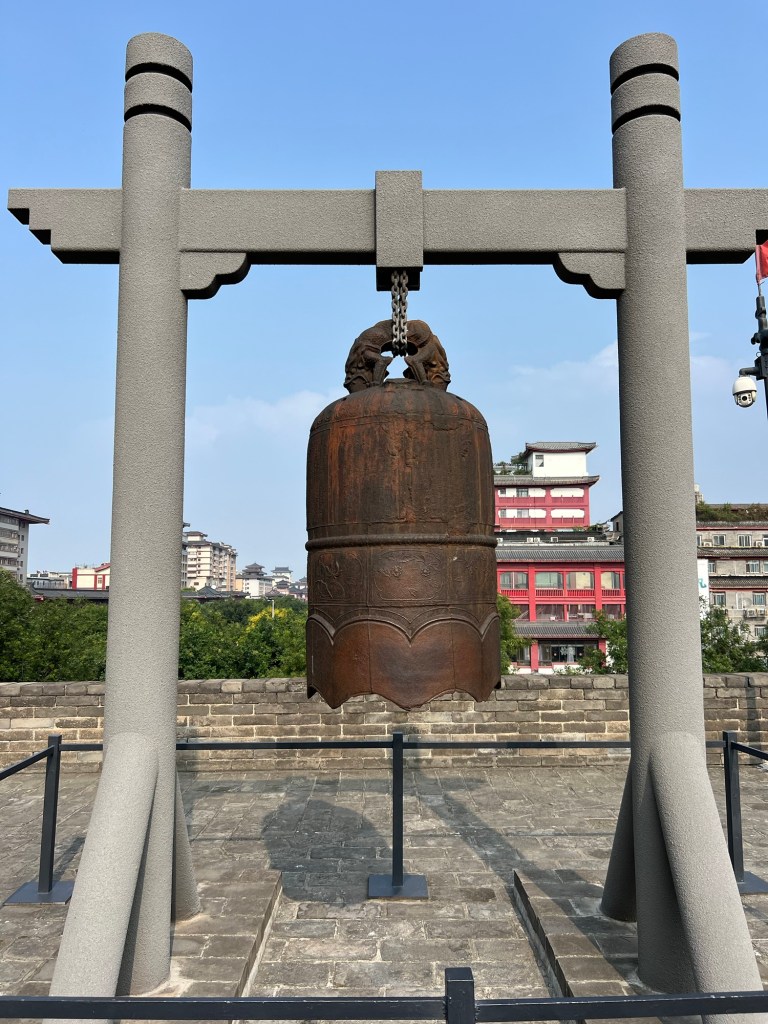
    Cycling along the top of the wall was a great way to see the city from on high and also take in the beauty of the various gates.
    The south gate, Yongning, is the probably the most beautifully decorated one and is near to the Bell Tower.

    We managed to cycle around the whole city circuit within 2hrs with a couple of stops off to admire the views and take in the weekend atmosphere.

    Couldn’t pass up this sign
    Cycle tour group (Jamie, Andy, Michelle, Laura, Julie & Simen)
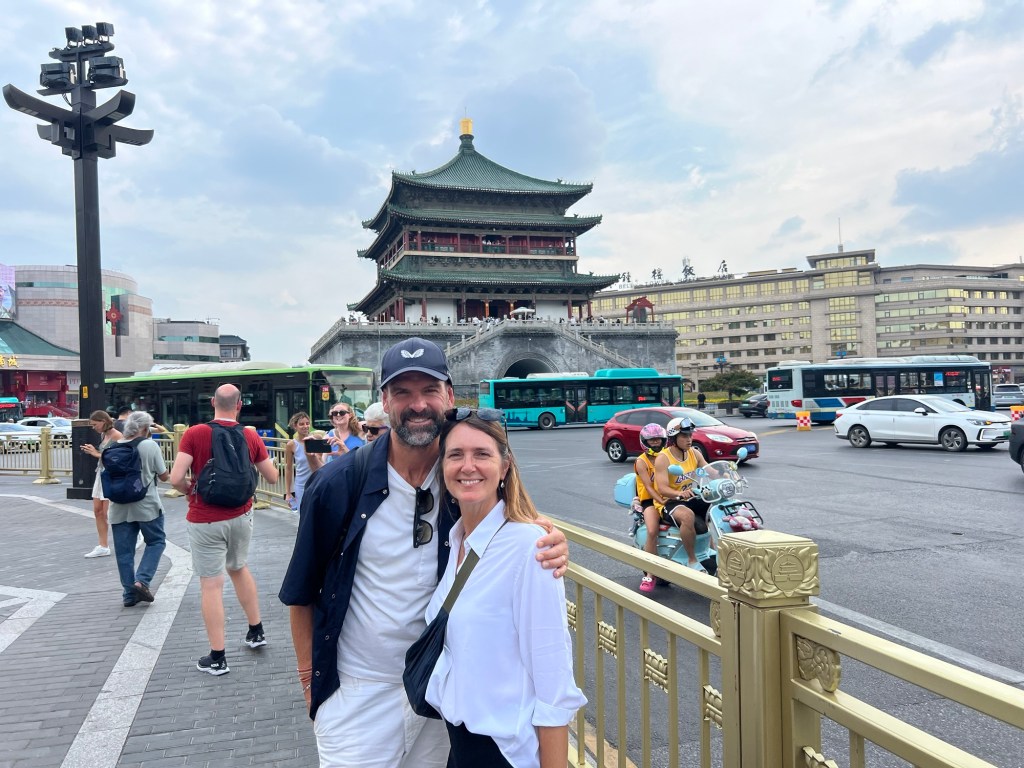
    Bell tower
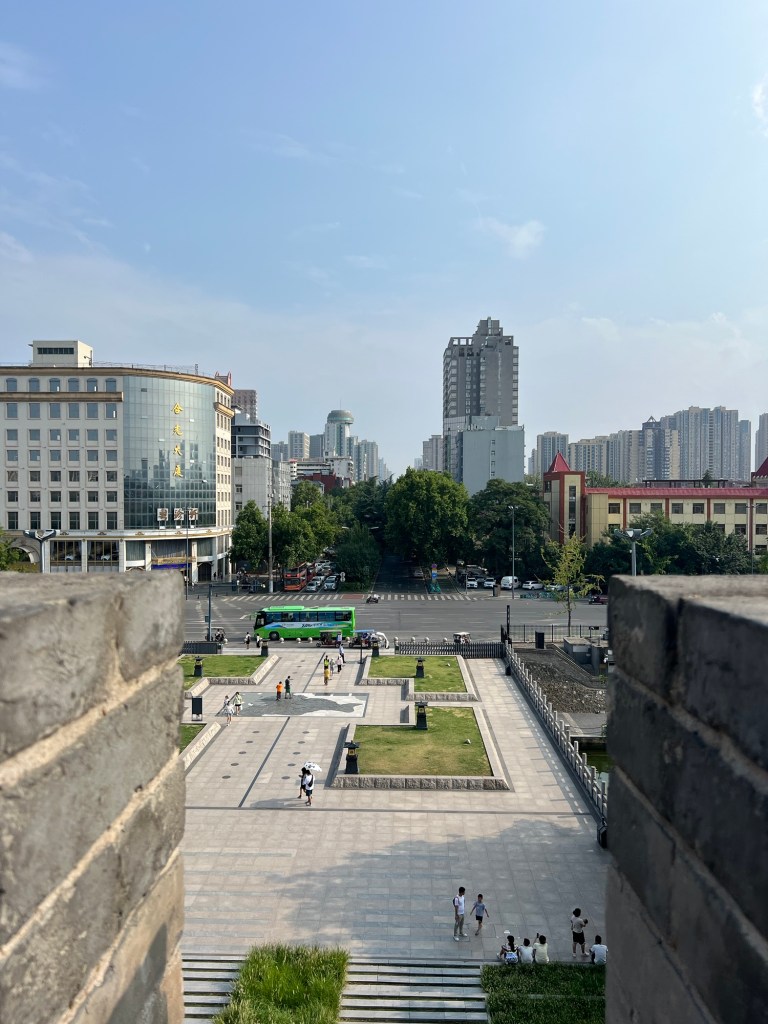
    View from the wall to the high rises have ‘popped up’ in the last 30yrs
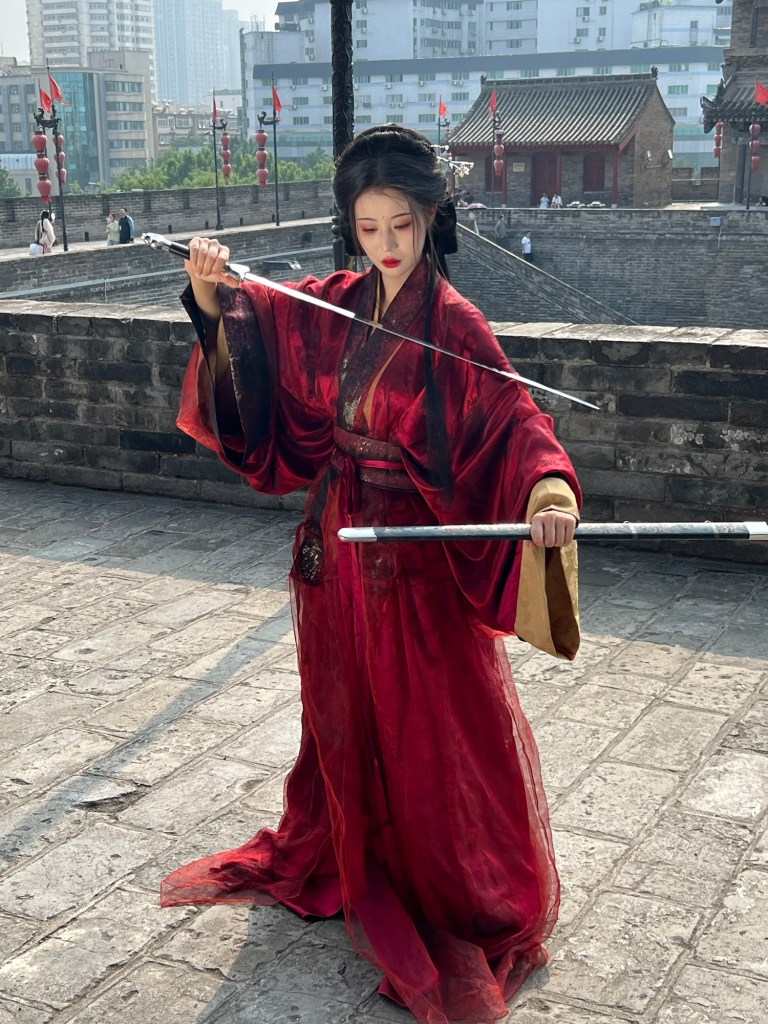
    Another local in dramatic pose

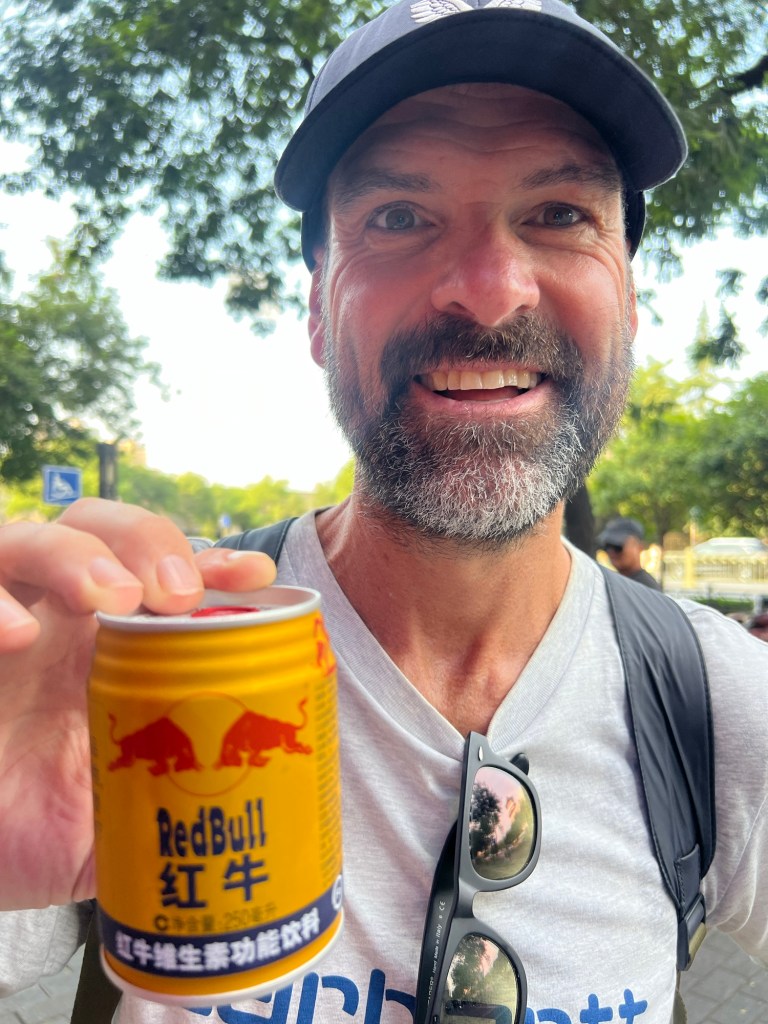
    After all that exercise we popped into a local store and bought a can of the original Chinese Red Bull which tastes and looks like the Austrian version.

    No sooner had we finished our bike tour, we then departed on another walking tour of the city and a visit to a family restaurant that our guide Kris knew.

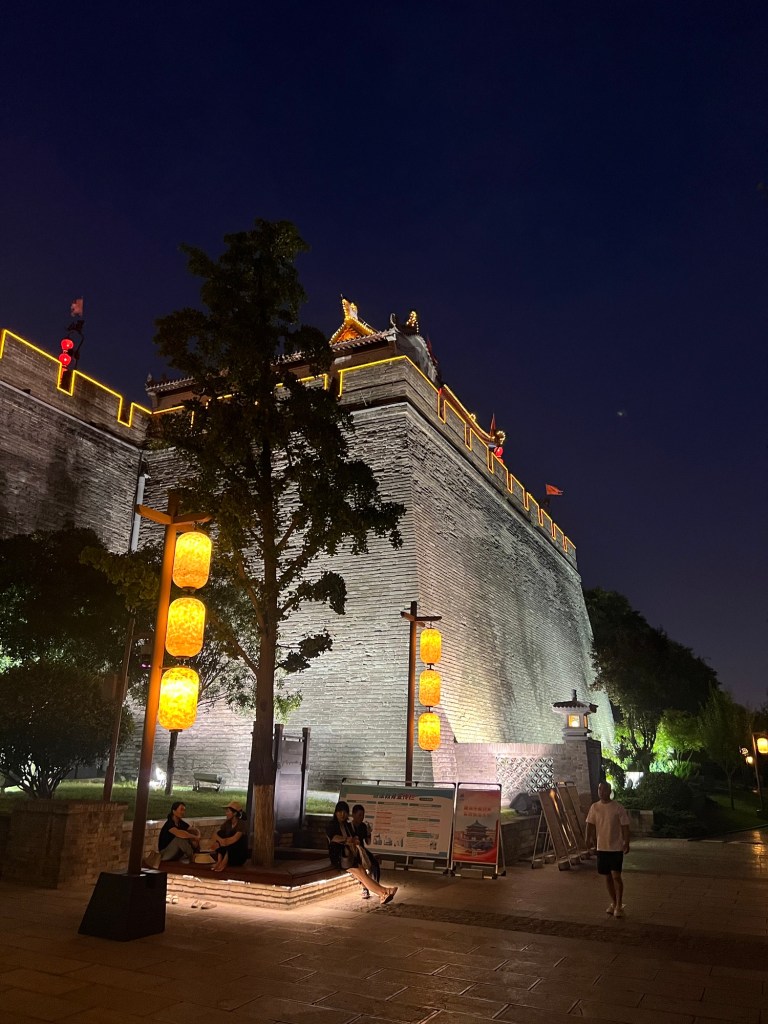
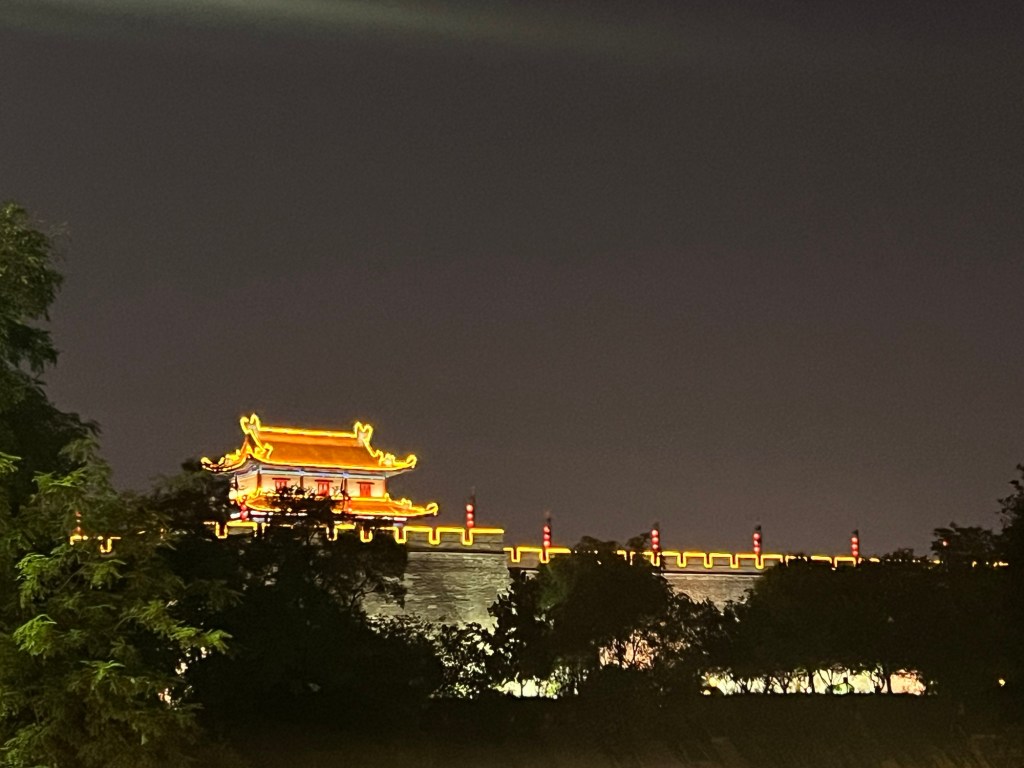
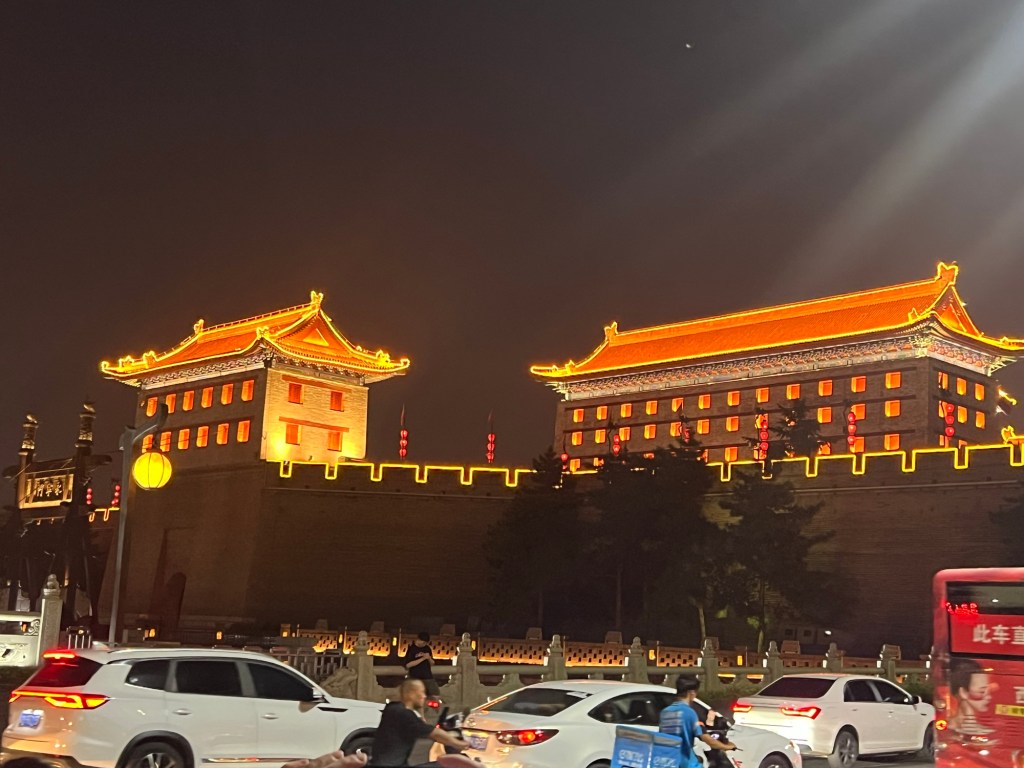
    After dinner we went down to the Old City Walls again which we all lit up and in the nights sky looked stunning.

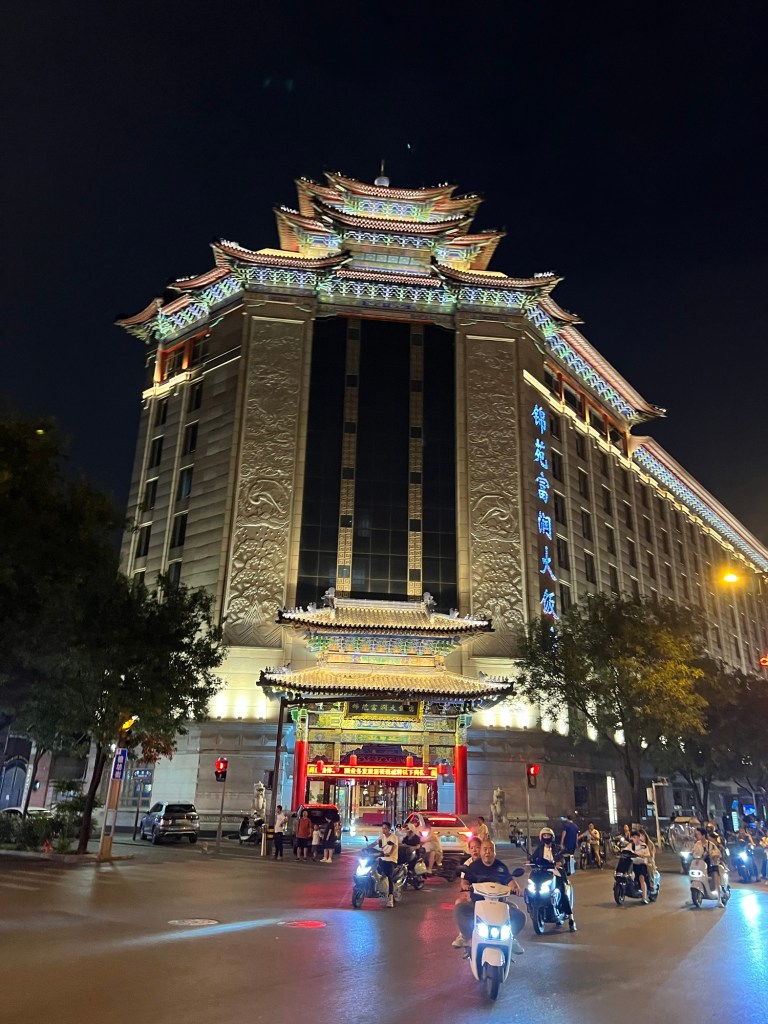
    Being a Saturday night, the streets of the city will filled with local families enjoying the night air and taking trips to local restaurants along with food stalls laid out along the streets.

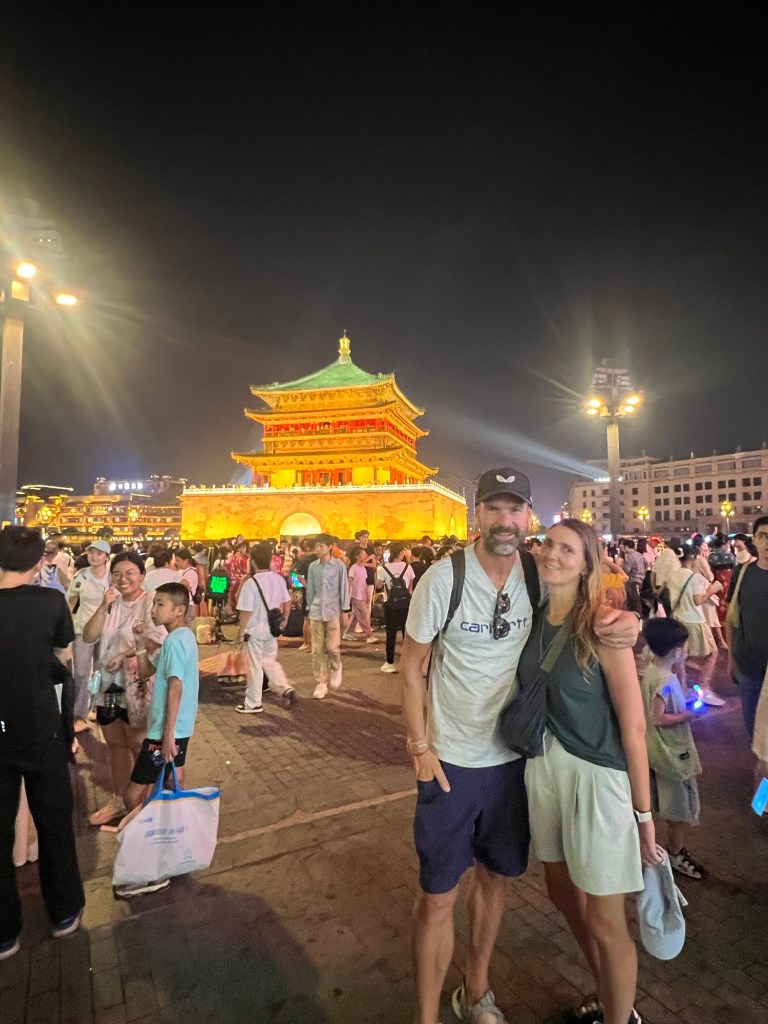
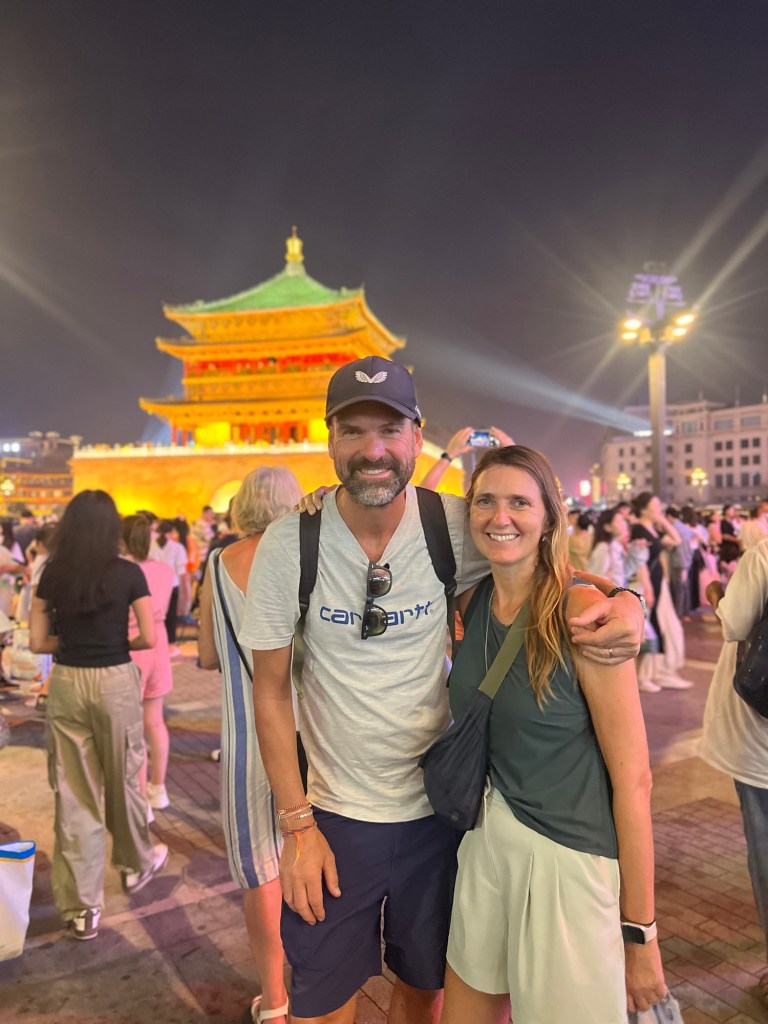
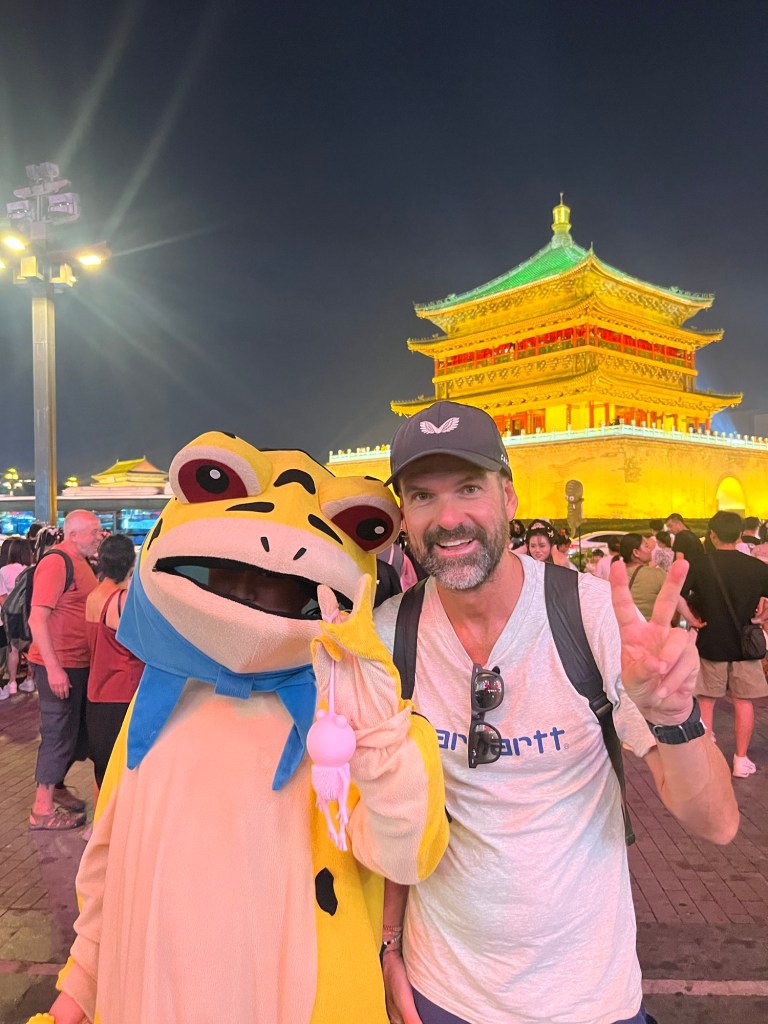
    Within the central square where the Bell Tower was located we came across a throng of people again in local dress taking photos for their WeChat profiles.
    Saturday night in Xi’an
    Andy & friend
    Our Xi’an hotel

    Tomorrow we move on and take another bullet train for 3hrs to the city of Chengdu. The city is most famous for two things, the pandas living in the mountains and their food. We can’t wait.

  • Overseas tour Day 290 – Xi’An

    Aug 18th, 2024

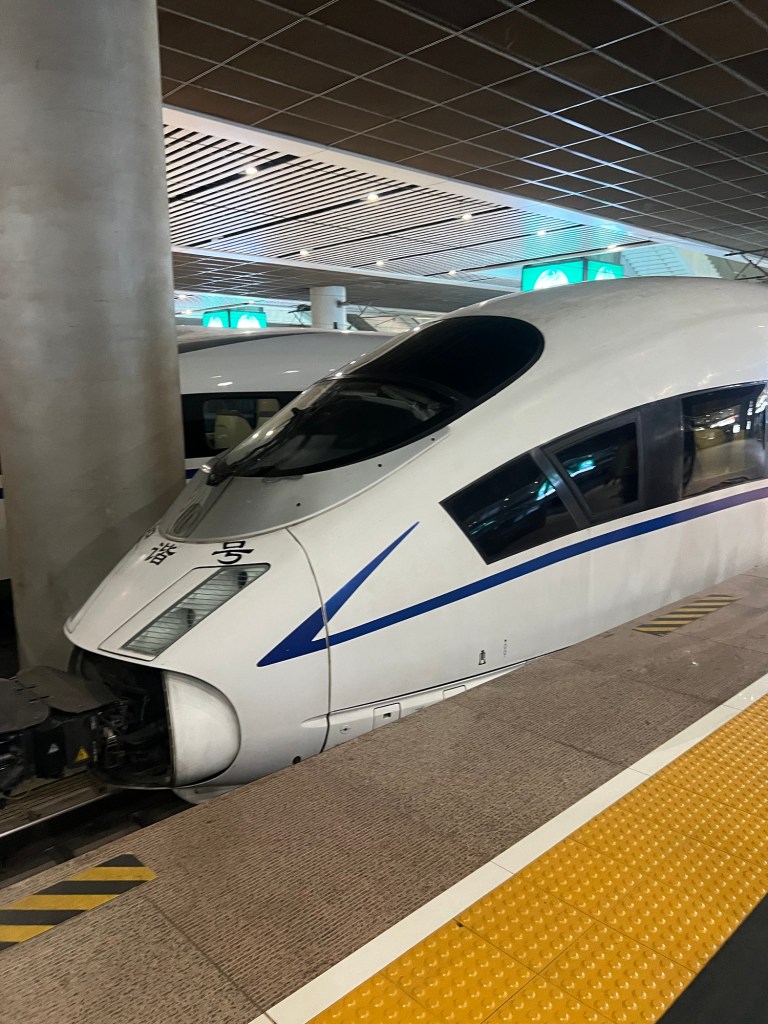
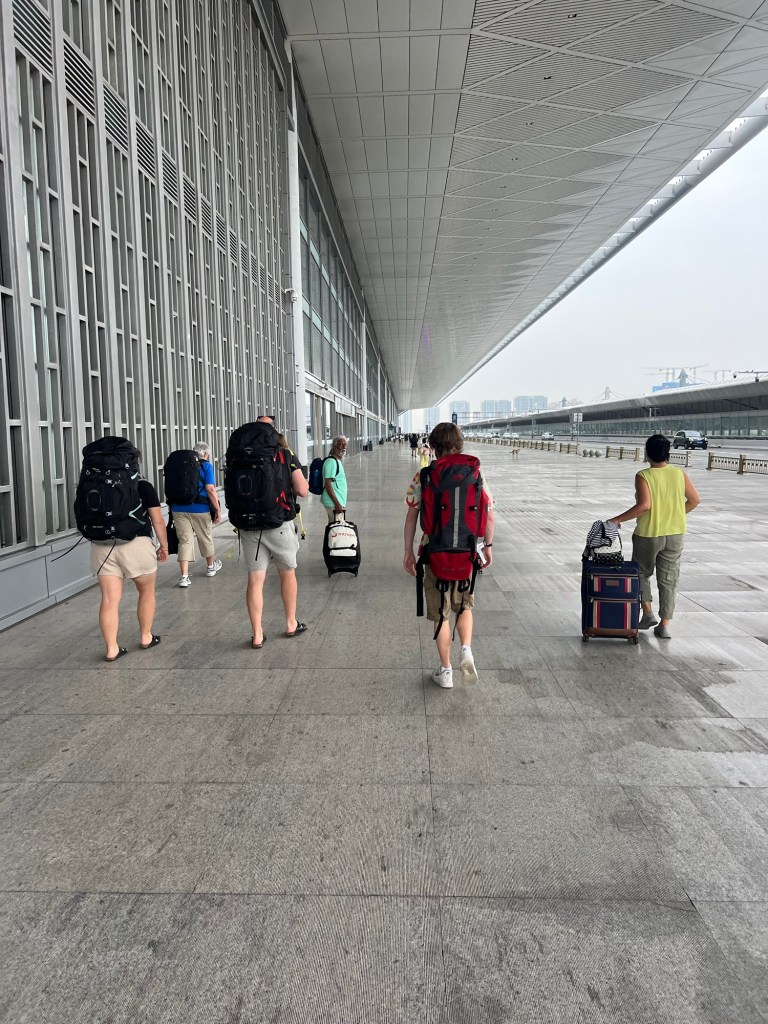
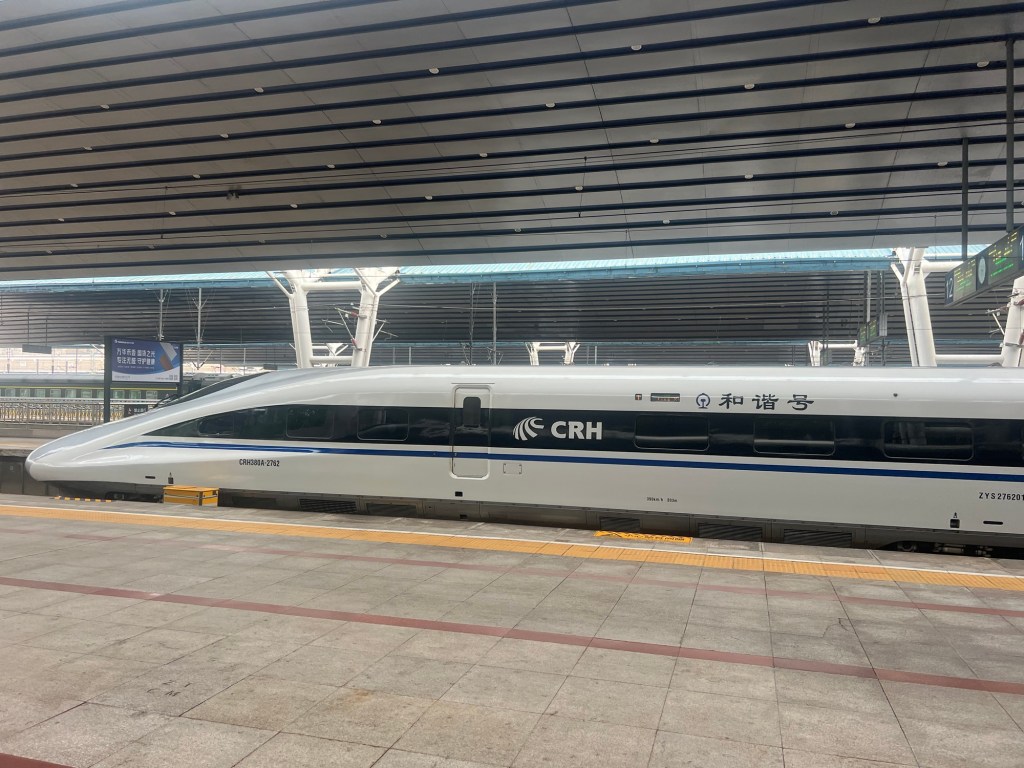
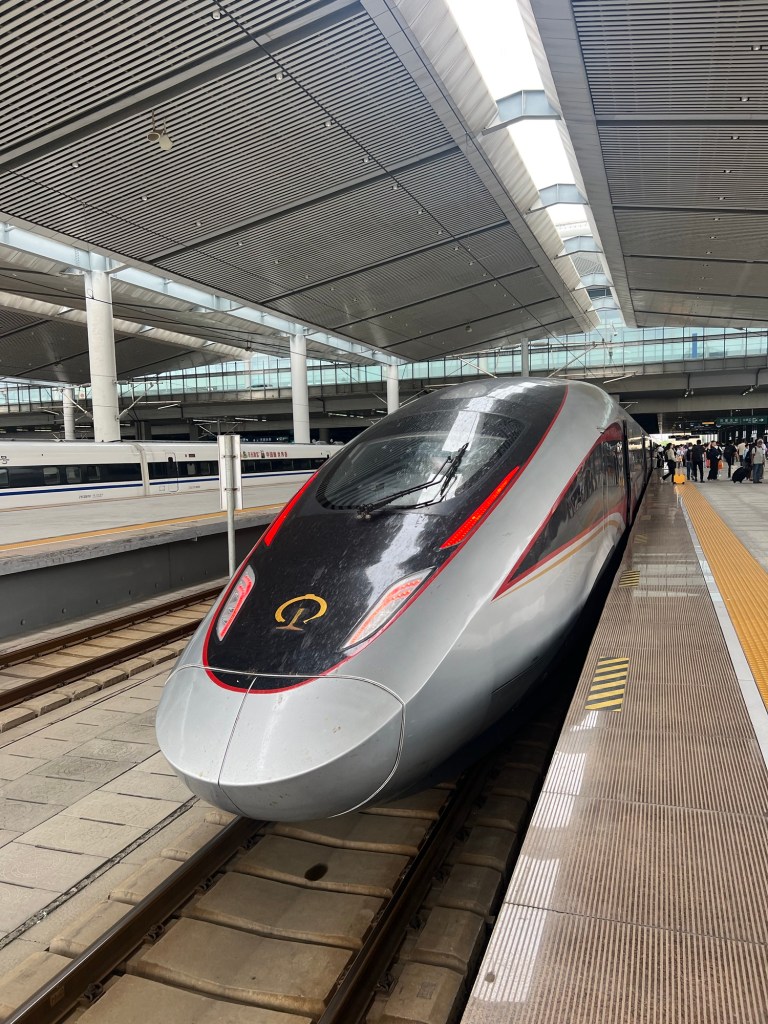
    We waved goodbye to Beijing this morning and found our way to Beijing West train station to catch a bullet train to Xi’An some 1,100km away.

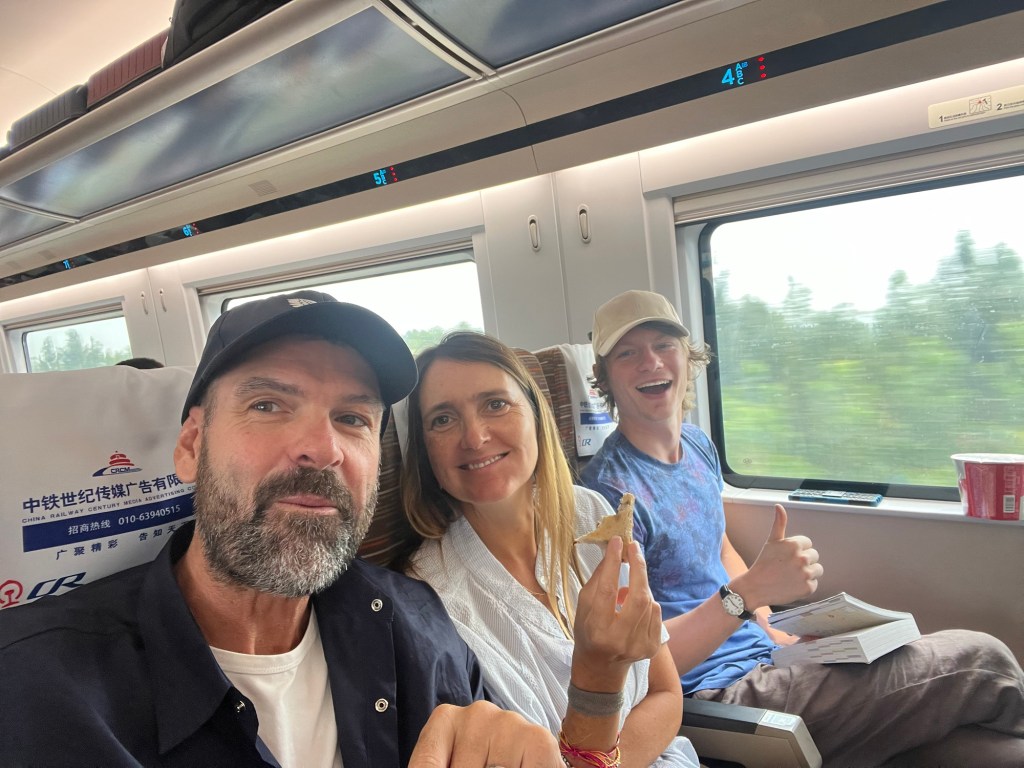
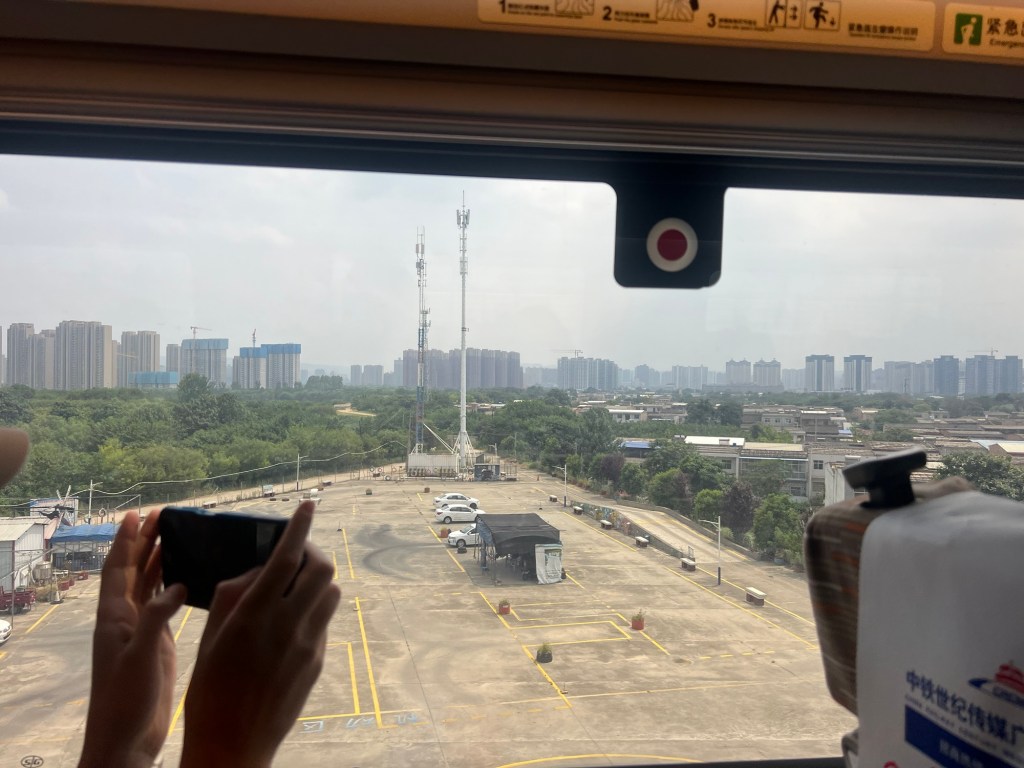
    We were both looking forward to the experience of travelling at high speed and due to the relatively straight train lines, you barely realised the speed we were achieving.

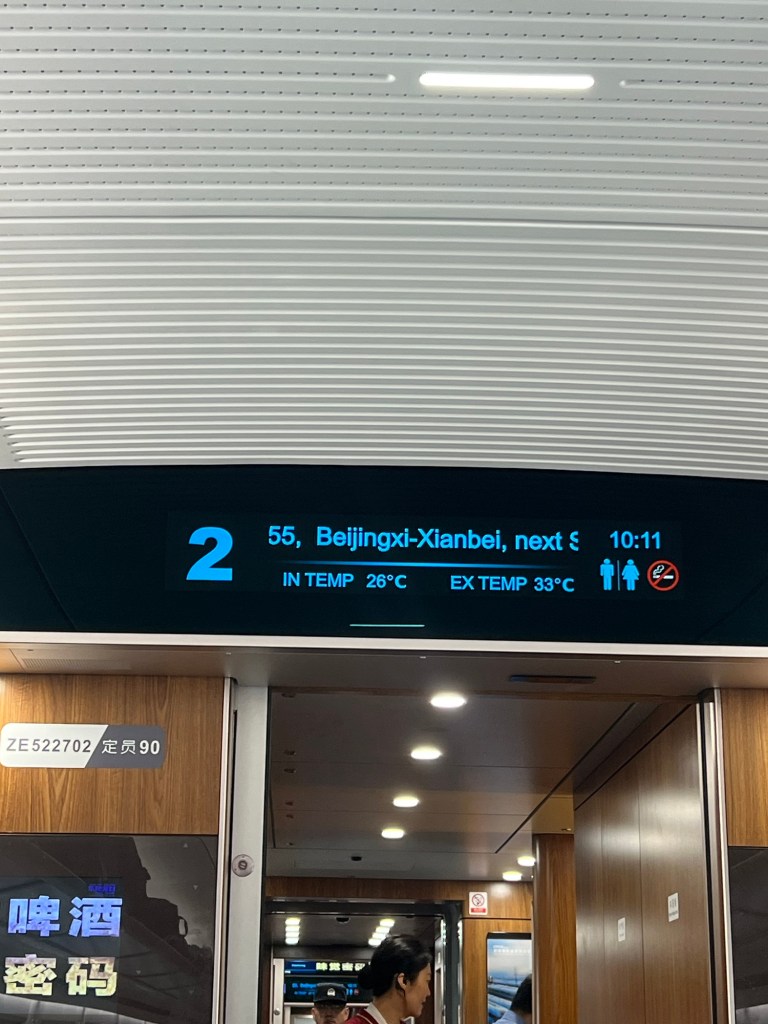
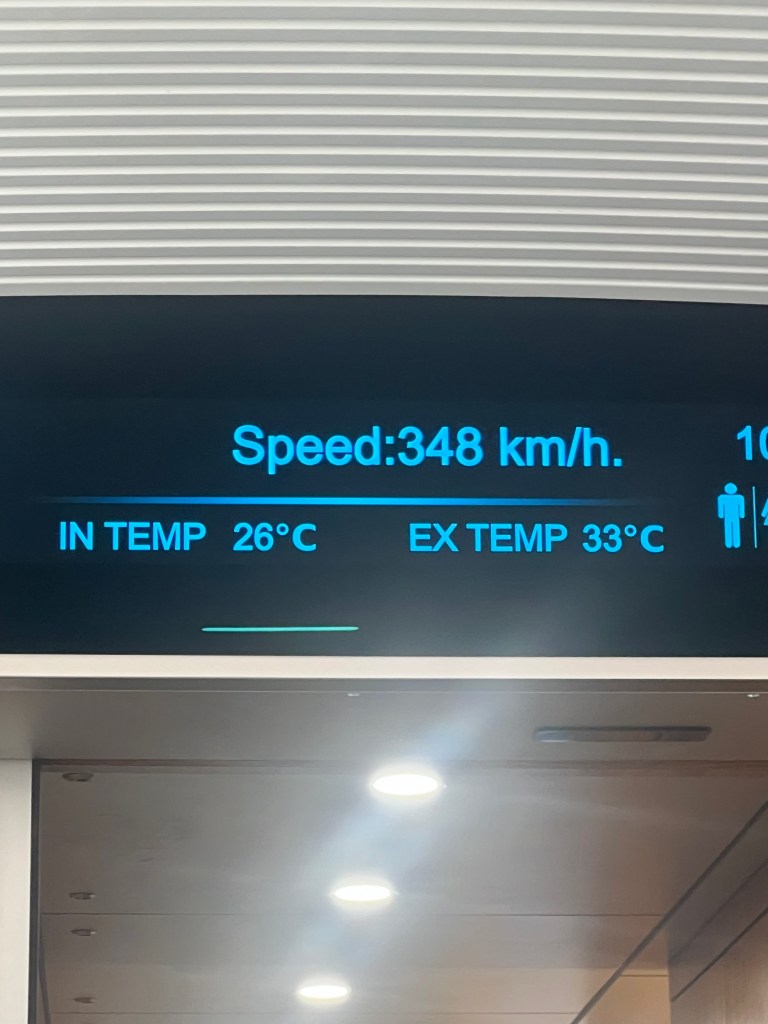
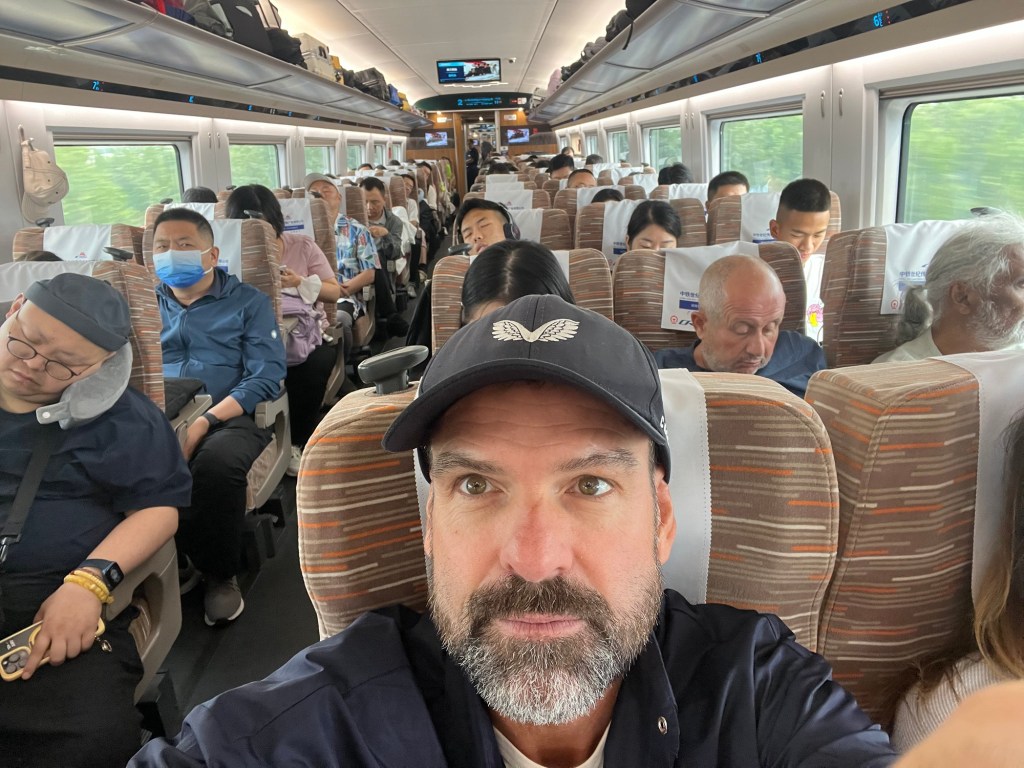
    Sitting in airplane like seats and in relative comfort we watched the info board in our carriage as we quickly reached a cruising speed of 350kph!

    Our destination, Xi’an is the capital of Shaanxi Province and is the third most populous city in Western China with a population of 13 million.

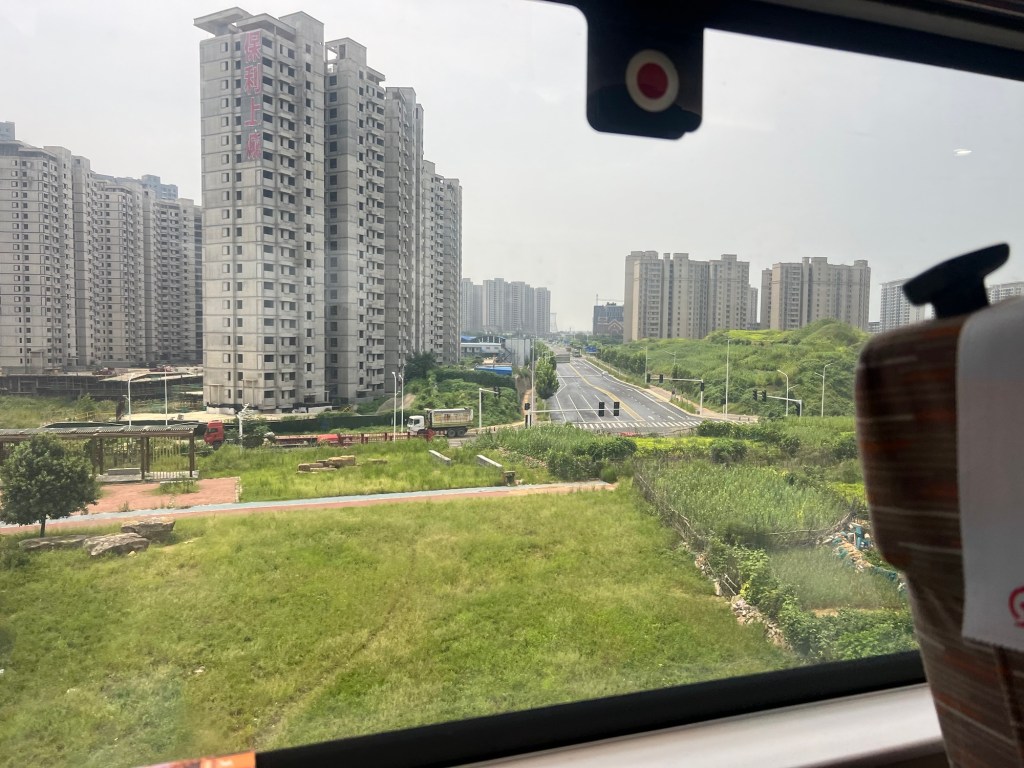
    Along the journey we were taken with the number of high rise apartments we flew passed, often comprising blocks of a dozen or more 30-40 storey buildings. It’s perhaps no surprise when you’ve got a population of 1.5 billion to house!
    Tower blocks on tower blocks
    As far as the eye can see new apartments

    Within just over 4hrs we had arrived at Xi’an over 800 miles from Beijing. Quite a journey and all thanks to the speedy Chinese bullet train, that then heads back to Beijing with all the seats then spun round in order to be facing the right way on the return.
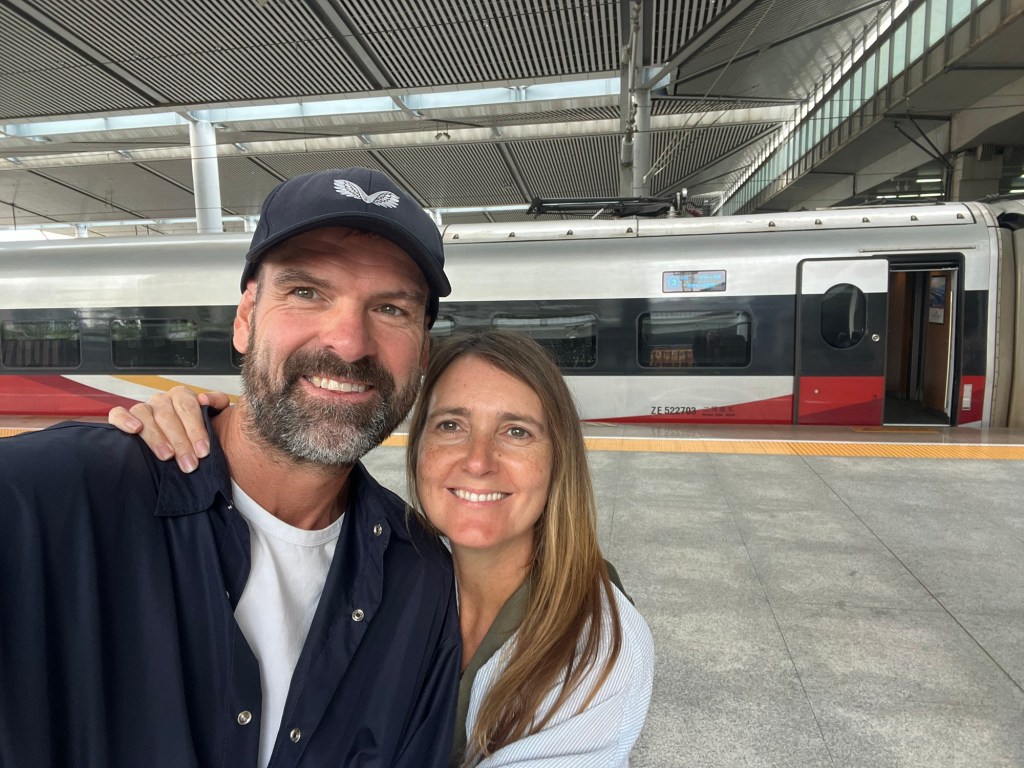
    Thanks for a great journey

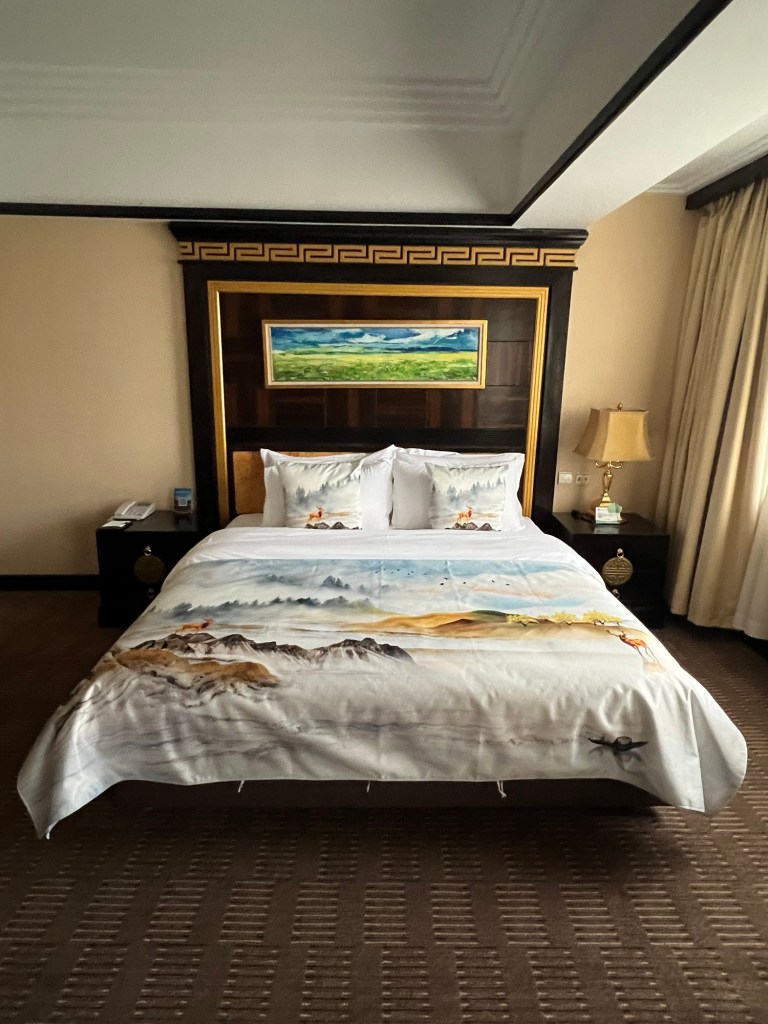
    Within 30mins we had arrived at our hotel in the Old City Walls of Xi’an and were pleased to see a large comfy bed decorated with an old country scene on the duvet.

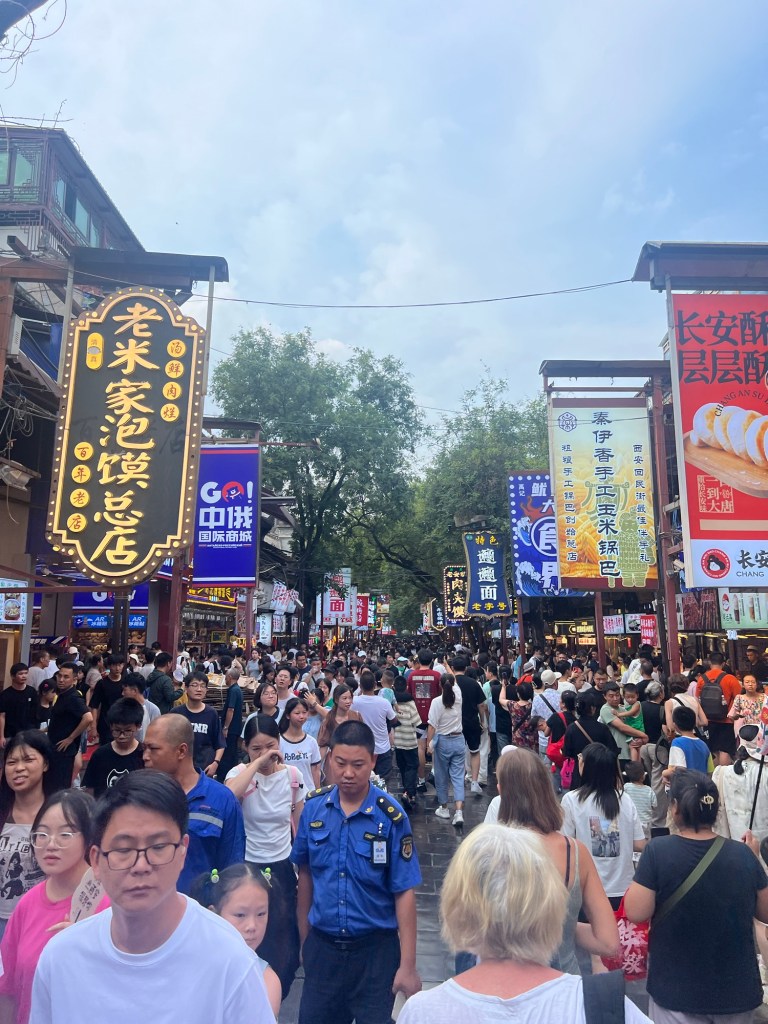
    After freshening up, we headed out for a tour of the city and a visit to the Muslim quarter, close to the Bell Tower and Drum Tower and is popular with tourists with a food market and traditional stalls.

    The Xi’an Muslim Quarter can be traced back to the Tang dynasty, when Muslim merchants came to and aggregated in Chang’an today’s Xi’an, via the Silk Road.

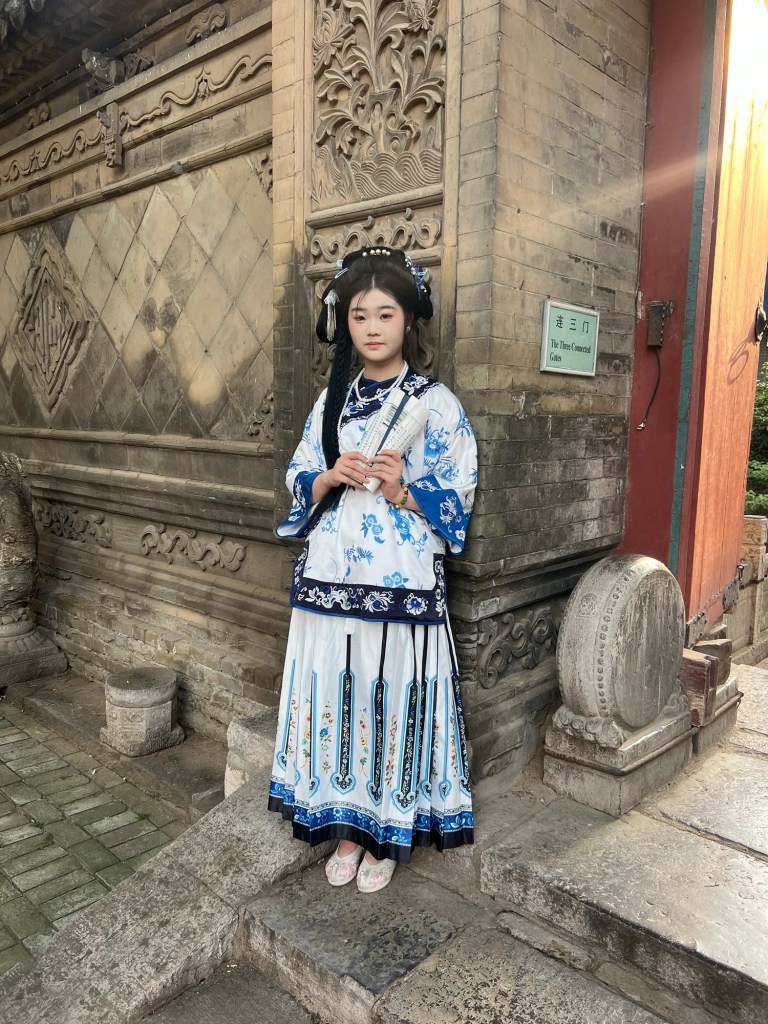
    Locals in traditional dress

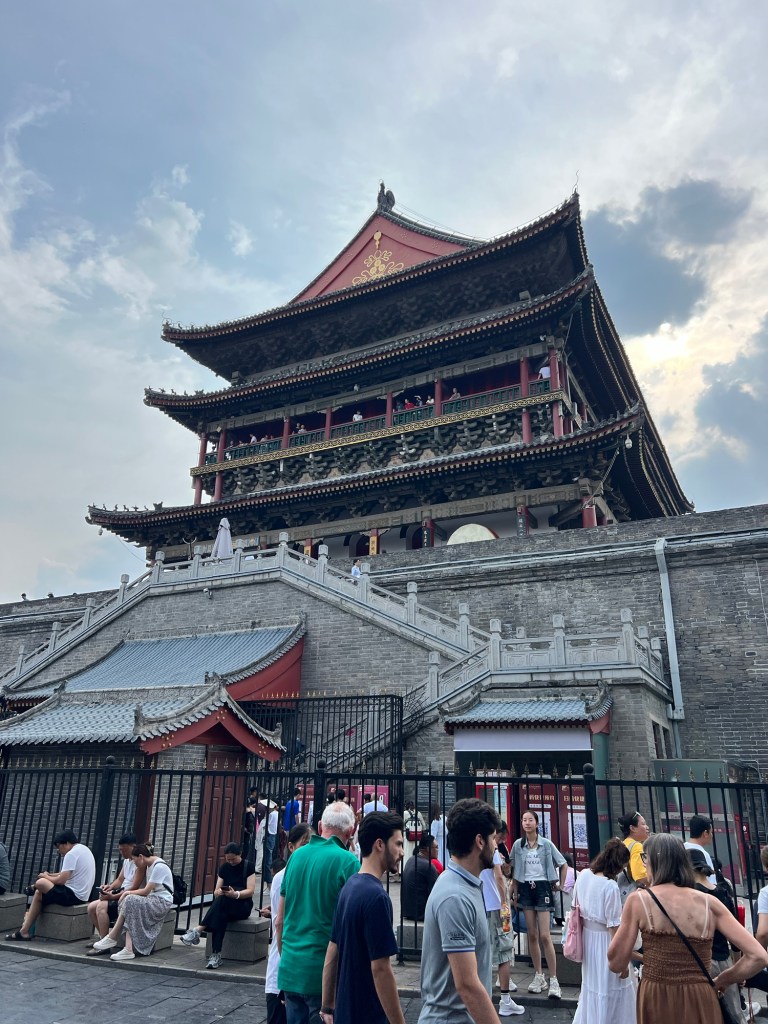
    We walked along one of the main streets to The Drum Tower, which got its name from the huge drum located within the building. In contrast to the Bell Tower, where the bell was stricken at dawn, the drum was beaten at sunset to indicate the end of the day.

    The Muslim food in Xi’an can be traced back to the Tang dynasty. Later, it developed its special characteristic of mainly using beef and mutton and complementing with pastry.

    Today, the Xi’an Muslim Quarter is famous for its traditional foods and cultural activities, notably beef/lamb stew of bread, steamed soup dumplings, meat skewers and wooden cages mirror cake. The latter is Xi’an’s traditional dessert with ground stick rice and steamed, covered in sugar, nuts and rose flavored jam. A real treat!

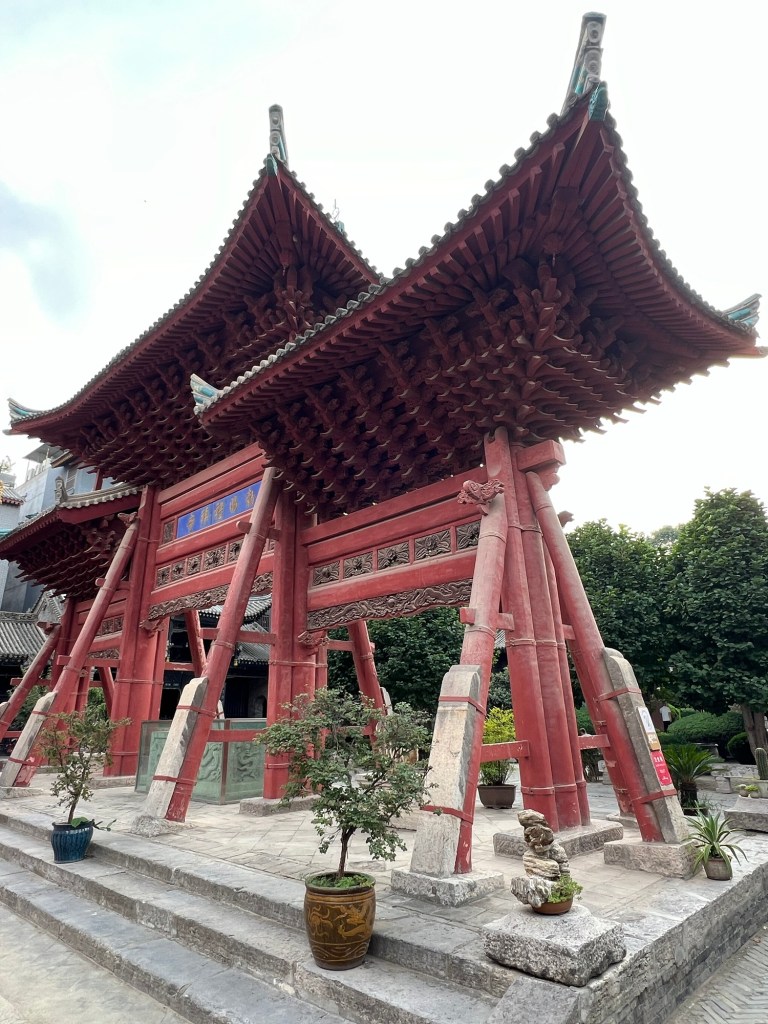
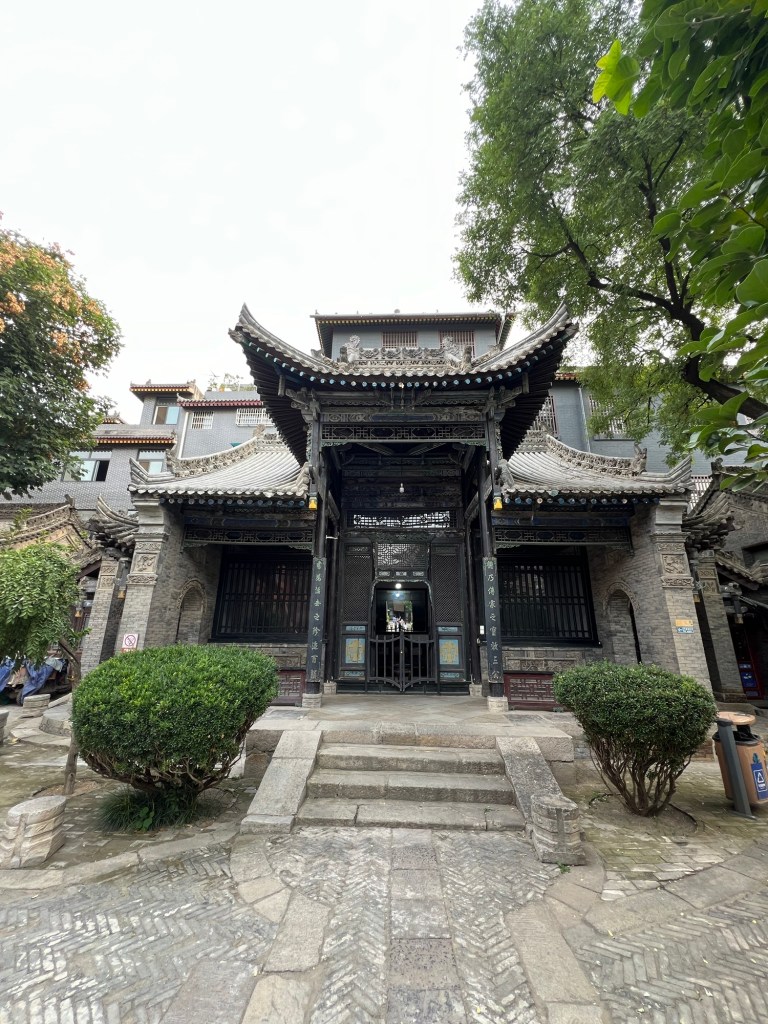
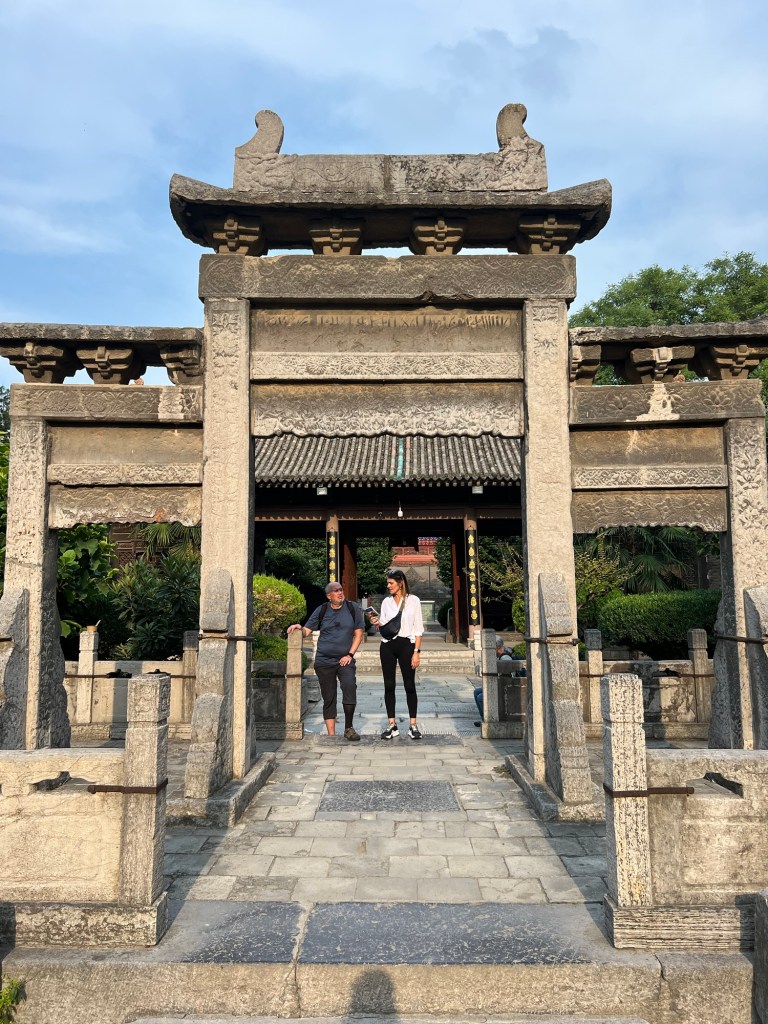
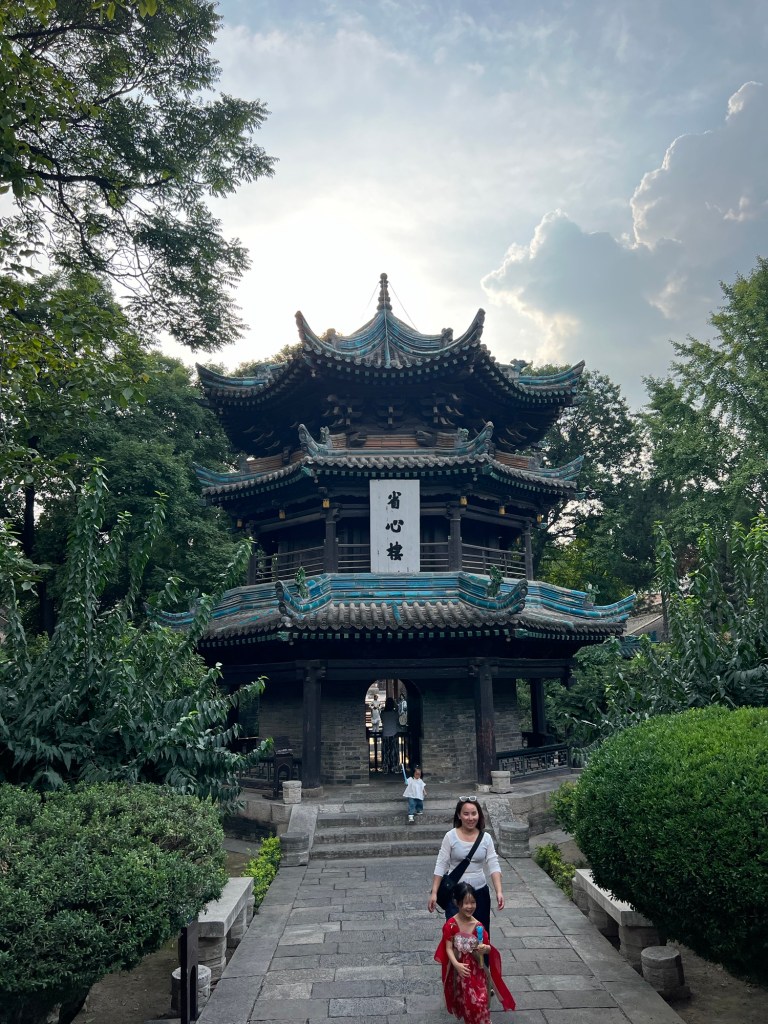
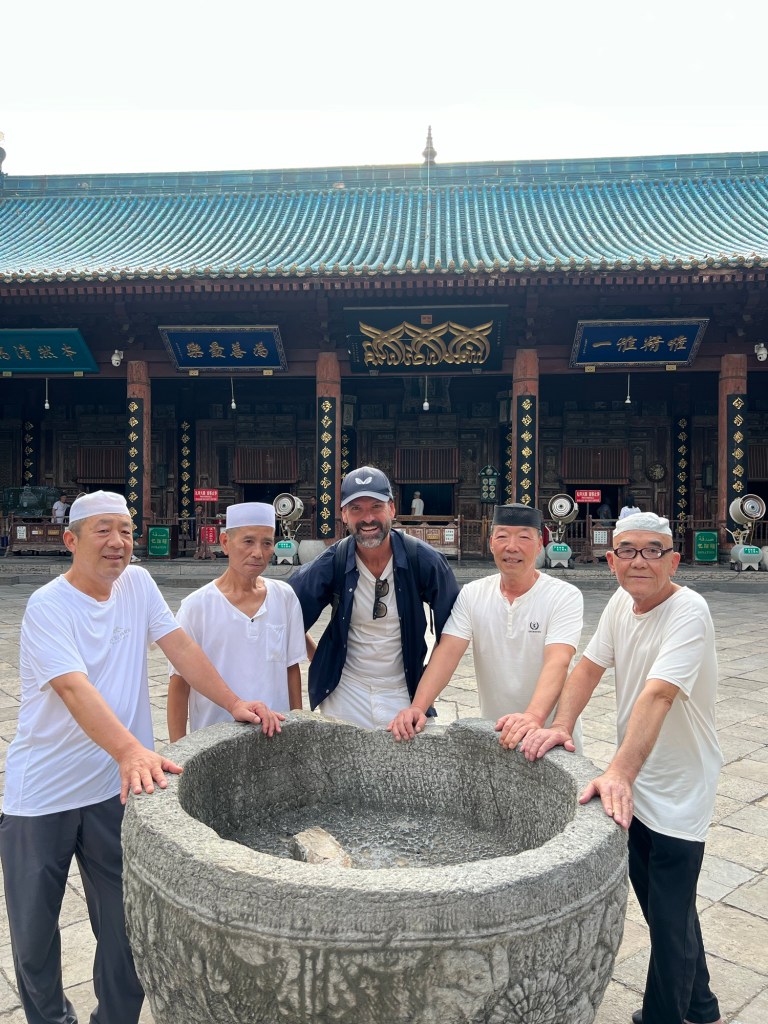
    Xi’an has a minority Muslim community, most of these Muslims are from the Hui group, with an estimated 50,000 Hui Muslims in the city. There are seven mosques in Xi’an, the best known being the Great Mosque which we visited.  

    An active place of worship, this courtyard complex is also a popular tourist site. It now houses more than twenty buildings in its five courtyards.

    The Great Mosque of Xi’an represents the Gedimu tradition of Sunni Islam, which is the majority jurisprudence that the Hui population follow.

    Overall, the mosque, like the majority of Chinese mosques built between the Ming and Qing periods, combines a traditional Chinese architectural form with Islamic functionality. Though the mosque was constructed using traditional Chinese forms, unlike most buildings that follow a north–south axis in accordance with feng shu.

    The prayer hall is a monumental timber building with a turquoise hip roof, a six-pillared portico, and five doors. Contrary to most mosques in many Muslim-majority states, the prayer hall does not feature a dome-shaped ceiling but has a traditional Chinese, pointy ceiling covered with ceramic decorative tiles.
    In front of the Prayer Hall
    Andy with local worshippers
    Another local girl

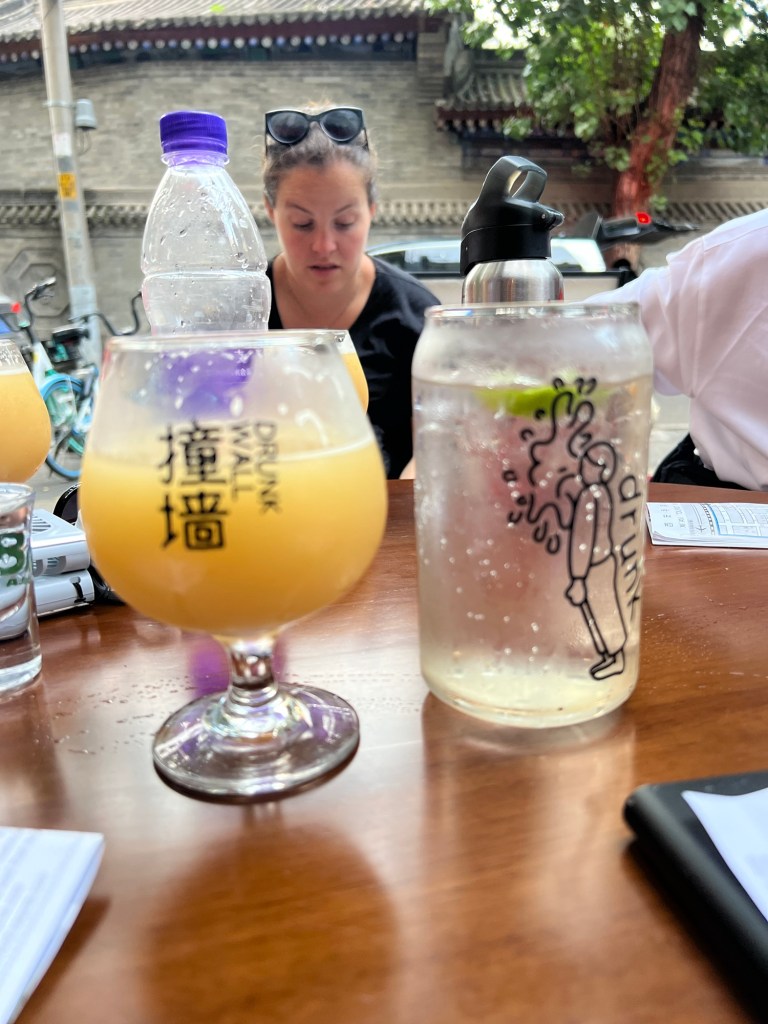
    After all that culture we keen to take a break and grab a drink and relax. We found a a great bar called Drunk Wall, next to the Old City Walls where they served local ales. Andy managed to find a great IPA and Michelle went for a classic G&T.
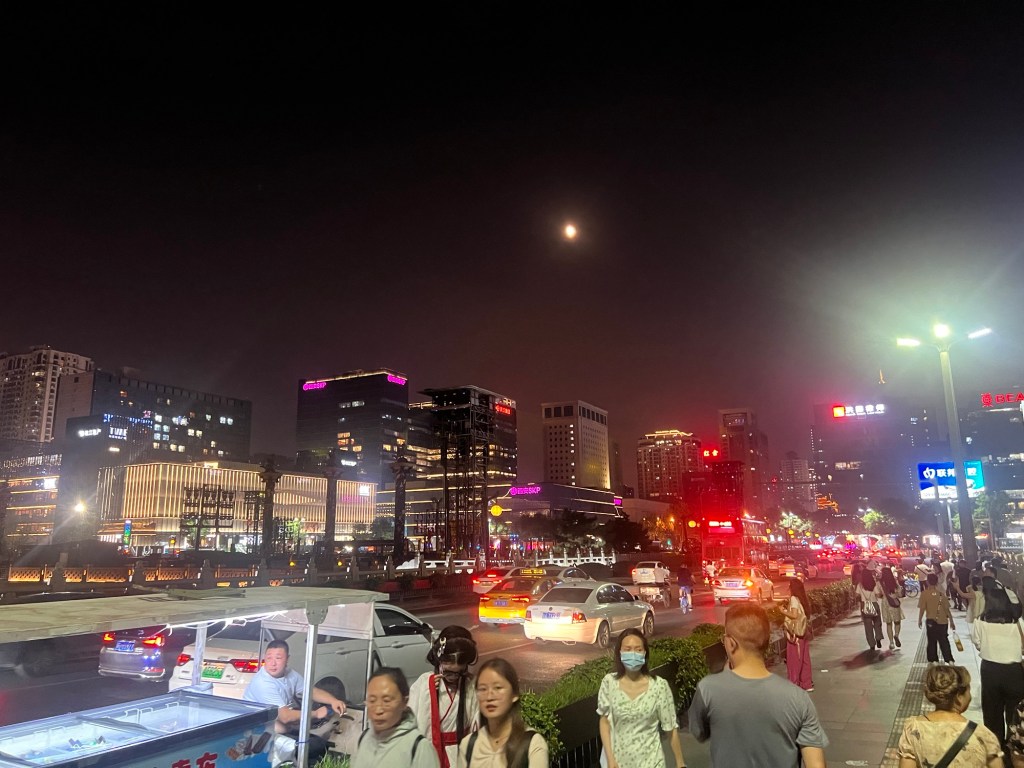
    Later on we went in search of a restaurant we’d been recommended by our guide selling Peking Duck. Our walk to dinner took us through the heart of the city where we enjoyed the buzz and energy of a Friday night in Xi’an.

    Dinner proved to a great success with a delicious duck, pancake & dips along with some local vegetarian side dishes.

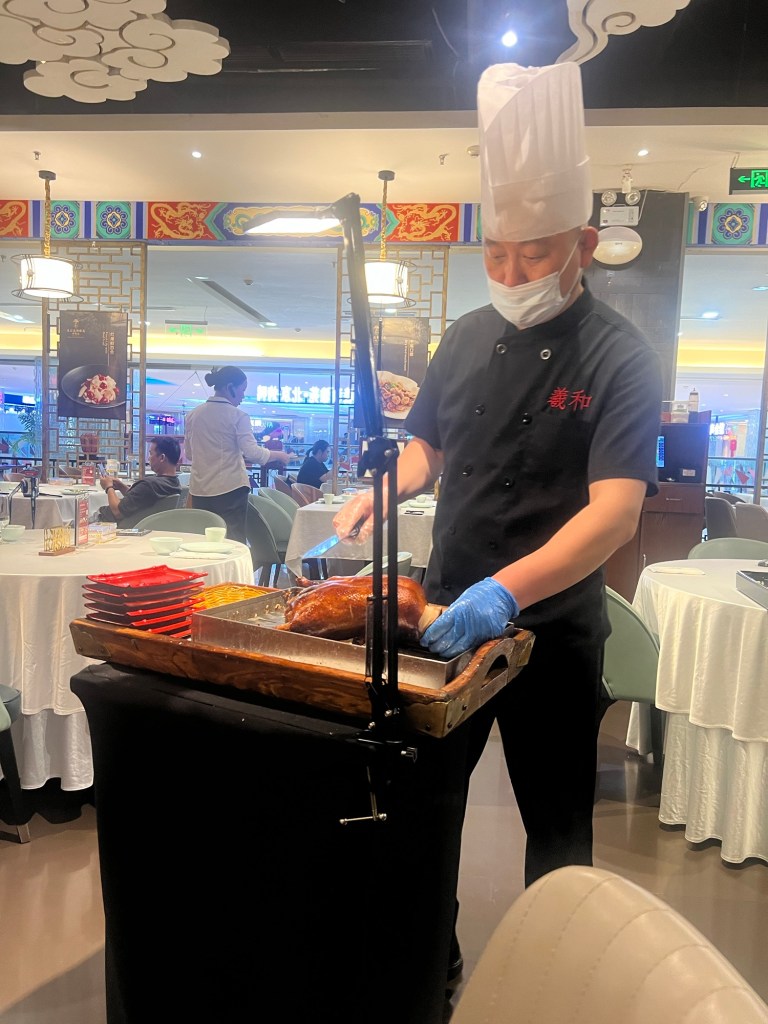
    Carving the duck
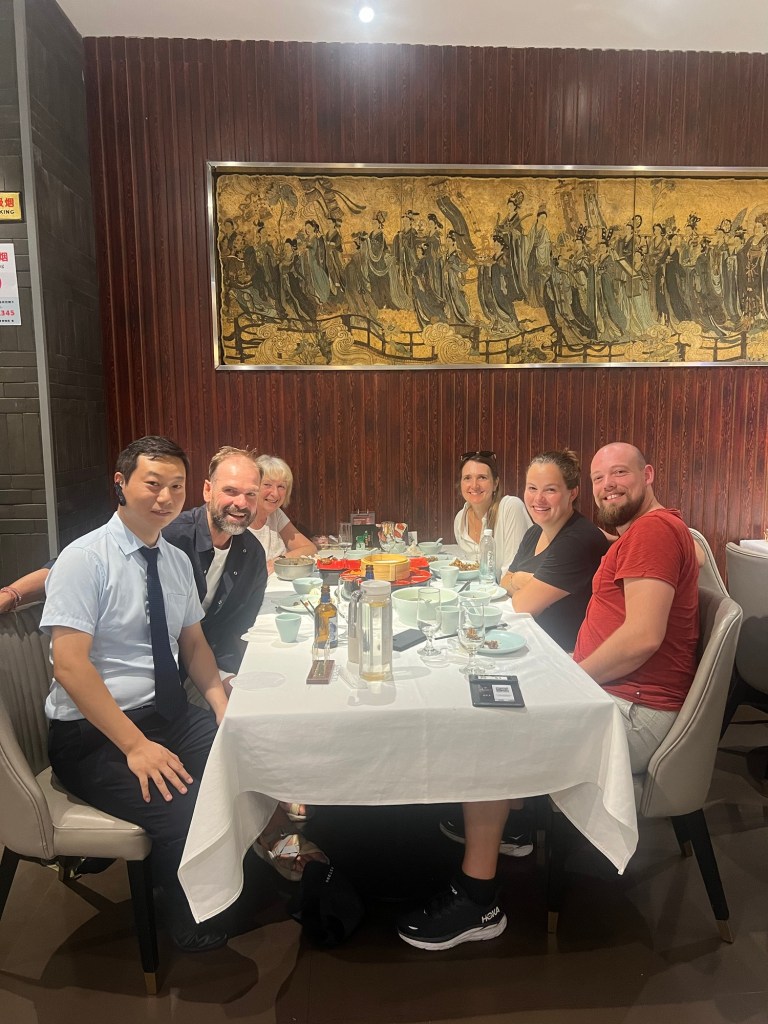
    Andy, Chris, Michelle,
    Julie & Simen (Tour group) & our waiter

    We grabbed a busy subway train back to our hotel and prepared ourselves for another busy day tomorrow when we visit the world famous Terracotta Warriors and then go a bike tour along the Old City Walls of Xi’an.

←Previous Page
1 … 20 21 22 23 24 … 52
Next Page→

Blog at WordPress.com.


Loading Comments...
 

    • Subscribe Subscribed
      • @travellingwiththeateam
      • Join 25 other subscribers.
      • Already have a WordPress.com account? Log in now.
      • @travellingwiththeateam
      • Subscribe Subscribed
      • Sign up
      • Log in
      • Report this content
      • View site in Reader
      • Manage subscriptions
      • Collapse this bar