• The next chapter…

@travellingwiththeateam

  • Overseas tour Day 289 – Forbidden City Part II & Qian Hai Lake

    Aug 16th, 2024

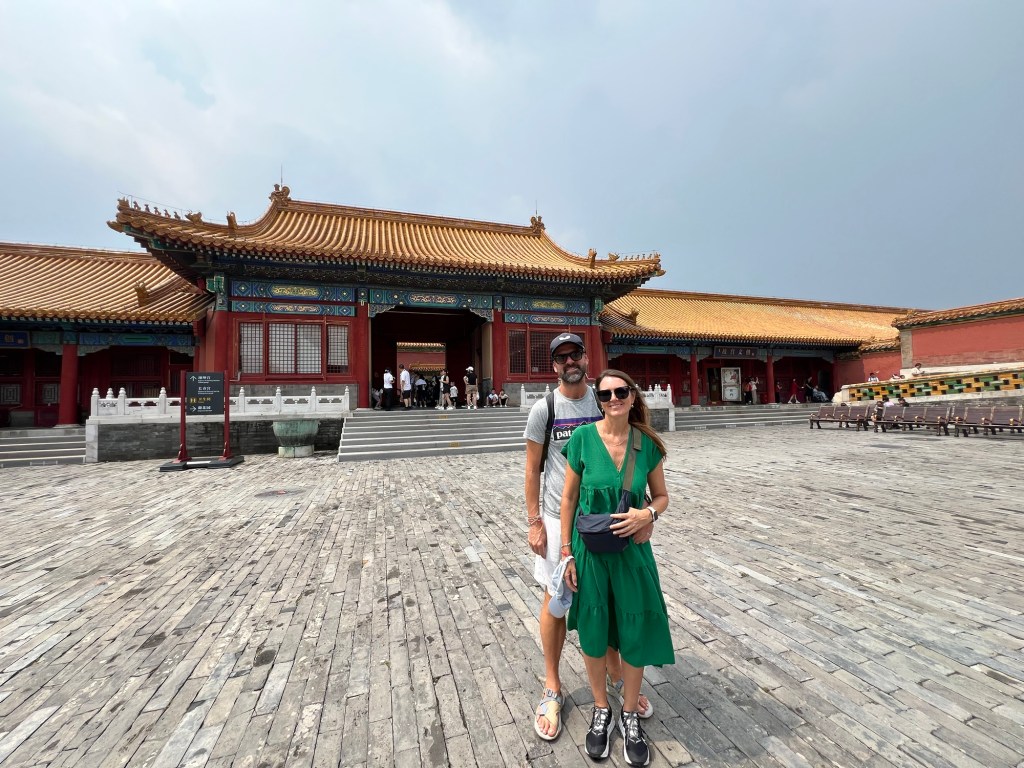
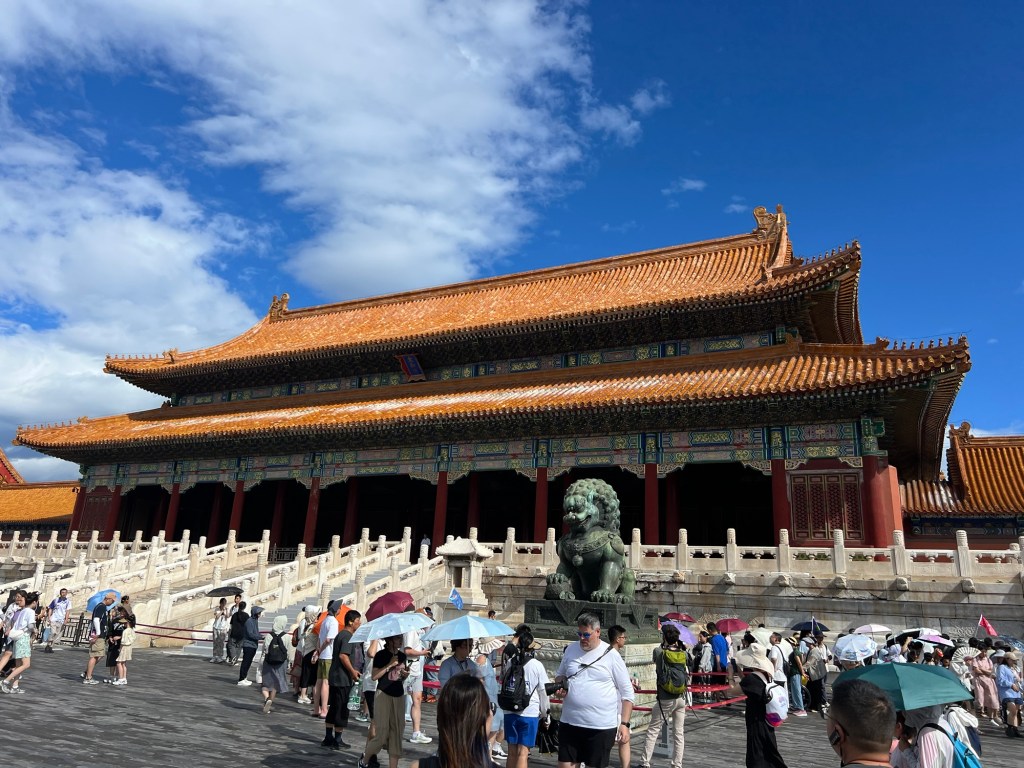
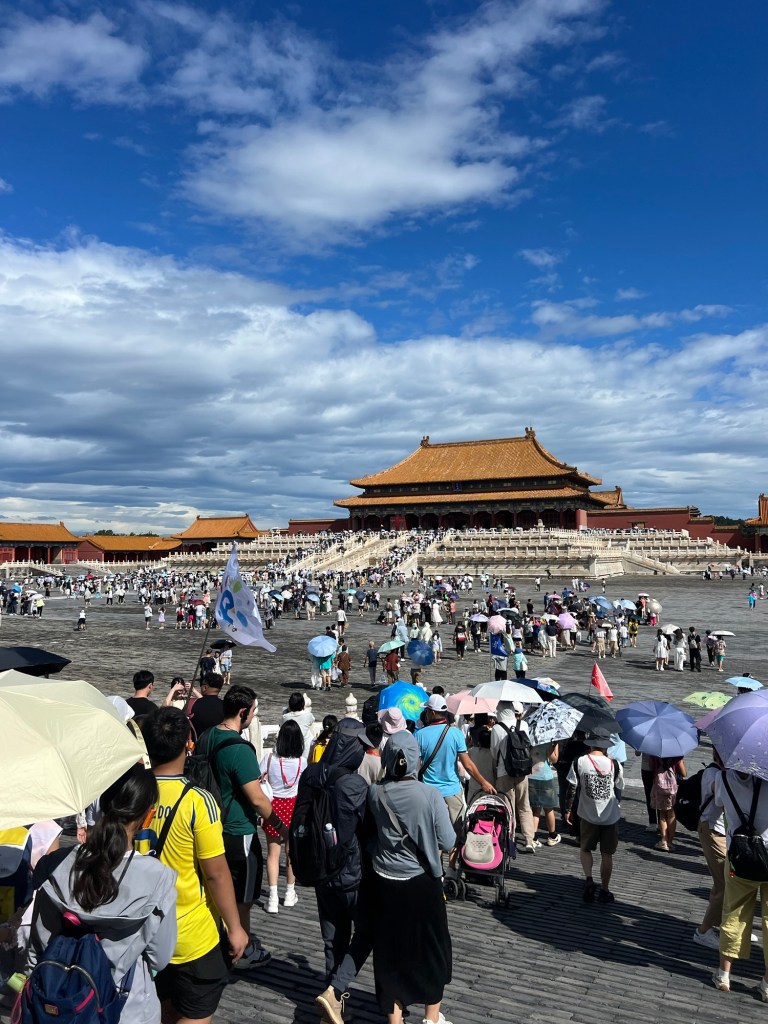
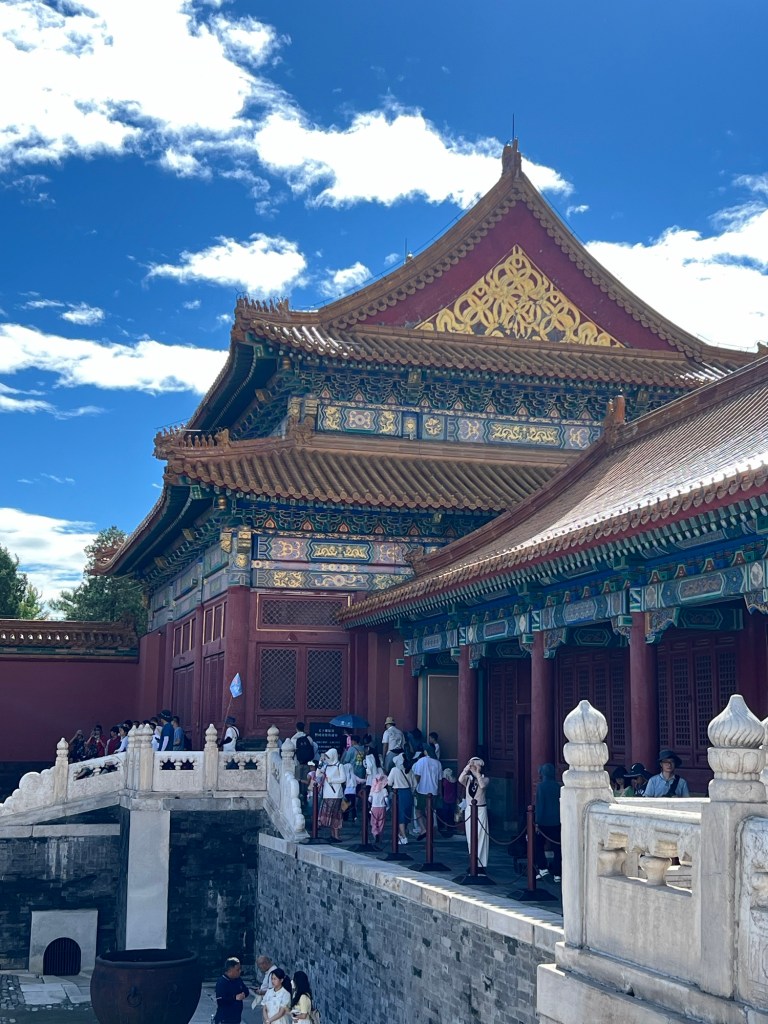
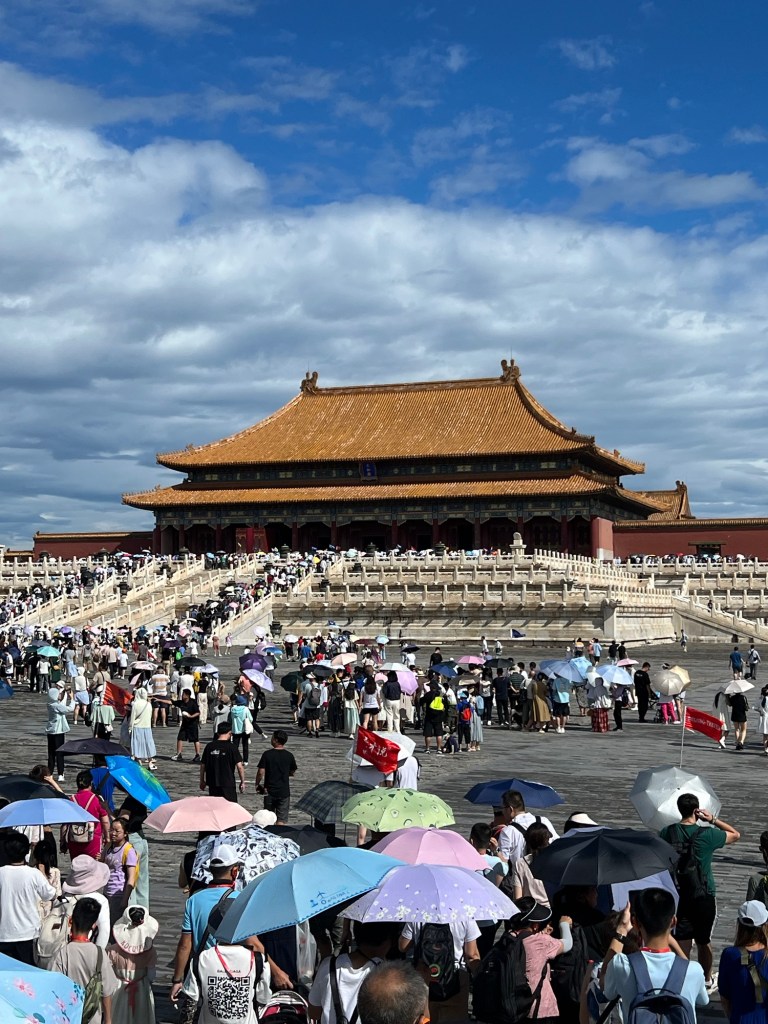
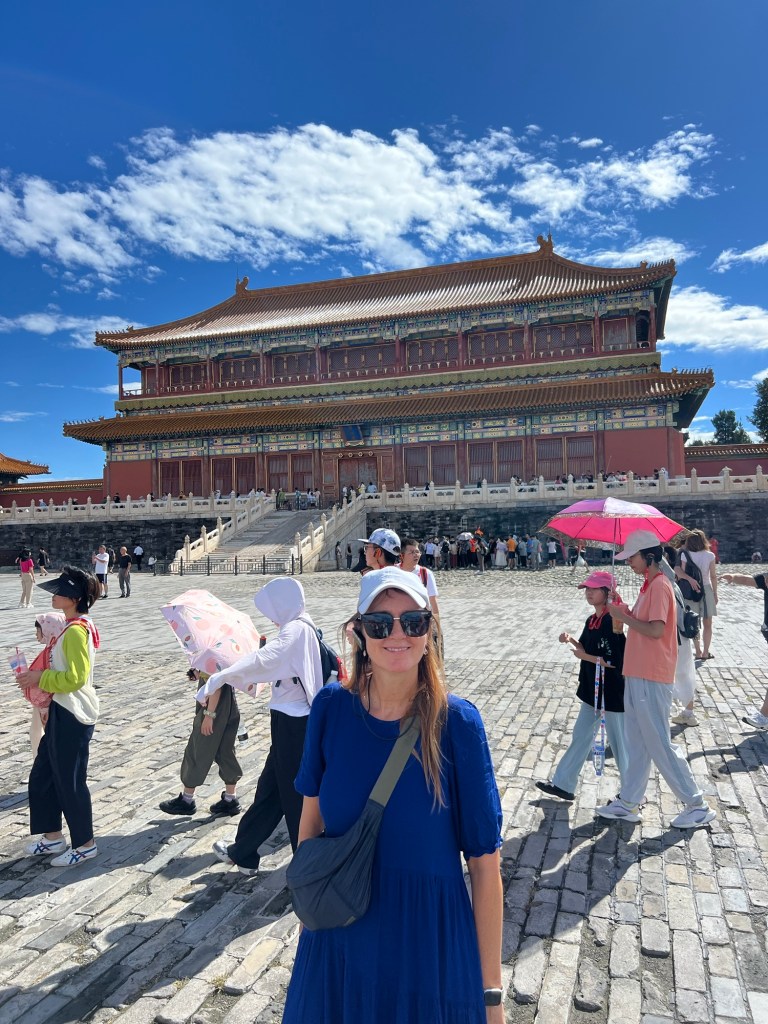
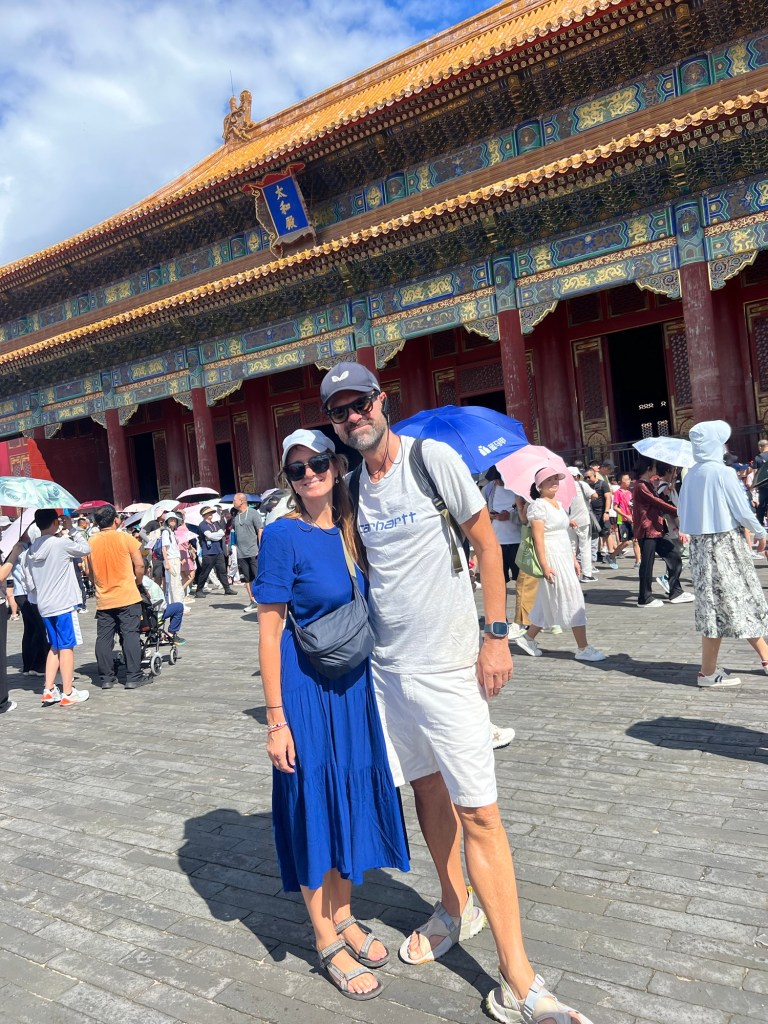
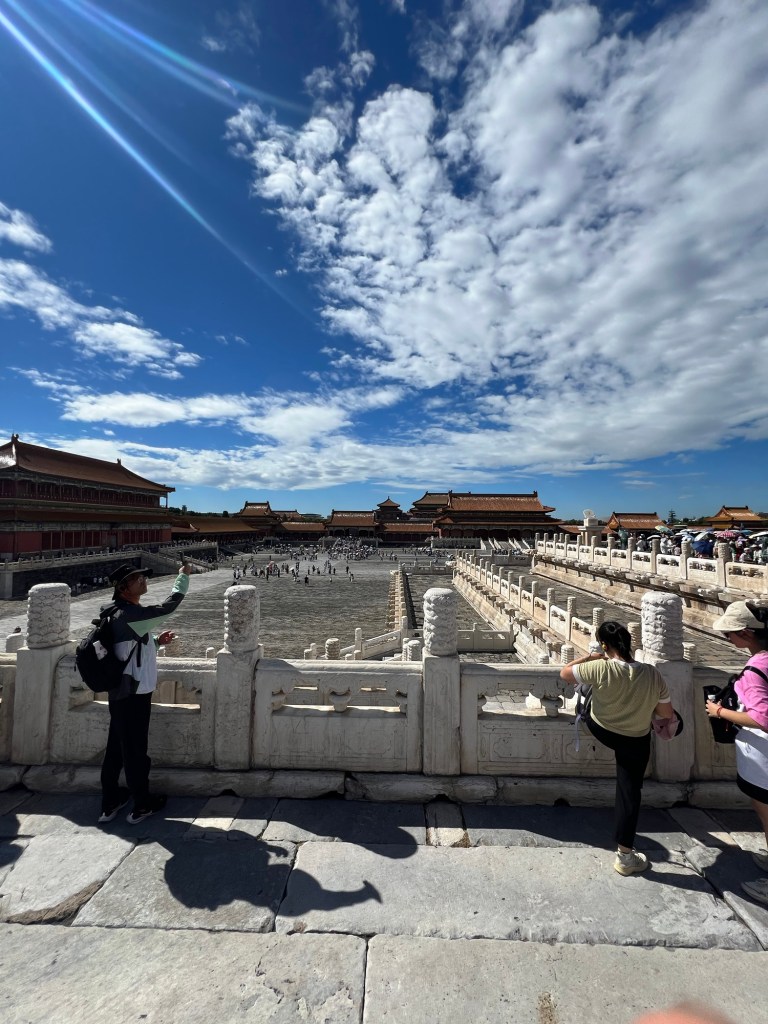
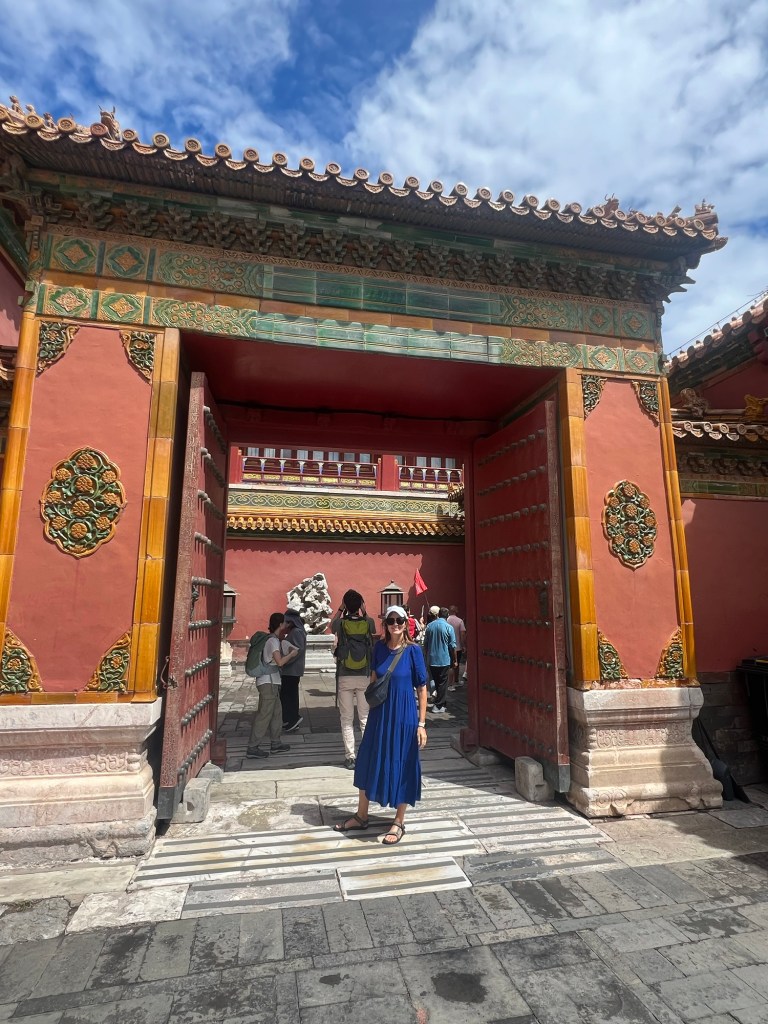
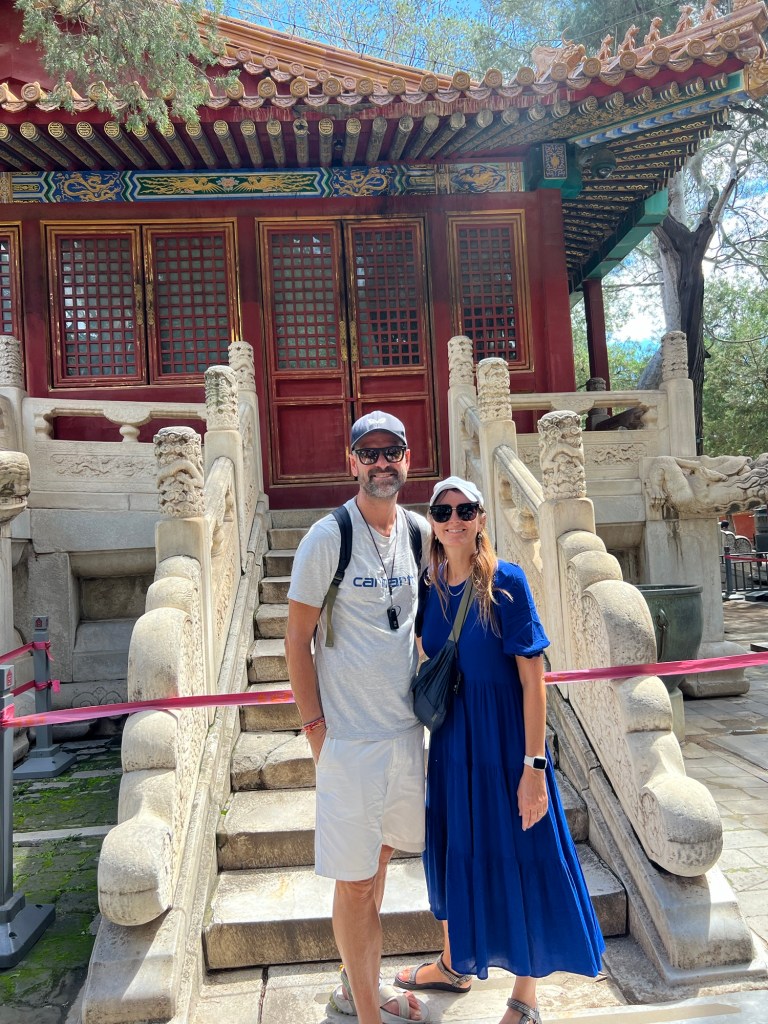
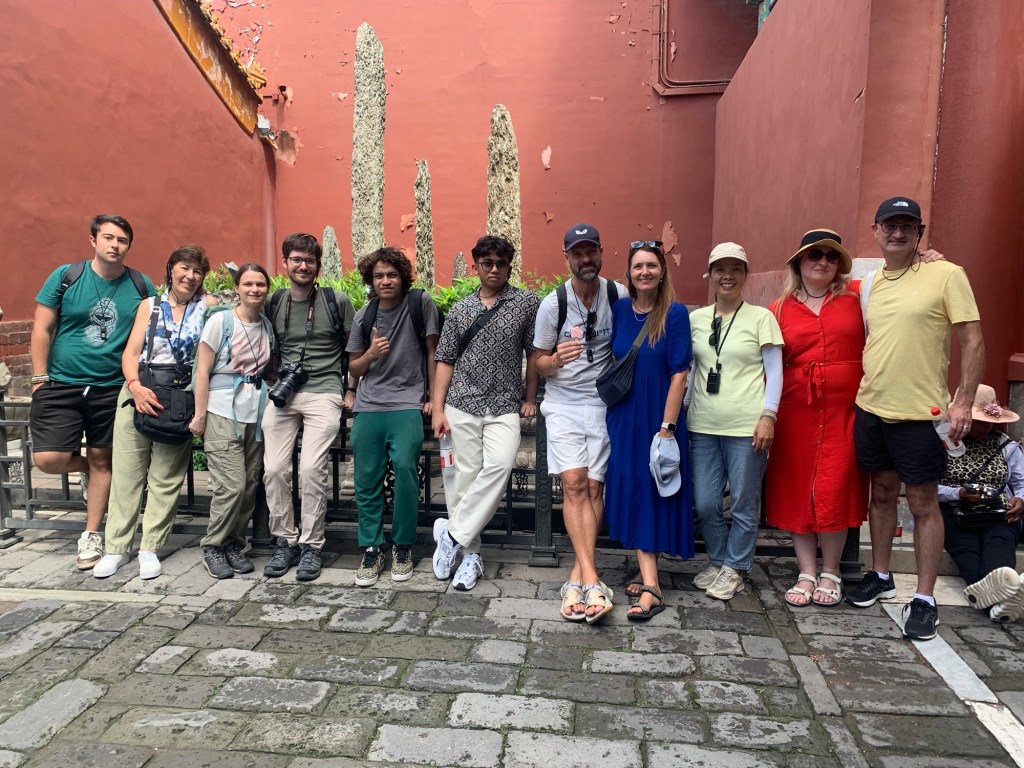
    This morning we returned to the Forbidden City with our China tour group.

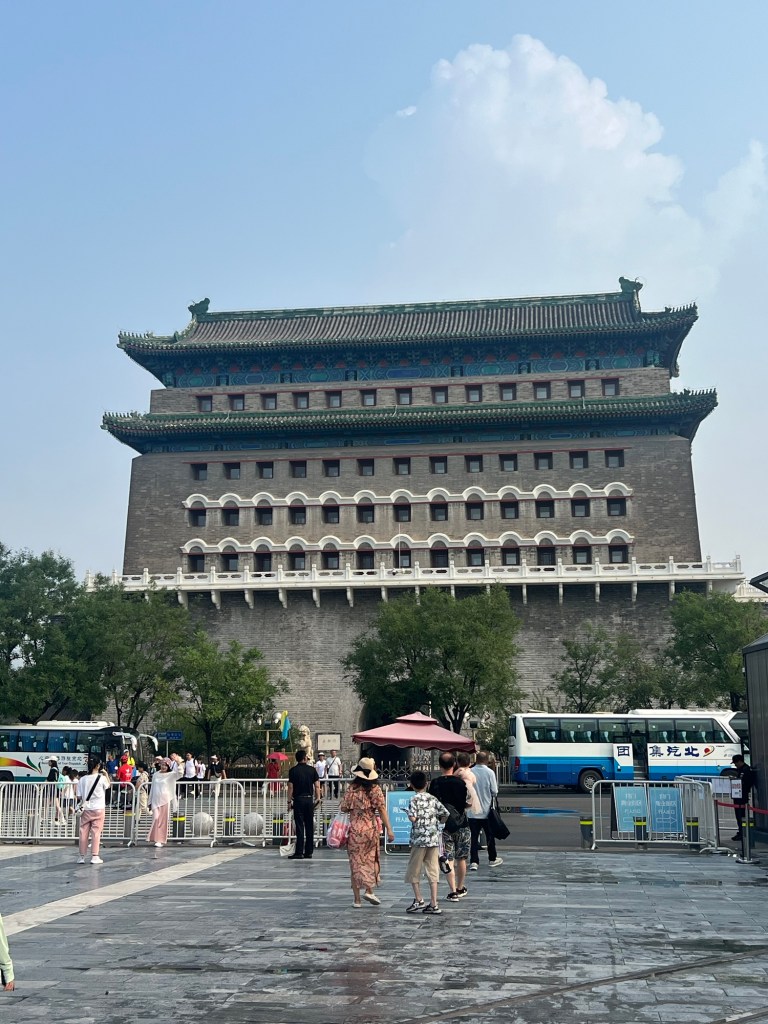
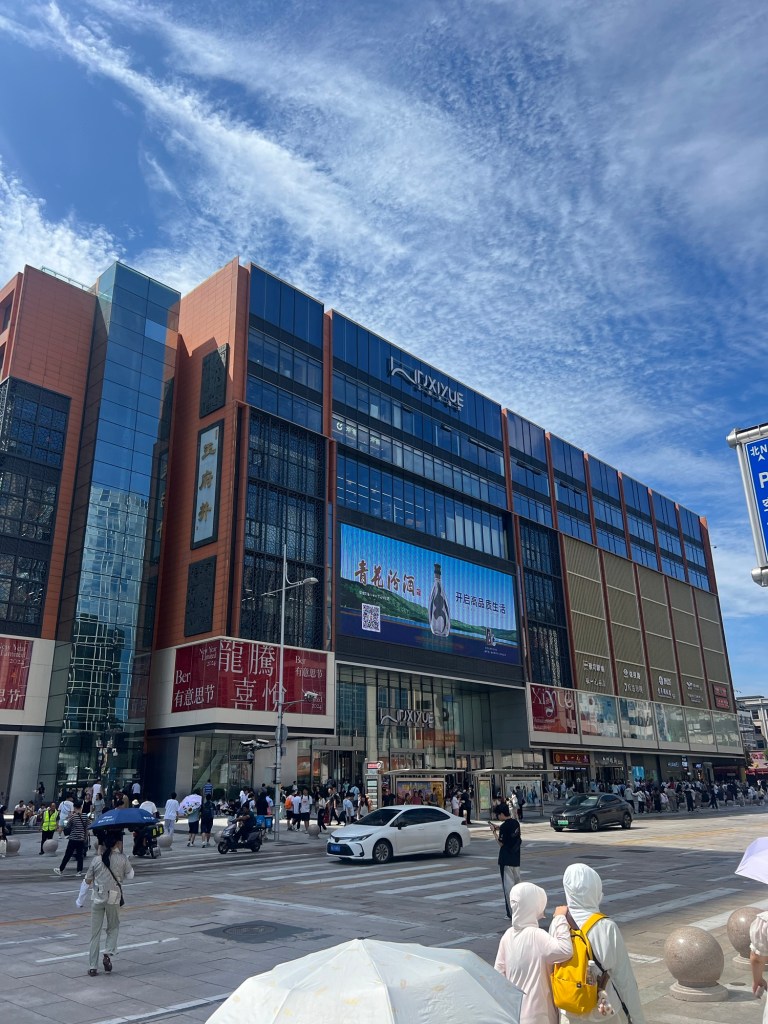
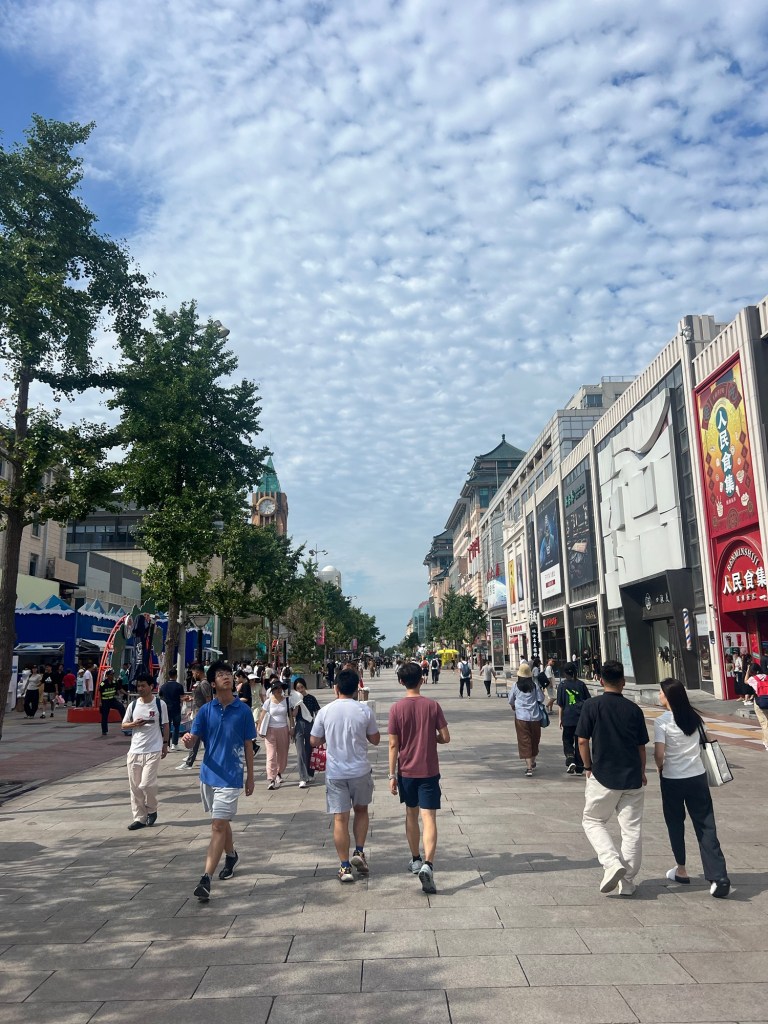
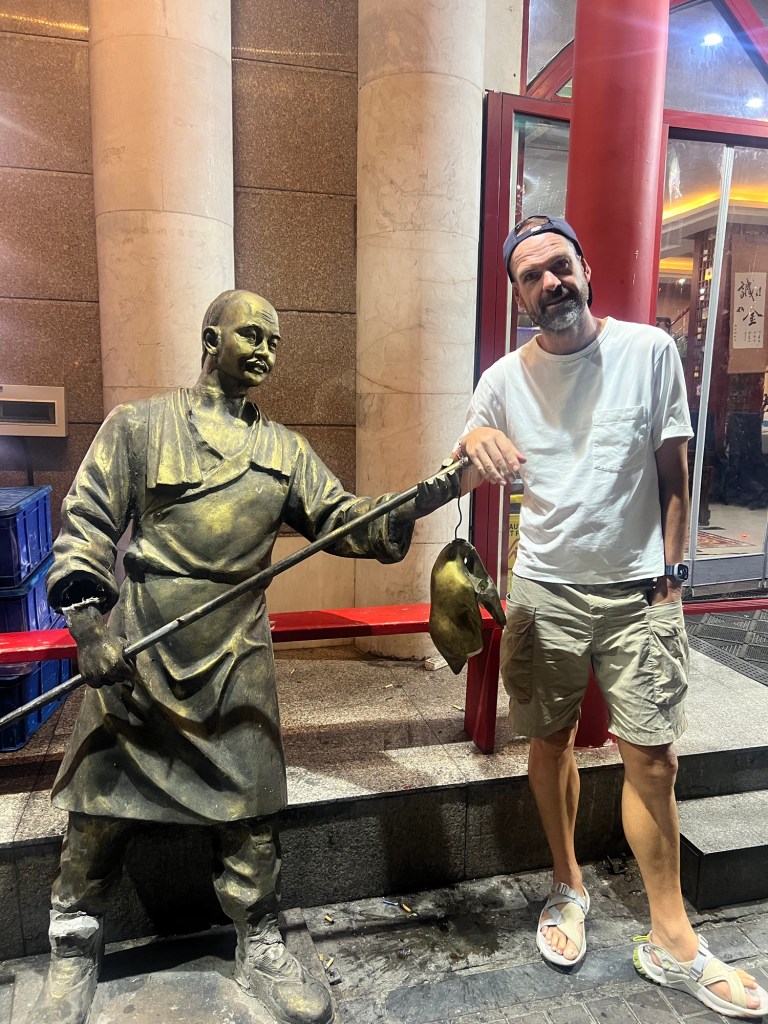
    We went for a walk along Qianmen Street, a famous pedestrian street for shopping and sightseeing, running from the Archery Tower of Qianmen in the north to Tiantan Park in the south. 

    It is composed with buildings whose styles resemble the late Qing dynasty from the 17th century.

    During the Qing Dynasty, there were many specialised outlets on either side of it, such as a meat market, cloth market and jewellery market. And there were also many craftsman workshops, warehouses and theatres in the Hutong’s nearby. Now Qianmen Street is an important night life spot for locals.

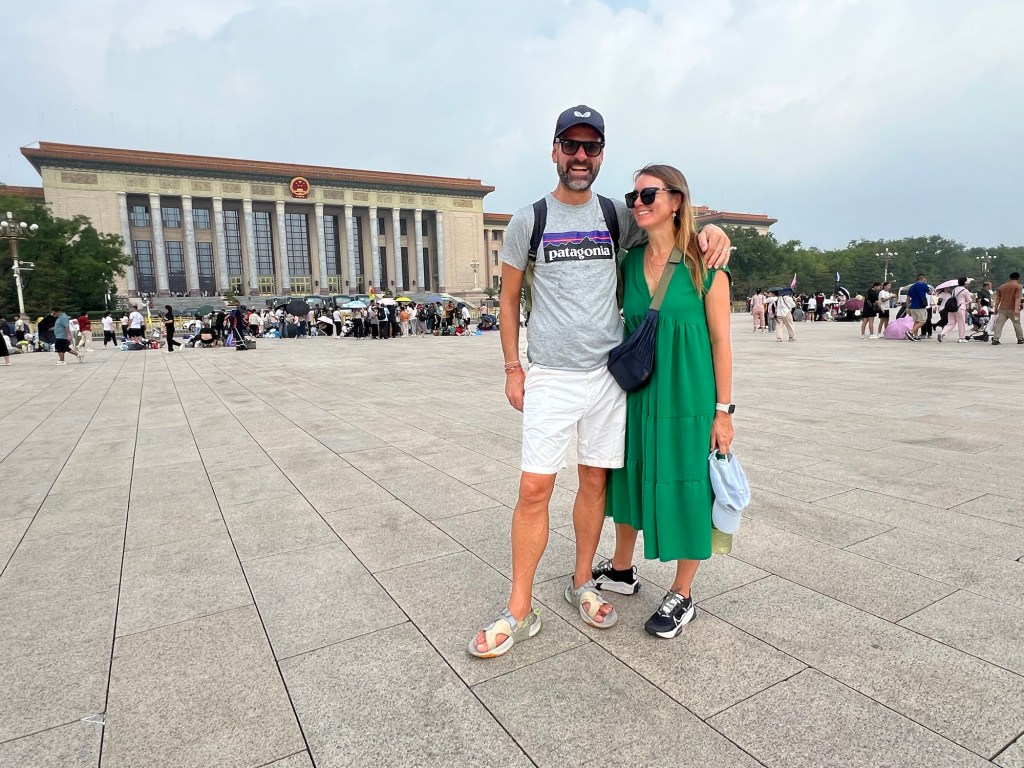
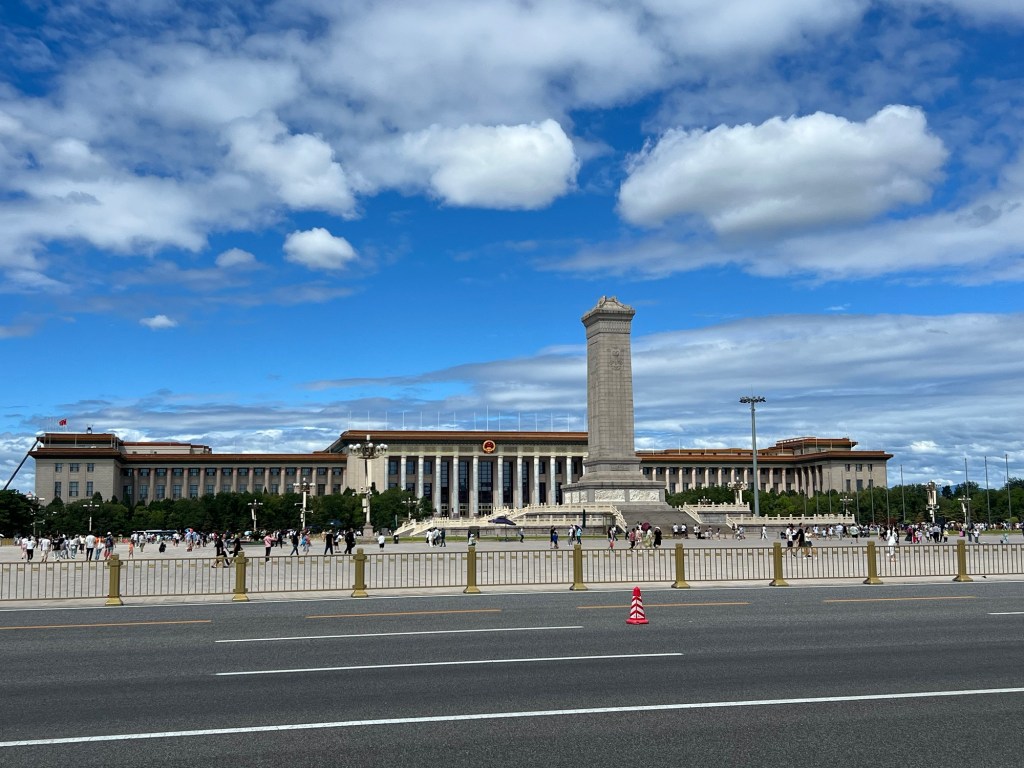
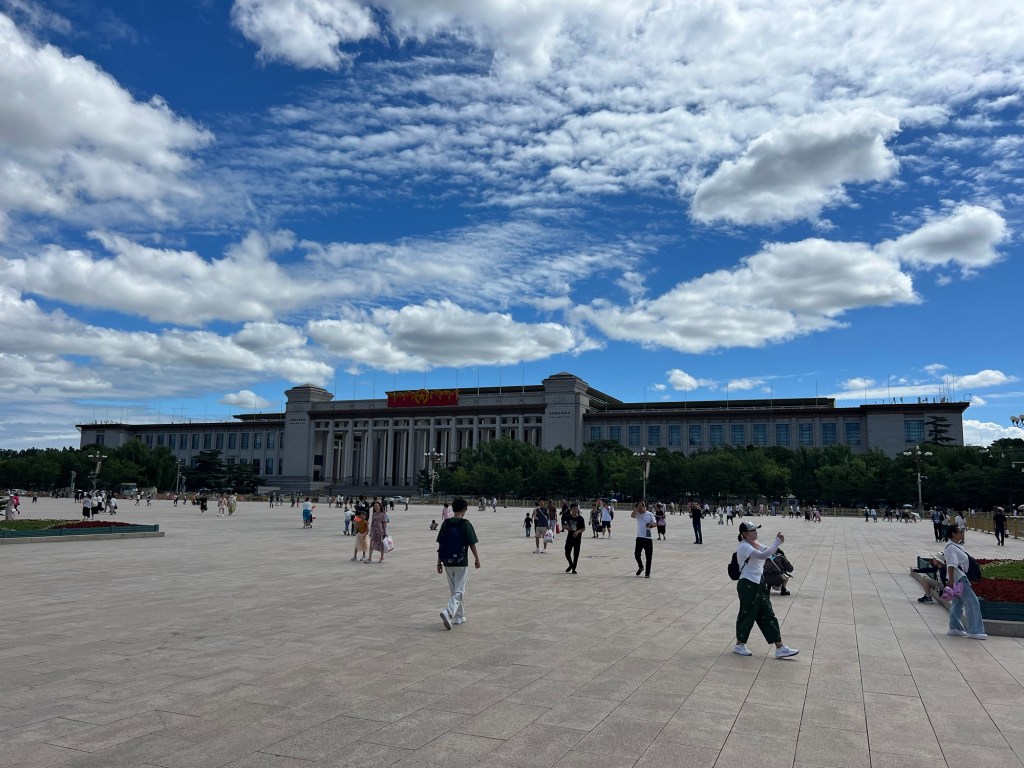
    We walked up to the National Museum of China focusing on art & history and is located on the eastern side of Tiananmen Square. At 200,000sq m, with a collection of more than 1.4 million items and 48 exhibition halls, it is the largest single building area in the world.

    In front of the National Museum of China

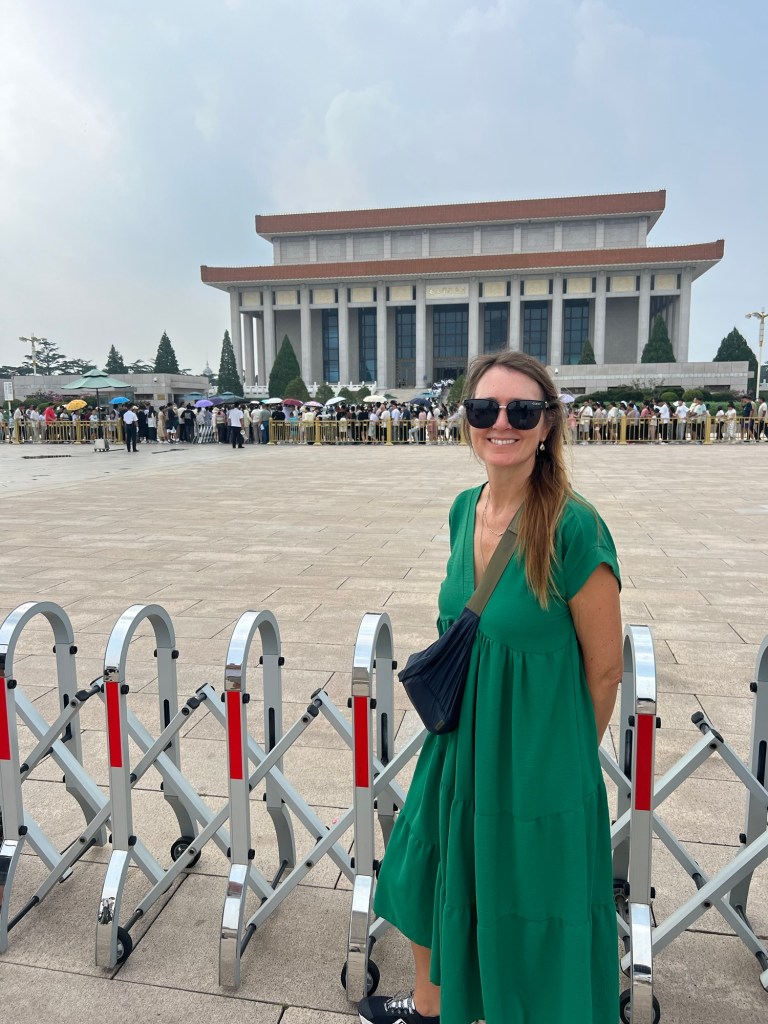
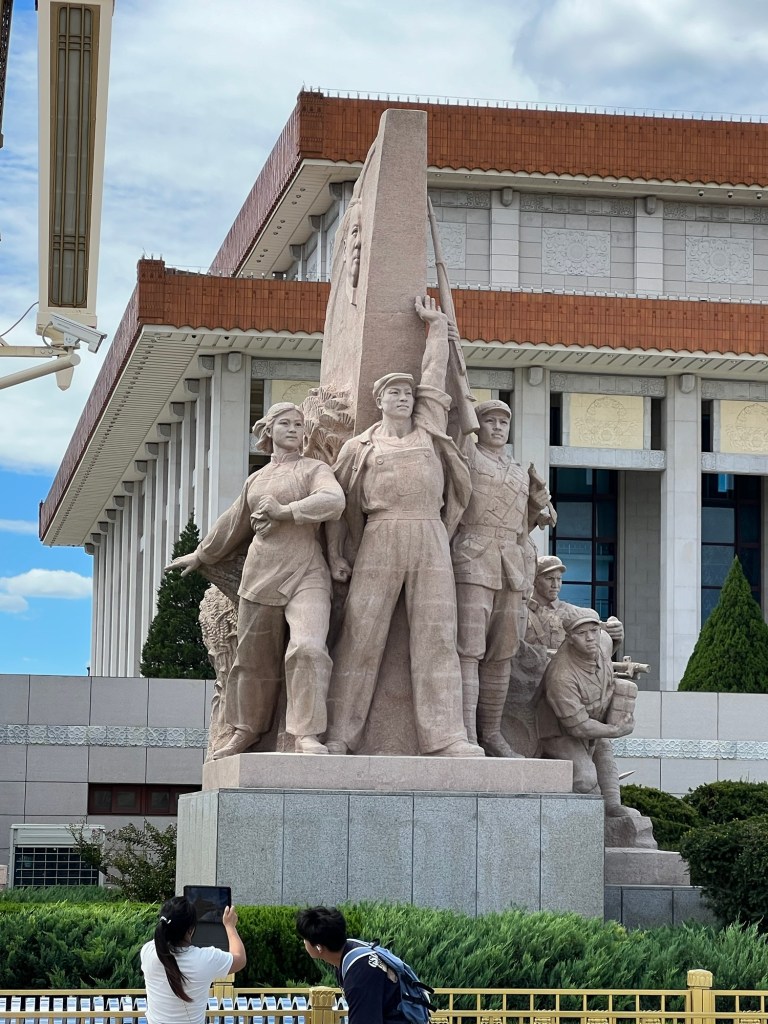
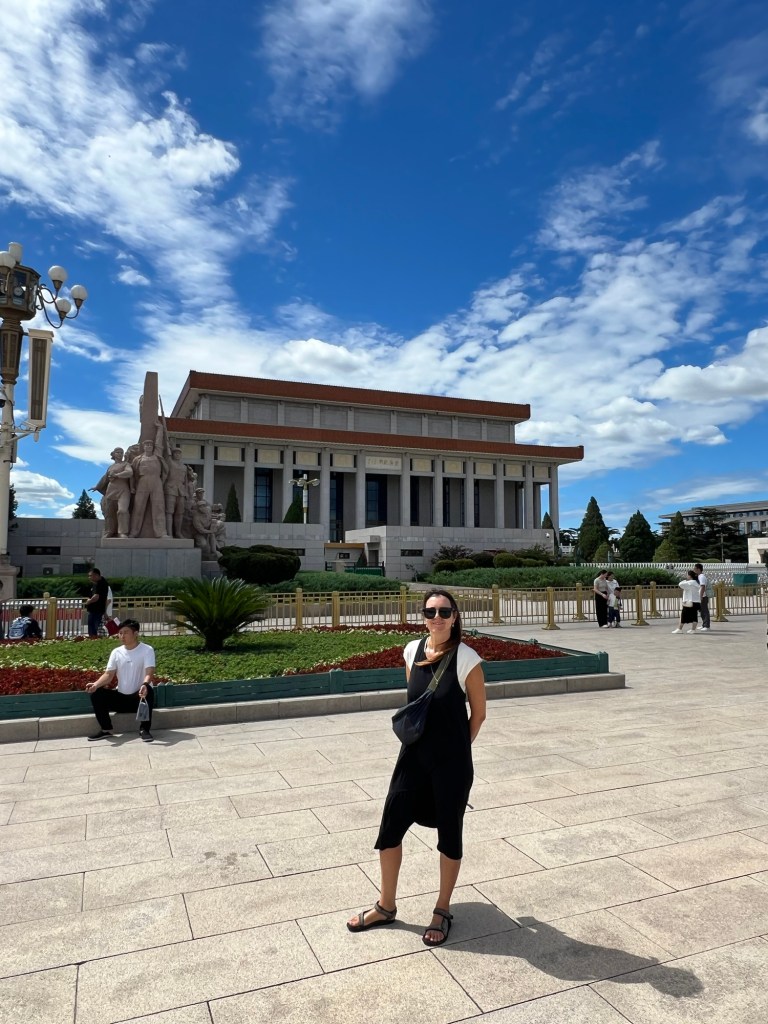
    The next stop was the Mausoleum of Mao Zedong, the final resting place of Chairman Mao Zedong.

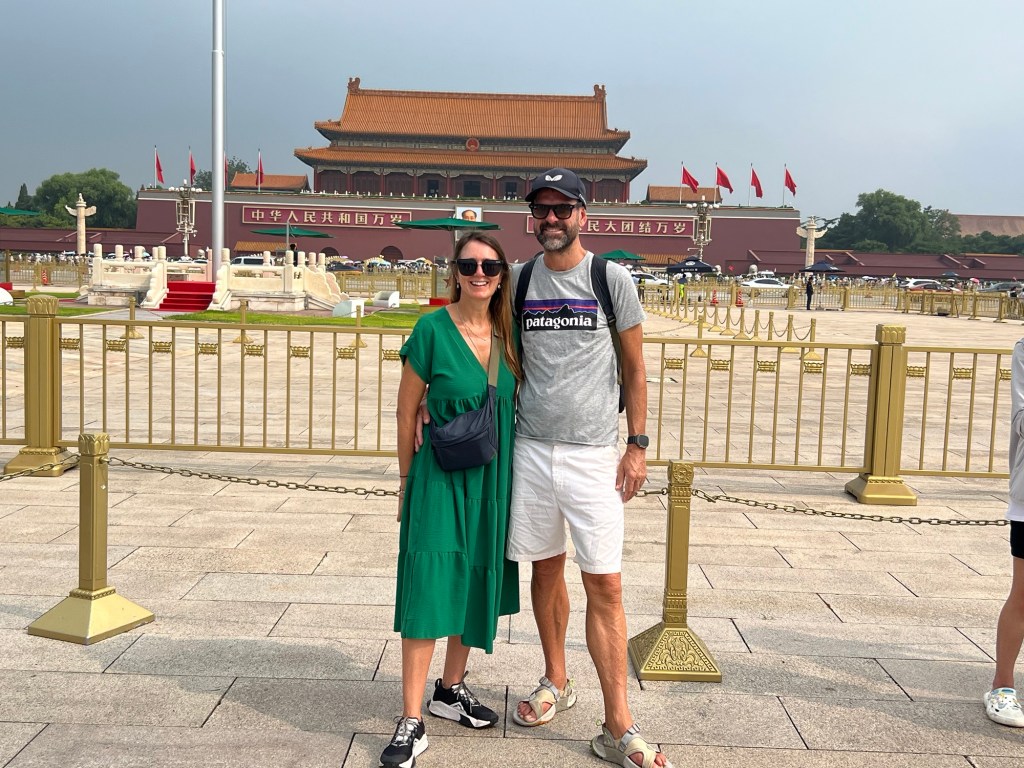
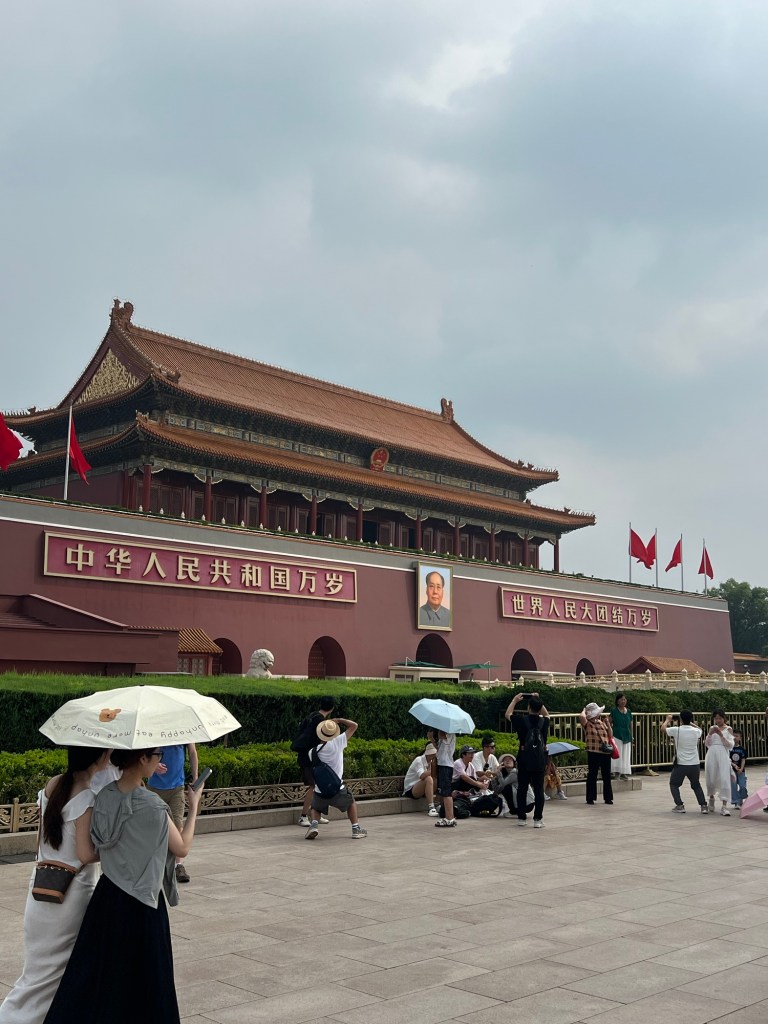
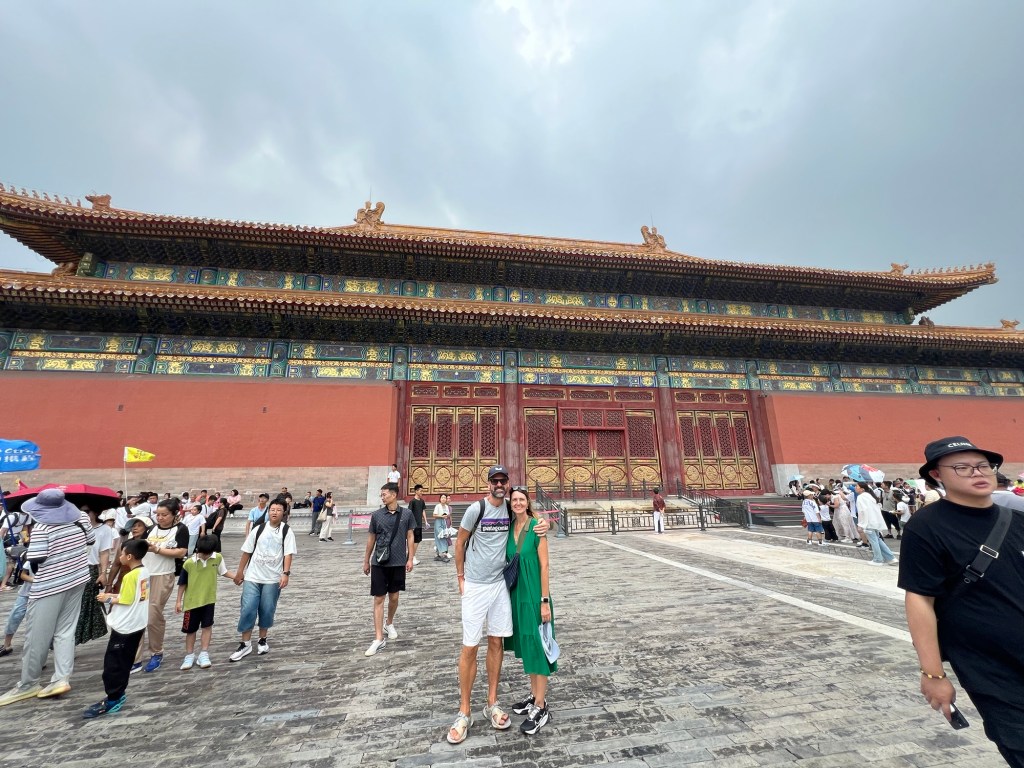
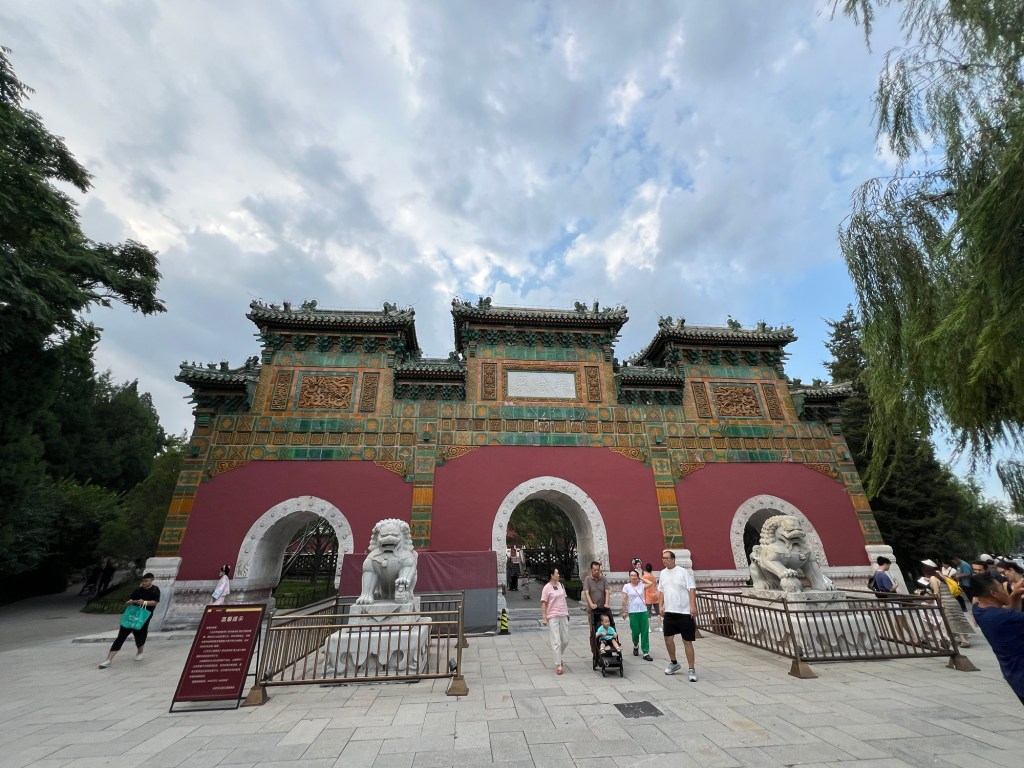
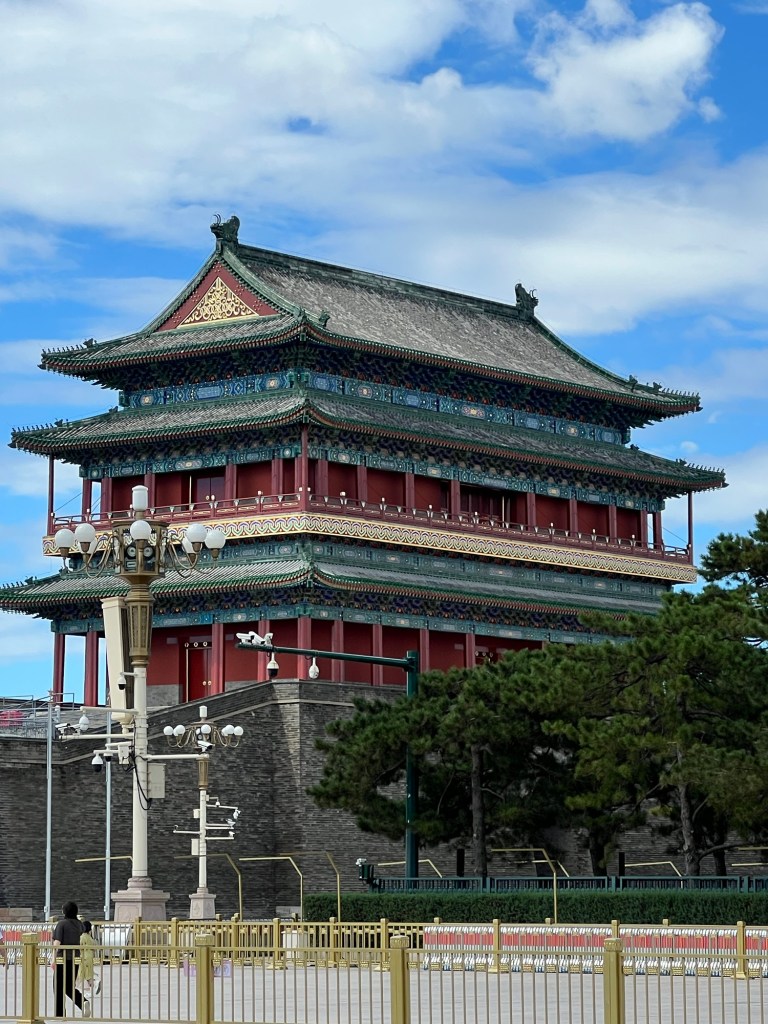
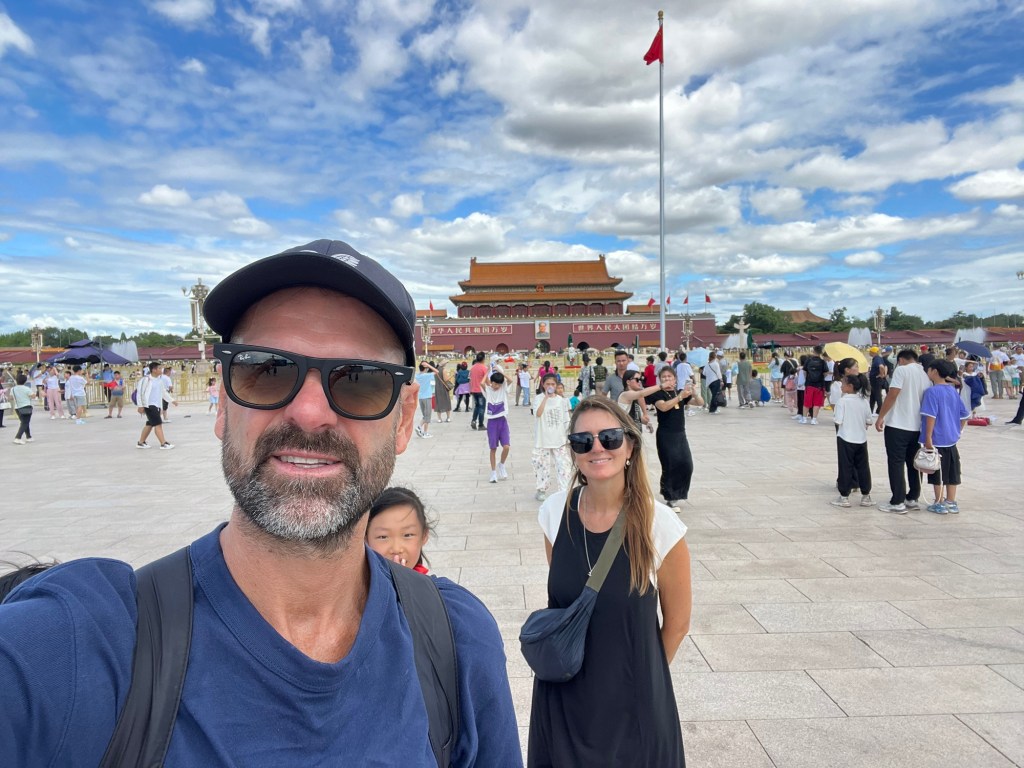
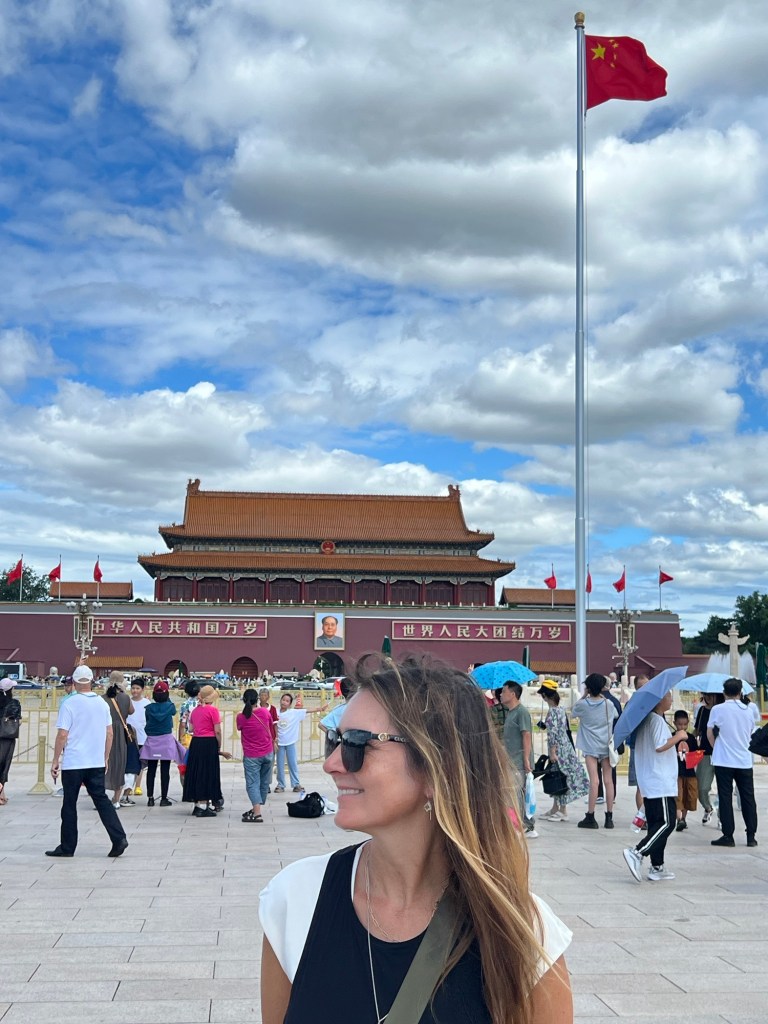
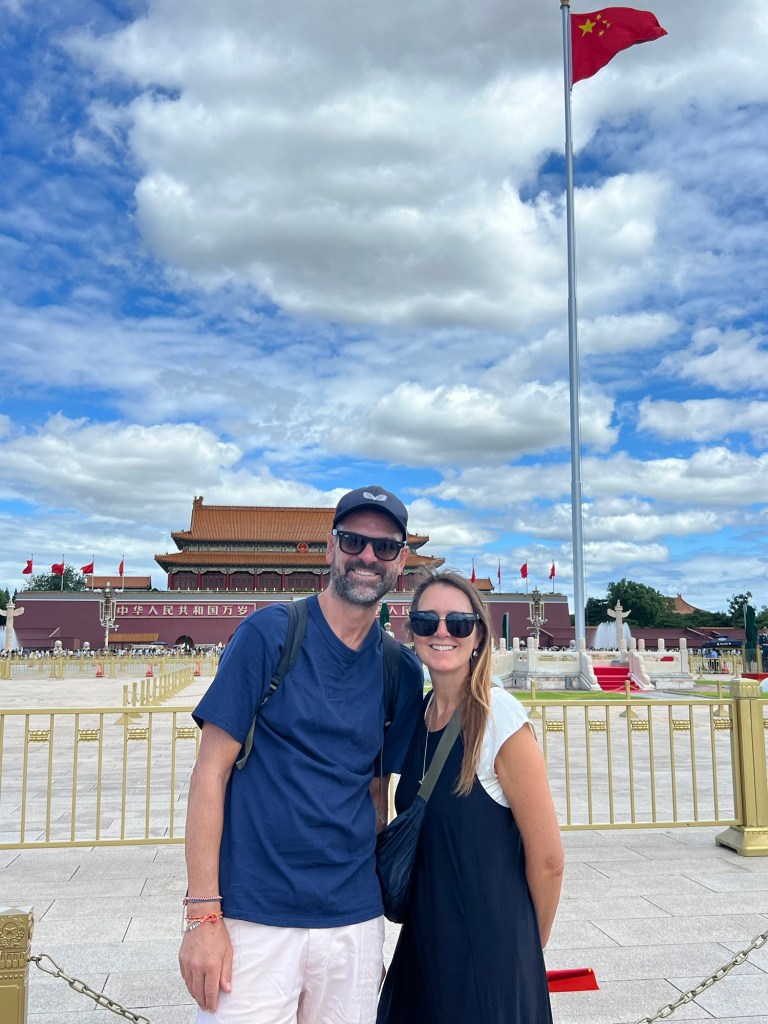
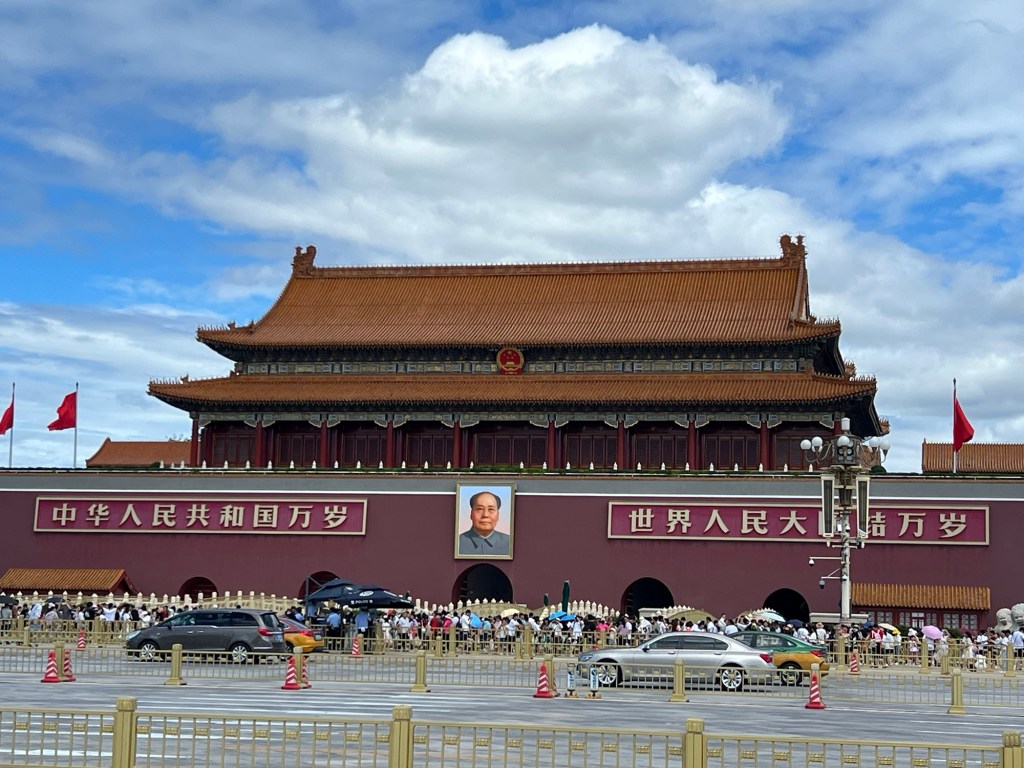
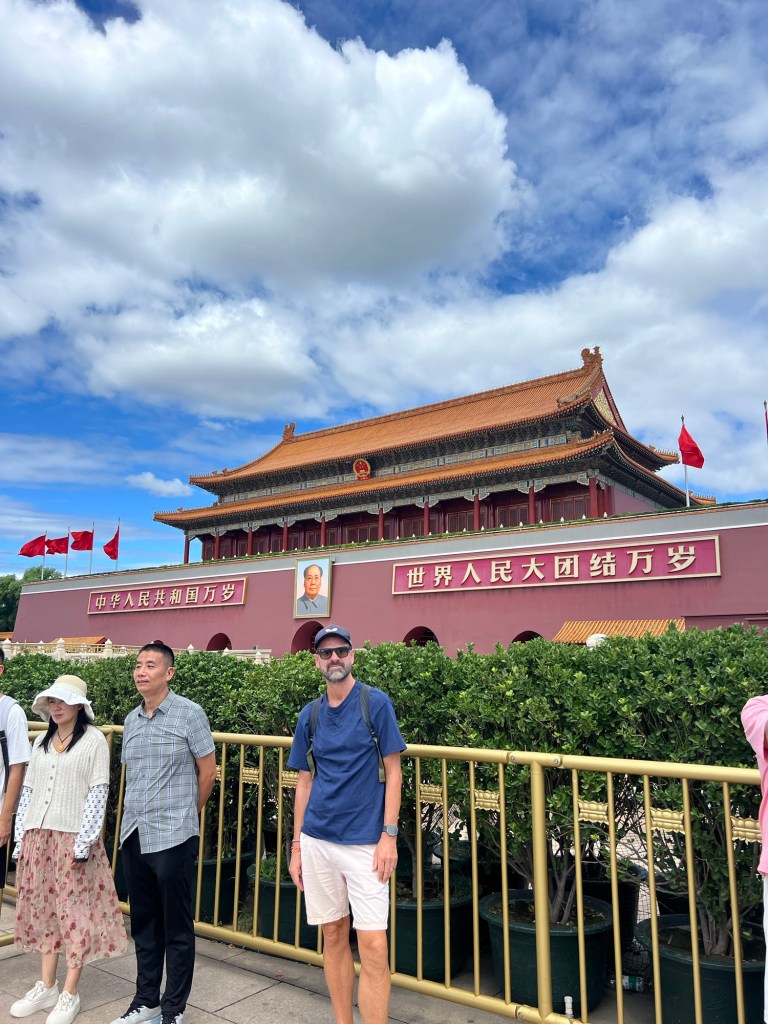
    The other focal point is the Gate of Heaven-Sent Peace and is the entrance gate to the Forbidden City and is a national symbol.

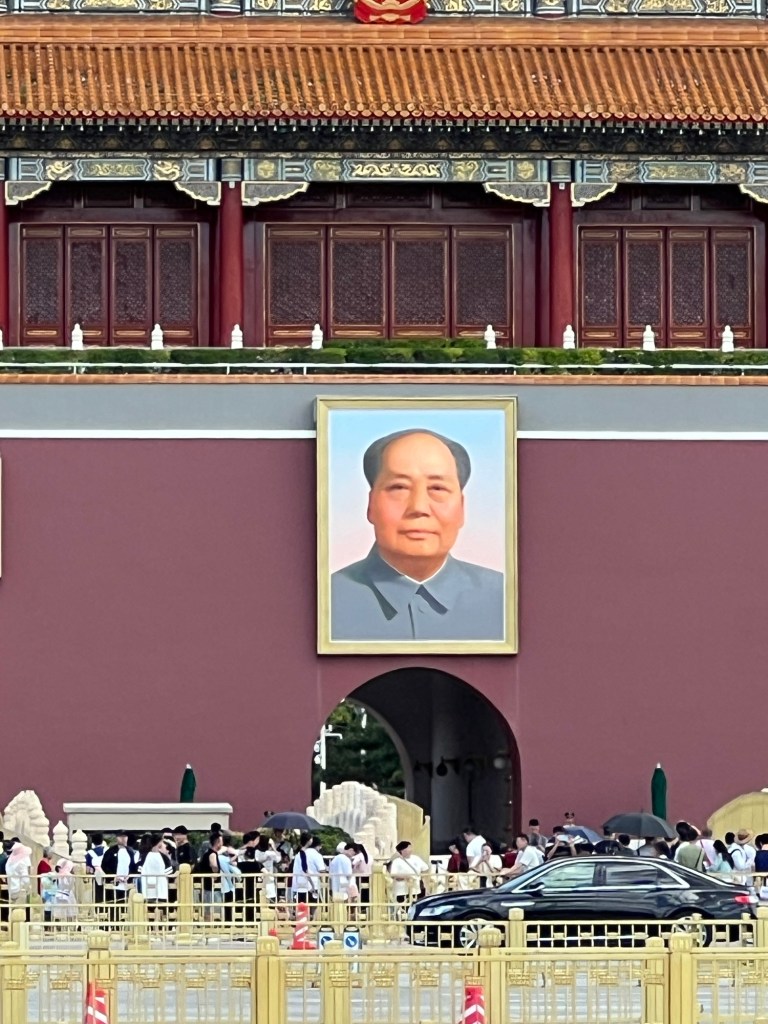
    Tiananmen was formerly the entrance to the emperor’s residence. In 1949, Mao proclaimed the People’s Republic of China from the balcony, which now features a large potrait of him.

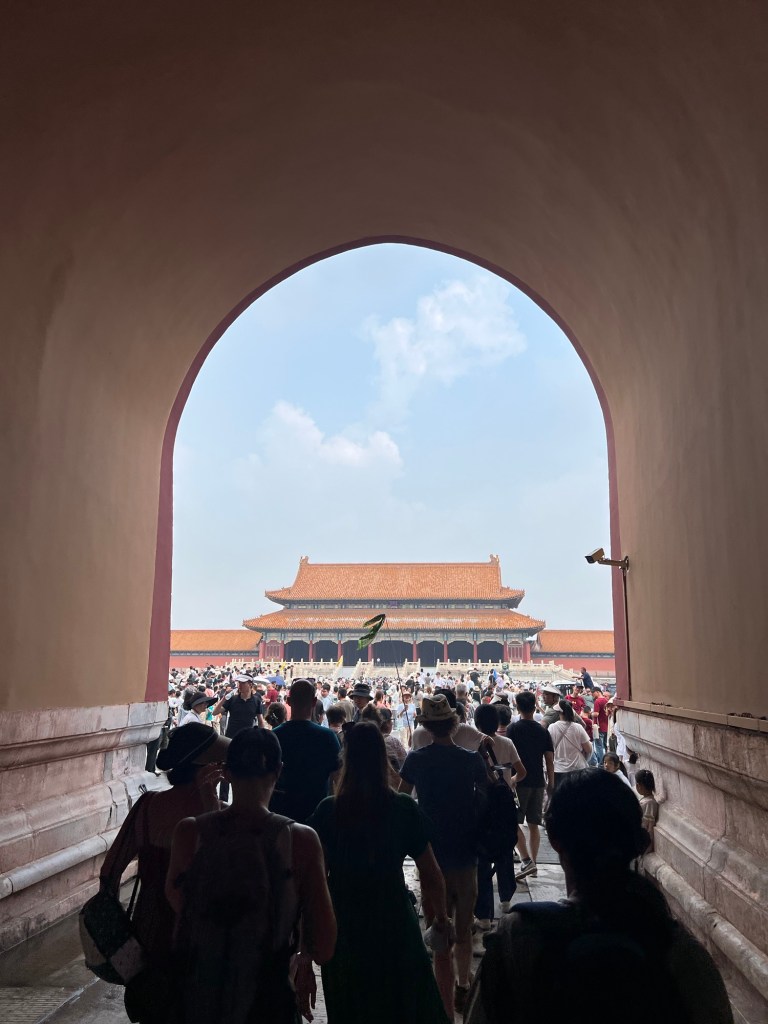
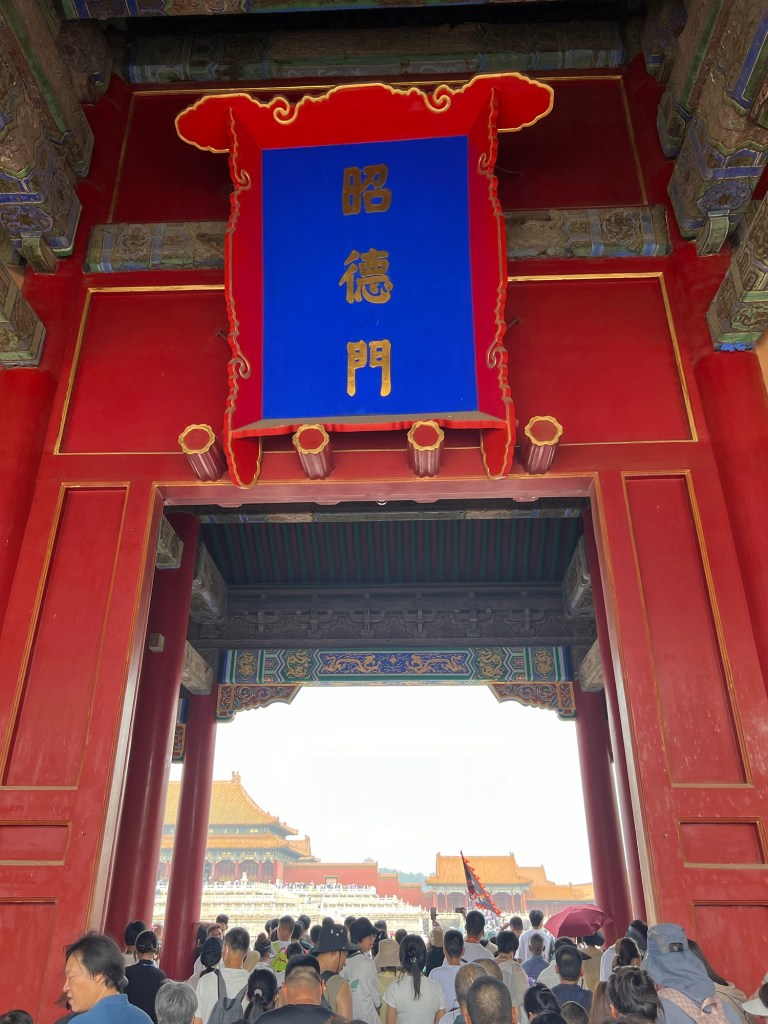
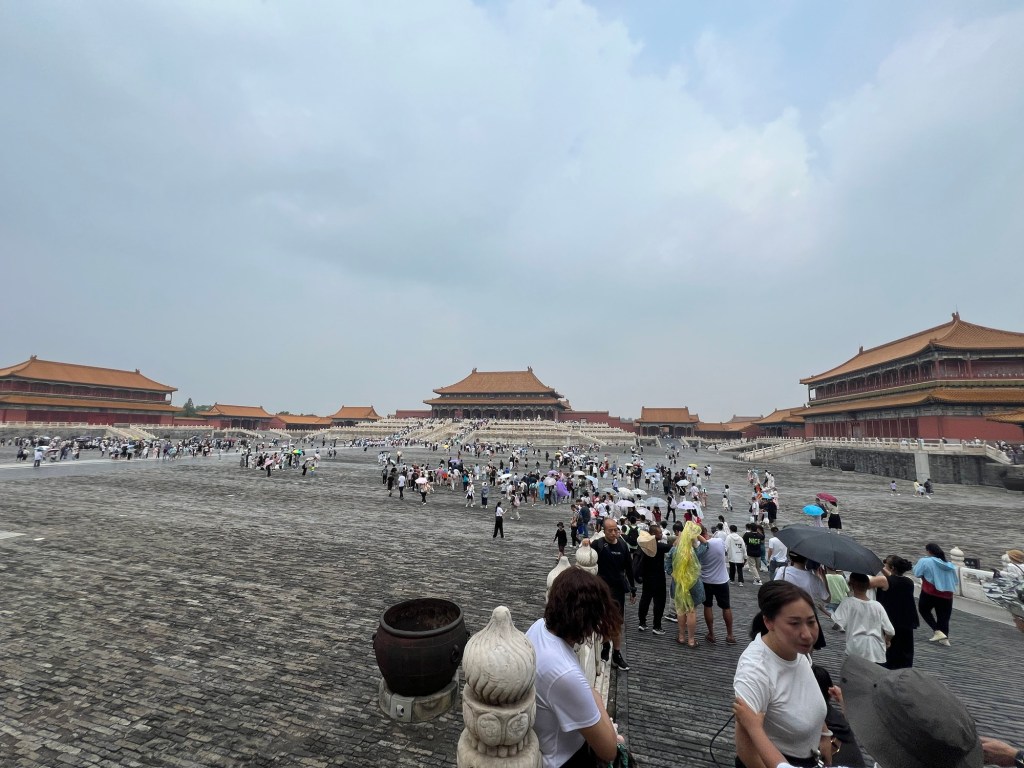
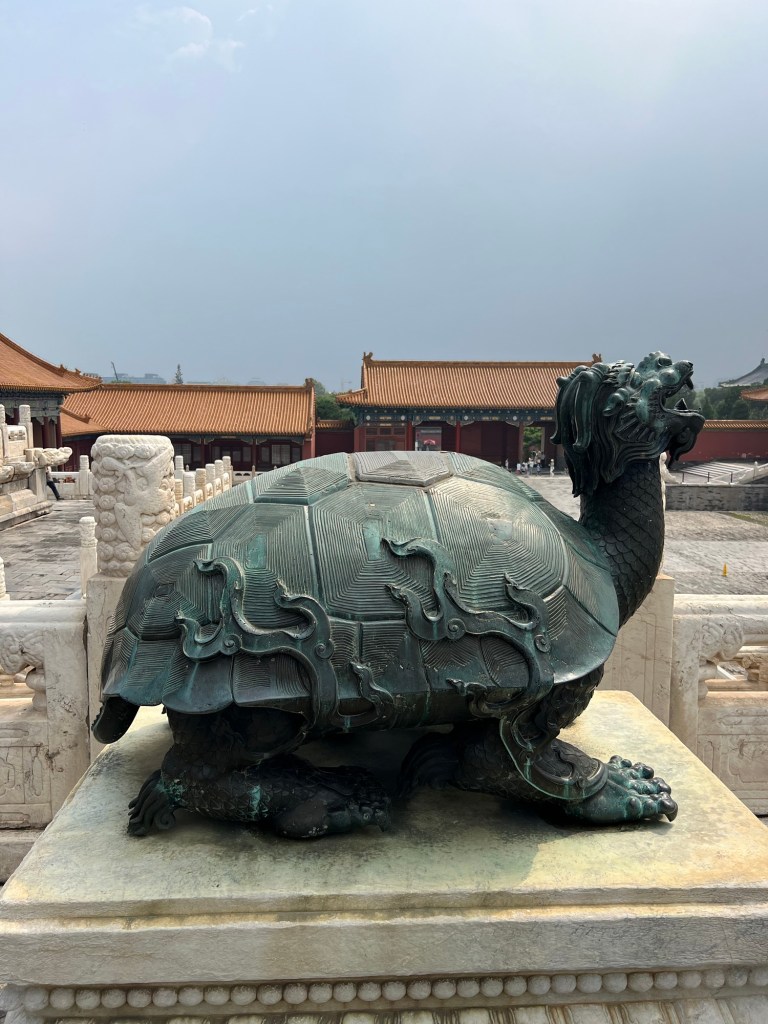
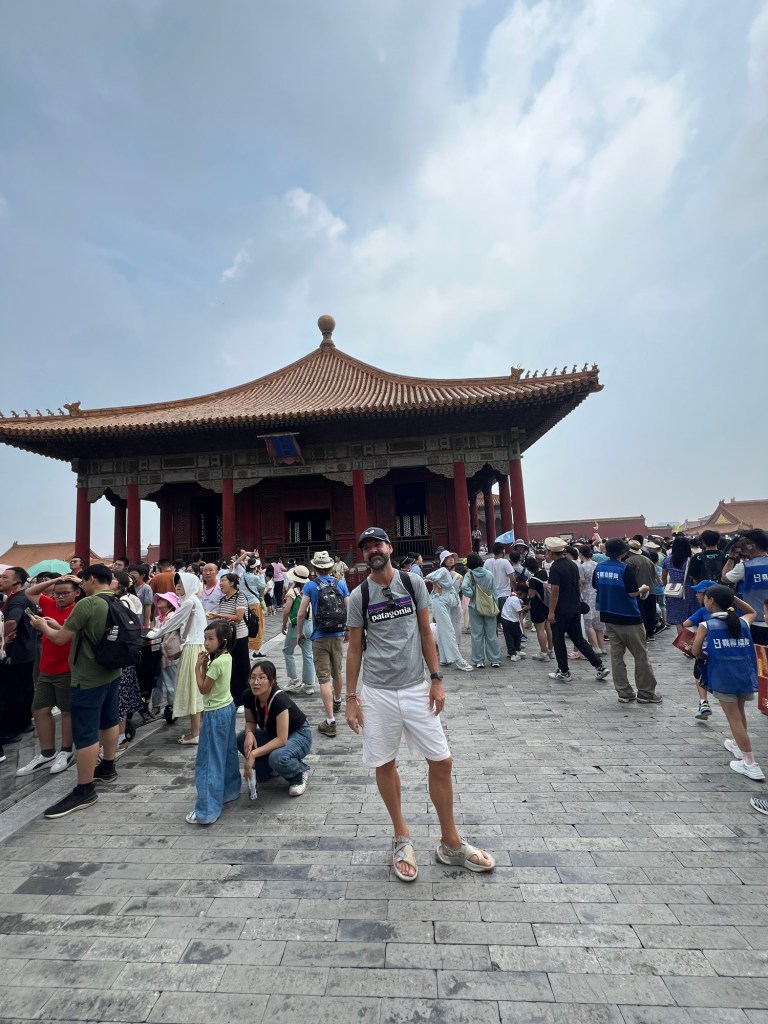
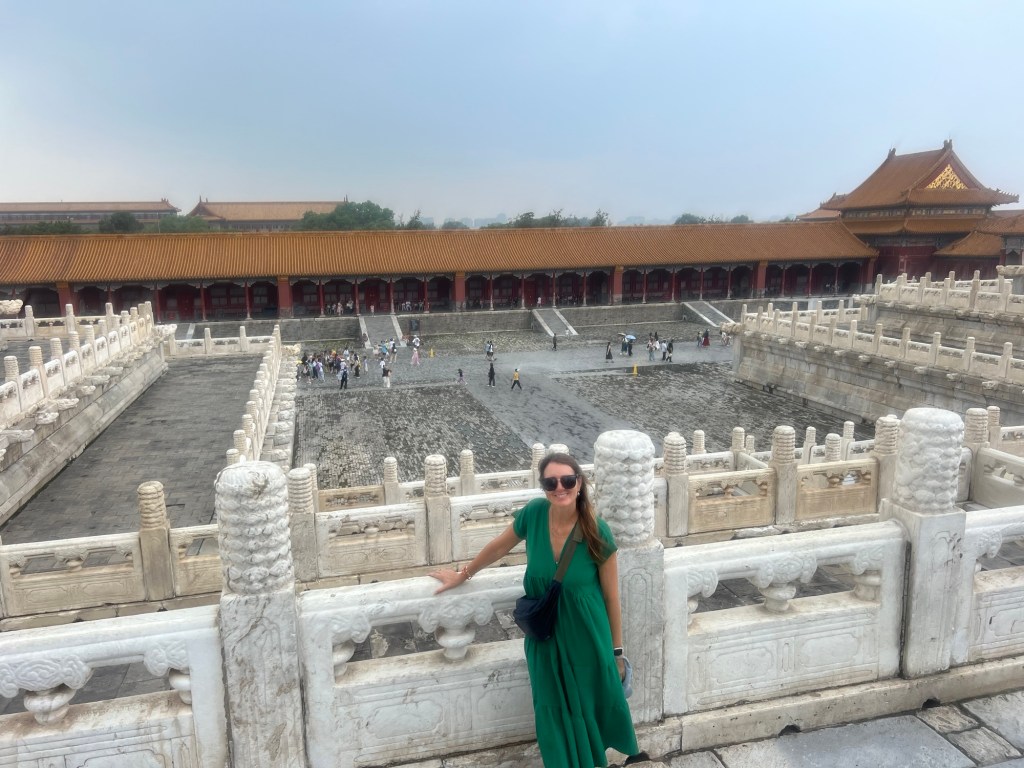
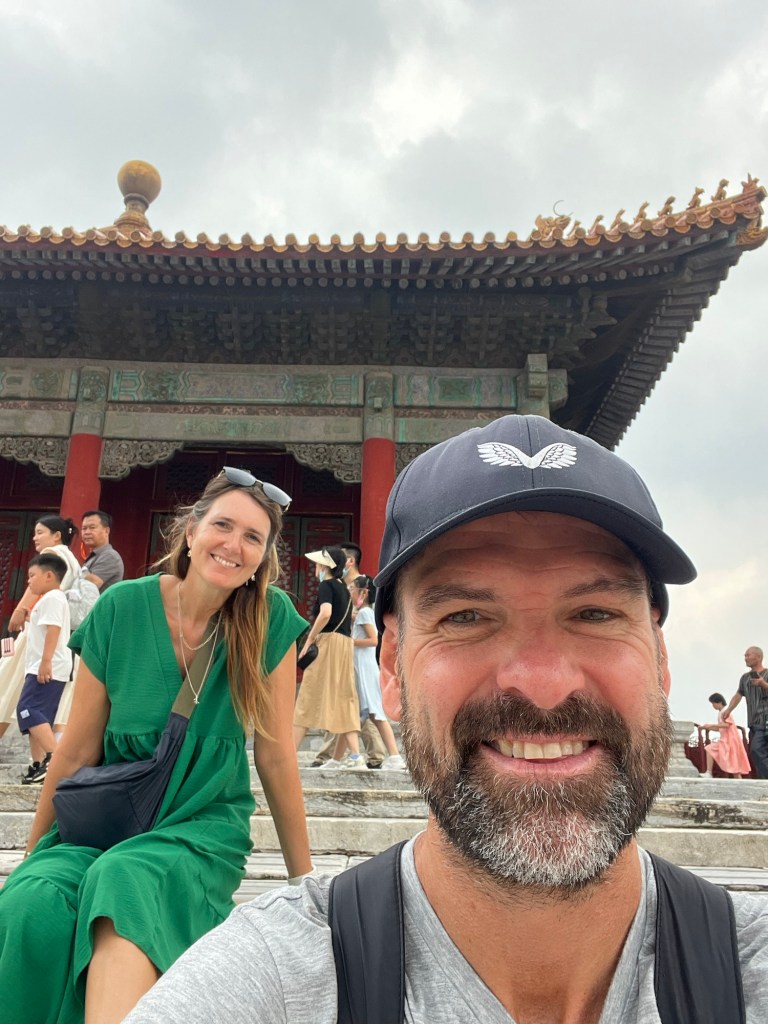
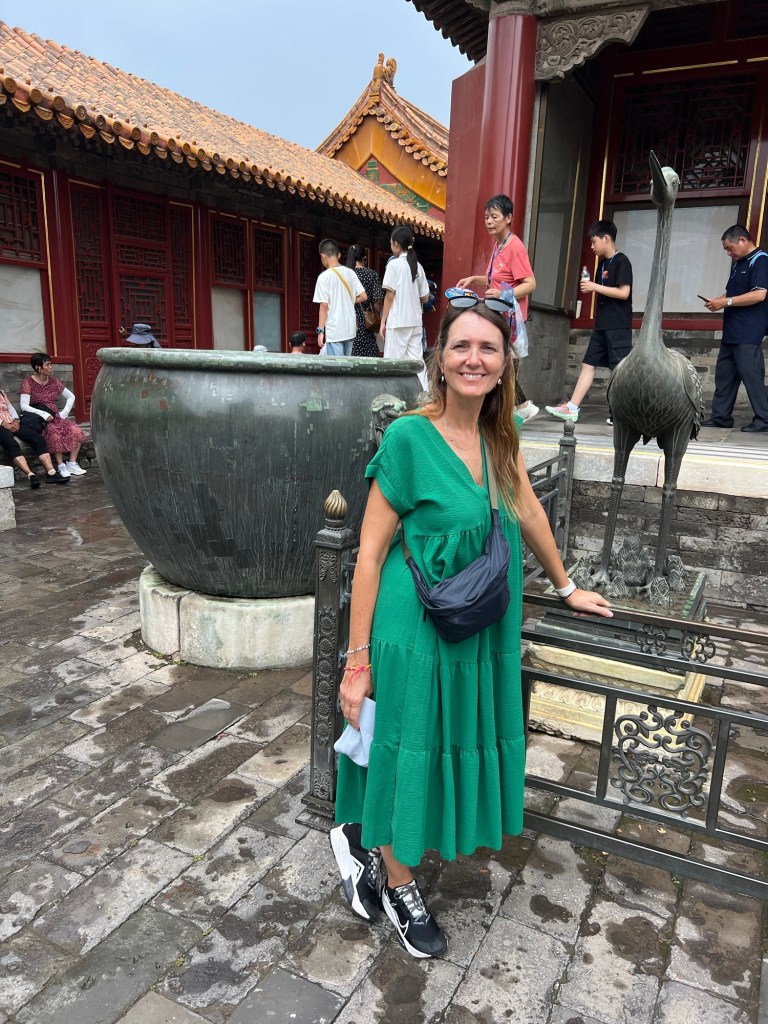
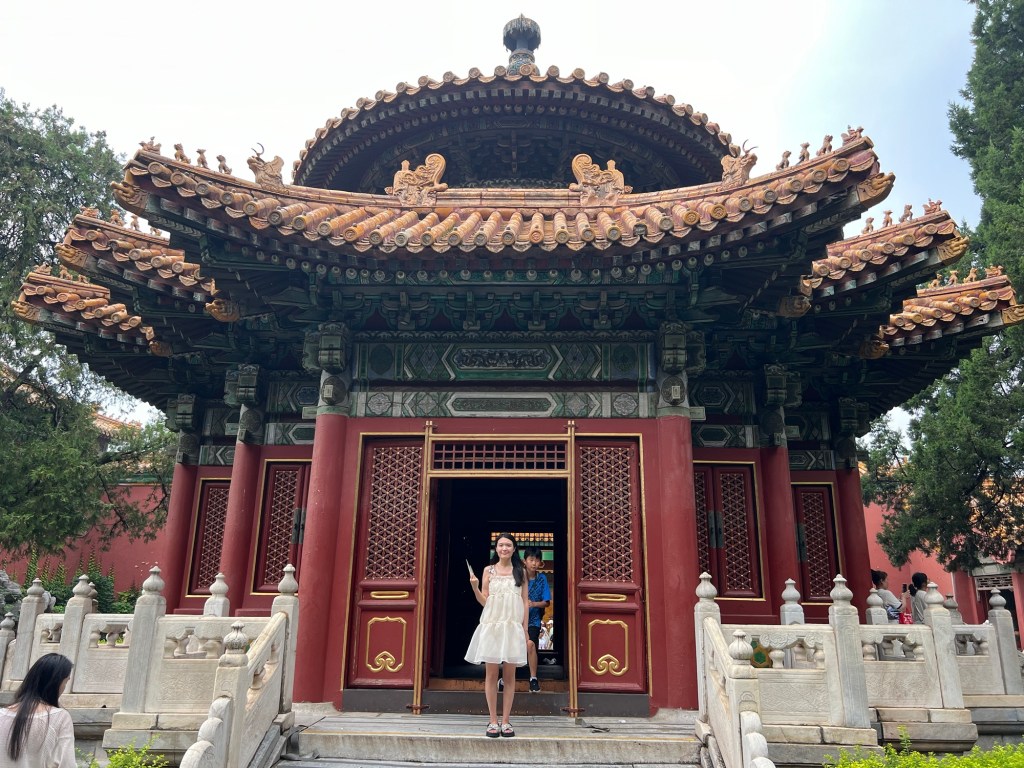
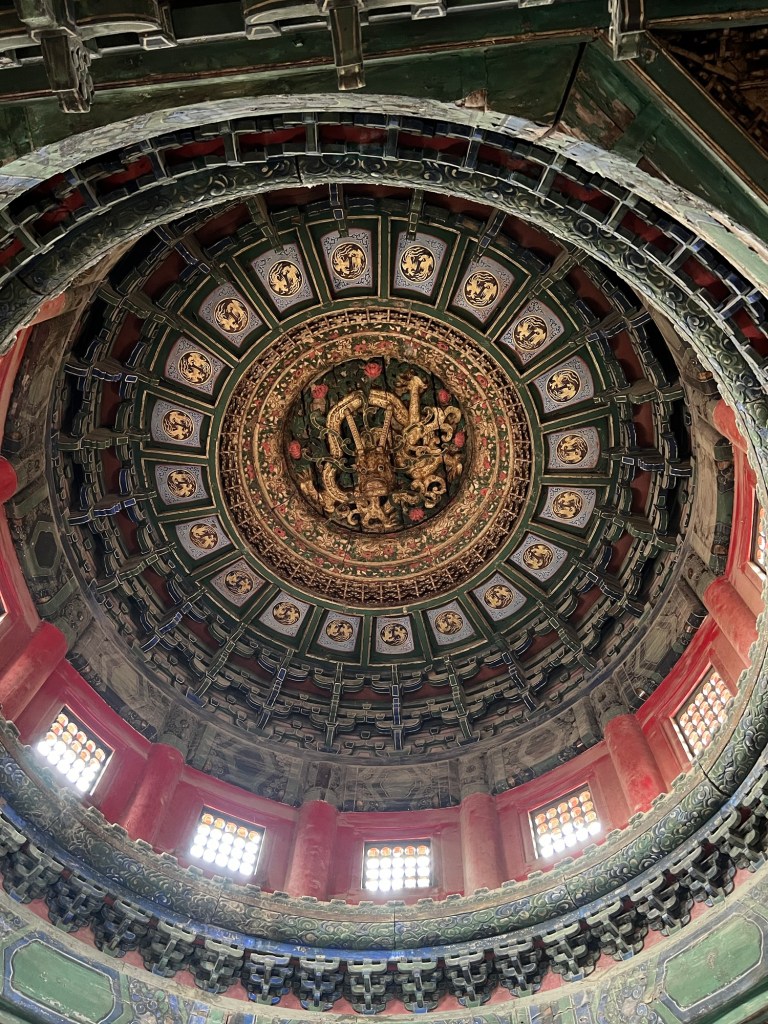
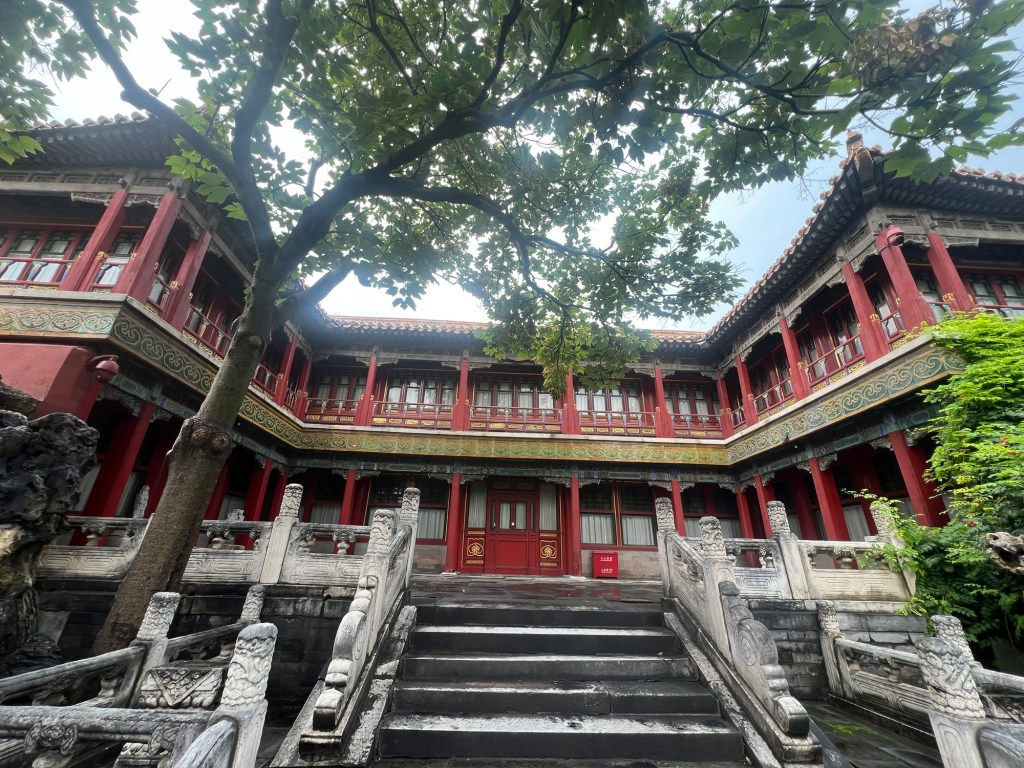
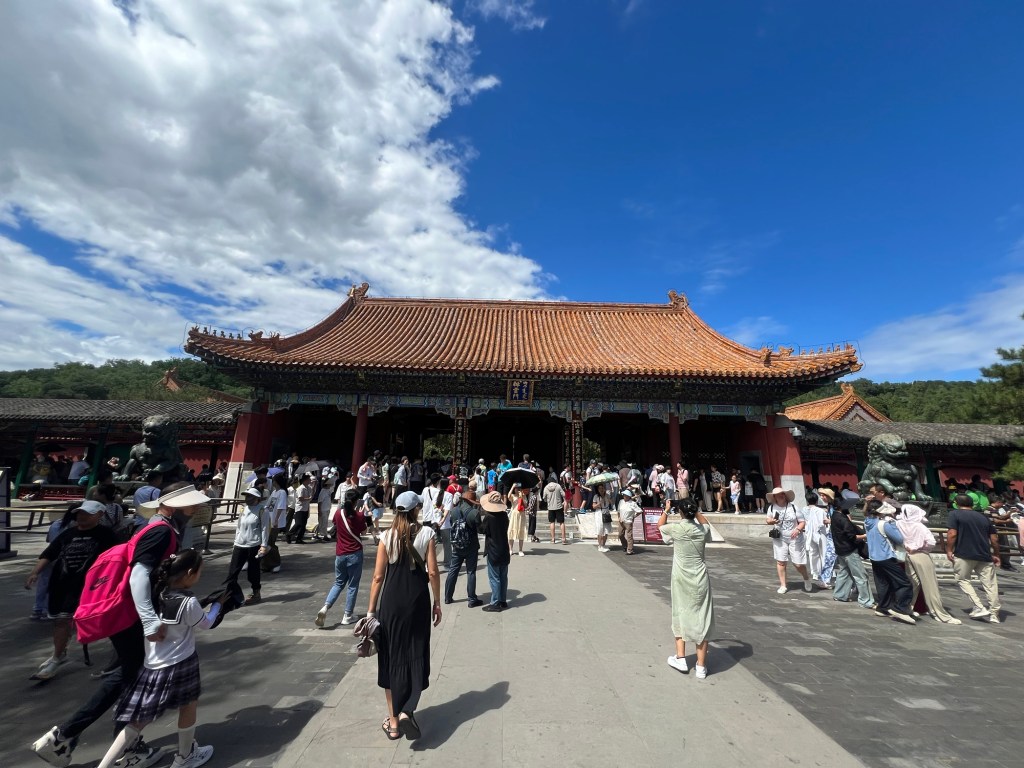
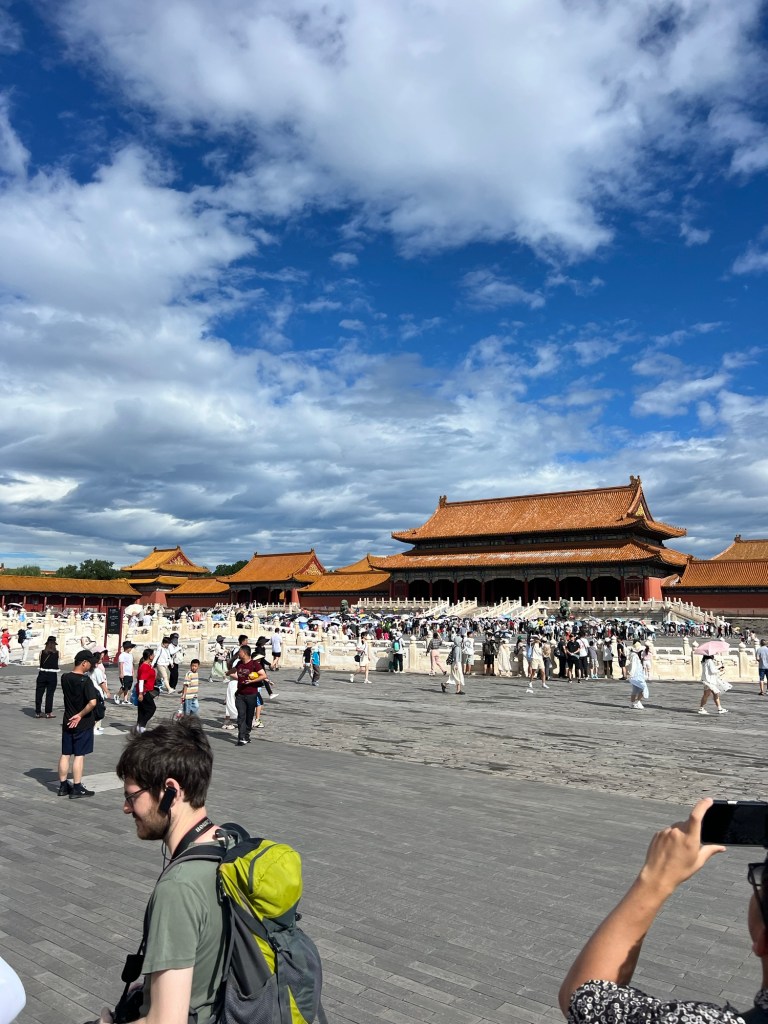
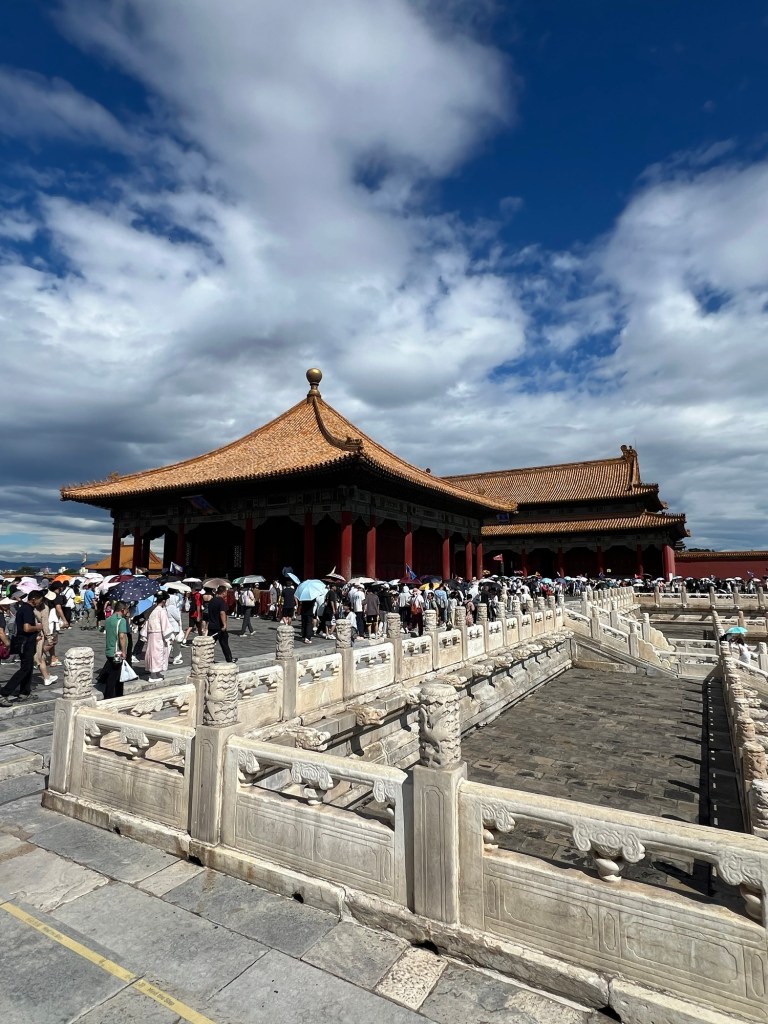
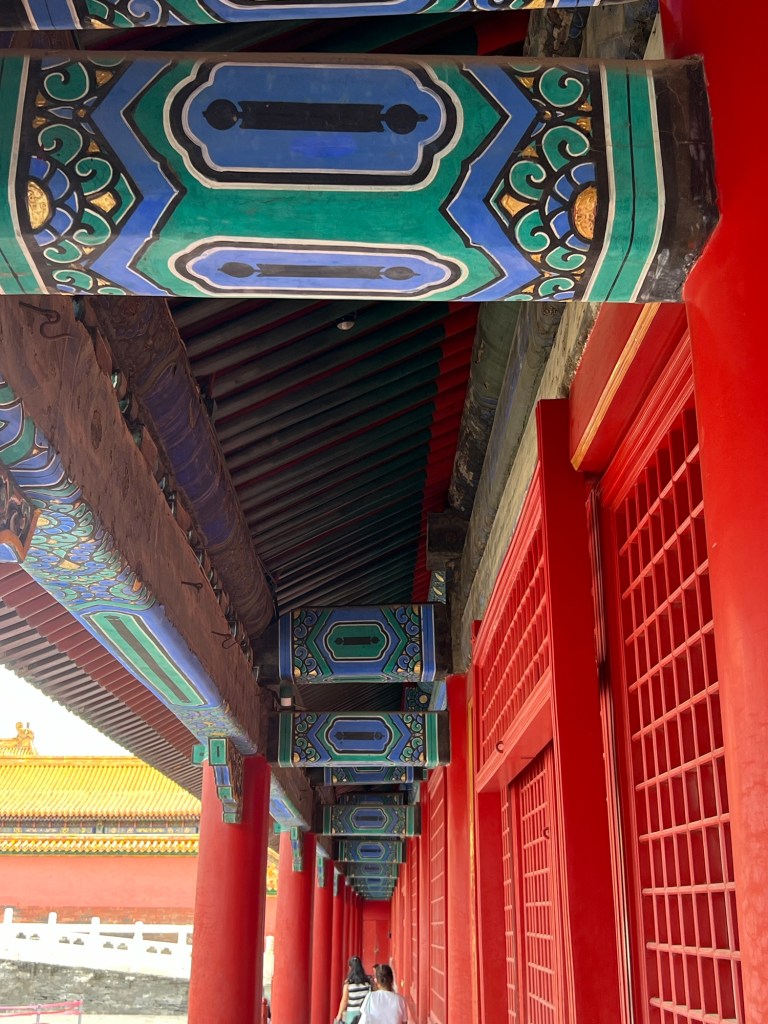
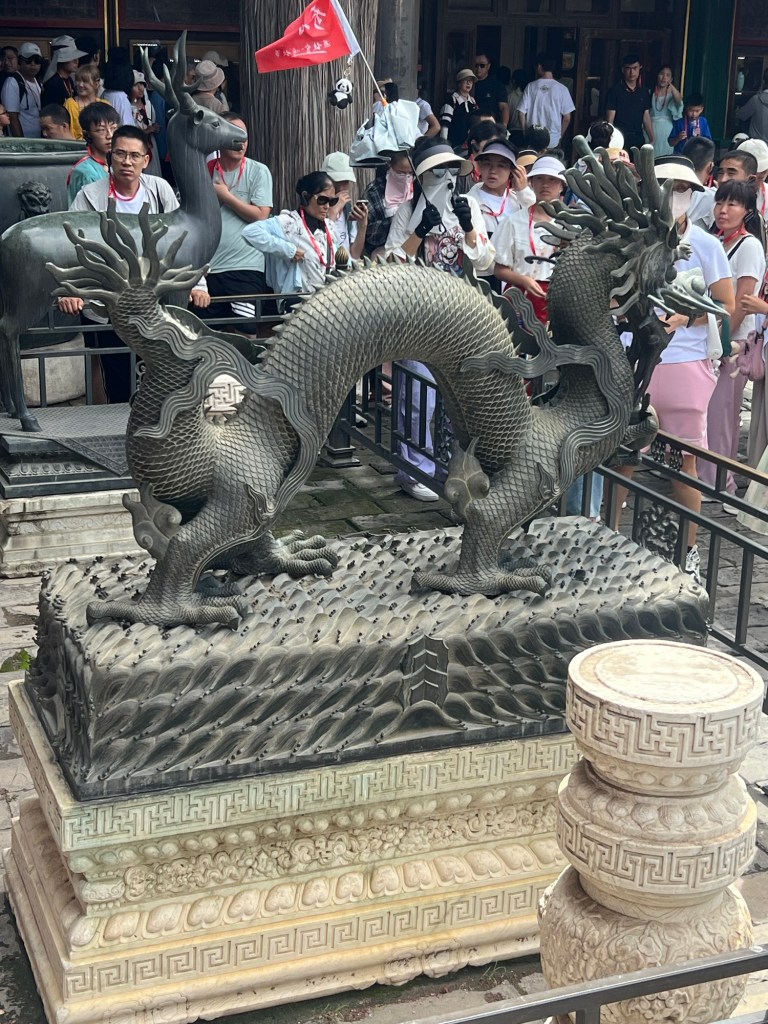
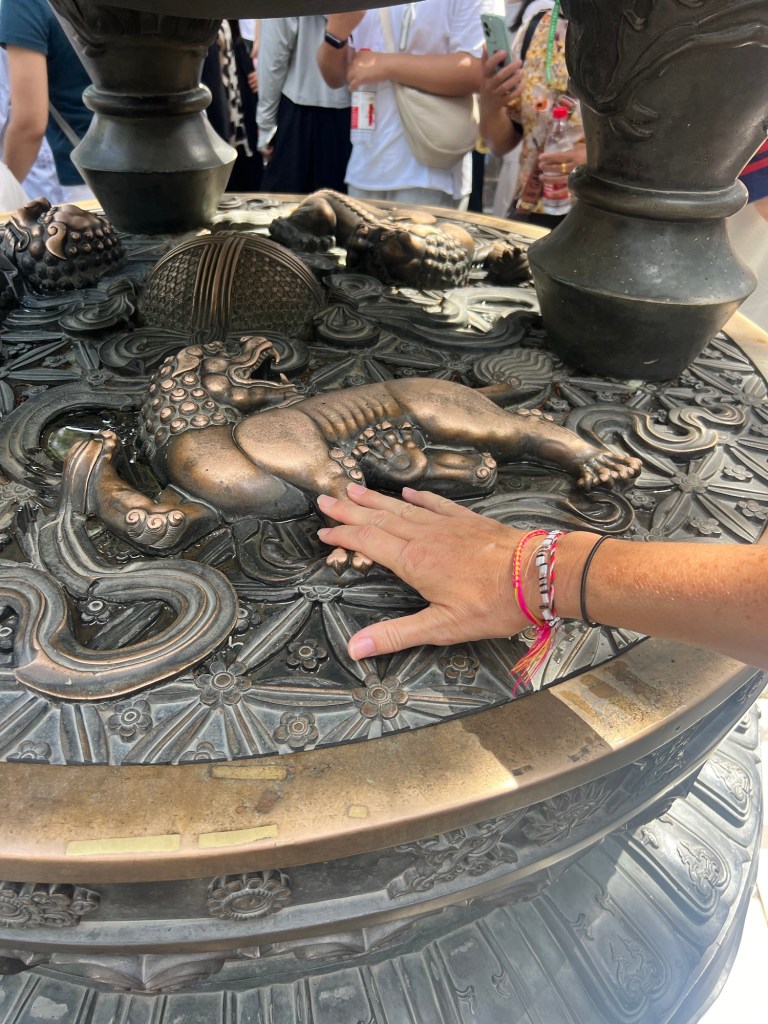
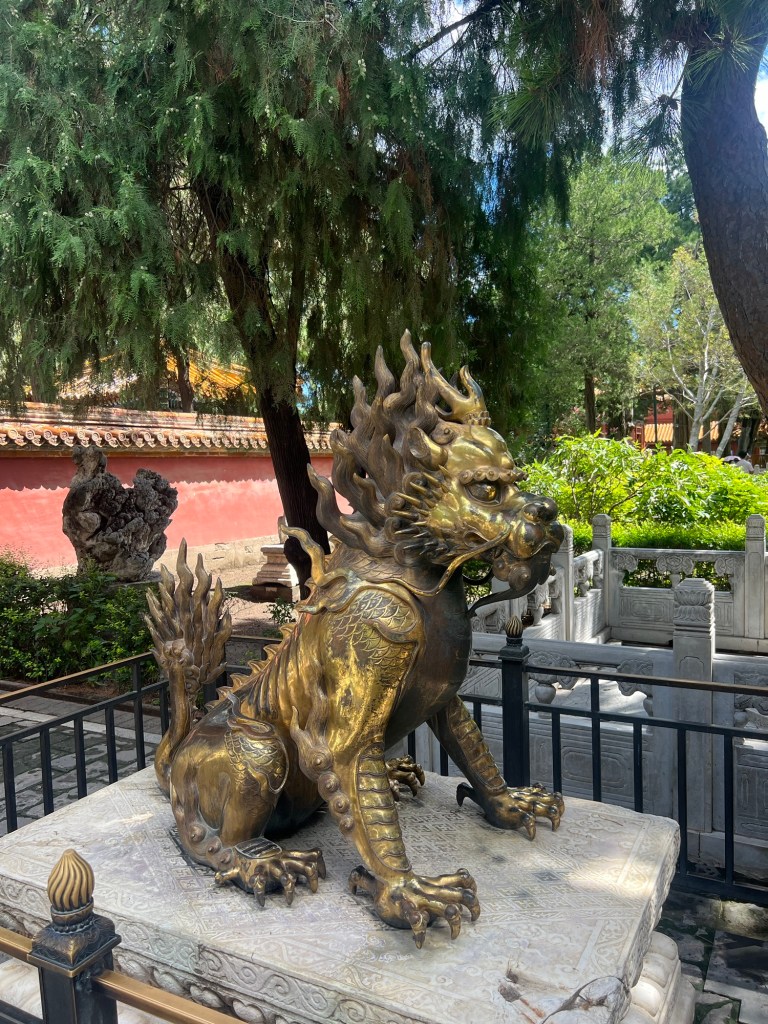
    After a hour in Tian’anmen Square we made our way back to Forbidden City, the inner sanctum and palace where for centuries Chinese emperors ruled their world. It has 9,999 room maze of courtyards, places, and ceremonial halls, where 24 emperors lived. The Forbidden City was historically a forbidden place, where commoners were kept out for nearly 500 years.

    It is home to over 1.8 million pieces of art, mostly from the imperial collection of the Ming and Qing dynasties. 

    The museum regularly sees more than 15 million visitors per year making it the world’s most visited museum.

    In 1912, Puyi, the last emperor of China, abdicated and under an agreement with the new Republic of China government, Puyi remained in the Inner Court, while the Outer Court was given over to public use.

    In 1924, Puyi was evicted from the Inner Court after a coup. The Palace Museum was then established in the Forbidden City.

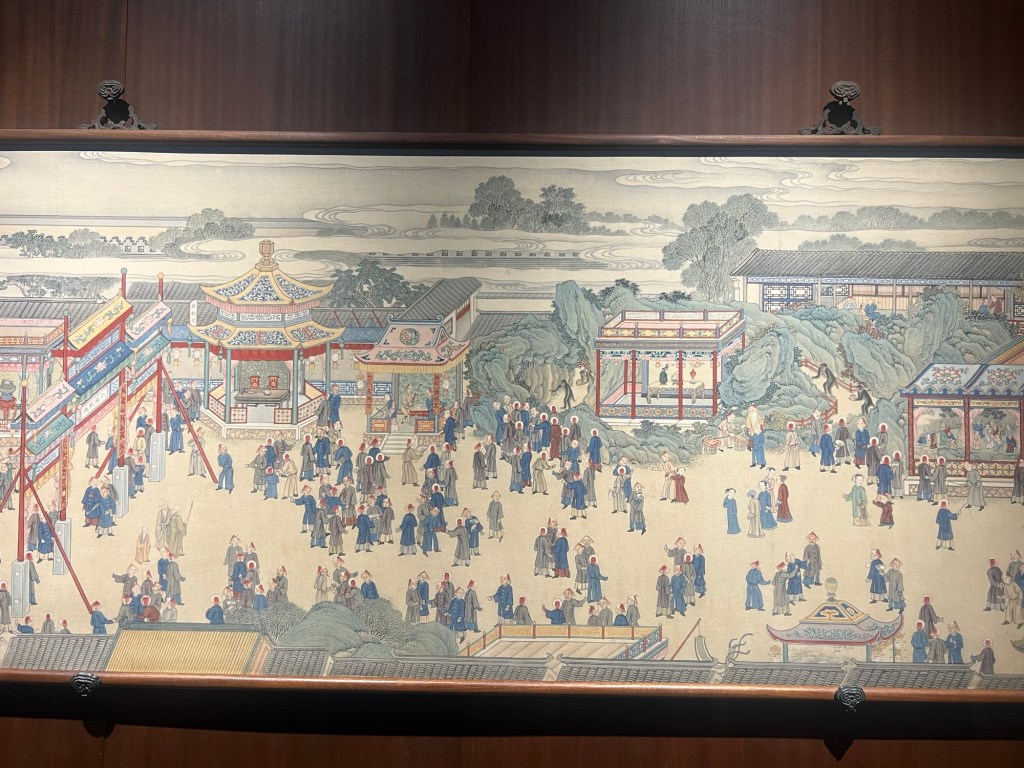
    Today, there are over a million rare and valuable works of art in the permanent collection of the Palace Museum, including paintings, ceramics, seals, steles, sculptures, inscribed wares, bronze wares and enamel objects.

    The Palace Museum holds close to 50,000 paintings. Of these, more than 400 date from before the Yuan dynasty from the 13th century. This is the largest collection in China and includes some of the rarest and most valuable paintings.

    As we ebbed around the Forbidden City, the weather turned and we said a brief goodbye to the hot sunshine and within minutes heavy rain descended and we took shelter inside one of the museum buildings to view the artefacts.

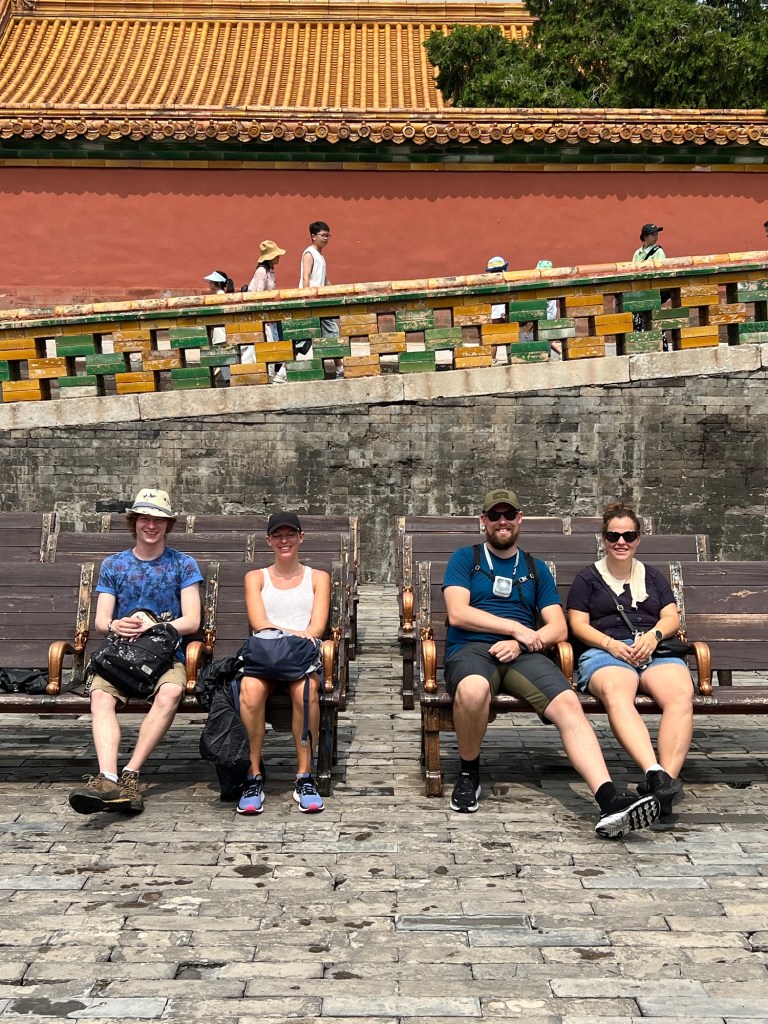
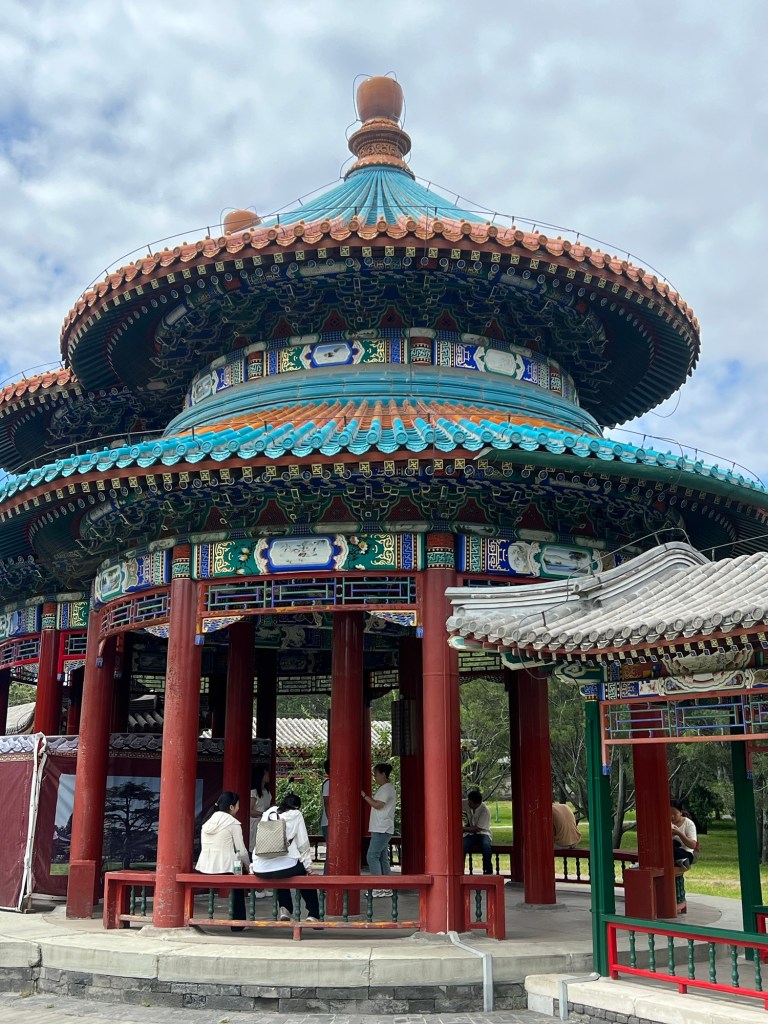
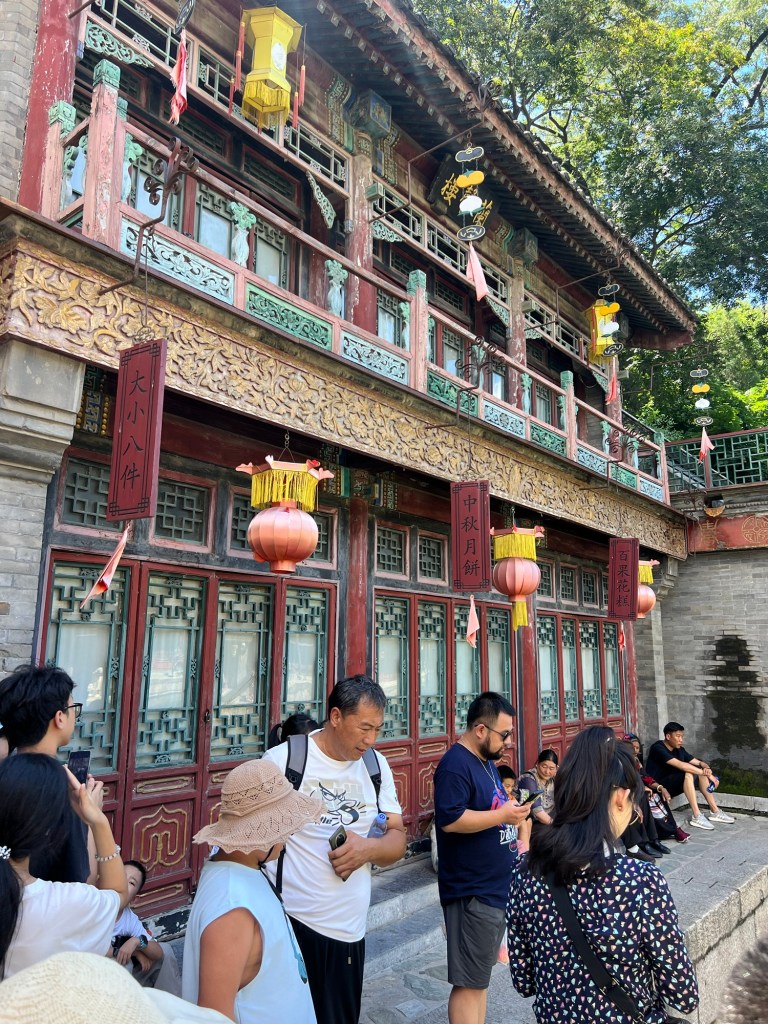
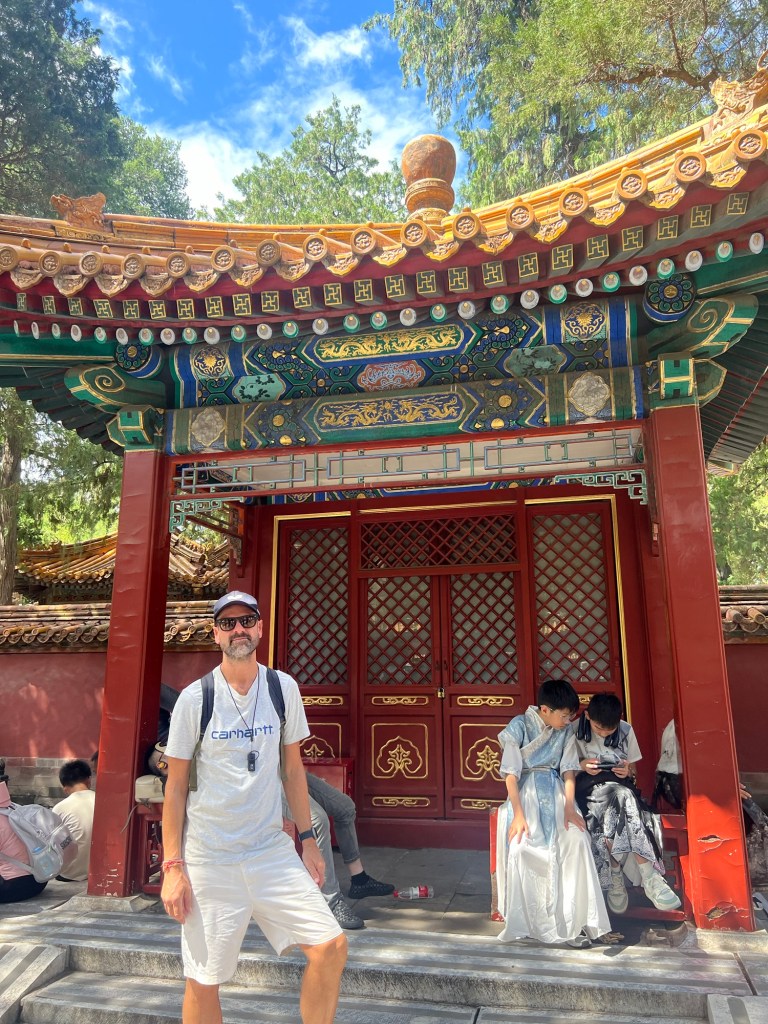
    Once the sun returned the group were keen to take a breather and Jamie, Laura, Simen and Julie found some seats in the shade.

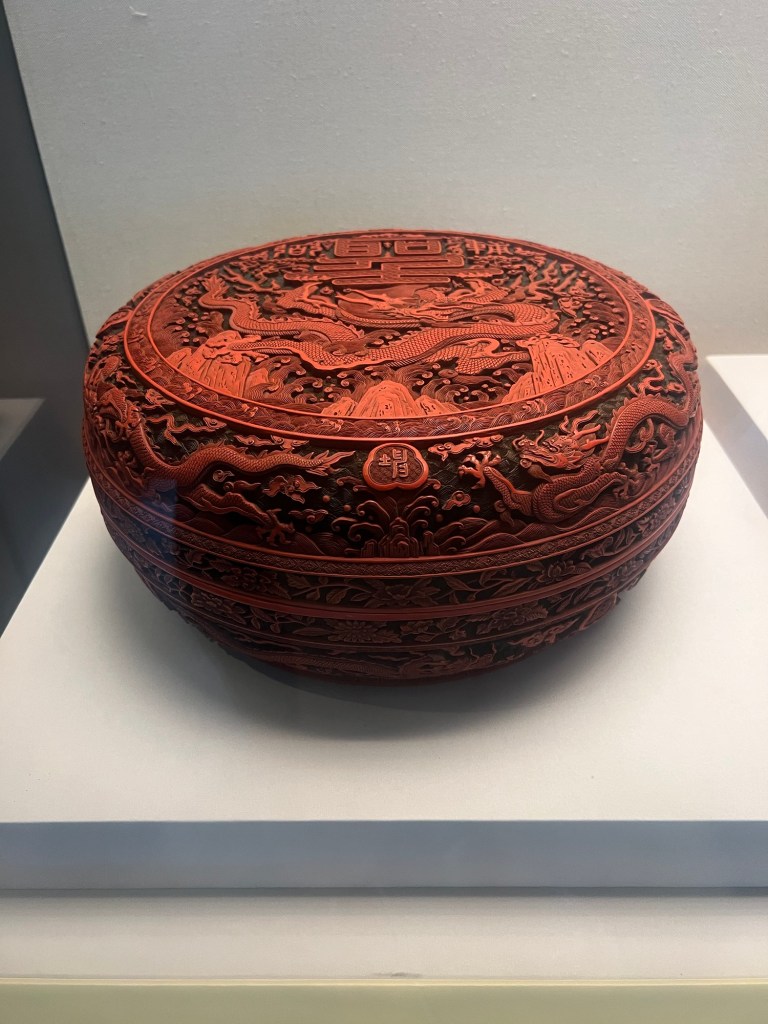
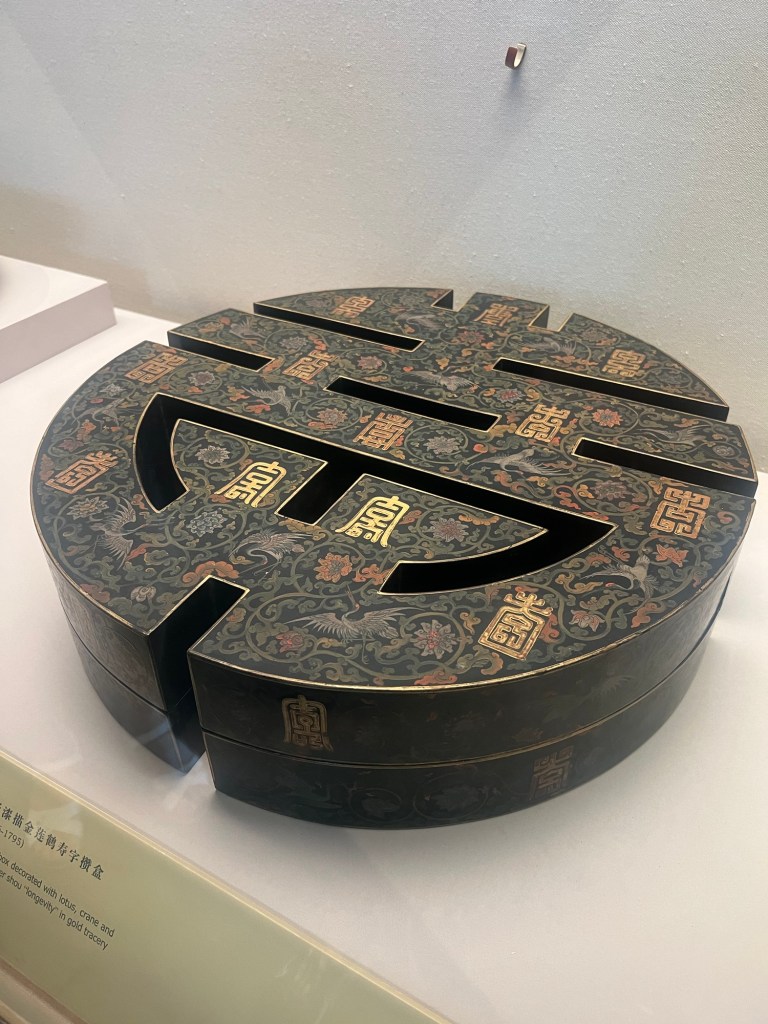
    In addition to works of art, a large proportion of the museum’s collection consists of the artifacts of the imperial court. This includes items used by the imperial family and the palace in daily life, as well as various ceremonial and bureaucratic items important to government administration.

    This comprehensive collection preserves the daily life and ceremonial protocols of the imperial era.

    After spending a further 3hrs today walking around the Forbidden City and the many associated buildings and gardens, we eventually said goodbye to the museum and as a group headed to a nearby bistro for a late lunch.

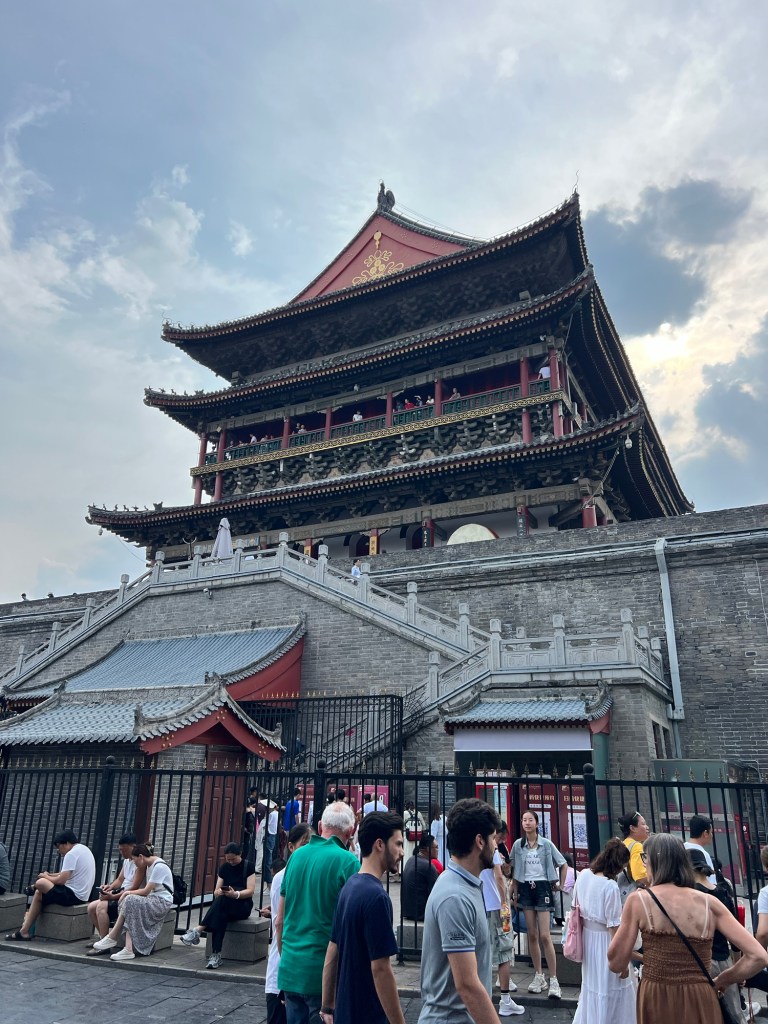
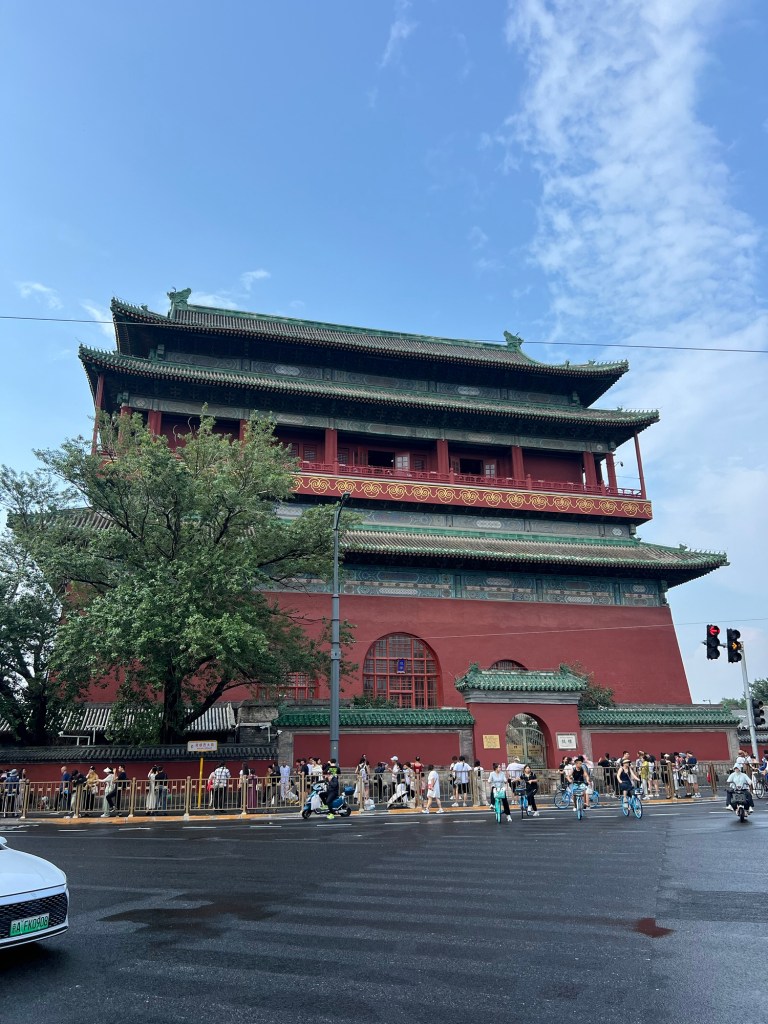
    After reconvening at 4pm we picked up a local bus (costing just 20p each) and went to visit the Drum Tower situated at the northern end of the city. Originally built for musical reasons, it was later used to announce the time and is now a tourist attraction.

    From there we went down Yandaixie Street, also called Yandai Byway, which is a Hutong located in Beijing downtown. It is the oldest business street in Beijing with a history of over 800 yrs.

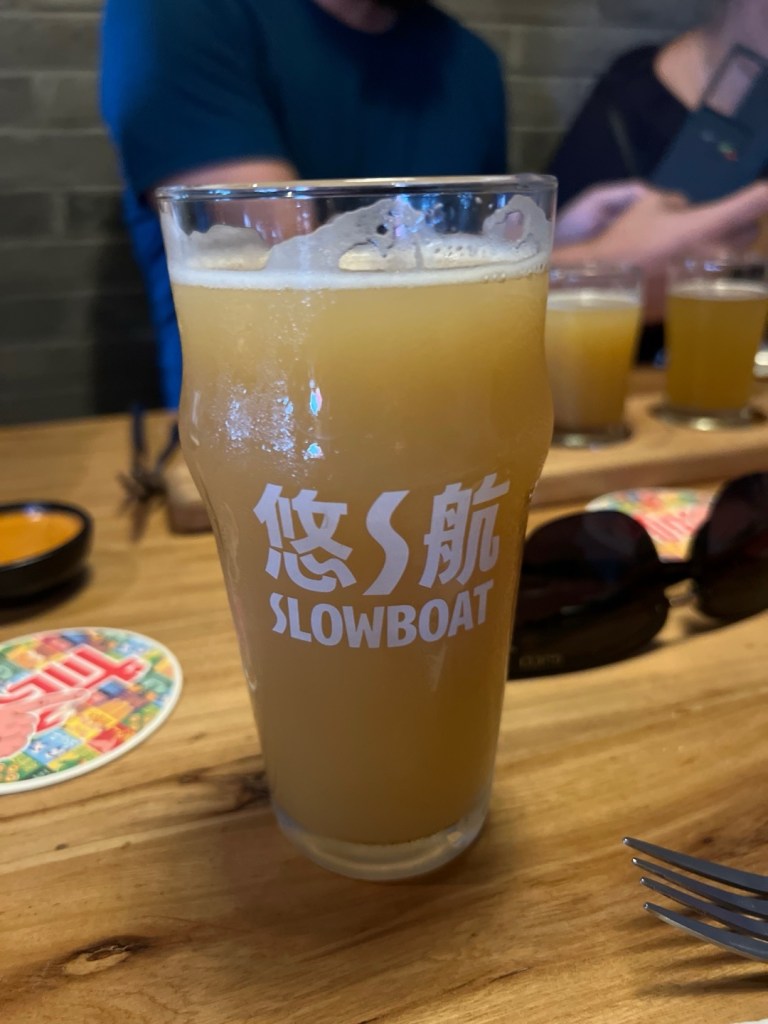
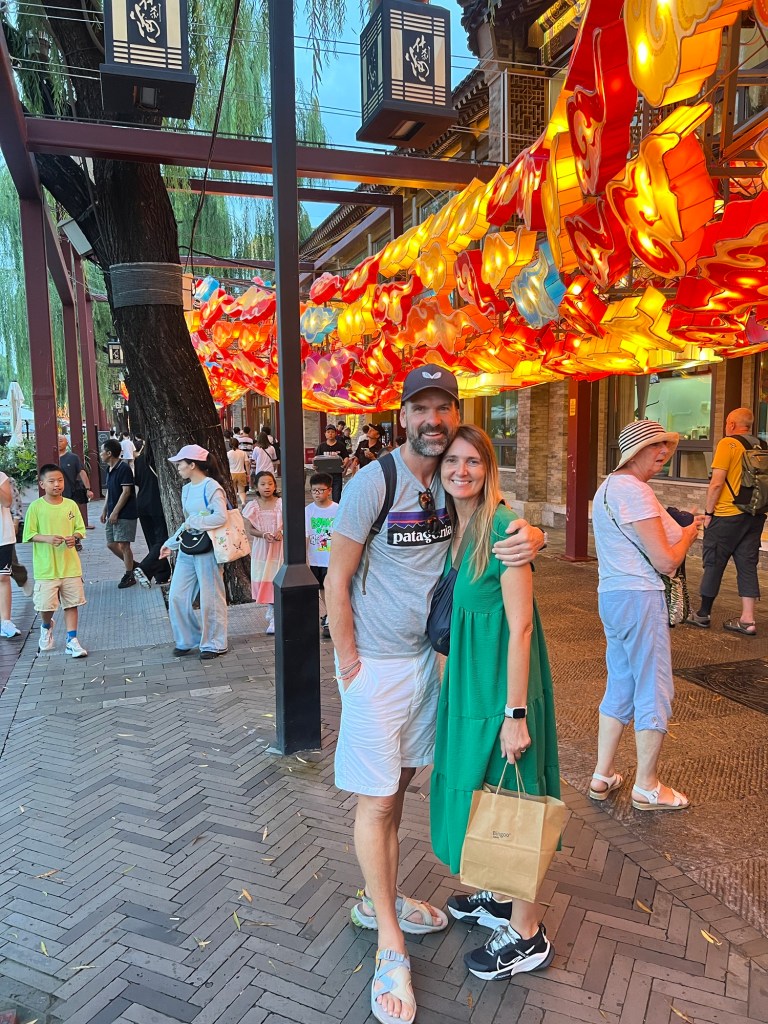
    In the past, there were mainly stores selling tobacco pipes, antiques, jades, and Chinese paintings. Now it is teeming with boutiques, restaurants, cafes and bars. Our tour group headed to a bar called Slowboat tap room where we ordered various beers and burgers.

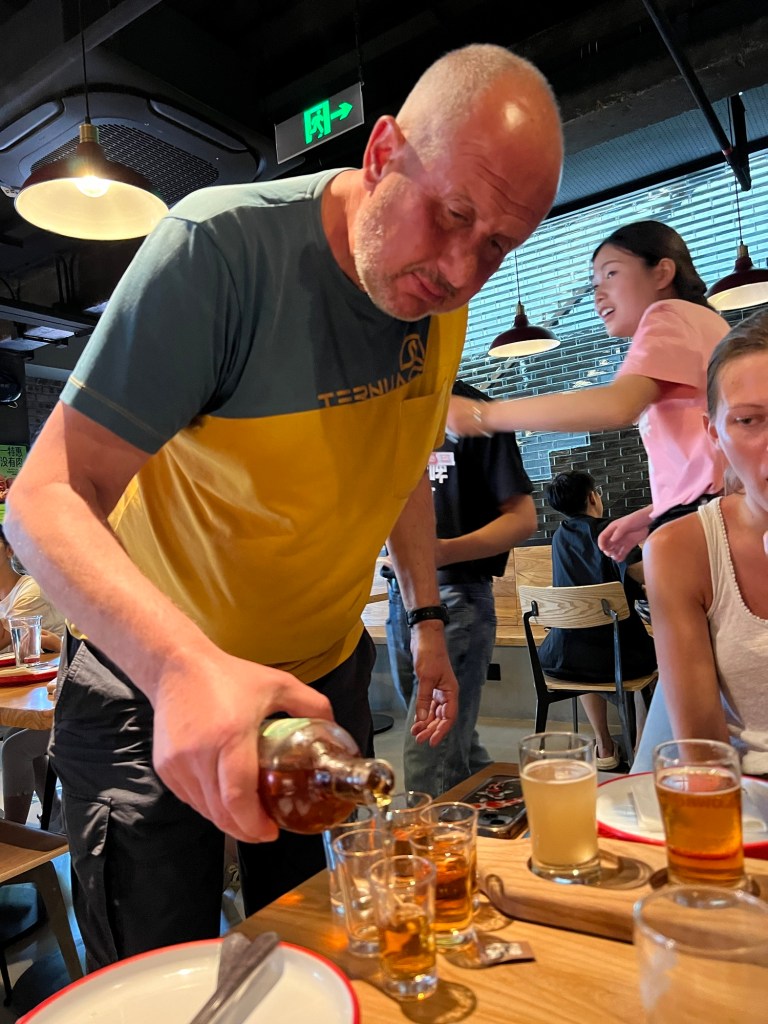
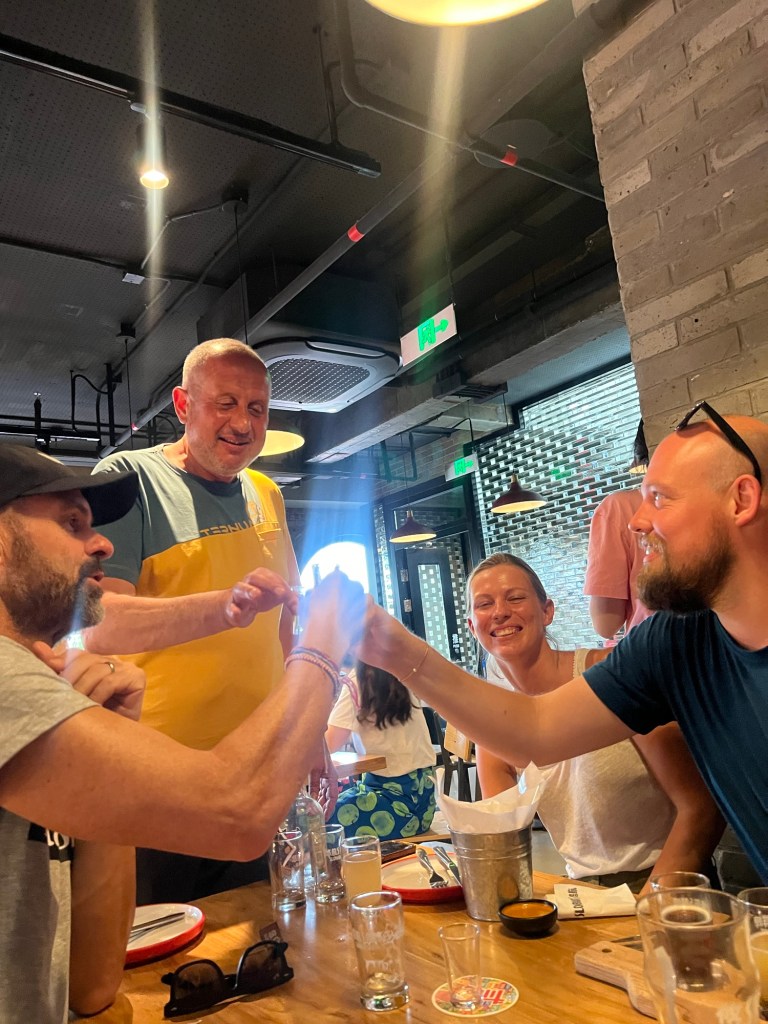
    It also turned out to be Oleg’s birthday and we celebrated with some Russian spirit to toast the occasion.

    Like any good Russian spirit it came with a health warning and was almost 40% proof. Thankfully it went down smoothly and we indulged in a couple of shots!

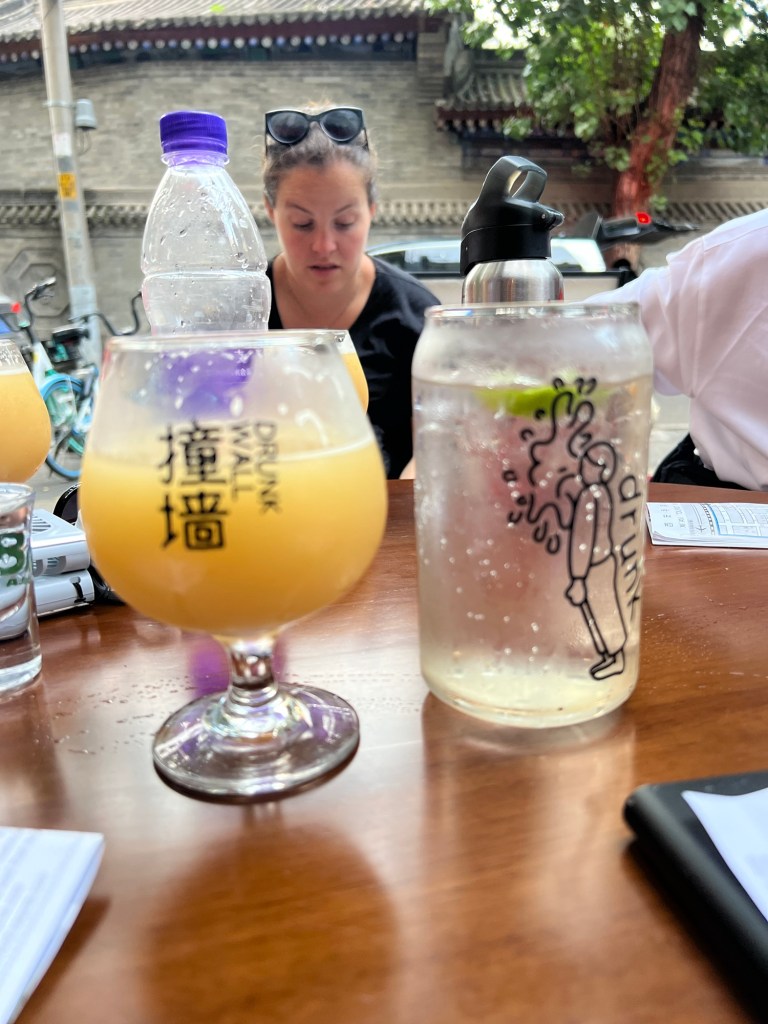
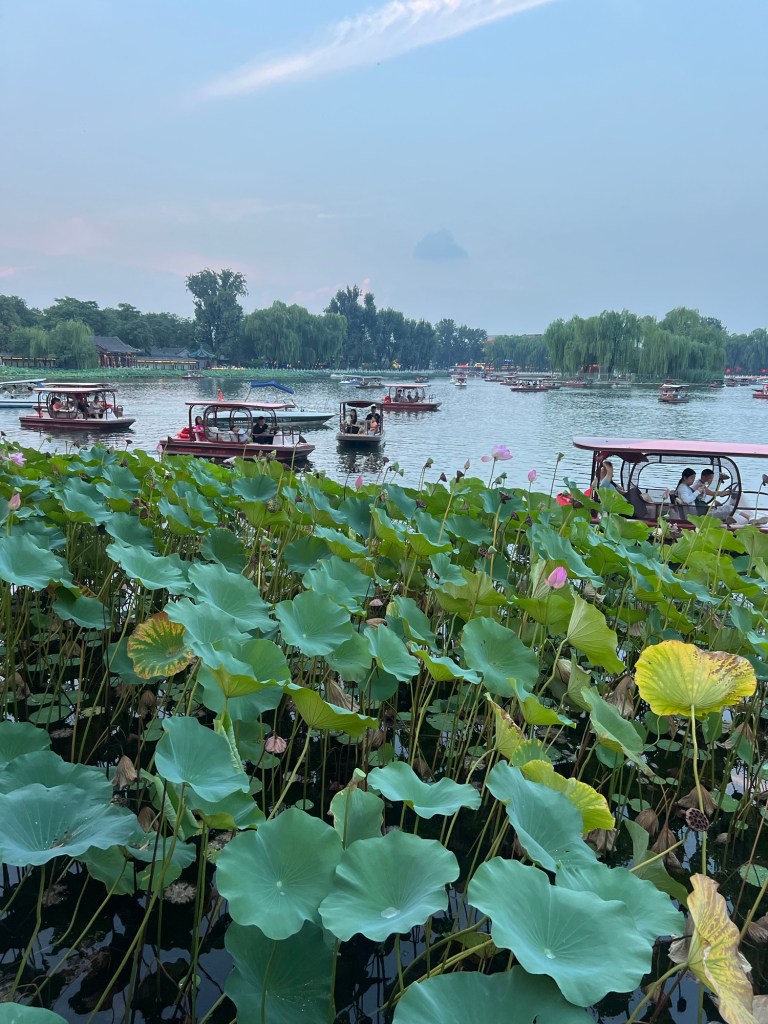
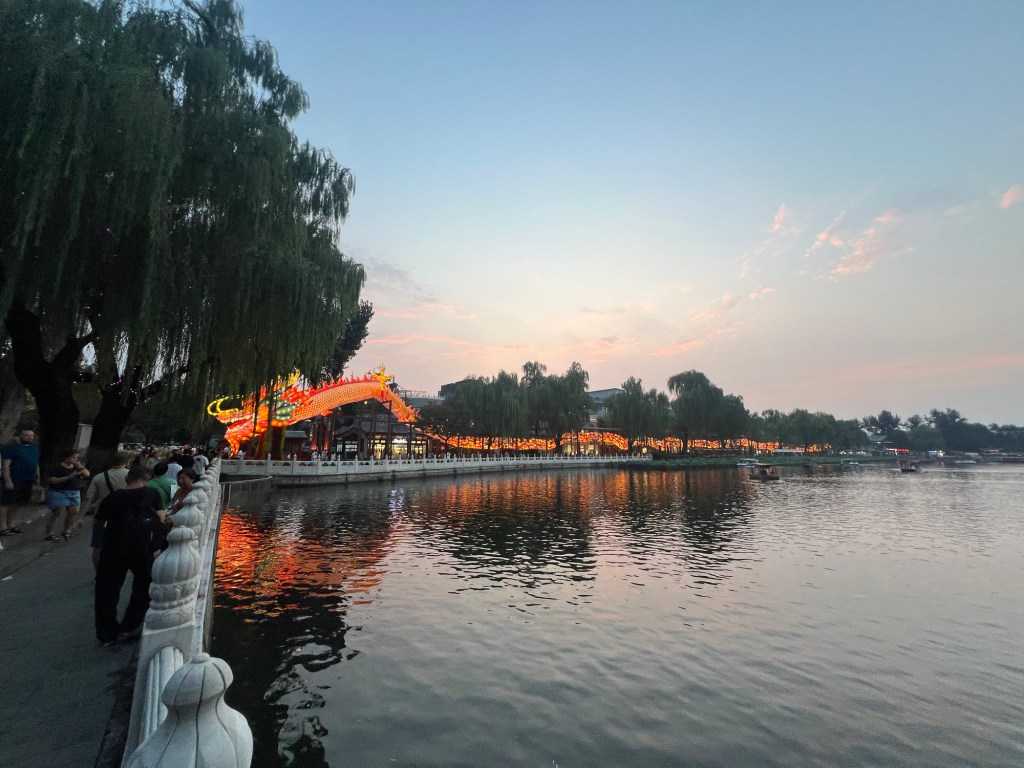
    After trying a flight of IPAs, wheat and pale ale tasting beers it was time to get back on the tourist trail and take in the views along Qian Hai lake before crossing at Yinding Bridge.

    Standing on the Yinding Bridge, we enjoyed a panoramic view across Xishan Forest Park.

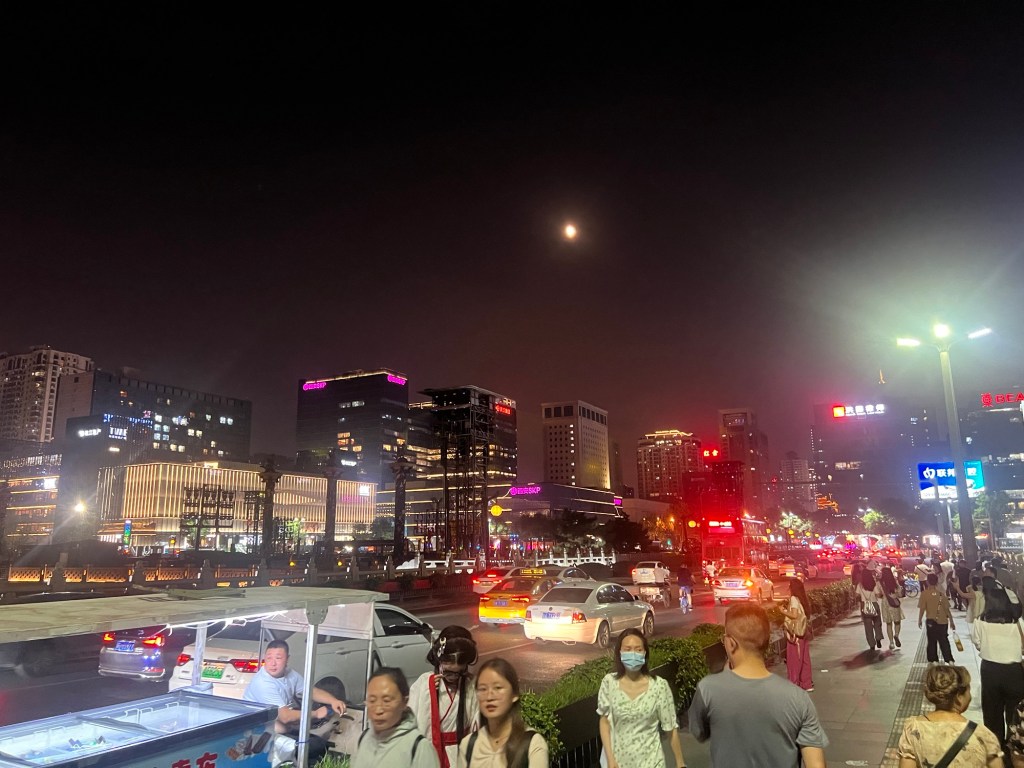
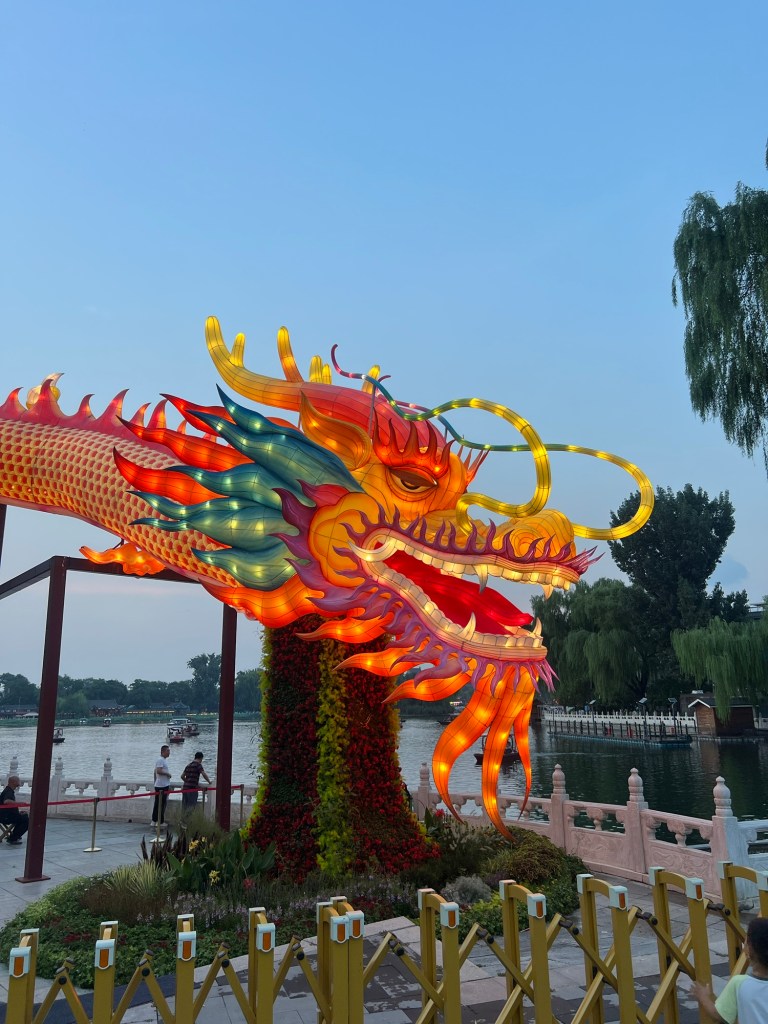
    Again the lake was awash with lotus flowers and alongside the lakefront an illuminated dragon snakes its way above the various restaurants and bars creating a beautiful scene as darkness descended.

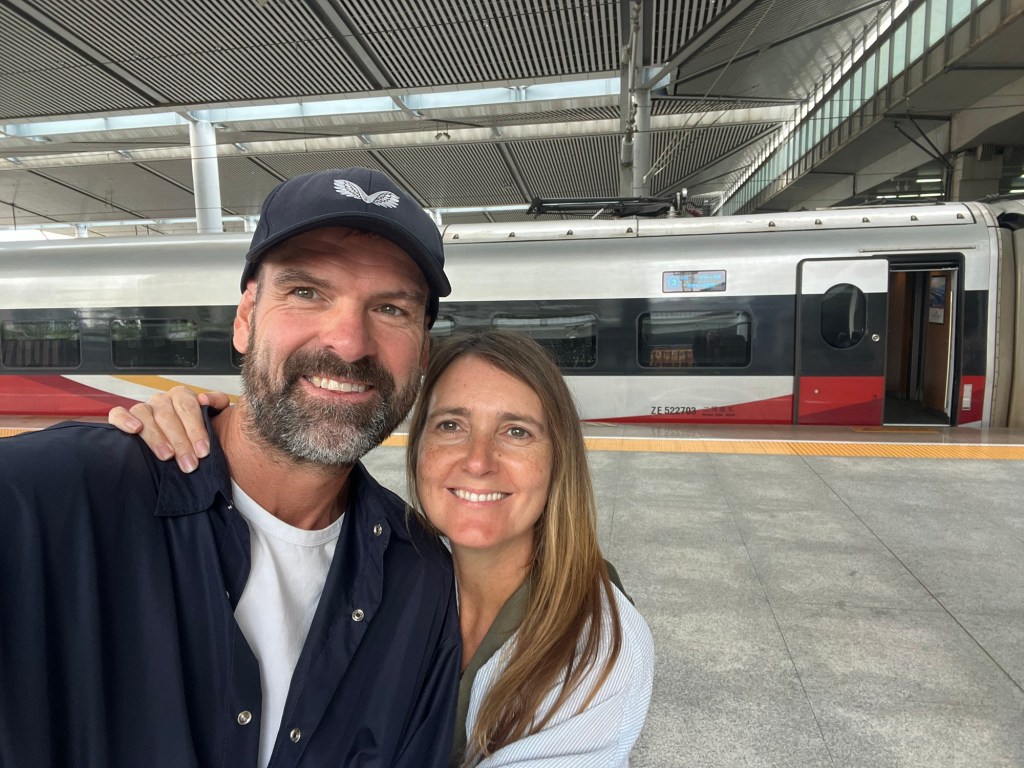
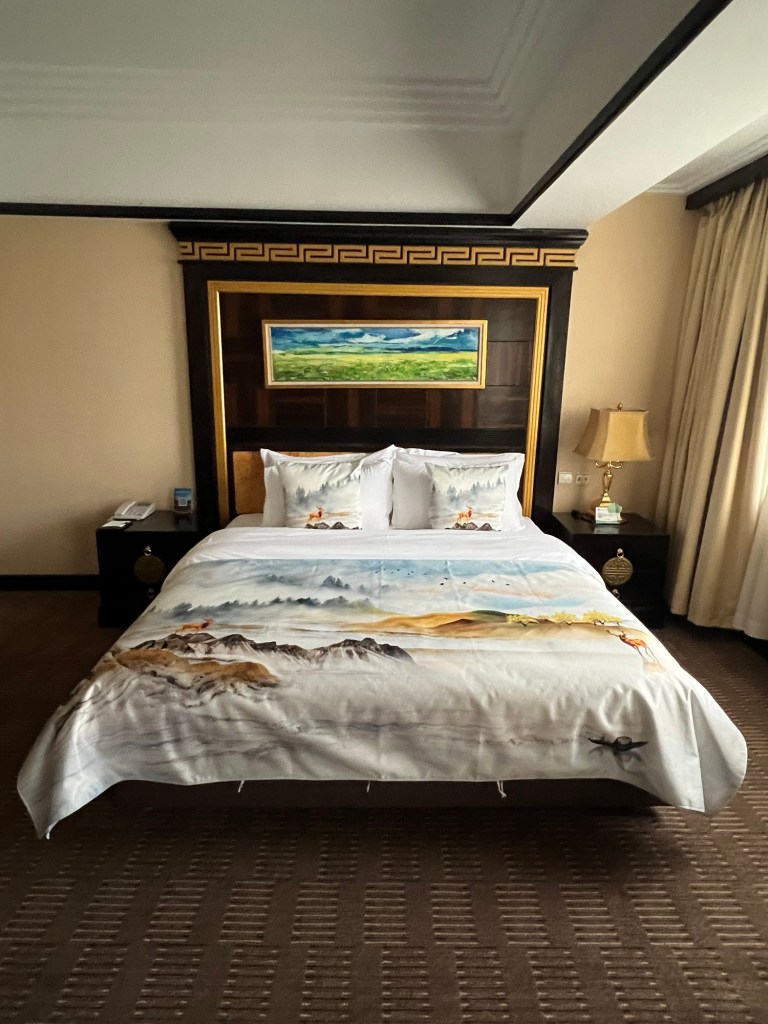
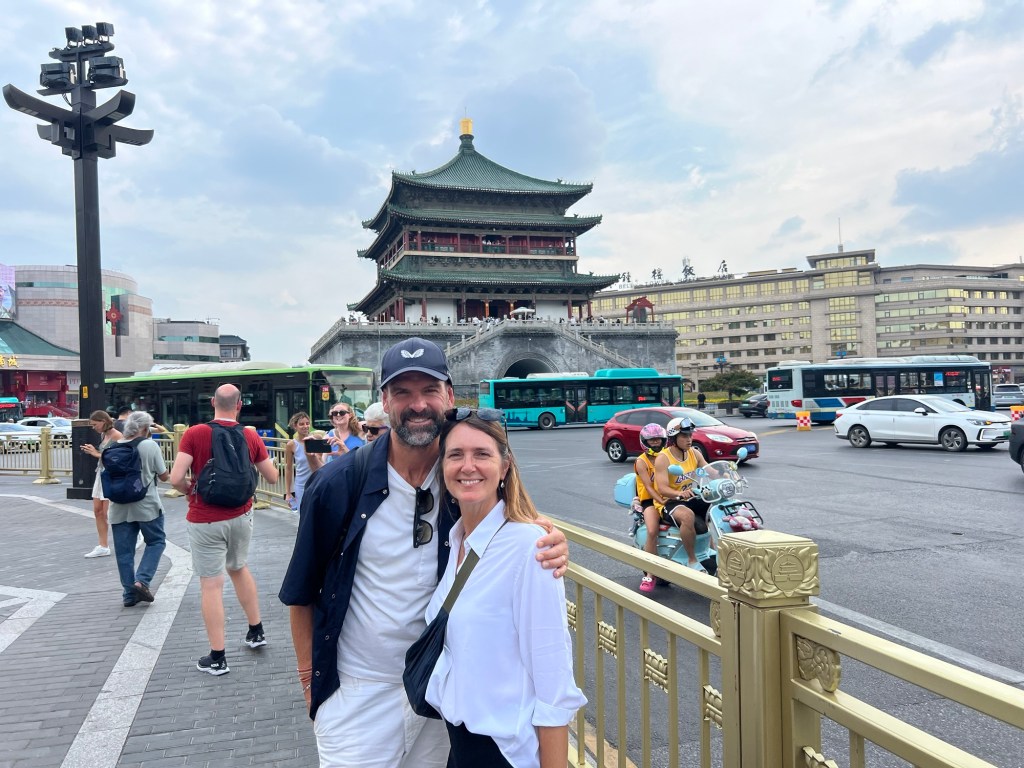
    With the day coming to a close and in the knowledge that we are moving on to the city of X’ian tomorrow, we decided to walk back to our hotel along with 5 or 6 others from the tour group.

    Fortunately we have a diverse and interesting group of people from various backgrounds, who we are looking forward to getting to know and sharing this amazing experience together.

  • Overseas tour Day 288 – Great Wall of China & Beihai Lake

    Aug 15th, 2024

    Today we ticked off a major bucket list goal of visiting the Great Wall of China.

    Another 7am start with a 90min drive to an access point for the Wall.

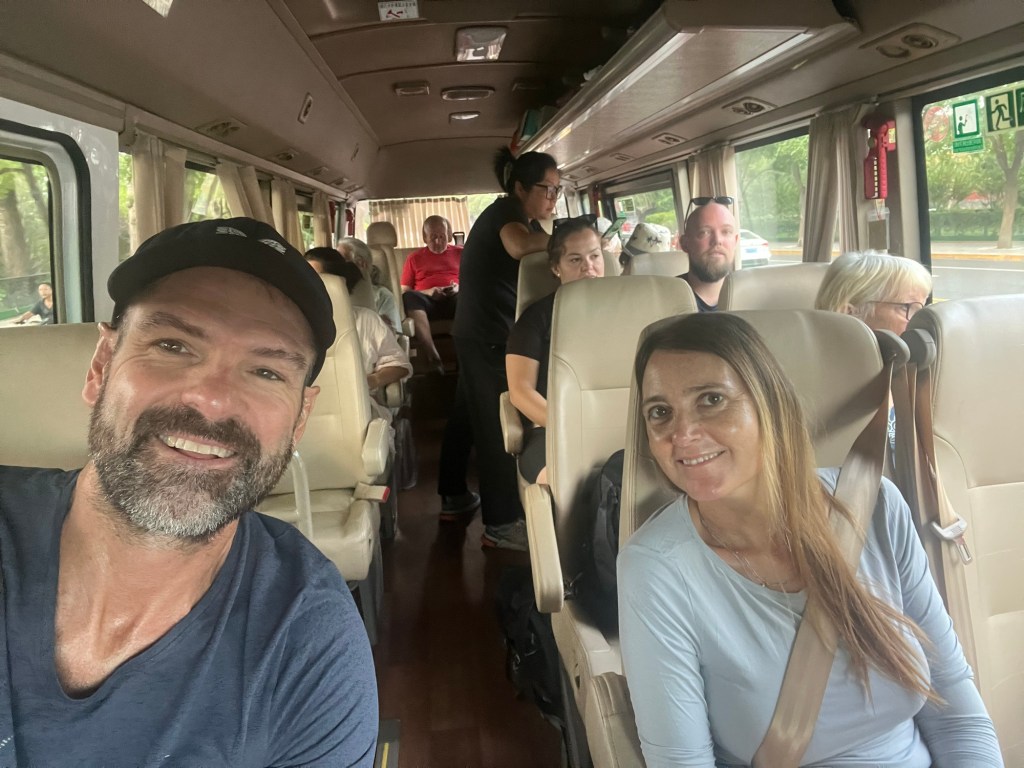
    On the coach heading to TGWC

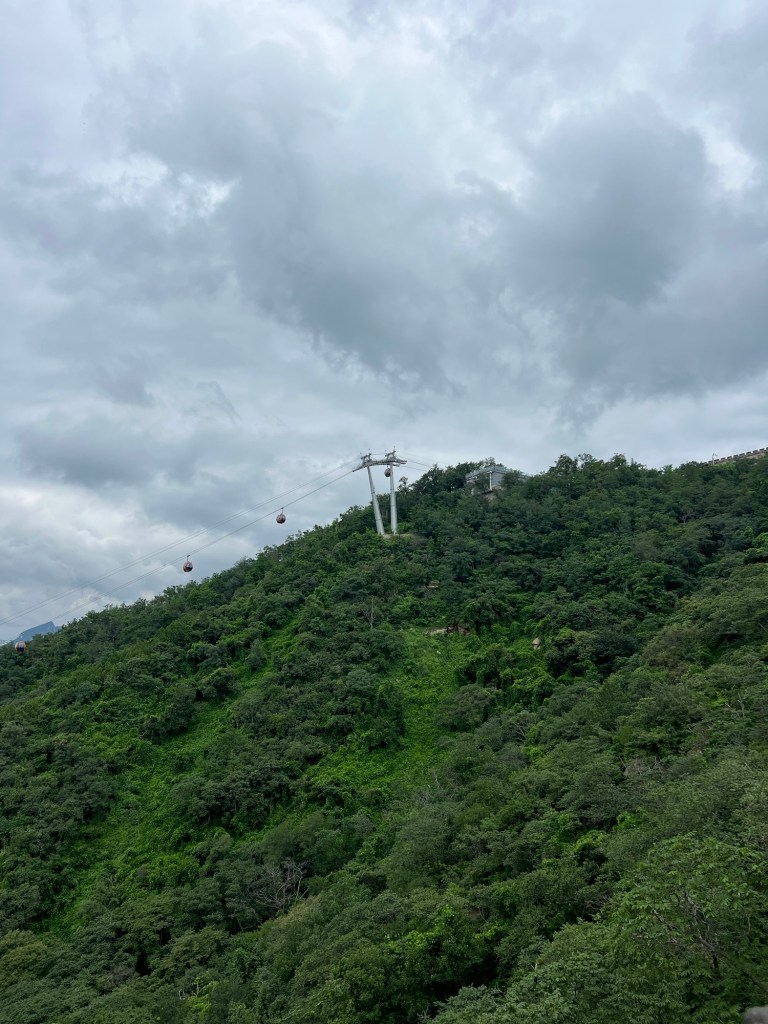
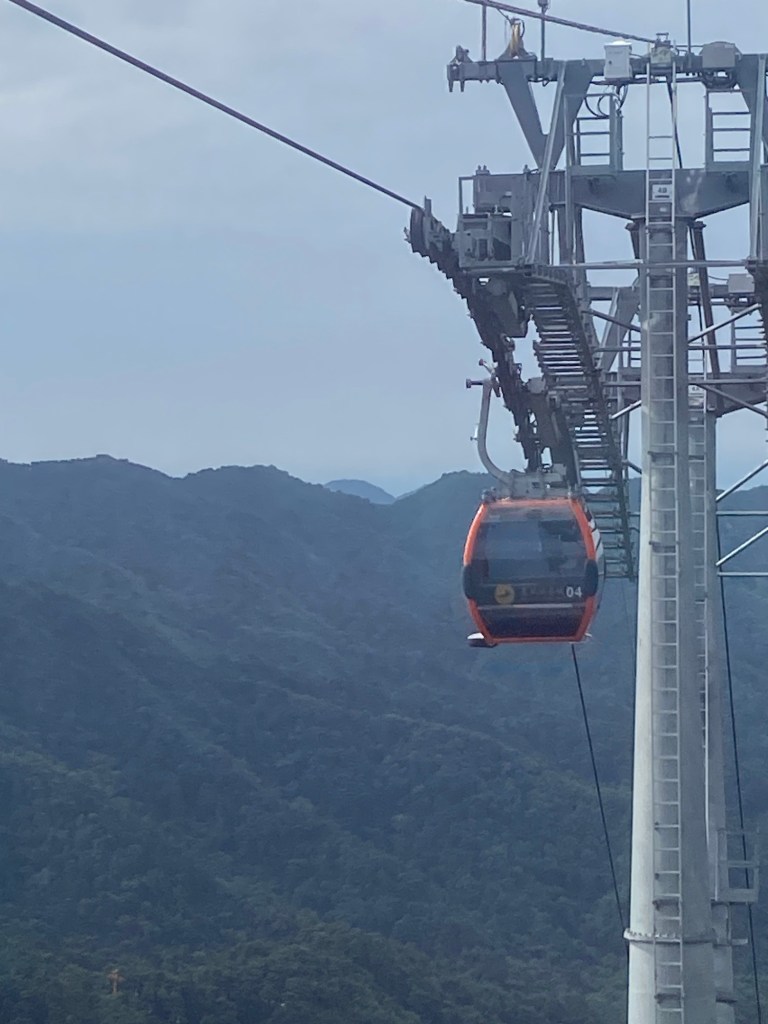
    We picked a good day for the walk up, with clear blue skies but not too hot. At the base of the mountain range we walked through a small market selling souvenirs and street food, before we had the option to either walk up to one of the wall encampments or go up in a cable car. Michelle went for the more relaxing approach, whilst Andy was keen to show his stamina by walking up with Laura and Jamie, two of the youngest members of the tour group.

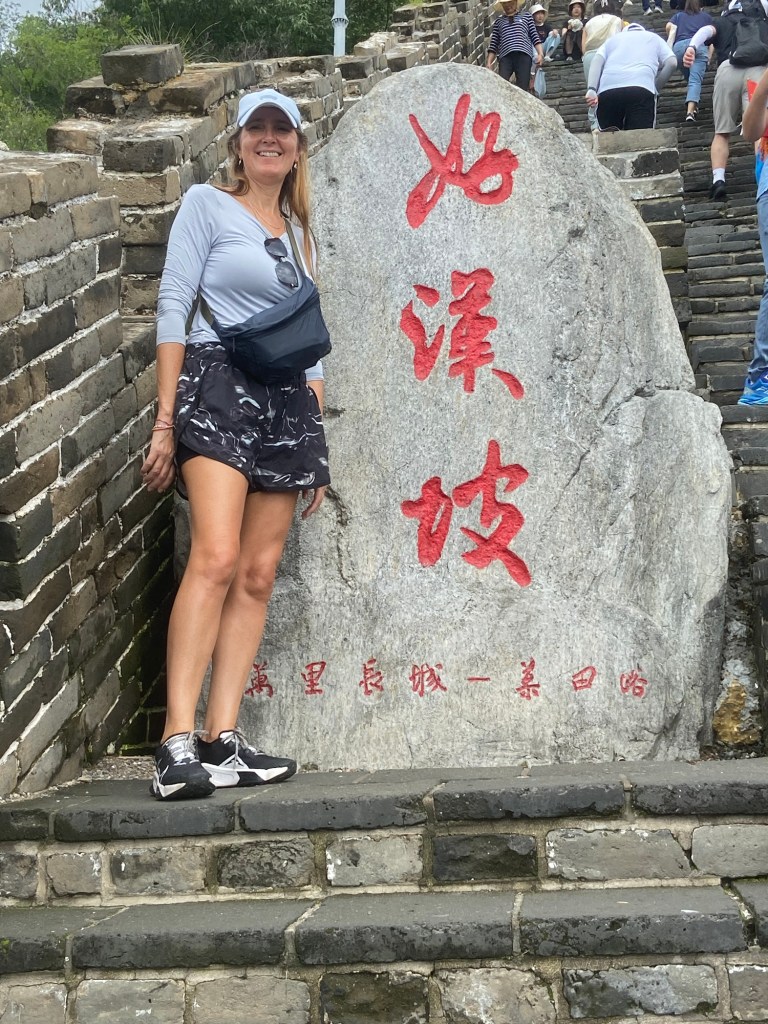
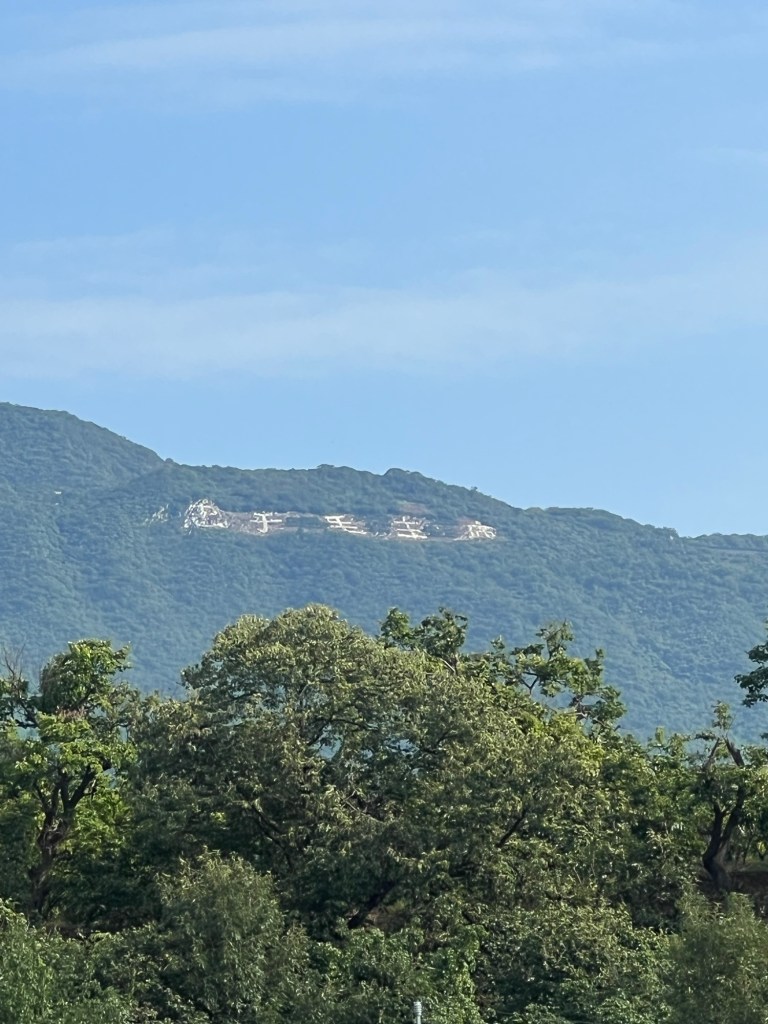
    Before we set off we could see a message inscribed into the mountain that read ‘Heavenly Son of Heaven”.

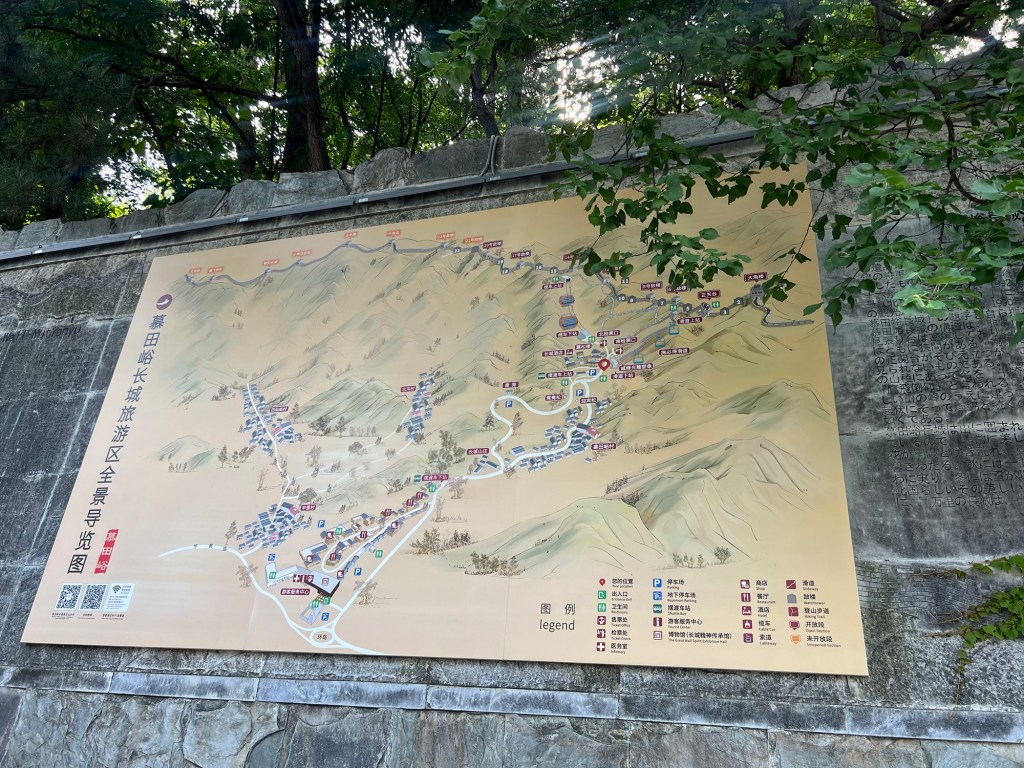
    Map of the route out to the Great Wall
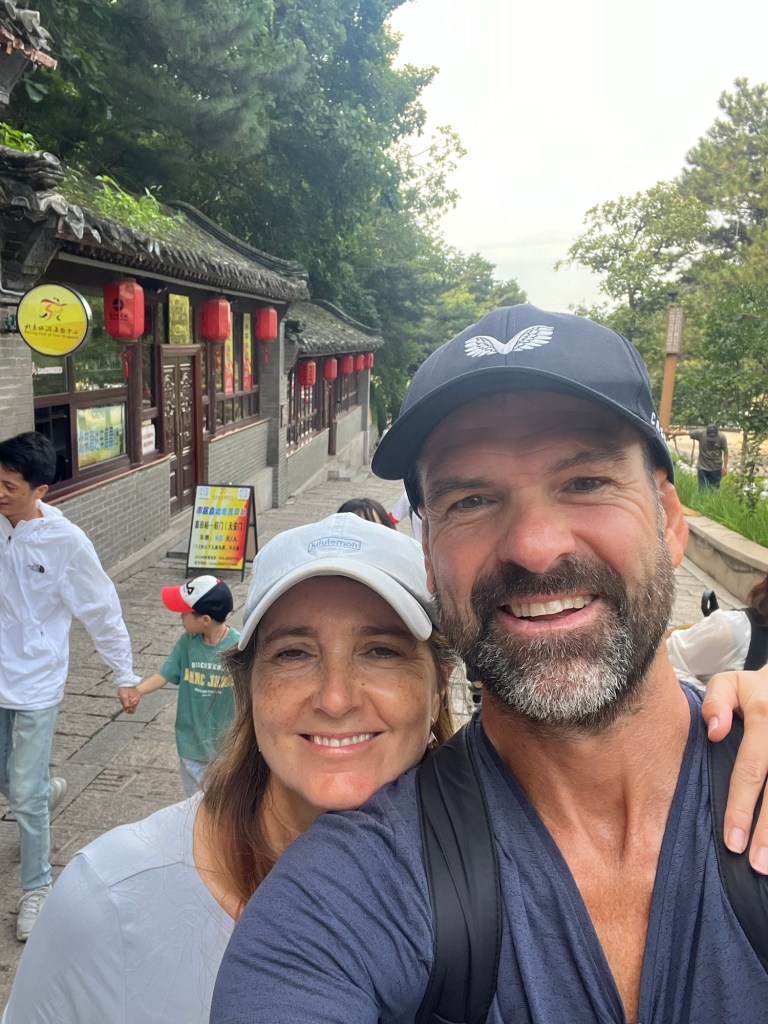
    Last photo before we said our goodbyes and agreed to meet on the Wall

    The three adventurers set off at 9.10am for the 2 mile walk up to the Wall and along to the highest viewing point.

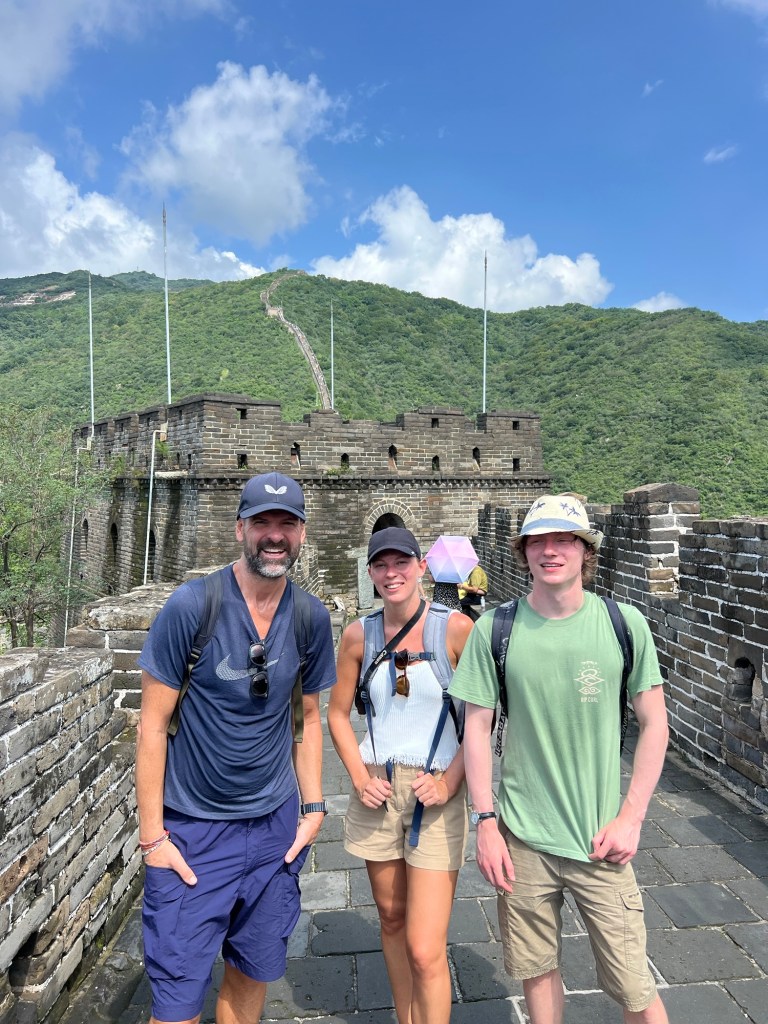
    Jamie, Laura & Andy

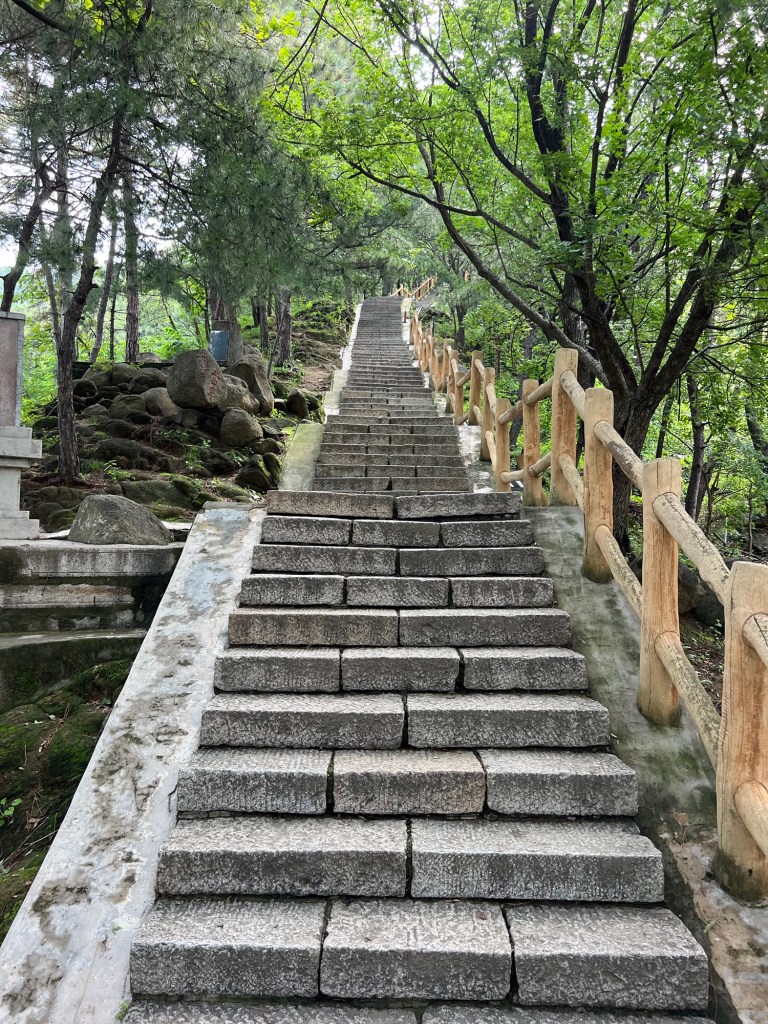
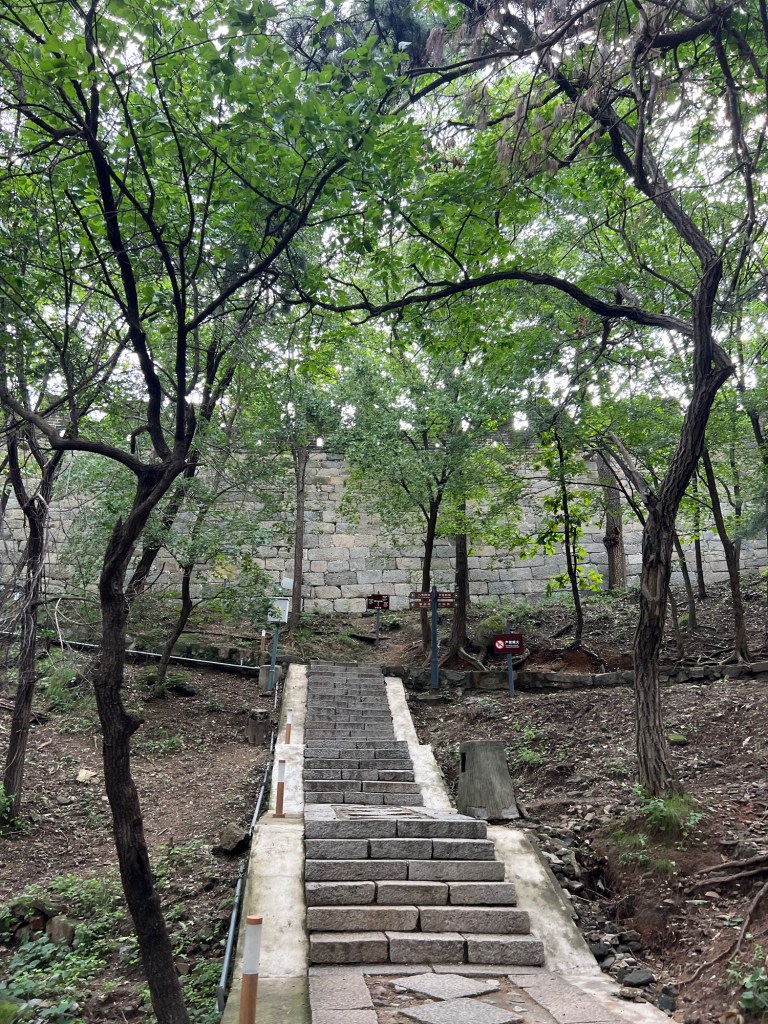
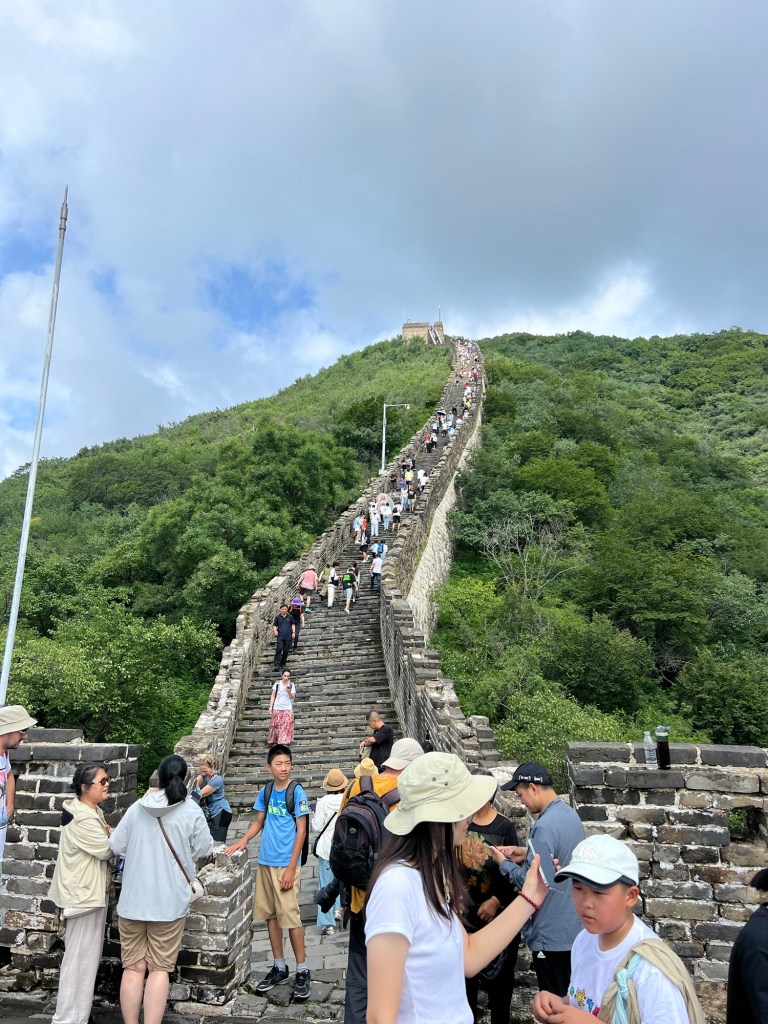
    The route up through the woods started with what appeared to be never-ending steps that soon had us all sweating.

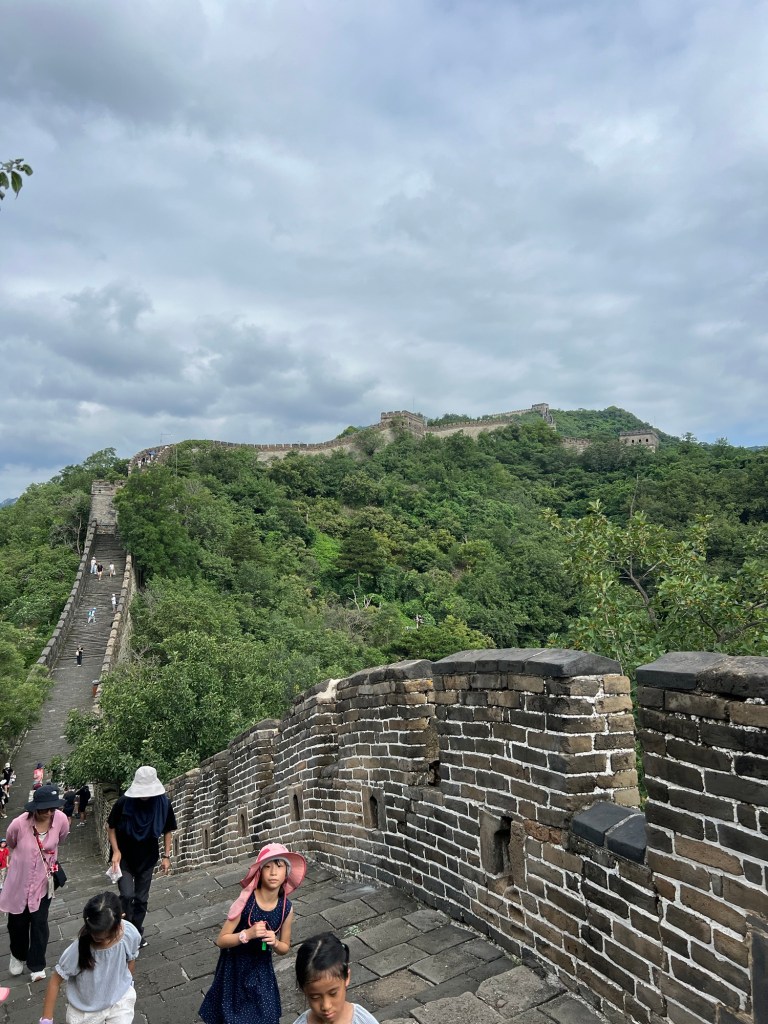
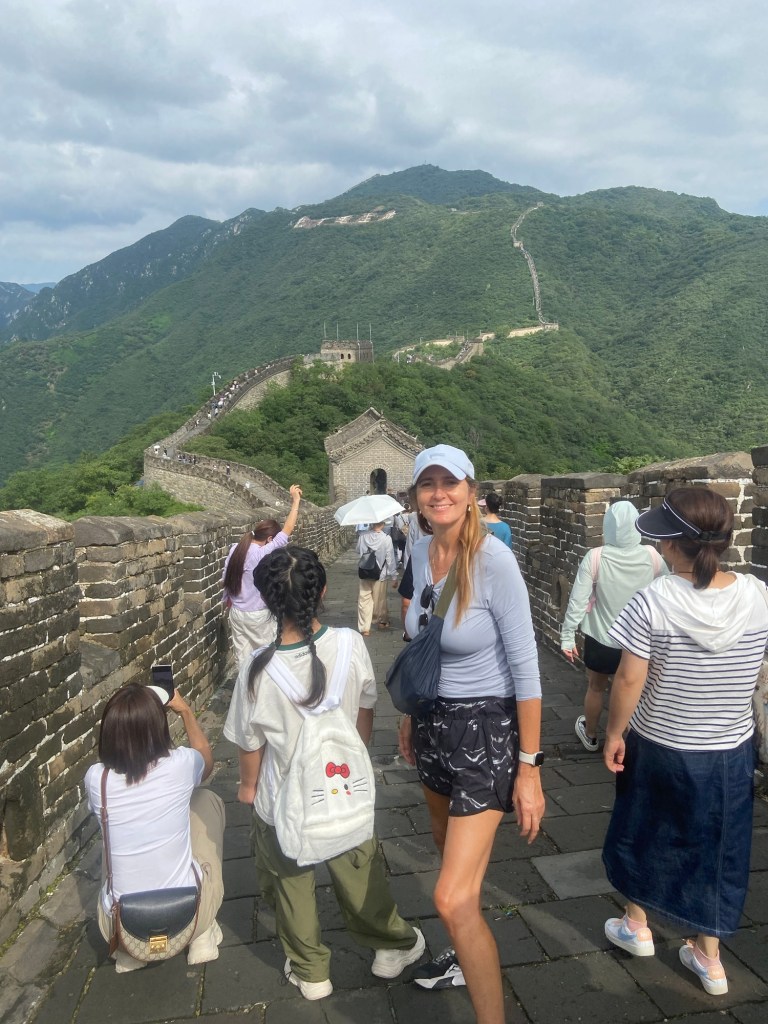
    After 30mins of a steep climb we reached a section of the Wall at encampment Number 8, with the final destination being Number 20, which was a further 1.5 miles along the meandering length of the Wall.

    It was a real sense of accomplishment and delight to have made it on to the top of the Wall, but in fairness this was only the start as sections of the path proved to be extremely steep, made even more challenging by an ever increasing number of people who had arrived via the cable car at encampment Number 14.

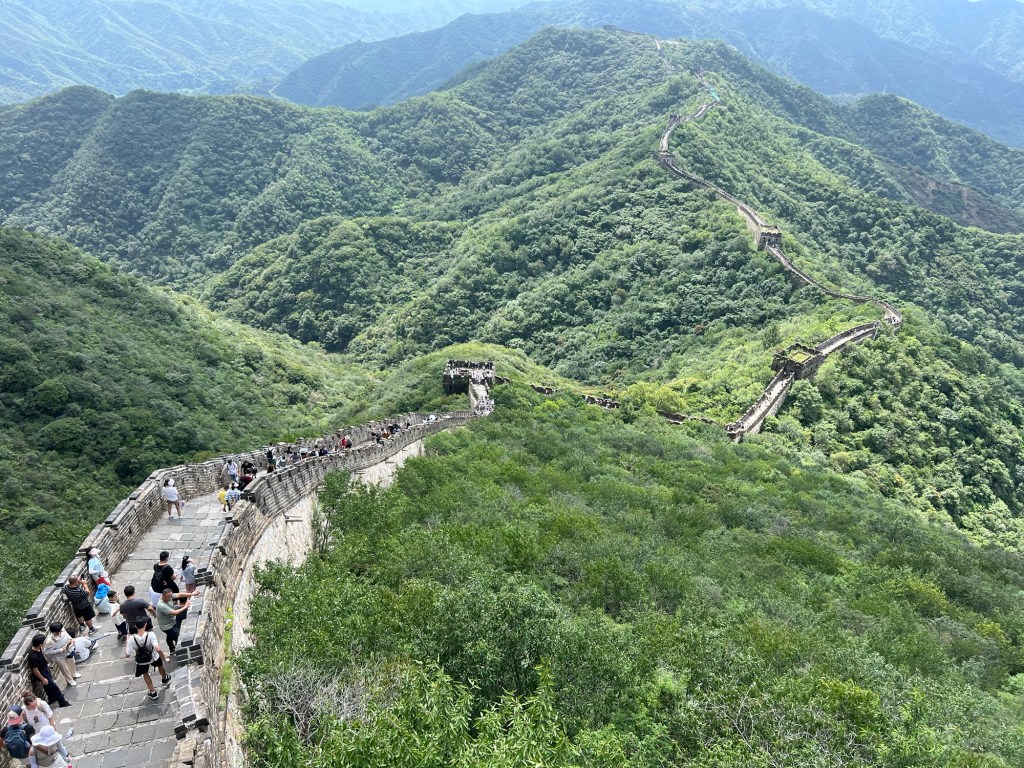
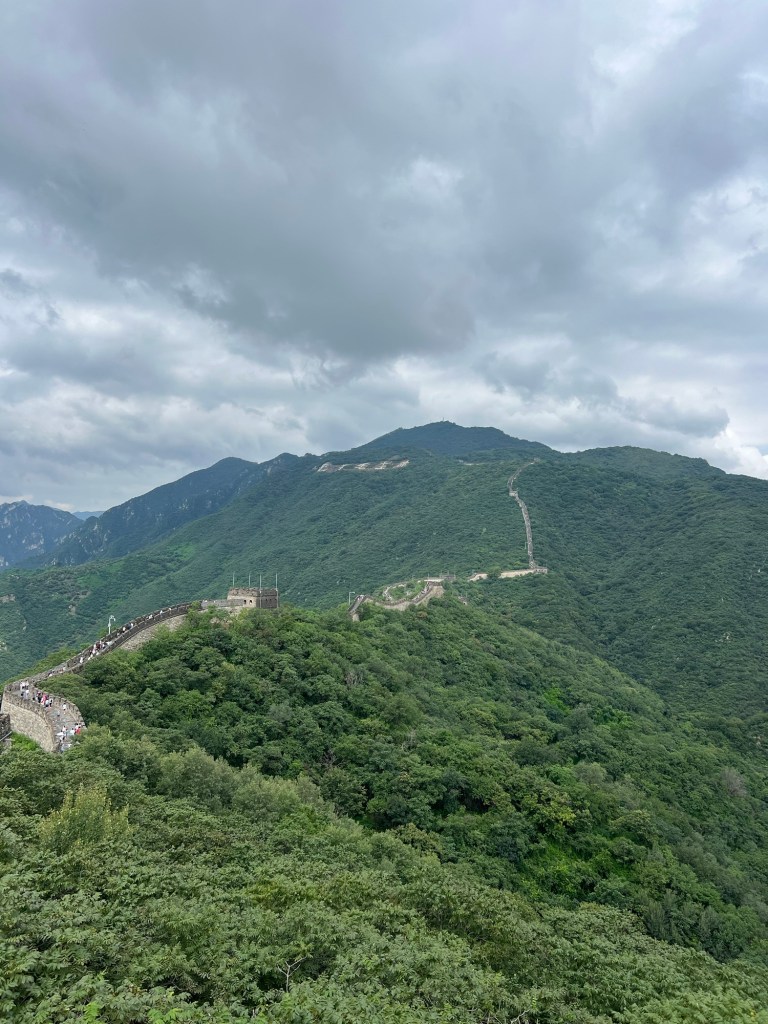
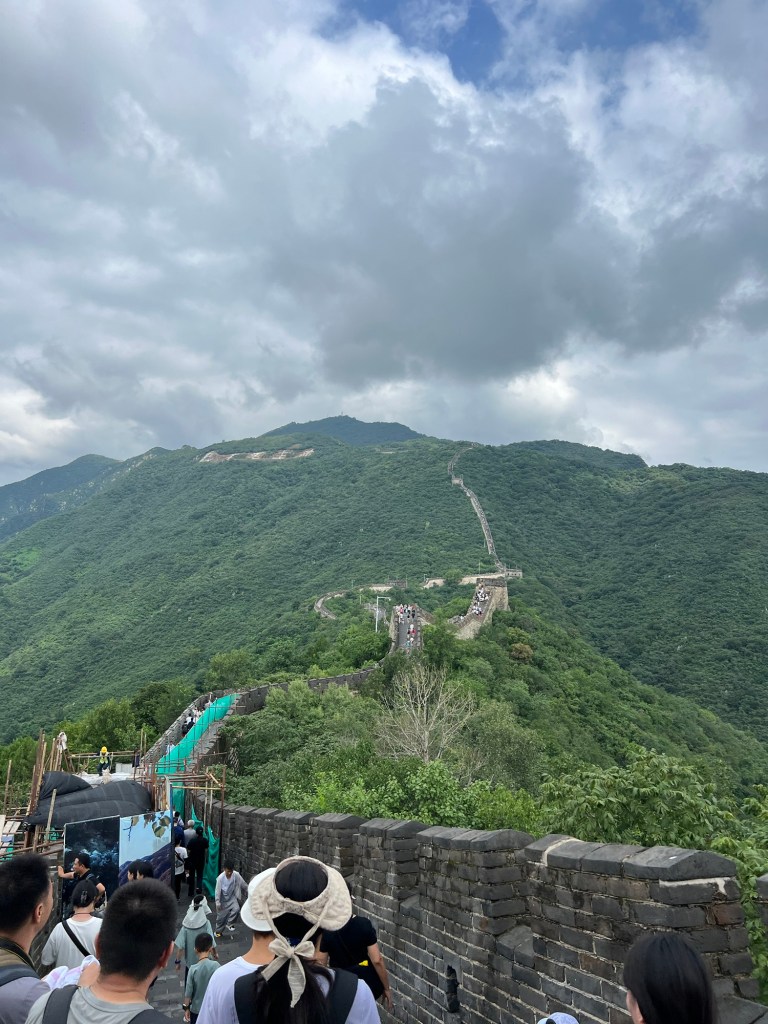
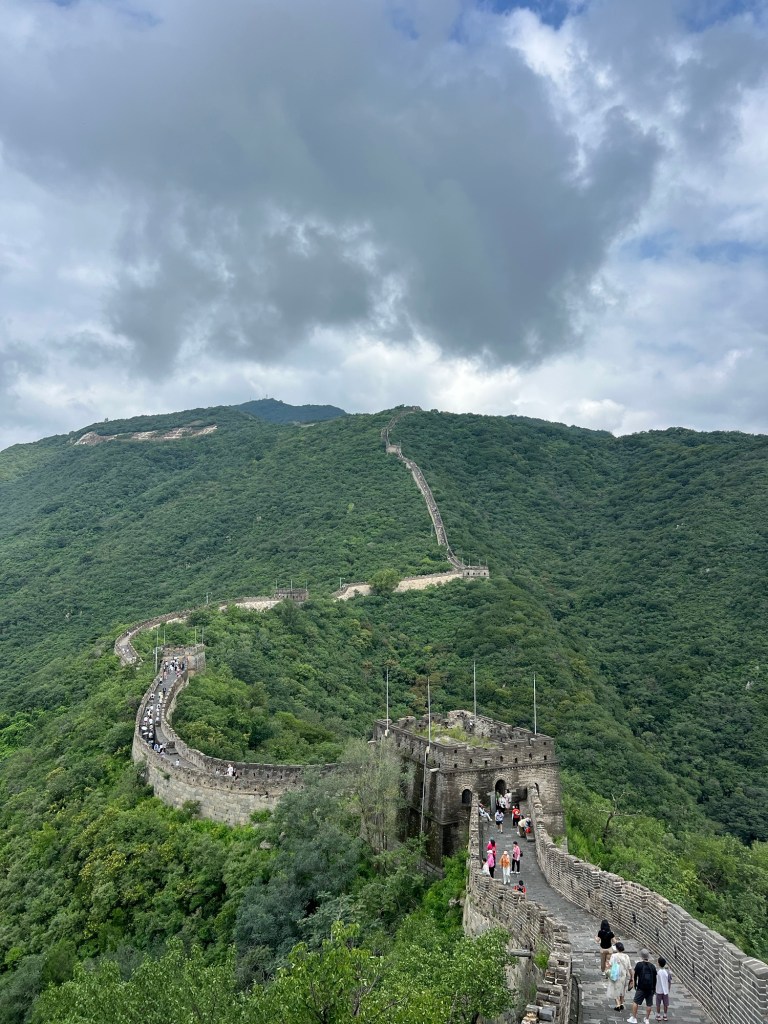
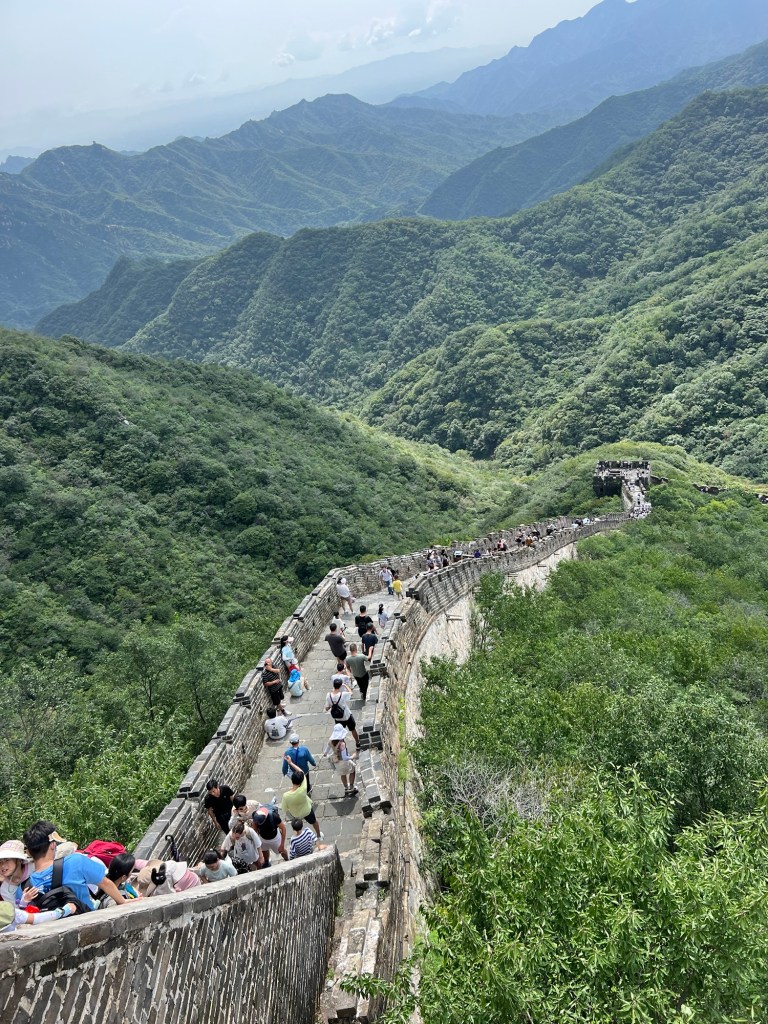
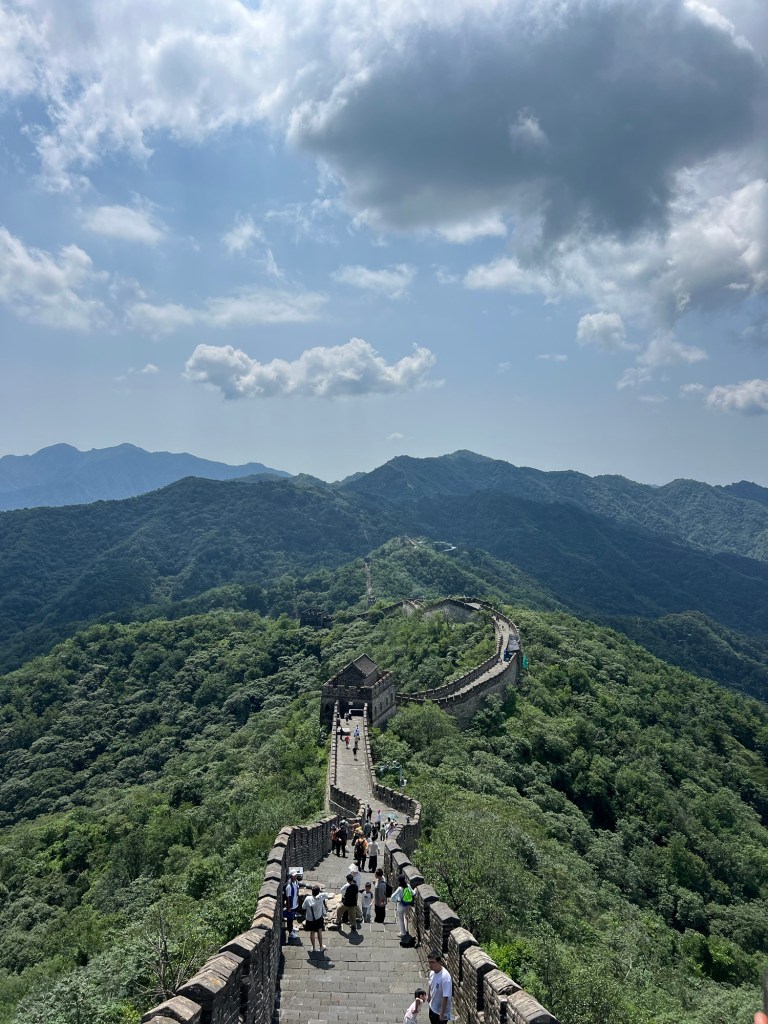
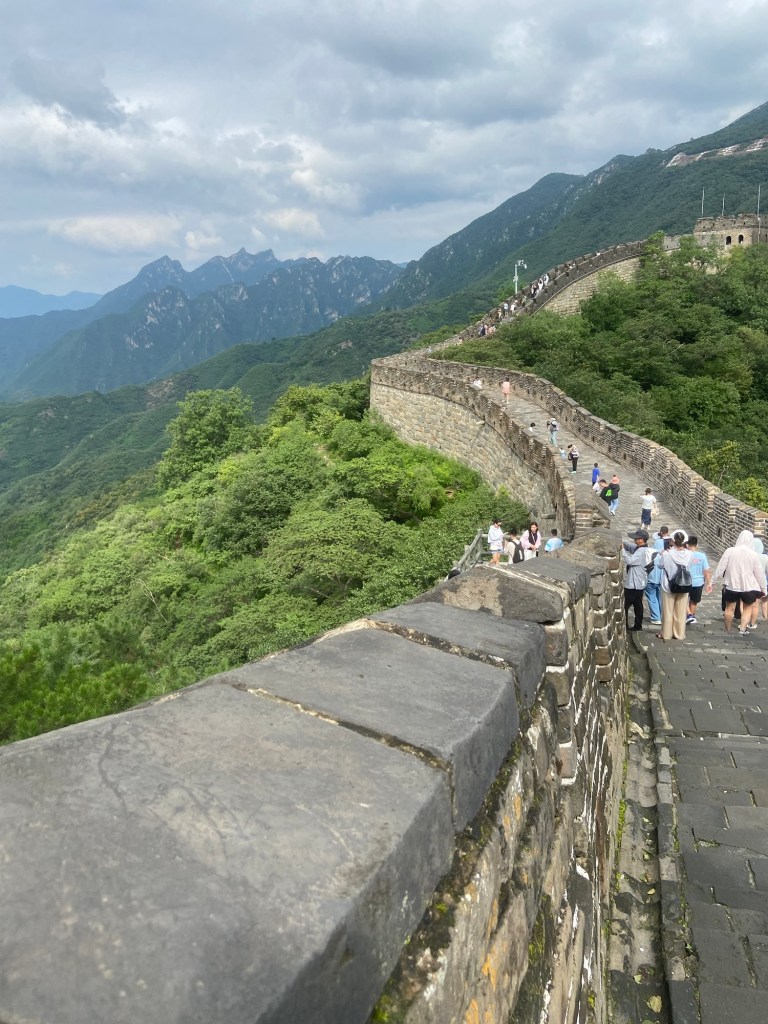
    As we looked along the route we could see the wall curve its way along the ridge of the mountain, with shallow and steep sections interspersed with small flat parts.

    The views across the mountainside were breathtaking and it was only as we got towards the higher sections of the Wall that we realised how far we had climbed as we approached the cable car station at the top.

    The Great Wall is a masterpiece of construction, comprising a series of fortifications  built across the northern borders of ancient China to protect against nomadic invaders from Eurasia.

    Some of the earliest sections of the Wall date from as early as the 7th Century BC, however the best known sections of the wall, which we were walking along, were built in the Ming dynasty dating back to the 16th century.  

    Collectively the Wall stretched from the present-day Sino-Russian border in the north to Tao River in the south; along an arc that roughly delineates the edge of present day Mongolian spanning 21,200km. It is widely recognised as one of the most impressive architectural feats in history.

    Most of the ancient walls have eroded away over the centuries, and very few sections remain today.

    The human cost of the construction is unknown, but it has been estimated by some that hundreds of thousands of workers died building the Great Wall.

    During the Ming dynasty the Great Wall was partially rebuilt and made stronger and more elaborate, with the use of bricks and stone instead of rammed earth. Up to 25,000 watchtowers are estimated to have been constructed along its length.

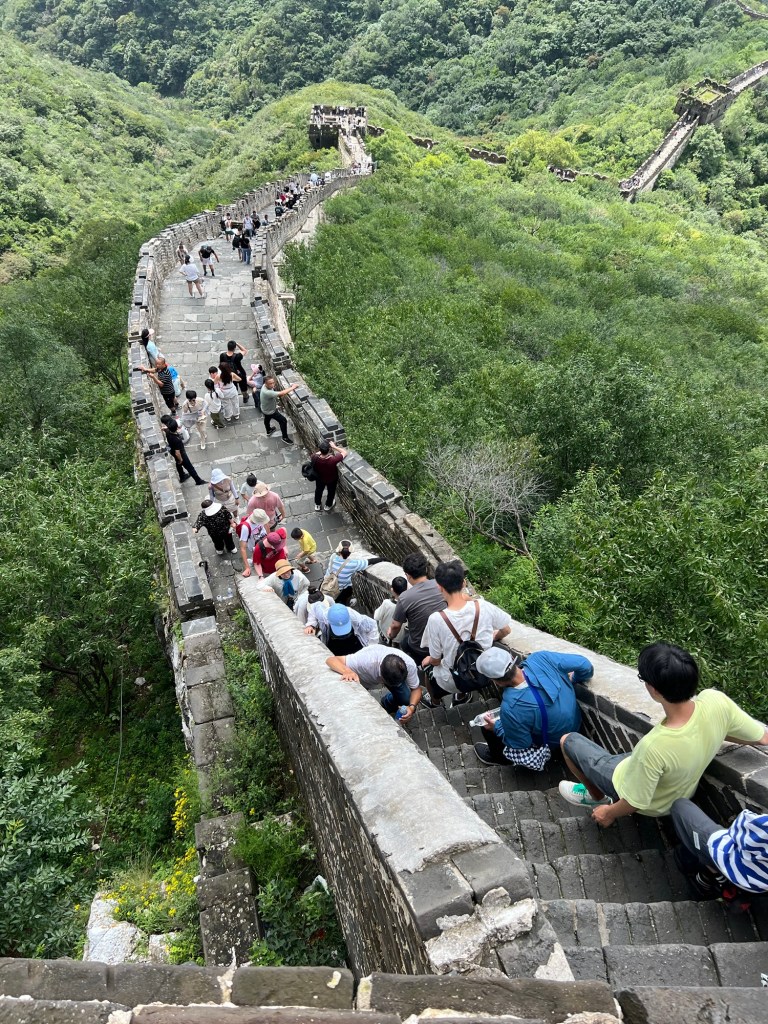
    Today the Great Wall is visited by over 25,000 people per day, and being the summer holidays we came across a large number of families and tour groups who had arrived via the cable car. As a result sections of the wall were congested and we lost count of the number of people stopping for selfies at the narrowest points, making the route that much more hazardous.

    A cat looking for a quiet napping place

    In sections the path along the wall was relatively flat, however as the mountain levels rose, so did the steepness of the path, with some small level changes and some major steps up, meaning you really needed to concentrate on where you were going!

    As we reached close to the highest point of the Wall, we came across the steepest section and at the very top you were literally walking up a steep ladder path on your hands and knees.

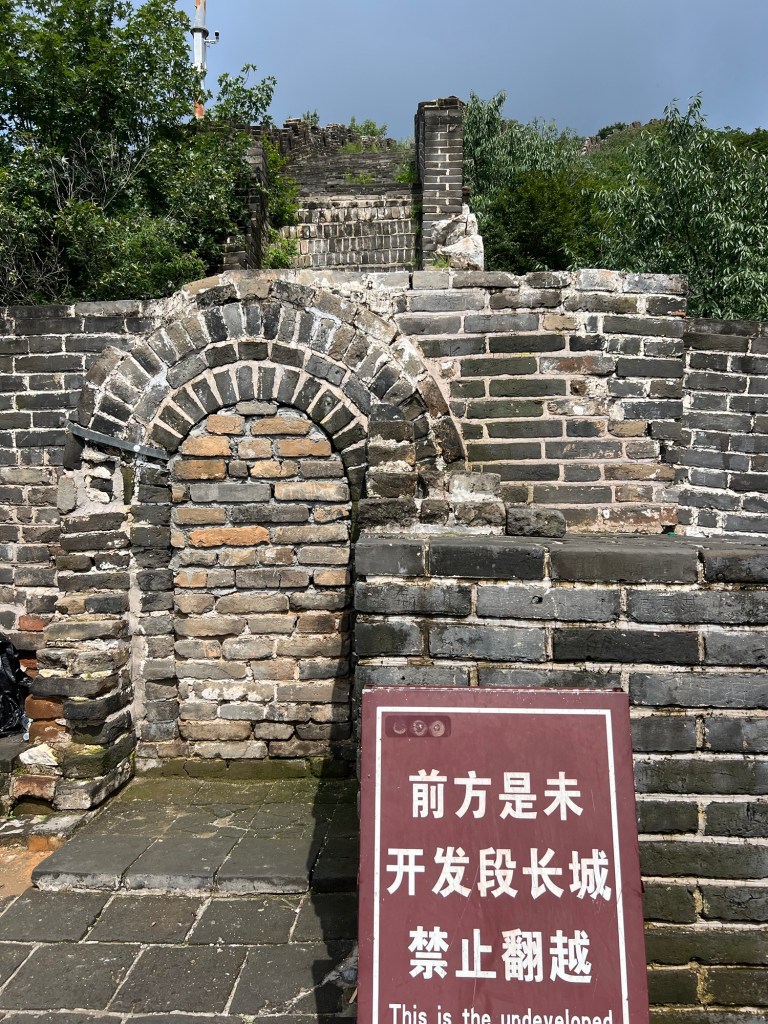
    Once at the ‘summit’ our path came to an abrupt end with the continuing route bricked up.

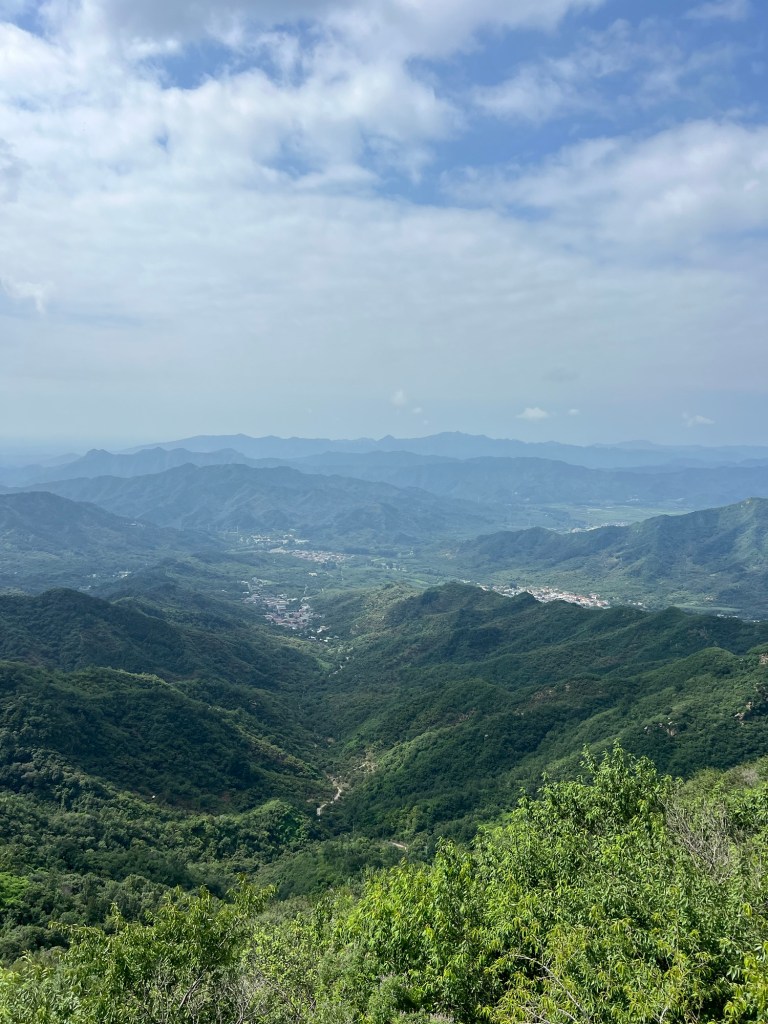
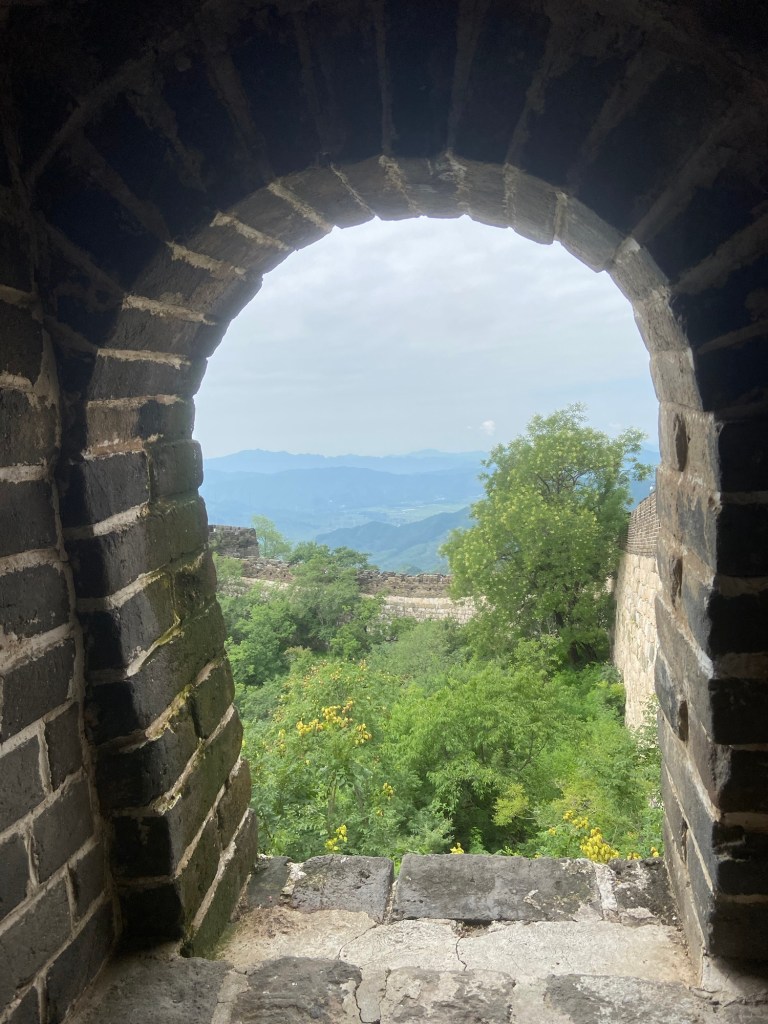
    The views looking down the valley were superb and made you realise how high we had come and what a challenge it must have been to construct.

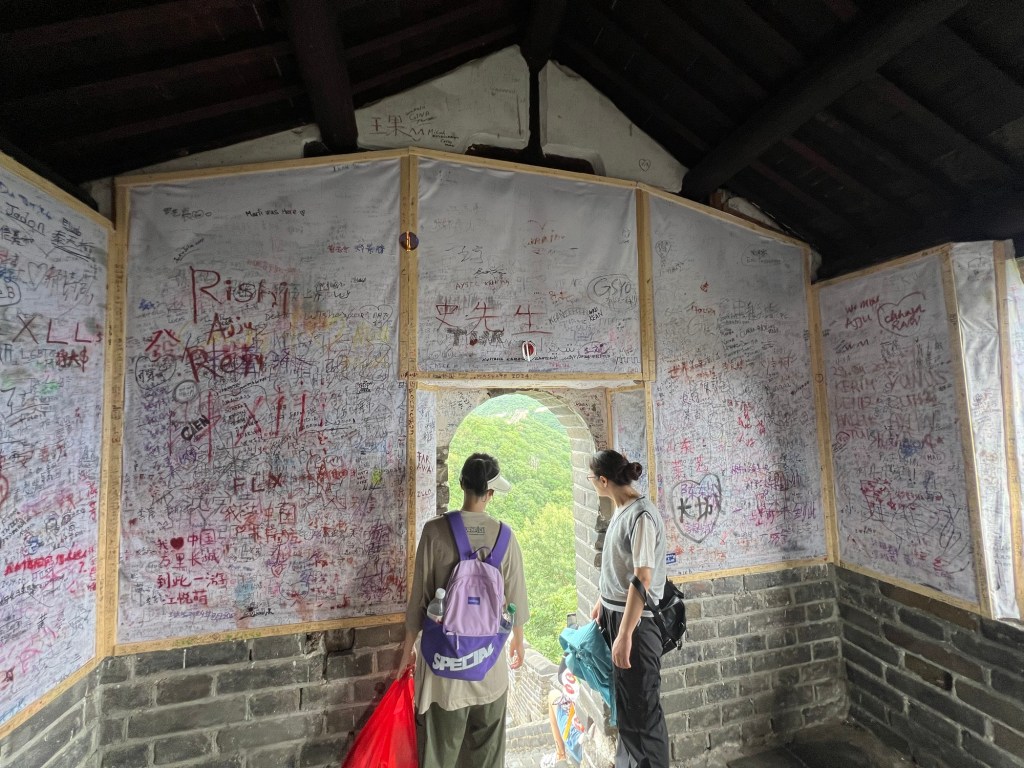
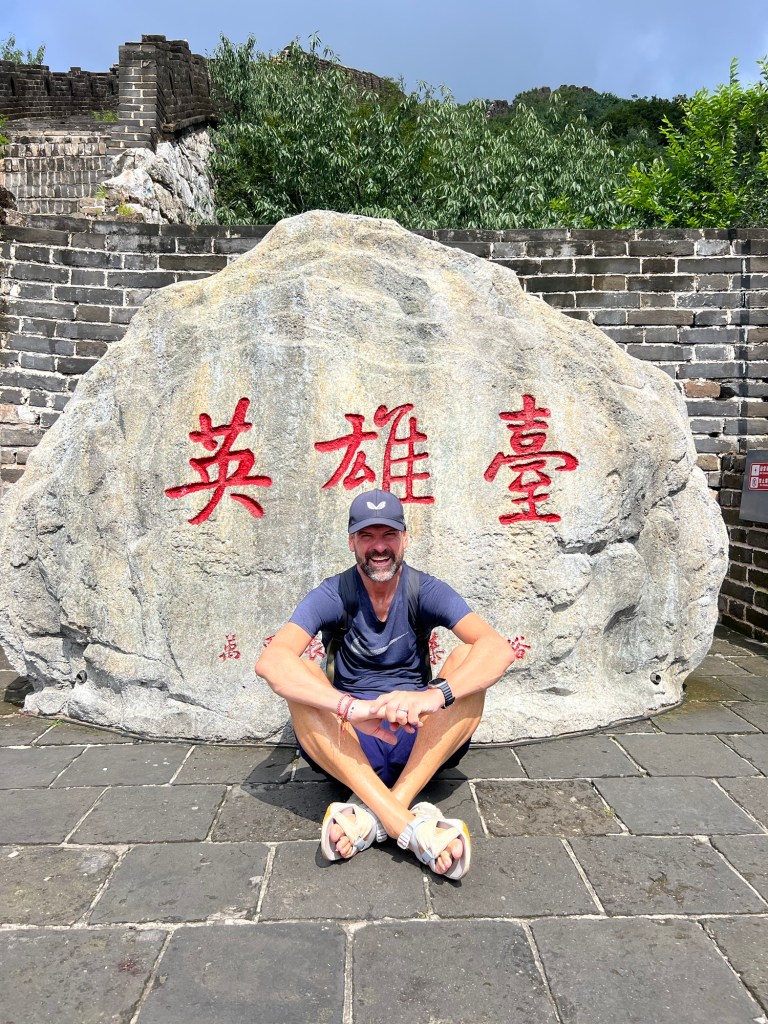
    At the summit was a rock signifying in Chinese that we were in a special place reserved for only a few to ever visit.

    We both felt very honoured to see the Wall and to witness one of the Seven Wonders of the World.

    Going back down was a little trickier given how busy the path wall was and the lack of any health and safety precautions.

    As you looked down over the edge of the summit it made you realise how challenging it would have been to climb across as an invading army, however somehow many did and the Wall didn’t prove to be the fortification anticipated.

    Views from the summit and beyond
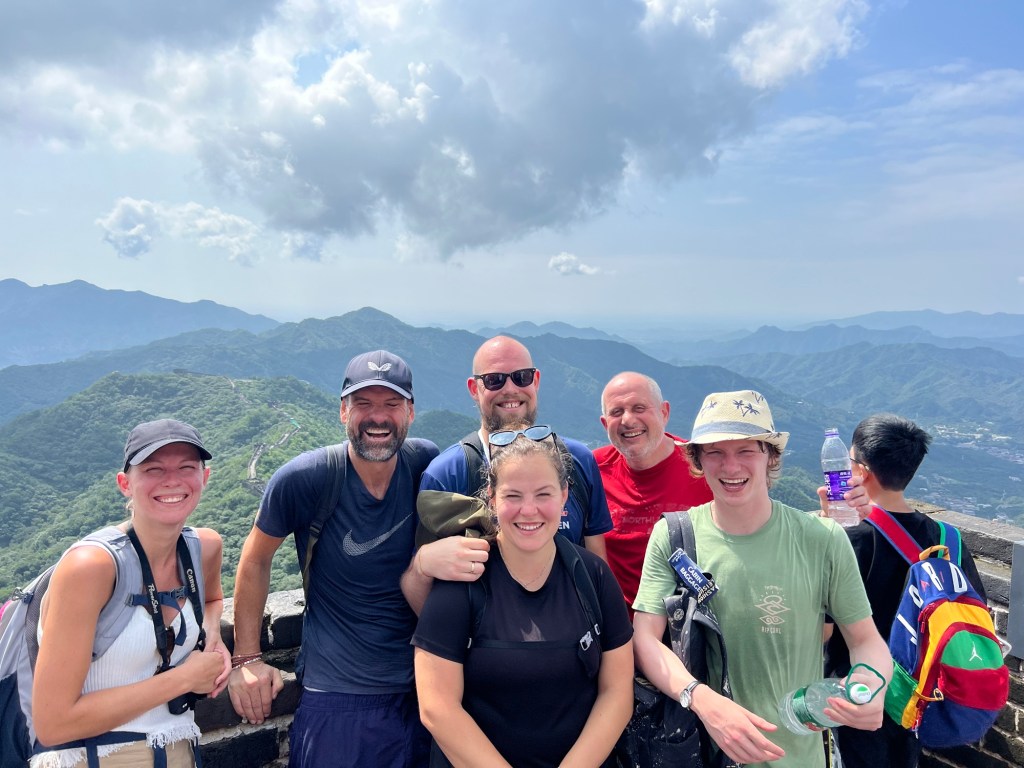
    The succession climbing group (plus a few others who joined half way).
    Andy, Laura and Jamie on the way back down
    Stunning views
    Michelle taking the slightly easier route down

    Below are a few more views that we came across on the way back.

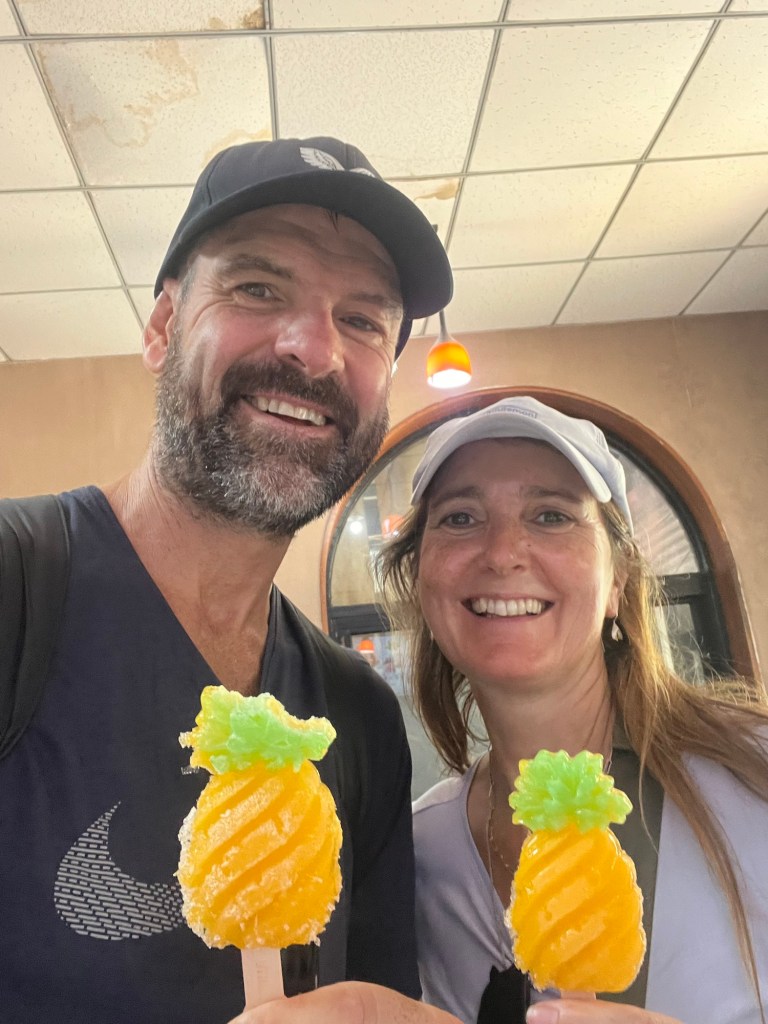
    Once we had finished the 4 mile hike up and down it was time for a treat and some much needed pineapple ice lollies.

    We loved the Great Wall

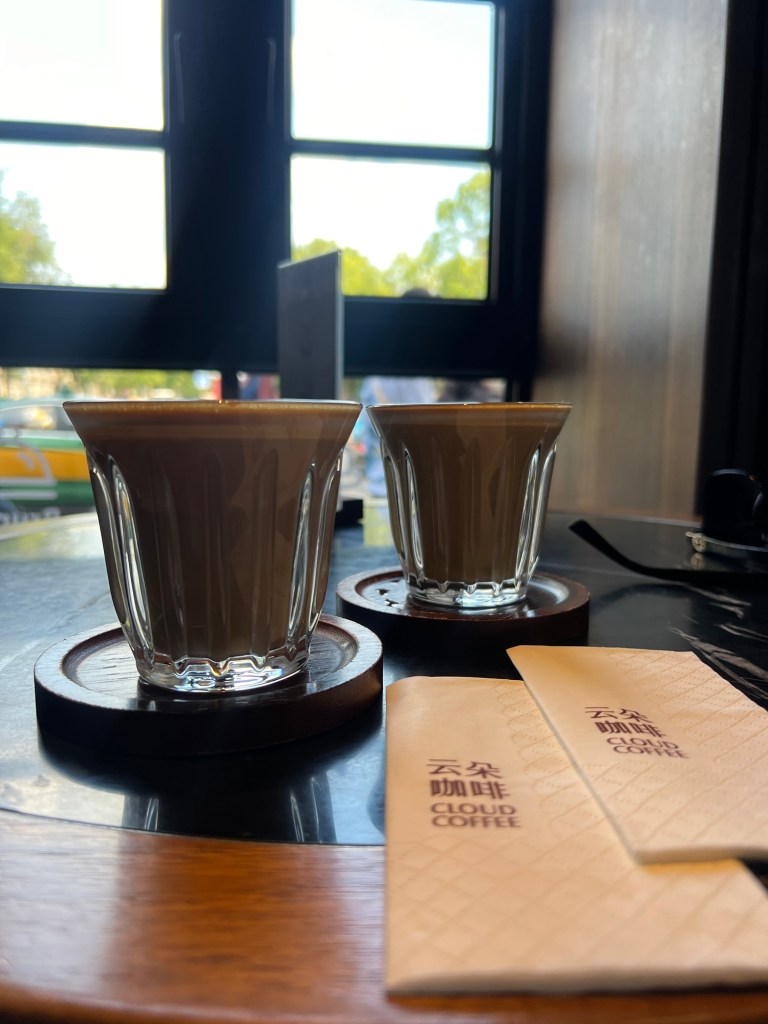
    After the energetic start to the day, once back in Beijing we headed to a nearby coffee shop for a caffeine kick and a spot of relaxation before we went out again for an evening walk to the White Pagoda and Beihai Lake.

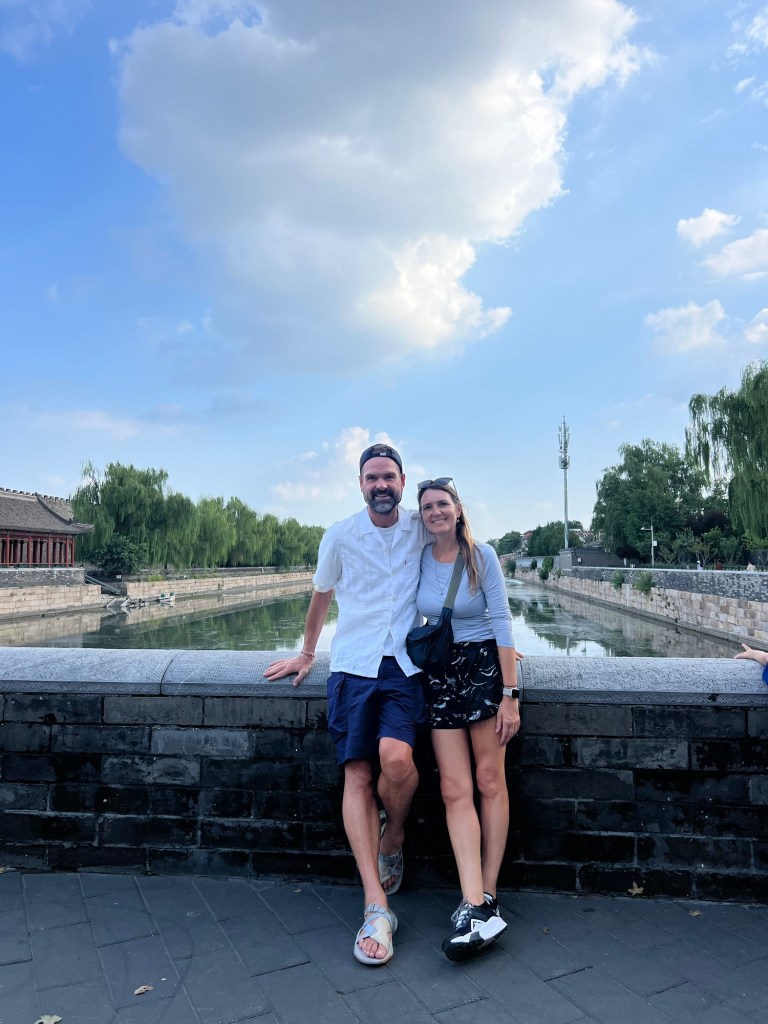
    Back at the Forbidden City Eastgate
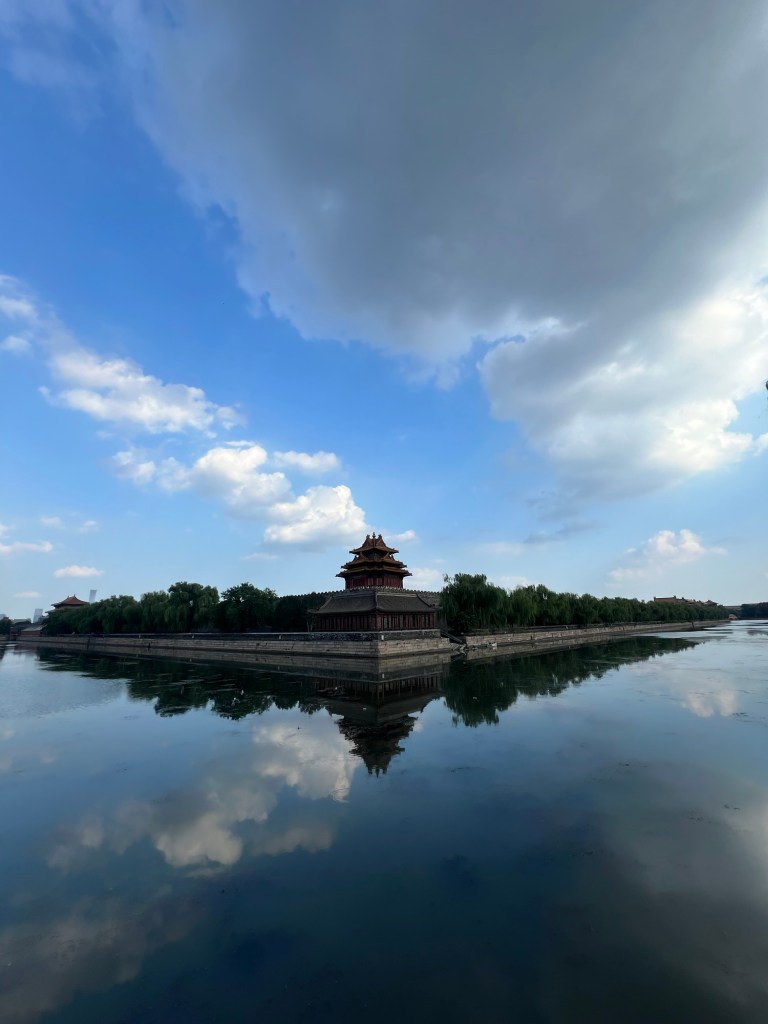
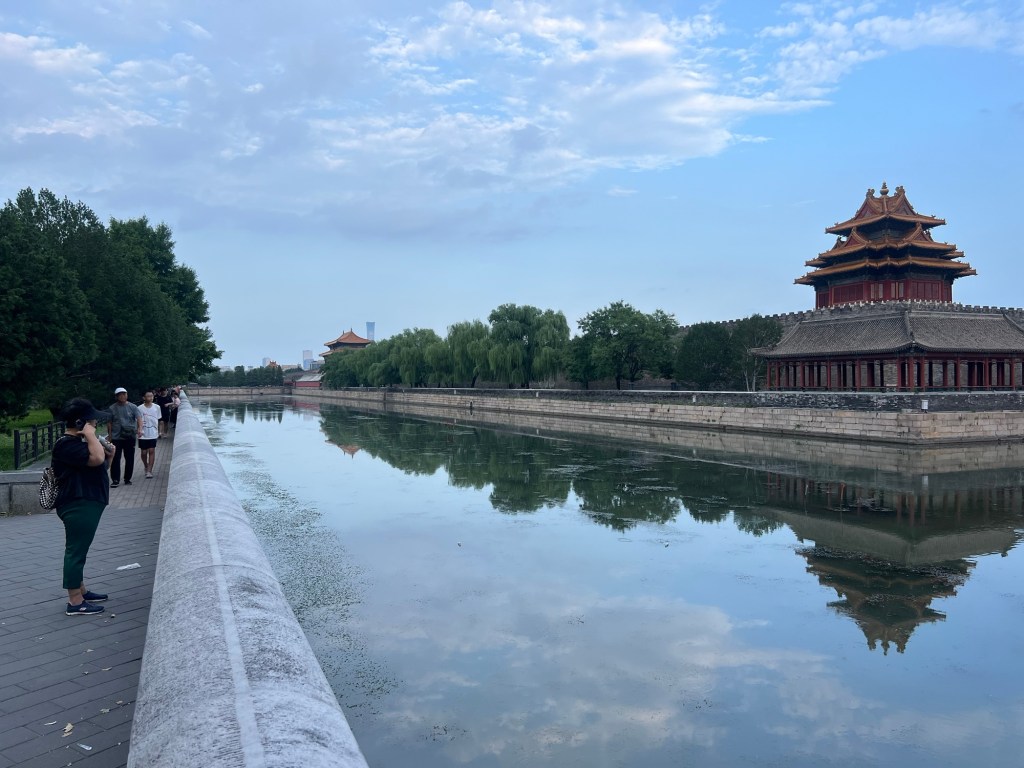
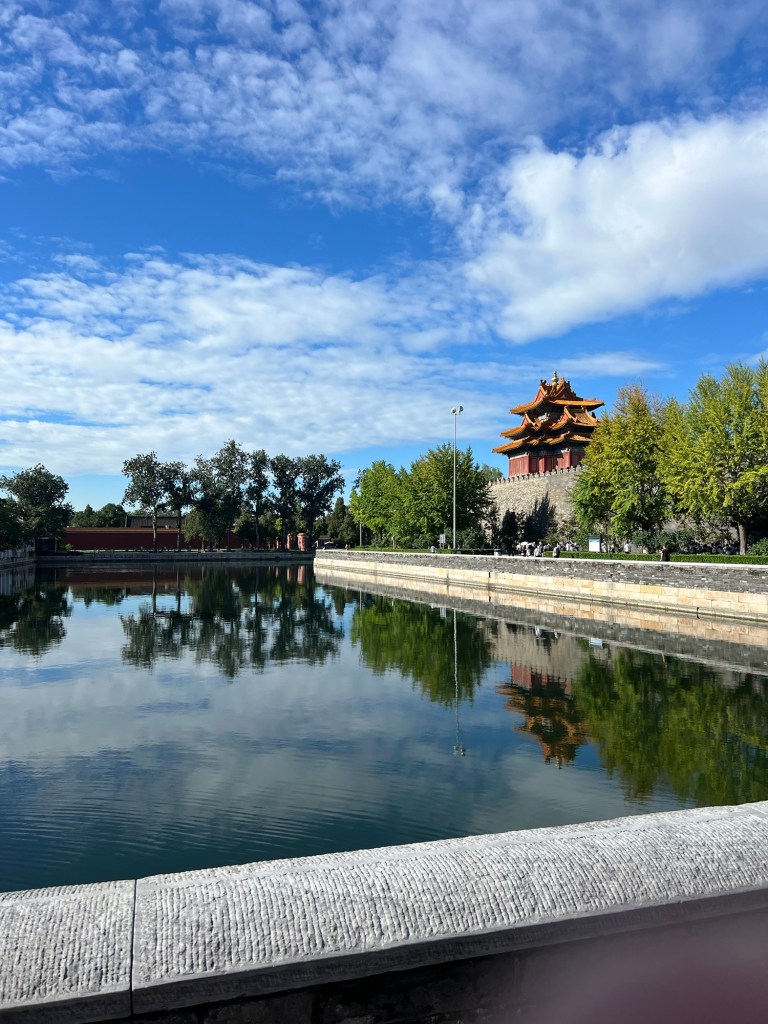
    Forbidden City with the moat reflection

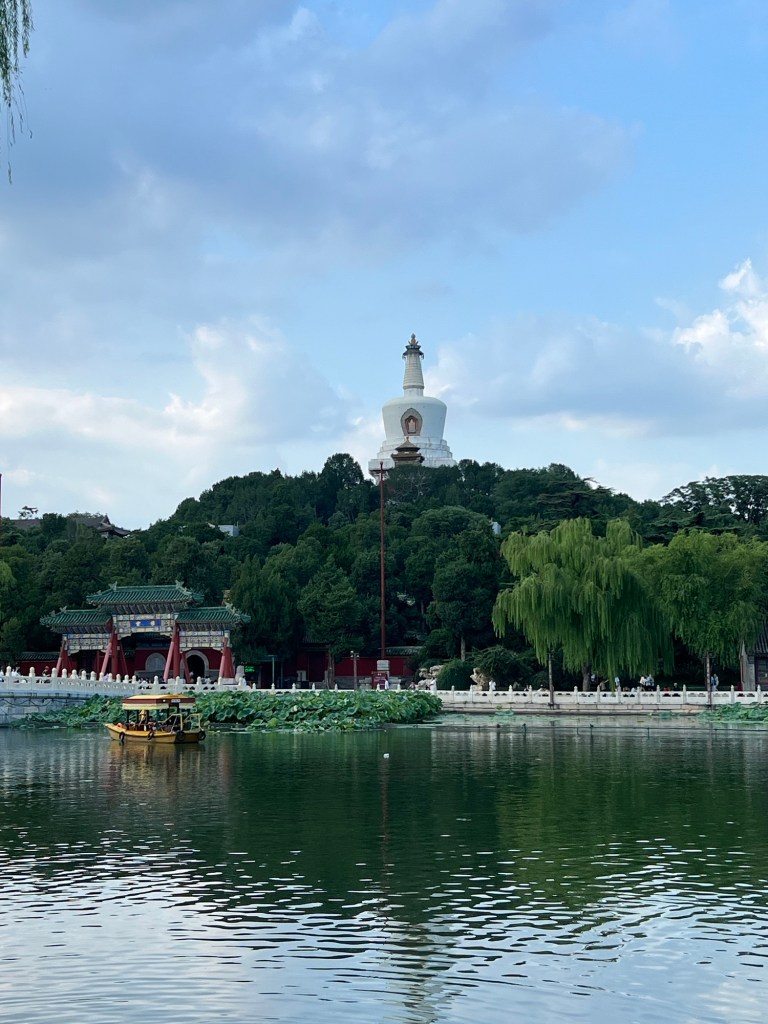
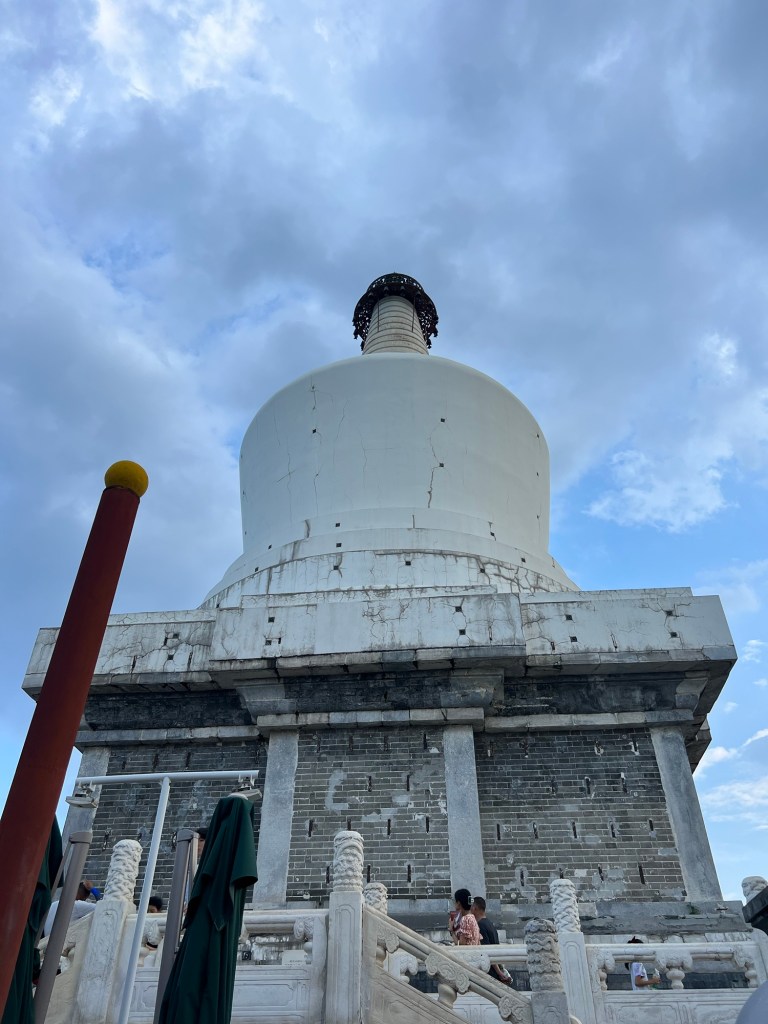
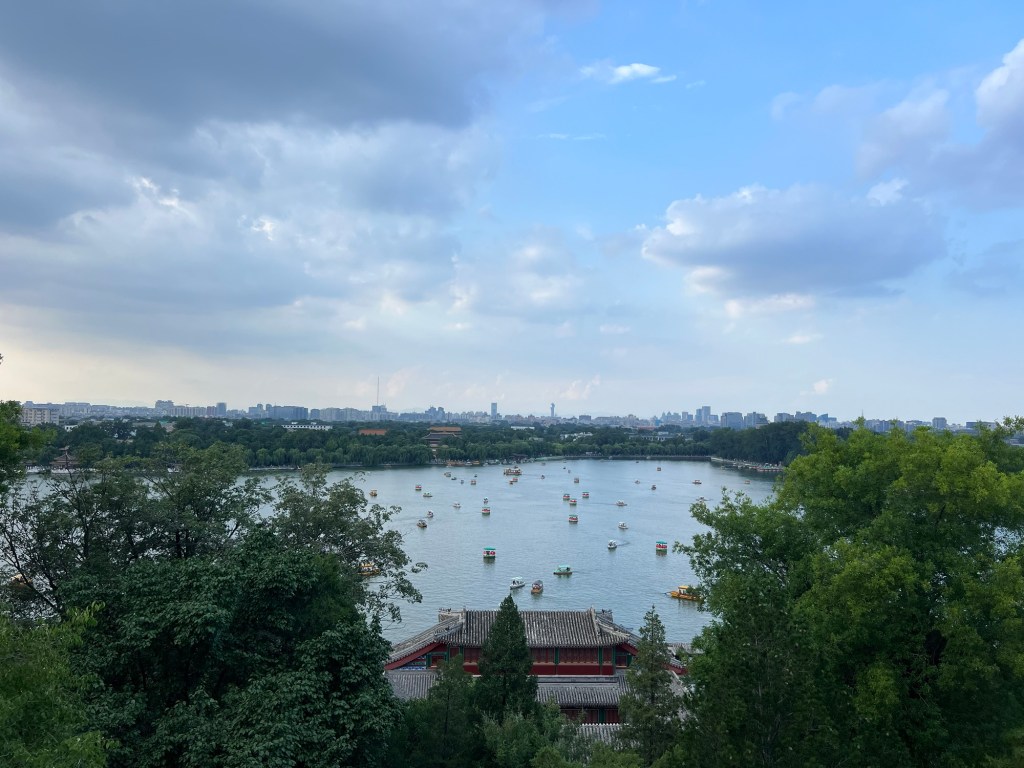
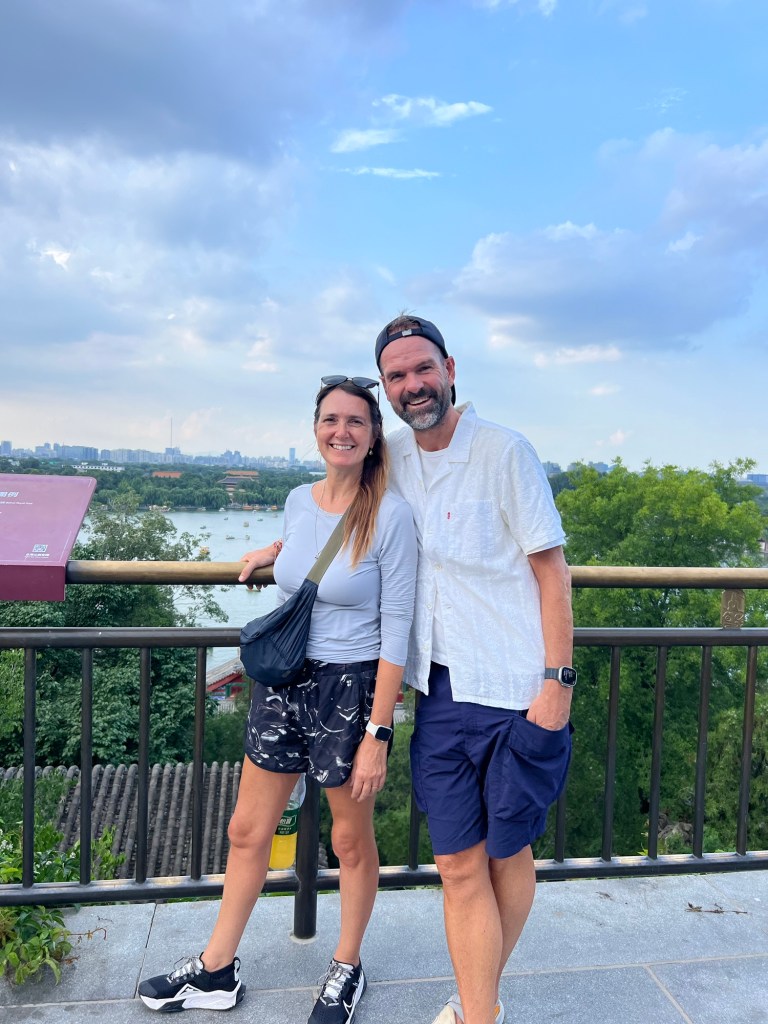
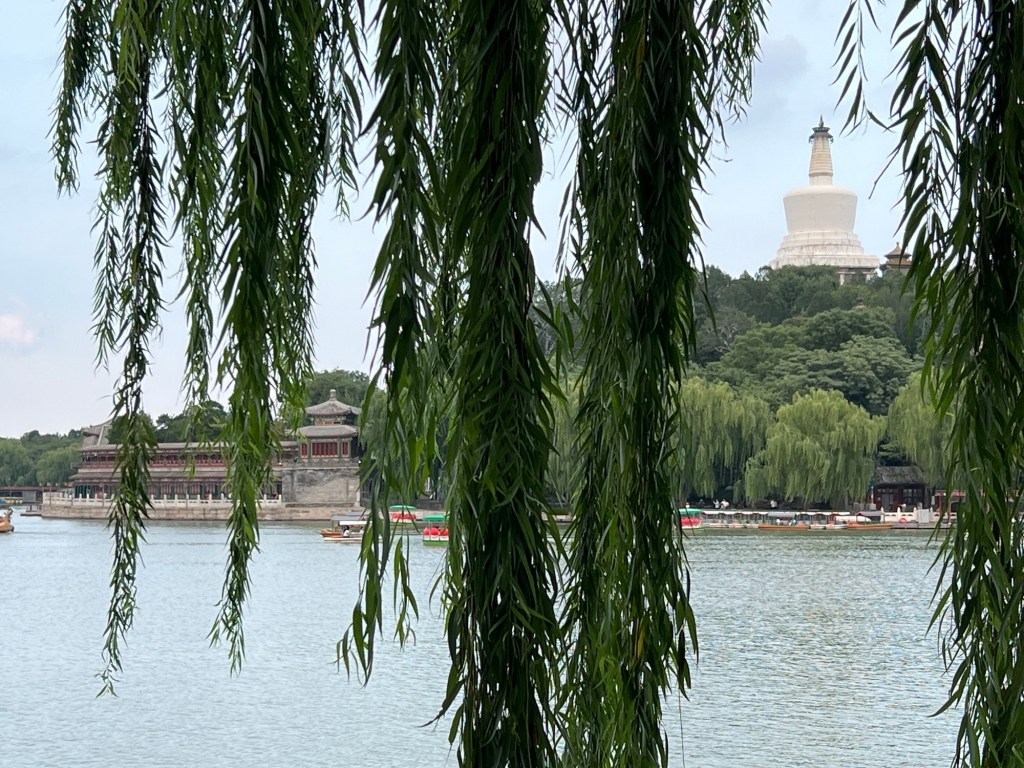
    With the late afternoon still sunny we decided to head out just the two of us and visit the island Zhengjue Palace and the home of the White Pagoda, a prominent white temple that can be viewed across the city.

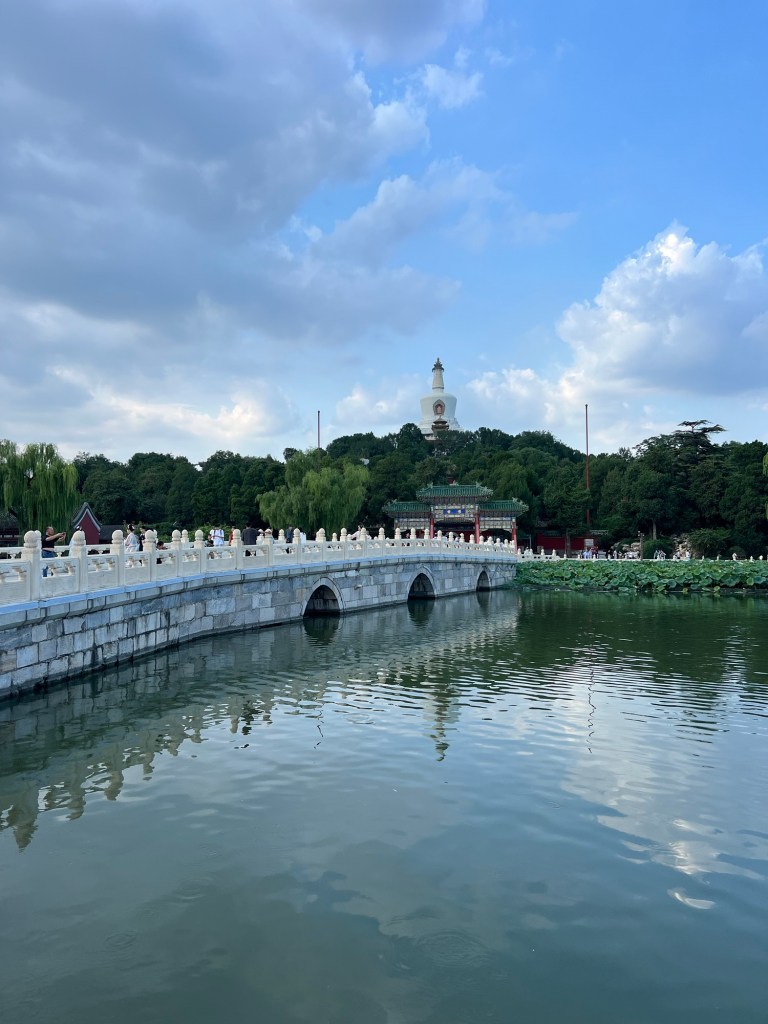
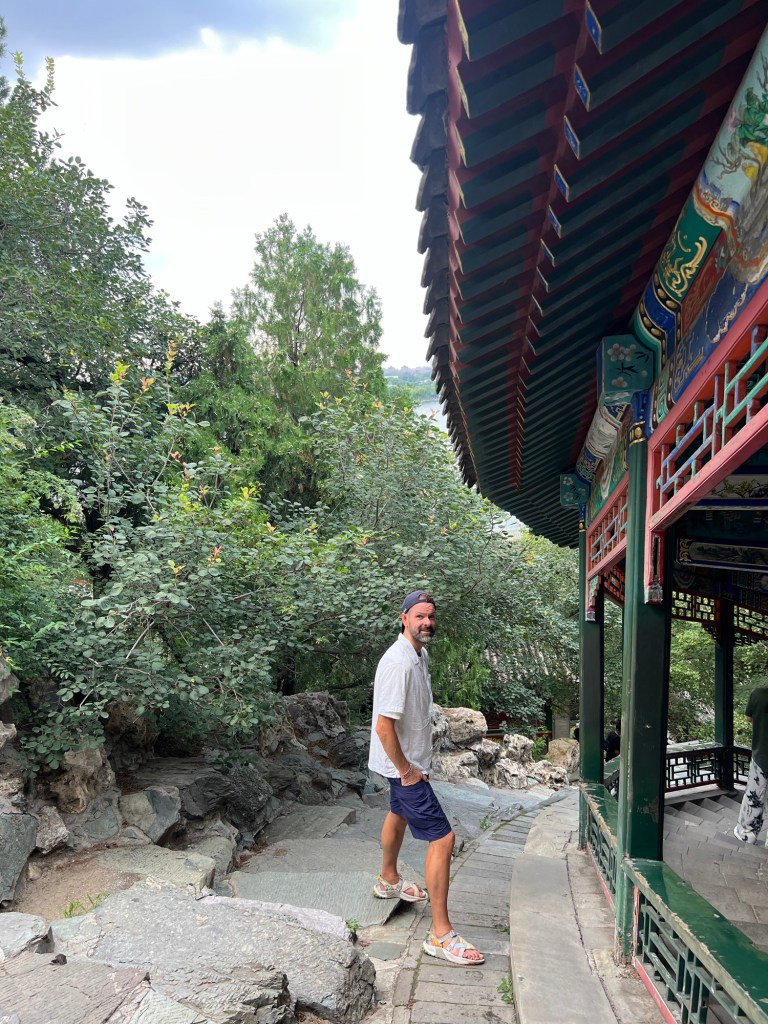
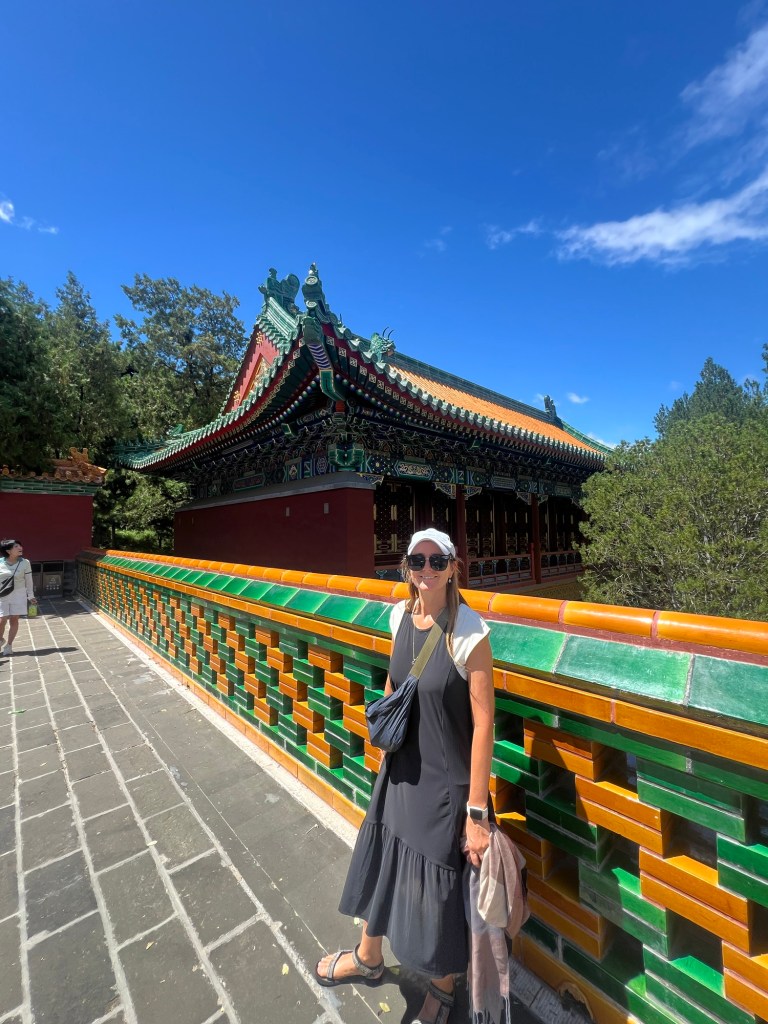
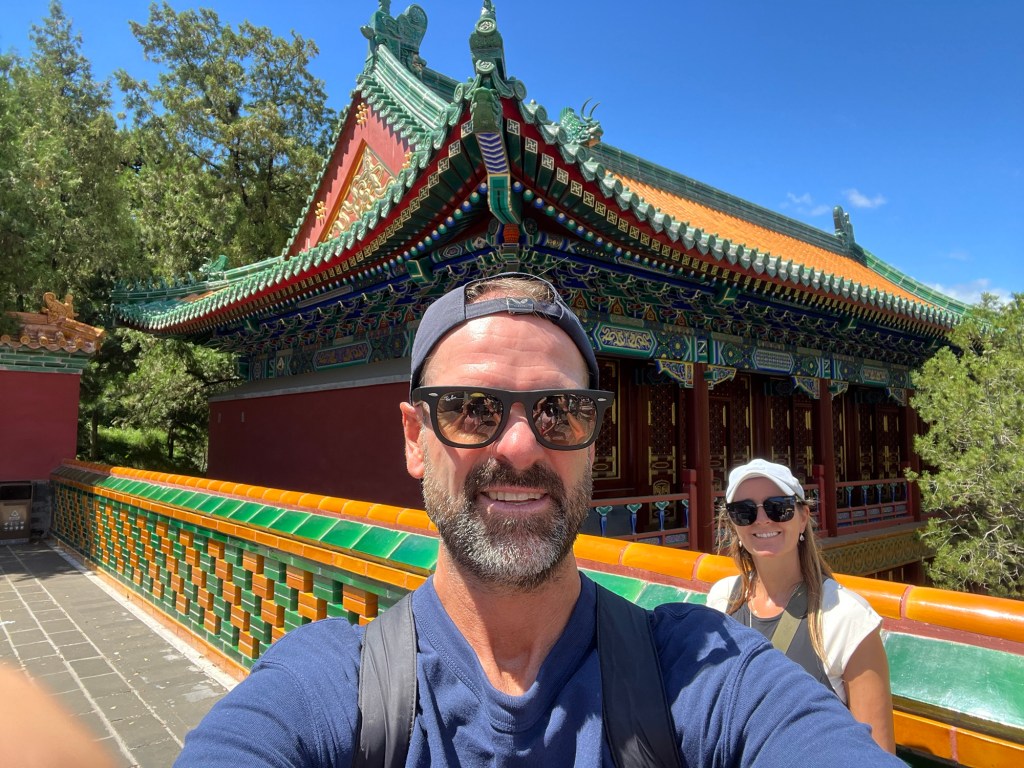
    The park around the White Pagoda was stunning with an ornate bridge, Lotus flowers growing in the lake and beautiful landscaped gardens stretching around Beihai Park and Lake.

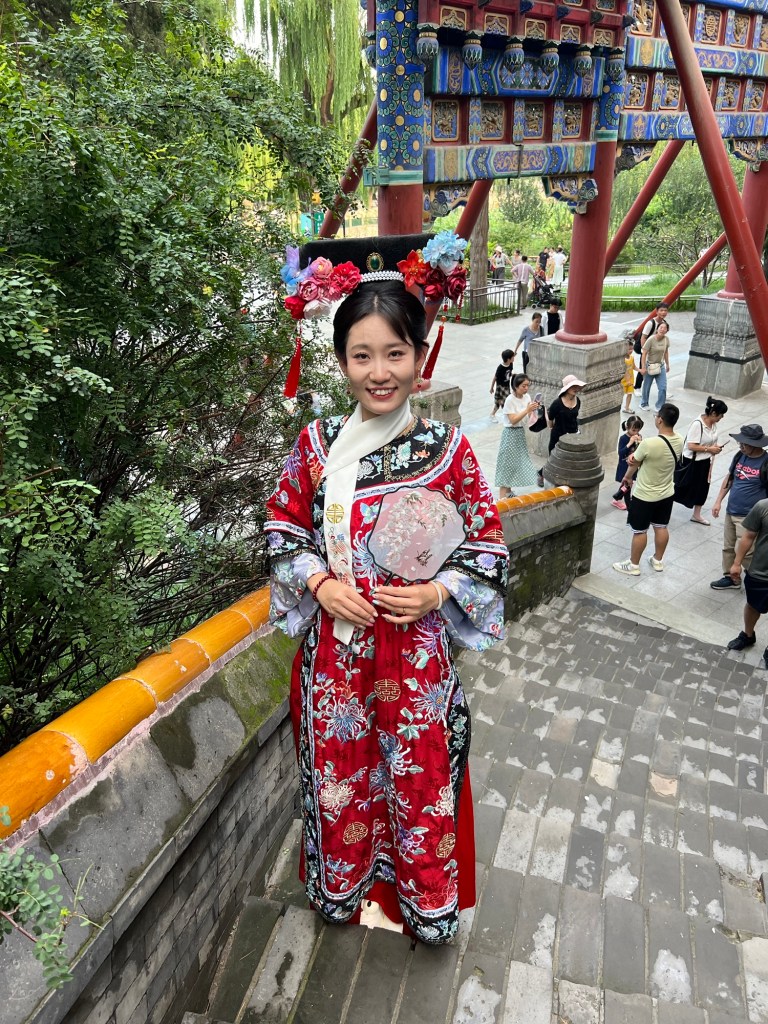
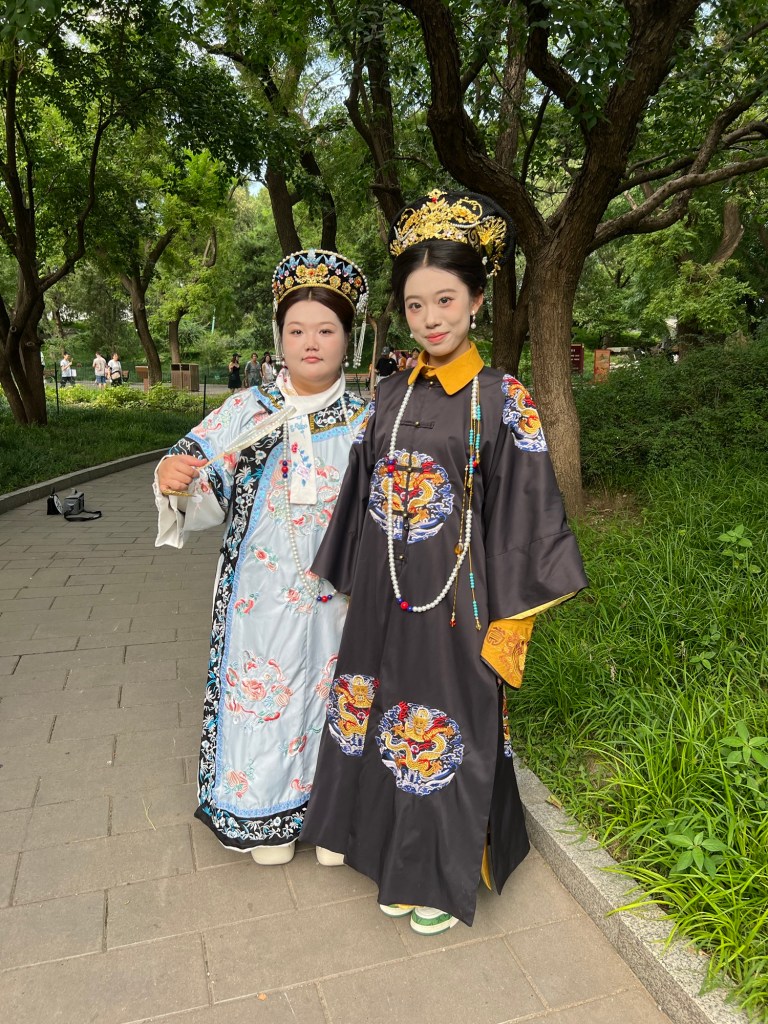
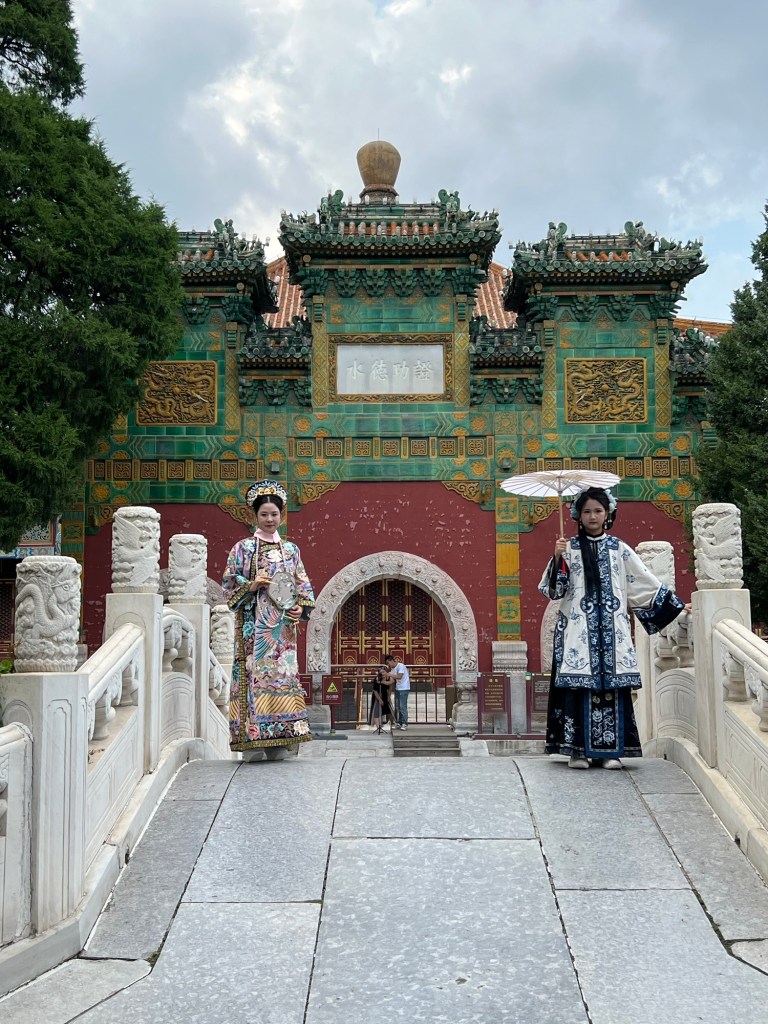
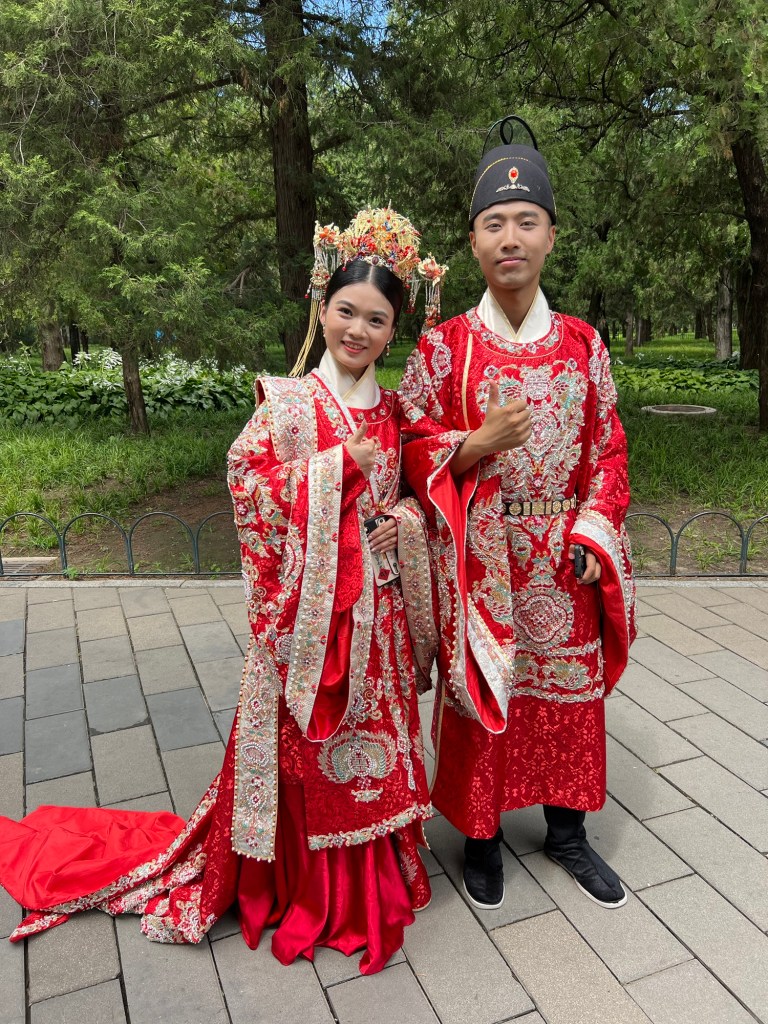
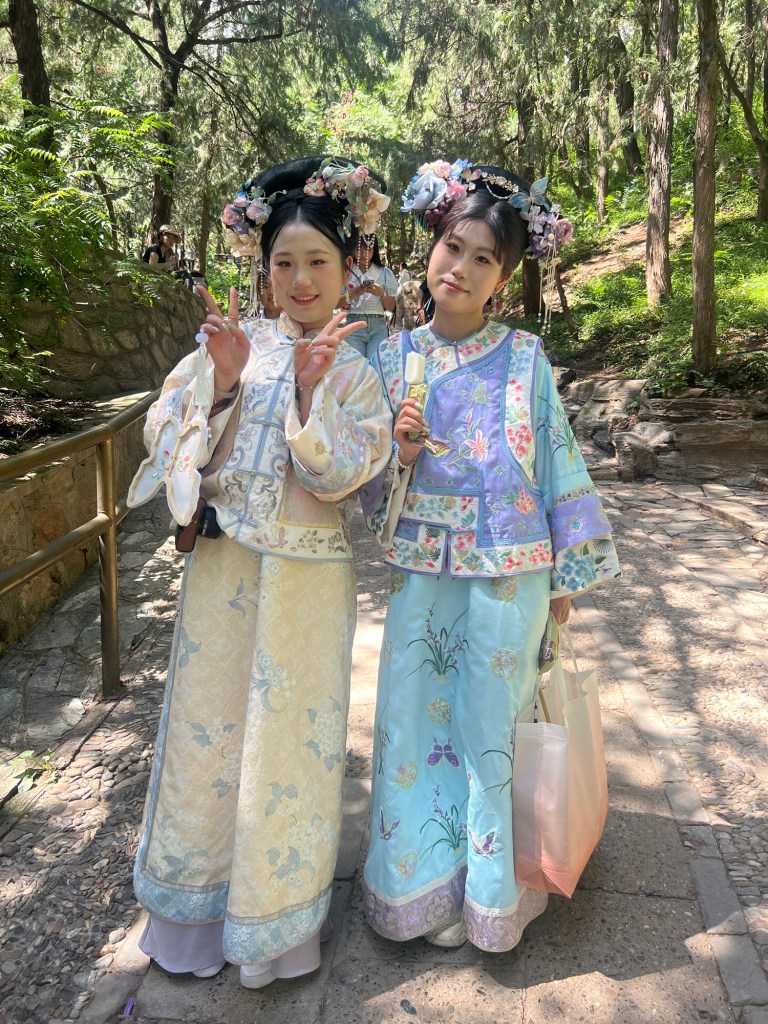
    As we’ve seen in other parts of Beijing there are always people young and old, keen to dress in traditional Chinese clothes who are getting their photo taken in one of the many parks.

    The White Pagoda
    Views looking down from the summit of the Pagoda

    After an hours walk along the lake it was time for an ice cream treat, this time a soft scoop of strawberry.

    More temples & pagodas
    More views across the lake
    Another Forbidden City moat view

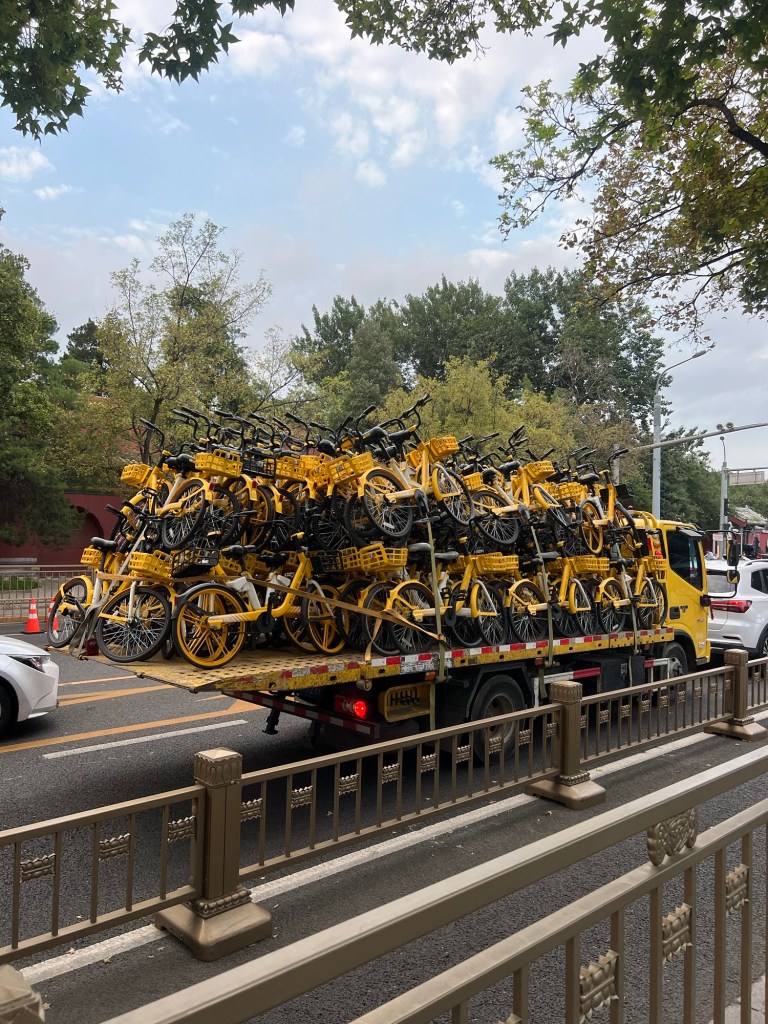
    As we ebbed our way back to the hotel, we came across a van carrying some of the many millions of bikes that are available to hire in Beijing.

    After another full day, we had a quiet evening and hit the sack around 10pm as we are up early tomorrow as we return to Tian’anmen Square and on to the Forbidden City for a second visit with the tour group.

  • Overseas tour Day 287 – Temple of Heaven Park & Wangfujing Street

    Aug 14th, 2024

    For the first time since arriving in Beijing we had a more leisurely start and decided to head to the local market for breakfast.

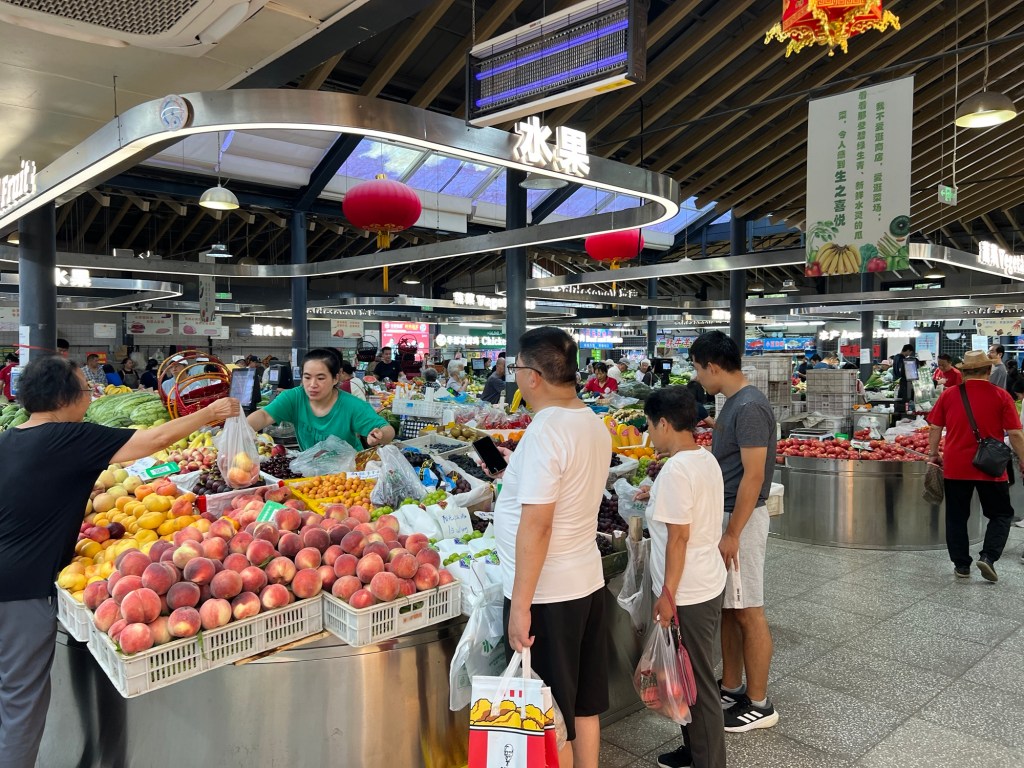
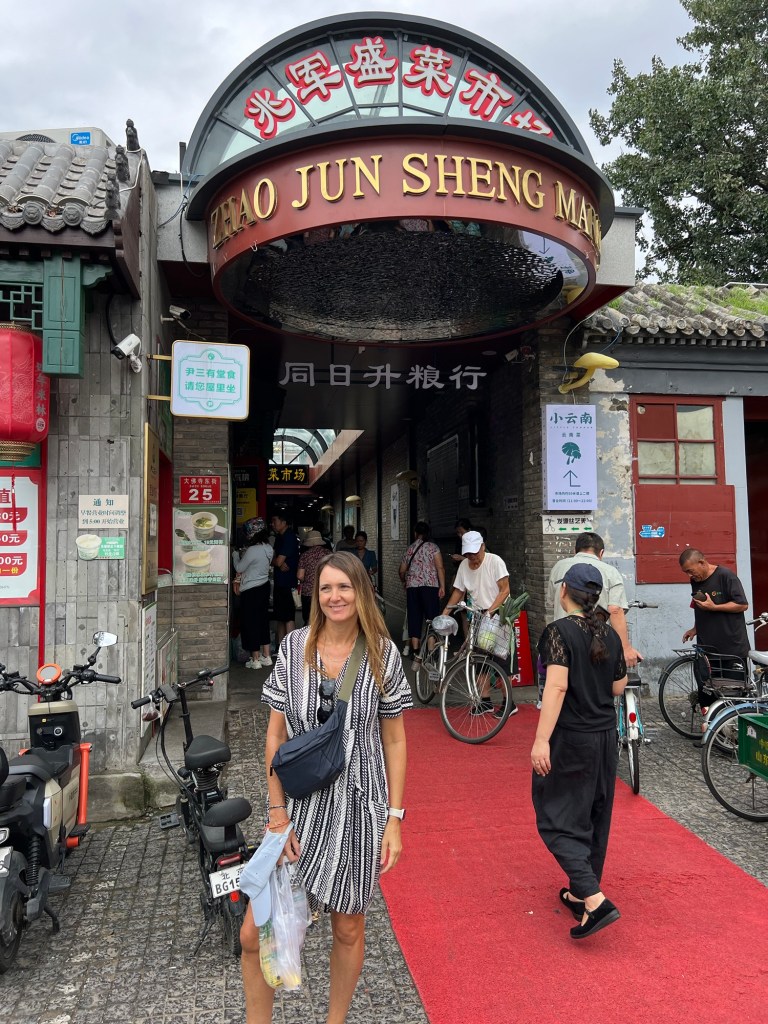
    The neighbourhood in Dongsi had a small market, where we managed to pick up some fruit, as well as a few savoury snacks from a bakery that proved to be good choices.

    As on other days, we were the only non-Chinese faces in the shopping area. Pleasingly we were greeted with friendly smiling faces, and a little English speaking, that helped with our purchases.

    Shopping with the locals

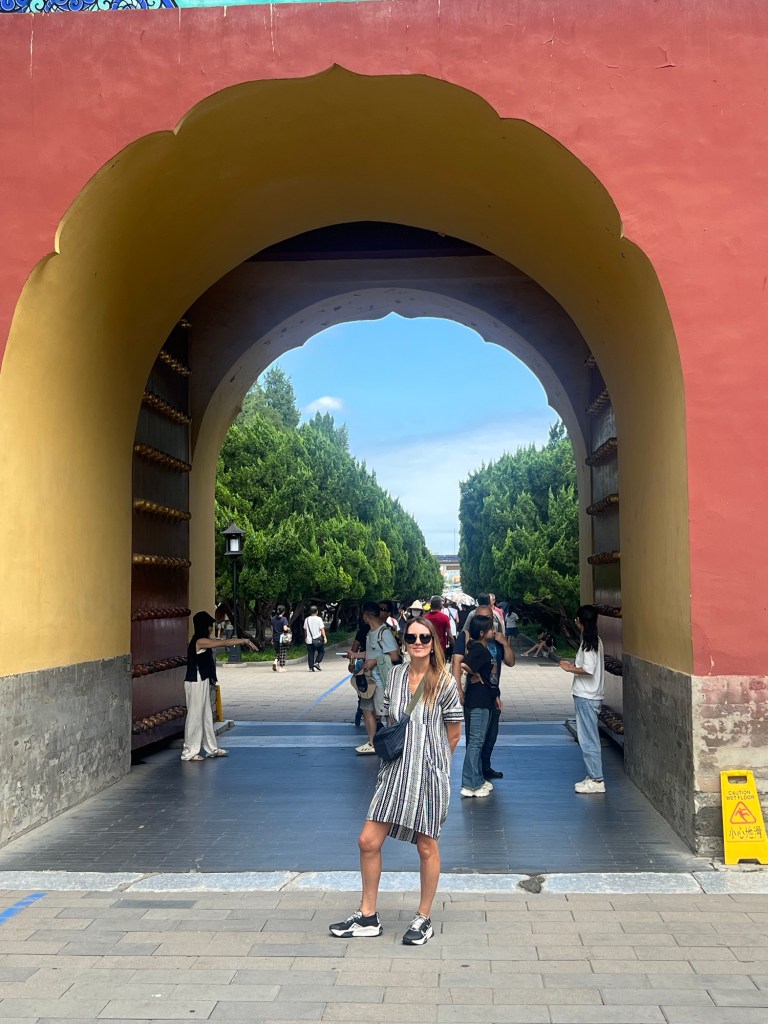
    After loading up with some additional coffee and cake we picked up a cab downtown to our first destination of the day, Temple of Heaven Park.

    The complex originated as a series of imperial religious buildings that were visited by the Ming & Qing Emperors for annual ceremonies of prayer to Heaven for a good harvest.

    The temple complex was constructed in 1406 and was extended and renamed Temple of Heaven during the reign of the Jianjing Emperor in the 16th century (thanks to Wikipedia!).

    The Temple of Heaven is a World Heritage site and has been described as “a masterpiece of architecture and landscape design which simply and graphically illustrates a cosmogony of great importance for the evolution of one of the world’s great civilizations…!”

    It has a very symbolic layout and design, with the Temple of Heaven having a profound influence on subsequent architecture and planning in the Far East.

    The Temple grounds cover 2.73 km of parkland and comprises three main groups of constructions, all built according to strict philosophical requirements.

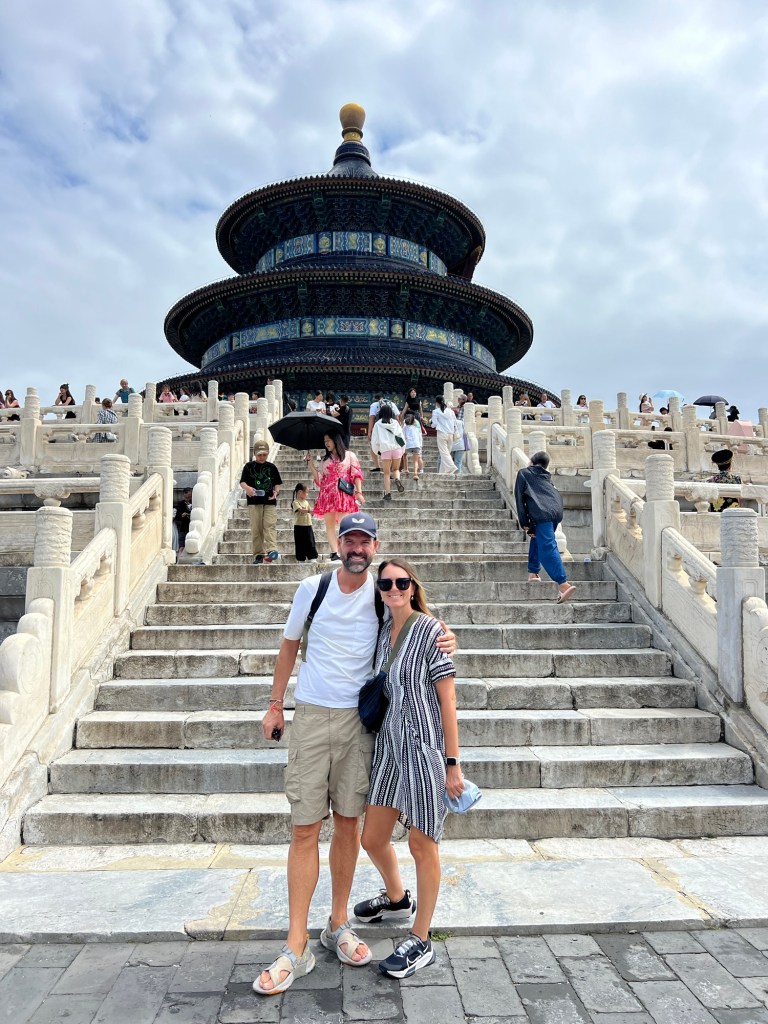
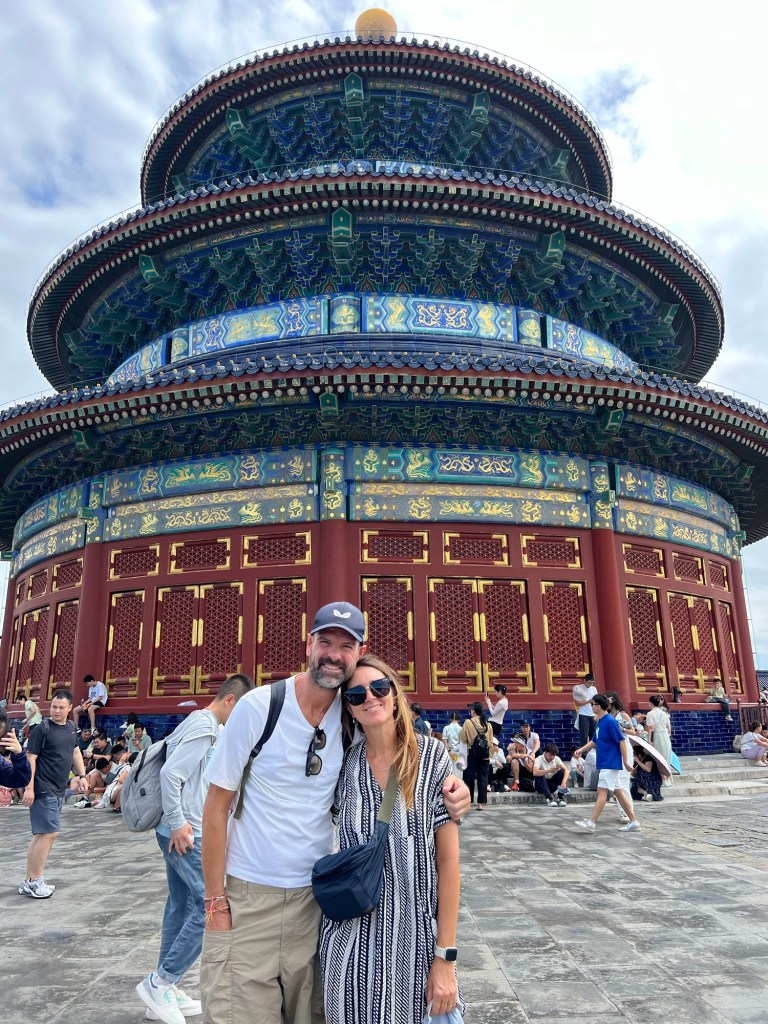
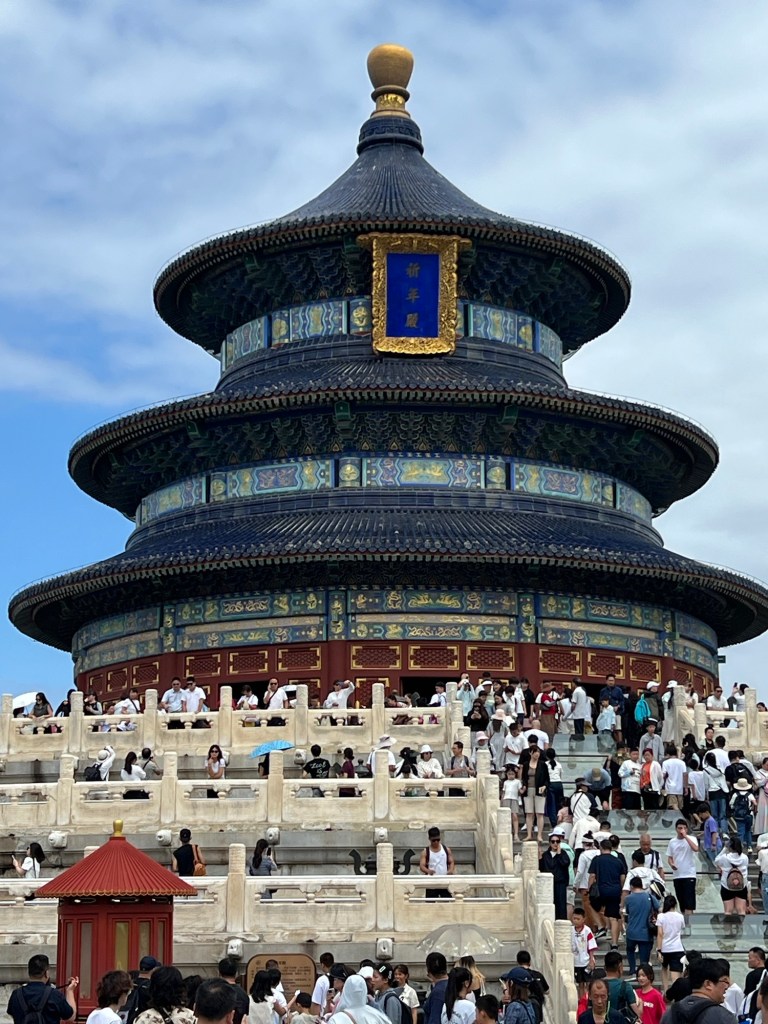
    The Hall of Prayer for Good Harvests is a magnificent triple-gabled circular building, 36 m in diameter and 38 m tall, built on three levels of marble stone base, where the Emperor prayed for good harvests.

    Oddly the building is completely wooden, with no nails!

    Stunning
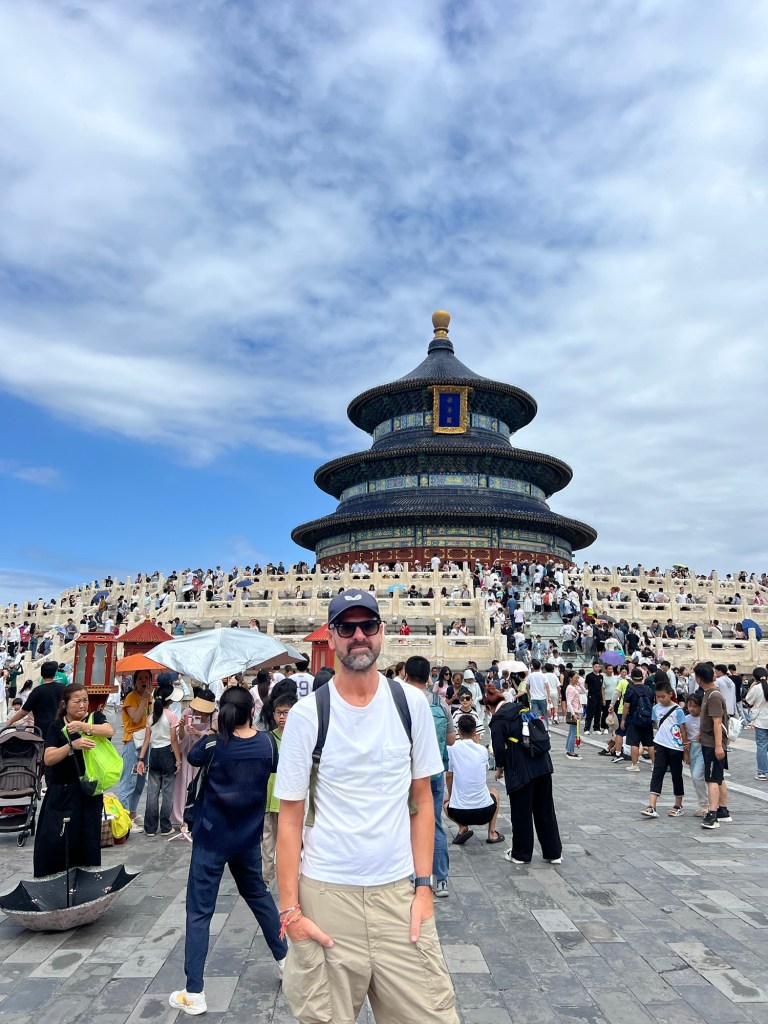
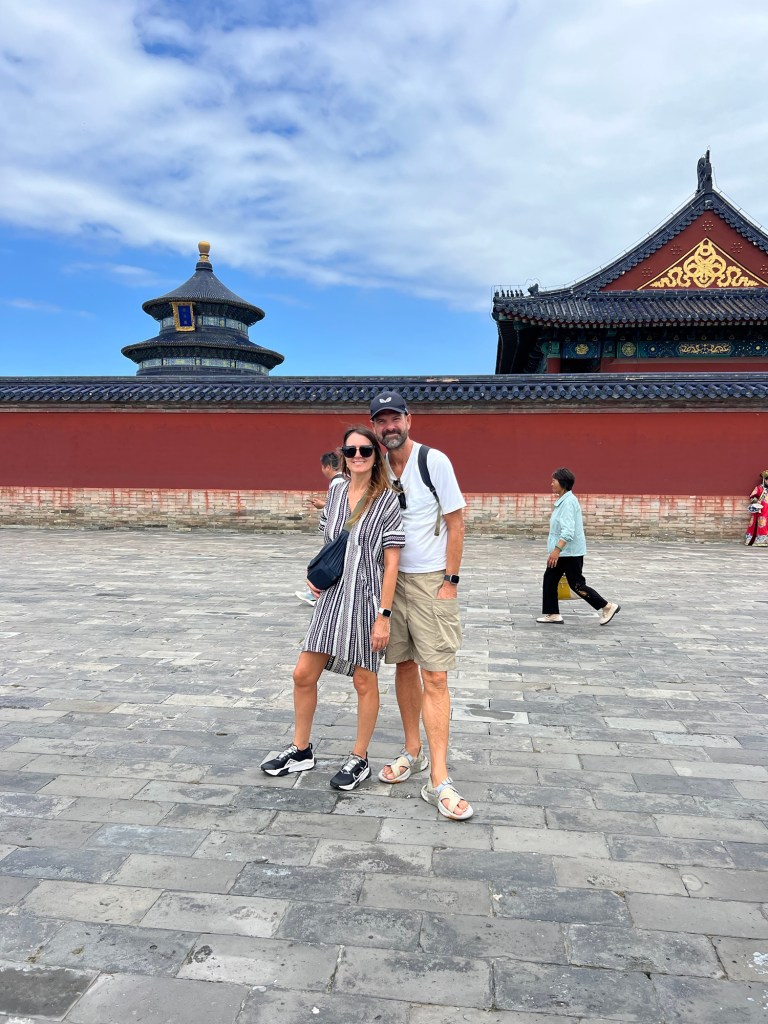
    Hall of Prayer for Good Harvests 
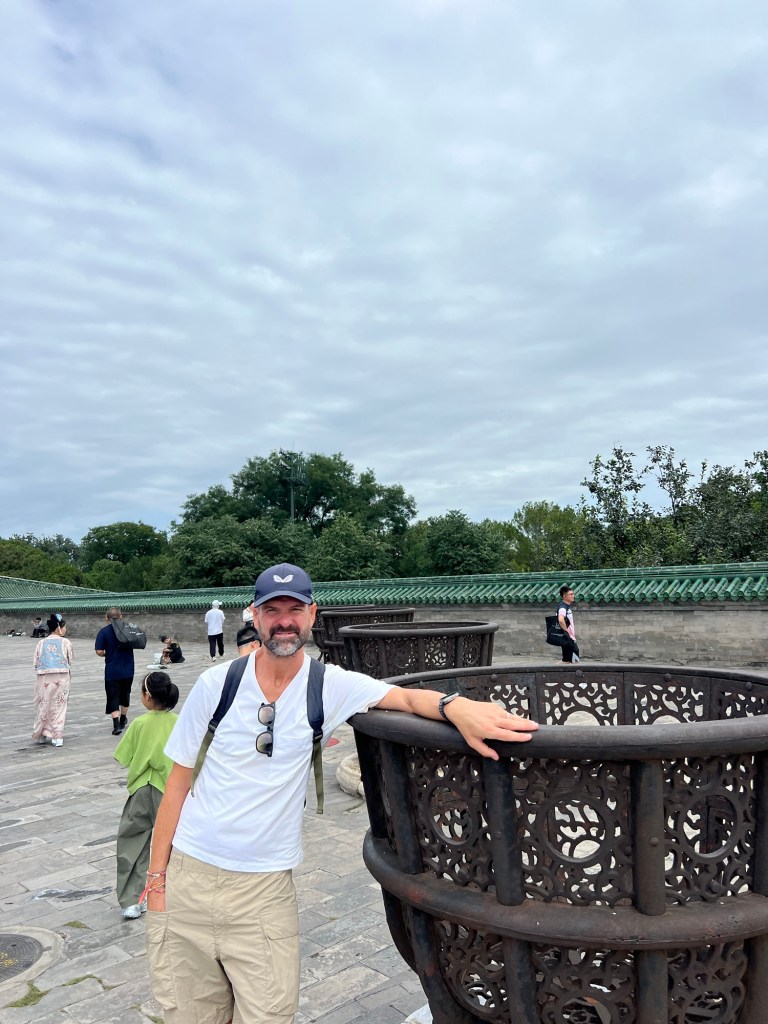
    Taking in the crowds
    More locals in national dress

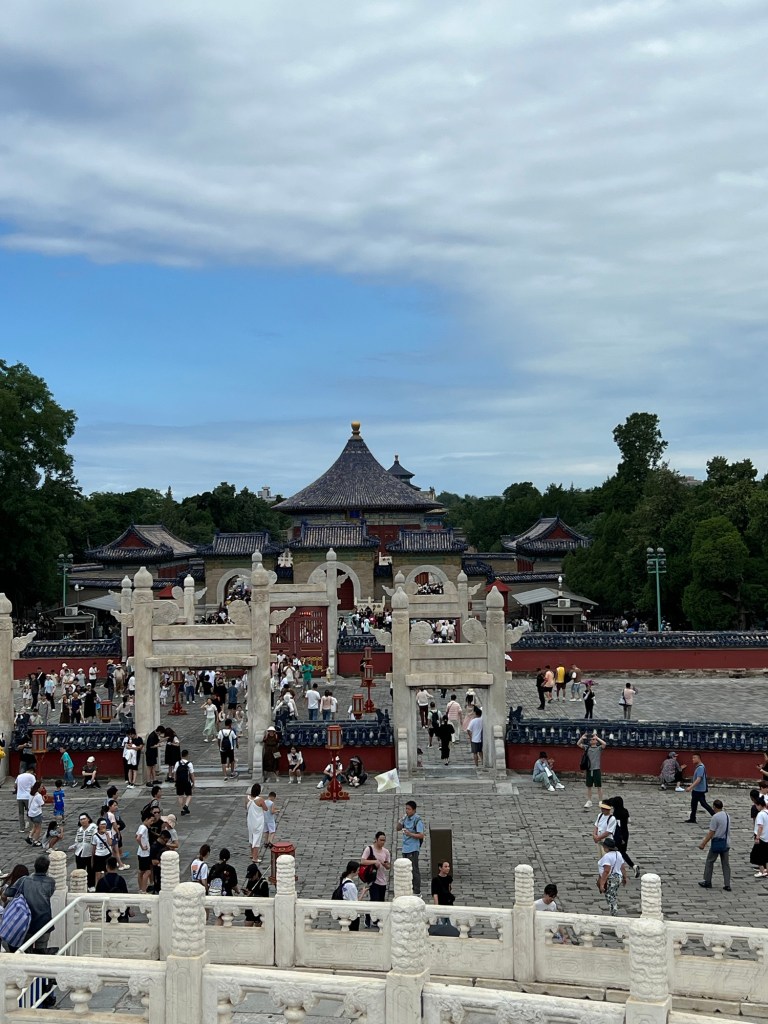
    The next was the Circular Mound Altar, located south of the Imperial Vault of Heaven. It is an empty circular platform on three levels of marble stones, each decorated by lavishly carved dragons.

    Tea anyone?

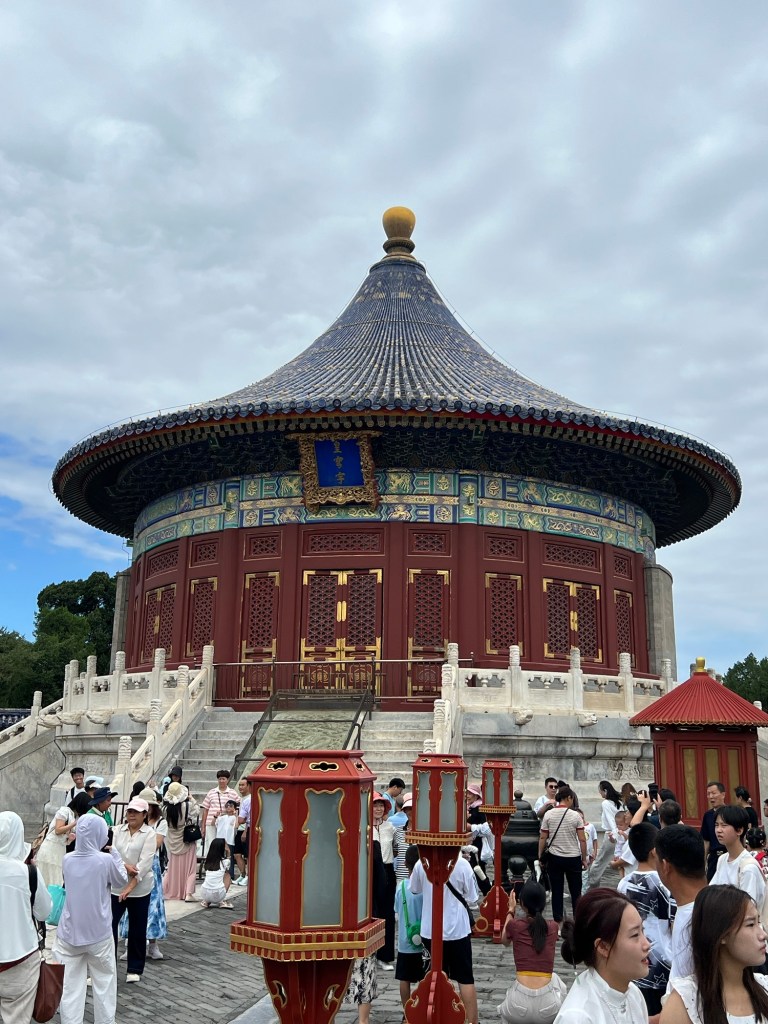
    The Imperial Vault of Heaven is a single-gabled circular building, built on a single level of marble stone base. It is located south of the Hall of Prayer for Good Harvests and resembles it, but is smaller. It is surrounded by a smooth circular wall, the Echo Wall, that can transmit sounds over large distances.

    Several features of the temple complex symbolize the connection of Heaven and Earth, of a circle and a square. The whole temple complex is surrounded by two cordons of walls; the outer wall has a taller, semi-circular northern end, representing Heaven, and a shorter, rectangular southern end, representing the Earth.

    The surrounding park is extensive, covering 267 hectares. It’s well used by locals offering playgrounds for kids as well as exercise and game areas for adults.

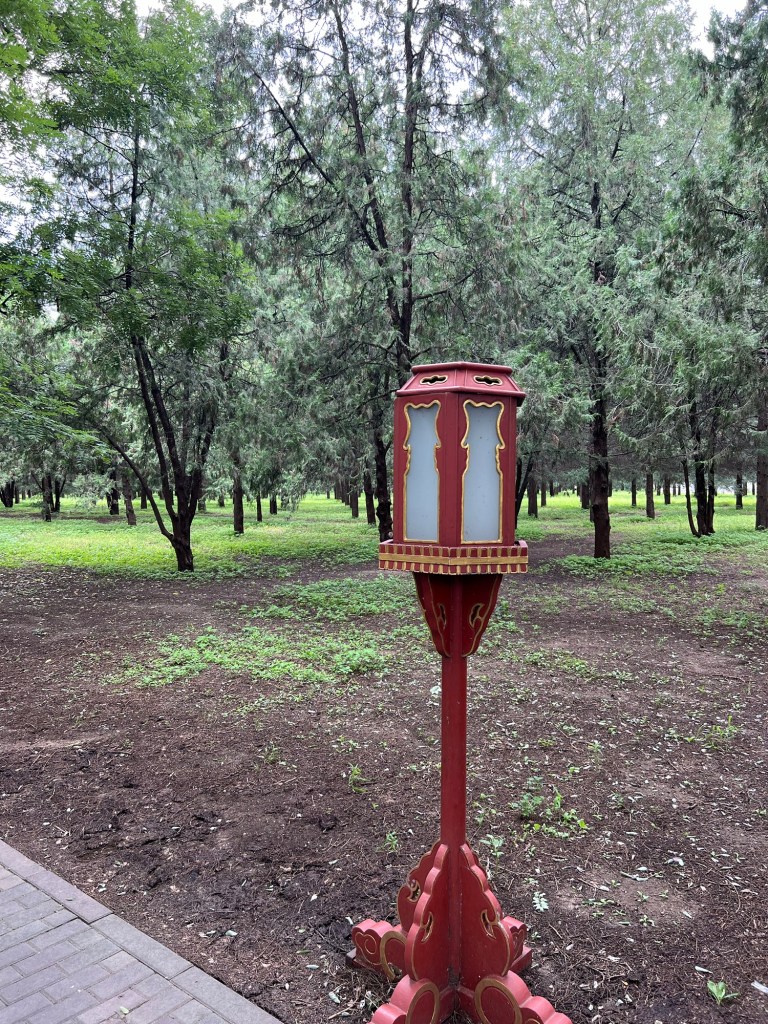
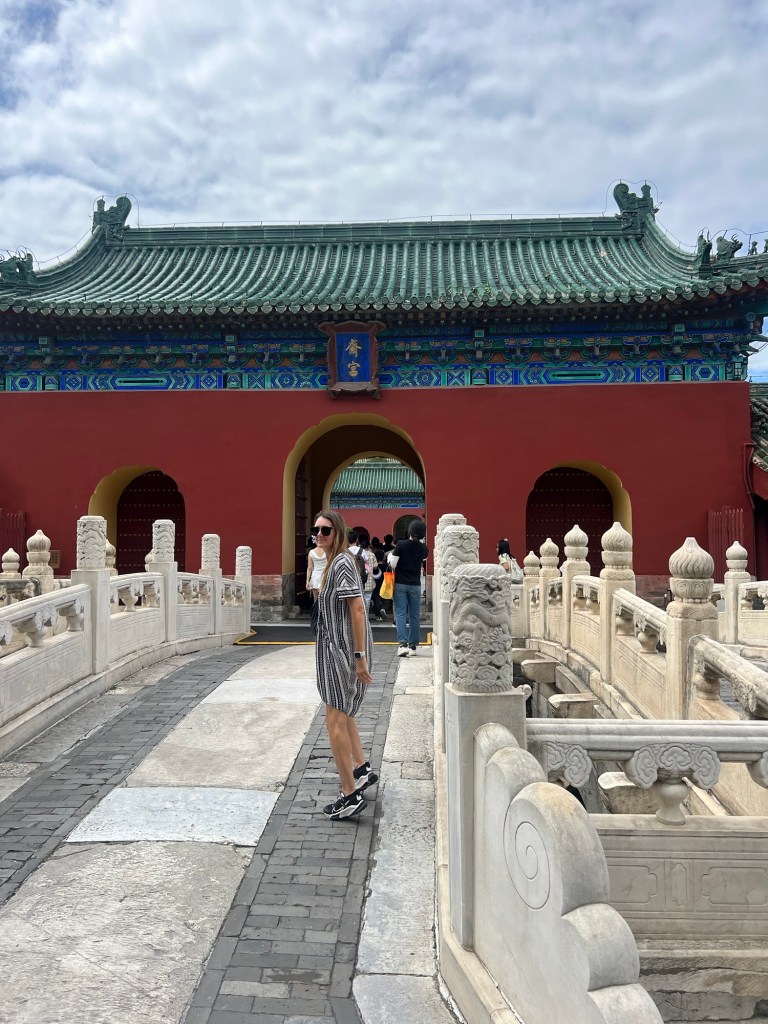
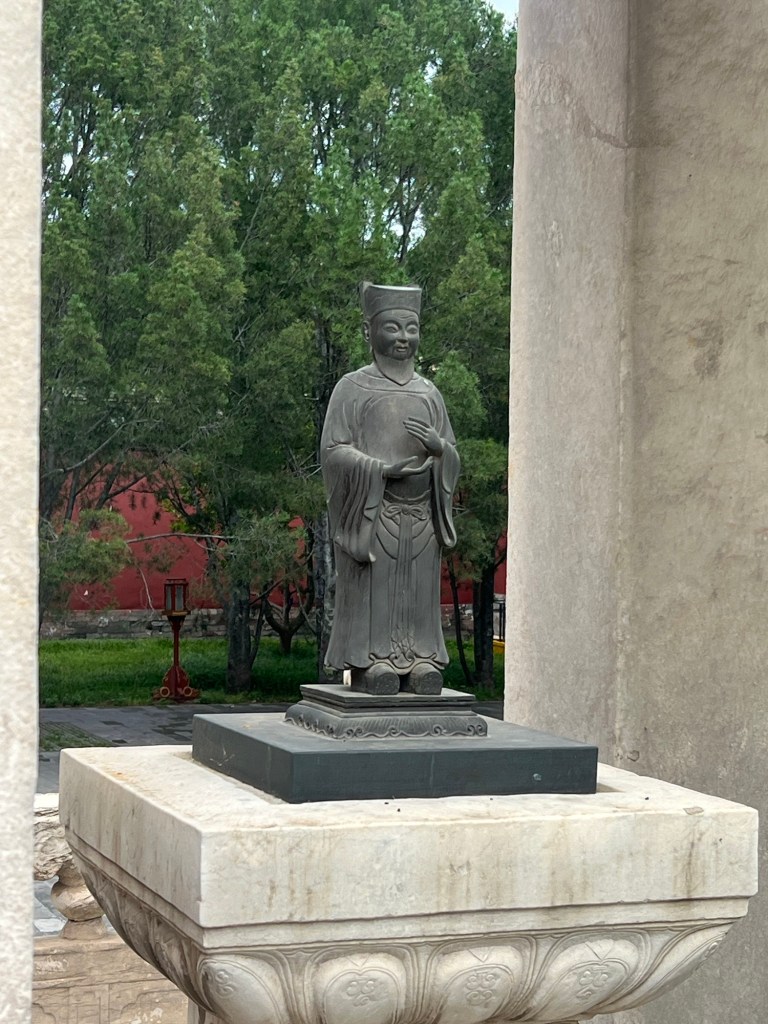
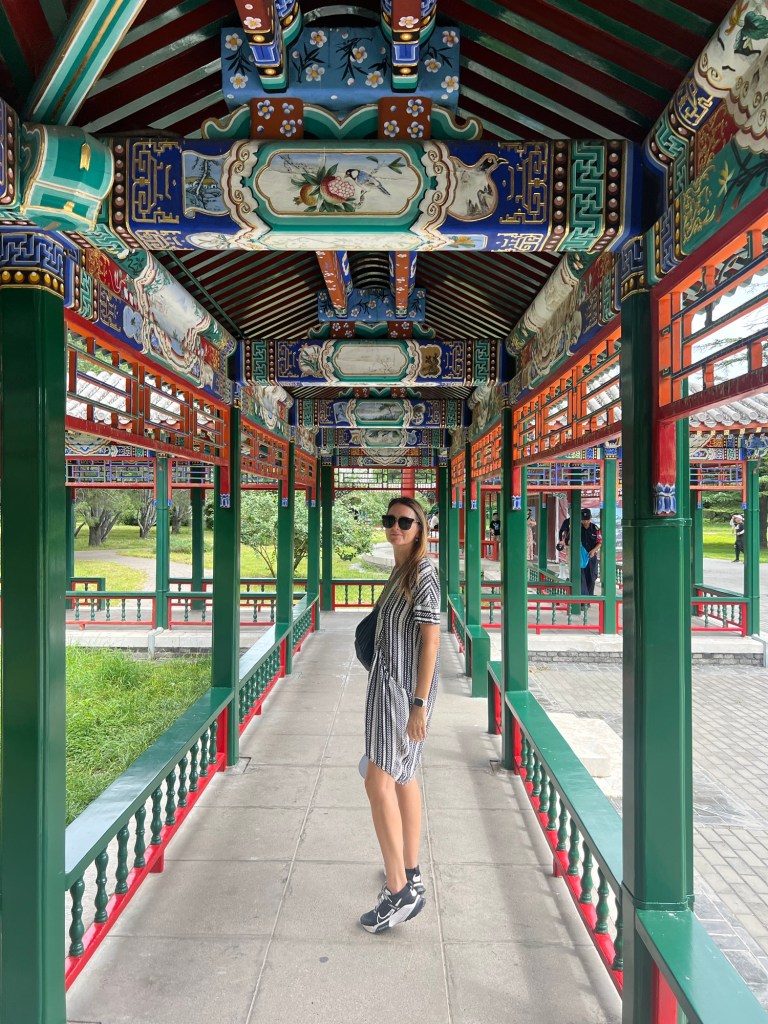
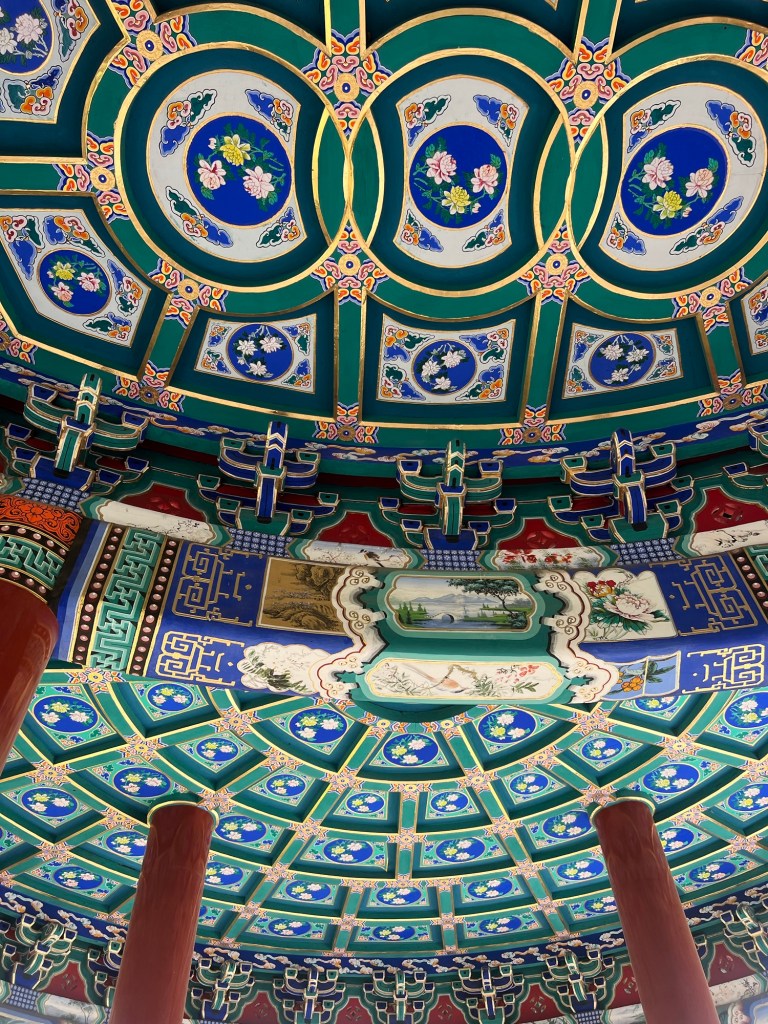
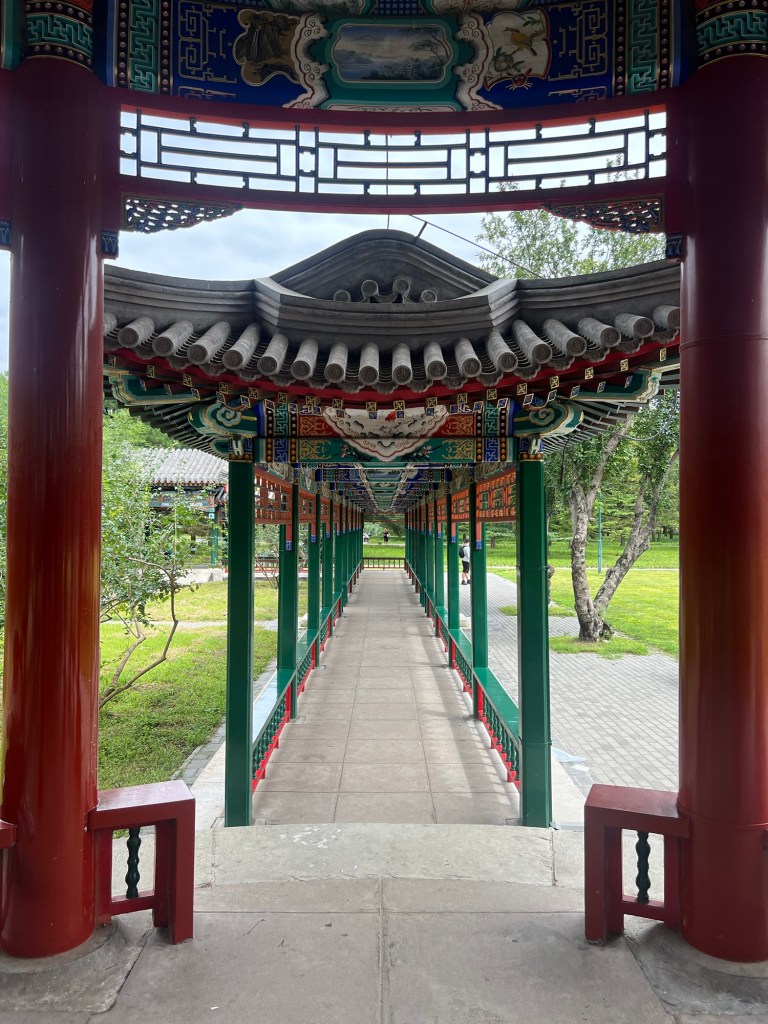
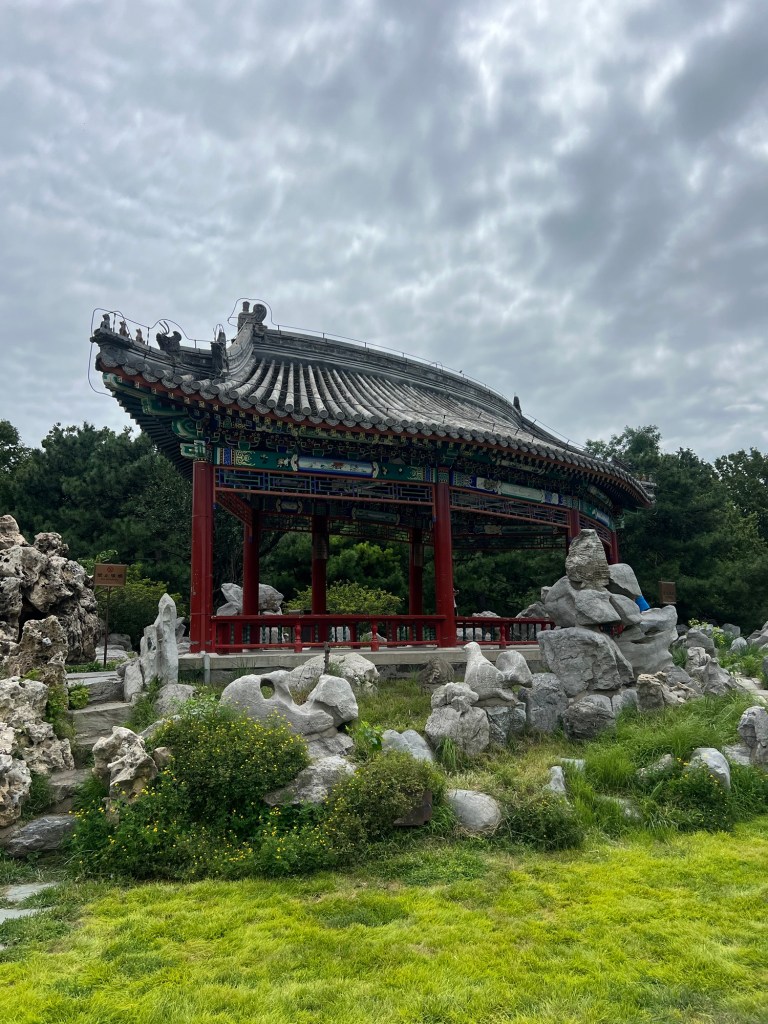
    Fortunately we had time to fully explore the park and also visited the Fasting/Abstinence Palace, the Danbi Bridge, the Long Corridor and the Seven Star Stones, that are all situated on the outer sections of the park and were equally beautiful.

    Danbi bridge
    Abstinence Palace entrance
    Long corridor
    Stunning gardens
    Seven star stones
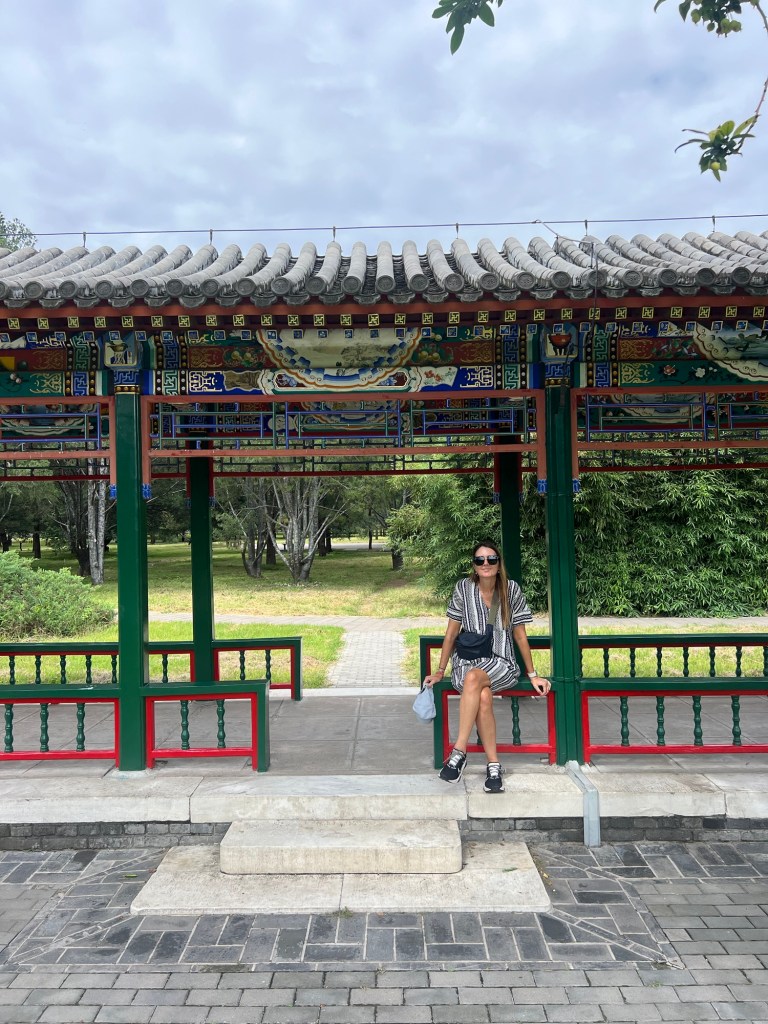
    Relaxing in the Long Corridor

    The main structure in the outer part is the Divine Music Administration, where the musicians and dancers rehearsed ritual music during the Qing and Ming dynasties.

    Having taken in the gardens of Beijing we caught the subway to Wangfujing Street, the famous shopping district.

    The majority of the main area is pedestrianised and reminded us of KL in Malaysia, very modern with high end brands but very few people shopping!

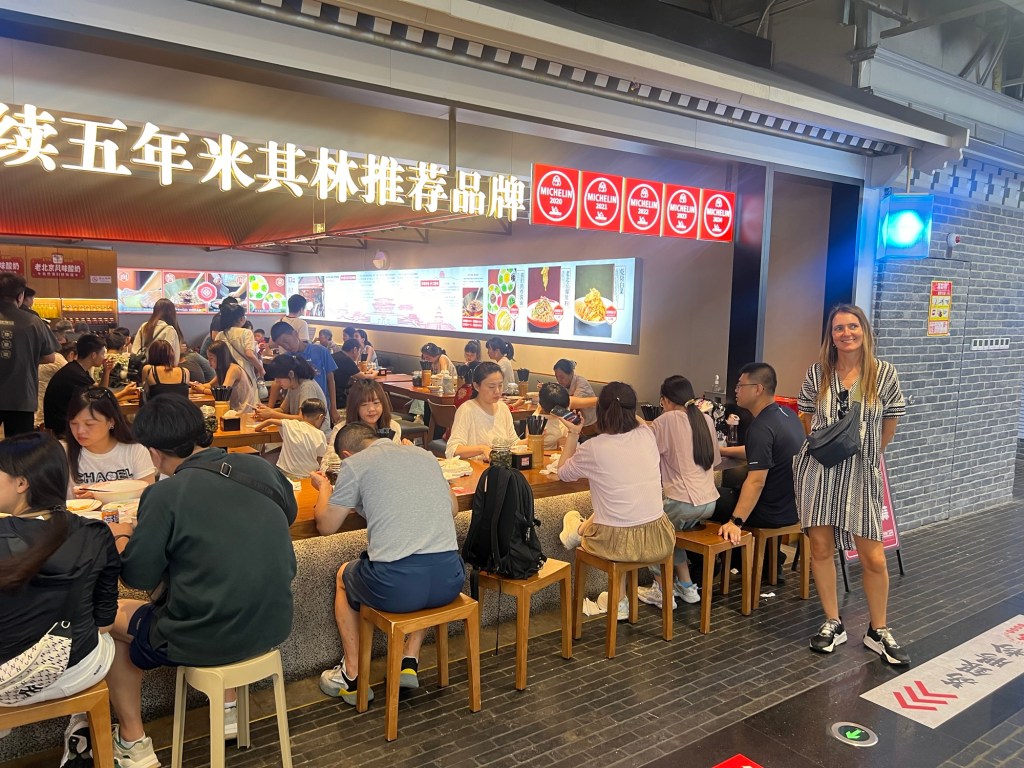
    In truth we were in search of a place to eat and found a great restaurant with Michelin Stars dating back over the last 5yrs.

    It was a great experience and the food was really delicious.

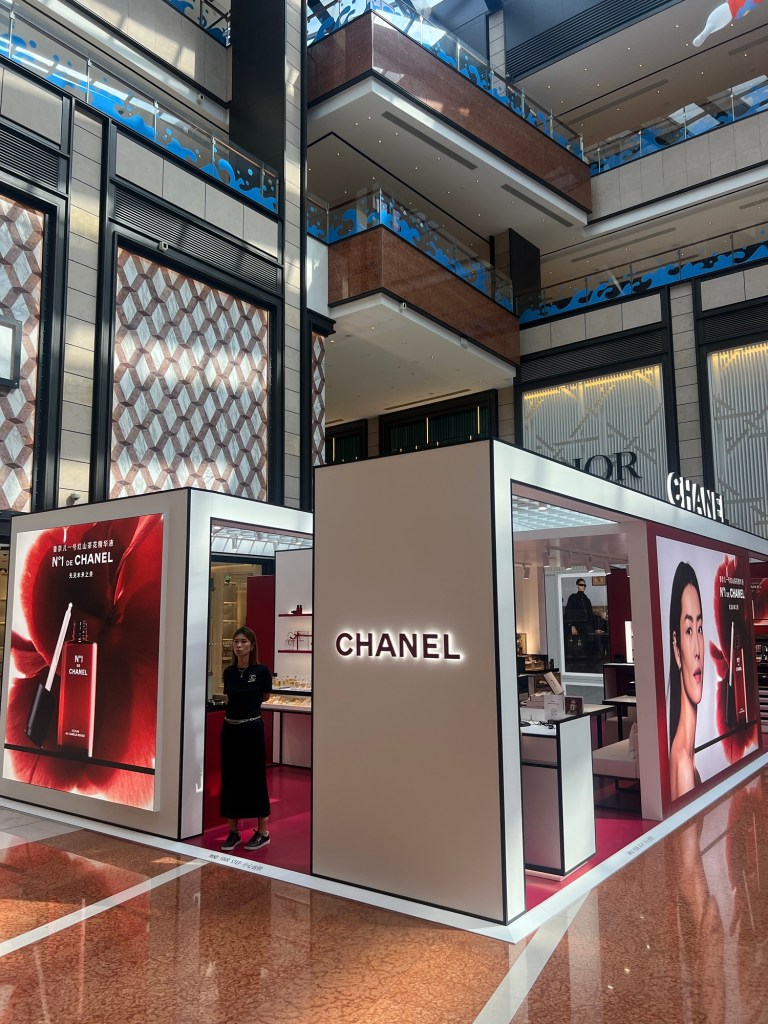
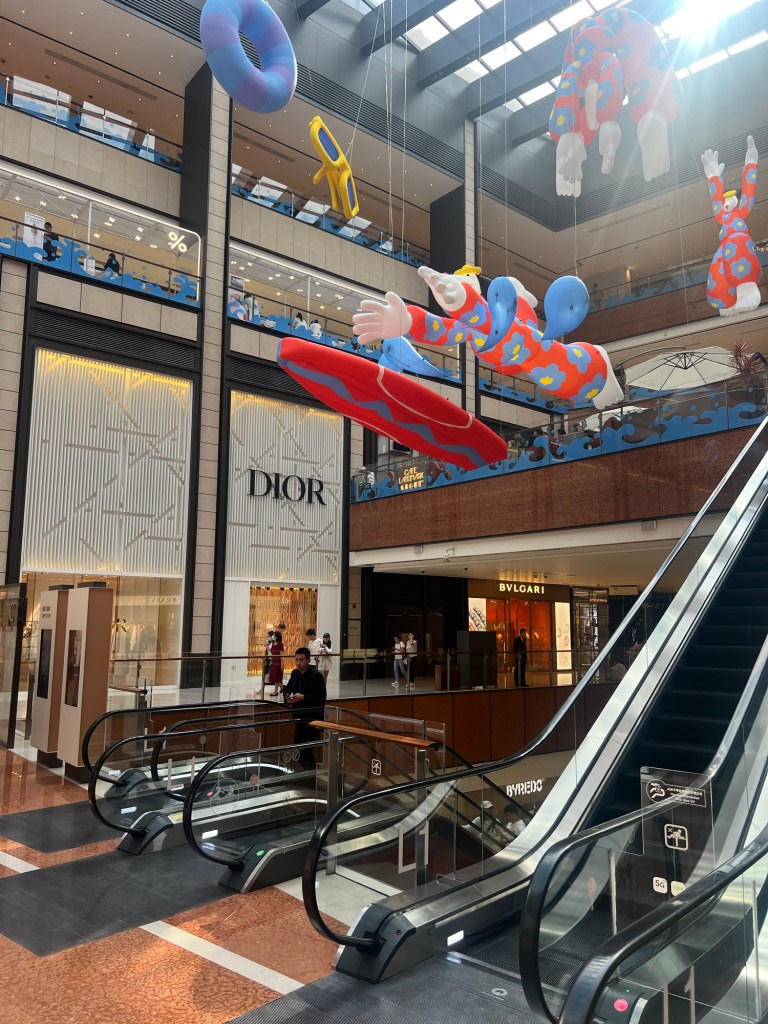
    After a late lunch we went for a wander around the shopping centre and were in awe of the stores like Chanel & LVMH, suggesting there must be a decent number of wealthy shoppers!

    Spot the shopper

    After an enjoyable day exploring, we met up with our China tour party in readiness for our 19 day trip down to Hong Kong.

    There are 12 in the group, including our guide Kris, a Chinese lady from X’ian and includes a League of Nations with people from Iran, Russia, USA, Finland, France and of course 4 from England.

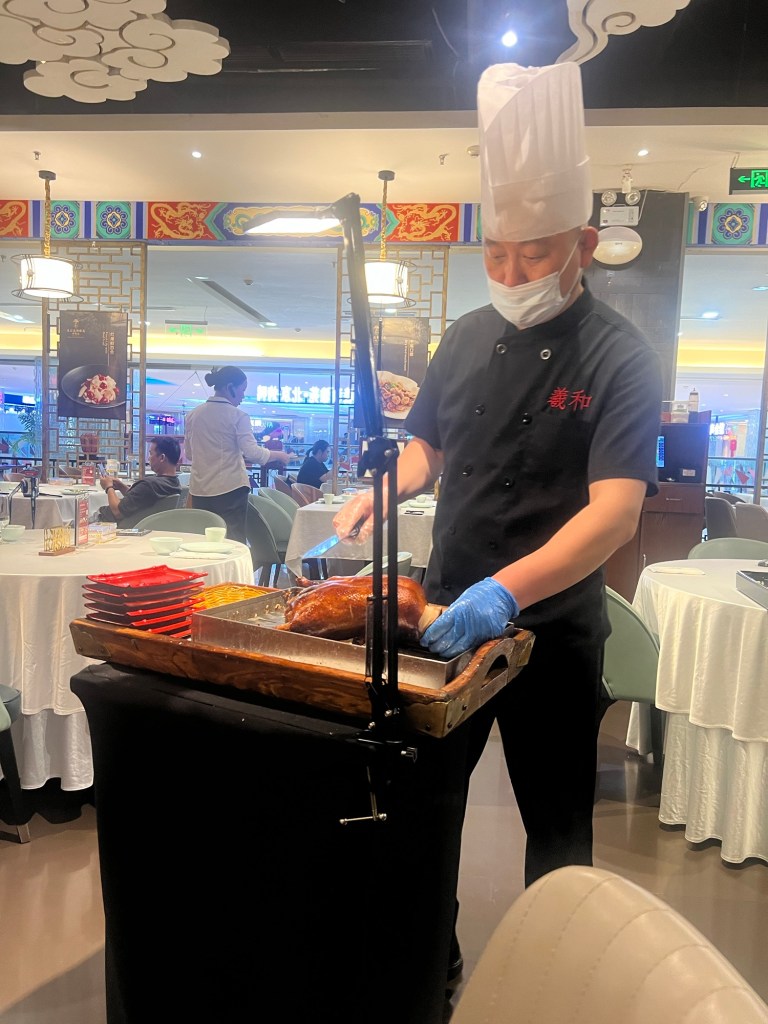
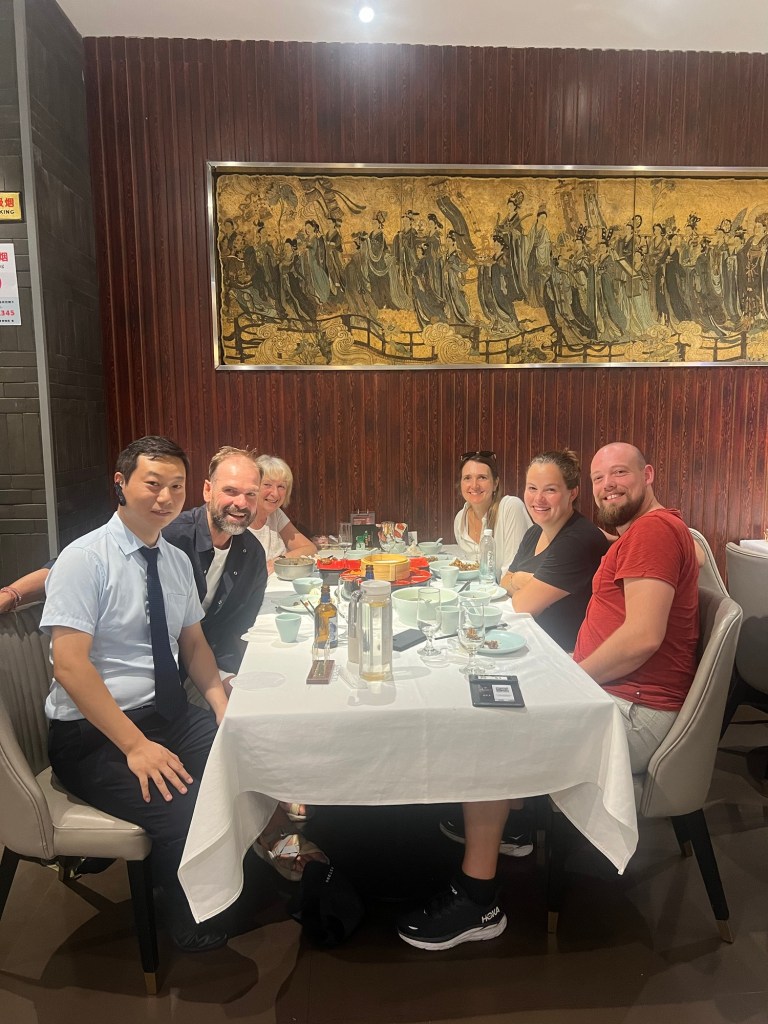
    After our initial meeting, we headed out for dinner at a local restaurant where we were treated to a Chinese buffet feast chosen by our guide – it goes without saying this included Peking Duck amongst other local delicacies.

    It’s been good to meet some new faces and we are looking forward to sharing our China adventure with them.

    Peking duck & Andy

    Tomorrow we are heading off at 7am to the Great Wall of China to tick off one from our bucket list!

  • Overseas tour Day 286 – Tian’anmen Square & Summer Palace, Beijing

    Aug 13th, 2024

    Another full day on the tourist trail around Beijing.

    Again we got ahead of the crowds and made our way to the infamous Tian’anmen Square, named after the eponymous Tiananmen (Gate of Heavenly Peace) located to the north,  which separates it from the Forbidden City.

    We managed to get entry tickets the day before, as we were advised that you can’t just turn up and walk around, despite it being free to enter. Needless to say the security around the area is significant and we were asked to show our passports on two separate occasions before we gained entry to the large square area.

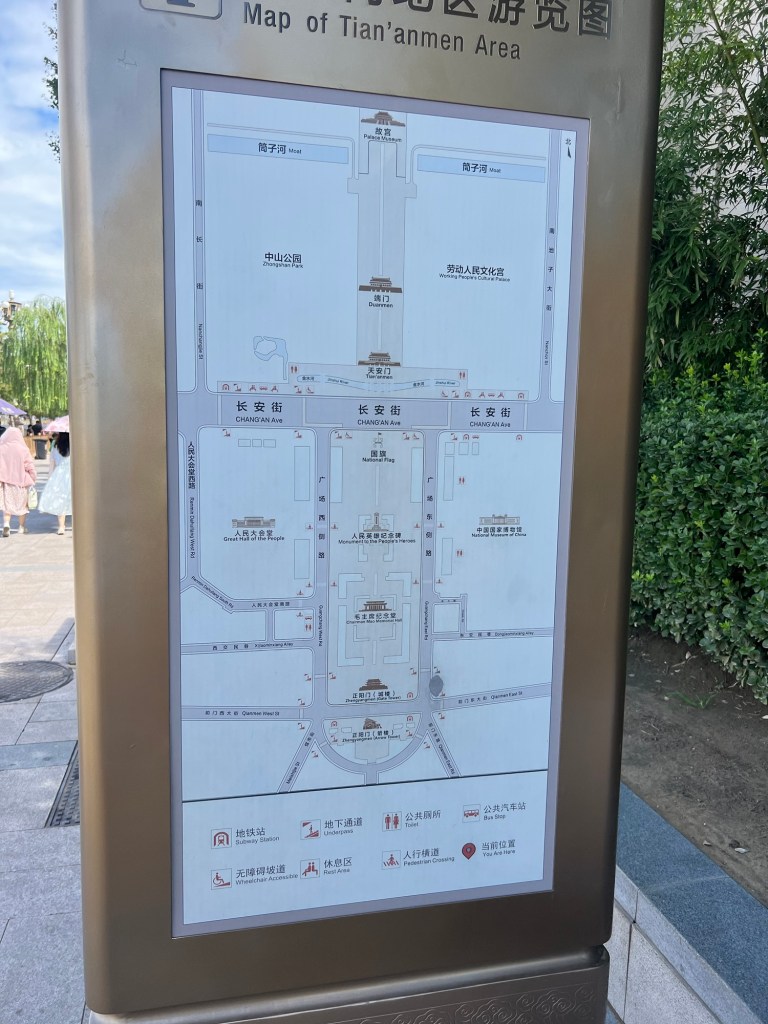
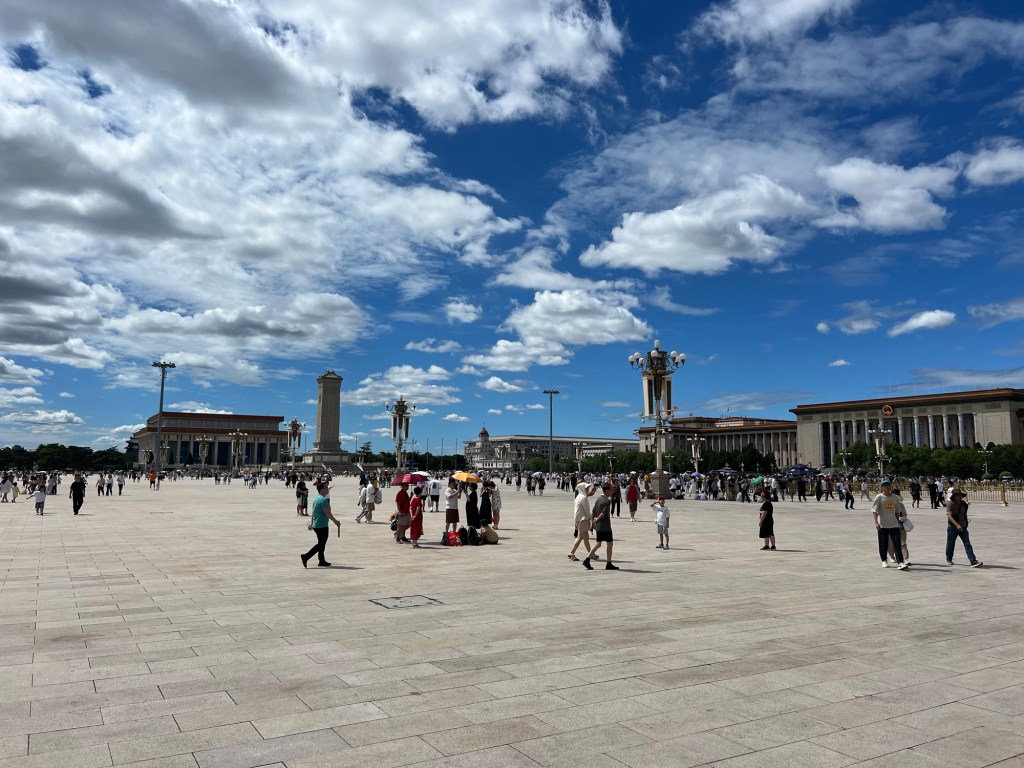
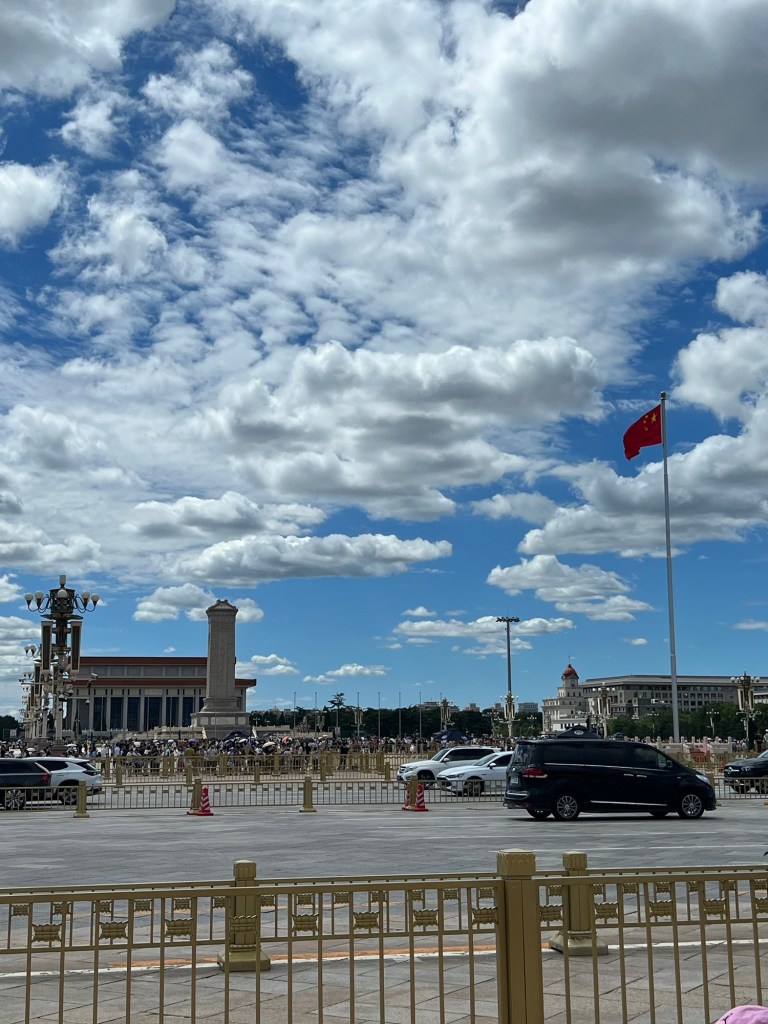
    The square contains the Monument to the Peoples Heroes, the Great Hall of the People, the National Museum of China and the and the Mausoleum of Chairman Mao.

    Outside China, the square is best known for the 1989 protests and massacre that ended with a military crackdown due to international media coverage, internet global connectivity and the political implications. Within China, little, if anything about the massacre is known by most Chinese due to strict censorship.

    In Beijing, Tiananmen was re-developed from an insular imperial quarter to a larger public space viewed as socialist political statement during the 1950s and the square was quadrupled in size.

    This followed the vision of Mao to make the square the largest and most spectacular in the world and intended to hold over 500,000 people. It truly is one of the largest open spaces we have ever seen and is testament to the importance that China places to the heart of the country.

    On its southern edge, the Monument to the Peoples Heroes has been erected. This formed part of the Ten Great Buildings constructed between 1958 and 1959 to commemorate the ten-year anniversary of the People’s Republic of China (PRC), the Great Hall of the People and the Revolutionary History Museum were erected on the western and eastern sides of the square.

    All of the buildings are about scale and dominate the various sides of the lengthy square.

    However your eye is of course drawn to the photo of Chairman Mao and his mausoleum which sits in front of the Forbidden City which is very symbolic and places him in a god like status, both geographically and figuratively.

    We spent a good hour walking to the various sides of the square and it was interesting to watch the people and their reaction to the various buildings, notably Mao which naturally steels the show.

    The square is still used for mass gatherings, with the the 38m high ‘Monument to the People’s Heroes’ in central position with two ancient, massive gates at either end, the Tiananmen to the north and the Zhengyangmen, known as Qianmen, to the south.

    Having got to the square relatively early we were able to get up close to the buildings and get some decent photos without to many people blocking our view.

    Looking back on the worlds largest square

    As the heat started to rise we exited the square and made our way to the underground subway to head north to the Summer Palace.

    chairman Mao Mausoleum
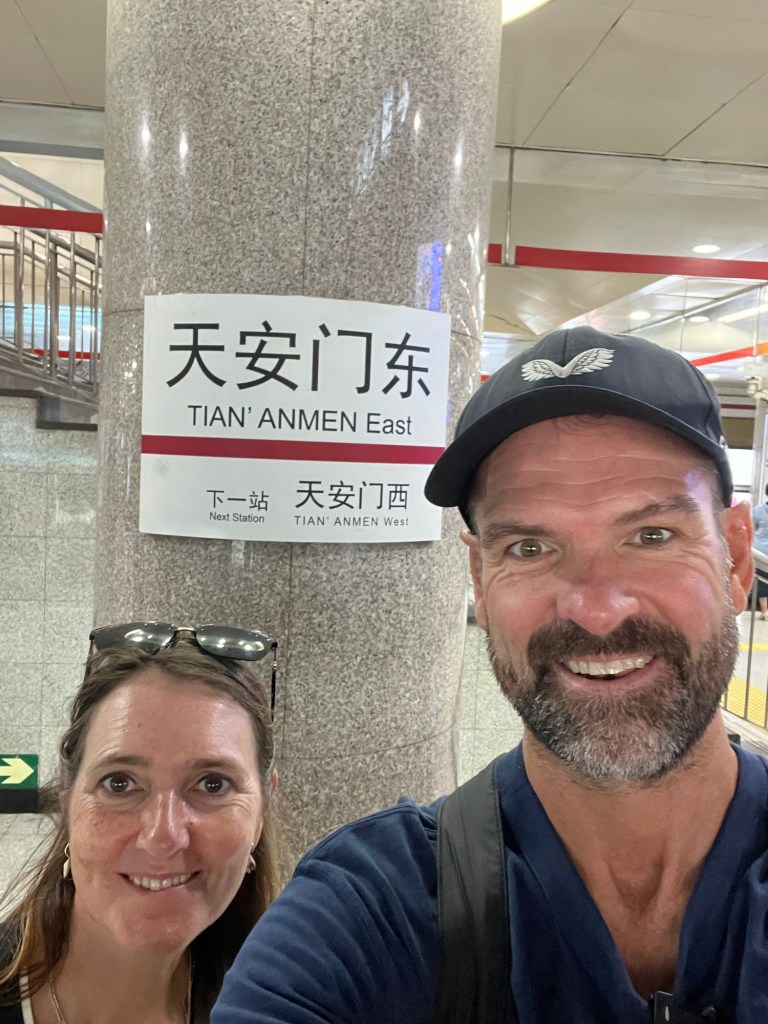
    In the subway about to depart Tian’anmen Square

    It’s worth noting at this point how straightforward the Beijing subway system is, helped by a numbering system and most directions being shown in English alongside the Chinese explanation. If even more appealing is how incredibly cheap it is to travel around. We went 14 stops out to the Summer Palace, a journey of 45mins at a cost of £1.20 for the both of us, and what a clean and reliable service it is. Puts the London Underground to shame!!

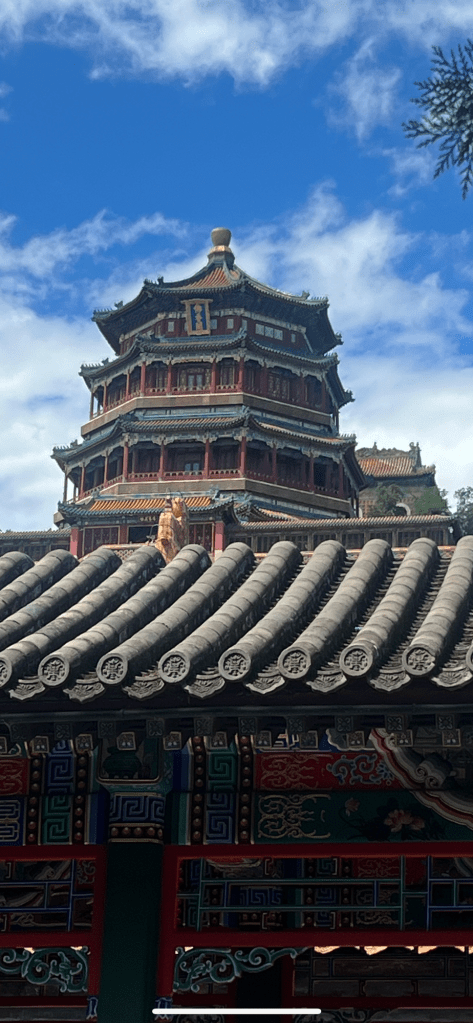
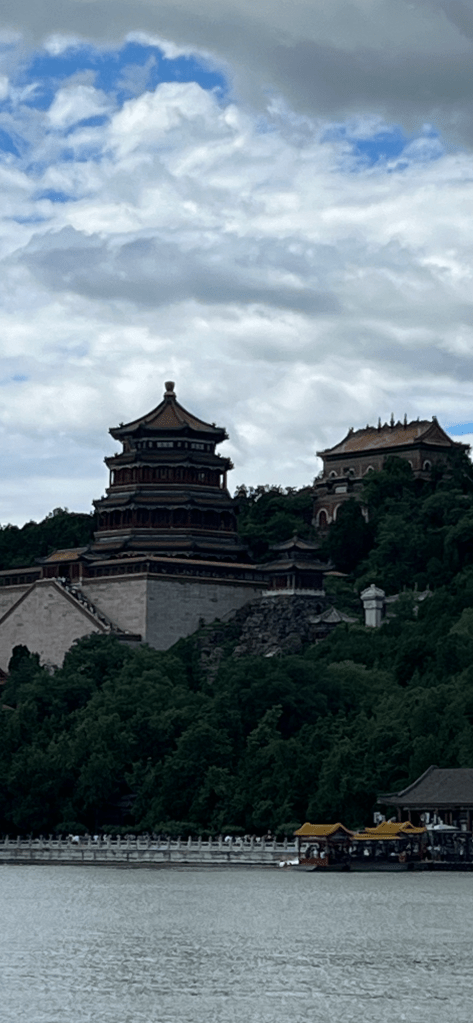
    Arriving at the Summer Palace in the North West of Beijing we were surprised to learn that it’s a vast ensemble of lakes, gardens and palaces.

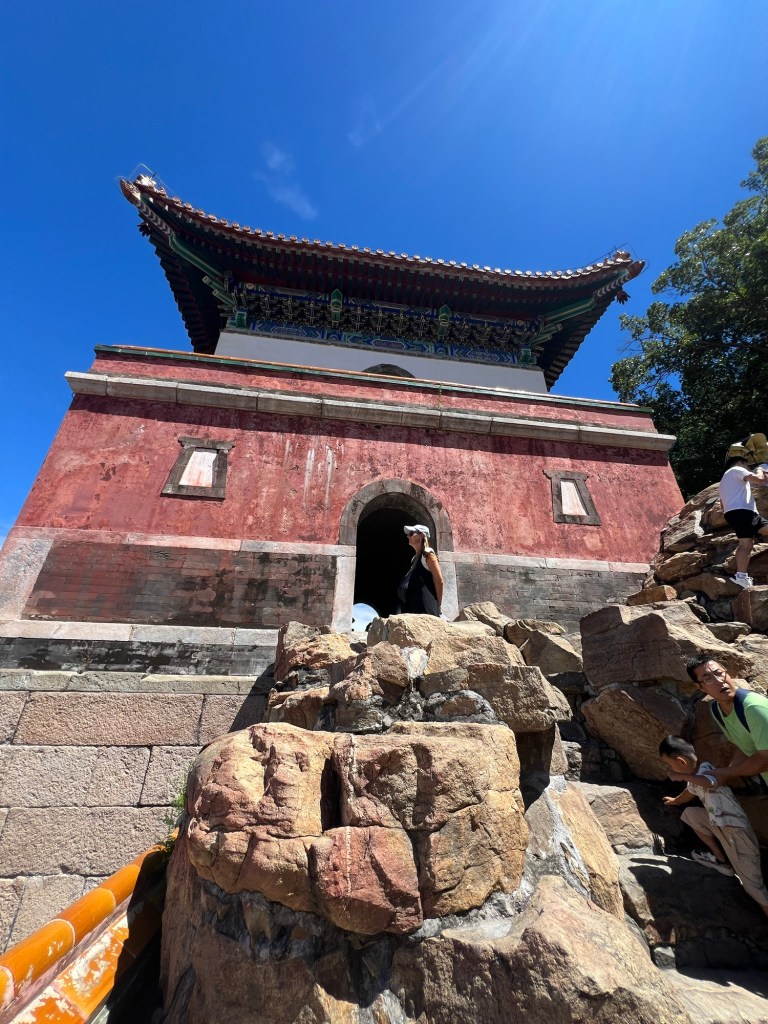
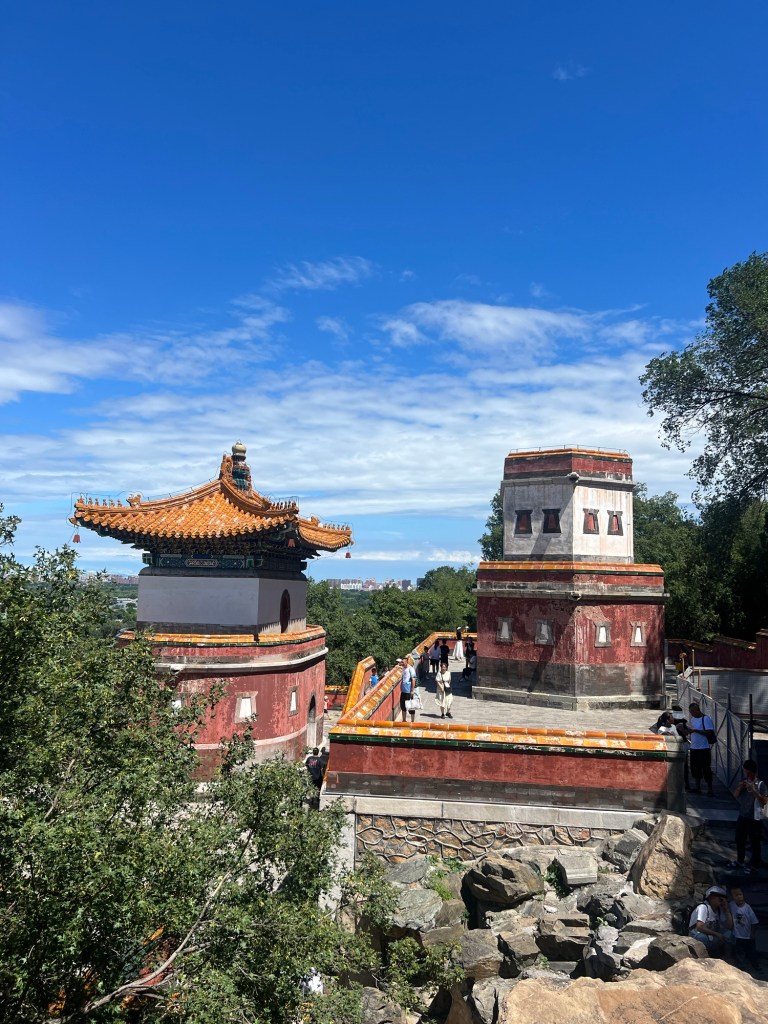
    It was an imperial garden during the Qing dynasty and includes Longevity Hill, Kunming Lake and Seventeen Hole Bridge. We saw this as a challenge to see all three and started a trek around the nigh on 300ha of grounds. Despite it being a week day, the place was packed and is a major draw to locals and visitors from outside of Beijing.

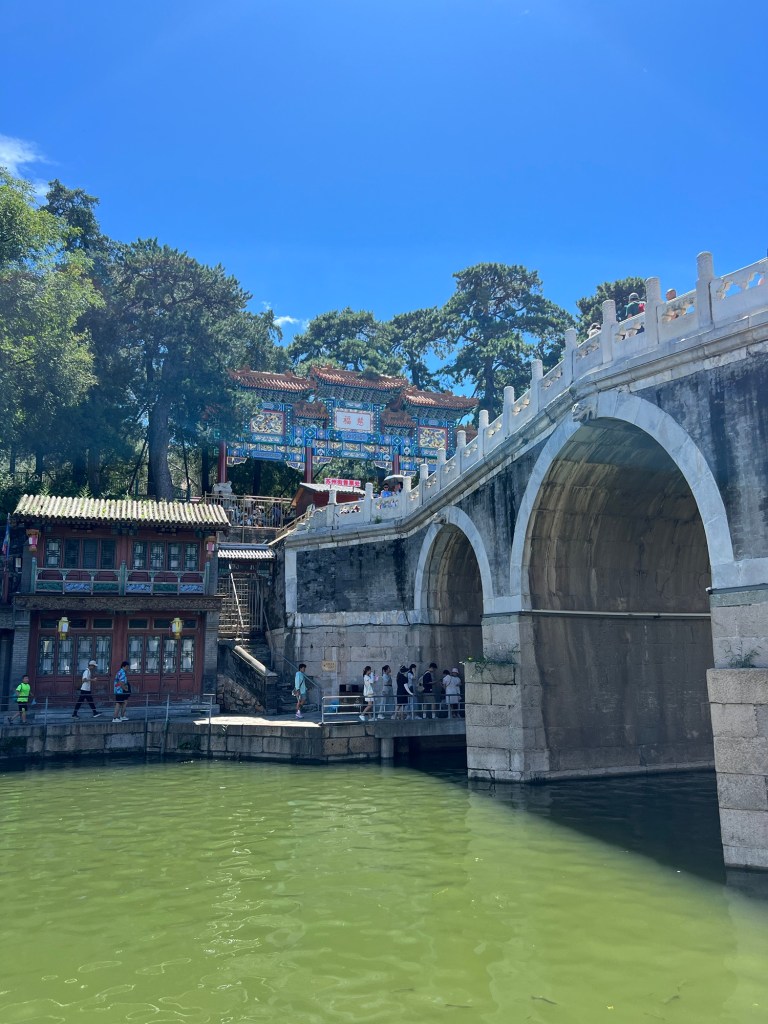
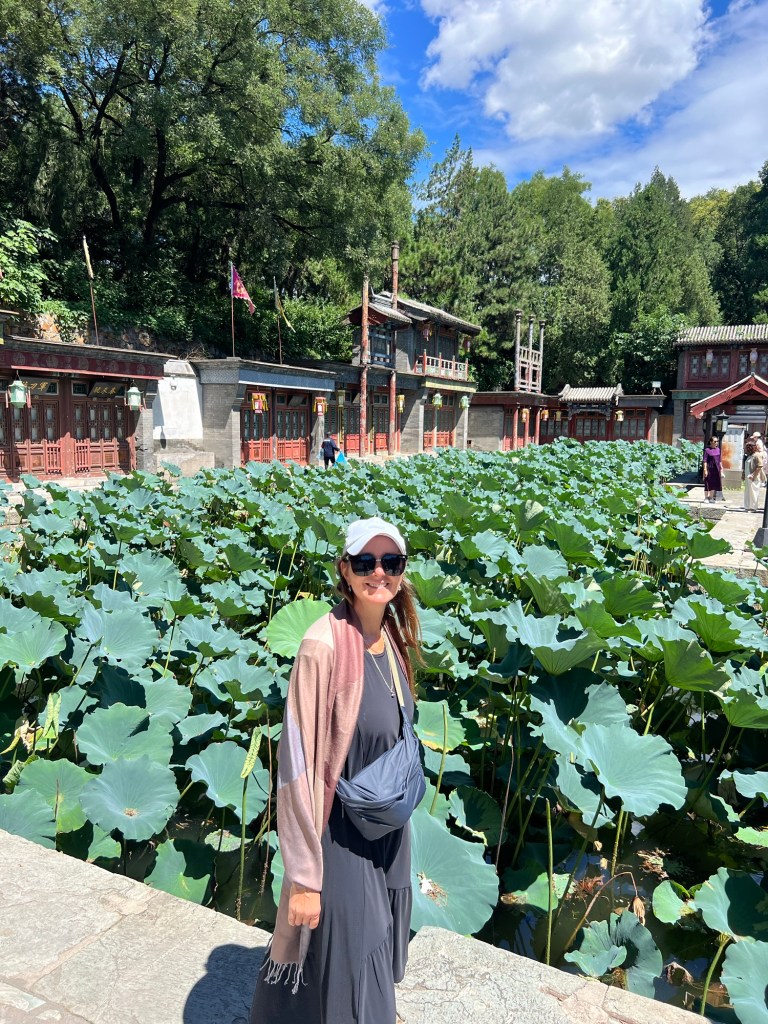
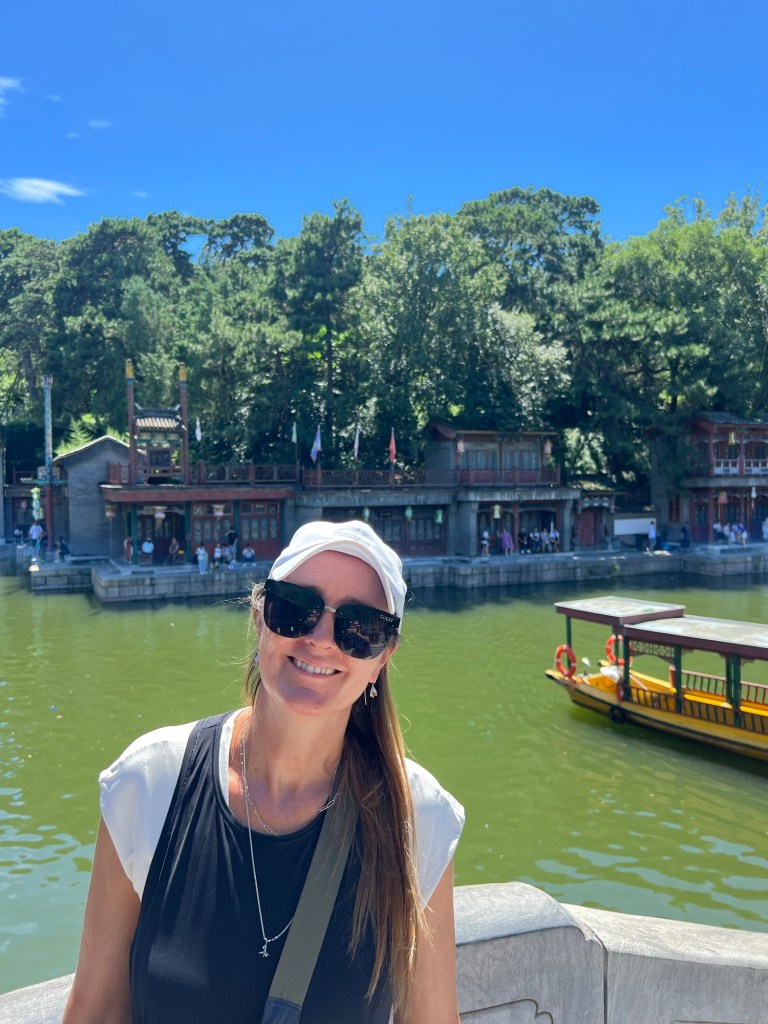
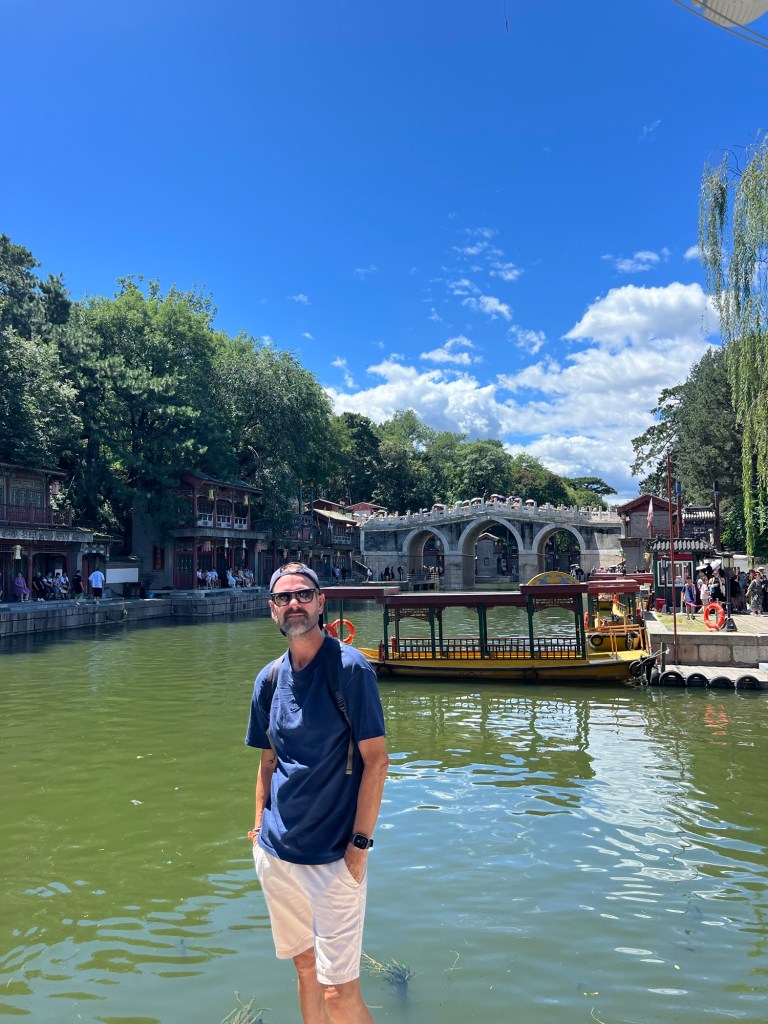
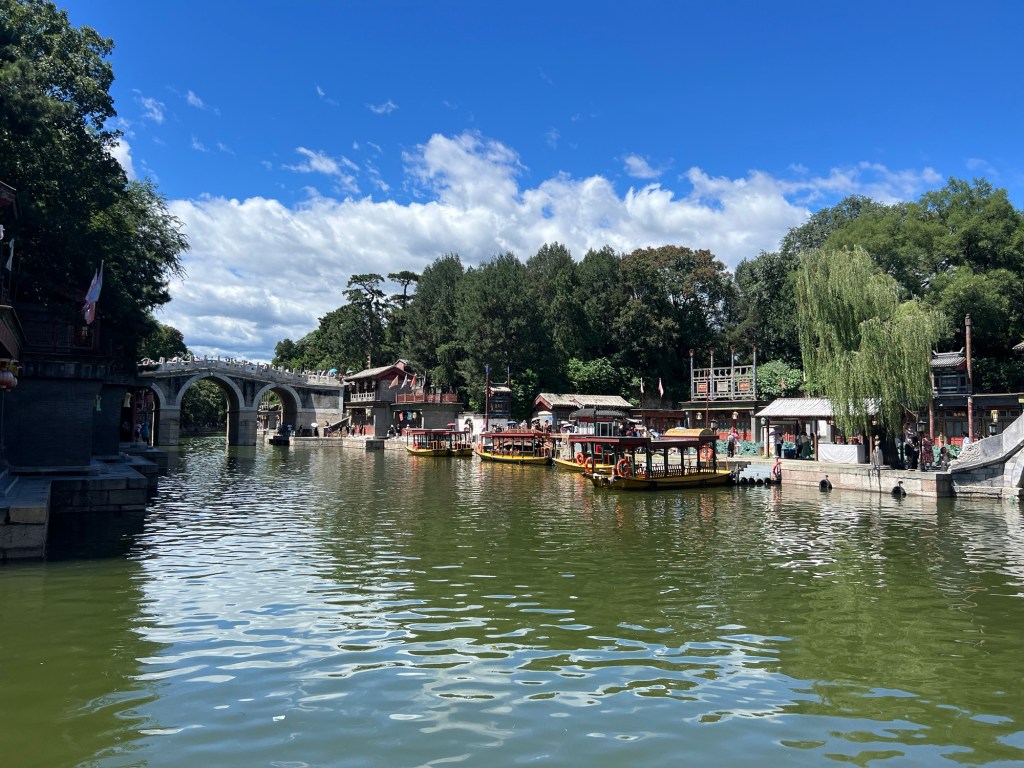
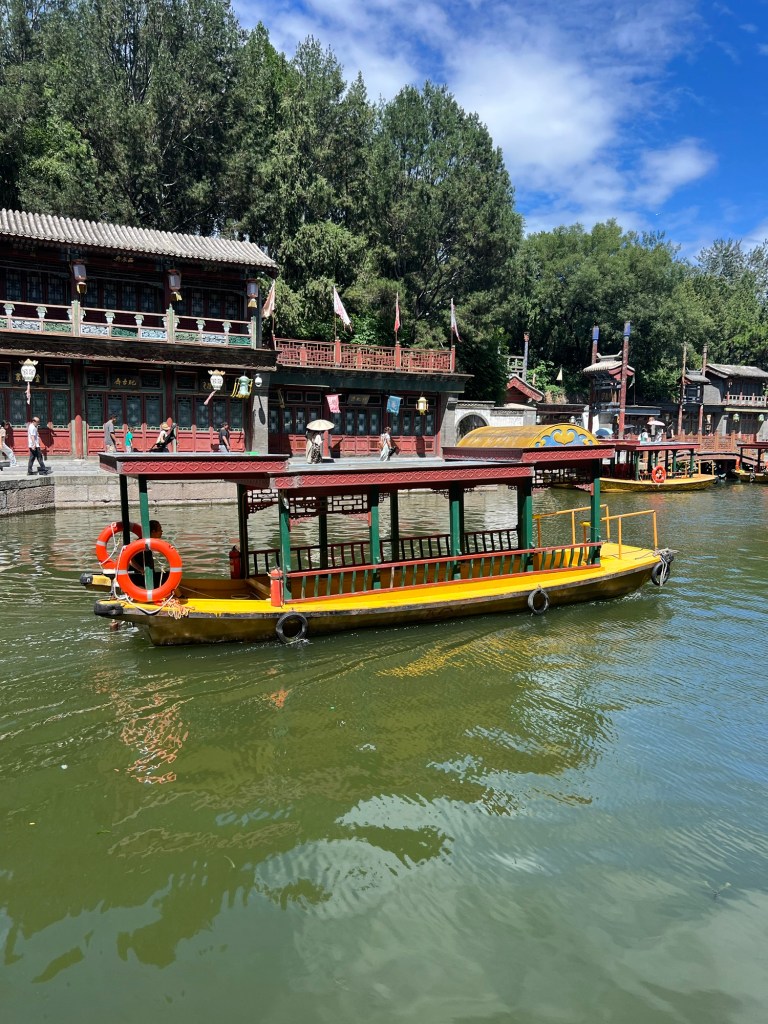
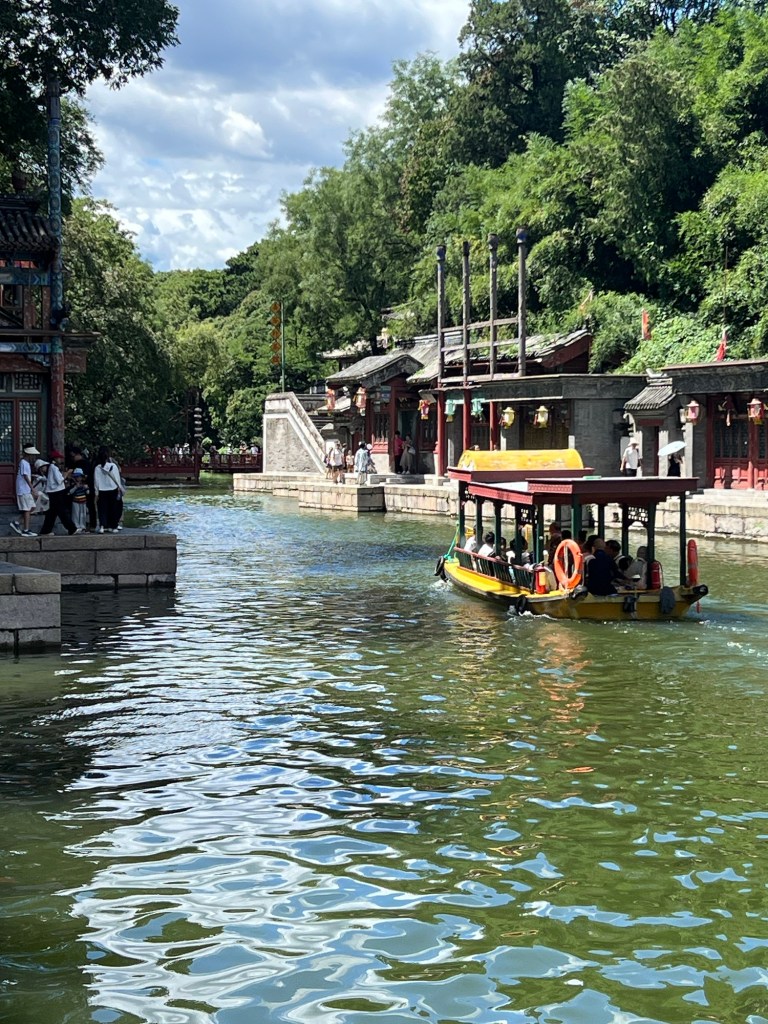
    At the East Gate entrance we came across Suzhou Street. In 1762, after returning from touring the Jiangnan region, the then Emperor ordered the construction of a shopping street resembling Shanta h St in Suzhou.  The street was destroyed by the British and French in 1860 and was restored in 1988 and sits along an internal canal. It’s a major tourist draw, although the path snaking along the canal was a ‘death trap’, and we were amazed no one fell in whilst we were there!

    Lotus field
    Anyone for a boat ride?!
    Shopping street views

    We then moved on to Longevity Hill is about 60 metres high and has many buildings positioned in sequence. The front hill is the site of splendid halls and pavilions, while the back hill, in sharp contrast, is quiet and focuses in on the natural beauty. 

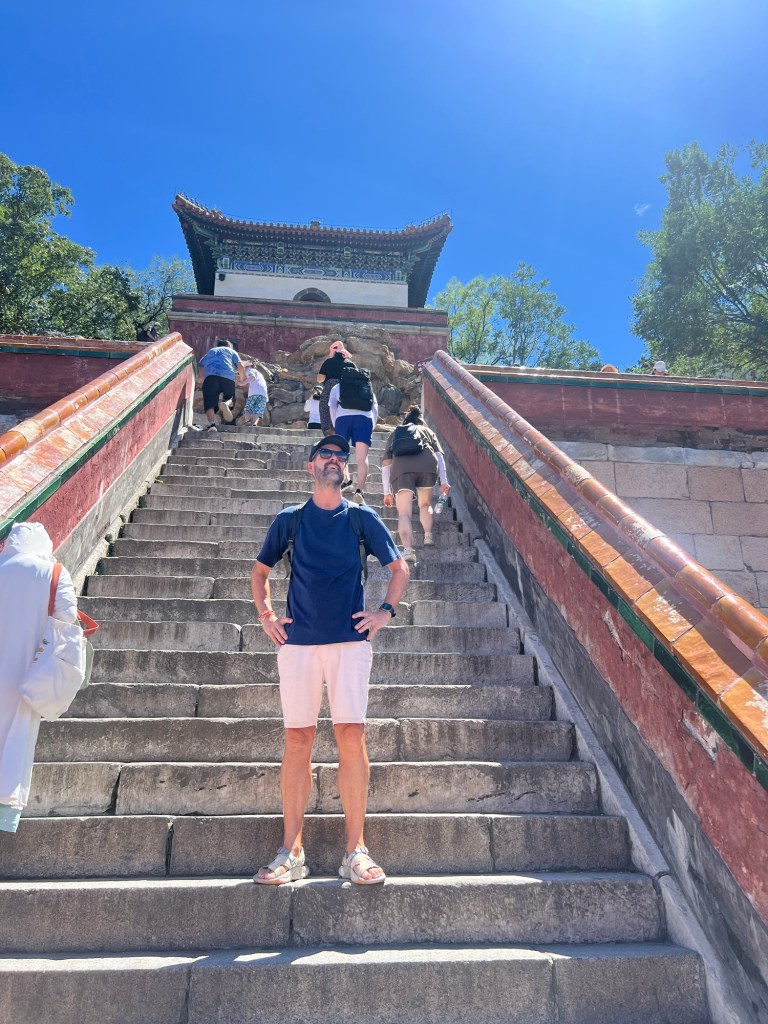
    Stepping our way up to the top
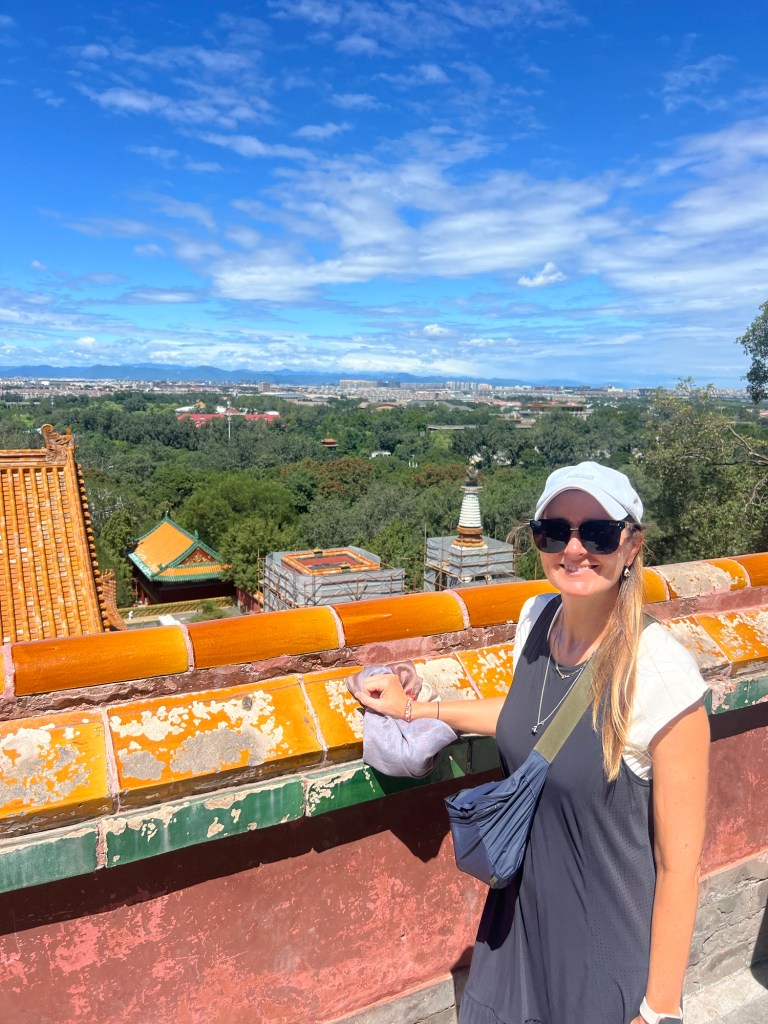
    Views across the city
    Locals in traditional dress

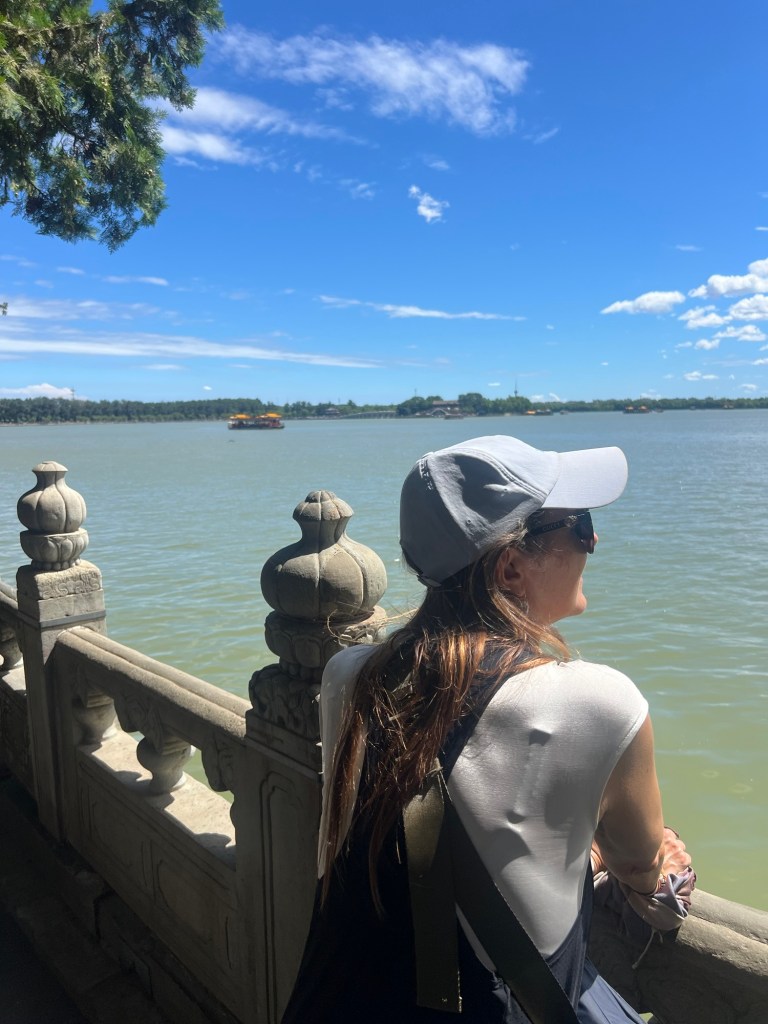
    The central Kunming Lake, covering 2.2 square kilometres and was entirely man-made and the excavated soil was used to build Longevity Hill.

    The Summer Palace, which is inspired by the gardens of South China, contains over 3,000 Chinese ancient buildings that house a collection of over 40,000 valuable historical relics from various dynasties.

    The Summer Palace is among the most-visited destinations in China, ranking in the top five, and attracts about 10 million tourists annually. In truth it felt like there was around 9 million there when we walked round, such were the crowds.

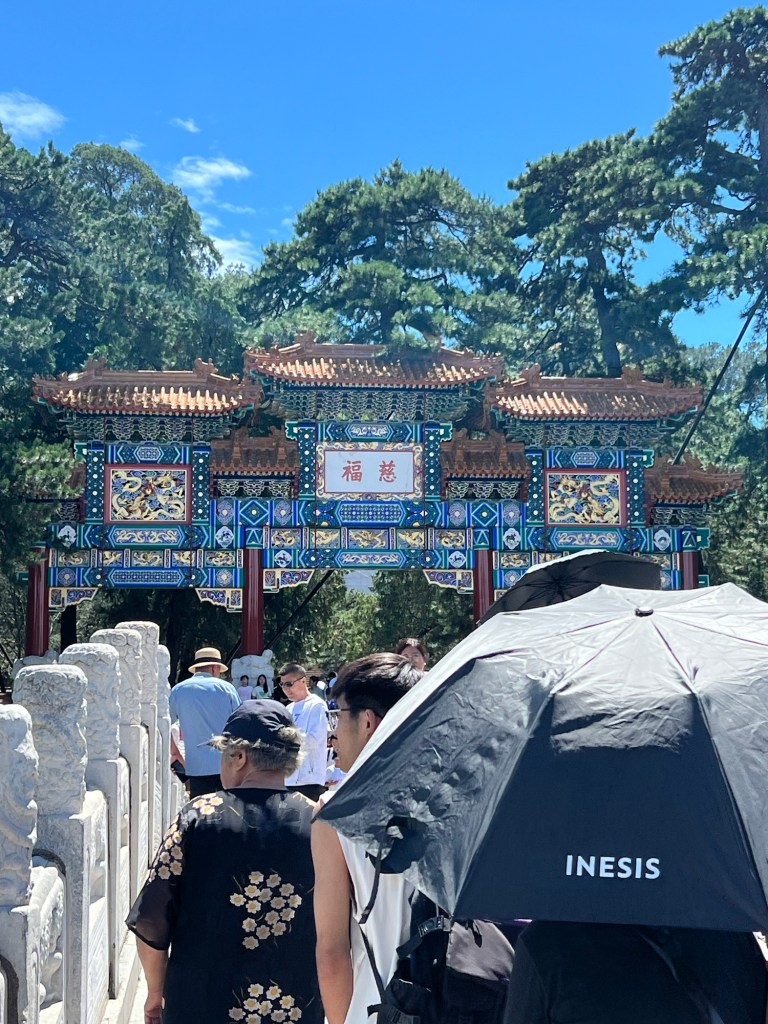
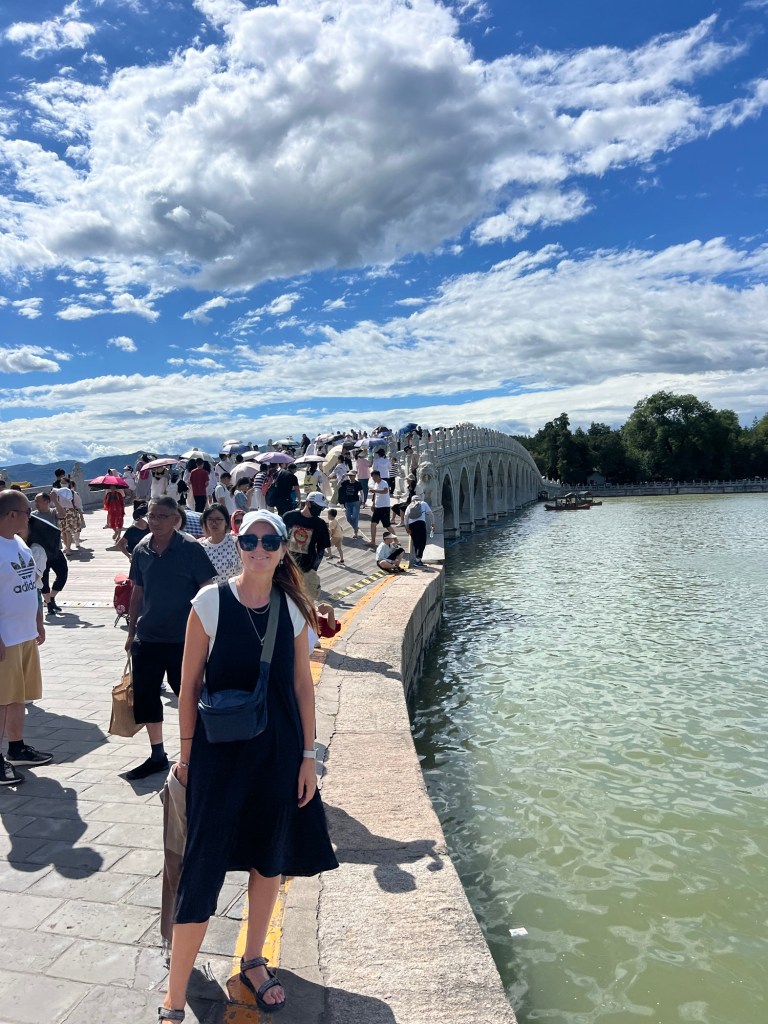
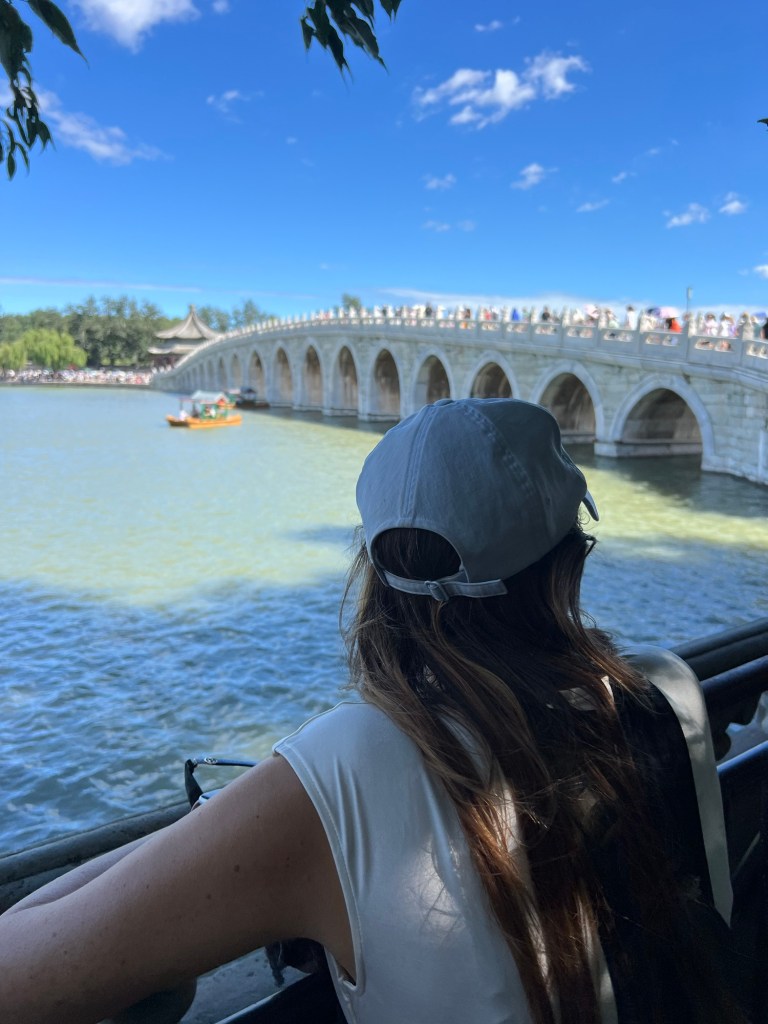
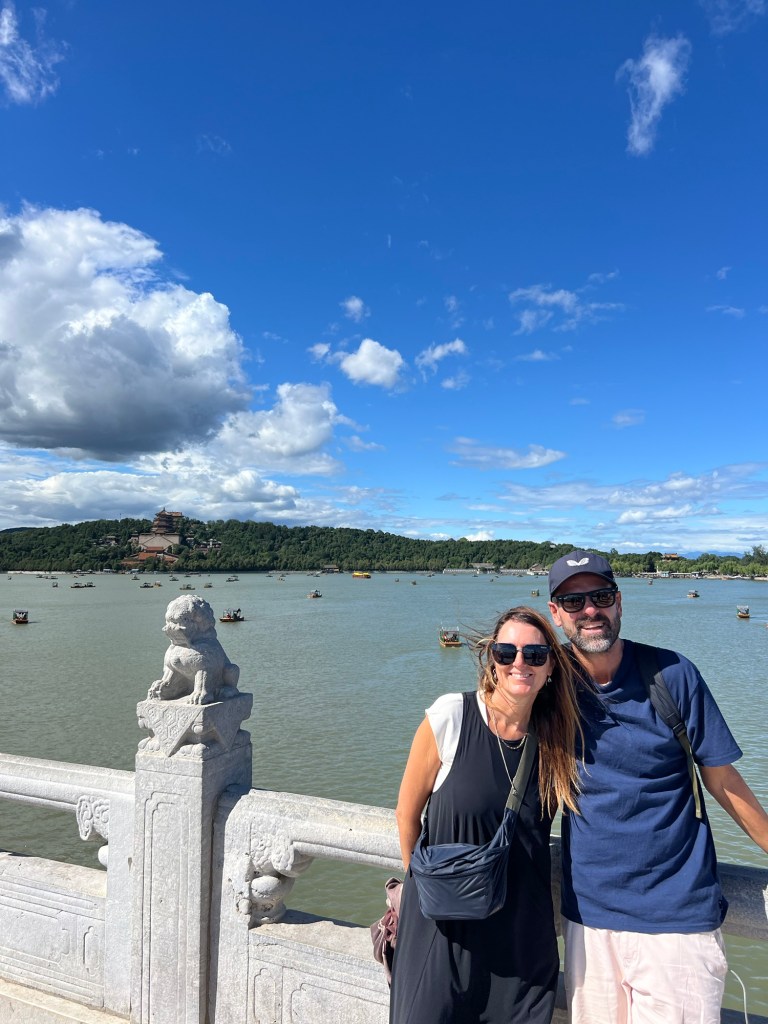
    We then took a walk across 17-Arch Bridge, which is so named as it has 17 different types of arches on it. The entire bridge is 150 metres long.

    Walking across to the island we visited Dragon King Temple, built to worship the dragon king and Hanxu Hall. Each are located on the north of Nanhu Island, directly facing the Tower of Buddhist Incense on the north bank.

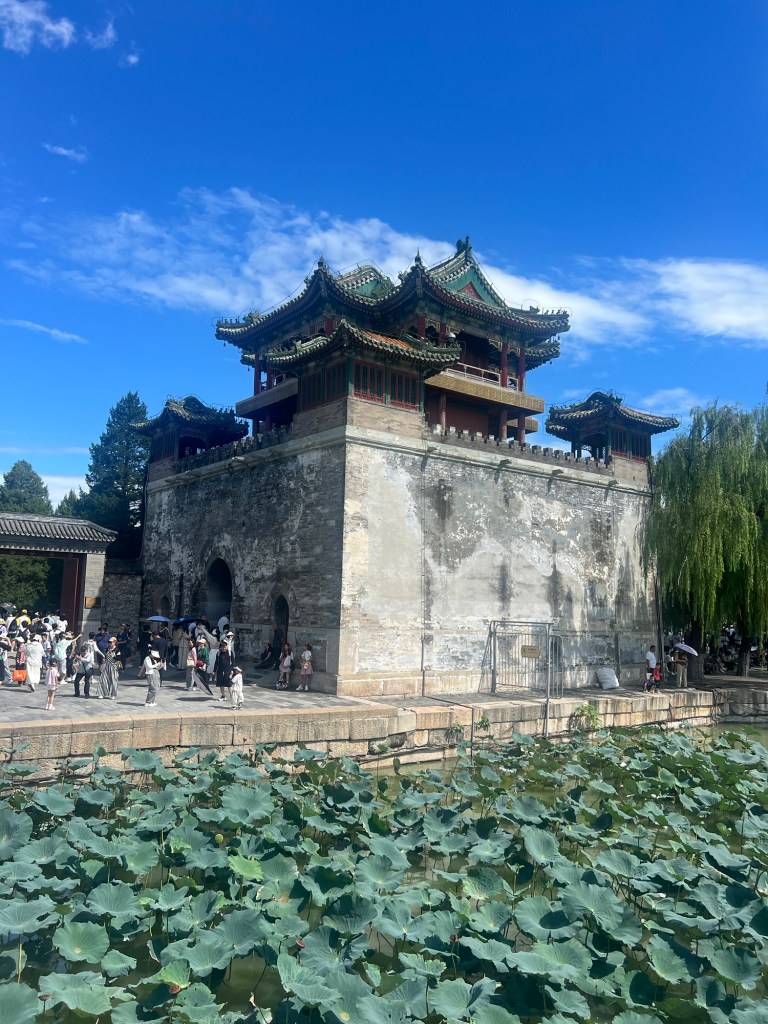
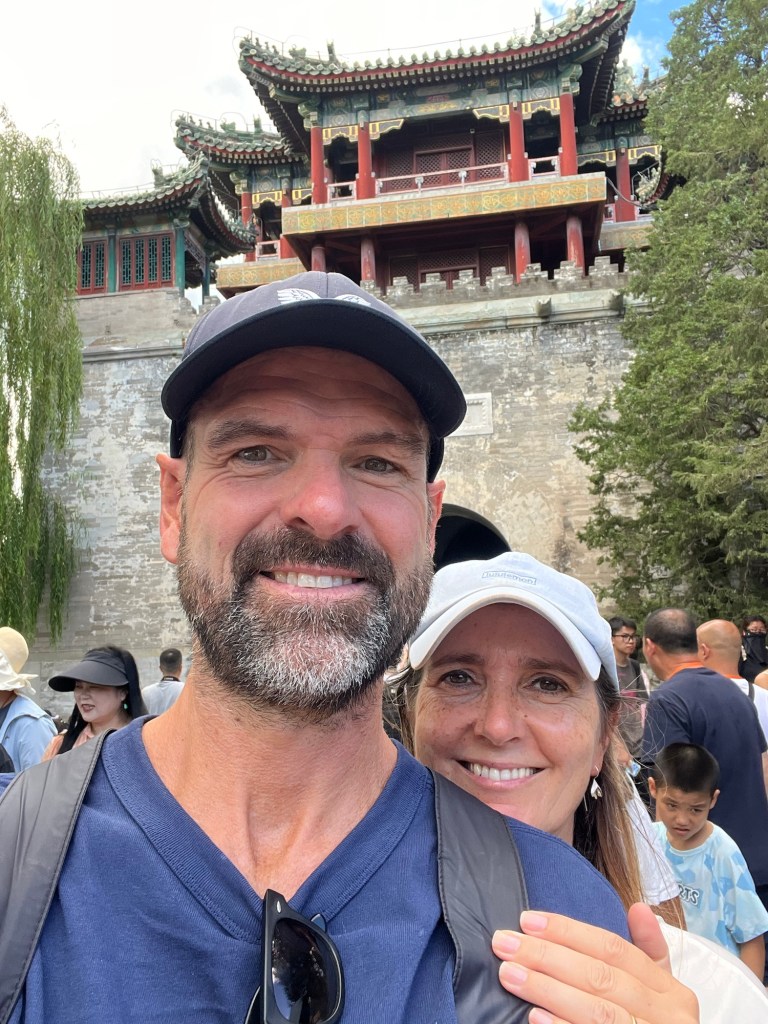
    We also found our way to the Garden of Harmonious Pleasures, the Flower Pavilion, Glass Tower and Wenchang Tower. All were equally impressive and beautiful, but incredibly busy with people everywhere!

    By 4pm we were starting to flag and started our way back to the subway for the 45min journey back into the city.

    We managed to take a few more photos of the key sights and temples before we were all done in and in need of a cultural rest.

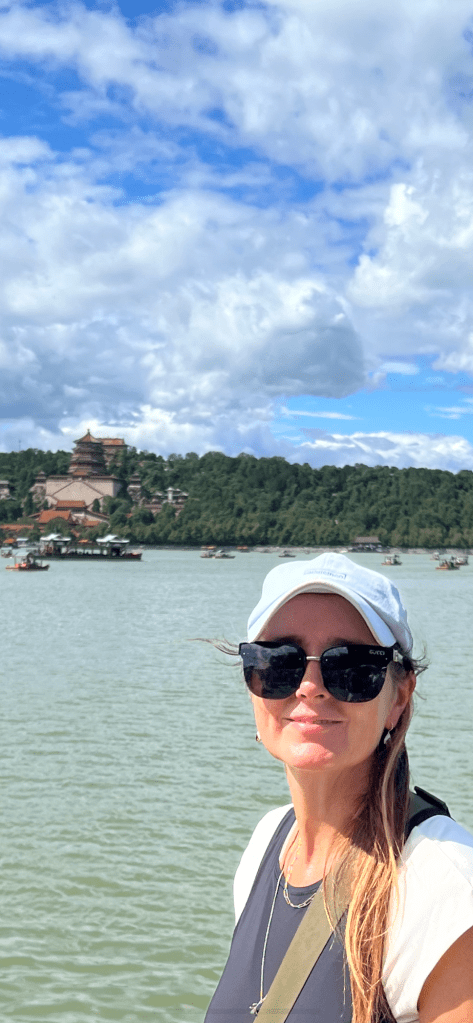
    Looking up to the Tower of Buddhist Incense
    More temples in the Summer Palace
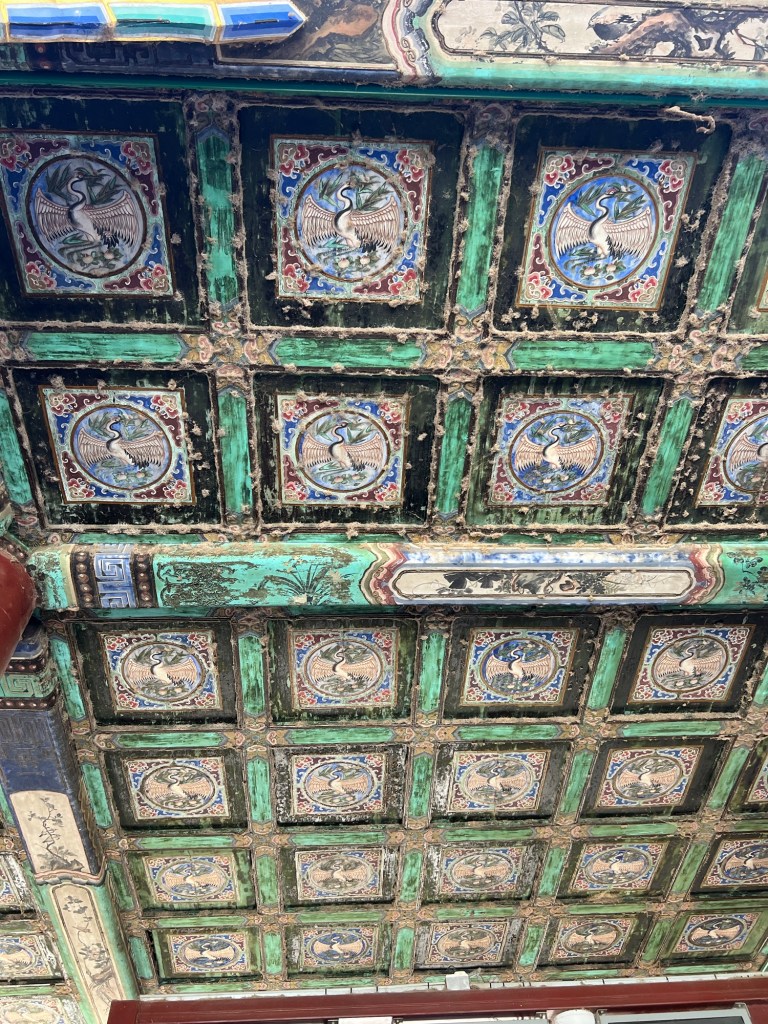
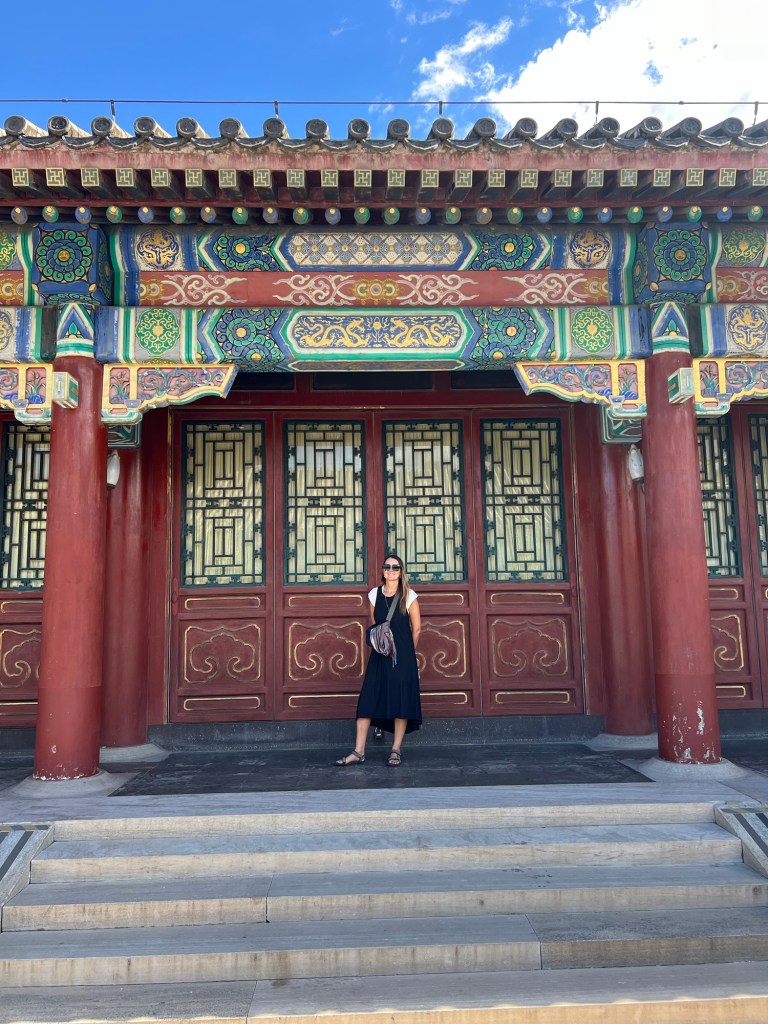
    The colours and detail of the various temple buildings is incredible

    Anyone for a ride to the tube?

    Back at the subway and after another long day on the tourist trail we decided to pass on our prior plans for a meal out at the night market in Wangfujing and instead opted for a Seven Eleven quick affair.

    Tomorrow we are off to the Temple of Heaven before meeting up with our new tour group for the start of the 19 day Intrepid Tour down to Hong Kong.

  • Overseas tour Day 285 – Forbidden City & Temple of Confucius tours

    Aug 12th, 2024

    Early start for our first full day in Beijing with a 7.45am tour meet up at the Eastgate of the Forbidden City. It’s a real honour to visit this very sacred of places with the daily ticket number of 30,000 often selling out in the first 15mins of opening. Fortunately our Get My Guide tickets were purchased online a couple of weeks ago to avoid disappointment.

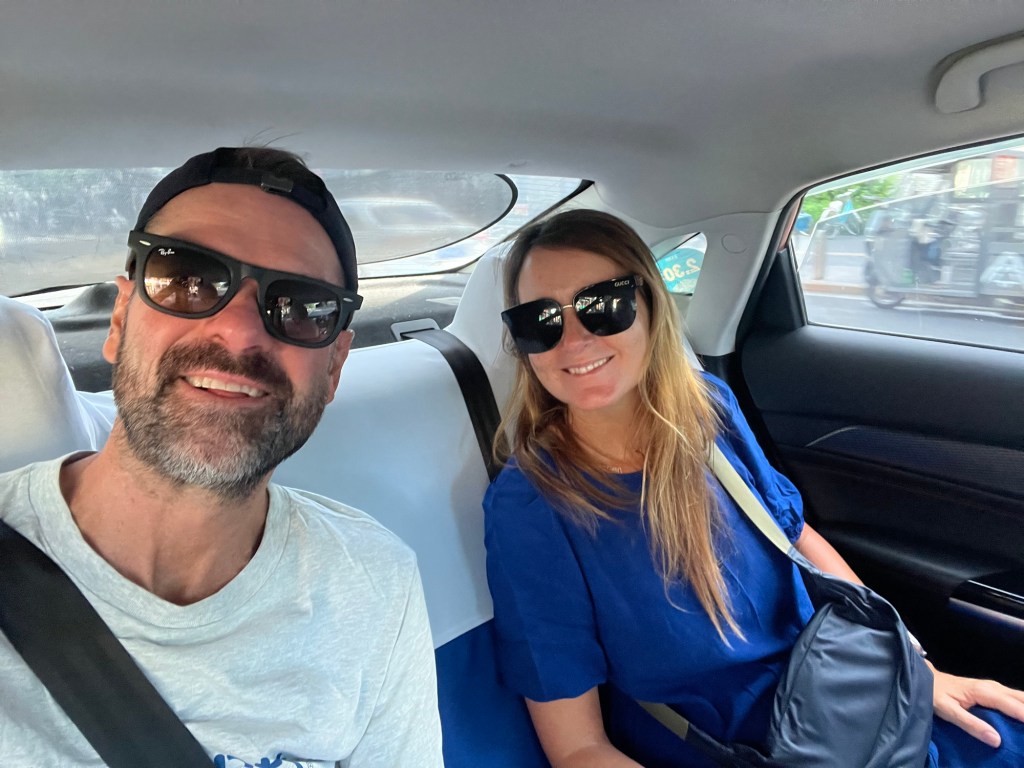
    Having woken early we decided to take a cab to the meeting point and we were pleasantly surprised by how quiet the roads were (admittedly it’s a Sunday) and how quiet & respective people are on the road and on the street. Our taxi was an electric vehicle, as are most modern cars in Beijing and within 15mins we were being dropped off close to the East Gate entrance.

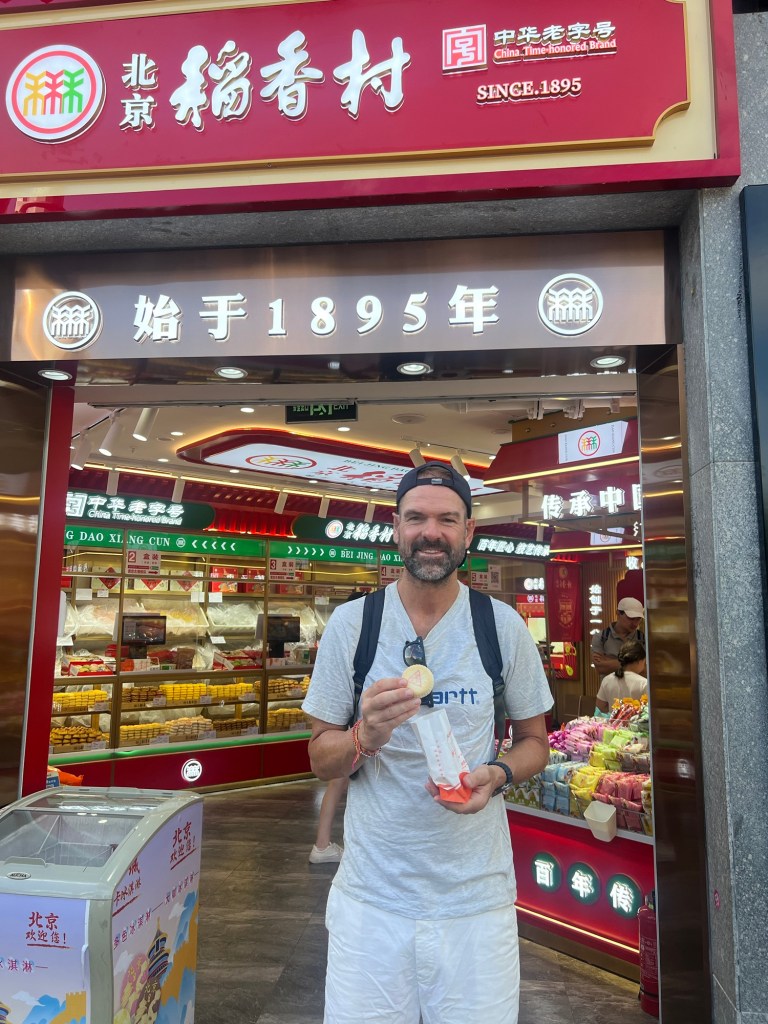
    Due to the early hour we had skipped breakfast, so went to a local bakery and purchased a couple of sweets biscuit treats. Thankfully they tasted like shortbread and were consumed without too much hesitation.

    The Forbidden City/Imperial Palace is the ancient centre of the Imperial City and was the residence of 24 Ming and Qing dynasty emperors. It was the political power base in China for over 500 years from 1420 to 1924, up to the revolution. The palace is now administered as a palace museum and as an UNESCO world heritage site, is now one of the most popular tourist attractions in the world. It was definitely on our Bucket List to visit!

    It’s hard to put into words the scale and vast nature of the place, however not surprisingly it’s the largest preserved royal palace complex still standing in the world.

    The complex claims to consist of 9,999 and 1/2 rooms and covers 72 ha: The palace exemplifies the opulence of the residences of the Chinese emperor and has influenced cultural and architectural developments in East Asia.

    The Forbidden City’s market value was estimated at US$70 billion, making it both the world’s most valuable palace and the most valuable piece of real estate anywhere in the world!

    It is also one of the largest and most well-preserved wooden structures in the world.

    The design of the Forbidden City, from its overall layout to the smallest detail, was meticulously planned to reflect philosophical & religious principles, to symbolize the majesty of Imperial power….

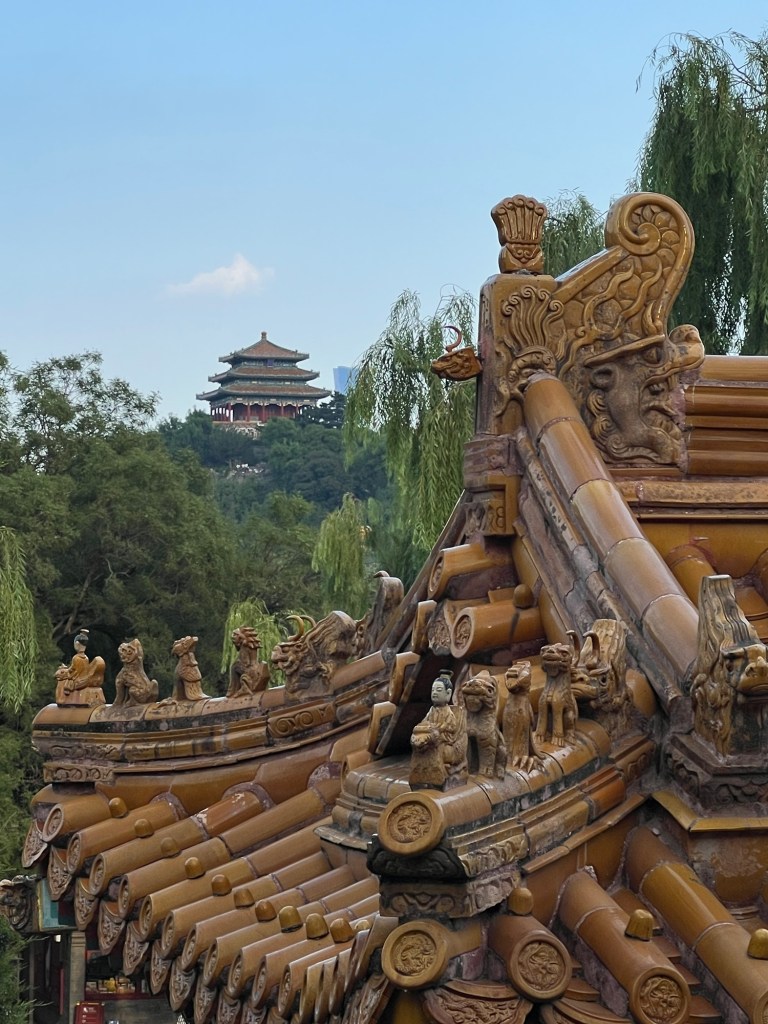
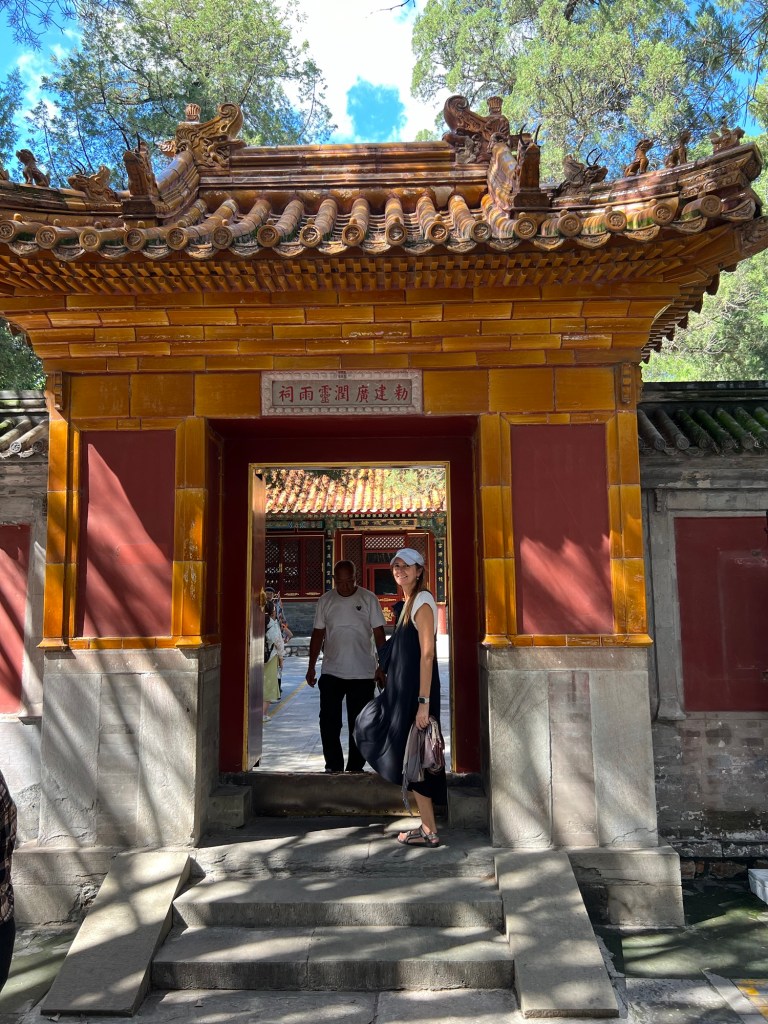
    Yellow is the color of the Emperor. Thus almost all roofs in the Forbidden City bear yellow glazed tiles.

    The main halls of the Outer and Inner courts are all arranged in groups of three – the shape of the Qian trigram representing heaven.

    The residences of the Inner Court on the other hand are arranged in clusters of six – the shape of the Kun trigram, representing the Earth.

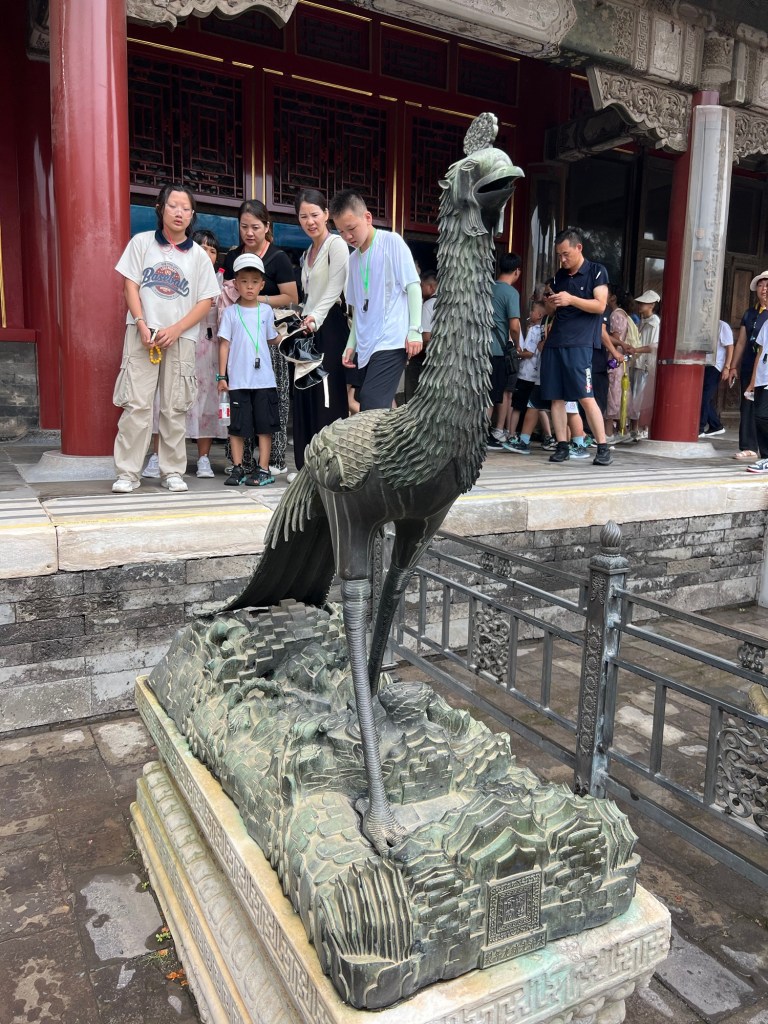
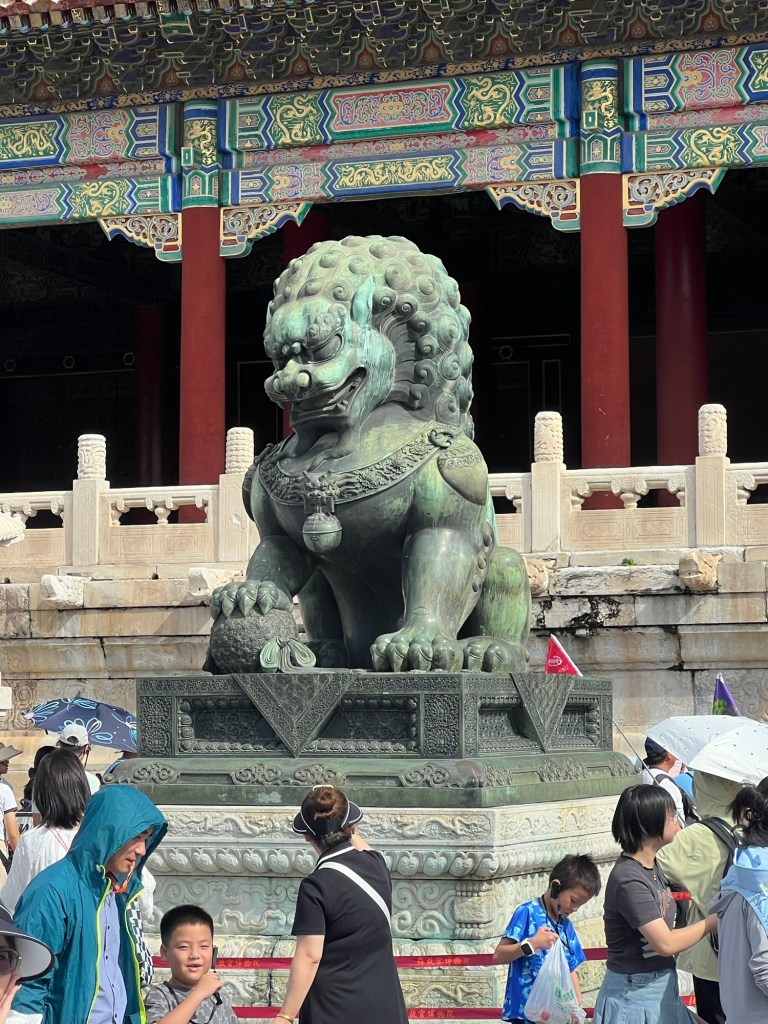
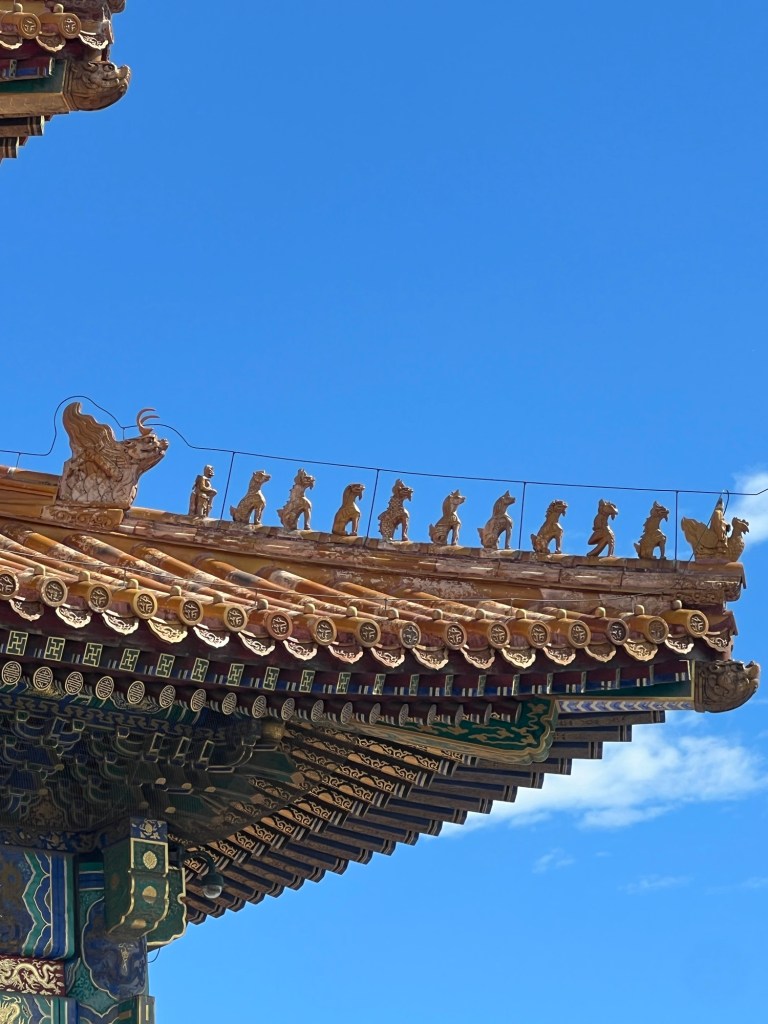
    The sloping ridges of building roofs are decorated with a line of statuettes led by a man riding a phoenix and followed by an imperial dragon. The number of statuettes represents the status of the building – a minor building might have three or five. The Hall of Supreme Harmony has ten, the only building in the country to be bestowed this number in Imperial Times.

    The Forbidden City is a rectangle, measuring 961 m from north to south and 753 m from east to west.

    It’s fair to say it’s on an unprecedented scale and makes walking around it a 3-4hr affair.

    The courtyard was built on a massive, luxurious scale but it has the appearance of an ordinary quadrangle courtyard.

    The Forbidden City was designed to be the centre of the ancient, walled city of Beijing. It is enclosed in a larger, walled area effectively creating the Imperial City.

    The Hall of Supreme Harmony is the largest, and rises some 30 m above the level of the surrounding square. It is the ceremonial centre of imperial power, and the largest surviving wooden structure in China. It is nine bays wide and five bays deep, the numbers 9 and 5 being symbolically connected to the majesty of the emperor.

    The northern ramp, behind the Hall of Preserving Harmony, is carved from a single piece of stone 16.57 m long, 3.07 m wide, and 1.7 m thick. It weighs some 200 tons and is the largest such carving in China!

    The complex comprises twelve palaces and was the place where many of the Qing emperors were born and grew up, and they formed the daily life of the imperial family.

    Religion was an important part of life for the imperial court. In the Qing dynasty, the Palace of Earthly Harmony became a place of Manchu Shamanist ceremony.

    We could go on and on about the many things we observed and of which our Chinese guide was able to explain and provide an insight into the extraordinary life of the emperors that lived in the palaces over the centuries.

    It’s fair to say we don’t remember everything but were blown away by the scale and splendour of what has been preserved and continues to be maintained by the Chinese government at a tremendous cost running into the hundreds of millions of yen each year.

    The number of buildings that you could visit was north of a hundred and we were starting to go a little ‘snow blind’ when looking at each temple.

    Instead we picked out a few that caught our eye and then enjoyed meeting and speaking to the other people on our tour, who emanated from Mexico, Italy, Spain and England.

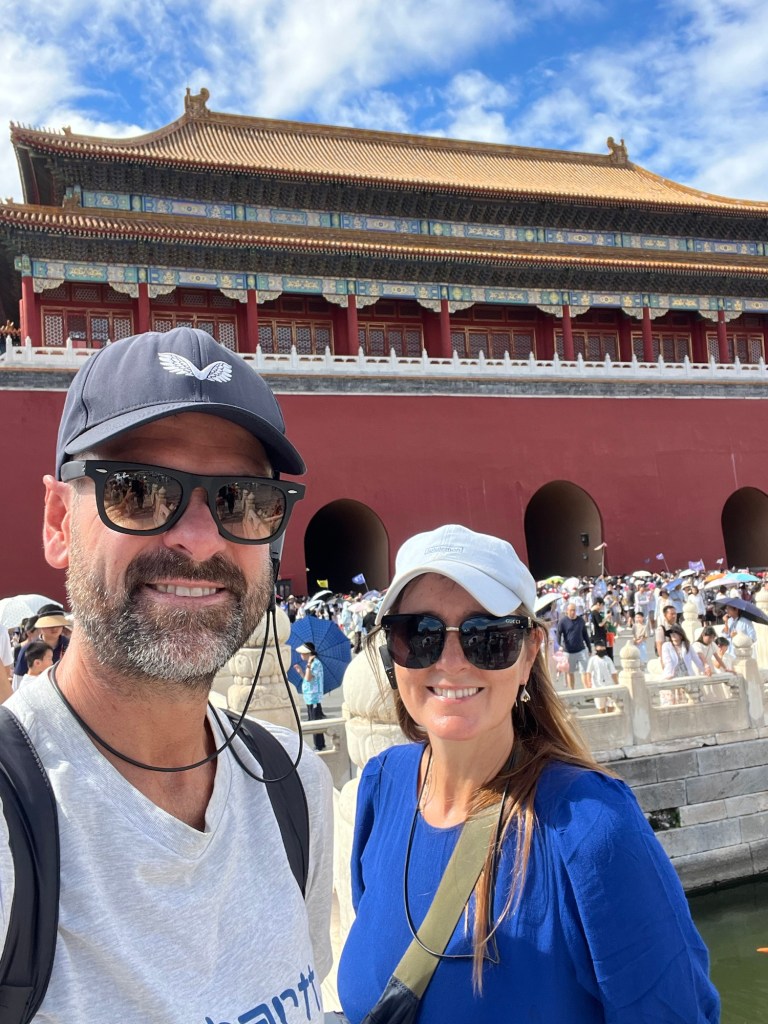
    Another couple shot
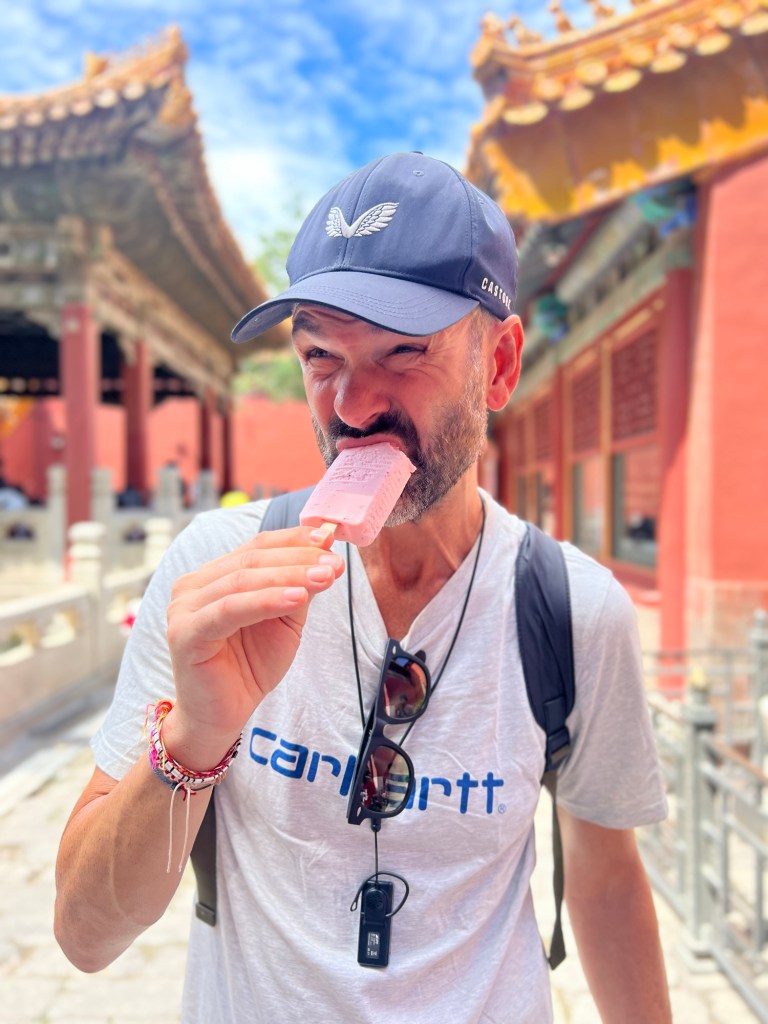
    In need of a cooling ice cream
    The tour group of nations
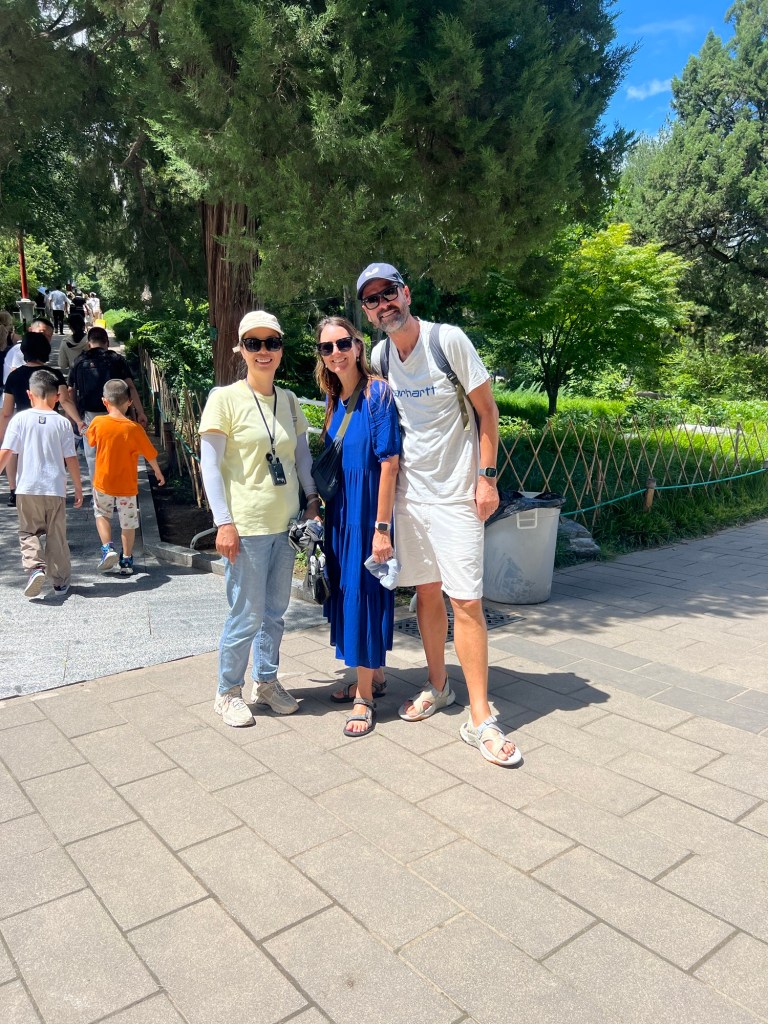
    With our tour guide Claire

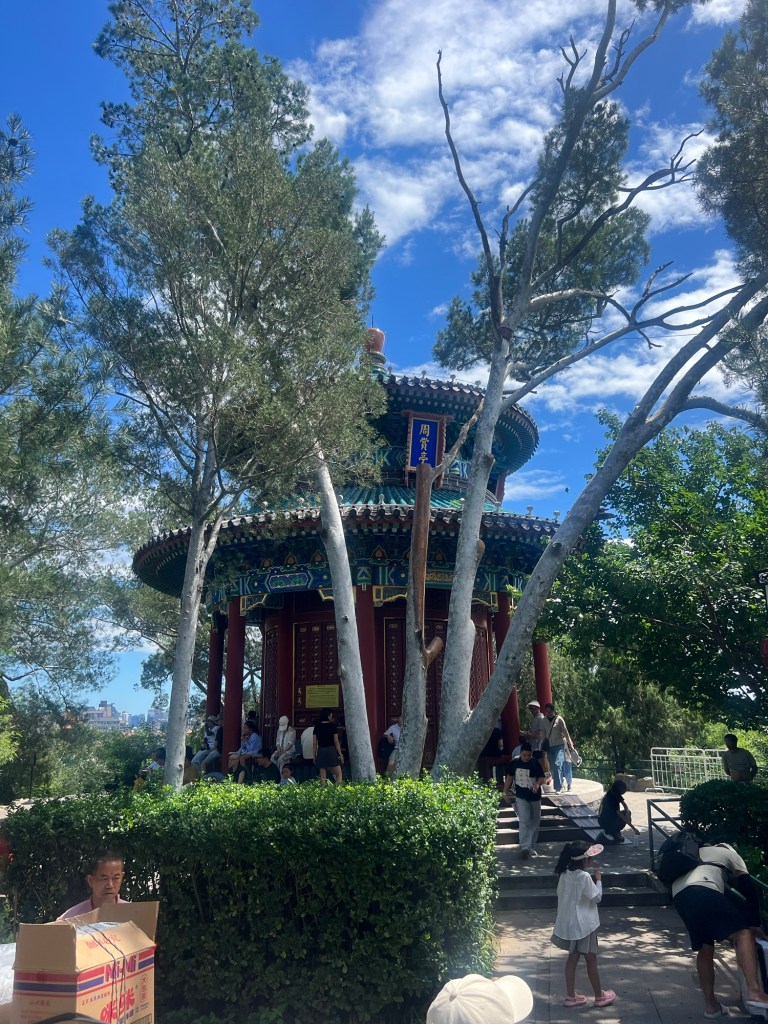
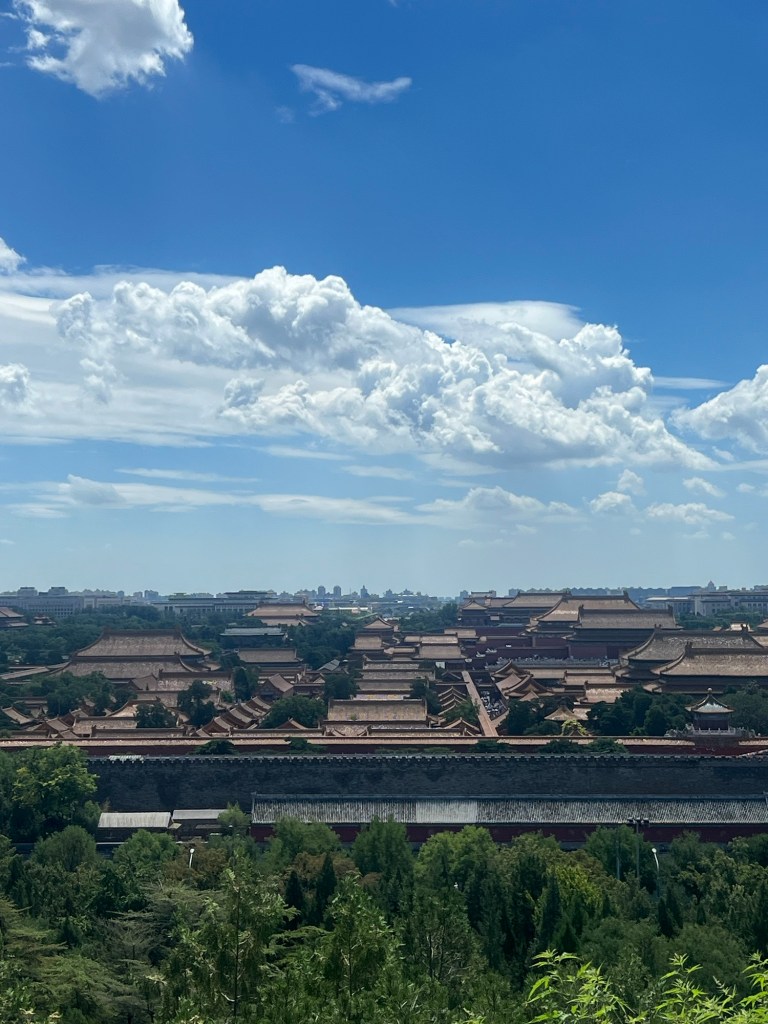
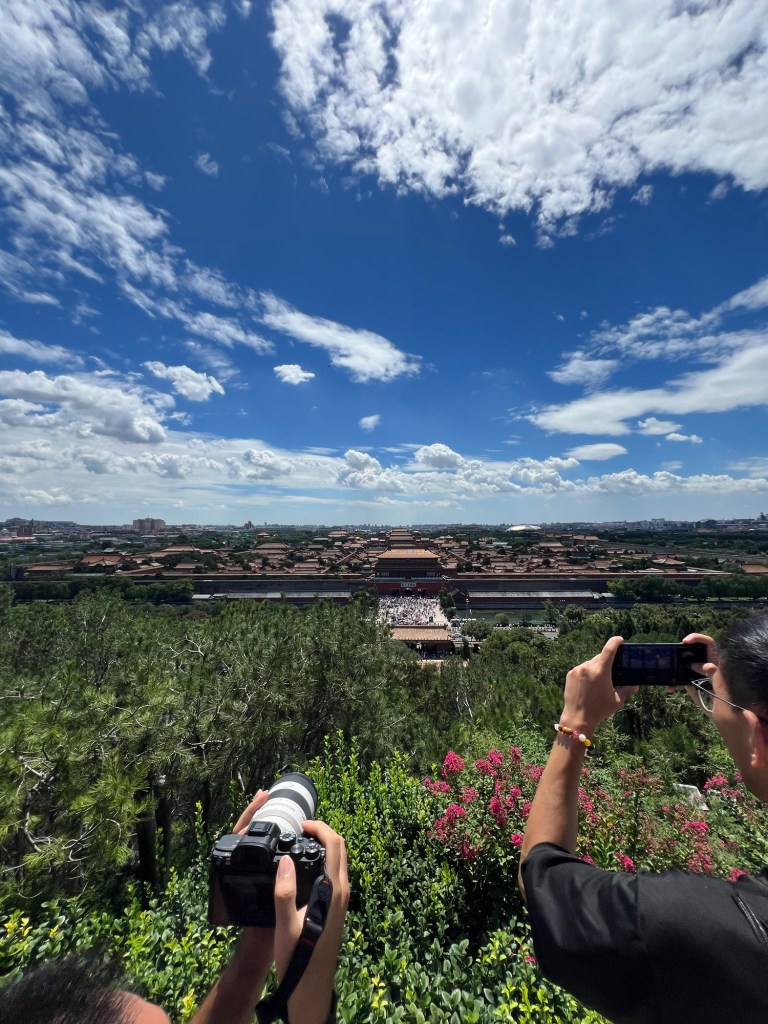
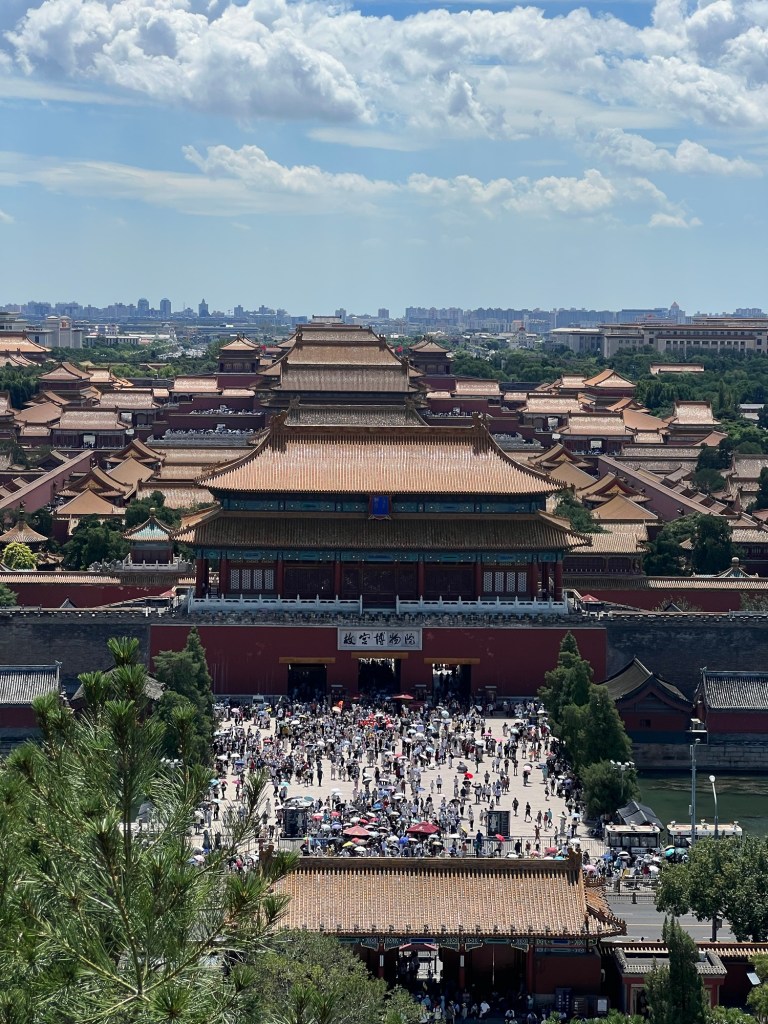
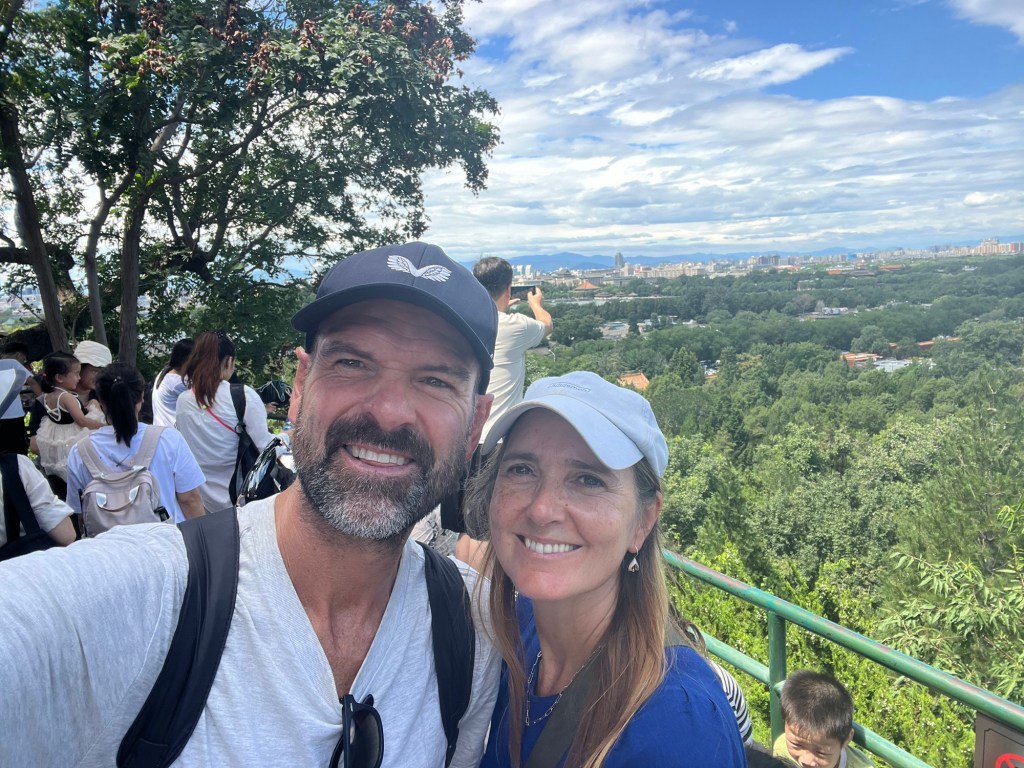
    After calling time on the 4hr tour of the Forbidden City, we then walked up the hill in Jingshan Park, a former imperial park covering 23 hectares. The focal point is the artificial hill, formerly private grounds of the Forbidden City, but which was opened to the public in 1928. The views from the hill are spectacular and look down and across the palace and the rest of the city.

    Breathtaking views across Beijing
    The White Pagoda – one of the largest in China

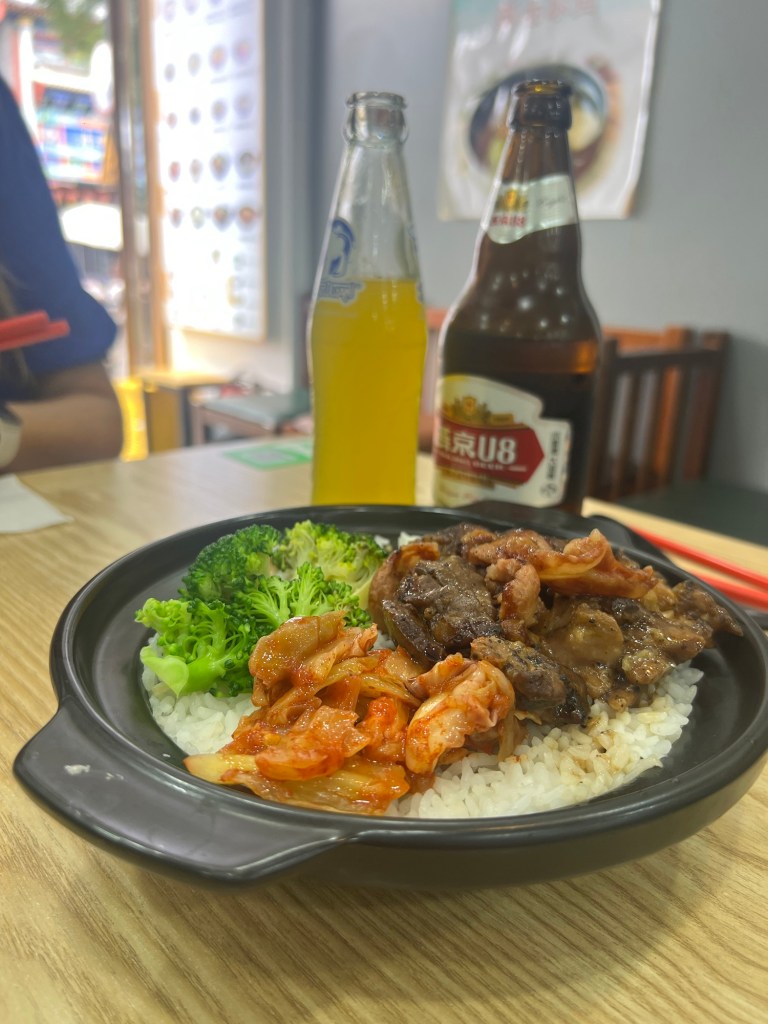
    After all that walking, we had worked up an appetite and before visiting the Temple of Confucius we visited a local restaurant for lunch and Andy got stuck in to chicken and sausage with rice and veg, a local delicacy. The local beer played its part and helped to wash it down and we were back on the tourist road within 30mins.

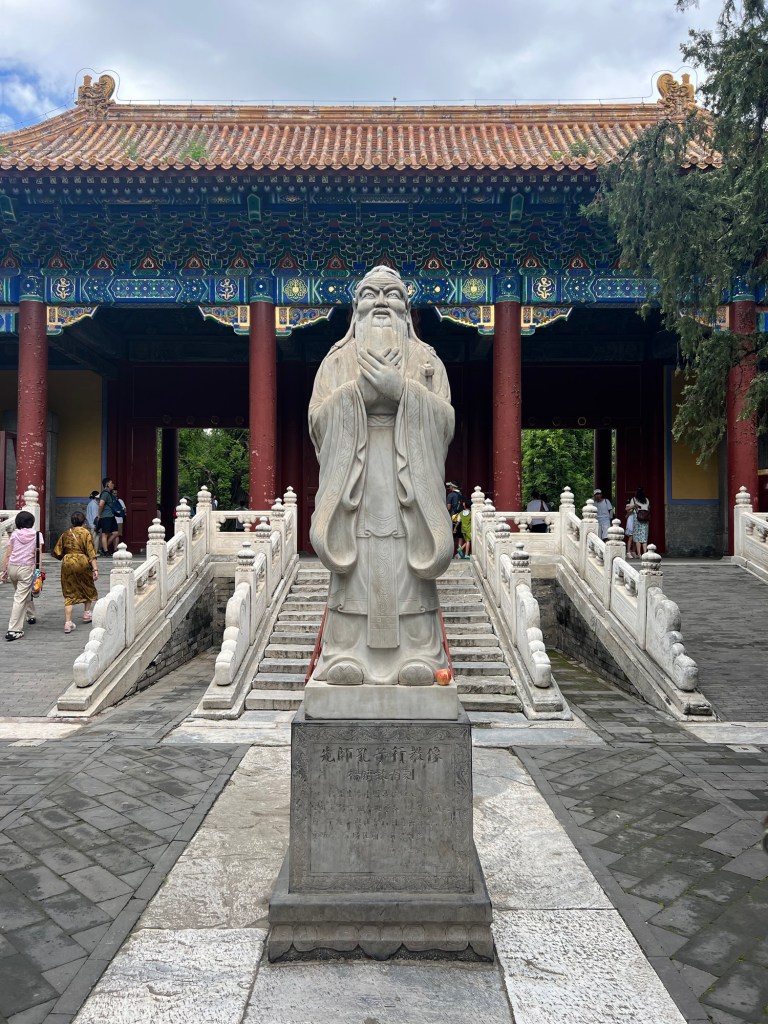
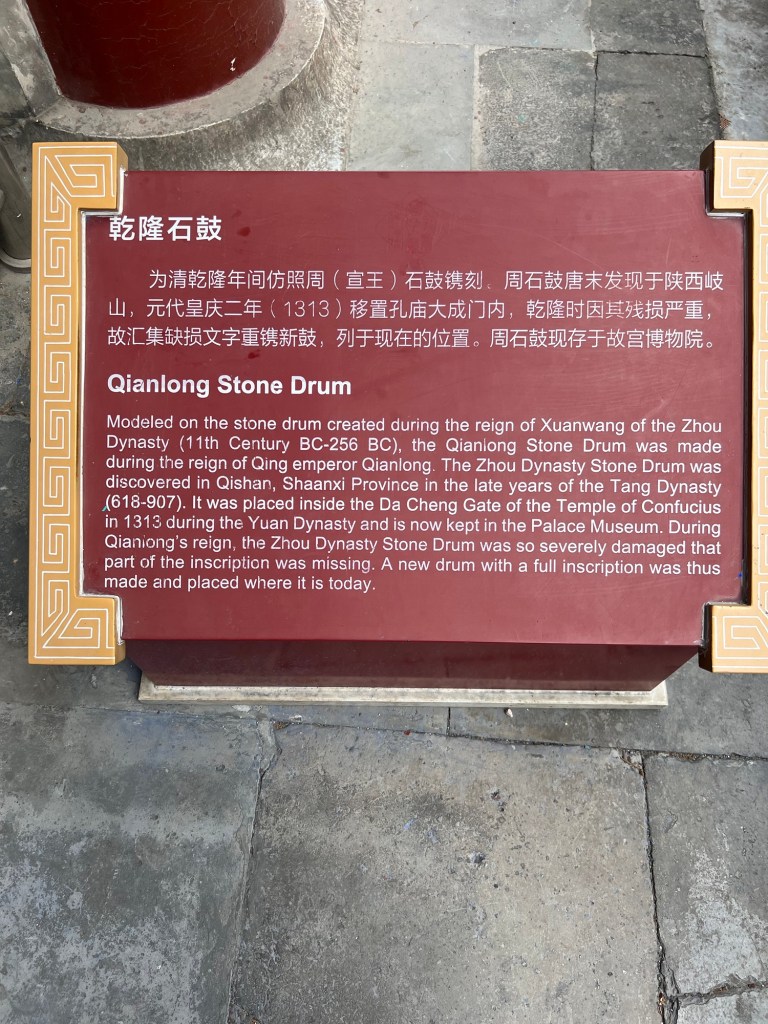
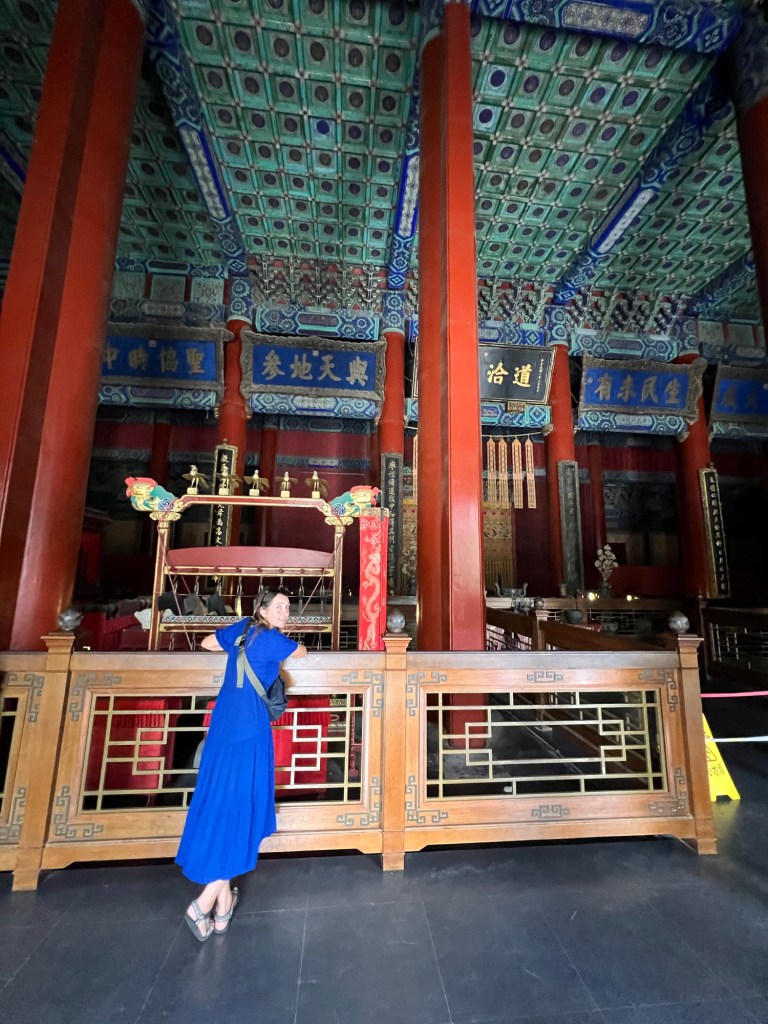
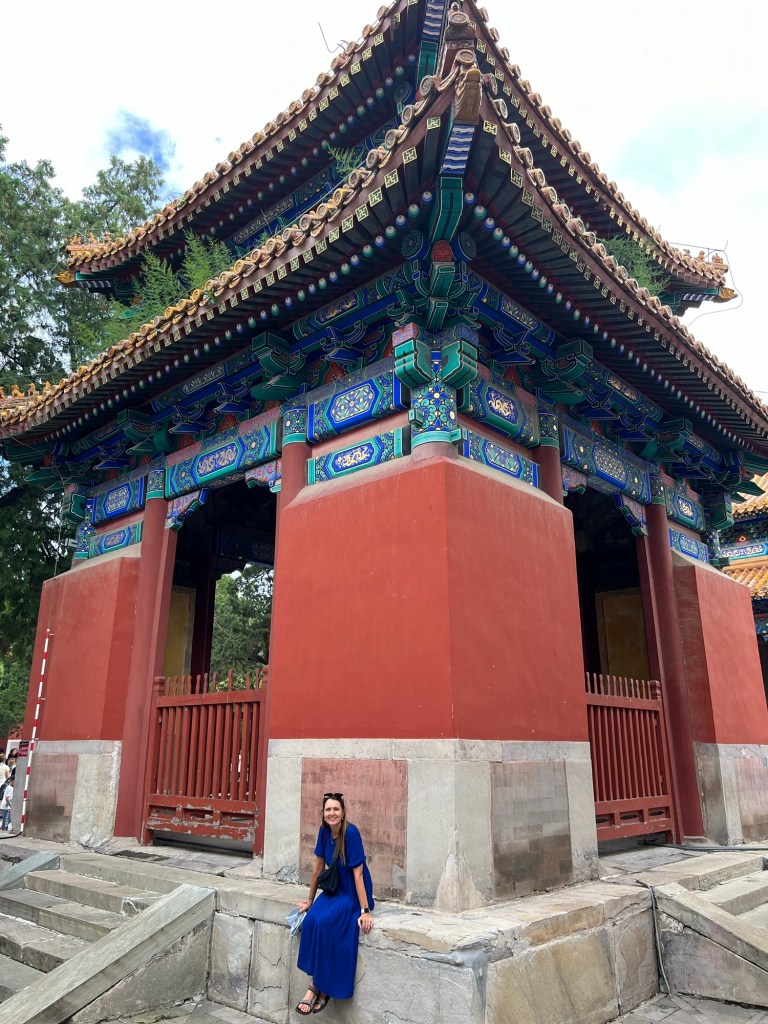
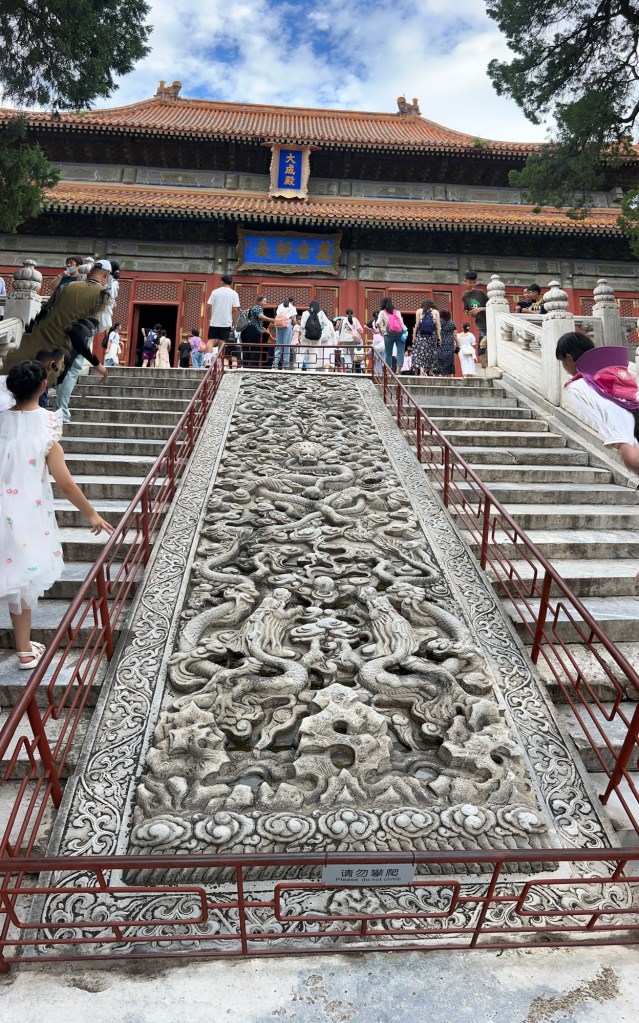
    The temple of Confucius in Beijing is one of the largest in China and proved equally spellbinding due to the scale and range of artefacts on display.

    The retention of the religious items and the quality of their condition was truly remarkable.

    The colour blue

    Again we were forced to concentrate on those buildings and artefacts that caught our eye and we were unable to see everything as we would otherwise still be there now!

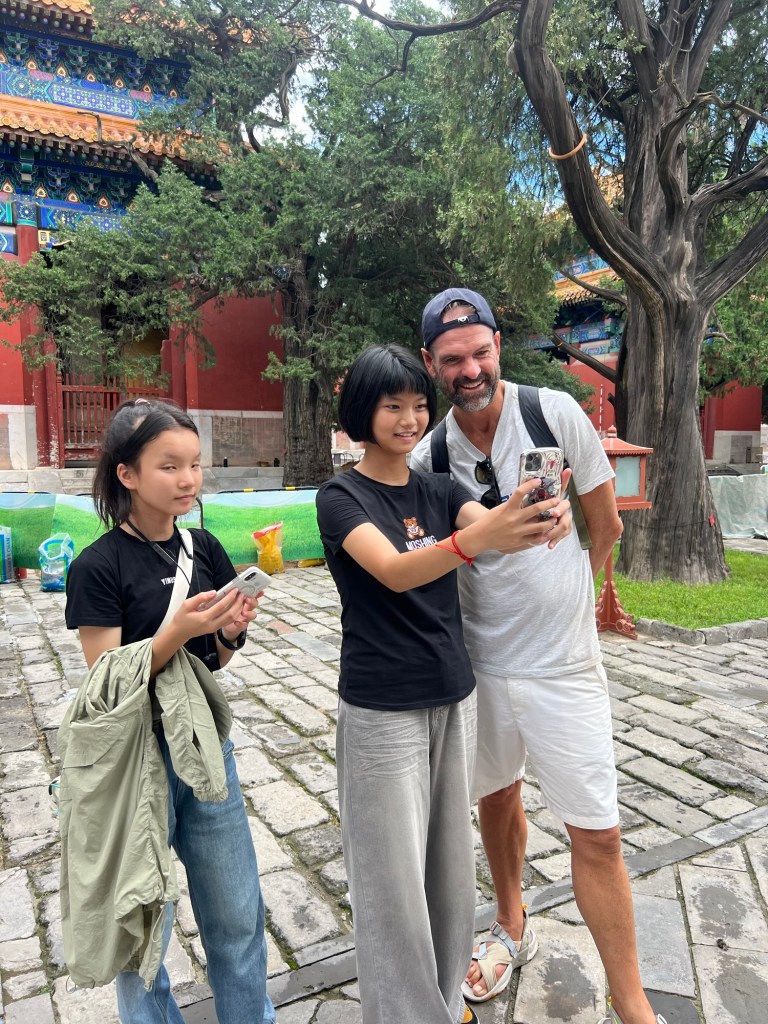
    One odd, but pleasant experience since we arrived has been the number of children who want their photo with European people. Today alone we must have had upwards of a dozen photos with random people!

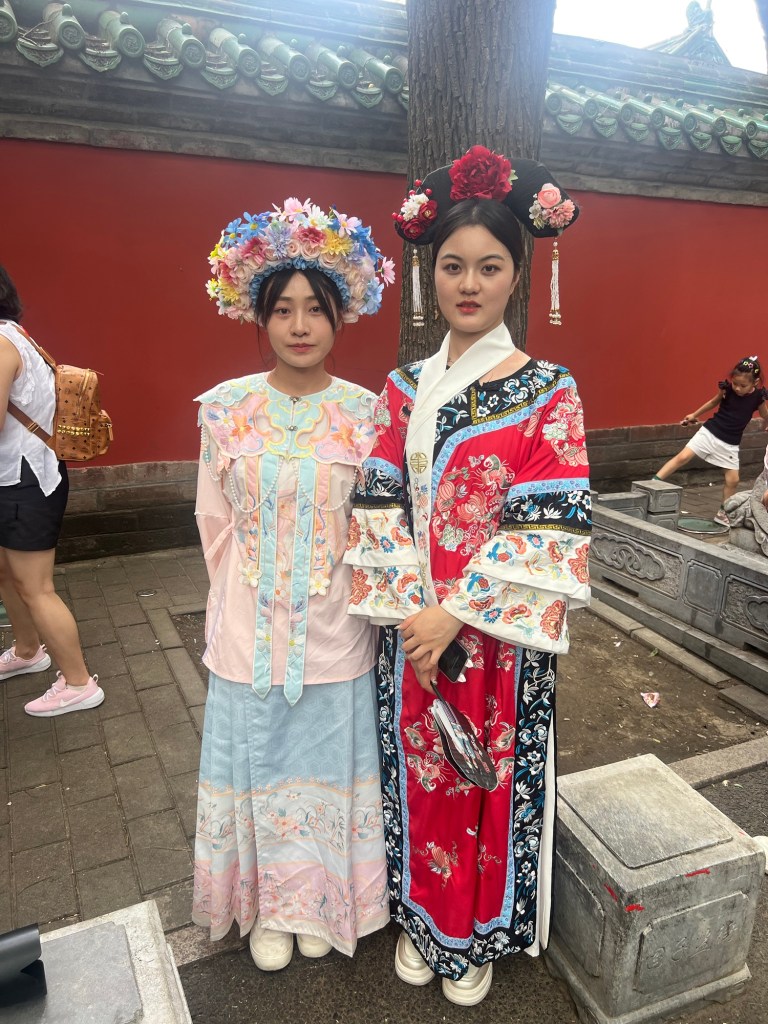
    Two locals in historical dress
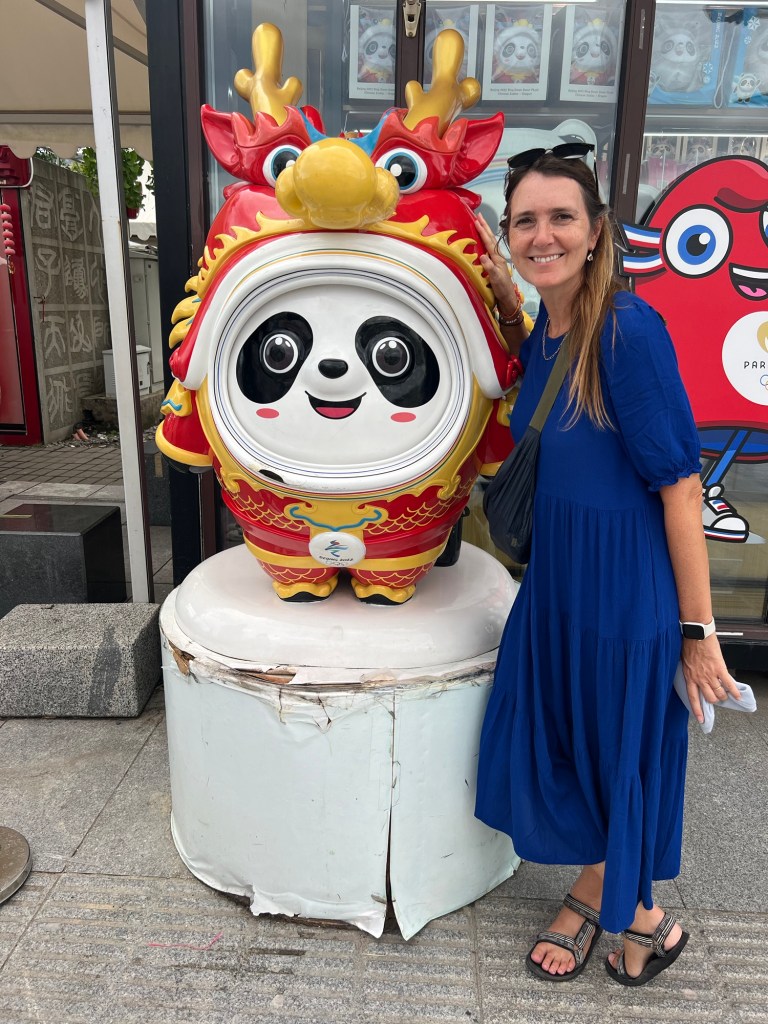
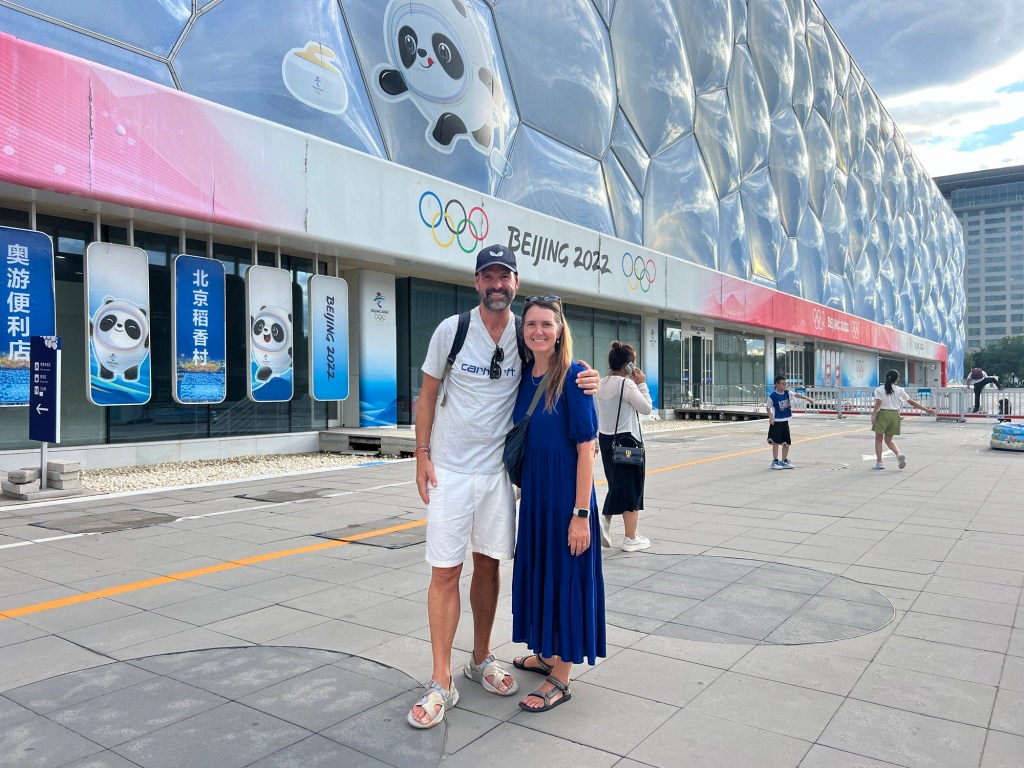
    One foreigner with her Olympic friend

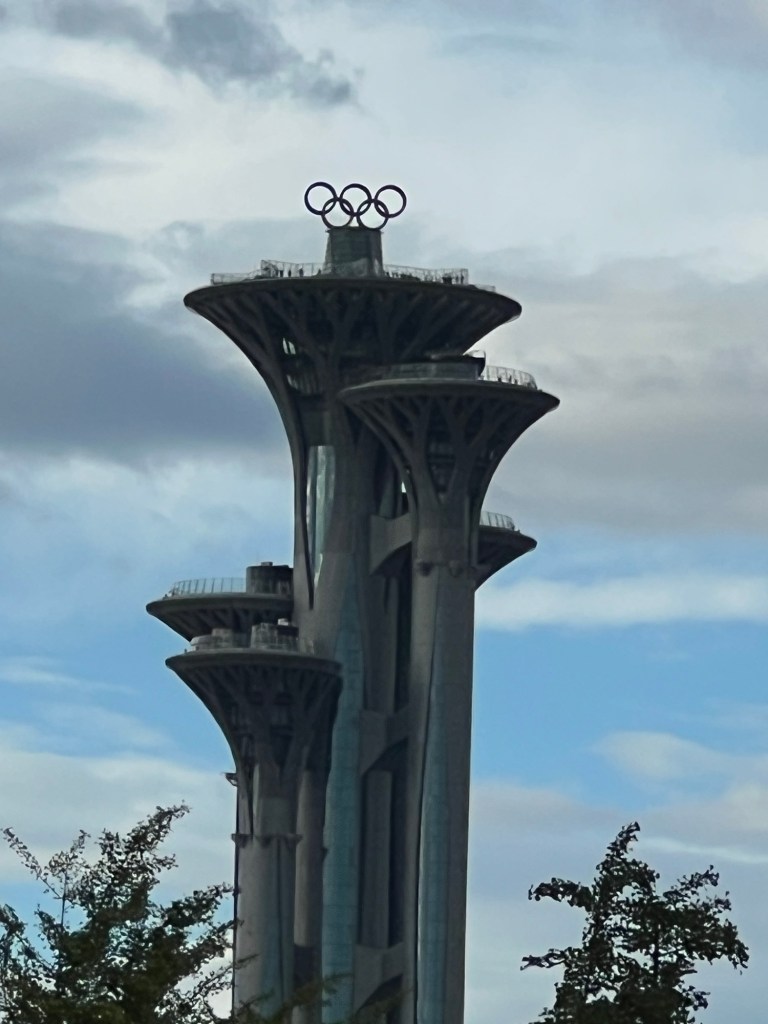
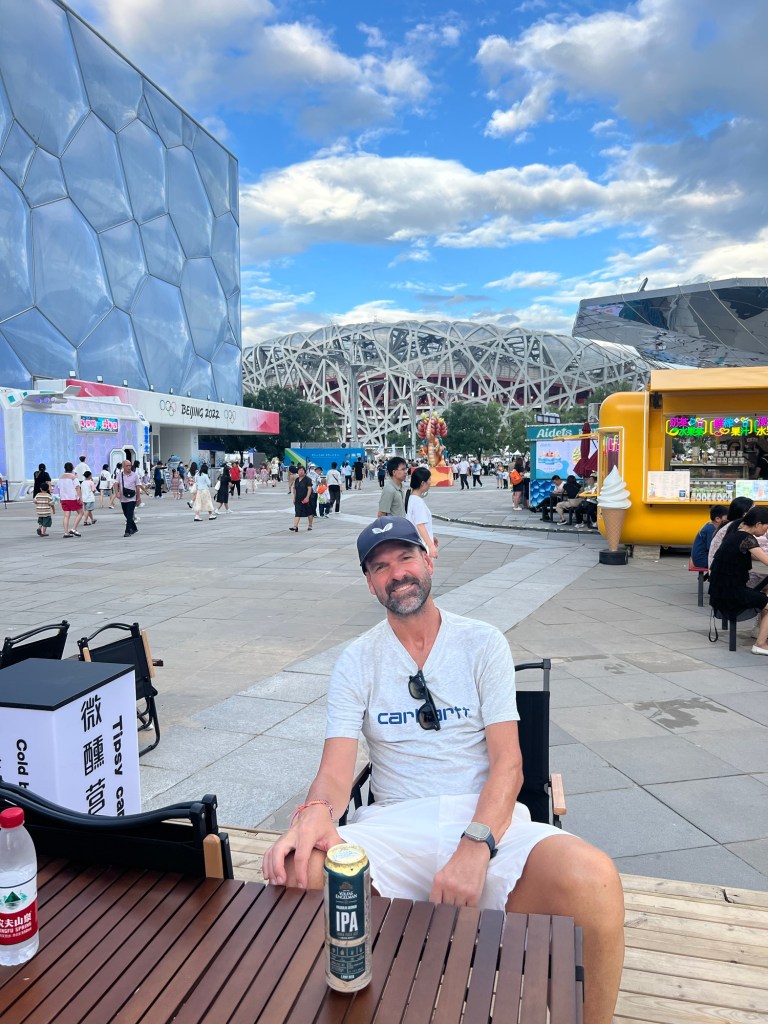
    After all that history and culture, we decided late afternoon to go out to the Olympic village from the Beijing 2008 & 2022 games.

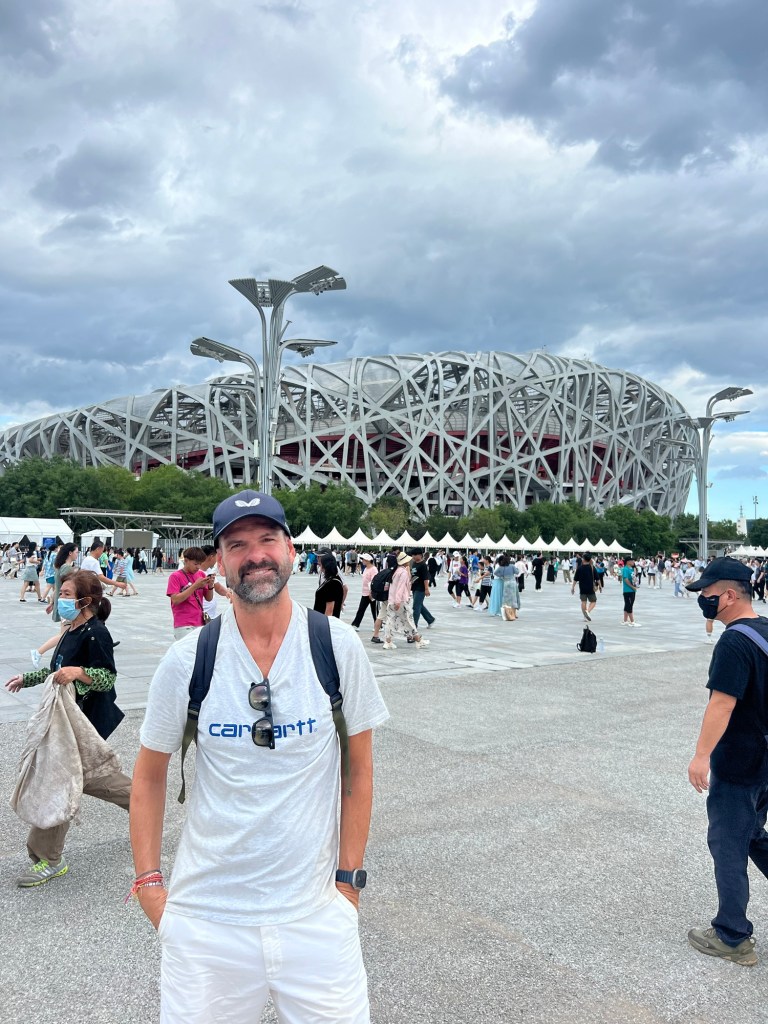
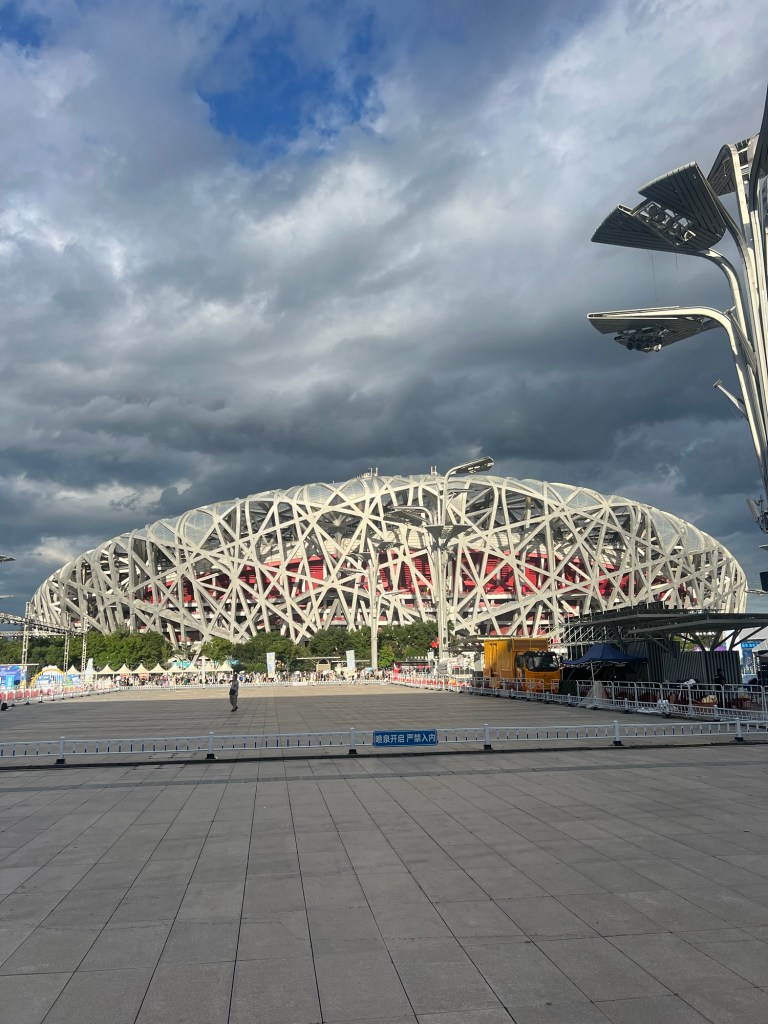
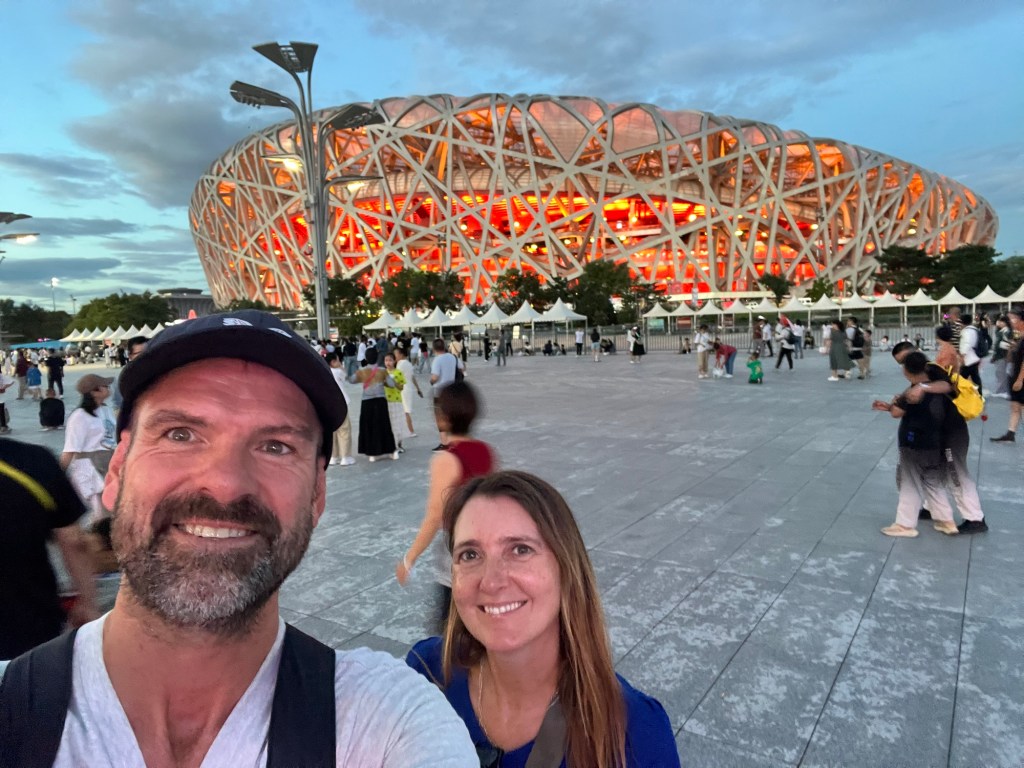
    We had been told to check out the ‘Birds Nest’ or better known as the Olympic Stadium. As it turned out there was a concert on with Jason Zhang a Chinese singer who came to fame via a tv series competition. The result was the area was filled with young girls who were dressed to impress!

    As we walked around the Olympic grounds we must have looked a little out of place with the young concert goers, but we didn’t mind and they seemed keen to get their photo with us too.

    The birds nest stadium
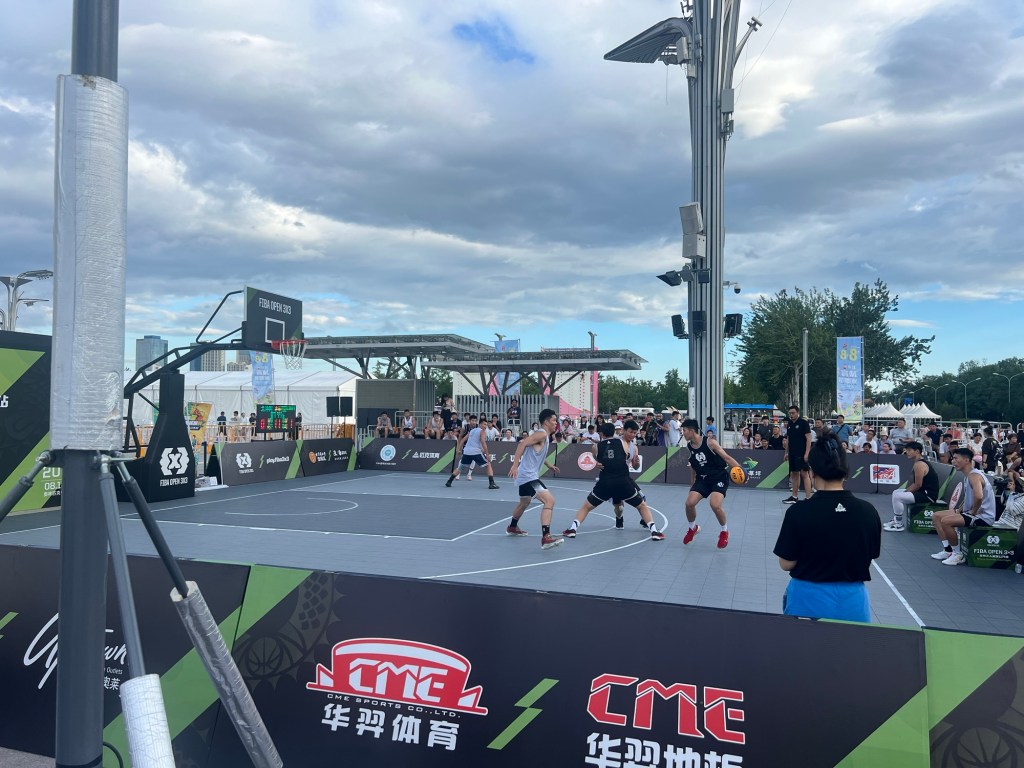
    Basketball demo game

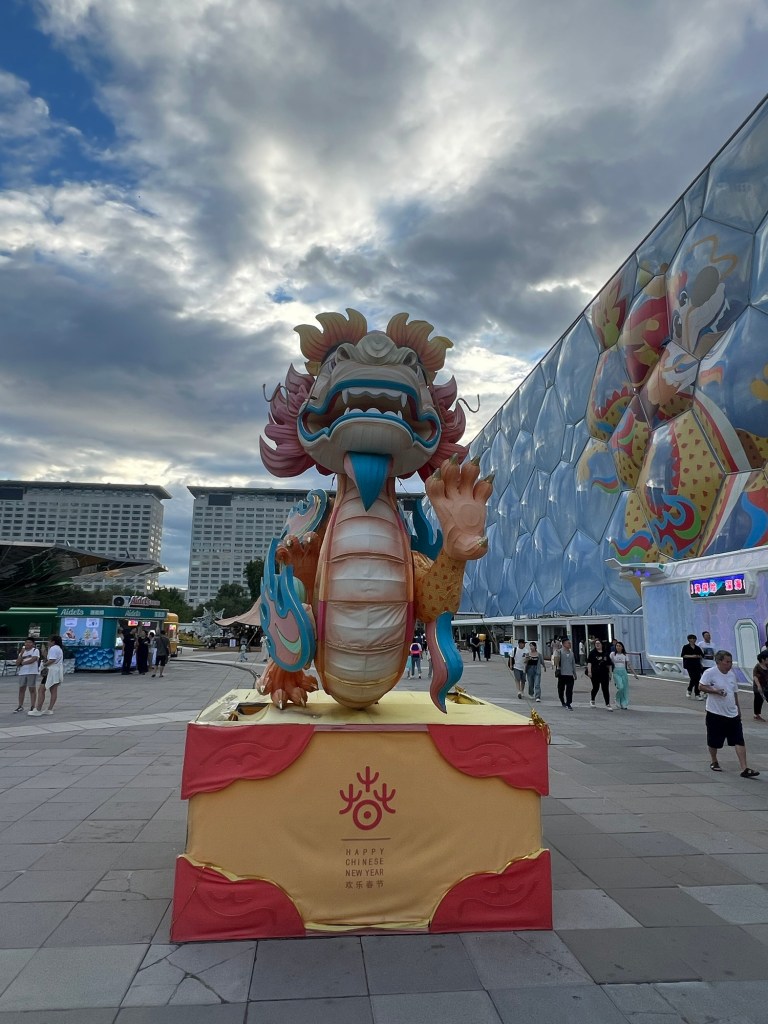
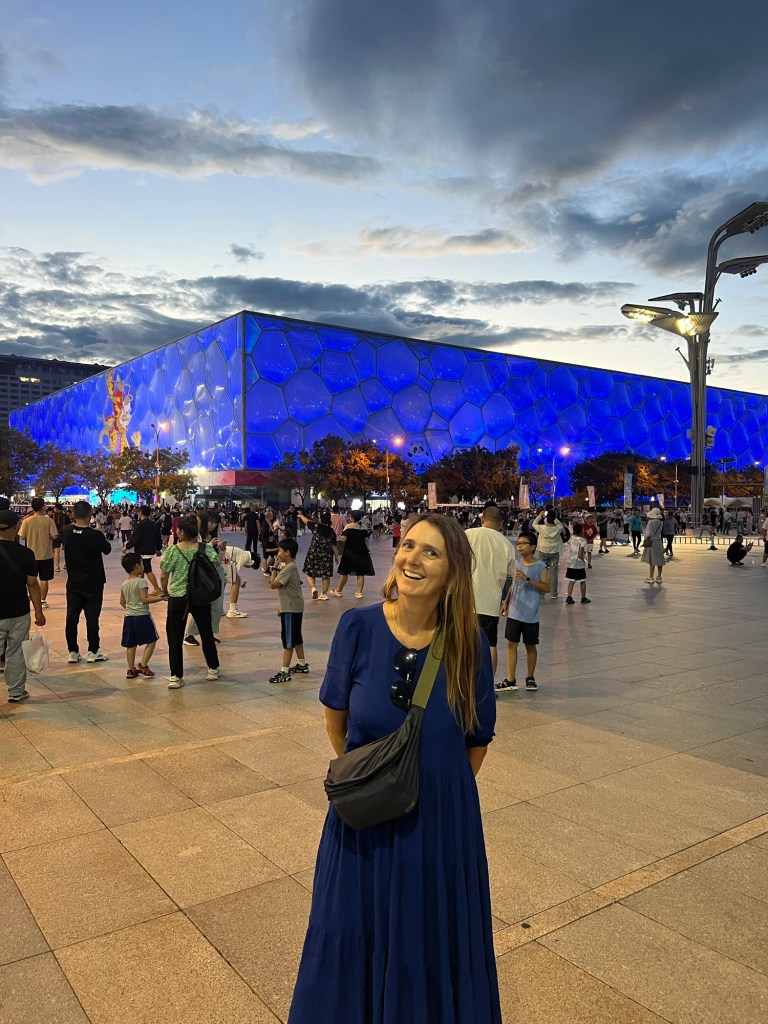
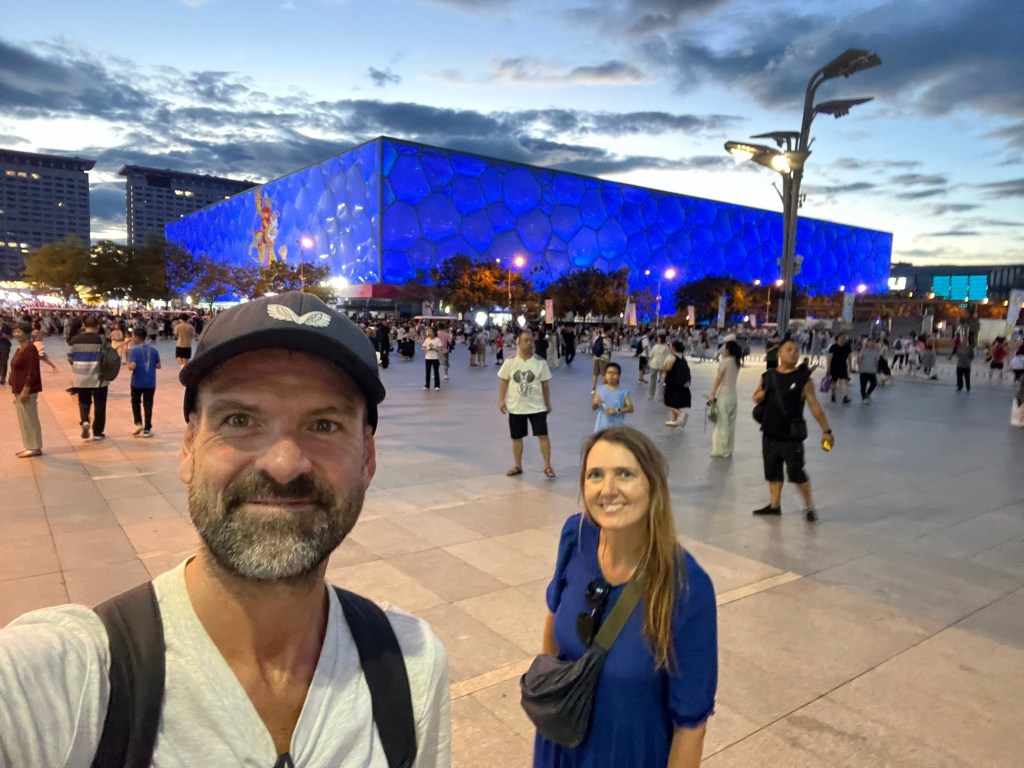
    We found the water cube where the aquatic competition was held which is a huge square shaped building on a massive scale.

    Time for a break
    Watching the Paris Olympics from the Beijing Olympic Park!
    Anyone remember Monkey (old Chinese tv show)
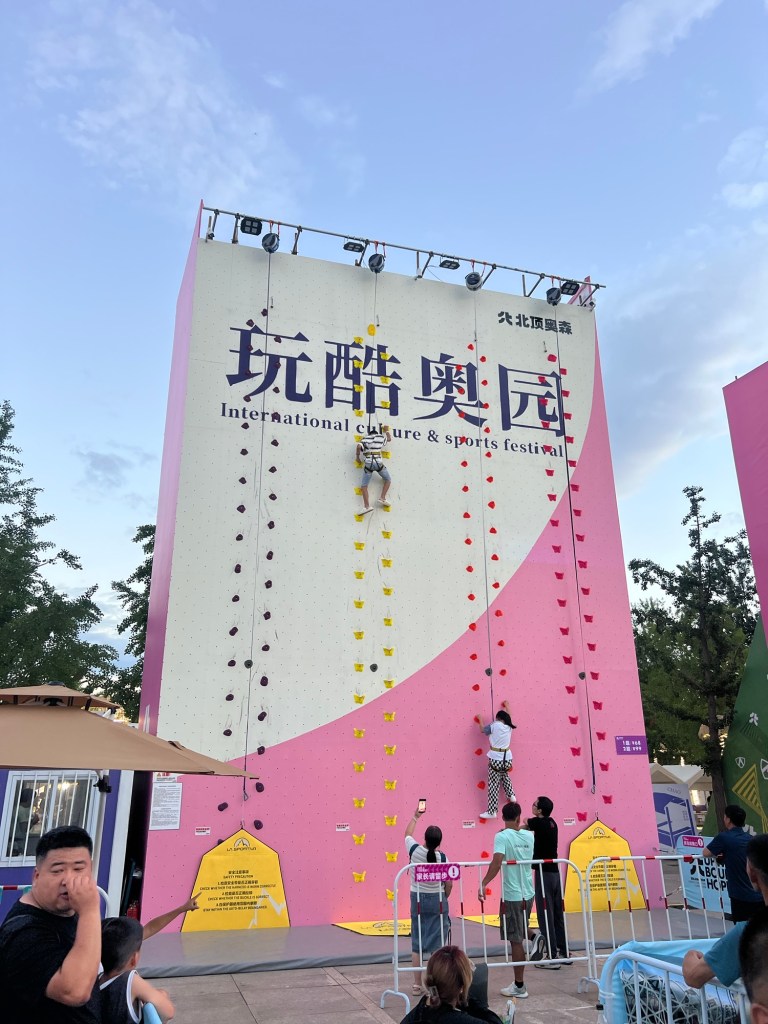
    Climbing wall for the young at heart
    Birds Nest all lit up
    Cube all lit up too
    Last selfie of the day

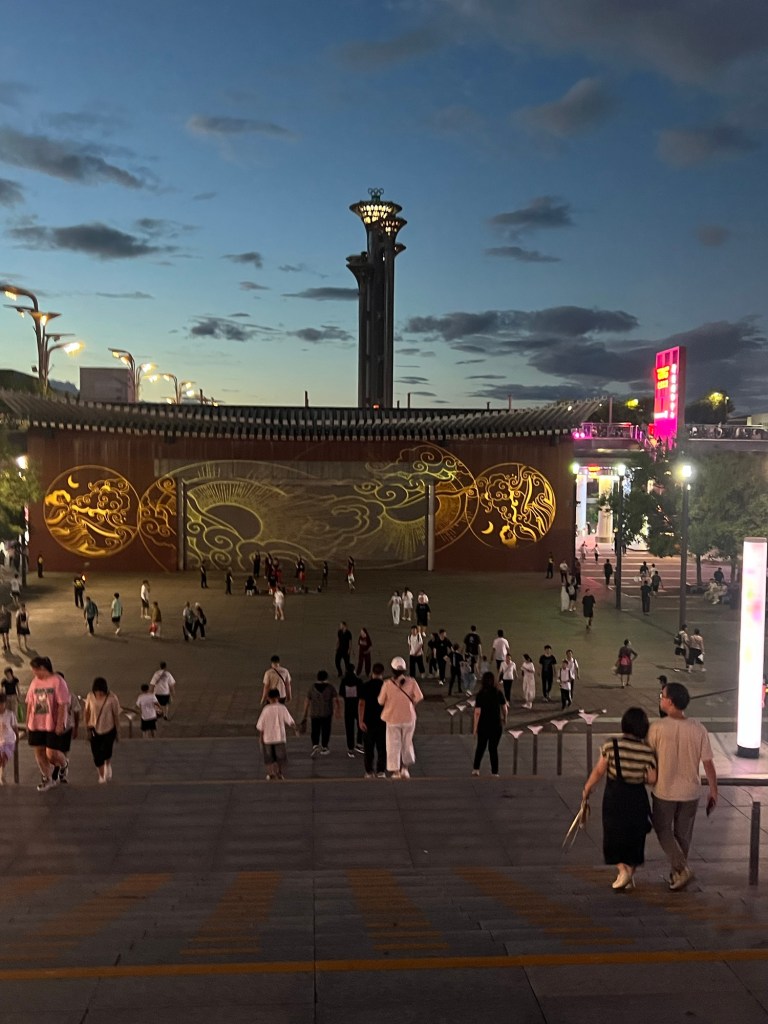
    On our walk back to the subway we witnessed some incredible buildings all lit up creating a mesmerising view.

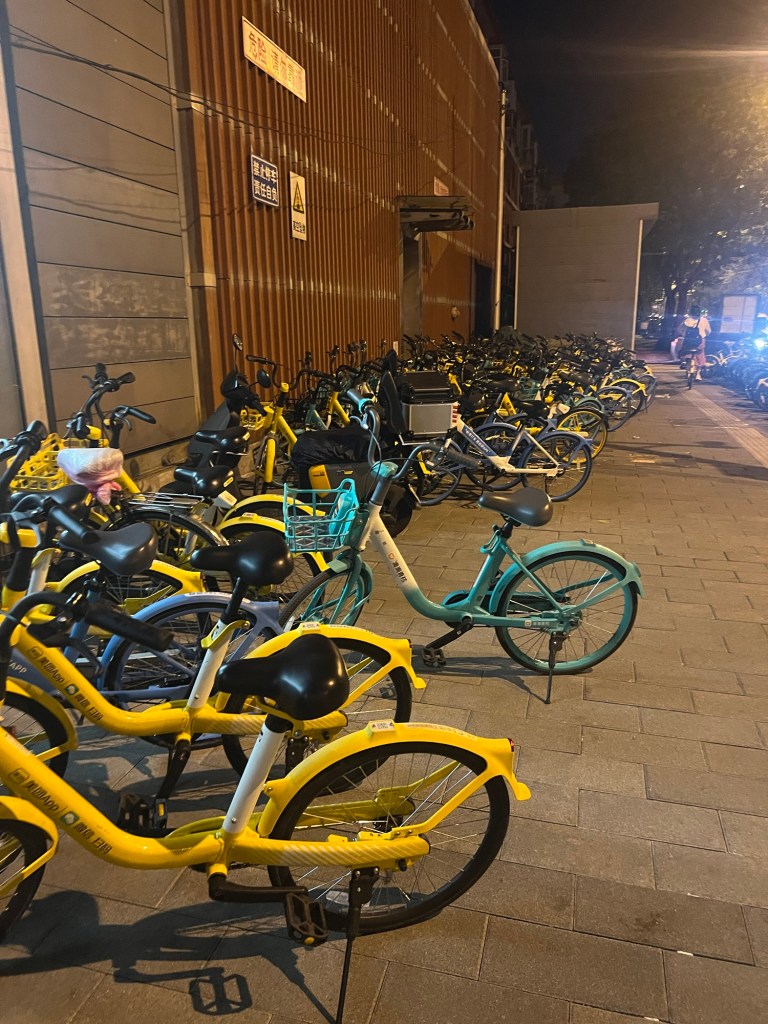
    Beijing ‘Boris’ bikes for hire
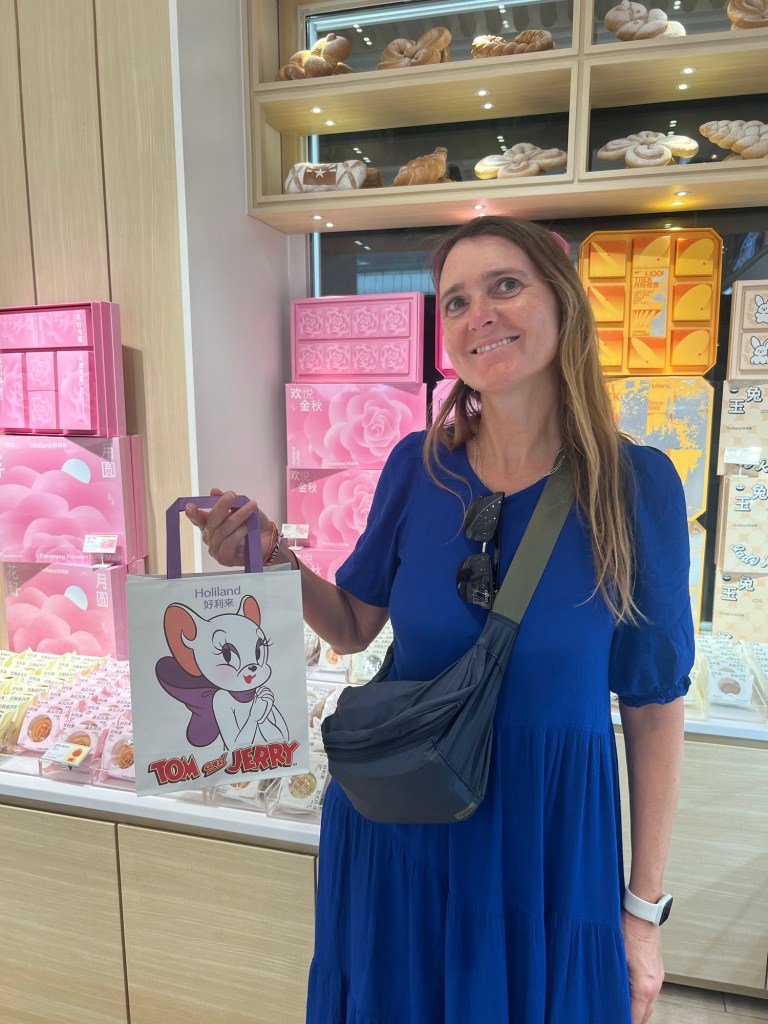
    Supper from a late night bakery

    After leaving our hotel at 7.20am, we returned this evening at 8.45pm after a very full day. Tomorrow offers a similar theme, with a morning trip to Tian’anmen Square and an afternoon at the Summer Palace so we need to rest up and go again on Monday!

  • Overseas tour Day 284 – Bangkok & Beijing

    Aug 11th, 2024

    After our ‘one night in Bangkok‘, we headed to the airport for our 10am flight to Beijing, China.

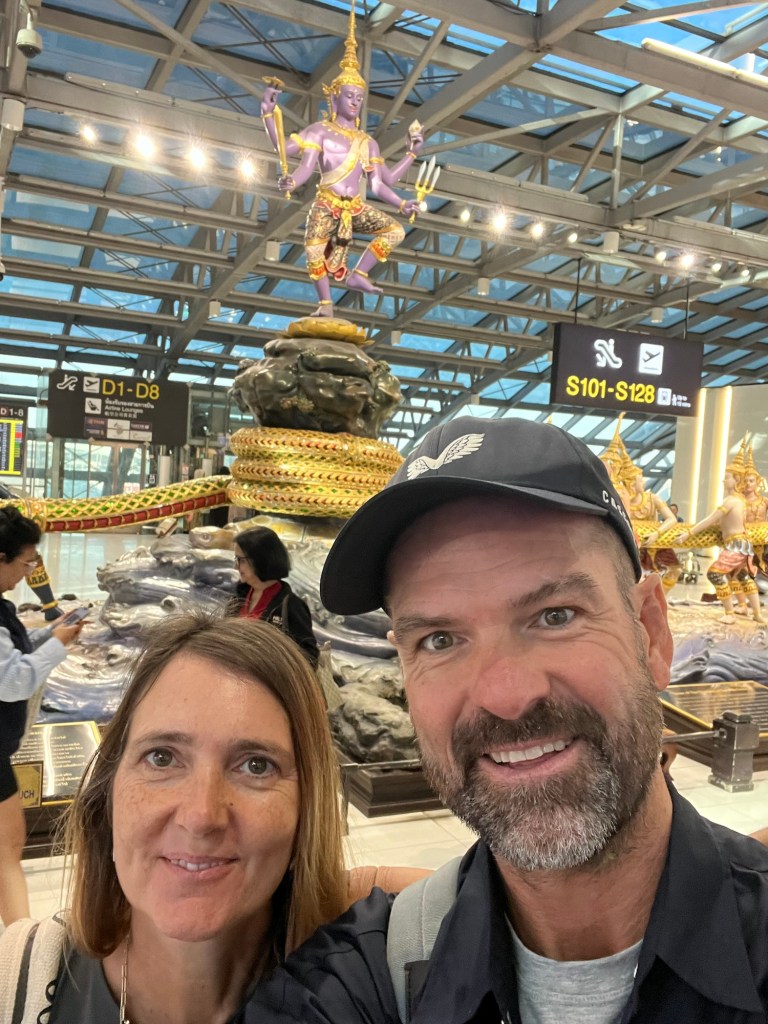
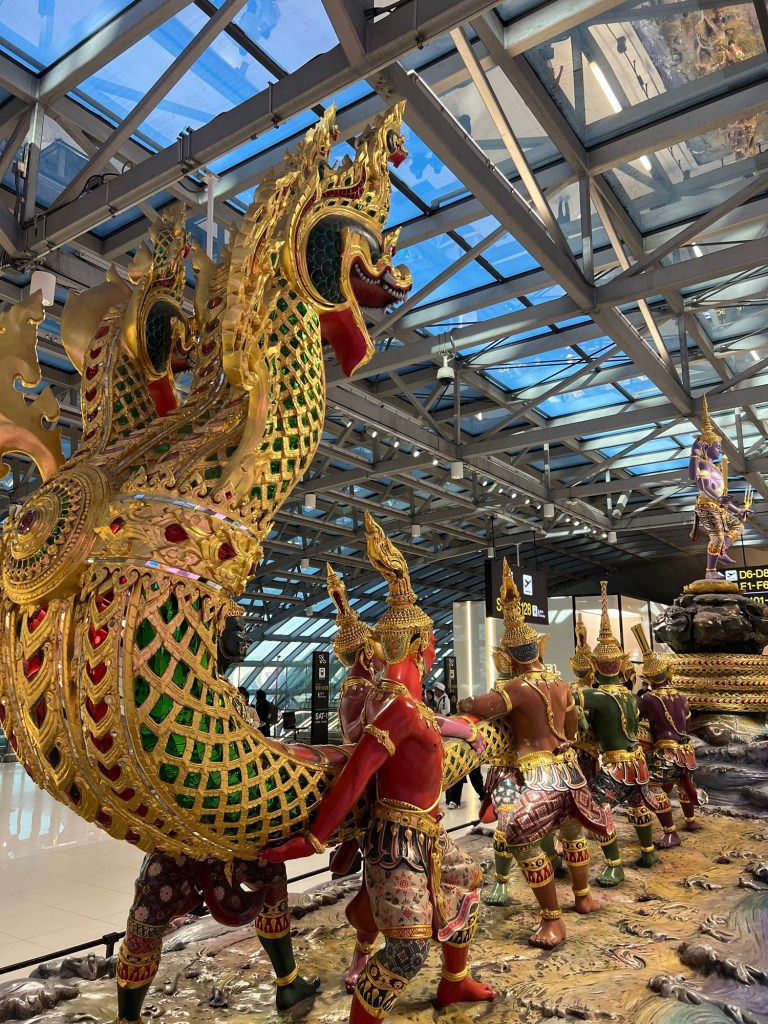
    Bangkok airport is a major hub and we found ourselves on a 20min jaunt to our gate, via an electric train to one of the outlying terminals, where we were greeted with a golden symbolic snake!

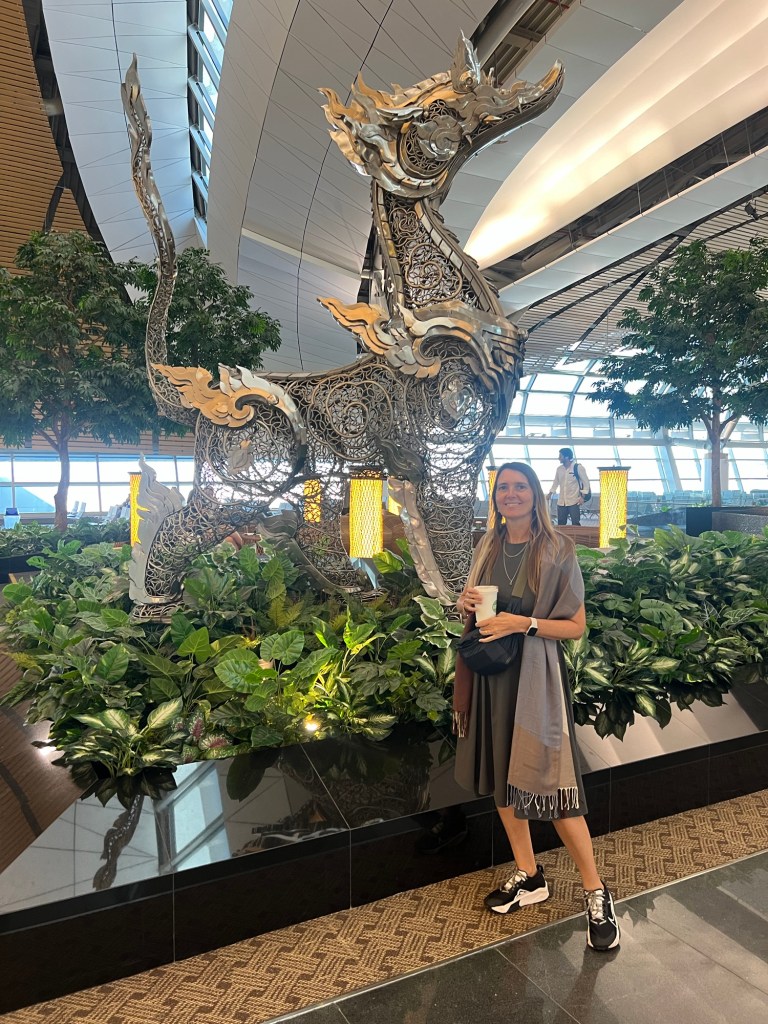
    A mere 5hrs later we were landing in Beijing, this time to be greeted by a phoenix as we waited for our bags.

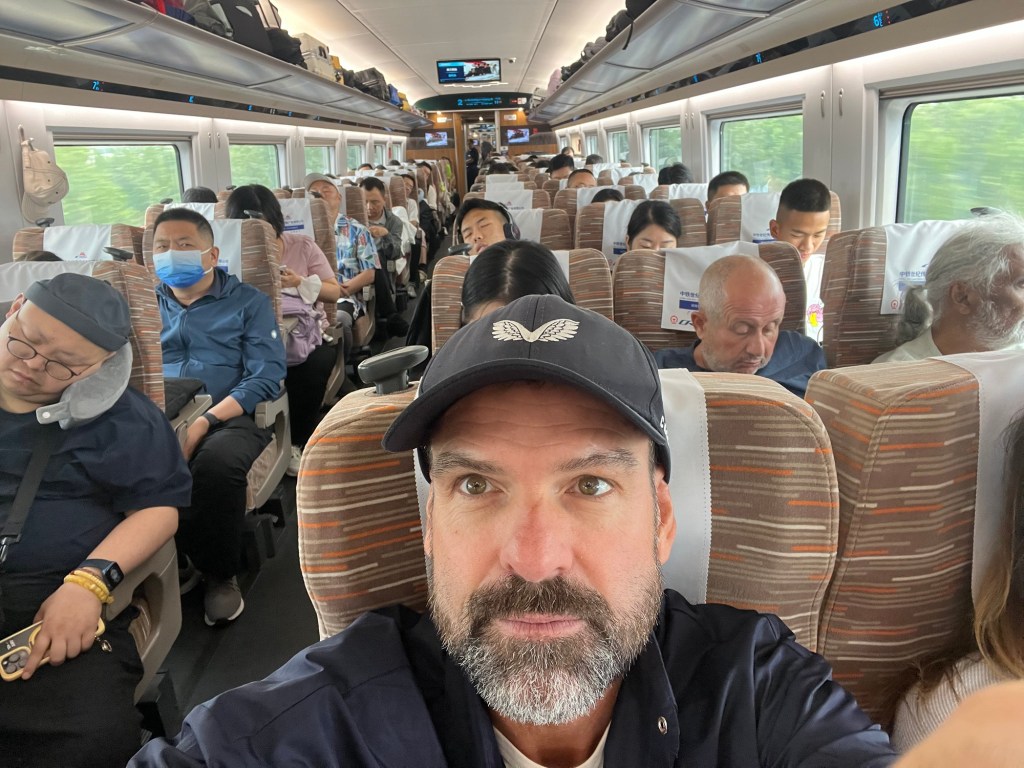
    It’s fair to say that leaving the airport, we felt a little unsure, but despite not having a working phone (issues with the SIM and the use of a VPN), we managed to find our way into the city, on the Airport Express train. We then changed tubes twice, to eventually arrive in the Wangfujing district.

    Sadly we got the wrong end of Wangfujing Street, meaning we had to ring our hotel and get them to direct a cab driver to our final destination.

    Whilst the journey from the airport to the hotel took almost 2hrs, it proved a real experience and a great opportunity to get to know the city and meet some locals on the train & tube.

    We are staying at Base Apartments which is very central, just a couple of miles from The Forbidden City, which we are visiting tomorrow on a 4hr tour.

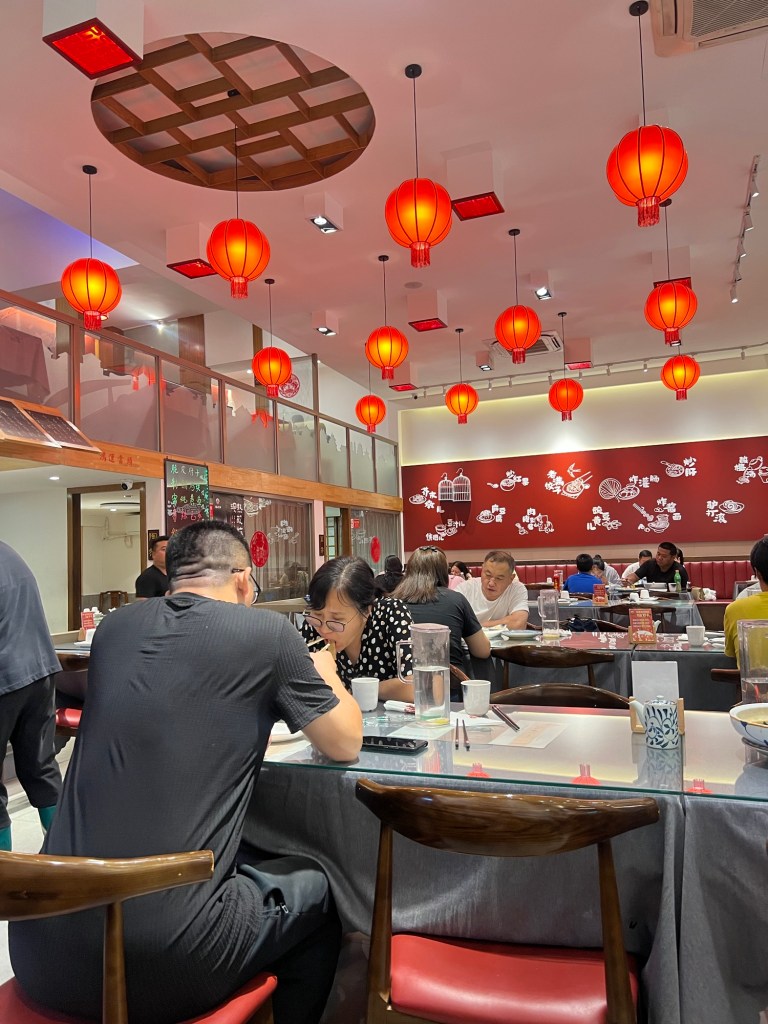
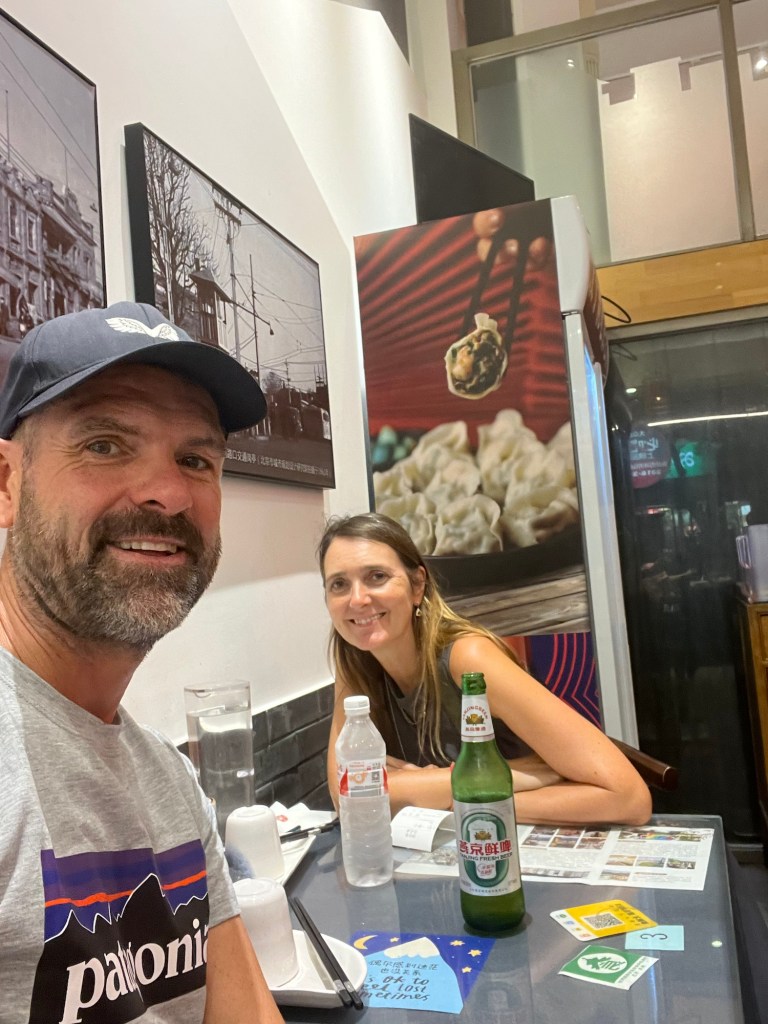
    With a need for food, we navigated our way to a quaint high street, close to our hotel where we tried a restaurant famed for its dumplings.

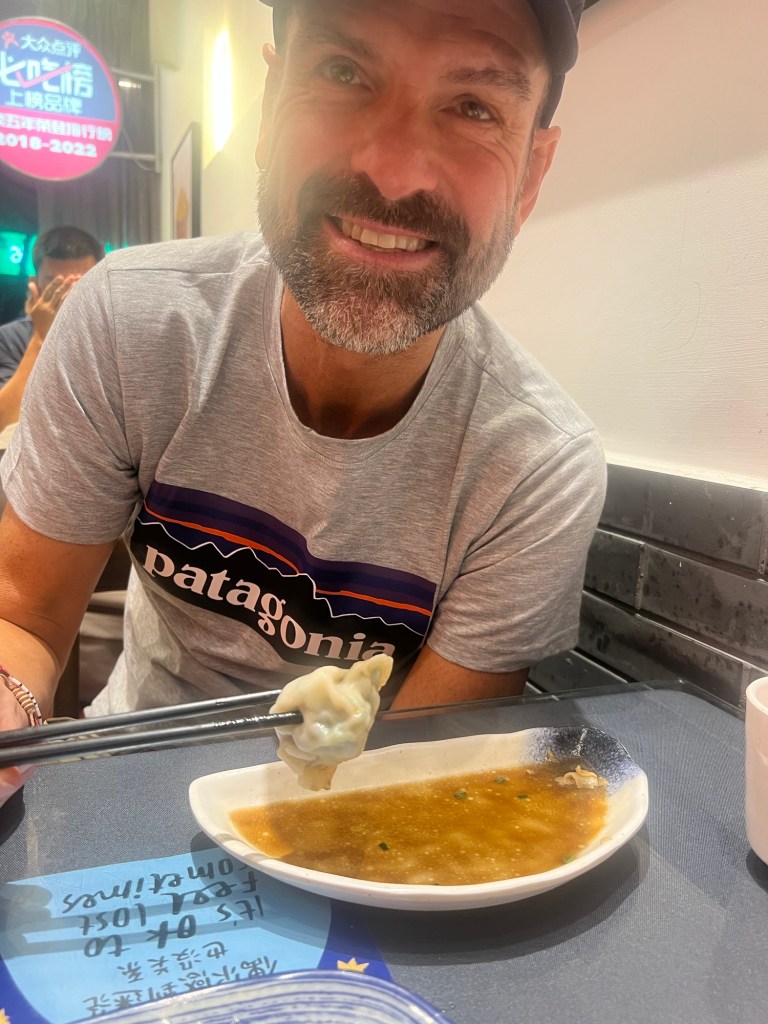
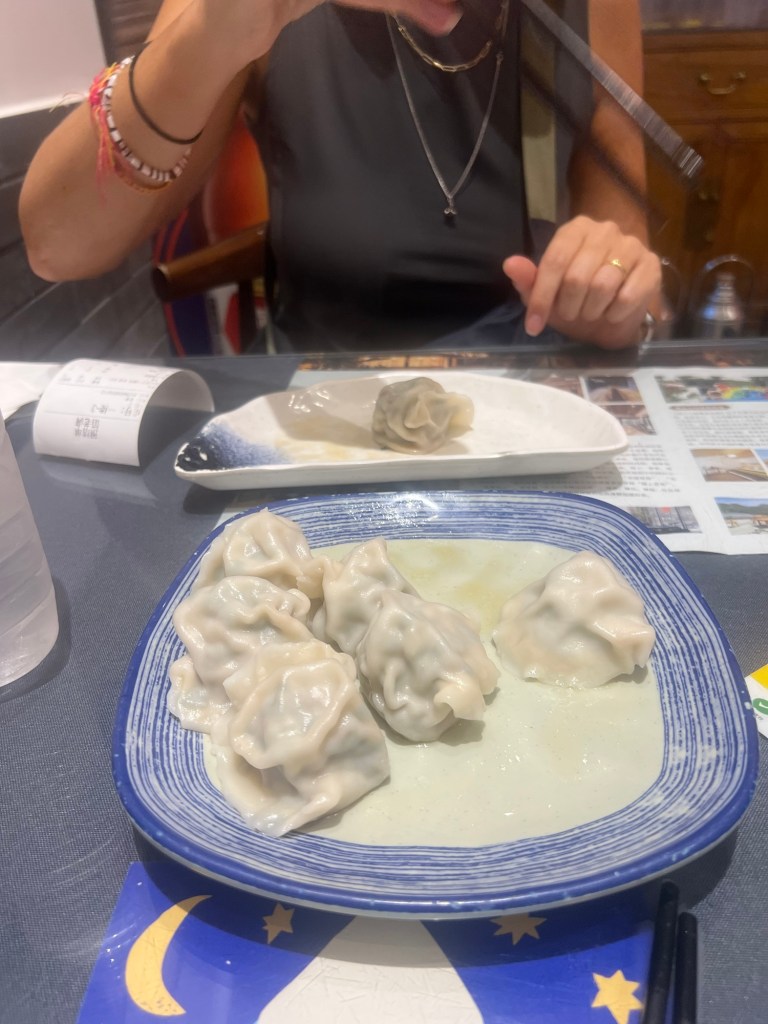
    What an experience the night proved, Michelle was able to make sense of the menu so ordered two lots of dumplings, one pork and the other vegetarian. Both were served with a tasty vinegar which proved a great success.
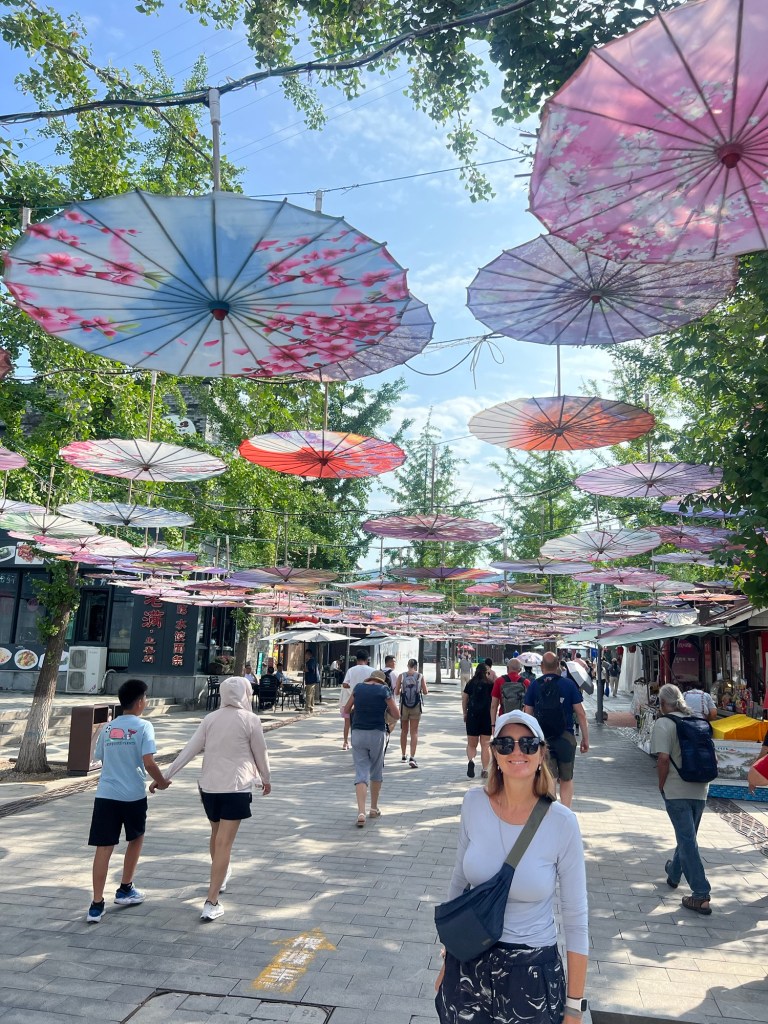
    9pm at the local restaurant
    Settling in with the locals
    Dumplings and soy sauce

    As we settled into the meal, we got chatting to a local young couple who were keen to practice their English.

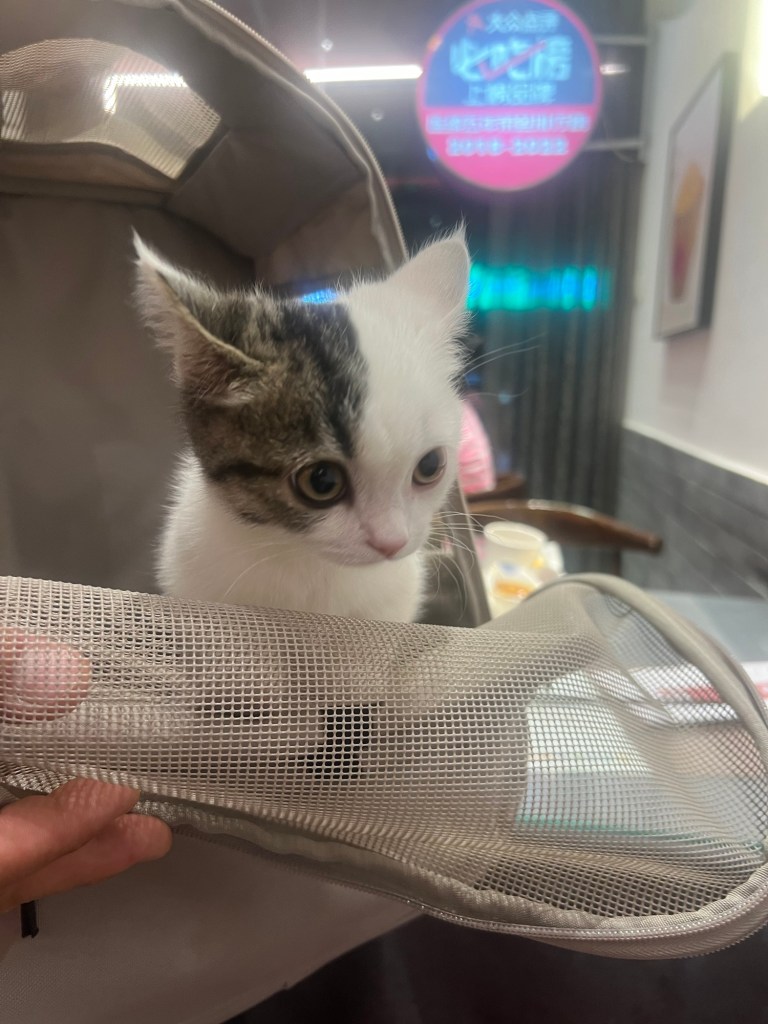
    We also made a new animal friend, a small kitten in a basket on the next door table where the owner was popping in for a quick snack!

    The dinner was a great success and we grabbed a couple of photos with the Chinese couple who we had been chatting to about our lives in England and their love of David Beckham!

    This is one of the great things about travelling, meeting people in random situations and finding out about their lives and realising they aren’t much different and that they too are kind and genuine.

    As you will have gathered, despite thinking I wouldn’t be able to post until 30th August due to Chinese restrictions on certain apps, we have thankfully been able to find a VPN which overrides this and allows us access to Gmail, Google and WhatsApp.

    Hopefully we will continue to have access and the blog updates will be daily as they’ve been up until now.

  • Overseas tour Day 283 – Hanoi & Bangkok

    Aug 9th, 2024

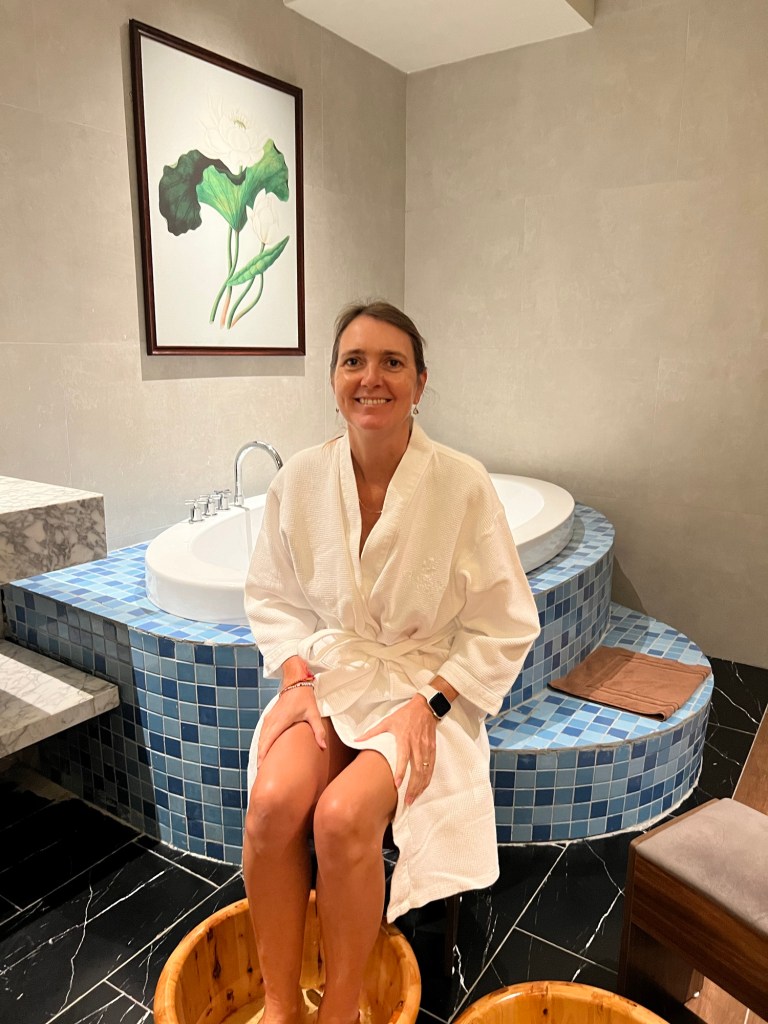
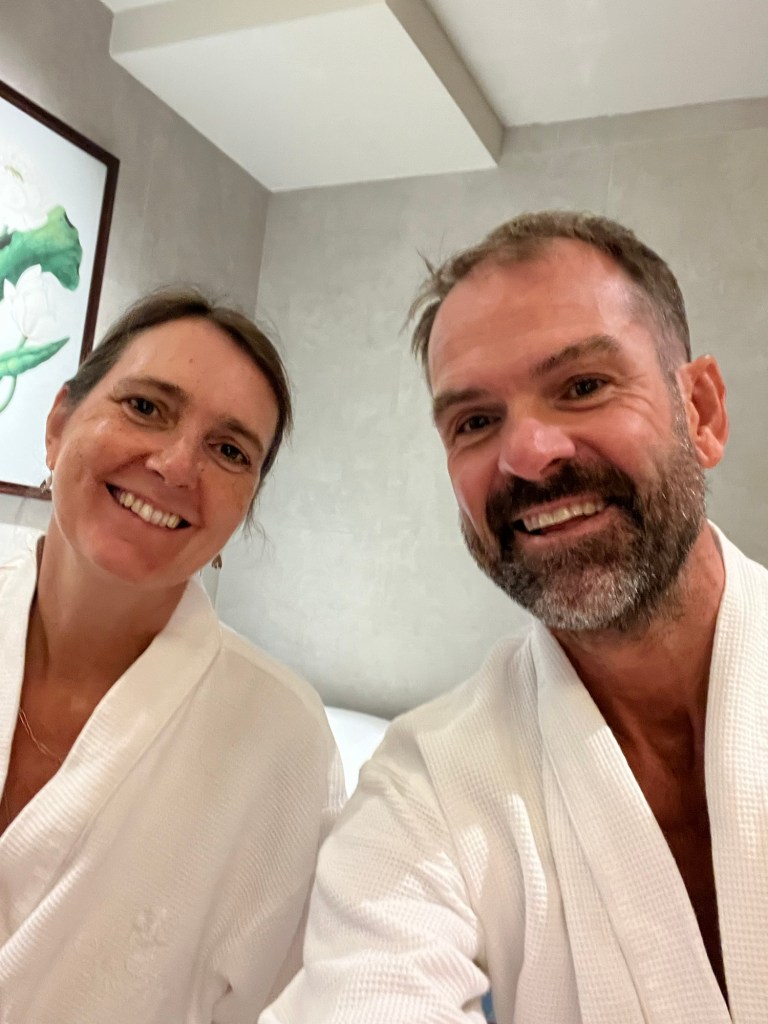
    Before saying goodbye to Hanoi, we thought we’d treat ourselves to some spa indulgence.

    Our hotel very kindly offered us a complimentary visit, to apologise for the noise of building work early this morning at the next door site.

    Michelle decided to go for a facial and Andy a Vietnamese body massage. It proved a great way to relax before we departed to the airport.

    Foot cleaning to start

    Both our treatments proved a perfect tonic for preparing us for an afternoon travel and the 2hr flight down to Bangkok.

    Spa time

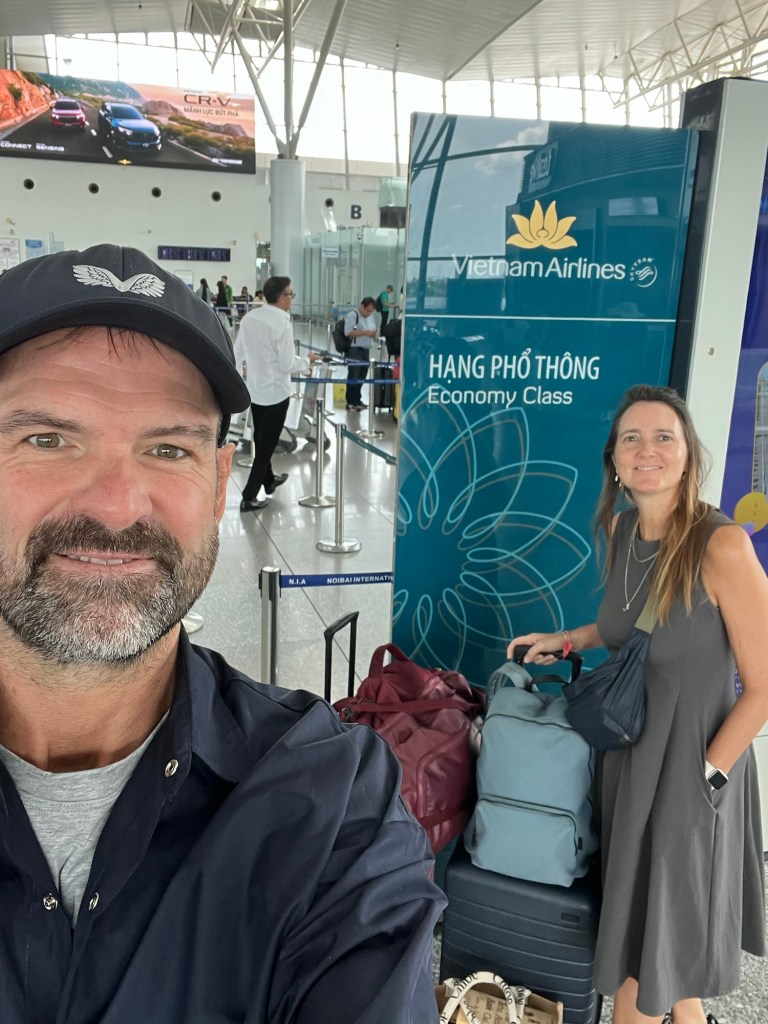
    Our cab to the airport was super quick, and we were checked into the flight and through security with 90mins to spare before departing.

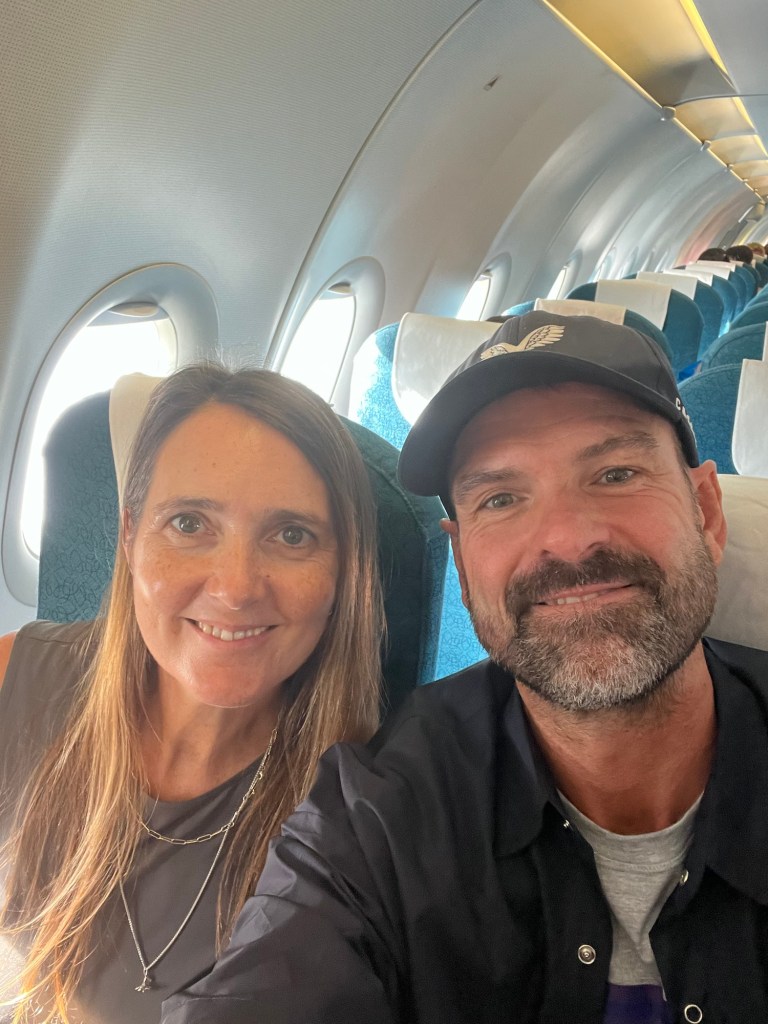
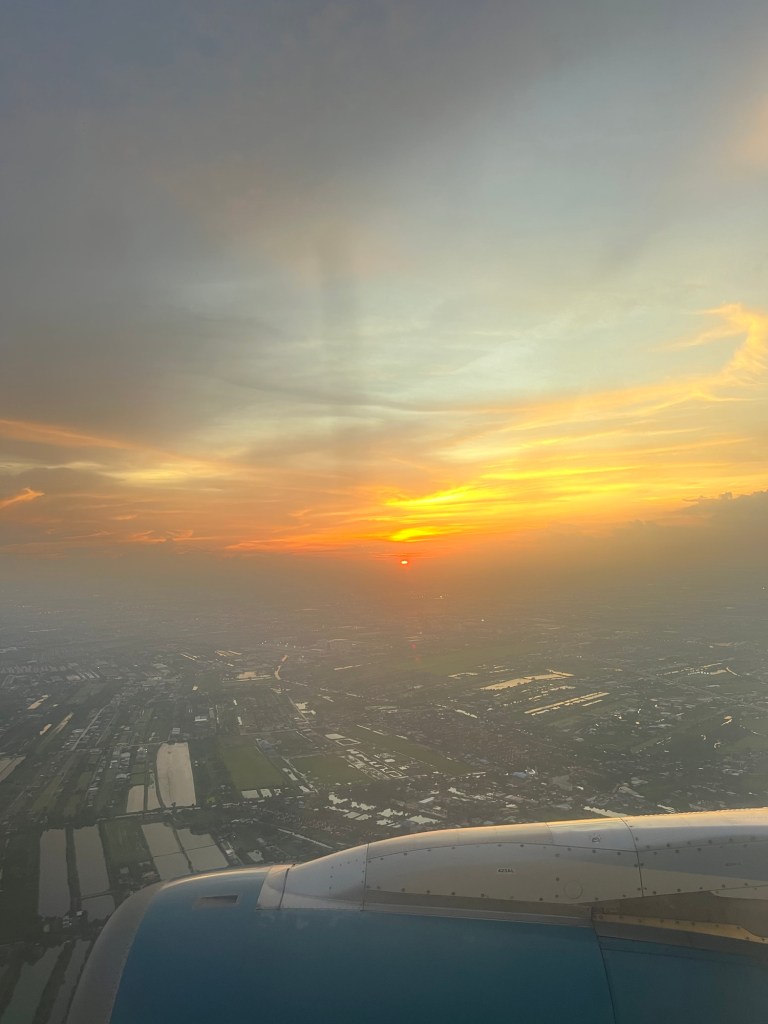
    The flight to Bangkok was delayed by an hour, but due to the efficiency of Vietnam Airways, we somehow made up most of this time in the air and were on the ground in Bangkok by 7pm.

    We are staying in the night at a hotel close to the airport where we stayed 6 weeks ago with Amelia before she returned to the Uk and we headed off to Vietnam.

    Coming into land at BKK airport

    Like most airport hotels there was little option but to be ‘mugged’ at their in-house restaurant as we sat down for dinner.

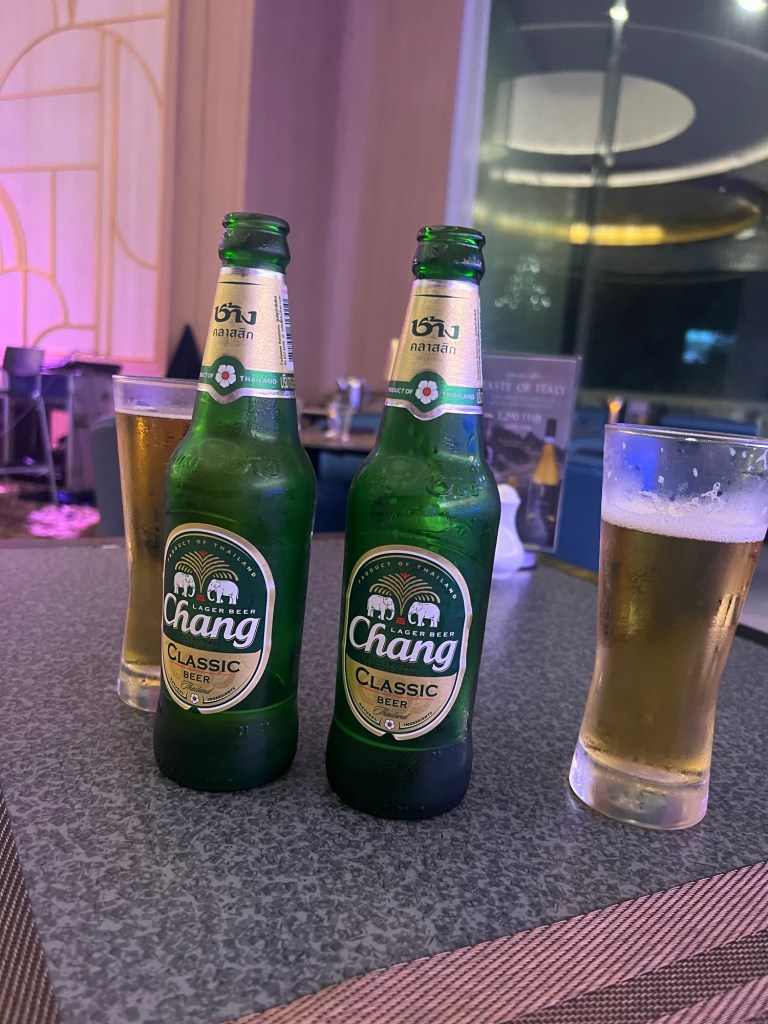
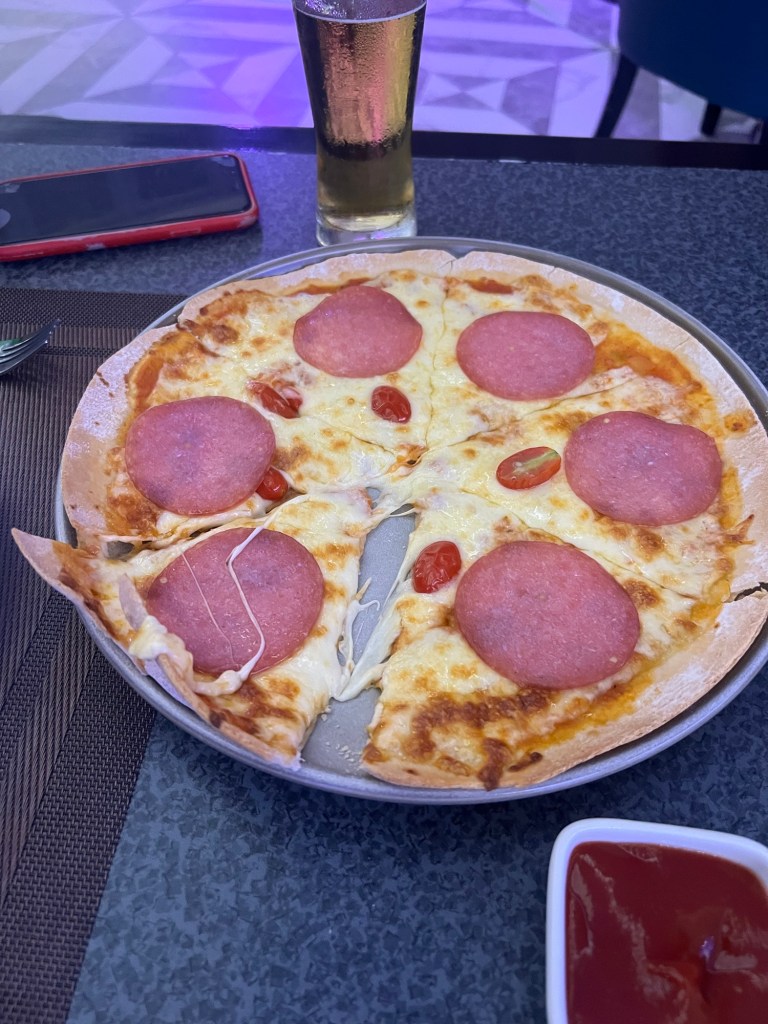
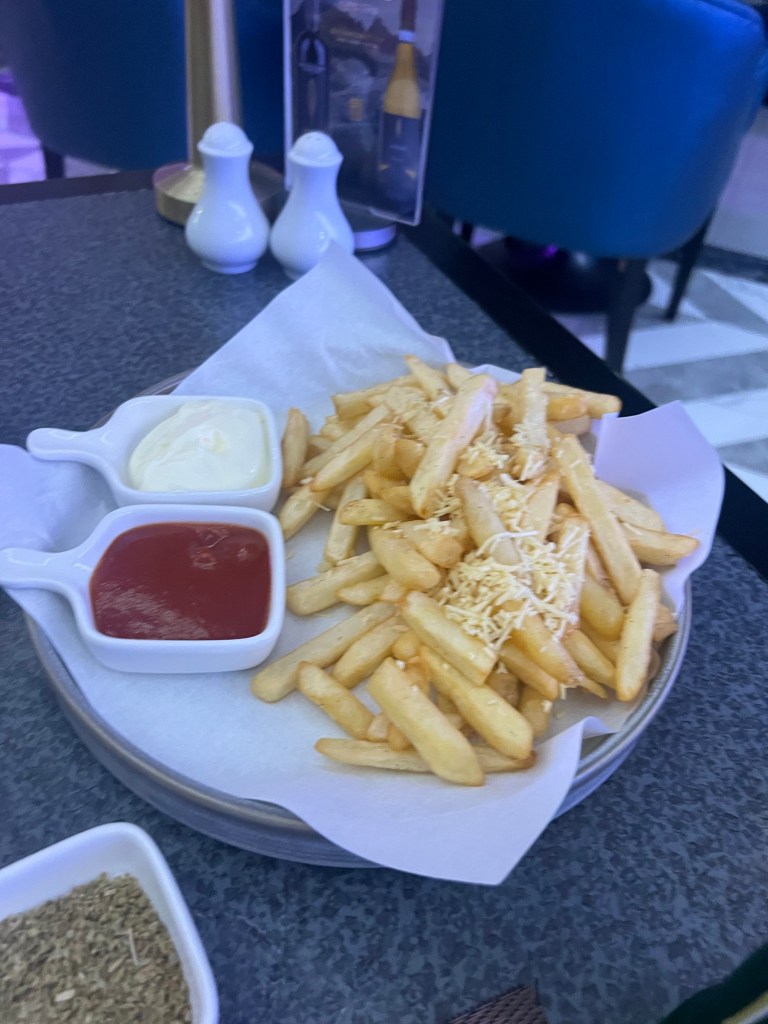
    It was great to be back on the Chang beers, less so the pizza & chips which were ok, but a tad rich at £15!!

    Anyway the comfort food before China seemed worth it!

    As mentioned in yesterday’s post, this will be our last entry for the next 3 weeks as China doesn’t allow the app format we use.

    So it will be all quiet until we pop up in Hong Kong on the 31st August.

    Catch up then!

  • Overseas tour Day 282 – Hanoi prison tour & last night dinner

    Aug 9th, 2024

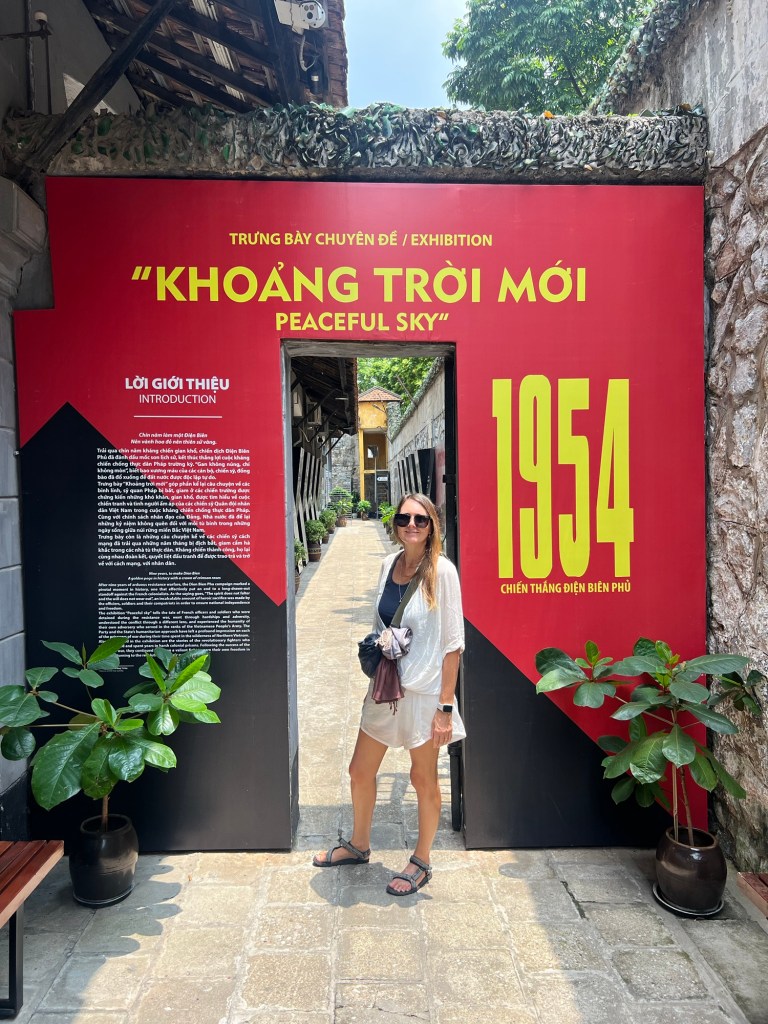
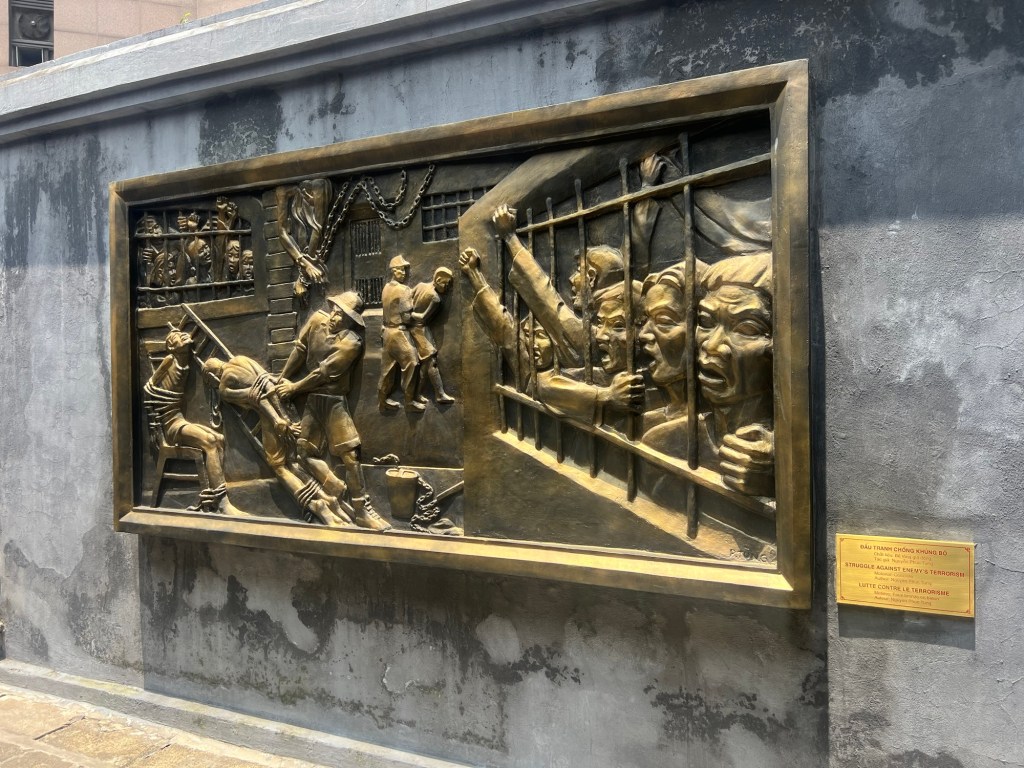
    Back on the tourist trail again this morning with a visit to the infamous Hoa La prison, or the Hanoi ‘Hilton’ as it was nicknamed by American POW.

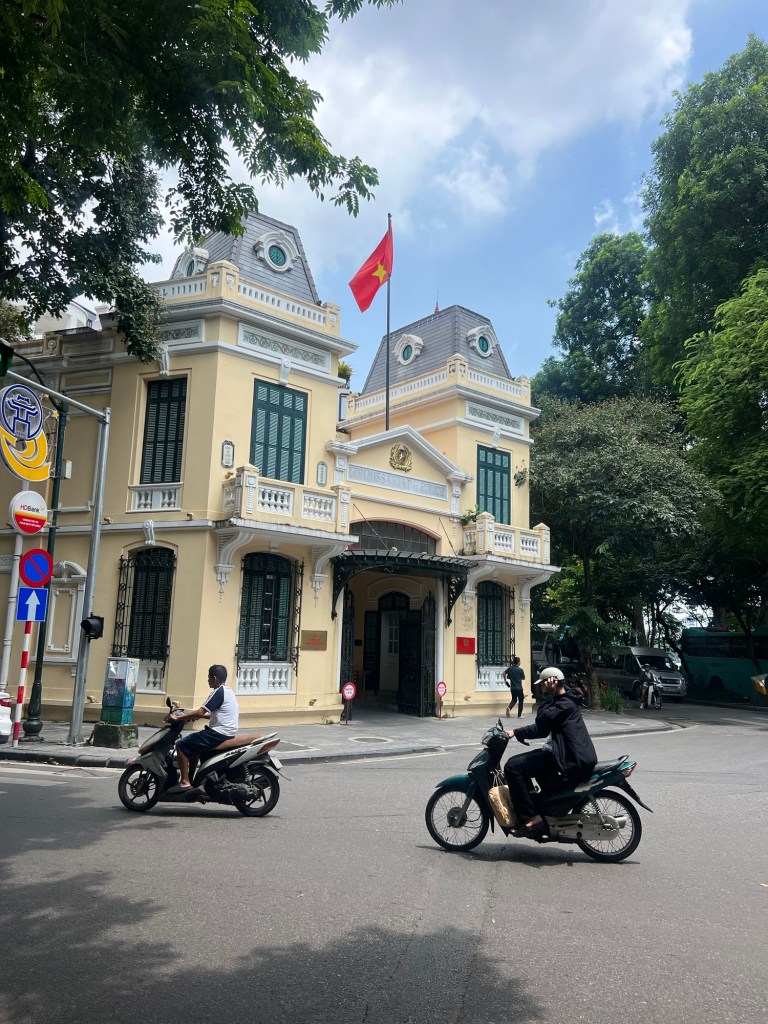
    The French called the prison Maison Centrale, ‘Central House’, which was the name given to prisons for dangerous or long sentence detainees in France. It was located near Hanoi’s French Quarter where a number of other bureaucratic buildings are located, including the Police HQ.

    Police HQ

    The prison was originally used by the French for political prisoners and later by North Vietnam for US prisoners during the Vietnam War. 

    The prison was demolished during the 1990s, although its gatehouse remains a museum.

    At its peak the prison held more than 2000 people, with its inmates held in subhuman conditions and it became a symbol of colonialist exploitation and of the bitterness of the Vietnamese towards the French.

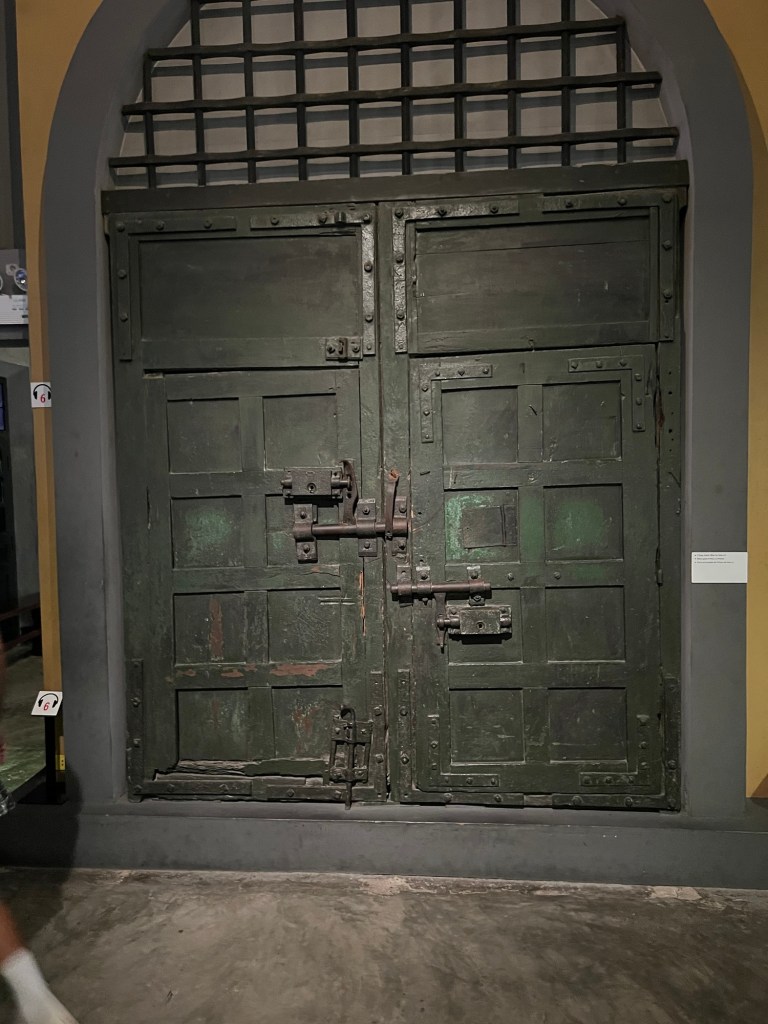
    Prison gate

    Many of the future leading figures in Communist North Vietnam and Vietnam Minh spent time in Maison Centrale during the 1930s and 1940s.

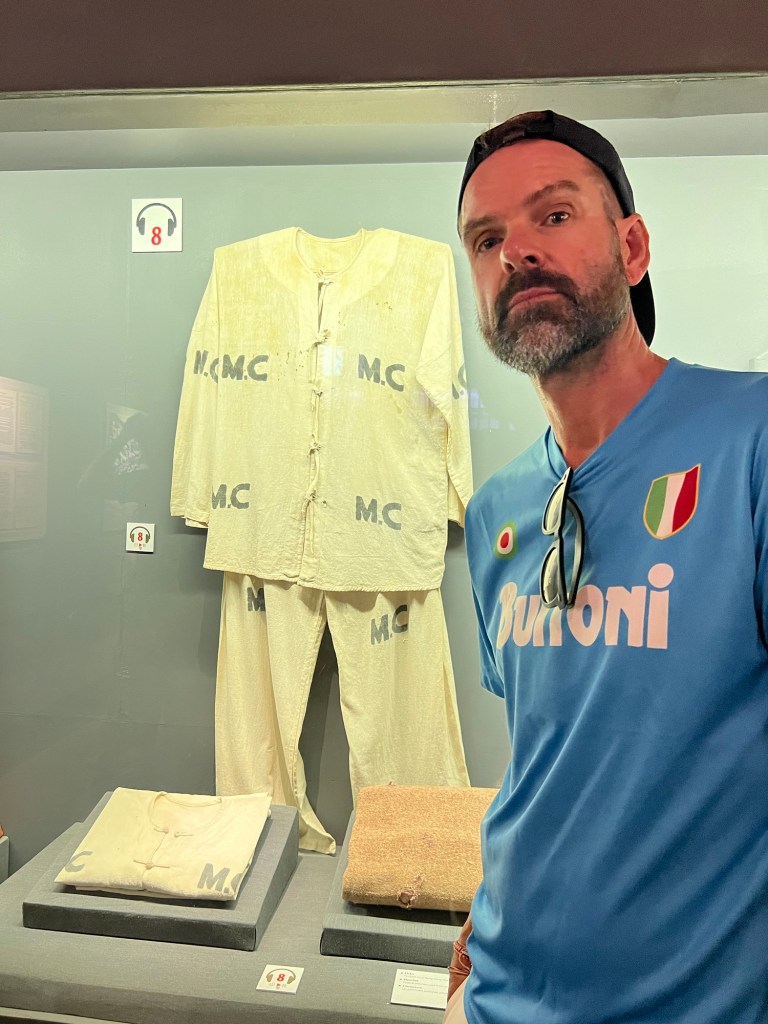
    Prison uniform
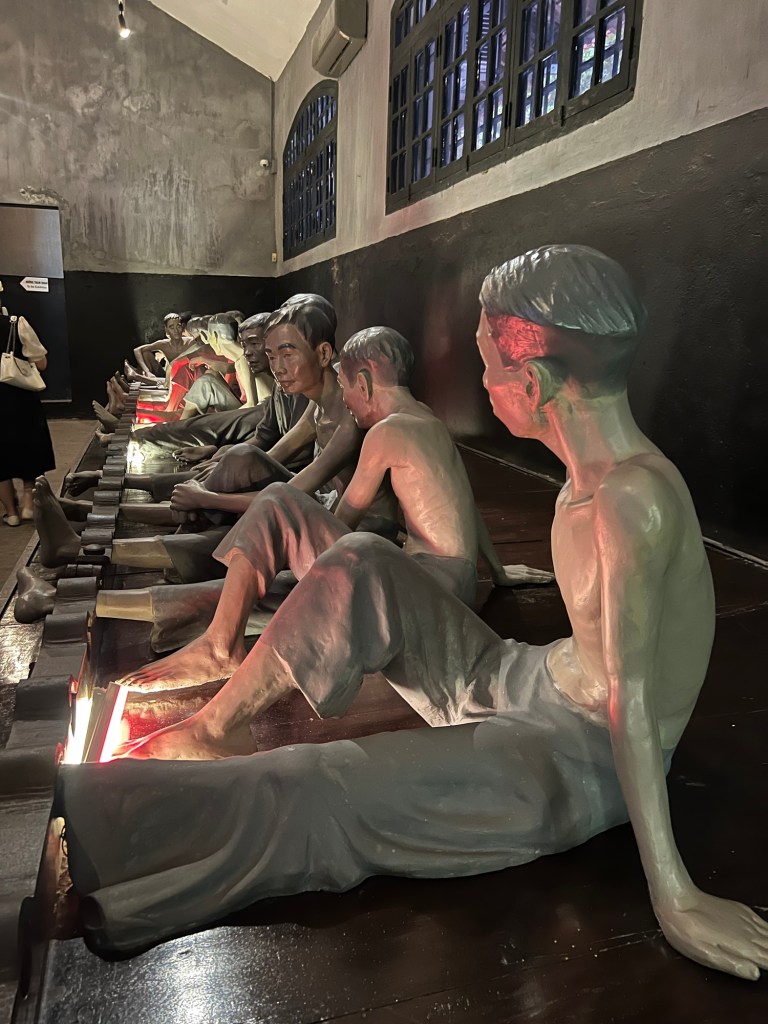
    Prisoners had one leg shackled and sat on benches in open prison cells

    The Hỏa Lò was one site used by the North Vietnamese Army to house, torture, mistreat, and interrogate captured servicemen, mostly American pilots shot down during bombing raids.

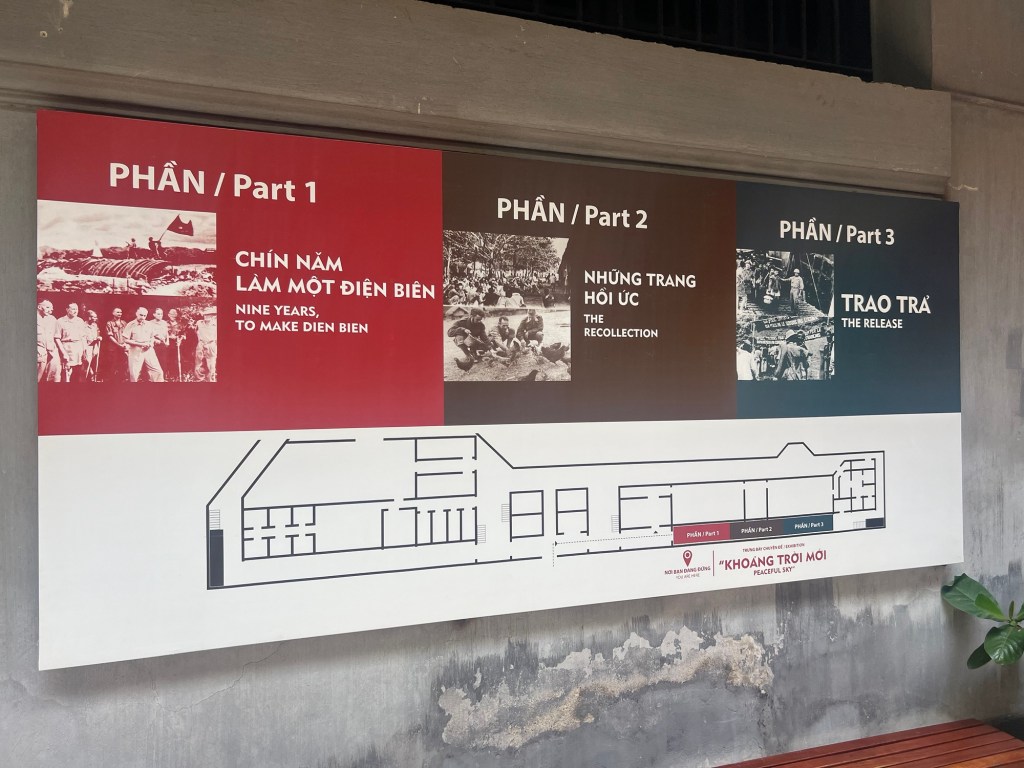
    The only part of the prison that exists today is the museum formed from the former gatehouse. The displays mainly show the prison during the French colonial period, including the guillotine room, still with original equipment, and the quarters for male and female Vietnamese political prisoners.

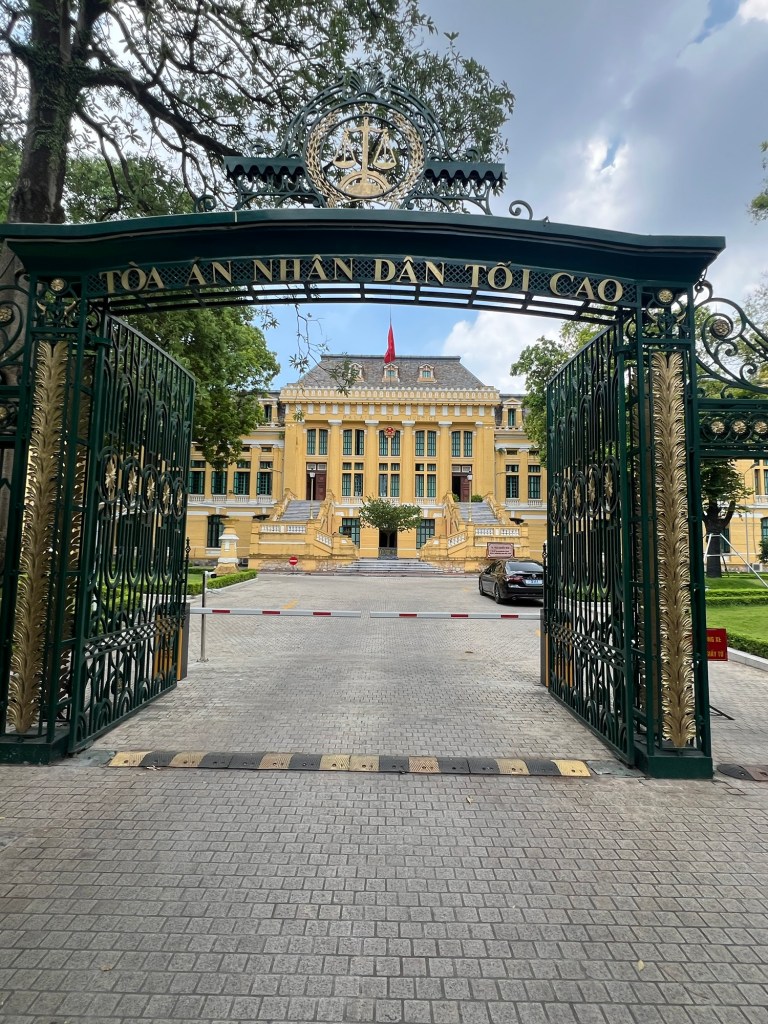
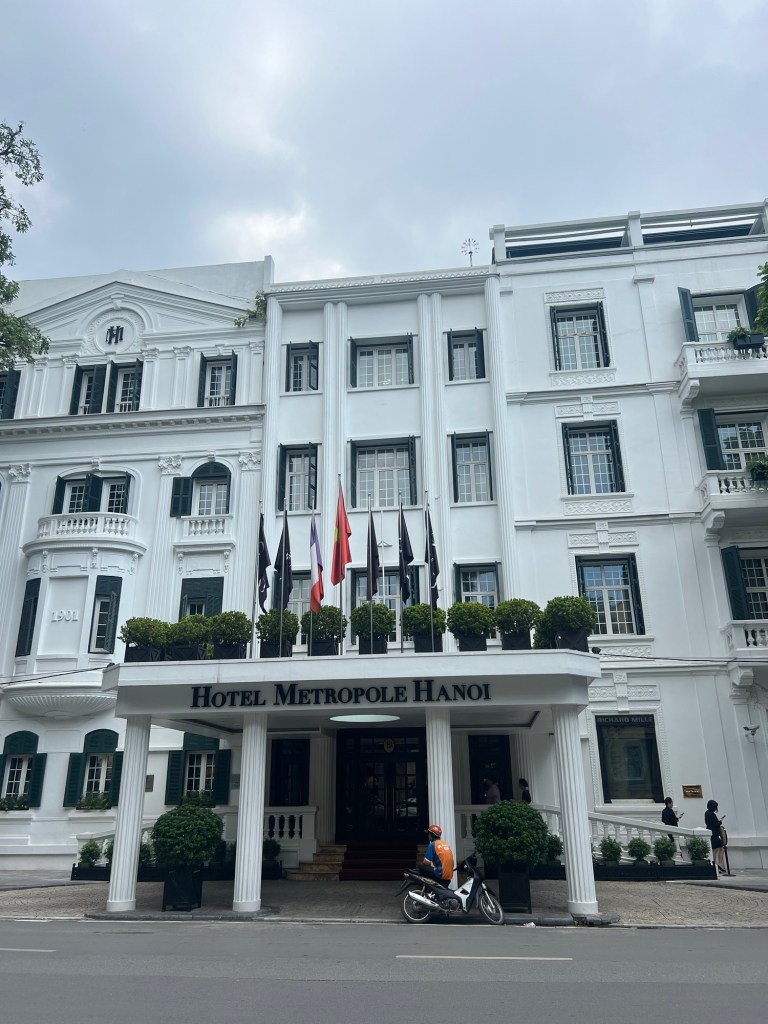
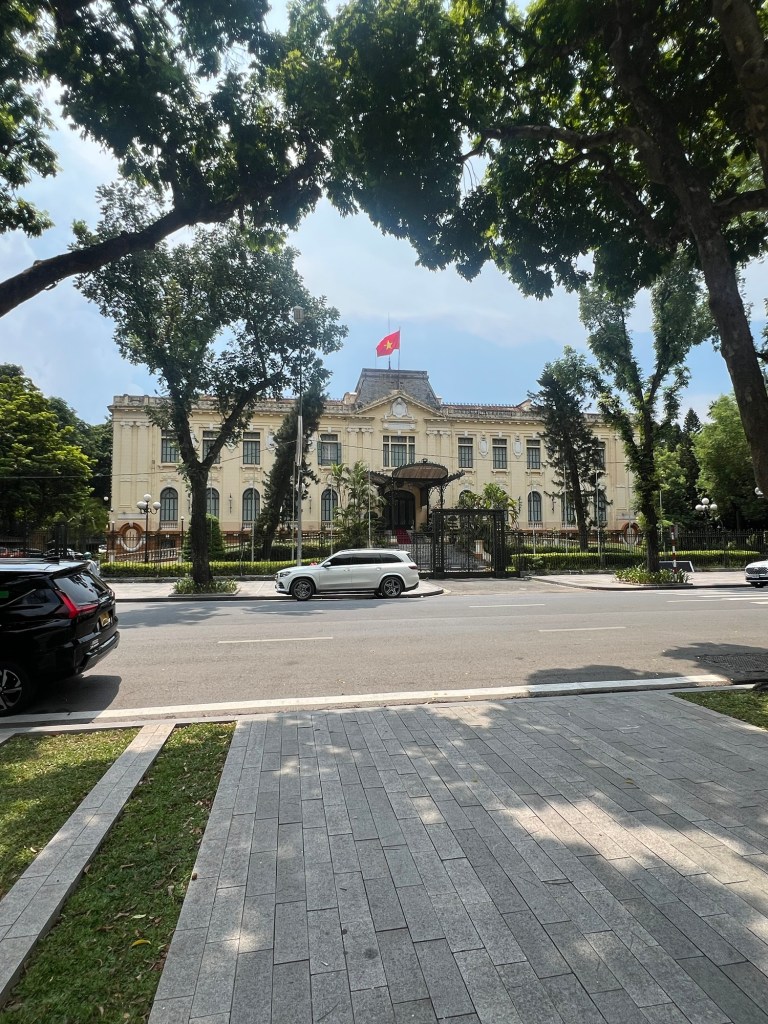
    After the interesting tour we went for a further wander around the core part of the old French Quarter and visited the old Palace of Justice and the Metropolitan Hotel opposite, which is one of the most magnificent and beautiful buildings in the area. Around this district are a number of luxury retailers targeting the wealthy (sadly not us!).

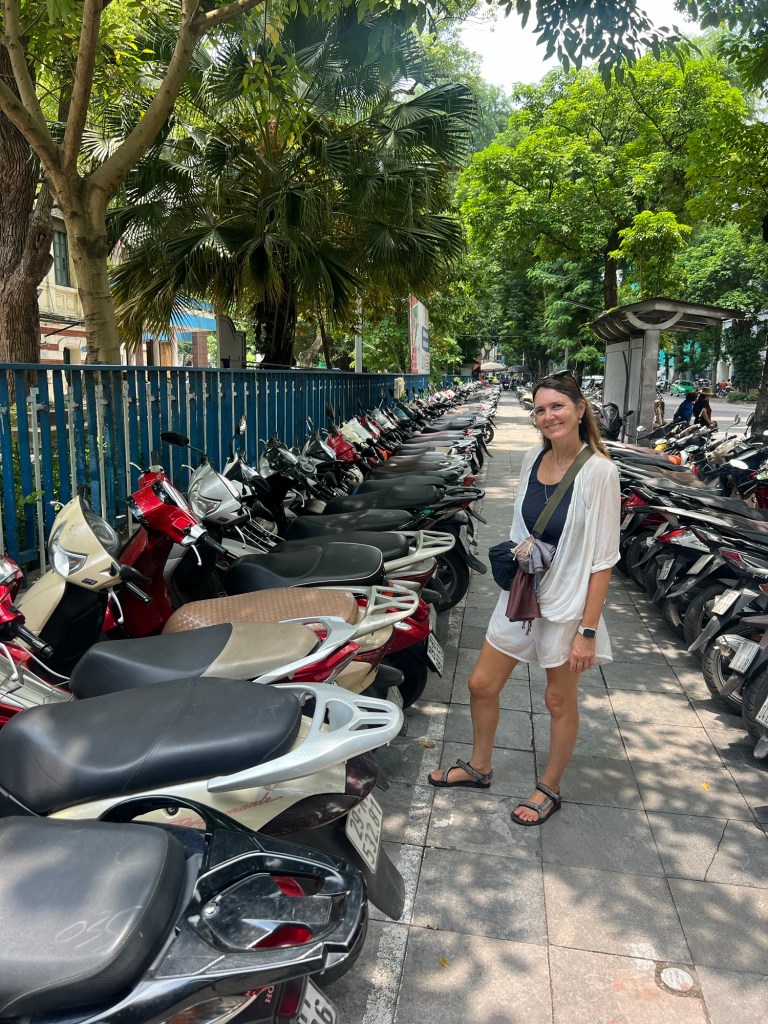
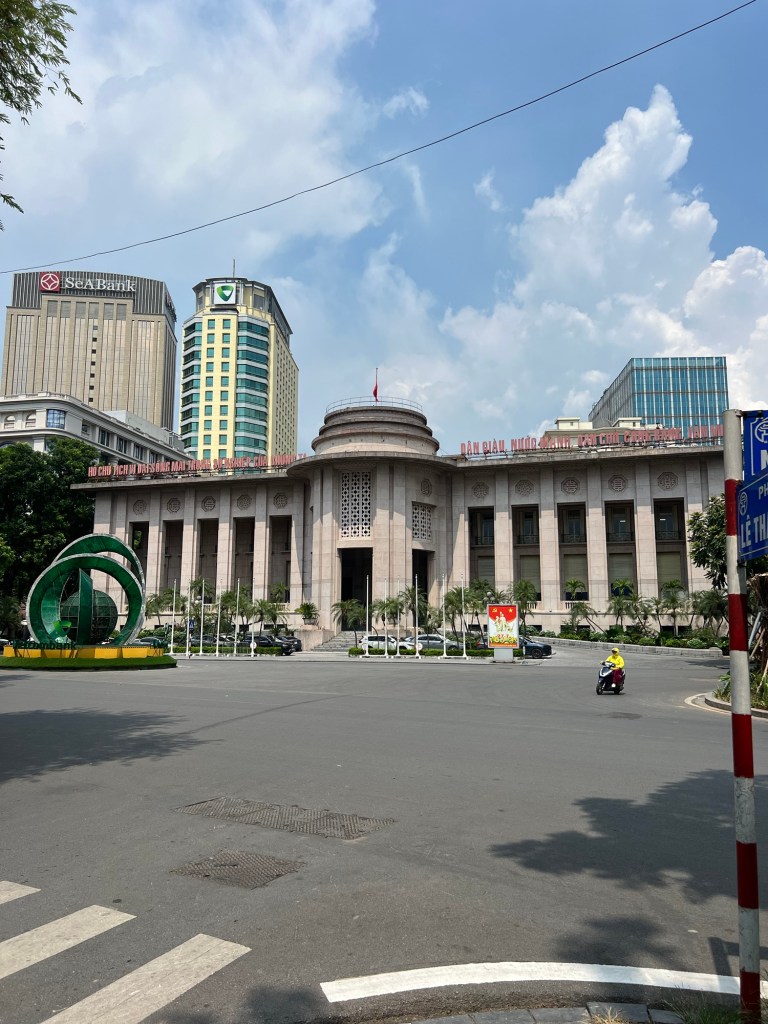
    In amongst these prestige old buildings are newer office towers, where the pavements outside are full of motorcycles parked in lines for the office workers.

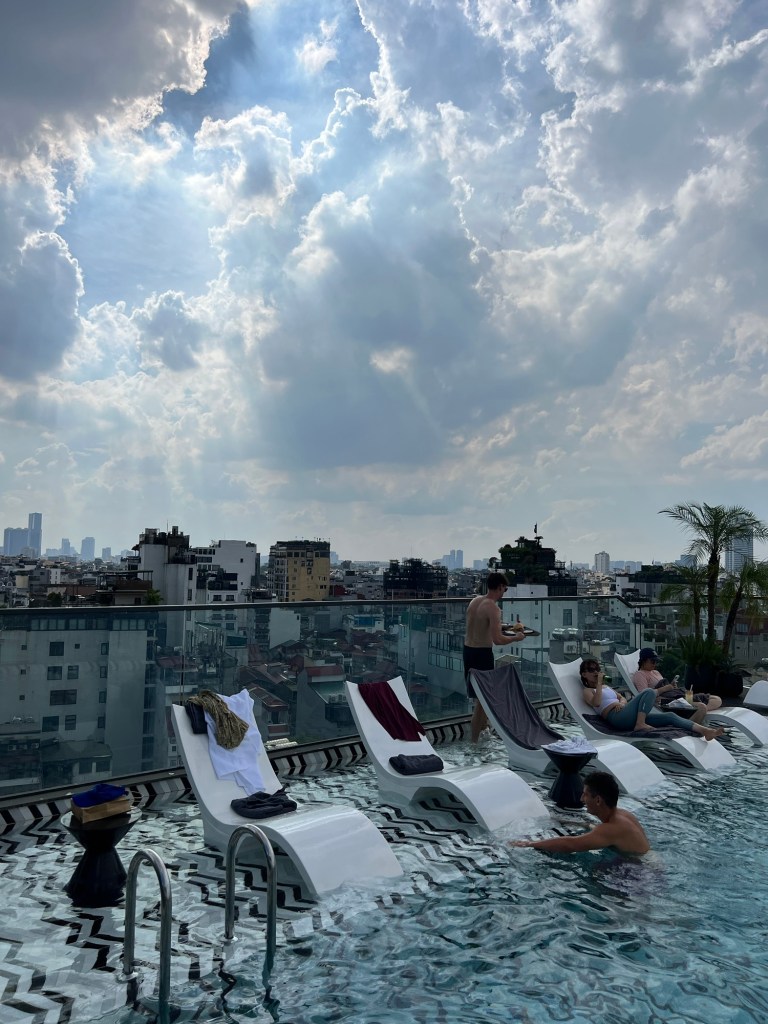
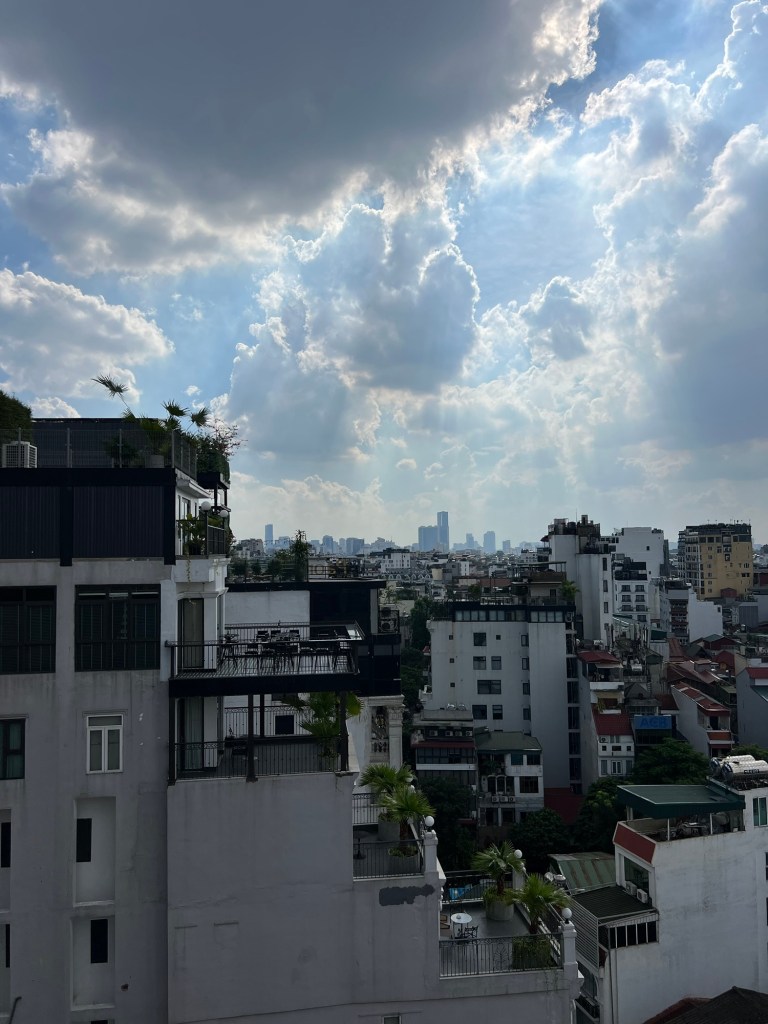
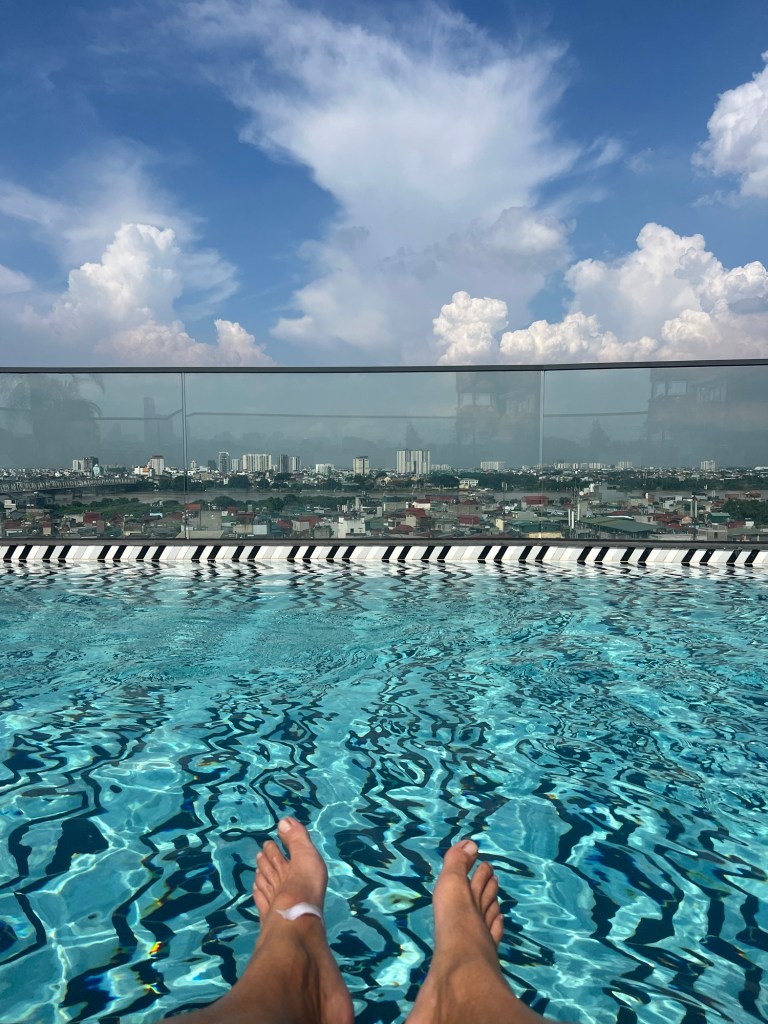
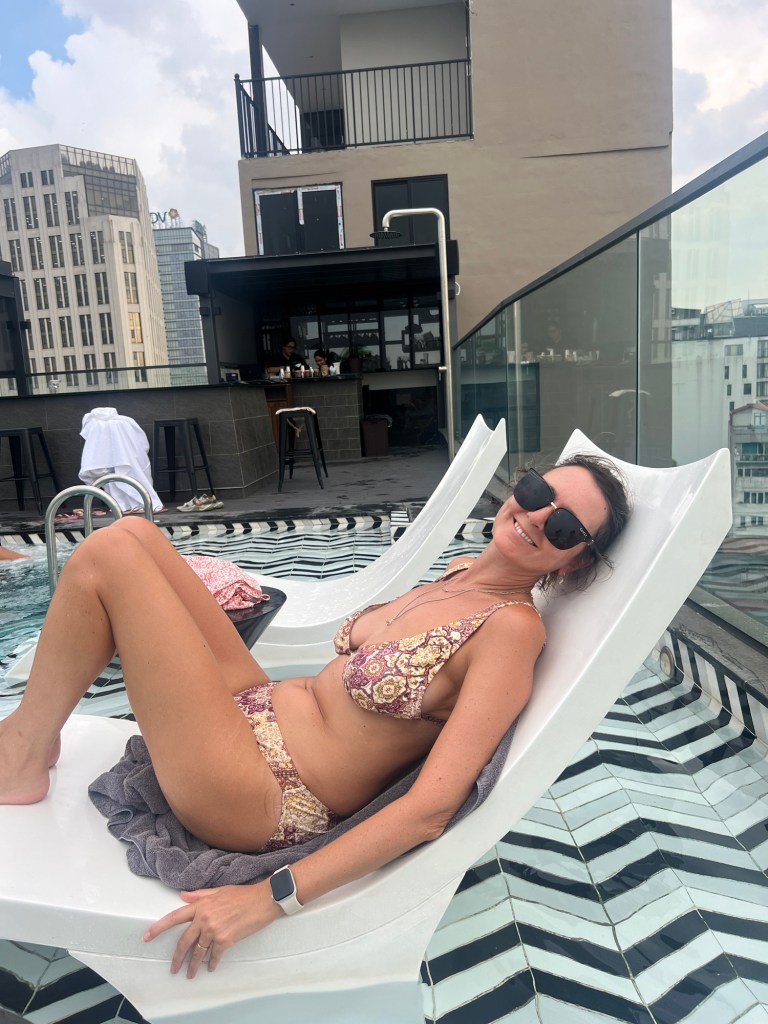
    Once back at the hotel, it was up to the roof top pool for some more time in the sun, and to enjoy the views across the Old Quarter.

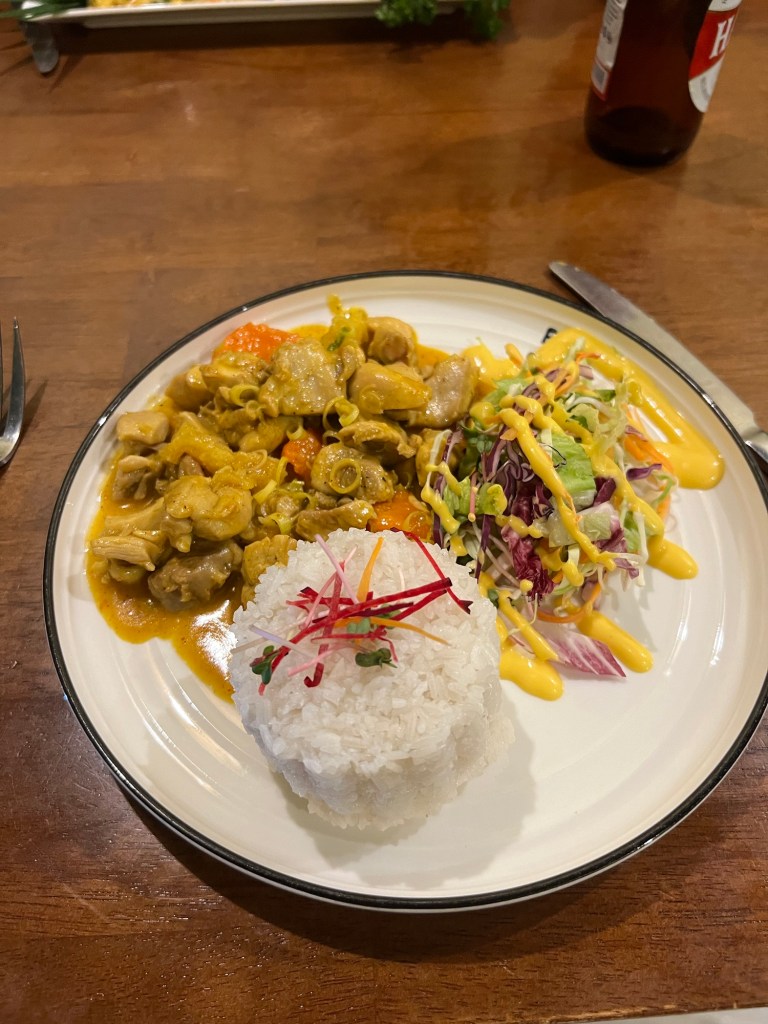
    As this is our last night in Hanoi, we went out for a final Vietnamese meal at Tung’s kitchen in the heart of the Old Quarter.

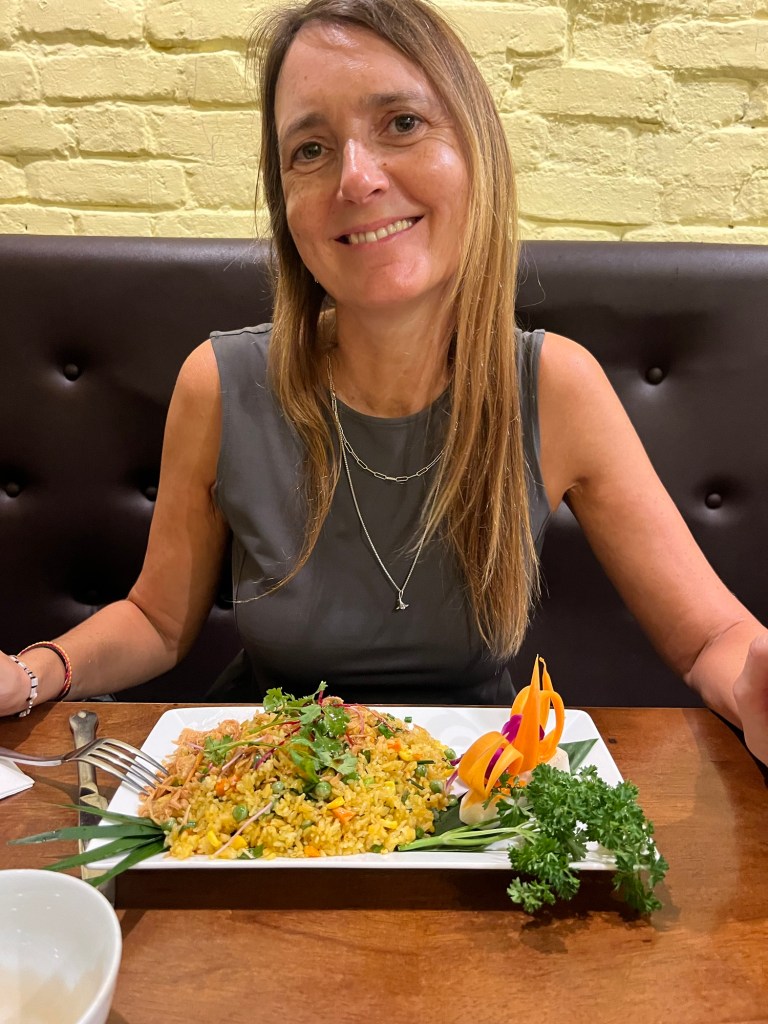
    Such great service, and fantastic food all for less than £6!

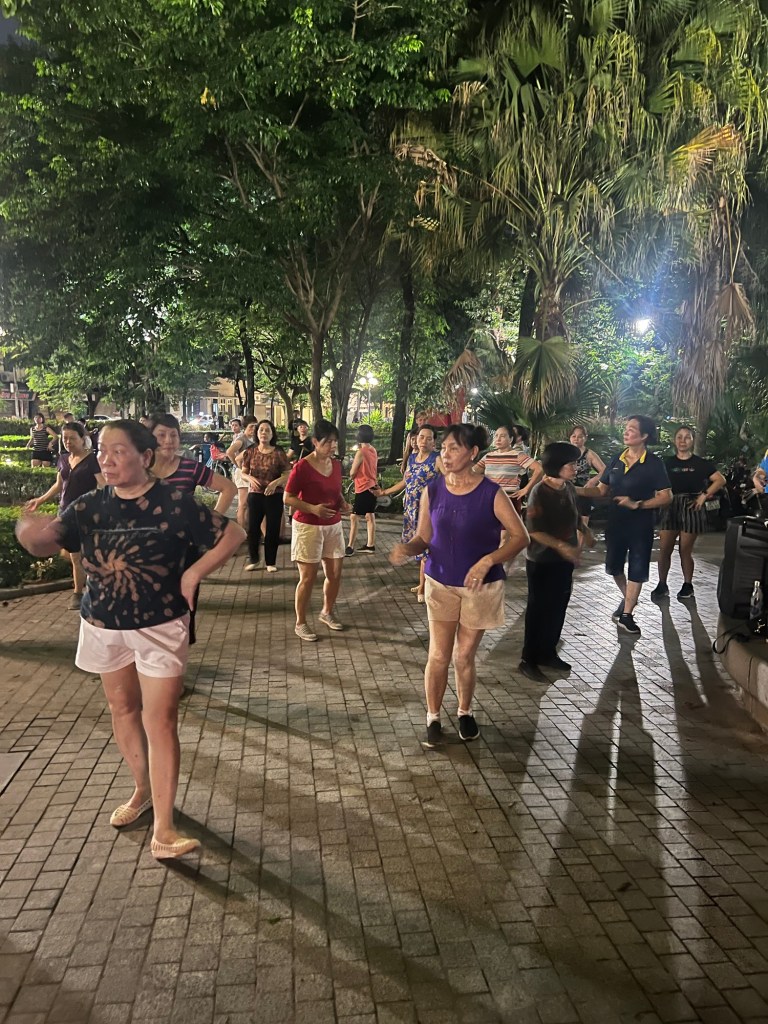
    After dinner we went for an evening walk around the lake and stopped to watch the locals dancing/keeping fit. Such a great scene and a wonderful feeling of community.

    We’ve had such a wonderful time in Hanoi and the rest of Vietnam over the last 6 weeks and would highly recommend visiting this incredible country. The sights, food, beaches and most importantly the people have really made it a special time during a travelling lull in our wider tour.

    Tomorrow we fly to Bangkok for one night before moving on to Beijing. As mentioned we will be unable to continue with the blog during our 3 weeks in China due to restrictions on certain apps in the country. We will however be back with full details of our time there once we arrive in Hong Kong on the 31st August.

  • Overseas tour Day 281 – Hanoi

    Aug 7th, 2024

    After yesterday’s long day on a tour, we decided to have a more relaxed affair today.

    The morning started with a late breakfast on the roof top of the Classyc Hotel looking out across the Old Quarter.

    We then decided to use the morning to organise our return trip to Bali in early September. We will be meeting up again with our daughter Amelia and her friend Meg for a 2 week stay in Canggu. We had flights to book from Hong Kong to Denpasar and an onward flight up to Shanghai. This is a brief return to the beach before we continue our journey ‘north’ in Asia and stops in the iconic big cities of Shanghai, Seoul and Tokyo from late September through to November.

    Organising flights and accommodation is harder than it sounds and requires a lot of research. We use Skyscanner and Booking.com for the majority of our travels as they provide the most comprehensive list of options at the best prices.

    By early afternoon we had organised our plans for Bali as well as accommodation in Japan, for when we meet up with friends in Tokyo in October and travel to Nagano and Kyoto.

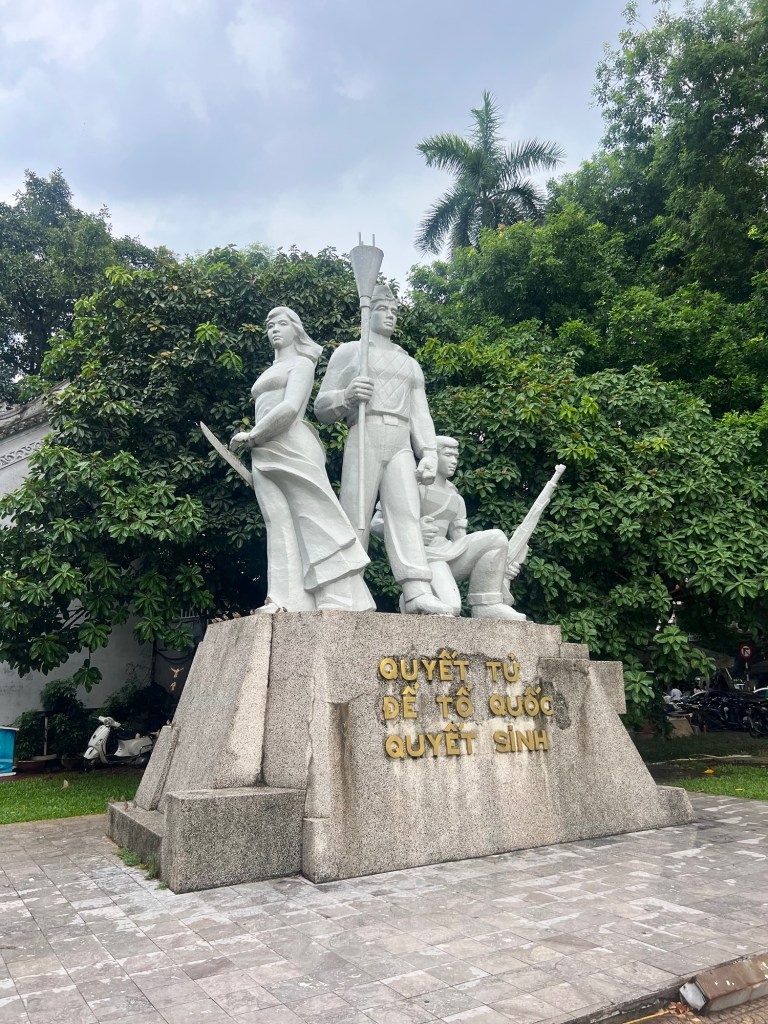
    With the need for some fresh air and a coffee we went for a walk around Hoan Kiem Lake and passed a number of monuments to the history of the city, the first relating to more recent communist revolution and the latter is the Turtle Tower, dating back to the 1700’s.

    We then found our way to Trang Tien a retail street with high end shops and also the home of Kem Trang Tien ice cream shop, a city institution since 1958.

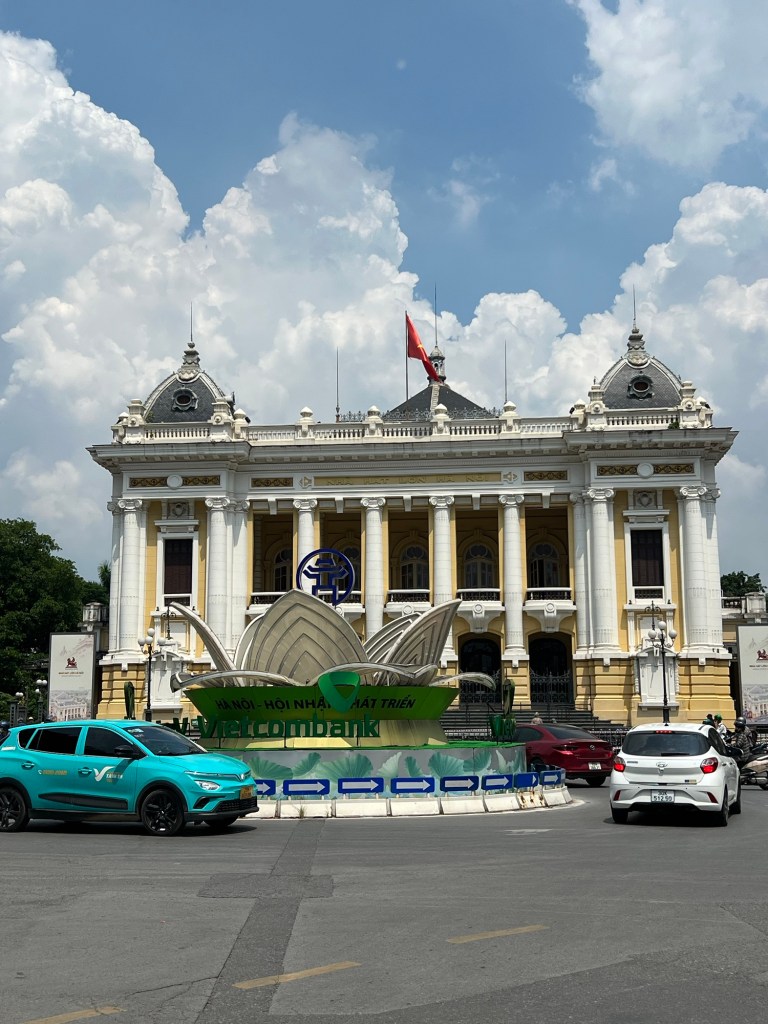
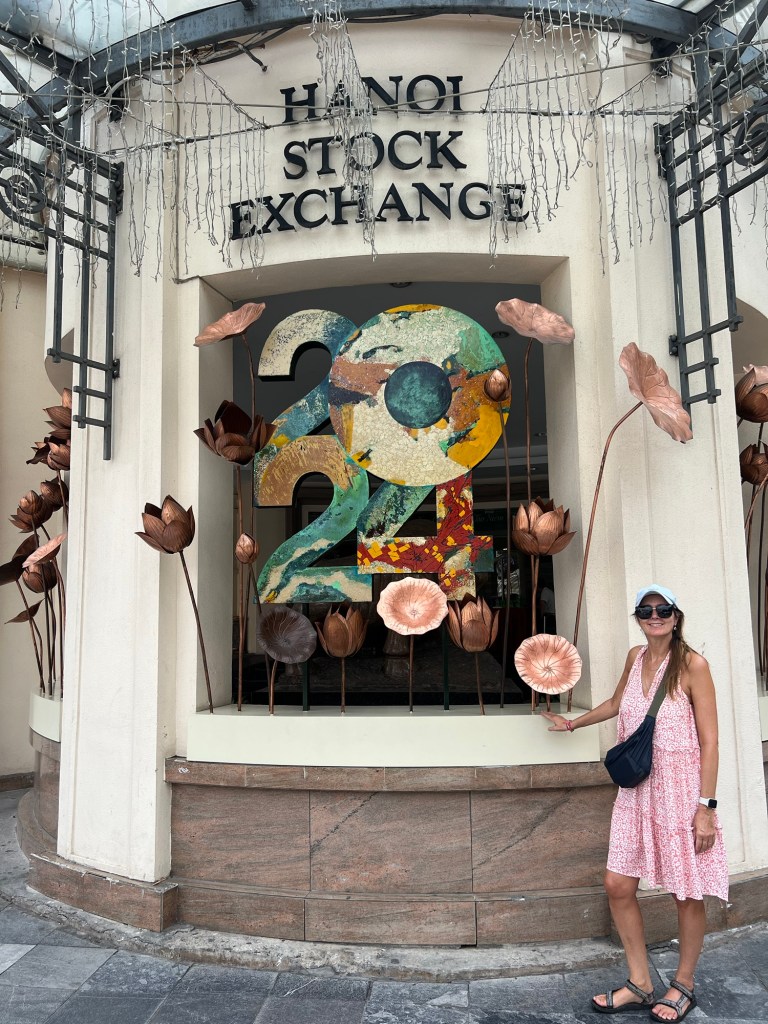
    This part of Hanoi is the true centre of the Old French Quarter and houses the original opera house, the Hanoi stock exchange and the iconic Metropolitan hotel (now Sofitel Legend), along with French stores such as Hermes, selling the most beautiful silk scarves.

    Hanoi Opera House
    A slice of Paris
    It’s mini France

    The boulevards and old chateau buildings truly give a unique feel of old colonial France.

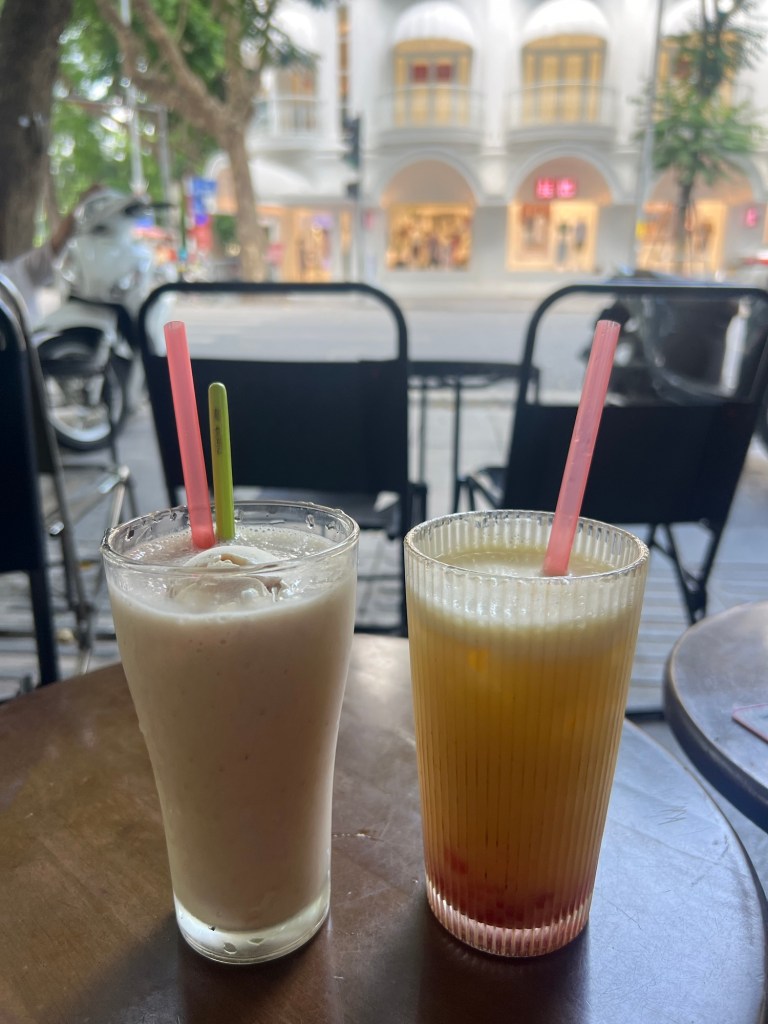
    After a brief period of rain, the sun came out again and the humidity levels rose, which meant it was time for a break and a cool smoothie drink in one of the corner cafes. We sat there for half an hour or so watching the Hanoi traffic and people go by.

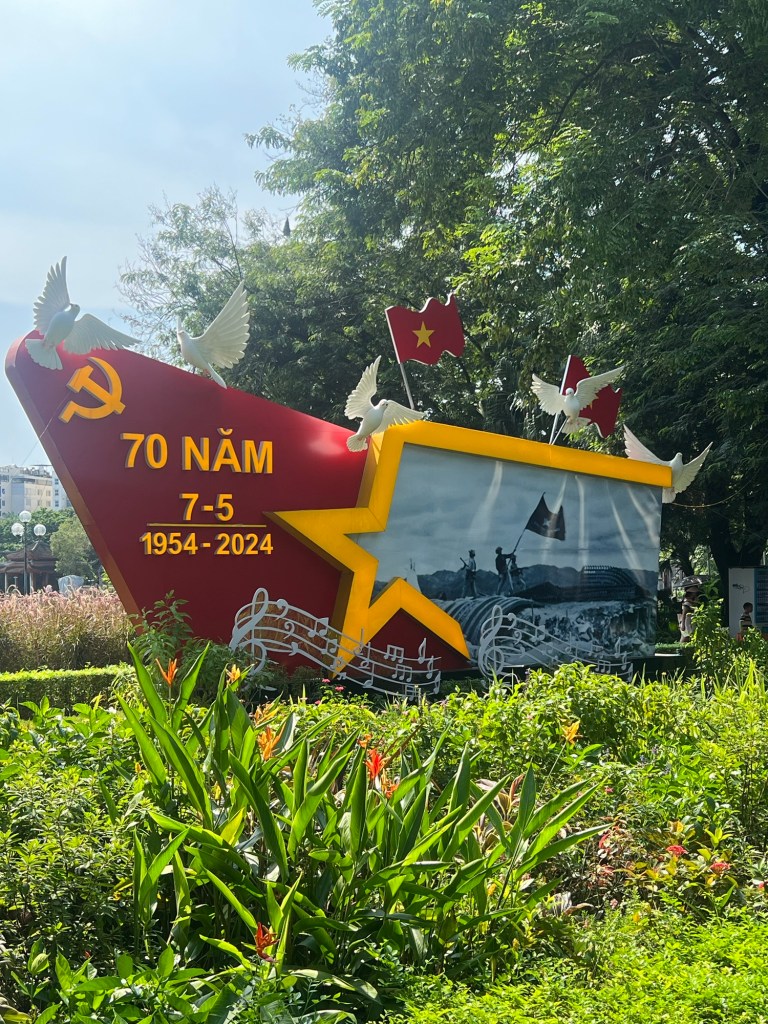
    More recognition of the importance that Communism has played over the last 70yrs

    Returning to the hotel mid afternoon, we headed to the roof top pool to enjoy the sunshine and chill. We’ve covered a lot of the city since we returned a few days back, so today has been good just lolling around!

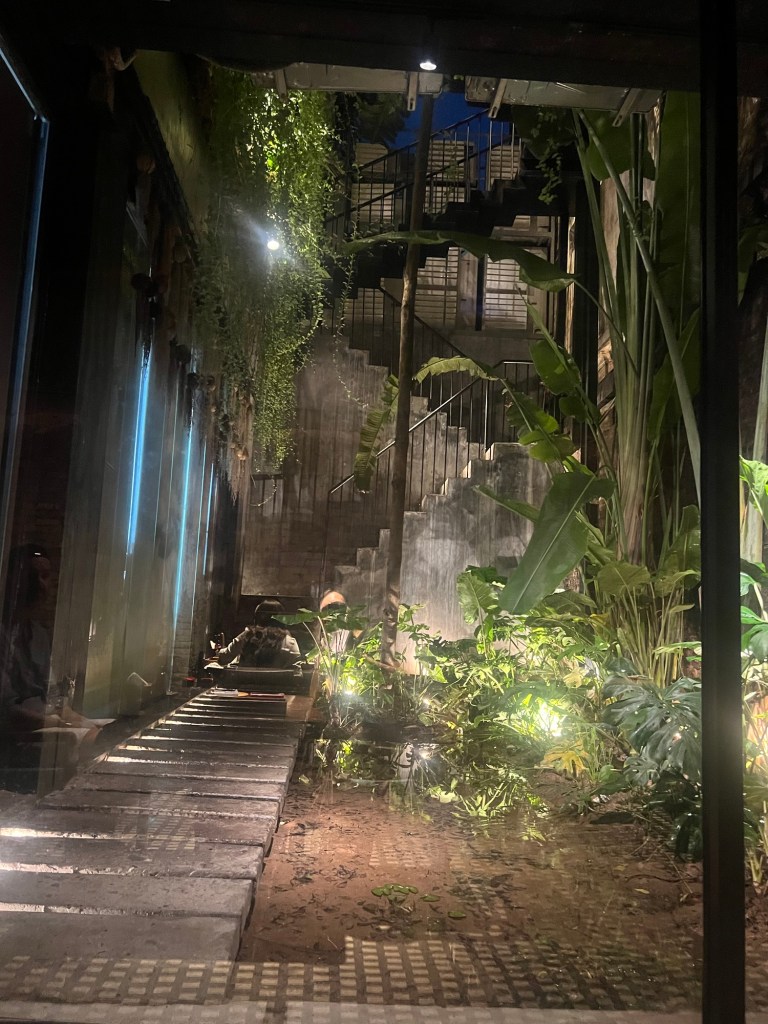
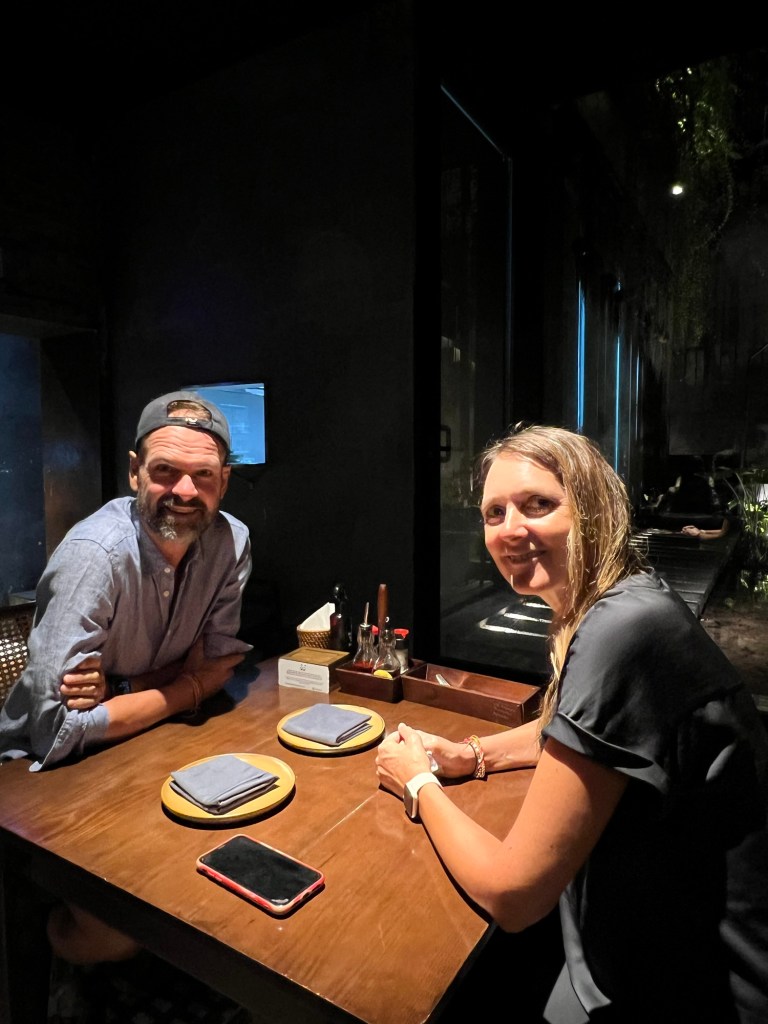
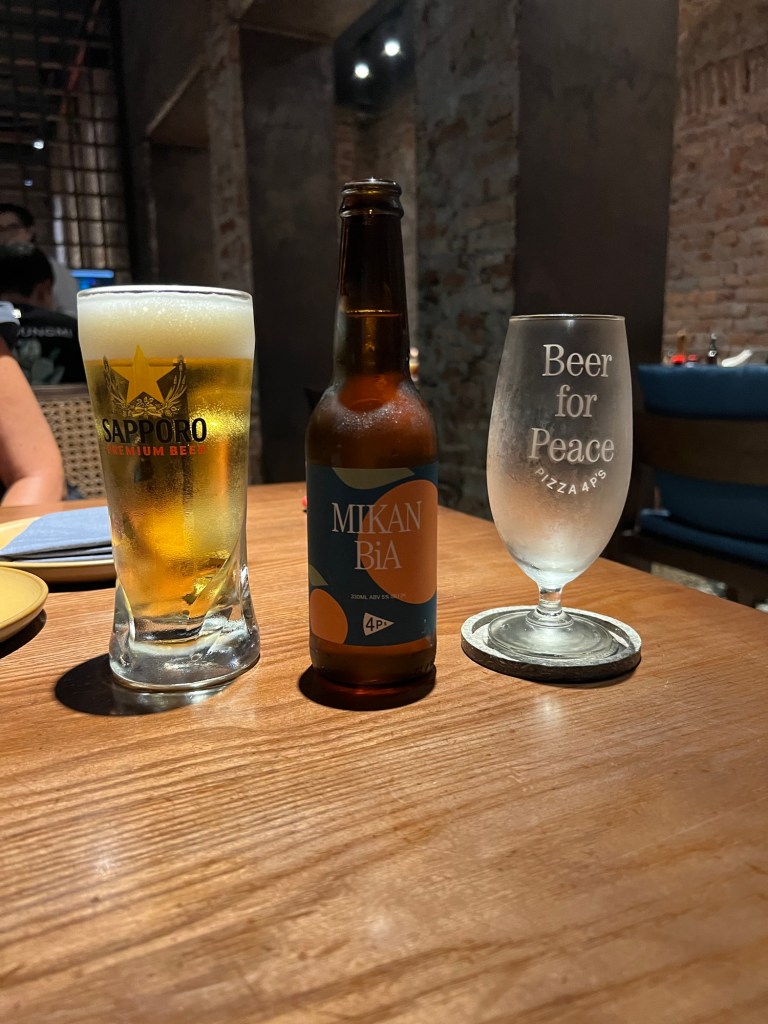
    This evening we headed out to dinner at a place called Pizza 4P’s a recommendation from a Dutch couple we met on our food walking tour. The place was very cool and urban and the food did not disappoint. Probably the best pizza we’d had since we left the UK and the salad relish made the meal a real standout. This was also helped by a cool accompanying BIA beer called Mikan for Andy and a Sapporo for Michelle.

    Andy had never drank anything like it before, but said it tasted like a mix of IPA and pale ale.

    Pizza time
    Beer time

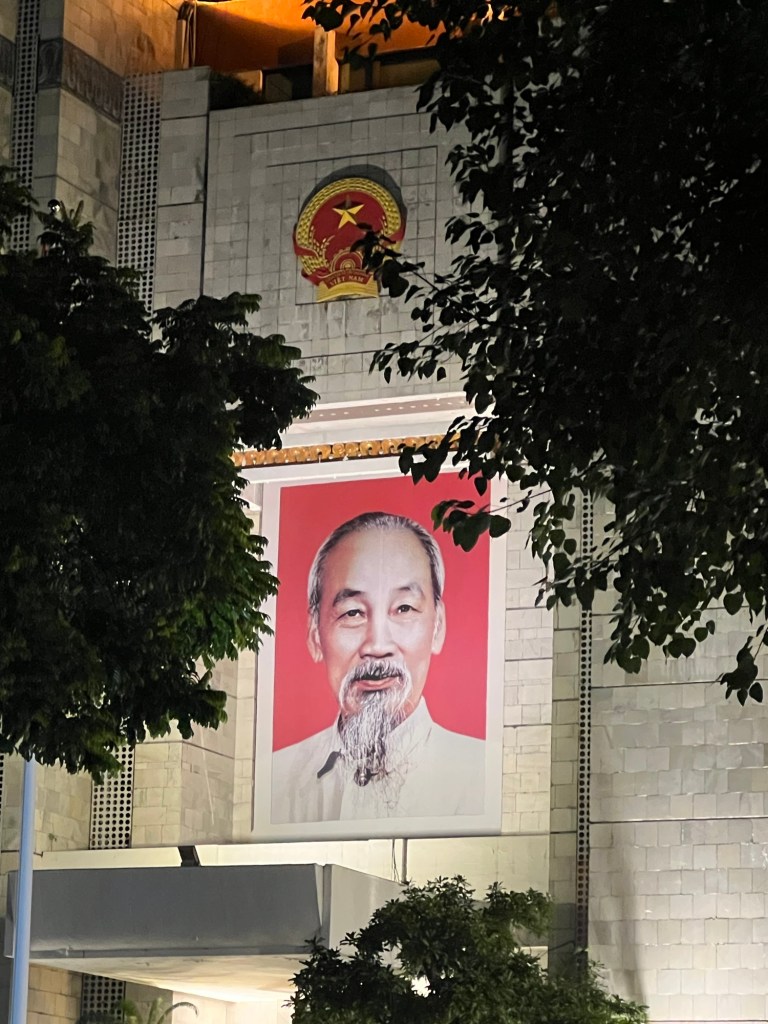
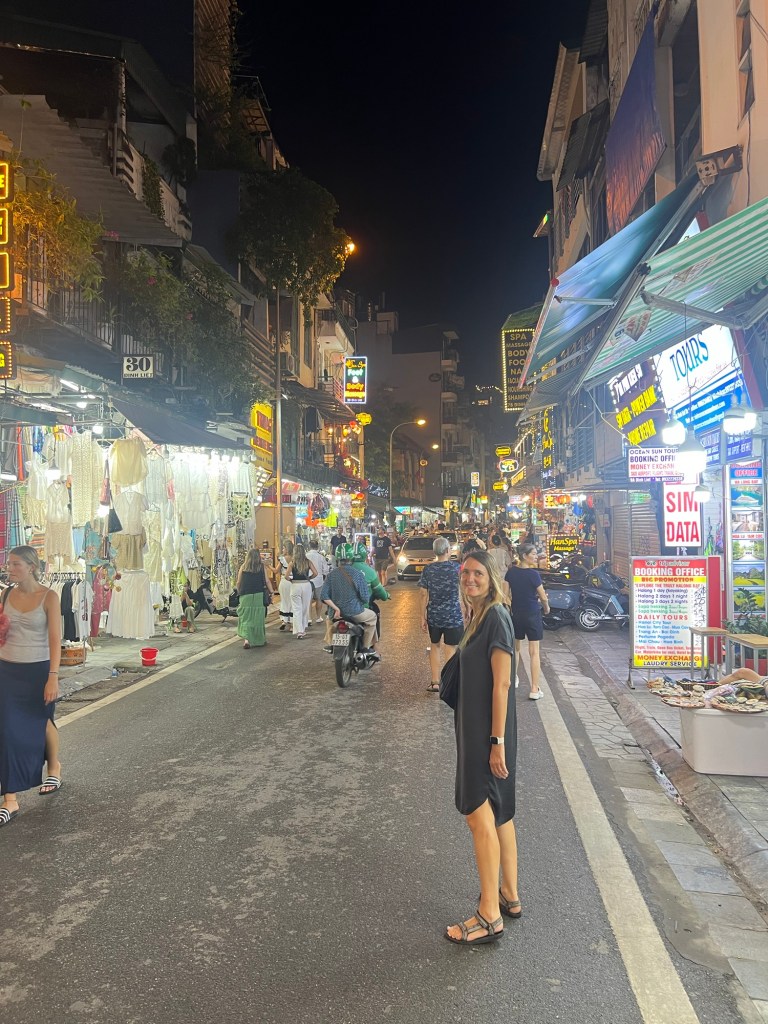
    After the meal, we went for a wander around the busy streets to take in the buzzy sights and sounds.

    The big man – Ho Chi Minh
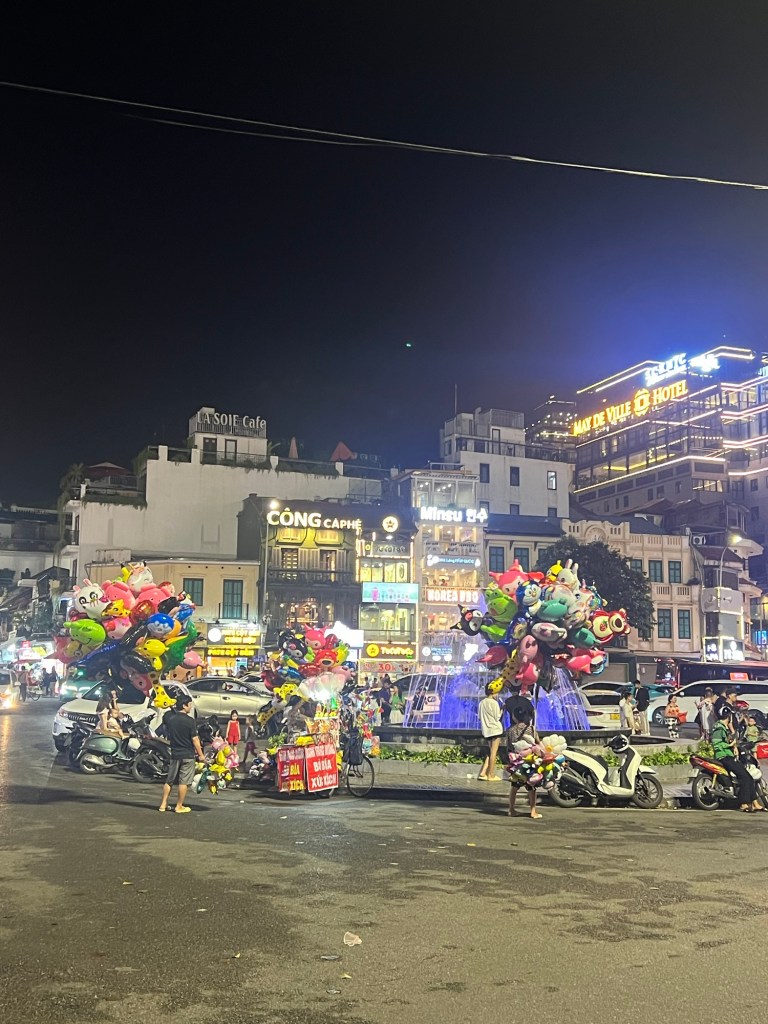
    Lights, balloons & scooters – it’s Hanoi time
    More retail therapy

    Tomorrow will be our last full day in Hanoi & Vietnam before we fly down to Bangkok on the 9th and on the 10th to Beijing.

    As some of you may be aware the Chinese have restrictions on accessing Google, WhatsApp and sadly Jetpack which supports this Blog so if you don’t see any updates from 10th to the 31st August that’s the reason why. Once in Hong Kong it will be business as usual when I hope to be able to recall our activities over this 3 week period.

  • Overseas tour Day 280 – Mai Chau

    Aug 7th, 2024

    An early start, with the morning alarm going off at 6.15am. After a swift breakfast, we were soon on a coach heading out of Hanoi and into the hilly countryside.

    The drive took the best part of 3hrs and just before entering Mai Chau we stopped at a hillside viewing point to look down on the area below.

    The hillside pass meant that we looked down on the town as though in an airplane such was the height.

    As the photo sign says below it was a Top View.

    Once out of the coach it was clear today was going to be a sunny hot day and out came the sunblock in readiness for the afternoons cycle around the area.

    The happy couple

    The valley below was so very flat, which was good news for the cycling that was to come post our early lunch.

    After arriving at the destination, we started with a very impressive lunch with various dishes all from local produce. It’s fair to say we haven’t ate so well for lunch in a good while. So impressive and very healthy.

    Behind the restaurant we went in search of our bikes and had to navigate around one of the families animals resting in the field.

    Around the homestay starting point, were fields upon fields of paddy fields with the second rice crop of the year just starting to become established.

    What a view

    Our bikes for the tour around the area were a little makeshift, but after getting used to the basic features we were soon on our way.

    This part of Vietnam is so beautiful and unspoilt. August is the hottest time of the year and is the low season for tourists. There were very other people around, so we could cycle freely along the quiet lanes, soaking in the wonderful views.

    Housing on stilts to protect from flooding and wild animals

    Our first stop was at a local families house where the lady has been weaving and selling her wares for over 60yrs. She was so lovely and keen to share her skills and we felt privileged to be able to hear her story.

    After watching the lady, Michelle got in on the act and tried her hand at weaving. our daughter Amelia would have been so impressed, as she weaves on her University course doing Textiles and Design.
    Then it was Andy’s turn, not as skilled as Michelle but a trier all the same!

    After walking around her shop/home Michelle decided to purchase a silk scarf and we got a photo with the lady who made it.
    We were then off again, cycling through the paddy fields to a nearby village to see other local craft products.

    https://videopress.com/v/DaioDNWl?resizeToParent=true&cover=true&preloadContent=metadata&useAverageColor=true

    After a hour or so on the bike, Michelle was starting to enjoy the ride and had got to grips with the bikes dodgy brakes and bike stand.

    As the heat of the day continued to rise, we stopped for an ice lolly to help with the dehydration.

    Before we knew it the 2.5hr cycle ride had come to an end and it was time to re-board the coach for the return journey to Hanoi.
    We had some fun on the bikes and met a lovely family from Singapore, who were enjoying a break with their two adult daughters. Great to hear about their lives and how they met. By coincidence they got married only a month before we did!

    Once back on the road, it was soon snoozing time, as we drove for a couple of hours through driving rain before we hit the outskirts of Hanoi. After navigating through the rush hour of the city, our driver dropped us back at our hotel just after 6pm and it was time to relax.

←Previous Page
1 … 21 22 23 24 25 … 52
Next Page→

Blog at WordPress.com.


Loading Comments...
 

    • Subscribe Subscribed
      • @travellingwiththeateam
      • Join 25 other subscribers.
      • Already have a WordPress.com account? Log in now.
      • @travellingwiththeateam
      • Subscribe Subscribed
      • Sign up
      • Log in
      • Report this content
      • View site in Reader
      • Manage subscriptions
      • Collapse this bar